


A couple of weeks ago, Volkswagen published lightly camouflaged photos of the upcoming VW ID. Tiguan, its new EV crossover that will replace the outgoing ID.4 and ID.5. Instead of the purely numerical nomenclature, Volkswagen will introduce previously successful nameplates on its electric vehicle range to simplify its offerings and to make it easier to explain which vehicle classes they are representing. People know the VW Polo and the VW Tiguan, and starting from ID.2 all the way to ID.7 doesn’t seem to have been the way to go.
Now, Volkswagen has released full information and photos of the European specification ID. Tiguan, which will go on sale early next year. The thing that stood out most in the comprehensive info pack is the retro-inspired gauge cluster that’s lifted almost directly from the 1998 fourth-generation Volkswagen Golf, a very important vehicle for the manufacturer.


The gauges look really, really good. The calming blue together with the orange needles is *chef kiss*, especially for anyone who’s driven an old Golf Mk4 or Passat B5. We had a 1997 and a 1999 Passat back when I was a kid, and the throwback gauges in the ID. Tiguan are somehow much nicer than the sharper ’80s-look gauges in the ID. Polo and ID.3 Neo.

As Volkswagen puts it in its press release:
New ‘Retro’ displays. In spite of all the focus on functionality, there is also an element of fun as demonstrated by the ‘Retro’ displays. These are a brand-new development for the ID. Tiguan. If the driver activates the ‘Retro’ display using the ‘View’ button on the multifunction steering wheel, the iconic blue-red instruments from a Golf IV appear in the Digital Cockpit.
There are two things to note here: first of all, 1998 is now retro. In other words, I’m old, you’re old, everybody who remembers the 1998 Golf is old. Congratulations.

The other thing is that these gauges were extremely serious back in the late 1990s – quality items, for sure – but they weren’t about having fun. Fun wasn’t a really dyed-in-the-wool theme in the Mk4, as VW basically took the preceding Mk3, applied a completely other level of perceivable quality inside out, and shipped it.
You couldn’t get the Mk4 as a Harlekin, even if there were some quite jolly exterior colors on offer, and in some markets the GTI was simply a trim level among Highline and Trendline, which meant VW sold 125-horsepower, non-turbo GTIs together with turbodiesel ones. The “real” Golf GTI Mk4 had between 150 and 180 horsepower, but you could also get the VR6 as a GTI in some markets, which meant 204 horsepower but a hefty weight as well.

The 1998 retro theme also gives the Tiguan’s dash a Volkswagen “Gamma” radio look for the center display, and the press photos also show a small first-generation Tiguan as an easter egg underneath the ‘head unit.” Of course, you can also select modern gauges and displays for the car, but the retro skins are the thing.

Next to the 15-inch center display is a separate 12-inch display for the front passenger, so they can toggle things like Spotify, YouTube, and Der Spiegel, judging by the photos. Built like a privacy screen, the passenger display is designed to not be visible to the driver, so it can be used while the vehicle is on the move.
Like in the ID. Polo, the cabin is a return to real buttons despite the screens still playing a big role, and while there isn’t cloth in the center console and the side panels in the ID. Polo style, Volkswagen states that the cabin is meant to look like a premium segment offering, especially with the subtle lighting.
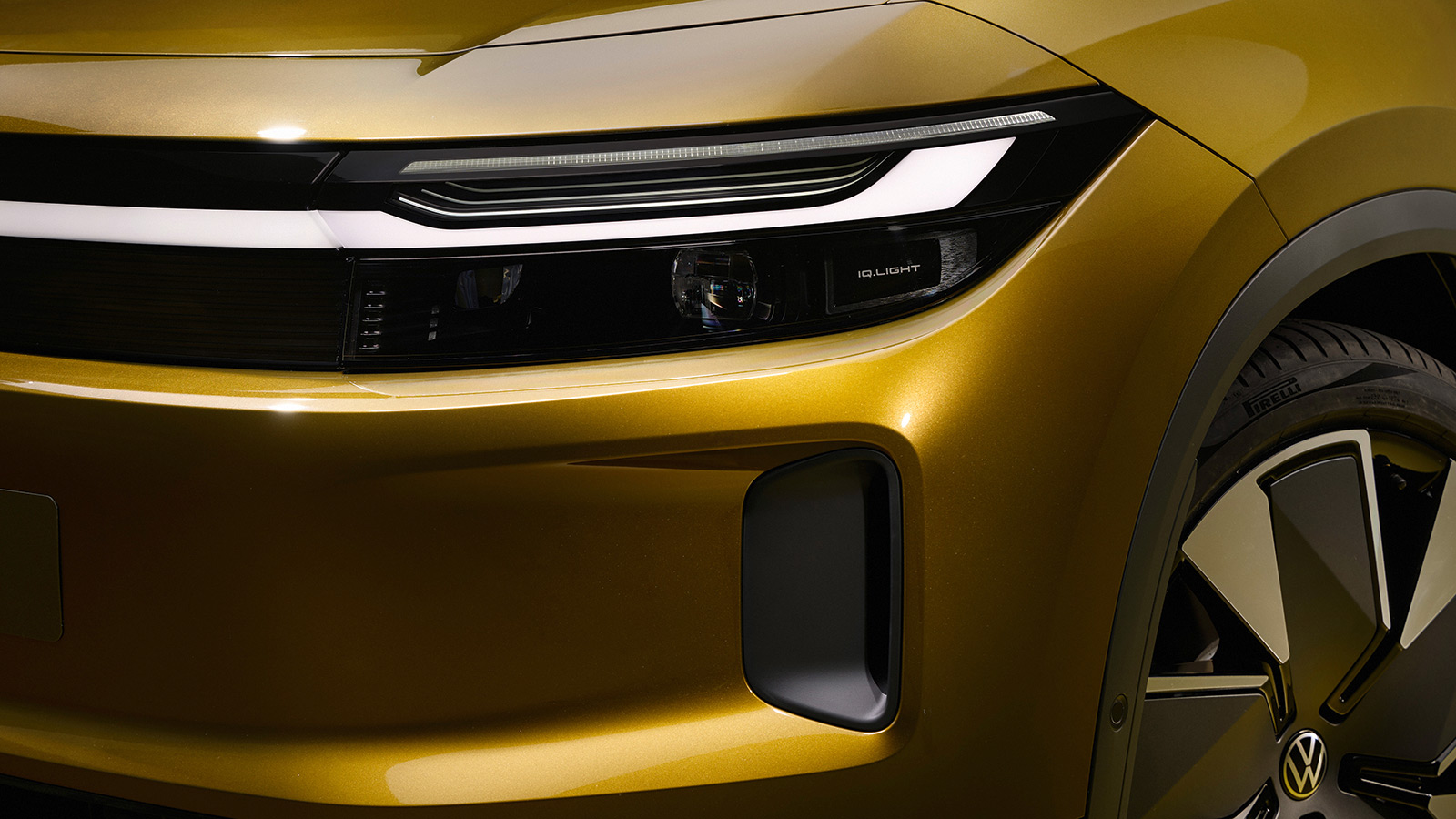
Tech-wise, the ID.Tiguan offers three setups: two rear-wheel-drive models with either a smaller 58kWh battery (190 horsepower powertrain) or a larger, 77kWh battery (286 horsepower powertrain), as well as an all-wheel-drive version with a 77kWh battery and 299 horsepower. Note that these are the European-specification models, and if the selection for the North American ID.Tiguan mirrors the outgoing ID.4, there will not be a 58kWh version.
Volkswagen announced a WLTP range of up to 600 kilometers for the ID.Tiguan (372 miles), and importantly, a maximum towing capacity of up to two tonnes (4400 lbs). The ID.4 could tow a maximum of 2700 lbs in AWD form, so the ID.Tiguan represents a hefty bump in towing capacity. Again, these are figures for the European specification vehicle.

Regarding the exterior design, Volkswagen notes: “The softer crossover design of the predecessors has given way to a powerful SUV design with a strong visual presence. Precise lines and tightly sculpted surfaces lend it additional stability and quality. As a result, the new model looks like a vehicle from the premium segment. In addition, Volkswagen is returning to classic pull-style door handles with the ID. Tiguan.”
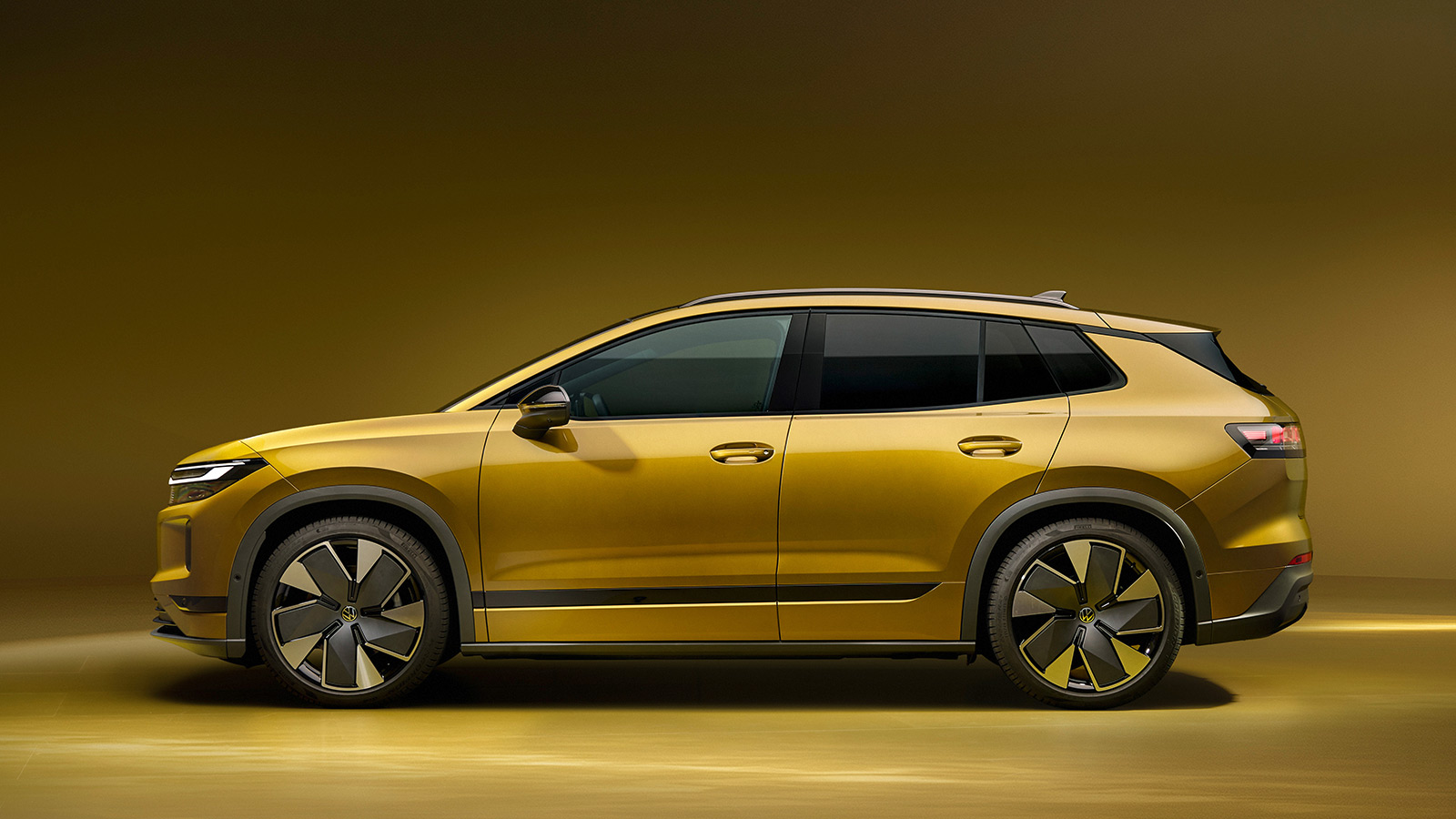
The ID.4 and ID.5 were certainly curvier, partly to disguise the height of their sides. The ID. Tiguan doesn’t play that game, as it’s tall and chunky, and it even looks heavy from the side. There aren’t any visual tricks in the side profile, apart from the slivers of adventure plastics in the wheelarches and the black piece of trim in the door bottoms. The ID. Tiguan embraces the heft. From the rear, the design mirrors the ID. Polo, especially with the full-width heckblende with an illuminated VW logo.
The door handles are important enough to mention, as the ID.4’s handles were tricky enough to merit a recall and stop-sale due to water ingress to the electric handles’ circuit boards, which could cause doors to unlock or open at the wrong time.
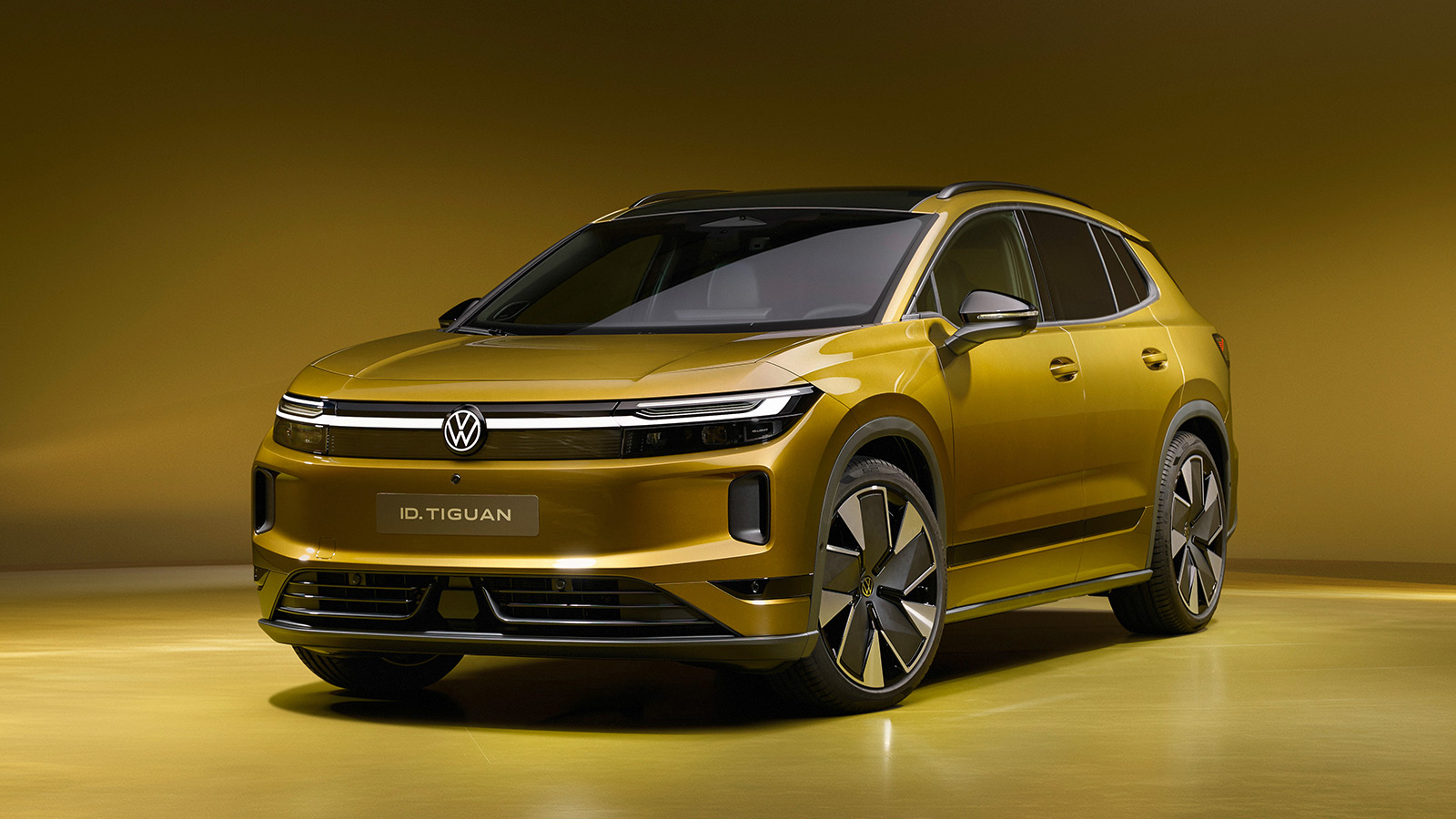
Volkswagen also announced the German starting price for the ID.Tiguan: that’s 42,695 Euros, or $47,800 for the 58kWh, rear-wheel-drive version. The launch color for the ID.Tiguan is a greenish metallic gold-yellow or a gold-yellowish metallic green Volkswagen calls Olive Bronze, which is muddy enough to be a faint nod towards the fictional tiger-lizard hybrid that gave the car its name. The other real color offered for the car is a pomegranate red; otherwise the offerings are all on the usual monochrome color list with blue thrown into the mix.
The ID.Tiguan will be built in Emden, Germany, a plant known for its long-time Passat production. This is to note that it likely won’t be produced at the Chattanooga factory where the ID.4 was built, which was re-tooled to build the Atlas SUV instead. A timeframe for the ID. Tiguan’s American launch hasn’t been announced yet, other than that, it is planned to be sold in North America.
Top graphic images: Volkswagen


And again, they’ll be uncompetitively priced in the US because of shipping and tariffs. FFS, do they even want to sell cars here?
No, not until they break the unions.
I still say if they’re going for retro, they need to go all in. Bring back the Digifiz cluster!
https://www.rentoncarrepair.com/wp-content/uploads/2023/10/digifiz_10-775×321.jpg
ID. like it if we dispensed entirely with the silly naming convention, but I guess you have publishing standards and need to play nice.
ID. like it if we dispensed entirely with the silly naming convention,
My grandfather always had this joke: My friend Jack Lipschitz absolutely hated his name. So he finally had it changed to John.
And if you spent years looking at a 78 Rabbit gauge cluster you are really old. (me)