

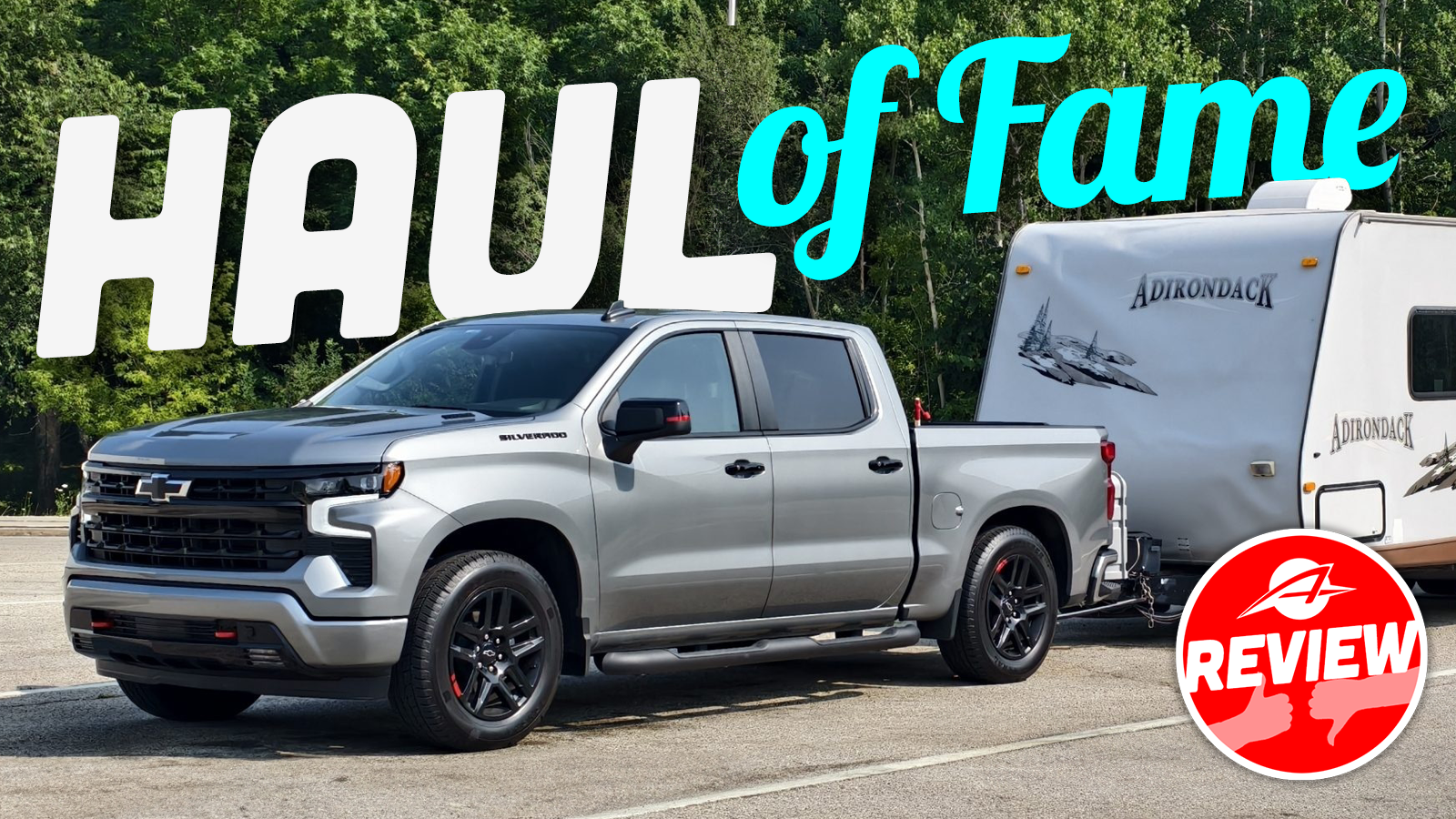
America’s relationship with diesel power has long been complicated. Diesel engines rule trucking, construction, and heavy industries, but you won’t find many consumer-grade vehicles sporting compression ignition engines. If you want diesel power in a new vehicle without a CDL, you usually have to get a three-quarter-ton or larger pickup truck – but there is one exception. General Motors sells the only half-ton pickup truck in America with a diesel engine. I drove a 2026 Chevrolet Silverado RST Duramax and saw 30 mpg when driving it unloaded, and also drove it with a huge trailer to test its hauling ability. Help! I’ve fallen so deeply in love!
General Motors was the king of diesel power in America through much of the 20th century. GM, through its subsidiaries such as the Electro-Motive Division, the GMC Truck & Coach Division, and Detroit Diesel, had a domineering grasp of diesel-electric locomotives, the bus industry, and even highway tractor engines. In the late 1970s, General Motors even managed to sell hundreds of thousands of diesel-powered passenger cars across more than two dozen models.


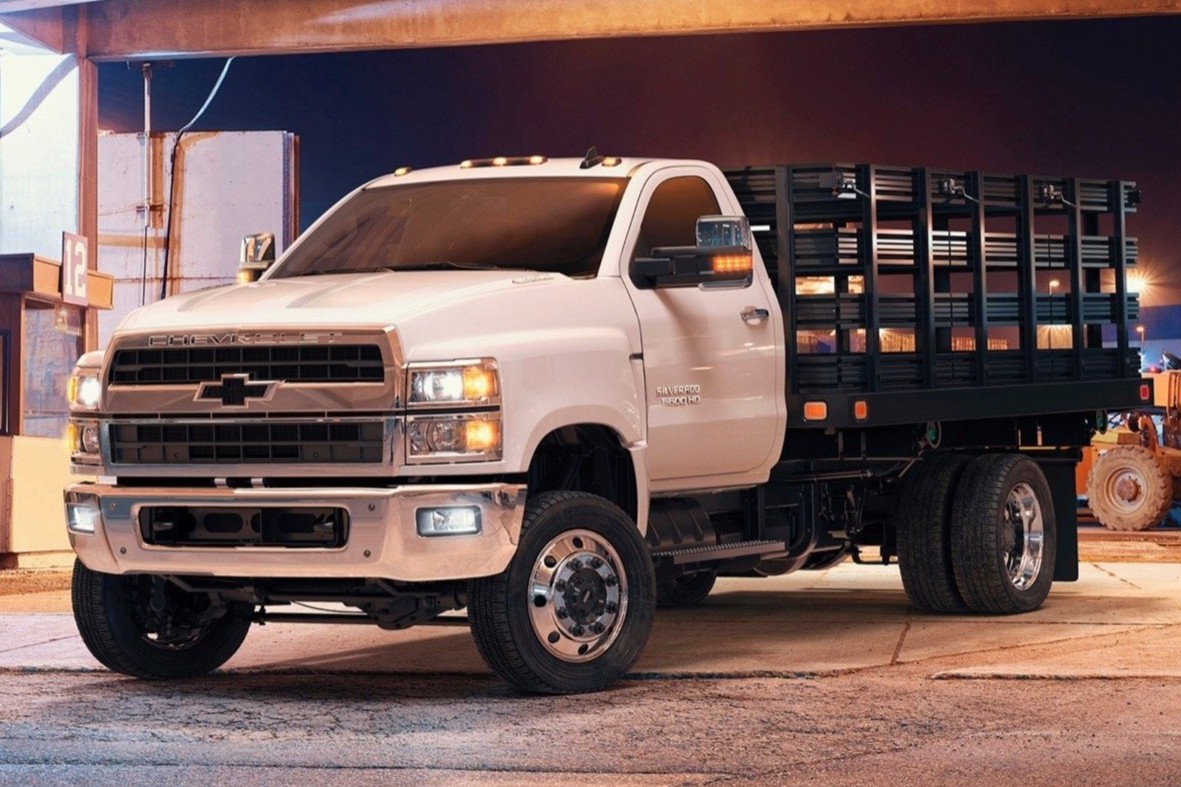
General Motors has since pulled back from most of those efforts, and GMC doesn’t build highway tractors or buses anymore. EMD was handed to Progress Rail, and Daimler Truck now controls Detroit Diesel. You will not find a single new Class 8 truck with a Chevrolet badge, either. Recently, GM has even cancelled its medium-duty line of trucks (that’s an example below). Likewise, you will not find a single new passenger car in America with a GM badge and a diesel engine.
But GM didn’t completely give up on diesel in the 21st century. Back in the 2010s, GM capitalized on what was then renewed American interest in diesels by ending its more-than-two-decade American diesel passenger car hiatus to introduce the Cruze diesel.
Then came the Volkswagen Dieselgate emissions cheating scandal.
In short order, the reputation of diesel was tarnished. Diesel sales plummeted, even in Europe where diesel was pretty much the default choice for any passenger vehicle. But one company didn’t want to give up. To General Motors, diesel wasn’t the problem; Volkswagen was. So, in the wake of Dieselgate, General Motors decided to fill in the void left by Volkswagen’s failure with a lineup of diesel-powered cars, crossovers, and trucks.

Soon enough, any American could waltz into their local GM-brand dealer and roll out in a diesel-powered Cruze, Equinox, Terrain, Colorado, Canyon, Silverado, or Sierra. GM wouldn’t be alone. While Ford and FCA didn’t put out diesel passenger cars in America, they did come out swinging with their own diesel half-ton trucks. The Jeep Gladiator was also available with a diesel. Mazda finally finished its diesel engine and started slinging an oil-burning CX-5. Even Jaguar managed to land a handful of diesels on our shores.
Sadly, nearly all of them are gone. None of these automakers succeeded in making diesel popular in America again in a post-Dieselgate world. Ford never even bothered to make a modern diesel Ranger, and Ram didn’t sell a mid-size pickup at all. Ford and Ram would eventually cancel their diesel half-tons, too.
I said “nearly” all of them are gone because there’s still one vehicle from GM’s plan to rule light-duty diesels that, somehow, remains on the market. Long after everything else has been canceled, you can still buy a Chevrolet Silverado 1500 and a GMC Sierra 1500 with a 3.0-liter Duramax straight-six diesel. I just got to spend a week with one, and I can’t stop thinking about it.

(Full disclosure: General Motors loaned me a 2026 Chevrolet Silverado 1500 RST diesel with a full tank of fuel to use for the week of EAA AirVenture Oshkosh.)
The Basics
Drivetrain: 3.0-liter Duramax LZ0 straight-six turbodiesel.
Drive: Rear-wheel drive.
Output: 305 horsepower and 495 lb-ft of torque.
MPG: 23 mpg city, 28 mpg highway, and 25 mpg combined (RWD), or 22 mpg city, 26 mpg highway, and 24 mpg combined (4×4).
Base Price: $51,145 before $1,999 destination.
Price As-Tested: $63,435 (RST, destination fee included).
How Does It Look?

One of the greatest advances in modern truck design came in the 1990s when the designers behind the second-generation Dodge Ram decided to borrow some traits from big rigs. It looked bold, it looked imposing, and it had presence. Practically overnight, the Ram suddenly made the competition look antiquated.
Truck design hasn’t really moved far from that idea since then, though I would argue that the Silverado 1500 doesn’t really mimic a highway tractor. Today’s Class 8 trucks are on a mission to be as slick as possible, resulting in smoother designs. Apparently, some people didn’t like how restrained the third-generation Silverado looked, so when making this new one, which launched in 2019, GM made it look like it chugged a few Monster Energy drinks before visiting the weight room.

The front end looks like it can barely contain what’s behind the grille and the hood. The headlights struggle to secure real estate in a sea of mostly black. The bulging fenders make the truck appear ready to pounce on an unsuspecting trailer. Then, there’s a classy character line at about the beltline. That’s my favorite part. I’m generally not a fan of today’s era of vehicles that look like they want to rip your face off. I also don’t quite get the need for modern ICE vehicles to have front ends that are about 85 percent grille. But I do appreciate some graceful lines when I find them.
If making a statement was what customers wanted from their trucks, I think Chevy succeeded. If you want a half-ton truck that appears absolutely jacked without looking like Wrestlemania-era Hulk Hogan, the Silverado is probably the best in the game. Not even the GMC Sierra goes as hard on the muscles.
The RST, or Rally Sport Truck, is essentially an LT with an appearance package. My tester also had the option of the Redline edition. Basically, this is an LT with loads of black trim and some red accents here and there for a more sporty look. Even the HDMI port-style exhaust pipes are blacked out!

One of the great parts about this diesel truck being based on a half-ton is that it doesn’t look like you’re driving a skyscraper around. I’m 5’6,” and even a 2500-class truck feels like a giant. If I open the hood of one of those trucks, I have to look up and then down at the engine. I have to get creative just to close the hood on one of those trucks, and their bed rails also reach shoulder level. That’s all to say that those rigs are rather huge. I don’t have to be as tall as an NBA player to slide a generator into the back of the Silverado.
The absolute shortest that a Silverado 2500HD crew cab gets is 250 inches, while this RST crew cab short bed is 232.75 inches long. That’s a foot and a half shorter than the big truck. It even sits shorter, too, at 75 inches, compared to the 2500’s 79.8 inches of height. For another way to look at the size of it, this is a diesel truck that fits in a parking garage that simply wouldn’t fit a 2500.

If you like the general vibe of this design, but think there’s room for improvement, the new-generation 2027 Silverado might have what you’re looking for. It looks like the grille of that truck will be smaller, with the boomerang-style DRLs getting larger and the headlights moving a bit lower. That new truck, which will have the diesel available, looks a little bit closer to what Chevy’s HD pickups currently look like.
In The Cab

The interior of the Silverado 1500 RST crew cab is straightforward and devoid of most of the gimmicks that plague the automotive industry today.
A big highlight for me is the glorious inclusion of buttons. Want to turn on the heated seats? Hit the button! Want the air blowing on your face, but not your feet? There’s a button for that. Even the dual-zone climate control is button-controlled.

That means the 13.4-inch infotainment display with Google built-in can be used for music, your phone, navigation, and trailering settings. That’s honestly refreshing. In a world of screen-controlled vents, glovebox doors, and HVAC, more automakers should be like Chevy and not force people to use a screen for everything. There’s nothing wrong with buttons! This interior does not look or function any worse with buttons.
Speaking of functions, I was surprised to see so few gadgets in this truck. The mirrors do not automatically dim, the truck does not warn of blind spots, there’s no HUD, there are no ventilated seats, and there isn’t even a sunroof of any kind. The truck didn’t whine at me with parking sensors, and it didn’t even have adaptive cruise control. A part of me was shocked to find that I couldn’t even find a button to adjust my pedal height. Compared with most modern vehicles, the Silverado is barren.

The couple of techy bits I did find were a lane-keep assist, road sign recognition, and a frontal collision avoidance system. Technically, the truck also has auto-stop, but it rarely ever activated.
I think the quality of the interior was about fine. As I said, this is basically a sporty LT, or in other words, a volume model. There’s a lot of hard plastic mingling with soft-touch materials here. Nothing feels nasty, but nothing feels amazing, either. I don’t even have much of a note about the leather seats, either. They feel neither cheap nor very luxurious. It’s just a fine place to be. I do think GM could get a little more creative with its hard plastics than giving them a pebbled pattern. Maybe geometric shapes?

My one complaint about the interior is the heavy use of piano black plastic. This plastic is absurdly easy to get fingerprints on and, over time, will almost certainly gather faint swirl marks and scratches. I would have rather these bits been fake silver or stainless-look rather than piano black.
The tech inside the cab was also easy to live with and use. I liked being able to customize the three panels on the instrument cluster. While towing, I had one panel viewing transmission temperature, one showing fuel economy, and one showing directions. Later, I had the panels showing average fuel economy, outside temperature, and instant fuel economy.

The seven-speaker Bose Premium stereo was also like the rest of the interior in that it was pretty much in the direct middle of the road. It was neither the best stereo I’ve used, nor the worst. It was fine enough. My music came out mostly clear, and the bass was heavy enough to my liking. Cranking the volume up did result in distortion, but it was still playable. Again, it wasn’t really anything to write home about, but I also don’t really have any major complaints, either. I would be more than happy with the Silverado RST’s stereo in any of my cars. Mercedes Jam Session Approved.
How Does It Work As A Truck?

This review is over a year in the making. I’ve driven lots of heavy-duty diesel pickup trucks. I’ve driven lots of diesel passenger cars. I have not driven a half-ton diesel truck. Sadly, the last time I tried getting a Silverado 1500 diesel as a loaner, there were none available in the Chicago press fleet. So, I was irrationally excited to get behind the wheel of this one.
Honestly, I’m still amazed. The 3.0-liter Duramax straight-six under the hood, which you can read the history of by clicking here, is a wonderful mill.

At idle, it’s so quiet I can barely tell it’s running, and the engine emits only the faintest vibration. GM says that the diesel flavor of the Silverado was designed to drive and feel just like a gas-powered Silverado. That’s the reason why GM went with a straight-six for its diesel half-ton when the competition was building diesel V6s. GM wanted to take advantage of the smoothness of a straight-six. But that’s not all, as the truck also has a centrifugal pendulum absorber torque converter to further smooth out the diesel motions.
The result is that, even when I was hard on the throttle, the character of the engine was almost un-diesel-like. My wife’s Volkswagen TDI shakes a lot more than this truck does. According to Car and Driver, the Babymax is at 71 decibels at wide-open throttle, or quieter than a 6.2-liter gas V8.

But that doesn’t mean that the engine doesn’t perform like a diesel. Oh no, it’s just the opposite. Drop the hammer, and the engine quickly boosts up, lights the rear tires up, and then the truck proceeds to scamper down the road while painting down a black 11. The speed of this rig threw my head for a spin. Apparently, these diesel trucks can hit 60 mph in under 7 seconds with a skilled right foot, and I believe it. This truck builds speed like a Boeing 737 thunders down a runway. I get a big initial kick, and then it’s off to rotation speed.
Let me put this speed in another perspective. A first-generation Audi TT with the 225 HP tune will hit 60 mph in the mid-6-second range. This 5,700-pound truck is very nearly just as fast with a diesel engine. The truck seemed entirely unbothered with the trailer on the back, too. Transmission temperatures went up a few degrees at the most. I wish the Autopian’s Nissan Murano CrossCabriolet had a transmission that steady.

The firepower doesn’t go away when you hitch up a trailer, either. For this year’s EAA AirVenture Oshkosh, I hauled my family’s 2007 Adirondack 31BH, which comes in at 35’5” and more than 6,292 pounds. It’s my favorite trailer to use to test trucks out. In the past, I have used a 2010 Ford Expedition EL, a 2011 Chevrolet Suburban, a 2016 Ford F-350 Super Duty, a 2023 Toyota Tundra TRD Pro, and a 2024 Ford F-250 Super Duty Power Stroke to haul this trailer. Last year, I had a Chevy Silverado EV, but used that to tow the family’s heavier 2022 Heartland Mallard M33 camper trailer.
The truck didn’t break a sweat with the trailer on its back. I know how much people hate getting stuck behind campers. I mean, it was a whole running joke on Top Gear for a while! So I try to accelerate with the rest of the traffic. The Duramax had so much power in reserve that, when I accidentally punched the skinny pedal from the right lane at a red light, all of the cars that bunched up in the left lane expecting to pass me couldn’t keep up. Oops! I will admit, I did giggle a lot, but I paid the price later in the day when I discovered that I broke a stack of dinner plates inside the trailer.

Now, I suppose I shouldn’t have been too surprised. The hybridized Tundra TRD Pro and the F-250 both pulled the trailer with enough gusto not to clog up traffic. Today’s trucks are insanely capable like that. This truck makes about as much power as a first-generation Duramax V8 from longer than two decades ago, but with an engine of less than half the displacement.
The great performance of the engine continued on the Interstate, too, where, even with the trailer on the back, the truck had a mountain of passing power in reserve. Of course, I strictly adhere to speed limits when towing, so I only got to test that out when I got stuck behind folks doing only 55 mph on an Interstate with traffic moving at above 70 mph.
What The Chevrolet Silverado 1500 Duramax Is Really Good At

I think the biggest advantage of the diesel was its fuel economy. On the drive into Oshkosh, I scored 12 mpg with the trailer on the back. On the way home, it averaged about 10.7 mpg, but that includes a heavy crosswind component. That was phenomenal. For comparison, the aforementioned Expedition got 5.5 mpg while towing this trailer. The Suburban got 7.7 mpg with this trailer, the Tundra TRD Pro got 7.2 mpg with this trailer, and the much more expensive F-250 Super Duty Power Stroke got 10.2 mpg.
When the truck wasn’t carrying or hauling a load, I found it easy to average 30 mpg so long as I didn’t have to stop too often. As a road trip vehicle, the Silverado 1500 diesel is great. The seats are more than comfortable for the long haul, and the lower cabin noise with the diesel makes it less fatiguing. The fuel tank is ready for a long drive, too. The truck drinks from a 24-gallon tank. Let’s assume you get the EPA highway rating of 28 mpg. That’s 672 miles if you run it dry. I bet your bladder wouldn’t last that long!

Long-distance fuel economy is where a half-ton diesel shines. This isn’t a truck for the city, or for a work commute that’s only 20 minutes long. Diesels like to be worked, and like to be used. This is a truck that only makes sense when you are using it like a truck over long distances. Where a gas truck might get single-digit fuel economy towing a big camper across America, this should still get double-digit fuel economy. Add it up over time, and depending on your situation, the diesel might make more sense, even after factoring in the cost of diesel fuel, DEF, and maintenance. Of course, your mileage and experience will vary.
But, fuel economy and power aside, the diesel had other reasons to adore it. I couldn’t get enough of its noise. I loved to crack the window, give the pedal some size 10 shoe action, and listen to that straight-six sing. The engine actually sounded its best when pulling the trailer, and, dare I say, it sort of reminded me of my old International DT466E straight-six. Obviously not nearly as loud or as clattery, and certainly not even close in size, but I heard hints of it with my ears.

I also loved how, like a muscle car of old, if I stabbed the throttle just right, I could get the truck to rock just a little on its suspension. Look, I’m basically a child at heart. I attempt the same silly rock with every press vehicle just for the funsies.
I’m Smitten

I came out of my time with the 2026 Chevrolet Silverado 1500 RST Duramax in love. I once said that, if money were no factor, I would buy a Ford F-150 FP700 in a heartbeat. Since 2023, that has been my definitive modern dream truck. Today, the Silverado 1500 Duramax threatens that throne.
I fully acknowledge that a half-ton diesel is really only for a niche of buyers. Look, in the vast majority of cases, get whatever is the best-reviewed gas engine for your Ford, Chevy, GMC, Toyota, or Ram, and you’ll be fine. Gas engines aren’t laden with expensive emissions equipment that will probably fail one day. Gas engines don’t have diesel fuel filters or DEF. Gas engines also make seriously impressive diesel-like power nowadays. The price of gasoline has also generally been much lower than diesel lately, too. Just to check the diesel option box alone will set you back another $2,390.

Buying the diesel doesn’t net you a greater tow rating, either. Depending on the configuration you buy, a Silverado 1500 diesel tows as little as 9,300 pounds or as high as 13,300 pounds. A truck with a 6.2-liter V8 gasser tows as much as 13,400 pounds.
Another knock against the diesel is its wet oil pump belt. A reader asked me to call my local Chevrolet dealer to get a quote on what replacing the Duramax oil belt would be like. I was quoted about $2,500 in labor. The part itself is about $25. The bulk of the price, the dealer said, comes down to the fact that the job takes more than 12 hours and, per the dealer, requires removal of the transmission. Thankfully, the replacement interval is every 200,000 miles on Duramax LZ0 engines, but it is a consideration if you’re someone who puts down a ton of miles quickly.
Yet, even with all of that, I’m still in love. This truck has everything I am obsessed with when it comes to diesel trucks, but in a half-ton package. It makes the right sounds, has addictive power, has long legs, is properly quick for a diesel, and doesn’t cost a million dollars. So many of the diesel trucks I’ve reviewed have price tags exceeding $90,000. I feel like this is a truck I could actually swing if I wanted to. I could park it at home without pissing off my neighbors, too.

It’s sad that the cheapest diesel in America costs 53 stacks, or 63 grand to get it the way my tester looks. The age of the truly affordable diesel is dead in America. But I do feel that the price is not nearly as absurd as some other vehicles on the market today.
General Motors seemingly has the market cornered. I cannot imagine that there are a ton of buyers lining up to get a diesel half-ton. But if you want one, your only choice is the same truck, but with a bowtie or a GMC in its grille. GM must sell enough of the diesels to even bother offering the engine in the new generation.
If you don’t care about diesels, just get a gas engine. You’ll get the same tow rating, still great performance, and lower maintenance. But if, like me, you love the sound of a Duramax in the morning and think spark plugs are cheating, I think you would like a Silverado 1500 Duramax. Obviously, like all modern diesel engines, it’s going to have some caveats. But if you can live with them, I think you’ll smile just like I did.
Top graphic image: Mercedes Streeter


I think the modern diesels are amazing while they’re under warranty. Past that, ehhh… I’m not so sure I’d want to deal with the potential downsides. To get the emissions, there seems to be a whole lot of extra technology and systems that add greatly to the complexity and maintenance requirements. Also, I just can’t understand the payoffs of a wet belt over a chain to drive something as critical as the oil pump. It just seems like a poor risk. Similarly, the cost savings from not using a keyed shaft for cam gears or the crank pulley on some manufacturer’s engines.
I own a 2022 with the previous Babymax. (LM2) I tow a TT at 5500 or so loaded, and it really is a joy in that role. RPM will typically be between 1500 and 2200, even up grades, except on starts and on steep mountain roads. I typically average 14-15 mpg on camping trips, which is nice, but the real benefit is the quiet compared to a gasser at 3500 RPM up hills.
Yes, I agree the money doesn’t math, but since I tow, the diesel is just a better experience. And a 2500 is serious overkill for my trailer.
For those wondering about maintenance, it takes 7 quarts of modern fancy oil – that’s one less than the Chevy V8s. The fuel filter is $25, and is super easy to change – less time than the oil change.
Regarding the belt, if your transmission actually lasts 200k, you already won. Otherwise, change it when your transmission goes.
I do expect emissions equipment to be an issue, but modern gas engines have similar crap these days.
I’m a fan of my truck, but if you don’t tow, probably just get a smaller truck and a hybrid.
Gasoline engines do not have SCR today and there is no plan to add it in the near future. Gasoline engines have no problem meeting NOx standards without injecting DEF. Direct injection and turbocharged gasoline engines will be getting particulate filters. That is required to meet EPA Tier 4 standards that start phasing in for model year 2027.
A bigger difference is that emission regulations allow gasoline engines to continue driving with emission failures while those same regulations require diesels to go into limp mode for the smallest sensory failure. That requirement is what leaves diesel owners stranded as happened to me on a cross country drive when the DEF tank heater failed in 70 degree weather where it wasn’t even required.
I think that diesel regulations were written for fleet users that would have fleet mechanics, and would also put as much as 100,000 miles a year on trucks and not spend a penny that they didn’t have to. Also take advantage of loopholes like buying gliders to get around emissions regulations.
Then add in bad actors like VW and here we are.
As for being drivable when broken, I don’t think gasoline engines and diesel engines are a lot different.
If you run out of a consumable liquid on a gasoline engine it’s at least as bad as on a diesel.
Really it’s on the manufacturers to get their act together and customers to insist that they do.
Ive had gasoline cars stop running for no apparent reason, mostly because of the stupid anti theft systems that some manufacturers have decided should keep checking if all the parts on the car recognize each other’s serial numbers. Some sort of glitch in that or anyt else that confused the ECU and it shuts the engine down until it figures it out.
As for bad sensors, the car or truck indicated it was had no oil pressure or a coolant failure I’d stop driving. If it ran out of gas, I guess I’d stop driving too.
Diesel regulations were written to hold diesels to the same standard as gasoline engines. For decades they were allowed to pollute much more per mile and that came to an end.
The glider loophole is dead and has been for awhile now. 2018 from memory
Gas and diesel engines are hugely different when it comes to failed emission systems. With pretty much any failure in a gasoline system: EVAP, O2 sensor, Catalytic Converter, mass flow sensor …. the vehicle will still drive. People drive around with the check engine light on for years. With a diesel the slightest emission failure starts the clock on limp mode.
What you call “one of the greatest advances in modern truck design” felt like trucker cos play when it first came out. It’s been a couple of decades and the attempts at one upmanship over each other has only continued. The word “upmanship” seems inaccurate as each round has looked worse and more annoying.
I’m not anti-diesel. I owned a Jetta TDI for 16 years and 165K miles. It was a fun car to drive but any money I thought I’d save, back when diesel fuel was equal or less expensive than gas was outweighed by higher maintenance costs. That was pre-DEF, particulate filters and diesel fuel that runs at least $1/gallon more than gas (at least on the west coast). During my time with it, I went through four sets of glow plugs and two high pressure injection pumps (the second one on my dime). Factor in the higher initial price and I am certain the cost of ownership was higher than it would have been with the 1.8 Turbo or even the VR6.
You say it can fit in a parking garage but show a picture of it right up on the line of the parking space. Imagine another one of these right next to it; neither would be able to open their doors. Every god damn week I run into this situation at work where I have to park next to some asshole commuting to an office in full size truck and leaving no room for me to open my door on my much smaller vehicle.
That particular parking garage has smaller spaces than the ones I usually encounter in Chicago. It also has the steepest entrance to any garage I’ve seen!
I rented one in Canada a few years ago. We had about an inch of overhead clearance in the hotel parking garage in Vancouver on our last night. One of us was literally walking beside this beast navigating the garage. Out in the hinterlands of BC it was perfect.
It’s a good truck. Glad they are making them. Wish we didn’t have side impact standards or roll over ratings. We could get lower beltlines and thinner pillars again.
Modern pickups are why the standards get more rigorous. My 03 S10 cab is barely higher than the bedrails in a new Silverado. They don’t need to be that giant
I agree but CAFE entered the chat.
Love that it exists, wish the world had not provided an achilles Heel in the name of NVH reduction. the wet belt oil pump is a deal breaker for me.
WTF!
Ford do make diesel Rangers, they’re just not sold in North America. My employer has 8 Rangers in the fleet, all with the 3.0L V6 diesel and they’re great, super comfy and good for towing 3,500kgs.
My brother also has an aforementioned diesel Ranger and he says it’s brilliant, in 40,000kms he’s only had 2 transmissions replaced!
The best thing about my Honda Prologue is it’s a Chevy.
The best thing about my X5d is it’s a twin turbo diesel.
The best thing about both is AWD.
The worst thing about either is they’re both dead end cars, deprecated by stupid auto execs who wanna sell you a Kia that’s currently on fire.
OK I’m shocked on that wet belt price $2500 for 12 hours of labor? That’s an amazing deal on labor from a dealer.
Round these parts $250 per hour is common.
As for the latest GM medium duty trucks, they didn’t even make them. They were made by International with Duramax engines. Not sure if International will still have access to the Duramax now that GM is out, or if they will go to Cummins if they keep the CV truck. (Sadly, no real International engines are made anymore because of a bad CEO decision for 2010 emissions)
International killed the CV and sold the factory where the CV and Chevy tricks were made
well that’s a bummer. Harvester is far, far away from what it once was.
Not really. International has the new MV medium duty truck and a new factory in Texas. No reason to keep making an old platform or making trucks in a 65 year old factory.
In other trucks news, yesterday, Daimler Truck announced they are closing their Portland Truck Plant at the end of October. Moving those products to the Carolinas where they have 5 factories. HQ, engineering, and testing stays in Oregon.
While you praise the Dodge Ram for bringing us to this point: you can hide and mow down not just a kindergarten glass but a whole host of middle-schoolers would be lost beneath the hood line if it wasn’t for their absurd floofy hairstyles.
The second generation Ram was styled to look like a 1950s Studabaker which was fine, it even had lowish front fenders. I prefer boxy boxes that say ignore me, but that’s me. Current truck design seems to be aping car designs that look like the designer had an idea for the front but scribbled it out to start over but somehow that scribble made it to production.
And yeah the clown noses so large you can’t see over them are bad.
My mother-in-law owned one of those extremely rare General motors diesel products from the not so distant past. A 2017 Chevy Cruze hatch with a diesel, and a 6-speed manual transmission. It was an absolute blast to drive. But it was pretty horrible as far as reliability goes.
My cousin came and visited today. He showed up in his Ford F350 diesel somethingoranother and it’s got the same problems that the Chevy had. The complicated, DEF and exhaust treatment systems on these things are very problematic. That and the intakes easily clog with soot deposits and carbon.
The “Golden era” of diesel was when they could be sold and their emissions could be flung out the tailpipe with great abandon. But they’re incredibly dirty, and there’s really no easy way to make the things clean without subjecting them to treatment systems that in turn choke them.
Anyway, I suspect this is going to have a lot of problems too. Looks nice, if I could wave a magic wand and know it was going to be a reliable truck. It looks very compelling, but I’m not going to blow this kind of money on something that I think is really not going to be easy to live with long-term
I think a lot of the issues the people get from the modern diesel emission systems are caused by short trips and – specifically for the HD truck guys – extended idle times.
Short trips are the bane of modern diesels. The DPF needs to get up to temp and stay there. And the diesel truck guy obsession with never shutting the truck off doesn’t help either. I’ve seen some of the diesel Colorado guys seemingly bragging about having 8,000 engine hours at like 40k miles. My truck just turned over 87k and I’m at something like 2400 hours. I commute ~40 miles a day and take regular road trips, and have yet to deal with a major issue.
Absolutely this. I have a 2014 Sportwagen TDI, with the DPF filter, currently has 74k miles. No issues so far, but I think I got close to creating some sinxe I lived in town and did lots of really short trips. I noticed more regen cycles happening than usual and was getting concerned. But then we moved out to the country where everything is a bit of a drive at 55+ mph. Now it’s back to fewer regens and an uptick in fuel economy.
I’ve always thought that the peopler that argue ROI on diesels are full of shit, because they are the same ones that buy AWD/4×4, off-road packages, panoramic sunroofs, leather interiors, etc…. and never look at the ROI on those options. That said, our local filling station has diesel at $5.35 versus $4.70 for RUG and I think it will only get worse. Diesel apparently comes from Russia and the Middle East disproportionately. It is also the most inelastic fuel out there in term of demand. All indicators suggest that the price of diesel is about to skyrocket, even as the price of gasoline goes up substantially itself.
None of this takes away from what a sweet engine the 3.0 Duramax is. I would likely buy a Silverado 3.0L as my first choice to replace my 1/2 ton truck (or my Touareg) today. If the Duramax was not available, the Silverado would drop to 5th place in my ranking of 1/2 ton trucks based on my experience with a 1-ton GM truck that I currently own.
Freedom Worx YouTube channel just had a pretty good video comparing costs of new, 5-year used, and 9-year used half-ton gas trucks vs 2500 diesels. Not exactly the same this one here, but it was actually pretty surprising.
My general take though is that unless you actually need the 2500 due to it’s additional capabilities, the half-ton seems well worth it to me for the better ride comfort even if it costs more over 5-years ownership.
I endured listening to his video. Agree 100% on the overall premise, but there are a lot of factors in this decision. I own a both a 1/2 ton and a 1 ton pickup (plus a 1-ton van). No need for a 3/4 ton truck. I’ve been stranded by my 19-yo 1-ton truck enough times and have spend a huge amount of time doing stupid repairs (blend doors, bushings, axle seal leaks, transfer case, just to name a fraction of the failures), that I start to see the benefit of new. I always use the smallest, most fuel efficient vehicle that can do the job I need to do, but if I had to pare my life down to one vehicle, it would likely be a Sprinter 3500
To each their own I guess, the Chevy and Toyota are my least favorite designs of the half ton rigs out there right now.
Sadly, GM’s ’70s diesels were NOT designed by the industrial divisions and instead bean-counted to an early death. I recall dad trying to sell an Olds diesel for a co-worker in ’83 or so and him absolutely loathing that thing. Didn’t help that the only diesel available was at truck stops back then.
When I sold GM trucks, the diesels were practically made of gold. They would sit the least amount of time on the lot, people loved that mpg number and torque for days.
I will always say that the only mistake GM made was not making a 4 or 5 cylinder version of the LZ0 and putting in the Colorado/Canyon. That would be a nearly 40 mpg midsize truck and would sell like candy.
The 2.8 Dmax Canyon was great, I wish they still had a similar offering.
I can’t imagine anyone choosing a diesel with the def coolant and other requirements unless they needed a diesel so I doubt a SUV or Car Diesel would sell
The diesel Yukons sold extremely well, putting it in the Mid-size truck is a logical extension of that. Putting one in the GMC Terrain or Buick Encore would be beyond foolish though
I’m reminded of something that the Car Wizard said which summarized a lot of the math of running costs for diesel trucks of all sizes: “If you aren’t making money with it and can write off the maintenance costs, do NOT buy a diesel.”
“You’re going to wish you’d saved up a little longer. And bought a Toy-yota.”
We got a new Traverse (’25?) last year for a summer trip (1,650–1,800 miles). Rental, since our ’16 Escalade ESV seems to be on it’s last breaths (and nasty smelling due to a milk spill that soaked in). I would say it’s nicer than that Escalade. But a 2.5L turbo four seems hilariously small for a vehicle the size of that Traverse.
A 16′ is already on its last breath? How many miles are on that?
If you live somewhere that gets an actual winter, it’s not that big of a stretch. Rust is not nice to cars.
It also isn’t unimaginable for it to be over 200k miles either…
I live by the Gulf, so if there’s rust, it’s from the ocean. The screen also has a spot where it doesn’t register when you tap it, and I think there’s mold (likely from the combo of being near the ocean and that milk spill). The sun can’t be doing anything great for it, either.
I think it’s a transmission problem. It also vibrates a lot. I’ll need to check how many miles are on it, but we took that 1,650–1,800 mile trip a few times in it (to visit family, forgot how many times exactly).
“I do think GM could get a little more creative with its hard plastics than giving them a pebbled pattern. Maybe geometric shapes?”
Can I interest you in about 8000 little Chevy bowtie logos?
That’s actually a pretty good idea
The reason they don’t already do this is that they don’t also want to tool them up with 8000 GMC or Cadillac logos
They could do that topography looking thing they have on the wood trim of Denalis for GMC, but I dont have any ideas for Cadillac. Perhaps keep the pebbled pattern? It does remind me of leather.
How about finger swirls so it matches the hard plastics pretend it was intended
I’ve always struggled to make the numbers work on a diesel. Between the increased cost on the option sheet for the truck, the higher price for diesel fuel (about $1 a gallon in Michigan), the cost of DEF, and the reliability of the emissions systems, it never seems to justify the better fuel economy. You do get some better resale value but that’s hard to calc in.
I tow our camper with a Ram 1500 with the 5.7 and get 11-12 mpg on regular gas. But I only get about 22 on the highway with no load. But I just also don’t drive enough miles in a year to justify the diesel. My truck is almost 5 years old now and has 40,000 miles. 10,000 of those miles are towing my camper.
Diesel doesn’t make sense unless you are routinely towing or hauling a lot of miles per year. Modern diesel’s hate city driving.
30 mpg sound great until I do the math and at local fuel prices that is the same as 24 mpg burning gas. (Before the cost of DEF)
If you have something that requires premium gas, you’re likely coming out ahead. The Escalade/Denali duramaxes that they stopped making always seemed to me to be one place it made sense.
Gone from the Escalade, still available on the GMC
Both the 2.7L Turbomax and 5.3L V8 run on regular 87 octane.
I still think they should build a hybrid based on the 2.7T, and offer a nonturbo version for vans and Escalades only, the latter because limo services don’t care about fast.
24mpg?
That’s the same as a GR Corolla.
And for $63k, you could get a GR Corolla and a spare Corolla LE for longer commutes – and come out ahead.
Hard to tow a 30 foot trailer with a Corolla.
If you have a need to do that on a regular basis, you’re not fretting about the cost of the truck.
Let’s not forget more expensive oil changes, more frequent fuel filter changes, grosser fuel pumps, the inconvenience of finding a diesel pump (location dependent)…
I owned a diesel VW and I loved it. But it cheated emissions and diesel was roughly price parity with regular. So the fuel savings really added up when it easily got over 50mpg and sometimes into the low 60s on the right routes.
Things are different today.
… and the expensive diesel aftertreatment repairs and limp mode when anything in the emission system fails. (I have a 6.6L Duramax)
Oil changes have been no more expensive for mine. Fuel filter changes, sure, but that’s only every 20k miles or so.
My diesel “required” special VW approved oil that was like twice the price of regular synthetic that you can pick up at anywhere from Costco to Autozone. Plus, it used an extra quart or two over a similarly sized gas engine. I will admit that I searched for VW 507.00 approved oils and I see you can get Castrol Edge Euro for a very reasonable price (I don’t know if that didn’t exist at the time or I just didn’t know about it) but it doesn’t appear to be stocked anywhere near me.
And fuel filters every 20k is like every other oil change. I think the fuel filters were like $50 a pop. Pretty easy job, but somewhat messy.
Oh, and my particular diesel had the barely moveable coolant lines running right under the oil filter so that made a mess. But that’s a strike against VW and not against diesels.
I just went through that after getting sticker shock of how much dealers and my independent shop charged for VW-approved oil even on the 1.4T gas engine in my Golf. I found Castol Edge Euro to be the best price option that was locally available, and even lucked out to get it on sale the week I needed it.
GM required the Dexos 2 cert, but it had been on the Mobil 1 ESP and Pennzoil euro stuff. It’s changed to something else now but I’m out of the engine warranty so I don’t really care. But luckily those weren’t really more expensive than any other synthetic. And it only takes 6 quarts, just .5 more than my old Xterra.
Doing the 10 quart changes in my Camaro.. now that was expensive.
How many gallons of oil?
7 quarts, compared to 8 for the 5.3 V8.
Oil changes on the 3.0 aren’t any more expensive than a V8. 7 quarts compared to 8 for the 5.3.
For everyday driving the cost of DEF is basically a rounding error. 2.5gal jug is $10 and I need to dump one in every ~3-4k miles.
The last 2.5 gallon jug I bought was $16. Putting DEF in my 6.6L Duramax costs about $0.01 per mile.
SCR failures have cost me thousands and left me stranded more than 1,000 miles from home. I had to leave the vehicle at the dealer, fly home, then fly back when the repair was done a week later.
2014 Ram Ecodiesel work truck, bone stock, 2wd, I got 28 MPG doing 75 (cruise control) from Detroit suburbs to Lexington Ohio this past weekend…
I wish I drove one of those when they were still on sale!
…thrust bearing thrust bearing thrust bearing thrust bearing thrust bearing thrust bearing thrust bearing thrust bearing thrust bearing thrust bearing thrust bearing thrust bearing thrust bearing thrust bearing thrust bearing thrust bearing thrust bearing thrust bearing thrust bearing thrust bearing thrust bearing thrust bearing thrust bearing thrust bearing thrust bearing thrust bearing…
Impressive, just a shame it’s so cartoonish in its proportions and just downright ugly.
Thank you for getting a quote for the belt. I don’t know if a first owner who paid the sticker price for the truck will care but a second or third one will; I think that cost will decimate the resale value by at least that amount for anyone looking to buy a 10 year old example with around 180k miles which is where a LOT of used trucks seem to be, and I wonder what $2500 will be in that same ten years. Usually you’re worried about the transmission at that point, now there’s another worry. I suppose if the tranny DOES give out at any point over 100k miles, the belt will be recommended to be changed at the same time. Hopefully recommended, anyway…
That pebbly pattern on the Silverado plastic is the EXACT same as that in a 2000’s era Chevy Cobalt. It doesn’t seem too appropriate in a $63,000 truck that I was a bit shocked to realize didn’t even include 4×4.
Baffling (and quite sad) that GM does not see fit to add Blind Spot Monitoring at that elevated pricepoint, something that most drivers would benefit from far more than Lane Keep Assist (and is standard on a $24,000 Corolla).
I’m sure it’s a very nice truck (it had better be…) but the pricing is just ridiculous. Still, as long as Americans are willing to go into more debt, I guess keep on truckin’, GM!
I really don’t like blind spot monotorimg or lane keep. But that pebbily texture is really nice for catching dust.
Lane keep is plugged into the same camera that does the emergency braking.
Blind spot monitoring requires radars on each side. A quick check of Rockauto shows them in the $200 each range.
You need to get the
Driver ConfidenceSafety package for an additional $1680 in order to get stuff like blind spot notification and rear park assist.I mean, does the blind spot notification cover what’s in front of you? Because honestly these trucks now are getting to semi truck heights with the hoods. So having a camera up front would be good.
The 2026 Chevrolet Silverado comes standard with Front Pedestrian Braking as part of the Chevy Safety Assist suite. This system operates while the truck is in forward gear at low to moderate speeds to detect people and can automatically apply hard emergency braking if a collision is imminent. [1, 2, 3, 4]
How the System Works
Camera Detection: Uses a front-looking camera to monitor moving or stationary pedestrians directly ahead in your path. [1]
Visual Warnings: Displays an amber pedestrian icon in your instrument cluster when a person is detected nearby. If you get too close too fast, a red flashing windshield alert appears. [1]
Audible & Tactile Alerts: Sounds eight high-pitched front beeps or pulses the available Safety Alert Seat (depending on your settings). [1]
Automatic Braking: Can automatically apply emergency braking or enhance the driver’s hard braking to help reduce the severity of—or avoid—an impact.
But I agree. New trucks are way too big. I drive a 2010 2WD GMC Canyon regular cab 5-speed. When it collapses due to rust, I don’t know what I’ll find as a replacement unless I get a Slate.
Semi-trucks are getting lower and shorter hoods so they can have better visibility and manoeuvrability.
True. We spend a lot of time improving sight lines and aero. Light duty trucks are going the other direction.