

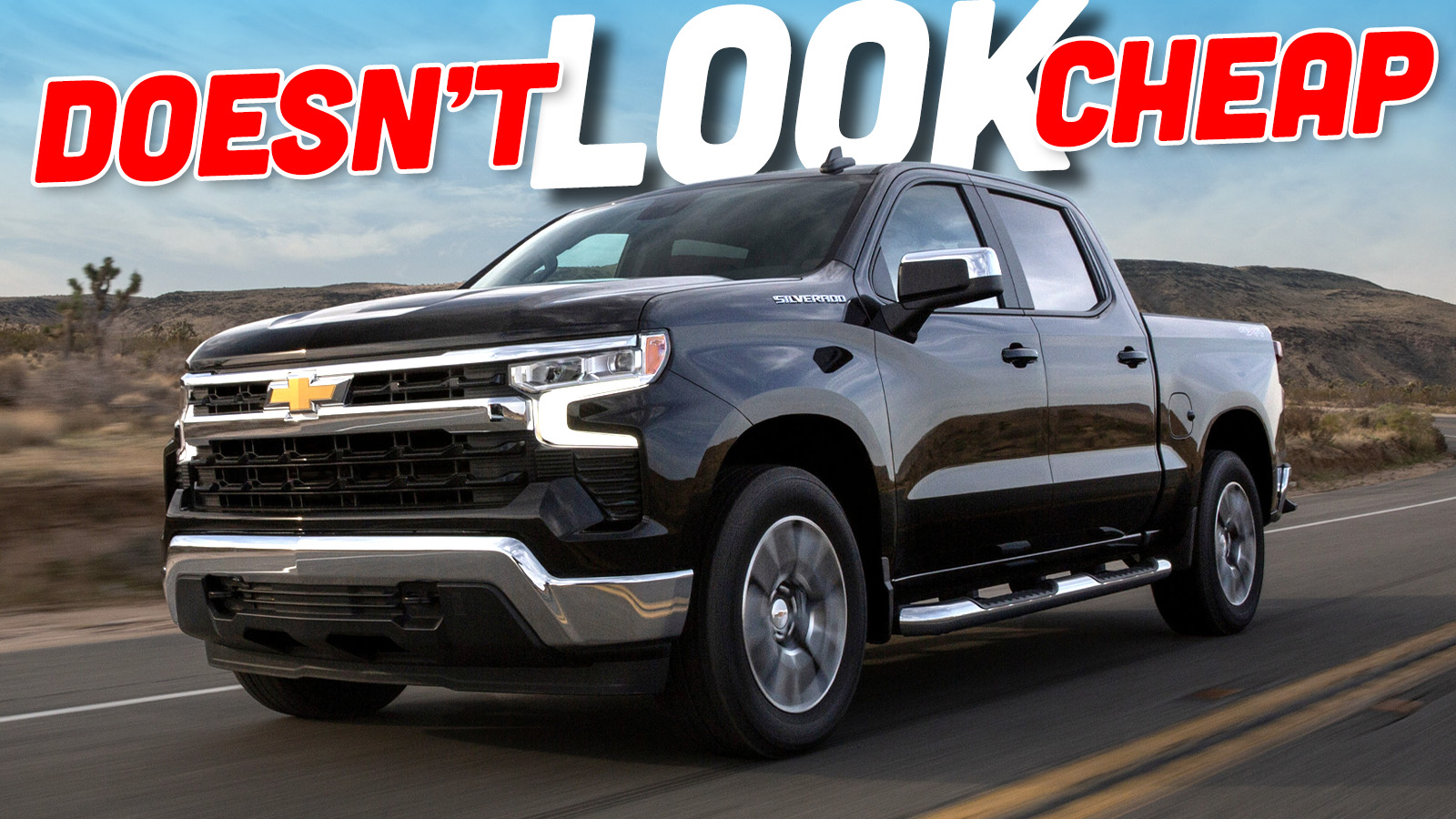
The American diesel pickup truck is an impressive workhorse. These trucks tow tens of thousands of pounds while returning respectable fuel economy and coddling their drivers in loads of luxury. But diesel trucks also tend to be heavy-duty pickup trucks that can very easily cost you over $100,000. All of America’s Big Three will sell you one of those massive heavy-duty diesel pickups, but only one automaker group will still sell you a half-ton truck with a diesel. This is the 2026 Chevrolet Silverado 1500 Duramax diesel, and you can get it for not much more than the average transaction price of a new car.
There was once a time when you were able to buy a diesel truck in America without committing to a three-quarter-ton or larger rig. From 2014 to 2023, Ram was willing to sell you a 1500 with a 3.0-liter EcoDiesel V6. Yes, that diesel engine was an infamous unit, but the option was still there. Even the Jeep Gladiator was available with that engine!


The folks at the Blue Oval had their own half-ton diesel, too. From 2018 to 2021, you were able to roll out of a Ford showroom in an F-150 with a 3.0-liter Power Stroke V6 diesel. Amazingly, even the Chevrolet Colorado and the GMC Canyon had an available 2.8-liter Duramax four-cylinder from 2018 to 2022. So did the Nissan Titan, which had a 5.0-liter Cummins V8 from 2016 to 2019.

There’s some appeal in getting a diesel in a truck that isn’t as large as a house. Modern diesel engines are known for their mountains of torque, which is great for towing and hauling. These regular diesel trucks are also known for getting pretty good fuel economy for trucks, which means great highway range. The caveat is that emissions equipment failures, fluctuating diesel prices, and diesel engine maintenance can erode away fuel economy benefits.
Sadly, if you’re a devotee of diesel and don’t want an extra-large pickup truck, your pickings are slim. Nearly every single brand has canceled their smaller diesel vehicles. That is, except for General Motors. For now, only Chevrolet and GMC sell the only half-ton diesel pickup trucks in America, and they also happen to be America’s cheapest ports of entry into diesel trucks. I was just handed the keys to a 2026 Chevrolet Silverado RST Duramax, and I cannot wait to tow a big camper with it.

This press loan has been over a year in the making. You might remember me writing about the GM half-ton diesels in February 2025. It’s seriously taken me that long to score a loaner! Granted, I usually test diesel trucks once or twice a year when I have trailers to tow, so it’s not like I was knocking on GM’s doors much. Still, each time I asked, a diesel wasn’t in the Chicago press fleet, so you can only imagine how stoked I am now.
If you want to read about the history of GM diesel, click here to read my previous story. Otherwise, I want to get to why these half-ton trucks are special in today’s world.
The Babymax

Diesel passenger vehicles were last popular in America during the 2010s. At that time, it seemed that Volkswagen had cracked the code to making desirable diesels. A Volkswagen TDI was powerful, amazingly economical, and some models didn’t even require owners to use any diesel exhaust fluid. Volkswagen pretty much normalized the modern diesel, and was selling so many of them that other automakers want a piece of the pie. Then, of course, we learned that Volkswagen cheated. In short order, the reputation of diesel was tarnished once again, just like it was in the aftermath of the infamous Oldsmobile diesel V8 of the late 1970s.
You’d think that no automaker would be crazy enough to deal in diesel again after Dieselgate, but a flurry of automakers attempted to fill the void left by Volkswagen. General Motors wanted to use Dieselgate as an opportunity to become the king of diesel, just like it was in the late 1970s. In addition to the Chevy Cruze, the GMC Terrain, and the Chevy Equinox, GM also wanted to put diesel power into the Chevy Colorado, the Chevy Express, the Silverado 1500, the Chevy Tahoe, the Chevy Suburban, and its luxury SUVs. Until 2025, you were able to buy a Cadillac Escalade 600D, which had a buttery-smooth diesel under its hood.

Core to this strategy was the aluminum 3.0-liter LM2 Duramax straight-six, which was designed by the General Motors Global Propulsion Systems Torino group in Italy. This engine is based on a scalable architecture that allowed GM to build compact diesels as small as 1.5-liter triples. Here’s what I wrote regarding its design:
Engineer John Barta started at the back of the engine where the timing system resides. It starts with the crankshaft. A chain connects the crank to the high-pressure fuel pump. From there, another chain coming off of the fuel pump leads to the camshafts. Also connected to the crank and moving down is a wet belt that drives the oil pump. A wet belt is exactly as you picture it. Wet belts are basically timing belts that are constantly drenched in engine oil.
Barta mentions that the oil pump in these engines have a variable displacement, so the pump puts out only the exact amount of oil that’s needed when it’s needed. This prevents waste and according to Barta, is more efficient. The use of a wet belt also aids efficiency. A story by our Zoe elaborates: The wet timing belt promised multiple benefits over a traditional dry timing belt. Lubrication from the engine oil was supposed to reduce wear and noise. More importantly, though, it reduced friction, which would provide an efficiency benefit, with fuel savings of around 1%.
Enthusiasts hate wet belts. Not only does using a wet belt mean that the belt that runs the oil pump is now a maintenance item, but if one of these belts fails, it can clog up the engine’s oil pickup and passages with rubber chunks, potentially killing your engine if you don’t notice it in time. Thankfully, GM says that the wet belt in the 3.0 Duramax should be replaced every 150,000 miles. That said, replacing the oil pump wet belt does require dropping the transmission, so it’s not the most DIY-friendly procedure.

Also notable is fueling. The engine drinks fuel from a twin-piston pump feeding Denso G3.5S injectors, and maximum injection pressure is 36,500 PSI.
While Stellantis and Ford went with V6 diesel designs, General Motors went with a straight-six. Why? GM says sixes are smoother and there isn’t as much friction since they didn’t have to run two banks of three cylinders. Apparently, GM was so obsessed with making diesels that feel like gas engines that the “Babymax” gets joined to centrifugal pendulum absorber torque converters for extra smoothness. [Ed note: fascinating centrifugal pendulum absorber video here – Pete]
The Duramax LM2 has a 15:1 compression ratio, which is said to help the engine lower emissions. Attached to the engine is also a variable geometry turbo with an electronic actuator. At launch, the boost cranked up to 29 psi and helped the engine hit 277 HP and 460 lb-ft of torque. Nowadays, the straight-six mill pumps out 305 HP and 495 lb-ft of torque. That comes thanks to new injectors, a new combustion bowl, and new tuning. The upgraded half-ton Duramax is now called the LZ0.

The engine’s pretty quick, too, and can move a Silverado to 60 mph in under 7 seconds. That’s great for a diesel! I accidentally lit up the rear tires during my test drive. Also neat is the fuel economy. The EPA rates the Babymax at 23 mpg city, 28 mpg highway, and 25 mpg combined. Some owners report getting over 30 mpg when they aren’t pushing the truck hard. Others report getting in the mid- to high-20s.
I do need to note that, while these trucks are diesels, it doesn’t mean greater towing capacity. Here’s what I wrote last year:
Trucks with the 3.0-liter Duramax were initially limited to 9,300 pounds for towing capacity, a far cry from the 13,400 pounds offered by the 6.2-liter V8 option. Both engines commanded a $2,495 upcharge over a 5.3-liter V8 and it seemed like the 6.2-liter mill was a better deal.
Thankfully, GM rectified this problem as of 2022. The Babymax diesels now tow up to 13,300 pounds thanks to an optional beefier rear differential and an optional heavier-duty suspension package. That’s still 100 pounds short of a properly equipped truck with a 6.2-liter V8, but at least it shouldn’t feel like going diesel nets you a penalty.
America’s Cheapest Diesel
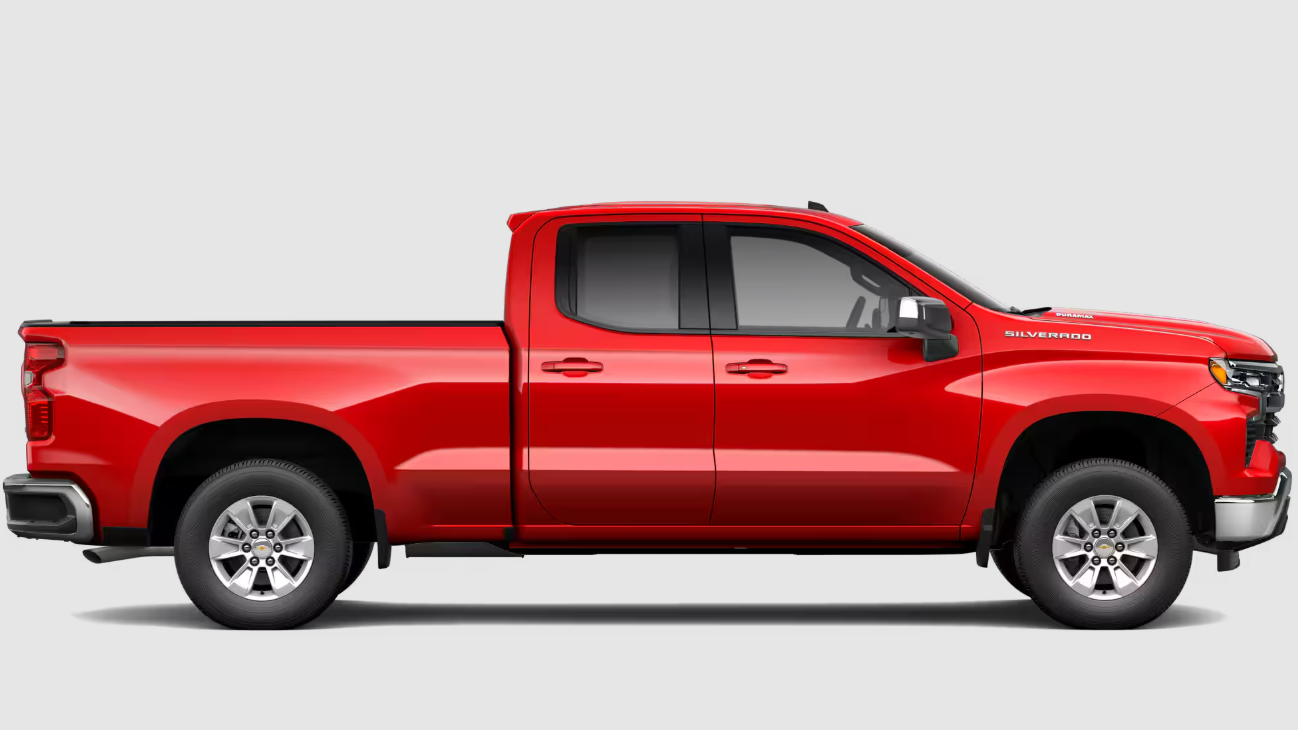
Of course, you’re probably here for the dollar amount, so let’s talk about it! Chevy still doesn’t really advertise the diesel, so you have to play around in the configurator to determine prices. In 2025, the cheapest Babymax was a 2025 Chevrolet Silverado LT with a double cab, a standard bed, and two-wheel drive. This truck was valued at $48,100, and the diesel engine moved that up to $51,145. Add in the $1,999 destination charge on top of that, and you get $53,144.
This year’s cheapest half-ton Duramax is a 2026 Chevrolet Silverado LT with a double cab, a standard bed, and two-wheel-drive. Starting price is $47,900, or technically slightly cheaper than last year. The diesel is a 2,390 upcharge, and as part of the diesel, there is a required upgrade from bench seats to bucket seats for $655. That adds up to $50,945, or still technically cheaper than last year. But then you get hit by the $2,795 destination fee, and you land at $53,740. All things considered, that’s not the worst price hike! You get a pretty spiffy-looking truck, too.
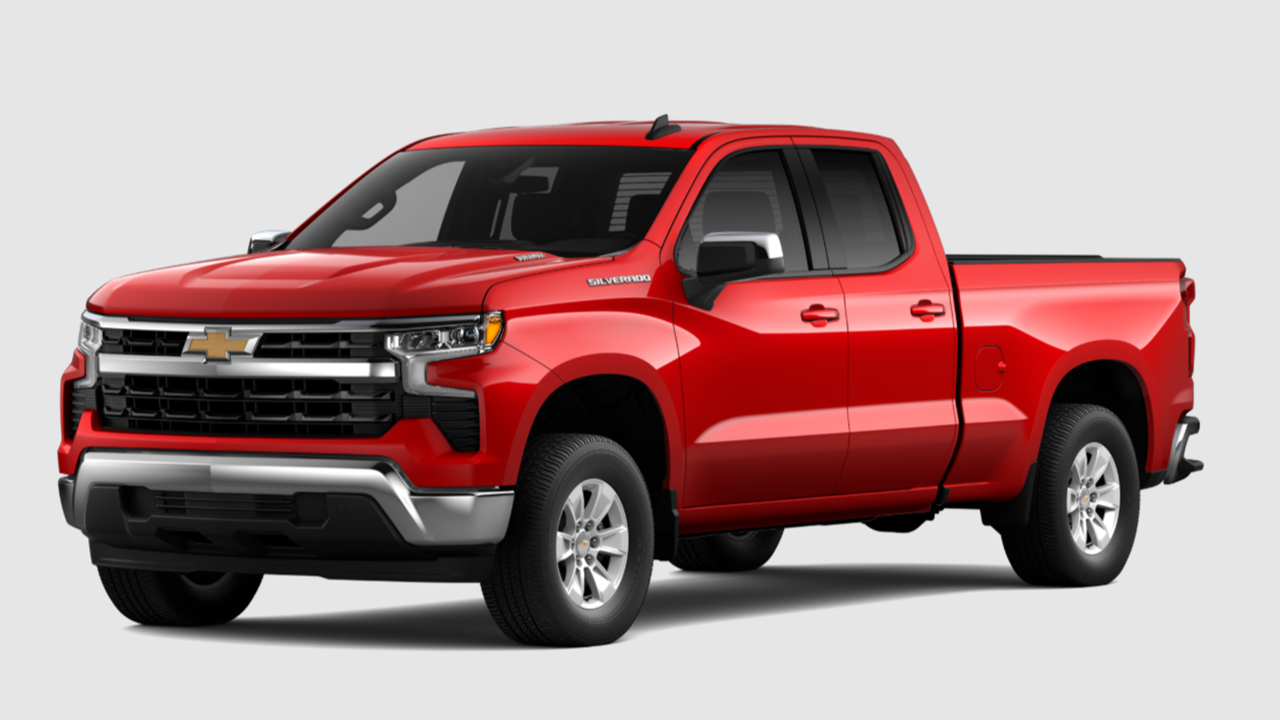
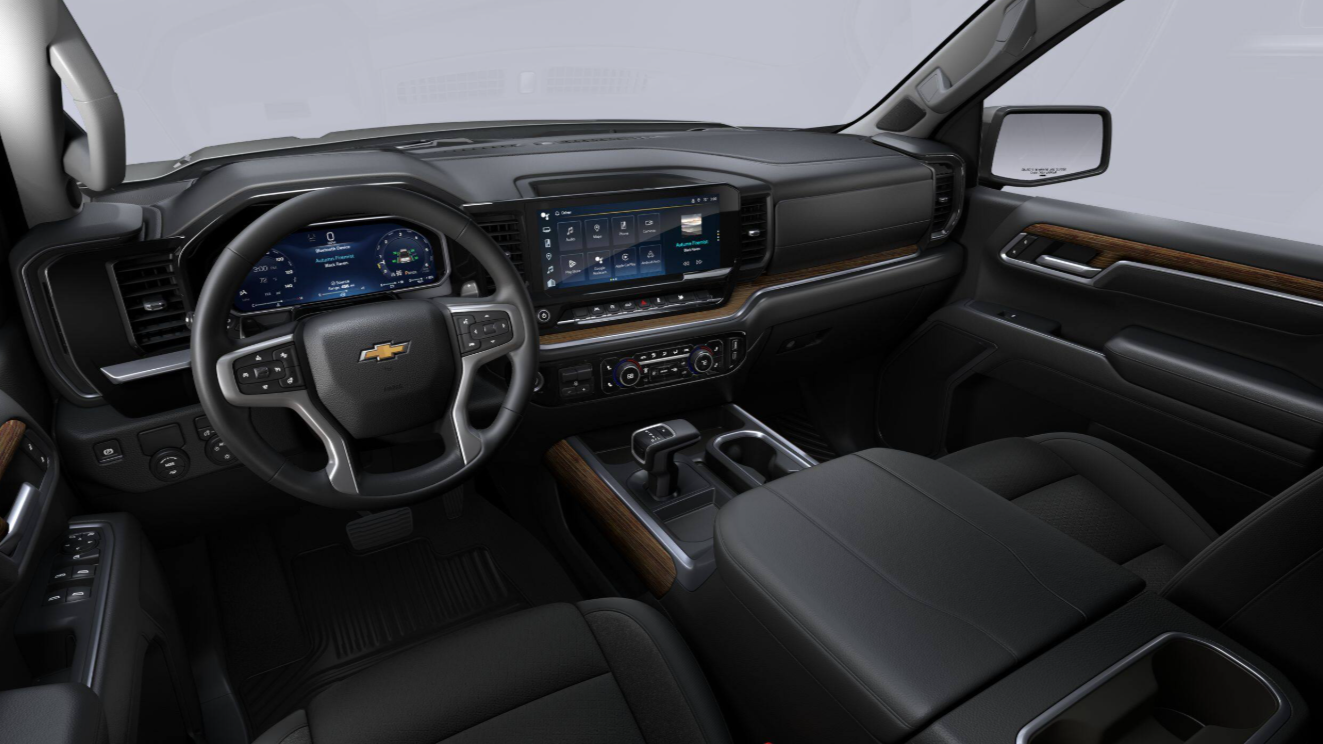
The features list isn’t too bad, either. Here’s what Chevy says you get in a base LT with a diesel:
3.0L Duramax Turbo Diesel engine.
10-speed automatic transmission with Electronic Precision shift and front bucket seats.
17″ Bright Silver painted aluminum wheels.
17″ 255/70R17 all-season, blackwall tires.
Jet Black, Cloth seat trim.
13.4″ diagonal Chevrolet Infotainment 3 Premium System with Google built-in.
12.3″ diagonal reconfigurable Driver Information Center.
Wireless Charging.
USB ports.
Engine block heater.
Electronic Transmission Range Selector.
LED reflector headlamps and signature daytime running lamps.
You also get some classy simulated wood, heated seats, and dual-zone climate. Not bad at all!
How does this compare to heavy-duty pickups? The absolute cheapest Silverado 2500 HD I was able to make was a regular cab, long bed, and two-wheel-drive WT model. It starts at $45,900, and the addition of the 6.6-liter Duramax piles $9,990 onto the price. That’s $55,890 before the $2,795 destination fee, for a total of $58,685 and an extremely basic work truck out the other end.
Maybe a Ford F-250? Sure, that one starts at $45,975 for a regular cab, long bed, and two-wheel-drive XL model. Slapping the big boy 6.7-liter High Output Power Stroke onto it (the only diesel option this year) will set you back $13,495. Throw the $2,795 destination charge on the fire, and you’re at $58,265, or slightly cheaper than the stripped-out Chevy. Ford won’t even let you have a fun color without paying for it.
Fine, how about a Ram 2500? A Ram 2500 Tradesman starts at $46,855, and that gets you a regular cab, long bed, and two-wheel-drive. Ah, but the configurator won’t let you get that one with a diesel, so you have to step up to the same Tradesman but with 4×4 to get the cheapest Ram diesel. That starts at $49,785, and you’ll have to cough up $12,995 for the 6.7-liter Cummins. You’re at $62,780 before you pay the mandatory $2,795 destination charge.
Stay Tuned For My Review

Normally, here’s where I’d blockquote what other journalists said about their drives in the Silverado, but I won’t. Finally, I get to test it out for myself, and I get to do it in the way I do best. I have a 2026 Chevy Silverado RST crew cab diesel in my hands right now, and it’s going to be my rock for the duration of EAA AirVenture Oshkosh next week. It’s going to tow a long and heavy travel trailer, a quiet generator, and all of my gear. I love using trucks as trucks, and I’m genuinely excited to see what one of America’s only new half-ton diesels is like.
If you’re curious, this one is $63,435 after destination fee. I like that Chevy didn’t give me a top-spec model with all of the fixings like automakers usually love to give to the press, but an example of a truck that you can realistically expect people to order for themselves.

My very early first impression is that I get to hear the lovely clatter of a diesel, but in a truck that can easily fit into a parking space. I mean, it’s a modern truck, so yes, it’s still quite big. But it’s not a hulking lump of metal like heavy-duty pickups are. I also like how the diesel isn’t even that loud, and I can barely feel it running there, which is exactly as GM intended. We’ll see how my impressions change after putting the Silverado to work.
I like that GM is still offering this option long after its competitors have given up. I imagine the market for a half-ton diesel isn’t terribly large, and I would not be surprised if the Sierra 1500 and Silverado 1500 diesels fill the niche. After all, much of the world is focusing on electrification right now, not going back to diesels.
But if you, like me, still hold on to your oil burners for dear life, now you know your lowest price of entry. I don’t know if I’ve just gotten used to how expensive everything feels today, but $53,740 doesn’t seem so bad. It’s cheaper than that Airstream I just wrote about! Honestly, I’m just happy to drive a truck that doesn’t have a price knocking on the door of six figures. I suppose you’ll have to wait and see if I continue to like the idea of the Silverado 1500 Duramax after I’ve lived with it.
Top graphic image: Mercedes Streeter


I welcome the lack of diesel options in the American market. We don’t need more diesels, especially when emissions enforcement is largely non existent.
The mileage is impressive, and I can see in certain use cases it could outweigh the other costs, but that big maintenance item at 150K is hard to swallow.
For someone who drive a lot of highway miles and trades every few years, I can see this making some sense, but for the “I’m gonna run this till the wheels fall off” kind of buyer, not so much.
One could go over to the Ram store and get a Hurricane 3.0 I6 and get 115 more hp while only giving up 26ft lbs.
There’s a more than good chance the transmission is going to need to come out at or before 150k anyway soo while you’re in there…
Haha, good point!
I had a half-ton diesel and while I liked it for the first 5 or 6 years I had it, it sucked when stuff started to go wrong with it. You pay the diesel tax on everything. Water pump? More expensive because diesel. AGS? More expensive because diesel. Minor exhaust leak? Wrecks your DEF injector to the tune of $1300.
The end of the line for me was when it stranded me with a bad crankshaft position sensor (which was a known flaw that they “fixed” with a software update to keep the engine running in limp mode, but otherwise left you just as screwed) and the flex pipe coming out of the turbo rusted through and started filling the cab with raw diesel exhaust. After the truck was out of commission for nearly six months I unloaded it to the dealer for basically nothing and moved on with my life. No regrets.
Admittedly, the Ram EcoDiesel is probably the worst of the small diesels, but a lot of these issues eventually apply to any diesel. And I didn’t even have a major emissions system failure because I did a lot of highway miles so my DPF never clogged.
Even though I liked the fuel economy and being able to say I drove a diesel, when the time came to replace that truck I opted out of the Babymax because the benefits just don’t outweigh the drawbacks in the long run. I also discovered that I prefer the V8 rumble to diesel clatter, but YMMV on that. 🙂
My buddies both have this, one a Chevy High Country & the other a GMC Sierra more base model. They swear by them as they both do a ton of highway miles & say that even with the higher cost of diesel they come out ahead. They find their mileage is as good or better than the sticker.
This is pretty common for all diesels. For some reason the EPA tests tend to underrate them.
Was just reading a thread somewhere about how terrible the wet belt design is to replace and has issues with premature failures on Aussie market Ford Rangers, imo not worth a 1% increase in gas mileage and let’s be real do we really trust GM bullet proofed this.
I grew up around pickups since my dad was a builder but all of his were 1/2 tons with gas engines. When I finally drove a 2008 Chevy 3500 w/ the Duramax I was quite impressed by its performance and gas mileage and was immediately a convert (though my life path hasn’t included a need for a pickup). Diesel still seems like the best engine for most pickup applications to me, though the seemingly never ending complexity of modern diesels makes me wonder if the juice is worth the squeeze.
I miss my Canyon All Terrain (later called AT4) with the 2.8 Duramax. It was such a great package.
I work for one of the repair information aggregators and we are hearing NOTHING but hate for these on the service side. Labor for timing chain replacement is THIRTY SIX hours and here is the list of single use parts you’ll be changing when you do that job: Air Conditioning Compressor and Condenser Hose Seal – Large [2x]Air Conditioning Compressor and Condenser Hose Seal – Small [4x]Air Conditioning Evaporator Thermal Expansion Valve Seal – LargeAir Conditioning Evaporator Thermal Expansion Valve Seal – SmallAutomatic Transmission Flex Plate Bolt [8x]Camshaft Cover GasketCamshaft Sprocket Bolt [2x]Catalytic Converter ClampCatalytic Converter GasketCrankshaft Front Oil SealCrankshaft Position Sensor SealEmission Reduction Fluid Injector Clamp [2x]Engine Mount Frame Side Bolt [6x]Exhaust Gas Recirculation Cooler Inlet Pipe GasketExhaust Gas Recirculation Cooler Inlet Pipe Gasket – LowerExhaust Gas Recirculation Cooler Inlet Pipe Gasket – UpperExhaust Gas Recirculation Pipe SealExhaust Gas Recirculation Valve Cooler GasketExhaust System Front Gasket @ Emission Reduction Fluid Secondary InjectorExhaust System Front Gasket @ Nitrogen Oxides Catalytic ConverterExhaust System Front Gasket @ Reductant Fluid InjectorFuel Injection Pump BoltFuel Injector Bolt [6x]Fuel Injector Seal [6x]Fuel Injector Washer [6x]High Pressure Diesel Fuel Feed to Injector Pipe [6x]High Pressure Diesel Fuel Feed to Rail Pipe [2x]Oil FilterOil Level Indicator SealTiming Chain Lower CoverTiming Chain Tensioner GasketTransfer Case Front Output Shaft Boot ClampTurbocharger GasketTurbocharger Nut [3x]Turbocharger Oil Feed Pipe GasketTurbocharger Oil Return Pipe GasketWe’re hearing customer-pay tickets of $25K on these
The $25K was wrong. That figure was for instances where the customer opted for engine replacement after diagnosis. That said, if you just replaced the chain and all the components at dealer rates – its over 10 grand.
My initial hot take from the pics – that shifter is dumb. What a waste of space. Also, didn’t we learn anything from Chekhov getting run over by his own car? Trucks with automatic transmissions should have column shifters, period. End of story. Also, wet belts are an abomination and the extra efficiency isn’t worth the added maintenance and risks. Just use a chain or gears.
I really have to wonder if in a world where we have the technology to have a strong hybrid system that uses the electric motor to supplement the torque, we still need light duty diesel pickups. I can’t imagine that system would be more expensive than the upcharge for a diesel.
Yelchin (Chekov) thought his car was in park when it was still in gear because the shifter design was confusing and could fool you into thinking you were in park when you were really in reverse, and there was no light-up indicator to tell you otherwise. The design of this one isn’t confusing. You push the park button to put it in park, and the park light turns on.
I still maintain that the self-centering console shifters are bad, and should be column shifters instead. The only excusable self-centering console shifter is for a sequential manual transmission.
These are smart enough to put it in park if you open the door in drive. Don’t ask me how I know…
But you’re absolutely right. The shifter is a giant waste of space.
This is what killed the Ford 3.0 diesel. The PowerBoost hybrid was cheaper and more powerful and close enough on fuel economy to not matter. Basically the only reason to buy the diesel was if you really, really wanted a diesel.
Even the column shifter in the F-Series will put itself into park if not done before opening the door.
Knowing that all the shifters in these trucks are just hooked up to electronic actuators anyway, the knob in the Ram makes more sense. It’s out of the way and takes up no otherwise useable space and is easy to use.
My mom has pushbuttons in her Acura, and it takes up the same amount of room as a shifter but isn’t as intuitive to operate. First time I drove it, I was like “why??”.
My advice?
Stay away. Stay far, far away from these things.
In 2018 I was ever so briefly entertaining the idea of buying a Colorado with the diesel option.
First of all it was going to cost a fortune. Secondly, the engines turned out to be junk. Maybe notsomuch the engines but everything else attached to them. The exhaust systems on these are pretty terrible given how complex they are with all of the particulate matter emission equipment. My Mother in law bought what must have been one of the only diesel chevy cruz’s and good gawd it was in the shop all the time with clogged up this or that. A lot of people have the same issues with other modern diesel vehicles.
Lastly… I cannot get over the wet belt. Doing something that stupid and totally unnecessary, where you’re guaranteeing the owner a future $5,000 expense whether they like it or not when a metal chain could have been used instead has me seriously question whatever other poor engineering solutions they stuck in these things.
Funny enough, the oil pump belts on these things is giving them the least problems.
Also I’ve got a ’22 Colorado Duramax, about to hit 87k and the only emissions / engine related problem I’ve had was a NOx sensor replaced at 16k under warranty.
Indeed. The engine timing chain is a THIRTY-SIX hour, engine-out job and we’re hearing of $25K customer pay tickets on these
That seems.. excessive. Even at $250/hr that’s $9k in labor, no way it takes $16k in parts.
The consumable part list for that job is not small. The timing cover itself being one of them
The GM timing cover is $60 at Rock Auto. The chain itself is $25, guides are out of stock but a google search shows the most expensive guide is $16.
I have a hard time believing it was just a timing chain replacement if the final bill was $25k.
Okay, I’ll give you that my number was not correct. At all. After looking back on it – the number I quoted was for some instances where the customer replaced the long block from a chain failure. That math makes a little more sense.
I get wrapped up in the labor hours. It’s the #1 complaint from shops.
Is the truck still worth $25k by the time it needs a timing chain?
I was off on my example a lot. The $25K was for instances where the initial diag of timing chain resulted in long block replacement, either due to customer preference or collateral damage.
Not making light of my mistake – a dealership customer pay timing chain job on one of these will be in excess of 10K.
Never had any problems with my 2016 Canyon Dmax
GM needs to offer that engine in other vehicles. Who wouldn’t want a Buick Encore GX with a diesel straight six?
Surprised there is no mention of the thrust bearing issue in the LZ0. I don’t think a fix has been determined.
So I have owned the 2.7 Turbo 4, the 4.3 V6, the 5.3 V8, and now the 3.0 I6 diesel (LZ0, so the improved output engine.)
I would usually average 18mpg in the 5.3 and the 4.3, 21 in the turbo 4, and around 26 in the diesel, all things equal, 60/40 highway/city respectively.
The more freeway driving the higher the difference between the Diesel and the 2.7 4cyl turbo. The diesel sits well under 2000rpm going 70mph; the turbo 4 was hanging out between 2400-2700rpm at this speed and the instant fuel economy feedback reflected this.
The forums are absolutely on point that you can easily get low to mid 30s in the diesel doing country backroads at 55mph or constant freeway speeds at 65. My best 25 mile stretch hit 40.1mpg but that was probably with a tailwind.
So no, it’s not a “1% difference” between the turbo 4 and the diesel. Let’s not exaggerate the lack of discernible difference in the name of “what’s the point of the diesel”.
With that said, diesel sits at a 30% premium over regular in my part of Texas. So it is in most cases a wash. A ton of freeway driving would probably make the business case for the diesel.
Edit to add all examples are 4WD, with the diesel being on the X31 off-road Sierra 1500. All driving in the flat coastal plains of Texas. And the DEF cost is minimal – I spend maybe $15 every 4-5k miles to fill up the DEF
I took my 1500 on a short road trip over the weekend that was all flat back roads. Over 75 miles I was able to tease 24.7mpg out of the Turbomax by being extremely light on the accelerator and keeping it around 55mph. Not how I would normally drive it of course.