


If you’ve purchased an American RV at any point in the past several decades, there’s a pretty good chance that at least some part of it was made out of a tropical plywood known as lauan. The RV industry loves this wood because it’s light, moisture-resistant, and crazy cheap. Lauan can be found all over a typical RV, from its walls and floors to cabinetry, and it carries a possible secret. Not only is lauan just an inferior building material in today’s world, but its usage can be shockingly destructive to the world’s rainforests. It’s time for the RV industry to move on, and it wouldn’t even be that hard.
Back in August, reader David P sent me the link to a bombshell of a New York Times story. That report, titled “The Rainforests Being Cleared to Build Your R.V.” by Sui-Lee Wee, is an excellent piece of journalism, and even if you are not interested in RVs, you should read it. In this report, Sui-Lee Wee details how the American RV industry prides itself on its U.S.-built campers, but relies on lauan wood from the rainforests of Indonesia and other regions in Southeast Asia to build the RVs that are sold in the hundreds of thousands of units each year.


The American RV industry markets itself as a steward of conservation and the outdoors. When you take your RV into the wilderness, you’re supposed to leave nature in the condition that you’ve found it in. Preferably, you’d even pick up the rubbish left behind by others and leave the area in better shape than you found it in. As the RV industry touts all-electric campers and greener builds, the subject of where the industry gets lauan from is important.

But even if you do not care about the rainforests of far-off lands, you might care about the other reasons why lauan might not be so great. If you’ve ever owned a camper with lauan walls and floors for long enough, you’re almost certainly acutely aware of what happens when a leak happens and soaks the lauan. If you’re lucky enough to have never experienced it before, water leaks can lead to the lauan delaminating, splitting, and crumbling to pieces. Now, imagine that happening to your RV’s walls and floors. It’s destruction that can cost more to fix than you even paid for your RV, and RVs are often the second-largest purchase people make, behind only a house.
The great news is that the RV industry already has viable replacements for lauan; it just has to commit to them.
Backing Up
To get a better understanding of the current situation around lauan, let’s go back in time.
In the early days of RV construction, builders assembled campers out of whatever material they found and thought would get the job done. In the 1920s and the 1930s, several campers were built out of Masonite, a board made out of steam-cooked and pressure-molded wood or paper fibers. Its name comes from its inventor, William H. Mason, and Masonite was used for everything from RV walls to home furniture.
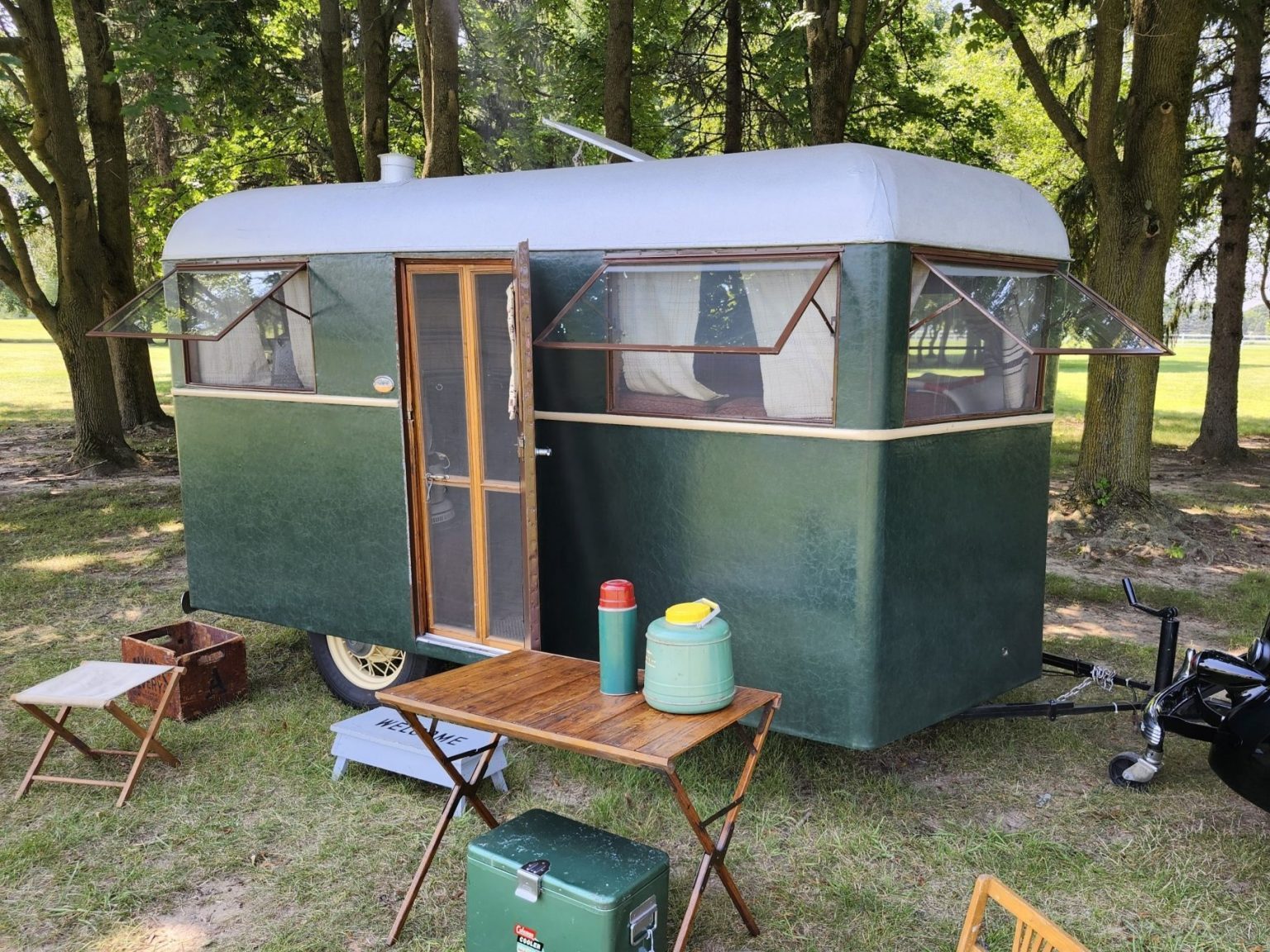
Other trailers in the pioneer era of RVs used plywood covered in aluminum sheets, sealed plywood, hardwood, or were built out of metal. America’s largest producer of campers in the 1930s, Covered Wagon, built its trailers (one is pictured above) with frames made out of white oak, floors of plywood, and wood-framed walls draped in a leather-like material for exterior cladding.
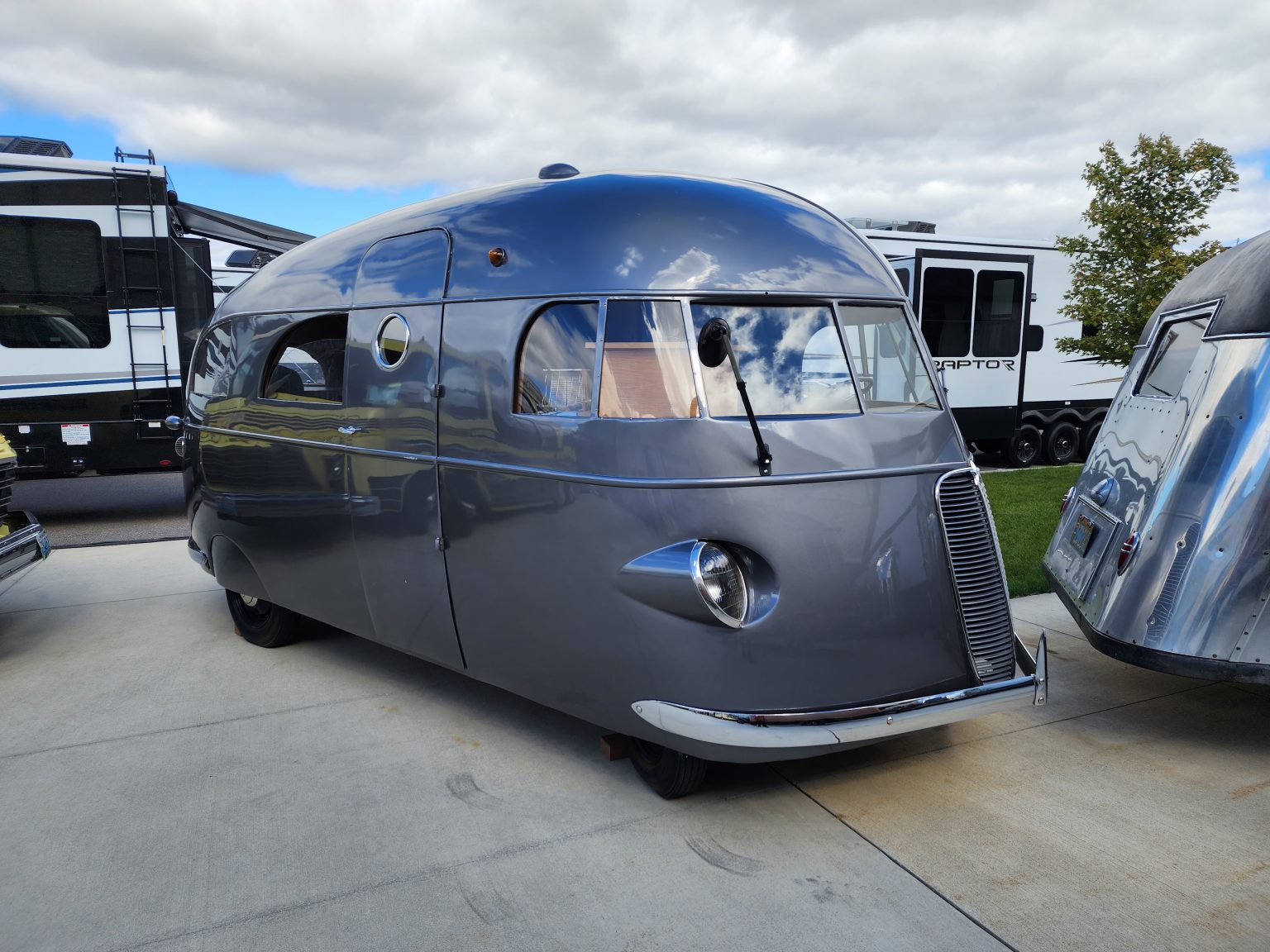
Some companies, like Bowlus, Airstream, and Spartan, figured out that they could build a long-lasting trailer by ditching wood construction for building campers with a riveted aluminum body like an aircraft has. Even homebuilt teardrop campers would go aluminum after World War II, thanks to cheap surplus aircraft aluminum. Later, a new wonder material would come onto the RV scene, fiberglass, which revolutionized the super-lightweight end of the RV market.
However, as the International Wood Products Association claims, a major breakthrough in RV construction was made in the 1970s:
The RV industry has been using imported woods like lauan plywood since the 1970’s, prized for its strength, unique thin construction and affordability. “Lauan is such a great material for the industry because you can get it in thinner sheets than domestic plywood,” says [Bruce Hopkins, vice president of standards and education for the Recreation Vehicle Industry Association]. “Thinner sheets allow manufacturers to bend it for interior contours, so they can provide the consumer with something other than just a square box. It’s also very easy to laminate with fiberglass and aluminum for exterior walls, and with vinyl and other materials for interiors. In each case, the lauan plywood provides the combination of strength, thin construction and lighter weight, all critical in RV construction.
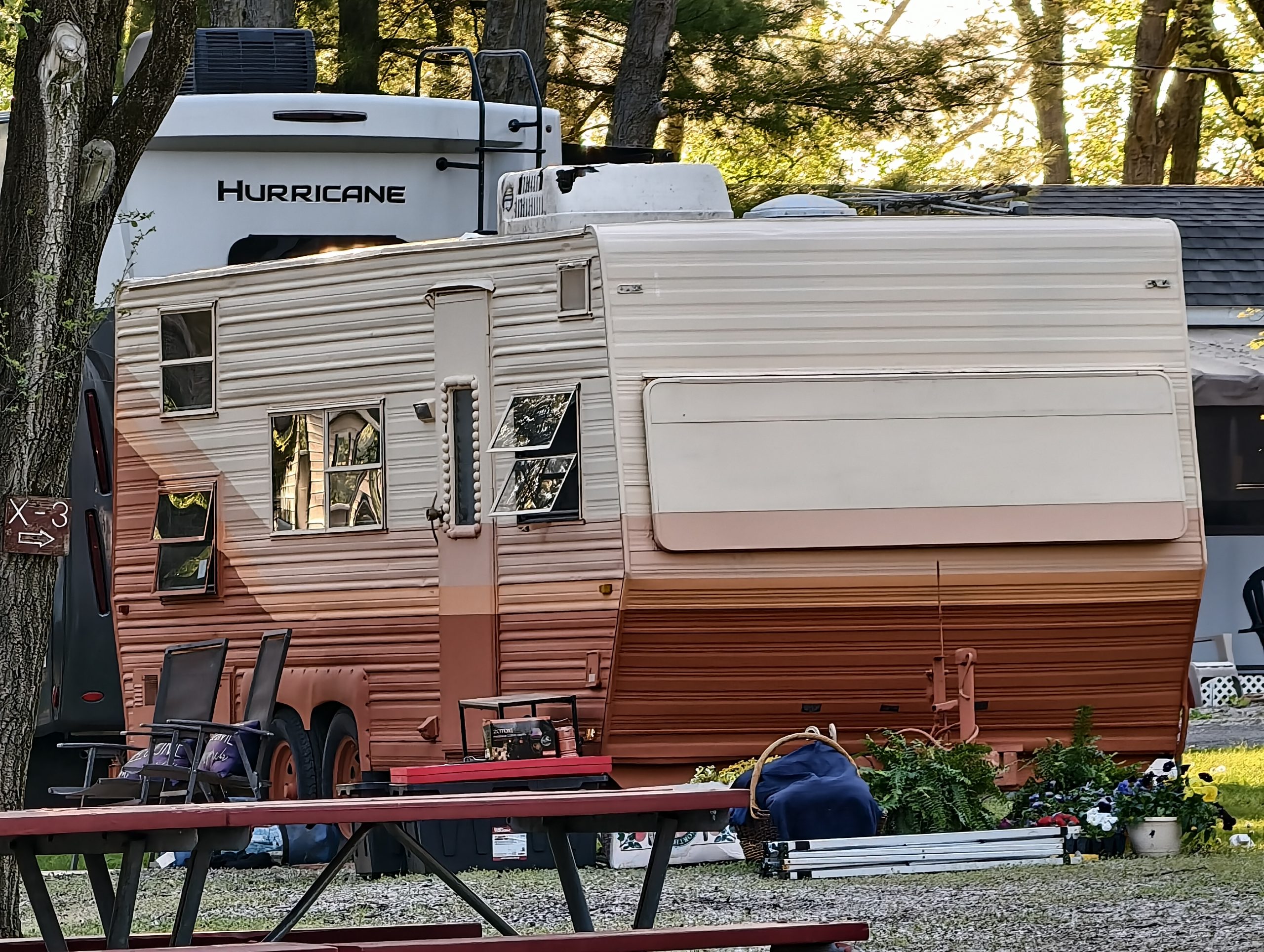
Thanks to lauan, RV manufacturers no longer had to experiment with whatever materials existed in America. Now, these companies could use this imported wood for everything from RV walls to RV cabinetry, and know that what they built should be strong enough for the job.
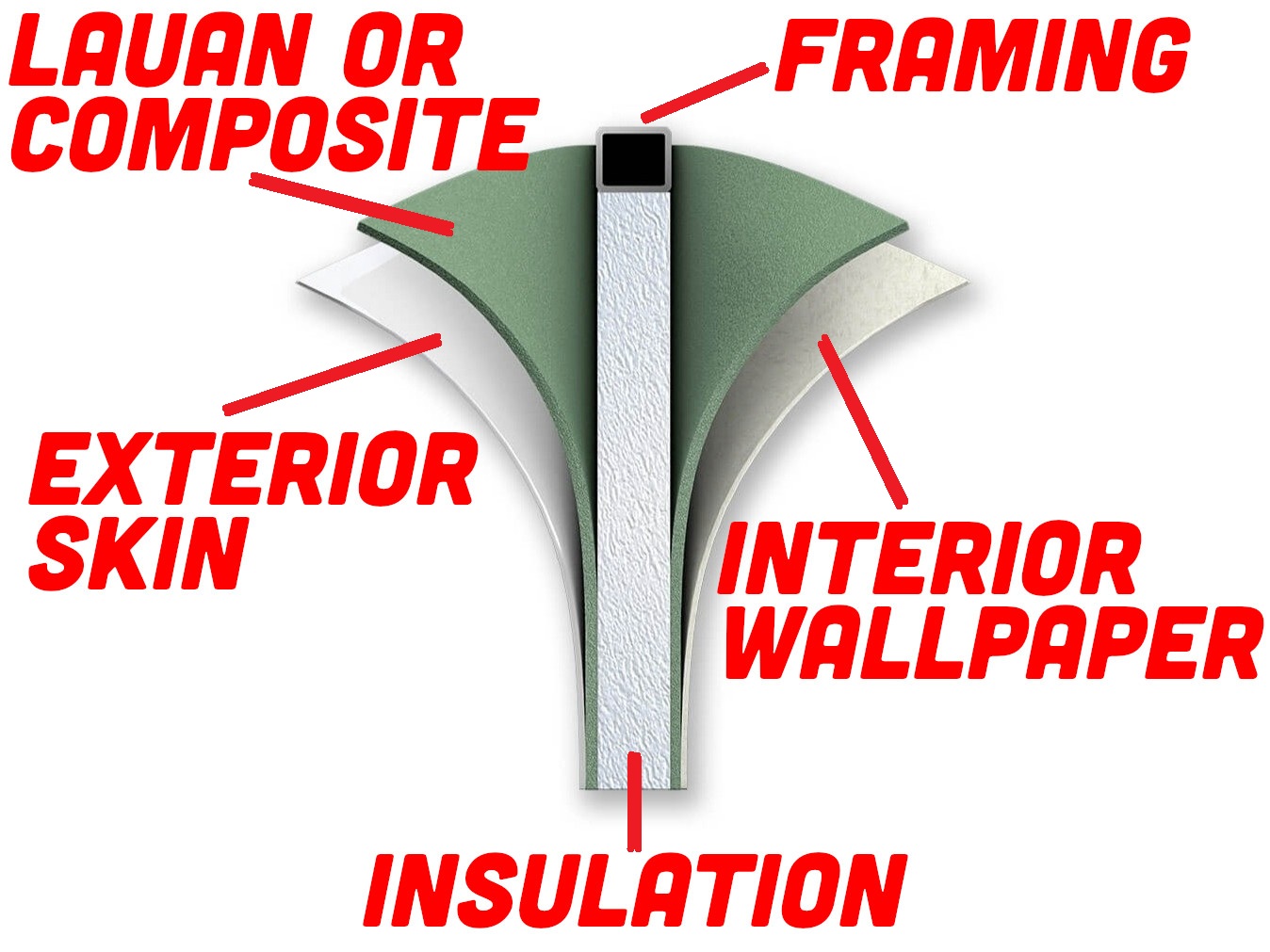
As Hopkins noted above, one of the most common uses of lauan is to make a bonded sandwich for walls. A common construction method involves a lauan sandwich with aluminum or fiberglass sheeting outside, a layer of lauan, a layer of insulation, and another layer of lauan. This sandwich is pressed and bonded together, and when finished, the sandwich is supposed to act as one solid structure. When you buy a typical camper, the interior walls are lauan with a sort of plasticized wallpaper finish on top.
The Money In Lauan
When lauan works, it does a decent job. Indeed, intact lauan sandwiches are strong and lightweight. It’s also a very affordable material for the RV industry to use to crank out tons of RVs each year. Historically, the RVIA says, the RV industry benefited from the Generalized System of Preferences, a trade program described by U.S. Customs and Border Protection as:
GSP is the largest and oldest U.S. trade preference program that provides nonreciprocal, duty-free treatment enabling many of the world’s developing countries to spur diversity and economic growth through trade. Economic development is promoted by eliminating duties on thousands of products when imported from designated beneficiary countries and territories. Authorized by the Trade Act of 1974 and implemented on January 1, 1976, GSP is a preferential trade legislation that is subject to Congressional re-authorization.
Basically, RV manufacturers used GSP to import lauan from Southeast Asia for cheap. When the GSP program lapsed at the end of 2020, RVIA says, the RV industry had to pay $1 million to $1.5 million in import duties each month for the lauan it was importing. Congress is in charge of reauthorizing GSP, which extends the program another two or three years.
In an unexpected move, Congress did not reauthorize GSP after its expiration, yet, that hasn’t stopped the RV industry, and it continues to import lauan despite the apparent cost. RVIA, along with reportedly more than 300 groups, including the Heritage Foundation, the American Apparel & Footwear Association, the Coalition for GSP, and more, have been lobbying Congress to reauthorize GSP. In RVIA’s policy agenda, the representative for the RV industry specifically targets lauan from Indonesia as a product it wants to be able to import duty-free.
The New York Times Report
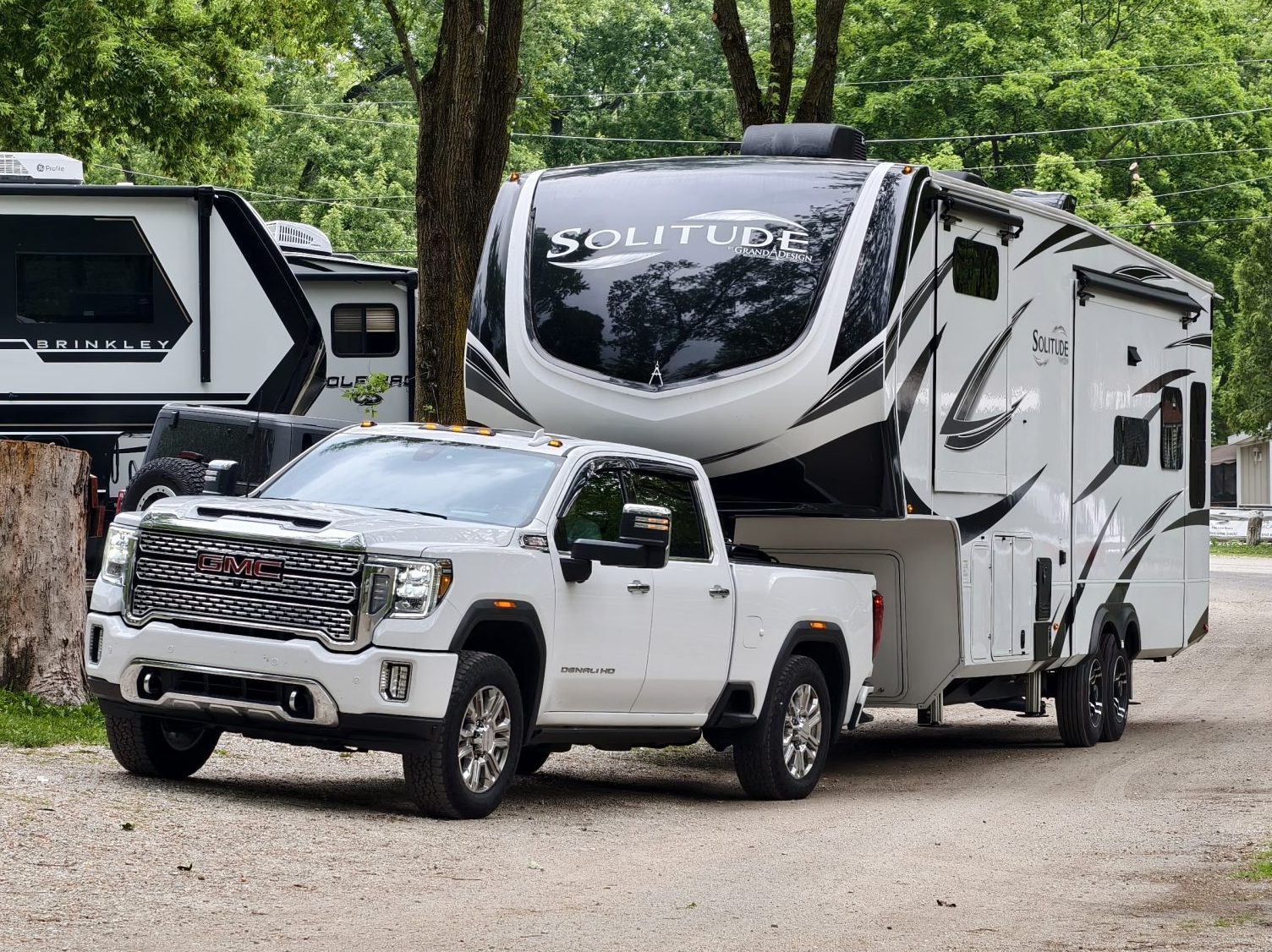
That brings us back to the excellent reporting by the New York Times. For total clarity, we will be using direct quotes here. Journalist Sui-Lee Wee starts off the story with a grim anecdote:
Word spread fast that heavy machinery had arrived in the ancient rainforest near the Indonesian village of Sungai Mata-Mata, an expanse on the western edge of the island of Borneo that is home to orangutans, clouded leopards and sun bears.
Flouting the law, the excavators began digging trenches to drain the area’s protected wetlands. Then came the logging crews, which cut down woodlands the size of more than 2,800 football fields, in just a few days. It was an apocalyptic sight, said Samsidar, a regional forestry official who goes by one name, recalling the devastation he encountered two years ago. “The trees had turned into piles of wood.”
Not just any kind of wood, though. The trees were meranti, a species found mostly in Indonesia and other parts of Southeast Asia, and their tropical hardwood is of particular interest to one industry in the United States: manufacturers of motor homes.
If you thought that was bad, it gets worse. According to the NYT, since 2020, the United States has brought in more than $900 million worth of lauan, mostly from Indonesia.
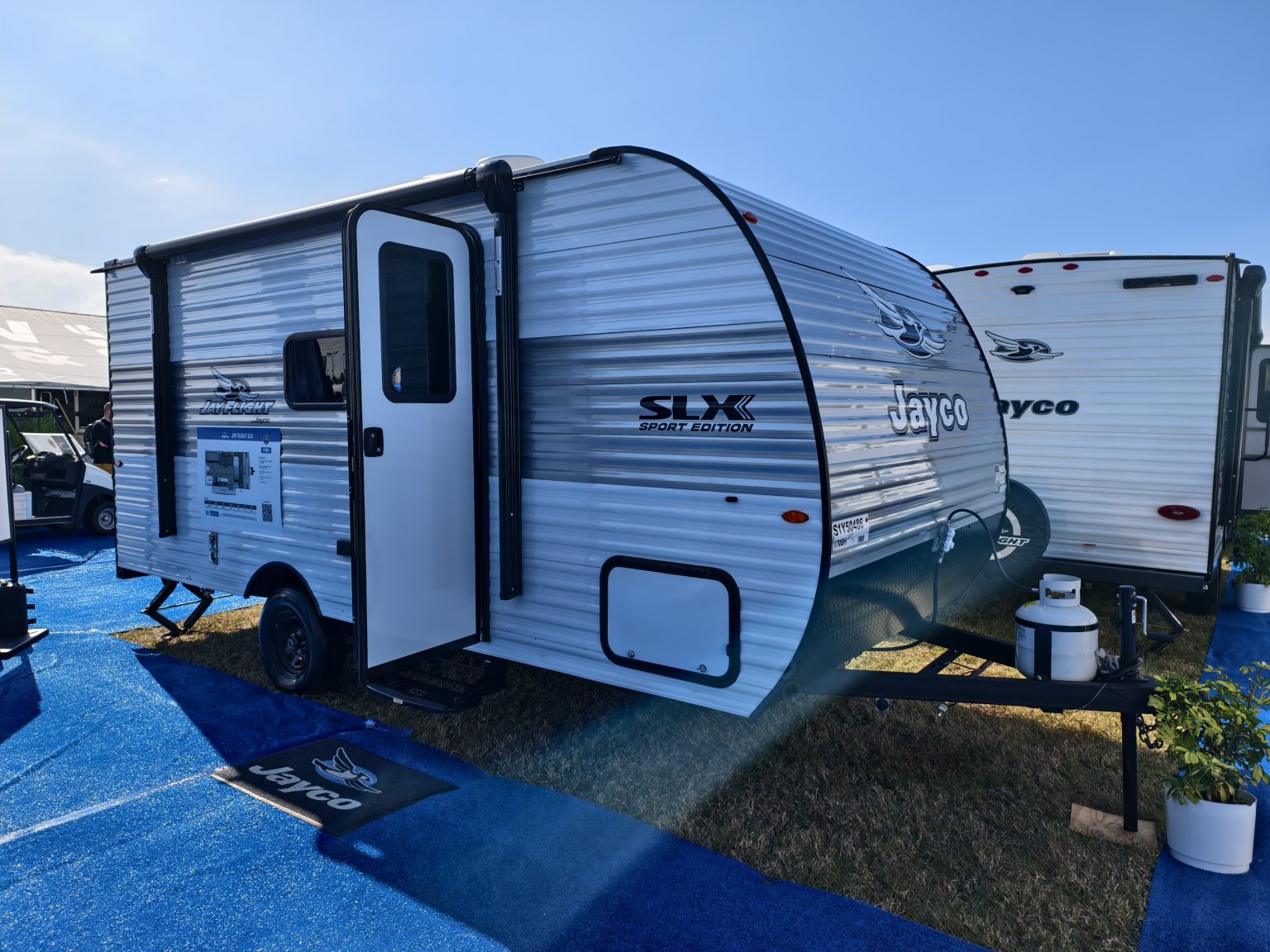
The NYT report continues by noting that tens of thousands of trees were felled in Indonesia last year alone just to supply America with lauan. Reportedly, all of those trees were in rainforests, and the deforestation was rubber-stamped by local governments.
Here’s how the RV industry responded to the report, from the New York Times:
Among the big R.V. makers, Thor Industries says that its suppliers are forbidden by U.S. law to buy illegal timber, and Winnebago says that it is committed to preserving the planet.
Thor added that it was not aware of any deforested wood in its supply chain. Winnebago referred questions about the origins of its lauan to its supplier, Patrick Industries, an American company, and the R.V. Industry Association; neither of which responded to requests for comment. Nor did Forest River, another big R.V. maker.
RVIA effectively argues that it has no choice, from the report:
“Without access to lauan, manufacturers would be forced to use thicker, heavier materials that reduce livable space, impact fuel efficiency, and compromise the structural design and safety of the R.V.,” the R.V. Industry Association said in a letter to the Trump administration in April while arguing against new tariffs on the plywood.
“In short,” it added, “lauan is not just a preference — it is a functional necessity integral to nearly every R.V. built in the United States.”

If you check out RVIA’s federal policy agenda document, it makes the same argument that there is no domestic replacement for lauan.
I have also reached out to America’s largest RV manufacturers, Forest River, Thor Industries, and Winnebago, for comment on the findings presented in this report. I also asked if these companies might be considering moving away from lauan in the future.
As of publishing, I have not heard back from these manufacturers.
There Are Other Ways To Build A Camper

I take some issue with the industry’s assertion that it has no choice but to use lauan. Let’s bring up what RVIA said again:
“Without access to lauan, manufacturers would be forced to use thicker, heavier materials that reduce livable space, impact fuel efficiency, and compromise the structural design and safety of the R.V.”
Thor Industries’ flagship brand is Airstream, a company that is iconic for building the bodies out of its campers out of aluminum. Many RV owners, myself included, would argue that Airstream’s aluminum bodies are actually better for structure than lauan sandwiches and wood framing are. It’s also not like an Airstream weighs a million pounds, either.
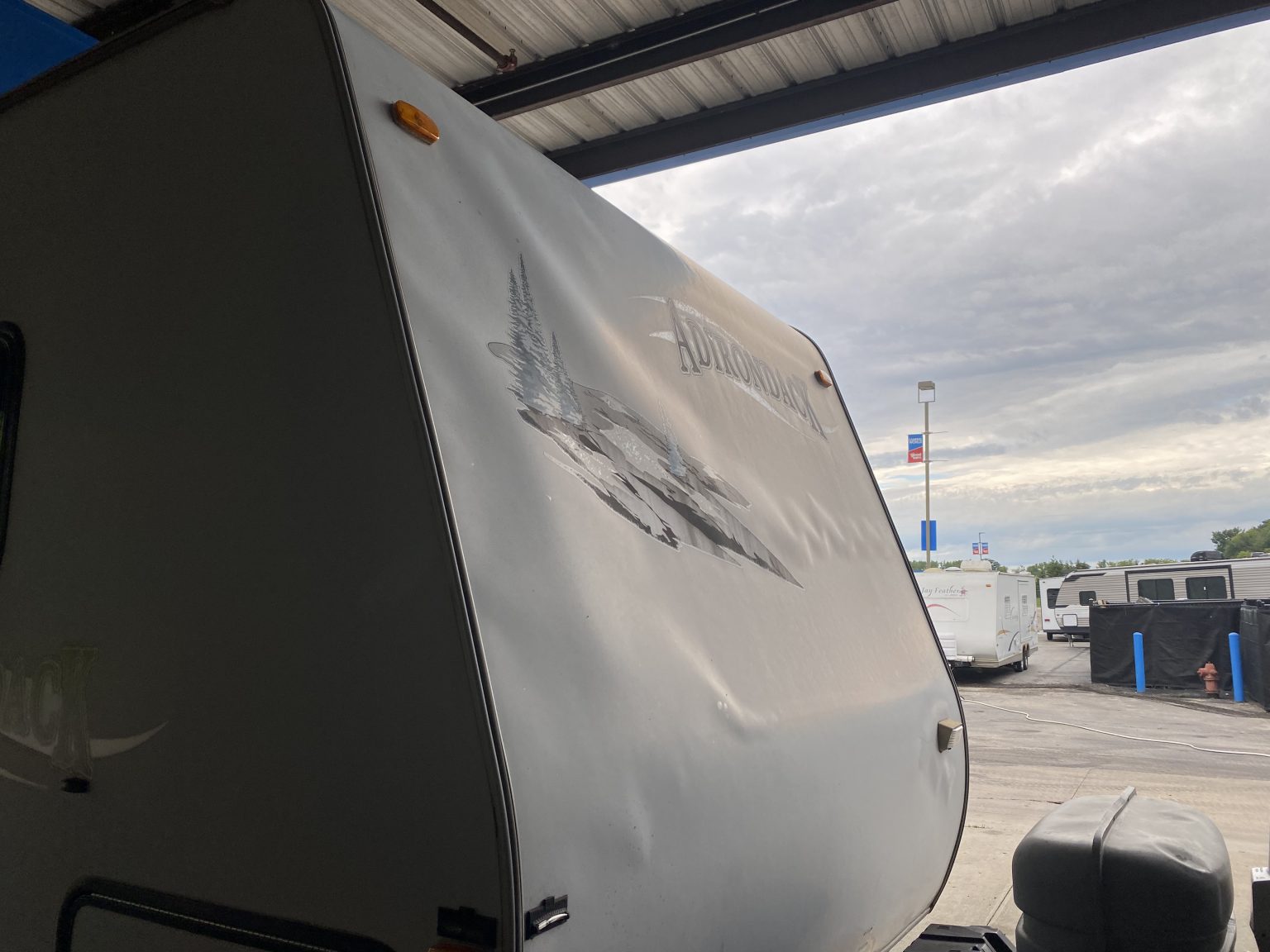
As any longtime RV owner can tell you, lauan also isn’t the best for longevity either. Yes, lauan is very strong when your camper is perfect. But once water starts getting in from one of the countless seals or holes that can give way, the damage can be catastrophic. Lauan has a tendency to delaminate with its exterior skin in these scenarios, and if left uncured for long enough, the lauan will lose structural integrity and fall apart.
Water damage isn’t even the only situation that will cause lauan to fail, either, as a defective bond can cause lauan to delaminate even without the presence of a water leak.


I have personal experience with this, as this is exactly what happened with my family’s 2007 Adirondack 31BH. Water leaked in from a bad roof seal over the bathroom and destroyed the lauan so badly that the wall blew out, and the floor was cracking under my feet. My family paid $7,500 to have that fixed, and then my family paid another $8,500 to have the lauan replaced for a second time after another part of the trailer’s structure failed due to water damage.
The RV industry has already invented a partial solution for this. Azdel, a product of Hanwha Azdel, is a composite wall structure material (a blend of polypropylene and fiberglass) that has been on the RV market since 2006. Azdel does not solve water leaks, but it does have solutions for the symptoms of water leaks, namely, a composite isn’t going to rot out and disintegrate like compromised lauan can.

Unfortunately, while Azdel has seen wide use in the RV industry, it is still used primarily for walls, with lauan still showing up in flooring and cabinetry, even in trailers that use Azdel. Likewise, the campers that use Azdel panels can still have rubberized roofs. These trailers are still subject to the same water leakage problems of the campers of the recent past, only now, the walls won’t split apart as the rest of the camper rots out.
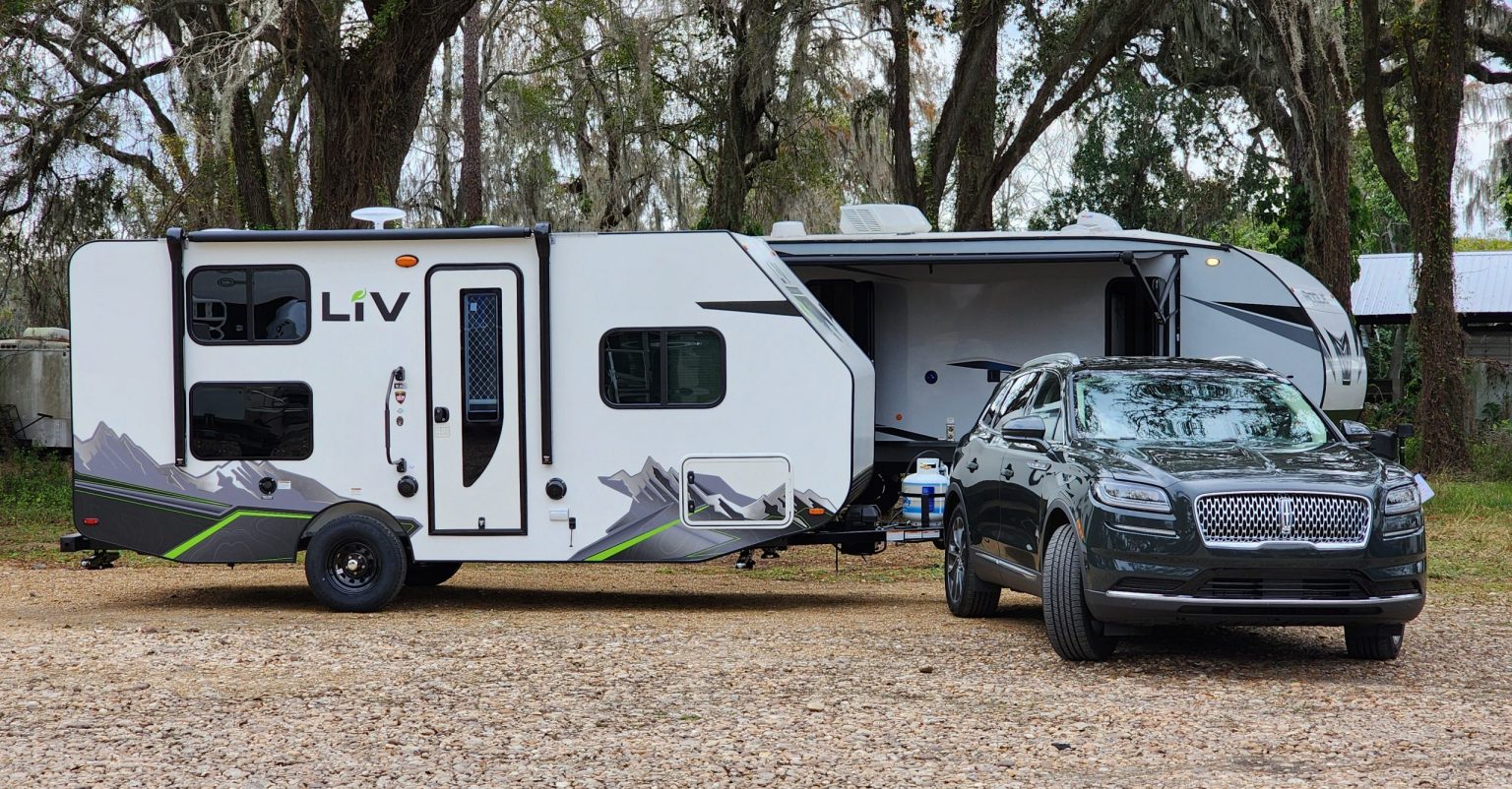
So, Azdel is not a magic cure for water leaks. However, the use of Azdel does mean that no tree has to be harmed. As for the rest of the camper, the industry has shown it is capable of moving away from lauan. I have personally toured RV designs that made great use of metal, composites, plastics (like the LIV below), and fiberglass to great success for flooring, roofs, and interior furniture.
If you must use wood, there are more sustainable sources for it. According to the New York Times report, sustainable lauan is apparently a thing, too, from the report:
Conservation groups say R.V. makers are only focused on price and do not have policies to responsibly source lauan. This allows deforested timber to taint the industry’s supply chains, they say. Sustainably grown lauan now is plentiful in Indonesia and while it goes for about 20 percent more, Earthsight, a group based in Britain, argued that outfitting an R.V. with only that kind of wood would have a negligible effect on its price.
“Nature-loving R.V. owners would surely be more than happy to pay this tiny price,” said Sam Lawson, Earthsight’s director.

I would love to see a future where America’s RV industry ditches lauan, or at the very least, minimizes its use. I have a feeling that nobody is going to miss lauan delamination or paying thousands to fix this stuff years down the road. Better materials exist; they just have to be used.
Now, I’ve become somewhat of a harbinger of doom to some RV manufacturers, so I want to clarify that I do not hate you! I have spent much of my life championing RVs. I am a person who would rather stay in an RV than any Holiday Inn. I love applauding industry innovation and the bright minds who keep RVs great. I enjoy every RV show that I go to. Shoot, my longest-ever story was a 6,000-word interview with the CEO of an RV company. However, I do think the industry has room to improve, and its heavy use of lauan is one of them.
This is a situation where I think the industry has a lot to gain and little to lose. Sure, a camper made out of composites might have a different price and a different weight, but I’d be willing to bet customers will love the longevity. The rainforests will love you, too!
Top graphic images: Mercedes Streeter; depositphotos.com



I’m in architecture, and I refuse to specify Ipe or other exotic hardwoods as exterior decking or cladding for the same reasons.
Yeah, sure, the supplier says they are from “sustainable forests” but there is zero accountability. Nobody is checking, nobody in Indonesia or wherever gives a shit, or if they do, they have zero power to change anything. Just assume that if it came from a developing country that they mowed down a rainforest to get it.
I was a shocked to read that RV marketing is about being stewards of conservation! Building materials aside, what about towing a 10,000 lb home away from home around the country with your dually Super Duty daily driver to then run your two-stroke generator 24/7 has anything to do with conservation? On top of that, the RV is built so shoddily it won’t outlast the tow vehicle is pretty terrible for the environment no matter what the materials are. And don’t get me started on experiencing the outdoors via your entertainment system turned up loud to drown out the generator.
-signed, a life-long tent camper with closeted RV-envy
When the mood strikes and I look into buying a small, less expensive RV trailer (teardrop/squaredrop or trailer less than about 1,500 pounds), the horror stories of leaks and expensive, frustrating repairs stop me.
I’d love a small, affordable trailer with fixed, solid walls and 6′-4″ interior height. A dry place to comfortably sleep and sit around a table; neither needs to be fixed in place. No kitchen. No shower/toilet. No slide-out. A simple upgrade from a tent to stay warmer and drier. Fiberglass or synthetic composite construction sounds best.
When I don’t find the interior height I need, I fall back into the teardrop area, then think about building my own, but that’s years away. Interior heights of less than 6′-4″ would require constant stooping and be more miserable (and less painful) than a teardrop.
The LIV 13SD could work by removing the bath/toilet ignoring or removing the kitchen parts. But it starts in the mid-$20,000 already…so why not just build my own? Catch-22 all over again….
Suggestions for manufactured trailers appreciated. Maybe there’s one out there I haven’t seen?
Honestly, just convert a cargo trailer! Then it’s dual purpose. I love mine!
Will need to look into them again.
Start from an aluminum cargo trailer. All reasonably priced commercially produced RVs are garbage that will fall apart in no time. Start from a good base and build it out yourself with quality materials. I’ve seen some really nice home built trailers that started with aluminum cargo trailers.
Thanks
Everything associated with American RV’s, campers, and “conversion vans” of yore just seems so shoddy and designed to hoover money from people who are not very smart about money. The only things of the type I find remotely appealing are GMC Motorhomes, Airstreams, and if money was not object maybe a Class A Prevost as long as it doesn’t have stupid graphic swooshes plastered on the side. The whole market seems to attract people with money but no taste.
You either need regulation (ban luan or tax it to infinity) or customer preference (stop buying products with luan) to make appreciable change. I don’t see either of those happening any time soon. New RV customers have proven over and over that they are blind to the problems of today’s build-like-poo RVs and just want it to look flashy on the day of purchase.
Lauan shows up a lot in building materials. RVs are probably the poster child for over-use of it and using it in sub-optimal ways. But it shows up in furniture and home construction all the time too. It’s very common in many hollow-core doors in homes. Cabinets may use it for various parts that aren’t part of the main box structure., like end panels and the center of framed doors. It’s just covered with thin laminated veneer so you can’t tell what it’s really made of. It’s probably the most popular thing for thin, light material that can still legally be called wood.
Thin Baltic Birch is much better — it’s also very lightweight, but can be sanded and finished all by itself; no veneer needed. It tends to resist delaminating better as well. But it costs more. Better cabinet and furniture manufacturers use it over lauan, even if they do veneer over it to get different grain and finish patterns, because it’s a superior, longer-lasting material. But I doubt many RV manufacturers would make the switch due to cost. It’s been used in campers, and sometimes still is. But you’re not going to see it in the typical Thor conglomerate’s products.
Wow. I’ve always hated luan. It’s a garbage product. I had no idea that it’s origins were so fucked up though.
As with every other industry: market consolidation and venture capital make things worse for everyone. With the vast majority of campers manufactured by just four companies, using highly integrated production lines, they have neither the incentive nor the interest in change.
Saying “there’s no replacement” is true only from their perspective; any replacement would require retooling, training, and supply line changes that would hurt the quarterly profit margins their investors demand.
There’s no space for a premium product- because they already have one. A product with precisely calculated cost, using parts from suppliers they’ve already dictated terms to and yielding the calculated maximum profit.
Smaller players can’t – and aren’t permitted – to compete. Any manufacturers who were large enough to shift the paradigm have been gobbled up already.
The only solution is for RV buyers to stop buying RVs with luaun entirely. I’m not holding my breath.
Something that’s been noted with regard to the modern economy is that globalization has let us outsource a lot of the negative consequences of our lifestyle and economic choices, which means the average consumer isn’t really presented with the true cost of their decisions. This is especially true of natural resource extraction – mining, lumber, palm oil, fashion, industrial chemistry, etc are all industries with enormous environmental effects, but the globalized economy and the power disparity between rich and poor countries means the people whose consumption patterns drive those industries effectively don’t have to see the cost of the products they’re purchasing.
The argument for shortening supply chains is to cause the cost of consumption to be borne by the region doing the consuming – if the people of wherever want a product, they should bear the cost of its production. Eventually this all comes home to roost, but for the time being, we’re basically shoving all our trash in the garage and pretending it doesn’t exist anymore.
Globalism is just imperialism with a hat on, and it’s not even like a cool pirate hat or anything, it’s just one of those shitty, branded ballcaps handed out at promotional events.
“Because after all, any wealth gained by a person beyond what he can produce by his own labor must have come at the expense of nature or at the expense of another person. Look around. Look at our house, our car, our bank accounts, our clothes, our eating habits, our appliances. Could the physical labor of one family and its immediate ancestors and their one billionth of the country’s renewable resources have produced all this? It takes a long time to build a house from nothing; it takes a lot of calories to transport yourself from Philadelphia to Pittsburgh. Even if you’re not rich, you’re living in the red. Indebted to Malaysian textile workers and Korean circuit assemblers and Haitian sugarcane cutters who live six to a room. Indebted to a bank, indebted to the earth from which you’ve withdrawn oil and coal and natural gas that no one can ever put back. Indebted to the hundred square yards of landfill that will bear the burden of your own personal waste for ten thousand years. Indebted to the air and water, indebted by proxy to Japanese and German bond investors. Indebted to the great-grandchildren who’ll be paying for your conveniences when you’re dead: who’ll be living six to a room, contemplating their skin cancers, and knowing, like you don’t, how long it takes to get from Philadelphia to Pittsburgh when you’re living in the black.”
Jonathan Franzen in “Strong Motion”
Thank you for this thoughtful and thorough reporting. Social media usually demands quantity over quality, but you somehow manage to deliver on both!
I am surprised that someone hasn’t developed bamboo-based siding for use in campers.
I didn’t think any version of bamboo was durable in weather. I did a search and did find that bamboo composite decking boards are now available.
Aside from people not being used to seeing wooden campers, I see two immediate problems: one, the decking boards are only guaranteed for twenty years. I don’t think RV buyers would be anxious to buy a camper that can be expected to have its sheathing fail in 20 years – even if they expect to sell it, the purchasers ten years on would know the story. Two, it says the boards are denser than Ipe. Ipe has a specific gravity of around 1.10, heavy enough that it sinks in water. If this stuff is even heavier, it is not going to make for a light rig.
Yikes! I’ve used Ipe and didn’t know bamboo was denser. Thanks for following up.
Well, at least these weather-duty decking boards are. I imagine there’s a heavy resin impregnation.
There’s no way bamboo in its natural form is denser. Engineered bamboo planks, maybe.
Never knew that’s what this material was called.
Spot on , it delaminated a lot on my brother’s 5th wheel and it’s only 6 years old, and stays under a carport on side of garage..
But a small drip over a few years messed it all up.
The more you know- thanks Mercedes!
I always thought Lauan was a brand name for thin plywood. Had no idea of its origins. Thanks for this.
If the RV manufacturers are going to switch to something better they are going to need a push.
I’m hoping that push is you Mercedes, hopefully RV people see your articles and start making changes.
Personally I would want an all aluminum camper, soon as I can afford one.
I want a fiberglass trailer myself, as a balance of cost and durability. I’m willing to sacrifice space for a more solid structure. Also I’d sooner tow something made like boat than a stick built house.
I owned a 30 year old Scamp. It had gotten a little grimy, and the egg shell’s polished glaze was gone, but it was perfectly sturdy and leak-free.
When I was younger I really wanted an RV, or a slide-in camper, or a Toy Hauler. As I’ve gotten older I can’t comprehend spending what it costs to buy, maintain, and store these things. I’m sure I’d get some use out of it, but renting one when I need it feels like a way better way to go.
I really want to build one, just for the joy of attempted craftmanship. About 15 years ago I got turned off to owning an RV / camper / trailer mainly due to how bad they were and kept getting. It’s easier to find a decent well used 2005 enclosed race car trailer than a 2015 trailer, and those were probably only bought out of desperation.
One of my last trailers just completely blew its side off due to invisible delamination right around the door and when the wind hit it just right the side door just ripped off the trailer and peeled back about 12′ of the aluminum sheeting. Getting to see what was underneath, only about 2-3″ around the door were compromised by water but it was so flimsily put together it didn’t matter. And this was the better trailer… (We eventually showed up to Menards and had 30 minutes before they closed to figure out every piece of wood / metal / tool we needed to buy to patch this up to make it the remaining 200 miles home, but now it’s got some 1/4″ thick fancy hardwood plywood cut-offs making up 1/4 of the wall and they’re holding up far better than the original after 10 years.)
The store thing you mention is my main dealbreaker.
The fickle demand, complex brand strategies, and price sensitivity of the trailer and RV market seems to doom it to the lowest-cost production standard.
Ironically, this is the opposite of mainstream automobile market where superior quality was rewarded with increased sales. In general, mainstream cars are purchased like durable goods.
It more reflects what the luxury vehicle market has moved towards. Trailers and RVs are luxury items. Their purchase is less dictated by long-term longevity now and more by initial flashiness and short-term consideration of appearance, to the detriment of quality and durability.
However, while the luxury vehicle market benefits from the engineering base and capital investment of the automotive industry to provide a baseline level of quality to the product, the RV/trailer does not and suffers accordingly.
Enjoy your delaminating rainforest.
The rv and boat industry are tied together in alot of ways. Design and materials often overlap. The composite boat builders have moved to foam core. I think there are some rv manufacturers using foam core and fiberglass composite but not that many. Alot of us boat builders use chopped fiberglass sprayed over a mold or buck. That technique seems to be used for some pieces of RVs and some smaller RVs. What the boaters have found is fiberglass work is a hole lot easier to patch if you don’t have to worry about a rotten core material. With RVs it would be the same.
Just go ahead and make them all out of reinforced cardboard. The average rv buyer won’t notice.
The customers don’t care about longevity since the average new RV buyer dies before the longevity issues show up.
The manufacturers don’t care about longevity because that is the second owner’s problem and shows up after the warranty ends.
Some do, people pay extra willingly for Airstreams and their aluminum bodies.
How many of the fiberglass or aluminum trailers offer the slide outs that are so common now on traditional campers?
I assume the Azdel can be used, but the construction techniques used for aluminum and fiberglass seem to preclude the slides, or at least add extensive cost and engineering. Is it possible the manufacturers are seeing a risk to the bottom end as people want and expect the slides so by moving away from lauan they will lose market share?
I guess I’m bucking the trend, because I don’t want a slide out, because the trailer is lighter and cheaper and I eliminate failure and leakage points.
That’s the thing – (almost) everyone wants one, even given the downsides. If they are hard to make work with the alternate materials it would be a hard sell for the average trailer maker to swallow.
Azdel shouldn’t matter on slide-outs. It’s just a replacement for lauan in the sheathing and interior wallboard materials. Slide-outs just require a structurally reinforced hole in the wood or metal wall framing, and then a wood- or metal-framed box that fits inside and runs in and out on tracks and mechanicals. The sheathing isn’t structural* so what it’s made of doesn’t matter.
*Sheathing isn’t supposed to be structural in a typical RV — so if they’re using it to add structural rigidity, they’re doing it wrong. And lauan is probably a bad choice for any structural purposes since it can degrade so easily if moisture gets trapped.
I think the issues from the other, common, styles with alternate materials is the shape the trailers tend to be made in. It’s harder (I assume) to have a slide out that seals well and maximizes space in a curved trailer side, which is common with the aluminum and fiberglass units.
I could be talking out my posterior, but since I’ve never seen a slide out in any of those units I assume there has to be a limiting factor.
I feel like something that would actually help this situation is just having the exporting countries enforce their own laws? I don’t have the Times, but it sounds like the wood is already illegal, so just treating it that way in its country of origin would seem to be much more effective than doing a bunch of supply chain auditing. (Not that auditing their supply chain would be bad, they can do that too, but the mechanism to fix the problem already exists).
The problem is lack of economic opportunity and corruption. Since nobody wants to fix the real problem, the bandaid they came up with so that people who care can pat themselves on the back in this instance is sustainable wood certification that you have to trust isn’t faked.
You overestimate the power of third world governments and underestimate the power of American companies. Banana republics are still going strong.
Yes, I’ve seen the Youtube videos of RV crashes. The wood just splinters all over the place like toothpicks. These things are barely able to move and stay in one piece.
The whole RV industry has been chasing the bottom for so long, what makes you think they’ll look for sustainable on their own?
Given all the plastic entering landfills, and plastic that is “recycled” by the end consumer but then ends up stacked on pallets in warehouses, someone should figure out a way to use it for things like this. You don’t see it inside the sandwich, so it can be an ugly color or mosaic of colors. It just needs to be rigid, but somewhat flexible, and light-ish, right?
Business will always choose what is most profitable. If we can make recycled plastic that’s more profitable than lauan, RV mfers will use it.
Recycle your beer cans for a new airstream.
In a way the import tarrifs on luan are kinda helping, maybe if they increased that RV manufacturers would try other solutions.
“RV mfers”
-Samuel L. Jackson