

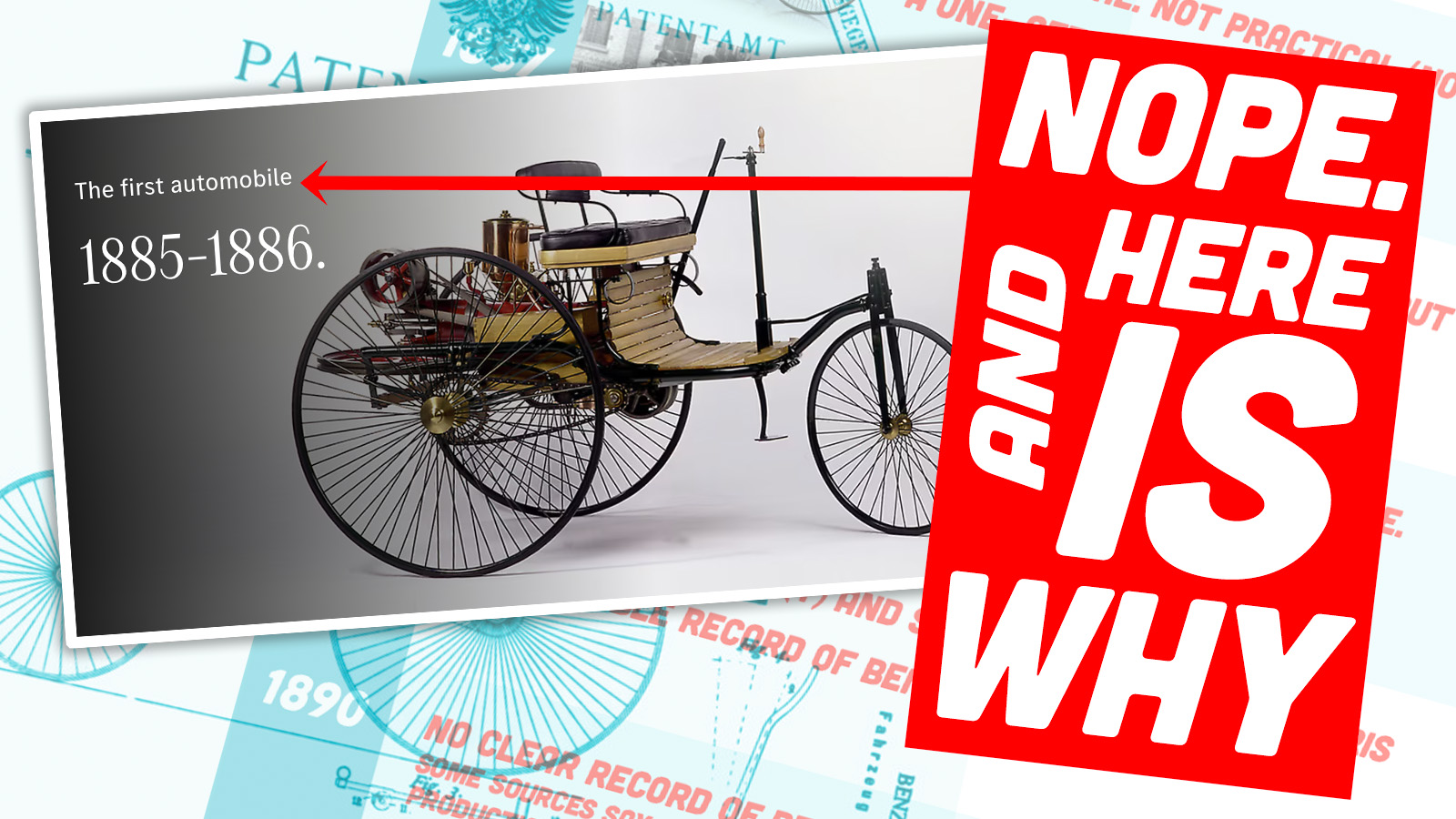
I know I’m a bit consumed by a crusade to push back on the maddeningly pervasive notion that the automobile was invented in 1886 by Carl Benz, because it very clearly wasn’t. I know that’s what Mercedes-Benz likes to say, but as I have covered extensively before, there was over a century of automobile development, production, and use between Nicholas-Joseph Cugnot’s 1769 steam drag and Carl Benz’s 1886 Patent-Motorwagen. And yet, despite there being a wealth of evidence to suggest that the 1886 Benz car, while undoubtedly a significant milestone in the history of the automobile, was not the “birth of the automobile” or the first automobile or anything of that sort, Mercedes-Benz still stands by its brash claim.
Even with all the evidence available, the myth of the Benz Patent-Motorwagen as the first car continues, sometimes tempered with qualifications like the first gasoline-powered, internal-combustion automobile, or the first production automobile, or the first patented automobile, or the first “practical” automobile.


I’m here to tell you that, even with all those qualifications, none of those statements are actually true – my last article covers the (primarily) the steam era of automobiles that includes the actual first patented automobile, the actual first series-produced automobile, and earlier internal-combustion automobiles.
The truth is much muddier, as it always is. It’s my opinion that Mercedes-Benz knows this, and benefits from not investigating this claim closely. The whole reason the Benz vehicle gets as much “first car” recognition as it does stems from a very specific plan and agreement between Mercedes-Benz and the former Reich-era government of Germany, which we’ll get into more soon. Right now, though, I want to walk through some of the early years of the internal-combustion automobile industry, and how the Benz Patent-Motorwagen fits into it.
Specifically, I want to address a qualified “first automobile” statement made by a curator of a well-known automotive museum, with whom I was speaking about this idea. He said the 1886 Patent-Motorwagen was the first “practical” automobile, and I’ve spoken with other historians who feel comfortable calling the Benz Patent-Motorwagen the first “production” automobile, or production automobile in the modern sense, or the first that was actually available for sale.
I’m not comfortable with any of those statements, even with their qualifiers, and I’ll explain why.
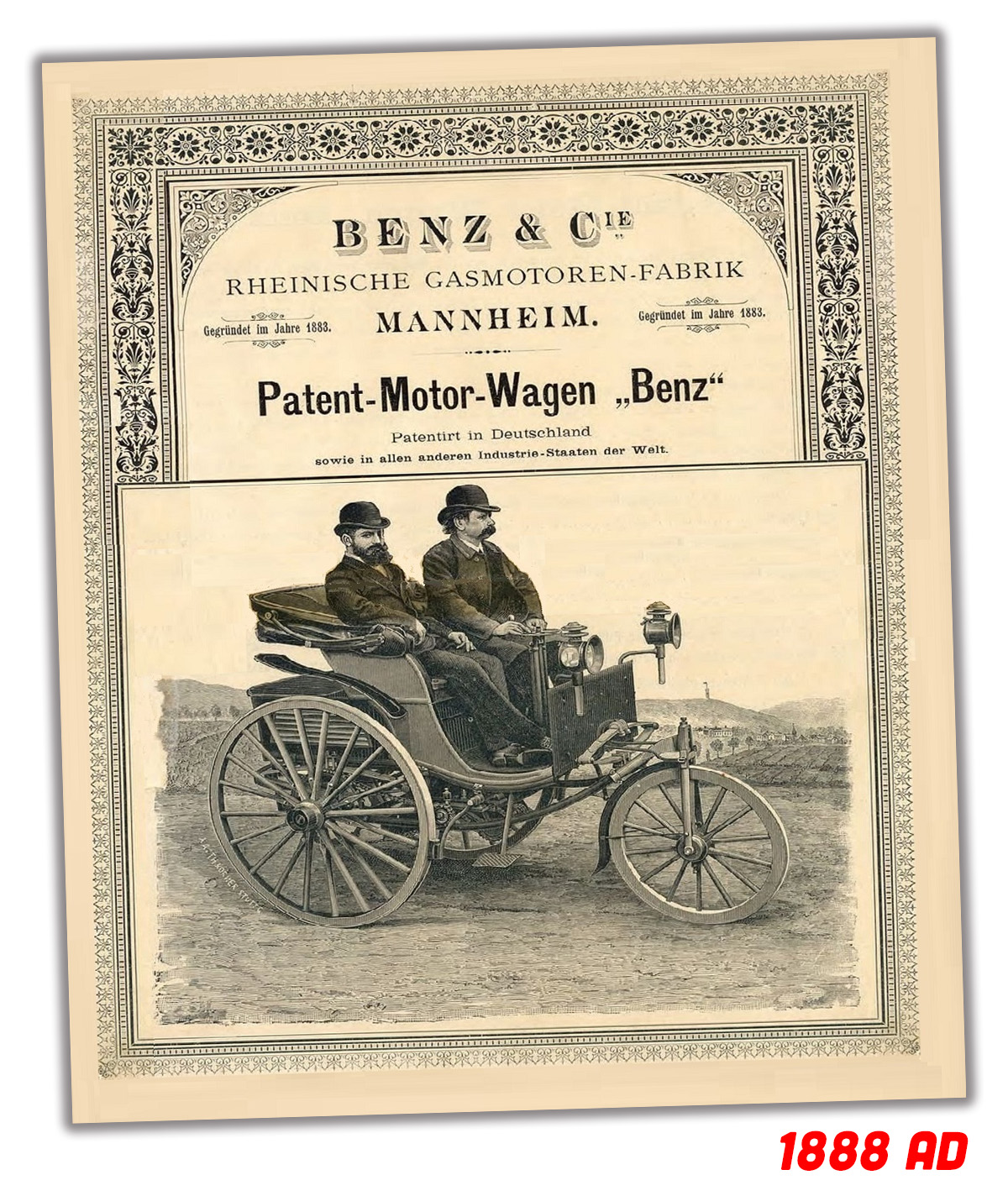
I think the way we talk about the 1886 Patent-Motorwagen as a “practical” car or the first car people could buy is strangely vague and even misleading. Most sources say that “about 25” Patent-Motorwagens were sold between 1886 and 1894, but this is not only misleading, but incredibly hard to confirm. My first issue is that even if we accept that 25 early Benzes were sold, these were not the same car as the one that was built in 1886.
The 1886 car was not a practical vehicle one could drive; it didn’t have a fuel tank, relying on just the 1.5 liters of legroin (a petroleum distillate) in its crude carburetor for fuel, which was not enough to travel any practical distances. The original 1886 car couldn’t get up most hills, either. This was an experimental one-off machine, not a practical or production vehicle by any stretch.
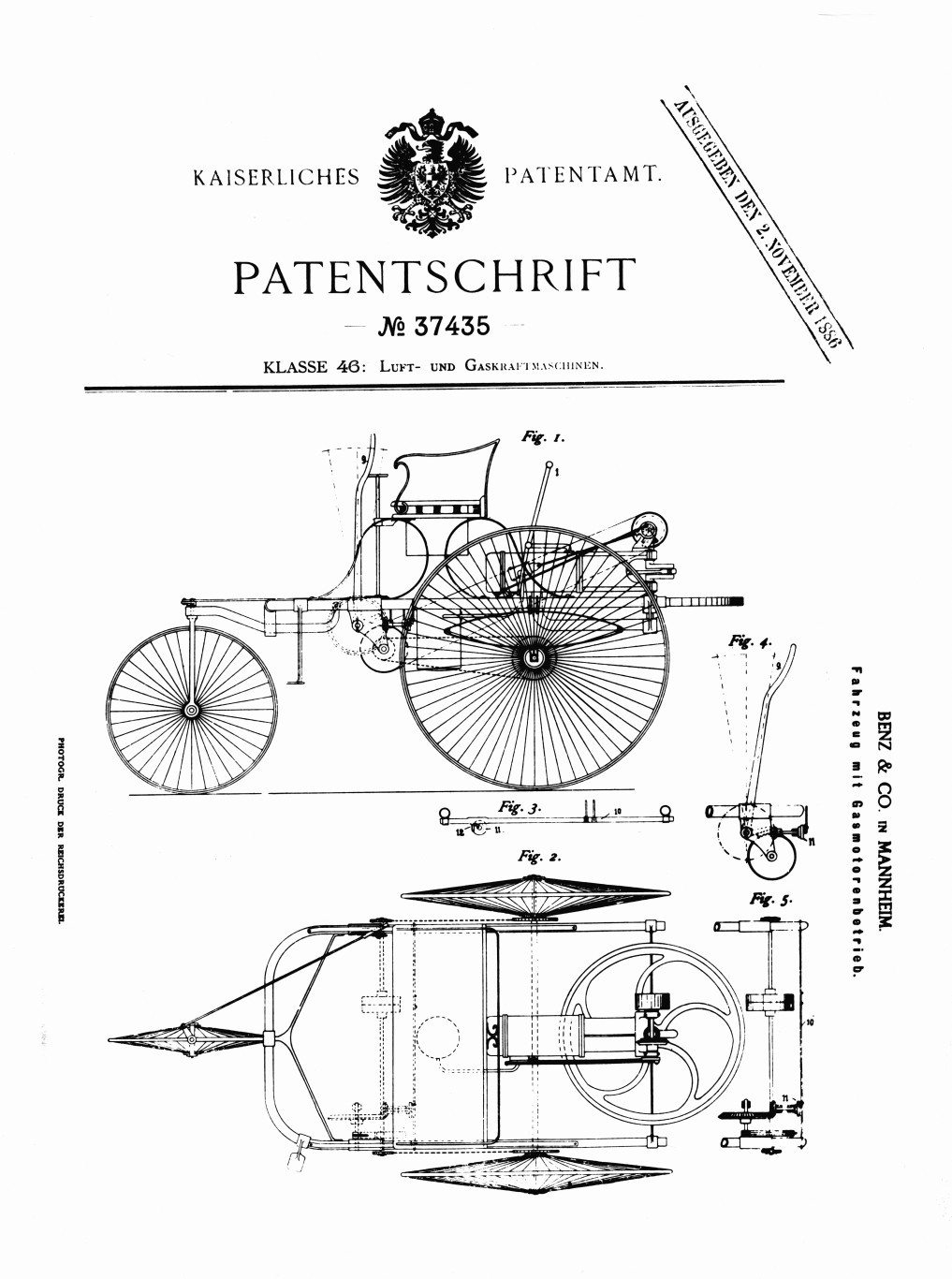
The next Benz car, built in 1887, was a completely different design, albeit built on the same basic principles as the first one. It fixed some issues, but was not practical, either. The next attempt, the 1888 car, is famous for being the machine that Bertha Benz used for her famous drive; it was also experimental, and while Bertha managed the trip, she was making repairs and improvements along the way, and still needed some help up some hills. The 1888 car, different than the two cars that preceded it, was still not really ready for sale to the general public.
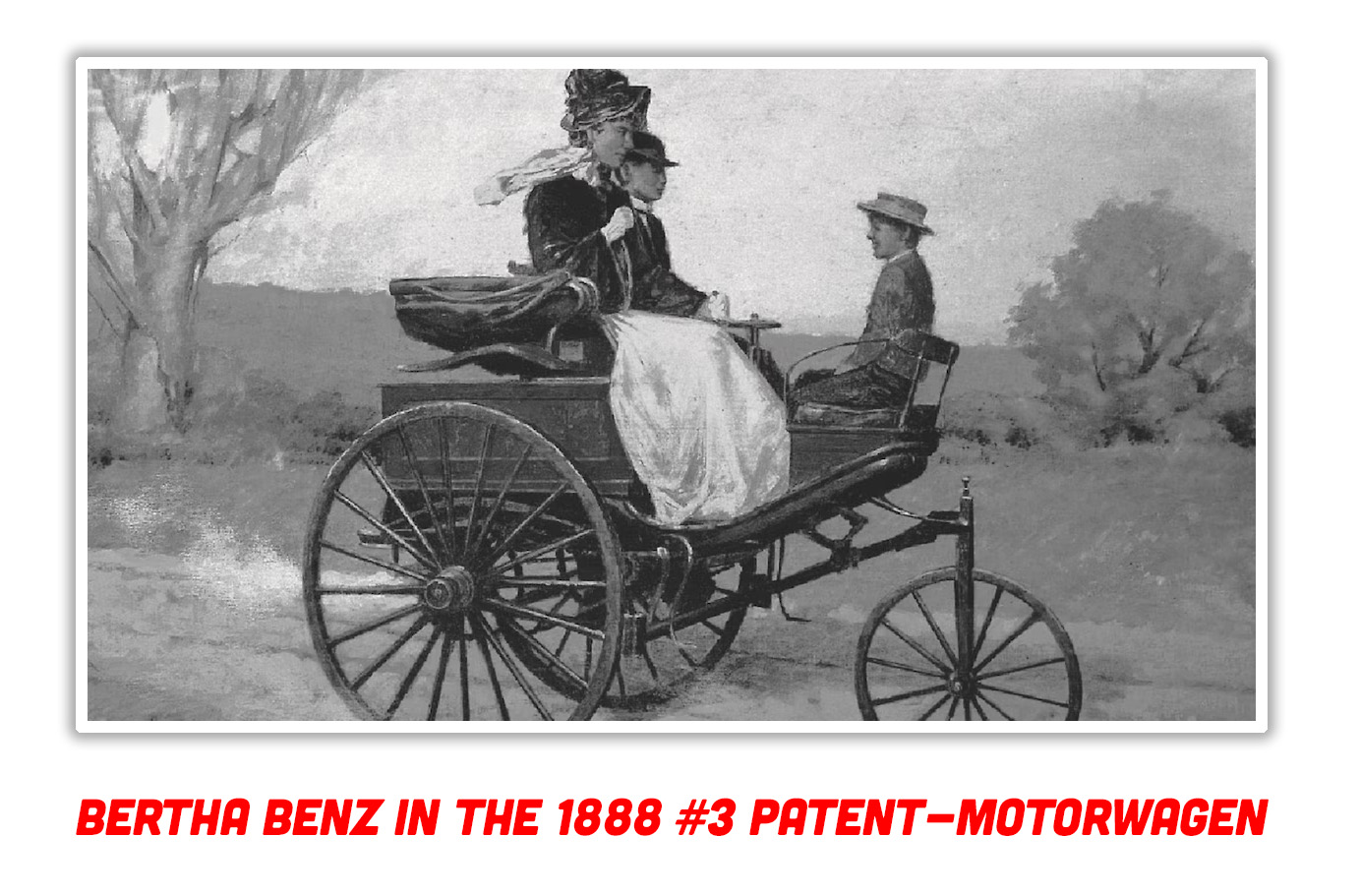
It’s also confusing because many recreations or depictions of Bertha’s drive use replicas of the 1886 car, which was not the car she actually used. The car she used, the 1888 car, is shown above. This video reenactment uses a replica of the 1886 car, which is inaccurate:
So, of these alleged about 25 cars, three were one-off experiments; while at least one car had been shown at exhibition in 1887, it wasn’t until 1890 that sources suggest Benz was taking orders for cars, and even then, I have yet to find much evidence or numbers that any cars were actually ordered. So far, I haven’t been able to find solid numbers about how many Patent-Motorwagens were sold, or even what the “production” Patent-Motorwagen would have been like. At the earliest, such a production version of the car couldn’t have existed before 1889.
Benz did have someone doing sales, Émile Roger, who had a license to produce vehicles and engines under license in France, and he may have purchased the 1888 one-off car. It’s not exactly clear, and the best sales information I’ve found is that Roger is said to have sold “almost a dozen” by 1892. I’ve tried to reach out to Mercedes-Benz for this early sales information, but so far I’ve received no response.
What does “almost a dozen” mean? Nine? Eleven? Ten? Who knows. These almost-a-dozen alleged sales could only have happened in the four-year span between 1889 and 1892. And it’s worth noting that during that same span of time, Peugeot and Panhard et Levassor were building and selling cars as well, cars that have much more readily available sales information, and genuine examples of which actually exist in museum collections.
Let’s put this in chart form, just to get some idea of what I’m talking about:
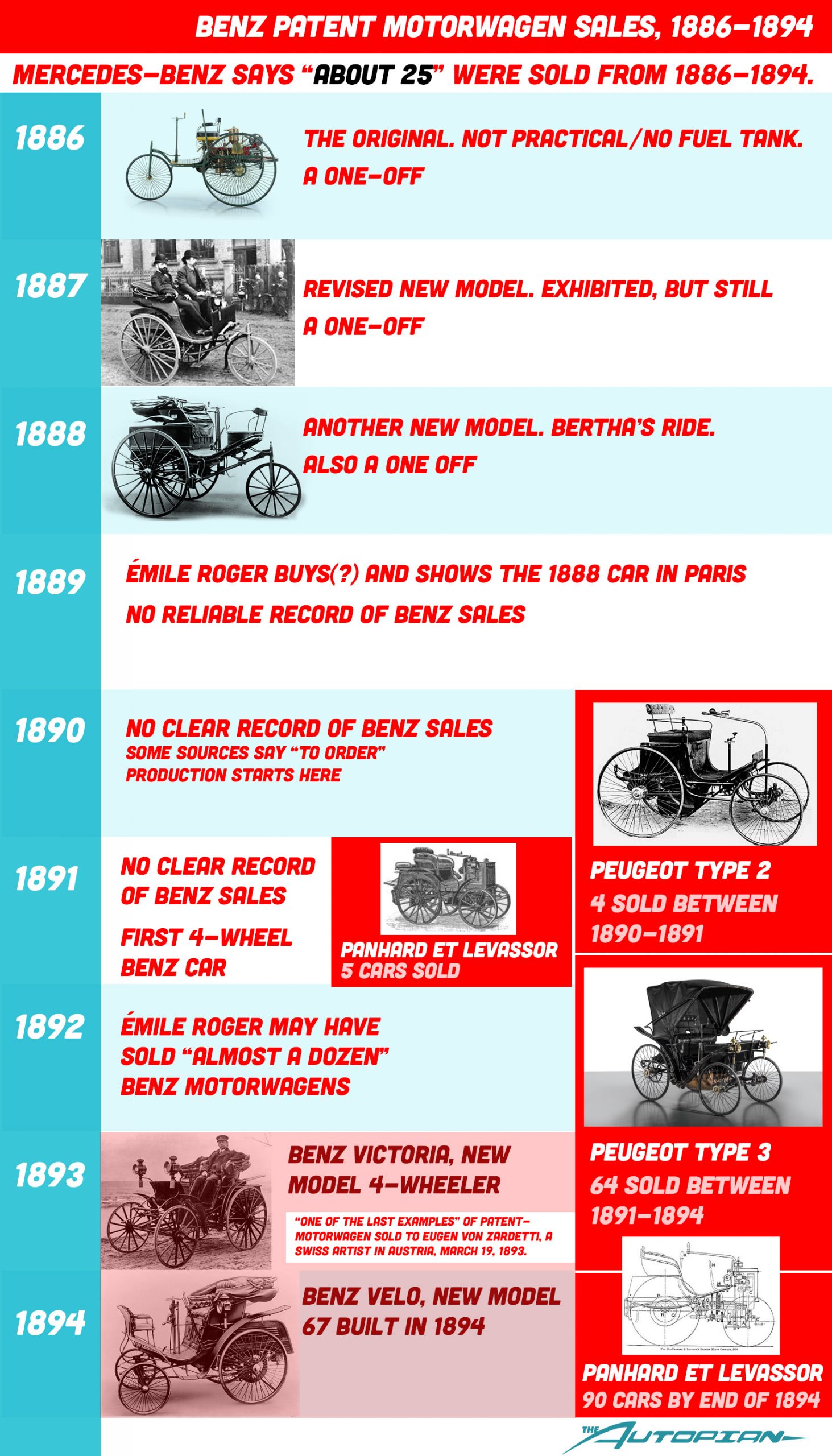
This chart shows car production for three companies between 1886 and 1894: Benz, Peugeot, and Panhard et Levassor. Both Peugeot and Panhard et Levassor were using engines from Daimler, which would eventually merge with Benz in 1926. Benz’s production numbers for whatever they considered to be their production model (which seems to be an 1890-ish revision before the four-wheel version was developed in 1891) are, as you likely have figured out, maddeningly vague.
In fact, the only confirmed example of a Patent-Motorwagen sold I have been able to find, at least so far, was what is considered to be the first car sold in Austria, on March 19, 1893, to a Swiss artist named Eugen Zardetti. This is stated to be one of the last Patent-Motorwagens sold.

Zardetti’s 1893 Benz started out as a three-wheeler and was later modified to be a four-wheeler, which may suggest that the four-wheeler Benz was derived from the three-wheeler enough that such a modification was possible. This four-wheeled version of the Patent-Motorwagen then developed into what is considered a new model in 1893, the Benz Victoria, which sold in greater numbers, and then in 1894, an all-new model, the Benz Velo, was released, and would eventually become Benz’s first genuinely successful model, selling around 1,200 cars by 1902, with 67 of those sold in 1894.
But neither the Victoria nor the Velo was the same car as the 1886 Patent-Motorwagen. And by the time sales were picking up for those later Benz models, cars from Peugeot and Panhard et Levassor were already in production as well.
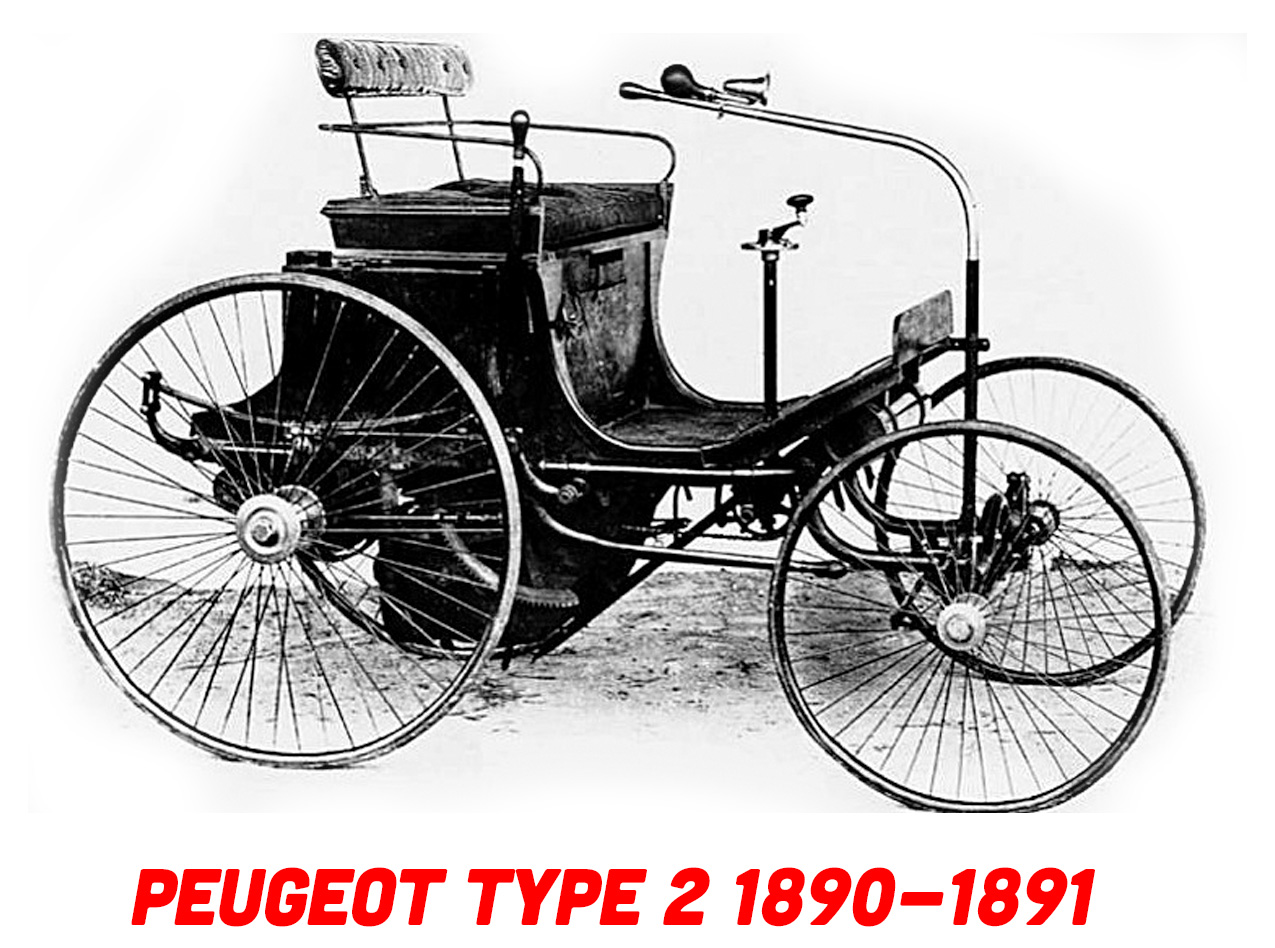
And this is sort of the crux of the issue; Benz claiming that the 1886 Patent-Motorwagen represents the “birth of the automobile” or the first production car for sale just doesn’t bear any real scrutiny. First, there’s the fact that the cars that Benz did sell were not the same as the 1886 car. The cars that were sold, based on the meager information available, seem to start in 1890, and by then Peugeot had started to sell their Type 2 (four units built), and then the next year came the Type 3, of which 64 cars were built and sold by 1894.
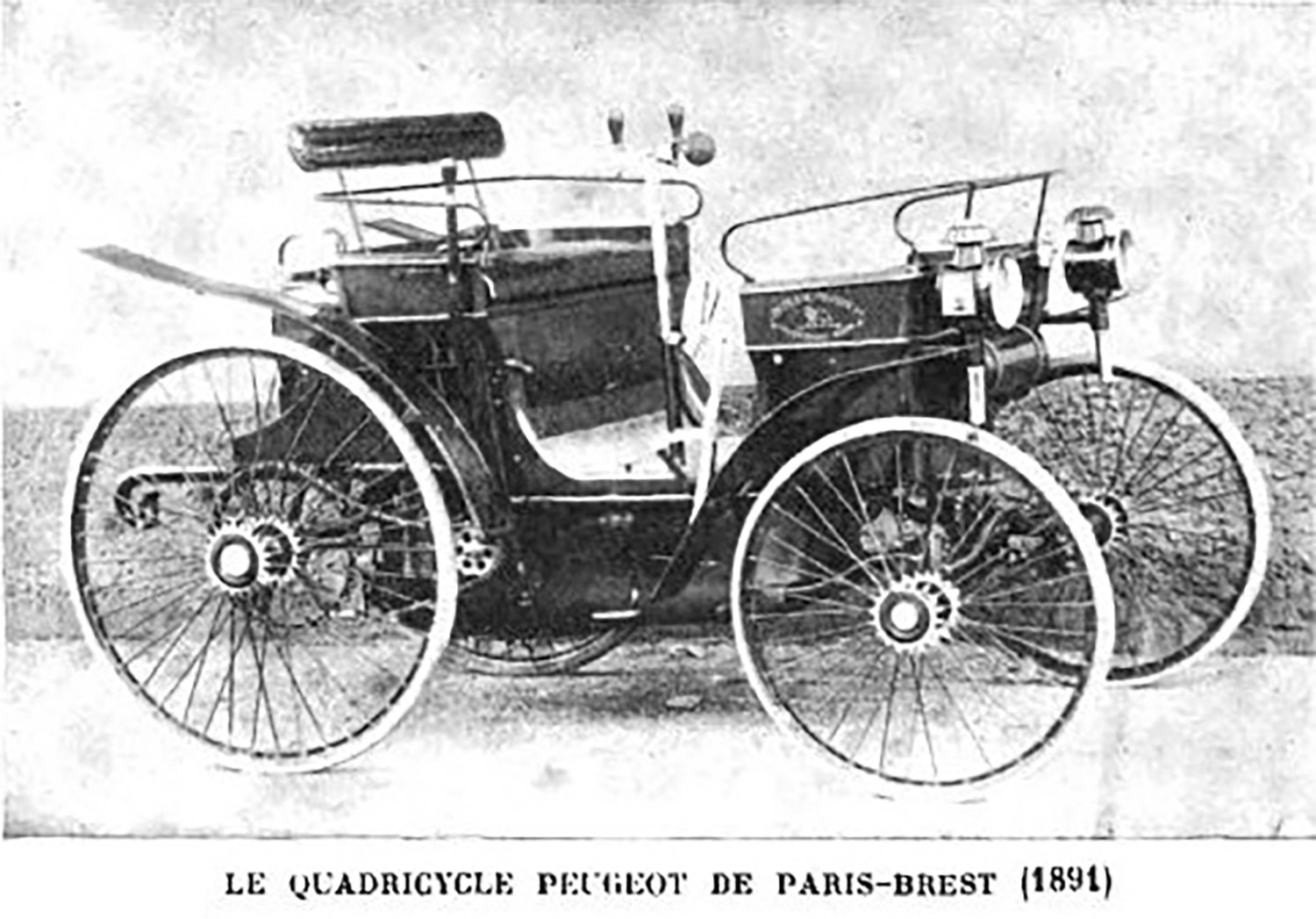
So what does this all mean? It means that the Benz Patent-Motorwagen, allegedly the “first automobile” to be sold, was, at the very least, tied for that honor with the Peugeot Type 2 in 1890, even though no verifiable numbers for how many, if any, Benz Patent-Motorwagens were sold in 1890.
And, by 1891, the Peugeot Type 3 was on sale, and the production number for that car – 64 examples – is over double the claims of the Benz car in the same period of time.
So why do we keep insisting that the Benz Patent-Motorwagen was first?
Let’s now address the claim that somehow the Benz Patent-Motorwagen represented the start of the “modern production” automobile. While it was certainly advanced for its time, if we’re really being honest, we have to compare it with another contemporary car being built and sold at the same time as the Benz car before we can bestow this honor on it: the Panhard et Levassor.

In 1891, Panhard et Levassor built their first car with a design all their own, using a Daimler engine mounted up front, driving the rear wheels, a setup that would come to be known as the Système Panhard, a layout and design that would define the vast majority of automobile mechanical design until the rise of transverse front-wheel drive cars in the late 1970s.
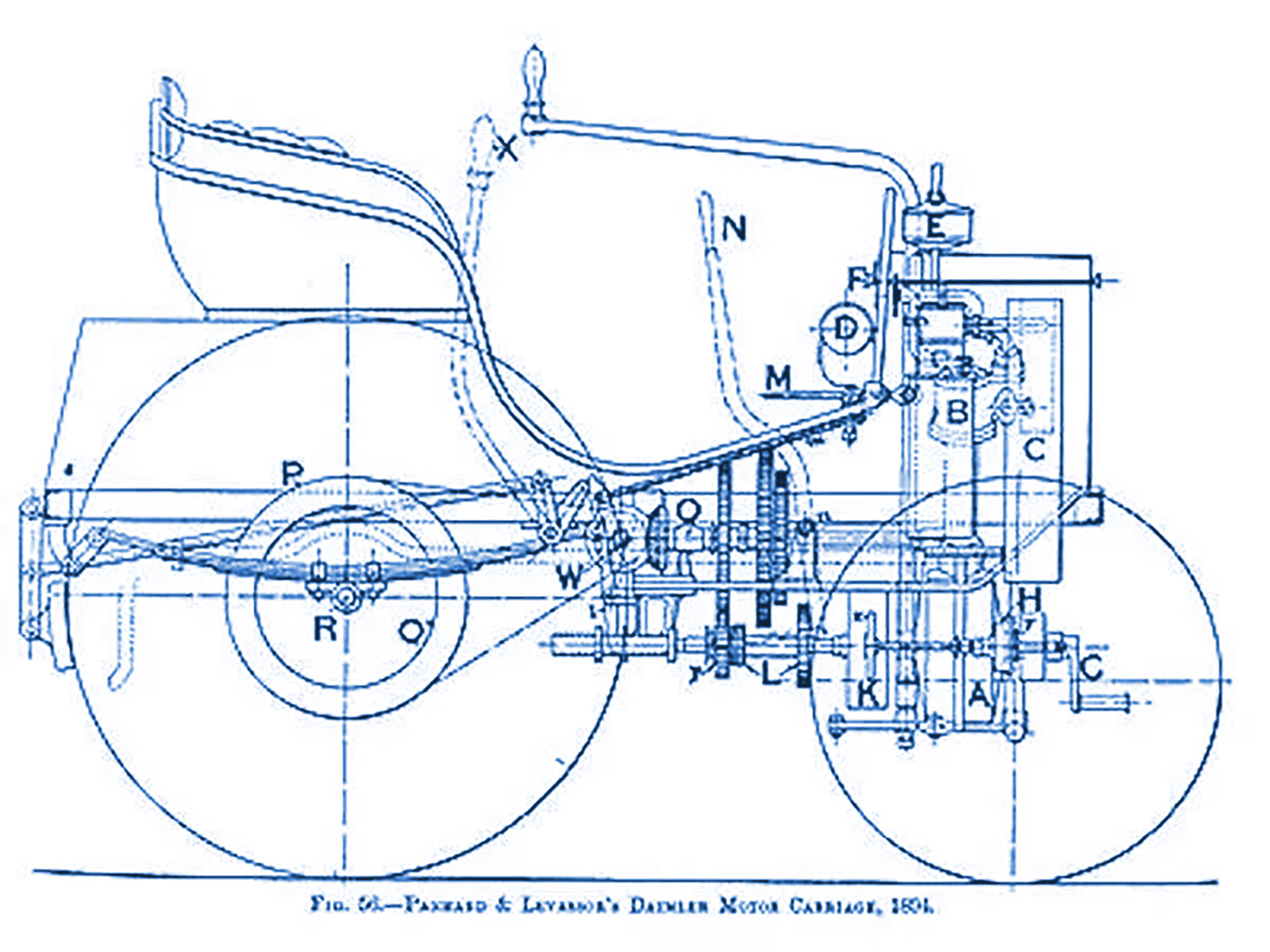
A 1965 Ford Mustang? It used this same layout. A Chevy Chevette? This layout. A Lamborghini 350 GT, a Jensen Interceptor, a Pontiac GTO, Lincoln Continental – all Système Panhard. If any car of this era can be said to be the “first modern production car,” it has to be the Panhard et Levassor, no question. The Benz Patent-Motorwagen was a three-wheeled car with a horizontal flywheel and the engine under the seats. That’s not the path that cars took in the following century.

That image above is from an 1892 Panhard et Levassor brochure, so you can see they had a full lineup of cars and were pretty serious about all of this. They had sold 90 cars by the end of 1894, which is more than the Benz Velo sold that year.
I think it’s pretty clear that the 1886 Benz Patent-Motorwagen was not the first automobile, not the first internal-combustion automobile, not the first production automobile, and not the first modern production automobile. At best, we can maybe consider the start of modern car production a sort of three-way tie between Benz, Peugeot, and Panhard et Levassor, but even in doing that, Benz would have the lowest production numbers and a production start date that, at best, ties with Peugeot and is extremely murky and hard to prove.
So, again, we have to ask, why the hell have we been letting Mercedes-Benz get away with the claim of “inventing the Automobile” for so many decades? It seems to have started with a letter dated May 30, 1940.
The letter was from the Board of Directors of Daimler-Benz A.G to the Reich Ministry for Public Enlightenment and Propaganda; I’ve never seen the text of that letter, and likely never will, if it still exists, but the response from the Nazi’s propaganda ministry does exist (translated from German):
Reich Ministry for Public Enlightenment and Propaganda Reference No.: S 8100/4.7.4.0/7 1 Berlin W8, July 4, 1940 Wilhelmplatz 8–9 To the Board of Directors of Daimler-Benz A.G., Stuttgart-Untertürkheim Subject: The True Inventor of the Automobile Re: Your letter dated May 30, 1940 (Dr.Wo/Fa) The Bibliographisches Institut and the publishing house F.A. Brockhaus have been instructed that, henceforth, in *Meyer’s Konversations-Lexikon* and the *Großer Brockhaus*, the two German engineers Gottlieb Daimler and Carl Benz—rather than Siegfried Marcus—are to be designated as the creators of the modern automobile.”
The letter seems to have been a request that all references to the creation of the modern automobile no longer reference Siegfried Marcus – an Austrian inventor who happened to be a Jew – and instead should refer to Daimler and Benz.
I’ve talked a bit about Marcus before. He had built at least two internal-combustion-engined cars, with the first in 1870 or 1875, and another later one that is often dated to 1888 (and is preserved at the Vienna Technical Museum to this day), though all of these dates are contested, and, honestly, I’m not sure what the exact dates are. What does seem certain is that Marcus had some manner of gasoline-powered cars before Benz, and there’s even a reference to a noise complaint Marcus got in his “Benzinautomobil” in 1875:
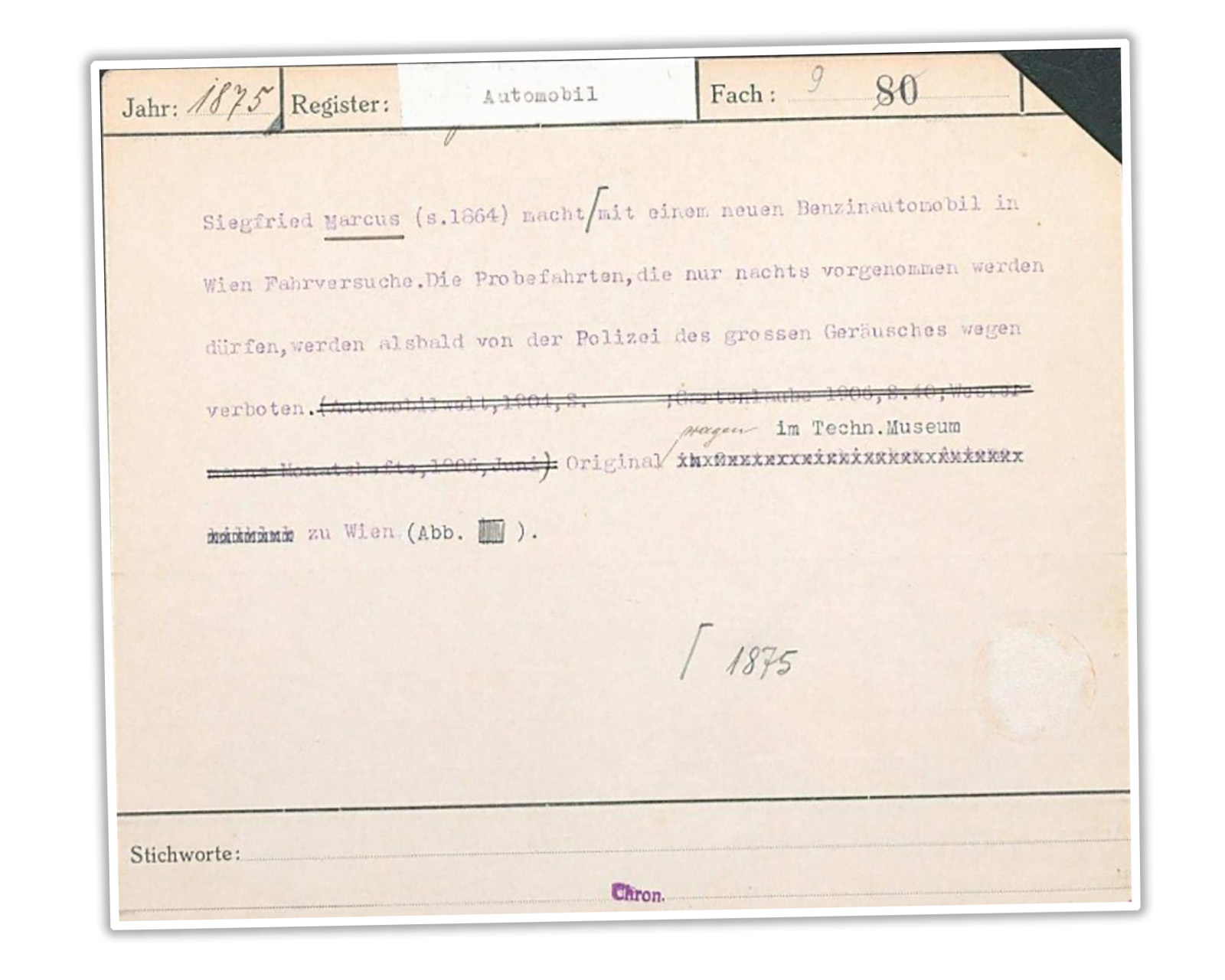
Prior to WWII, Marcus was often referenced as one of the key figures in the invention of the automobile. He was taught in schools and was commonly referenced in textbooks and reference works, as you can see in this 1908 encyclopedia entry about the automobile:
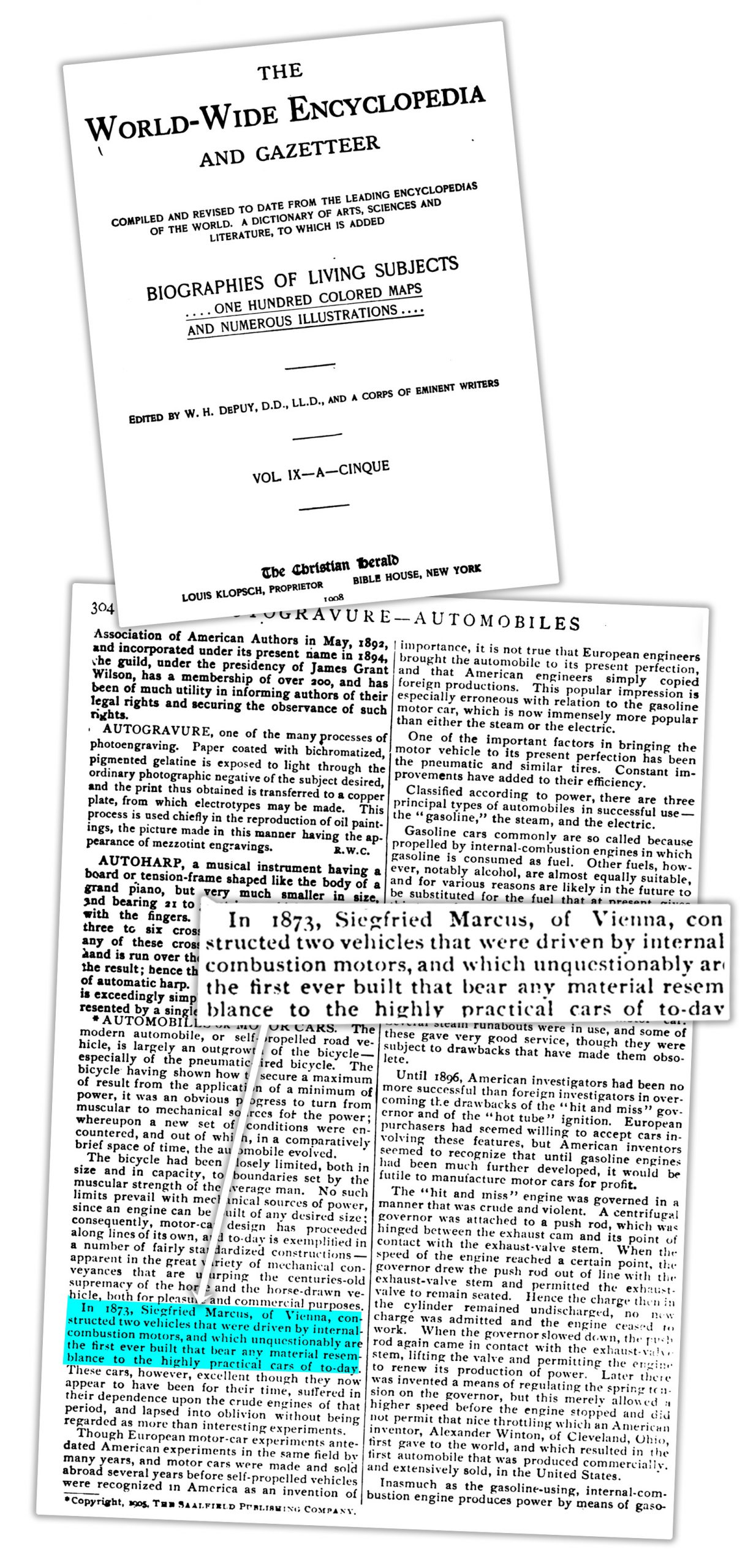
Carl Benz is not mentioned in this article, written a mere 22 years after he built his Patent-Motorwagen, but Marcus’ contributions are. Under the Nazi regime, a Jew getting this sort of acknowledgment simply wouldn’t stand, so the request from Mercedes-Benz to do a little rewriting of history was something the Reich Ministry for Public Enlightenment and Propaganda was happy to do.
And ever since then, even after the Nazis’ defeat in WWII, this narrative has stuck. Carl Benz as the inventor of the automobile has been accepted without question for over 80 years now, and Mercedes-Benz as a company has absolutely benefitted from this association, in terms of prestige and marketing and advertising and more.
Anyone could have really looked into this at any time in all those decades, and many have, and yet this Nazi-constructed narrative has remained intact. It’s time we just end this, not just because it’s a lingering bit of Nazi bullshit still polluting our culture, but because it’s just wrong.
This isn’t Carl Benz’ fault; he was just a brilliant inventor and engineer working on an incredible project. I don’t want to diminish his considerable and important contributions to the automobile. But it’s long past time we put those contributions into their proper place and context, and Mercedes-Benz needs to officially set the record straight.
If there’s some information I haven’t seen, and there absolutely could be, I’m happy to consider it. If there’s evidence of earlier sales or anything like that, I’d love to factor all that in. But until then, I’m going to keep banging this drum until Mercedes-Benz formally admits the truth and finally lets go of this Nazi-era bit of pandering.
Top graphic image: Mercedes-Benz


If this ever goes to trial I can picture Torch getting sworn in with his hand on a 2CV repair manual
Good attempt at never getting another Mercedes press car!
My girlfriend and I are currently planning a vacation for December that will include visits to the Musée des Arts et Métiers in Paris – which is where the original Cugnot steam drag is on display – and a visit to the Mercedes factory museum in Stuttgart. I guess I should just steal the steam drag, drive it on over to Stuttgart, and end this nonsense once and for all. What could possibly go wrong? Alternatively, I suppose I could pack Torch in my luggage and drop him off in Stuttgart to yell at whoever will (or won’t) listen at Mercedes.
Bonus points if you manage to crash the Steam Drag through a fence, gate, or wall belonging to Mercedes-Benz. It has an alleged history of similar property damage. 😛
The Mercedes museum is great. If you have time, you can also stop by the Porsche museum. It’s smaller but is also well worth a visit.
The Porsche museum is definitely on the itinerary as well!
I’m surprised this claim literally appears to be nazi propaganda – I figured that was at least somewhat of a stretch. I have also never paid much attention to M-B’s claims, so I figured “Mercedes-Benz claims to have invented the automobile” was akin to “Al Gore claimed to invent the internet” (Al Gore claimed credit for his involvement in legislation that eventually led to the internet).
My understanding is that Germany and most German companies will do damn near anything to distance themselves from Hitler or nazism. I’m very surprised to see a modern German company accepting a narrative that, if not necessarily 100% started by, was popularized by the Reich Ministry for Public Enlightenment and Propaganda.
It was not only popularized, but even enforced by Goebbels and his henchmen (as shown by Jason). While you are undoubtedly right, the story was probably too good to be dropped after the war.
Marketing uber alles!
Audi just finished another Auto Union Grand Prix racer replica and those were largely funded for propaganda purposes by the nazi party. They’re not stressing the connection, but the history is difficult to separate. Not that I have an issue with it. For one thing, it’s a beauty, for another I think acknowledging negative history is important, as is acknowledging that there is often ugliness under beauty. At some point, nearly everything is tainted by past evil and, as someone who went to parochial school even if I’m not religious, I’ve sometimes wondered if that view of history is a more accurate and pertinent reading of the idea of original sin. Acknowledging demons brings them into the light where they have little power.
I agree. I don’t see a reason to suppress or try to eliminate things from the past because they were designed/built by/associated with bad people or groups (not that Carl Benz was bad – I know next to nothing about him, but I’m fairly confident he wasn’t a nazi when he built is car in the 1880s…). With effort, you can find something nefarious in the past of damn near everything. Very few things in history are all good or all bad, as much as the past is often framed that way.
For me, the most interesting part about this story is not the connection to nazi propaganda, but rather that a widely accepted story is a myth that appears to have come from propaganda and is perpetuated by a company for advertising purposes. As I wrote in my original comment, I thought the link between nazi propaganda and “Benz invented the automobile” myth would have been a bit more tenuous.
Of course, while Torch presented some interesting material here (and I am generally pro-Torch), I’m not going to blindly accept his narrative either. This is a topic I will read more about in the future.
Yeah, I had never heard there was a connection to later propaganda (avoiding the name of the party as I’m pretty sure using it got my comment into “needs to be approved” status), I figured it was another instance of someone overselling their (or someone else’s they’ve taken credit for) invention or product and getting the narrative out before anyone else, putting the burden of proof, suspicion, and reversing the inertia of a set narrative on anyone who would dispute it. It’s unfortunately common and doesn’t need a connection to an evil regime.
Well said. Humanity’s achievements in general are often scented with blood, somehow… kinda depressing way to start the day.
That’s how I start every day.
The past may be immutable, but history is recorded by politicians, editors, publishers, and is always subject to revision.
Fifteen years ago I met a German fellow who was born maybe in 1980. I asked him what he was taught in school about WWII and the events that led up to it. He told me that he’d been taught to be mortified and humiliated at what his countrymen did during that time. Yet Mercedes is still using WWII era propaganda to back up its claims. Odd.
Meanwhile in Japan you’re lucky to get a page or two covering what was going on between 1937-1945.
Shame on Mercedes-Benz for continuing to use a lie from the Nazi propaganda machine in 2026. A lie meant to erase a jewish inventor, no less. I’m with you on this one, MB needs to be called out and the name Siegfried Marcus must be brought up whenever they try to use this lie in their marketing.
The 1st versus 1st practical applies nicely to aircraft as well. The Wright Brothers’ Flyer could take off on its own and maintained flight better than its predecessors, but it was not practical in any meaningful sense. You could cover the same distance it flew by riding a horse without losing much time, and the horse was a hell of a lot less likely to kill you. The Flyer is of course still extremely important to aviation as a milestone towards commercially and militarily viable aircraft.
Look at the evolution from the Benz Patent-motorwagen to the Velo. “Model bloat” is nothing new.
Jason – in all seriousness, this is some excellent research. It’s the sort of thing I find very interesting. Well done!
And now, back to our regularly scheduled nonsense 🙂
“Brash claim” is a phonetic Spoonerism of “crash blame”.
It’s French for “the groin”.
A couple of observations:
I find it odd that the caption references “4HP” when the doc is all in German. I would have expected “4PS”.
The overhead view of the 1886 Benz car in the patent drawing is quite beautiful.
I had trouble a few years ago trying to convince kids (and some adults) that Steve Jobs did not personally invent the cell phone, music player, and earbuds, etc. History is written by those in power.
He did employ the team that invented the click wheel and the hockey puck mouse, though
Click wheel: B&O BeoCom 6000, 1999
Hockey puck (round) mouse: DEC, somewhere in the 1980s. Three buttons though.
But he IS the cloud, right?
Like scum and Tesla?
Mercedes have conspicuously scrubbed almost every single WW2 losing party reference from their history page. Seriously, I checked their corporate history page on their website and the following is the only reference anywhere in it:
So CLEARLY they are aware that the association is bad, but they are more than happy to pedal a claim put forth by that horrible regime simply because nobody realized that it was put forth as such. I sincerely hope that this knowledge picks up steam and is known much more broadly. Mercedes won’t take away the claim in the face of real facts and evidence, but they’ll definitely take it back if everyone knows where the claim comes from.
I learned about the unflattering origins (to put it mildly) of this lie from one of Torch’s articles about this, and I’m not letting this one go. It’s downright insane that a tidbit of propagandistic historic revisionism from the most despicable political regime in modern history lives on as marketing for a top carmaker in 2026.
Counting on us Autopians to make sure Siegfried Marcus’ name eventually gets the recognition it deserves.
I’ll go through my extensive automotive library with a pen and correct them. History is commonly adjusted for certain peoples own benefit or ego.
The lady playing Bertha in the youtube video is WAY TOO SKINNY. All Berthas are Big Berthas, everybody knows that.
That’s Itty Bitty Bertha. Big Bertha was deemed too heavy to successfully complete the trip with that vehicle.
But there can only be one Bertha Butt.
https://en.wikipedia.org/wiki/Troglodyte_(Cave_Man)
My Grandmother was named Bertha by my German immigrant Great Grandmother. According to my Great Grandmother it is pronounced “BEHR-tah” not Bertha. Had she known the American pronunciation and later association at the time, she claims she would have picked a different name. Hope this helps. Also my Grandmother was skinny as a rail her whole life and once raced another car in a blue Ford Fairmont Wagon off a red light with my brother and I in the car.
Good journalism. Here’s one for you: the Wright Bros didn’t invent the airplane.
As well, not to diminish their contribution but if we’re going for documenting the first, well, that one goes to Santos Dumont… maybe no single ministry involved, just regular ol’ – what? not sure.
Maybe we can emit two certificates, one for “first” and one for “important”
Dumont also holds the honor of being one of the only people involved in pioneering both dirigibles and airplanes. The 14 Bis marked his first heavier than air flight, but his later Demoiselle design was also hugely influential, it was perhaps the first popular airplane design and boasts an astounding record of zero deaths during operation.
We come to the Autopian for obsessive coverage of obscure topics, and are seldom disappointed!
Excellent article!
Wondering if you could re-use some sentences for the next WWII Jeep Build article:
The next attempt, the
1888 car2026 WWII Jeep, is famous for being the machine thatBertha BenzDavid Tracy used for hiserfamous drive; it was also experimental, and whileBerthaDavid managed the trip,she was making repairs and improvements along the way, and still needed some help up some hills.Mercedes-Benz could just be honest and go with something like “world’s oldest automaker”, which would be technically true and still impressive
The likes of Opel and Peugeot might be older as business concerns, but they didn’t get into the car business until later
Studebaker has entered the chat.
They are long gone, though. Most of what was Studebaker is now various parts of Eaton Corporation, with lots of spin offs and divestitures along the way
I will comment supporting any Studebaker fan on the internet, every time.
That’s not even technically true. Mercedes-Benz as it is today is the result of a merger between Benz and Daimler 100 years ago. The modern company is descended from the oldest automakers (Benz & Cie, 1883 and Daimler Motoren Gesselschaft, 1890), but it’s not the same thing. The oldest extant automaker operating under the same name is, as you mentioned, Peugeot, founded in 1896 (as an auto manufacturer; they were founded in 1810 as an industrial saw manufacturer under the Peugeot name as well). However, Peugeot has since merged with Citroen and later Fiat-Chrysler to form Stellantis, so you could argue that it’s also no longer the same company as it was when it was founded. If you don’t want to count companies that have merged with others, even if they still use the original name, then that company would be Renault, founded in 1899, as the oldest extant independent automaker.
Stellantis’ situation is no different from Daimler-Benz, a merger of two existing automakers
Technically, Peugeot was the same company before then, the Citroen deal was more of an acquisition than a merger, the legal name of the company was always Peugeot SA, PSA Peugeot-Citroen was a d/b/a
But, I’m not talking the legal structure of corporate parent companies, I’m talking about individual named divisions, Mercedes-Benz, the automotive business now owned by Mercedes-Benz Group, and previously owned by Daimler, DaimlerChrysler, Daimler-Benz, etc
Like how General Motors is only 17 years old, but Buick is 127, is a business that’s been passed through a few owners and is currently with General Motors Company
I will join this crusade. Anything that undoes nazi propaganda is a win in my book.
Siegfried Marcus invented the automobile
Agreed! Now I can just imagine Torch screaming at Mercedes-Benz:
“You can’t handle the TRUTH!”
I’m normally against AI created videos…. but I’d be on board with this. Torch yelling that at Gobbels would be incredible
I’d like to encourage you to keep it up, to counter the bad-data that feeds our current AI, but I worry there are so many bad AI created websites that simply regurgitate the same bad data that it’s an uphill battle.
The Ministry of Propaganda is not dead, it just continues to evolve under new regimes.
There’s some hope! Did you see how quickly Google’s AI search started citing Matt’s satirical piece about gas-powered Cozy Coupes?
Wow. If “See, the Nazis lied” doesn’t get them to back down, nothing will. Fascinating!
This doesn’t surprise me, in the slightest.
I recall standing atop a tower in Munich, many years ago, with a friend of the family who lived in the US but was born and raised in Germany. I was discussing some piece of architecture or landscape that was in front of us and mentioned how terrible it was that slave labor of the Holocaust was used in the building of it, and he said something along the lines of “ah, well, too bad, but look at what beauty they created!”.
This was an interesting read. I had never heard of Mr. Marcus but his claim to the invention definitely seem much more supported and credible. How did you come across the Nazi letter?
the letter has been circulating around for some time; I’d love to see the orginial document, and have been looking into that.
Careful there, start pulling at threads, and you might have to start checking the 2CV for explosives. MB hasn’t kept this under wraps for 86+ years without breaking some “eggs”.. and by eggs I mean pesky journalists..
Fine journalism! Question the status-quo (using a good scientific method, of course).
More than ever, you can’t trust all of the common claims.