

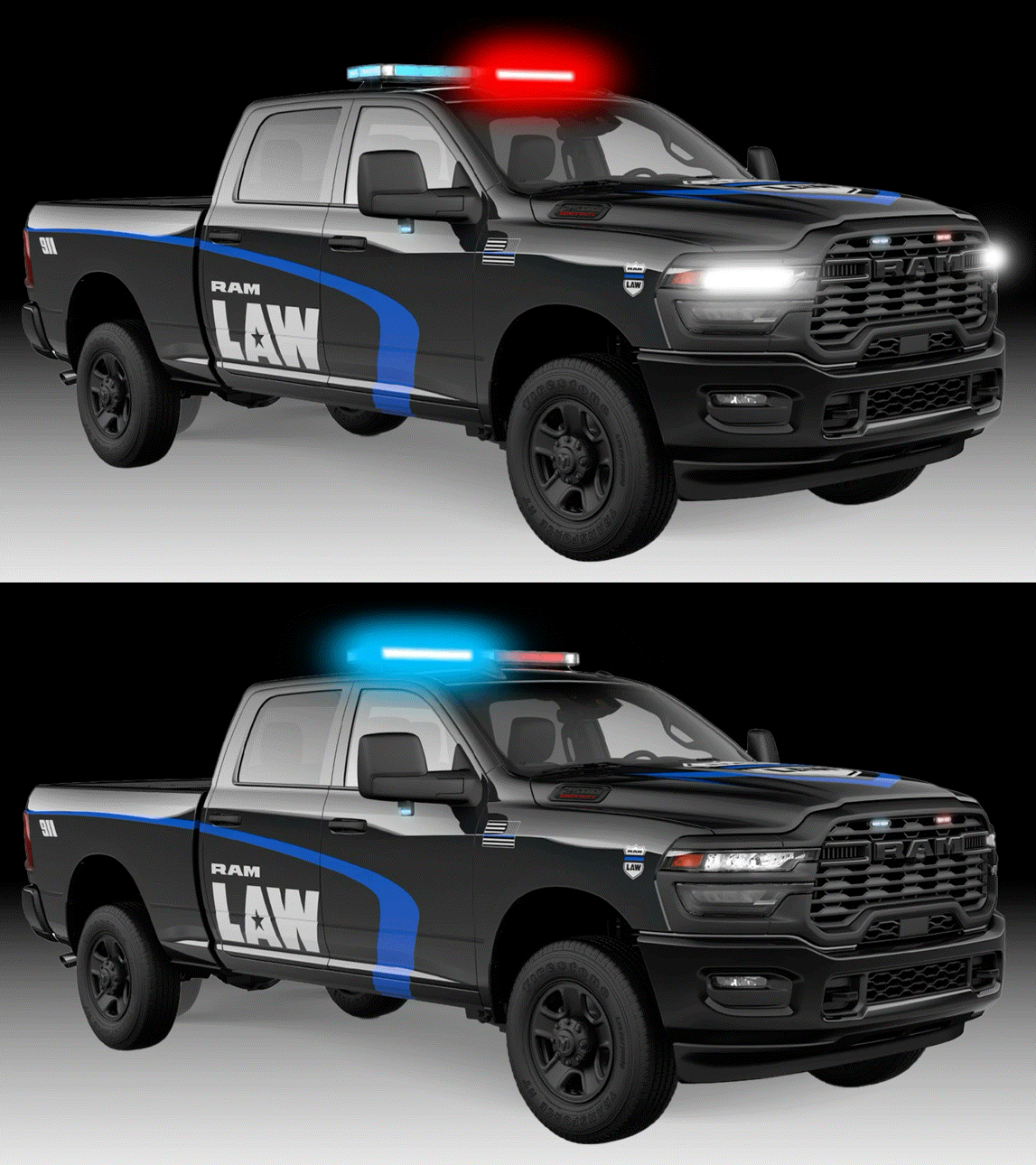
Police vehicles come in all sorts of different shapes and sizes. Most people are familiar with the Dodge Chargers and Ford Explorer cop cars that patrol highways and cities across America, but depending on where you live, the police could be using anything from Smart Cars to Ford F-150s as department transportation, based on the type of service needed.
That spectrum of service is ever-expanding, and Ram is taking advantage. The American truck maker announced today it will begin offering what it describes as the first-ever “pursuit-rated” 3/4-ton, heavy-duty pickup truck enforcement vehicle, based on the 2500.


Pursuit-capable isn’t just a clever branding phrase. The enforcement vehicle industry relies on annual testing performed by the Michigan State Police (MSP), which includes acceleration, braking, and handling trials, to determine whether certain vehicles are capable of performing pursuit duties. Agencies around the country use these results to determine which vehicles they purchase for their fleets.
Up until now, the biggest pickups to have completed MSP’s tests were the Ford F-150 and the Chevrolet Silverado—both smaller 1/2-ton trucks. Ram sells a police version of the 1500 called the SSV, but it hasn’t been tested by the MSP. The 2500 is the new king of the pursuit-capable fleet—so long as you measure that crown through physical size and not actual performance.
The Many MSP Tests Ram Needed To Complete
The Michigan State Police’s testing regimen is no joke. The testers want to relay exactly how each vehicle will perform in the real world when subject to high-speed chases through unexpected terrain at several speeds. That means tests not only for acceleration times, but also for braking endurance and handling prowess.
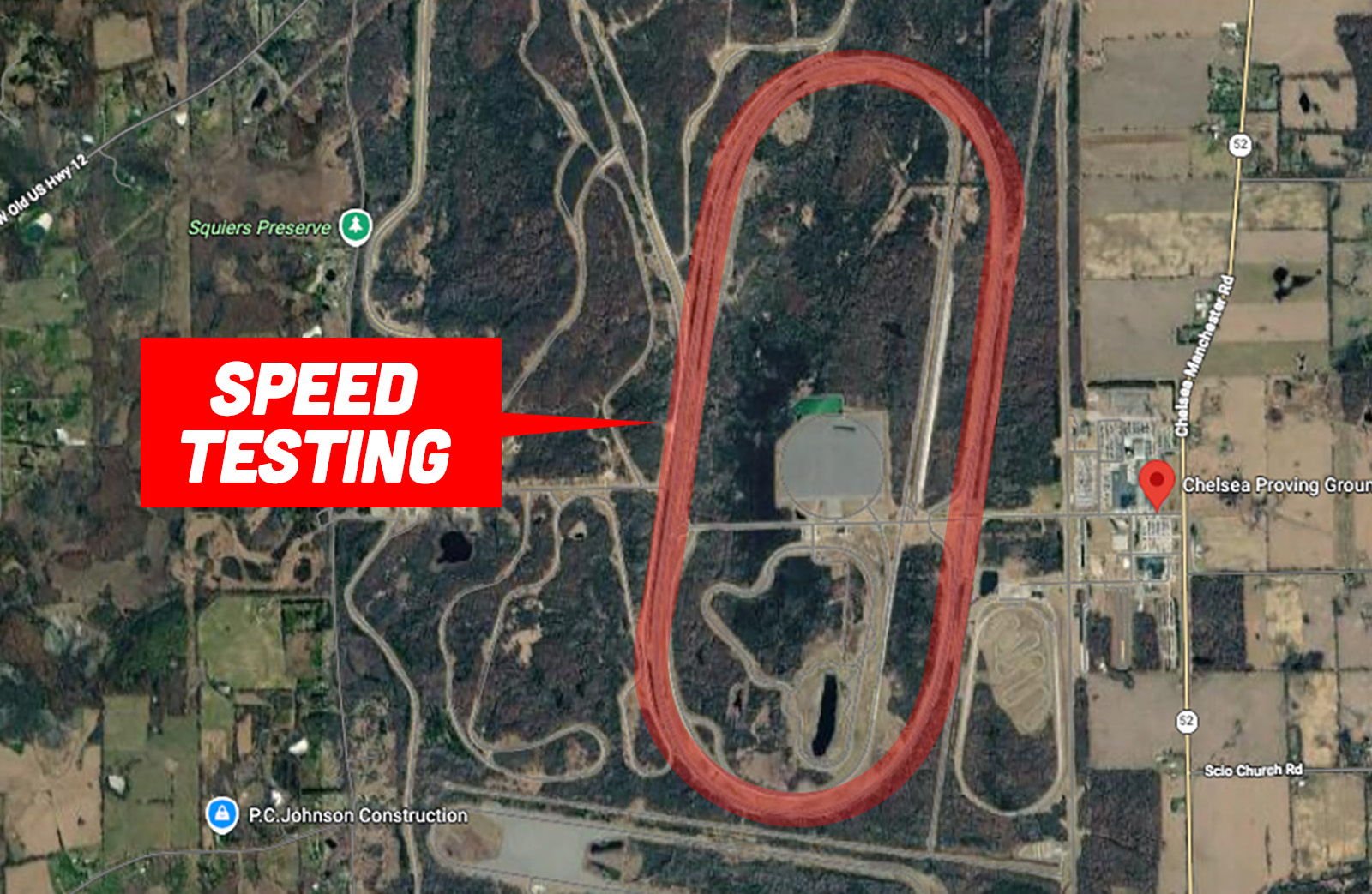
The acceleration portion of the test is pretty simple. MSP takes over the oval track at the Stellantis-owned Chelsea Proving Grounds in Chelsea, Michigan, and hooks up each test car with a Racelogic Vbox 3i GPS-based data box. Then, it tests each car in standing starts to 60 mph, 80 mph, and 100 mph. They also test how far each vehicle takes to hit 100 mph and 120 mph (if possible). Each car gets four runs, where the acceleration times are averaged for a final result. On the final run, the driver continues to accelerate until the manufacturer’s electronically limited top speed is reached. MSP says the top speed must be reached within a distance of 14 miles.
The Ram 2500 Emergency Response Vehicle (ERV), with its 6.4-liter Hemi V8 making 405 horsepower and 429 pound-feet of torque, had no problem reaching its electronically limited top speed of 103 mph in that distance, doing the deed in just 0.45 miles. A lot of that had to do with its shorter gearing; the regular 2500 gets a 3.73 final axle ratio, while the ERV gets a 4.10 version for peppier acceleration.
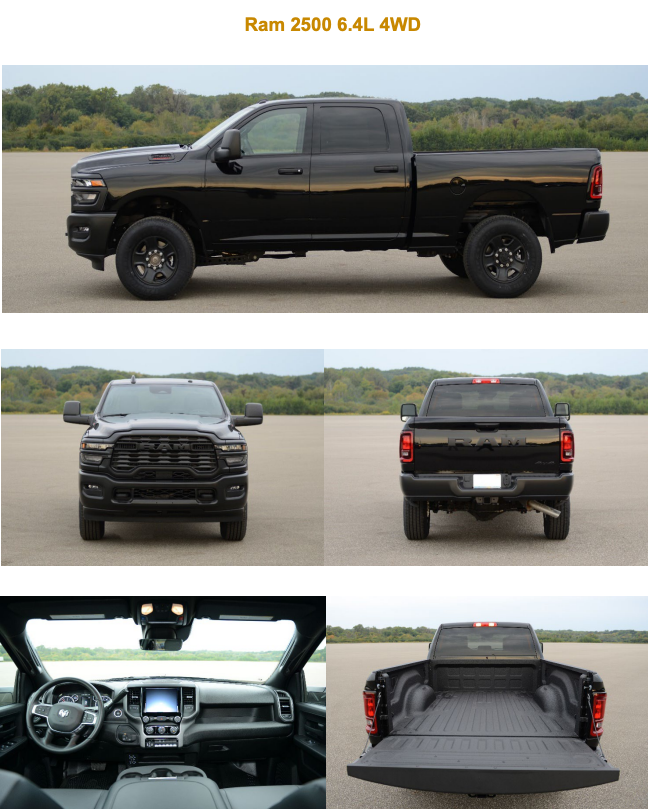
It’s worth mentioning that the 2500 had the lowest top speed of any vehicle tested, beaten by both the smaller Chevrolet Silverado PPV (114 mph) and the Ford F-150 Police Responder (121 mph). The fastest car of the test was the Ford Explorer Interceptor, with a top speed of 148 mph.
The Ram 2500 was also the slowest truck to 60 mph, posting an average of 8.41 seconds. The Durango Pursuit trailed just behind at 8.26 seconds. The Mustang Mach-E GT was by far the quickest of the bunch, posting an average 0-60 time of 4.03 seconds. But the F-150 was pretty damn quick, too, with an average time of 5.68 seconds.
To test braking ability, MSP does 10 consecutive stops from 60 mph before giving each car a cooldown lap, then does 10 more stops from the same speed. Testers take the average deceleration rate to calculate the average distance needed to stop from 60 mph. Here’s the math behind that in case you’re interested:
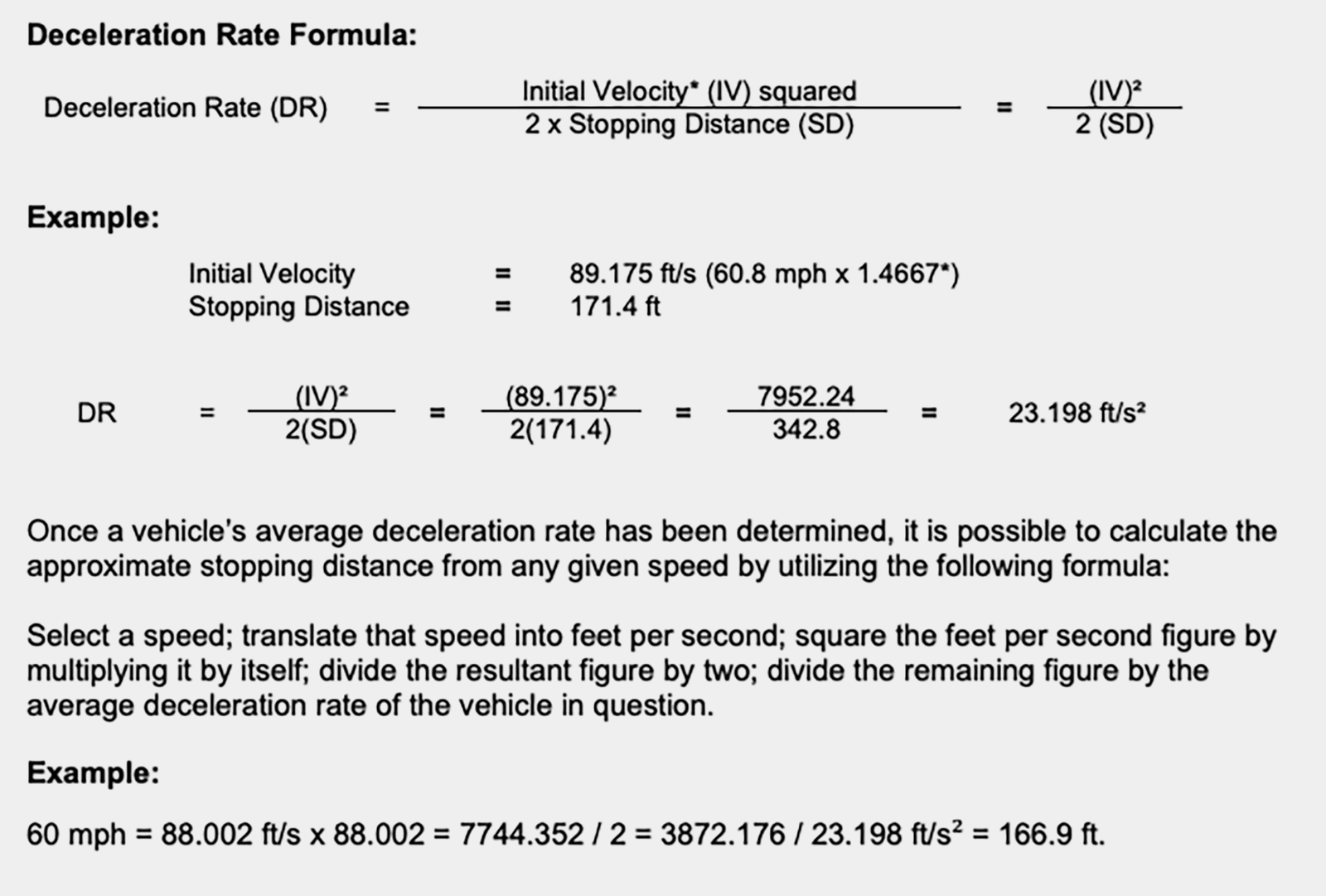
The Ram was again the worst performer, scoring an average of 170.13 feet to stop from 60 mph to zero. The next closest car, the Silverado PPV, needed just 149.81 feet to perform the same stop. The F-150 wasn’t far behind, at 148.31 feet.
When it comes to testing handling and vehicle dynamics, MSP doesn’t take things easy. Each car is driven by four officers for eight timed laps each, for a total of 32 laps, around Grattan Raceway, a hilly road course in central Michigan with a good mix of high-speed corners, low-speed turns, and a couple of big braking zones. The average lap time score is calculated using the average of the five fastest laps overall.
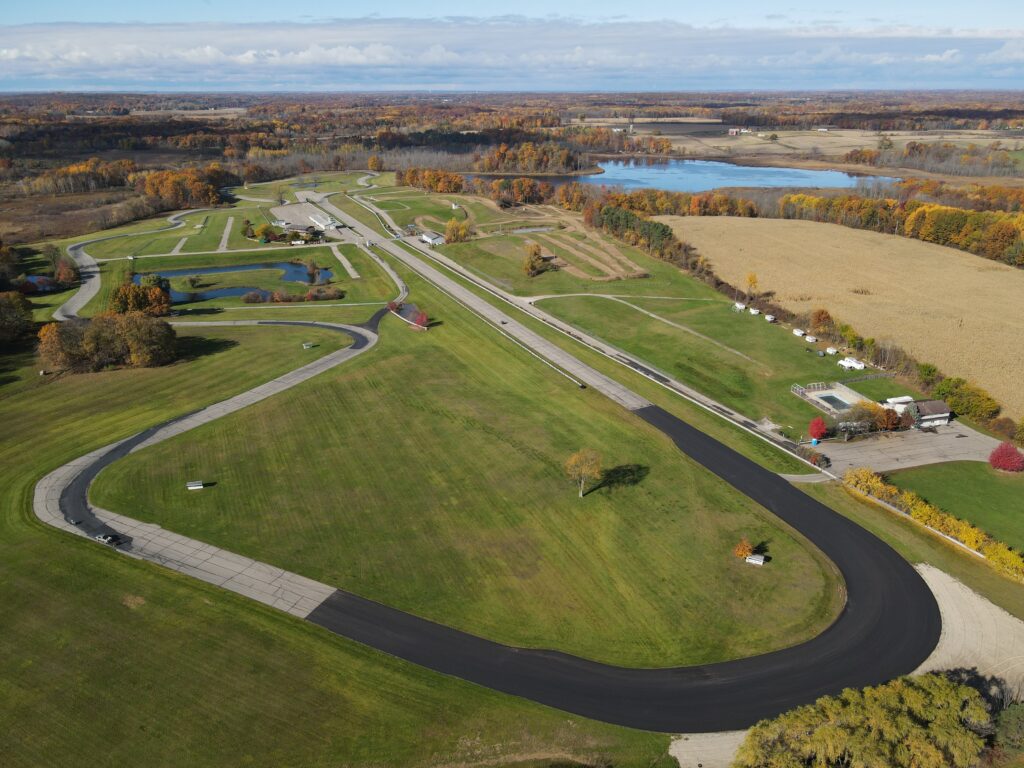
According to the MSP’s evaluation form, this test is the “true test of the success or failure of the vehicle manufacturers to offer vehicles that provide the optimum balance between handling (suspension components), acceleration (usable HP), and braking characteristics.” The real test, though, is to ensure the cars can do 32 laps without any big mechanical failure.
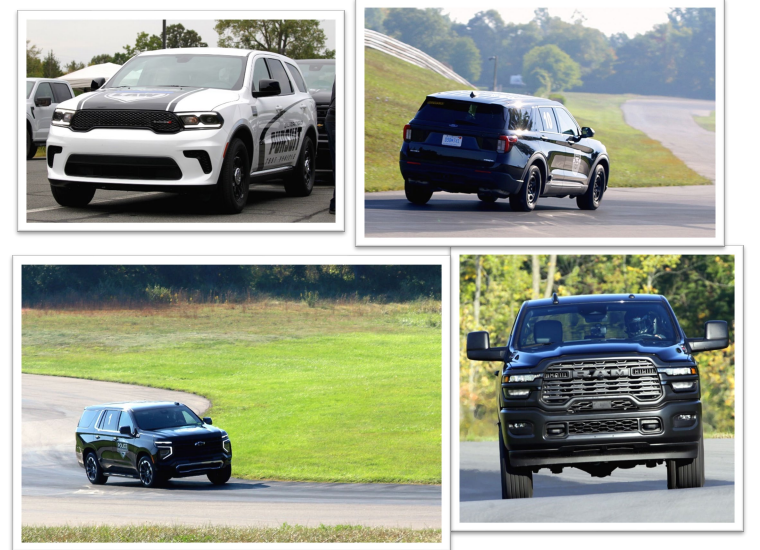
Weighing in at 6,680 pounds—or 810 pounds heavier than the next heaviest car tested—it should come as no surprise that the Ram 2500 put up the slowest lap time average of 1:52.17. The next slowest vehicle, the Silverado PPV, put up an average time of 1:41.18. The quickest car was the Explorer Interceptor with the 3.0-liter EcoBoost engine and no hybrid tech, with an average time of 1:35.95. But the Ram came out of the test functioning just fine, which, if you know how hard on cars lapping a race track can be, is a victory all its own.
I Can See The Use Case For This Truck
By now you’re probably wondering: What’s the point of this truck? What can a Ram 2500 pursuit vehicle do that a Silverado PPV or an F-150 Police Responder can’t? Those trucks are objectively more capable when it comes to the act of high-speed pursuits, and can tow thousands upon thousands of pounds. But I can see a lot of real-world uses for a 2500-level vehicle that’s also rated for pursuit.

Obviously, pursuit won’t be the ERV’s main function. According to Ram, agencies were asking for a truck that could do a bunch of truck stuff and also happen to be pursuit-rated. Per its press release:
Responding to agency requests for a pursuit-capable emergency‑response package suited to rural, mountainous and mixed‑terrain regions, Ram Engineering quickly defined the parameters for an Emergency Response Vehicle based on the Ram 2500. The goal was to combine law‑enforcement capability with the flexibility required by fire, rescue and emergency response agencies, all while maintaining Ram heavy-duty trucks’ hallmark capability.
Both the F-150 and the Silverado could handle off-roading just fine, but for rural departments with lower budgets and few vehicles to spare, it makes sense that they’d want a sort of “catch-all” vehicle that could perform a wide range of duties that include hauling stuff or towing loads that normal 1/2-ton trucks can’t. Because this truck passed MSP’s tests, it can now also be used to chase down the occasional baddie on a rough, dirt back road—no need to call in a different car to chase instead. At the same time, it could pull disabled vehicles off the road, move downed trees, or haul a huge generator into a town without power.
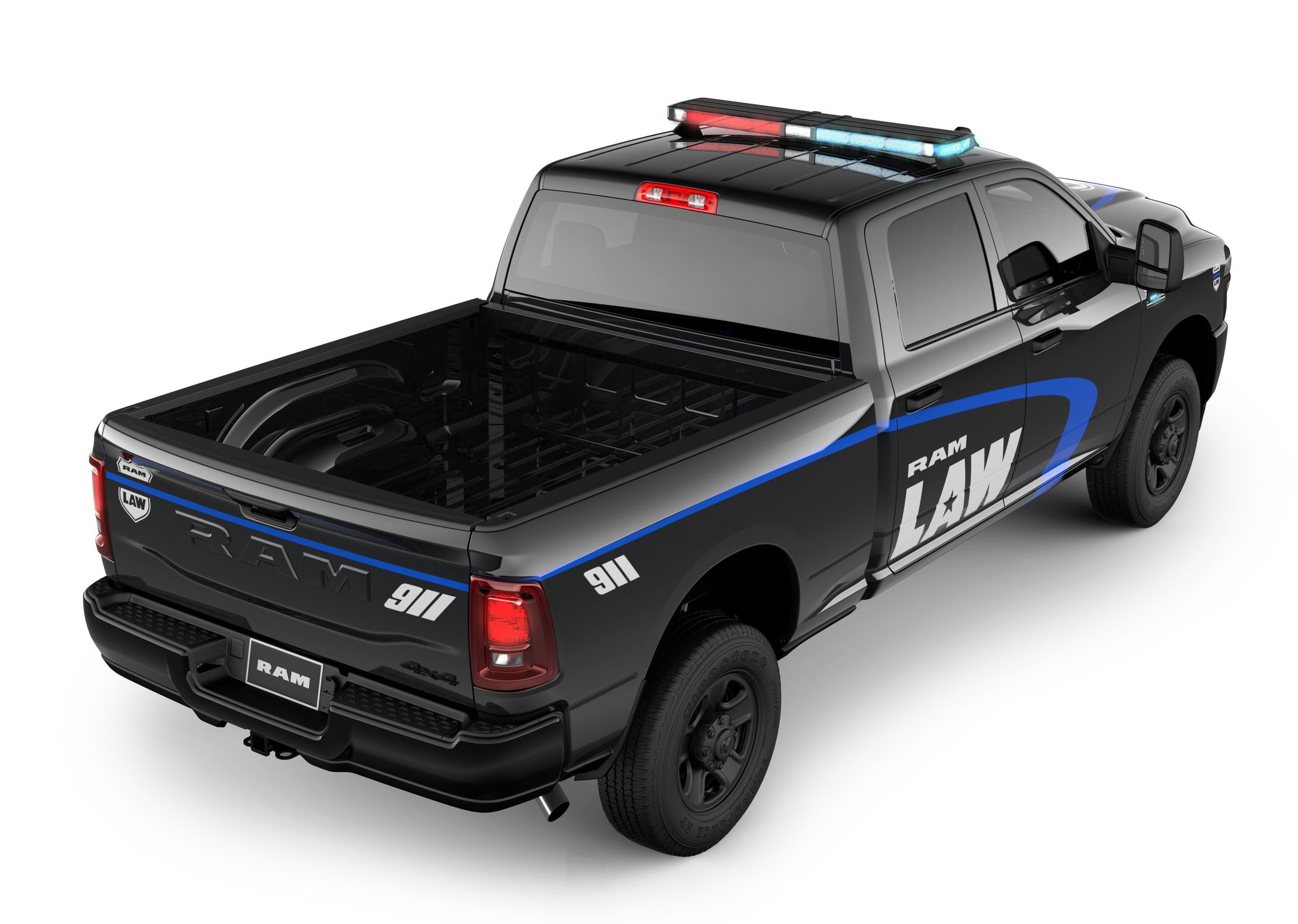
Whether the Ram 2500 ERV will spawn a line of heavy-duty pickups from other manufacturers isn’t clear right now. As far as Ram knows, it’s the only automaker to send a 3/4-ton pickup to MSP’s trials and get a pursuit rating from the department. If anything, I’d love to see what pursuit-ready Silverado 2500 HD and Ford Super Duty look like.
Top graphic image: Ram


The MSP now instead of pulling you over will just plough over you.
Title says “3-Ton” ????
What are all of these Flock cameras for if we are still doing police chases?
This is disgusting. My small town is broke, our roads are krap, nobody knows where the money went, and the council refuses to ask the state auditing board to look into it. In the meantime, we citizens are pissed off that the three biggest items on our town budget are, law enforcement, infrastructure and schools. The cops budget is more that the other two combined but yet we suffer while our cops ride around in new vehicles. Enough of this BS. What’s next, military personnel carriers? We the tax payer are getting screwed while our town falters.
Edit: Spelling
MPC’s would most likely be cheaper than the pickups as well.
we have f250’s in the county fleet in my area. but they are kitted out for animal control. most times you can catch them towing the trailers for the county convict cleanup crews.