

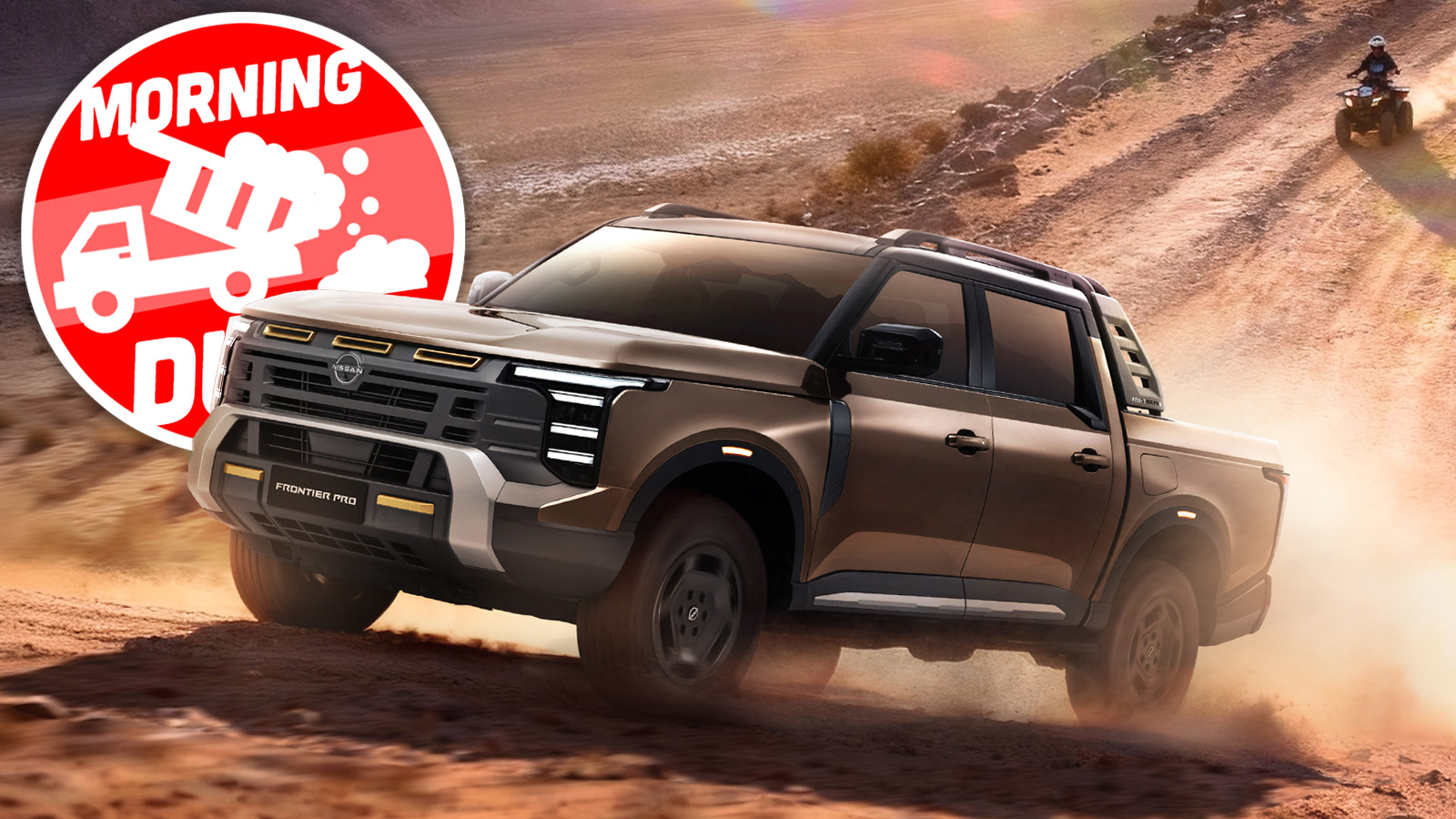
Japanese automakers have become obsessed with the idea of ‘China Speed,’ which sounds like a made up drug that has to be stopped in Rush Hour 6 but is actually just a way to describe the efficiency of that country’s manufacturing. Instead of waiting the typical 4-to-6 years (or longer) to develop and produce a new car, Chinese automakers seem to be able to get products to market in as fast as 24 months.
Nissan wants to be the first Japanese automaker to truly embrace China Speed with its next round of North American trucks. As any Morning Dump reader knows, sometimes moving fast means breaking things, and I have my concerns. That desire for speed stands in contrast to another Japanese automaker, which is going to wait more than a decade to replace a key vehicle.


The downside of China Speed is that sometimes technology gets ahead of the governments ability to regulate it, which is why Tesla is going to join other carmakers in its biggest recall ever. Perhaps that speed is better than slowness of Volkswagen, which is apparently in ‘Cloud-Cuckoo-Land’ with its visions of the future.
Nissan Can’t Hardly Wait
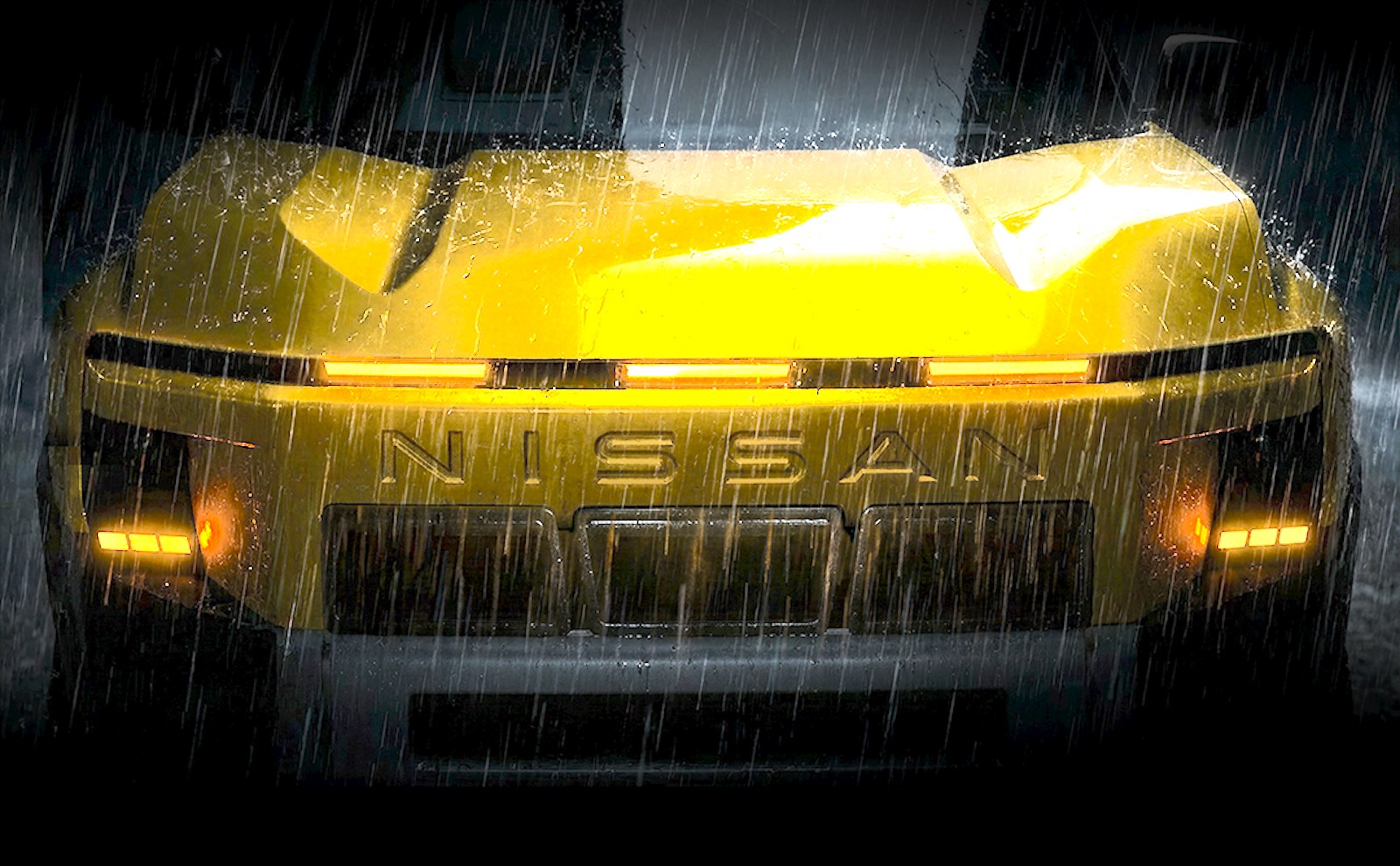
I 100% get it, and I am 83% on board. Nissan wants to build a new series of vehicles on a new body-on-frame platform, including a brand new Xterra. CEO Ivan Espinosa has only so long to prove he deserves the job, and waiting until 2033 to roll out a bunch of good products isn’t going to work.
Is 2028 too soon, though? According to Nikkei Asia, that’s where the company is heading with its Family Strategy, which involves creating a base platform and building models off of that, as opposed to building a lot of individual models. This is the modular approach used by Volkswagen and many other automakers, so it’s a little amusing that it’s taken Nissan this long to come around to it.
How much will it quicken the pace?
It aims to reduce that to 37 months for projects requiring development of a new platform, meaning a basic vehicle frame, and to 30 months for follow-on projects that use an existing platform.
To accelerate development, Nissan has overhauled the process. Previously, decision making often took longer because authority was split among three leaders responsible for profitability, product appeal and execution within each project. The company has since had its product planning and profitability leaders work as a team and leave engineers to focus on execution, enabling leaner and faster decision making.
Nissan uses AI and digital technologies as well to improve the efficiency of vehicle testing.
AI! Certainly nothing will go wrong by using AI. That never happens.
Unsurprisingly, Nissan is going to attempt this first in the United States. It sounds like Hans Greimel was at the same press conference and had this to report:
The first of three product families will be frame-based trucks geared for the U.S. market and made at the Japanese carmaker’s Canton, Miss., plant. The lead nameplate, the revived Nissan XTerra, will land around 2028 and be followed by four sibling spinoffs by the end of the decade.
The advance puts Nissan Motor Co. in competition with Chinese rivals that are churning out cars in 24 months or even faster, a breakneck speed legacy players call China Speed.
Again, in abstract, this is a good idea. Super long development periods means you’re often on your back foot as a car company, and if things change (tariffs, electric car subsidies) it’s painfully slow to switch directions.
On the other side of this, going too fast means the potential for huge quality risks. I don’t have any specific insight into whether or not Nissan can do this or not–it’s on the lower end of recalls by brands in the US–but history is history. Remember when Toyota rushed an electric car onto the market and the wheels started literally falling off the things? Remember the Fisker Ocean? [Ed Note: A body-on-frame vehicle using preexisting powertrains should be a lot simpler to crank out than an all-new EV. I think this is doable. -DT].
If Nissan can pull it off, it’ll be great, though it’s not worth it if the company can’t come close to nailing it on the first try.
The Mazda CX-30 Has Been Delayed Until At Least 2031

The Mazda CX-30 is a good car that’s basically impossible to sell at a competitive price in the United States after tariffs. As Japan’s Chugoku Shimbun (via Motor1) explains, that means we’re going to be waiting a while for a new one:
Mazda CEO Masahiro Moro told Japan’s Chugoku Shimbun that the next-generation model will not land until fiscal year 2030, which runs through March 2031.
That is a 12-year run for the current CX-30 without a full overhaul, an unusually long stretch even by Mazda’s conservative product cycles. Moro pinned the delay on cost pressure the automaker cannot ignore.
Cheap cars run on slim margins and, in the United States, that usually means foreign production. Now that foreign production is subject to higher tariffs, cheap cars are going to be a lot harder to come by.
China Moves To Fix The Damn Doors
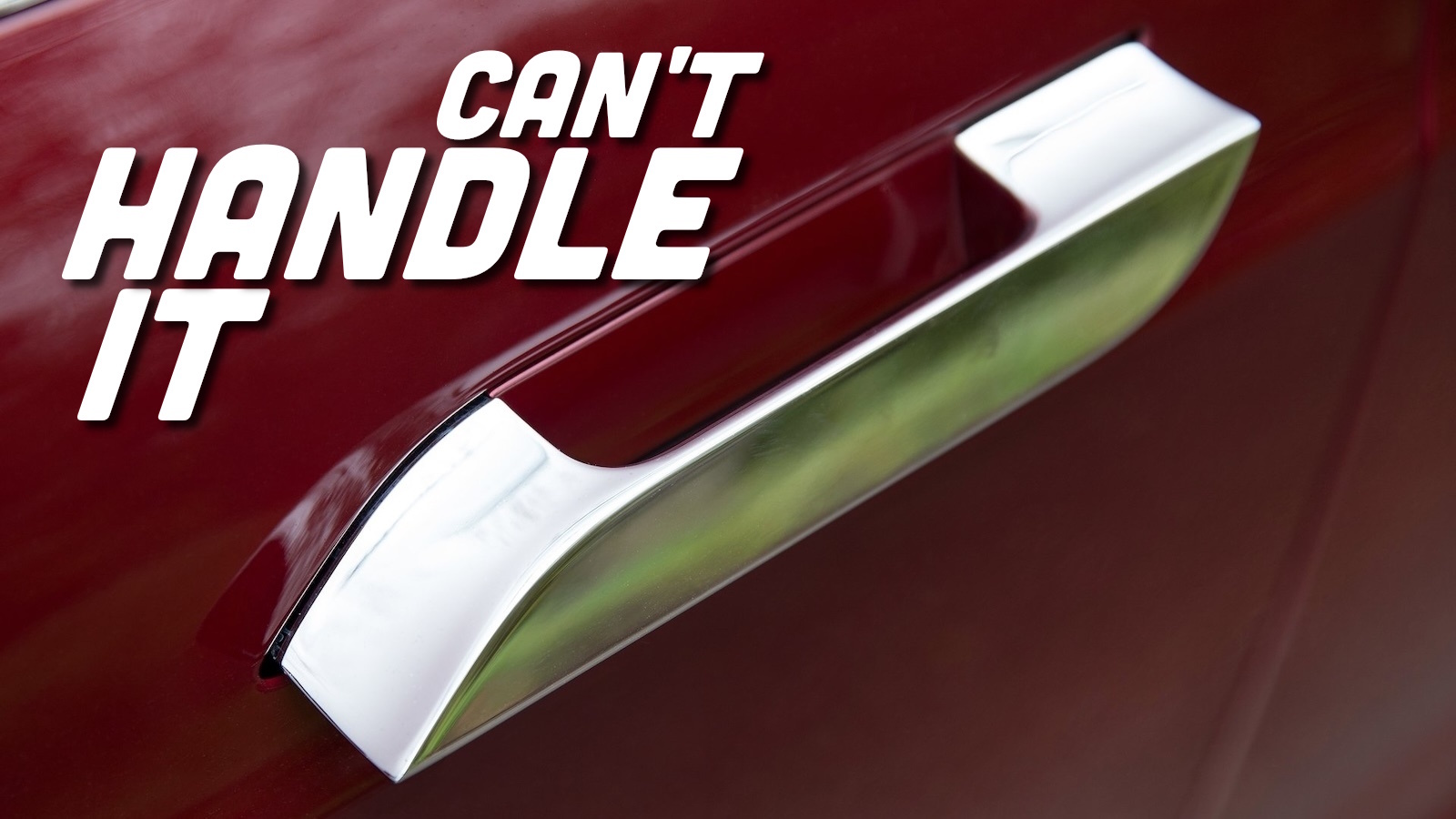
Motorized doors are largely dumb, and a solution to a problem that doesn’t exist. Even worse, in an accident they create a need for secondary systems to operate that are either difficult to locate in an emergency or don’t function at all.
China has decided to discourage the use of these doors in the future, and is now forcing Tesla, Xiaomi, and other automakers to recall vehicles to make it clearer how to escape and/or to reprogram systems to make them operate better.
Tesla is the largest participant in this round of recalls, with 2 recalls covering a combined 5,716,552 vehicles, according to CnEVPost’s calculations.
Of those, 2,975,910 vehicles are being recalled over the emergency mechanical door releases, effective September 25, 2026, including 973,156 domestically built Model 3s and 1,956,713 domestically built Model Ys.
Imported models account for 35,590 Model 3s, 8,328 Model Xs and 2,123 Model Ss.
Tesla will add warning labels free of charge and update the window control software via OTA to add a post-crash window-lowering strategy. Some vehicles that already carry the labels will not need them applied again.
I cannot wait for this era to end.
VW’s Management Is In ‘Cloud-Cuckoo-Land’

Having grown up in a German household, I’m aware that bluntness can sometimes border on cleverness. Such is the case with Christiane Benner, the head of Germany’s IG Metall trade union and current VW AG supervisory board deputy chair, who called CEO Oliver Blume’s goal of reaching a 9% operating return as belonging in “cloud-cuckoo-land.”
Lol.
Bloomberg has her full reasoning:
“How is Volkswagen supposed to achieve an operating return on sales of 9% — as reported in the media — under the current geopolitical conditions?,” Christiane Benner, who is also chair of Germany’s powerful IG Metall labor union, was quoted as saying Friday by magazine WirtschaftsWoche.
“When the executive board sets such targets, it has massive repercussions on model strategy and on the plants,” she added. VW, which has set its sights on an operating return on sales of 8% to 10% by 2030, didn’t immediately respond to a request for comment.
One way is to close plants, though I don’t think Benner is necessarily on board with that.
What I’m Listening To While Writing TMD
The remarkable Count Basie was born on this day in 1904. Here’s Basie and his Orchestra at the 1979 North Sea Jazz Festival doing “Sweet Georgia Brown.” He was 75 and absolutely still had it.
The Big Question
What’s the most rushed car in history?
Top photo: Nissan



Most Rushed Car? Hanomag Korbwagen because obviously a car made of rushes would be the most rushed.
I am rather partial to the Hanomag, Korbwagen and one is shown about half way down this page.
https://www.messynessychic.com/2015/02/19/laundry-basket-cars/
Here is a guy rushing a car step by step
https://www.wickerworks.com.au/wicker-car-body.html
Why the Autopian has been so remiss in coverage of automobiles made of rushes, reeds, and other wicker is a mystery to me You have done soybeans to death, and I believe cotton formaldehyde composite as well..
That’s a photo of Mazda’s much-maligned MX-30 there at the top of the info on the Mazda CX-30. Though they’re very similar (both heavily based on the Mazda 3 hatchback) they’re different cars (the rear suicide doors on the MX vs. standard rear doors on the CX being the easiest clue, aside from the MX being an EV vs. the CX being ICE.
I for one am not sorry to see the CX-30 extend its run to a dozenish years… the next one will likely get more screen-centric, losing physical controls and real analog gauges like the new CX-5 did. 🙁
I’d definitely replace my current daily with a CX-30 even though it’s a lot smaller than the tank (first gen XC90) that I drive now, it’s surely sufficient for my needs a lot of the time. But since I don’t NEED a new car, I’d only jump to a CX-30 if some deal too good to pass up crossed my path.
TBQ: The ’59 GMs in response to seeing the 1957 Chrysler line. They already had ’59s well underway that would’ve looked like their ’58s but more so.
The ’57 Mopars were themselves rushed, having been planned for 1958 and moved forward a year and they had the quality-control problems to show for it.
Of all places, Scranton had 3 years of Big Band revival concerts and I had the pleasure of seeing him in concert.
>>Nissan’s Risky Plan To Make Five New Trucks In Two Years
It can’t be that hard! DT made a new Jeep in his backyard in only a handful of months!
Isn’t that the crappy compliance EV with like 100 miles of a range? If so, I have to seriously question this assertion.
Regarding China Speed, keep in mind the holy trinity of manufacturing: fast, cheap, good. Pick 2.
Based on every review I’ve seen of a Chinese car, they all have some pretty substantial failing to go with their gee-whiz features. We know which two they picked, so what’s Nissan going with? Somehow I don’t see them picking fast and good, so…godspeed to buyers of the new Nissan trucks.
Nah, it’s their smallish SUV that’s a competitor with the Chevy Trax, Honda HR-V, Hyundai Kona, etc. It’s a fun car for what it is! I had one for a rental and really liked it.
Thanks, I saw another comment that they used the wrong picture after I posted this. I retract my statement. 🙂
(although this might be a good time to point out that alphanumeric car names are unmemorable, bad, and confusing and they should stop using them)
I just now saw that comment too. And amen, brother. Even made-up words stick in my brain better than this stuff.
Also meant to point out you’re spot on with the fast, cheap, good comment. That seems to be a universal truth in every industry I can think of.
Also, there needs to be a CX-30 Hybrid right freakin’ now.
They used the wrong photo. That’s the MX 30, not CX 30
well the “problem” with door handles is they tend to stick out and cause aerodynamic drag, lowering Fuel economy/battery range. Now a properly designed car should be able to have real door handles that don’t break while also having effectively zero drag, so this really comes down to Tesla and other just wanting to make something “cool”.
There is a term/phrase in the auto industry that they realize making a normal, solid, boring car doesn’t really sell to the normies or stand out, so they have to do things that “surprise and delight” the customer. Dumb door handles is one way they try to do that.
No one has mentioned a shorter wheelbase vehicle to compete with a jeep.
As a Titan owner, I’m sad they’re not bringing back another full sized truck. But I’m sure the xterra will be cool. That’ll be competing with 4runners
They would be foolish to do it but nothing says they can’t. What else are they making with five vehicles? The Xterra, Frontier, and Titan of yore used largely the same frames. The XD has a different architecture entirely.
Even the Cummins label couldn’t help Titan sales enough to keep it around. I can’t really see Nissan pulling it off these days.
The Xterra is just a Frontier wagon, right? Extend the new front treatment to the Frontier and that’s two. Add a decontented single cab pickup and we’re more than halfway there already. Same burger, different toppings. Throw in hybrid versions of the Xterra and full fat Frontier and that’s five, all on an existing platform they’re already building.
From Nissan’s splashy press event where they unveiled the new Rogue and electric Juke the five new BOF models are going to be:
None of this seems difficult to do for a company like Nissan.
oh, they’re counting infinity in the 5? That’s a disappointment. That’s just going to be a tarted up pathfinder and one of the other ones. I really don’t understand why the old armada let us have a Titan but the current one doesn’t. Do it with that platform too!
Infiniti Frontier! Revival of the luxury truck! Woo!
The return of the QX4!
Nissan is going to need to make more than 5 trucks to stay competitive. I mean, Ford makes 2.4 million trucks every two years. /s
Just sell them for like $95,000,000 (plus delivery fee) each. Problem solved!
Let’s see, with my trade in and down payment that brings it down to $94,990,000…I’ll give ya $93,000,000 plus you throw in some rubberized floor mats or I’m walking.
Just $995 a month until the heat death of the universe!
Or when you call the finance company to come take the dam thing away, whichever comes first!