

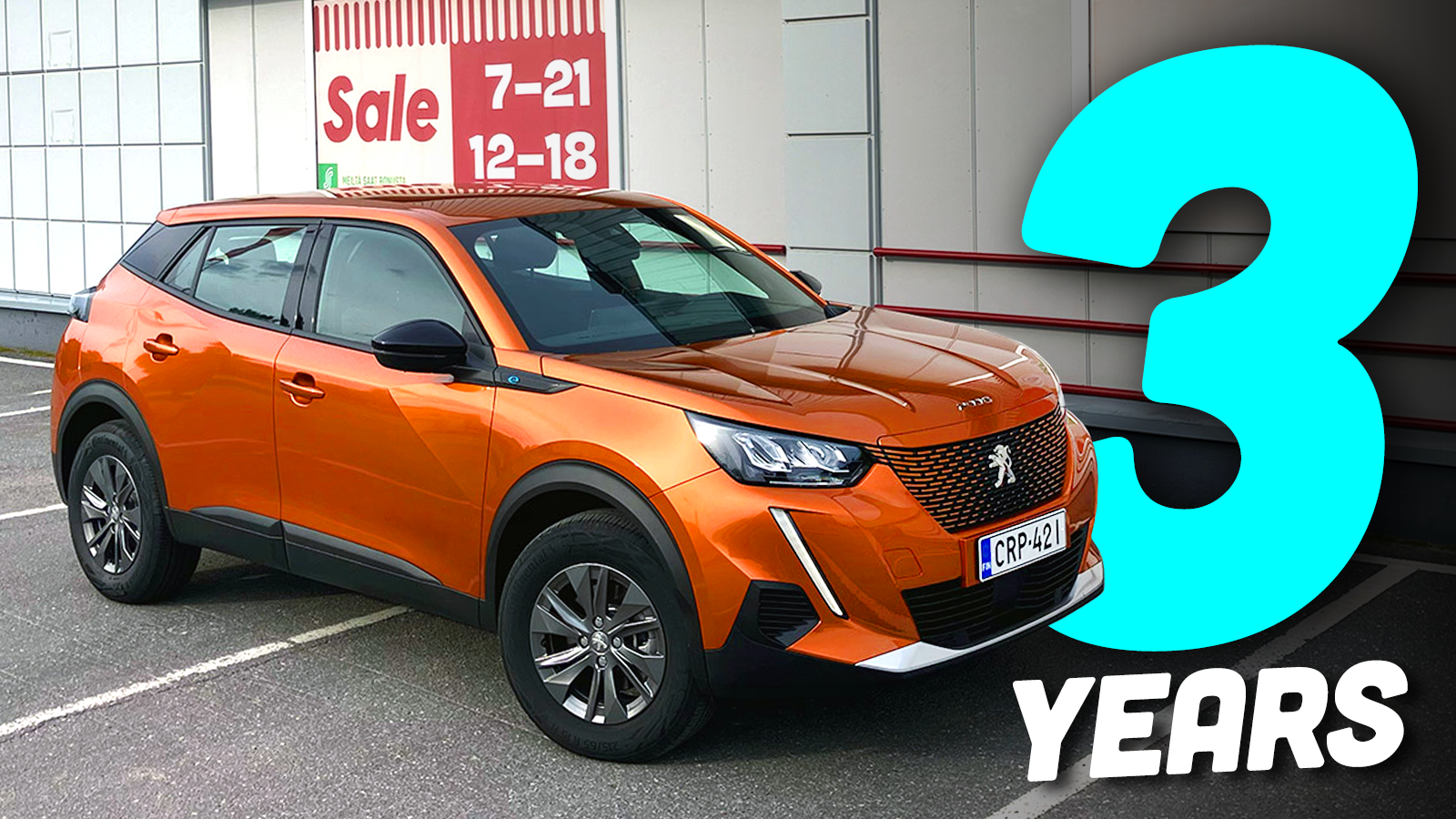
After three years, I’ve just handed back my 2023 Peugeot e-2008 crossover. We did a little under 30,000 miles with it and things went mostly smoothly. Right now, our household has no EVs, which feels sort of weird after a total of five years of leased electric cars. Still, it feels like leasing them was the thing to do, considering their depreciation and residuals.
The Stellantis-built, front-wheel-drive Peugeot is a B-segment SUV, which means it’s the size of a basic family car here. Not only is it related to the smaller 208 hatchback, with a longer wheelbase, bigger trunk, bigger tires and a higher beltline, but it’s also an ICE-based EV in the sense that you can buy an identical looking car with a gasoline or gasoline-hybrid drive train.


In other words, it’s not really an EV from the get-go, which shows in the car’s design and the lack of frunk up front. The cars rolled out from the same production line in Vigo, Spain, and they are also related to the Jeep Avenger crossover.
Expensive Fuel, Cheap Electricity

Finland is the sort of Northern European country that has expensive fuel and relatively cheap electricity, at least for now. Geopolitical situations have affected both in recent years, as diesel fuel prices dropped down to one euro per liter (around $4.5/gal) in 2020 due to Covid-reduced demand, and have more than doubled since for various reasons ranging from Russia to Iran.
We haven’t really had cheap-cheap fuel … ever, and as distances are long as soon as you leave the Helsinki capital region, running costs are a thing to reckon with. As a result, and partially because of company car trends, more than half of new cars registered currently are EVs, and new diesel car sales have dropped to a minuscule level, especially as diesel now costs more per liter than gasoline. Traditionally, it was significantly cheaper.
When it comes to electricity prices, I currently pay less than seven Eurocents per kilowatt hour (plus taxes and grid fees for a total of double) for the next couple of years. With expensive fuel and cheap electricity, and an EV charging network that’s expanded immensely in the last five years, it makes more sense than earlier to drive an EV and skip buying fuel.
[Ed Note: That’s dirt-cheap electricity! This is why owning an EV is a no-brainer in some of the world (even here in California), so long as you can avoid the one thing that can nullify the savings: depreciation. -DT].
But then there’s depreciation.
Why All Of Finland Wanted This Orange Car

I had leased my first Hyundai EV in the fall of 2021 and soon traded my old, slightly broken commuter Volvo for a Kia Niro EV to use as a second car. For five years, I had a 100-mile commute for most of the week, so I had a good reason to keep running costs down, and I’d rather pay for using a new, warrantied car than fueling and fixing a cheap car since we also had a kid on the way.
Of course, with a lease you eventually give back your car; with a used car, you have a known good in your parking spot for as long as you wish. Another option is to get a used EV, which has already depreciated to a good price point. In these 4.5 years after originally ordering the Peugeot, the availability of affordable used EVs has grown significantly, and you can get away with monthly costs cheaper than any lease – and you won’t need to give it back.
In the spring of 2022, I jumped at another chance of getting a cheap EV lease deal: the Peugeot importer offered these orange Peugeots for a very reasonable 249 Euros per month with 15,000 km per year ($290, 9,300 miles/year, and it included a 2,000 Euro EV subsidy that’s no longer available). To reach price parity, you could also get the 1.2 Puretech gasoline version and pay the same. The metallic orange was the default color.
It’s not just Omega Swatches that got people crazy on the weekend. A thousand Finns are said to have signed up for a Peugeot 2008 or e-2008 between Thursday and today after the importer announced a department store branded, heavily discounted campaign. pic.twitter.com/0vxyd8K3jw
— Antti ”Antti Gauchonen” Kautonen (@julkinen) March 28, 2022
Since the cars would need to be factory-ordered, it would take until around New Year’s for the car to arrive, which would make for a smooth swap: the Kia Niro, only leased for a year, would be returned right then to the Kia dealer, and we’d drive the Peugeot from then on. I ordered the Peugeot in late March, choosing just a couple options (heated windscreen element, studded tires instead of studless) and began waiting. The dealer didn’t have any demo cars with the EV drivetrain, so I ordered mine unseen and test drove a used example much later. All the campaign cars were sold in three days, but looking back, the order books should have been closed after the first day.
The wait for the car proved to be long. In spring 2022, fuel prices had gone through the roof, and I was glad I wasn’t driving the Volvo anymore. A lot of customers signed up for these Peugeots, a lot more than the importer and dealers expected. Any guesses between a thousand, 1,500, to 2,000 cars are probably close to correct, and all of them had been set up for cheap 1% financing, a cheap monthly installment, and cash on the hood. The campaign’s sticker price, minus winter tires, was 27,990 Euros — 7,000 euro cheaper than MSRP. [Ed Note: $30 grand? That is a pretty cheap EV! -DT].
I believe the idea was that the pre-facelift e-2008, introduced in 2019, was already on its way out and due to be replaced by a facelift car in 2023, so the production slots for the outgoing car as well as potential overstock needed to be dealt with. But savvy Finns, sensing a deal was out there, ordered a lot of these cars. In addition, because the importer had also offered EV leases earlier, the cars were available to be leased with a buyback contract initially dated a year from receiving the car.
No Car For You?

Between March 2022 and spring 2023, some cars were delivered, but not even close to the ballpark figure that was ordered. The original New Year’s delivery estimate came and went. In the spring, the importer declared that no further cars would be delivered as the model was ending production.
This enraged everyone who hadn’t yet gotten their car, but eventually the decision was overturned, customers would get cars, and in May, I was told that the car would make June production. I picked the car up from the dealer in early August, nearly a year and a half after ordering it. At that point, the demand bubble for EVs had already burst due to improved availability, and our old Kia was still sitting at the dealer, eight months after returning it.
One and a half years later… here we are. At one point it seemed like they weren’t even going to deliver me one, but this is my new Peugeot e-2008 50kWh Active in Fusion Orange.
First impressions: quiet, smooth, drives well. Seems to have enough space and the colour is very good https://t.co/9CZfJiLZmn pic.twitter.com/jin6D04917
— Antti ”Antti Gauchonen” Kautonen (@julkinen) August 4, 2023
Actually Driving The Thing

From finally getting the Peugeot, things went well. I soon found out the remote app designed to set up pre-heating, cooling and charging was near useless, but the car itself worked. The first winter was harsh, and driving from home to town, parking and re-heating in -20C to -30C (-22F) sliced the real-world range on those days to some 70 miles from the optimal 200. Since these Peugeots were often people’s first EVs, many returned them at a year old as the usual 100-mile winter range disappointed them.
Still, we did fine, as that was enough for our use case, and the car proved reliable and warmed up instantly. I never ran out of battery, the 12-volt “small” battery never went empty, the car never left us stranded, and it didn’t make any weird noises.
We did a number of long trips cross-country, which showed that the 50kWh battery was best suited for highway speeds in summer and really didn’t like motorway speeds in winter. Cold weather consumption went through the roof past 60mph and it charged slowly with a cold battery; in the summer, you got 100kW DC charging speeds and good 4-mile/kWh consumption.
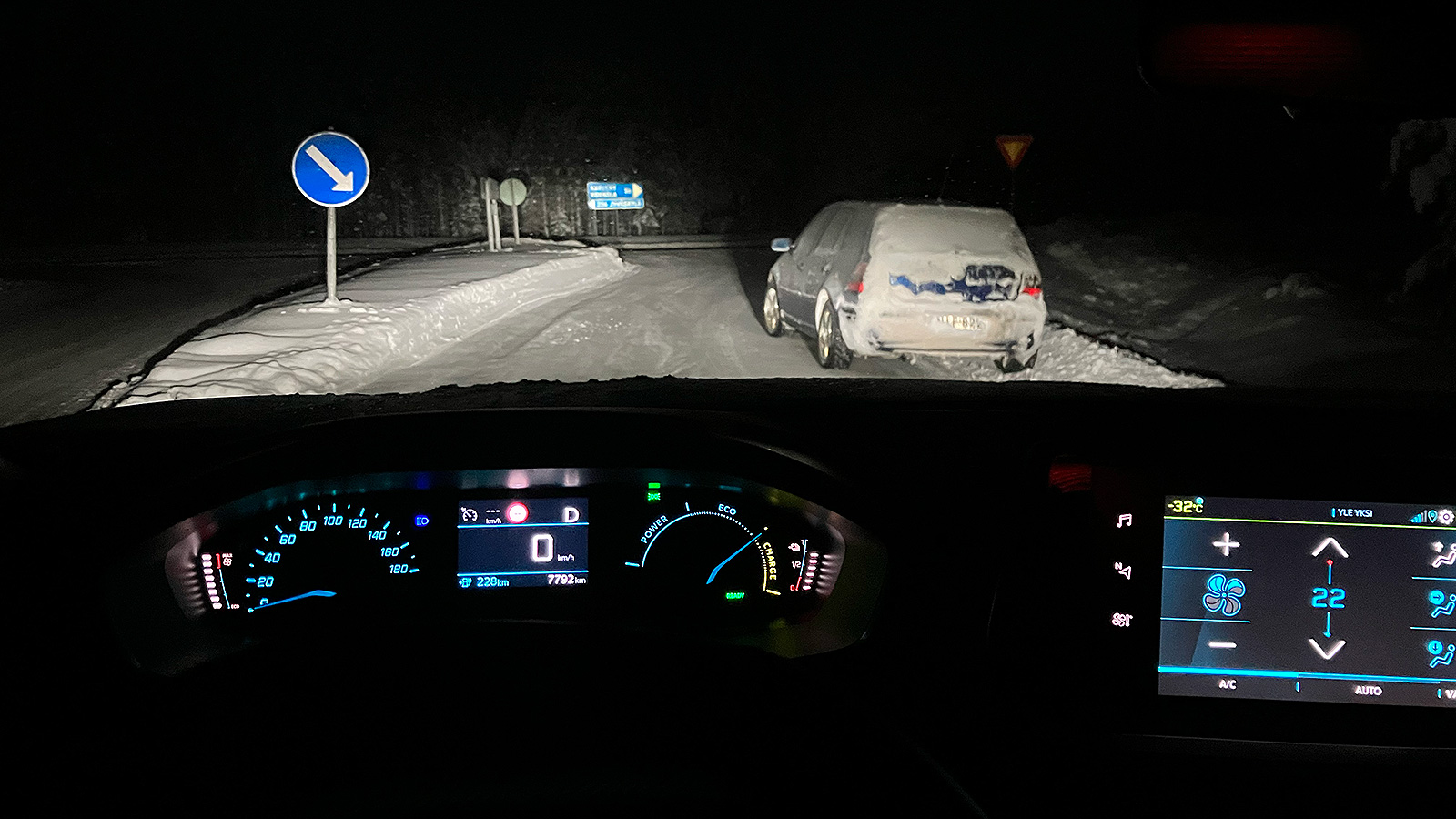
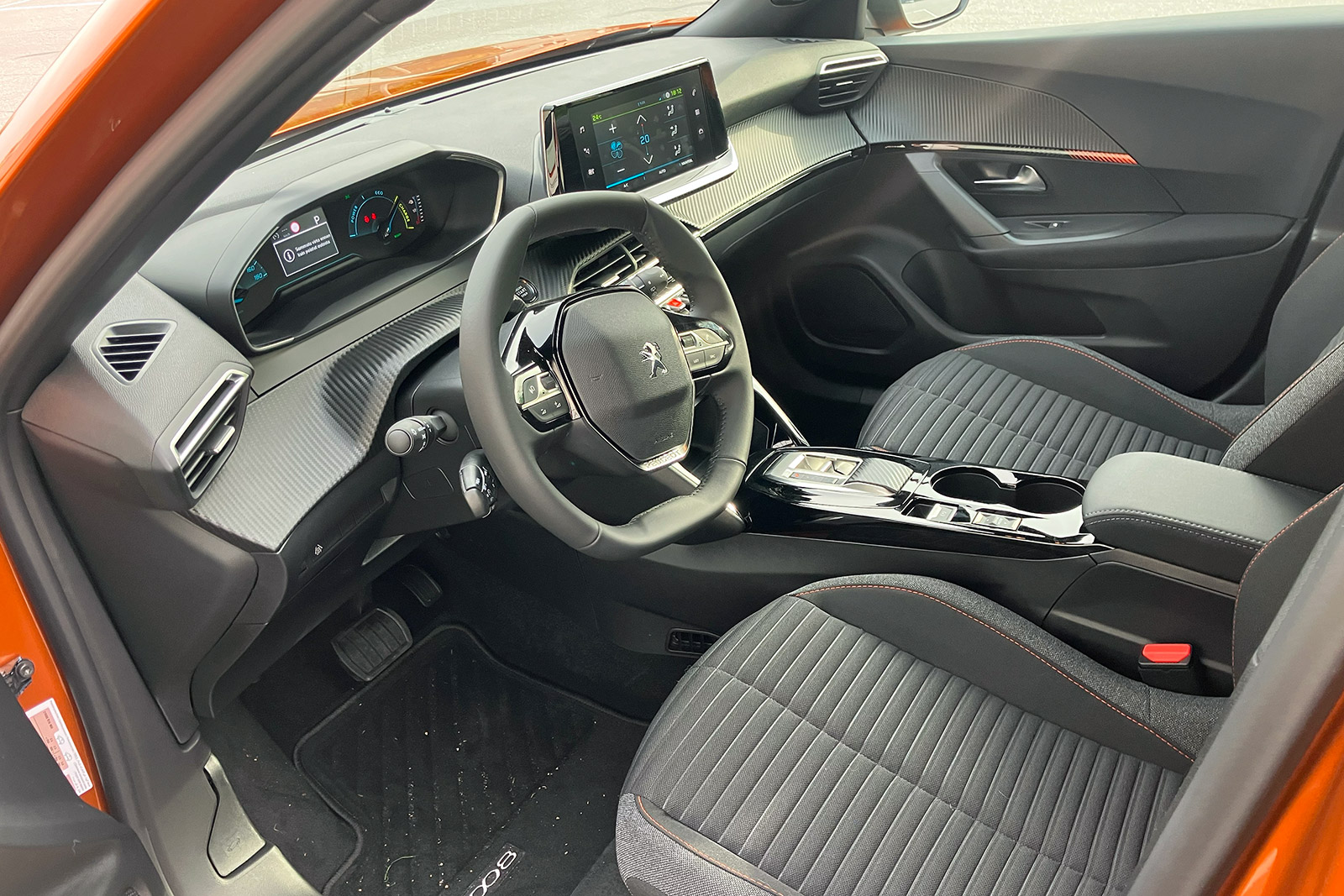
Incredibly, the base Active Pack car doesn’t have a percentage reading for the battery in the gauge cluster, just some bars like a fuel gauge. You can only see the percentage in the app – when it works. The car also always showed a full WLTP range reading with a full battery, never taking earlier usage into account. At -32C, it quickly lost the first 100km.
Another thing is that you cannot limit the charging level: unless you pull the plug or use the app to delay charging, the car will always charge to 100%.

Over these three years, the only things that broke were the charging port flap (the same plastic part as a fuel filler lid) in winter and the inner rear brake pads, which split. The brake pads weren’t covered by warranty, and they went bad from not using the brakes enough due to relying on regenerative braking: they heated and the friction material separated from the backing. Every time I got going, there was a snap from the rear brakes until I got them fixed. Other maintenance was very cheap, and I only needed to have two scheduled services done.
The importer had also realized that it would rather not take back over a thousand identical orange Peugeots at a year old, so some customers, myself included, were offered extensions on the buyback contract. Another extension was offered after the second year, meaning I could do 45,000 km and return the car at three years old – exactly at the spot when its main warranty would run out. The battery is covered for eight years or 160,000 km (100,000 miles).

In spring 2024, I changed jobs to be closer to home and no longer needed a lease for a long commute, so I returned the Hyundai lease I had at the time. The 4WD Corolla took its place, and the e-2008 was our “main” car until it was scheduled to be returned. I kept the Peugeot very well for a car that mainly hauled a toddler around, as I protected the rear seat with a barf vinyl and didn’t let anybody draw on the sides with their fingers. The original Continental summer tires nearly ran out of tread, but they were just about acceptable as I returned the car. I did pay a couple hundred for the extra mileage (0.20 cents per km, after 45k km), but that was the cheapest way out.
To control the number of cars finally being returned, the importer offered a deal to some Peugeot lessees. As long as they wouldn’t return the car, they would get a new financing deal that started at a 17,000 euro revaluation. I would still have had nearly 22,000 euros of financing left on the car, so slicing five grand off that would have been great, had I elected to keep the car.
Giving It Back

As I signed the papers to return the car after three years, I asked the salesman what they’d actually pay for the car, had I not had the buyback contract worth gold. He tapped on his calculator a little, noted the nearly worn-out tires, and told me: 14,000. I would’ve been nearly 8,000 Euros ($9,000) underwater without the contract, as they wouldn’t have had any obligation to re-finance it cheaper, either.
Another Peugeot customer had put 60,000 km on his car. He would have had to pay three grand in extra miles had he elected to return it, so instead, the importer refinanced his car at the same 17,000 Euros, and the buyback contract wasn’t used. If my 47,000km car was worth 14,000 Euros, his would’ve probably been 12 to 13, depending on condition. He, too, was sitting at 22 grand in financing.
Not one of the leased EVs has been worth what I owed on them at the point of returning them. Each of them has been worth less, especially the Peugeot. While the monthly installments have ranged from 250 to 400 euros, it would have been far more costly to buy these cars and sell them on myself.
What did I learn from this? Private leasing is great!
What did the importer learn from this? They aren’t offering private leasing deals at all, any more, even for ICE cars. Everything’s subcontracted to different leasing companies now.

Was the Peugeot’s depreciation severe? For a regular new car, losing 50% of its value in three years isn’t a worst-case scenario, especially if it’s a French car. A Corolla Hybrid wagon, with a sticker price five thousand over the Peugeot, would only have lost a quarter of its value, but some of the costs would have gone into fueling it. Since I mostly charged the car at home from three-phase power, at a cost of 16 eurocents per kWh with all taxes and fees included, I’d estimate home charging costs to have stayed below 1300 euros ($1500), based on 16kWh/100km average power consumption (3.88 miles per kWh). That doesn’t include power losses, but I almost always charged the car at the full 11kW the onboard charger could manage, which keeps losses down.
Used 2022-2023 gasoline versions of the Peugeot are also priced the same with similar miles, so they have lost their value similarly – but based on their average 5,6l/100km /42mpg fuel consumption, and an average fuel price of two euros per liter, it would have cost 5,300 Euros in fuel to drive the same amount, or $6,200. Rather, the EVs’ original monthly costs were based on unrealistic projected residuals, partially fueled by the high demand for EVs when the cheap campaign cars were originally offered.
Note, that the 50% depreciation only pertains to the campaign cars that stickered at 27,990 Euros for three days. If you bought a similar car before or after, it started depreciating from 34,990, and as it’s now worth the same as the cheaper cars, depreciation has hit it harder. It has to be said that most of these cars on the road are from the campaign, and I wouldn’t have gotten one for full price.
But as I said, I feel kind of empty with the Peugeot gone. It was a good car, in an extremely good color, and it suited our lives great. These days, there isn’t anything even close to being as cheap to lease, with the slightly smaller Ford Puma Gen-E costing 365 eur ($425) per month, and you can only do 10,000 km per year (6,200 miles) for that price. At least it comes in yellow.”
(Photos by author, unless otherwise mentioned)



After much deliberation and disussion, we finally bought a 2026 Prius Prime (PHEV). We happen to be the most ideal use-case for a car like this, because:
My wife (the primary driver) has a commute round trip of <35 miles.We have solar panels, a battery backup, and a Level 2 charger that came with the house we just purchased.So far, we have not yet crossed the threshold of a gas station since leaving the dealership a month ago.
I lucked out in finding a new 2024 Lyriq at the beginning of the year that had not sold. The dealer decided to cut bait on it and took the full depreciation hit. The median private party value on KBB is currently more than I paid OTD for the car. Plus I still have 40k plus left on the manufacturer’s warranty.
Heavily depreciated electric cars would be great if some moron hadn’t decided that cheap electricity was a bad thing and killed all the cheap power projects. and infrastructure.
I chose to purchase a new Model Y (AWD, 7 seat, tow package) a few years ago. I’m intending to keep it for a decade and then look at another EV. Driving about 70 miles a day it made sense. It’s also the main tow vehicle for my small camper. I use the last two seats for dog duty.
Financially, I knew it was not the best possible decision. That said, with my driving habits and wants in a vehicle, buying was a better choice than leasing in my estimation.
I say anytime you end the car ownership in a happy place you got a deal. Glad you enjoyed it. While reading the story I couldn’t help notice how people’s view of an EV is still so low bar. From a new car never leaving you stranded in the first year to mpg being cut in half for 4 months of the year that is some below Stellantis performance quality.
“This is why owning an EV is a no-brainer in some of the world (even here in California)”
Um no. As I have shown multiple times here in NorCal PG&E land even overnight charging has historically been close to parity with burning regular in the exact same car and much much more expensive using non free public chargers or non overnight home charging. What’s worse is my simple estimates do not count charger losses and just use the EV rate without the various extra fees and charges tacked onto the bill so even that estimate is artificially in favor of electricity.
Pricing of both regular gas and PG&E EV home charging HAS changed recently in favor of EVs, but only time will tell if this is to last.
Well if I put a gasoline tank in my house and bought gas wholesale I’d save money on my Ice Car. Did your evaluations include the cost of the charger and installation?
Good luck:
“Average net profit margin for a Gas Station business
The average net profit margin for a gas station business was 1%.
How much does a gas station make per gallon?
A gas station makes roughly 1% net profit margin. With a national average gas price of roughly $3.50 per gallon, a gas station will make 3.5 cents per gallon in net profit after all expenses.”
https://www.projectionhub.com/post/gas-stations-industry-financial-statistics
Pretty sure the capital costs of a home gas station setup alone would financially murder you, then it would catch fire to literally murder you.
If home fueling is your passion I think you’d be better off with making biodiesel, alcohol or natural gas if you can find a Phil (NG home compressor). The latter use quite a bit of power to compress the gas so both the purchase cost and electricity will need to be factored in. The former will need to be a passion since home refining is quite a time consuming, messy chore and I’ve seen home biodiesel contribute to at least one time consuming, messy divorce.
As to the charger cost no, as I stated I did not include those costs. I assumed the car came with a cable and the home had at least a level 1 plug available if not a level 2 dryer plug for overnight and weekend charging. The PHEVs I use to compare have small, quick to charge batteries. They usually get MPGe comparable to BEV cars so the electricity cost of charging translates well.
I think this is a reasonable assumption when discussing home charging. For others who need to put in a plug their utility may offer subsidized hardware and rebates on installation which comes under YMMV.
Thank God lithium batteries don’t immolate or blow up.
Obama had a 5000 gallon tank installed in his latest compound, presumably underground.
They immolate and blow up a LOT less often than gasoline tanks, 61x less than ICE only vehicles and 139x less frequently than hybrids:
https://autoedgeview.com/battery-guides/ev-thermal-runaway-fire-risk-stats-ice-comparison
So if Obama did indeed have a giant gasoline tank put in* I hope he’s got the matching fire extinguisher.
* I haven’t seen anything about a 5000 gallon tank, only a 4 year old verified story about putting in three propane tanks that total 2500 gallons.
https://www.snopes.com/fact-check/obama-2500-gallon-propane-tank/?utm_medium=Social&utm_source=Twitter#Echobox=1655330190-1
He got a building permit for it.
No info on fuel.
Not crazy if he has a close protection team inside the walls.
It got attention because of conservation statements made around that time.
Similar to people fighting to deny self defense while heavily protected by a highly trained team every second of their life.
I question the validity of the numbers used to compare fuel systems and lithium ieds.
Many batteries can no longer be shipped by air.
I can show you pics of the shop that was destroyed by the battery pack for the battery scooter kit I have, replaced by a jet engine.
Battery pack was open air cooled and very well designed.
It’s not clear why it blew up, but it did.
Manufacturers and fire codes now instruct me to charge my pricy lithium batteries and chargers outside under direct supervision.
Not esp practical.
You can of course believe what you like but until you have some numbers to support that belief it will only be belief. I think given the numbers I found and quoted you will have a very difficult time finding creditable data showing otherwise. But I could be wrong, you might be the one to blow the lid on the whole EV conspiracy. Good luck.
As to Obama, even if the 5000 gallon tank story is true (again I haven’t found anything except the 2500 gallon propane tanks story) unless that tank presents a hazard to public or environmental safety so what? That’s a single delivery from a small tanker truck. It’s not yellowcake.
I dunno if you ever heard of Jaques Littlefield. His family owns a 500 acre compound in one of the wealthiest areas of California. I’m pretty sure he had a fuel tank at least that big. Why? Because his hobby was (he passed a few years ago) collecting and restoring main battle tanks and he liked to take them out for a drive. I have personally seen his collection which was at one point 200 vehicles strong. There were even two gulf war era Scud missiles on launchers in his shed with a radar truck.
Officially all these weapons of war were decommissioned and *harmless* but I did notice our guide (an ex US Army tank major) said that with a bit of a smirk. Given there was a fully equipped restoration facility on site used to restore tanks that had been pulled out of swamps and off firing ranges to showroom condition I think making those tanks battle ready would have been quite feasible. They were certainly capable of doing a lot of damage even as they were.
Littlefield was quite good pals with the local sheriff so red tape and NIMBYs weren’t a problem. He employed a staff of ex US Army mechanics and tank experts. Weird how conservatives never complained about this super rich guy and his literal private Army.
After Littlefield passed his collection was transferred to the American Heritige museum where you can see some, not all of it for yourself:
https://www.hemmings.com/stories/last-of-littlefield-tank-collection-arrives-ahead-of-american-heritage-museums-opening/
My point with this is: If you are concerned about super wealthy illuminati types I think there are bigger fish to fry than Obama and a rumored gas tank. Obama is being used to distract you.
Is there one single case of the standard fuel in an automobile seemingly deciding on its own to alter its chemistry, and blowing up or creating an intense, difficult to stop fire?
I don’t think we even need to parse methodology and misrepresentation.
Has the issue of abrupt conflagration with batteries been removed?
The airline industry continues trying to prove their lighthearted claim from their marketing crew that flying was safer than driving.
Obviously not meant to taken seriously.
I imagine they were shocked at how easily The Big Lie method works on people that don’t think about things.
After having some effective statistics education, I’m the sort of person that called the guy that wrote a paper claiming you could magically boil cold water.
To his credit, he talked to me, but didn’t actually defend the claim.
I missed Littlefield becoming president.
I do know about rules about heavy weapons in private hands, and they can put you in prison for hundreds of years if you don’t follow them.
Most permitted artillery is modified for black powder only. Reauires special permits. If you do.modify a tank by replacing the entire missing breach, where do you order ammunition?
Obama’s giant fuel tank is relevant to his political positions, which still makes it funny. He betrayed every American, especially those that voted for him, like me.
I think he crossed well over into criminal treason in office.
I got my information from Obama, and later Clinton.
Mostly I look at what they do, not what they say, usually in direct contradiction.
I’m a liberal, not a conservative, which is directly why I can no longer see myself voting Democrat, except at rifle point, which I consider a credible threat if they get into office again.
Well you believe what you want to believe. The fact remains gasoline is far more likely to burn than lithium as shown by the link I provided. You claim to be the sort of person that called the guy that wrote a paper claiming you could magically boil cold water (whatever that means). Great. If you can show my link is in error or have a valid evidence backed counterargument this is the time to present it.
Yes burning lithium can be harder to extinguish than burning liquid fuels as long as you have the right equipment to put out burning liquid fuel. Hit it with the wrong extinguisher though and you make the problem much worse. Firefighters have over a century of experience and mature equipment with which to fight liquid fuel fires. Lithium firefighting hasn’t quite caught up, yet and may never need to should other battery tech surpass it.
Liquid fuels also have different hazards. Burning liquid fuels can flow, batteries don’t. Hydrophobic liquid fuels float on water, even while burning. Batteries don’t float, burning or not.
It’s worth pointing out liquid fuels also contain considerably more potential energy than batteries offering comparable mechanical potential work thanks to having to make up for the dramatically lower efficiency of internal combustion. So a liquid fuel fed fire, if not extinguished can potentially release 3-4x the heat energy of a battery. Which might be more of a problem if there is nobody around who can put it out.
It’s also worth pointing out batteries are far, far less hazardous during normal operation. Gasoline combustion OTOH by its nature produces many gasses, many of which are deadly. That fact must also be included in any debate of BEV vs ICE risk and safety.
“I missed Littlefield becoming president.”?
One doesn’t need to be a president to yield enormous power. One only need lots of money and to know whose pockets to put it in.
“I do know about rules about heavy weapons in private hands, and they can put you in prison for hundreds of years if you don’t follow them.”
Only if someone bothers to investigate. The sheriff was his buddy, remember?
“Most permitted artillery is modified for black powder only. Reauires special permits. If you do.modify a tank by replacing the entire missing breach, where do you order ammunition?”
You buy it from the people who make it:
“How to Buy Tank Ammo: A Comprehensive Guide
Acquiring tank ammunition is, generally speaking, impossible for private citizens in most developed nations. The purchase, possession, and use of such ordnance are heavily regulated and restricted to military forces and, in rare cases, licensed entities for historical or research purposes.”
https://thegunzone.com/how-to-buy-tank-ammo/
Coincidentally his collection was officially used for historical purposes:
https://en.wikipedia.org/wiki/Military_Vehicle_Technology_Foundation
So I’m pretty sure he would have been one of those rare licenced cases, especially with his buddy the sheriff to vouch for him.
“Obama’s NONEXISTANT giant fuel tank”
FIFY. Otherwise show your creditable evidence this 5000 gallon tank exists.
There’s no question the tank exists.
Fuel tanks require all sorts of permits because most poisoned water supplies are the result of leaking fuel tanks.
Remediation is incredibly costly.
The northeast treats this more seriously than most of the country, which was the location. Probably even the treasury dept can’t avoid those. You seem to be missing the point.
Background info, gf specialized in toxic hydrogeology.
Sheriffs don’t investigate military equipment, though they probably could tank your chances with a bad report.
You would be dealing with BATF, at the least, and the military, and it could get a lot worse for that level artillery. The people I know use vehicles for historical re-creations and museums. None I’m aware of has even tried to run the maze of fully permitting a tank. You wouldn’t be able to fire it in public at all. Probably wouldn’t be able to have it in public.
It’s pretty easy to get permitted for an entry level grenade launcher.
It’s just barely larger than an over the counter civilian version, but the ammunition cost is military retail and eye watering, even for flares. That’s baby stuff compared to heavy tank rounds.
The company I worked for had mostly govt contracts and legal access to all sorts of things, but the govt routinely inspects storage security, records and inventory.
All those we trained had select fire weapons. Once the count came up short by one. They shut down everything on the spot until they found it.
One student was ill, so didn’t show up.
And that’s for a run of the mill weapon.
I’m still not getting any relevance between batteries and fuel that requires an oxidizer to burn.
The staging of the question is the important part. Coming up with numbers and implying relevance is the usual tactic.
I can alter my fuel fire risk by maintenance, fuel choice and other reliable means.
I have a lot of lithium batteries. What next for that?
“There’s no question the tank exists.”
So you keep saying yet the question stands.
“You seem to be missing the point.”
If so it is because as I see it you are trying to make a point about something which does not exist so there is no point to make.
A 5000 gallon tank that does not exist is no threat to safety or the environment. This is no point to make.
A 5000 gallon tank that you claim does exist but is empty or is filled with drinking water or some other non hazardous fluid is not a threat to safety or the environment. It’s less of a safety and environmental hazard than a swimming pool. Again there is no point to make.
A permitted 5000 gallon tank that does exist and is holding some hazardous fluid but is rated to hold that hazardous fluid and is holding that hazardous fluid at 100% as it was designed to do is not a threat to safety or the environment. Whether it’s a gasoline tank, a septic tank, or even a tank full of high level nuclear waste there is yet again no point to make.
A 5000 unpermitted tank holding materially incompatible hazardous fluids is a ticking time bomb. If the latter is the case it’s certainly a cause for concern no matter who owns it. So if you have proof Obama knowingly owns such a tank I ask you, WTF are wasting time here arguing with me? Why aren’t you complaining to the EPA? Here, I’ll even give you a link:
https://www.epa.gov/emergency-response/national-response-center
There’s also the press. Start with FOX. You know if it’s a story about Obama doing dirty they will run it no questions asked:
https://www.foxnews.com/tips
If they won’t pick up the story there’s always *ugh* Breitbart:
https://www.breitbart.com/send-a-tip/
The tank is permitted and apparently to spec, which is why it became public information.
The punchline is the tank as counterpoint to political cosplay, along with all of his other hilarity, of a devoted aversion to hoarding fuel or even using petroleum fuels. That was the context.
I did expose a major toxic waste scandal committed by Memphis govt.
I’m also privy to a major Superfund site near where I used to live, that the EPA continues to hide the details of from the public and industry insiders that would normally have casual access.
Clear corruption there, but why is unknown.
The city is famously corrupt though.
More to follow on that.
As for brietbart and other nonsense slurs, I was a lifelong Democrat until the party became toxic.
My education in politics is nuanced and detailed, starting with sitting in on state house sessions as a kid getting real explanations about how things work, involvement with Acorn and legal protest tactics perfected in the 70s, and a very special accredited intern class organized by the Tennessee legislature, intended for career politicians.
I’ve engaged in a lot of direct and effective lobbying, sometimes for causes like The Arc, and of course have been involved in some campaigns.
While involved in one of the special days at the statehouse, I met Mr Beretta in the governor’s office the day he announced moving manufacturing toTennessee.
He was in a very happy mood and very gracious to me, though I was only there by luck.
I am currently lobbying against the attempt to censor and regulate the Internet with illegal ID requirements.
Politicians have managed to find yet another career killing tripwire!
I urge them to change or practice saying,
“Want fries with that?”
The tank is permitted and apparently to spec, which is why it became public information.
Citation still needed.
I’m also privy to a major Superfund site near where I used to live, that the EPA continues to hide the details of from the public and industry insiders that would normally have casual access.
That’s nice. I live within a few miles of several superfund sites as well as the mercury mines that supported the California gold rush:
https://mapscaping.com/superfund-sites/#lat=37.37452&lng=-121.54724&z=8
https://www.kqed.org/news/12077572/new-almaden-the-mercury-mine-that-built-a-boomtown-south-of-san-jose
Our water reservoirs are so contaminated with mercury and cyanide you can’t eat the fish out of them or swim in them. Thanks to spillage by the defense and semiconductor industries there have been rumors of cancer clusters for decades. Yet none of that makes any difference whatsoever to tourism or our outrageous property values. Superfund sites are just part of the landscape.
As for brietbart and other nonsense slurs,
Not sure how you read that as nonsense slurs. If ANYONE will expose this on an international scale it’s those rabid anti-Obama rags, yet AFAIL neither has uttered so much as a peep about “the tank as counterpoint to political cosplay, along with all of his other hilarity, of a devoted aversion to hoarding fuel or even using petroleum fuels.” That’s like meat to a crazed, starving wolf.
My source for information about politicians is almost always what they say and do themselves.
A key Pennsylvania Democrat made it clear this week that he intends to subvert the will of citizens by any means available, justified by pure gibberish.
What else do I need to know?
So no changes at all.
I recommend the books, etc by James Bamford for a deeper look at events not always as transparent.
I have no position on the illuminati because I don’t know who or what they are, if they exist.
I’ve met one person who was passionate about they, them it? but they were not convincing.
They did seem apolitical other than regards the illuminati
What is the deal with NorCal? What are you actually paying per kWh? Is it always the same rate at home regardless of what time it is, or do you have the option to charge for less per kWh at night (usually a newer, TOU (time of use) meter is required)?
The EV-A rate from PG&E (the one without a dedicated meter) was $0.35/$0.45/$0.63kWh up till a month or so ago. Now its been changed to EV2-A and rates have dropped to $0.23/$0.43/$0.54/kWh:
https://www.pge.com/en/account/rate-plans/electric-vehicles.html#ev2adetails
That original pricing worked out to (very roughly) $4.50/$5.50/$8.50/gallon of regular using the EPA website and a panel of PHEVs as models:
https://www.fueleconomy.gov/feg/Find.do?action=customize&return=https%3A%2F%2Fwww.fueleconomy.gov%2Ffeg%2FFind.do%3Faction%3Dsbs%26id%3D41943%26id%3D47501%26id%3D41212%26id%3D39190%26%23tab1
$4.50 was more than I was paying for a gallon of regular before March madness. Again this does not take into account charging losses or additional utility costs so the electricity estimate is on the low end. David’s i3 was one of the most electrically favored which might help explain his position but that is because the thermal efficiency of his REX is only about 30% rather than the 38-41% of the more sophisticated hybrid systems in the others*.
*estimated using electricity kWh/100mi energy consumption / (gal/100km* 33.7kWh/gal). Toyota claims 41% TE in their system which matches the 40.6% result using the EPA’s numbers.
Thanks for that clear info CB. 🙂
While highish, .23-.54/kWh isn’t insane. Here in LA, it ranges from .24-.31/kWh, though extremely high use residential users can pay as much as .41 per (people with big swimming pools and central air in their mansions). Of course there are variables based on time of year, time of day, usage tier, zoning class, etc. Today, the average price per gallon for regular unleaded in LA is $5.67 (all figures per google this morning).
I’ve had 6kW of solar panels on my roof for 30 years (a kWh was .12 back then) with only 3kW currently active due to one bad inverter. I’m still connected to the grid of course, but I did put in a TOU/Net meter, and am zoned R2 for electrical usage from the Dept. of Water & Power, our often less-than-helpful, quasi-governmental power utility. Even with only half the panels connected, I pretty much still always make at least as much power as I use, so I’m mostly just paying the base connection charge and assorted/unavoidable fees. No batteries for the house… that’s a whole ‘nother can of expensive worms.
My current cars are all old (22, 32, and 37 years) and get pretty mediocre MPG (my daily gets 16 MPG around town). However, I usually don’t drive many miles, so it’s bearable. I’ve never had an EV, though I’d like one. I came close to buying an i3 a couple of times, but never bit that particular bullet, though I’ve helped a few others buy them and they all still talk to me. 😉 I still hope/plan to buy a (used) EV to eventually daily, but will wait till one I like (an early Ionic 5, or maybe a 3rd gen Leaf) dips below the $10K mark, which is a number of years off still.
For renters, usually without the ability to charge at home/night/off-peak, and unable to have the potential option to offset costs with some solar panels, it’s not surprising that the EV math doesn’t math. In LA, the city has added EV chargers to some streetlight poles here and there specifically to make night/off-peak charging available to renters. However, these are not fast chargers since they’re just running off the power supplied to the streetlights. I don’t know which payment network is currently used for these… they’re not free of course.
Charging infrastructure continues to improve, as do battery costs, charging speeds, etc… Unfortunately, the price of power continues to increase over time, offsetting some of these improvements. And then there’s the ever-changing policies of our federal government (and state/city, to a lesser extent), which can alter the math significantly.
“I still hope/plan to buy a (used) EV to eventually daily, but will wait till one I like (an early Ionic 5, or maybe a 3rd gen Leaf) dips below the $10K mark, which is a number of years off still.”
If you are just looking for a neighborhood errand run about/grocery getter and don’t need it to travel more than say 35 miles from home how about a Spark EV? Those are in the $4-6k range on FBM and CL. Nice thing about those is the size, it should squeeze in anywhere. They also had a liquid cooled battery so degradation should be less of an issue.
Or if you do need range occasionally how about a Volt? First gen Volts are in the $4-5k range now and the (much more stylish IMO) second gen are often below $10k.
Another option would be a 2013+ Leaf. The advantage there is they have V2H capability although finding the hardware to make that happen at a reasonable price might be challenging.
Also check your utility. Some still offer incentives which can be generous depending on income.
Sure, there ARE quite a few used EVs under the $10K mark right now. However, none of them appeal to me enough to own/drive one of them.
I haven’t checked lately, but the LA DWP used to offer $1,000. towards the purchase of certain used EVs, but there are various rules to abide by, etc… and it’s not worth worrying about until I get to the point where I’m actually shopping to buy one.
Would a solar/battery setup work in your favor?
I rent so no. That’s a homeowner only option.
My friend ordered one of these from “hullut päivät” (fire sale called crazy days), but after many delays he lost interest and cancelled the deal. I might remember it wrong, but I think he was able to place an order for a blue one? Maybe it was a different campaign.
You could, but the metallic blue was extra. I also know of a black one, and the guy who got that decided to keep it. The wait and the delays were ridiculous, and if you cancelled you could get two grand off a new Peugeot or choose a Hyundai Kona 39kWh for 299e/month if you had been conducting business via the Autoverkkokauppa online store. I would have changed my order for one of those if I had been eligible, but as I had placed the order through a local dealership (which no longer sells Peugeots), I couldn’t do that. Hence, I just waited, and TBH the e-2008 was probably better than a small-battery Hyundai with one-phase charging.
I’ve never been a lease guy, I’ve only had my last car for 1.5 years and feel like I’ve barely broken it in.
But for EVs, I think they’re the way to go. EV tech is improving at such a rapid pace that your new lease is likely to be 20-50% better at everything. You can’t say that for a gas car.
This Peugeot is a perfect example. A 50kWh battery and real world range under 200 miles just isn’t acceptable in the 2026 EV landscape.
This whole article is also such an interesting look into cultural differences with the US. With that level of winter weather, we wouldn’t be caught dead in a FWD car with a tiny battery.
You can get a 2 or 3 year old Mercedes EQS now at many dealers for $40 – $42,000. This is the electric version of the S Class, a car that stickered for $109,000 when new. Many of these cars have under 30,000 miles. That price includes the Mercedes Certified warranty and market or below-market financing. So the true value buyer is the guy who buys the lease return.
That’s true of pretty much all higher-luxury cars. My Lexus cost me 30k at 3 years/27k miles, and was 68 new.
Always buy expensive cars off lease unless you have enough money to not care.
It must be a huge cultural difference, the FWD in the snow is fine but the 70 mi range in winter would barely be enough for a commute for many americans.
This has been bugging me for too long so I have to ask: what do the 7-21 12-18 next to the SALE sign in the first image mean?
Opening hours of the grocery store! 7AM to 9PM on weekdays and Saturday, 12 to 6 on Sundays.
Does that imply it changes frequently?
No, just that it closes several hours earlier on Sundays.
For reference, in Montreal, I just traded in my 2017 Volt (bought in 2016) with 100 000km, badly scratched bumper, rock chipped hood and a dieing CV.
Bought it for 38k in 2016, they gave me 8k and they listed it for 10.5k.
Cost me 3k a year (a bit more, it was financed at 1.49% for 7 years).
Repairs: one wheel bearing and front discs/pads at the same time. The battery controller was replaced under warranty.
Electricity ran 6-8 cents per kWh Canadian during the time I owned it.
Electricity ran 6-8 cents per kWh Canadian during the time I owned it.
Yes, but those are communist hydro kilowatts. Our strong coal-burning kilowatts are just more valuable. I’m pretty sure they’re bigger, too. They’re like the UK Gallon equivalent of kilowatts.
Also communist loonycents vs freedomcents.
Yeah! They can’t even get our awesome coal watts because they can’t afford them with the tariffs.
Sure they can! Our American pickup trucks are only too happy can blow them coal kisses right across the border!
“dieing CV.”
I think you mean “dying” but since the definition of “dieing” is “cutting or stamping it with a die, which is a device used for cutting, forming, or engraving metals. It is a process used in machining” you might mean to imply your CV is machining itself which I think is also quite plausible.
I was going back and forth between the two writing the comment. Maybe I shouldn’t write comments when tired (or is it tyred?????).
These issues hold true in the US, as well. In February of 2020, I leased a 2020 Chevy Bolt EV for an astoundingly low price: $210/month including sales tax. This was for a 3-year, 30,000 mile lease. I don’t recall what the residual value (car value end-of-lease) was, but it was obviously pumped up to an unrealistically high number as a subsidy. My wife’s job situation changed to mostly work-from-home shortly after we got the car, so we only put about 9,000 miles on it during the 3-year lease, but it was still amazingly cheap to run – we charged the car pretty much exclusively at home with power from our solar PV system. Plus! I got GM to eventually buy the car back under California’s lemon law because they refused to perform the “battery fire” recall after waiting 18 months on a fix.
I got a $299 month lease on an Ioniq 5 ($30k residual) in 2024 with a $53k MSRP.
These deals were very common in the US before the federal credit ran out, especially in states where there were additional state incentives. There was a good one in my state, but CO had a bigger one and the deals there on leases were crazy at the time.
The difference in predicted residual and actual residual price matches EVs here in the USA as well. I think the main difference is that in the USA most leases are handled by the manufacturer and overestimating the value at return appears to be intentional and another way to reduce the lease price instead of providing a larger cash incentive when purchased. It lets them take losses on the vehicle in different years.
I leased a 2016 Spark EV and would have considered purchasing it at the end of the lease except the residual was $9500 and used examples were selling for $5,000.
If you liked it that much why not return the leased and buy one of those used examples instead?
At the time I didn’t need the car. The city finished bike lanes between our house and my wife’s job so she was commuting on a bike and her car was sitting only being used when we made a long trip.
I might have bought my own Spark that I knew the charge history and maintenance but didn’t really consider buying an unknown example. Especially since GM only made about 7,000 of them over 3 years and changed the batteries and motors a couple times. I knew there would be no aftermarket or factory support.
Then in 2020 COVID hit and we were both working from home. We got the Bolt in late 2021 because my wife changed jobs to one with a 50 mile round trip commute that was in office 4 days a week.
Sure, I get that. Glad it worked out in the end.
It did work out but I spent way too much for that used Bolt. New price for a used car with 32K miles. Still it has been a great car and has saved me about $6K in fuel vs a 30 mpg gas car like my wife’s Acura.
With hindsight I would have bought a new Bolt in 2019 for $18K or a used car from Hertz when they were selling their rental fleet for pennies on the dollar. Then again thing could have gone the other way. The company my wife was working for in 2020 is still fully remote so if she had stayed we wouldn’t need the 2nd car.
I’m eying a clean 60k Spark EV someone is selling for $1200, yes $1200. They claim it had the wrong 12V battery (flooded cell?) installed and triggered a bunch of error codes and that a proper (AGM?) 12V battery for $250 should fix the problem and a dealer can clear the codes.
Maybe. Both my Prius and Bolt did some weird things when the battery was old and needed to be replaced. The Prius threw a bunch of codes and the Bolt wouldn’t shift into gear. Both of those cars used small AGM batteries that cost way too much. I never paid attention to the Spark’s 12V battery.
AGM batteries do have a slightly higher rest voltage and a different charge voltage.
One does have to wonder why the seller doesn’t just put in the new battery, have the codes cleared and sell for $5-7k
That is what I always think when someone say a car they are selling only needs a really cheap and easy fix. That said, a friend did buy a Escape Hybrid for next to nothing that only needed a 12V battery.
You made me looking at Spark EV prices. My first though was “no way a Spark sells for $5-7K, that is what early Bolts sell for. Then I looked. Wow, what a war and higher gas prices will do for cheap EV prices.
Conversely I have noticed Chevy SS and Cadillac CTS-V prices have dropped a bit.
It’s still weird to me that people swap cars often enough to worry about depreciation.
When you drive an image, “luxury” handbag or tech product I suppose it’s inevitable.
Yeah, I’ve never bought a car that I did not intend to drive for at least twice the life of the payments if not more.
Now that is a real Smart Car
If you’re financing a new EV, you kind of need to consider it.
Even if you do plan on keeping it, sh*t happens and you may need to sell / trade the car earlier than planned. With the high purchase price and super fast depreciation of EVs, you may be stuck with a car that no longer suits your needs.
And if the battery craps the depreciation is 100%
Battery warranties are pretty long. I think my Ioniq 5 has a 15 year battery warranty.
I worry about depreciation in order to ascertain if my next shitbox has hit the nadir of the curve.
I have lost out on many cars I was interested in waiting for that nadir. 964 comes to mind (and remains in my mind. Dammit, why didn’t I buy when I could get a decent 964 for $15k?)
BRB, going to drink heavily.
I said shitbox, you’re talking Porsche ????
Psst, NC MX-5(/Miata)’s are pretty darn cheap now. As in, I was going to buy a shitbox but found one in my price range…
I looked at a drag bike built of the cbx 1000 inline 6 with a very uprated engine.
They bought it for $200.
Things happen.
For me “resale value” just means whatever I can get in scrap value. I don’t think I’ve ever owned a car that depreciated, because they were already as cheap as they were every going to get as a running, driving, vehicle.
I’ve heard of several people going over on mileage on their EV and end up working a deal to get a lower buy out. Then most trade in the car immediately because that’s why they lease to get a new car every few years. It’s incredibly hard to move the higher mileage EVs in the normal marketplace they have to severely discount them.
For years the big ev guys said to lease and they were right. The depreciation, high purchase price, and how often the cars were changing meant too much negative equality. That’s starting to change a bit at least in the west. Still for over priced “luxury” versions leasing will always be the way. The German rainbow lease machines will live on.
I do not think I would ever own a car that required an app. It just doesn’t seem like something I would enjoy.
The dishwasher my wife chose has an app that you have to use if you want to set a delay or run a rinse. In her defence the store never told us this and I didn’t ask. It is however one of my main grievances about the dishwasher.
Don’t buy a Bosch, and as I’ve quickly learned a third rack for cutlery may not work for everyone.
It would never even occur to me that I would need to ask about that.
My wife gets kind of upset when she hears about stuff like this. She says the world has gone way too far in the “All things techy” movement.
3rd rack is the killer feature of Bosch! To each their own
I can see why people like it. It just doesn’t work well for me. My kitchen layout means it’s easier for me to grab the basket and bring it to that drawer. Also between our plate and water bottle heights it’s really tight and is basically wasted space. If it sprayed from both sides it would work for lids but it’s top down only so doesn’t do those.
Also the bottom rack design is awful.
I like my Bosch dishwasher, mainly because it’s 8 years old now and not only still works, but still works really well and hasn’t gotten louder since new.
Can’t say that about many appliances these days. My last one cost more and was dead in less than 3 years – don’t buy Whirlpool.
It’s too old to have shit hidden behind an app, so the only annoying thing is that the lower rack is overly flexible so if you don’t load it just right it twists off the track and jams the lower spray arm.
“don’t buy Whirlpool”
Depends on the appliance. I am peeved with their washing machines. My Duet self destructed when it spun too fast with too heavy a load. Yes it was partly my fault for overloading it for the spin setting but damnit there should have been a safety mechanism to shut off an overloaded machine and the drum shocks were insufficient.
My Kenmore branded Whirlpool built refrigerator OTOH is still going quietly strong after 20 years. It was CRs top pick at the time. Good call.
Every product has good and bad items coming off the line. Including the human production line
When the line does not install an obvious safety device needed to prevent self destruction I think all the products coming off that line qualify as “bad”. Thankfully the destruction is not complete. It still works, its just noisier than before.
It does have a separate issue though. The drum bearing is known to fail due to corrosion and is unobtanium. Which is another fatal flaw. Because of this I don’t recommend front loading Whirlpool washers but I don’t know if other brands are any better. What I’d really like is a gently used.industrial washer or at least something built like one.
I’ve had good luck with my GE front loader so far. It does have a sensor that prevents it from speeding up if the load is too heavy, and it also has a nice feature that can spin the drum slowly after you empty it to completely dry out the inside.
That means you don’t have to leave the door open between loads to prevent mildew, which is very good for those of us with overly adventurous cats.
Thanks!
Speed Queen
That’s a good point. There is no one appliance brand that is universally good. Don’t buy based on brand, but based on reviews.
My dishwasher works great and is about the same age as my 2001 DD
I’ve been surprised how effective washing cutlery in the third rack has been.
The third rack for silverware is actually kind of awesome.
I get why people like it. It just doesn’t work well for me. If my kitchen layout was different I may rave about it.
We end up throwing the spatula and serving spoons up there. Use the silverware basket for the silverware.
I bought a Bosch!* It’s been great! The only thing it’s missing IMO is that third rack.
*I bought it used for $75 on my local CL. I did have to replace the pump impeller but thanks to YouTube and EBay the fix was fairly cheap and took about an hour of not difficult work. That was many years ago and it’s worked great ever since.
FYI to keep it clean I bought a cheap bag of citric acid on Amazon, same active ingredient as in dishwasher cleaner and when needed I just run it empty with that powder in the dispenser. Works like a charm.
I have a pre-app Bosch Benchmark. Best dishwasher I’ve owned, bar none, but I also didn’t buy an entry-level model.
I love the third rack for utensils, but I have the basket as well if I wanted it.
I love the height adjustable second rack.
I don’t have it as an issue, but the water softener dispenser I hear is a huge deal for people who have hard water issues, and it’s FAR more effective than a centralized water softener system for the home.
I LOVE how quiet it is. Mine was high-end but not crazy, and was rated for 42 dBA. Some of the newer ones are 36 dBA. For me, it’s so quiet it’s very difficult to hear it running.
It’s also so configurable I can put SO MUCH in it. I can wait 7, 10 days before I do a load because it’s so easy to put stuff into it, easily. Much more than dishwashers with a “larger capacity.”
Moreover, everything is always SPOTLESS. I don’t have any plastic ware, so everything coming out perfectly clean and dry isn’t something I’ve had in any other dishwasher prior.
Ten years in. I take care of my stuff, so hopefully another 10-15 to go. I actually had been asking local store/dealer service managers on what they serviced the least, and they all independently confirmed that the models I bought were the ones to buy if I wanted to use them for 25 years. My W/D’s core market is catered more to high end luxury apartments, so they have to be robust to abuse and not being maintained well.
Though yes, I’ve heard about the app-shenanigans since and am much happier I have the dishwasher and W/D I do, since they’re great, known to be very robust and reliable if maintained, etc. All worth every cent.
I wouldn’t buy the app-laden ones though. Big nope.
I’d settle for a removable upper rack for the occasional Thanksgiving Roaster pan
I’ve never lived in a house with one of those dishwasher things. We just wash them by hand in the sink, then dry them with a dishtowel and put them away.
No apps required.
I don’t use an app, nor would buy any appliance that requires one.
—
Let’s assume I’m LIGHTNING fast at washing/scrubbing/drying for the three meals a day I actually cook. That’s 15 minutes a day. 365 days a year. 20 year appliance life.
The dishwasher saves me:
Washer/dryer is the #1 labor saver in a home, dishwasher is #2.
Our Ioniq 5 has an app. If I log onto it, it bumps my wife off and it’s a huge PITA to switch back. Since it’s primarily hers I just deleted the app from my phone.
Luckily in our case, everything you can do from the app you can also do from inside the car. I think. I dunno, I treat it like a car. I can adjust the seat when I get there. If I need it to heat up before I leave without setting a schedule I may need the app. Even if I hop in cold it heats up faster than an ICE car so I haven’t worried about it.
I’m pretty lazy in general. I can live with a little walk to the garage every now and then if I want to drive my old ass off in heated comfort.
Not only could I only see the battery percentage from the app, not the dash, I also couldn’t set up pre-heating or schedule charging from the car itself. In my Hyundais, you could always do that from a dash menu, which makes sense. The Peugeot, however, had such basic infotainment that anything like that needs to be scheduled from the app, and it only works when the doors are locked. You can, for example, prompt it to blow hot air for half an hour, but the doors must be locked.
A lot of the customers who returned the car early, mentioned in the dedicated Facebook group that the unpredictable and unreliable app was a big reason why they got rid of the car, as they couldn’t be sure whether the pre-heating command would go through in the morning when they needed it.
Because we live in the countryside, I was able to devise a workaround: pre-heating scheduled for every weekday for 8:30AM and 4:30 PM. If the doors were locked, it would pre-heat the car and thaw the windows. If I was working from home, or wouldn’t need the pre-heating (which used up the battery a little), I would leave it unlocked, which also prevented the pre-heating from happening.
When we bought our 2024 Chevy Trax and the salesgirl found out neither the wife or I owned a smart-phone, she just handed us over the keys and told us she guessed we were on our own then.
It is a garbage app, and then the Bluelink subscription runs out and it becomes an expensive garbage app. The Volvo app was much better for XC40 five years ago, as was the car for the unique electric things it did. Just a very inefficient and bouncy EV with expensive staggered tires that could not be rotated.
Staggered?
Rear tires are larger than the fronts, making it impossible to rotate F to R. Plus the OEM tires were unidirectional, making it impossible to rotate left to right without removing them from the rims.
I’ve had unidirectional and tires with a fixed outside, but they need a lot of justification for adding a front rear difference.
I lost one of my matched rear tires on my truck yesterday, so now I have a one inch difference side to side.
Amazingly my iffy looking 16 inch spare was still holding perfect air pressure, once we figured out how to get it out.
I wonder which of my different front tires will match best now!
Again, it depends. The Tesla app is a nice part of owning the car. It’s easy to use, has convenient things like trunk opening/cabin preconditioning/charge level and generally quick.
This just in: New cars are giant wastes of money, more at 10!
Only if you insist on buying them every couple of years. I’ve owned my BMW 328! for 15 years, out of pocket costs have been minimal (one set of tires, and another in a year or so, a 12V battery, and scheduled services), and it’s depreciated less (percentage wise) in 15 years than this thing has in 3.
I see no reason to not buy exactly what you want new, maintain it properly, and keep it until the depreciation doesn’t matter at all.
Ditto. Especially when it’s an inexpensive Fit.
Maybe. The problem is cheap cars ARE made out of lesser materials, and generally reach the point of repairs being “uneconomic” sooner.
And it needs to be a car you WANT to drive for a few decades. Maybe for you that’s a Fit, but it sure as Hell is not for me.
I loved my 05 xB and would still love to have that car today. Even at ~60k well-maintained but salted-roads-in- winter miles, it was obvious that it wasn’t going to keep long-term in the condition I wanted.
Salt is absolute Hell on vehicles. My 328! was only driven in winter for ONE year, then I bought the first of a succession of SUVs and started parking it for the winter in a nice cozy garage. But the difference between that car and my 128i that has NEVER seen salt ever is stark. The 128i literally looks new underneath, the 328! definitely does not – and the 128i is a year older and has 25K more miles on it today.
Regular runs through the car wash using the under spray is essential
Still only helps so much, but definitely better than doing nothing. And another expense of living up north I don’t miss, car wash subscriptions not being a thing back then in my area.
My Miata is a 2001 bought in Socal in 07. Garaged since here – never seen salt. All the fasteners under the car still have six obvious distinct points.
I have to pull the motor out of my winter-driven outback to change the valve cover gaskets because the heads of the lower bolts just look like a crumbly blob of dehydrated shyte.
Of course, Subaru only sells cars in snow climates but refuses to make any changes to make them easier to service while being used in those climates. I hate Subarus for that. Now that they don’t offer manuals, hopefully I will stop buying them.
The appeal of Subarus is lost on me, despite my first car being one. Or maybe because my first car was one…
But despite being a born and raised Mainuh, I have never had the slightest use for AWD on a car meant for pavement use. And I took that FWD Subaru gnarlier places than 95% of AWD vehicles ever go.
They make so many compromises. But, that’s what makes them cheap to buy and cheap (but annoying) to maintain.
I could have done 100% of the on-road driving I’ve done in a Subaru in any RWD car with snow tires. We moved far from her work and my wife freaks out about having AWD (then works from home when it snows).
I have taken my Outback a down an ATV trail when I missed a turn on a logging road in northern Maine (Jackman). I backed down when I saw some rocks that threatened my oil pan, but it made if further than I would have expected. Other than that. I’ve been down a few logging roads or decently maintained dirt roads that I could have handled in an anything-wheel-drive.
Damn. I just realized I have three AWD cars.
I dunno – my friends with Subarus seem to spend far more maintaining them than I do my sundry European iron. Cheaper to buy, sure, as they should be.
I do my own repairs. If I were charging, my price would be high for those frequent-failing wheel bearings.
LOL – my buddy with a Forester is dealing with that now, for the second time in about 75K miles.
Point taken. And I really do want to drive it for many years to come.
More expensive cars aren’t necessarily better:
“Sticky car interior surfaces — tacky dashboards, gummy buttons, armrests that grab your sleeve — are caused by one thing: the soft-touch polymer coating your car’s manufacturer applied to those surfaces has started breaking down. It’s not dirt. It’s not spillage. It’s a chemical process happening inside the material itself, and it gets worse every time the sun hits your car. Fresh Layer Mobile Detailing sees this on vehicles all across San Diego, and the good news is it’s fixable without replacing anything. Autos& Vehicles
If your luxury car’s dashboard feels tacky or sticky, you’re not alone. Nearly 70% of high-end vehicles develop sticky interior parts within 5-7 years, with luxury cars brands like BMW, Mercedes-Benz, and Lexus particularly affected.”
https://www.fresh-layer.com/blog/why-do-interior-parts-get-sticky-in-high-end-cars-and-how-to-fix-it#google_vignette
I’ve personally never seen a dashboard worse than the one in my step dad’s Maranello 550. It warped terribly despite being garage kept.
The silver plastic surfaces in my Mazda are scratched but are fixable with a rattlecan or easily replaced with nicer aftermarket wood themed pieces. My Accord interior OTOH looks and feels great.
This happens because the cars aren’t cared for properly – or in the case of Italian cars, indeed because they are shittily made – you paid all that money for an engine, not an interior. My two 15yo BMWs are perfect inside, and will stay that way.
“This happens because the cars aren’t cared for properly”
Really?
“Natural Aging: The Inevitable Wear of Time
Even in the absence of aggravating external factors, plastic undergoes a natural aging process. Over the years, polymers slowly degrade, losing their elasticity and integrity. This progressive wear can manifest as brittleness, discoloration, and, of course, a sticky texture to the touch.”
The real question is WHY these nasty plastics are used in expensive cars.
“you paid all that money for an engine, not an interior.”
I see.
Pretty sure all that money bought was advertising and marketing executives-only hookers and blow parties. Clearly they earned it. If you have to spend more money, time and effort just to prevent your car from turning to goo more money did NOT buy you a better car.
“My two 15yo BMWs are perfect inside, and will stay that way.”
Good for you, that is apparently quite an accomplishment for BMWs.
My 20 yo $20k new Honda’s interior is perfect too despite minimal care although I did DIY the headliner a few years ago. Headliner failure happens to every car with a foam backed fabric headliner eventually. It wasn’t hard to replace and cost about $100 in fabric and glue and an afternoon of work. I expect it to last just as long as the original.
Did that more money buy a better engine? If the metric in question is durability then I think not. The economy car engine in my Honda is also perfect as evidenced by it’s dead center of spec valve clearances, factory spec fuel consumption, negligible oil consumption, and biannual passing of California smog tests with no more maintainence than (mostly overdue) fluid changes. THAT is its own kind of luxury and you don’t need to spend $$$,$$$ to get it.
If the metric is performance again I think not. The 3.0L V6 wasn’t much more and at 242 hp and 288 Nm it’s in the ballpark of what NA BMW engines of the same cylinder count, displacement and year were putting out. It also made nice growly noises. The 0-60 time of 5.9s for the Accord is also in the ballpark of a 330i at 5.6s:
https://www.caranddriver.com/reviews/a15149609/2006-bmw-330i-long-term-road-test/
https://www.caranddriver.com/reviews/comparison-test/a15386738/2006-acura-tsx-vs-honda-accord-mazdaspeed-6-pontiac-g6-vw-jetta-comparison-tests/
(Given the Honda runs on regular and the BMW on premium this isn’t quite an apples to apples race).
Low NVH? I dunno, my K24A3 is still silky smooth despite being an I4 and the 5AT is unremarkable in the best way. I flushed it once. That’s all it’s ever asked.
So exactly what “better” is that money paying for?
If you don’t get why a BMW is better, just drive Hondas.
What a troll of a post. In my experience Hondas are FAR superior to BMWs:
Shifter 100X better
Engine 10X better
Reliability 1,000,000X better
Resale value 5X better
Suspension (at least compared to my non-sport E46) 10X better
The one place the BMW really excelled was refinement / NVH / noise. That has never been a Honda strong suit.
I was the second owner of a low mile E46. It had tens of thousands of dollars in preventative maintenance at the dealer shortly before I bought it (all new plastic cooling system and suspension bushings). I then proceeded to put brand new 540i shifter parts in it. Despite this, I was never confident it would get me home (instrument cluster broke, electronic box in the glove compartment failed, column stalk broke, electronic air valve on the intake broke), it needed seven window regulators, the door handle broke, the trunk lock broke, the sunroof leaked and turned the car into a fish bowl every time it rained, and on and on…
In return, despite being smooth, the engine felt like it belonged in a truck or a tractor – all done at 4000 rpm. The shifter – passable at best despite a factory short shifter and all new parts. The suspension – I took it to my favorite canyon road off Mullhullond – I turned around and went home after 15 minutes. Huge disappointment.
Compare that to my recently acquired 2001 Integra GSR with 150k in it: Best shifter I own (with the S2000 and NB Miata being very close – those are outstanding as well, but the Integra is absolute perfection). The engine revs to 8000rpm, and pulls without complaint from 1500 (The BMW did pull well from low revs – again the tractor engine analogy applies). I owned a CT5 BW and the 1.8 L Integra pulls better from 1500 rpm in top gear than the supercharged 6.2L V8. The suspension on these Integras/Civics is among the best ever developed. Ride in this generation of Integra or Civic (I own 4) at an autocross and the car feels like a ballerina – it dances – they set the STS class standard for many years. Honda reliability needs no explanation and has been true in the 1,000,000 miles my Hondas have traveled. And my used Integra is worth over 10X a similar vintage E46. The BMW was/is far quieter though – it’s only redeeming quality.
I own 5 Hondas and one Acura, but I will NEVER own another BMW (unless someone gifts me one with a LS swap and aftermarket electronics and cooling system)
late 80s to early 00s hondas are GOATs, they just drive so awesome, it’s a shame so many have rusted away and people don’t even get to experience them.
And I like BMWs better than Hondas. <shrug>
My e91 has needed a 12V battery as the sole out of pocket repair in 15 years. You seem to be hard on cars, or you bought the wrong one.
I’ve driven multiples of all of those Hondas. Not my cup of tea, they all feel like flimsy tin boxes. You do you.
I don’t and I do.
As for the “plastics” – in the case of most German cars, it’s not plastic per se. It’s a soft-touch coating that is painted on the plastic. Which the manual will tell you in no uncertain terms to not use anything on but water and the mildest of detergents only if necessary. And it reacts badly to the moisturizers that American women in particular LOVE to slather their hands with. Avoid the need to spray Armor-All and whatnot all over the interior, and not slather your hands in chemical crap, and the bits will stay nice pretty much forever. Or buy a car that does actually have cheap and nasty plastic everywhere as the Americans and Japanese love to do.
Using materials known to disintegrate unless treated with extraordinary care sounds a lot more like planned obsolescence than engineering excellence.
Nothing extraordinary about not slathering them with crap.
It’s hand lotion, not acetone. Plastic intended to be pleasing to the touch shouldn’t melt when exposed to tiny amounts of lotion intended for hands.
Have you SEEN how much of that crap women use? Tiny amounts are probably fine.
Ultimately, it’s a solved problem now anyway. One of those things that slipped through testing 25 years ago and took a while to figure out in the real world. They don’t do it anymore – and luxury Japanese makes had *exactly* the same issues. Some even worse – entire Infiniti dashes melted into ooze.
You must know different women than I do. Or maybe it’s an east coast thing.
Although just maybe there is another reason:
“Listener Paul Schindler asked Bay Curious: “Does San Jose really deserve the nickname Man Jose?”
If you look at just the top-level census numbers, there are roughly the same number of men and women living in San Jose.
Break those numbers down further, though, and you’ll find a big difference among single people in their 20s and 30s. According to the 2015 American Community Survey, in this group there were roughly 134 men for every 100 women in San Jose. That’s a big disparity!”
( Also last I checked roughly the ratio of the dating scene of notoriously man skewed China, except here a lot more of them are rich AF per capita.)
“It’s been this way for a while. In 2000, San Jose had more single guys than the entire state of Alaska.”
So maybe the women here are spoiled for choice and are more comfortable letting go. Or maybe there are just that many more women where you are. So send them out here!
You really don’t want uptight East Coast bitches. Nobody sings songs about them.
Well East coast girls are hip
I really dig those styles they wear
And the Southern girls with the way they talk
They knock me out when I’m down there
The Mid-West farmer’s daughters really make you feel alright
And the Northern girls with the way they kiss
They keep their boyfriends warm at night
I wish they all could be California girls
I wish they all could be California
I wish they all could be California girls
LOL – great minds think alike, evidently.
I could help you find a good Maine woman – warmth in the winter, shade in the summer. But you need to find me another California boy, my last boyfriend was in SF.
Love to but I’m afraid I’d be of little help. I have zero firsthand experience of the gay dating scene and I was a wallflower in bars and clubs; however I would assume between SF and Man Jose there’s plenty of options.
I do recall a place in Downtown MJ called Hamburger Mary’s in the ’80s I visited with some friends:
https://en.wikipedia.org/wiki/Hamburger_Mary%27s
I recall some…unique…artwork above the bar and that they had good burgers and fries. So at least at that time Man Jose had a gay dating scene. I’m pretty sure you’re already well familiar with SF.
Running tires for 7-8 years isn’t proper maintenance
Sure it is when you put 2K miles a year on them in a cold climate on a car that is properly stored in a dark garage. And they aren’t crap.
Also forgot that I did have a set of winter wheels/tires that I used for the first two years before I stopped driving it in the winter. Original runflats lasted about 30K, probably put 10K on the winters, 20K on the Nokian Z-lines on it currently that are about 10 years old and in perfect condition – still grip like velcro. HP summer tires, they will need to be replaced in the next year or so now that I will likely put more like 4-5K a year on the car in a hot climate. Tires last a long time if you keep them out of the sun.
Counterpoint: I bought my 2000 Insight for $3k in 2013. I have driven it 100k miles, it’s needed 2 control arms, some tie rods, and a temp sensor. With almost 300k on it now, It is now worth $3k.
Would you like a ribbon, a gold star or a cookie for that accomplishment of spending that much time in a penalty box of a car?
I mean, I bought a Trabant for $500, drove it for a summer, needed to repair nothing, and sold it on for $500.
“If you don’t have anything nice to say…”
I loaned my Insight to my BMW obsessed friend for 4 weeks when I was out of town – the battery on them does not respond well to being parked for long periods of time so I asked him to drive it for me. When I picked it up, he said “maybe you’re right that 90s Hondas are the right answer…” and then went out and bought his own – said he had so much fun driving the stick shift Honda Insight he needed his own. I told him it’s the least fun (of 13) car I own….
If you need the space of an Escalade, I suppose you would consider an Insight a penalty box. If you enjoy driving, it makes your otherwise tedious commute into something entertaining. It also cruses comfortably and near silently across New Mexico at 95 mph while returning 58mpg. It’s a hell of a car…
“If you don’t have anything nice to say – come sit by me.”
Miss Clairee – Steel Magnolias
It’s slow AF but it’s still fun and cruises nice at 80-90mph while getting 50-70mpg.
The fuel savings alone has saved me literally thousands and thousands of dollars, and allowed me to have more of a budget for go-fast boats/cars.
I don’t need to save money on fuel. I prefer to just drive cars that are pleasant and not worry about it.
My BMW cruised nicely on the Autobahn at 120 – and still got 25mpg averaging 105 between Stuttgart and Berlin. 30+ in the US is more than good enough for my use.
https://flic.kr/p/agUpn9
Id rather save money for restoring sports cars, boats, building an off grid getaway in the mountains, etc.
I only have so much money, I like to build things with it instead of gold plating some Saudi’s mega yacht.
Different strokes.
I don’t drive enough on my own dime to need to care. Halving the fuel usage of my cars wouldn’t save me $500/yr.
The best way to save money on fuel is to drive less. Has massive other knock-on effects as well.
Doing this with my Tesla. Leasing what I wanted would have been too expensive and I put too many miles on for a lease.
not if you keep them for longer than a couple presidential terms at least.
I’m at 7 Presidential terms. My car has done better than my country
Still way cheaper to buy used.
Depends on the car. And ultimately, there is value to getting exactly what you want without someone else’s farts in the seats (or their abuse).
That depends on how you do it. I got an amazing deal on my 2018 Fiesta ST new in June 2018 ($19.5k out the door on a $23k+ sticker), as it was only a few thousand more than buying used on a car that most owners would put through a pretty hard life. Now it’s 2026, the car only has 51k miles on it and still running great, and is probably worth $12-15k. My only repair has been a $40 HVAC part that I installed myself (the infamous blend door motor), and the rest has been scheduled maintenance and consumables.
My previous daily was a Saturn I bought new in 2002 and drove for 16 years.
Like so many things in life, it’s always an “it depends” kind of situation. I’ve done a couple leases where the manufacturer was giving ridiculously high residuals to lower the lease price, I’ve bought new, I’ve bought “newer” CPO used cars and old crappy used cars. It’s always a question of what we want and the circumstances at the time.
There’s a 0% chance you’re getting 15k for a 2018 Fiesta ST with those miles.
They are super cool cars tho!
I’m somewhat surprised how popular EV are in Nordic countries now that I know you lose 60+% of range in winter. That’s a lot.
That’s only on the coldest days and exacerbated by driving in short stints. This was actually a great winter car in the sense that I could pre-heat it to be warm when needed, I didn’t need to have mechanical sympathy for stiff engine oils, and even with reduced range it was still significantly cheaper to drive. But there were use cases which it really didn’t suit, like needing to do two hours of motorway every day.
I like that you discuss use cases. Here in North America you don’t see people doing that much. EVERY use case has to be covered. “What if one day I need to tow four houseboats at once over 1500KMs?”
In fairness, those people want a giant truck because they’re afraid someone will notice their micropeen, and they feel like they need to explain their choice as though we don’t all know why they bought it already.
I don’t spend a whole lot of time thinking about any other mans penis, heck I don’t think about mine that often. But you do you, just don’t take a shower with me in the gym. That’s creepy
Maybe they just like big trucks?
I could get behind that idea if the other behaviors associated with big pickups weren’t so common. Loud exhaust, roaring all over town day and night, trying to intimidate other drivers with their big dumb truck, rolling coal, etc.
All signs of people who feel a desperate need to compensate for something by making everyone else suffer.
An important note is that I’m not talking about all pickup drivers here. You basically can’t get a capable truck that isn’t a goddamn behemoth these days, but there a difference between a pickup for utility purposes and a brodozer.
How many people have ever even seen anyone rolling coal? I’ve seen one once.
It’s treated with absolute contempt by diesel owners.
The moral equivalent of getting a V8 car to spin in circles.
You must live in a great place. I see it all the time here in Minnesota and noticed a sharp increase in that and other obnoxious driving behavior concurrent with the rise of MAGA.
I’m in the southeast.
I replied earlier in detail, but as usual, the site crashed and wiped it.
The guy helping me load my trailer asked about how clear my exhaust is.
I don’t know if he’s seen any coal idiots, but he says he’s seen a lot of smoky exhausts.
He admitted they were young and obnoxious. Maybe they just can’t afford a truck in good shape?
With a heavy load, we lost a tire near home, a few people stopped and offered water and some help, but couldn’t commit much time.
A racer showed up eventually, and commited to actually helping.
Figured out how to unlatch the spare, which is the wrong size, but right lugs.
Actually had perfect air pressure in it.
He brought back a better jack.
When our tools were too small for the lug nuts, he ran me home for a case of impacts.
Back on the road in minutes.
So, that’s what the area is like.
Never saw the wrecker we were waiting for.
Where I live it’s the opposite problem. Most lithium batteries don’t like temperatures over 60c, and it gets pretty close to 50c here, and the batteries seem to degrade pretty quickly, and trying to cool the cabin down from 50 to 23c eats a lot of range, I’ve heard.
Do folks in the sparsely-populated areas over there run their ICE cars constantly during the winter like much of Western and Northern Canada does? It’s so hard to start them back up at 40 below sometimes they don’t want to risk it. I would be curious about that fuel consumption (let alone the pollution) during those brutal months and how it compares to EV range reduction.
A bunch of diesel drivers leave their cars and trucks idling in front of stores. But almost every car has a block heater
Cold weather performance for EVs is really unintuitive for new folks. Subzero cold can rob 50% of your usable energy…until the battery and driveline are up to temperature. On short trips, it doesn’t make sense to let the car use even more energy to heat the battery pack, but on long trips it does; you spend the initial energy to heat the pack and then you’re cruising at something more like 80% of warm weather efficiency.
Don’t they have an EV equivalent of block heaters? I could not have endured my diesel without a plug in block heater
I block most of the cooling system under 60 degrees.
In the coldest winter days I’ve driven my EV I’ve never noticed more than slight reductions in range. Perhaps it if it was below zero and you preheated it to 75º, but I don’t do the latter and have only dealt with a few days approaching that.
My range in NE drops by about 1/3 in the winter. Still fine for my use, but it is a significant decrease. We get a lot of 0F (-18C) and a few -10F (-23C) days, but it doesn’t stay there for the entire winter.
So how do you like living in the Villages?
The average Nordic Country is about 200 yards long so range is not a problem
I bought my 2021 Mach E in September of 2025 right as the tax credits were expiring. It had been sitting on a dealer lot essentially since new in a smaller town dealer and had 8500 miles on it. After the 4,000 rebate and some haggling I bought it, with a B2B warranty, for 21,000. I drive 25-30,000 miles a year, and it costs me ~50-80 dollars a month to charge at home with my off peak charging selection. So 6-900 to drive 25,000mi a year. I love it and the cost savings, for me, are incredible. I did come from a diesel Jeep however. I have 2 years left on the payments and while I would like to find something different at that point, I don’t think I’ll get as good of a deal ever again.
A better deal is driving it as long as you can
“the inner rear brake pads, which split. The brake pads weren’t covered by warranty, and they went bad from not using the brakes enough due to relying on regenerative braking: they heated and the friction material separated from the backing. “
And how is that the customer’s fault? I’m sorry, *brake failure* is a major issue, and this is a design failure. To not be covered is ridiculous.
That was my opinion as well, and it’s certainly a “type fault” as in that happens to everyone. There were a few common issues with these cars in addition to the rear brake issue, but for our car that was the only one.
Early cars had trouble with the onboard charger breaking and ceasing to charge the car, so you would be limited to DC charging. The ABS sensor cabling was also known to chafe against the frame and break.
Not bad really, considering that Peugeot was named after the last big world financial crisis 😉
What I learned today is that you have three-phase power at home!? Are you sure? In the US, three-phase power is limited to serious commercial applications and it’s basically not existent in residential settings.
Good article though. I too am in a very cheap EV lease with my Ioniq 5, and then I bought a used, high mileage 2024 Hyundai Kona EV for only $8,000. Now, leases are starting to get more expensive on EVs, for the same reasons you experienced. I suspect that when my Ioniq 5 lease is up, I’ll opt to buy a used one rather than enter into another lease.
One thing is for sure though – the “fuel” savings with EVs are real. I completely miscalculated when trying to determine how much I’d save in fuel and have ended up saving way more than I anticipated. I also wasn’t prepared for how nice it would be to charge at home. It must really suck to go back to stopping at petrol stations again, especially with the insanely high fuel prices in Europe.
Yep! Many people who get an EV here usually have an electrician come by and install either a home charging station, or just a big red three-phase socket. Our garage/farmhouse already had had one installed earlier, for a kiln that was never ordered. I simply ordered a compatible cable with an integrated controller and I’ve been charging cars off it for five years. The “Schuko” traver charger that usually comes with the cars isn’t really suited for charging all day every day, but three-phase power is completely safe as long as it’s professionally fitted.
Three phase is very common in Europe. It varies per country, in Germany, Austria, Switzerland and the Scandinavian countries it is almost standard, at least with rural houses. Here in the Netherlands it is not standard, but you could get it quite easily in the past (I have it as well). Nowadays though we have something called netcongestion, so if you ask for it now, you are put last on the waiting list.
It’s uncommon in the UK, but you can have it fitted at home, and car-charger is probably the most common use.
We already start out with 240V though, which speeds things up a bunch while still using a normal outlet.
I suspect the Slate truck will hold its value much better. Enshittifying EVs with tech bloat and deliberately making them difficult to DIY repair is what is killing their value. No one wants to own a financial ticking time bomb ready to cost them well into the 5-figures at any time, especially someone who can only afford used cars and probably lives paycheck to paycheck.
Which is all ironic, because designing an EV to be someone’s forever car is actually really damned easy. Without the tech bloat, there’s very little to fail compared to an ICEV. For whatever reason, the industry just does not want to have a durable, unkillable, DIY-friendly EV that lasts a human lifetime be an option on the marketplace, in spite of all of the corporate/government green-washing rhetoric about resource conservation and saving the planet…
It’s adorable that you think EVs have less to fail. Fewer moving parts does not mean simpler when the moving parts have 150 years of constant refinement behind them. There are few things more reliable than a simple, basic, modern inline-four of modest output. At least if Hyundai/KIA/Ford/GM were not involved. It’s everything around it that will fail, and EVs have everything else plus their own special expensive bits to shit the bed. Cars will always be cars. Though I certainly don’t disagree about the added tinsel in modern cars that I have no use for, regardless of how they are powered. But too many people just love the tech.
I predict the Slate will be an epic flop, but time will tell.
EVs have less to fail because humans drive them. A well-built, well-designed EV should go thousands of miles with almost nothing. Most combustion cars only fail because their owners forget to change their oil and transmission fluid.
Electric motors are greatly more reliable than combustion engines and have been similarly refined over a similar length of time. I’m an electrical engineer who has personally built multiple electric vehicles, including 5 e-bike/trike/quad conversions, my own personal electric Triumph GT6 conversion, and have worked on multiple EV projects owned by friends including a custom 3-wheeled car I designed and helped one of them build from scratch. Every single one of them is “dumb” and lacking in tech bloat. Everything on them is repairable with basic tools and a laptop computer. I could teach an 80 IQ drunkard how to fix anything on any of them.
The reason modern EVs are crap is because they are deliberately designed to be. It wasn’t until additional failure points were built into them and software lockouts designed to prevent repairs became possible that we were finally allowed to buy them at affordable prices. We could/should have had long-range electric cars available at affordable prices in the 1990s. The technology was ready then and has only gotten better since, but greedy assholes in the C-suite feel entitled to everyone else’s money.
Modern EVs, from a longevity and repairability standpoint, generally suck complete and utter ass. Tesla has the best ones on the market in the USA, IMO, and they are still sealed boxes built with planned obsolescence in mind. Good luck wrenching on one yourself if you don’t have tens of thousands of dollars in the bank and access to stealership-only tools/software…
Slate risks upending that disgustingly wasteful paradigm, and thank goodness. They risk normalizing vehicles that last 5+ decades and 1+ million miles with minimal upkeep and maintenance costs along the way, which is what EV tech is REALLY capable of. ICE is not, although certain examples from Volvo, Mercedes, and Ford that are all classics at this point got close if their owners maintained them(I’m especially fond of the Mercedes W123, W124, and W126 diesels becuase of this). The battery is the weakpoint, and even then, a 500,000+ mile, 20+ year battery life is not at all hard to do if you use LFP and operate it within specs. The consideration that must be made is whether someone can DIY a battery repair or even update the control systems/charger to work with future battery tech to be swapped in at a later date that isn’t even here yet. If the ebike industry can do it(look up the Cycle Satiator charger), then so too can the auto industry. They simply choose not to.
In the end I think it’s a wash between the two with the exception that just about every transmission WILL wear out at some point, and every battery WILL wear out at some point as well. The battery generally lasts about twice as long as a non-cvt automatic, but it also costs twice as much. Pretty much everything that breaks on any modern car is not the engine specifically, but a plastic cooling fitting, old fuel / coolant pump, a worn out sensor, worn bushings, etc. that both EV’s and ICE cars have in common. It doesn’t have to be this way, but it sure seems like it is with extra software related problems in EV’s balancing out any engine related issues. (some exceptions apply, like the L87 engine or anything electrical in a VW, you’re just plain screwed there)
Exactly and precisely my point. There are good ICE and bad ICE, and good EVs and bad EVs, but on average, it’s all going to work out in the wash, and it’s not the motivation bits that doom the majority of cars. Plenty of cars in junkyards run just fine, they just get to the point that there is too much wrong with them otherwise to bother fixing them. ICE or EV makes very little difference.
My transmission is 24 years old I bet EV batteries won’t average half that. And I bet they cost 5x more to replace
Obviously, you should start your own car company and create those super simple EVs with no “bloat”. Problem is, the average punter wants the bloat, so you won’t sell any. Which is exactly why I predict Slate will be a resounding thud once whatever initial demand is satisfied.
I’m of two opinions on this. It’ll never be a success like the Maverick but it’ll either fizzle out in a few years, or if they put effort into quickly growing an aftermarket and working with them to make it easy for consumers to add bloat themselves, this could end up being a relatively big hit in a few years once people are conditioned to adding $15K to their blank Slate. There are a lot of niches this thing is perfectly sized to fill. The one issue I see is that most people are going to want to go full street mini truck or full urban wannabe overlander with these, so they’d need to offer some sort of meaningful performance upgrade for the former, and pretty significantly redesign the suspension for the latter.
If they had an AWD option, I’d be 90% likely to buy one, in otherwise bare trim. I’ll have no need for a wrap: I’ll rattlecan those plastic panels to my own taste.
Wrap is entirely the best solution. You’re going to have a difficult time getting paint to stick to that plastic.
Spray a little tikes car and tow it around for 2000 miles. It will be missing a lot of its paint by the end of that. At ~$500 for a set of pre-cut vinyl, it doesn’t even make sense to paint it.
The average buyer has no interest at all in adding anything themselves to a vehicle. There are not enough “enthusiasts” to make a sustainable business model for this sort of thing absent a whole bunch of other vehicles on offer to carry the overhead – see the Miata for an excellent example of this. There is no universe in which a company that tried to make JUST a Miata competitor (at a comparable price) would be successful today. The only way low-volume works is at high prices, and the chances of Slate being able to succeed at the prices they are charging seem very slim – they just aren’t that cheap for what you are actually getting. There is a reason single-cab trucks are all but extinct, regardless of whether you or I like them (and note that while I like them, there is zero chance I would ever buy one).
There are a few Internet weirdos (obviously over-represented on sites like this) who SAY they want a Slate (but we will see if they stump up the cash), and maybe some businesses that will buy them as delivery vehicles, but I fully expect the average buyer to take one look at it and buy a Maverick, Tacoma, or whatever.
… I wish they were making a $25K electric Miata competitor instead of a truck…
They would sell dozens. Dozens!
The hit)miss motors that have been running around 100 years have some questions about that. No EVs have the length of operation as a Ford or Chevy from the 70s. Do you think we will see 50 year old EVs?
True no EV will last as long as a well maintained ICE for the same cost because at some point you are paying for a new car just to get the battery installed
I think even 25yo EVs will be rare as hen’s teeth. Some module will shit the bed and that is that. But that is probably almost as true across the board today.
As I have said, I don’t necessarily think EVs are worse – but I sure as Hell don’t think they will be any *better*. Just different, new and exciting ways of causing wallet pain.
Electric motors have had even more years of refinement than internal combustion engines. I’d bet there’s more 100-year-old electric motors still in regular use, than ICE engines reaching their century.
The batteries though, those are still relatively new-tech.
It’s the tech in-between the batteries and the motor that will inevitably screw your wallet when it fails. As well as the batteries themselves.
But whatever, if you want an EV, buy an EV. I have no use case for one, but I don’t have anything against them. I just don’t think they are better OR worse overall, just *different* ways of causing wallet pain. And inevitably that much less DIY fixable.
They run off batteries, not electric motors.
The motor is equivalent to the transmission on a standard car.
More critical, battery cars need a transmission to be effective.
If battery cars become effective, why not make efficient gas cars?
The early Insight is a rare case of that.
I’m with you in that I think they will likely do better then most bev have with depreciation. But they want and need to get costs down further. Part of why some of the recent vehicles haven’t depreciated as much is they keep raising new msrp. What depreciation looks like for the slate is still likely more then a mainstream hybrid. I think maybe 20 to 30% the first year and 10k miles. Likely 50% over 3 and 30k. If you look at the leaf they aren’t viewed as premium or luxury just basic transportation were almost 50% off MSRP with in the first year and 10k miles. The slate has commercial use and a form factor deprived of vehicles in certain price points. So it’s bound to do better. Especially with the lack of things that make it look outdated.
The Slate isn’t up to normal range / performance standards at the time of its release. It’s going to be even further behind by the time they hit the used market.
The used values will depend entirely on ‘cool factor,’ and we’ll see how long that holds up (if at all).