

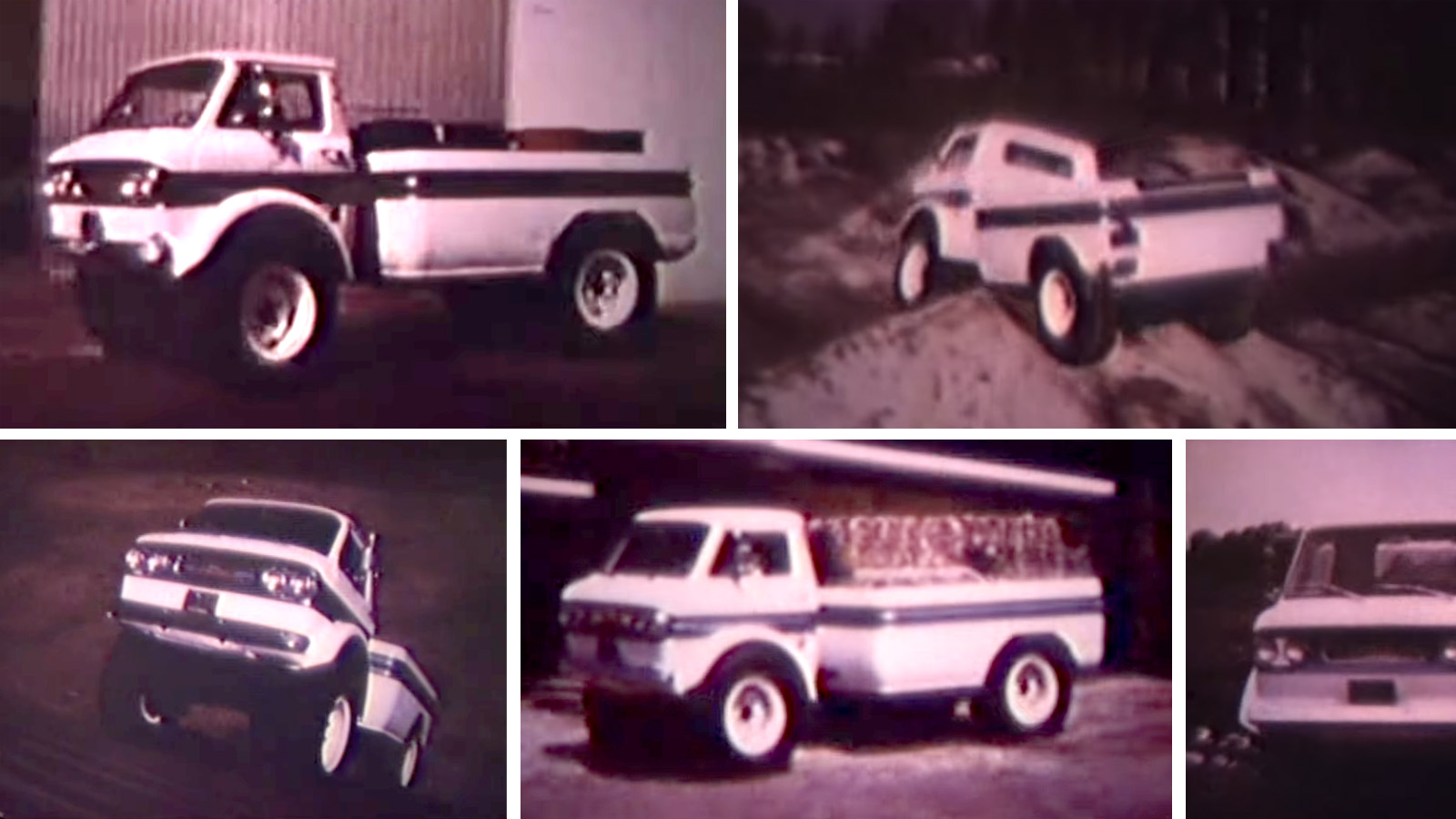
Consumer trucks and military trucks tend to follow different development paths. The military wants its trucks to carry heavy loads and be highly mobile, while a consumer wants their truck to make their lives easier, and maybe look good doing so, too. What would happen if you combined both ideas into one truck? This is the Articulated General-Purpose Logistical Truck, or AGL-4, from General Motors Defense Research Laboratories. Back in the 1960s, this experimental pickup truck of the future, which was based on the Corvair 95, turned tighter, climbed better, and cleared more obstacles than a standard pickup truck. It did so using a genius articulating system that split the cab from the bed.
General Motors has supported military efforts for longer than a century. During World War I, over 90 percent of GM’s truck production was repurposed to support the U.S. Army. General Motors would then send more than 13,000 Model 16 trucks, 2,300 staff cars, 1,100 artillery tractor V8 engines, and many more additional vehicles into the frontlines. GM Fisher Body built 1,600 De Havilland DH-4s while Buick and Cadillac built more than Liberty aircraft engines. GM also sent mortar shells into the war.


In World War II, General Motors sent a mind-boggling amount of equipment overseas, including more than 850,000 trucks between GMC and Chevrolet alone. Then there were the over 21,000 GMC DUKWs. The General also built tens of thousands of North American Aviation P-51 Mustangs, North American B-25 Mitchells, North American T-6 Texans, Grumman F4F Wildcats, and Grumman TBF Avengers. GM’s Opel subsidiary also supplied trucks to Germany’s armed forces.
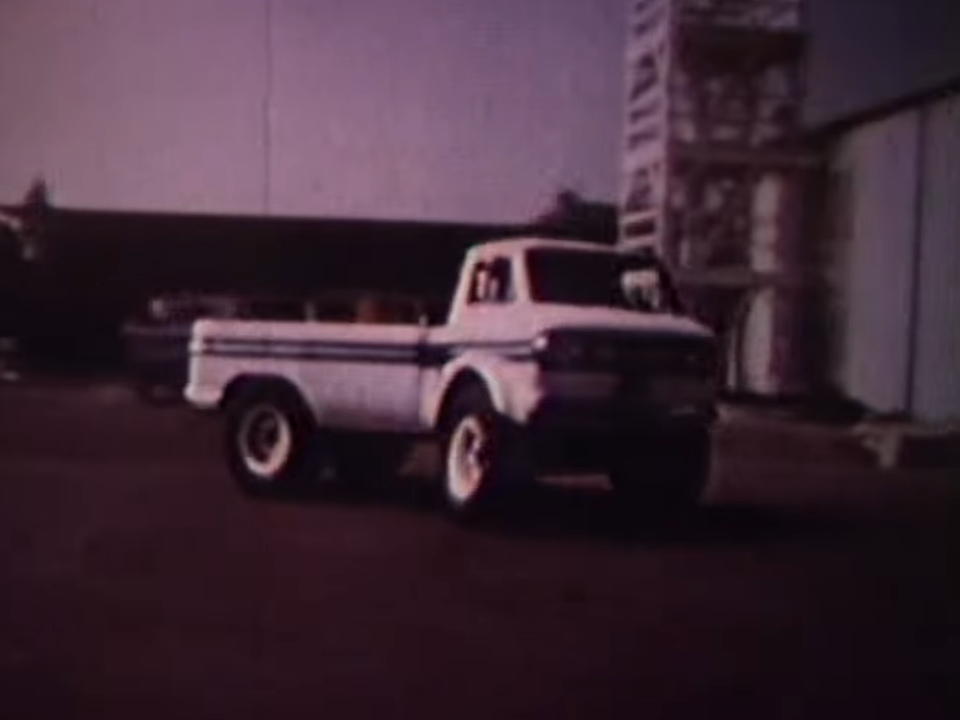
GM would continue to grow its defense arm through the Korean War and the opening of the Vietnam War. By 1959, General Motors started to get experimental with its defense department. Instead of just supplying the military with equipment, General Motors wanted to be at the forefront of military equipment development. One of the lesser-known projects to come out of this effort was the Articulated General-Purpose Logistical Truck, which tried to be a commercial truck and a military truck at the same time.
The “Agile” Truck
The Articulated General-Purpose Logistical Truck, codename AGL-4 and said like “Agile,” was a product of 1965. Sadly, despite my best efforts, I could not find any documentation from GM itself about this project online. Instead, I’ve found only footage that explains what GM’s teams built. Embedded below is a high-definition remastered video showing the beauty of the AGL-4. Sadly, due to image rights restrictions, I could not share screenshots from it. Click here if you cannot see the video:
While the AGL-4 had the bones of a Corvair 95 pickup truck, it wasn’t an effort by Chevrolet. Instead, it was technically a defense project by GM Defense Research Laboratories. GM offers more information about this division:
GM continued to grow its defense business, expanding its research and development footprint throughout the late 1950s and 1960s. GM Defense Systems Division, later re-named GM Defense Research Laboratories, formed in November 1959 to increase support for the national defense effort. GM purchased a facility near Santa Barbara, California in August of 1960 where work began on military projects such as the purpose-built GMC Minuteman I Missile Transporter Erector Loader and amphibious Sidewinder prototype.
However, the greatest contribution of this group was in the Space Race with innovations such as GM’s inertial guidance and navigation system, which helped enabled NASA’s first successful crewed lunar landing during Apollo 11 mission on July 20, 1969. GM also pioneered lunar mobility by developing the electric drive system, mesh wire wheels, suspension, drive controls and other mobility elements for the first Lunar Roving Vehicle that drove on the Moon as part of Apollo 15 in 1971 followed by Apollo 16 and 17 missions as well.
GM returned to its roots in military mobility in the early 1980s, winning the U.S. Army’s Commercial Utility Cargo Vehicle (CUCV) business, GM’s first significant light-truck military offering since WWII. General Motors Defense Group was formed in the early 1990s, coordinating work with many GM divisions, including Hughes Aircraft, Electro-Motive and Detroit Diesel Allison in their efforts to support every branch of the U.S. military on land, in the air and at sea. Dubbed “The Ultimate Ally,” General Motors Defense Group facilitated procurement of GM’s commercially proven gas, diesel and turbine powertrain technology in almost every type of ground and seafaring military vehicle.
Here is a longer, more detailed video on the AGL-4. Click here if you do not see the embed below:
GM’s video on the truck wastes no time in explaining what the company’s engineers cooked up. The narrator states that the AGL-4 was built to evaluate a concept for a low-cost, high-mobility truck that bridges the gap between commercial and military trucks. This would be one truck for commercial deliveries, construction companies, recreation, ranching, farming, or military use.
The AGL-4 was 15 feet long, sported 44-inch tires, and could carry a 1-1/4-ton payload. The brilliance of the AGL-4 was its running gear and articulated design. The front of the truck is a Corvair 95 pickup truck, which was already an unconventional piece of kit.
Innovative Bones
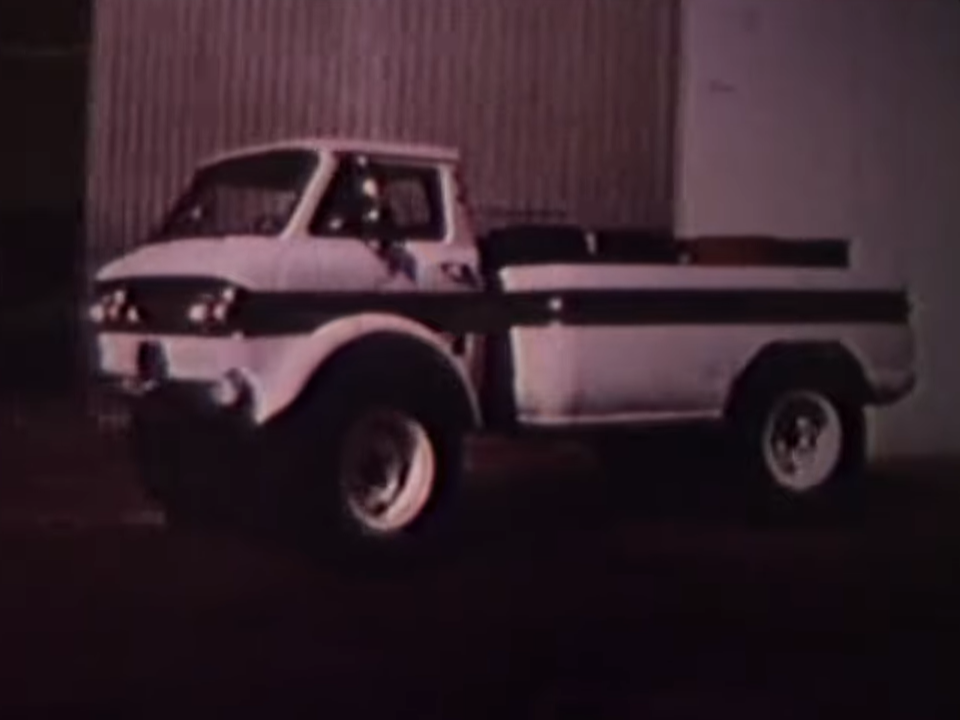
When Chevrolet launched the Corvair in 1959 for the 1960 model year, GM had shown America that it had done something innovative. The Corvair had an air-cooled flat engine placed in the rear, unitized construction, an independent suspension, a transaxle, low-profile tires, and more.
The Corvair would also prove itself to be a durable vehicle, too. Two Chevy Corvairs allegedly crossed the Darién Gap, the roughly 60-miles of road-free mountainous jungle, swamp, and rivers that separate Panama and Colombia. The Corvairs’ support vehicles, 4×4 Suburbans, apparently weren’t able to achieve the same feat.
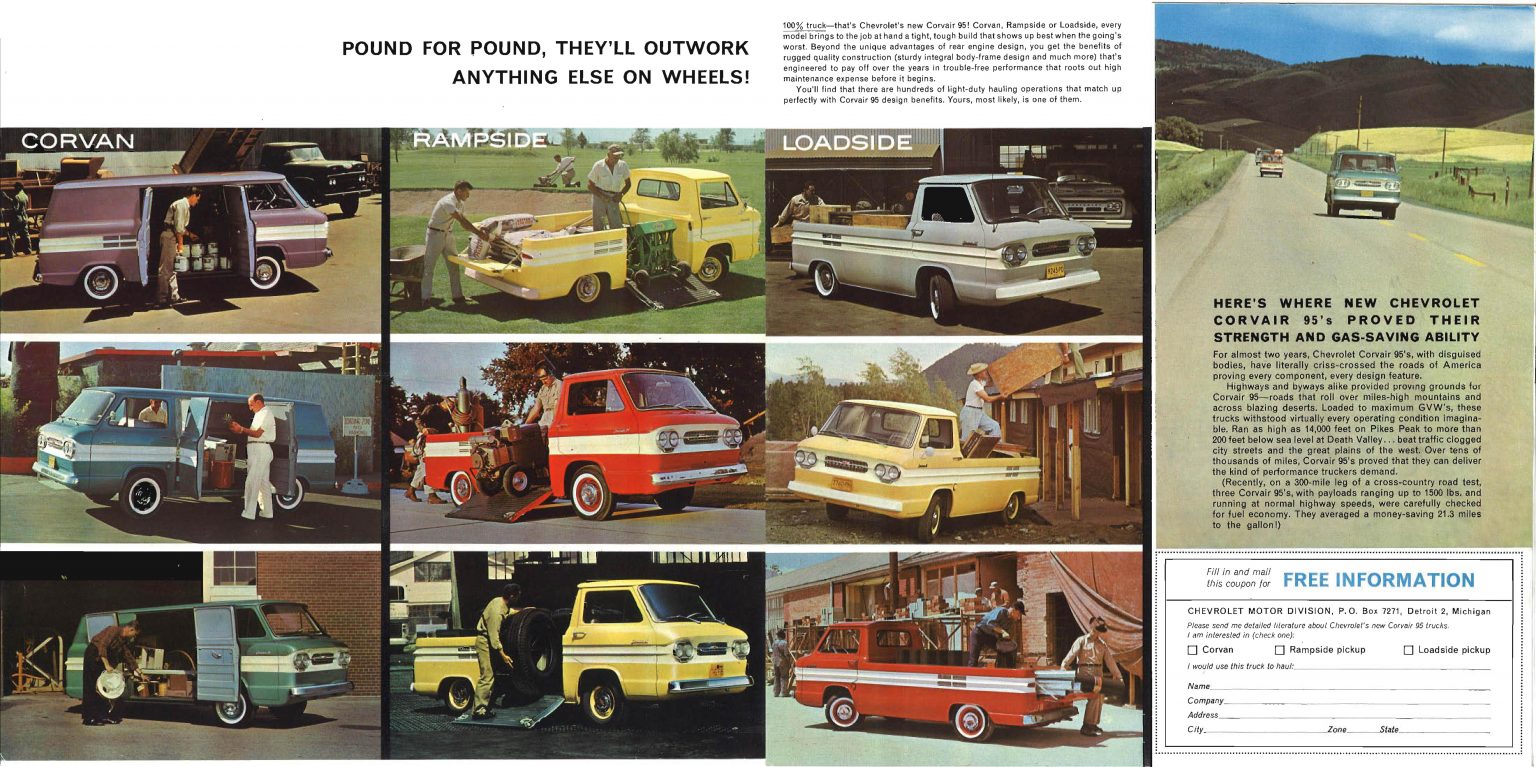
The Corvair’s platform also allowed for an amazing variety of vehicles, as I wrote:
And the Corvair wasn’t just limited to a durable sedan, wagon, and coupe. General Motors made utilitarian variations of its Corvair. These included forward-control vans and quirky pickup trucks. For a short period of 1961 and 1962, you could get a Corvair 95 Loadside pickup. These were forward-control pickups with a typical rear gate. But the cooler version, sold between 1961 and 1964, was the Corvair 95 Rampside pickup. The Rampside maintained the rear gate, but also added a ramp to the side of the bed (see center photo below). This allowed for the easy loading of motorcycles, lawn equipment, or anything else that you don’t want to lift into the bed of a pickup.
The folks of the Corvanatics Corvair enthusiast site note that the ramp had the same double-wall construction of the bed’s walls, and it could handle 1,000 pounds of whatever you wanted to roll up it. And with a gross vehicle weight rating of 4,700 pounds, they could carry a 1,900-pound payload.
The beds were a bit strange, too, as a Corvair pickup’s was stepped thanks to the drivetrain in the rear. So they were a brilliant idea with a few kinks. And in case you’re wondering, 95 is a reference to the trucks’ 95-inch wheelbase, shorter than the 108-inch wheelbase of a regular Corvair, Hemmings notes.
In creating the AGL-4, GM Defense Research technically built a super Corvair 95. The Corvair’s air-cooled flat-six was relocated to a position under the cab. It’s unclear which Corvair flat-six is under there. If this truck started life as a Rampside, that could be a 145 cubic-inch engine with 80 HP on tap.
Anyway, GM says that the engine sends power through a two-speed Powerglide automatic, like it normally would, but then things get different. That power then reaches a two-speed transfer case and then a four-wheel-drive system. The most important part of this build is an articulating yaw and roll joint, which allows the bed and cab to twist and articulate freely and independently as the truck traverses rough terrain. Specifically, GM says that the truck has 35 degrees of articulation. Sadly, since I do not have access to any documents, I cannot show you a diagram of how this joint works or how it keeps power flowing to the rear differential.
What I can say is that GM engineered the cargo body to act as a sort of powered trailer. The joint can be disconnected, and a dolly can be temporarily connected so that the cab can drive away from the bed. Then, the cab could drive on its own over to another cargo box. This gave the AGL-4 some modularity as one cab could attach to different kinds of cargo boxes.
GM seemingly thought out the little things, either. The bottom of the cargo box holds a space-saver spare tire, which is eight inches shorter than the 44-inch off-road tires. If a mechanic needs to service the running gear, the cab tilts forward.
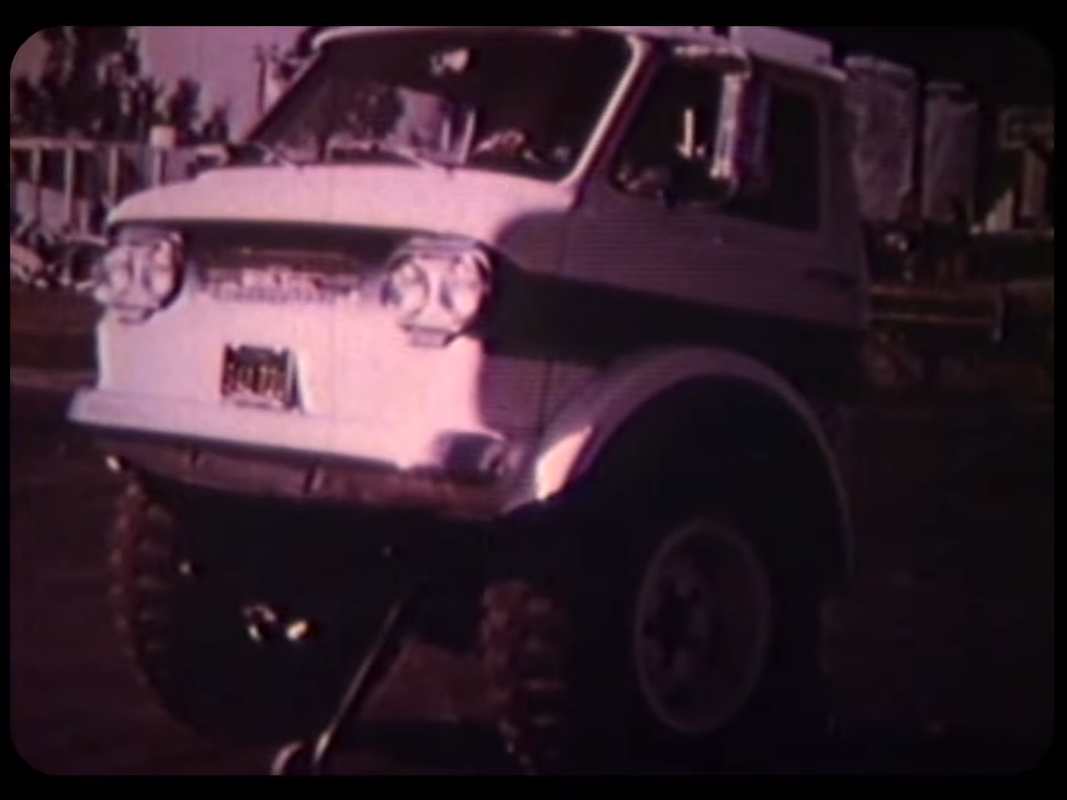
The AGL-4 Was Seemingly Unstoppable
After explaining how the rig worked, GM’s video shows the AGL-4 at work. The huge tires, which were kicked out to almost the corners of the truck, permit it to drive into and out of a five-foot ditch with ease.

The truck then climbs an 18-inch high stair without bottoming out. More impressive is the articulation section, where a driver rolled the truck over 12-inch-tall blocks. The joint between the cab and bed allows all four wheels to keep touching and thus, provide traction. GM says that having that joint means that the AGL-4 was able to have a lighter structural design compared to the beefy chassis a rigid truck would need to handle the same course. GM then shows the truck climbing a 60 percent grade.
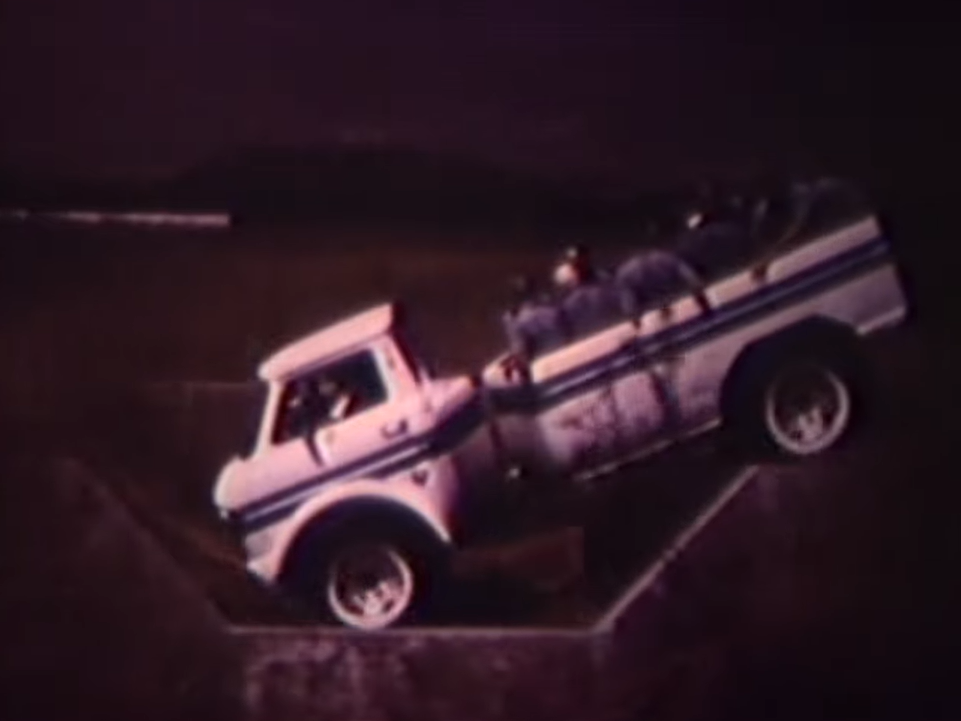
Later in the video, a driver takes the truck on a rough off-roading trail that’s full of huge dips that would challenge the articulation of even the best Jeeps. But the AGL-4? All four wheels remained in contact all the way through.
Since the AGL-4 was designed for farming and military needs, the cargo box was built to fit 10 men. Add three more people in the cab, and the rig can transport 13 people to the field. The video then repeats the same off-roading test as earlier, but now fully-loaded with men. At 40 mph off-road, GM claimed, the men in the cargo bed were comfortable.
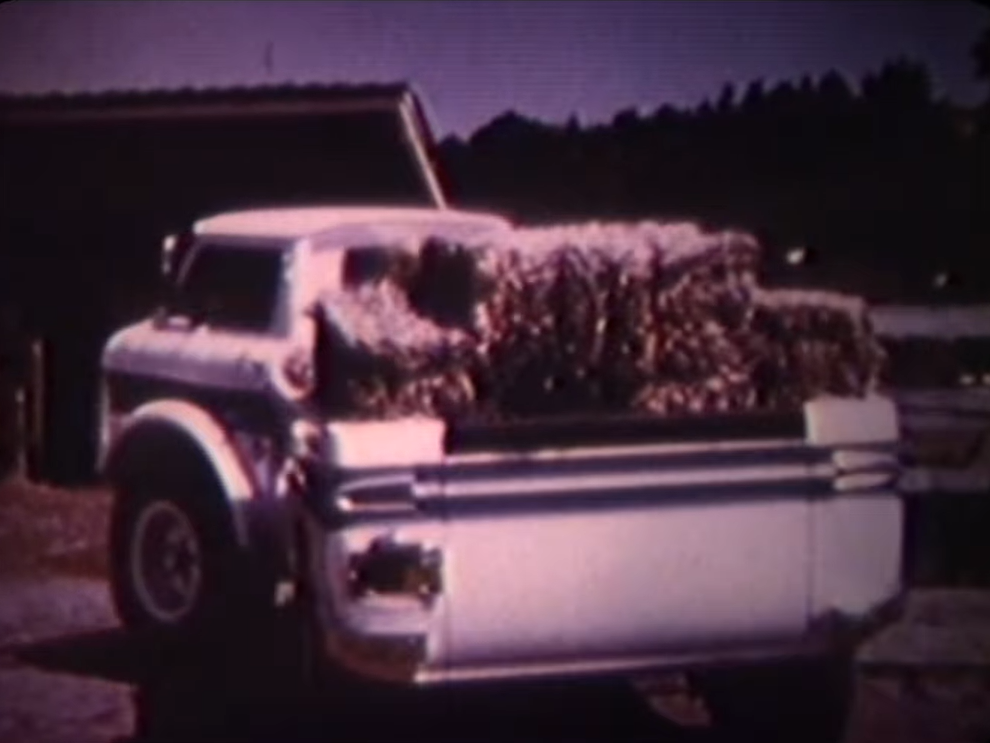
Another benefit, GM said, was that thanks to the articulation, the truck had a turning diameter of less than 38 feet, which GM’s standard trucks just couldn’t match. An AGL-4 could drive circles in the same space that a rigid truck would need to perform a three-point turn to drive in.
For an ultimate test, GM found a mud pit and sent a military Jeep, a GMC K-series with mud tires, and the AGL-4 into the pit. Only the AGL-4 powered through without stopping, even though it had less power than the average pickup truck of the day. Part of the magic, GM said, was that the AGL-4 was able to use its articulation system to waddle like a duck through the mud.
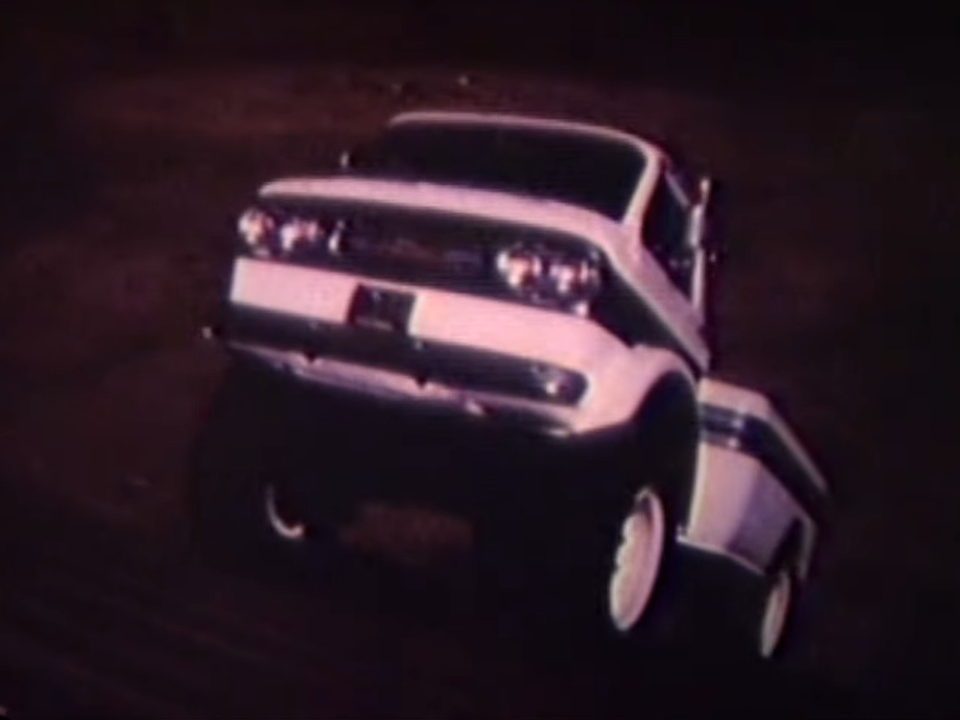
Finally, GM then sent a Chevrolet 4×4 pickup truck into some sand dunes with the AGL-4 giving chase. Once again, the standard truck got stuck. But, since the AGL-4 had floatation tires, GM noted, it floated right over where the Chevy got stuck. When the AGL-4 did get stuck, the driver was able to free it by making the truck duck waddle again.
What Happened To The AGL-4?
Sadly, it’s not known what happened with the AGL-4 project or with the truck itself. Obviously, it did not go into production. But there’s no explanation as to why it failed. If I had to hazard a guess, I would bet that the articulation mechanism was an expensive bit of kit.

At the same time, perhaps the need for the military to have such a vehicle faded. In 1961, the Advanced Research Projects Agency launched Project Agile. The project called for research to support U.S. military counterinsurgency efforts in Southeast Asia. Project Agile ran through 1974 and covered a broad range of military prospects, from DARPA:
Along the way, subprojects included weapons (among them flamethrowers and what became known as the M-16 assault rifle), rations, mobility and logistics in remote areas, communications, surveillance and target acquisition, defoliation, and psychological warfare.
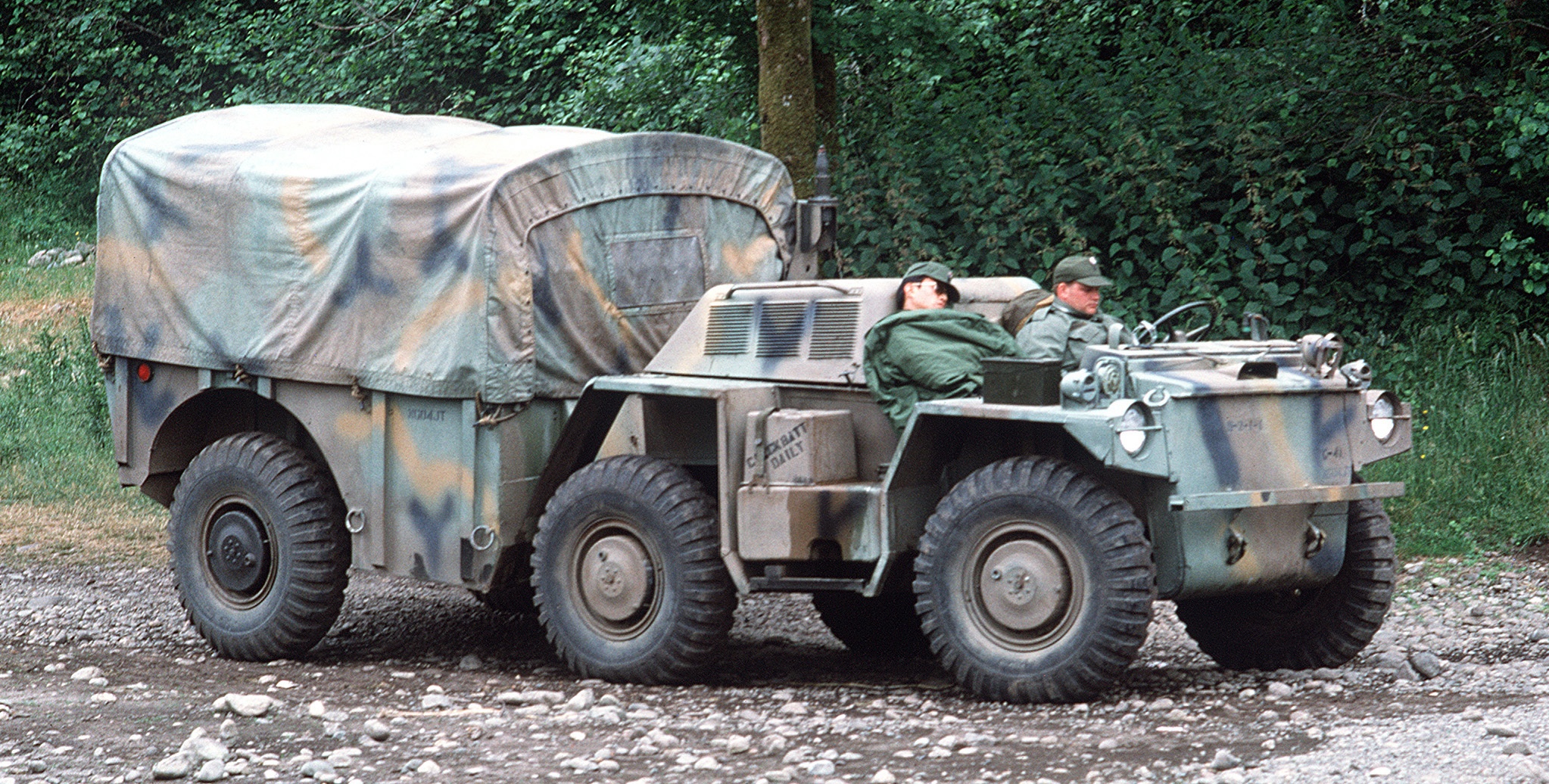
One of the developments was the “Truck, Utility, High Mobility, Light Duty XM561.” Inventor Roger Gamaunt had been developing an articulating six-wheel utility truck since 1947. In 1959, Gamaunt approached Ling-Temco-Vought (LTV Aerospace) with his truck idea, and in 1960, the conglomerate built the first prototype. Chance Vought was one of 50 companies that submitted proposals to build the XM561, including General Motors. Chance Vought won the contract with its M561 Gama Goat, which would be built by Consolidated Diesel Electric Company.
Was GM’s AGL-4 inspired by the Gama Goat design or by its predecessor? I cannot say. However, General Motors was certainly far from the only company dreaming up articulated trucks in the 1960s. Even Canadair Ltd., a company more known for its aircraft, cooked up an articulating truck.
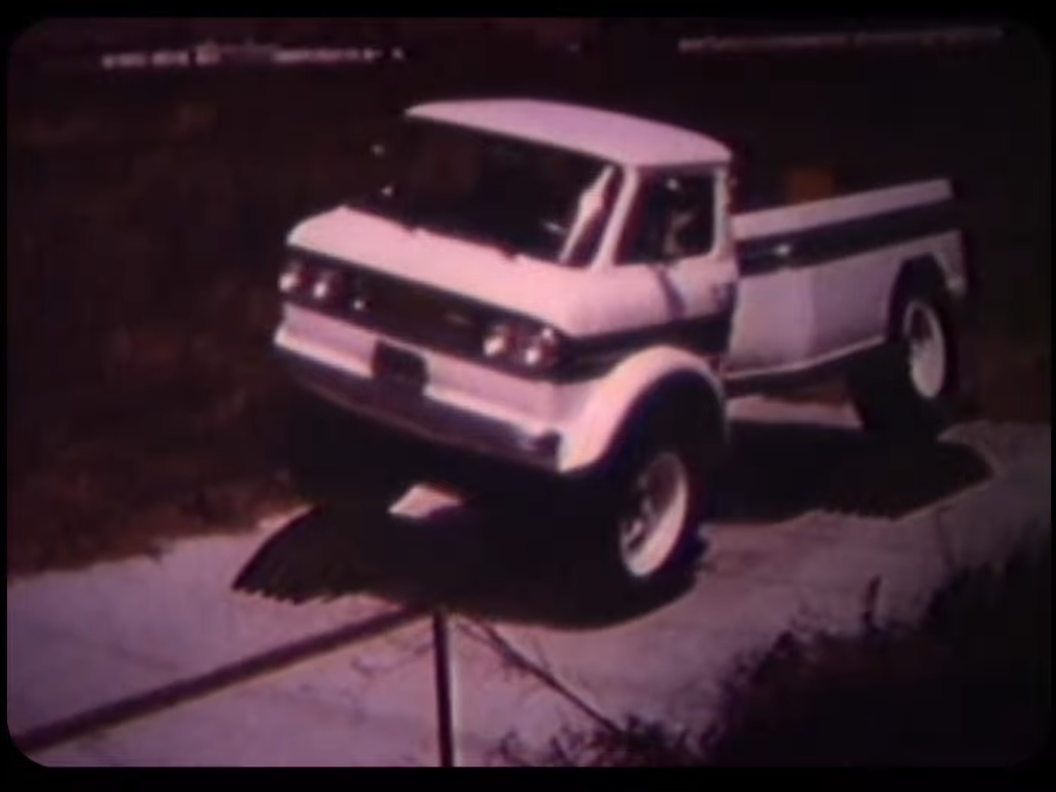
While the AGL-4 did not go into production, it’s still a great piece of General Motors engineering history. GM’s engineering past is frankly incredible. This is a company that has built everything from a coal-burning turbine passenger car and a go-anywhere articulating truck to buses and locomotives that dominated their markets in America for several decades. It seems like the General Motors of the 20th century was capable of building anything.
If you happen to know more about the AGL-4 story, please send me an email at mercedes@theautopian.com. I would love to finish this story and fill in the gaps. Likewise, if you know some other examples of engineering history that should be known, I’d love to know!
Top graphic images: 1unsafe1/YouTube


I think you’d need to be careful turning one of these fully loaded – the video showing how small the turning radius is shows that at full lock, the ‘outer’ front wheel moves so far over towards the centreline of the rear section that the truck essentially becomes a tricycle. Obviously at full lock you wouldn’t be moving very fast, but a slight side slope might be all it needs to tip.
Handling at higher speeds was also probably an issue. The British dropped the articulated and powered trailer they developed for the 101″ Landrover because of driveabilty
Exactly, but if you follow both videos then you know that “highway speed” means 50 to 55 mph, just like the Ford / GM / Willies WWII Jeep. Keep in mind that both differentials may have been welded, or been locking and it has no center diff. as an articulated vehicle…
While a non-articulated vehicle with all diff.s locked can only drive straight, such as the VW 4000 Quantum Syncro Wagon from VW group, it was only designed to have the front diff. locked when backing up in a straight line after, for example, being “parked in a ditch”. My Audi 4000 Quatro only has a center and rear diff. lock because you are not supposed to need to back it out of a ditch…
The number of vehicles supplied by American patriots GM in WW2 should include the 100,000 Opel trucks built for the Wehrmacht.
Except for the ten thousand that were still waiting for tires when the war ended…
I wonder if the GM Heritage Center would have any information about how this truck worked or what happened to it?
I actually contacted them last August to see if they had anything. At that time they didn’t have anything digitally available. They said that they might have physical archives related to it, but that all physical assets were in storage while they built out a new facility, so they couldn’t be accessed at the time.
I have no idea what the time frame for that build out was, but I did just send a message to follow up with them this weekend to see if anything has changed and if more information might be available.
If I learn anything more, I’ll either update these comments or probably just share it with Mercedes in the hopes that the main article itself can be updated.
Way to go!!!
The articulation was likely very similar to a ball & socket joint, but with the steering rotating it only to the left & right and with rotating at the joint being sprung back to neutral position. This is similar to tractors and heaving construction equipment rotating to keep all four wheels to the ground but having a hydraulic cylinder that does the steering…
A ball and socket would allow too many degrees of freedom. Specifically, it would allow the pivot point to fall towards the ground.
ADTs usually have a mechanism with two separate pivot points – one for the steering (controlled by hydraulic rams) and another just behind it that lets the bed roll relative to the cab to keep all wheels on the ground. Interestingly, on ADTs, this roll is completely unrestricted. There aren’t any springs or anything trying to keep it centered, and there isn’t even anything limiting the range of travel. ADT beds can very easily fall over sideways on the ground while the cab of the vehicle is still perfectly upright and unaffected (and it happens more often than you might think!) Obviously skilled drivers avoid situations that would make this happen, but careless driving, or trying to dump while on a side slope, can and does cause rollovers.
Can’t tell for sure from the films, but I very strongly suspect that the AGL-4 would’ve used the same conceptual arrangement, albeit at smaller scale. The one key difference being that the film clearly states that roll is limited (IIRC, I think it’s +/-20 degrees of roll?)
Here’s an album with just a small sampling of the ADT pivot mechanism diagrams and photos I collected while researching my AGL-4 scale replica build.
https://photos.app.goo.gl/nABF5Bz9uGRch3289
I greatly enjoyed reading the article on the AGL-4 – which I hadn’t heard of before. I thought it was interesting that both the AGL-4 and the XM561 which was tested in Thailand in the 60s were powered by Corvair engines. The XM561 and later the M561 Gama Goat used the Gamaunt drive assembly between the tractor and carrier, and had only two axis of articulation – pitch and roll, but not yaw. I spoke some years ago with Bill Janowski in Reno – and at that time he still owned the Corvair-powered XM561 prototype. My own Gama Goat is a 1970 ex-USMC model.
OG Dodge Power Wagons had this as an (aftermarket?) option.
I believe you’re thinking of the Willock Swivel Frame.
It offered articulation on only one axis, where the AGL-4 articulated on two separate axis.
The cab and bed on Willock conversions could roll relative to one another for fantastic terrain following ability, but they did not turn side to side and provide any steering. Steering was still strictly the traditional front wheel arrangement.
Me: “I just saw a shitbox “GMC Minuteman I Missile Transporter Erector Loader” on craigslist for cheap, can we buy it?”
My wife: “Yes, dear!”
Is your wife the imaginary kind or the inflatable kind???
My ex. once demanded that I junk my 78 E-150 because of a minor wiring issue because she thought that I could use our car to finish renovating the house. She didn’t like the idea of me ripping out all but the drivers seats, smashing out the rear window and removing the door to the trunk or that a very nice Audi quattro would last about six months if used as a 3/4 ton van…
Ha ha, it was just a joke… she’s definitely real though!
With the engine under the cab, that cab must have been sweltering and nearly unbearable in the summer. I can’t imagine being in the cab with the heat – and noise – for more than a few minutes.
On the positive side, those 44″ tires really helped it transverse obstacles!
It was probably no worse than a Tempo Matador with VW Beetle engine under the seat
Neither seems like a comfortable place to be…
Not really, as my 78 E-150 has half the engine between the driver’s and front passenger’s legs and it doesn’t roast you…
Guess the heat issue was solved by then. Thanks
I mean it makes a ton of sense.
Past a certain tire size you either need a massive turning circle or instead of making the wheels turn you just make it bend side to side in the middle, you see this tech today in stuff like the Volvo G-Series articulated dump truck and on ‘2 wheel’ tractors.
I don’t see a way of doing this without some sort of power steering mechanism, and ironically you need more space to turn in the sense that the side you wish to turn towards has to have enough space for the whole articulated section to move, vs just pointing the wheels a given direction.
Personally I’ve never needed tires so big a traditional turning mechanism wouldn’t do the job just as well.
Most articulated construction equipment uses a hydraulic cylinder, pump and valves for the articulation…
Mercedes, thanks so much for writing about this. I’ve been wanting to see an Autopian take on this, and I always love your research and writing style.
I’m totally obsessed with this truck. It’s my favorite thing ever. I love it so much that I even made my own RC version of it:
https://www.scalebuildersguild.com/forum/threads/cutting-a-corvair-truck-in-half.32146/
https://youtu.be/q7ZfNFOz3Vs?si=jbqWMeR98op3Glkg
My guy! I’ve suddenly seen this beginning to circulate the internet, but I’ve already known about it for a while… thanks to your build thread! I’ve followed it from start to finish, and it’s always the first thing I think of when seeing this truck being talked about. Great build!
Thanks so much! Glad to find that there are some scale RC fans amongst the Autopian members.
Exactly my thought when I read your comment!
Wow, very cool! That would actually make a really interesting topic for a future Lego Technic RC build for me, but you’ve already done on the hobby RC level, which is awesome!
I love seeing the amazing things people do with Lego Technic builds. I loved Lego as a kid and got pretty far into it (I made IFS with steering before they released a kit with that capability – at the time they had suspension in the rear and steering, but no suspension, up front) but I haven’t kept up with it.
If you do tackle this project, I’d love to see the results. I don’t normally follow Lego stuff enough to think that I’d find it on my own. Maybe you could tag me in a comment on my SBG build thread or on one of my videos so I know to go check it out.
Thanks for the interest! Who knows when or if I’ll get to that project, but if I do I’ll have to find a way to share it with you
If you remember, and can find some way, let me know too where I can find it when you build it. My foray into RC was brief, but I have always loved Lego. I mainly build City scale trucks and equipment. I love fitting the most amount of detail into so small builds. I tried to build a Technic Arocs sized Moc truck, but always give up… Anyway, I would love to see your build if/when done!
Your work is beyond EXCEPTIONALLY IMPRESSIVE. I have studied your forum design and build progress. As a fellow design engineer, occasionally, I become discouraged with the diminishing impact of our contributions since we have become outnumbered by lawyers. You, Sir, have given me a new, reassuring since of confidence.
Thanks so much for the kind words, and glad to find another RC fan here!
My day job is design/R&D for a coffee equipment manufacturer, and I haven’t had much complaint with lawyers so far (knock on wood), but compliance requirements, especially for exports outside of the US and EU are just brutal. We’ve had nearly half of our engineering effort spent just on compliance for at least the last year.
Don’t get me wrong – I actually agree that most of what’s being regulated probably should be regulated for various health, safety, and environmental reasons. I just wish there were more efficient ways to verify and enforce it. We really could be doing so much more innovating and improving things if the paperwork and tracking was less burdensome.
I can only imagine what car makers go through!
I’ve been exposed to this unobtainium and will now suffer a lifetime of want.
thats so cool but I also imagine an absolute nightmare of zero structural rigidity when on something normal like a highway
This is so hard to grasp the scale of… like everything feels proportioned differently. Very cool though. I think we need more articulated things.
Great article. Seen something about this years ago. A brilliant idea that should have gone into production.
I had a Tonka Toy Truck that did that.
Weird flex, but okay
This Gammas my Goats.
I saw Gamma Goats play last night and they were awesome! Rock on…
I wonder if Chrysler engineers knew about this when they had the idea of turning the cab from a cab-forward pickup (A100) into a tilt cab for a medium duty COE truck, the L600/700.
Oh No! Davids next existential crisis!
Polish engineer M. G. Bekker was a major dude in the science of off road mobility writing the industry bible “Theory of Land Locomotion”. He migrated to N. America as WWII began and later worked at GM Defense on the moon rover. Given the timing, he could have had some input on the AGL.
https://patents.google.com/patent/US3235020A/en?q=(Mieczys%C5%82aw+Bekker)&oq=Mieczys%C5%82aw+Bekker
It certainly looks like he was working in the area. I don’t think this is quite the same thing but it’s certainly looking at the same problem.
I can’t quickly find it, but I recall a Top Truck Challenge entry in the early to mid-2000s who rocked some of the obstacles because his truck had a similar joint in the middle.