


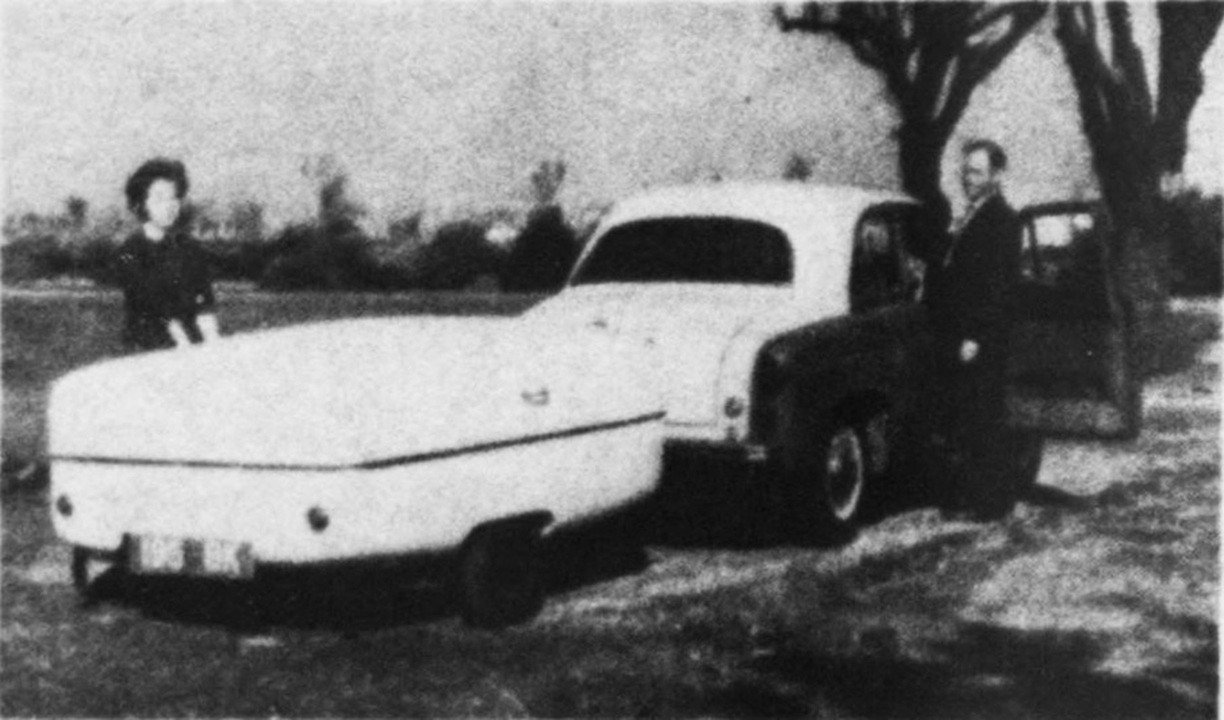
Vespa and Lambretta scooters are some of my favorite two-wheelers. They melt your cold heart when you look at them, they make everyone around them smile, and they’re so fun to ride. But something that these scooters are not is highly capable. Or, that’s what I thought. Apparently, one company in England saw these cute, low-powered scooters as not just family vehicles, but tow vehicles. This is the Southbourne Mini-Motel, and it’s a fiberglass camper designed to be towed by a little Vespa or Lambretta.
Motorcycle RVing has been a thing for most of RV history. The concept is simple enough: build a camper so tiny and so lightweight that it could be hitched onto the back of a motorcycle. If you spend enough time on an American highway, you will eventually see a large Harley-Davidson or Honda Gold Wing towing a tiny trailer. Drive through a campground near Sturgis, South Dakota, any August, and you’ll see bikers camping out of their bikes.


A motorcycle camper is great because you can still enjoy the fun of riding, but save big money on hotels and be truly independent on the road. I also love motorcycle campers because these trailers are tiny enough that they can be easily pulled by weaker, smaller cars like a Japanese Kei car, a Volkswagen Beetle, or a Smart Fortwo. These campers also tend to be dirt cheap, which makes the fun of RV-based camping more accessible. In other words, everyone wins with tiny campers!

Yet, I was still surprised when I discovered the Southbourne Mini-Motel. This little fiberglass rig is tiny, like every other motorcycle camper, but the twist is what vehicle was used to tow the camper in its advertising. Hitched at the front of the Mini-Motel in its advertising is an adorable Lambretta 150.
You read that right, just watch the video for yourself:
The story of the Mini-Motel is hard to find. Some sources even attribute the creation of the Mini-Motel to the wrong company. But through some digging, I’ve been able to piece together some of the story.
A Camper For Everyone
The Mini-Motel was created by the Southbourne Sheet Metal Company of Emsworth, Hampshire. From what I could find in business records, the company was founded in 1953, specialized in metal fabrication, and built such components as aircraft nose cones, tank exhaust pipes, and cluster bomb parts, among others. By the 1980s, Southbourne Sheet Metal Co. Ltd. had 93 employees, and its directors were Peter Harry Checketts, D.M. Checketts, Paul Ivor Edward Bartlett, R.M. Tassell, and D.W. Wisely.
If you search public online records about Southbourne Sheet Metal, the most you’ll find is a 1990s court case ‘Re Southbourne Sheet Metal Company Ltd,’ that is sometimes cited in UK law. Sadly, I have not been able to find who came up with the idea to build a motorcycle camper or why.
What is known is that, in 1959, the Southbourne Sheet Metal Co. hit the ground running with what it thought was a new concept for a camper trailer. Scooter engineer Ken Strugnell would star in the aforementioned advertisement, and the camper was distributed by Henley Motors of Hampshire Ltd. and later, Henleycraft Ltd.
The Mini-Motel came at a time when the UK, like much of the world, was getting outdoors and going camping. In the advertisement, the narrator describes a situation where a family would want to spend a few days at the beach. Some folks would pack their suitcases and board a train, while others would fill their car to the brim and hit the road.
The ad notes that there was also a third kind of traveler, and it’s the young family that wants to take a minimalist approach to their camping holiday. This family doesn’t pile into a car, but swings a leg over a motorcycle. The parents would ride in tandem on the bike’s seat, while a single child would ride in a sidecar. Thanks to the Mini-Motel, the ad notes, now the family can take their lodging on the road with them.
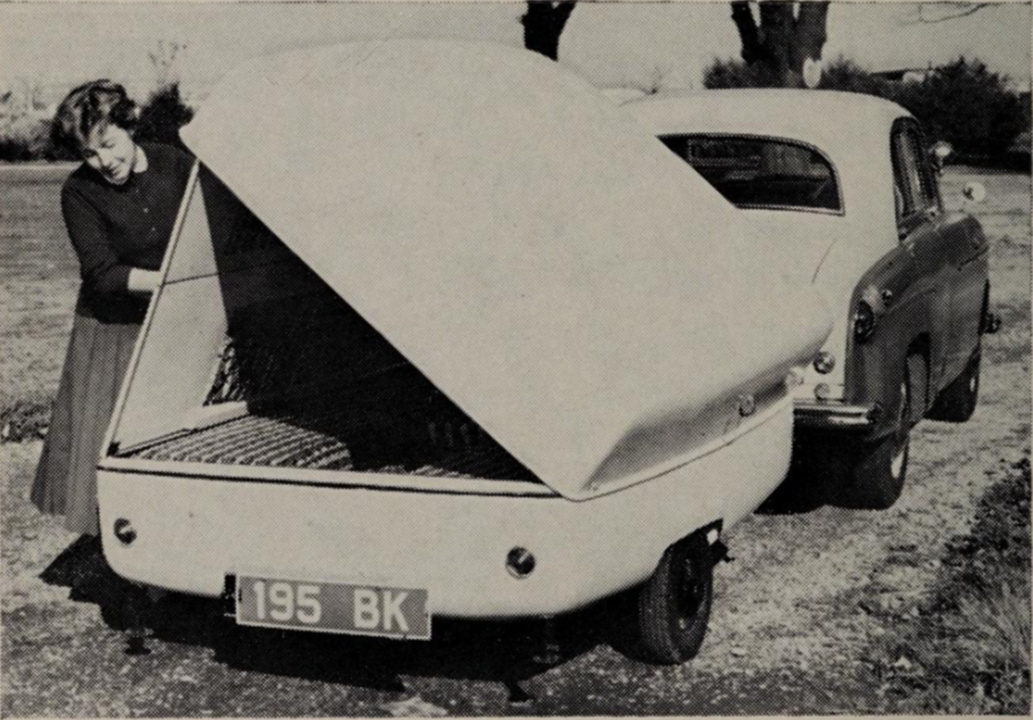
The Mini-Motel starts off with a lower fiberglass tub. Attached to the bottom of the tub is a steel crossmember, which carries a Flexitor independent rubber suspension, eight-inch wheels with Dunlop tires, overrun brakes, and stabilizer jacks. It’s said that this tub, like every fiberglass component of the Mini-Motel, is made out of two layers of fiberglass. This camper also doesn’t have a traditional frame like most campers do. The Mini-Motel has the aforementioned crossmember, and as for the trailer’s hitch? That bolts into webs of reinforced fiberglass.
On the topside of the camper’s base is the interior seating, lockers, and interior well. Southbourne Metal bragged that the lower tub was watertight enough that you could fill it with water, take a bath in the giant base, and then pull the drain plug when you were done. The video advertisement jokingly suggests that the bottom half could work as a boat.
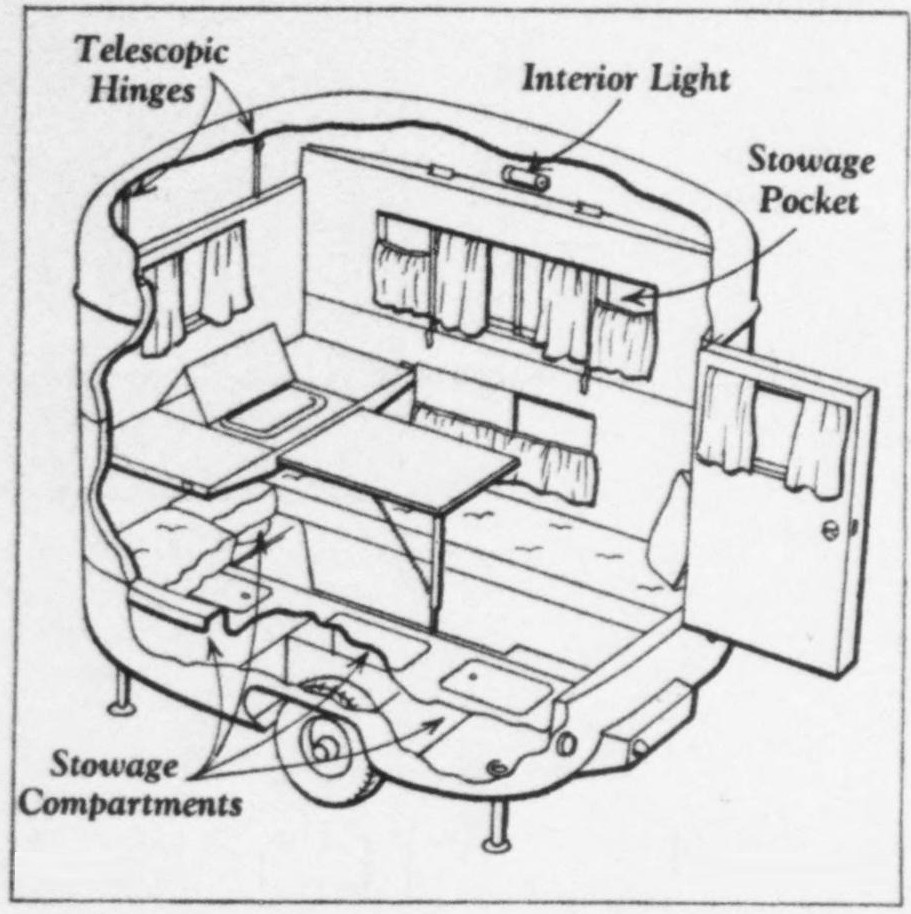
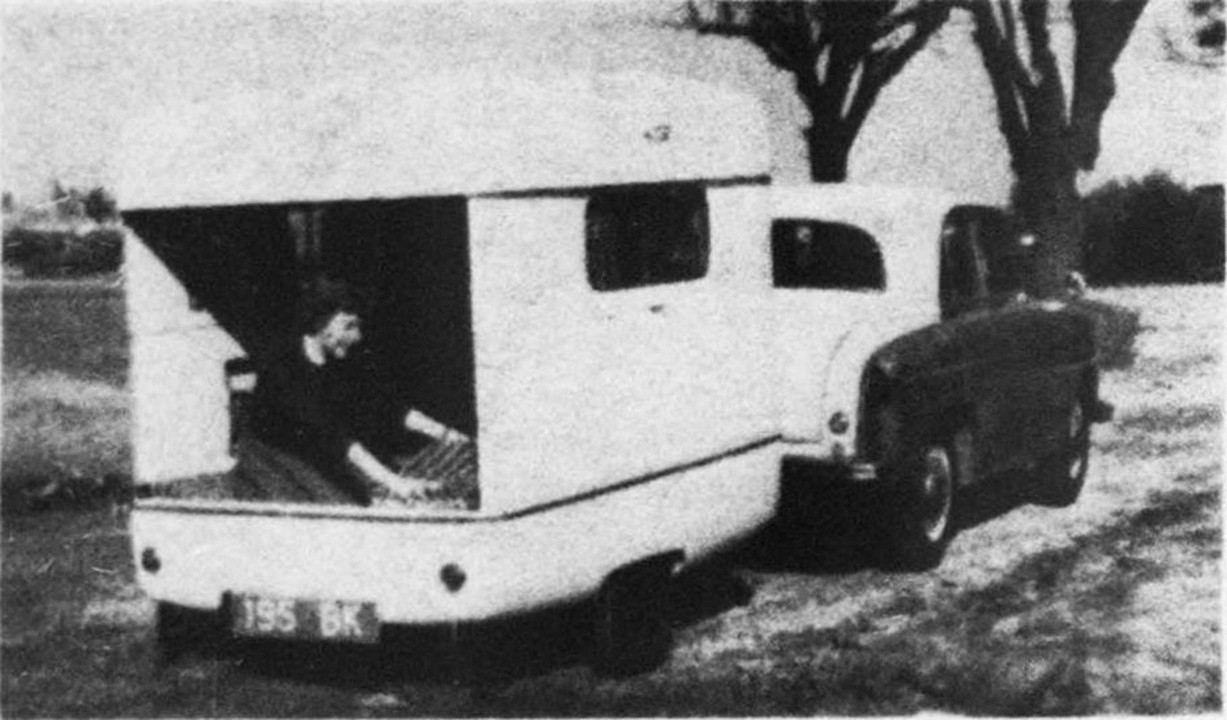
What I find fascinating about the camper’s structure is how the walls and the roof work. When you park the Mini-Motel, you pop the roof up, bring up the sidewalls, and then secure it with the front and rear wall panels. All of these walls and the roof are made of the same double-layer fiberglass. What’s amusing is that, in Southbourne Metal’s advertisement, the camper is shown partially open and flopping in the wind until the front and rear walls are drawn down.
But once everything is secure, the Mini-Motel becomes hardsided camper just over eight feet long. There’s no tent canvas to be found here!
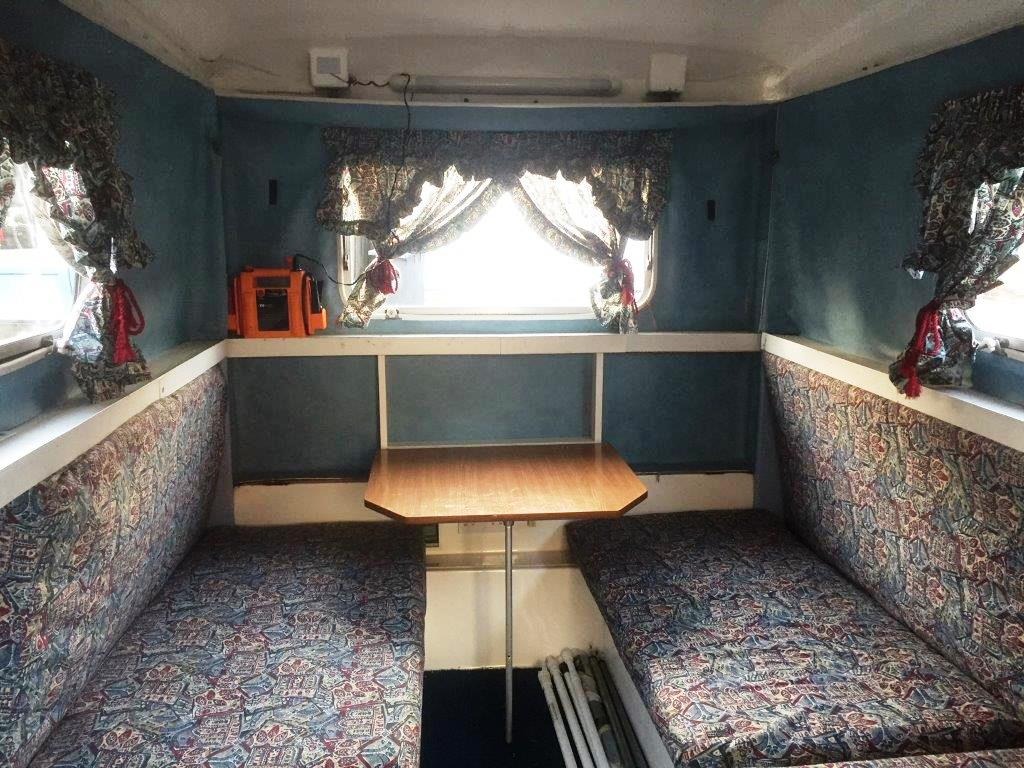
Features included two benches that converted into two beds or one big bed, opening windows, two tables, curtains, cushions, a plastic bowl, storage lockers, and door locks. A fold-down bunk was available for one small child. Yep, that’s it. Advertisements said that, on request, you could add a portable gas cooktop and some sort of lighting apparatus. One accessory for the Mini-Motel was the Mini-Rex, a tiny polystyrene freezer powered by butane, shore power, or a battery.
The Mini-Motel was basic, but it was made for real simple camping. The idea was that your family of three would roll right up into the sand, drop the trailer, and immediately start enjoying your camping holiday. Alternatively, advertisements said, the Mini-Motel wasn’t just for tourists, but also for technical professionals visiting worksites, traveling salesmen, and others who needed quick lodging on the go.
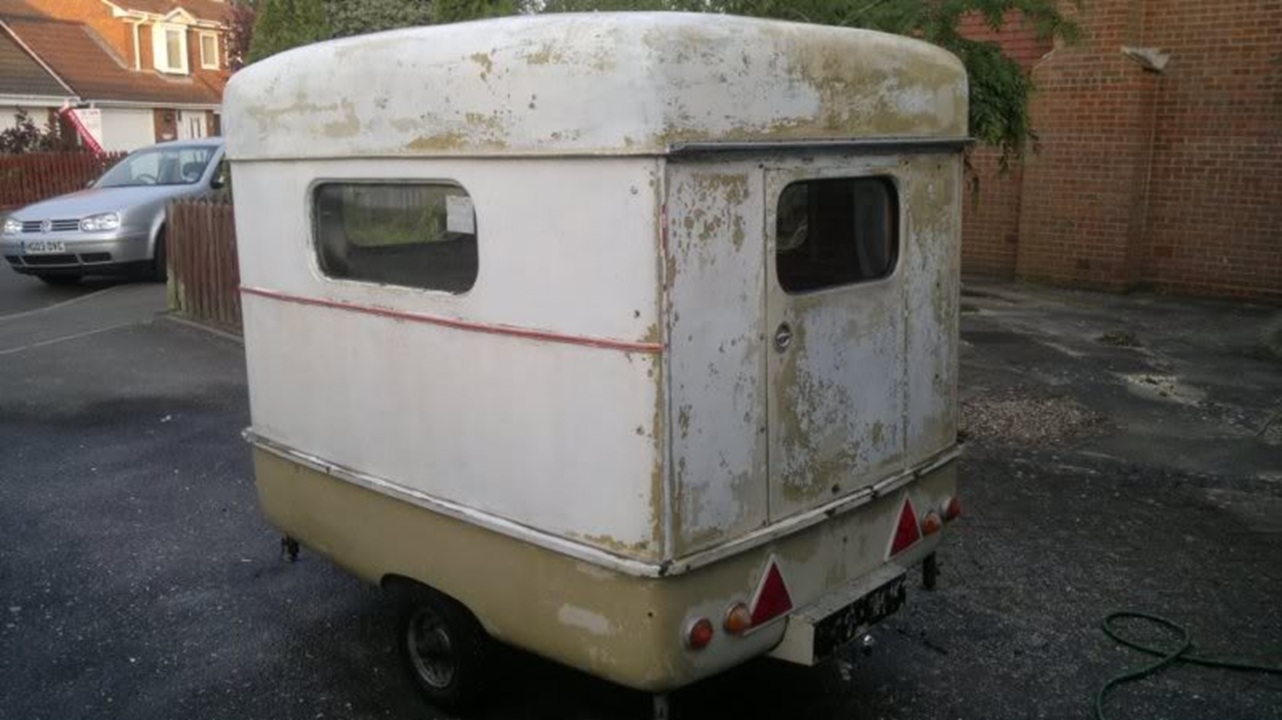
My favorite part of the ad was how silly it was in explaining how you could set the thing up in minutes. The video ad said, quote: “Even a moron, mechanically speaking, can fix it up in a matter of minutes.” Oof.
Mini-Motels were distributed for prices ranging from about £195 to £268, depending on specification, and the company pitched the Mini-Motel as an investment. Yes, the camper was more expensive than alternatives, but the idea was that the camper would pay for itself in easy maintenance, no rot, and incredible longevity. Southbourne Metal and its distributors sweetened the deal by saying that the Mini-Motel weighed only 447 pounds and could be towed by darn near anything with an engine.

That last part was demonstrated beautifully in the ad where engineer Ken Strugnell swings a leg over a Lambretta 150 with two actresses boarding the scooter, acting as his “wife” and “daughter.” He then hitches the camper up to the Lambretta and then takes off. The rig was complete with a wooden boat strapped to the top of the camper.
This whole scenario is amazing. A Lambretta of that era would have come with a 148cc single-cylinder engine that was good for 6.5 ponies. A scooter like this could reasonably be expected to go 50 mph, maybe faster with a light rider who tucks into the wind. The scooter would have also weighed around 231 pounds, making the camper weigh almost double.

The idea here was that even a scooter, provided that the scooter had a sidecar, could handle a Mini-Motel because the camper was tiny, aerodynamic, and didn’t block the rider’s view. The marketing doesn’t say how fast a scooter could go with a Mini-Motel on its back, but I can’t imagine it was anything approaching practical speeds. I’m sure that a poor scooter would accelerate at a snail’s pace with one of these hitched to its rear, too. It’s not noted what would happen if you encountered even a slight incline, and this whole idea is just making me laugh because it’s all sorts of silly.
Of course, the Mini-Motel wasn’t just for bikes, but it was for cars as well. Some print advertisements had illustrations of cars towing the Mini-Motel. But hauling the camper with a Lambretta was quite the visual. What was also likely an interesting visual was storage, as the camper was advertised as being able to be flipped over onto its side and then slid into a small space.
The Mini-Motel Failed
Ultimately, as Portsmouth The News reported in 2010, the Mini-Motel wasn’t a success. From the news publication:
Though the caravan itself was not a success – Mr Strugnell, now 77, says it was probably too small to catch on- the advert has drawn renewed attention and is to be used later this year in a BBC programme which will see him recreate the film. Mr Strugnell said: ‘They called me, and we have filmed a piece in which I relive the ad, putting up the caravan in the New Forest.’
Mr Strugnell, who now lives in Havant with his real-life wife Jean, wants to find the woman who played his spouse. He said: ‘As the ad’s going to be on TV again, I really want to get in contact with her and let her know.
[…]
Mr Strugnell admitted he still sometimes watches the two minute 38-second ad. But not as often as his wife Jean, who said: ‘I can’t stop laughing at it. ‘There’s a moment when the wind catches the caravan as he’s putting it up and it looks like it might fall off the quay into the sea. It doesn’t, but it’s very funny.’
Rising Like A Phoenix
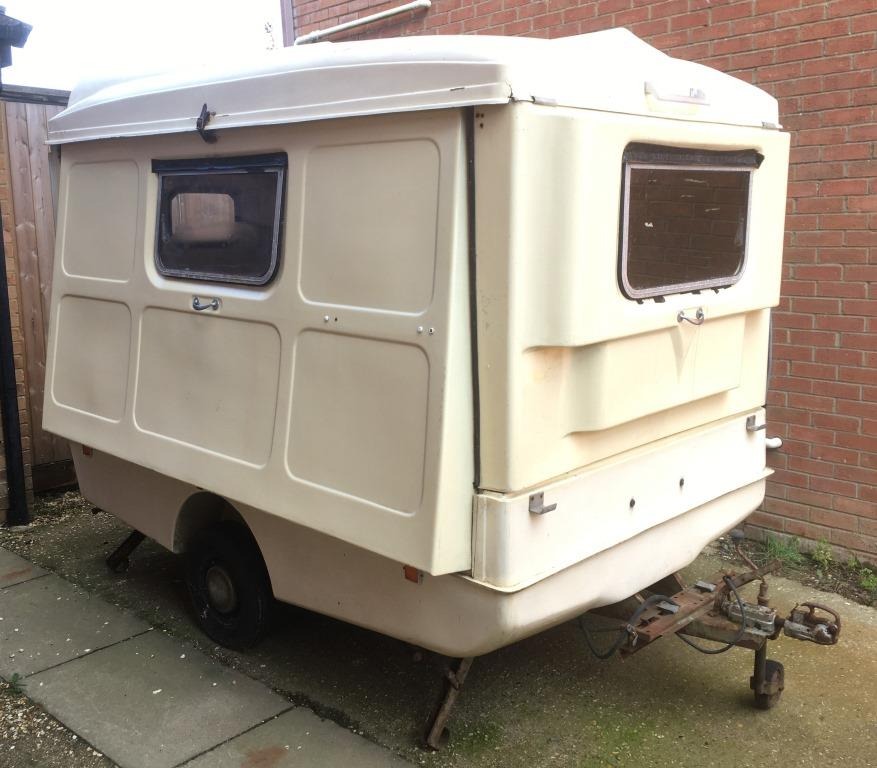
While the Mini-Motel might have been a failure, its concept didn’t really die. The idea would continue as the Portaplas Portafold folding caravan and the Ansfold. Pretty much the only resource for what happened next is Portafold.co.uk, which appears to be run by Portafold fans and owners, from the site:
The Portafold caravan was originally designed in 1960 by Brian James, Ron Nugent and approximately four others for their company Portaplas Ltd. based at Emsworth, Hants. Portaplas was set up specifically to manufacture the Portafold, after the company producing a smaller two berth folding caravan, called the Mini-Motel, decided they were not prepared to meet the demand for a larger caravan by designing and manufacturing a completely new four berth version.
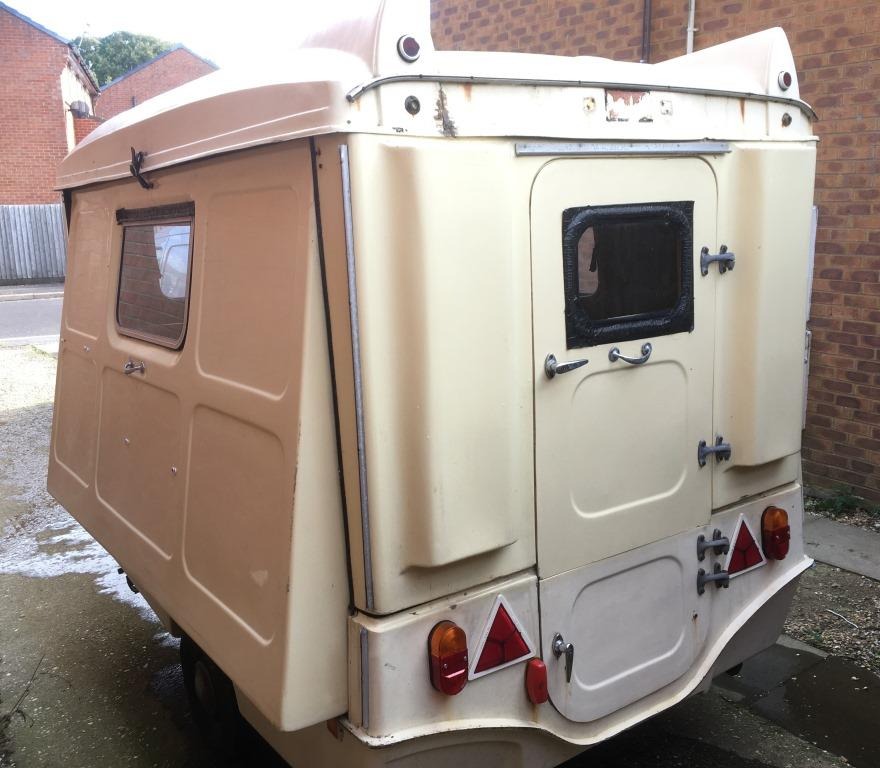
In 1961 the new company (Henleycraft Ltd.) that Brian, together with Eddie Elliott, had created to handle the sales and marketing of the Portafold, started advertising the newly designed caravan at shows such as the Ideal Home Exhibition and the Camping & Outdoor Life Exhibition, both held at Olympia in London.
From 1966 the caravan was built under licence by Plastics (Fareham) Ltd. at The Yard, Broadcut, Fareham, Hampshire. The two owners, Conrad Faulkner and Lionel Abbs, started working together restoring old buses and army trucks before moving into the glass fibre business. Plastics Ltd. produced all manor of glass fibre products but they specialised in making fishponds, boats and boat parts. Conrad continued to run his business ‘Faulkner’s Transport Ltd.’ and left the running of Plastics Ltd. to Lionel, May Snell and the sales manager Mike O’Neill.
Check out this video of folding it down:
The Portafold is a clear evolution of the Mini-Motel idea. It is assembled like the Mini-Motel, but is larger, with greater refinement in the fiberglass body – for example, it has a real RV-style door! Advertisements note that it also has a sink with a drain pipe. Features were otherwise similar to the Mini-Motel. The biggest upgrade is in size. The Portafold is just 10 feet, 11 inches. Adding over two feet to the design meant that the Portafold could sleep up to five people compared to the strict two-adult, one-child limit of the Mini-Motel.
All of this added up to a camper that weighed 782 pounds and a price of around £345 and £399. Reviews of the Portafold were positive. In one review, writers for Motor Caravan & Camping hauled a Portafold behind a 1200cc Volkswagen Beetle and claimed that the camper was so unobtrusive that it made a negligible difference to fuel economy and that the car performed as if it wasn’t even towing anything. The only real complaints were about the lack of a backsplash, the lack of any drawers, and the small dining table.
Portafold.co.uk continues the story:
Following the death of Conrad in around 1971, a new company called ANS Mouldings Ltd. was set up by Lionel and May. Although Lionel wasn’t listed as a director of the company May’s husband Brian Snell and their son, also called Brian, were. The name ANS Mouldings Ltd. came simply from the names of the owners, Abbs ‘n’ Snell. The new company shared the same building that Plastics Ltd. were in but ANS occupied the loft space whilst Plastics Ltd. remained downstairs. The building they shared was used from the early 1900’s as the local tannery and currently houses two companies called Airport Bodyshop and Precision Engineering.
The last Portafold was made in 1976, and following a rename to Ansfold, and a restyling to make them more conducive of the 1970’s, the first Ansfold rolled out of the factory in the same year. ANS took on the manufacturing of the roof and the sides of the new Ansfold, and Plastics Ltd. continued to manufacture the base of the caravan and handle all of the assembly. Production of the Ansfold finally ended in 1980 due to market saturation and the increased competition of other folding caravan manufacturers, such as Rapide, from mainland Europe.
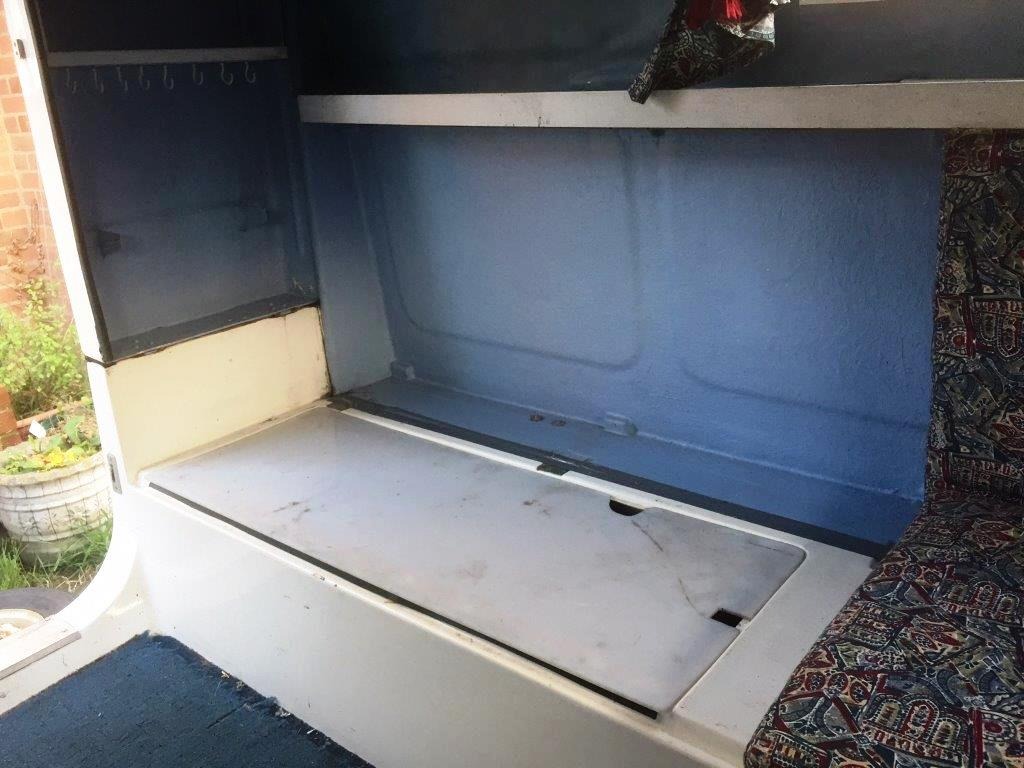
In theory, this is a camper that an American can own, too. These campers do show up from time to time on Facebook Marketplace and other online classifieds. All of them are old enough now that it wouldn’t be hard to import one for your own use.
Camping For Everyone
There are some questions that remain. Who even came up with the original Mini-Motel idea? Portafold.co.uk found that, in 1952, there was a camper called the Fairholme Wanderer that had a raising roof and hard walls that folded into place. Was that the inspiration for the Mini-Motel? Sadly, through some digging, I could not say.
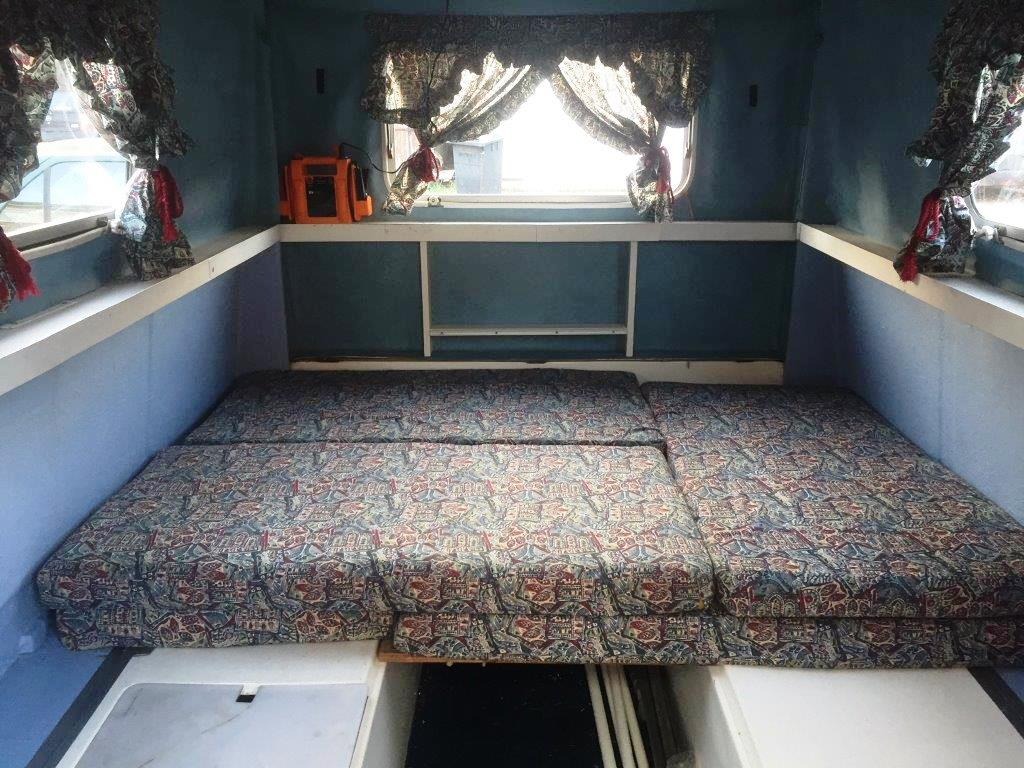
It’s also not known exactly how many Mini-Motels, Portafolds, and Ansfolds were built. Lots of them have survived to the modern day, enough that there are classic camper rallies where these make appearances. However, production records are not known. Portafold.co.uk says it’s trying to build a database of serial numbers so that such a question could be answered.
Still, the part that I’m most amazed by is not that this camper existed. Again, there have been countless tiny cuties like this throughout history. But the visual of a Lambretta carrying three people, a camper, and a rowboat is just one that’ll be in my head for a while. That advertisement and this trio of campers prove that, if you want to go camping in a trailer, there really is something out there for everyone.
Top graphic images: Facebook Marketplace; Bring a Trailer


Wow, so that’s what a Lambretta looks like without a million lights and mirrors attached to it!
The kid in the advert video had that “is this supposed to be fun?” look. As well as scampering out of the shot as soon as they could.
Also amused by the funky helmets and the no doubt crash resistant sweaters (jumpers).
It took me a few seconds of looking at the Southbourne Sheet Metal cutaway image to realize they were illustrating tufted seat covers, not upholstery with a seagulls-in-flight print.
Of course you have seen RevZillas MC camping experiment:
https://www.youtube.com/watch?v=RX5i_swivTU
A lot more practical:
https://www.youtube.com/shorts/A_psIvlQ8hk
Them two make great videos!
An American equivalent to these was probably the Apache tent trailers from the early 1960s. My Dad bought one (an Apache Chief) to tow behind his brand new ’61 Scout 80 Travel-Top. It was basically an aluminum box with two big storage compartments on each side, a mattress on top and a big wall tent that folded out for living space. They only weighed 350 lb empty so even the Scout could tow it at near-highway speeds. We hauled it (slowly) all over California when I was a kid camping in the Sierras (summer) and the desert (winter).
https://i160.photobucket.com/albums/t175/njjimf/apacheowners/61b.jpg
I had a ’78 Apache War Eagle for a few years. It towed like it wasn’t even there!
My word! This isn’t so much a small camper as it is a large cooler. However, I am pretty sure Mercedes has discovered the reason for the Top Gear hatred of the Caravan. A Vespa with 2 passengers a sidecar with a small child a large cooler and a boat that reminds of the boat in the scene from Jaws where Michael almost gets eaten wouldn’t be able to go up against a stiff breeze let alone a slope or ramp. Maybe after childrens services took your kid away but still I’ll race it in a rascal.
Their hatred comes mainly from the UK imposing different, lower speed limits on vehicles towing trailers (a maximum of 60 mph on motorways, vs the national speed limit of 70), which holds up traffic badly, especially when drivers don’t use the proper lane, or pull over and let backed up traffic pass (on surface roads).
Also, it seems like lots of British campgrounds are essentially big open grass fields with no tree cover or water features and restrictions that would make a Florida HOA board jealous
So, just like California restricting trucks and caravans to 55mph on 70mph freeways. On a busy weekends I-5 is limited to the speed of the 2nd slowest truck on the road whilst the elephant races drag on for endless miles.
There are few ultralight trailers made to be towed by a bicycle. Obviously these can’t be towed quickly but are,probably more comfortable than a,sleeping pad on the ground. I wonder if Toecutter has,any trailers for his Velomobiles.
These small folding trailers look roomier than a teardrop, but I’d sooner have a bigger trailer
That looks like an extremely well engineered and fitted out camper for 447 lbs. That’s pushing toward the upper end of what I’d consider a motorcycle trailer in weight, but there are motorcycle campers on the market today that are little more than a tent that sets up on a platform the trailer unfolds into that weigh close to that, and I’d take a hard sided camper with bunks over a tent trailer
It looks much more practical than the Aliner Alite I used to own, that one weighed about 400 lbs, but had no utilities besides electricity and a/c, and if the bed was fully set up, the only standing room was a 1 sq ft area right inside the door. Being an A-frame, standing room wasn’t that great even with the bed broken down to bench mode. Not sure why A-frames are the only shape of hard wall folding campers that’s had any staying power
Straight sided retractable trailers are very much alive and kicking but are,larger and pricier. Hi-Lo and Trailmanor still make them
I guess, sort of, they work a bit differently and mostly exist for people looking to clear low garage doors as opposed to saving weight or space. I suppose they still have aerodynamic benefits when being towed, but you still need a big vehicle to pull them so how noticeable of an improvement is it really?
Good question, I have a pickup so I want a fiberglass egg. I want a flush toilet and no leaks, so I’m willing to tow 4,000 lbs
There are some wildly aerodynamic light car trailers out that work great as camper conversions.
Aluminum fiberglass combination.
Trail Manors are actually pretty light. Their biggest trailer is like 3500 pounds.
Dramatic, I hear.
Standing room is determined by the length of the trailer.
I have an Aliner Expedition and you can stand easily on any of the open floor space.
Mine is in the range of 1000 pounds.
Most people don’t use a high enough quality sealer.
You can order replacement roof panels, but I will be rebuilding one of mine and eliminating all holes, vents, skylights.
Some had electric lifts, but most use springs to make setup easier.
Torsion suspension on mine.
No safety gear on the daughter. Mom in high heels. The 150 scoot surely screaming for it’s life. It’s a wonder we survive haha
Did you see the look on that poor child’s face? She knew this was abuse.
And then she made a break for it!
Poor kid looked traumatized.
Being light enough to tow even with minimal power is one thing; the bigger issue is the huge wind drag such a rig places on the little Vespa. It may have sufficient power to move the trailer, but it won’t have anywhere near sufficient torque to move it quickly.
A big trailer made of styrofoam is light enough to tow and my truck not even notice it’s there when starting out, but it’ll still wreck my fuel economy.
I think the Vespa was more a PR stunt, it could technically tow the trailer, but not that well. Most motorcycle campers are more in the 250-350 lb range, a 400+lb model would more normally be for a big cruiser bike, Goldwing or similar
I’m not 100% on that. Bicycle camping is a thing – not a big thing, I admit, but not nothing either. And I’ve seen the occasional motorcycle camper too. It wouldn’t be a stretch for someone to propose tugging one around behind a scooter, though I don’t reckon anyone was seriously considering pulling one of these compact fullsize models.
There are a couple of YouTubers I follow, one in particular has built many variations on the theme of bicycle hardshell camper, and drag during towing is one thing he mentions. The ones that are closest to being closely-fitted sarcophagus, unsurprisingly, are the ones that tow easiest.
I love theses little wheeled, hard sided tents. How cute.