


The more I drive new Nissan products the more I believe that multiple generations of terrifying Altima drivers, the rapid propagation of rental spec Rogues Sport a few years ago, and the possibly well-earned poor reputation of the company’s dealers have all conspired to make people overlook the brand.
For example, did you know that the Nissan Leaf is a completely nice electric car that has over 300 miles of range and costs about $30,000 with just about every feature you could possibly want? That’s kind of a big deal and, yet, the car isn’t selling particularly well and hasn’t generated a ton of buzz.


Some of this is the larger thrust of the EV market and some of this is reputation. I also think that there’s a bigger issue in terms of what trims are available nationwide, because the Leaf is one of the better examples of a car that gets worse the more money you spend on it.
Why This Car Exists

Nissan deserves its share of credit for believing in electric cars before almost anyone else. Nissan also deserves its share of scorn for absolutely blowing it by not offering a better cooling system when the car launched. The early success of Tesla should have shown Nissan the way and, instead, the company absolutely biffed it.
This Nissan Leaf is a complete do-over. A rolling mea culpa. A “my bad you guys” with heated seats. Most of the questionable decisions of the first generation have been resolved, and the result is a surprisingly complete and attractive vehicle.
It is the only car under $30,000 (MSRP, it’s a little more with destination) that gets over 300 miles of range, putting it ahead of the slightly cheaper Chevy Bolt, and it has CarPlay and Android Auto as a standard option. Granted, we’re not getting the even-cheaper Leaf, but that probably would have had crap range, so the $30,000 one seems fine to me.
[Full disclosure: Nissan gave me a full battery and a week to play with the Leaf. – MH]
The Basics
Drivetrain: Single front-mounted permanent-magnet synchronous motor
Drive: Front-wheel drive
Output: 214 horsepower, 261 lb-ft of torque
Range: 303 miles (S+), 259 miles as tested
Base Price: $29,990 before $1,495 destination and handling
Price As-Tested: $41,835 (Platinum+)
How Does It Look?

My most millennial quality is probably that I quote the Dan Flashes sketch from I Think You Should Leave way too much, but just look at the wheels. They’re so complicated! There are three unique wheels for the three trims of the Nissan Leaf and all of them are good.
This is going to be a theme for the entire article, but the more money you pay for something on the Leaf somehow the less you get, and the wheels on the Platinum are the most conventional and least interesting of the bunch.
Look at the S+ wheels, they’re so much cooler:
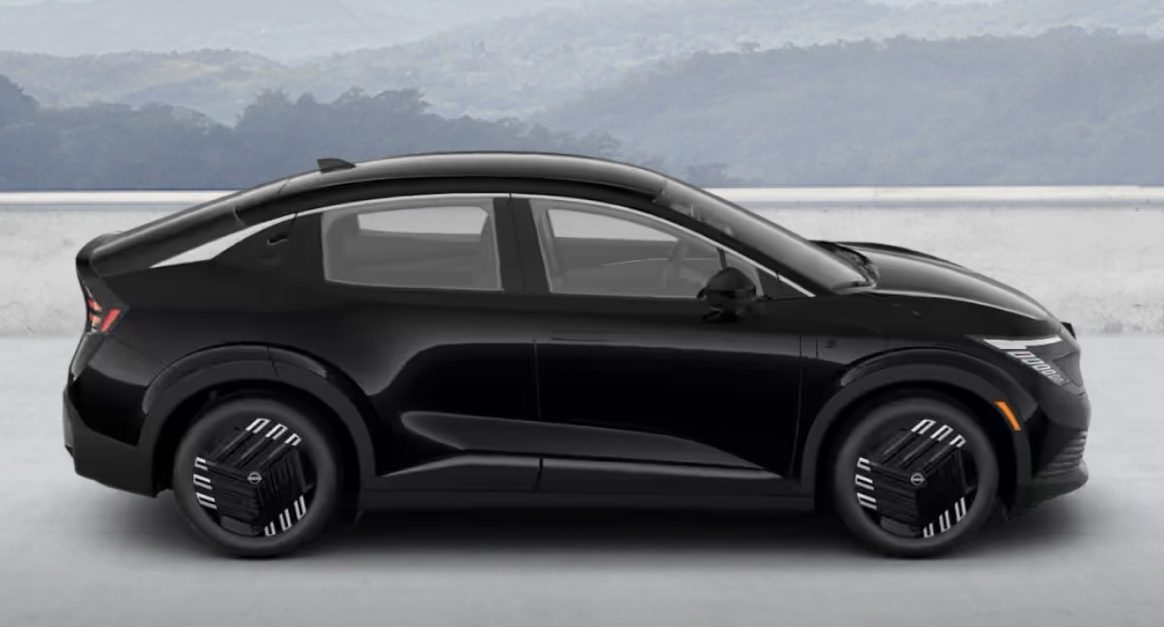
Maybe I’m just a sucker for three-spokes. It’s possible. Isn’t it also possible, though, that I possess the most delicately honed sense of wheel design, and that my appreciation of these cheaper wheels speaks to their obvious superiority?
The rest of the car is nearly identical in every trim, offering an upright hatchback that, like the Model Y, has been sculpted by the air as much as by a designer. It somehow manages to look both like an electric car and also blend in with everything else.
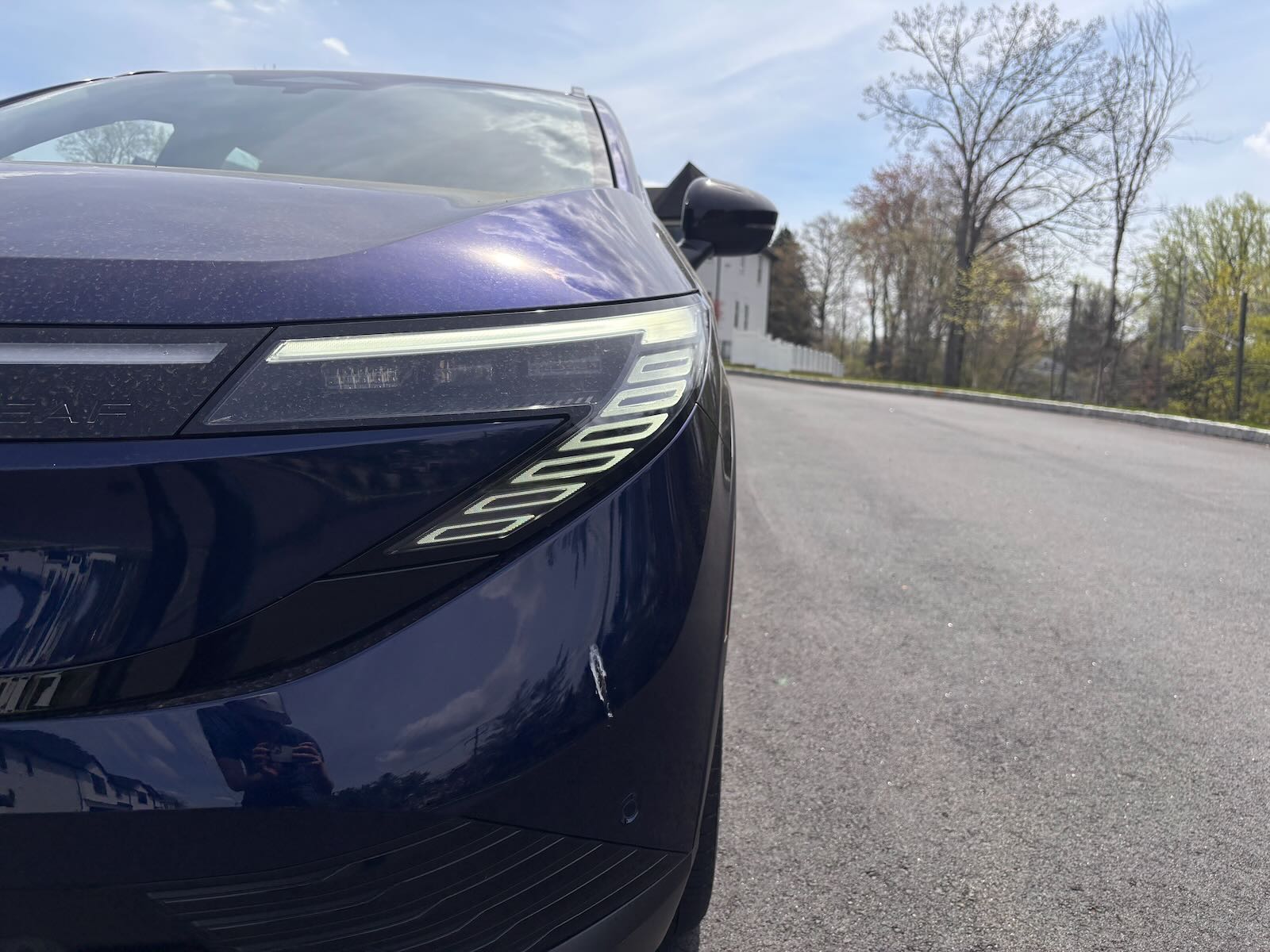
Nissan’s overall design language is in transition, meaning there’s a bit of a mish-mash of everything right now across the range. The Leaf’s roofline is meant to evoke the Z and, yeah, I sort of see it on the C-D pillar and in the taillight design. It’s subtle, which is probably a good thing here.
Less subtle is Nissan’s “2-3” iconography, which reflects the fact that 2-3 sounds like “ni-san” in Japanese. Basically, you see two parallel rectangles and then three perpendicular ones (look at the taillights). A Leaf isn’t going to stand out next to a new Sentra or a Rogue, which is the point. Friends who saw it were like “It kind of looks like a Model Y.”
What’s It Like On The Inside?
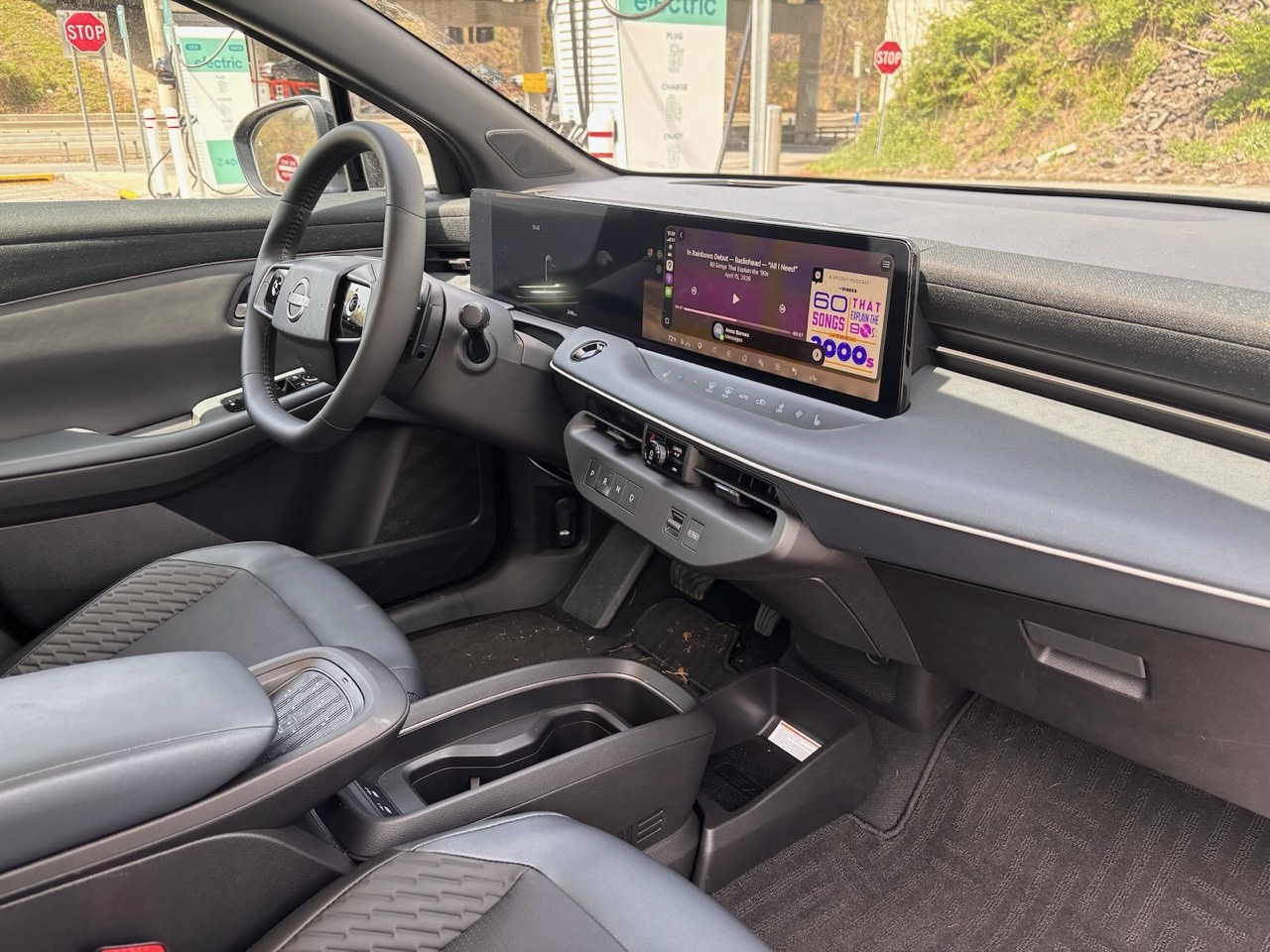
Like most modern Nissans, the interior is straightforward with a few unique touches. If you look at the floor mats, you’ll see the 2-3 pattern repeated, for instance. The cabin feels quite roomy for a smaller (by modern standards) vehicle, which is enhanced by the dimming roof, which transitions from fully opaque to clear with a touch of a button.

My daughter and I geeked out over this feature, while my wife was completely uninterested in the technology. In Platinum+ trim, the Leaf also gets the company’s TailorFit seats, which is a synthetic material that’s supposed to feel like Nappa leather, just tougher.
Does it actually feel like Nappa leather? Maybe. Something felt slightly off about the seats, which might just be my unfamiliarity (MB.Tex, for instance, doesn’t bother me). Given that I’ve seen what children can do to a car’s interior, I’m open to a sturdier alternative.
The Platinum+ also has a feature I don’t love, which is the Bose speaker in the headrest. This is a new trend, and it makes phone calls in the car awkward, as the audio source of the person/s you’re talking to is now behind you.
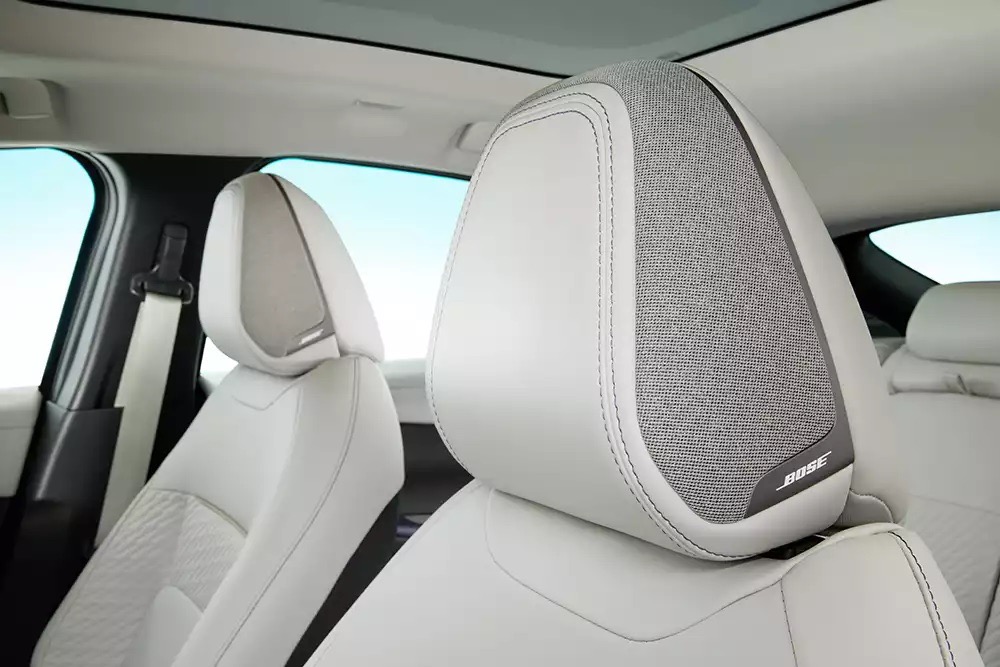
Kinda strange! Less strange are the touch capacitive buttons built into the dashboard. I don’t love these, generally, even though Nissan’s version seems to work most of the time. The integration at an angle is a unique approach, and I found them to be, at the very least, superior to the absence of buttons entirely.

Any time I don’t have to go into a menu to turn on the heated seats, it feels like a luxury.
How Is It As An EV?
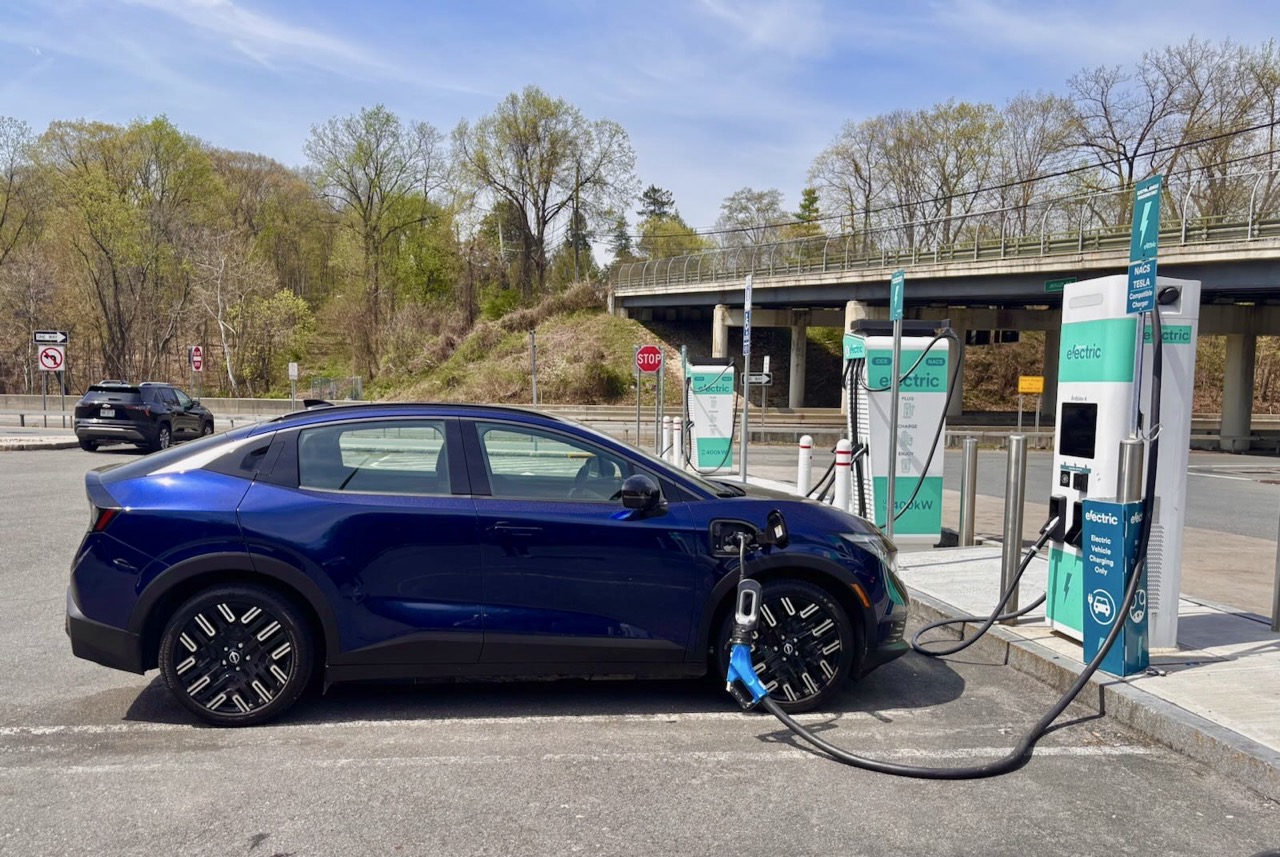
I’m going to speak generally about the Nissan Leaf and not this specific trim because the different trims are, for the moment, mechanically identical (the incoming Nismo Leaf is apparently sportier).
When thinking about an EV, the biggest concerns aren’t performance in the traditional sense of being fast. Efficiency is key, and in my testing, the Leaf got the promised 3.6 miles/kWh, which puts it on par with the improved Toyota/Lexus/Subaru vehicles and means it’s better than the BMW i4 eDrive 40 with the 18-inch wheels. 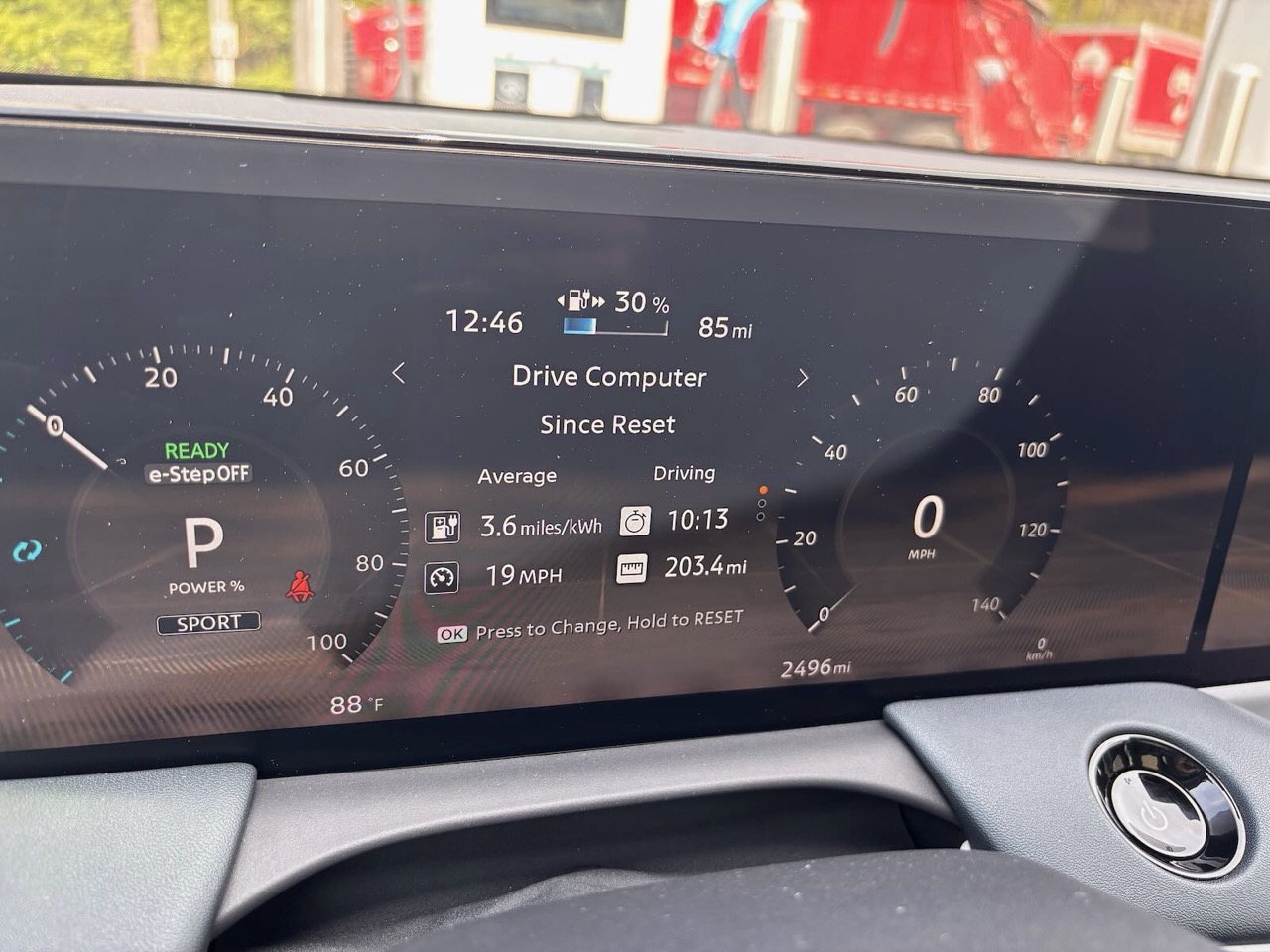
The cheapest version, the S+, gets 303 miles of range, whereas the most expensive Platinum+ only gets 259 miles due to the 19-inch wheels. This is madness and gets into my larger theme of: Just buy the cheap one.
Credit to Nissan engineers for also putting in a J1772 port on the left front fender, which is probably where most people have their home AC charger set up, and the NACS port on the front right, which helps it reach the typically shorter cables of a Tesla Supercharger station.
The Leaf isn’t as fast as other EVs, and it’s FWD, which is rare in this country. It is competent, doesn’t torque steer too much, and is pleasingly refined over rougher roads. Because there’s no complex suspension at work here, the tradeoff is that it doesn’t feel EV zippy and leans a lot when pushed. Of course, the only Leafs that should be pushed are ones you buy used for $2,000 or the kinds that fall off trees in the fall.
If there’s one oversight, it’s that the vehicle doesn’t have true, full one-pedal driving.
Does It Do Some Super Annoying EV Things?
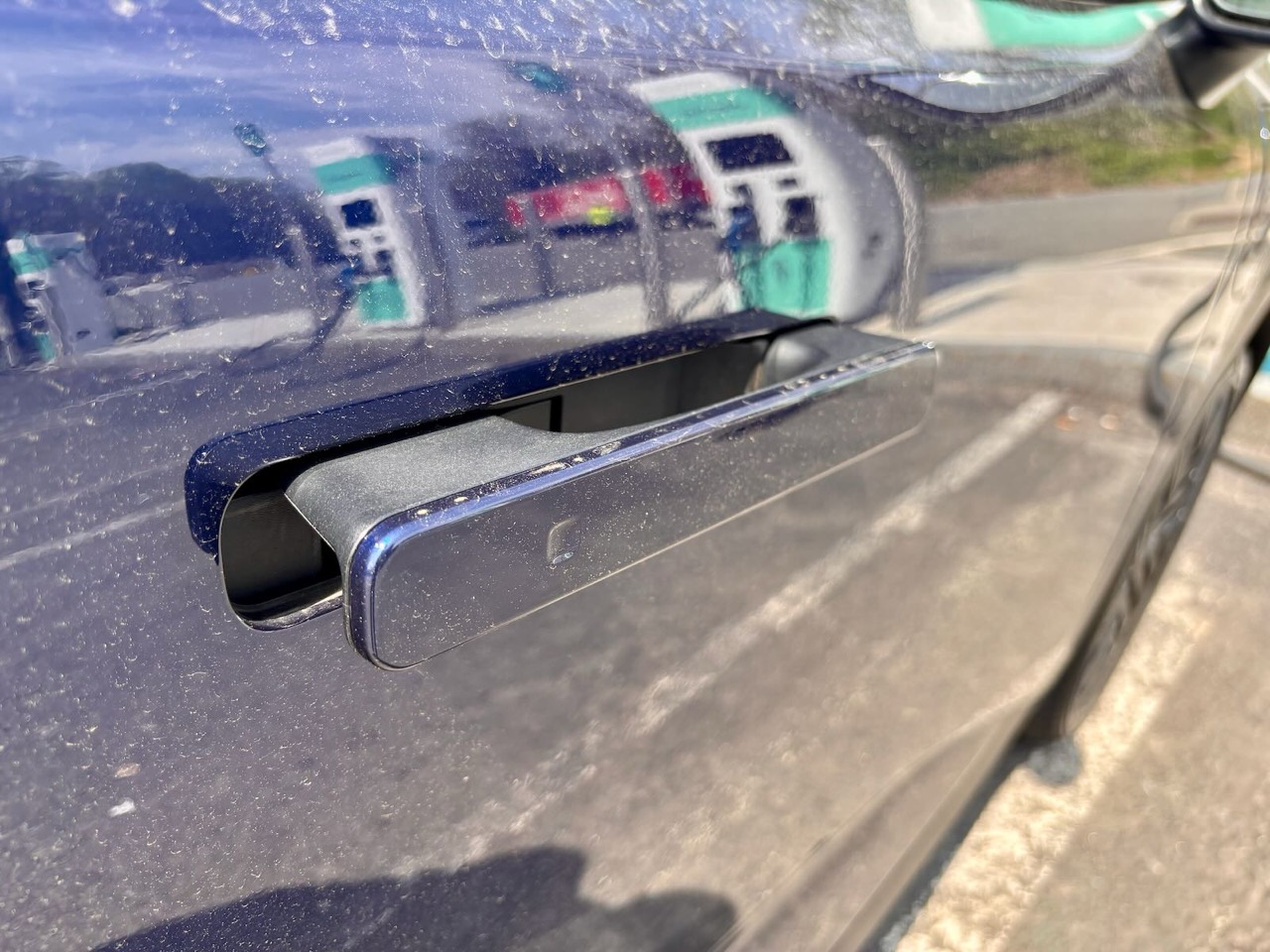
WHY? WHY????????
Sorry, I can’t help myself. Nissan has delivered on the cheaper EV that Tesla has ultimately failed to bring to market. Eventually, Ford will have an offering in this space, but we’re just going to have to wait a little longer for that.
Nissan had the opportunity to rid the market of one of the worst aspects of any electric car, which are the stupid motorized flush door handles. Not only does the Nissan Leaf have them, but they also broke during my test, forcing me to have to get a trim tool to pry it loose. Please, please, get rid of these.
The Leaf also is priced in a ridiculous way. The one I tested costs $41,835 delivered. For what? Weird speakers in the headrest? Larger wheels that make the range of the car worse? The only option worth paying for is the $300 battery heater and, maybe, the $170 CCS adapter.
Otherwise, the cheapest Leaf is truly the best Leaf, which costs $31,535 out the door. That’s almost exactly $10,000 cheaper to get–on paper at least–a much better car. In what universe is it worth it to spend more money to get a car that performs so much worse?
Why Isn’t This Thing More Popular?
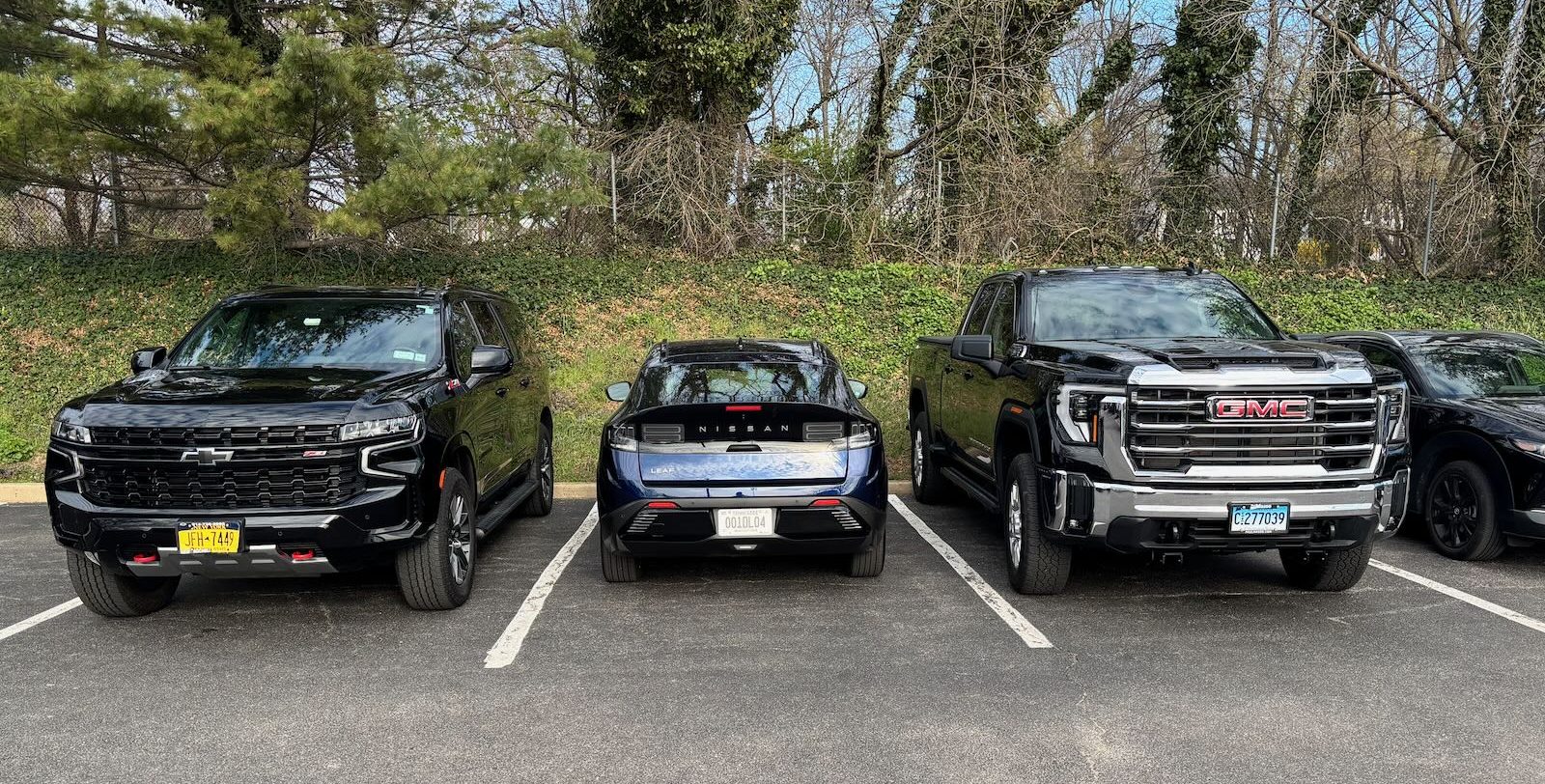
I think the Nissan Leaf should sell better than it has (Leaf sales are down 57.1% year-over-year through the first half of the year). Some of this might be the introduction of a new generation. Some of the downturn is certainly due to the extinction of the federal tax credit. Since this car is built in England and Japan, tariffs might also be at play.
Other than the incorrect notion that people have because of the 1st-gen Leaf, I think one of the bigger issues is just trim availability. According to Edmunds, right now there aren’t that many for sale, and the ones that are for sale are more likely to be higher trim.
In fact, there are 119 listings for SV+, 98 listings for Platinum+, and just 48 for S+. At $40,000, there are way, way better EVs for sale for your hard-earned dollar. Just get a Model Y or an Ioniq 5 or whatever. At $30,000, your choices are limited to something used or a new Chevy Bolt. That’s it!
Nissan has built a good car, and now it just needs to offer the right ones for sale.
All photos author unless otherwise noted.


“What’s It Like On The Inside?”
Not a fan of the squared off, tacked on display look surrounded by hard, cheap looking plastic. It stirs memories of the Fiero dash and not in a good way.
And why no sunshade on the instrument panel? Has glare become a non issue?
Fiero dash and Fiero headrest speakers. All we need is the motor in the rear and Sentra suspension up front and we’ve got ourselves a chance at a Hibachi!
Damn, the Fiero did have headrest speakers didn’t it?
Pretty sure the Leaf has a bad reputation now given how awful the first gen’s were, so that’s probably hurting the new one on sales.
I really like the way the new Leaf looks. I like that it is available in colors and I like the price.
I may pick one up as a commuter, but not the high trim model. IMHO, the self-dimming roof is not a great idea. I live in a cold area and I appreciate the extra insulation of the shade panel – or the better solution of no glass overhead.
I also have zero love for oversized wheels. The only time I ever up-sized wheels was when I could no longer get decent tires in a smaller size. Wheels should be exactly large enough to clear the brakes.
I concur with all of your points 100% Anoos.
Base is best, but I don’t think (not sure) that it can be had in that nice blue. And no roof rails (but you could buy them at the parts counter if you wanted to avoid a third-party roof rack).
Regular/base wheels best for a commuter: cheaper tires/softer over potholes.
I never drove one of these (yet) but every time a CEL comes on in one of my old ICE cars, or I have to jump it through hoops to pass a smog test, I think to myself: “maybe a newish/normal EV would just be better to have as a daily?”
Fifteen years or older here doesn’t have to pass smog. It’s New England, they figure anything that survives that long isn’t being driven that much.
I guess for an ev commuter I’d be looking at this or the Slate. Even if I have a cheap Leaf wrapped a better color, I still come out two doors and over a hundred extra miles of range ahead of the Slate.
Then again, an off-lease Ioniq 5 could be $18k by then.
Edit: looks like I’m kissing $40k for a leaf in that blue color, and the package that allows the color adds ‘Google built-in.’ Why would I need or want that? Slate’s looking better just for being less connected.
Stop it! I keep agreeing with you completely! 😉
Here in CA, a car has to be from 1975 or older to not have to pass a smog test prior to registration/renewal. It’s very annoying. ALL three of my cars are more than 15 years old, but none are from ’75 or before.
I had all three registered/insured/serviced to pass smog this year, but I just took the reg (now PNOP) and ins off the two older ones. I only actually drive a couple times a week (at most) so keeping all three street legal seemed excessively self-indulgent.
(I just renewed the reg for the one on-the-road car and holy dear sweet baby jeebus, using the CA DMVs phoneline AI assistant was EFFIN’ IMPOSSIBLE! I made multiple attempts, and eventually gave up and used the website, which was easy).
Back to EVs and daily commuters: I agree, not being able to have the blue on the base Leaf sucks. Also, at about $30K for that base Leaf, the $25K Slate does look pretty good (the lesser range of the Slate doesn’t matter to me). And yes, an Ionic 5 used (I’ve seen them at sub-$20K, but maybe not as low as $18K yet) is probably the most sensible/economical answer, provided used/early Ionic 5s don’t have some known trouble area(s) as they age (the ICCU will hopefully have been swapped out via recall by that point).
The CEL just came on in my daily yesterday, so there’s that to deal with too. It never ends. 😉
I have an Ioniq 5 now as a lease that goes back next year. I brought it in for the ICCU recall and mine is apparently fine. I haven’t had any issues with it. Hyundai did extend the warranty on the ICCU for those cars to 15 years / 180k miles.
The range of the Slate wouldn’t be a problem for me either. We’ve been charging the Ioniq from a 110v outlet without an issue. I would like a little more headroom for the winter (range seems to drop 30% when the weather gets cold) but I could live with it or drive something else if I got stuck.
Yah, I’d be fine charging from 110VAC myself given my driving habits. I also gather the lower the charging rate, the less wear and tear on the battery/associated electronics, though I’m not sure if this is true for ALL battery types.
I wonder if the extended warranty on the ICCU applies to ALL Ionic 5s (even if they never had a swap like yours) AND I also wonder if the remainder of that warranty was transferrable to the person who bought the car used.
I thought I read someplace that the balance of the Hyundai/Kia warranty is normally NOT transferrable to the second (or later) owner.
I’m not sure. I know I got the warranty notice in the mail and I filed it… but I just looked and can’t find the folder.
I have to think that since it’s a TSB kind of issue the terms are outside of Hyundai’s usual non-transferable warranty.
I also understand about keeping cars on the road. I have one that I haven’t driven since last fall and another that we just took off the road because I hadn’t driven it in two years.
I looked it up, it’s good for present and subsequent owners. https://dot.report/bulletins/11033695
Thanks for that link. 🙂
Separate from the ICCU TSB…
From what I understand, Hyundai warranties do transfer to the second owner, but NOT the powertrain warranty. Kia works the same way, except the powertrain warranty does transfer, but it’s limited to five years.
Also, both manufacturers are careful to specity SECOND owner, so I suspect any subsequent owners (third, etc…) DO NOT get any warranty transfer.
But it’s a bit confuzzling TBH.
When we buy, it’s usually a new car and then we keep it well past the warranty. Wife gets the new car, I usually get her hand-me-down and I get to keep a third car for fun.
I am definitely getting garage lazy, so we may have to make that two cars that are kind of reliable.
🙂 I understand that.
I’ve got much less time/energy/desire to muck around with projects/project cars than I used to. I mostly just want it to work when I need it, and if it can do so while providing some safety, comfort, and/or fun, so much the better. 🙂
So let me get this straight- the “upgraded” wheel option
-Reduces range by 10-15%
-A more stiff, jittery ride (this is a commuter car after all)
-More expensive tires, that are more easily damaged
I feel like that those compromises should come with a 10k discount, not a 10k upcharge.
I hate the motorized door handles too.
And of course I agree 100% that the base model is the most sensible pick.
Sadly, you cannot get the base S+ trim of the Leaf in that lovely Seabreeze blue Nissan offers. This fact alone might actually be a deal-breaker for me if I were shopping for a new entry level EV, because the other colors that are available in base trim are boring as F.
I like much about the Leaf, but it’s not so alluring that I feel the need to rush out and buy one given my own personal circumstances.
Appreciate the review as always Matt! 🙂