


Since Chrysler only really makes a minivan today, it feels almost nostalgic to think back to the early 2000s, when the full-size 300C sedan was launched. The 300 could be considered the crown jewel of the DaimlerChrysler merger, which would unravel just a few short years after the 300C was introduced, but since the LX and LD cars ended up being built forever and ever, it might have been their best shot. The 300C, looking at it from here, was a traditional, large sedan with a good dose of the retro-inspired design Chrysler had pivoted into around the turn of the millennium.
In the North American market, the division between Chrysler and Dodge badged LX cars was clear: the 300C would be sold as a sedan only, and Dodge’s Magnum would take the station wagon responsibilities. There would be no Magnum sedan, largely because the Dodge Charger nameplate was also revived in 2006 for a four-door sedan. Until the Avenger and Caliber arrived, Dodge passenger cars hadn’t been sold in Europe since the times of Darts and Aspens, and the Magnum was crafted into a Chrysler 300C wagon for the European market. It became one of the few American cars that weren’t sold in America, and of course it received a diesel engine as well.



Chrysler’s Ralph Gilles and Freeman Thomas gave the 300C wagon handsome, commanding lines, a wide departure from the cab-forward LH generation design that still had some Renault 25/Eagle Premier bones somewhere deep inside it. The wagon’s belt line is so high up that the rear side windows are incredibly narrow, and the tailgate opens some way up into the roof panel.
While the chrome eggcrate grille looks far more expensive than the Magnum’s front-end design, the rear end including its tail lights was shared with the Magnum, just with a bit more chrome and the winged Chrysler emblem on top of the 300C’s tailgate handle.
To benefit from the DaimlerChrysler merger, some of the body and chassis engineering was done with access to Mercedes-Benz S-Class and E-Class architecture, including the multilink rear suspension. The LX generation also used Mercedes-Benz steering columns, and the indicator and cruise control stalks are obvious Merc items.

The 300C wagon wasn’t built in North America, alongside the sedans in Brampton. Instead, it was assembled in Austria, at Magna Steyr in Graz, which has a wild and varied history of manufacturing cars for other brands. The Mercedes-Benz G-Class has been built there since 1979, gradually transforming from a military vehicle to a luxury SUV that resembles the original, but over the years, vehicles as different as the final-generation Saab 9-3 cabriolet, the Aston Martin Rapide, the Toyota GR Supra, the Fisker Ocean and the lifted VW Golf Country have rolled out of the factory gates.
Magna also built the Chrysler Voyager for the European market, and the 300C’s wagon version was a logical companion for that. The Voyager’s diesel engines always came from VM Motori, an Italian supplier, but the 300C’s diesel powerplants were more suitable for a full-size wagon: they came from Mercedes-Benz.
For a car brand that’s not Mercedes-Benz, there are few things that can help its sales more than getting to use Mercedes-Benz engines. Take, for example, the South Korean carmaker SsangYong: it’s not unreasonable to expect a fair share of all the SUVs it built from the 1990s to the 2000s were sold because they had Daimler diesels under the hood. Heck, all of the engines for the first-gen Musso and second-gen Korando came from Mercedes-Benz, including the M111 four and the M104 straight six, as well as the 2.9-liter OM602 diesel.
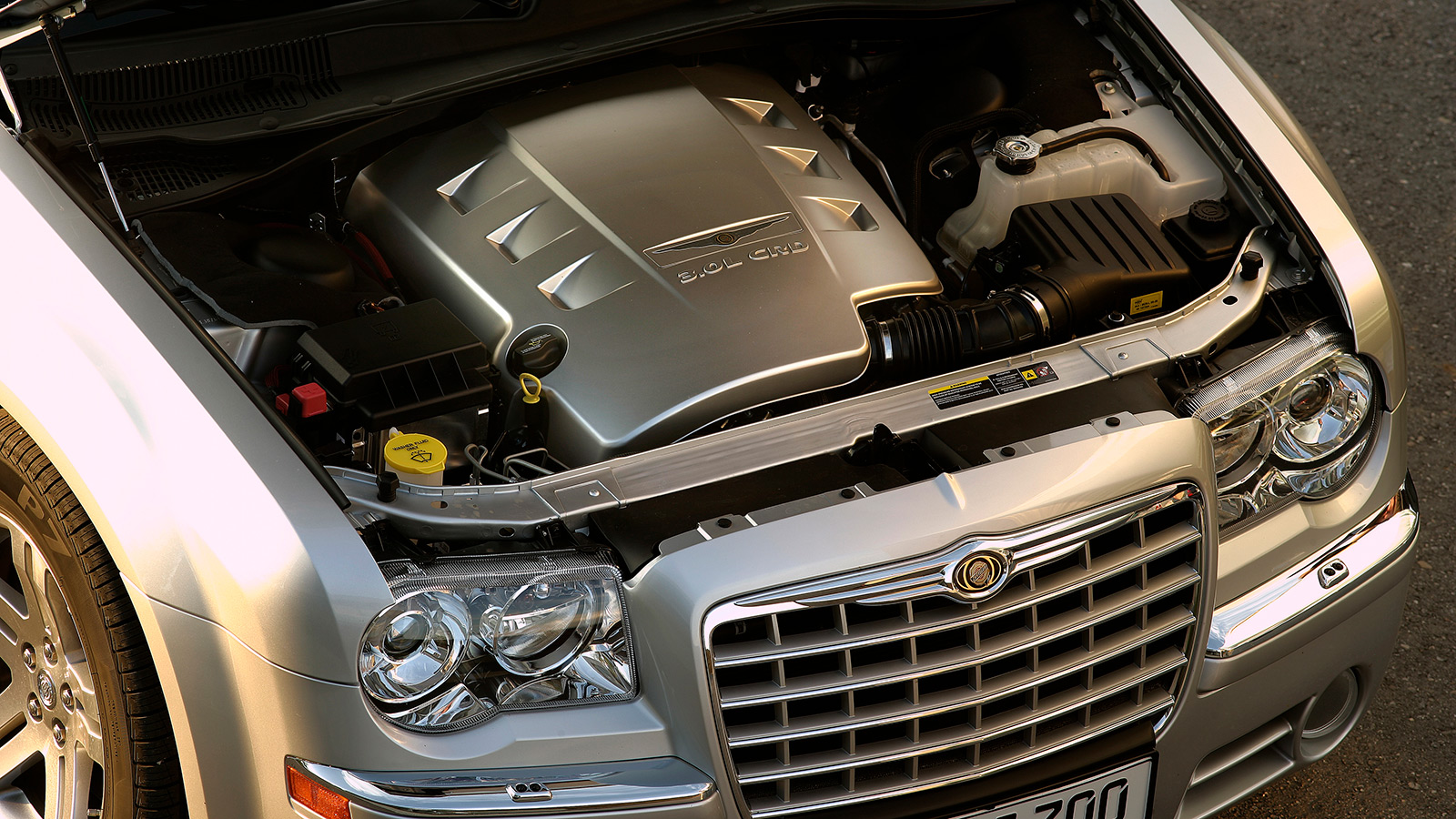
Instead of that five-cylinder unit, the 300C received the brand-new OM642 V6 turbodiesel. The CRD-badged 300Cs were not sold in North America with the 215-horsepower diesel engine, but the same powerplant was available for the WK-generation Jeep Grand Cherokee in its homeland for a couple of model years, 2007 to 2009. The post-crisis WK2, built after Daimler and Chrysler separated, once again used a VM Motori diesel, which was not an option in the States.

The European 300C kept the Mercedes-Benz diesel until the LX generation ceased production in 2011, and its successor, the LD gen, got VM Motori. Since European customers could also buy those cars (and Voyagers) with Lancia badging, the Italian connection makes perfect sense – but it’s no Mercedes-Benz.
While the diesel-engined variants likely formed a fair share of the 300C’s European sales, customers could also get the Hemi here, even in AWD specification. The AWD system was built on Mercedes-Benz 4Matic technology, and I will always defend my right to joke that 4Matic stands for a 4-speed automatic. Obviously it doesn’t, but it’s what I consider humor. That said, I’d love to try one of those as an ice track car. The track just needs to be wide enough for the wide-track Chrysler.
The diesel engine wasn’t paired with the AWD setup in the 300C, perhaps to protect Mercedes-Benz E320 CDI 4Matic sales.

In the States, the Dodge Magnum sold so poorly compared to the 300C sedan that the wagon option was dropped for the LD generation. In the years the Magnum was offered, the 300C oversold it at a ratio of four to one, and it was cancelled in late 2008; the European 300C Touring was built in Austria until 2010.
These days, it’s not difficult to find old 300C diesel wagons for sale here. The engines have proved to be reliable, especially compared to the 2.7-liter base V6 engines that earned a reputation for sludge and timing chain tensioner issues, but the diesel’s swirl flaps and sooted-up EGR systems need to be kept in check, as well as possibly blocked DPFs.
Currently, the cheapest road-legal 300C wagon for sale here is a 2.7, and it has a noise that the seller’s tracked down to the chain tensioner. It’s priced at $1,900 and doesn’t look too rusty.
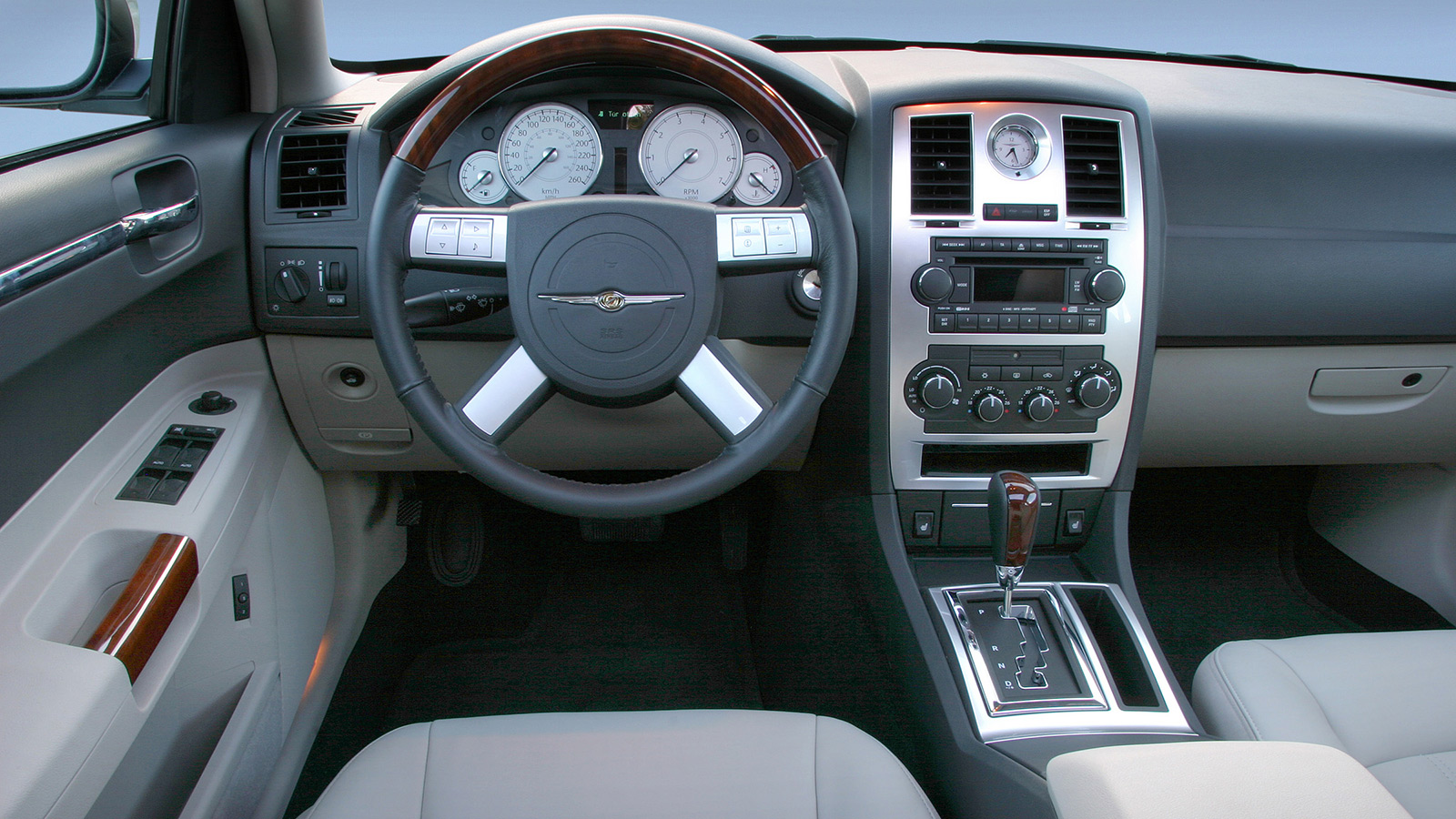
The 2.7 V6-engined cars also got Chrysler’s 42RLE Ultradrive transmissions (the true 4-speed-matic, huh?) while bigger-engined cars received the 5-speed Mercedes-Benz 722.6 transmissions, which are more stout, especially in a car that weighs nearer to two tons. The CRD engine produced a handsome 510 Nm of torque (376 lb-ft), which also sets some demands for the transmission. The diesel version averaged 30MPG in magazine tests of the time, a great figure for a big wagon. No manual option was offered, even if Mercedes-Benz would have had suitable gearboxes in stock. It’s likely that Chrysler thought about possible manual 300C wagon customers and decided to disappoint both of them.
Body rust is a factor in all of these cars when driven in areas that use road salt as heavily as we do, and one spot that’s worth checking out is the frame right next to the car’s catalytic converters. The rustiest 300C I’ve seen was a Swedish import, likely from the southern end of the country, and it looked like it had barely any doors left. Road salt eats Volkswagen Passats for breakfast there, and snacks on Chryslers afterwards. Some of the wagons have also been converted to vans here by removing the rear seat, to help bring down the yearly Finnish diesel road tax. Since diesel is actually more expensive here now than gasoline, running a CRD wagon isn’t as cheap as it used to be.
(All images: Chrysler Corporation)


Anytime there is a mention of the 300 wagon, it’s time to repost the video I did when I swapped the 300C SRT8 front end onto my Magnum SRT8.
https://youtu.be/jEjNnp-jayc?si=f9XK6j3uQSFJTTUV
When the Magnum was discontinued, I think that Chrysler should have pivoted and produced the 300C in the US. It would have gotten the more luxurious front end, the slightly better interior, and they could have charged more for it. The parts were already there, just a slight reconfiguration of the ordering books. It would have fit in better because the 300C was going for the big luxury market at Chrysler prices. The wagon would have been a natural fit, especially in SRT8 version, going up against the likes of the E55/63 AMG wagon.
That was a very interesting article! We never even got a hint of the existence of these in US automotive media.
I also had no idea salting roads was something that was done in that region. I always thought less environmentally and infrastructurally damaging means of melting ice and keeping roads passable had been developed and put into place.
When I lived and worked in Cleveland, OH, I had a colleague with a five-year-old Volvo 240 that had rusted so badly that he had to have plate steel welded underneath the front floor boards. I also saw a lot of 3rd generation Accords (roughly the same age) with rust. Having moved there from CA, it was something I’d never seen on either car. Before moving back east, I had a friend who had moved from MN to CA and pretty early on he mentioned he had never seen so many older cars still on the road. What he said started making sense in the aptly named Rust Belt.
Coincidentally, I just saw one of these today on the A41 in France. I drove a sedan version a few times when I worked at Chrysler and thought it was nice to drive.
If you ever make it to the Seattle area, there’s a craft brewery in nearby Tacoma called Odd Otter Brewing Company. I’d be happy to take you there as I think of it every time I see one of your posts.
I periodically visit good friends who live In Bellingham, which unlike Chicago is fairly close to Seattle. So I might be!
You could totally see how they could have forked these over into tall wagon/suvs like volvo did once upon a time. Dummies.
Counterpoint: the sedan was always way better looking and diesel passenger cars from this era really weren’t that good.
Hey, that’s my car ♥ !
The 300 front clip is a direct swap for a Magnum front clip. You need the fenders, hood, bumper, headlights, and all the crash parts behind the bumper. It takes about 2 hours to swap it over. The hardest part is the wiring, depending on what headlights you have.
We got these in the UK, and there were quite common. I liked them.
Once they got cheap in the used market, people started putting fake Bentley grilles and badging on them
Is the OM642 well liked in Europe? It has a pretty rotten reputation in the US. The Achilles Heel is the leaking oil cooler gasket – that doesn’t have a fixed part to install – but there’s a myriad of others, including camshafts, swirl flaps, main bearings, and more! Shame, because it was offered in a whole slew of vehicles over here, but, it just seems like a nightmare, and not worth the hassle when several of the models offered fairly durable gas V6 and V8 alternatives. There’s even an Autopian article from Thomas about them:
https://www.theautopian.com/heres-why-you-probably-shouldnt-buy-a-mercedes-benz-with-the-om642-v6-diesel/
The front end of the Magnum was always my least favorite part of the design. This is fixes that issue instantly, maybe there will be a few left when the 25-year import clock ticks far enough ahead as the diesel adds even more fun.
I’ve also seen a few Magnums converted with Charger front-ends. Those look great when they’re done right, but I think the front fenders have to be custom-fabricated for it to work.
The 300 front ends are a direct bolt on to the Magnum. The charger swap requires modified fenders to line up the body lines on the side.
Thanks yet again Antti for automotive interestingness.
The wagon looks better in 300 guise than as the Magnum (JHMO). And a Mercedes diesel and transmission makes it all the more appealing. Of course, they wouldn’t have sold many of these stateside even if it had been offered, but if they had, I’d have been shopping for a used one from a no-salt part of the country.
In a way, the 300 C Diesel wagon shows what could have become of the “merger of equals” if everything had gone well.
Instead, we got a complete clusterfuck that reminded me of Luke 6:39.
Magna-Steyr did not just build Aston Martin Rapides et al. They also built Fiat Panda4x4s.
That’s not even a joke to young me; I legitimately thought that was what it stood for for many years.
To me it would have made far more sense for Chrysler to offer the wagon in the US rather than Dodge.
I loved the idea of the long-roof Magnum.
But after having had a number of Chargers/300s rentals back in the era it was still build; I’m happy to never have owned one.
Oh I can smell that last picture. i was selling Chrysler/Dodge right when the magnums and 300s were hitting showrooms. we KILLED people on those 300’s especially the super rare Black ones and the unobtamium AWD models.
The Dakotas, the 1500s, the Pacifica… all of them had the same plastics inside, same smell same feel of the “leather” this member berry hit me hard.
My dad had a loaded ’08 Dakota, that thing had the worst leather I’d ever seen in a vehicle. Not only the texture, but it was this odd almost olive color that made it look like it was a filthy beige.
I’d absolutely drive one of these. This is that sweet spot before they added DEF to the mix, so they’re quite reliable.
I don’t frequently find ‘Reliable’ and ‘OM642’ in the same sentence.
That’s cause the bulk were made in the “Bluetec” years. The CDI years were much less problem plagued
I’ve seen a couple of Magnums with the 300C front clip in the U.S. I think they look nicer than the Magnums.
What do you mean? WK2’s in the US had the same 3-liter V6 diesel the Ram 1500’s used for the same period: 2014-2019. I’ve seen a couple myself!
I NEED to have a Lancia Magnum in my driveway. In Martini livery with Speedline Montecarlo wheels please.
EDIT: It looks like it was only the sedans, badged as the Lancia Thema with either the Pentastar V6 or the aforementioned diesel. So, I just need to get a NA-market V8 Magnum, then graft a 300C front fascia on it, THEN find the Lancia trim and badging, THEN the Martini wrap and wheels. Simple.
by graft, you mean bolt. They are literally interchangeable. Magnum, Charger, Challenger and 300 faces are fully swappable. The most horrid Challenger is in fact a wagon.
Don’t tempt me by making it seem easier!
Seems like we had this conversation not too long ago! They will all bolt on, but the body lines only match up with the Magnum/300. To get the Challenger/Charger fenders to look “right”, you have to weld the back part of the Magnum fender to the front part of the Charger one.
The rebadged Lancias were the next generation 2011-2023 300, same basic platform, but the sheet metal is totally different
Shoot, I missed that. At minimum I can stick a Lancia crest on the previous gen and call it close enough.
Don’t let that stop you. 2nd gen “LD” front clips still swap over. Just use the lancia front clip on the first gen wagon 😀
I didn’t know Chrysler sold those things anywhere other than North America.
Yeah ditto. Didn’t think the Magnum (or variants of it) existed else where really cool to see diesel versions of them.
That’s the reason for the 300 being so small for a full-size car in the first place, Daimler had high expectations for them on the German market and believed a sub-5 meter length was required for that
My cousin in Sweden dated a night club manager for a while; he (suitably enough) drove a black Chrysler 300. Not a wagon, though.
That must have been fun squeezing that through whatever midlevel streets hey have there. Then again, for whatever reason Sweden seems to have a larger than expected number of inappropriate US cars. Like lots of old Cadillacs and some newer trucks. You would have to be LOADED to afford those things there
My Swedish hotrodder friend goes back every summer. This year he brought his Edsel with him. His Mustang lives there full-time.
You don’t have to be particularly wealthy, you would just choose having a nice car over some other expense. If you are a middle class Swede, you either have a cottage, a boat, tons of travel, or expensive cars.