

What do you think is the least great Lamborghini built? The Italian manufacturer has made a lot of different cars, sports cars, supercars, but not all of them are as brilliant as the astonishingly beautiful Miura, the angular and breathtaking Countach, or the legendary Diablo – or the front-engined coupes the company built in the early days. It’s easy to nominate the Urus, which is a sort of a blend of an Audi SUV and a Pontiac Aztek, but there’s one Lamborghini-built car that doesn’t necessarily come to mind first.
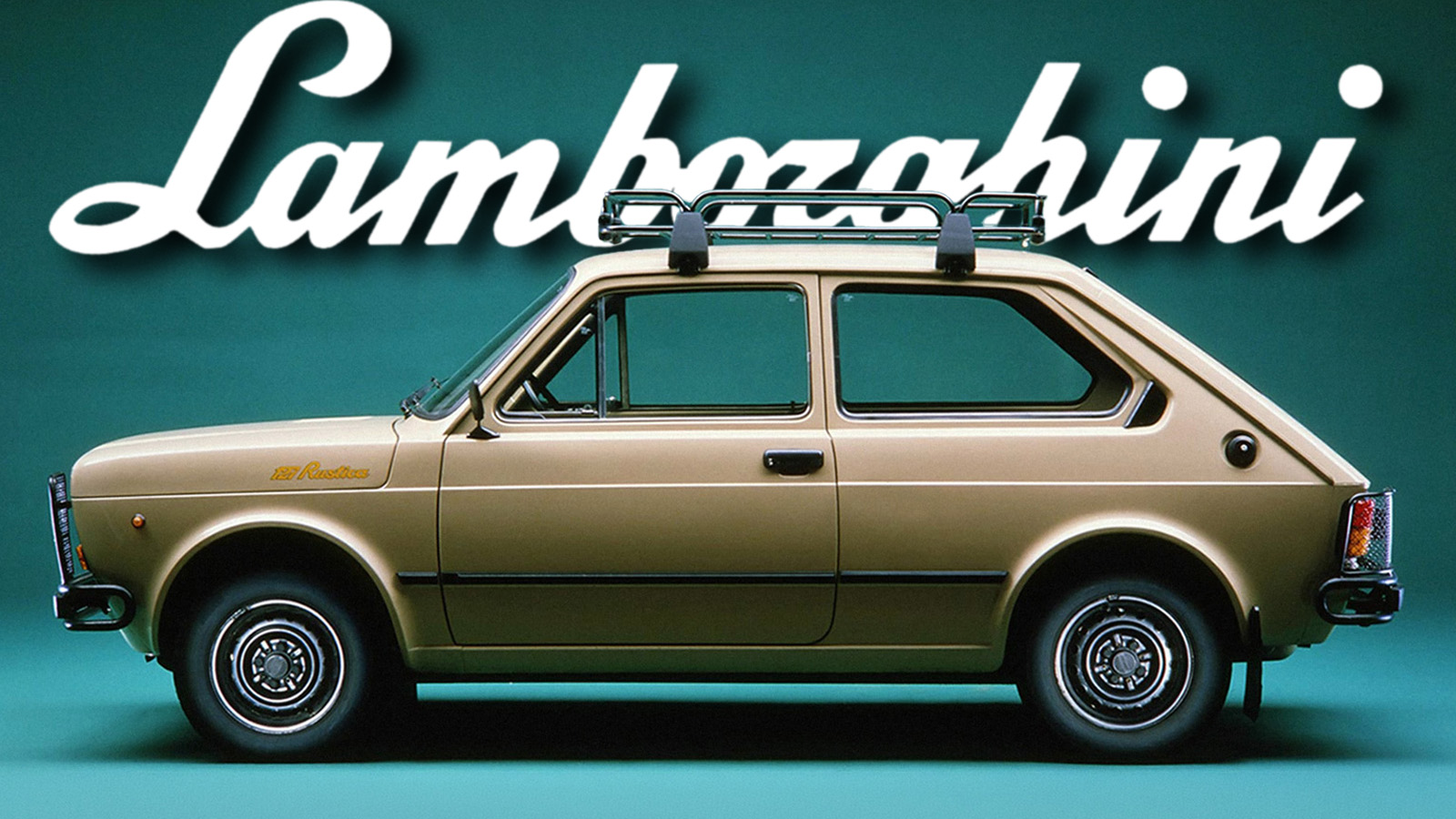
It’s the Fiat 127 Rustica. It’s a small, three-door hatchback on steel wheels, only sold in one color, with a tiny four-cylinder engine producing just 50 horsepower. However, while it was a cheap crapcan and didn’t even wear Lamborghini badging, it was one of the most important cars the company built, as in the late 1970s it had no other option.


Lamborghini Against The World
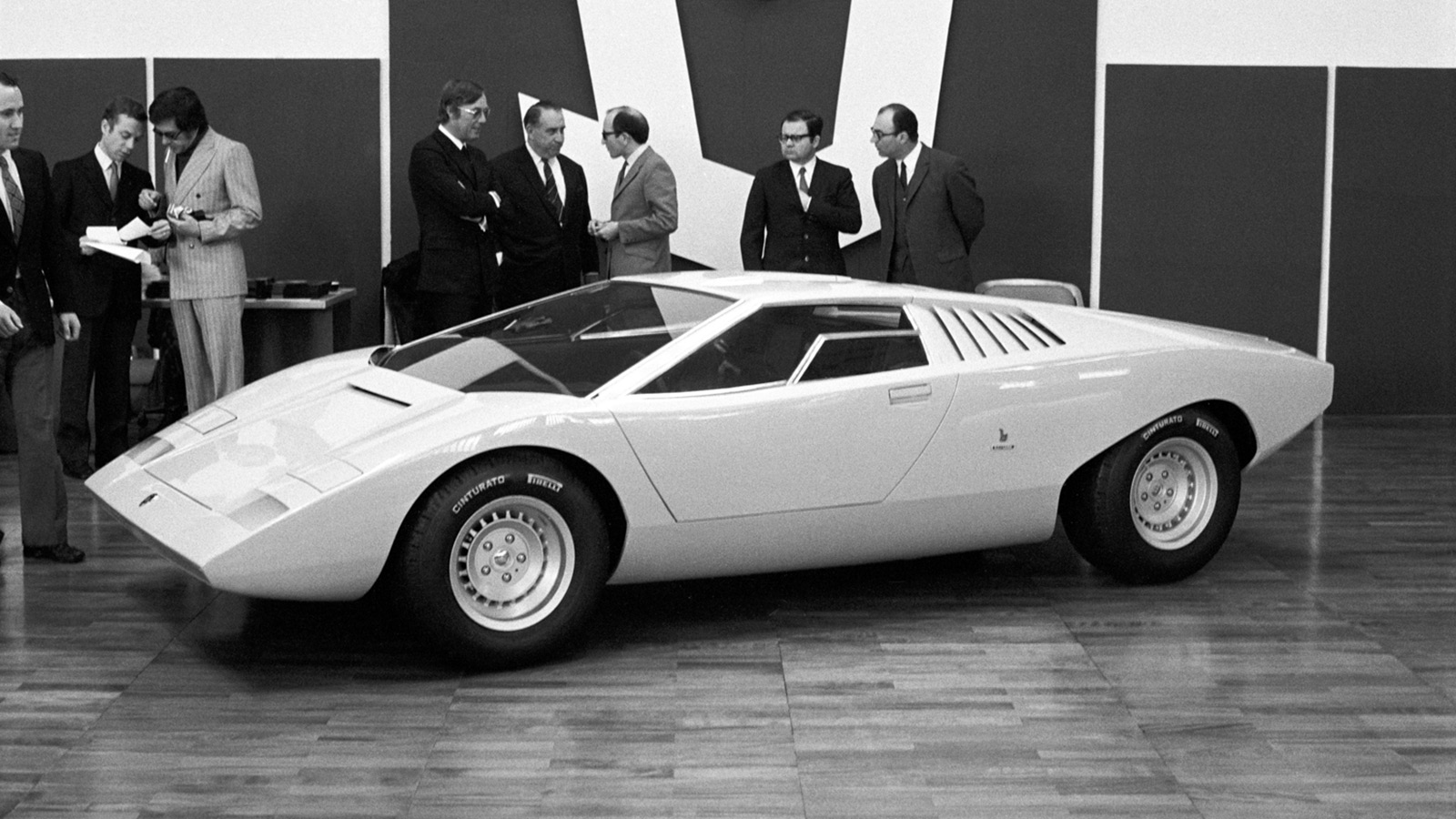
Lamborghini had a tough time in the 1970s. At first, it was developing a successor for the Miura and presented the first Countach show car at Geneva in 1971. The process to get the Countach out there in the hands of customers was arduous, and it wasn’t helped by the tractor manufacturing side of Lamborghini facing cancelled orders in Africa and South America, depleting the company’s funds.
The company was in dire straits even before the 1973 oil crisis hit in full force, and the company’s founder, Ferruccio Lamborghini, had already been forced to sell just over half of the company’s stocks a year earlier. In 1974, he sold the rest and retreated to his estate.
The Countach reached the production stage that year, and it initially sold in tiny numbers, as it wasn’t certified for official export to the U.S. The company started looking into military vehicles and contract manufacturing, while building the cheaper Urraco and planning its successor, the ill-fated Silhouette, which was launched in 1976, but just over 50 of those were built, and assembly quality wasn’t great. Lamborghini was also so skint that it asked for full payment upfront before even beginning to build the car for the customer, instead of selling complete cars.
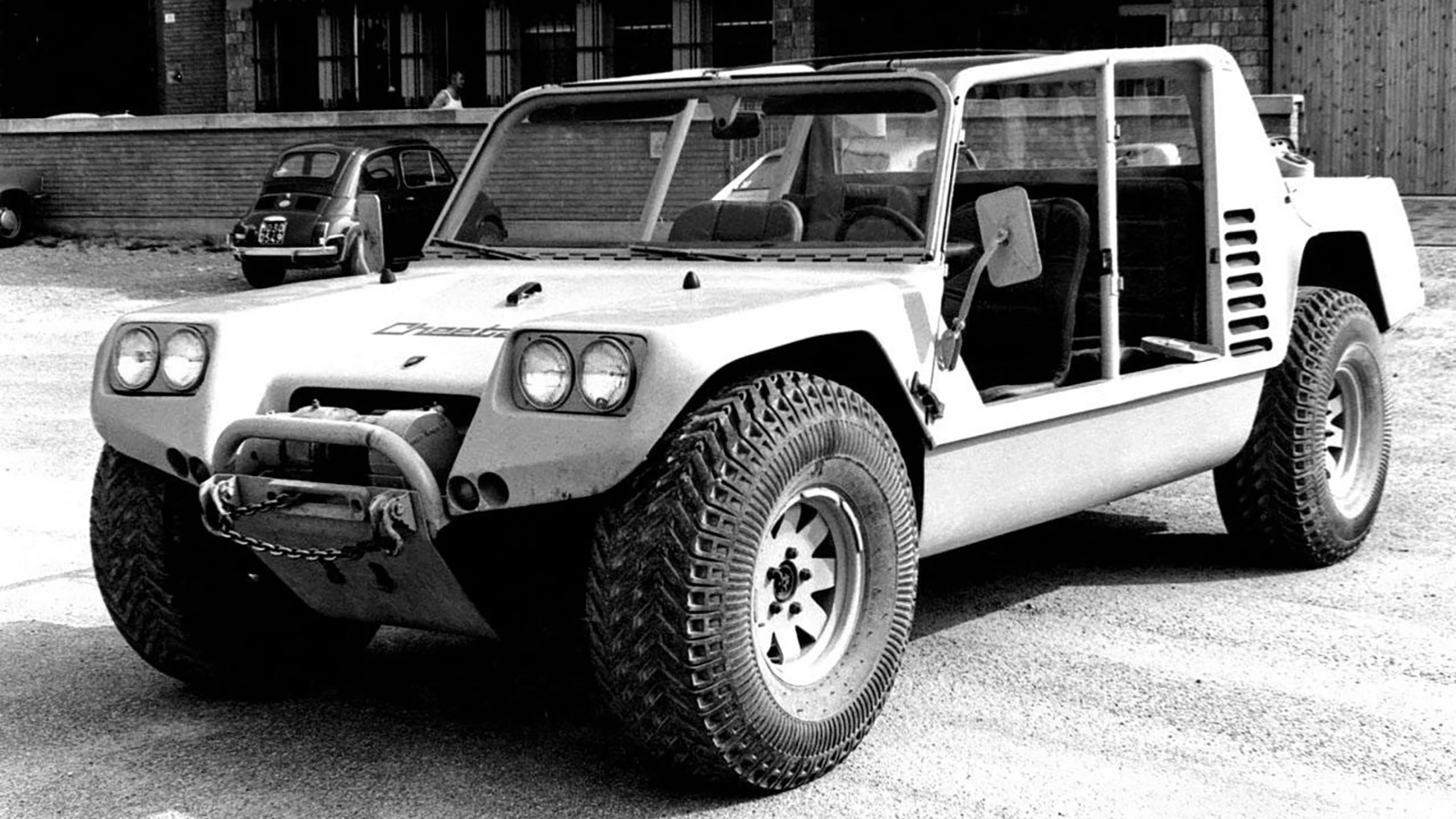
The first prototype of what would eventually become the Rambo Lambo, the LM002, was initially devised as the Cheetah in 1977, but despite taking up vital development funds, just a single driveable Cheetah proto was completed, and it took almost a decade for the LM002 to be unveiled.

At first, Lamborghini assisted BMW in developing the mid-engined M1 sports car. The tubular steel space-frame chassis of the M1 was designed by the race car builder Gianpaolo Dallara at Lamborghini, and initial plans called for the M1 to be built there, as there would have to be 400 road cars to meet homologation rules.
The stricken company was in no position to fulfill that, however, as Lamborghini was only able to complete seven prototype M1s. BMW soon took the project back home, with a bunch of Lamborghini engineers finishing the design under their own Italengineering company, and Italdesign assembling the bodies in Turin from space frames built by yet another company, Marchesi, in Modena. Finishing the cars was subcontracted to Baur in Stuttgart, the company known for its curious-looking convertible conversions and later Porsche 959 assembly.
The Solution Is Crossovers
So, in 1978 Lamborghini was screwed and bankrupt, with its possibilities slipping through its fingers and other companies doing the work it was supposed to. It was put under judicial administration to keep it from going completely under, which meant every chance to keep the company running was considered. In 1979, Lamborghini’s engine wizard and consultant, Giulio Alfieri of Maserati fame, concocted a plan with Fiat, inadvertently creating what is an incredibly commonplace type of vehicle these days: the front-wheel-drive crossover hatchback.
Think about it. In the last decades, there have been a ton of different family cars sold with slightly raised ride height, sturdier bumpers, and some sort of sand colored paint. For an Italian company to bring those out nearly half a century ago is nothing but pioneering.
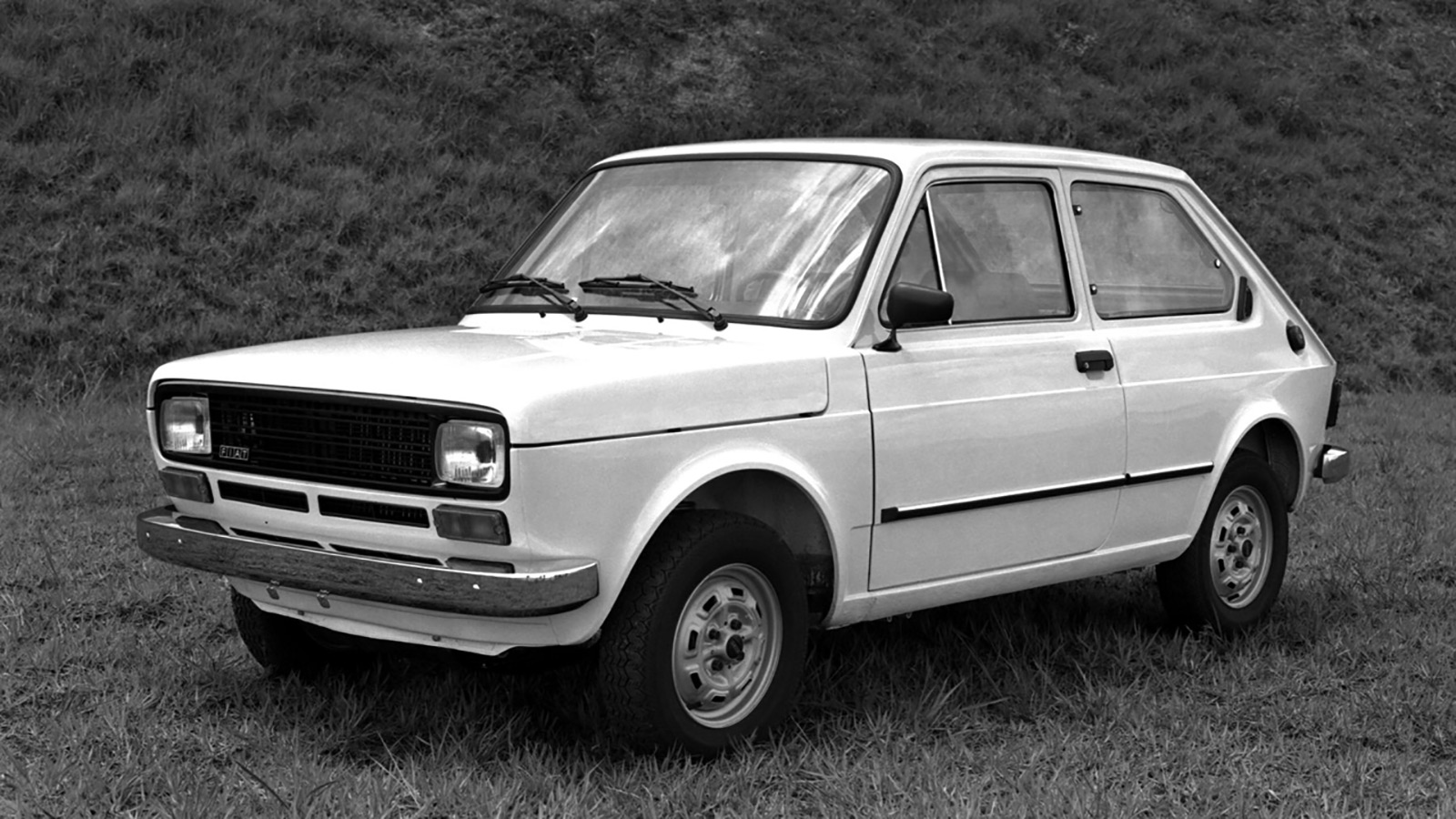
This was the late 1970s, with Italy going through its Anni di Piombo, the years of lead. Political unrest, industrial action, assassinations, kidnappings … generally A Tough Time for everyone involved. Still, Fiat kept churning out some of its best-known cars, including the small but very versatile 127, which had been introduced in 1971 and awarded the European Car Of The Year victory in 1972. It only took three years for Fiat to build the one millionth 127 in Turin, and by 1976 Fiat had brought 127 production to South America, as the 147.
The car’s design was altered slightly with a taller hood, and it also became the first modern car to run E100 ethanol instead of gasoline, as a result of the oil crisis and plentiful sugar production in South America. The 147’s engine was larger than the 127’s 903cc unit, as it mostly relied on the South American specification 1050 engine referred to as the FIASA. In other words, it was toughened up for the new continent, much in the same way as the Fiat 124 sedan was transformed into the Lada to cope with Russian roads. Importantly, by that time the 127 and 147 were true hatchbacks, as the 127 had originally been introduced with a tiny trunk lid hinged below the rear window, not above it.
Lamborghini Cooks Up The Fiat 127 Rustica
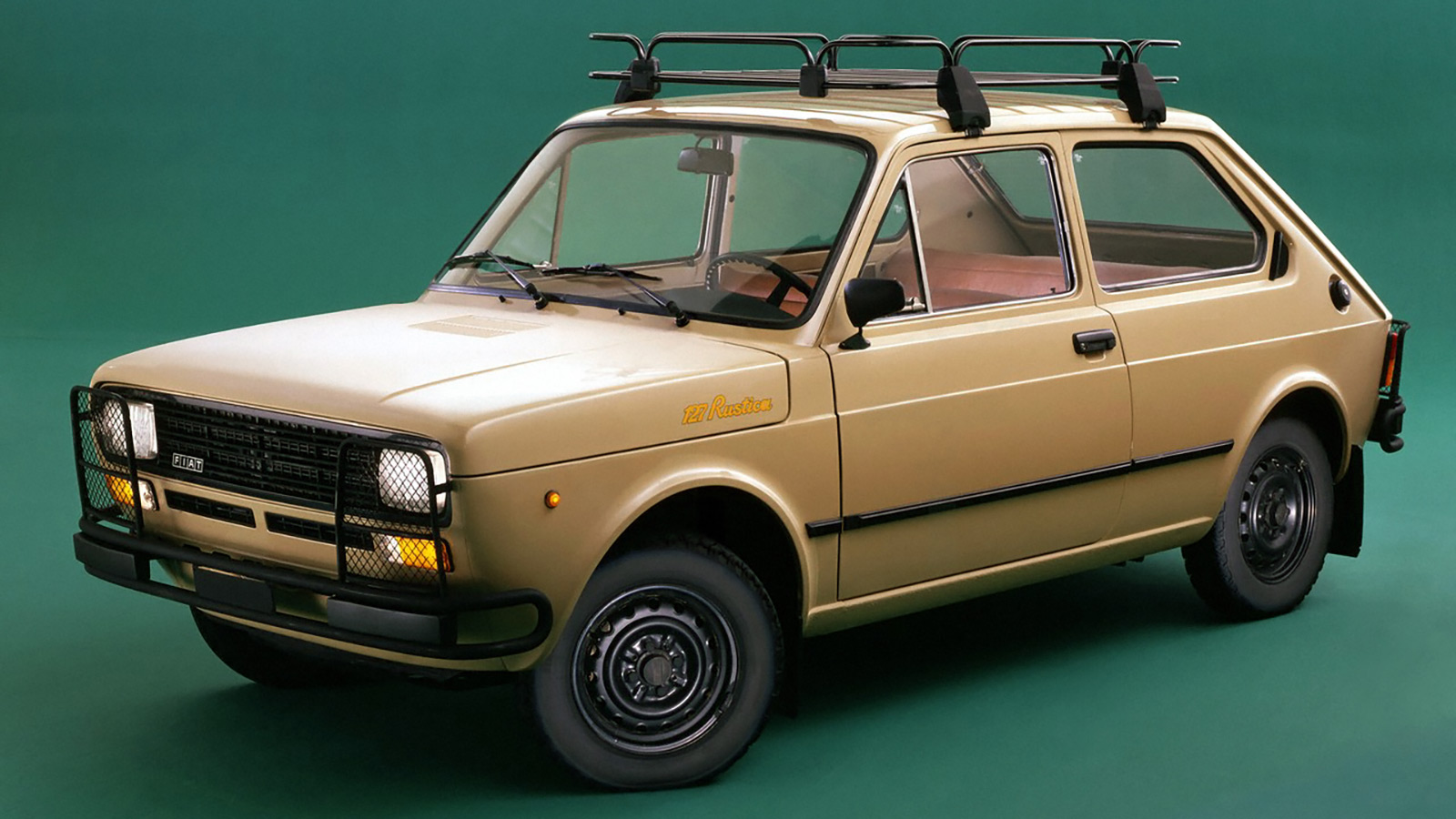
Alfieri convinced Lamborghini and its controllers that the company could take the 147, dress it up a bit, and produce it as a car tailored for customers living in mountainous areas. The Rustica didn’t get four-wheel drive, but the taller ground clearance, sturdier suspension, and metal bumpers suited farmers looking for a cheap car, and a Fiat 128 gearbox with a shorter final ratio helped the car get up steeper hills. It also weighed around 100lbs more than a basic 127.
To make it look even more credible, the headlights and taillights were fitted with thick protectors, and a roof rack was bolted on top, with a skid plate protecting the engine’s sump. The tires were also chunkier, on black steel wheels. It looked great.
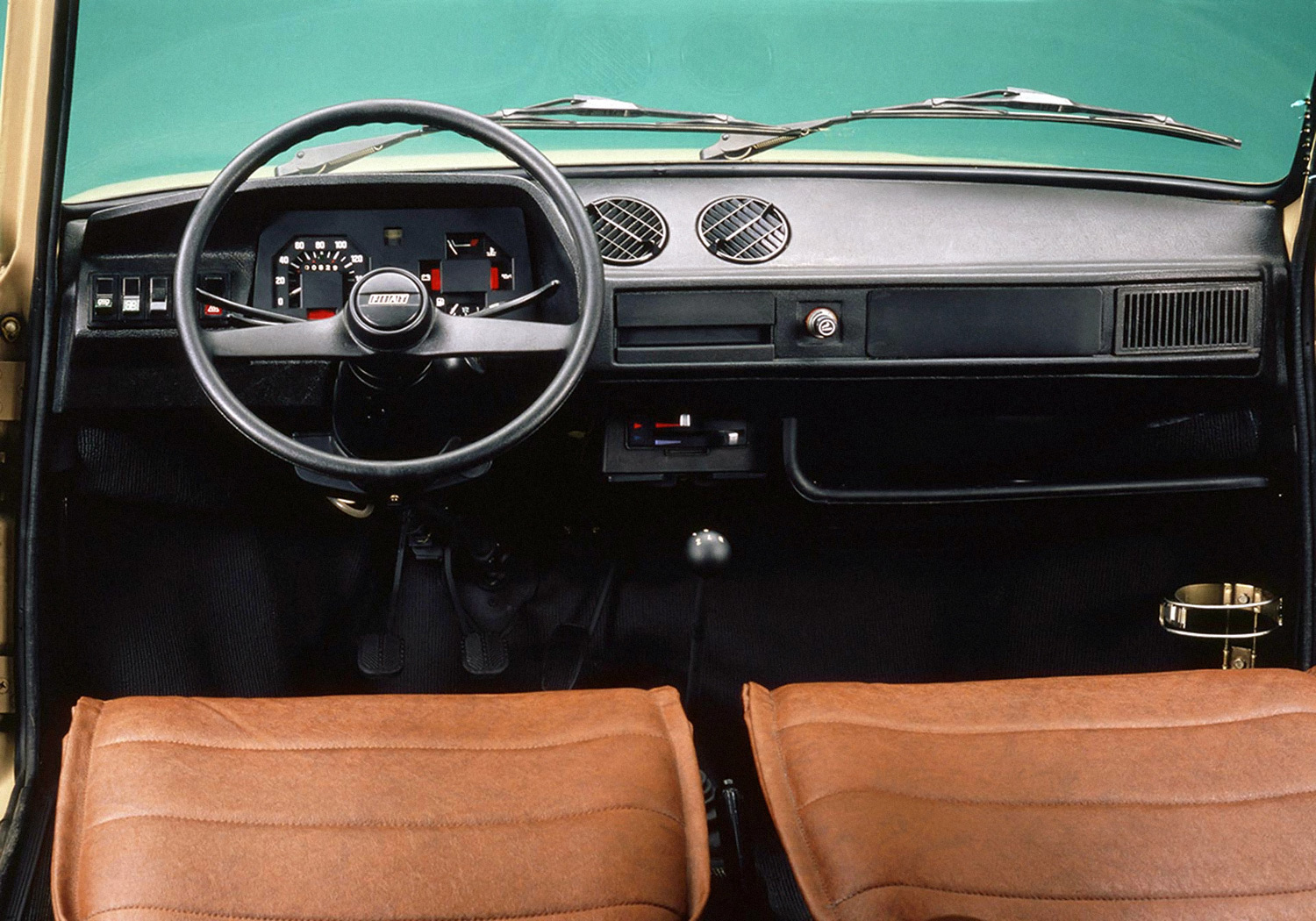
The only color on offer was a functional-looking semi-matt beige, like on a military truck, and the interior was finished in brown vinyl. All in all, the Rustica (Italian for, uh, rustic) was purposeful, like a 127 would have put on work boots and jeans. However, future hipsters and trendsetters that would love the Rustica weren’t even born yet, even if the Italian fashion company Diesel, which relies on a similar chunky aesthetic, was founded around that time.
Later in 1982, Fiat brought out the Panda’s 4×4 variant, which built on what the Rustica was about, but using a Steyr-Puch-developed four-wheel-drive system that was perfect for rural customers.

During 1979 and 1980, the Lamborghini plant in Sant’Agata Bolognese produced some 5,000 Fiat Rusticas. While the regular 127 was made in far greater numbers, this kept the company going long enough for it to be guided into the hands of the Swiss Mimran brothers, who initially administrated the company and later bought it outright to restructure it.
The Mimrans funded the company, turned it around, got the Countach in shape to be imported into the United States officially instead of via grey imports, and eventually sold the whole deal to Chrysler in 1987.

These moves, including developing the cheaper Jalpa out of the initially-not-great Silhouette, and bringing the LM002 into a revitalized 1980s market, saved Lamborghini and were essential for it to survive to the present day. But it’s incredible that a humble, no-nonsense, front-wheel-drive Fiat hatchback kept the lights on when times were at their worst.
And in a way, the Urus is doing the same for the company as the Rustica did: these days it just takes a far bigger SUV to improve profitability.

Today, it’s not easy to find a 127 Rustica for sale, as they were only made for a couple of years and presumably used up in mountain goat duties, like a lot of Pandas were.
There’s a near-flawless, recently restored one for sale in Rome for ten grand, and while that’s a lot of money, the car looks to be in excellent condition with new paint and reupholstered vinyl seats. The odometer reading is said to be 15,500 km (around 10k miles), but since these things have five-digit odos, that’s probably moot.
(Images: Fiat unless otherwise noted)


Yeesh, the tires on that Cheetah give me the heebie jeebies. Like some kind of AI-generated trypophobic nightmare.
Semi-related, but I have never really paid attention to the Urus. I see a few of them here and there, I know they cost as much as a house used to, and it’s another luxury-crossover-SUV thing, so they just kind of go by and I forget they exist again. I had a vague understanding that it shared its bones with an Audi whatsit, whatever their version of the same car is called.
So, yesterday, I stopped for groceries in a nice area, and as I am getting back in my truck, one pulls up and parks next to me. And it’s got some work done to the exhaust, sounds really nice, but I think, “wait a minute, that’s a V8 burble.”
So I had to look it up, because in my head, I was just assuming, “oh, yeah, Lambo SUV, it’s like a pointy Audi and they put the V12 in it, got it, moving on.” But no! To no one’s surprise but mine, you can’t even get Lamborghini’s signature V12 as an option on these things! They even have a super-special edition with “12” in the name that you can’t have a V12 in!
And, like, fine, economies of scale, sure, but can you imagine paying that much to get an Audi with a sharp-edged body kit? It just feels wrong to have something that large with a Lamborghini badge that isn’t a tractor, but you can’t have a V12 in it.
I can think of many Lamborghinis that are crappier than a Fiat 127!
C’mon, LamBOREghini was right there for the taking 😀
Or…. and hear me out…. did it just allow it to live long enough to become the villain…
Don’t get me wrong… LOVE LOVE LOVE The Diablo… it, in my eyes, was the last true Lamborghini (even though it was partially a Chrysler product) because it was seriously dangerous in the hands of the unskilled pilot…
But… today??? Lamborghini of today is little more than a shell of what it once was…
It was a rebel… now, it’s a brand that caters to influencers more than drivers.
Real talk Antti… awesome piece here. I didn’t know about this til today and I’m a car person in large part because of the Diablo.
That’s the best car they ever made. It’s the car that allowed every other Lamborghini after it to exist
I don’t disagree, but it’s like saying the Cayenne is the best Porsche ever made because it kept the lights on and able to make the Boxster and Cayman. I don’t see me ever buying a modern-day Lambo or Porsche. But I’m glad they’re still being made.
I guess performance-wise, it doesn’t stack up to your usual Lamborghini, but those are not “crappy” cars. That company built far crappier cars if we’re talking build quality.
So there’s an even crappier built Fiat 127 than the original one? Duly noted 😀
I guess Lamborghini making Fiat 127s is analogous to Full Sail Brewing surviving the 90s by making Zima Clear Malt. The Rustica does tie in with Lamborghini’s still thriving tractor business so there’s a teeny bit of logic, although it’s mostly finding something to keep the lights on like the crew at Full Sail making something almost but not quite completely unlike beer so they had money to make craft beer. It makes a cool footnote like BMW making aluminum pots after WWI.
I haven’t seen Full Sail around in a long time, but I’m east coast.
Brewery and taproom are still going strong in Hood River, OR!
Full Sail is still alive and kicking, and still contract brews. IIRC they brew Henry Weinhard’s now. They only have distribution West of the Rockies so you’ll have to travel. The star beer from Hood River is currently Pfriem.
Henry’s is owned by Molson Coors and being brewed by Hop Valley. They’re back to using the original recipe. It’s easily the best of the mass produced American lagers. Hood River still makes Session, and it’s still great.
Dude, Zima was an essential element of um, “socializing” for a certain segment of the population in the time that it was really popular.
As I was told by a friend, of course.
And Full Sail was arguably the best Loggins and Messina album, as well!
It was the alcopop of the 90s. Great for getting your girlfriend drunk. Or so I’m told.
“Nice hat.”
Such an unfortunate name I get it, but in my mind rusty Fiats just pop in.
Does this mean my wife’s Renegade have Lamborghini heritage?
Renegade – Panda – Rustica.
We’re just going to gloss over the fact that Fiat named a car “RUSTica”?
I know there’s translations at play but, jeepers.
Not as bad, but Toyota still calls there higher end stuff Turds.
No kink-shame, but Chrysler’s got a Scat thing going on.
Maybe related.
And the Dodge EV’s artificial engine noise, Fart-Sonic.
The Pajero would like a word with you, once it gets its pants pulled up.
Is there where i insert the Probe joke? Heyoo! Thanks Ford.
That is what the Toyota Laputa is for.
Pretty sure that’s a Lambo, dude!
I’ve always wanted to see a Lamborghini Tractor. And now I have something else that I want to see.
One of my friends grew up in Italy and learnt to drive in his uncle’s Lamborgini….tractor.
If you watch Clarkson’s Farm on Prime, he buys a modern Lambo tractor.
I do mean one of the older ones…and in person. Sadly most of the antiques around are some shade of Red, Green, and sometimes Orange or Blue. No silver Lambos. Or red Porsche-Diesels for that matter. The red ones are all Farmall with the occasional Massey or small independent, like Gibson.
Of all places, I saw one at a pick-your-own apple farm in western NC that looked to be from the 60’s sitting next to a barn and you could tell it had been sitting there for about 20 years. It looked… normal… like I’d expect any other tractor of that vintage to look.
Two of them, in fact. They have all kinds of electrical issues.
You can see one on TV in almost every episode of Clarkson’s Farm. AFAIK Lamborghini and Laverda never sold farm machinery in the US so you would need to import one.
This does lead to an interesting car/tractor collection idea. You could even go a little further out by including other industrial vehicles like a Toyota forklift and a Coventry Climax forklift, to accompany either a Jaguar or a Hillman Imp.
A Coventry Climax forklift would indeed be something else. We at one time had a vintage, very fully manual Hyster at work. Heavy steering, really heavy clutch.
There was a late ’60s/early ’70s Lambo tractor on Jay Leno’s Garage years ago, so there’s a few in the states. A handful probably.
Nissan also made forklifts. I remember there being discussion long ago about using parts from a forklift engine on a 240SX build because the engine was very closely related to the 2.4L engine in the car.
They pop up at farm sales and equipment auctions sometimes. Almost at the same rate as Belarus tractors. I’ve been told by old timers there were some equipment dealers importing them in the 70s and selling them as sort of a bargain brand. Like the Belarus.
Pioneer auto show in South Dakota has a few and even weirder things like a porshe tractor.
I want this car so bad… And a Panda. Oof. Awesome article had no idea this existed.