

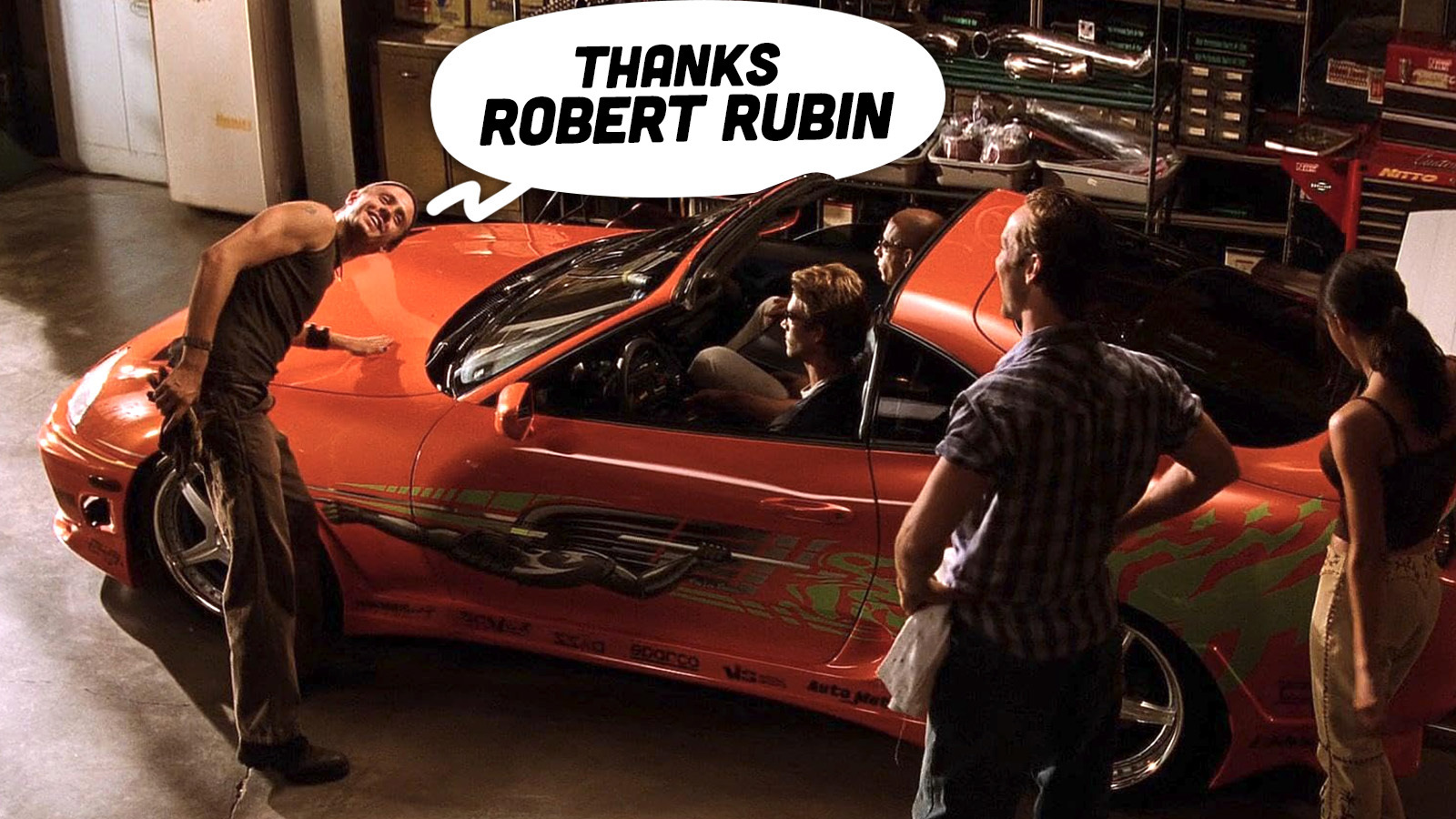
I found myself in a situation last week where I was able to say, accurately, that we needed to “overnight parts from Japan.” You’ll see the fruit of that request in about two weeks, but the immediate payoff was that everyone involved got to give a knowing chuckle at my very obvious and not-that-clever reference to the original Fast and the Furious film, which debuted 25 years ago.
Maybe it was more of a groan than a chuckle. Either way, I was momentarily pleased with myself and didn’t think about it much more until I saw a report in the Japanese business publication Nikkei Asia this morning with the headline “Japan carries out yen-buying intervention as US executes rate check.” This was done to support the Japanese yen, which was falling relative to the US dollar.


If you read the article, it probably made you think about the larger Japanese macroeconomic picture, Prime Minister Takaichi’s economic plans, or maybe just currency markets in general. It made me immediately ponder importing Japanese cars cheaply if the yen drops, which connected the dots in my head to a long-simmering thought I’ve had that The Fast and the Furious can only exist because of a massive swap in value between Japanese and American currencies in the 1990s and early 2000s.
What I’m saying is: If Die Hard is a Christmas movie, and The Wizard of Oz is an allegory for the 1896 Presidential Election, then The Fast and The Furious is a movie about free trade and currency.
The Film Was Originally Inspired By An Article Almost Everyone Forgot About
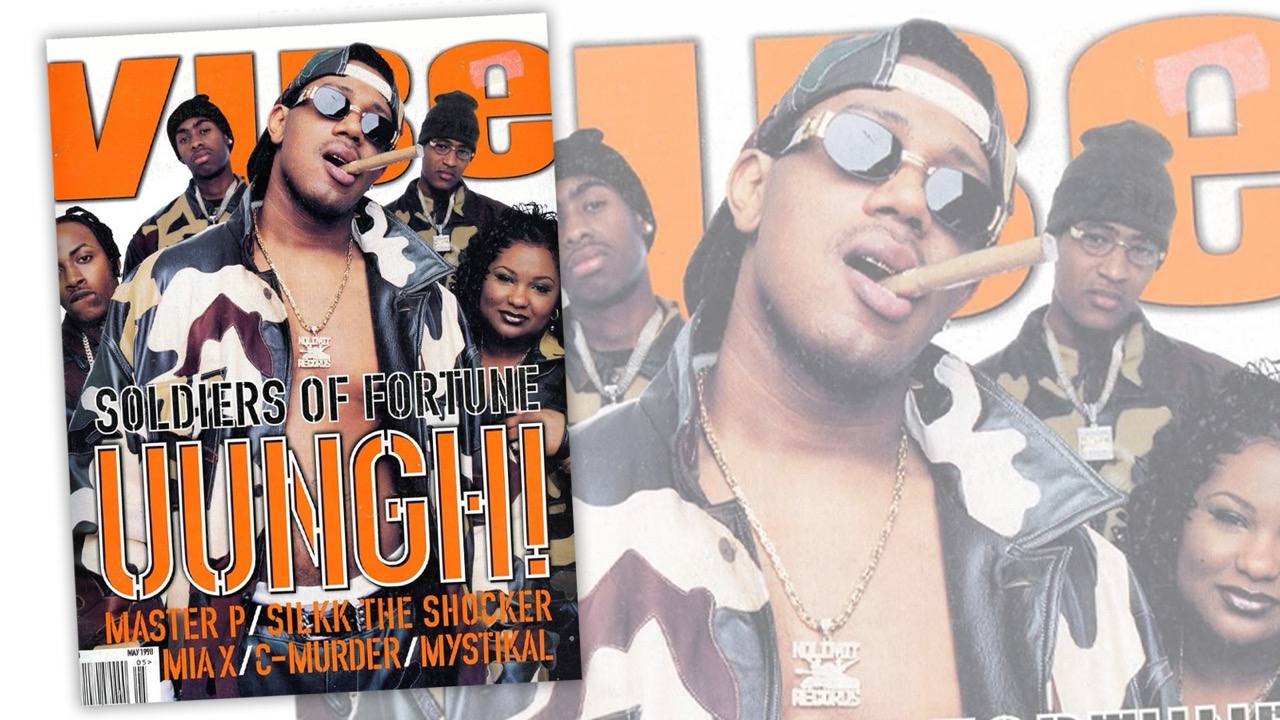
The idea for the 2001 film came about because of the article “Racer X,” which appeared in the May 1998 issue of Vibe magazine written by Kenneth Li. This was the issue with Master P and his No Limit soldiers on the cover (yes, I know I talk about Master P too much).
In the article, Li follows various racers in the burgeoning import racing scene, which was then transitioning from entirely underground to slightly more legitimate. At the center is Rafael Estevez, a 30-year-old from Washington Heights driving a heavily modified 300ZX.
Young men have been fascinated with tweaking and tuning big block Chevys and Mustangs since the days of Rebel Without a Cause. But the new guys wouldn’t be caught dead driving the gaudy muscular beasts of yesteryear. Instead, they’re tricking out low-buck Japanese imports like Honda Civics and Acura Integras and tattooing them like skateboards with Neuspeed and Greddy car parts stickers. By stroking the engine, adding a supercharger, and hitting the “juice” (nitrous oxide: a gaseous liquid once used to boost bomber planes in WWII), they can smoke the herb in the Iroc at the stoplight. And to do it with a puny four-cylinder rice burner that your moms would drive is downright arrogant.
While Vibe was not the first to report on this trend–the premiere issue of Sport Compact Car was published in 1989–you can see the proto-characters that would birth many of the film’s ideas:
“The excitement of going fast is like nothing else,” says Javier Ortega, a Columbian-American who screeches his blue Honda Civic to a halt in front of the store. “Another group gets excitement from doing drugs or whatever. Speed excites us.”
Few know that excitement like Estevez. Six feet tall with stooped shoulders and a healthy gut, he writes his own rules. Forget about valor, compassion, honor; in his book, that’s all synonymous with second place.
“People say I cheat all the time,” explains Estevez, a Huck Finn grin spreading across his face. “They say I jump the line, I do this, I do that. Drag racing is war. If you bring a knife, and I bring a machine gun, you’re dead. That’s it.”
You can almost hear Vin Diesel saying that, right? At the time, most of the cars being driven were not imported Japanese cars, but American market cars from Japanese brands (Honda Civics, Acura Integras, Toyota Supras) heavily modified with Japanese-sourced parts.
In his history of the film franchise, Welcome to the Family: The Explosive Story Behind Fast & Furious, the Blockbusters that Supercharged the World, author Barry Hertz brings up an event early in the research for the first movie that has informed the whole series:
[D]irector Rob Cohen and screenwriter David Ayer began poking around LA’s street-racing underground. Together with automotive consultants R. J. de Vera and Craig Lieberman, the filmmakers discovered NOS, which would soon become their movie’s version of a warp-speed button. “It was small scale—I heard about it when I was hanging around tuners who were on the phone with Japanese brokers trying to get engines smuggled out of Tokyo,” says Ayer. “Very under the radar.”
That little bit about “engines smuggled out of Tokyo” is key. Both the fictionalized world of The Fast and the Furious and the real one the film’s creators were recreating relied on a huge flow of cars and parts–often illegally–from East to West.
How did this flow begin? A lot of it has to do with an appreciation of the superiority of design and engineering that coincided with changes in currency… just maybe not the way you’re imagining. Specifically, it began with Japan and a small group of enthusiasts who badly wanted fulls-size American vans.
It Didn’t Start With Americans Wanted Japanese Cars, It Started With Japanese Enthusiasts Buying Our Old Vans

It’s difficult to express how weird the Japanese economy became in the late ’80s due to climbing valuations (and, in retrospect, overvaluations) of that country’s assets. The easiest way to understand this is to explain that, in 1988, the value of all the land in Japan was 400% higher than the value of all the land in the United States, even though the United States is a much larger country with more natural resources.
From a currency perspective, Japanese consumers saw their buying power increase dramatically in just 15 years, due to a mix of factors. According to the Federal Reserve, a dollar in April of 1971 would get you 357 yen. This was great for Japanese exporters, who built cars cheaply in yen and brought back American dollars (eventually leading to protectionist measures like the Chicken Tax). The yen began to appreciate and, in the mid 1980s, steps were taken to actively reduce the strength of the dollar.
Flush with cash, Japanese car enthusiasts did what every car enthusiast with a jingle in their pocket does: they buy something they’re not supposed to have. For Japan, which had rebuilt its car industry after the war by becoming a producer of small and efficient cars, this meant buying the opposite of that. It turns out the opposite of that is a full-sized American van.
I am not well-equipped to explain exactly why vans, and not tri-five Chevys or ’64 Impalas (though some of those were also exported to Japan). When it comes to cross-cultural appreciation, it’s best to ask the appreciator and not the appreciated, because I’d be loath to find out from a Japanese person why they think I and my friends are obsessed with the eschatological anime series Neon Genesis Evangelion.
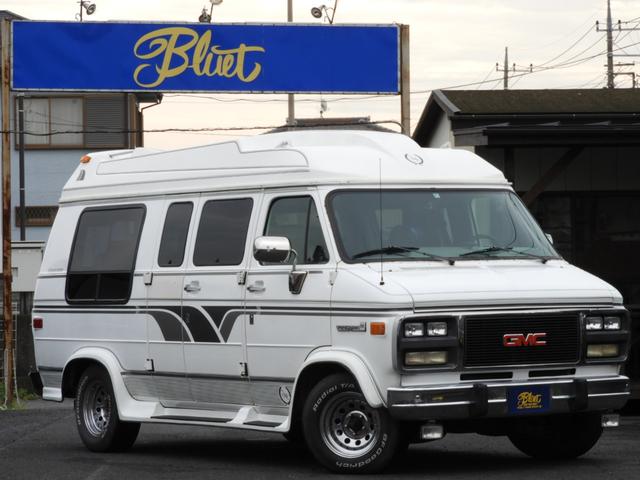
Initially, a lot of these vans were conversion jobs like the Econoline and especially the GMC Vandura/Savannah. In fact, there are currently more than 60 GMCs for sale on Japanese website Goo-Net, including this sweet high roof 1994 GMC Vandura. Leftovers from a different age.
Eventually, this resulted in an entire culture, called Dajiban, around the Dodge that was probably the least popular of the van offerings in America. The great Sam Smith went to Japan to find out why those vans for this seminal article for Road & Track about the trend and about its early adopter Abe Takuro who, not coincidentally, worked as an importer in the 1990s.
“Chevy Astro vans,” Takahiro said, “are really popular here. But it’s a V-6. Ford Econolines and some other U.S. vans have a V-8, but the body and wheelbase are too big for Japan—the short Dodge is just small enough.”
In America, I offered, these things are known for being terrible to drive. Like, terrible.
Abe rattled off a few sentences, deadpan. Takahiro wrinkled his brow before translating.
“If he gets it where he wants it… more than 300hp, weight about a ton and a half . . . the performance will be almost the same as . . .” —he paused, glancing at Abe to confirm—“a cheap rental car.”
The two men collapsed into laughter, arms crossed, shaking their heads at the joke.
Car nerds are car nerds everywhere. The language may be different, but the idea of pouring your life and money into a vehicle that’ll still be slow as hell because it amuses you is universal.
In the 1980s and into the 1990s, containers full of vans get shipped to Japan and, generally, the higher relative cost of Japanese goods (because of the appreciating yen, thanks in part to the Plaza Accord, which actively lowered the strength of the dollar to try and fix the huge trade deficit) made importing cars and parts to the United States a little less appealing. Under a new White House with a new direction, the dollar again strengthened (President Clinton’s Treasury Secretary Robert Rubin promoted a “strong dollar” as being in the national interest), all as Japan’s economy was sputtering.
While there was some shakiness starting in the late 1980s and a massive drop in the early 1990s, the bubble didn’t finally fully burst until 1998, and by that summer a dollar got you 130-140 yen. This gave importers an idea. Thanks to a Christmas release of Gran Turismo in 1997, the awareness of Japanese performance suddenly expanded from a small group of early adopters to anyone with a PlayStation.
What if instead of importing vans, these companies focused on exporting sports cars developed by Japanese automakers competing with one another to build the fastest, most advanced cars they could?
The Legend Of Motorex

No car was more legendary than the R34 Nissan GT-R in the tuning scene, and no company was more infamous for importing them to the United States than Motorex.
Writing for 0-60 Magazine, Richard Cheng explains how the reversal of currency values led almost immediately to a reversal of flow in goods:
Hiro Nanahoshi’s Diversity Services was one of several businesses in Southern California that exported these specialty cars to Japan. “We’d always bump into each other at auctions and things like that,” said Ken Takahashi, who, at the time, owned an export company called Ground Zero. The biggest exporter was A.I. Craft, operated by Wataru Noto, a Japanese man working for a large dealership in Japan. “Noto brought in this one big customer, Mr. Sawami, who was the owner of Advance Auto Group,” Takahashi said. “Noto was Mr. Sawami’s man in the U.S.”
Hiro was young, personable and ambitious. He had harbored plans of importing Nissan Skylines to America for years. Recognizing the potential in working for Noto and having access to A.I. Craft’s capital, Hiro joined A.I. Craft in 1996. “Hiro saw Noto as a cash cow,” Takahashi said. “Advance is a big client. Advance alone could easily buy 30 cars a month.”
The move paid off when stock markets across Asia crashed in 1998. The Nikkei index hit record lows. The Yen plummeted. Exporting from America suddenly became bad business. “Mr. Sawami wanted to hide some money in an overseas account,” Takahashi said. “That’s when Hiro proposed to Mr. Sawami the idea of importing Skylines.”
It did not end well for Motorex, and the echoes of that company’s downfall still reverberate in the car community today.
While importing cars was often a sketchy prospect until most of the desirable cars became 25 years old, enthusiasts got away with importing literally every part that made a car for a long period (at least until DMVs began to catch on to these Q-Ships of Theseus).
The Fast And The Furious Is A Film About Young People Involved In Free Trade

The technical version of arbitrage, most notably in currency, is buying an identical something in two places at once that have different prices and benefiting from the delta between the two values. The more colloquial version of arbitrage is primarily from just moving it efficiently from a lower cost zone to a higher cost one, even though the good doesn’t change materially. The more accurate word for this is trade.
The first The Fast and the Furious film is a film about trade, with most of the characters either acting as consumers using their valuable dollars to purchase cars and equipment (Toretto and his crew, Johnny Tran, Hector) or as importers/retailers (Harry of Harry’s Garage).
This is most notable later in the film when the character Hector–who is trying to go legit–asks Brian to help him and asks him to “hook me up, three of everything, I made a list.” He then does what every character in the film seemingly has to do at least once: Flash some cash.
At another point, one of the characters, Jesse, tells Toretto that he’s going to need to “overnight parts from Japan” to get Brian’s Supra in fighting shape. The fact that the extreme expense of overnighting parts doesn’t phase anyone goes to show just how strong the dollar was relative to the yen.
Another way to view this is as a movie about the de minimis import exemption, which allowed importers to bring in items under $200 (raised to $800 before being eliminated by the Trump admin) without having to pay import duties.
Spoiler alert: Veilside GT-Wing. Also spoiler alert: almost nothing ends up going well for the characters in the film. Dom goes on the run, Jesse gets murdered, Jonny Tran gets killed by Brian. There aren’t many happy endings, with one obvious exception.
You know who probably does the best in all of this? The eponymous Harry of Harry’s Garage/The Racer’s Edge. Not only does he avoid prison, he also rakes in incredible amounts of cash from all of these horny, angry, NOS-obsessed kids.
So, yeah, without the rapid change in fates of two currencies, the world of The Fast and the Furious looks a lot different and probably never happens.
Top photo: Universal Studios


My only experience with overnighting a part from Japan actually took three months and $80 for a single banjo bolt for my SR20 alternator mounting bracket. Not a fun experience.
I’ll ask. Why did you need a banjo bolt, which has a hole for use in a hydraulic system, in an alternator bracket? Is this some weird hydraulic alternator??
Lol, I knew someone was going to ask. I couldn’t remember the actual bolt type when I wrote my comment, but I’ve since remembered it wasn’t a banjo bolt, it was an adjustment bolt. Similar, but not quite the same.
You can get this bolt easily and cheaply these days.
https://www.factionmotorsports.com/nissan-alternator-adjusting-bolt-for-sr20-89-02-s13-14-15/?srsltid=AfmBOoprOFXb4OlFPJcfD6PCaLfrU6hM–6gjsoU7VHiq-v_tvLofguo
I used to be able to overnight VW parts from Germany, but brexit fucked that.
I rarely did though, because the standard shipping was only a few days.
I lived through overnighting parts from Japan, in an alternative world.
Twenty years ago I had to DHL to Eastern Europe a quite specific tool (a dedicated socket-like thingie that was mandatory to remove the shaft (I believe) on the then brand new Kawasaki Ultra 250 jetski).
The tool was 90ish bucks, getting it at the dealership fast was another 50ish (possibly less), the DHL to ship it – all 1lb of it – was $537 or something like that.
I still remember the look on the clerks’ faces at DHL, and the number of times they asked me whether I was sure I wanted to proceed.
The jetski was a rental/demo, brand new and not supposed to need that tool before another several months, and every day of it sitting was losing my friend orders of magnitude more money. I remember I drove 50 miles to the dealership to get the tool then drove to the closest DHL office to pack and ship.
Colleague from Canada said it was cheaper to personally fly (return trip with luggage for a day) from Argentina to US for parts for his vehicle that broke down on his cross-continent trip than to buy it locally there.
Delta used to offer a service called “Delta Dash” where if your package was within certain dimensions and 200Lb or less you could ship it for the cost of a cheap economy ticket. I think you needed to drop it off 3 hours before departure and have someone ready about 2 hours after landing to pick it up on the other side.
Might have been cheaper to have Kawasaki ship it directly from Japan
We actually thought about it, but it turned out the majority of Kawasaki’s jetskis (and pretty much anything that is not a motorcycle) have been made in Lincoln, Nebraska since the mid 70s. So the tooling and all are US-made.
I love automotive cross-culture pollination, and the Dajiban scene is one of my favorite examples of it. I have a scale model of one on my desk right in front of me.
Earlier this year I visited Japan and one night while walking around Osaka I randomly stumbled into a group of Japanese “cholos” in a city park eating tacos and drinking Coronas while surrounded by low rider trucks flying Mexican flags. It blew my mind, especially as I live in San Diego and it totally could have been a scene from home.
I love this photo I took there because of the juxtaposition of automotive cultures.
A number of those vans were technically sold new in Japan through registered importers. Most American companies went the registered importer route instead of getting directly involved. There’s someone locally who has a real deal JDM Astro conversion van that they reimported. It has a 17 digit VIN but also a Japanese VIN from the importer. A true grey market import like what we do to cars from Japan wouldn’t get a VIN plate like this.
On the flip side, a lot of 240/260/280Zs went over to Japan in the bubble era because they were cheaper here than a comparable Fairlady was in Japan
And now a lot of 240zs are going over to Japan because you just don’t find Fairlady Z’s anymore at all.
Yep, Yanase sold a bunch of them officially in Japan.
All these posts correcting the use of “Arbitrage” and all i can hear in my head is “SABOTAGE” by the Beastie Boys.
It somewhat depends on the car. My son’s 79 Corolla has a bumper from the UAE and a lot of online parys sellers in Indonesia and performance parts from Australia. Plus it rolls on random slot mags from his Japanese buddy
Is it really possible to overnight parts from Japan? It always take like a day or two for my Japanese stuff to get through customs.
Yes, because it crosses the international date line despite taking over 24 hours.
It’s weird landing in Seattle 3 hours earlier than you took off on the same calendar day, but just as upsetting on the way there.
Well wrote a wonderful article about how economics really works vs the attempt here but I hit the meter I am allowed and it disappeared. So to keep it short land in Japan rare, land in the US not rare unless you consider it meets the need. Much like old cars. A Shelby Cobra and. Yugo are both rare. However only one is a a desirable car so Cobras go for overa million and Yugos go for pocket change despite available models being the same
Wait, EVERYONE in on this upcoming project got the FnF reference?
(sigh of relief for David’s marriage and relationship with his son…)
Autopian is where fandoms overlap. Economics nerds, meet car nerds. We’re all family here.
I thought it was about stolen DVD players?
We all have DVD players in our basement. We will gladly pay Dom to take them to the recyclers.
I really should watch this movie sometime.
Agreed I was going to start watching the series before the spoiler. I love cars but can’t for the life of me figure out why anyone is willing to watch 20 versiond of the same movie. I’m not a Star Wars fan either but at least they actually make different movies each time
FnF 1 is worth it for understanding the one liners and a snapshot of where car culture (as portrayed) was in 2001. Personally i think 2 and 3 are fine, even if they ratchet up the ridiculousness, and anything after that gets blurry and everyone has super powers.
if you want the FnF plot but with Porsches, go for “No Man’s Land”.
if you want the FnF plot but with Keanu Reeves, go for “Point Break”
You really only need to watch the first three if you’re there just for the car stuff.
They’re re-releasing the first Fast and Furious in theaters this August for its 25th anniversary. It’d be a good opportunity to see it in theaters!
I’m planning on going and possibly dragging some friends with me
“The technical version of arbitrage, most notably in currency, is buying an identical something in two places at once that have different prices and benefiting from the delta between the two values.”
You’re almost right, but unfortunately completely wrong. Arbitrage is buying in the lower cost market and selling in the higher cost market simultaneously, thereby benefitting from the value delta.
Agreed this way is like betting straight up on a game with two different teams without a spread and making the same bet on both teams. You win and you lose the same amount so you break even and you knew you would so no excitement. Maybe explain betting to gamblers to get them cured?
Oh, I thought it was a family movie.
This needs more upvotes
My Mini was made in the UK, but it was a japanese market car.
So I order overnight parts from Japan OR the UK, depending on what part of the car I’m fixing (nearly all Japanese minis had A/C, almost no other country did).
My HZJ75 Land Cruiser has largely been brought back to life by Amayama and DHL bringing me parts from Japan. It’s not overnight though , usually it’s more like a couple weeks.
All y’all Fast and Furious types overnight parts from Japan. Me, I slow boat ’em from the UK.
Got a laugh out of me with the embedded video of Harry’s garage being edited with cheap eBay turbo whistles and intake fans on the computer screen lol
A little easter egg!
You can see anything in anything if you look hard enough.
https://www.mcsweeneys.net/articles/comparative-media-studies-201-heterosexual-undertones-in-top-gun
Honest Trailers – Top Gun
My favorite analysis of Top Gun is that it’s a sports movie. It’s not about winning a war or whatever. The last Top Gun had what, “fifth-generation fighters” as the mysterious enemy? No no, it’s about rooting for your team to win the match.
You have a team of rookies, then you have to train them, do a whole montage, and then play against the other team. Of course, you have to have a moment where it seems like the team is going to lose, then they band together and get the game-winning score.
We’re gonna need a montage (Montage)
A sports-training montage (Montage)
Remind everyone what’s goin’ on (What’s goin’ on?)
And with every shot show a little improvement
To show it won’t take too long
Of course. The mysterious enemy being “hundred-dollar drones” would raise too many questions for the film to keep its Pentagon cooperation.
Yeah, the Pentagon is rightly scared of asymmetrical warfare. $400 weapons that can be easily defeated, but with a $4,000,000 missile get pretty expensive to deal with if you launch a couple hundred of them.
That’s the unanticipated benefit of making Ukraine go it alone and inventing a whole new warfare system, and the whole world taking notes.
DARPA invited me to propose something for their Improv program but i was kind of busy at the time, I winder what ever happened with it.
https://na.eventscloud.com/ehome/168393
Exactly the war profiteers must be shitting their pants seeing drones that cost a couple grand outperform their million dollars a shot missiles
I only watched the first one I thought it was a homoerotic sex film with Tom Cruise trying to figure out his sexuality. I guess we all get different things from art?
The Replacements is the best movie for your suggested movie genre. They have cars in it. I think a Jeep and a old pick up on its side. And strippers. WooHoo
Not true, I always look for boobies and I am seldom successful
TRIGGERED. No, that’s not at all what arbitrage is, despite what a legion tiktokers (and even dumber AI models trained on them) will say. That’s just basic geographic trade- buy low, transport, sell high. Predates writing and most human civilization. Most critically, it involves a) a significant time gap between purchase and sale, and b) significant risk due to transport.
Arbitrage is the simultaneous purchase and sale of a functionally identical asset in two different markets, exploiting a price difference between them. So no, buying JDM cars cheap in Yokohama and selling them dear in Long Beach after shipping trans-Pacific is not arbitrage by any stretch of the word, that’s just normal trade. On the other hand, if you were to say buy dollars cheaply on a Japanese Forex market, and simultaneously sell them for more on a USA Forex market, then yes, that would be arbitrage (a form of this called the Yen Carry trade was extremely popular until recent events pulled the pin on it).
There is effectively zero arbitrage in the car market, since it’s essentially impossible to perform arbitrage with physical goods.
I was using the more colloquial version, but if it’s triggering I will update the post.
Lol, not actually triggered in an “ouch” sense. It’s just that “arbitrage” is one of those words that gets so mangled by finance bros selling courses that it causes all sorts of confusion that leads to normal people being deceived.
Wouldn’t it be more of Grey Market instead of normal trade?
https://en.wikipedia.org/wiki/Grey_import_vehicle
That’s a modification of the legal status of the trade, but smuggling cocaine from Columbia to Miami is still geographical trade, just one that evades the feds. Arbitrage needs to involve the near simultaneous sale and purchase of an asset to exploit a pricing inefficiency.
Maybe don’t click on that Wikipedia link because it describes grey market vehicles as arbitrage.
“Car makers frequently arbitrage markets, setting the price according to local market conditions so the same vehicle will have different real prices in different territories.” Whomever wrote that couldn’t be bothered to read the link to discover just how wrong that usage is.
Nope many trades require different currency evaluations. But if you are going to use an article as a source you have to accept all of it. You can’t say it is correct here but wrong there otherwise you’re asking readers to accept you as a source.
Some people read the headlines some people read the article
Stick by your accurate definition. As smart as the writers here are I have found their knowledge of economics etc is really wrong when they actually use it
Technically you do have a significant time gap as it most often takes at least until the end of the arbitrary business day to settle and hit your clearing account before you’re able to sell it at a different forex exchange, but assuming you already have accounts set up that lets you have a short position or money already in both accounts it doesn’t really matter. You are in fact transporting it by buying in one forex market and selling it at another, and the time it takes to transport your order can make a world of difference risk wise. Light only travels about 128mi / ms in fiber so any communication with Japan is delayed enough that you can feel it annoy you when typing in a terminal. Most of our FX arbitrage models improved significantly by artificially adding about 2-4ms latency in data being acted on in our NY datacenter that came from our Chicago datacenter and vice-versa because we were no longer competing directly with the truly high-end firms like Citadel or IMC even though we could almost keep up, but were significantly outpacing more traditional firms like Citi, BofA, etc.
This is fun!
See- that’s modern arbitrage: where the latency of light speed matters!
It really does. High-frequency, automated trading bumps up against that wall all the time. I live within far commuting distance of Chicago, near South Bend, which has the main rail line between New York and Chicago running right through it — along with the attendant long-distance fiber-optic data lines installed beside it. Datacenter real estate in the Chicago area became fully-occupied in large part by the financial industry. Then banks and financial organizations needed not only more capacity, but wanted to get a jump on transactions moving at the speed of light — so data centers started springing up in the area once occupied by the old Studebaker factories, right along the tracks and the fiber lines. Then the abandoned Union Station became a data center location, specifically for its essentially zero-latency access to the main fiber connections, and its geographical location closer to New York for just a tiny bit less latency for transactions.
These aren’t the hyperscale datacenters that are all over the news these days. They’re smaller, but can command high prices for rack space when they’re on the high-speed fiber trunks. The banks and financial organizations just need to park a handful of servers there to log transactions even a few picoseconds faster than they can in Chicago, and then forward the completed results to the main servers a short distance down the line. They beat the light speed limit by executing the transaction closer/sooner, logging it, and then it shows up in the main transaction records as already-executed that much sooner. It starts to make your head hurt when you puzzle out how it all works. But it’s fundamentally why electronic/algorithmic trading has changed the nature of the financial markets. No amount of “secret sauce” in risky hedge funds can really compete with that level of sheer speed in data communications and computation speed.
I see it the other way, modern financial arbitrage is now effectively impossible unless you’re willing to set up trans-oceanic low bit-rate shortwave radio links to beat the speed of light in a cable to merely influence the decisions of the models that run over high bit rate fiber lines. Arbitrage of physical goods has comparatively gotten much much easier over the last 100 years as we’ve expanded our transportation options. It makes no sense to fly cars in on a jet liner that fits maybe 10, when a boat fits 5,000 for only triple the cost but takes 15 times as long, but if there’s enough demand to get it immediately it becomes extremely profitable.
In my opinion arbitrage is taking advantage of any inefficiency in two similar markets by acting on superior data, infrastructure, or logistics vs the norm and working both sides. There never was or has been the ability to do two things simultaneously in trading except with a strategy order but that is confined to one exchange and typically to one matching engine or product group at it.
In the late 90s I consulted for some traders (actually they said they were setting up a link to beam hocky games, but that was the dumbest idea ever) that set up a laser link from Bowling Green in Manhattan to Jersey city that cut a distance of 20 miles and a couple routers and 100-200 microseconds from the connection that everybody else on wall street was using at the time that ras routed over fiber on the George Washington bridge. Another parent at my kid’s preschool was doing the same for a Japanese client who was spending a lot of money to be 4 milliseconds faster than their competition. I thing what they were doing was definitely arbitrage.
So, drop shipping?
“You know who probably does the best in all of this? The eponymous Harry of Harry’s Garage/The Racer’s Edge. Not only does he avoid prison, he also rakes in incredible amounts of cash from all of these horny, angry, NOS-obsessed kids.”
So the movie is also an allegory for the outfitters/suppliers of the various 1800’s gold rushes making all the money, off the foolish prospectors? Or probably any other boom/bust economic cycle, having the suppliers quietly becoming rich in the background?
My degree is in geology and I had a geochemistry professor who once said never get into mining anything, but by all means get into the sale of mining equipment.
That is why despite a few prospector’s getting rich the merchant was the most successful in the California gold rush
I miss when car movies were dumb fun like Smokey and The Bandit and Cannonball Run. I have never seen a F&F movie a 2nd time and I think the only one that was even decent was the first. That these movies are our “car culture” today makes me yell at clouds.
The first 3 F&F are all dumb, so bad they’re good kind of car movies. They lost the plot after that, 5 was the last one I saw and I haven’t felt like I needed to see any of the ones after that.
I have watched them all and they have become increasingly absurd; the team are international secret agents or something now.
I “accidentally” watched Fast X. It was in my to watch pile and I forgot it was going to be broken into 2 parts so I got stuck with a cliffhanger ending with a 6 year wait time for the conclusion now estimated to be 2028. It may be worse than the interminable wait for Stranger Things final season.
It’s like MIB. Without agent J and agent K it sucks. Also the Librarian 3 great movies but the TV series sucks.
Huh, I think the earlier F&F movies were pretty much the definition of dumb fun, just action instead of (intentional) comedy.
These movies haven’t been our car culture since like the 5th one that came out in 2011, so yelling at clouds is an appropriate response 😉
I’ve never seen a F&F movie. I think I saw Danger to Manifold gif sometime in the last 5 years that really just reinforced how uninterested I am. And I say that as someone that literally stopped and lingered on that picture of the purple R-34 in the post earlier today, just to look at it.
Yeah, I too miss dumb fun car movies like The Fast and The Furious.
You mean The Fast and The Furious isn’t Furry Porn?
No, you’re thinking of The Fast and The Furriest.
hadn’t connected the dots
Great write up
I maintain that Tokyo Drift is secretly and 80s ski movie but with cars. You have some newcomer who immediately gets into friction with the top guy, falls in with a group of outcasts and weirdos, multiple scenes with scantily clad women, eventually challenges the main guy to a race down a mountain, has a big training montage, and the looser has to leave town. Oh and of course the winner of the race gets the girl.
Wait, this is the story of “Better Off Dead” exactly.
I think I froze the left half of my brain
Brian should have started out with his mom’s station wagon.
Two dollars . . . .
it is basically the plot of umpteen skinemax Ski related movies in the 80s/90s.
It’s got racin’ in it. You like racin’.
It’s just Point Break with cars.
To be clear, the first movie is Point Break with cars.
Tokyo Drift is more like Better Off Dead and these other “ski” movies.
Sorry your mom blew up, Ricky.
Tokyo Drift is my favorite of the series because the director, Justin Lin, slipped in a couple references to his indie movie Better Luck Tomorrow (including Han) and there are a bunch of cameos of people from the SoCal tuning/drifting scene
Jim Spanfeller had an IROC?????
holy callback
Sick burn, bro.
Deep cut
God, it’s been too long since I checked in on Defector. Drew Magary had me looking forward to checking Deadspin most every day and I don’t give a fiddler’s fart about sports.
Christ, they really just made an incredible clusterfuck out of an entire generation of (off beat, hilarious, what smart – these goofballs were never going or supposed to be nightly news anchors) talent, didn’t they?
Heh, what I’ve said in reply to this is pending approval. It’s not *that* spicy!
It contains the F word and if swearing is the trigger then the approval workload is about to go way up.