

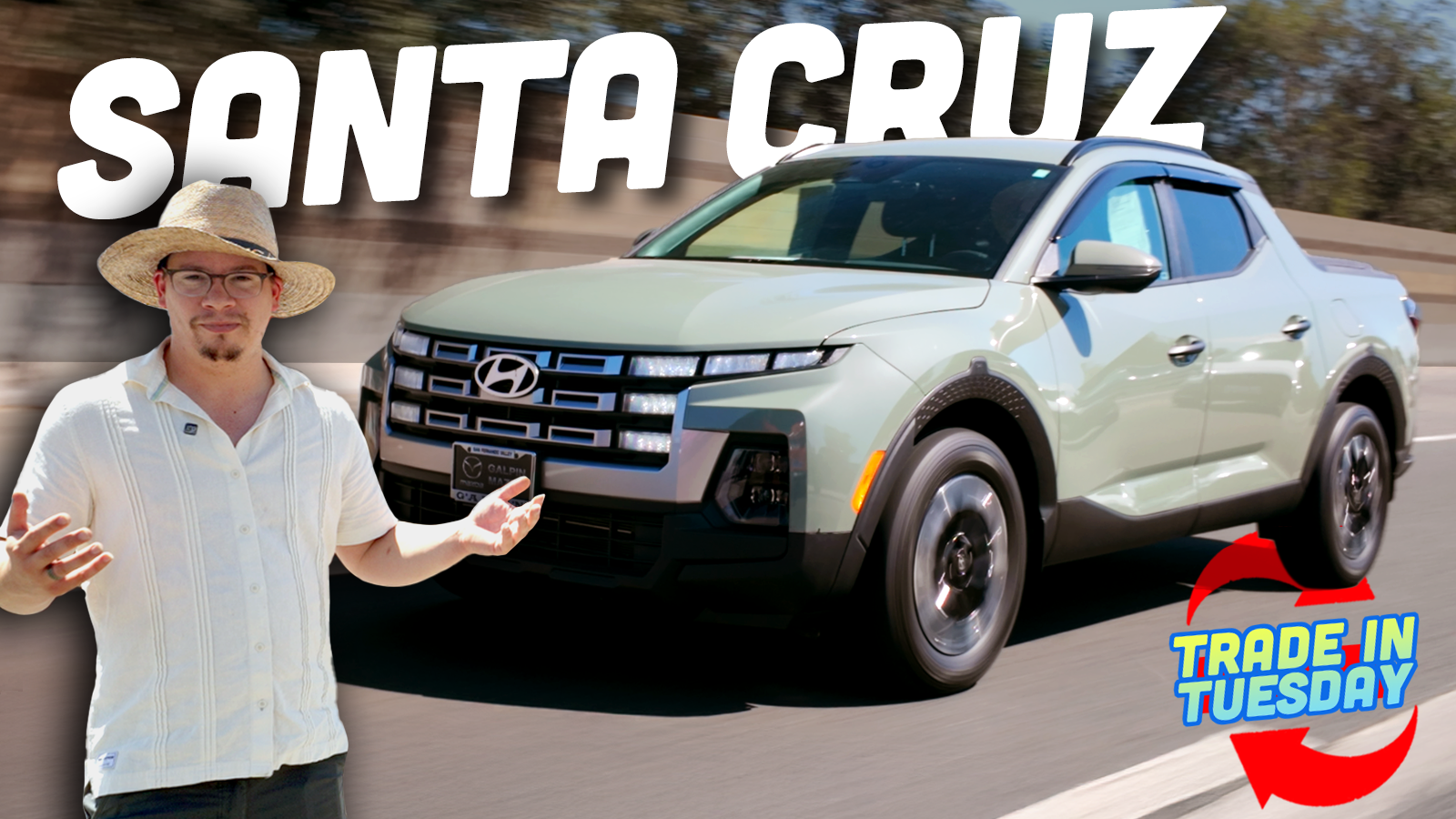
In January of 2015, Hyundai surprised the world with the debut of a brand new concept pickup truck called the Santa Cruz. One of the first car-based unibody truck America had seen (after the Honda Ridgeline and Subaru Baja), the sharper, edgier, and cooler Santa Cruz drew adoration from the public, with such overwhelmingly positive feedback that Hyundai greenlit the project. The problem was, it took forever to come to market, and by the time it did, Ford had launched an absolute showstopper in the Maverick. But does that mean the Hyundai Santa Cruz isn’t a great vehicle? I just test-drove a traded-in 2025 Santa Cruz, and while I found it extremely disappointing, I also think it’s a good deal. Here’s what I mean.
The Hyundai Santa Cruz could have been something special. It should have been. The amount of buzz surrounding the vehicle when it hit the scene meant the South Korean automaker was poised to disrupt the market with a truly cool pickup truck that could offer the comfort and efficiency that go along with a unibody car-platform. Small, efficient, and with looks like that? Everyone was excited. Including our own Jason Torchinsky, who wrote this at Jalopnik:


I actually think I’m more excited by this concept than the Ford GT, which is both the most insane and most rational thing I’ve ever thought, simultaneously. I really hope Hyundai can bring this thing to market as close as possible to the concept. I guess we’ll see.
I felt the same way.
Wards Auto said Hyundai’s plan was to fast-track development if people liked the truck (they did):
Hyundai will take the Santa Cruz to multiple U.S. auto shows this year to gauge media and consumer interest. If feedback is positive, the automaker could accelerate its normal 4-year product launch timing to 3 years for a Santa Cruz production model, Zuchowski says.
But three years later, Motor Trend reported that the truck was still two years from showrooms, writing:
Hyundai showed a concept of the “crossover truck” at the 2015 North American International Auto Show and it garnered enough positive feedback to act on. Then-CEO Dave Zuchowski pushed hard for it to be added to the brand’s car-heavy portfolio, and in late 2016 the decision had been made to greenlight the project to arrive in 2018 as a 2019 model. An announcement was coming soon, Zuchowski said.
But even that was optimistic; the Santa Cruz didn’t actually hit the market until late 2021 as a 2022 model-year. That’s six years after that Detroit Auto Show surprise-debut. Auto Blog talked with Gilbert Castillo, who ran Hyundai’s product strategy and regulatory compliance in North America to try to understand what took so long:
Castillo explained that the problem was the platform they were working with. At the time, the plan was to use the previous generation Tucson crossover platform. The team developing the truck discovered they would have to make many compromises to use the now-old platform and weren’t going to meet internal targets for the truck.
Instead of trying to put out a subpar truck, the Santa Cruz was put on hold for the next Tucson. And as development began for the crossover, the platform was developed with the idea of adapting it to a truck later, giving us the pickup design we saw unveiled today. And as you can see, the truck has changed a fair bit, taking on more styling cues from the Tucson that provided its platform. It also picked up a larger rear seating area than the concept, which Hyundai product planners felt would be more appealing to buyers…
[…]
So there you go, the Santa Cruz took a while because Hyundai wanted to get it just right, and that took a new generation of small crossover.
That conclusion — that Hyundai waited so they could get it just right — would make sense if Hyundai got it just right. They did not.
The Santa Cruz Is Disappointing Because It Could Have Been So Much Better, Even Late To Market
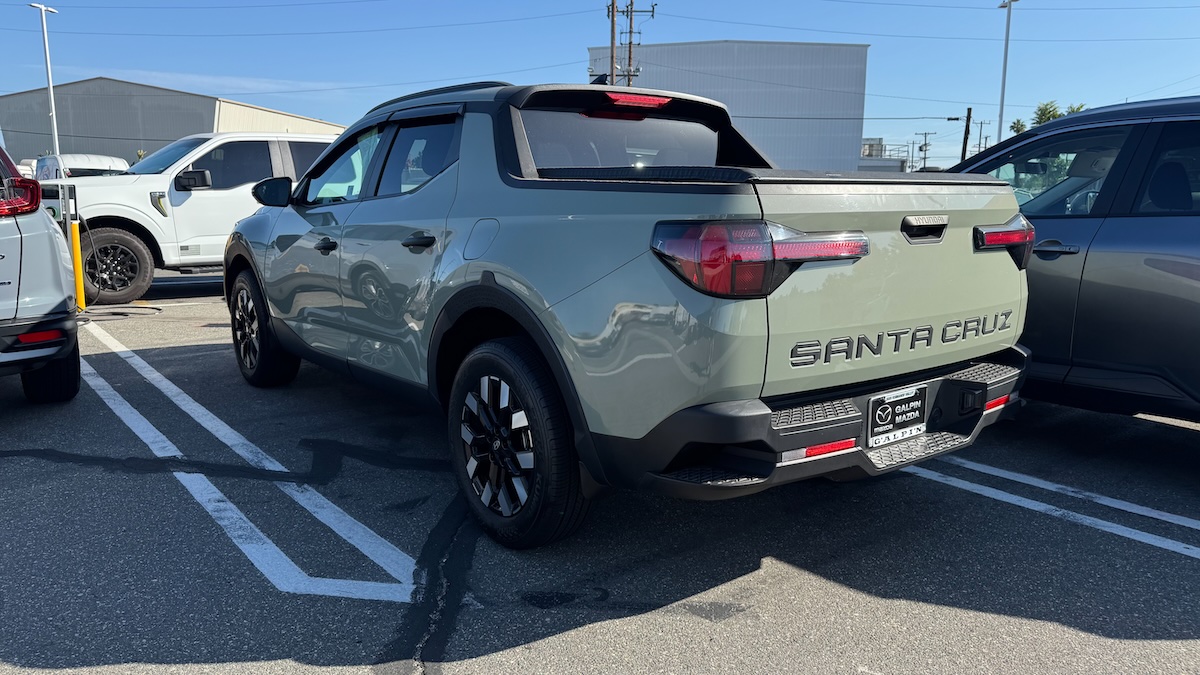
The car I drove was a 2025 Hyundai Santa Cruz SEL with the base 2.5-liter naturally aspirated engine. In Sage Gray, the truck looks awesome from every angle. I love the sail pillars between the cab and the bed; I think the rear end looks aggressive; and up front, the face, while busy, is definitely fitting for a truck.

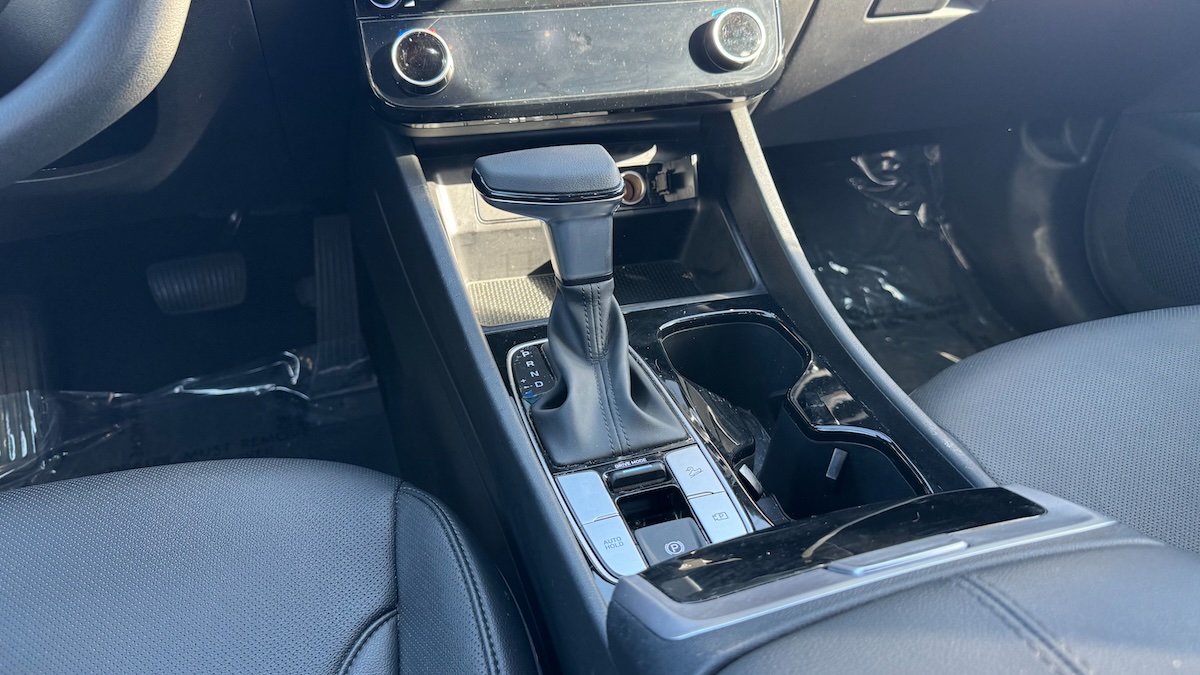
The interior is especially nice. The badgeless steering wheel thing that Hyundai has done on some cars like this and the Ioniq 5 feels a bit odd, but materials are good, and the styling gave off a nearly-luxurious vibe.
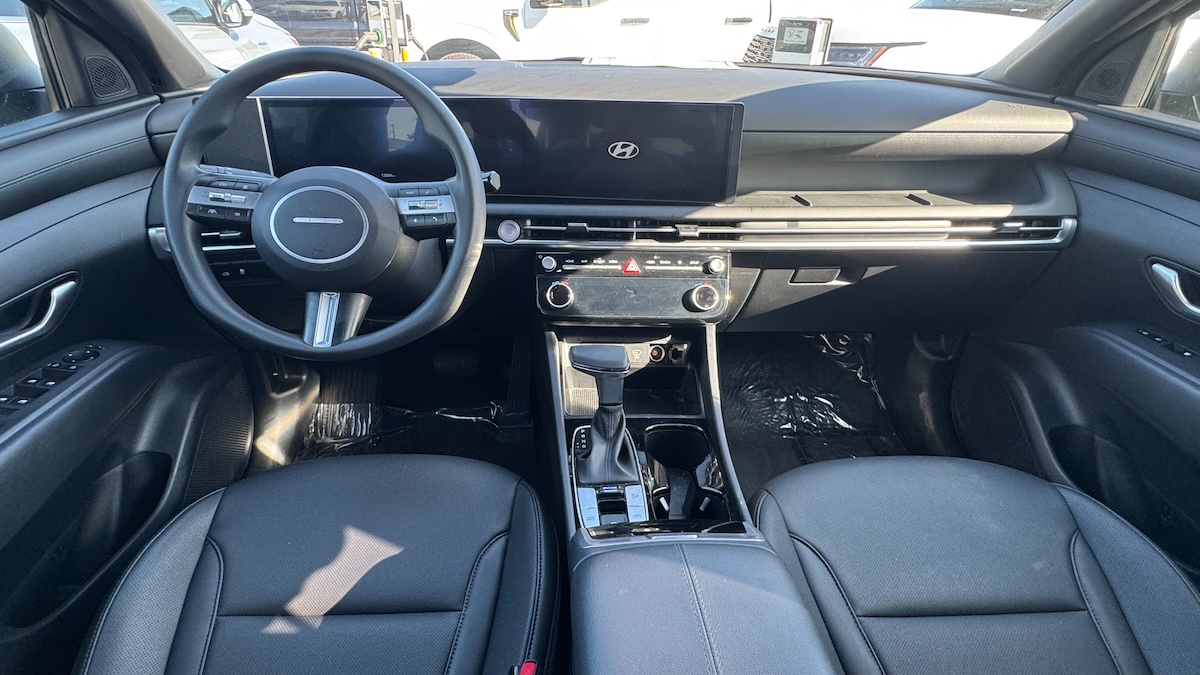
There’s a giant horizontal screen that contains the infotainment display on the right and the gauge cluster on the left. Down below the center stack are HVAC controls (sadly, too many of them are touch-screen and not physical buttons), and under that is a chunky T-handle shifter.
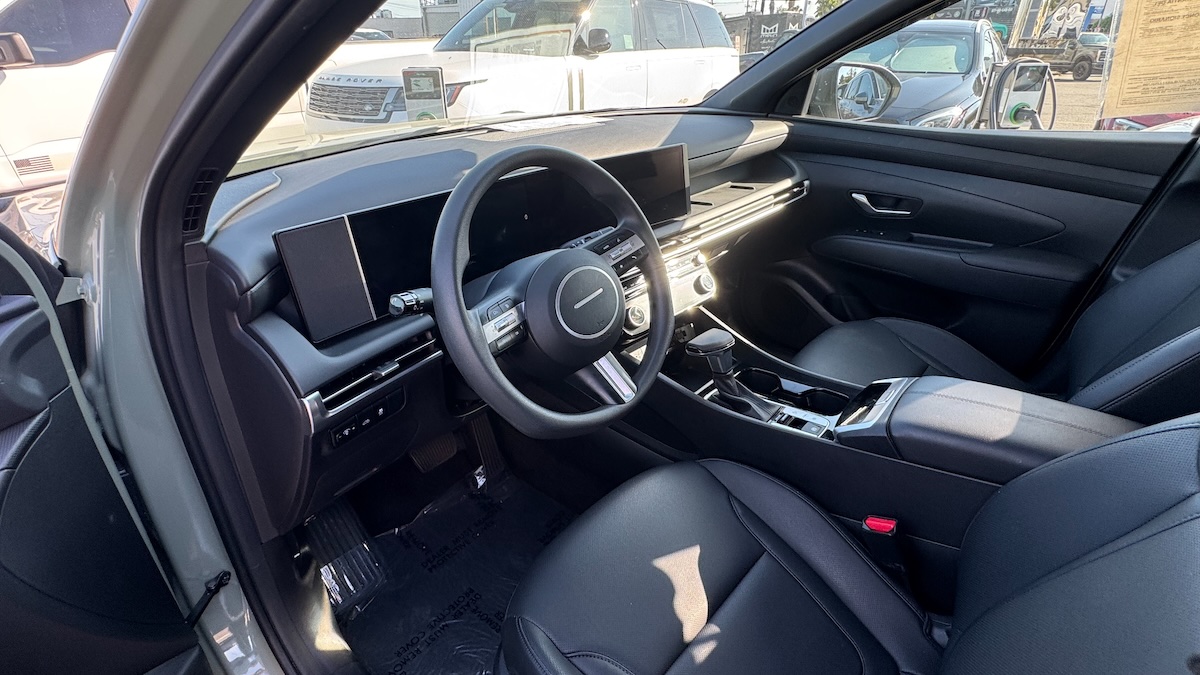
To the right of the main screen is dashboard storage and to the left is a speaker.
I like the competing Ford Maverick’s interior as well, but whereas the Hyundai’s cabin feels a bit upscale, the Maverick’s feels a bit chunkier/Tonka Truck-like:

The Hyundai Santa Cruz’s interior isn’t its problem. The problem is the powertrain, which is — compared to the Ford Maverick’s — simply awful. It’s the same 2.5-liter naturally aspirated GDI four-cylinder one might find in a Tucson, Sonata, or Sorento. It makes 191 horsepower, 181 lb-ft of torque, and absolutely struggles to move the 3,800 pound truck down the road, despite a competent 8-speed automatic.
I haven’t called a modern automobile slow in a long time, in part because I drive lots of old, legitimately slow machines, but the Santa Cruz feels lethargic even compared to vehicles like my 1991 Jeep Wrangler YJ. Why? That old YJ makes 190 horsepower, weighs about 3,200 pounds, and does 0-60 mph in probably around 10 seconds. No new high-volume car should be that slow, and yet, per Consumer Reports, the all-wheel drive Santa Cruz with the base engine scored a 0-60 time of 10.3 seconds. Again, I drive lots of old cars, so I can tell you that 10.3 seconds to 60 is livable, but on a vehicle this quiet and refined, it feels even slower than it does in my Jeep rattle-trap (to be fair, the car I drove was a front-wheel drive model, and those seem to do 0-60 mph in around 9 seconds, per various sources. Still slow.).

What makes the Santa Cruz so disappointing is two things. First, that slow, 191 horsepower powertrain gets awful fuel economy. Check it out:

Look at that absolutely gargantuan chasm between the Santa Cruz and the hybrid Ford Maverick, which, despite making the same 191 horsepower, is quicker to 60 mph (just under 8 seconds, per various sources) and is cheaper. 25 MPG combined compared to 38 is laughable.
What’s also laughable is the fact that the turbocharged, 250-horsepower Ford Maverick — which does 0-60 mph in the 6s and also costs less than the Santa Cruz — also scores better fuel economy than the anemic, base Hyundai.
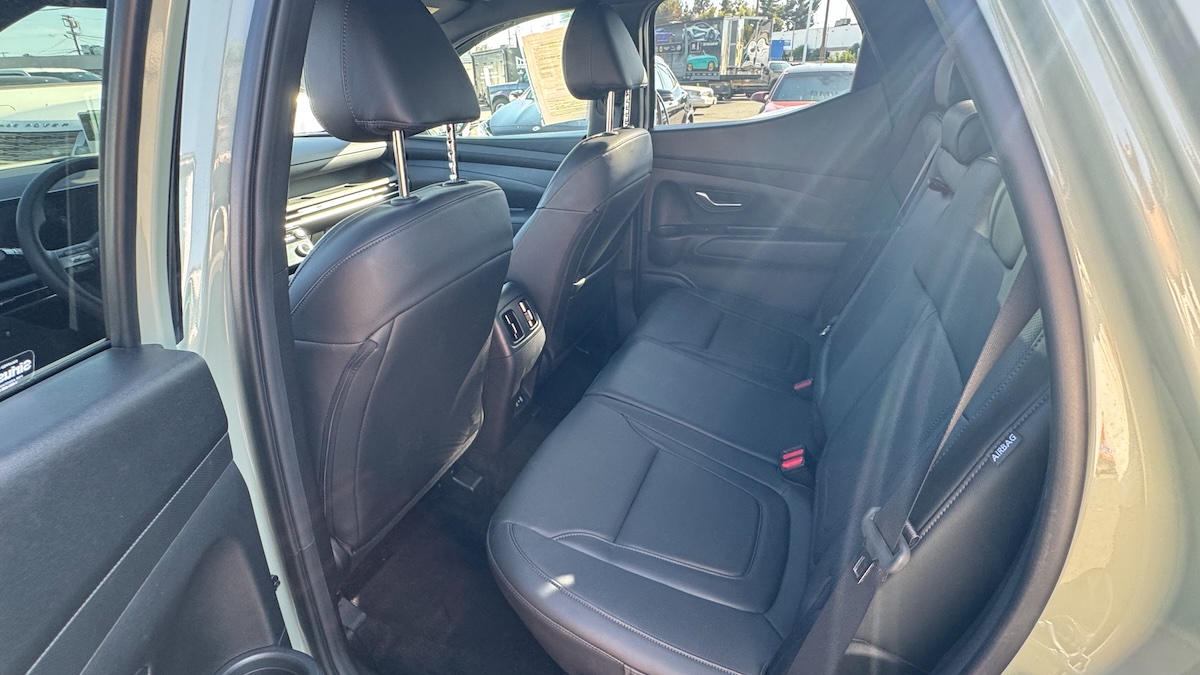
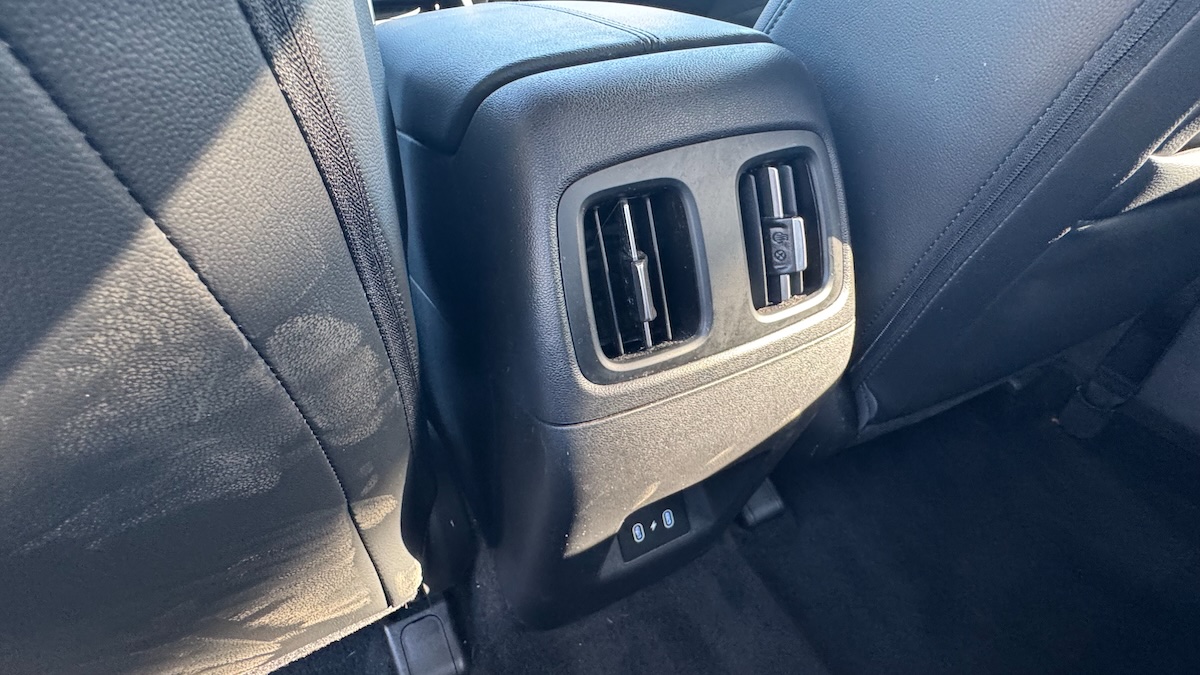
I get that driving a car isn’t all about numbers. And the Hyundai’s cabin and overall refinement are worth celebrating (the Maverick, for example, doesn’t have vents for the rear passengers), but for the Santa Cruz to be slower, more expensive (~$31K vs ~$30K) and way, way less fuel efficient (a 20 MPG delta in the city!) makes it a huge disappointment in my eyes, given how long it took to get this thing to market.
I hear things are different when you get behind the wheel of the Santa Cruz Turbo, as my colleague Matt once wrote, “The Hyundai Santa Cruz Is Exactly The Great Car-Truck We Asked For,” saying:
Thankfully, the Santa Cruz is good and nicely serves its mission of being a truck-type object that you could live with daily, park in a city, and occasionally use to haul things around while returning fuel economy that doesn’t make you feel bad…
[…]
Here in the United States we only have two small unibody pickups, so your choices are the Maverick or the Santa Cruz. My advice is to get either the cheapest Hybrid Maverick you can find or, if have more budget, get the higher end trim level of the 2.5T Santa Cruz. T
The problem is that the good version of the Santa Cruz, the 281 horsepower turbo that does 0-60 mph in about six seconds and that Road & Track says is “great to drive” — costs over $41,000. That’s a lot, and there’s still a 6 MPG fuel economy delta with the 250 horsepower Maverick.
It’s Still A Good Deal

That may all sound pretty damning, but then you look at used Santa Cruzes. The one that someone traded in to Galpin for a Mazda (I think a Miata) is listed on Galpin’s website at $26,072. That’s an amazing deal for a soulful, four-door vehicle with only 13,600 miles on the clock in 2026. In fact, just a cursory look at Santa Cruzes versus Mavericks shows that these Hyundais are actually quite cheap, despite their higher MSRPs:

Here are some Mavericks, for comparison:
So yes, the Santa Cruz that we all prayed would come to market ended up arriving with a sad powertrain, making the vehicle a huge disappointment. But if you have the scratch for a turbo model, that may be worth it, and if you just want the cheapest small truck that won’t bankrupt you in fuel costs compared to other pickups, snagging a used Hyundai Santa Cruz seems like a pretty good option.



Why is the gas milage so bad? How? Did they fill the transmission with molasses? Is it secretly a reverse hybrid, where electric motors are used to keep the gas engine outside its power band? Is there some scheme where gas incrementally funneled into a concealed, smaller tank that trained badgers take back to Hyundai HQ?
When every other 3700lb/190hp commodity crossover gets to 60 in a perfectly adequate 8 seconds, what glue factory did Hyundai drag their horses out of?
I guess the Santa Cruz is a fair few hundred pounds heavier, but I really liked the 2.5 in a 2022 Sonata I rented. It was quiet, torquey, and well-matched to the 8-speed auto. It wasn’t fast per se but it was a far cry from the days when cruising in a base-model 4-banger meant high rpms and lots of noise, and it could still drop a gear for decent passing performance. At its higher price perhaps the Santa Cruz ought to offer a more competent base engine, but a lot of the CUVs in this segment similarly start with a pretty dismal powerplant as the range opener (ahem, Subaru).
I haven’t driven one with either engine, but I do seem to see more of the turbo ones around.
In any case, a lot of the discussion around the Maverick’s tow ratings seemed to indicate the base hybrid motor had no problem with 2,000 pounds and the newer ones getting the 4k tow on the hybrid seems to indicate there was always plenty of shove there.
I don’t have a problem with a base model getting to 60 in 10 seconds, but it does make me wonder how it handles any towing/payload. And, more importantly, I want to be trading that speed/power for fuel economy and these don’t deliver on that front.
I want to like the Santa Cruz, but I don’t see the pluses outweighing the minuses when it compares to the Mav
With the 22-24 Maverick Hybrids the limit on towing was mostly the electric motor cooling. Around 3000lbs the temps start to get alarmingly high when under moderate load.
Cooling makes sense. I had attributed it to a tongue weight issue and the hybrid being FWD only, with the 4K towing package coming as AWD was added in the refresh.
That’s probably some of a factor as well. Although it was only last minute that Ford scrapped the 4k option initially offered from the FWD EcoBoost.
Whoa – OUCH! Given what must be the benchmarks of David Tracy disappointing cars, to finish last is a pretty tough thing.
What’s the opposite of Holy Grail?
Maybe the Poor Choice?
On this week’s entry of Holy Grail or Damned Fail…
Melted face
“cheapest small truck that won’t bankrupt you in fuel costs” uhh wouldn’t that be the Maverick per your article?
Clearly whoever traded it in didn’t like it either.
I don’t think it’s a bad vehicle. It is certainly let down by the powertrain options though.
That being said, I still think I’d be more likely to buy one over a Maverick. Somehow Ford has managed to convince us all that the Maverick undercuts the Santa Cruz on price when there’s hardly an example within 50 miles of here under 38k. Not that I trust Hyundai much but the Maverick is probably the ultimate in bait and switch tactics.
I cannot fathom why Hyundai didn’t bother to put the hybrid in this.
Yeah, this feels like a pretty big whiff…
If it had come out a year or two before the Mav I could see how that could happen, but….
It felt like a rushed single market modification of a global product. Hybrid could have fixed a lot of their issues. But they were also too proud on price. If they had built a new one especially if they were thinking about it when designing the new tucan I think it could have been ok. They probably should have made it more of a global product too. Latin America and Oceania would have probably loved it if it was priced right.
It’s the modern El Camino/Ranchero but even less useful.
I think this car deserves its spot in the annals of Cars That Won’t Be Redesigned.
It’s a half-ass attempt and turning a half-ass crossover, which is already intrinsically compromised, into an even more compromised half-ass-half-ass-crossover-pickup (quarter-ass pickup?!). Add in worse aerodynamics and not enough power to boot and you’ve got yourself the recipe for a car that won’t live past this generation.
The styling doesn’t work for a small pickup. The Maverick looks like a small pickup. The Santa Cruz looks closer to a sedan or wagon with a pickup bed than it does to being a small pickup.
The real issue with these? They’re expensive. More expensive than the Ford for less, and with worse resale value. Oh, but it has Hyundai’s warranty!?! Good luck trying to get Hyundai to honor warranty claims in a reasonable timeframe when the time comes! Sure they’ll replace your engine, but it’s going to take six months for parts to come in and they won’t give you substitute transportation.
Ford hit the nail on the head by making the hybrid powertrain standard equipment on base Mavericks. There is more overlap between people looking for small pickups and hybrids than there ever was people looking at Hyundai crossovers and those wanting pickup beds.
When you could get a Maverick for same or less money that got amazing economy, was quicker, and (as of 2025) could be AWD and tow 4000lbs, the Santa Cruz is a hard sell.
And, YMMV, but to me it was a weird look. The Ford looks like a shrunken F150; the Hyundai reminds you “this didn’t start out as a truck.”
Agreed. It really looks like a crossover that someone chopped up into a truck-sort-of-thing.
My guess is that they were shooting for some imagined demographic that wanted truck-ish functionality but didn’t wan’t truck looks. I can kind of see the logic, particularly when you consider the success they’ve had with a lot of their unconventional styling. This just had questionable execution of that idea.
I wrote off the Santa Cruz simply because of the amount of glossy piano black in the interior. It’s slathered all over! It’s on the full center console, the doors, and even the wiper and turn signal stalks, places you’d touch on a regular basis. It looks nice when pristine and new but it is the totally wrong choice for an activity vehicle interior.
Buying for more and selling for less is not the good deal I’m looking for
I’m sorry but that thing is fugly.
I want to modify the tailgate – replace the R in Cruz with LA. SANTA CLAUZ
No canopy, no dice.
Pee in a can, then. Can o’ pee ba dum psssshhhhh Tip your waitresses, folks. Try the fish.
If they made it a PHEV with decent range it would have sold better than it did, as it would have no competition in that market niche
This. It would have done very well in the city market.
At least two and probably three members of my family would own one by now if PHEV was an option
24-26MPG is what I’ve gotten on every Datsun/Nissan pickup I’ve had, and I’ve had a lot. I’d expect a sleeker car-based thing to do better than that!
The Santa Cruz with the turbo has a DCT, which has 5000lbs towing. I for one would *never* tow with a DCT. While most people never tow, many want the ability *to tow* if needed. I feel like that may have been an issue too. Once the Maverick got the tow package with the AWD Hybrid, I knew that was over.
They had a DCT in some of their SUVs for awhile too, I know the Kia Seltos did, don’t remember if its platform mate the Kona did. But it never made even a tiny bit of sense to me vs a conventional auto for what are fairly average crossovers and makes even less sense for a small pickup. It was part of what soured me on the Seltos when I had briefly wondered if it would be a good car for my wife.
Hyundai and Kia also had a dual clutch in the Kia Sorento and Hyundai Santa Fe. After continuous complains with the DOT and NHTSA, Hyundai switched back to a traditional transmission in the Santa Fe. Kia? Nope. They stuck with the DCT.
I refer to dual-clutch transmissions as “glass transmissions” for the obvious reasons. Unless it’s on a VW/Audi/Porsche, they are not to be trusted, and, even then, only as much as you can trust one of those cars!
Kia Sorentos almost entirely have glass transmissions.
Wife and I bought a then 4 owner ’17 Tucson 1.8T back in 2023. We were for a short time the 5th owners. The DCT was awful.
Its also about the dumbest vehicle to come out in awhile. And clearly most others thought so too as they barely sold and now discontinued.
Between this and the Stinger, H/K really didn’t stick the landing. I think some of it was the dealership experience. My local put 10K markups on the Stinger and had 5K on the Santa Cruz. And for the Stinger you had to fill out a credit application before you could test drive.
Back in the early ’00s when the Elantra GT hatchback first came out the local dealer had a $1500 “market adjustment” on it. Ford had $1000 cash on the hood of a Focus ZX5 (or any other version); if that’s not the market what is?
Unfortunately the turbo is mostly available with the DCT.
I don’t think that’s a great option for something like this.
At least it’s a wet clutch DCT.
That DCT had some real problems in other H/K models, IIRC.
What people are trading in a 1-year old vehicle with 15k on them for a new car? I can’t see any situation where they wouldn’t end up underwater.
Outside of big life events, like “divorce” or “medical bills”, what’s the financial angle here?
Spending your tech-bonus/windfall to get out of a car you hate and into a car you know you’ll love is not a terrible proposition.
Life is too short to be in a loathed vehicle. Sometimes taking a financial loss to make yourself happy on something interacted with daily for most people is the sensible thing.
I’ve never sat in one myself, but a close family member recently sold their top-trim Santa Cruz with, I think, less than 20,000 miles on it. When I asked why they sold it they just simply said they didn’t end up liking it. When I probed for more info it became apparent that, in their eyes, it did nothing bad but also nothing well. It replaced a minivan, thinking the truck bed would be more useful for hauling things, but ultimately got replaced by another minivan when that turned out not to be true.
The moment Ford decided to put the hybrid as the base engine in the Maverick, they shot the Santa Cruz right in the gut. *POW*. Fight’s done, everyone go home. It’s easy to make fun of Ford, but that move was brilliant.
The H/K 2.5 hasn’t been a competitive engine for a while now. Tucson, Sportage, they’re all slow and inefficient with it.
As said above, if the Santa Cruz were a PHEV then they would have carved out a niche noone has met
And with as long as it took to get to market, it seems like they would have had time to engineer a PHEV version.
Yes, and it was forgivable there as they were one of the cheapest and relatively nice cars compared to their competitors. This was definitely not the cheapest… I also don’t think they ever expected Ford to undercut them by so much, effectively selling them at a loss until they pushed these out of the market and public consciousness before jacking up the prices.
When they came out, the local dealer brought one to our big Cars and Coffee. I sat in it and didn’t hate it (never drove it however). My GF really liked them but wasn’t in for a new car yet. At some point she decided against them & I don’t remember why. Headroom? Something kinda minor to me.