

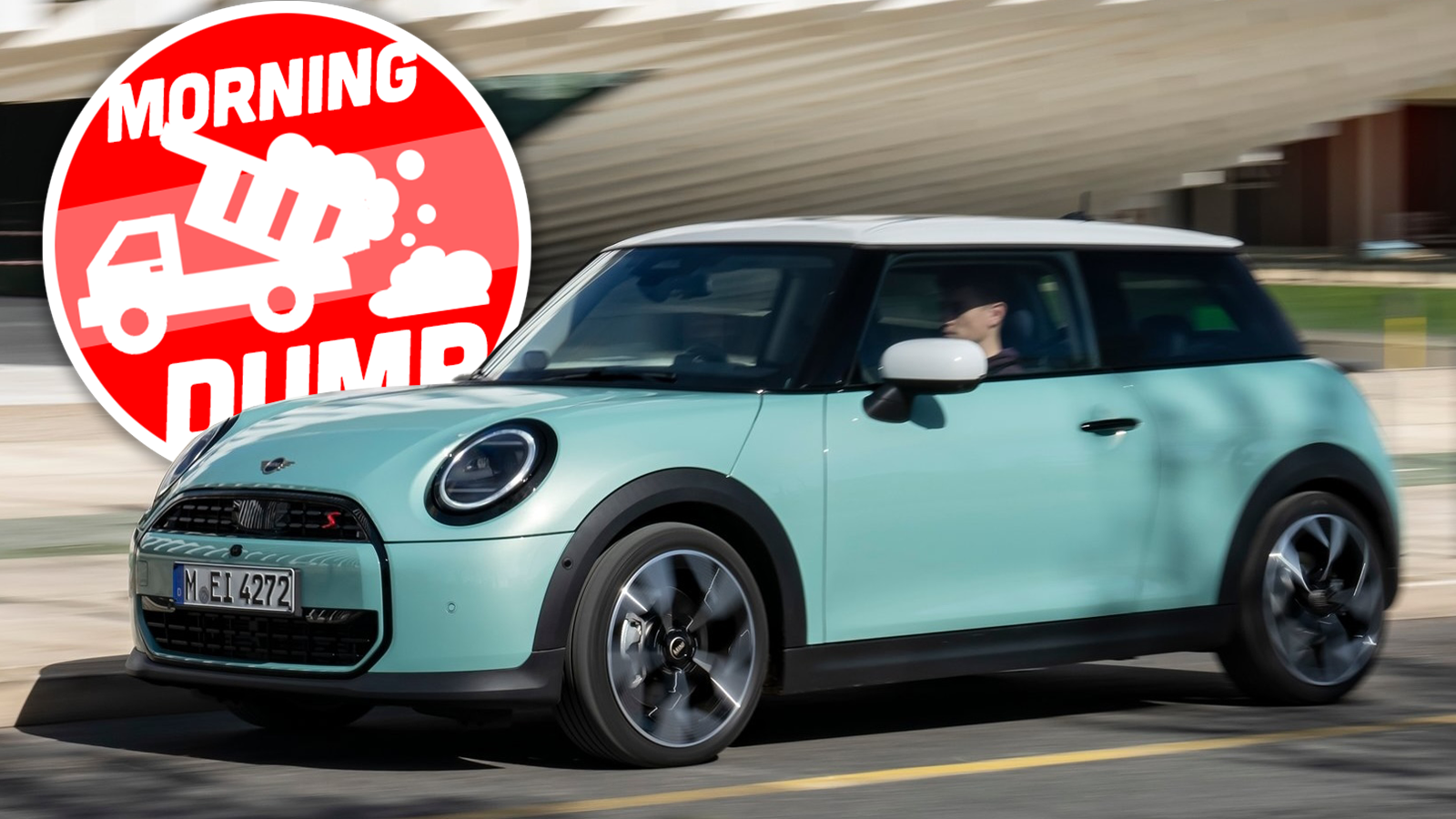
For some reason, I keep finding myself returning to Jean Baudrillard’s “Simulacra and Simulation.” Maybe it’s the way algorithmic social media no longer resembles actual sociality. Maybe it’s the strangeness of virtual avatars. Maybe we’re already living in hyperreality. Things to ponder over coffee. Either way, Mini is the car brand that best represents some of Baudrillard’s concepts.
The reborn Mini was a simulation of the original, the Countryman was a step further from reality than that, and now the next Mini might take things a step further again by potentially ditching the biggest thing the original BMC Mini is credited with popularizing.


Meanwhile, the new Jeep Cherokee might have an unusually short model cycle, Mercedes-Benz has done things to the regular C-Class, and decommissioned cop cars could become a source of cheap thrills again at some point in the next few years thanks to a certain twin-turbocharged Dodge. Welcome back to The Morning Dump. Let’s get cracking.
Put That Thing Down, Flip It And Reverse It?

Roughly seventy years ago, British Motor Corporation boss Leonard Lord tasked Sir Alec Issigonis with designing a properly small car in response to a fuel price spike caused by the Suez Canal crisis. What Issigonis came up with changed the world. It wasn’t the first transverse-engined front-wheel-drive car, but it was the first one to sell in the West in serious volume and one of the first to be water-cooled. Gearbox-in-sump aside, the Mini laid the blueprint for the modern economy car. Even the latest modern Mini features front-wheel-drive, but that might change with the next generation. As Autocar reports:
BMW Group engineers told Autocar at the launch of the Gen6 that the firm had no plans to develop a viable front drive unit and that could force the Mini to make the landmark shift.
As previously reported by Autocar, the BMW 1 Series hatchback – which currently shares the petrol Mini’s UKL platform – is set to return to rear-wheel drive as it gains an electric option on the new platform, and BMW’s development boss Joachim Post has previously told Autocar the Mini could follow suit.
A rear-wheel-drive Mini would be strange, but also potentially a riot. Even though cells have grown more energy-dense over the past 15 years or so, a battery pack for an electric car is a relatively hefty thing. The current J01 Mini EV sold outside of America weighs around 400 pounds more than its combustion-powered counterpart, and if lightness won’t be a dominant driving trait, using rear-wheel-drive could really up the fun by taxing the front tires less. As long as it’s still dimensionally tiny, it could be a party if each horsepower’s pushing fewer than 15 pounds like it is on the current Cooper S.
That Was Quick
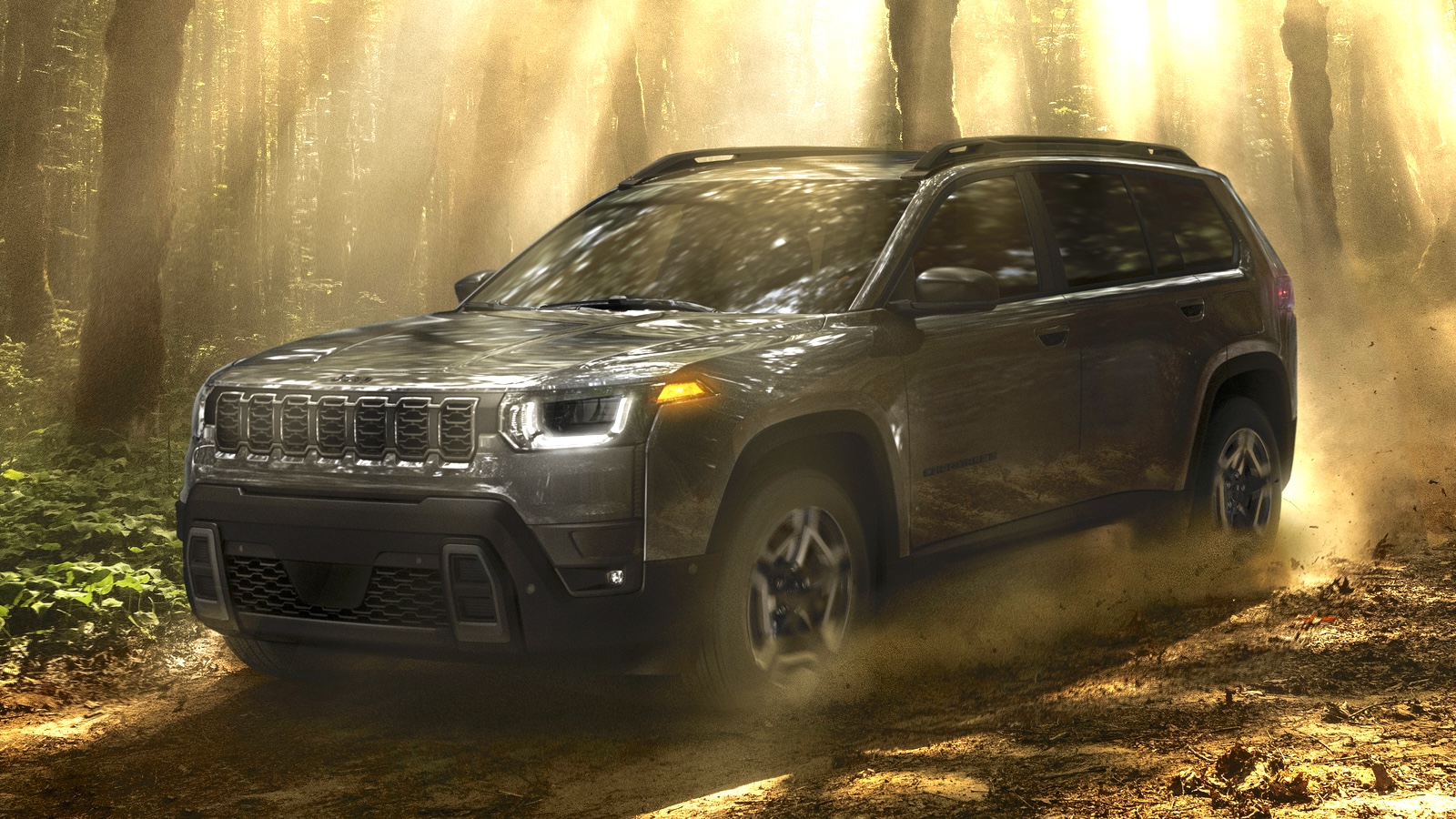
The compact crossover segment is a ruthless battlefield. With strong competition and huge volume, it’s often where automakers give it their all. For instance, a new Jeep Cherokee on a purportedly new STLA One platform is on its way in three years’ time. As Automotive News reports:
Cherokee pilot production is scheduled to start in the first half of 2028, Stellantis said, with retail production targeted for the second half of 2029.
“Launching the next-generation Cherokee on STLA One allows us to deliver a more competitive product while leveraging the strength of our U.S. manufacturing operations,” Filosa said in a statement. “Selecting the right product architecture, timing and execution path supports our growth strategy and creates the best long-term outcome and stability for our employees, customers and stakeholders.”
This is an undeniably strange development because we just got a brand new Jeep Cherokee. Launched for 2026 and codenamed KM, the current model rides on the STLA Large Transverse platform, which isn’t really the same platform as the new Dodge Charger despite that car’s architecture also being called STLA Large. Anyway, it features a 1.6-liter turbocharged engine from the Peugeot parts bin, a transmission from Toyota Group-affiliated BlueE Nexus (seriously, that’s the official capitalization), and a 1.08 kWh lithium-ion battery.
In an age of extra-long model cycles, Jeep replacing the Cherokee with a new model after a mere four years on the market is an incredibly uncommon move. Unless, of course, STLA One isn’t quite what it seems. See, the STLA Medium Transverse platform under the current Cherokee is essentially an evolution of the Compact U.S. Wide platform found under the old Chrysler 200. Will STLA One be a further development of STLA Medium Transverse? Only time and a good look underneath will tell.
Botox’d Baby Benz
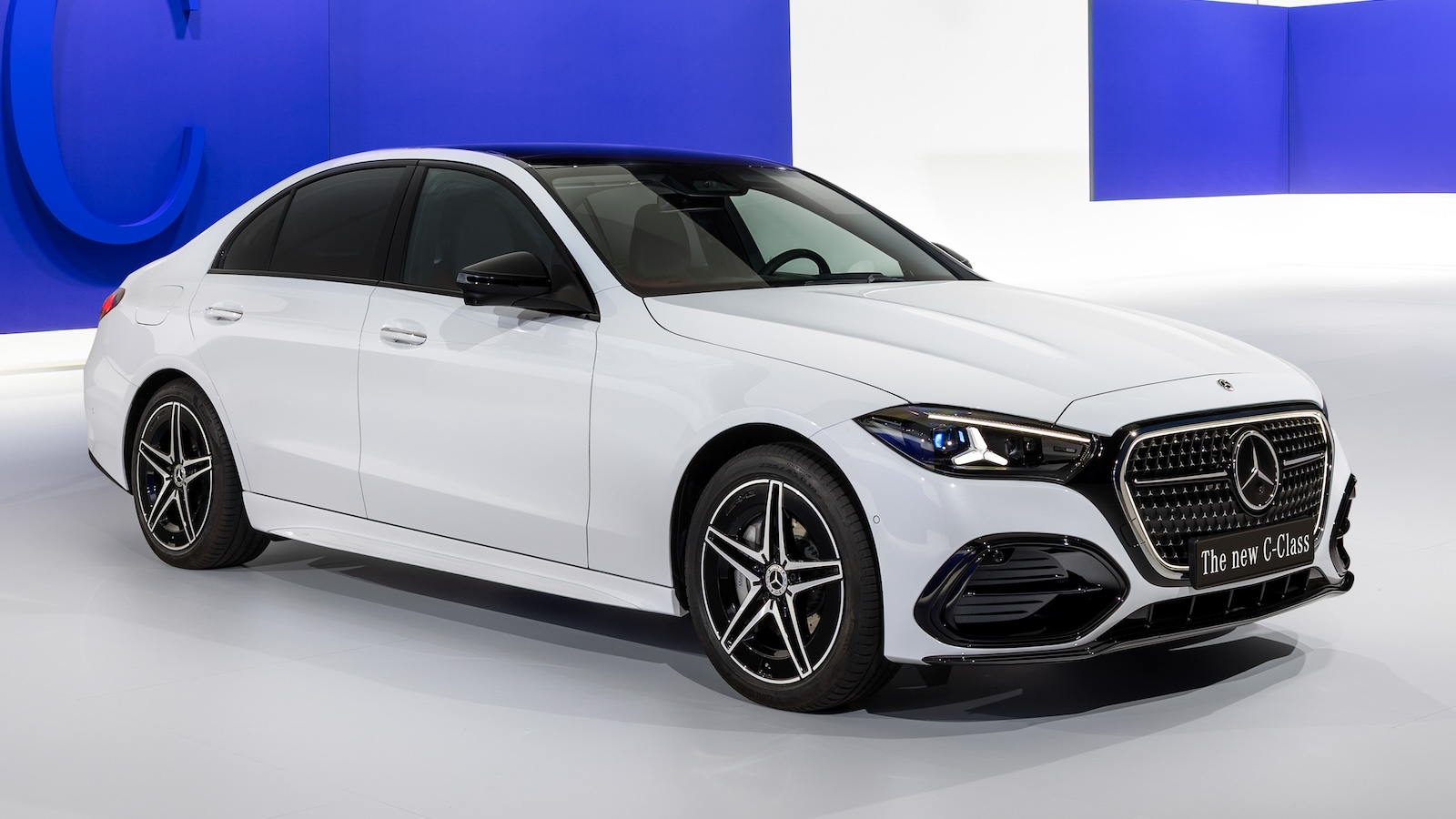
Back in Spring, Mercedes-Benz unveiled an all-new electric C-Class that didn’t look like the gasoline-powered C-Class we’re all used to. The EV features an enormous faux grille just like the electric GLC, and that presented a bit of a brand identity problem. See, Mercedes-Benz seems to have this pathological obsession with visual consistency. An S-Class, E-Class, and C-Class all look similar, so this discrepancy between C-Classes couldn’t stand. That’s right, the regular C-Class just gained an enormous grille and it’s a little bit challenging.
Perhaps its’ the thick black bezel blending into the dark headlamp housings that makes the front end look a bit unfinished. The licence plate placement doesn’t help, and the three-pointed stars in the headlights are certainly something. This is definitely a vehicle for a customer, although I could see it being a bit garish for MB loyalists.
Outside of the grille, this is a rather light facelift for the C-Class. The interior’s still about the same other than an updated steering wheel with a couple of scroll wheels, the infotainment software’s been revised but the screens feature similar sizing and formatting, and the only change out back is to the taillights, which get three-pointed stars in them. Otherwise, there’s a new 48-volt mild hybrid system for the two-liter turbocharged inline-four, a Dolby Atmos-enabled Burmester sound system, and a stack of ChatGPT, Microsoft Bing, and Google Gemini in the infotainment system. Hmm.
Cop Shocks, Cop Tires
View this post on Instagram
Remember when decommissioned cop cars were a source of cheap used car thrills? Slidey Crown Vics and Caprices, amusingly quick twin-turbo Tauruses, snow-munching all-wheel-drive V8 Chargers. Now, if you buy a recent decommissioned police car, it’s probably going to be a Ford Explorer (technically a Police Interceptor Utility), a Chevrolet Tahoe, or a V6 Dodge Charger. Decent transportation, but not exactly mayhem machines. That should change in the next few years because Dodge just stealthily showed off what a Charger Six Pack police car would look like. Team One Network, an industry association for law enforcement hardware, got a glimpse of a new Charger PPV prototype of sorts, and it looks rather interesting. As the Team One Public Safety Division wrote on Instagram:
The @dodgelaw Charger PPV is BACK! #dodge had what will be the 2027 Dodge Charger PPV on display during the Police Fleet Expo at the Daytona International Speedway today! Orderable in the summer of 2027. AWD is standard.
What we have here is a five-door liftback with a twin-turbocharged straight-six and all-wheel-drive that should eventually be unloaded at government auction prices once it goes into production, then through service. Assuming most will come equipped with the standard-output 420-horsepower engine, that could be a lot of power for not a lot of money. If production does indeed kick off in 2027, expect to see second-hand models start showing up in the used car market around 2030. Could be the move for cheap speed.
What I’m Listening To While Writing TMD
Is The Hellp unbearably pretentious or genuinely one of the few interesting bands to break through in the past few years? Maybe it doesn’t matter. The lyricism of “Live Forever” may be abstract and esoteric, but the track itself bottles a certain feeling beautifully. Not a bad way to end a studio album, this.
The Big Question
Over the past decade or so, Mini’s been in a weird spot. It’s not quite a traditional enthusiast brand anymore, but at the same time, everyone’s wondered where it’s going next. You can only rehash the same retro modus so many times, after all. However, would a rear-wheel-drive three-door Mini hatchback actually appeal to enthusiasts, even if it’s electric?
Top graphic image: Mini



Holy shit. Already killing a brand new car is madness…especially considering the new Cherokee is:
1). Fairly attractive
2). Competitive on paper
Of course it’s been plagued by the usual Stellantis QC problems…but Jeep owners happily put up with that shit for the most part. I had no idea it’s been selling so poorly. I get that that’s a competitive class but there’s no reason why a hybrid soft roader with classic Jeep looks should be such a slow seller.
It’s basically everything the market wants on paper. Is it THAT bad to drive or that poorly put together that people are sitting in them and immediately leaving the dealerships? This is genuinely perplexing to me, especially considering Toyota keeping the RAV4 artificially scarce and hybrid Foresters being a relative hit.
What the hell is wrong with it? Even with the QC issues and whatever is pissing potential customers off you’d think they could turn it into a good car by the mid cycle refresh. People still buy the current Grand Cherokee and that car isn’t really competitive in its class anymore.
Is it just a situation where Stellantis customers are furious about the fact that it’s a hybrid and don’t feel like a car is adequate unless it’s as damaging to the environment as possible? Are they re-engineering it to shove a V8 into it? Is the new one gonna roll coal? I’m very confused, and Stellantis’ recent return to their FUCK YOU YOU STUPID FUCKING IDIOT IT HAS A HEMI approach might make the line go up for another year or two but eventually there will be a new administration that doesn’t have committing violence against the environment on its list of priorities…
I believe the next gen Mini MUST be an EV – whether it’s FWD or RWD is unimportant.
Mini intenders are not wedded to ICE engines – they’re wedded to cute, individualistic and efficient small cars.
Will the RWD Mini be rear-engine/motor like the Twingo?
I imagine so, as it would be silly to have a front engine/RWD EV Mini.
They already long ago lost the one thing that makes a Mini a Mini, which is that it’s very small.
They’re fairly small still, especially in the US market. Be mad because cars in general are too big, not because MINIs are too big.
I don’t think people who would buy a mini in the 2020s give a hoot.
“would a rear-wheel-drive three-door Mini hatchback actually appeal to enthusiasts…”
Why wouldn’t it? Traditional enthusiasts tolerate FWD, they generally don’t go looking for it.
“…even if it’s electric?”
Well, that’s a complication. EV is a bit of a divider where some will love the Mini for it and others will write it off.
Personally, having just driven a FWD BMW 123 hatch, if moving to RWD restores some kind of steering feel they should go for it and not look back. The Camry we used to own permitted more information through the steering wheel than that BMW did.
It’s like people want the car to fail. If BMW wants to make something weird, I’m all for it. Who knows what’ll be like.
I was expecting “being MINI in size”. I don’t think they’re very MINI.
“The Next Mini Might Lose The One Feature Everyone Expects From A Mini”Consuming an ungodly amount of oil?
Timing Chain Stretch and Overheating. Or possibly Rough running motors from Carbon build up or fouled plugs.
I’d argue Mini has been retro since…probably the Metro superceded it as the contemporary British Leyland economy car. Because they just kept making Minis, and even reverted to the old Austin/Morris face instead of the later one. But part of the Mini Legend is a little car hitting well above its weight. A point that becomes increasingly moot the bigger and heavier the cars get. FWD is a part of the legend – the old trope of “boot it and straighten out” – and an indelible part of the brand’s identity. Will adopting the rival Beetle’s layout – because like Hell are they going to stick the EV motor in the front with a driveshaft to the rear wheels, that’s stupid – make the Mini instantly ruined? Maybe not, but it’s hard to argue that it won’t just feel like a smallish electric BMW instead of a sprightly city car.
The revival of MINI was largely created on what was effectively another retro-mobile. Yes, there were performance models for enthusiasts, but the bread-and-butter cars were sold on the basis of being “cute”. Sales in the US haven’t exceeded 35k since 2019. Hardly anyone in the US wants a cute retro-mobile any more. I’m calling it dead brand walking, at least in the US.
Correction: A manual transmission was the one feature everyone expected from a Mini.
Unfortunately that’s already dead and gone, the last stick Mini’s were built in early 2024.
TBQ: Mini has abandoned the true enthusiast market, and a switch to RWD will not change that, certainly if it goes EV heavy. Mini was reasonable in realizing it’s appeal was not broadly enthusiasts, but as a foil for Jeeps in the lifestyle/customizable space. Mini appeals broadly to the base of people who want something that’s a bit quirky, much more customizable than a normal car, and has some flair to it that stands out. The current Mini lineup has zero manuals, their current lineup has horrific reviews for it’s DCT calibrations (ie not enthusiast friendly) and BMW as a whole is leaving manuals behind.
The switch to a RWD base will be purely from a convenience and corporate decision standpoint, but I see no reason to believe that they will suddenly change course on tuning and setup. Heck, they’re cramming a crappy AI assisted dog avatar into screens as a “virtual assistant” that their marketing centers around. If that doesn’t scream “enthusiasts mean nothing to us” then nothing will.
I was shopping the Mini Clubman back around 2010, and remember wishing it was RWD. So maybe there is a market for it.
Interestingly enough, the Rover Mini I picked up a few months ago is my first FWD vehicle. Now maybe I can get another Mini that’s RWD to tow it around?
It’s not a segment I shop in, so feel free to tell me I’m way off base here, but if the Mini and the 1 series are sharing a platform and RWD, why would BMW not just sell the 1 series here instead?
Why make a Mini at all, if it’s presumably going to sacrifice space for the RWD layout? Is the brand that strong? Mini Cooper sales in 2024 and 2025 (and so far this year) were the lowest of all time and less than a third of their peak two decades ago. The experiment might have run its course.
I’m the weirdo who wants a small platform BMW rwd shooting brake in the US. They have it in Europe. But to your point, I think the BMW bodied car would be easier to sell than a quirky mini.
The old BMW 1-series 5-door hatchbacks were a beautiful profile. But the rear seats were absolutely pathetic; they should have abandoned the pretense and lost the rear doors altogether.
I think Mini is a bit lost, they started to lose the enthusiast crown as they made their cars bigger, and have pivoted to be heavy on image, technology and customization. Seriously, I just looked at the Cooper configurator and it is incredibly vast. Ultimately these seem to be lifestyle cars akin to Wranglers more than pragmatic transportation, so I suspect a RWD platform push won’t make much of a difference other than helping push a “premium/luxury” brand image.
That’s sort of my point though, no matter how premium the Mini brand becomes, I doubt it will eclipse a BMW badge. And if the customization isn’t selling cars, maybe a 1-series makes more sense (and would be cheaper to develop) anyways.
“The Next Mini Might Lose The One Feature Everyone Expects From A Mini”
Nighmarish reliability?
Sorry, I’ll go read the article now.
Keeping the legend alive, or why break with tradition.
I look forward to police vehicles in North America being cars, again.
Fix the cigarette lighter.