

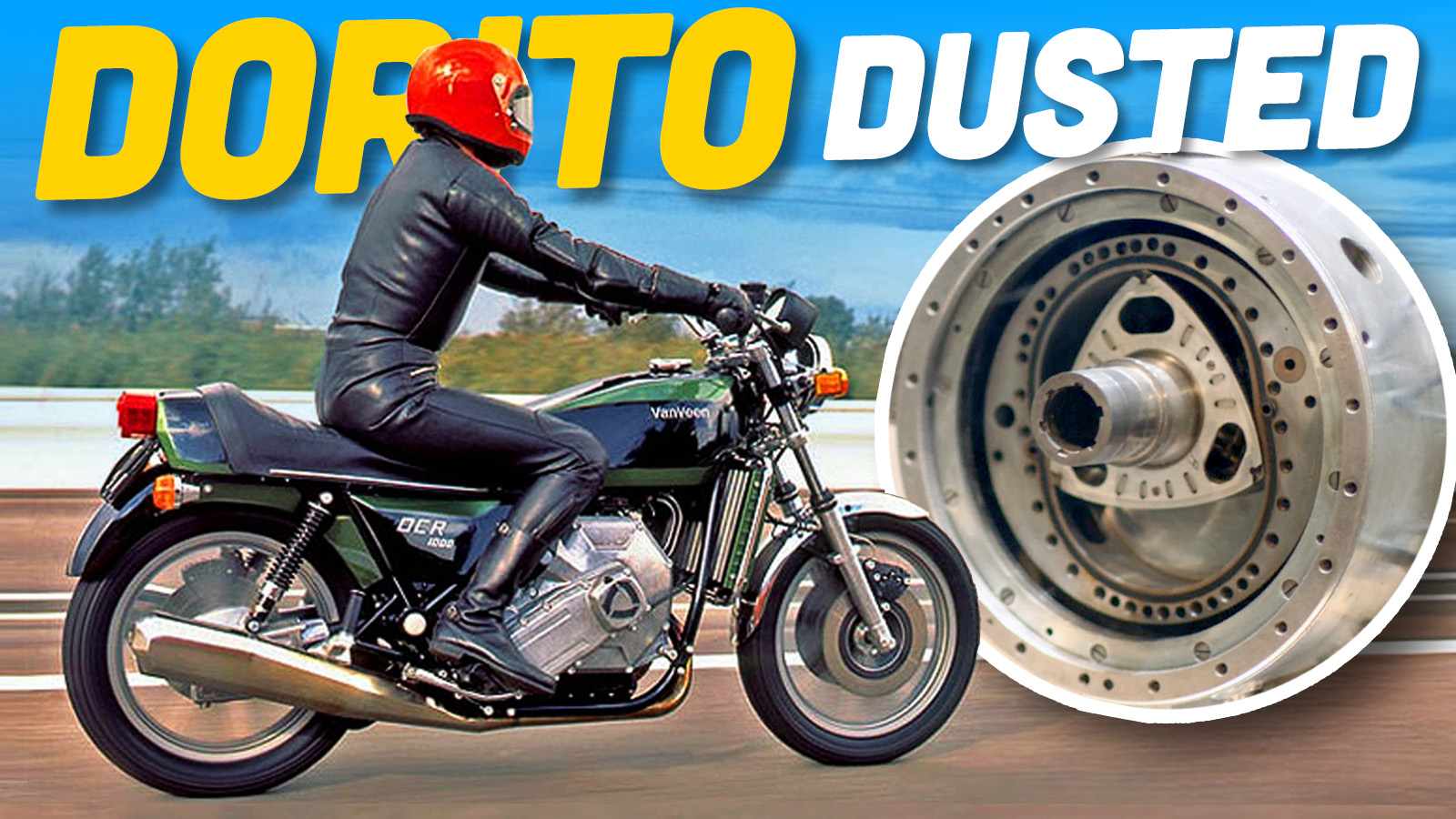
Throughout motorcycle history, there have always been builders who try to push the envelope and do something different. Countless designers have been drawn by the allure of diesel engines and Wankel rotaries and some tried building marketable bikes around them, and almost all of them eventually failed. Back in the 1970s, the rotary was thought to be the next great thing in motorcycles, with several entities trying their hands at making a rotary motorcycle work. One was Van Veen, and his plan was ambitious. The Van Veen OCR 1000 was a 100-horsepower twin-rotor beast from the Netherlands, and it cost more than many cars. Here’s why only 38 were built.
Some ambitious motorcycle designs seem almost guaranteed to fail, almost as if they’re cursed. Diesel-powered motorcycles fit this category. There are only two diesel motorcycles in history that could be classified as “mass-production,” the Royal Enfield Diesel and the HDT M1030M1. Of those two, only the Royal Enfield managed to sell far more than 500 copies, and even it is not around anymore.


Yet, that hasn’t stopped countless dreamers and builders from slapping a diesel engine into a motorcycle frame, selling a handful of examples, and then going bust. It’s amazing, too, because diesel motorcycles have spanned tons of different styles, roles, and levels of performance. There have been diesel sport bikes, diesel commuters, diesel adventure bikes, and even diesel cruisers. There was once even a proposed diesel-electric hybrid scooter. All of these ideas either went nowhere or disappeared quickly.

There appears to be a similar curse with Wankel-powered motorcycles. In theory, rotary engines should be great for motorcycles. Wankel engines have fewer moving parts than piston engines, are generally compact, have a high power-to-weight ratio, and are as smooth as turbines. In theory, a small rotary engine can make big piston power but in a tiny package, and then rev to the moon while doing it. These proposed benefits of the rotary have drawn countless builders to the spinning triangle engine like a moth to a flame.
Yet, just like the soot-covered builders of diesel motorcycles, the Dorito-heads have each found out why piston engines and electric motors reign supreme today. Perhaps the most ambitious rotary motorcycle was one of the first. The Van Veen OCR 1000 wanted to beat the world, but it ended up barely existing.
Rotaries Seemed To be The Future
The Van Veen came from a fascinating time in vehicle history. In the 1960s and the 1970s, NSU Motorenwork AG handed out licensing to Felix Wankel’s distinctive engine like candy. At the time, the real-world performance of the rotary wasn’t yet known. Instead, engineers mostly had the proposed benefits of a smaller and lighter engine with fewer parts, no vibration, and incredible performance potential. I can only imagine how seduced engineers were by the prospect of a tiny power pack that put out huge numbers and, in theory, could be more reliable than an equivalent piston engine.
Here’s what I wrote in the past regarding the origins of the Wankel:
German engineer Dr. Felix Wankel is credited with coming up with the idea for the rotary, also known as the Wankel engine, in around 1919 when he was just 17 years old. Wankel started building prototypes years later and finally earned a patent in 1929. Wankel’s development then slowed until he joined the Nazi Party and its Aeronautical Research Establishment during World War II. There Wankel would continue his work on his engine. Reportedly, the Nazis believed Wankel’s engine could give them an advantage in the war. Later, he’d arrive at NSU Motorenwork AG. By 1957 the rotary was no longer just a proof of concept but Wankel had running prototypes. Felix and NSU earned more patents and were quick to license out the technology.
Wankel is the inventor of the rotary gasoline engine, but the idea of the rotary sprouted up hundreds of years before him. Ramelli invented a rotary-piston-type water pump in 1588 while James Watt had a rotary steam engine in 1769. Though, it’s perhaps notable that neither of those earlier designs resemble the spinning triangles of the Wankel.
[…]
[B]ecause a rotary completes three full Otto cycles (intake, compression, combustion, exhaust) per rotation, a little 300cc rotary could produce the kind of power a piston engine of double the displacement puts out. Further, Wankel engines are nearly turbine engine-smooth with a broad rev range.

NSU was happy to license out the tech to anyone willing to take it on. A non-exhaustive list of everyone who took a stab at rotaries includes Alfa Romeo, AMC, General Motors, Norton, Datsun, Citroën, Rolls-Royce, John Deere, Daimler-Benz, KHD, Krupp, MAN, Mercedes-Benz, NSU, Honda, Kawasaki, AvtoVAZ, Ford, Ingersoll-Rand, Savkel, VEB, Midwest Engines, Outboard Marine Corporation, Mazda, Curtiss-Wright, and Yamaha. Basically, most of the biggest players in transportation took a swing at rotaries for cars, trucks, motorcycles, boats, air-conditioners, and planes.
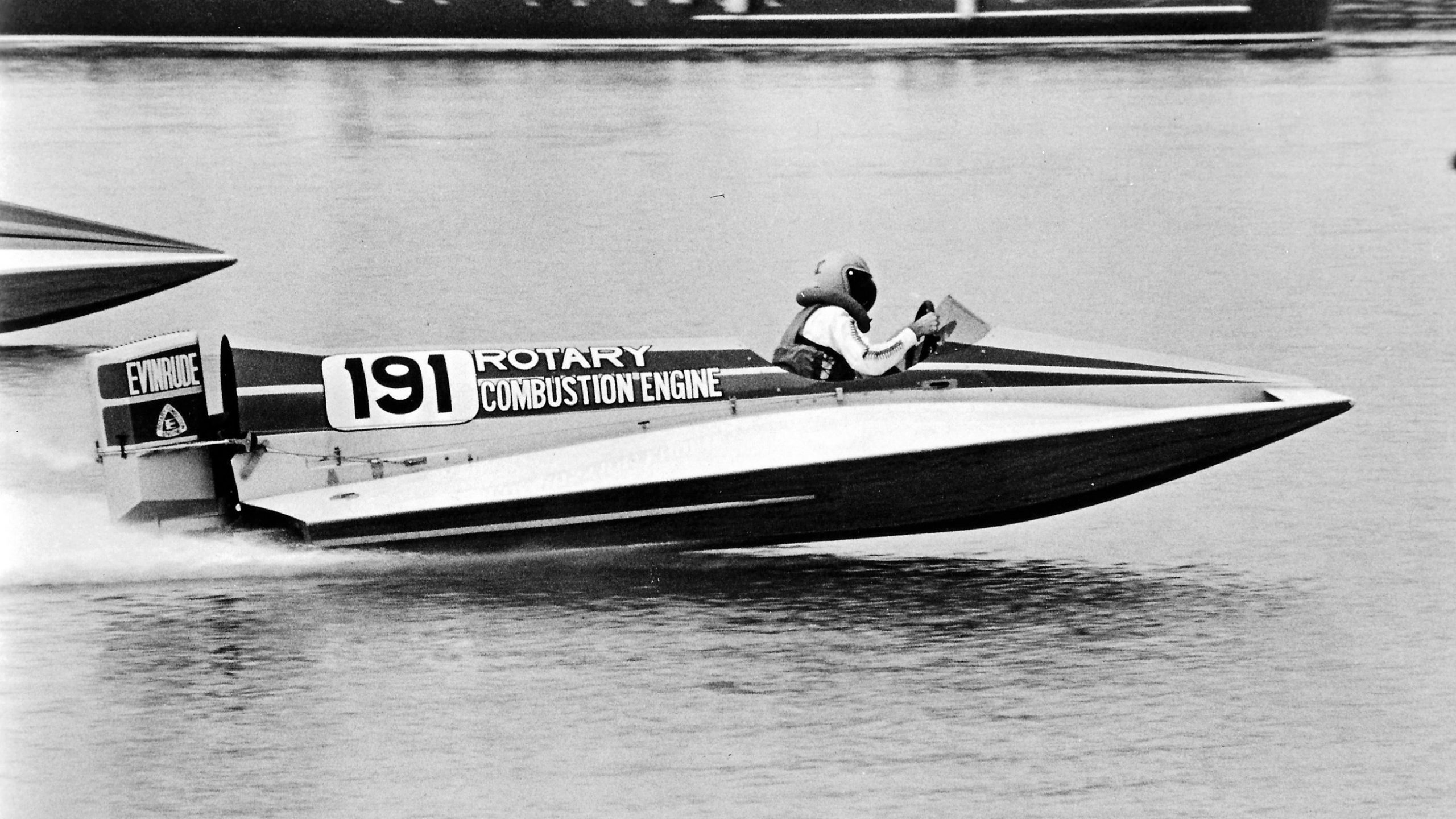
Some of these companies tried to make rotaries work more than once, including General Motors. Mazda was so obsessed with Wankels that, in the 1970s, half of all the vehicles it sold had rotaries. Check out this rotary-powered racing boat!
As the years rolled on, each and every manufacturer found out that it was extraordinarily difficult to get a rotary engine to achieve anything near its theoretical promises. Manufacturers also figured out the hard way that Wankel engines also had a knack for guzzling gas and spewing emissions, further distancing reality from expectations. General Motors famously threw in the towel on rotaries in 1977, stating that the engine just couldn’t meet expectations.
It would take a long time for some other manufacturers to reach the same conclusion as General Motors did. In some ways, that was great, because the world got some truly weird machines out of it. Suzuki and Norton were insane enough to try to fix the rotary’s numerous engineering problems before equipping them in motorcycles. But before them? There was Van Veen, and this rotary bike might have been the craziest of the bunch.
Big Dreams
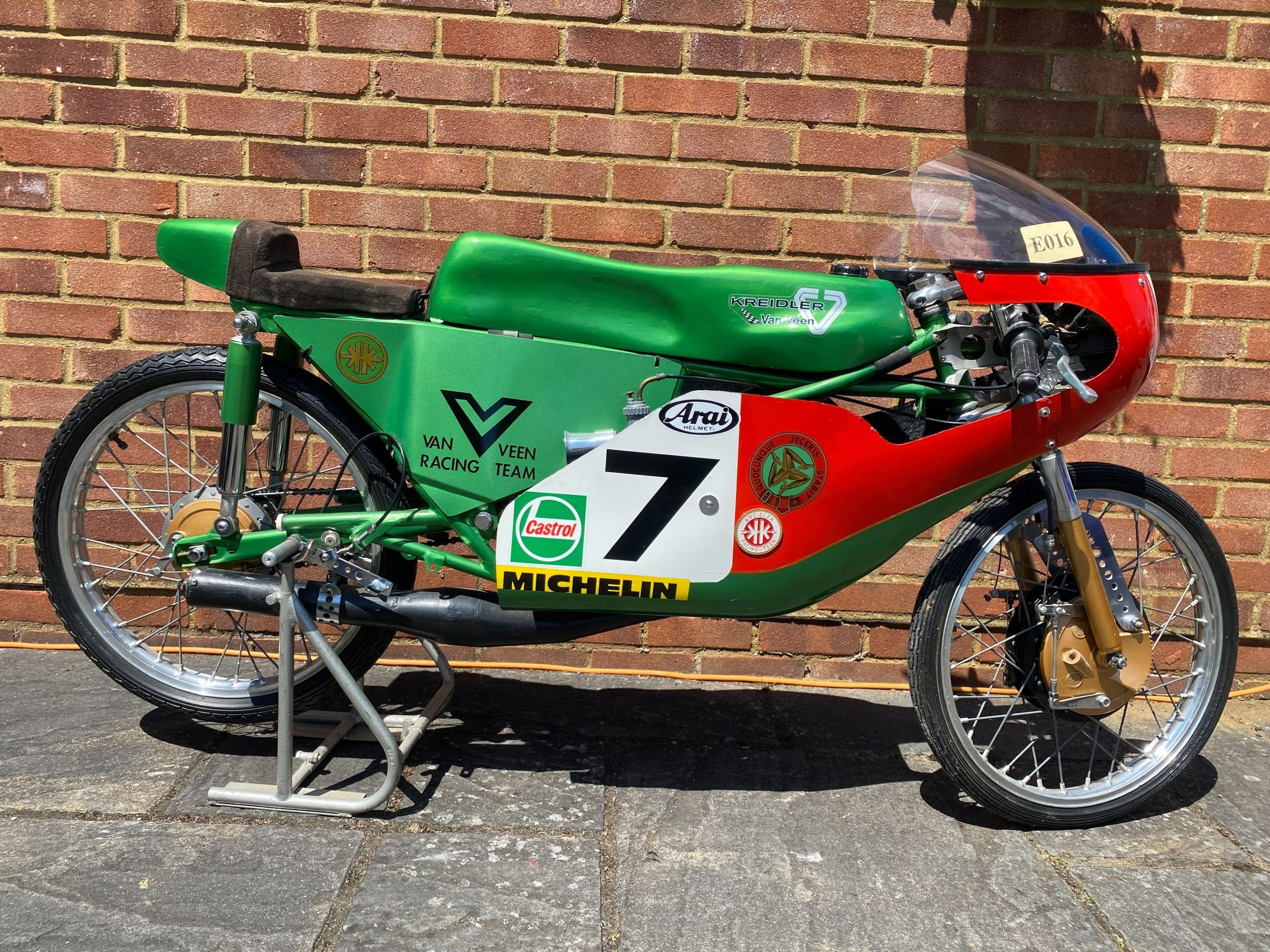
This story starts at the dawn of the 1970s with Dutchman Henk van Veen. In the decade prior, Van Veen made a good business for himself importing German 50cc Kreidler mopeds and minibikes into the Netherlands. By 1971, Motorcycle Classics writes, Van Veen moved over 100,000 imported Kreidlers.
Van Veen’s fortunes in motorcycle imports were good enough that he was able to modify the tiny 50s and took them racing in so-called “tiddler” Grand Prix motorcycle racing. His baby racers were proficient, too, and racers on Van Veens took four world championships.

This era also saw the rise of the superbike. In 1969, Honda launched its iconic CB750 Four. Kawasaki would punch out its own Z1 in 1972. Van Veen wanted his own superbike, too, but found that Kreidler didn’t have the kind of firepower that he was looking for. So, Van Veen took the big step into becoming his own motorcycle manufacturer. But Van Veen couldn’t just do the same thing everyone else was. His superbike was going to be special.
Van Veen began rotary motorcycle development in 1971. First, he built a rotary motorcycle by snatching a 1,000cc Wankel out of a Mazda Cosmo, and shoved it into the frame of a Moto Guzzi V7. The result was a seriously fast 100 HP bike that had no pistons. The power this bike put down was huge. Remember, the Honda CB750 Four made 67 HP and the Kawasaki Z1 made 82 HP. Here was Van Veen with more or less a shed build with greater power numbers.
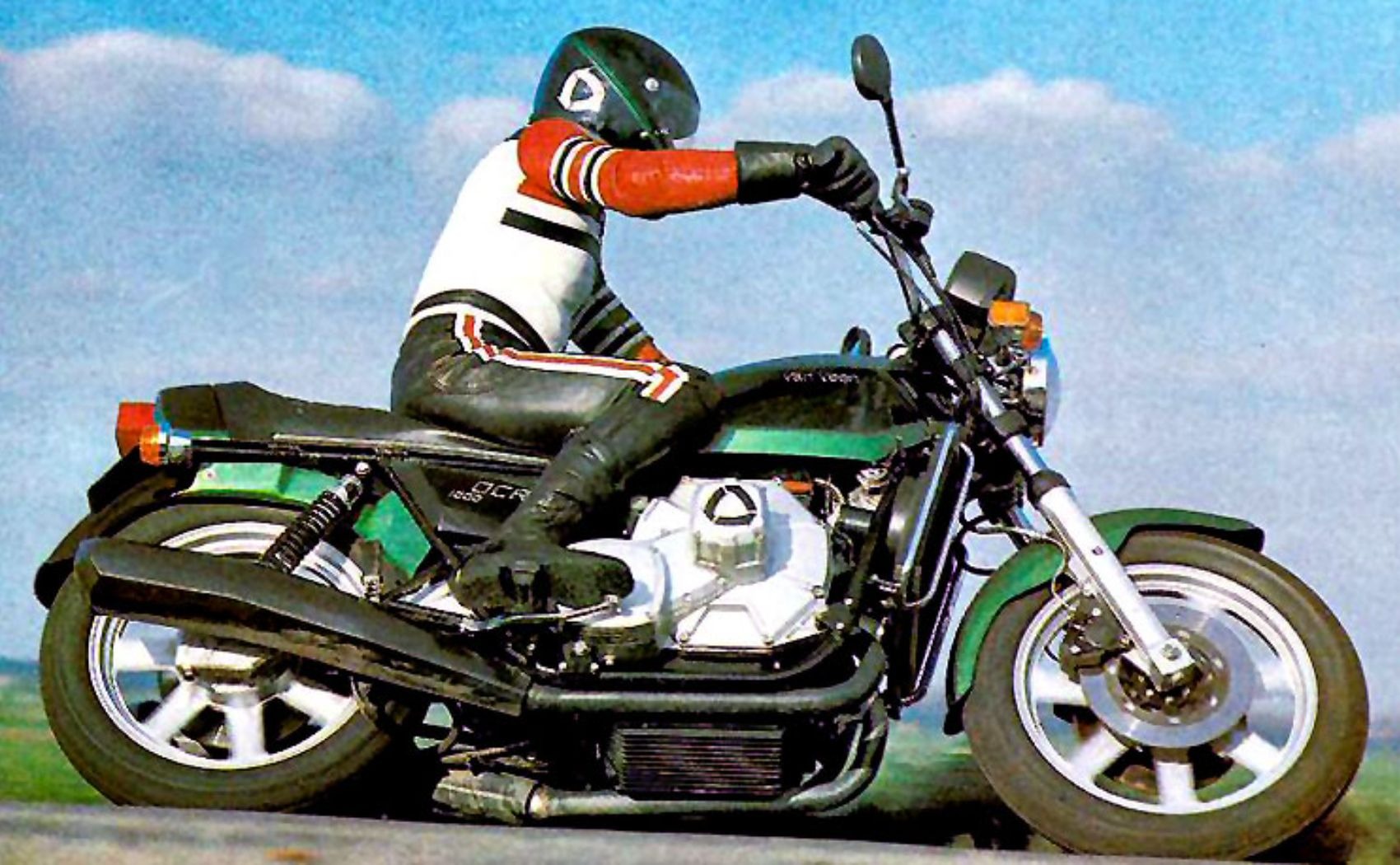
In 1972, Van Veen decided that this motorcycle had to go into production. Now, Van Veen didn’t know much about making a fast motorcycle from scratch, but motorcycle racers did. Van Veen pinched one of his Kreidler 50cc racers, Jos Schurgers, for the job. Schurgers joined forces with British designer Simon Saunders to make the Van Veen OCR 1000. Reportedly, while Schurgers designed the rotary bike, he managed to place on the podium twice in two racing championships. Talk about a hustle!
If the name Simon Saunders sounds familiar, he’s the founder of the modern incarnation of Ariel, the maker of the Atom track cars.
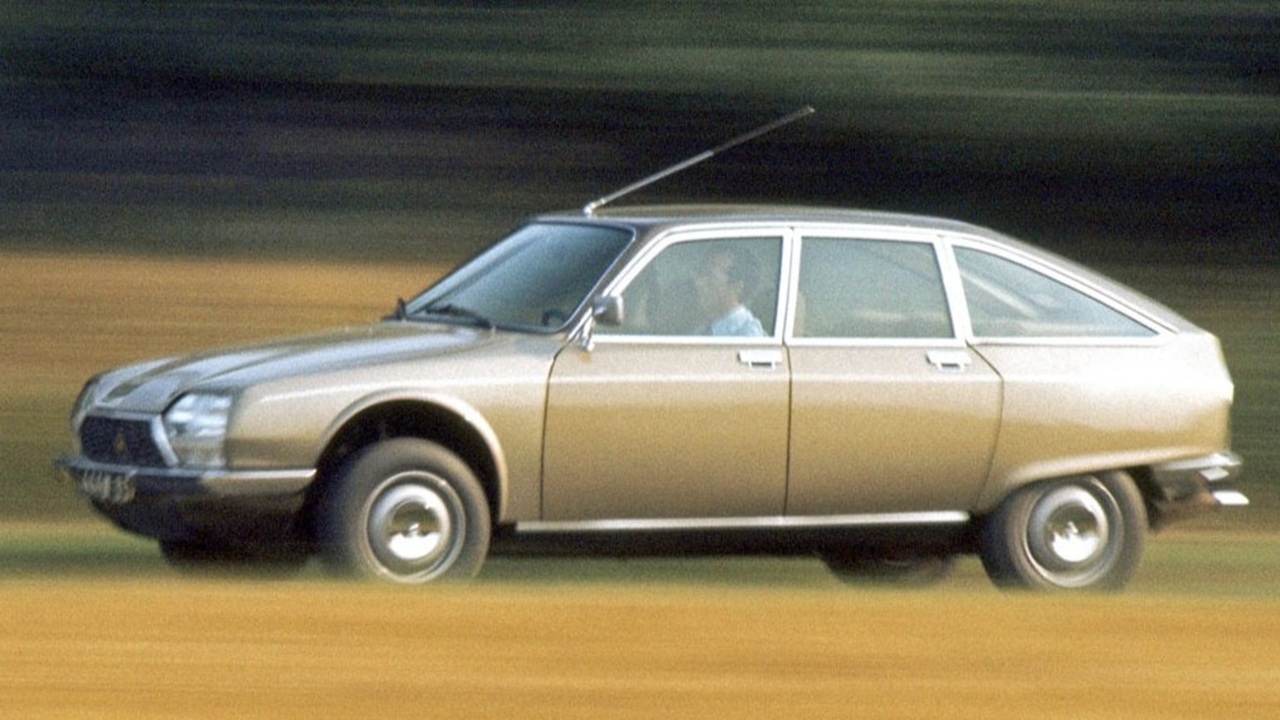
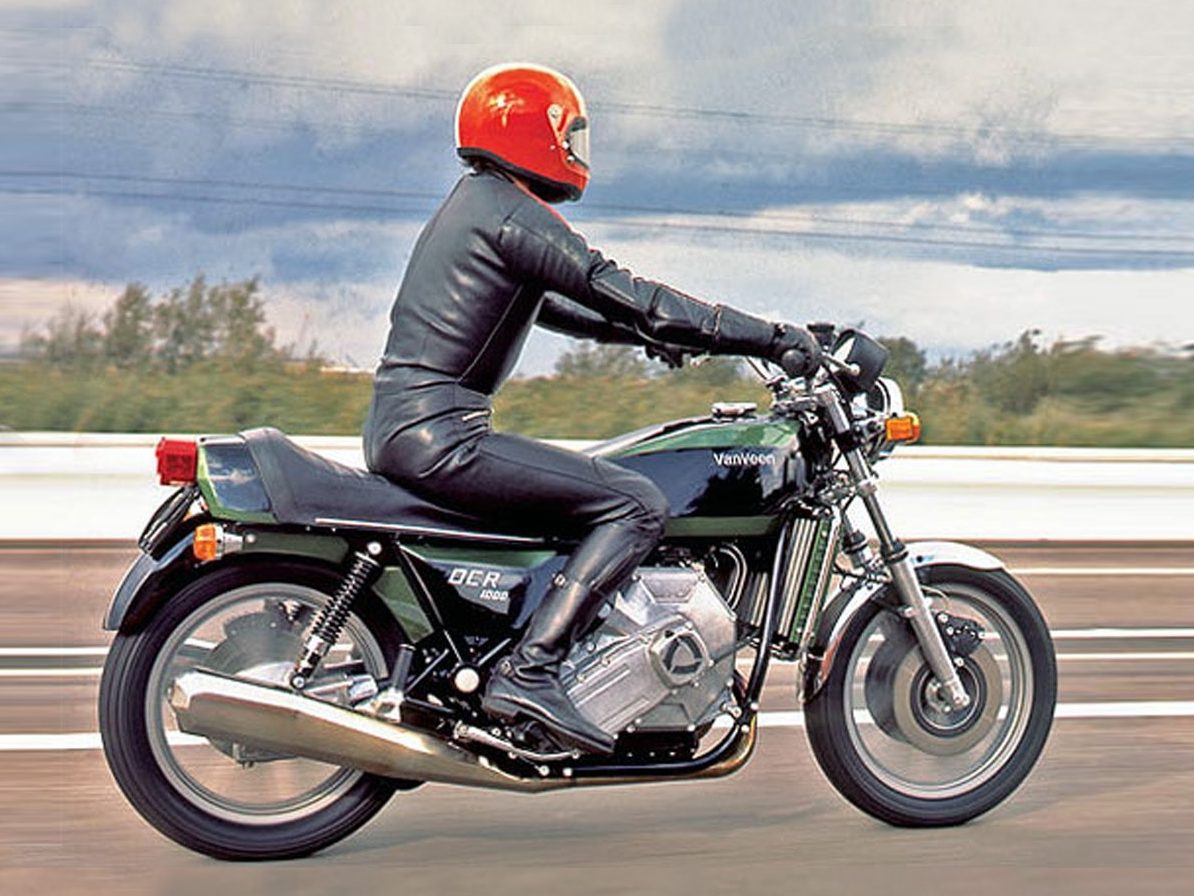
The production version of the Van Veen OCR (Oil-Cooled Rotors) 1000 was just as crazy as the prototype. Saunders and Schurgers sourced the bike’s engine from Comotor, the failed joint venture between NSU and Citroën. The engine was intended to be used in a car and was housed in the Citroën Birotor GS (above), but the Van Veen guys fit it into a bike frame. That was part of the brilliance of the Wankel engine. It was so small that even a Wankel for a car didn’t look too out of place on a motorcycle.
The twin-rotor engine had impressive specs as a motorcycle engine. It made 100.4 horsepower at 6,500 RPM and had a swept volume of 996cc. That’s two 498cc rotors, if you’re curious. The engine was healthy enough to produce 60 HP at 3,000 RPM. Other notes about the engine included its oil-cooled rotors and water-cooled engine case.
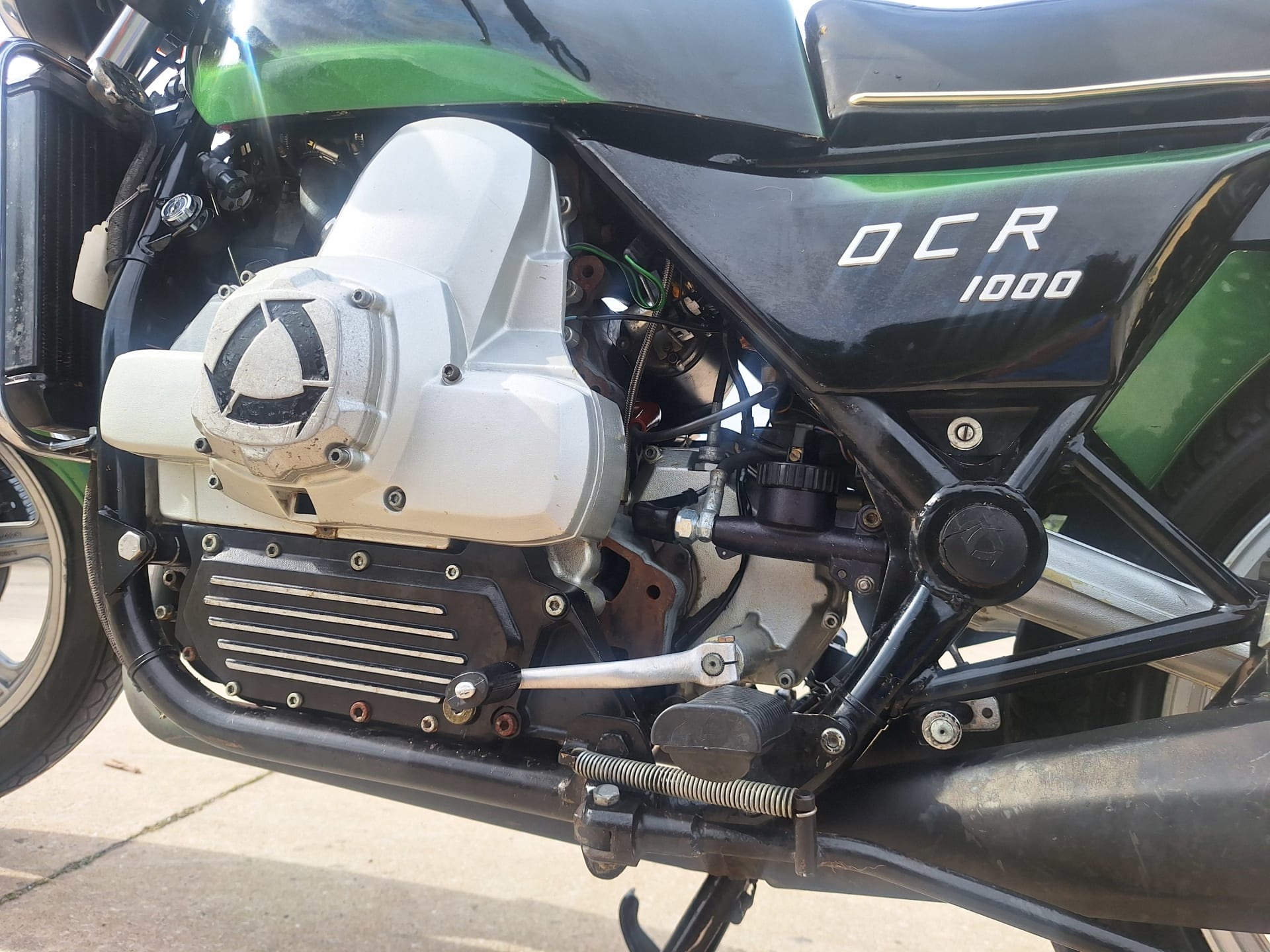
There was enough juice that, despite the motorcycle’s porky weight of 642 pounds, it could hit 60 mph in 3.5 seconds and race on to a top speed of 139 mph. Power reached the ground through a four-speed transmission, which had some Porsche internals, and spun the rear wheel via shaft drive. Those were impressive numbers for the early 1970s!
The rest of the bike consisted of a dual downtube steel frame designed by Jaap Voskamp, a 42mm telescopic front fork, twin rear shocks, 18-inch wheels, and Brembo disc brakes front and rear. Van Veen inked out a deal with Comotor for the latter to produce the engine in batches of 50.
With all of the pieces set, Van Veen revealed the OCR 1000 to the crowd at the motorcycle show in Cologne in 1974. Since everyone was obsessed with rotaries at that time, the Van Veen’s immediate competitors included the Hercules W-2000 and the infamous Suzuki RE-5.
Henk Van Veen was ambitious with the OCR 1000. The Hercules and the Suzuki had only single-rotor engines and much lower power outputs. The OCR 1000 had superbike-beating performance numbers and two rotors. Van Veen was so confident in his bike that he called it ‘The World’s Finest Motorcycle.’ The bikes went on sale in 1976. The price? A cool $15,000, or $87,442 in 2025.
To put that price into perspective, a 1976 Cadillac Eldorado was $11,049 ($64,410 in 2025) as a base convertible, or $14,270 ($83,187 in 2025) with several option boxes checked. The price you paid for a Van Veen OCR 1000 could have gotten you a seriously luxurious convertible.
The Van Veen Flops
Unfortunately, Van Veen also found itself butting against reality. Van Veen saw itself cranking out 2,000 OCR 1000s a year, but that almost immediately became impossible when Comotor ended production of the engine and then folded. The motorcycles also suffered from reliability problems as Comotor, like pretty much every other manufacturer in the 1970s, never refined the engine’s apex seals, leading to seal failures. Complaints by testers included a poor throttle response, heavy steering, brakes that couldn’t handle the power, and an imprecise gear change. Then there was the 24 mpg fuel economy, which sucks for a motorcycle, and was even harder to swallow during the oil crisis.
The biggest problem was just that Van Veen found very few takers for a motorcycle that cost more than a Cadillac. Or, more specifically, from 1976 to 1981, Van Veen convinced only 38 people to buy its rotary bike. The OCR 1000 sold so slowly that it didn’t matter that Comotor shuttered, because the 38 bikes that were built didn’t even use up all of the available factory parts.
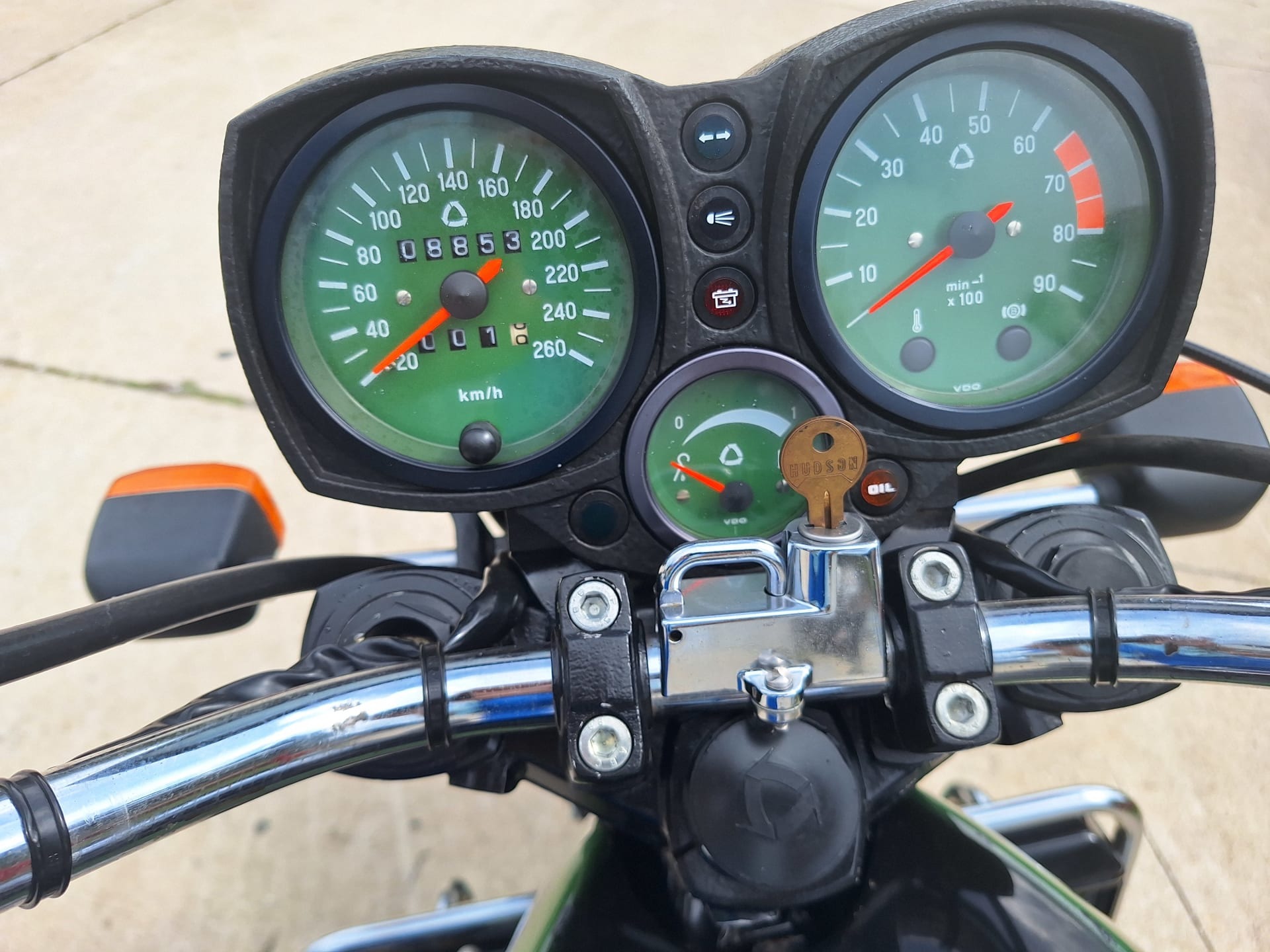
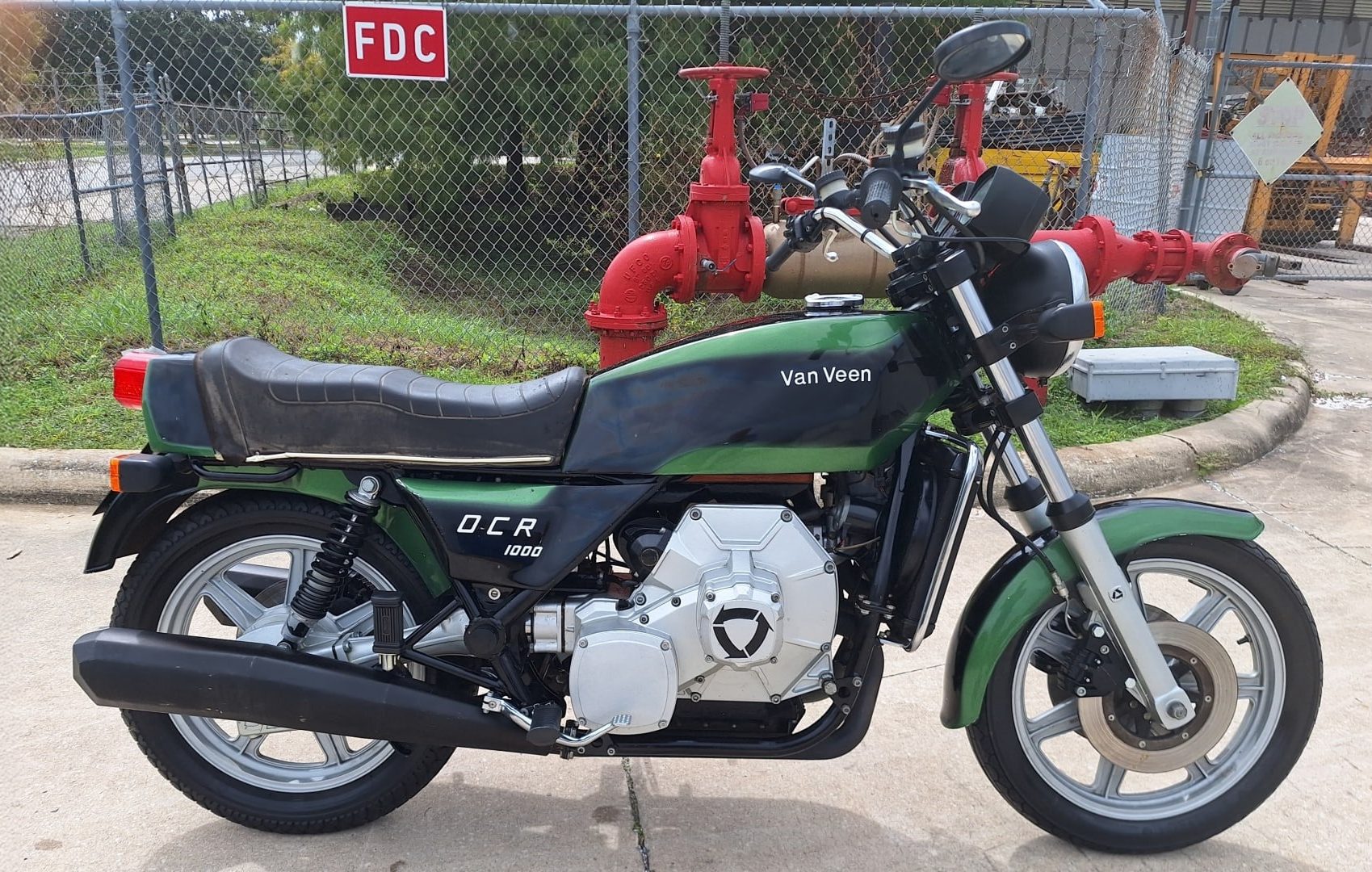
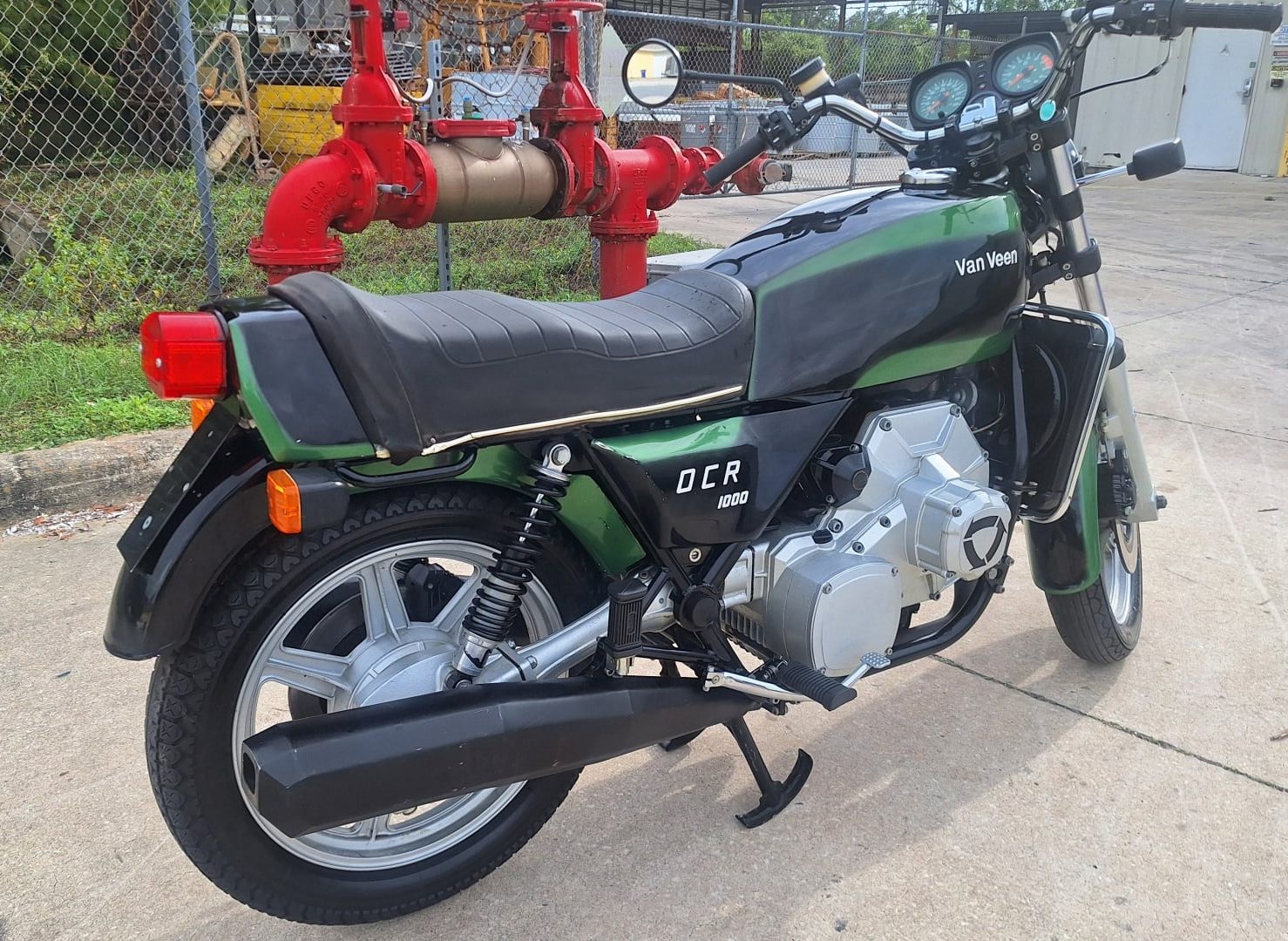
The aftermath of the Van Veen’s failure was sad. Dutch rotary expert Ger van Rootselaar purchased all of the assets from the OCR 1000 project, but he managed to build only a single motorcycle. Remember, Van Veen ordered engines in batches of 50, so there were brand-new, unused engines sitting around. Eventually, the parts fell into the hands of Andries Wielinga, who put the bikes back into production in 2010. Just 10 more were built, and each one cost about $115,000. A photo of one of the new ones is below.
Van Veen was far from the last motorcycle company to take a swing at rotaries. Norton made absolutely bonkers rotary-powered motorcycles into the 1990s. But eventually, all of them died. Nobody makes a mass-produced rotary motorcycle today, and nobody is in a rush to build one, either. As it turns out, the old-school piston engine does the job just fine.

What’s sad about the Van Veen OCR 1000 is that, if you’re a rotary nut, there’s a chance that you know about these motorcycles, but they’re so rare that it’s unlikely you’ve ever seen one. I do have good news on that front. One 1978 Van Veen OCR 1000 will be going up for sale in the Mecum Auctions motorcycle auction going down in Las Vegas from January 27 to January 31, 2026.
Like all of the failed motorcycles I’ve written about, I find it hard to hate this beast of a bike. Yes, it was too expensive, too complicated, too unreliable, and too inefficient. Yet, it’s hard not to cheer for it. This is a motorcycle that tried to do something different. Unlike some rotary projects, it also actually went into production, too!
If anything, the Van Veen OCR 1000 is just a perfect representative of the craziness of the 1970s. The projects were absurd and made little sense. But I bet it was hard to be angry riding something like this.
Top graphic images: Van Veen; German Museum Bonn




I rode an RE-5 once. A Suzuki dealer friend invited me to take it for a drive. He told me to put it in 5th at a stop and take off. Feathered the clutch up to walking speed and then rolled on. It accelerated smoothly, making weird rotary noise all the way up to the speed limit. Not a bad bike, but the super-complicated 2bbl carb was impossible to tune.
He had good taste in paint colors. But wow! 24 MPG? If you’re only getting 24 miles out of a gallon of gas, the rest almost certainly had to be emissions.
And when I see OCR, I think of optical character reader. In my newspaper reporter days, I typed my stories on an IBM Selectric typewriter with a special “ball” optimized for OCR and had a “delta” symbol. One delta would delete the previous character. Two deltas would delete the previous word. Three deltas would delete the paragraph and make you a member of usually the prettiest sorority on campus.
Well, at least all the engines sitting about were recycleable. At least, I assume that’s what that logo meant.
Mercedes,
That was part of the brilliance of the Wankel engine. It was so small that even a Wankel for a car didn’t look too out of place on a motorcycle
Unlike the Munch Mammoth
Münch (motorcycles) – Wikipedia
I wonder how many inherently balanced I6 powered CBX1000s you could pick up for the price of this thing.
I could listen to a CBX sing all day long.
Good news! For *only* $20k you can get a CBX AND it’s rival:
https://fresno.craigslist.org/mcy/d/coarsegold-1982-honda-cbx-prolink/7896813823.html
https://dallas.craigslist.org/ndf/mcy/d/denton-1979-kawasaki-kz-the-other-cbx/7897993280.html
Goldwing GL1800s also had/have fun engines, but sadly with a 6K redline. They sound gloriously like a Porsche flat-six when you really romp on them. And then you hit the fuel cut-off. 🙁
For a bike that big and heavy, it was amazing once you got it rolling. That said, my VStrom rode much better over defective pavement.
I have never ridden or seen/heard a CBX, but I would like to. And there was a Benneli 6-cylinder as well. But my guess is the Honda was better.
I imagine the new BMW I6 also sounds amazing:
https://www.bmwmotorcycles.com/en/engineering/detail/motor-drivetrain/six-cylinder-row-1600.html
The Goldwing engine and this BMW both are high on my “what if” short list for REX applications. Peak efficiency operation over a wide load range using cylinder deactivation would be a lot more flexible with six cylinders than two. Smoother too.
I never got near the Italian 6, but it was supposed to be insane.
The Honda has wild torque off idle.
Sounds pretty mild until you get close to redline, I think 9000.
The graphics look like they came from a stick-on number/letter kit.
but I bet it was a thrill when you cranked the throttle full open.
I love learning new things. Does anyone else think it looks Kawasaki-ish?
“Piston engine goes ‘Boing, boing, boing’, but the Mazda goes ‘Hmmmm””..
Anyone else remember those annoying lyrics? …ahhh, the ’70s.. life was pretty sweet back then. Lol
Yes, the first four years of the 70s were my college years. Plenty of weak weed and even weaker beer. No complaints as I missed out on the free tour of South East Asia offered by the government. I had no car, but my flat mate spent much of his time cursing out his Vega.
Van Veen had the most extreme model line since they only sold 50cc tiddlers and rotary superbikes. Imagine Honda selling nothing but Kei cars and the NSX
I had no idea a rotary powered motorcycle ever existed. Thank you for another interesting and educational post Mercedes.
Turbo, please
Is a turbo diesel rotary the motorcycle equivalent of brown manual station wagon?