


I can’t remember where I heard this recently, but I either saw or heard or read or dreamed something about the scarcity of wood. Not on Earth, of course, where a good percentage of our readership lives, but I mean in the universe in general, where much of our readership also lives. Here’s the takeaway: seen from a universe-level perspective, wood is absurdly rare.
I mean, think about it: wood exists on precisely one planet in the entire universe: Earth. It’s the result of millions of years of biological evolution, evolution that was guided and dictated by the incredibly unique circumstances of our planet, its position relative to the sun, its atmosphere, chemical composition, and so on.


You know how in the Dune series they make a really big deal about how the planet Arrakis is the only source in the known universe for melange, the spice? Well, that’s wood, too! But we can still buy huge sheets of it at quality, locally-owned lumberyards for cheap! We make toothpicks out of the stuff!
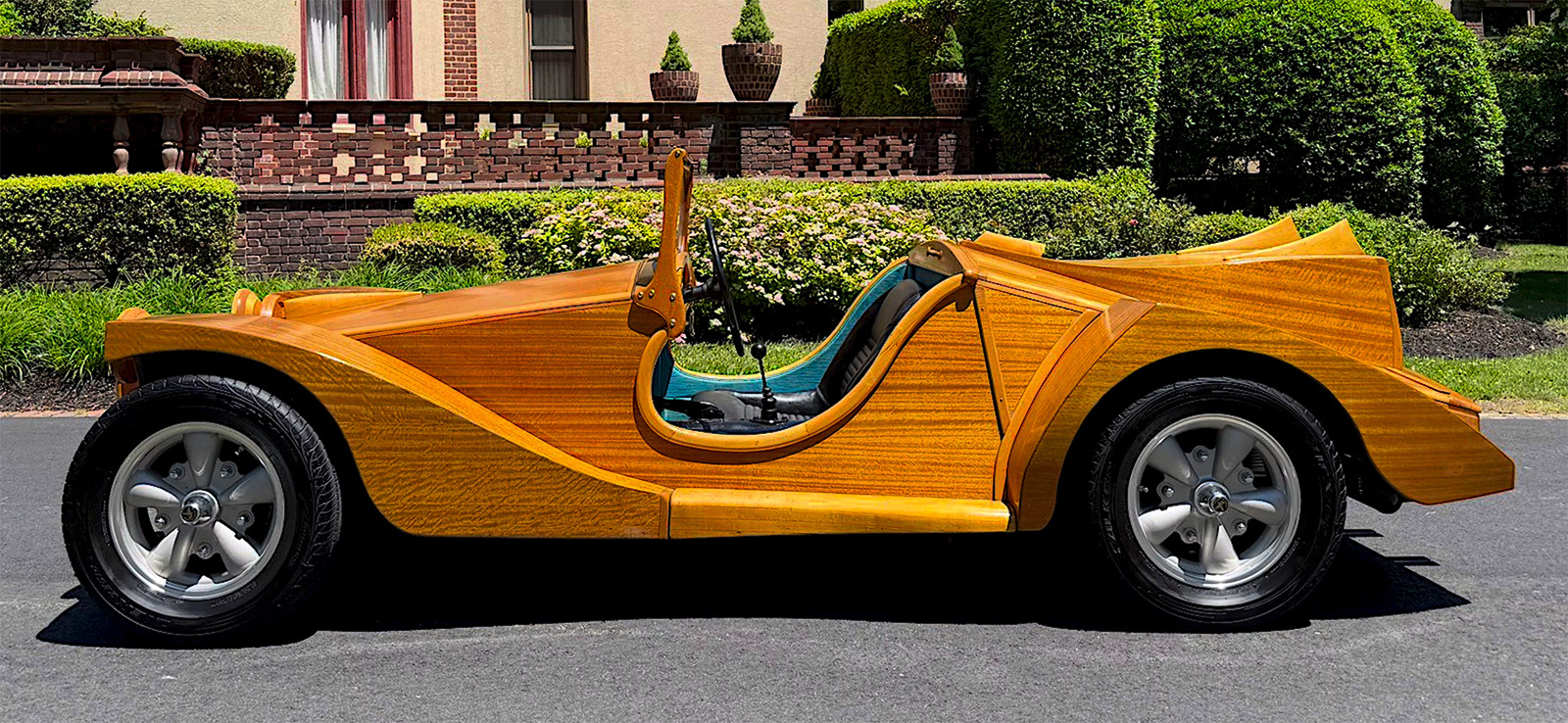
So, I want you to keep that in mind when I show you this remarkable wooden-bodied 1952 Volkswagen Beetle for sale on Hagerty right now, because if it makes it more exciting for you, you can think of this car as a VW Beetle re-bodied out of one of the rarest materials in the known universe and that will be just as true.

But even if you just think about this thing on an Earth-centric perspective where wood isn’t particularly rare, it’s still an incredible achievement. Here’s what Hagerty’s description has to say about the car, which was featured on the cover of the November 1964 issue of Mechanix Illustrated:
“The November 1964 issue of Mechanix Illustrated featured a cover story on building a striking wood body for the Beetle platform: the “Plywagen. ” This remarkable creation came from master woodworker Rosario Capotosto, who built it atop a 1952 VW Beetle he’d sourced from a used car lot. He shaped the body from 1/4″ ribbon-stripe mahogany plywood and the fenders from 3/4″ stock. Although Mr. Capotosto’s article included detailed plans meant to let any handyman attempt the project, replicating his work truly demanded serious woodworking expertise — shaping the body and fender curves, turning the laminated headlight shells, and fitting the contrasting maple trim were no small feats. Underneath it all sat a lap-jointed pine frame, with every joint glued rather than nailed or screwed. It’s no surprise, given that Mr. Capotosto authored “Complete Book of Woodworking. ” Both Complete Book of Woodworking pages 386 – 394 and the Mechanix Illustrated article have resourceful notes on how to build this specific vehicle.”
This is all pretty incredible, and there is a plaque on the car commemorating the craftsman who built it:

I wonder how many amateur woodworkers with wrecked VWs were excited to see this on the cover, only then to be disheartened when they saw the truly elite level of woodworking skills needed to make this thing. I can picture some mid-’60s dad sitting in a garage, a healthy resume of perfectly adequate bookshelves and spice racks under his belt, flipping through these instructions and then looking around at his workbench and jigsaw and hammers and then dropping the magazine in the trash as he goes to get a beer from the garage fridge.

I mean, look at the detailing and craftsmanship on this thing! That’s the fuel filler cover up above. It’s incredible. This is fine furniture-level work here.
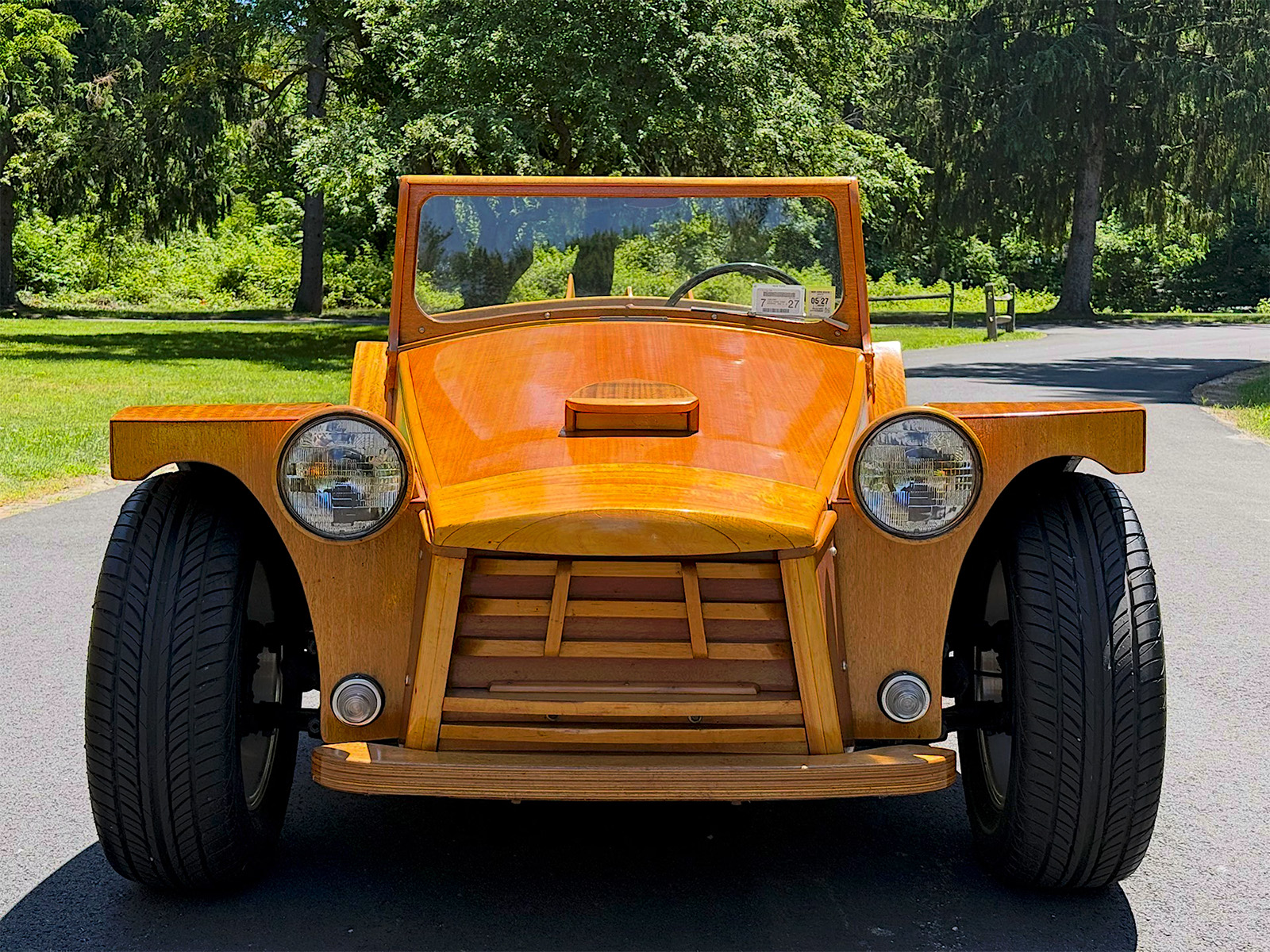
The design is interesting; there’s no attempt to make it resemble a Beetle in any way. It’s more of an old British-type roadster, perhaps inspired by old MG TDs or TFs or maybe even a Lotus 7, especially in the front.

The rear design is a little awkward, as the engine housing does seem to be a bit of an afterthought, though it does give pretty good access to the 1500cc single-port engine and transmission:
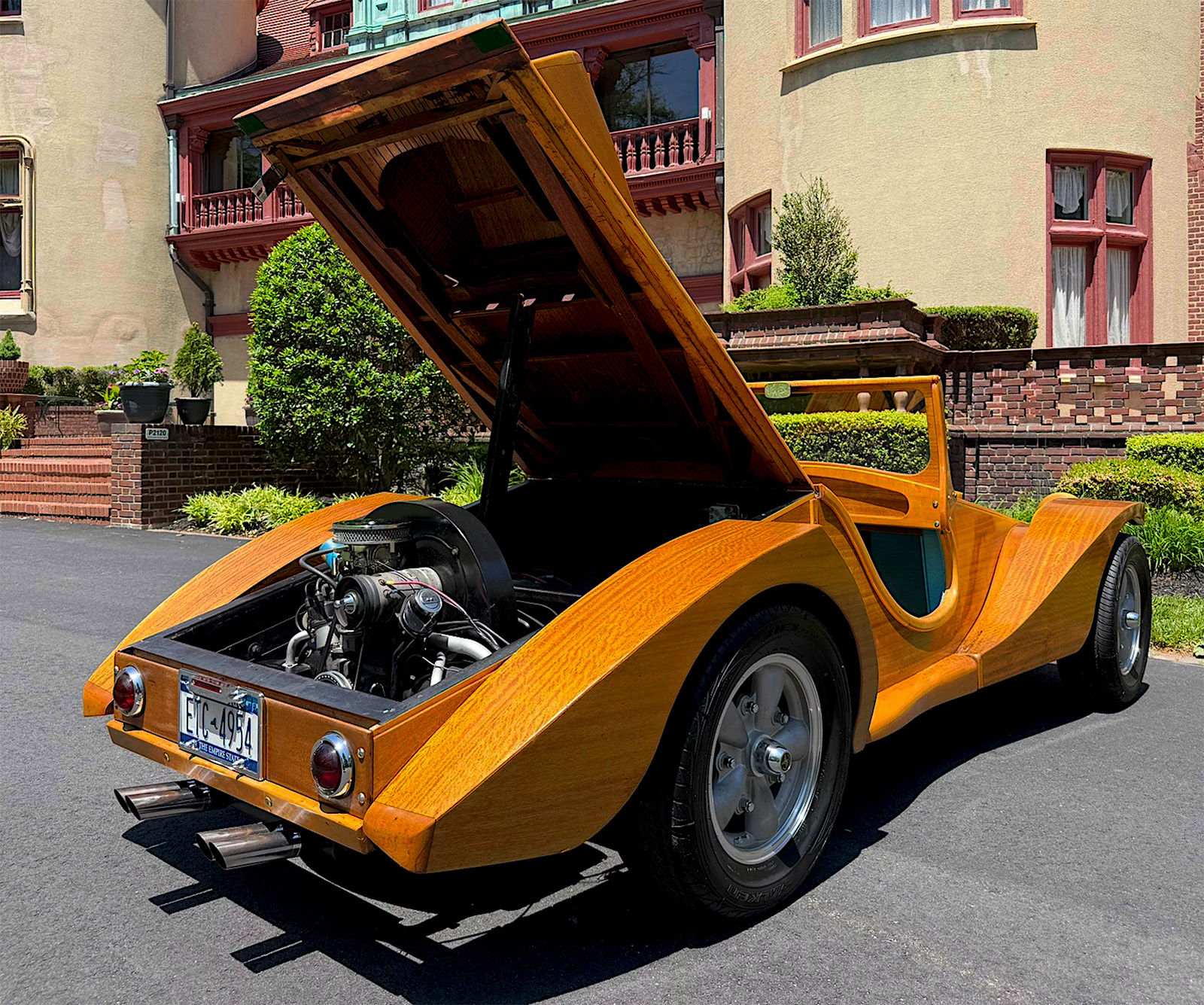
That cover must be pretty damn heavy; also, I feel like the builder could have put a floor above the transmission/battery area to make a pretty good-sized luggage area:
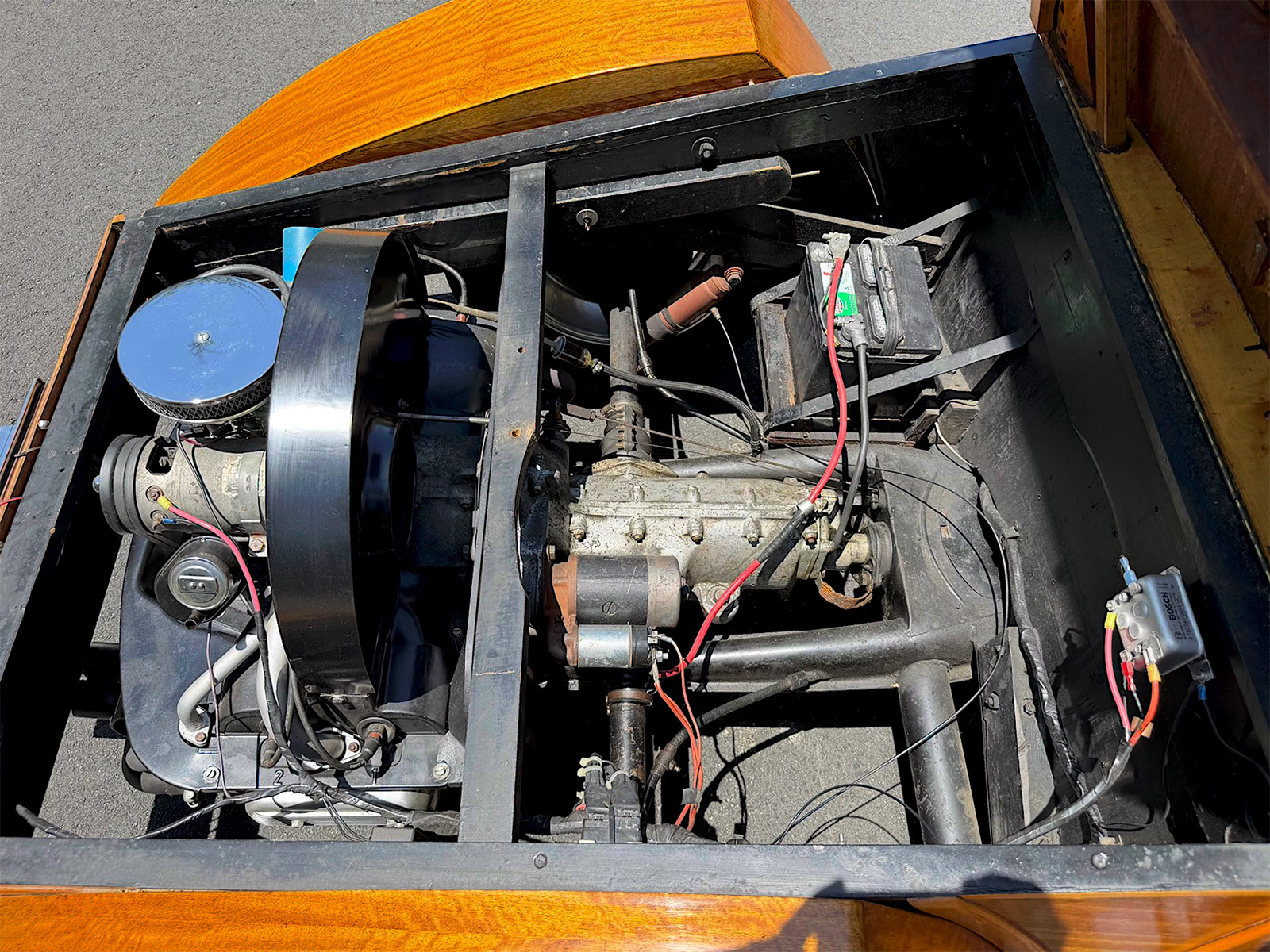
I’m not really sure why they didn’t! Maybe there was something once that’s gone now.
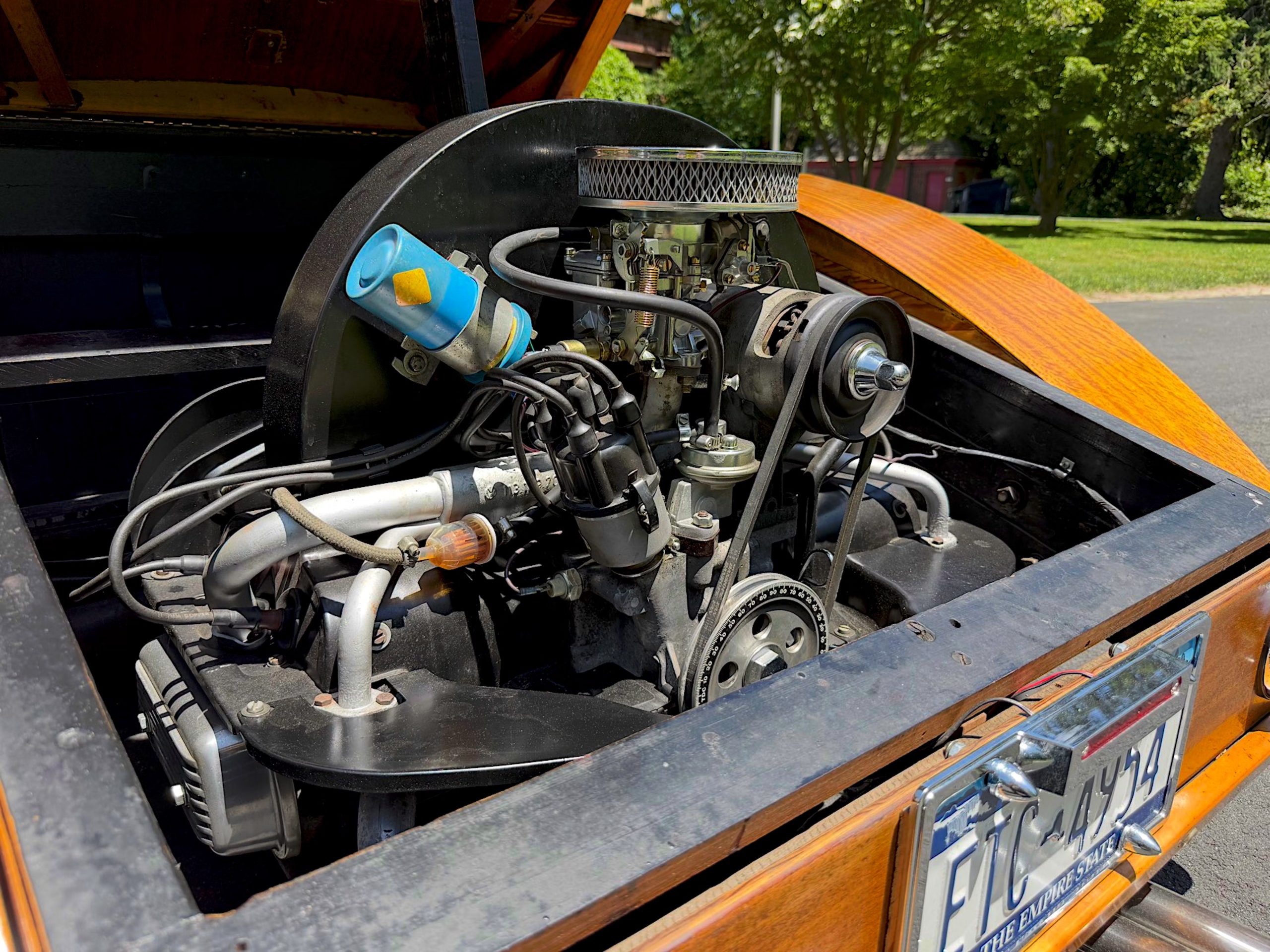
This engine I think is from a ’67 to ’69, being a 1500cc unit, and the ad says everything has been converted to 12V. Aside from this, though, there’s a lot of evidence of just how old this VW actually is – it’s a 1952, after all, and if you look, you can see evidence of that:

That steering wheel is a really early Beetle design going all the way back to the WWII Kübelwagen days, though it did last on various VW vehicles all the way into the early ’70s, as I’ve written about before.
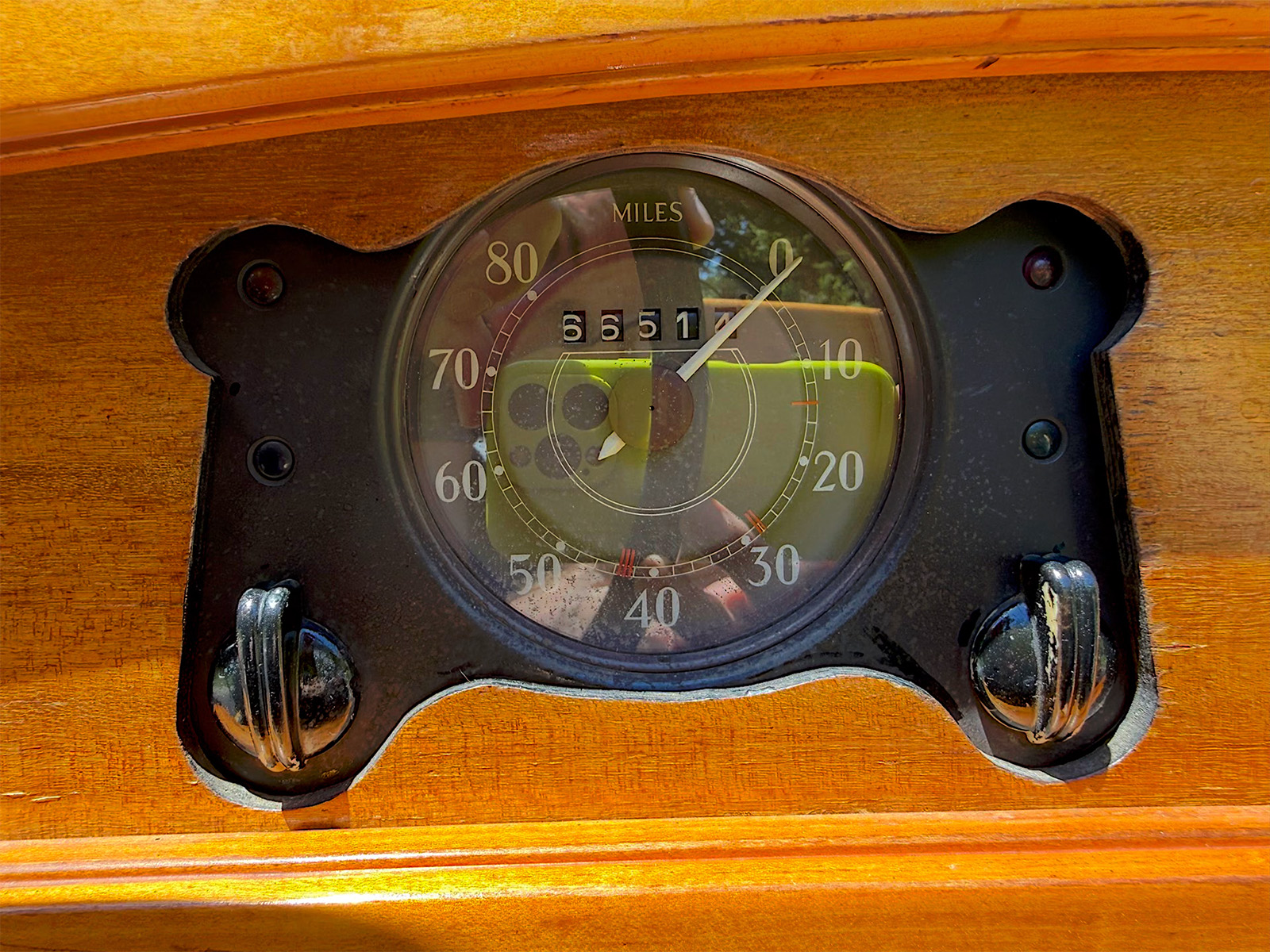
This instrument cluster is also a really early kind, having been in use from 1938 to 1952. Also note the lack of a fuel gauge – Beetles didn’t get those until 1962! There should be a reserve fuel tap under the dash, but I don’t see it under here – just pedals and high beam switch, and brake light switch:

Last I checked, bidding was only up to $1,600, which seems a steal for a one-of-a-kind handmade car like this. I’d be a bit nervous to drive it too much, as I suspect that wood body isn’t very forgiving in a wreck or even a minor fender-splinterer, and the skills to repair it would be, um, significant.
Still, it’s very cool! And made of a material available on just one planet in the universe!
(all pictures via Hagerty)


As a fellow Chapel Hillian, I appreciate the shout-out to Fitch Lumber, which is a great family operated lumber and construction materials business.
Beetles in wood are usually a bad thing.
As for my woodworking skill, after my son’s first Pinewood Derby car looked like the product of a bear attack, we went with Sponge Bob for the second one. It did pretty well and was a crowd favorite.
1952 VW homemade wood car vs. 2026 Chevrolet Suburban.
No thanks, I’d rather live.
No wood-rimmed steering wheel?
I think I’d buy this before many kit cars available out there. It’s the ultimate woody! (Too bad it’s not a wagon.)
I think it would work better as an EV runabout, though.
My parents have had a few wooden boats, usually teak or douglas fir. They’ve also had wooden outdoor furniture. The largest of the boats they’d be re-sealing, seemingly, endlessly through the summers bit by bit – plus an overhaul in the spring. At least the douglas fir was mostly maintenance-free.
This is a big nope from me, but really cool to see. There’s way too much maintenance in keeping the wood looking pristine if you’re going to drive it, and what’s the point of having such a nice vehicle if you’re putting it in storage?
Our boat was fiberglass but the mast, boom, hatch covers, tiller, etc were all wood and yeah, so much sanding and varnishing.
Ah the universal affliction of being male and middle aged. But instead of thinking “I should build a boat” and rabbit holing strip vs stitch and glue, calculating wetted surface area, building forms… and often not building a boat and definitely not paddling/sailing it more than twice, the car idea isn’t half bad.
Just gotta drive faster than the termites!
I guess you don’t want to drive this in the rain; get the widebody swole look.
With the current proposed tariff schedule on our northern neighbors, wood may become much more rare (or expensive) in our lumber yards.
Morgan – we still use wooden body frames.
’52 VW – Hold my beer…
The wood thing is an interesting perspective, for about 2 seconds. Earth is also the only known location in the universe where you can get Funko Pops, anthrax, diarrhea parasites… It’s just kind of a meaningless distinction if you think about it.
Do we really know that Funko Pops are an earth creation?
A VW Woody. Who’d a thought that wood happen…