

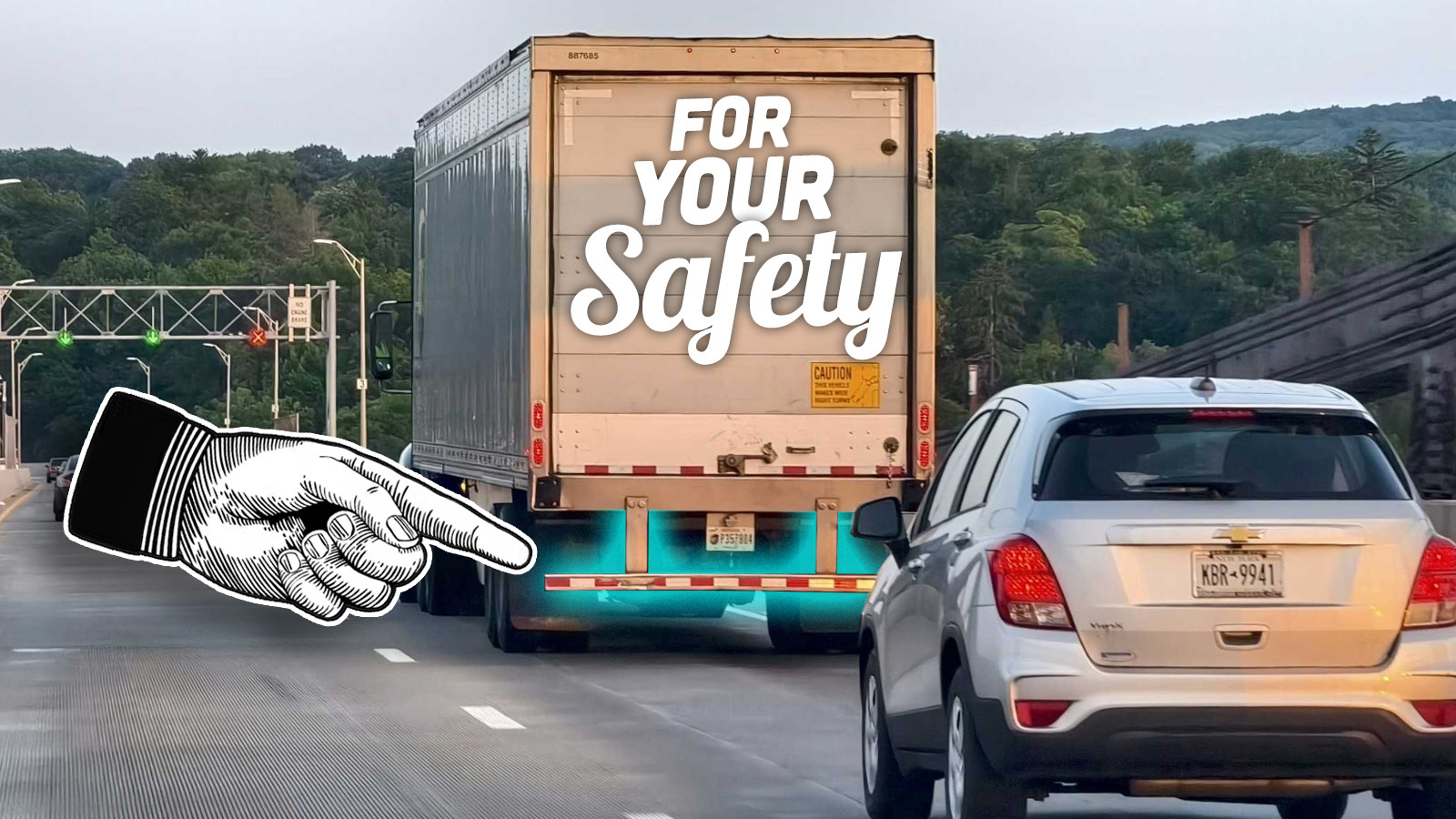
Drivers share the road with all sorts of vehicles, from diminutive motorcycles that weigh a few hundred pounds to semi-tractors that, in some cases, weigh well over 100,000 pounds. Regardless of what you drive, getting into a crash with a semi or its load will put you on the losing end. Over the decades, the trucking industry has developed technologies that make interactions between cars and trucks safer. One of the trucking industry’s greatest innovations is the Truck Underride Guard, more commonly known as the Mansfield Bar. This decades-old invention tries to keep you alive when you crash into the back of a truck, and it has an unfortunately dark history.
Crash safety wasn’t much of a concern during the earliest days of trucking. History’s earliest trucks were similar to cars in that occupants rarely ever got weather protection, and the best way to survive a crash was to avoid getting into one in the first place. The earliest truck trailers were also charmingly simplistic.


Back in 1898, automotive pioneer Alexander Winton found himself in a bit of a pickle. He was selling cars, but the only way to deliver them was to drive them, which meant that his cars wouldn’t be truly new when they reached his customers. If a part of a car broke during delivery, he’d have to eat the cost of the repair. His solution was to take one of his touring cars, mount a platform on its back, and then attach a cart to the platform. That cart would carry a car, allowing Winton to deliver his cars to his customers without putting a single mile on them. The cart itself was little more than a flat bed with an axle under it.

The semi-trailer was born, and it wasn’t long before other innovators began crafting bigger, more complex trailers. You’ll notice something when you look at historical photographs of these old trucks; their increasing complexity did not include the concept of a box, as their rear ends were entirely open and uncovered to the world.
Take a look at this vintage Mack:

If you were behind the wheel of a car and crashed into the back of a truck, the upper part of the trailer or cargo box was liable to slice through your vehicle, and possibly you, too. The National Highway Traffic Safety Administration (NHTSA) defines a truck underride crash as a collision in which a car slides under the body of a truck due to the height difference between the vehicles. To NHTSA, any crash in which a portion of a passenger vehicle slides under a truck or trailer is an underride crash.
The risk of people finding themselves under a large vehicle has been known for longer than a century. Back in the late 1800s, there were a handful of creations meant to prevent pedestrians from getting caught under the body of streetcars and railcars. These guards, which draped under the bodies of the railcars, vaguely resembled the truck underride guards of today.

In 1913, English inventor Percy Hawksworth created a guard that would prevent pedestrians and smaller vehicles from being caught up under the rear wheels of large vehicles. In the patent paperwork, Hawksworth says that the impetus of the invention was the fact that “many, if not most” of the worst accidents involving trucks or buses are caused by interactions with the rear wheels.
Another invention came in 1935 when Curtiss Aerocar designer Harold H. Robinson created a guardrail that went around the perimeter of a truck and its trailer. This device was not meant to protect cars in collisions with trucks. Instead, it was designed to save the truck from damage in a crash. However, future inventors have cited the Robinson patent when designing truck underride protection guards.

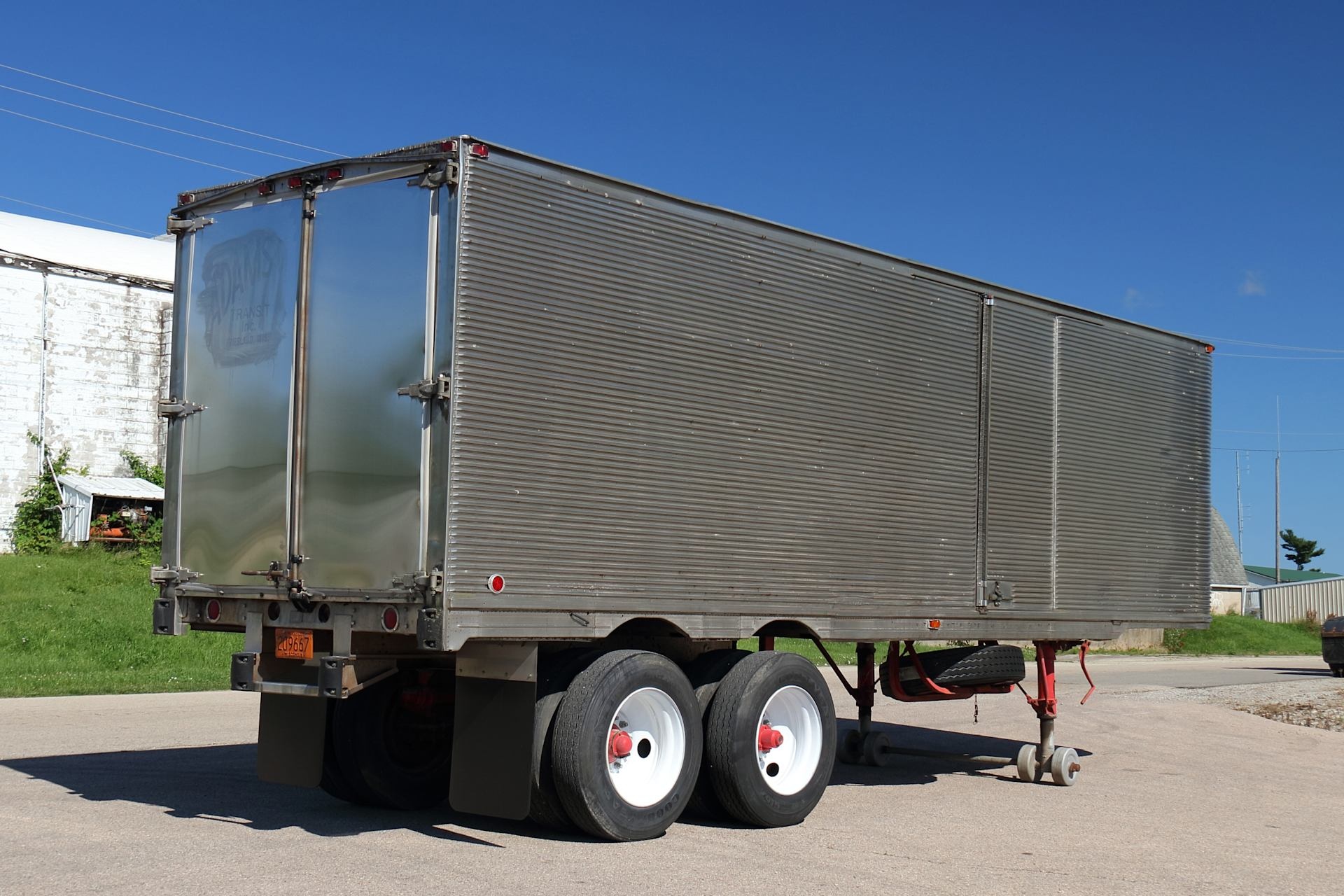
Despite this flurry of action, however, semi-trailer development marched forward without much in the way of underride protection. Check out the 1950s image of a semi-tractor above, and note how the bottom of the trailer is wide open.
It would take the tragic death of a movie star to convince America to change course, and some believe that the nation still hasn’t gone far enough to protect cars that get into crashes with truck trailers.
The Feds Enacted Standards In The 1950s
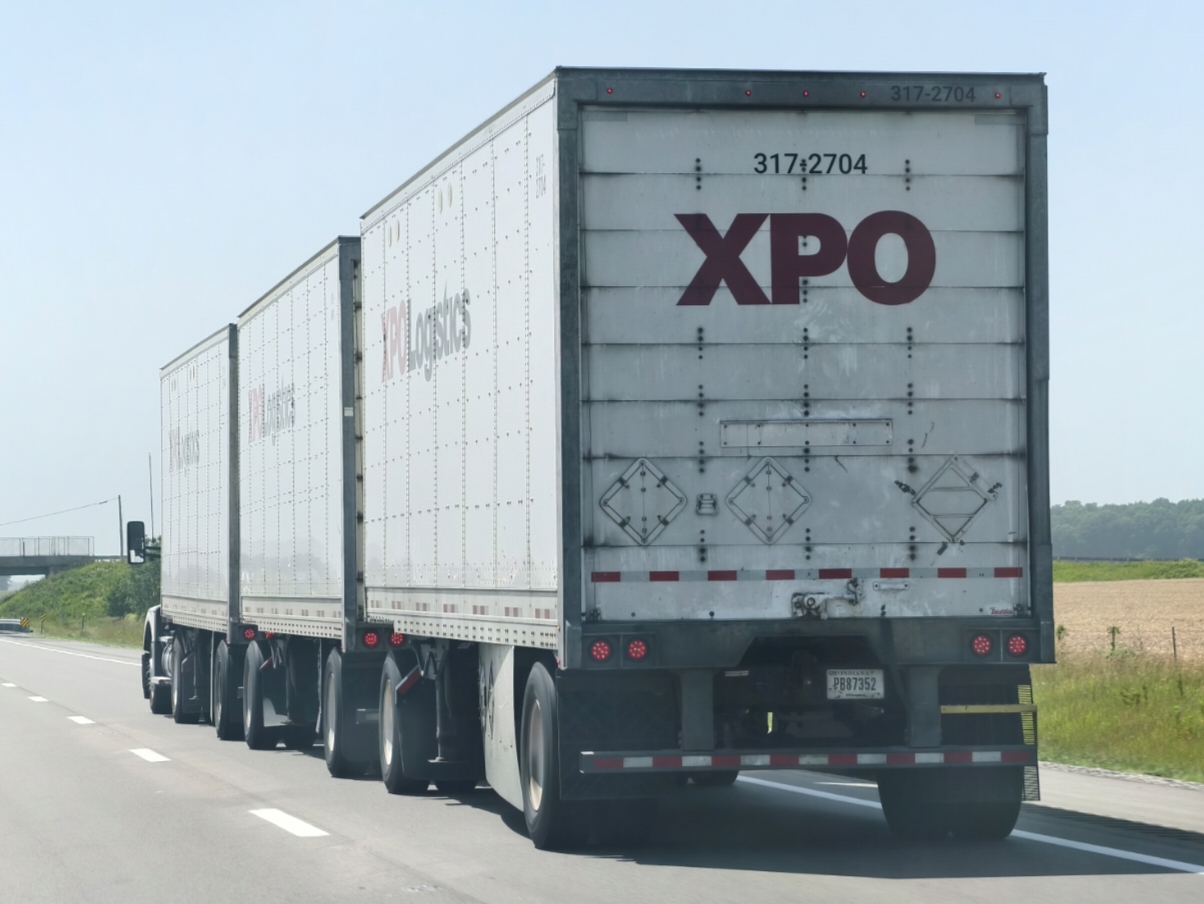
According to NHTSA, the federal government addressed public concerns about truck underride collisions in 1953 when the Bureau of Motor Carriers of the Interstate Commerce Commission – the predecessor to today’s Office of Motor Carriers of the Federal Highway Administration – introduced America’s first national truck underride guard regulation. Applicable to straight trucks and semi-trailers built after December 31, 1952, the regulation required underride guards with a maximum guard height of 30 inches from the ground. It also required guards on trucks with cargo beds 30 or more inches off the ground, as well as rear tires 24 or more inches from the rear of the cargo bed.
There were some notable exceptions to the rule. The feds said that “truck tractors, pole trailers, pulpwood trailers, road construction controlled horizontal discharge trailers, or vehicles in driveaway-towaway operations” were exempt from having underride guards. Likewise, the regulation only called for the guards to “be substantially constructed and attached by means of bolts, welding, or other comparable means.” There were no strength or crash testing done to ensure the bars actually did their jobs. This regulation is known as 49 CFR 393.86 and remains in place today.
Because of these oversights, fatal crashes involving passenger vehicles under-riding trucks continued to happen. Then, one crash changed everything.
Jayne Mansfield

Back in the 1950s and 1960s, actress Jayne Mansfield was known for her roles in hit films like The Girl Can’t Help It (1956), Will Success Spoil Rock Hunter? (1957), and The Burglar (1957). Sadly, on June 29, 1967, Mansfield would become the most infamous example of the need for truck underride protection. On that devastating night, the 1966 Buick Electra 225 she was riding in crashed into the back of a semi-trailer. The car went under the trailer, shearing off its roof along the way and killing Mansfield along with the driver and another front-seat passenger.
Here is the report that the New York Times wrote a day after the incident:
Jayne Mansfield, the actress, was killed instantly early this morning when the car in which she was riding hit the rear of a trailer truck on U.S. 90. Killed with the 34-year-old performer were Samuel S. Brody, 40, of Los Angeles, her lawyer and companion, and Ronald B. Harrison, 20, of Mississippi City, Miss., a driver for the Gus Stevens Dinner Club in Biloxi, Miss., where Miss Mansfield was appearing.
Their auto plowed beneath the truck’s trailer as it approached a mosquito-fogging machine. The driver apparently did not see the truck because of the thick white chemical used to spray mosquitoes, the police said. Three of Miss Mansfield’s children, apparently sleeping on the rear seat were injured. They were Mickey Hargitay Jr., 8, who suffered cuts and a broken arm; Zoltan Hargitay, 6, who received cuts and bruises, and Marie Hargitay, who had head cuts and may require plastic surgery.
The children were taken to Charity Hospital by a passing motorist but were transferred to Ochsner Foundation Hospital at the request of Miss Mansfield’s former husband, Mickey Hargitay, who telephoned from Los Angeles. Mr. Hargitay arrived this afternoon to be with his children, who were lated told of their mother’s death. Miss Mansfield had been playing the engagement in Biloxi, 80 miles from New Orleans, since June 23. She had left the club after an 11 P.M. performance Wednesday and was on her way to New Orleans for a television appearance at noon Thursday.

There have been plenty of urban legends, debates, rumors, conspiracy theories, and even supposed curses in the aftermath of Mansfield’s death, but I’m not here to get into the horrifying details of her demise. What’s most notable for the purposes of this story is what happened after the crash.
The Public And Advocates Push For Better Safety
Public outcry after Mansfield’s death was strong, and in October 1967, the U.S. Department of Transportation said it was considering issuing a Federal Motor Vehicle Safety Standard that would specify performance requirements for truck underride guards. In 1969, the government proposed a regulation that would have required protection guards only 18 inches above ground level on trucks and trailers with a gross weight over 10,000 pounds. Notably, this would have required truck trailers and straight trucks to have both rear and side underride guards. To many, these underride guards would be known as “Mansfield Bars.”
Supporting the new regulation was U.S. Congressman Charles Albert Vanik from Ohio. In September 1969, he gave an impassioned speech on the floor of Congress about how there are thousands of crashes and hundreds of deaths that could be prevented each year if trucks just had underride guards on their rears and sides.
The Bureau of Motor Carrier Safety would later publish its own reports. In 1969, the agency found that 134 people were killed in highway truck crashes, with another 2,017 people injured in other truck crashes. The study had flaws. Notably, it was unable to account for how many of those crashes involved underride events. The report also covered only 10 percent of the trucks in operation in America.
Sadly, the proposed regulation would never come to fruition. In 1971, after years of inaction, the federal government quietly announced that it was no longer pursuing truck underride protection regulations. In a statement published in the Federal Register, NHTSA said:
Based upon the information received in response to the notices and evaluations of cost and accident data, the Administration has concluded that, at the present time, the safety benefits achievable in terms of lives and injuries saved would not be commensurate with the cost of implementing the proposed requirements. For the information of all interested persons, notice is hereby given that the rulemaking action is terminated, and that no final rule will be issued on this subject without further notice of proposed rulemaking.

What happened? According to a New York Times report from 1971, strong pushback from truckers, truck manufacturers, trailer manufacturers, and the federal government. From the NYT:
Status Report, a weekly publication of the Insurance Institute for Highway Safety, says in its current issue that the safety administration rejected its request for a copy of the agency’s cost analysis. After the institute’s publication had been distributed, however, the agency made available a summary of its cost-benefit findings. A review of relative data, the summary said, “indicated that it may be possible to save 50‐100 lives per year at an annual cost to the consumer of approximately $500‐million—i.e. $5‐million to $10‐million for each life saved.”
The estimate of lives saved, according to the summary, was based on information from the Cornell Aeronautical Laboratory’s automotive crash injury program, the University of Michigan’s Highway Safety Research Institute, the Federal Bureau of Motor Carrier Safety and the National Safety Council. “Further,” it added, “the installation of guards presents severe operating problems for trucks, e.g. on construction and paving sites, trailers on flat cars, shipboard loading operations, on roads where extreme grade changes must be negotiated, etc. “Therefore, since we have no control over the vehicles after they are sold, it can only be assumed that certain operators will remove the underride guard. This action in turn would further increase the cost per life saved.”
A spokesman for the safety agency said there were no reliable data on the number of injuries that might be prevented under the proposed standard. Questioned about the “cost to the consumer,” he said the $500‐million figure represented the cost of installing underride guards on one million vehicles a year. The insurance institute noted in its publication that the safety agency had officially found in 1969 that “the underriding of rear ends of trucks and trailers by passenger vehicles in the course of rear‐end collision constitutes a major hazard to life and limb of the occupants of the striking vehicles.”
Truck Override Guards Got Better
Advocates never gave up. Throughout the 1970s, citizens and lawmakers pushed for better underride protection. Inventors continued filing patents on improved designs while the IIHS worked to show the public the dangers of underride crashes. In one crash test in 1976, IIHS crashed a Ford Granada into the back of a trailer that had an improved bar design. The Ford’s cabin successfully stayed clear of the trailer.
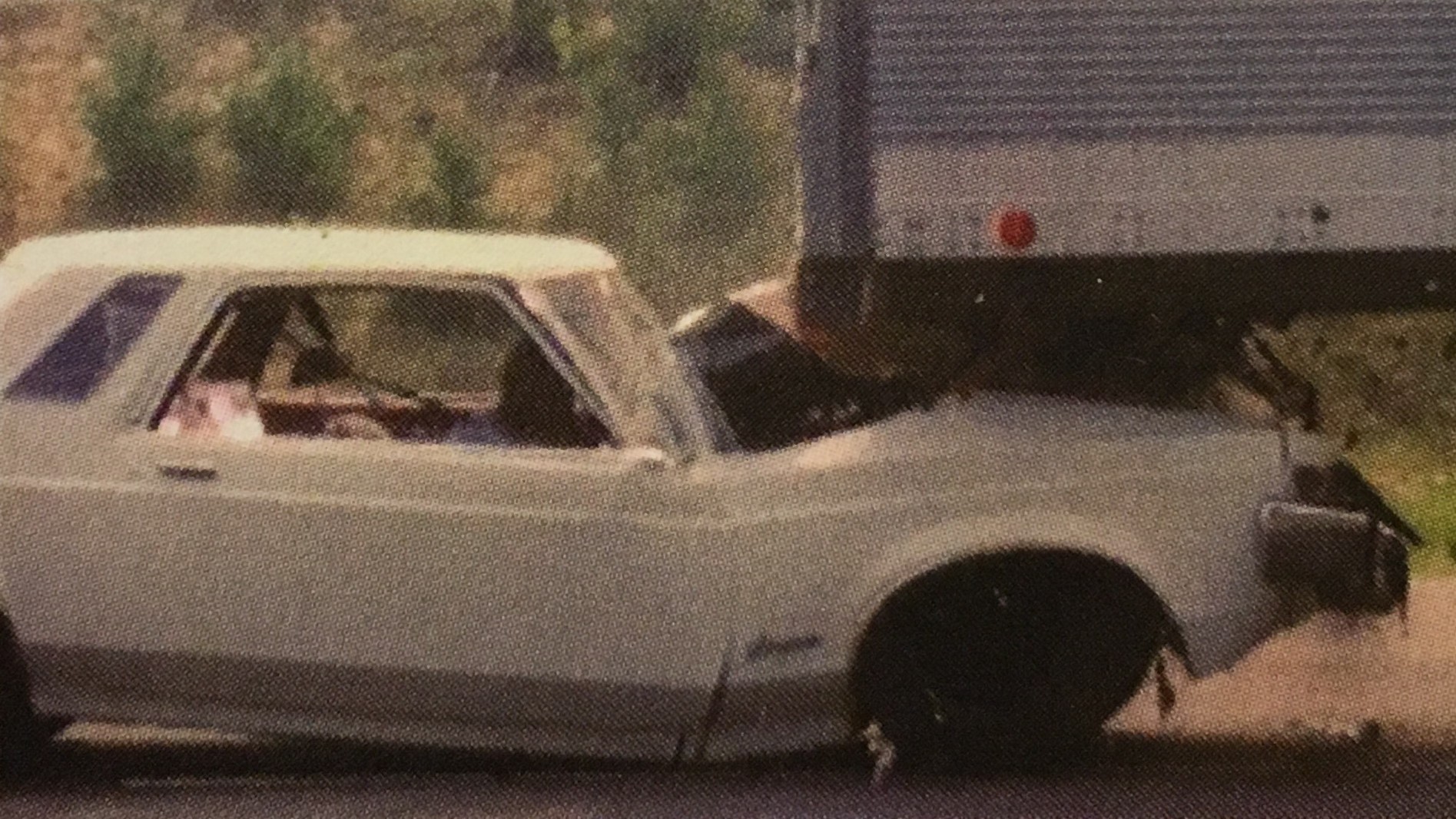
The IIHS then plowed a car into the back of a typical truck to show how ineffective the protection bars built to the 1953 standard were. This culminated in the IIHS petitioning NHTSA to set a new underride protection standard. In 1981, NHTSA responded with proposed rulemaking. Once again, this went nowhere.
As the years pressed on, IIHS got creative in its advocacy for better crash protection, including showing how effective European underride protections were and by publishing a report in 1992 that pointed out that statistics on deaths from underride collisions might be too low. IIHS said that, in 1989, due to police reports that lacked proper details about crashes, a whopping 36 states reported zero fatalities due to truck underride crashes. Thus, IIHS concluded, the NHTSA estimate of 72 annual deaths from truck underride crashes should have been closer to 151 deaths.

In that report, IIHS noted that existing rules, which were now based on the 40-year-old standards, did not go far enough. The organization pushed for bars that sat only 18 inches off the ground, side protection, front protection, and for the bars to actually absorb energy rather than be rigid. IIHS then pointed out that then-current Mansfield Bars were shown to be miserable at their jobs in NHTSA’s own research, yet the federal government still did nothing about it. Thankfully, IIHS said, some trucking companies were voluntarily engineering their own safety bars.
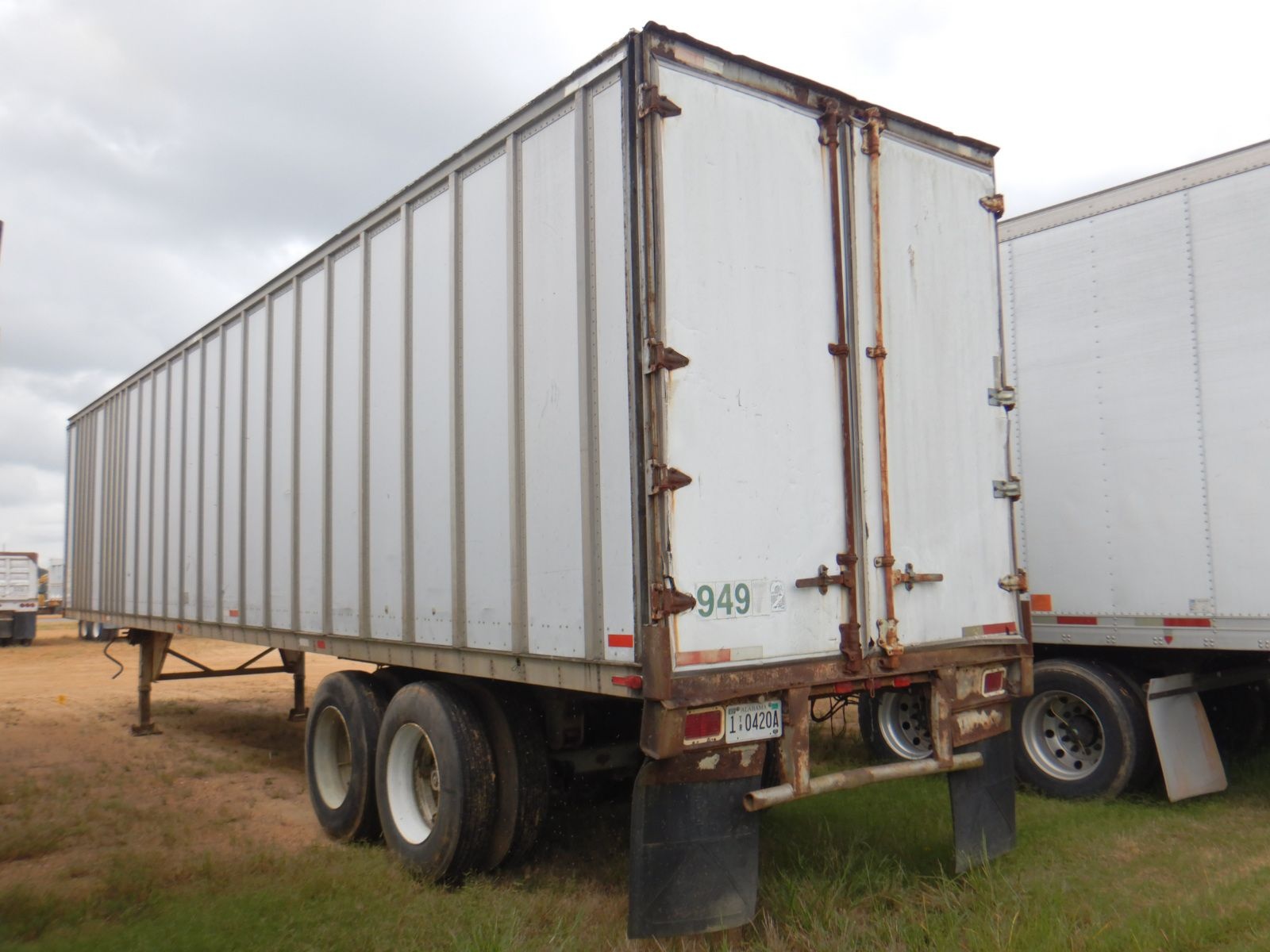
In 1998, progress was finally made. NHTSA mandated that, with exceptions, all trailers with GVWR of greater than 10,000 pounds must have an underride guard. The new regulations lowered the maximum ground clearance to 22 inches, for the bar to be no further than 12 inches from the rear, and widened the bars to 94 inches to 102 inches. Mansfield Bars were also required to meet energy absorption and strength tests. Finally, underride guards were no longer just an afterthought.
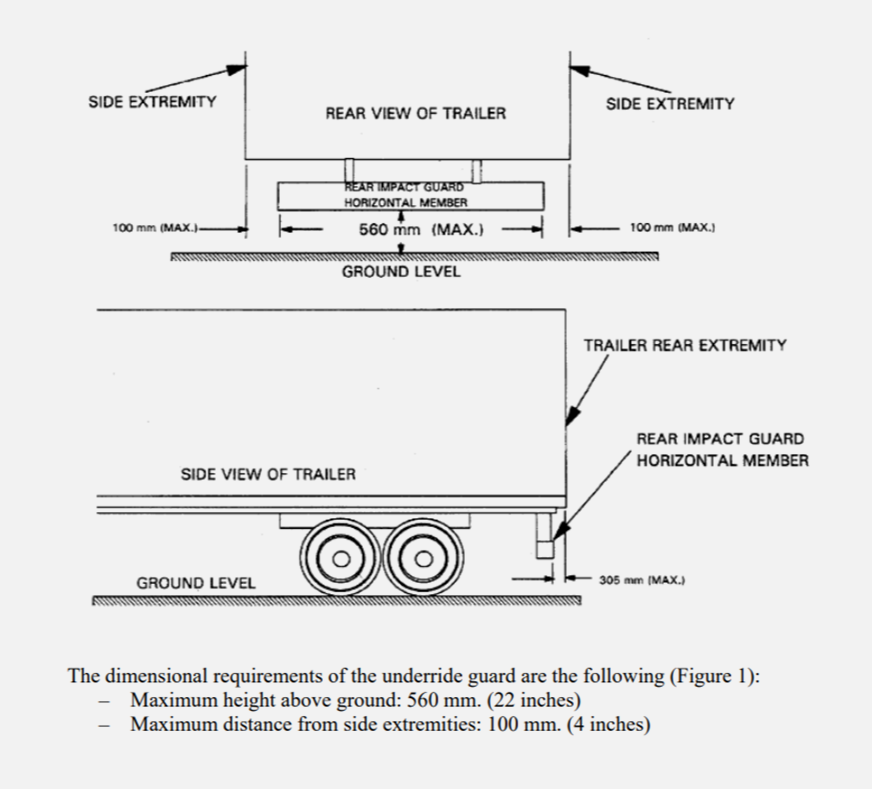
According to early data, NHTSA said that the new designs should reduce injuries and fatalities. However, due to issues in data collection from each state, only Florida and North Carolina were represented, and even then, the data wasn’t the most reliable.While the IIHS and the National Transportation Safety Board both praised the new regulations, advocates pointed out that they did not go far enough. IIHS noted that, while the new bars were finally subject to strength testing, they were still too weak to stop a car from slicing its roof off in a crash.

Likewise, there are still exceptions that allow certain trailer designs to go without underride protection, including pole trailers, pulpwood trailers, special trailers, trucks and trailers with liftgates, and “wheels back” vehicles, where the rear tires are at the very rear of the trailer. In a NHTSA study that looked at fatal truck crashes from 2008 to 2009, it estimated that about 62 percent of the trucks had underride guards.
To prove its point, in 2010, the IIHS crashed some 2010 Chevy Malibus into the backs of semi-trailers from leading brands. Check out this video:
Eight trailers from major brands were tested, with one built to federal specifications and one built to be tougher. The results were shocking. The Malibus that crashed into trailers that met federal standards went under the trailers, effectively slicing off their roofs to the B-pillar.
IIHS noted that, due to the design of the Mansfield Bars that met federal standards, the Malibus were not able to utilize their crumple zones, resulting in the catastrophic damage shown.
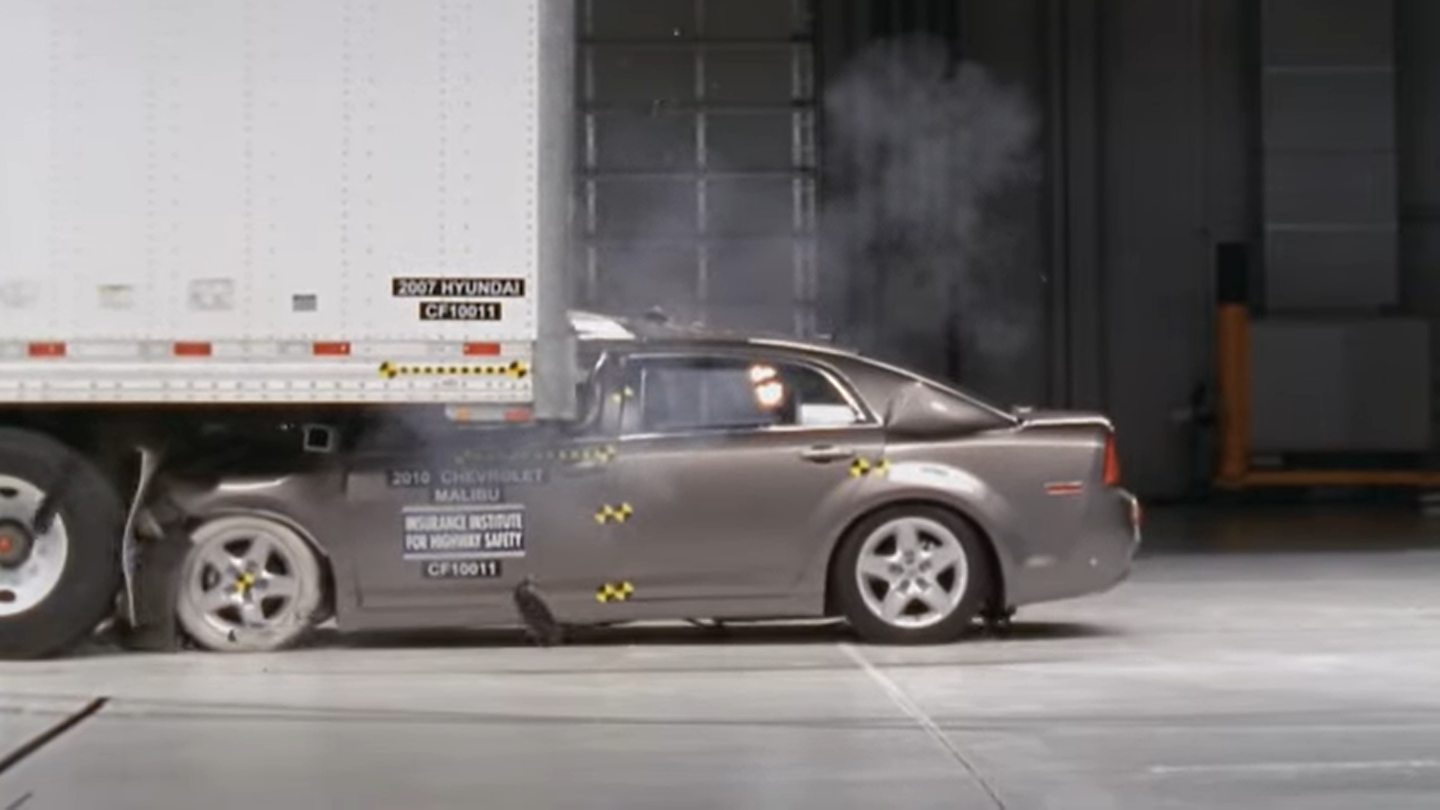
Yet, in the improved underride bar design, which exceeded federal standards, the cars were able to utilize their crumple zones, resulting in crashes that looked more like a typical crash test.
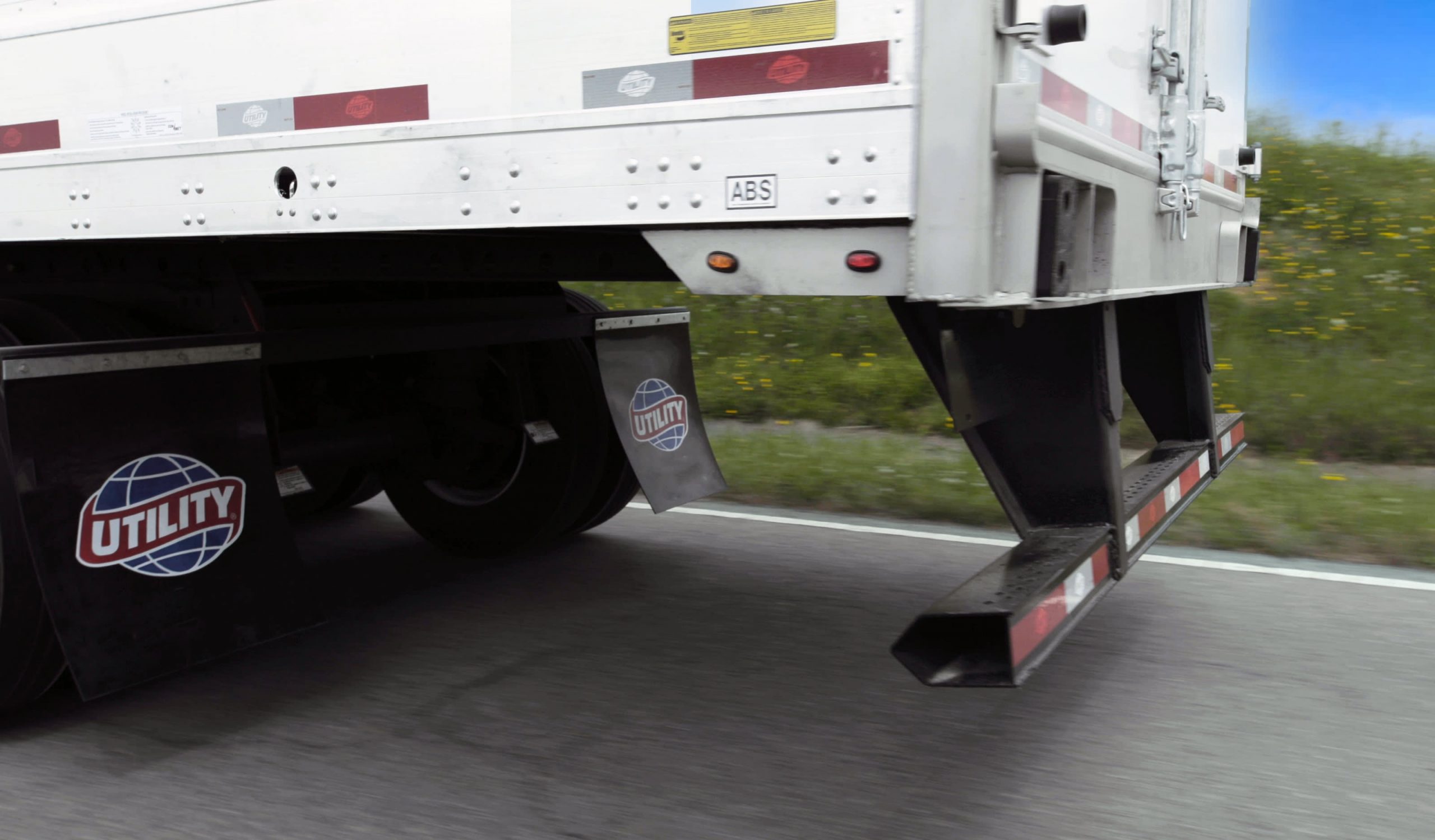
Tragically, Jayne Mansfield is not the only well-known victim of truck underride crashes. In 2013, Marianne Karth was driving her teenage daughters, AnnaLeah and Mary, from North Carolina to Texas for a family celebration. While in Georgia, the family’s Ford Crown Victoria was struck by a semi-tractor, forcing the vehicle into a spin. The car crashed backwards into the trailer of another truck, and went under the trailer. Marianne survived, but her daughters did not. Since then, her organization, AnnaLeah & Mary for Truck Safety, has partnered with IIHS to advance truck override bar safety. Here’s what one robust underride guard design looks like:
In 2017, IIHS found its own way to push for better truck and trailer safety. That year, it introduced ToughGuard awards for trailer manufacturers that went above and beyond the call of duty in safety. ToughGuard works a lot like IIHS Top Safety Picks for passenger cars, but for truck trailers. When a manufacturer builds a truck trailer that passes IIHS test protocols, the manufacturer is given a ToughGuard award.
Much like how car manufacturers strive for Top Safety Picks, the biggest trailer producers in America want that ToughGuard award. Because of this, IIHS says, some 70 percent of the new trailers sold in America far exceed federal safety standards. There are even products out there that IIHS has found can prevent a vehicle from getting under a trailer in a side impact:
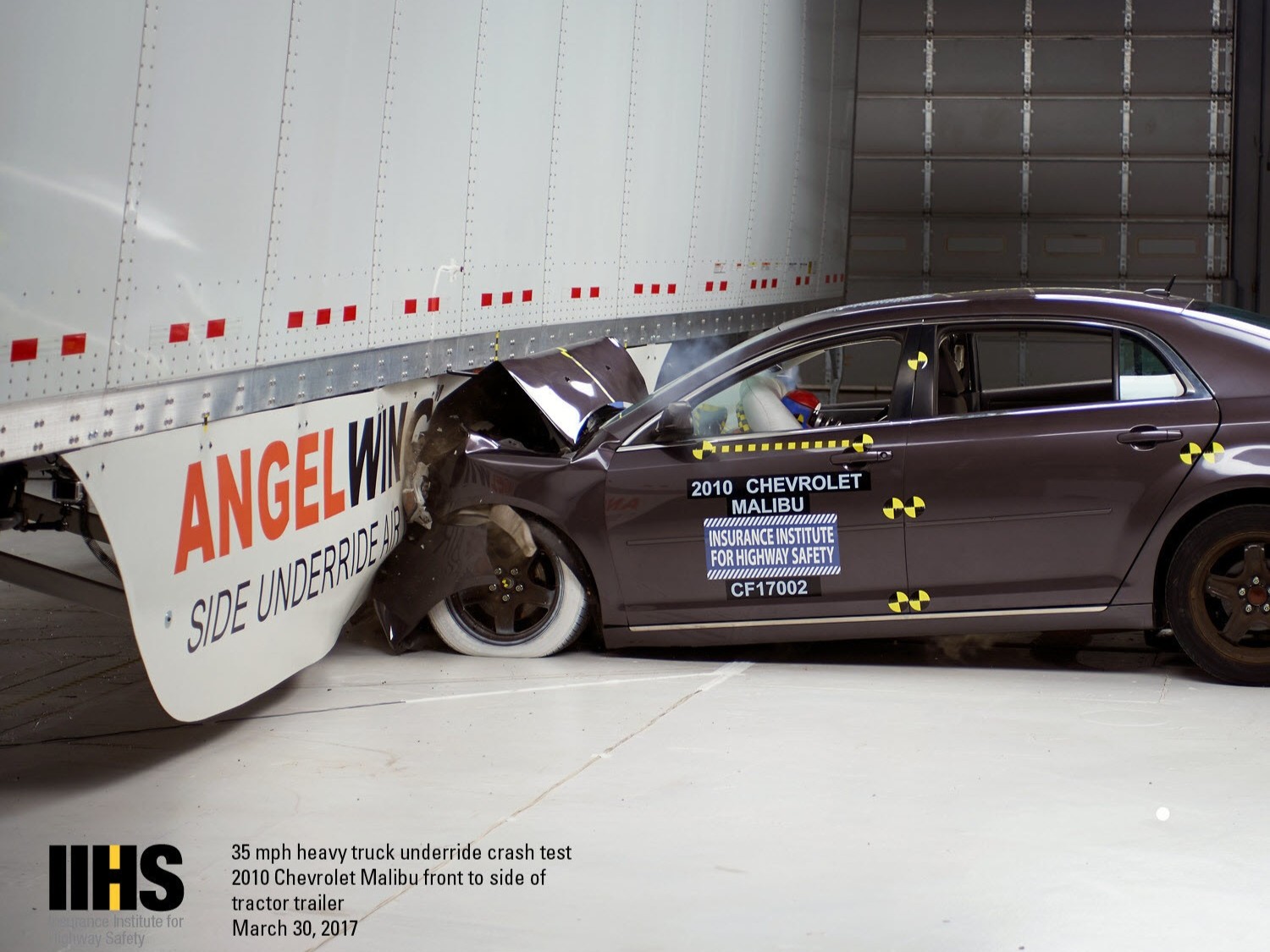
On average, some 4,000 people die in crashes involving cars hitting or being hit by trucks. Of that, it’s believed that an average of around 219 of those fatalities are underrun incidents.
However, advocates, as well as the U.S. Government Accountability Office, say that data collection on underride incidents is still poor, and thus the real number is likely higher. The U.S. GAO states that underride accidents still represent less than one percent of all traffic fatalities in America each year.
Still Work To Do

IIHS has noted that the federal government has improved standards over time, but to this day, it says the feds do not go far enough. While underride fatalities may be a fraction of a fraction of total fatalities in America, those are still lives that could be saved. Something similar has happened in Europe, where Euro NCAP testing has revealed that not all truck override bars out there are as safe as they appear. In a collaboration published with the IIHS in June, Euro NCAP said that outdated truck underride guard regulations in Europe “cost 400 lives every year.”
The tragic death of Jayne Mansfield was a catalyst. It got much of America serious about improving truck safety in the hope that there would be fewer fatalities in accidents like Jane Mansfield’s in the future. The progress has been commendable, for sure.
So, the next time that you see a truck going down the highway, check out its underride guard, or Mansfield Bar, if you will. There are lots of trailers still rolling around with older designs, but many have newer, stronger underride guards. Should you crash into one of these newer trailers, your car shouldn’t become an instant convertible. That will be thanks to decades of advocacy, inventions, and engineering.
Top graphic image: Mercedes Streeter




Fun Fact: it was actually Mariska Hargitay as one of the children in the back seat of the car… as in Mariska Hargitay from Law and Order SVU. She did a great documentary about her mother that I would highly recommend- My Mother Jane. She remembers that night as well as one of her brothers.
One of these may have saved my life. My first car was a 67 Impala SS (in the mid aughts, so underrider bars were fully deployed) and I rear ended a semi on an on ramp in stop and go traffic (yeah dumb). It was rather slow speed (see stop and go traffic) but if the first part of the to make impact had been the A-pillar who knows how long it would have taken to stop.
Every good idea can be ruined by poor execution. Many of these Mansfield bars aren’t worth their weight in scrap metal. A few years ago on I-64 in Virginia a woman was rear ended and nearly half her car was shoved under a semi-trailer. The Mansfield bar completely collapsed.
FWIW, The Buick Electra 225 involved was a convertible and the top was down. Zero protection.
Is this because of my comment on the G-wagon article?
I remember reading about these maybe 0 years ago and how ones that met early standards in the US were a (bad) joke compared to the reinforced ones in Europe. The ones in the US would easily collapse or otherwise be compromised. The European ones were reinforced to not do that.
Somebody else here mentioned bro-dozers. Back in the 80s, I was driving down a freeway when traffic came to a pretty sudden stop. I braked hard but not so hard as to get into the non-existent ABS and stopped short of the car in front of me. I heard skidding tires behind me and saw a standard-height pickup truck rapidly filling my rear-view mirror. I threw my arm over the chest of my (male) passenger and breathed a phew when I heard someone behind the truck skidding. It hit the truck and shoved the truck into me. We got out to exchange information and all that. The car that hit the truck was a Mazda RX-7 which lifted the rear of the truck off the ground and wedged itself underneath all the way to the base of the windshield. Fortunately, no one was hurt.
“and the best way to survive a crash was to avoid getting into one in the first place.”
Still true…