

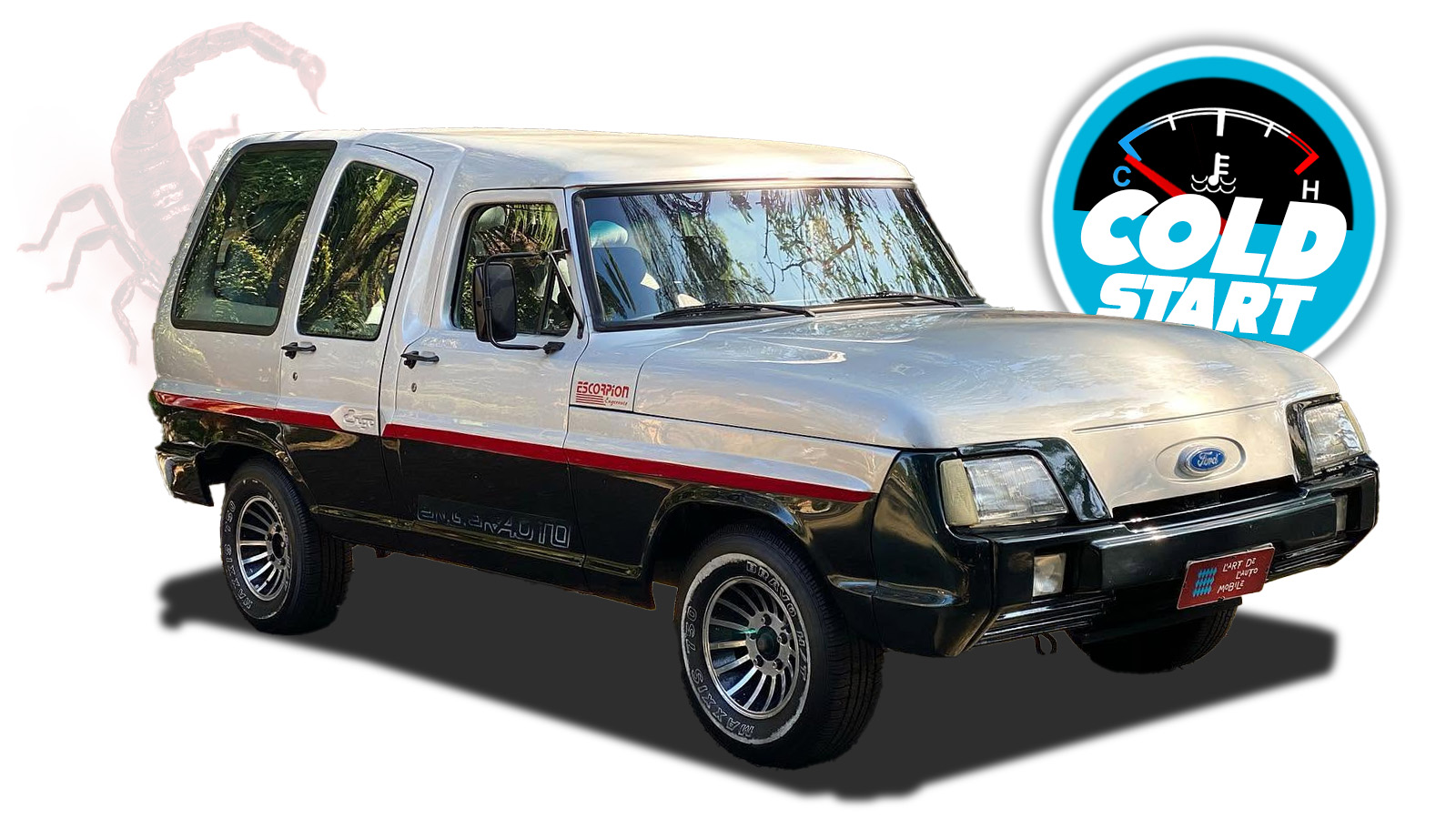
I’ve been on record as saying that what Australia was to mammals, Brazil was to Volkswagens. By that I mean it was a closed environment that allowed what was there to thrive and diversify to fill every possible niche. Sure, Australia was a continent surrounded by ocean, and instead of cars, we’re talking about marsupials, but otherwise I think the analogy holds, as Brazil had effectively closed their automotive industry to imports from 1976 to 1990, meaning what companies were there had to get especially creative about what they built. And while I’ve normally said this about Volkswagen of Brazil, this goes for all the automakers with major Brazilian bases, like Ford.
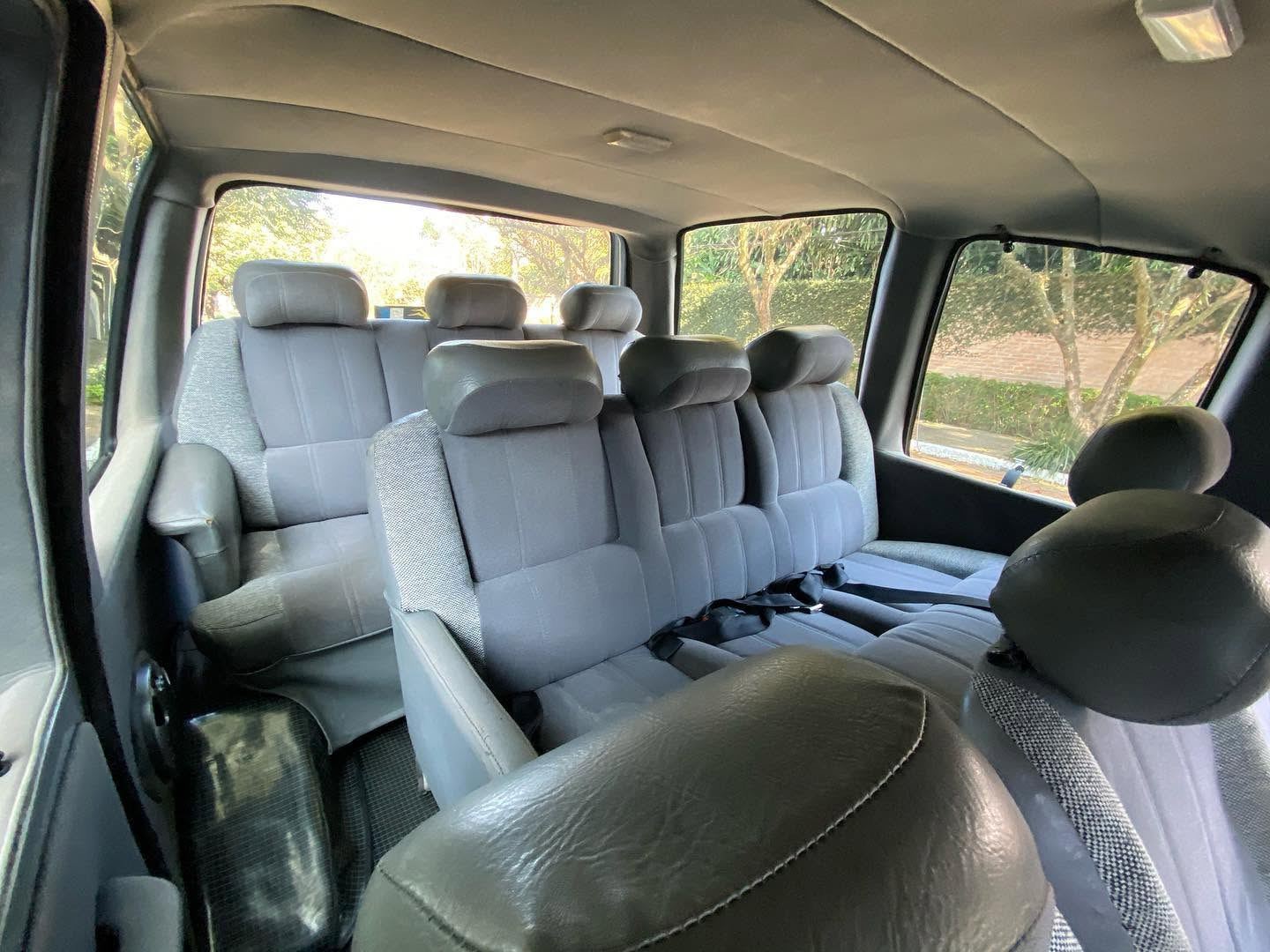
As a result, there’s all manner of deeply strange and wonderful Ford-based vehicles that evolved to fill these various niches, and it appears that at least one niche was “what’s the most bonkers-looking machine that I can use to drive around myself and eight of my pals?” Oh, and it should run on sugar cane alcohol.


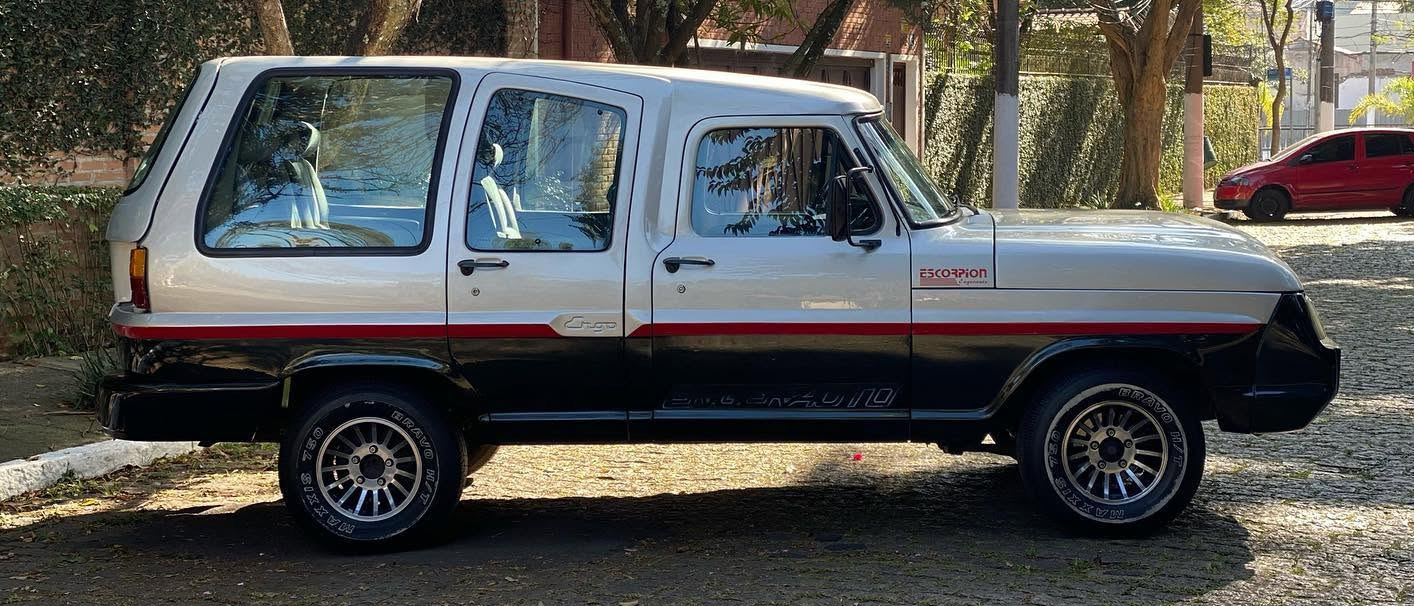
A company called Engerauto stepped up, and the machine they stepped up with was called the Escorpion.
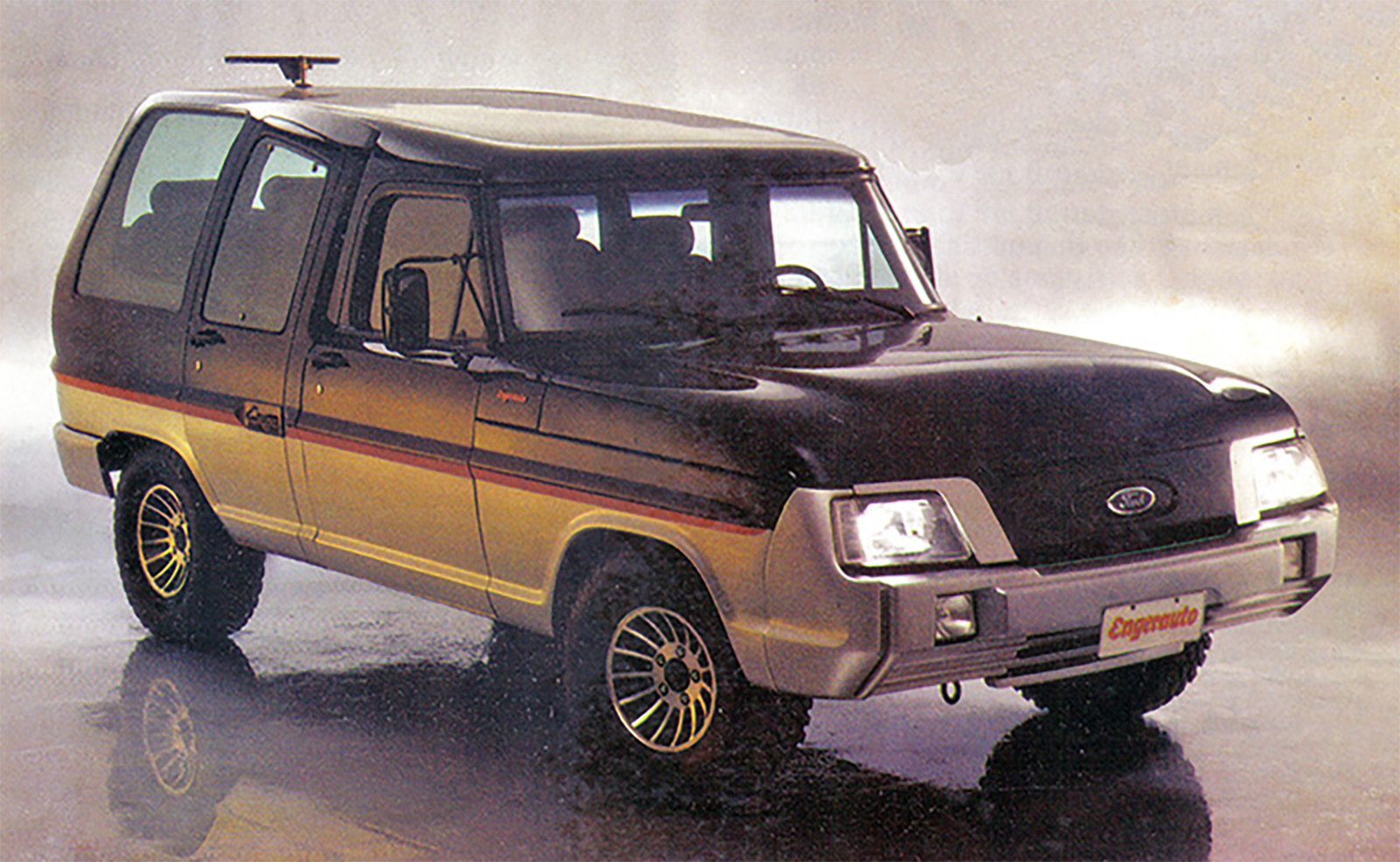
Just take a moment and look at this glorious thing! Really drink in all the details – the oddly Taurus-like grille-less front end, the strange upward arc of the roofline, and, with it, that oddly contoured roof that almost feels like a frozen bit of flowing river water, the bulbous hood, everything!
I suspect there’s at least one familiar part on there, and that’s the key to what is going on under the skin. That door. That’s because that door is a Ford F-150 door, one that started with the fifth-gen F-150 in way back in 1967, but in this case it’s a hint that the basis is a Ford F-1000, the Brazilian variant of the 1967-1972 F-250 made between 1979 and 1998.
Engerauto was a sort of low-volume customizer, a subsidiary of Companhia Santo Amaro, a large Brazilian Ford dealership. The company made a number of specialized variations of Ford vehicles, and the Escorpion was one of those designed to fill a specific niche: a luxurious people-carrier.

You can see one here in this photo of a showroom, along with some other equally strange machines: there’s another F-1000-based vehicle at the rear, a crew cab pickup with a front end treatment essentially the same as the Escorpion, and then there’s that red sporty thing and that incredible little truck with the rear seat T-tops and a wood-lined bed! I need to look into what the hell that thing is more.
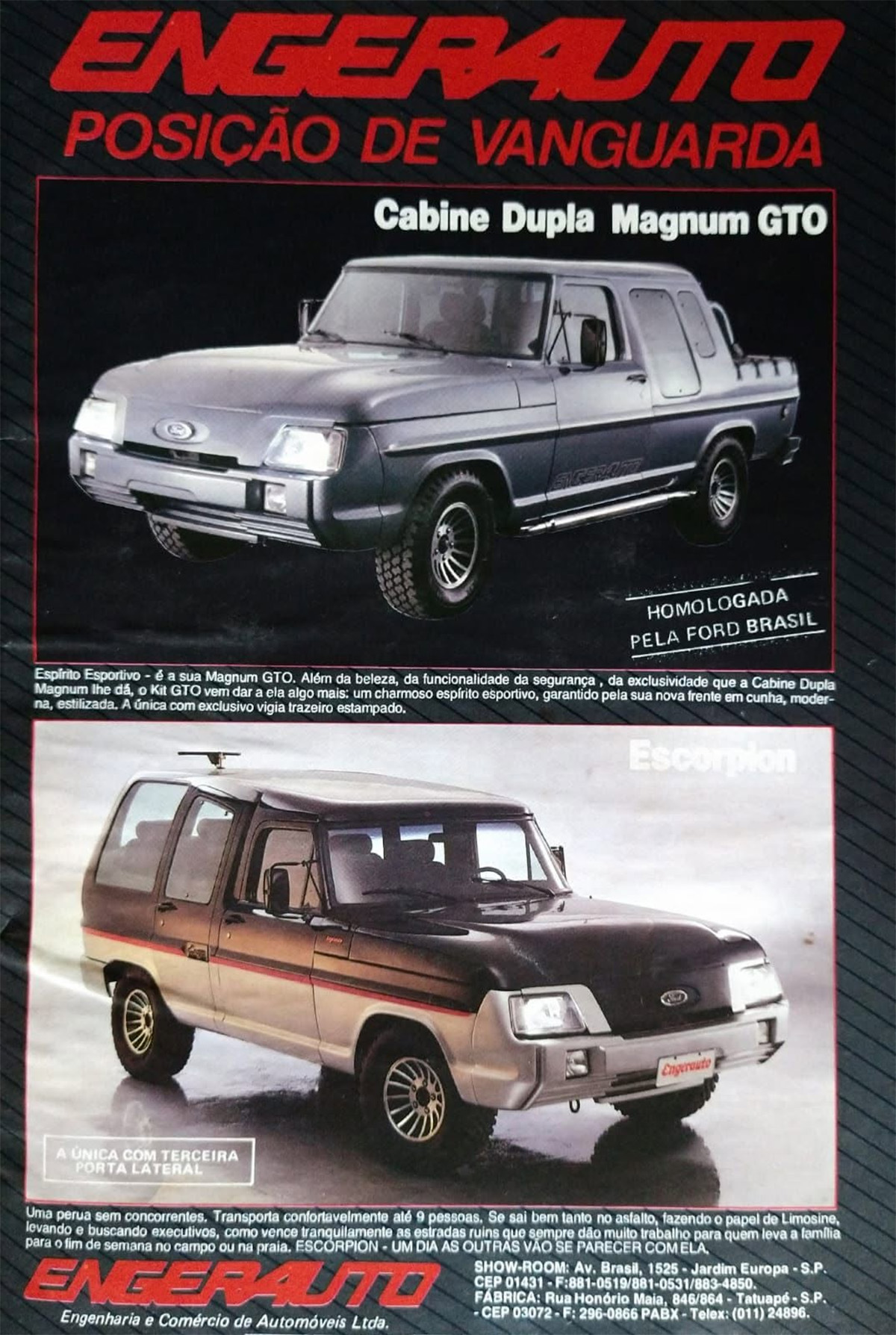
You can see the pickup version better in this ad, and it seems to be called the Cabine Dupla Magnum GTO, a lot of very exciting words strung together.
The overhead view of the Escorpion gives a good look at just how tall the thing got, becoming downright van-like at the rear, all for the comfort of the people inside. Note that it’s a three-door, with the rear door only on the passenger side. And you can’t complain about the window area, because the amount of glazing going on here would make a Krispy Kreme jealous:
Under the hood, the Escorpion used a 3.6-liter inline-six – I’m not sure if this is a smaller variant of Ford’s legendary 300 (4.9-liter) straight-six – and you could get these in versions designed to run on álcool, Brazil’s unique sugarcane-based Ethanol fuel that was used extensively throughout the country, and was a huge success for renewable fuel.

Those taillights are familiar; oh! They’re from a Fiat Uno! Whew, now I can rest.
I’m really taken by this odd thing; it almost has a Colani feel to it, though I have no idea if the designer, Anísio Campos, was influenced by Colani at all. I do know that Campos was one of the designers that created the famous VW-based Puma sports car and that amazing (and also air-cooled VW-based) shrunken-Porsche 928, the Dacon 928, so the man had some real chops.
I know there’s all manner of arguments for and against protectionist markets like what Brazil used to have, but if they can breed strange beasts like these, then I think they’re at least somewhat okay in my book.


“Campos created that amazing shrunken-Porsche, so the man had some real chops.”
That 928 underwent a hell of a lot of chopping, for sure.
Yes, please.
And it was at that very moment that BMW realized – the endearing nickname “Clown shoe” was no longer theirs to cherish and own – gone forever to Brazil, like some of their engineers in the mid-1940s
Those guys went to Argentina i think.
https://www.imdb.com/title/tt0077269/
I’m not sure about the nazi spread but Brazil got the headlines.
All of South America was their playground, with Brazil being the second most-common destination after Argentina.
Between this and what we saw on the Old Site yesterday, I’m thinking this must be Irradiated Trucklets Week on the automotive internet.
I’ve been on record saying the Langonda is the Concorde of cars, so.. this is the platypus of cars!
It’s much like one of those “the more you look the more is wrong” pictures from that internet thing.
Either Lagonda or SM
If a 7-year-old designed a popemobile with ChatGPT, it would come out looking something like this.
Not to be pedantic (but this is The Autopian after all)…but I’m pretty sure the F-1000 was actually based on the “bumpside” F-series trucks (1976-’72) not the “Dentside” trucks (1973-’79) that were a refresh of the earlier truck.
You can tell by the doors, the earlier truck had a little “zag” where the upper window frame met the trailing edge of the door, while the later truck had this area smoothed out to be more of a flowing character line with only a hint of “zag”.
Thank you, I’ll fix that!
Also at the time there were no F-150’s, it was F-100 and then -250, etc.
https://www.ford-trucks.com/articles/ford-made-what-these-f-1000-inspired-south-american-trucks-are-gloriously-insane/
Not sure, but in the showroom shot, it looks like the silver and red cars might be the same model. The red car also seems to have rear seat t-tops, and maybe a rear bed (this time with the tailgate up). I wonder if they’re some sort of ute conversion from a car base, or something like a rebodied small pickup?
edit: Looks like it’s called the Engerauto Topazzio, based on a small pickup and with a swappable rear that could make it a ute, a sedan with a huge trunk lid, or a hatchback. Sort of like a somewhat bigger Nissan Pulsar.
Me: “What? There’s no way those were the same thing…”
*scrolls back up to the showroom photo*
*claps hand over open mouth as eyes widen*
I wonder if the Brazilian dealer was inspired by Galpin Ford. Let’s see flying Pinto, the Executive motor home, GAS.
This is a Fox-body Wutstang.
This is sort of where the US market is headed, except with way less creativity and choice, because FMVSS still applies.
I feel like I shouldn’t like it but I totally do, this thing rules.
When I was taught to make a Caipirinha, I was told to use a wooden muddler (ideally with a bird carved into one end) to mash the sugar and lime together before pouring in the cachaça. The trick was to not do it with too much force in order to blend the sugar into the lime juice without extracting any bitterness of the lime peel.
This design seems to have taken inspiration from the Caipirinha process, but I’d say it was muddled well past the bitterness point.
In the real-life shots, it’s unmistakably F-150…but just looks different in the angles used for publication. I’d guess that’s on purpose?
I would hesitate to describe any fuel source that requires massive burning and rain forest clearing as a success. Ethanol is stupid enough when it comes from corn, it’s worse when it comes from sugar cane.
Now as a jobs subsidy program, which is the actual point, it’s a brilliant success.
It looks like when a first grader draws their mom’s Suburban with crayons
That vehicle is certainly euniquely ‘designed’.
I mean, it could be worse looking. You’d have to really try, but I’m sure it could be done.
Brazilian cars are even uglier than Indian ones. Especially these contraptions that brought some fascinated disgust to my 10-y/o self when on hoildays in Brazil.
Ford has a number of weird pieces, like the Renault 12-based Corcel, but launched before the 12.
BS, that’s just argentinian hate .These utilitary conversions were all ugly AF, but they’re a tiny fraction of what was designed in Brazil (either by Brazilian brands or by Brazilian teams working for foreign brands).If you ignore these F1000 blobs the rest of the designs are pretty OK for the most part.
Nao irmao. We had our own bunch of unbearable ugliness (Iook at the Falcon and our Polara and last VW 1500).
But the Fiat Oggi (the Panorama was cool tho), the softened Santana, Quantum and Monza, the last Fiat Uno (Mk I), the Versailles, the extended Ka (look what they did to my boy!). Nasty, really.
The Chevrolets looked good, except the front end of the last Opala (I love the Caravan). The Verona was coolisimo, the Pointer is fantastic, as is the first Saveiro.
We, too, had to warm up decades-old platforms due to autarchy, and the result was normaly dismal.
Deep respect for the dedication to function over looks.
this is what immediately came to mind
This is what happens when the engineers and designers are more drunk than the folks actually building the car.
Okay but what are the headlights? I immediately assumed Escort with different cornering lamps but that doesn’t seem to quite be what they are.
Those came from the Brazilian Chevrolet Monza, which was based on the third gen Opel Ascona. Yes, it’s a Ford with Chevy headlights.
I immediately clocked them as Opel Kadett headlights,but that is basically just a regional thing.I wouldn’t know which ones were sold in Brasil,but probably the Chevy I suppose.
Brazil also got the Opel Kadett as a Chevy, with pretty much minor changes. But those are 100% Ascona/Monza headlights. Kadett’s headlights are a bit wider, less slanted, and the turn signals wrapped slightly around the corner
Crap,you are right.
This thing is…weird.
If you had just shown me a picture and told me some fella made it in his garage, I would have totally believed it.
Well, it was pretty much that. Some random shed they called a factory where they hacked off parts of trucks and made those fiberglass monstrosities. Think something along the vibes of those car modifying companies from late 2000’s reality shows, like West Cost Customs.
All the F-350 drivers are now suddenly feeling inadequate in the presence of the F-1000. Looks like an AI fever dream.