

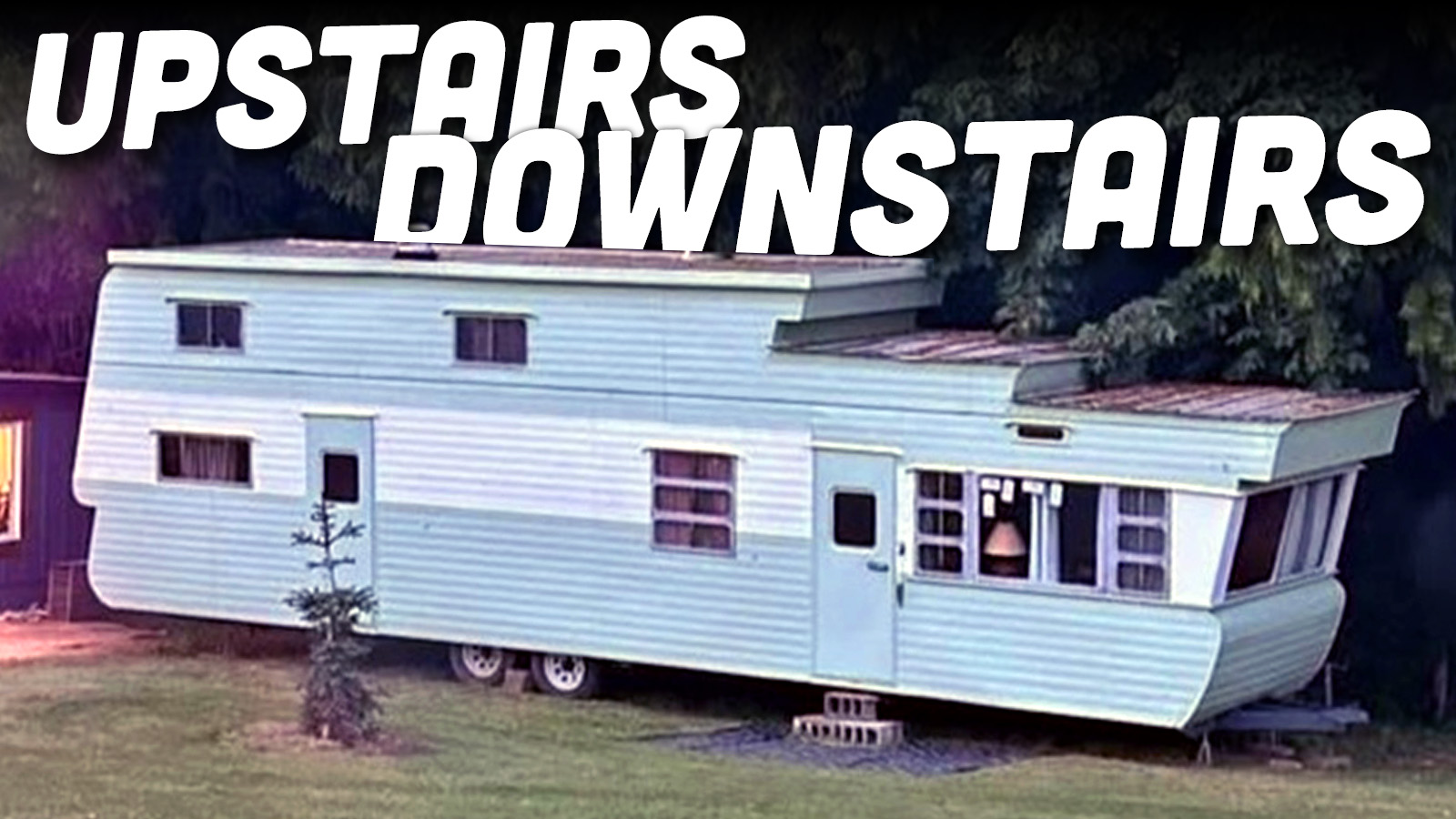
Some of the weirdest trailers that you can buy today are destination trailers that have second stories. These beasts do have proper RV equipment and could be used as travel trailers, but aren’t really meant to be pulled around all the time. If today’s boring and expensive rectangular boxes are too much, there’s a wild option out there. This is the 1954 Ventoura Loft Liner. It’s a double-decker mobile home with sleeping room for eight and, with a few tweaks, could become a crazy 40-foot, 11,000-pound tiny house or RV.
There are several different types of RVs. There are towable travel trailers, motorhomes, truck campers, tent campers, fifth wheels, and more. You can generally break these down into three purposes.


Most campers are for recreational travel. These can be hauled or driven anywhere on a moment’s notice. Then there are park models. These are technically RVs, but they’re meant to be plopped down at a campsite for years on end. These basically function like a part-time vacation home. There’s also an in-between RV called the destination trailer, which blends park model and travel trailer features into one very large, but still portable unit.

The mobile home is not really an RV. While they ride on wheels, have bathrooms, kitchens, and sleeping facilities, they’re not really meant to be “camped” in. Like a park model, they have no holding tanks and are not self-contained in any realistic way. While the mobile home builders of the past marketed their trailers as being easy to tow, the idea was still that you’d tow it to a trailer court, set it up, and then live there. However, as Vintage Camper Trailers Magazine writes, a lot of people in the 1950s and 1960s did tow their mobile homes frequently as they traveled for work. So these weren’t meant to be camper trailers, but they were often used like campers.
This is a long way to say that the Ventoura Loft Liner is not the typical RV that I write about because it technically isn’t an RV. However, some folks do take vintage trailer homes and then convert them into RVs. Some people do hitch these up to a modern pickup truck and tow them across the country. That’s what happened here. This mobile home was hauled from Florida to Washington state through the Rocky Mountains and all. Now, it’s ready for its next chapter.
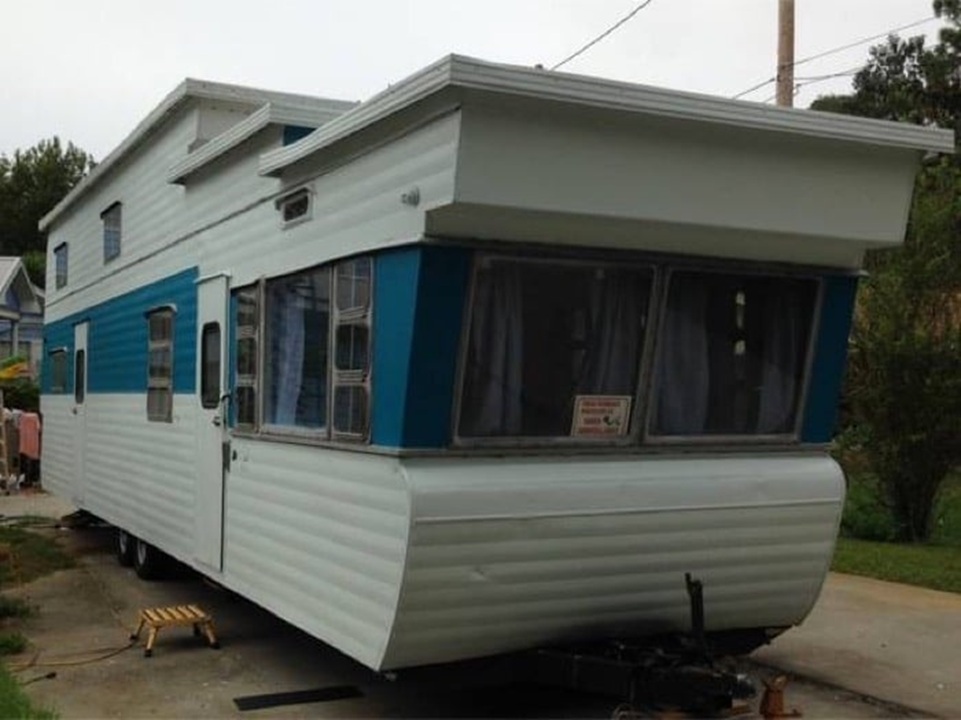
Ventoura Homes
The Ventoura Loft Liner was a product of Ventoura Homes, which was a division of Holan Engineering Co., Inc. of Elmwood, Indiana.
Despite my best efforts, I could not piece together the whole history of Holan Engineering. I was able to find out that the company was owned by Myron C. “Mike” Poole, who also served as one of the company’s designers. I could not find when Holan was founded or when it failed. However, when Poole passed in 1977 at the age of 68, the Muncie Star reported that Poole had run Holan for 20 years. The earliest piece of evidence that I could find pertaining to the company was dated 1951.

As for what Holan built, in 1951, Holan introduced the Suburban, a towable mobile home. Ventoura Homes was an offshoot of Holan that focused on mobile homes. Poole was also an inventor who baked ideas like rotating windows into his trailer designs.
In the early 1950s – the earliest ad I found was in 1952 – Holan Engineering began marketing the Ventoura trailer. What made this mobile home stand out was that Holan figured out how to add space to the house trailer without adding length to the trailer’s 41-foot stretch. Instead of building back, Holan built up, installing a second level on the trailer.
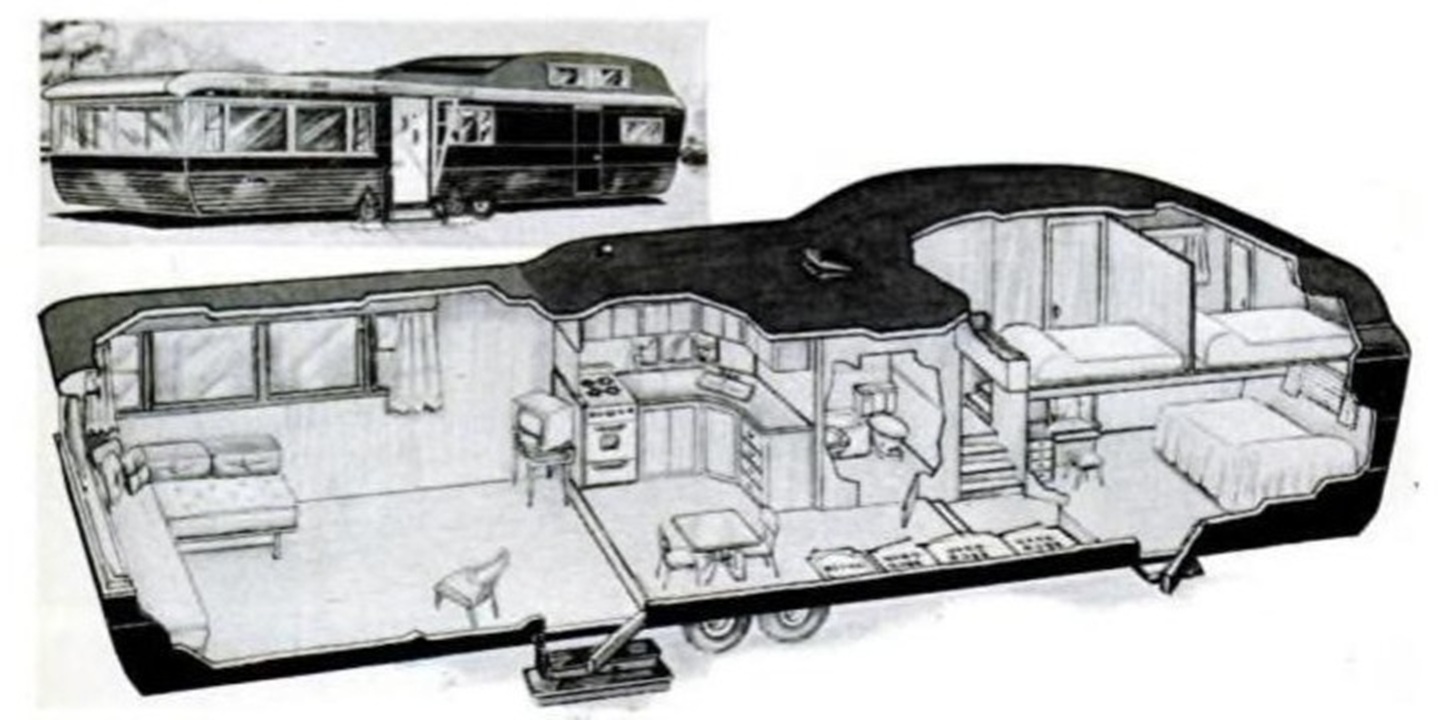
By building up, Holan was able to give the trailer a spacious living room, a large primary bedroom, and two additional bedrooms upstairs. The company also managed to build an “attic” into the dead space of the upper level, which was pretty wild for a trailer at the time.
The Ventoura lineup featured trailers of all sorts of sizes. There was also the Dover, Travelaire, and the Sovereign, all 50-foot trailers that did not have a second level. Other models included the Casualaire, which started at a 42-foot length, the Ventoura 500, and the Model 27. I’m sure there are others I am not listing. These are only the models I’ve been able to find.
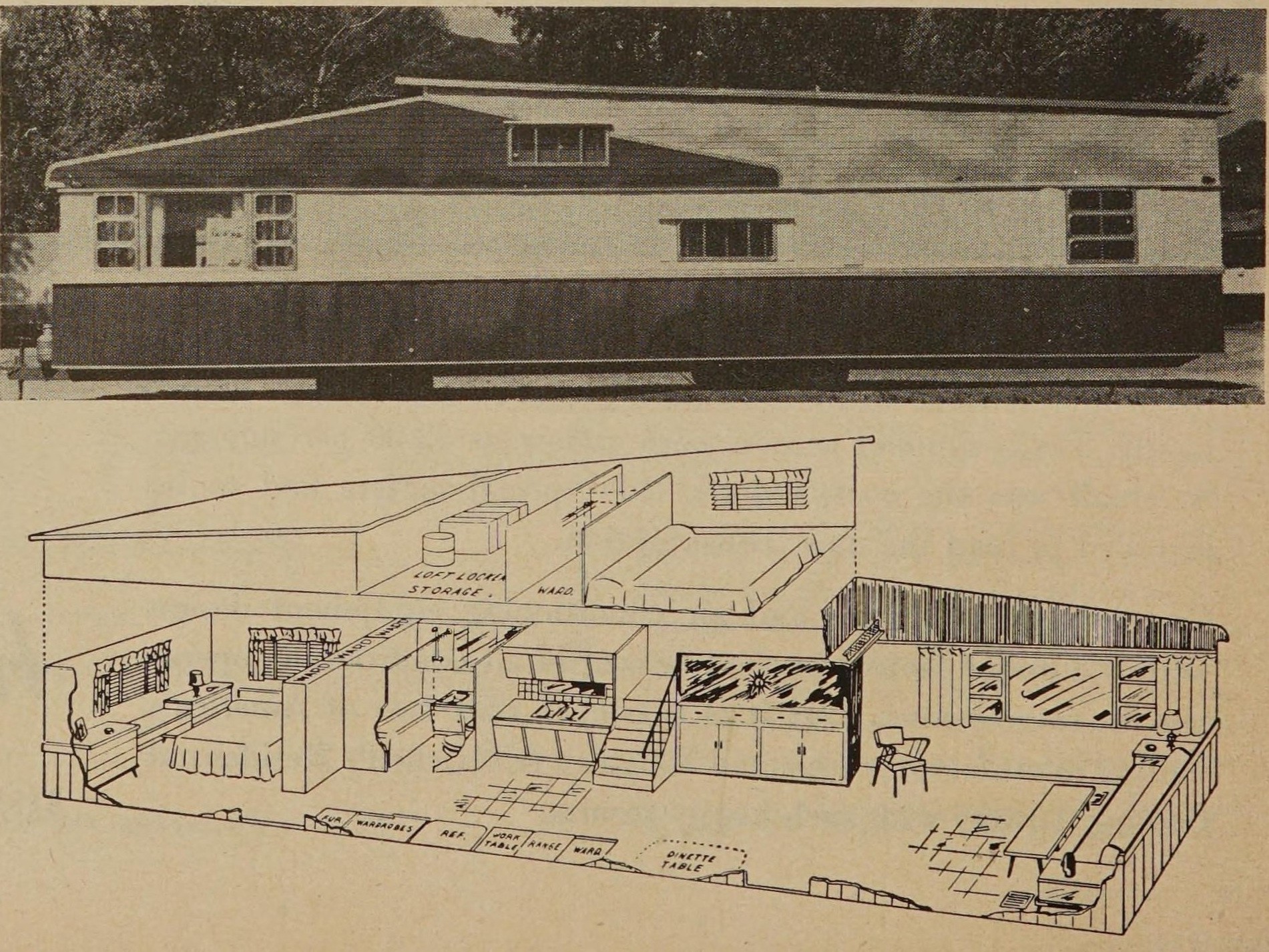
Holan Engineering filed for a trademark on the Loft Liner name in autumn 1954. By 1955, Holan Engineering changed its name to the Ventoura Corporation. An early brochure for the Ventoura Loft Liner (below) touted it as having as much room as a 52-foot mobile home, but in a 37-foot mobile home’s footprint. Loft Liners were sold in three sizes: 38 feet, 40 feet, and 46 feet. These sizes count the additional few feet that the tongue adds. Thus, a 40-foot Loft Liner has a 37-foot living space.
The floor plan for the 40-foot Loft Liner involved three primary bedrooms, one below and two above. The shorter and the longer Loft Liners featured an upper bedroom and a lower bedroom, but no third bedroom. The upper levels of these trailers also featured an attic and a loft. Ventoura Homes said that the attics in its Loft Liners were the largest of any mobile home in production.
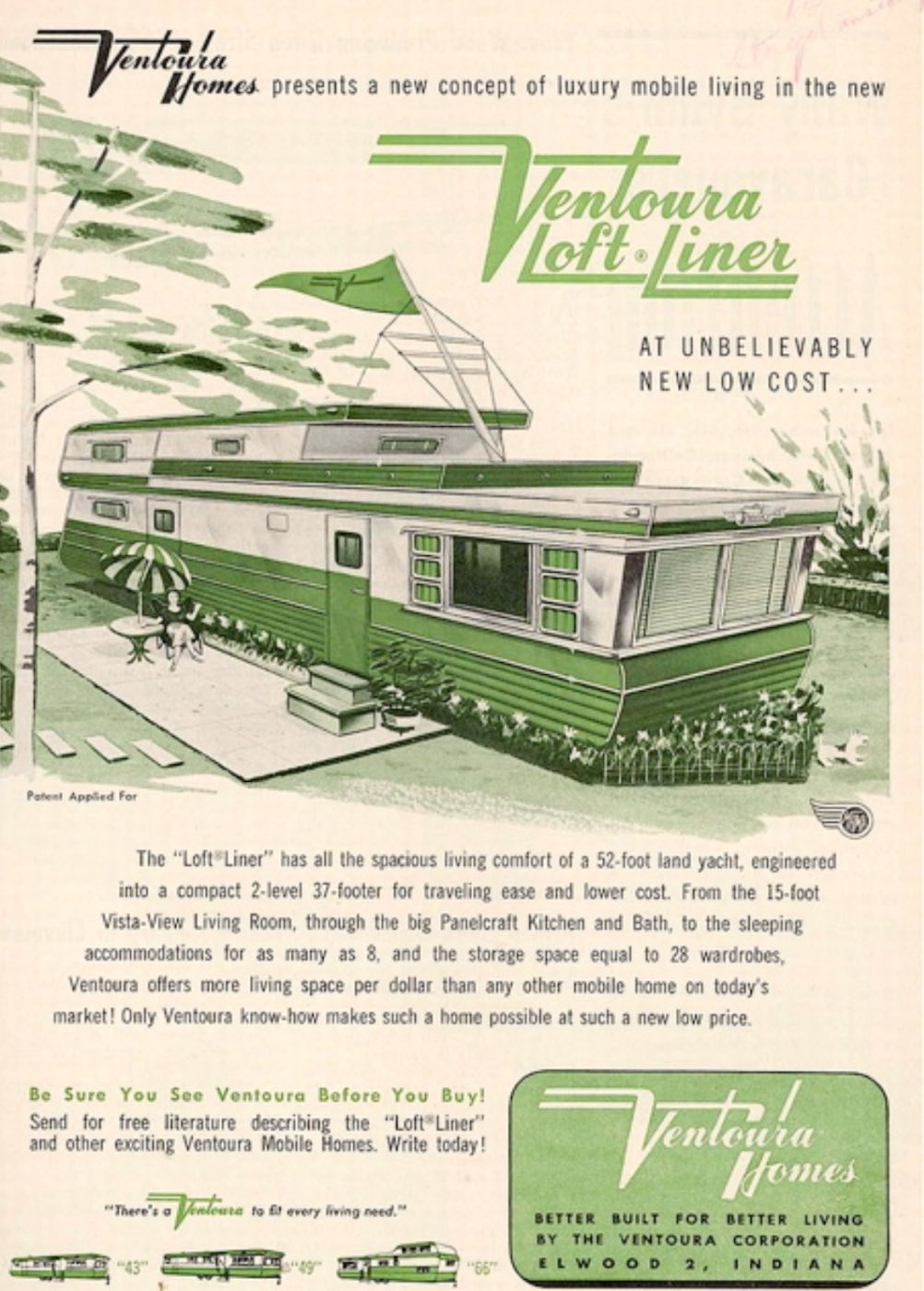
Ventoura Homes also said that the Loft Liner had room for up to eight people to sleep, 28 wardrobes, and every single feature of a home. Of course, that last part isn’t surprising since this was designed to be your permanent residence.
The largest Loft Liners looked like an average mid-century home, but condensed into a 10-foot-wide space and riding on only a pair of axles. Pricing for a larger 1955 Loft Liner was around $7,800 ($96,466 in 2026), and the company was able to build up to 1,000 units a year. Empty weights ranged from around 8,500 pounds to 11,000 pounds or so, with around 10 percent of that weight falling onto the tongue.

Ventoura was far from the only company with this idea, nor was it the most ambitious. Other double-decker house trailers included the Richardson Regent Bi-Level, the Smoker Vista-Liner, and others I am likely forgetting. There was even a unicorn of a double-decker travel trailer called the Lighthouse Duplex. I’ve been looking for one of those for sale for much of my writing career.
Yet, none of these ideas really lasted. By 1958, Ventoura was back to building single-level trailers, and even other companies gave up on the concept. One of the downsides of some of these double-decker trailers was poor headroom. These trailers were height-constrained so they could roll down the highway. For example, the Loft Liner stands around 12’6″ tall. This meant that, while the downstairs levels of these trailers had ample headroom, the upper levels were often not tall enough for an adult to walk through without hunching far over.
Granted, the industry didn’t let the idea die forever. Two-story mobile homes do exist today. They just don’t have the “trailer” appearance that the mobile homes of old did, so the modern ones don’t look nearly as crazy.
This 1954 Ventoura Loft Liner
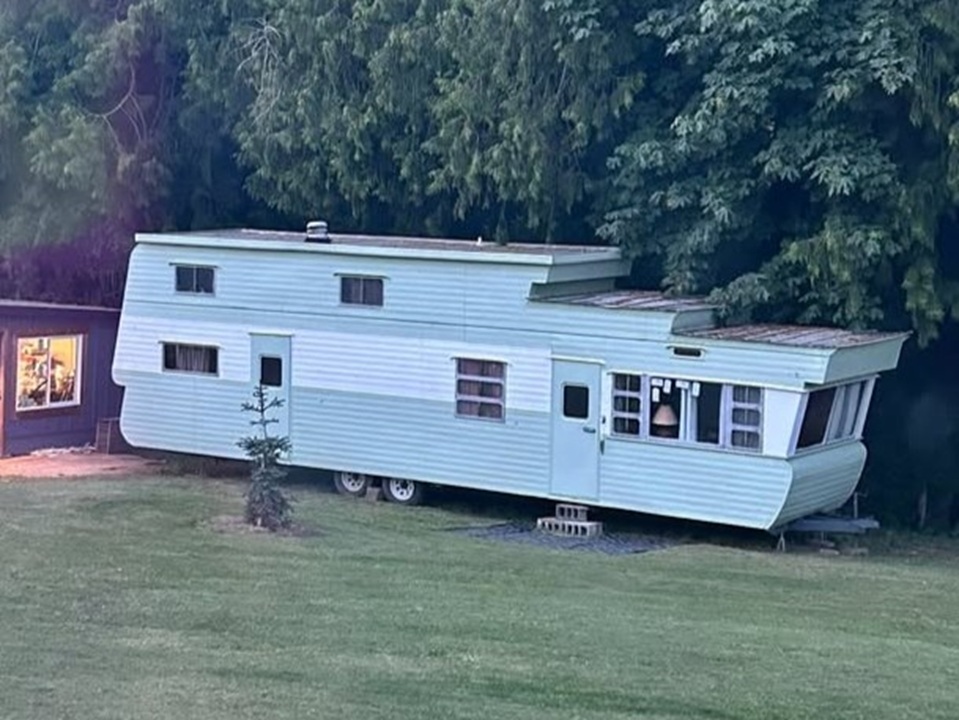
That brings us to the Loft Liner for sale today. While Ventoura was able to build 1,000 of these things a year, the youngest of these trailers is now 68 years old. Those old mobile homes had a lot of the same problems as old travel trailers in that they’d spring a leak and rot out. So many old mobile homes never made it to the modern day. Thus, a Loft Liner in really any condition is considered rare, and one that looks as nice as this one is a hard find.
This trailer has shown up for sale more than once. One of the last times was in April 2016. Back then, the seller said that he picked the trailer up five months earlier from a vintage trailer collector and restorer. The seller intended to park the trailer on his ranch and then rent it out. Apparently, his wife wasn’t a fan of someone else living on their property and killed the idea.
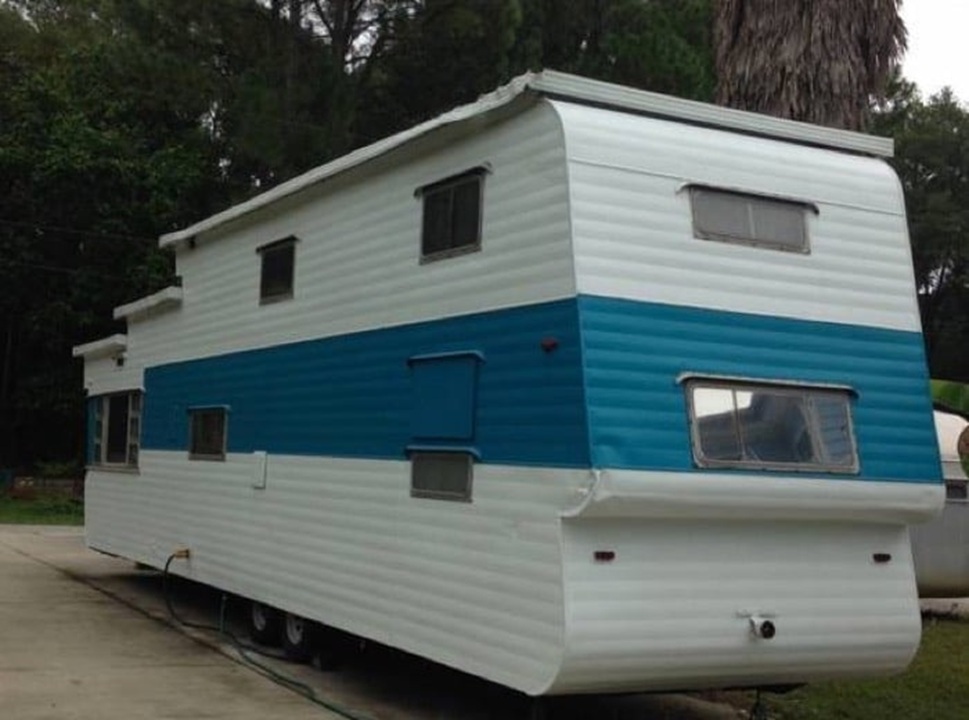
So, the trailer was put up for sale. This is what the seller said of the trailer in 2016:
This trailer was in a mobile home park on a lake for over 40 years and scarcely used as summer home most of its life. This trailer has three bedrooms. A master back bedroom downstairs with a queen bed, two upstairs bedrooms with king beds, one upstairs bedroom has a closet and a privacy door, other upstairs bedroom has a large storage room. Upstairs there is a storage closet that has the a air unit that vents up through the old heater vent through the roof. New 50 amp service was installed and it has a 100 amp panel, new copper water lines, and a total of three new portable air condition units, 13000 btu in the living room, 7000 btu rear bedroom, 12000 btu upstairs. All new tires and rims. The tail lights and blinkers have new wire and work well, the exterior has a fresh coat of paint. It has an older fridge that works great. This is a portable little home, it has a title as a RV. This trailer is very rare and six months ago was towed 850 miles over the mountains and it towed well. This tiny house would make a great beach or lake lot home, it could sleep 8 with a front living room sofa bed.

The seller back then, who was located in Panama City, Florida, wanted $15,500 for the trailer. It was purchased and towed by a Dodge Ram to the Pacific Northwest. Then, it was given a few more upgrades before the current owner obtained the trailer.
Here’s what the current seller says about the trailer:
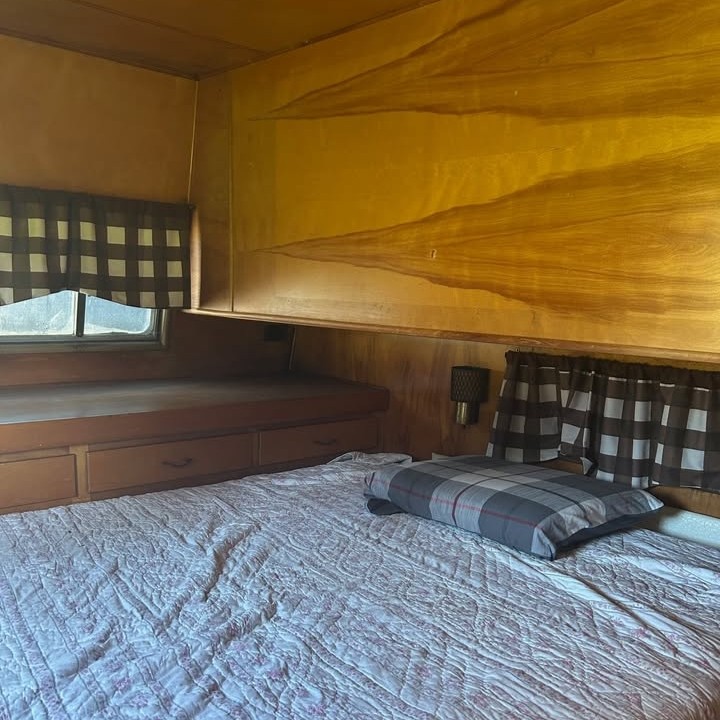
Inside, good condition with a living area, kitchen, dining, pantry, bathroom, and primary bedroom with closet, 2 upstairs sleeping nooks with closet.
NEEDS:
*Fridge.
*toilet installed (we have the toilet).
*bathroom paint.
*window in front is boarded off and keeping out weather but needs replacement.

Prior Owner Updates:
New 50 amp service with a 100 amp panel, new copper water lines, and portable air condition unit.
The tail lights and blinkers have new wire and work well, the exterior has a fresh coat of paint. New floors and pine walls, ceiling fan.
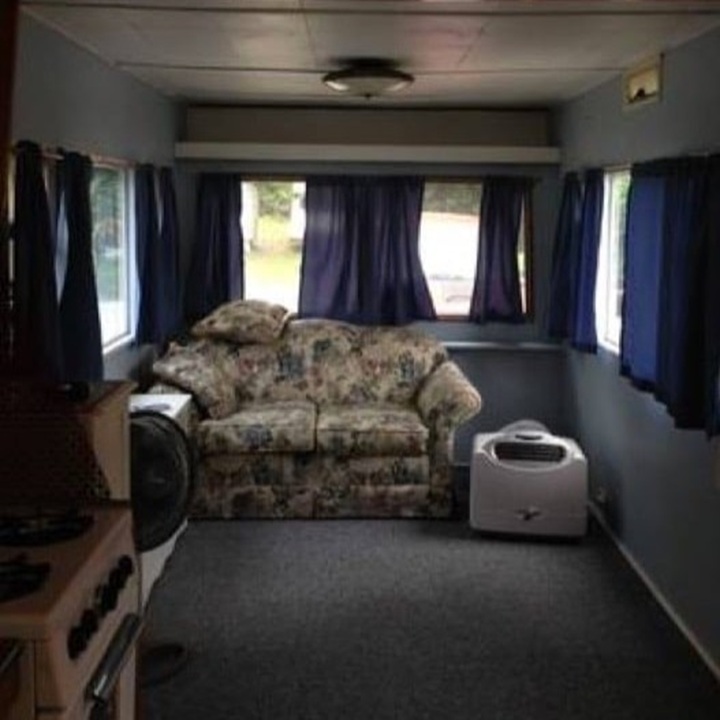
Much of the listing reiterates what was said in the 2016 ad, but adds that, as of now, the trailer has no known water leaks. That’s impressive, given its age. Sadly, the current seller has only one exterior photo, which shows that the trailer has been repainted. Most of the exterior photos here were from the 2016 listing. Neither seller took particularly good photos of this rare trailer.
Endless Possibilities
The seller is marketing the trailer as an accessory dwelling unit, a tiny house, an Airbnb, or an RV. Honestly, I could see all of these use cases. Some vintage trailer owners install batteries, solar, and holding tanks, then enjoy their house trailers as really big camper trailers. This isn’t as crazy as it sounds. As the Vintage Camper Trailers Magazine writes, these trailers were designed with easy towing in mind, even if you weren’t expected to use them as campers. In that article, an owner of a different two-story Loft Liner explained that it tows well at 55 mph despite the ungainly looks and length. Of course, being 10 feet wide means you’d better be skilled at towing.
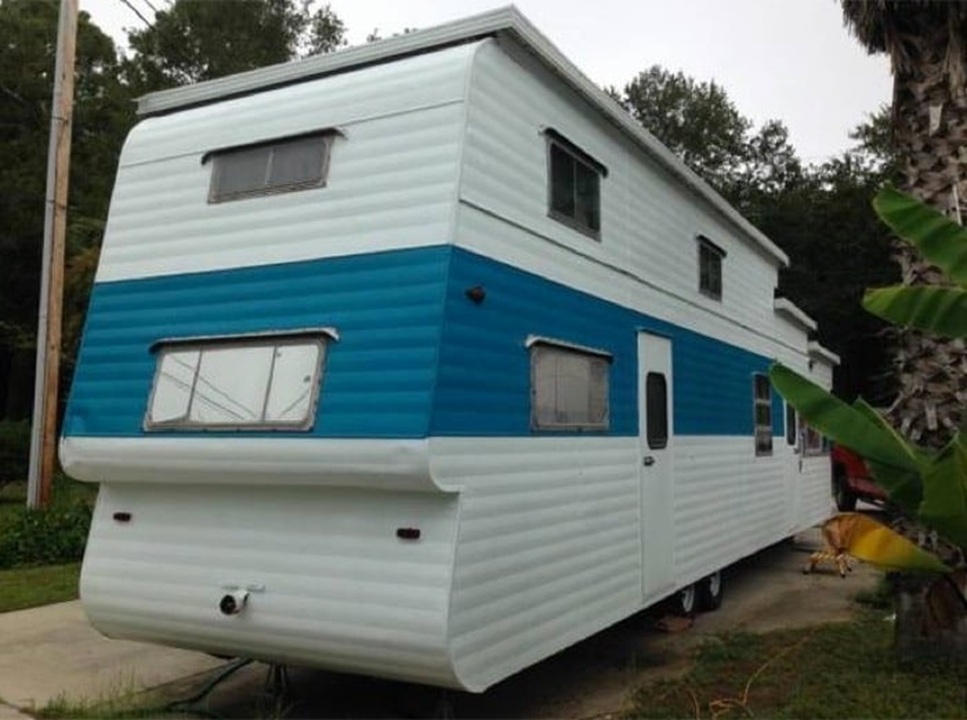
At the same time, you could also just park this on your property and enjoy a really rare time capsule back to what mobile home living was like in 1954. The choice is limited only by your imagination and determination. The seller, who is based in Ridgefield, Washington, wants $17,000 for this trailer. As long as it looks in good in person as it looks in photos, that’s probably a good price.
I don’t often explore the history of mobile homes, but I thought this one was too cool to pass up on. How often do you get to see a vintage trailer that has two stories? But more than that, this is a vintage trailer that’s apparently happy to get some miles on it, and could be turned into anything you want. I hope whoever picks this up gets really creative and does something amazing with it.
If you know anything about Ventoura Homes that I didn’t already put down here, email me at mercedes@theautopian.com. I’m always interested in telling the full story about how neat trailers came to be!
Top graphic image: Facebook Listing


Can’t imagine sleeping in the rear bedroom with ceiling so close to your face. If you wake up with a start from the nightmare or hearing weird noises outside…
Wow, this thing is awesome and what a great deal! What a great classic camper/mobile home
Pretty sure nothing built in 1954 could safely tow this. But no safety regulations at the time. Does anything off the lot qualify to tow this beast? Maybe a Dodge with a Cummings diesel but even then is it safe? Will it fit under most bridges?
I wonder where the line is drawn between camper and trailer house? The ability to quickly connect and disconnect utilities? A relative recently moved into a retirement facility and gave my cousin their trailer house and I was kinda surprised that it came with a title like a vehicle not a deed.
Fun fact, a doublewide mobile home is titled as two separate trailers, if you put one on a permanent foundation on land you own, but don’t retire the titles, you can get away with paying property tax on the value of the undeveloped land as the titled trailers are considered chattel (in a lot of areas, anyway, maybe not everywhere)
However, you have to have the cash to do all that, since you can only take out a conventional mortgage if the titles are retired, turning it into a normal house legal-wise.
A single wide can never qualify for a mortgage, so the whole tax avoision scheme is maybe more common with those
Thanks for the info, that’s all completely new to me!
That’s insane. Thankfully hasn’t travelled near the 11-foot-8 bridge.
I’ve seen them at the rv parks older people might live at year round if there is nothing saying they cant. I assumed they were a park model. That sedan or station wagon must have needed helper bags or air shocks. 11k lbs still seems light. 40′ 5th wheels routinly run over 13k lbs now.
While Ventoura was able to build 1,000 of these things a month, the youngest of these trailers is now 68 years old.
1000 per month?? 50 a day (5 day working week) did you accidentally a zero or two?
Incorrect unit of time. 1,000 units a year! Thank you for pointing that out, I issued a correction. 🙂
It is both a gift and a curse to have avid informative followers.
That’s still impressive, that’s a big thing to crank out at ~3/day!!
New 50 amp service with a 100 amp panel,
I’m not an electrician, but isn’t this a fire hazard?
I don’t think so. Both my house and my RV have substantially larger panels than they have service. You’re not expected to max out every circuit at the same time, and if you do it would just blow the (presumably) 50 amp main breaker on the panel. At least that’s my reading of this.
Correct.
A 100 amp panel is the maximum load of the panel; like it can support 10, 10amp breaker loads. Supplying it with 50 amp means you’re either going to overload the supply (the RV park’s breaker) or just fill it with 50 Amp of breakers. My breaker box has space for about 10 more breakers than I need, and likely would exceed the supply from the utility. If I tried to go full bore and fill it up and run everything the utility will shut me off.
30A at 120V and/or 50A at 240V are what you get at a standard camping pedestal. The general rule is that a camper with 1 AC has a 30A 120V, and 2 or more AC’s gets the 50A 240V.
The rating of the panel can always be higher than the service coming into it. They probably just bought a 100A panelboard from a big box store and put a 50A main circuit breaker in it. The 100A just means the bus in the panel can handle 100A, but the main breaker would trip at 50A. The pedestal at a camping site also has a 30A-1P and 50A-2P circuit breaker, so it would also trip if there was too much power.
Fifty. Fifty one. Whatever it takes.
i stumbled upon this a year ago on youtube. its very interesting to see in moving pictures.
https://youtu.be/7NLpUYYrq_0?si=b5E3k-uyitKRYQdP
How does this thing only weight 11,000 lbs. The entire inside seems to be made of maple or oak.
It’s shockingly light construction. I had a 16′ vintage trailer from 1966 for 10 years and it was under 3500 pounds. The walls are all 1/8″ birch plywood, often with a shellac finish. That’s stuff is like 12 pounds per 4×8 sheet. The outside is just corrugated aluminum. Everything inside is also very light construction and there’s minimal wall thickness and insulation. The strength just comes from the layering of the materials, and the cabinetry inside is part of the strength too. It really counts on the cabinetry at floors and ceilings to be part of the strength. It’s really flimsy when the internal cabinets and interior walls are removed… to the point where you often have to brace things during a restoration.
Thanks for confirming this, the weight stood out to me as well!
Ah, so the cabinets are internal braces that allow for the trailer walls to be thinner. Clever idea.
Until people in the tent 2 spaces away complain about the snoring.
A decrepit Loft Liner near Charlotte just sold this spring. I’ve had it saved in Marketplace out of horrified fascination. Hoping it gets restored and turns up on a show field someday.
If “The Long, Long Trailer” taught us anything, it’s that this can be filled with rocks and towed with a 1953 Mercury Monterey Convertible, but it’s probably going to result in some mishaps.
If I had a piece of land in search of a cottage, this is one hell of a cost effective solution.
These days you can’t even get a hollow structure built for less than 50k.
And even ultra base single wides are pushing 6 figures plus delivery, and park models aren’t that far behind
Was only about a decade ago or so when you could get, like, a Breckenridge park model cabin with a sleeping loft and all furniture and appliances down to curtains and dishes for under $50k
Just waiting for the Facebook post of this being towed through the Tail of the Dragon.
How could it become an RV? Doesn’t being an RV mean it has to be able to drive itself? Otherwise it’s just a camper trailer.
I’ve heard it both ways.
There’s nothing that says an RV has to be motorized. The RVIA says that right from the start in its RV classification guide:
“An RV is a motorized or towable vehicle that combines transportation and temporary living quarters for travel, recreation and camping.”
The RVIA also describes a “camper” as either a “truck camper” or they also list a “pop-up camper”. So the vast majority of trailers are not campers, they are travel trailers.
Having moved to Ohio some 20 years ago, I still cringe when I hear someone call a trailer a camper. That wasn’t done in California when I lived there.
I wonder if that’s a Midwest thing? I’ve always more or less known all travel trailers, truck campers, pop-ups, fifth wheels, etc., to fall under the general umbrella of “camper” and “RV,” but with their own specific industry names.
Sure, but according to vehicle titles, I’ve seen them classified as RVs specifically. I had to go through some small hoops to get my skoolie registered as an RV.
I guess I don’t care what RVIA says VS the government and titling things; you can’t get an RV title for a camper trailer, can you?
This ventures deep into Tornado Target Territory. The swoopy lines and sheer size of the thing do scream Postwar Optimism, and this is certainly one of the better built models, but where I live there better be a storm shelter nearby and it better be a good one.
I’ve always wanted to see one of these in person – they come up for sale just often enough to confirm that Ventoura built more than one and that some survive, but encountering one in the wild is unlikely
The 1950s was before the evolutionary separation between single wide mobile homes and park model RVs. The mobile homes of the time have more in common with modern park models but covered both use cases.
At any rate, they were, on average, better built than the current standard. I really like all the birch paneling, that plus all the built-ins makes it feel like a stateroom on a 1930s ocean liner
This is absolute nightmare fuel for me. This is far too big to be towed by a non-commercial semi tractor, and aside from the boys at Big Time, no one should be using those for recreational driving.
Ever seen a mobile home being moved? It’s a Wide Load and requires a lead car and chase car to keep the driver aware of conditions ahead that may cause issues, and warn other drivers that there is a big thing ahead that will likely be in their way.
Hooking this up to an Escalade to go camping just seems like an unmitigated disaster.
You just know some yahoo with a 3/4 ton pickup will think they can safely tow this beast because it weighs less than their truck’s maximum tow rating.
Dodge Ram towing this diagonally across the country, and didn’t “ram” a few bridges along the way. Hmmm.
I’d actually be rather concerned with “towable” for such a trailer. It’s a massive air-brake and it’s huge – so I’m not sure if someone will want to move. But more, how light/thin is the construction here?
It’s only 12’6″ tall, so short enough to fit under interstate crossovers. The guy in the vintage trailers article claims that the thing tows fairly well at 55 mph.
Also, you jyst know people were towing these monsters with Buick Centuries and Nash Ambassadors back in the day
Best I can do for 2026 is remove all tow ratings for anything that’s not “truck shaped”
If you think it would be tough to tow NOW, imagine towing it BACK THEN. In the mid 1960s, a basic straight 6 half-ton had 100 gross HP, and even the biggest available V-8 1-ton might have had 200 gross HP.
You wouldn’t have used a pickup to tow this. You would have used a full-size sedan or wagon with a big-ass V8. Thinking you need a pickup to tow things is a VERY modern development (and of course today’s pickups are just BOF sedans with a missing trunk lid). And you would have gone slowly.
Pickups were litereally for ranch and farm work back then, the only thing likely to be towed was a hay trailer. Slowly.
Kevin, you’re right. I should have thought of that. But even a 1965 Cadillac 429 had a mere 340/480 *gross* hp/tq. Or about what a base V-6 RAM 1500 has today.
So? You don’t need a massive amount of horsepower to tow. You need a massive amount of horsepower to tow faster than you have any business going while towing. You need *gearing* to tow. Semi tractors haul 80klbs over the Rockies with less power and torque than the he-man diesel pickups have today. They just do it slowly.
As I have said here before, back in the early 70s my uncle would use his Series Land Rover with all of 80hp to tow my grandfather’s near 30′ wooden Chris Craft cabin cruiser (another mid-century marvel) to the harbor and back every year. I shudder to even think how much that thing wieghed, and the homemade four axle trailer had no brakes. He did it in low range at ~5mph max. The boat was launched and removed via a crane, so no need to pull it out of the water – the plucky little Rover would have had no chance of doing that. For years I used my Land Rover Disco to tow my buddy’s 7000lb (probably rather more) boat to the lake and back. 180hp did the job just fine. I never exceeded 45mph or so nor was there any need to. Even if towing across the country, with very few exceptions the minimum speed limit on the Interstate system is 40 or 45mph. And you always have the option of not going on the Interstates.
The big issue with towing this thing is the width, not the wieght. If it’s 10′ wide it needs wide load permits pretty much everywhere, and that is a HUGE PITA.
What’ll you give me for odds that those permits were acquired when it was towed across the country the first time? 😉
If they weren’t, they got damned lucky. The commercial enforcement boys don’t play around. Lots and lots of money to be made from those permits, and the fines for not having them.
If I recall correctly from the owner’s manual from the Disco 1 that I owned, the max towing capacity was 8000 US pounds. It was safely up to the task. I also remember at the time, tow ratings for 4-wheel drive vehicles in the US tended to be calculated as lower than for two-wheel drive setups. The Disco was rated better than some larger vehicles. This was, of course, long before the current tow-ratings competition in the large pickup segment.
The US has a strange and sometimes convoluted relationship between commercial and non-commercial vehicle regulations. It’s possible that at least when these trailers were built, a private, non-commercial driver may have been allowed tow them without filing for permits — but a commercial transporter would have. Even today, there’s a patchwork of varying state-vs-Federal rules that sometimes don’t make sense. Which is why you can rent and drive a Class 6 truck with air brakes or drive a big super-C motorhome or class “A” motorhome with air brakes and not need a CDL or air brake endorsement in many states. The US can be a strange place.
The US isn’t one place – it’s 50+ seperate places under one overarching Federal Government with (theoretically anyway) limited powers. Understand that, and you will have a much better understanding of this country. In that sense, it’s really not fundamentally different than the EU. It’s just a matter of where you draw that line. Laws are different between Germany and France, even if there is a bureaucracy over both that controls some things. The EU is probably closer to what the US Founder’s imagined than what the US has become today. As one who has held a CDL with an air brake endorsement, I find it terrifying what some states allow untrained drivers to rip down the highway at 80mph in 40T air-braked vehicles. You know full well that the vast majority of Cryptkeepers driving 50ft RV conversion buses have no idea at all what those air gauges mean, or have any idea how to do a proper pre-trip inspection. I am a fan of the Bus Grease Monkey channel on Youtube – what rolls into his shop is absolutely horrifying!
What the laws were when this thing were built are niether here nor there. What they are today matters. Just to get this thing out of Florida, you will not only need a STATE over-width permit if you are going on state or Federal highways with it, you also will need over-width permits for every county and some local municipalities whose roads you will use. And there is a fat fee for every one of them. Doesn’t matter whether you have a CDL or not, though at least if you don’t have one getting a ticket for being overwidth can’t result in your losing it. Permits needed for anything over 8.5ft wide.
My Disco I is rated for 7700lbs. I personally think that tow ratings are largely nonsense. Common sense means more than numbers written on paper. What is safe to tow at low speeds in Florida is not safe to tow at 75mph coming down the backside of a mountain in Colorado. It was safe to tow that boat in the manner and place I towed it. You would be out of your damned mind to try to tow it over the Rocky Mountains with my truck. Or at 75mph on an Interstate highway. The brakes are up to the task at 45-50mph with a braked trailer, barely, in the low rolling hills of coastal Maine. Real mountain grades, oh hell no. I wouldn’t tow 4000lbs at 75 with that truck. There is no need, and the margins become too small. But I would have no qualms towing 10-12Klbs with it for short distances at low speeds with an appropriately relatively light tongue weight.
The difference in towing capacity ratings between 2wd and 4wd vehicles in the US is usually down to GVW. 4wd is heavier, and that added weight reduces available load capacity, including tongue wieght. And since towing at US speeds requires ridiculous amounts of wieght on the trailer tongue, that can affect total capacity rather a lot. Europe takes the opposite tack, strictly regulating speeds while towing and thus allowing much, much lower tongue weights. Which lets you tow a lot more for a given wieght capacity of vehicle. And then also being smarter in requiring addtional driver training before being allowed to tow more than nominal amounts.
When these trailers first came out in 1952, there were still a couple of automakers with straight 8s instead of V8s. Frankly, those would have done the job also
Pretty much anything big and heavy enough for some stability can do the job. It’s just a matter of how quickly. Nobody expected to tow a huge trailer effortlessly at 75mph back then. Semi-tractors often only had 100-120hp to tow 30klbs across the country.
There weren’t many, if any, roads where you could do 75 in the 1950s, 65 was about the max on some of the more modern highways, but most “fast” roads were still more like 55
Exactly.
Yep! In fact, if you look at the brochure images I posted, one of them depicts a full-size sedan towing a two story Ventoura!
I did indeed. I am old enough to remember when pulling giant campers with sedans and wagons was the norm. Pickups were something only farmers and avid hunters like my great-uncle had.
People look amazed when towing a small popup with a modern crossover. It tows fine! And stops fine with trailer brakes. The Detroit 2.5 have thoroughly brainwashed people into thinking they “need” a pickup to tow a 1800 lb popup. Besides, most trailer tires aren’t rated to much faster than 65 mph. Finding 81 mph rated tires gets expensive for the size.
Yeah, I remember getting weird looks and questions towing an A-Liner with a Crown Victoria, it could have easily pulled a camper twice the size, I was being conservative, and people would occasionally still ask why I didn’t have a truck
Stopping and emergency maneuvers are far more important than going. A heavy vehicle with big brakes will be safer to some extent. But having trailer brakes (legally required on anything over 1000 lbs in my US state) helps much more! 15 seconds to 60 is fine. Being able to stop in the same 200ish feet from 60 as a regular vehicle is so underrated.
“Towing rating” seems to be a uniquely American obsession. I don’t remember my dad ever worrying about it when he hooked up a (medium sized) caravan to our Passat. If it’ll move the load, then it’s fine to tow in the UK.
You should see the looks I get towing my utility trailer with my BMW convertible.
As a former owner of a F250 Camper Special, the single-channel, 4-way drum brakes concern me more.
Noticing this observation almost stopped me from posting a redundant entry expressing concerns about insufficient mid-century braking, not hp/torque. But that force quickly faded.