


Motorcycle builders love snagging bragging rights, be it horsepower, technology, speed, range, or pricing. For a while, the Kawasaki Ninja H2R has held the crown of the world’s most powerful mass-production motorcycle, but now there’s a new challenger in the ring. This is the Maltec PGM V8, and it claims to be the world’s most powerful production bike thanks to its 2.0-liter V8 with 334 HP on tap.
Every now and then, the major bike builders of the world enjoy engaging in arms races. They’ve happened in the 1970s, the 1980s, the 1990s, and even today. Everyone wants to be able to advertise having the biggest engine, the most powerful engine, or the greatest top speed. Kawasaki claimed to have the fastest and most powerful mass-production motorcycle with the track-only Ninja H2R, which has 326 HP from a supercharged four-cylinder and an unofficial top speed of 249 mph. Triumph claims to have the biggest engine in a mass-produced bike with the 2.5-liter three-cylinder in the Rocket 3.


If you say that the world’s fastest production bike has to be able to wear a license plate, then the fastest is the Lightning LS-218, which hit a verified 218 mph using a 200 HP electric motor. Even the road-going version of the Ninja H2 will go over 200 mph when you delete the electronic limiter. The thirst for speed has been so encompassing that even China is in on the action. The CFMoto V4 SR-RR prototype recently hit 196.2 mph on the back of a 210 HP V4.

But there’s one company that says it has put this debate to rest, because it is the king of horsepower. Australia’s Maltec says that nobody on this planet can touch its bike, and it’s not even using forced induction or other tricks to get there. Instead, its bike has a tiny V8.
From A Racebike Engine Builder
The PGM V8 is the brainchild of Paul G. Maloney. Maloney was already famous among gearheads in Australia for his work building race engines for Sauber Petronas F1, Kawasaki Superbike, Honda Superbike, BSB, and MotoGP over the course of two decades.
But Maloney had always wanted to do more than make engines for someone else’s bikes. His bike wouldn’t be like the ones already out there in the world, as his would have a V8. Why? As he joked to motorcycle publication Pipeburn, “It’s the Aussie thing isn’t it.” Maloney founded Maltec Performance Engineering in 2008 after returning to Australia in 2007. He would assemble a team of engineers from World Superbike, MotoGP, and Formula One, and then they got to work.
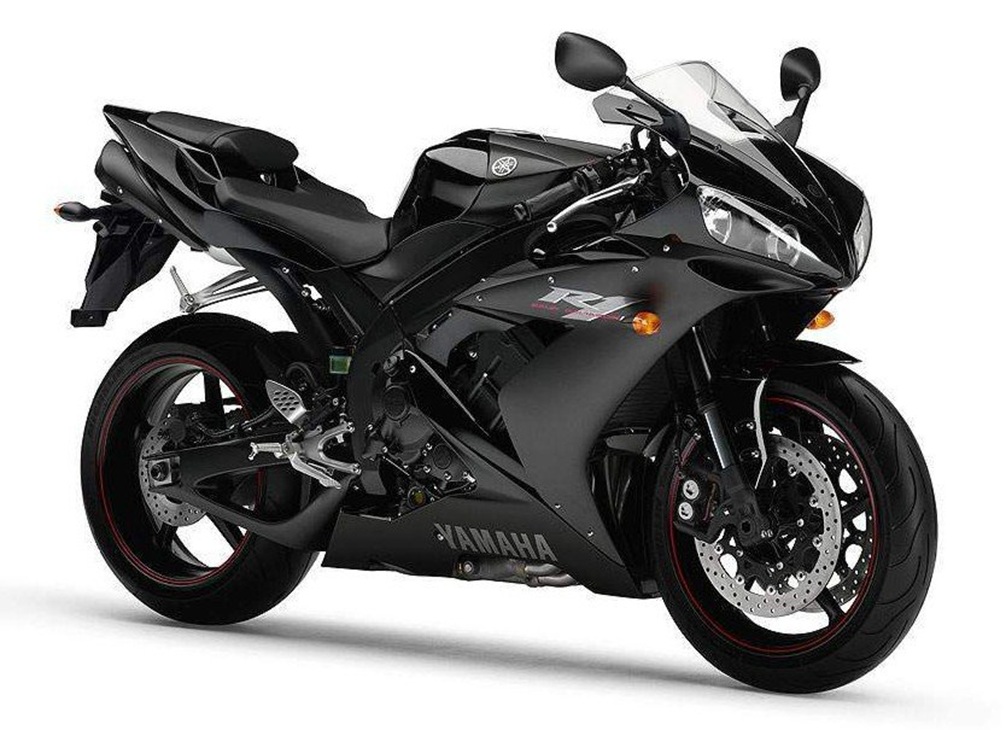
Maloney had been dreaming about how to make this engine long before he founded Maltec. He reportedly started with an idea to use the cylinders and heads from a Yamaha R1’s four-cylinder engine to make his V8, but later began designing his engine using the Kawasaki ZX-7RR’s four. The Kawi had separate cylinder assemblies, which would make assembling a V8 out of a four easier. Maloney figured he’d double up Kawasaki 750cc fours to make one 1500cc V8.
However, as Maloney dreamed up this engine, the motorcycle industry rapidly advanced. In 2004, Yamaha launched a new generation of YZF-R1, and like the Kawasaki powerplant, it had separate cylinders. But the Yamaha had a sweetener in the form of five valves per cylinder. Maloney would choose a 2006 Yamaha R1’s four-cylinder engine as the donor for his V8. Now, his V8 plan called for creating two banks of R1 cylinders at a 90-degree angle and a displacement of 1998cc.
The PGM V8

The PGM V8 isn’t really two R1 inline-fours bolted together. Instead, the Maltec engineers took the individual cylinder assemblies, pistons, connecting rods, and heads, then affixed them to a bespoke crankcase featuring a one-piece flat-plane crankshaft machined from EN36 steel. The transmission also had to be a custom job, with Maloney telling Pipeburn, “essentially everything had to be turned upside-down, reversing the output shaft and the clutch shaft.”
Do you want to know what it sounds like? Of course you do! Here you go (click here if you do not see the video):
The result is a V8 motorcycle with 40 valves, dual overhead cams, and a dyno-verified 334 HP at 12,800 RPM and 157.84 lb-ft of torque at 9,500 RPM. Redline was 14,500 RPM; pretty lofty for a V8. The compact V8 utilized a MoTeC M130 ECU, eight 45mm Mikuni throttle bodies, ride-by-wire, and had a 13:1 compression ratio.

The engine itself is impressive, but the rest of the machine is just as much of a work of art. The engine forms a structural part of the bike’s frame, and there’s a chromoly tubular subframe up front with a CNC-machined aluminum section out back. It all rides on forged Marchesini 170-inch wheels, Öhlins suspension, brakes with twin 320mm front discs up front and a platter in the rear, a 120 section-width front tire, and a 190 tire bringing up the rear.
It’s pretty light, too. The PGM V8 is described as slightly wider than a typical sportbike, and thanks to lightweight measures, including carbon-fiber bodywork, it weighs only 534 pounds all gassed and oiled up. The bike even has a nearly perfect 51/49 weight distribution and a somewhat accessible 33-inch seat height.

All of this took seven years to craft, and famed motorcycle journalist Alan Cathcart got to ride the beast in 2015. Cathcart seemed rather enthused by the machine, from AMCN:
That sense of refinement is reinforced when you get the show on the road, for the PGM V8 is extremely easy to ride at what I’ll term normal speeds – it’s perfectly at home pootling through towns in third gear at 60km/h, with no spitting back through the throttle bodies or popping back through the exhaust in disdain at being forced to ride so comparatively slowly. But then show it an open stretch of highway, and the colossal reserves of performance come swiftly to the fore once you wind the engine up above 5000rpm as shown on the fabulously easy to read and informative dash display that is a model to other manufacturers- why can’t they all be as easy to decipher at a glance? You’ll be glad of that to keep track of momentum once you open the taps on the PGM V8, for wound up hard its acceleration is phenomenal – nothing else I’ve ever ridden with lights and a licence plate even comes close to matching the effortless sweep of forward motion the PGM V8 delivers! It’s not explosive, neither is it aggressive, just completely effortless and totally irresistible, as if it’s a force of nature that’s pointless to withstand. I have a feeling that few if any of today’s MotoGP bikes would be able to keep up with this motorcycle in a straight line, for as the old adage goes, there’s no substitute for cubes…

Yet in spite of being so unbelievably fast accelerating, the Aussie V8 is all so controllable in the way it delivers its humungous performance. It doesn’t try to loop the loop and flip you off the back like a similarly mega-torquey E-bike will do if you don’t treat its throttle with great respect. Paul Maloney had dialled in a 10,500rpm limiter on the RBW digital throttle for my test – the bike had just 1500km on the clock-rather than the 14,500rpm redline he believes it’ll be safe to in due course, but that was more than enough to deliver a passable imitation of that contradiction in terms – a landlocked guided missile that simply rockets forward once you metaphorically light the blue touch paper, and hold on tight. Very tight…

The PGM’s flat one-piece handlebar bolted to the tall, gracefully fluted risers incorporated in the upper triple clamp, between which nestles the compact rotary steering damper, gives good leverage in hustling the PGM through a sequence of tight turns, but also delivers a riding position which has you inclined slightly forward to load up the front wheel with your body weight as a matter of course. This isn’t as tiring as I expected it to be, and is certainly a help in countering wheelies, which because of its effortless rather than explosive acceleration the PGM V8 was curiously reluctant to pull as a matter of course. The rangy 1550mm wheelbase helps here, naturally, without turning this über-powerful naked into a truck in the twisties. Okay, it’s not exactly a Supersport 600 in the way it turns – but neither is it something you have to manhandle through corners. I was pleasantly surprised how much fun the PGM V8 was to ride through the twisties, and Paul Maloney has used his Superbike setup experience well in dialling in the Öhlins suspension just right for the bumpy but grippy road surfaces out in the Goldfields. And the Brembo brakes delivered the kind of much needed stopping power from warp factor speeds that massage your confidence in riding the bike. They’re just what you need to haul down a 330bhp motorcycle from the speeds it can deliver. And plaudits too for the gearbox action, which is flawless and fully Japanese quality in spite of having had to be re-engineered in Australia. It’s a job done well.
Now, Maltec’s claims of having the world’s most powerful production motorcycle come with a rather huge asterisk. As of 2016, only one PGM V8 existed, and it’s entirely unknown if anyone has paid the $180,000 starting price to have their own.

But even if there are some production examples out there, the claim is still challenged by the existence of the Marine Turbine Technologies MTT 420RR (above), which makes 420 horsepower from its helicopter gas turbine engine. MTT tells me that its bike is still in production and some of them have been sold.

So, maybe the whole “most powerful” claim is a little muddy and comes with some caveats. That shouldn’t detract from what Maltec achieved here. Honestly, I’m not sure I’ve heard of a more Australian story. A man dreamed of building his own motorcycle, and in true gearhead fashion, he just had to give it a V8. Then, he did it. That alone deserves applause, I think.
This is one of those motorcycles that I couldn’t even begin to imagine buying. But I’d love to ride it. The idea of sending 334 HP down to a single rear wheel on something that has only two wheels total sounds like a total thrill ride, and it’s incredible that it got there without a single bit of forced injection. One day I’ll have to go to Australia to experience it for myself.
Top graphic image: Maltec


Ducati GP team noted their riders were at WOT only 15% of the time on fast circuits, so 240ish HP is probably enough.
https://bosshoss.com/products/classic-cruiser-bike
What is the threshold that determines “mass production?”
Well done!
Soooo if you’re taking requests could you add another four cylinders to make a 3L V12? My friend Ferris and I have an old MGB and a few ideas….
Dear God this seems like a death trap. At least with a superbike you know when you are going fast, the fact that this thing apparently can do it smoothly and without drama seems like a good way to get forceably melded with the local wildlife at triple digit speeds.
If we consider an NA Miata as a sportscar, and I think we have to, then 600cc bikes have had sportscar power for decades.
Hell for that matter I recall looking up the specs of a mid ’70s Honda CB360 I was considering picking up some years back and if memory serves it was tested at 0-60 in 5ish seconds and a 14 second or so quarter mile which make it similar if not faster than an NA miata (though it may have run out of gearing at the top end sooner)
I sincerely hope we get a running/exhaust video in the near future.
Disclaimer – I have not googled for it.
Watch out for the ‘roos, mate! On a vacation in Australia and driving on “the other side of the road” we put quite a few km on a 2012 Hyundai i45 (Sonata in the US) on roads that looked just like the ones in the video. The shoulders were littered with the carcasses of dead kangaroos that picked the wrong time to hop across the road. I imagine they did a fair amount of damage to whatever hit them other than “road trains” equipped with massive “roo bars” in front of all the important bits.
334 HP (for now, apparently) out of two liters is mind-warping. I didn’t see a claimed top speed but it’s definitely higher than I would want to be going on two wheels. Or four wheels, now, for that matter. I hit 110 mph on a Suzuki GS550/4 more than 45 years ago, and it had more to give, but I didn’t want to receive it.
It certainly doesn’t sound like any V8 I’ve ever heard before. Beautiful bike with pretty much the best of everything componentry. $180,000 seems fair. A two-wheeled Veyron comes to mind.
Thanks for the article, Mercedes!
You can so easily outride your tires with 150hp, let alone more – even on a rather hefty 500+lb bike. But merely crossing 200mph has been but a gentlemen’s agreement for many years.
It has been a very long time since I chased more power. I have even less desire without bodywork and a windscreen.
I’m waiting for the pendulum to swing for a return of a modern-recreation of a 90s/00s sport bike built for daily riding.
Having ridden and wrecked various 750. – 1100 cc bikes I find this interesting but pointless. 100-125 hp is plenty of hp unless you are racing. 300+ is nuts.why not build a narrow super lightweight twin or v4? The guy has the technical chops to do it.
I watched the vid to listen to it, and man that guy is crazy; he keeps riding on the wrong side of the road!!!
I’m actually surprised how much it still sounds like a sport bike, but also something different going on. Especially the off-throttle moments sound so unique. I was expecting more of that high pitch squeal you get with small V8s, a la the F40’s 2.9L. Hey it was a 90° V8 as well! I’m ignoring the differences in firing order!
You were probably joking, but in Australia they do ride on that side of the road.
I’ve driven there and in Ireland in RHD cars and the fact that one is sitting on an unfamiliar side of the car is enough to clue you in that things are different. I’d be afraid to ride a motorcycle in places like that because there’s nothing different on a bike to give you a hint. And there’s a non-zero chance that I could just ride on the right as I’m used to.
<<<—my avatar sees this and sings: “Dumb ways to die…”
Maybe I’d ride it if I was already dying of something anyway…. either that or just leave the throttle 90% closed.
That thing screams “Kill me!”
I bet the sound is wonderful.
Indeed it is… I found it here: https://www.youtube.com/watch?v=2YclWRIHbcA
A V8 signing above 10,000rpm provides a thundering, and extremely aggressive note that is pure beauty.
Cool as showcase for that engine, but I doubt it really does anything better than a 1000cc sportbike. Anything over, I don’t know… 150hp in a bike is diminishing returns. Maybe that’s even overestimating it
There are certainly other simpler, cheaper ways to do it… but this does appear to remove the mid-range flat spot in the torque curve of racy liter bikes. It’s not nothing.
This is the kind of bike my brother would buy as his first. Then wreck it on the first ride.
I don’t think I’ll ever want a vehicle where the digits of horsepower exceed the number of wheels, but that’s ok because I’ll never have the bank account for that kind of lifestyle either.
I wanna cram the engine into a lightweight sports car
Same thought, seems like it should be a kit engine for Miatas and such.
I do wonder though what sort of final drive ratio would be needed to really make use of the 14000 RPM redline, something like 8:1?
Yeah. This is exactly what I dream of doing and putting it in a lotus 7 clone when I have infinite funds.
…I’ve often daydreamed about hanging big motorcycle engines off the back of a ’60s-style Formula car chassis. I lack the skills, money, and wherewithal to do it, but this one would probably end up the closest to a ’67 Lotus 49 you could get.
I was thinking Fiat X1/9 or Lancia MonteCarlo. A first or third gen MR2 would also be suitable.
Ford Festiva time.
FEEEEEESSTIIIIIIIVAAAAAAAAAAAAAHHHHHHHHH
Right? Seems like an engine begging for a better use case. And it’s so remarkably compact. It would fit in almost anything.
1 unsold bike is hardly production quantity. Still amazing bike would love a clip of someone riding the bike at the claimed speed. For me I don’t think it is a good idea without some specific design tires.