

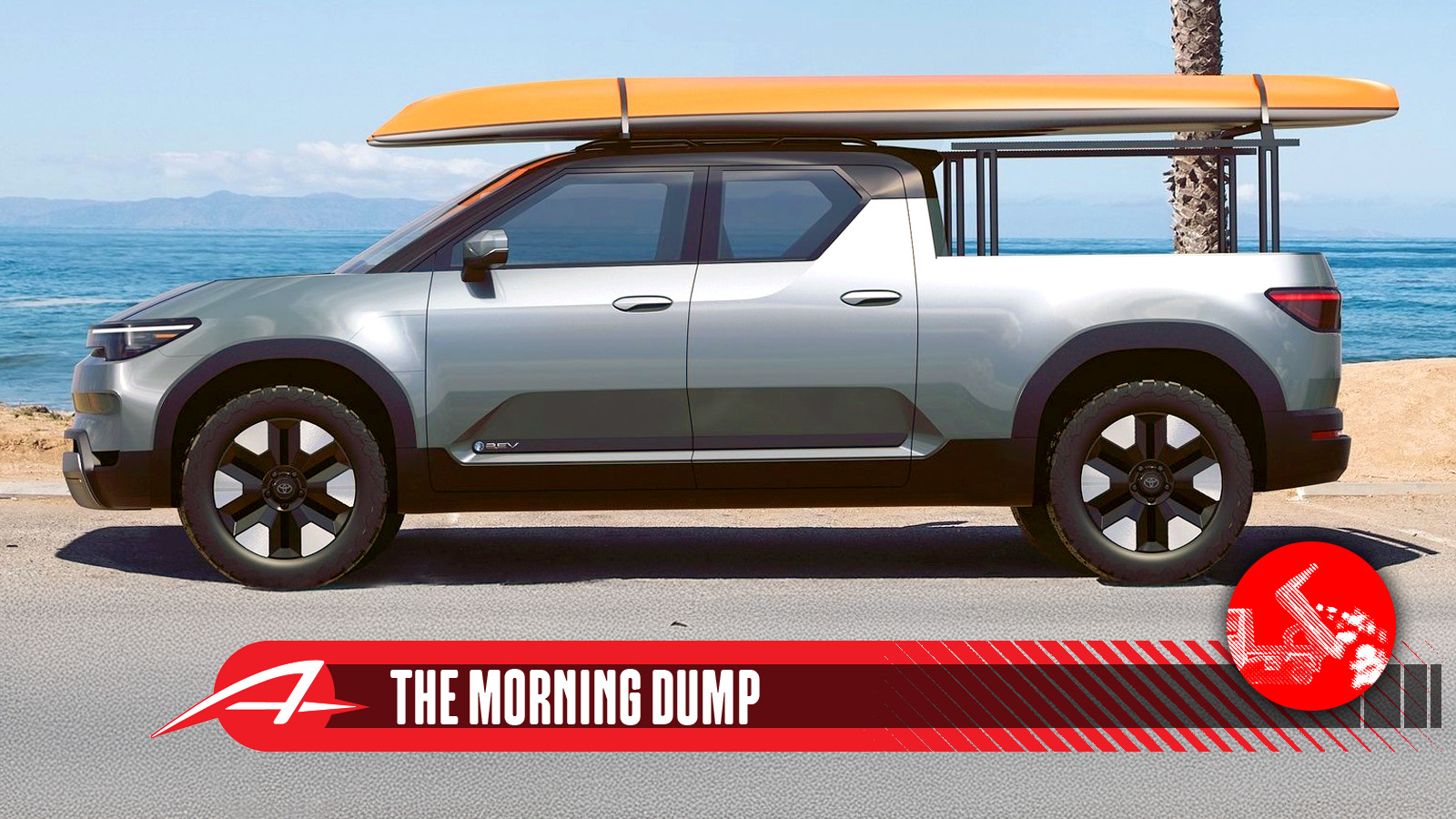
In retrospect, it’s wild that Toyota allowed Ford to take an evolution of a hybrid system they developed together and put it in a small truck before Toyota did. The Japanese automaker sells more hybrid models in the United States than anyone else and, yet, the Maverick was there first.
It’s possible Toyota is planning to rectify this with a new plant in Texas, which new reporting shows is at least being pitched. What’s going to be there? I’ve got a guess. Also, Jason is still on a Lexus drive this morning, so if they confront him about a theory in The Morning Dump over pancakes, well, it’s not me having to deal with it.


Ford deserves credit for reinvigorating a market with the excellent Ford Maverick, though shareholders were a little more interested in who deserves blame for the EV redirection. While Toyota is expanding in the United States, Volkswagen is planning to shrink in Germany. You know who doesn’t love this plan? Volkswagen’s labor unions.
And, finally, could the Freelander come to the UK? JLR seems curiously fine with it.
What Is Project Orca?
Here’s a fun one. Automotive News snagged some information from the Texas Comptroller that identified Toyota’s intent to build a new plant for something called “Project Orca.”
Full details of the project, codenamed “Project Orca,” remain largely undisclosed, including what vehicles it would build. However, the automaker’s application seeking state and local tax incentives indicates that the new assembly plant would add an estimated 2,000 jobs to Toyota’s current complex in Bexar County, near San Antonio.
If the project is approved, it would become the automaker’s sixth U.S. assembly plant when output begins in 2030.
The automaker’s 2.2-million-square-foot Texas assembly plant builds the full-size, body-on-frame Toyota Sequoia SUV and Toyota Tundra pickup. It has more than 3,700 direct employees on-site, along with another 5,600 working at various suppliers on the campus. Toyota also recently built a $531 million axle plant on-site.
Hmm… what could it be? Toyota makes the Tundra in Texas, which means it avoids the Chicken Tax. The company’s other truck, the Tacoma, is now made entirely in Mexico. And the 4Runner is made in Japan.
Toyota is basically out of manufacturing capacity in the United States. The Tacoma could come back to Texas, which would make a sort of sense. I doubt Toyota is going to sacrifice a Japanese plant to build the 4Runner here.
Tacoma aside, I do think there’s another opportunity here for Toyota. It’s sort of wild that Toyota, which expanded in America with small trucks, doesn’t have a RAV4-based hybrid truck to compete against the Maverick, right?
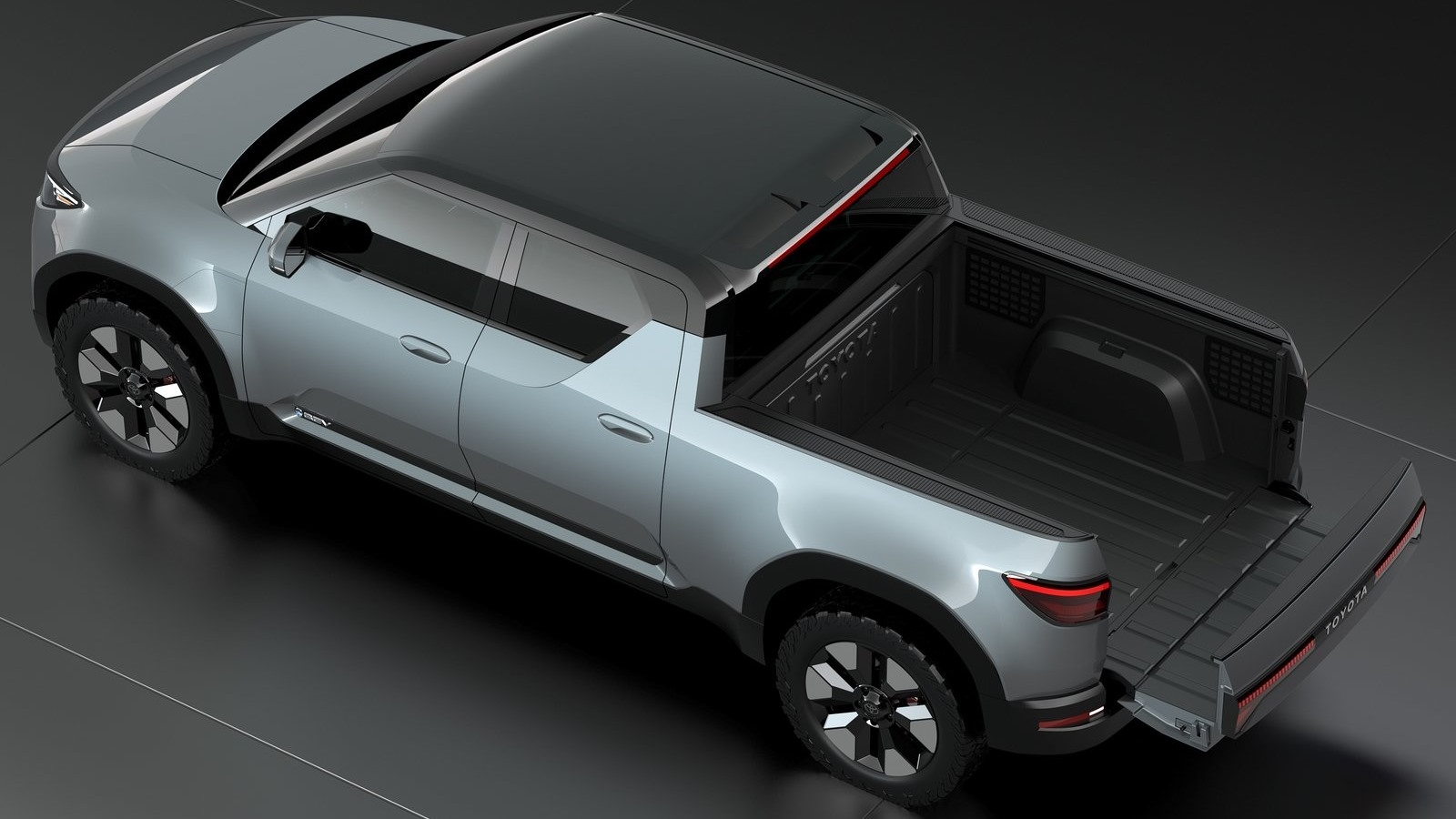
The above Toyota EPU compact truck was an EV concept from 2023, and while I doubt an EV truck is in the cards (although, actually, Ford is building one…), a hybrid makes sense. That concept is also right-sized, as we wrote:
This electric pickup truck measures just 199.6 inches from stem to stern. That’s within a tenth of an inch of the Ford Maverick, and a few inches longer than the Hyundai Santa Cruz. Roughly 200 inches is about as short as you can go with a traditional crew cab pickup truck and still have a usable bed, yet a vehicle of that length should still fit in the majority of parking spots.
This was actually addressed earlier this year by Toyota Motor North America CEO Tetsuo “Ted” Ogawa in an interview with Automotive News:
Dealers have been asking for many years for a compact pickup to return and also suggested a small commercial van. Are those opportunities for Toyota?
There is, of course, some opportunity for us in the commercial area, but it is new to us. We need to study more. But for the compact truck? Definitely, we have such demand. A RAV4-based pickup is an opportunity for us, and the dealers are waiting. Maybe they say we need today or tomorrow, but it takes time.
As a Texan, I believe the ideal breakfast taco order is potato, egg, and cheese, and I believe all trucks should be made in Texas.
Here’s How Ford Explains The Company’s Tough Year
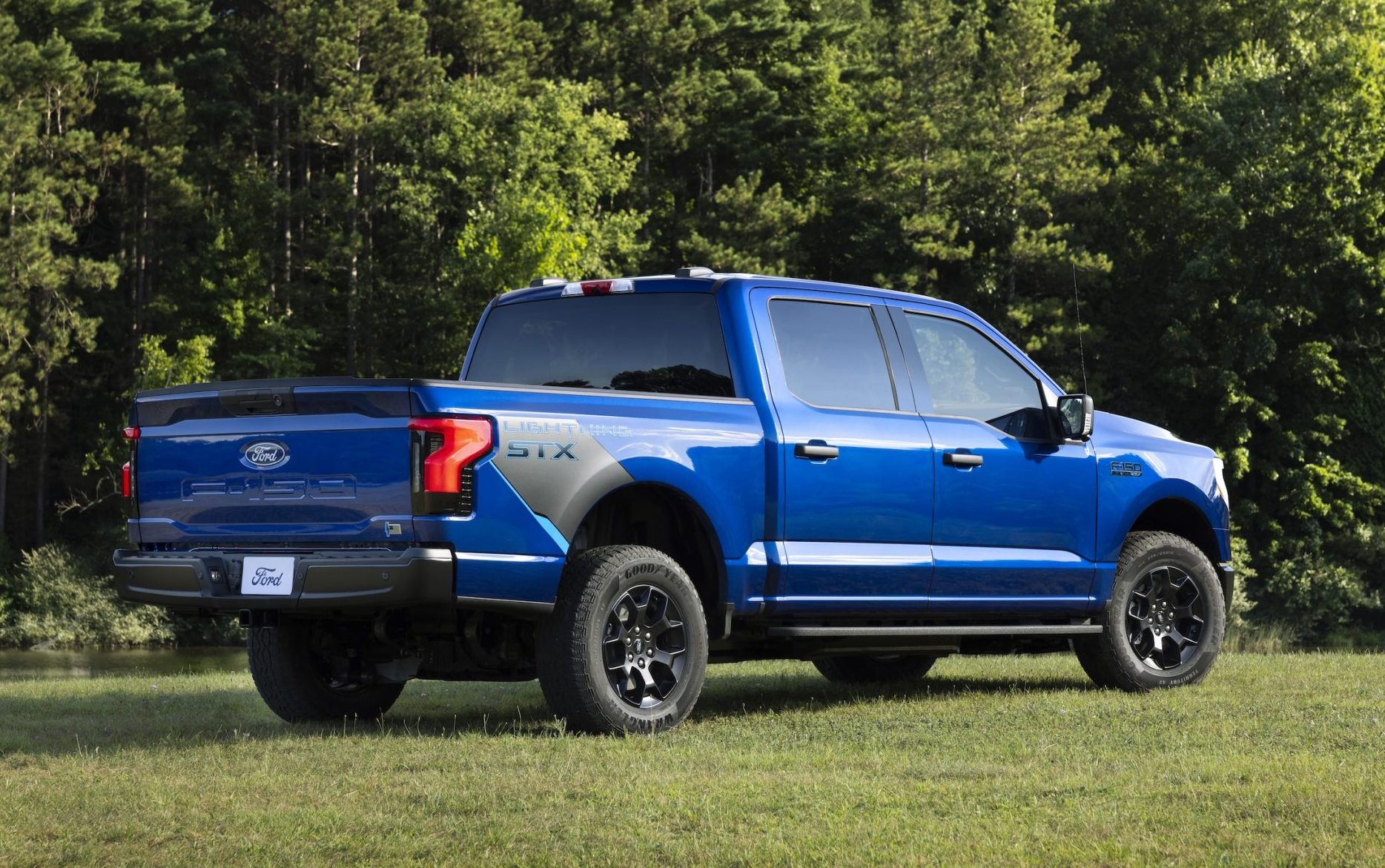
Ford CEO Jim Farley and Chairman Bill Ford faced investors yesterday and, given the kind of insane world we’re in right now, those investors were curious how to interpret all of the big write-downs for EV projects, as well as tariffs.
The Detroit Free Press has a write up on the call, but this struck me.
Q: Ford posted a large net loss in 2025 and took a massive write-down for unsuccessful investments; where’s the accountability?
Bill Ford answered the question saying: “I think taking the write-down was exactly the accountable thing. The regulations changed virtually overnight on us, and when that happened, we could have chosen to do nothing and limped along, but we took what we thought was the right shareholder action, which was to recognize that the market had changed dramatically. We took the write-down, so that going forward, you’d have a much healthier business as shareholders. We believe that’s happening.”
Bill Ford said the company was able to find usage for some of the factories it had built initially to make EV batteries, but when it become clear EV demand would not require that much factory space, it still found a use for them by starting Ford Energy, its subsidiary that will make battery energy storage systems.
“Look, no one likes to take a write-down, but it was the accountable thing to do recognizing that the business reality had changed,” Ford said. “Rather than hope that that wouldn’t happen, we took decisive action and now you have a profitable business going forward, which I think you’re gonna be very proud of.”
[Ed Note: I’m excited for Ford’s EV strategy going forward. With that said: I understand that there were lots of regulatory pressures, both from the Federal government and from California, but I am not convinced that the changing regs are what flipped a switch on demand. I think automakers — not just Ford, but pretty much everyone (less so Toyota)— got caught up in the hype, and maybe got a bit worried about falling behind, leading them to make what seems now like an obvious mistake: They developed products without the #1 consideration being: Are people actually going to buy these cars? Again, the regulatory penalties are real, but if I had to guess, even if the administration hadn’t changed, there’d be write-downs all across the industry. -DT]
Ford hasn’t entirely abandoned EVs, and has a big project coming in the form of the UEV, which the company’s leaders are excited about. If that works out for Ford, investors will benefit greatly, but it’s not a small if.
VW’s Union Still Considers Plant Closings A ‘Red Line’

Volkswagen seems to have a good idea of which plants need to go in order to make up for its massive overcapacity. Volkswagen’s main union, though, doesn’t see that idea as very good.
VW is looking to cut excess capacity in its German production network without resorting to factory closures — something ruled out under a 2024 restructuring deal with unions — with defense partnerships and Chinese collaboration floated as possible options.
The head of the powerful works council, Daniela Cavallo, IG Metall union head Christiane Benner and regional union leader Thorsten Groeger said that the 2024 deal and its commitment to German plants must not be called into question.
“The fundamental situation has not changed — nor have the red lines set by the employee side,” they said. “With us as the general works council and IG Metall, there will be no plant closures.”
The most likely outcome here is that Volkswagen finds something else to do with these plants (bombs) or finds someone else to operate it (a Chinese company). In a way, the two potential outcomes uncomfortably mirror two not entirely impossible futures. A Volkswagen plant could either be making munitions for a potential war in China, or be given over to a Chinese automaker.
The Freelander 8 Could Be Sold In The UK
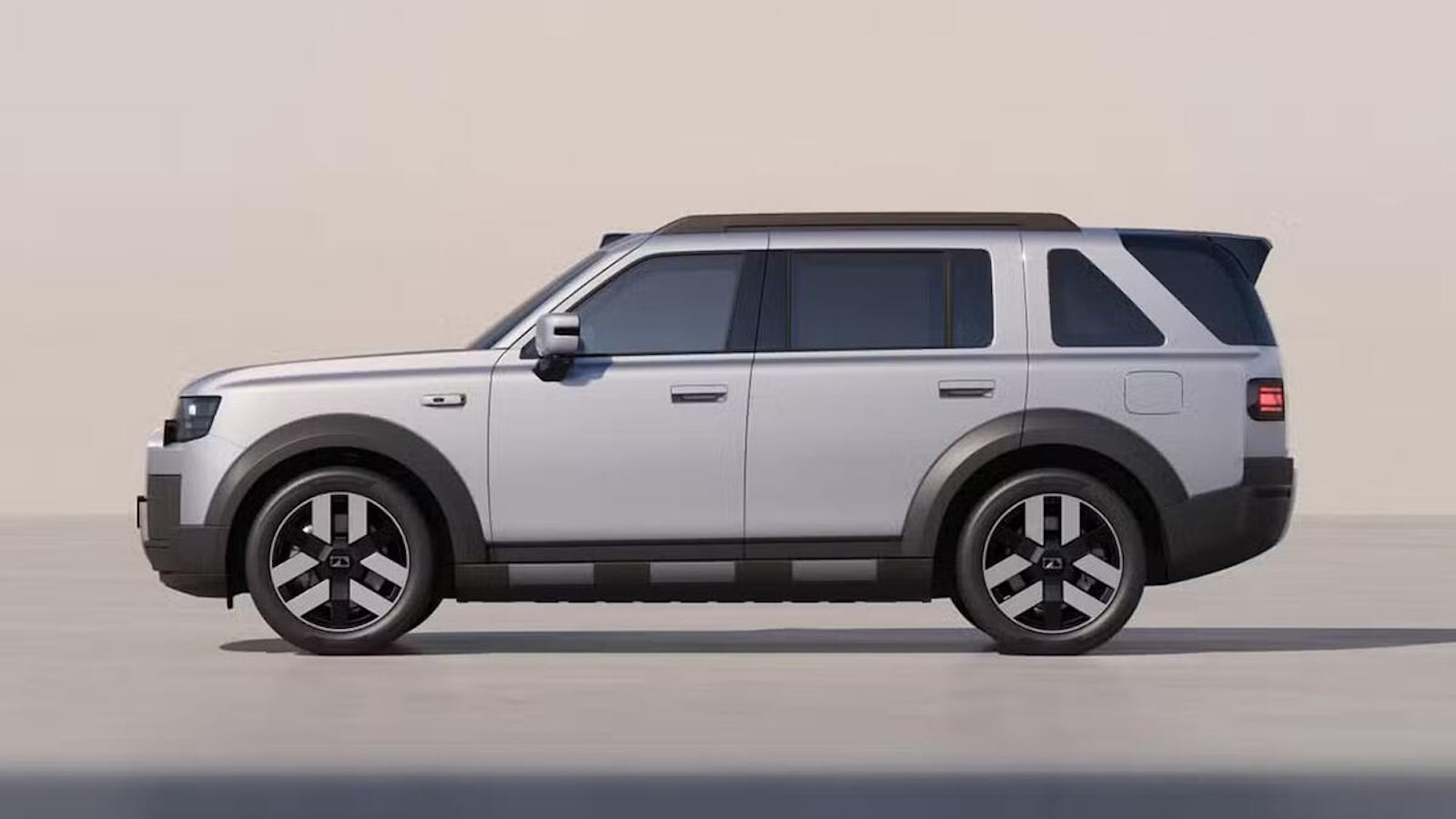
Thomas made a good point earlier this week when he wrote about how the Chery-built, JLR-licensed Freelander 8 may be the first ‘retro’ design from the 2000s. My assumption was that vehicle would only be sold in China.
According to this Autocar article, it might actually come to the UK or, at least, JLR is fine with it:
Freelander CEO Wen Fei previously said that any cars exported to Europe wouldn’t be adapted Chinese-market models but instead bespoke derivatives tailored to each market’s demands.
Asked if JLR would give Chery its blessing to sell Freelanders here, given that the British company owns the brand name, Balaji said that “it’s Chery’s car” and JLR would “let them make up their mind”.
He added: “The car will be sold primarily in China to begin with, and then they will have to decide their plans for bringing it out to the rest of the world.
This makes a sort of sense. Land Rover is positioned at the high end of the market, as is Jaguar. There’s no competition at the lower end, and JLR gets a cut, so maybe everyone wins.
What I’m Listening To While Writing TMD
There’s a new Beck song called “Ride Lonesome” and it sounds like Beck hasn’t lost a step. Also, I think I know where this video was shot.
The Big Question
What would you want a Toyota small truck to look like?
Top photo: Toyota


“As a Texan, I believe the ideal breakfast taco order is potato, egg, and cheese, and I believe all trucks should be made in Texas.” Lord, you forgot the pepper, onion, and sausage or bacon, what were you thinking?!
Sausage OR bacon? What are you thinking?!
TBQ: To my eye, they have yet to nail a four door pickup design. Sales numbers show my tastes don’t matter. If they could somehow bring back some of that 80s charm (3rd or 4th gen) but with Maverick layout… I’d still buy a sedan or wagon and rent trucks when needed. Y’all crazy driving trucks for groceries and commuting.
“Y’all crazy driving trucks for groceries and commuting.”
I don’t know about that. My Maverick gets 40 mpg. It’s the best of any car I’ve ever owned, except maybe the Geo Metro I had in the ’90s, and it was a terrible car for anything other than city driving.
TBQ: Give it buttresses like the original Honda Ridgeline. I have never liked the “upright” look so many pickups have. Also, make it in club cab.
They could just make a 90s Taco, that would be a “small” truck now. Or just scale down the new Taco by 30% and call it a day. Don’t over think it would be my advice. I’ll add to the chorus in saying that a regular/extended cab would be a nice option, I don’t need/want a four door truck.
Please don’t make whatever the new small toyota truck look stupid. Make it look more like my 1996 Tacoma and we’re good.
The truck that showed up at the Tokyo auto show a few years ago that is always pictured is fine. But I hope they do regular cab along with the 4 door. The idea has been it was a bev but I guess they could have a hybrid or erev version. I could see Toyota coming out with some really smart erev system. Sort of like the surprise of the current gen of their bev compared to their first attempt.
We are going through so many changes now and old idea that worked well are being brought back. The kids are going blue collar more to replace the guys retiring. We need right sized work truck and vans. Everyone I know in the trades has been yelling about it for years. $30k is where they top out before everything goes up because what they are paying for their truck has doubled. Maverick has done that well but also failed at its original attempt. It should be a $22k truck not a $30k truck.
LFP has gotten cheap, sodium ion could be cheaper. Now they Chinese are producing lithium–sulfur that are even cheaper and lighter then LFP. Electric vehicles stand to be cheaper then hybrid or erev. Sort of like hybrids pricing has become at parity to ice for many brands. Some brands the hybrids are priced the similar to their bev.
Or they just build one of the swoopier concepts as a hybrid and watch it sell like a Hyundai Santa Cruz, but maybe a little better. It needs to have at least 4.5′ of bed. Will they do that? Probably not.
TBQ – they already build the dang thing, they just won’t sell it here. Put a better engine in the Hilux and build it here. Figure out how to put the Prius engine in the front with a driveshaft to the back, and stuff some batteries up in there under the tray, and bam.
VW might build bombs for a war in China? WTF did I miss in the news??
Right, the actual story is producing munitions for defending Europe and the war in Ukraine.
The German government will donate the bombs to Ukraine to use against Russia. The German government having decided they don’t want to be in the “invade Russia” business these days since that’s turned out badly for every government that’s attempted it. But they will gladly help repulse a Russian invasion of a fellow democracy. Especially since they can do so by throwing Euros at the VW and Rheinmetall employees then ship the resulting bombs to Ukraine to then drop on the Russian invaders. So they get to keep the peace internally, help another European country and scratch the old military itch. If some of those bombs have extra “quality control” writing on them, I’m sure VW management will turn a blind eye. Efficient, ja?
Toyota was too busy printing money while keeping inventories low enough to allow their dealers to fleece their huge and loyal customer base to care what Ford was doing. Depending on what Toyota intends to build in Texas (my guess? It’s EV related), they still may not care.
“What would you want a Toyota small truck to look like?”
It’s gotta have good pickup proportions. I know it’ll have to be a short bed four door, but I believe a big factor in the maverick’s success is they nailed the hood/cab/bed ratio in a way that recalls a classic pickup, not a futuristic/awkward cab-forward form. Toyota has always nailed it with the Taco, so I have some faith. The Santa Cruz, Toyota’s electric concept in the topshot, the Telo, and the cybertruck failed to capture that, but the Rivian R1T and Slate truck figured it out.
my personal opinion is the absolutely did not nail the look of the most recent Taco. It’s trying soooooooooo hard.
Fair point, and I’d agree. But I think that has more to do with overstyled surfaces than proportions. And though I prefer a cleaner look (like Maverick and Rivian), overly-creased angry-looking trucky things still seem to be popular with normal car buyers (see all Toyota, Chevy, Hyundai, and Kia SUVs).
Totally agree. My buddy has one and I was surprised how unimpressive it is. It’s big on the outside, small on the inside!
I think Telo is nailing the proportions of a proper EV truck because they aren’t wasting any space they don’t need to. I’m sure some people will shy away since their truck is for looks and not doing stuff, but folks who need something practical should appreciate the design over looking traditional, IMO .
It does seem to have excellent packaging from a purely utilitarian/efficiency standpoint. But I think the effect that packaging has on the styling will be a dealbreaker to too many potential customers.
I was similarly impressed by the practicality of the Ford Transit Connect and other compact vans, and think that many pickup truck buyers would be better served by those vehicles. But that entire segment got yanked from the US market after only one generation, and I think it’s because they just lacked the desirability and “cool factor” of a pickup.
Unfortunately, most people in the US don’t actually use trucks for practicality, which is why there are so many enormous EgoBoost 2500s with a 4′, pristine bed in back.
We had trucks on the farm, but now that I live in town, I can’t see wanting one. I can fit most things I want to carry in my hatchback, and I rent a van if I need to carry something big. The trucks were great for hay or other stuff you wouldn’t want in the cabin, but I don’t haul anything that won’t fit on the roof I wouldn’t want inside.
Maybe I’m wrong, and these folks are just very gently loading their beds up and I’m just shouting at the clouds.
My understanding is Toyota used hybrid technology developed by Ford under a 1980’s DOE contract for the initial Prius. Ford’s technology was largely unprotected by patents due to DOE funding. The Big 3 had near zero interest in hybrids when the Insight and Prius debuted.
“I understand that there were lots of regulatory pressures, both from the Federal government and from California, but I am not convinced that the changing regs are what flipped a switch on demand. I think automakers — not just Ford, but pretty much everyone (less so Toyota)— got caught up in the hype”
With respect Mr. DT- Nah, thats mostly wrong and revisionist history. There may have been entities that were over investing and moving too fast, but pulling the regulatory (and subsidy) carpet out from under the industry is what has caused the massive stranded cost losses that are happening now. Don’t flinch from the painful truth that leadership choices have left consumers with shittier, dirtier and more expensive transportation choices and also cost car companies billions and hamstrung them from competing in the world market. Don’t blink DT! It is just as bad as it looks and feels.
The changing regs were a massive shift, but the US EV industry was still out over its skiis. How many people are going to spend $60K on a Honda SUV so they can sit at a charging station behind Walmart for 30 minutes to charge it?
To be fair to DT, he has consistently held this position, long before the administration shifted.
Horse manure. The only one being revisionist here is you with your Orange Man Bad syndrome. DT, and many of the rest of us were point out just how ludicrous EV-only mandates were during the previous administration, and that this was very obviously a) not going to work, and b) blow up in automakers faces. I specifically remember an article on Toyota being slow to adopt EVs with a comment section split between people pointing out that Toyota is usually pretty smart with it’s trend spotting, and a weirdly political faction accusing them of carrying water for the evil fascists.
The EV market in North America was pretty much saturated before DTII, and unless you think the Euros walking back their EV mandates is due to them being toadies for trump, then you are left explaining why the whole of the world, including frigging China, all seemed to say “maybe EV-only is a little much” at pretty much the same time. Easy explanation: market forces. Convoluted mental gymnastic explanation ignoring fundamental facts: IS DA EBIL CONSURVATIVES!
There were no EV only mandates in the US outside of CA .
According to Wikipedia at least the 2012 CAFE ruling set “requirements on the production of hybrid and electric cars.”
Either way The CAFE requirement was set to be 52.2MPG in 2025, there would be no realistic way to get that without either most cars being EV’s or everyone driving a prius.
I was only speaking to the EV-only misconception. It’s a popular piece of political misinformation. I feel there’s a big difference between stipulationng the technology or setting performance metrics.
Unfortunately in the case of the CAFE requirement it’s closer to the truth than misinformation.
Yes technically it did not “ban” internal combustion, but it pretty much would have because of the rediculous requirement at the time. It was a mandate in all but name only.
I’d like my next Toyota truck without:
A 45K MSRP, or a 4-5K dealer markup.
I guess that’s asking way too much though.
The Toyota small truck will likely be a Corolla Cross with the back lopped off, but if they were Saavy they would reimagine the 1985 SR5 with biggish wheels and decent 4wd. they can make the 40MPG Hybrid versions from a FWD Prius if that is required to at least compete on paper,
A Corolla Cross pickup, if it were buttressed like a Subaru Brat and was a club cab would actually be pretty cool IMO. It’s a shame we didn’t get the Ram 700 here.
I’d want it to look exactly like my old ’93 4×4…
Where do you think the Beck video was shot? At first I thought the Palm Springs area but there’s a shot of a Pemex gas station in the video and none in that area.
Not sure what leverage VW’s unions have at this point. If plants are not making money long term, keeping plants open to satisfy the union will crush VW financially.
They must have taken lessons from the UAW. 20+ years ago lots of unions in the us pointed to the German union system as working well as they have a seat with the companies board. It now seems like it’s not working well. If they can figure out something to build that is needed or wanted its a better net to their economy then nothing with people out of work. Seems like a big ask at this point with Chinese cars or something the Ukrainians need. The cheaper vag products that have super thin margins aren’t made in Germany because of cheaper energy and labor elsewhere. The higher production cost in those factories might be a good Trojan horse for vw to pass ok to the Chinese.
Orca? Meaning those delightful sea-going creatures who sometimes ram yachts for no apparent reason? Hmm.
TBQ: I know an electric Toyota pickup won’t happen anytime soon, but it would be neat to see a reasonably-sized electric one. I guess they’re assuming Ford (and Slate?) will have that part of the market cornered?
The orcas actually belong there. The yachts don’t.
Beck is psychedelics personified, and it results in fantastic music.
I assume “Project Orca” is actually Toyota deciding to enter the F650 and Topkick/Kodiak market.
I think they would be better served to bring ack the 5.7 v8 with increased Displacement options and try out the 3/4 and 1 ton market first. Perhaps even modernize the 1VD Diesel to put into these things. Since the Tundra ended up a dud due tot he bearing issues in the 6, they might need to do that to keep the plant relevant from a sales standpoint.
Instructions unclear, Twin turbo V6 box truck incoming.
I’ve had the pleasure of seeing him a couple of times. Great live show!
I don’t see Toyota offering a small commercial van in the US. During the brief era of such vans from RAM, Nissan, and Ford (also Chevy, kinda) Toyota never jumped in. Toyota has never really chased the commercial vehicle market in the US, except for the brief era of the windowless Toyota Van of the mid-1980s, and sales of those were pretty paltry.
They would need local manufacturing to avoid the chicken tax to make if financially viable in the market. They didn’t have somewhere to build it then, but they could possibly have that capacity with this project.
There’s a new ProMaster city on the way so I’d guess Toyota is going to see how that does before committing to selling one here. And to echo what Axiomatik said, they’d have a plant in the states this time around.
I know this comment is made from purely American eyes, but the rest of the world has been leaning into EVs.
The reality is that building hemi-powered V8 trucks is not a strategy, but an exploit of the American market that is not exportable.
A mix including EVs is needed for global markets; losing 20% of the world’s oil supply (with serious uncertainty around other markets) is only going to increase pressures everywhere else to move to non-fossil-fuel power sources and put those kinds of strategies further behind.
Toyota seems to try to keep all the eggs, hybrids, EVs, and even H2 fuel-cell. And the Chinese market EVs have had advantage of long-term government planning (which, honestly, the 2/4-year pendulum is pure schiße)
Europe walks back it’s EV mandate. As you say, a mix is needed. Automakers were not building for a mix, they were building 5 and 10 year plans for a pure EV future that was very obviously not imminent. America builds lots of EVs, and their market share continues to slowly grow. But that slow growth happens in concert with the necessary infrastructure to support it. Pretending that rural areas will be able to transition to a pure BEV market in under 10 years is delusional. Pretending that apartment or townhouse dwellers will magically be able to find 100% charging solutions in under 10 years is delusional. Pretending that areas with already strained electrical grids and growing populations will somehow be able to accommodate the vastly increased grid demands of EV charging in under 10 years is delusional. The entire hype cycle was delusional to anyone paying even the slightest bit of attention.
10 years is enough time yo get a nuclear reactor built. Including approvals.
Once they start the process on 10 reactors we can restart the timer on the EV mandates again.
Or just move forward without mandates and let EV’ take over the passenger market slowly but surely.
Well, that very much depends on where you are. France or China? Yes. The US, UK, or Germany? No. But even building the reactor doesn’t solve all (or even most) of your problems. The grids in many countries has areas that are already strained to max capacity. Adding in a massive new load in the form of mandatory BEV charging (which is likely to hit at similar times all across a given region) is simply beyond the capacity of quite a lot of areas. The infrastructure investment in new substations, transmission lines, and even domestic wiring is very much non-trivial.
My point was intended to be that 10 years is a lot of time that you can get a lot of things accomplished if you were serious.
But we’re not actually serious, unless it’s about building data centers and burning things to power them.
Poor Helmut. What will he do? Maybe the Autopian will hire him as a German correspondent. Make him read Manager Magazin every morning.
Beck is such a creative talent. What he’s doing as a scientoligist has always confounded me, but they do say con artists always prefer smart victims. Use their intelligence against them.
Somewhere between Mojave, CA and Needles, CA. North/South +/- 100 miles.
TBF, something like a Maverick. Make if unibody crossover based, make it hybrid and AWD, and make it incredibly practical. A single-cab BOF mini truck will never happen, and the incredibly compromised back seats of the Tacoma tells us that there is zero room for shrinking the BOF truck platform more. Maverick proves that a smaller crossover based trucklet with a small but thoughtfully flexible bed design is enough for people, and the unibody base fuel and cost savings is very worthwhile.
While I’m loathe to complement Ford, they nailed the formula with the Maverick. It’s exactly what people want at a reasonable price. If Toyota makes an equivalent, it’ll outsell the Maverick immediately. So many people want a Maverick or Santa Cruz, but are rightfully scared off by their respective brands reliability concerns. Make the same thing by Toyota and you’ve got an instant hit on your hands.