

I’ve been riding motorcycles since 2018, and bikes have been so enchanting that, by my count, I’ve owned a few dozen motorcycles and ridden tens of thousands of miles by now. I prefer a more old-school way to ride, where I don’t use a GPS, don’t have fancy heaters or coolers, and often don’t even have a windscreen. The most “techy” part of my motorcycle rides is my helmet comm system. But I was recently introduced to an incredibly simple motorcycle tool that I now cannot leave home without. That tool is a backpack, and the best part about it is that it eliminates the biggest issue I have doing anything outside on a hot day: Keeping hydrated.
Back in May, I joined 200 women at Dirtastic, the off-road motorcycle and camping event built by women, for women. Dirtastic was rather transformational for me. It was my first time on a real dirt bike, my first time really learning how to ride off-road, my first time getting a real injury, and honestly, it was an incredible confidence-booster.


But there was one element to Dirtastic that wasn’t really specific to dirt bikes that totally changed how I go outdoors. Amber DaSilva from Jalopnik recommended that I pick up a hydration pack backpack during the event. At first, I didn’t really see the point. If I needed water, what was stopping me from pulling over, busting out a bottle, and then taking a sip? As it turned out, my stubborn persistence in doing things the old way has meant that I missed out on such a great tool for years.

How My Rides Used To Go
I established a sort of routine not long after I got my motorcycle endorsement in 2018. I’d gear up, swing a leg over the saddle, and ride until I got thirsty, find a point of interest, or needed fuel. Then I’d get back on and ride again. My rides have been purposefully low tech. I navigate using my knowledge of how highways are designed, and all my phone does is provide music. I don’t even put my phone on a mount anymore.
Whenever I felt the need to wet my whistle, I usually rolled into the parking lot of a gas station, bought a Gatorade or water, and then chugged the whole thing right then and there. If I couldn’t drink the whole thing, maybe I’d toss it in a normal backpack or storage compartment for consumption later. Somehow, I rode like that for a whole eight years, and in hindsight, it was like I was a savage. Just imagine someone downing 28 ounces of purple while dressed like the black Power Ranger.

I suppose I didn’t think much about it because the method to my madness largely worked. If I got thirsty again, I’d just do the chugging thing again on my next stop. Most of my summer motorcycle rides have a stop at a lake or river, anyway, so I have alternative ways to cool off.
But there have been times when my hydration plans almost hurt me. Coincidentally, one of those times was during my motorcycle training class in 2018. As the class was learning friction zones, the 97-degree Fahrenheit heat started getting to me. Suddenly, I had about as much control of that Honda Rebel 250’s clutch as someone who probably hadn’t slept in three days. Thankfully, I was able to recover with tons of water and a bag of ice.

Another time was more recently, when I reviewed the Can-Am Origin and Can-Am Pulse in Austin, Texas. It was 114 degrees during our ride that day. Temperatures that hot can be fatal, and having wind blowing on you doesn’t even help because it just makes you feel like you’re on the hot side of a turbine engine. It was so hot that the press bikes were overheating and thermal throttling themselves.
But the human toll was even worse. The group of journalists on that wave were getting visibly pummeled by the heat. You could tell when someone was getting heat-soaked as their turns got sloppy and they started making mistakes. More than one journo laid their bike down, making choices that they might not have made if they weren’t overheated themselves. There was tons of sweat rolling down faces and backs.

That included myself. I don’t sweat much, so that wasn’t a problem. But every minute in that heat felt like it shortened my lifespan. By the time I got back to the hotel, I felt like I got hit by a train.
The press ride had only a few stops in it. So if you were like me and relied on bottles of water for hydration, there were long periods before you could get relief. That was most people in the group.
A Total Game Changer

That changed in May after Amber’s suggestion to get a hydration pack. Apparently, she’s had one since not long after she got her endorsement. I’ve known about the existence of hydration packs for some years now, but I never really thought much about them. I thought that a bag of water in a backpack didn’t do anything that a bottle of water couldn’t. Oh, I was so wrong.
It took just one dirt bike ride through the hot forests of Oregon to convince me to waltz over to one of the vendors at Dirtastic and ask for a hydration pack. I was amazed that there was such a huge variety available, from little one-liter packs that weigh basically no more than the water you put inside, to hefty beasts that hold three liters of whatever you want to drink.

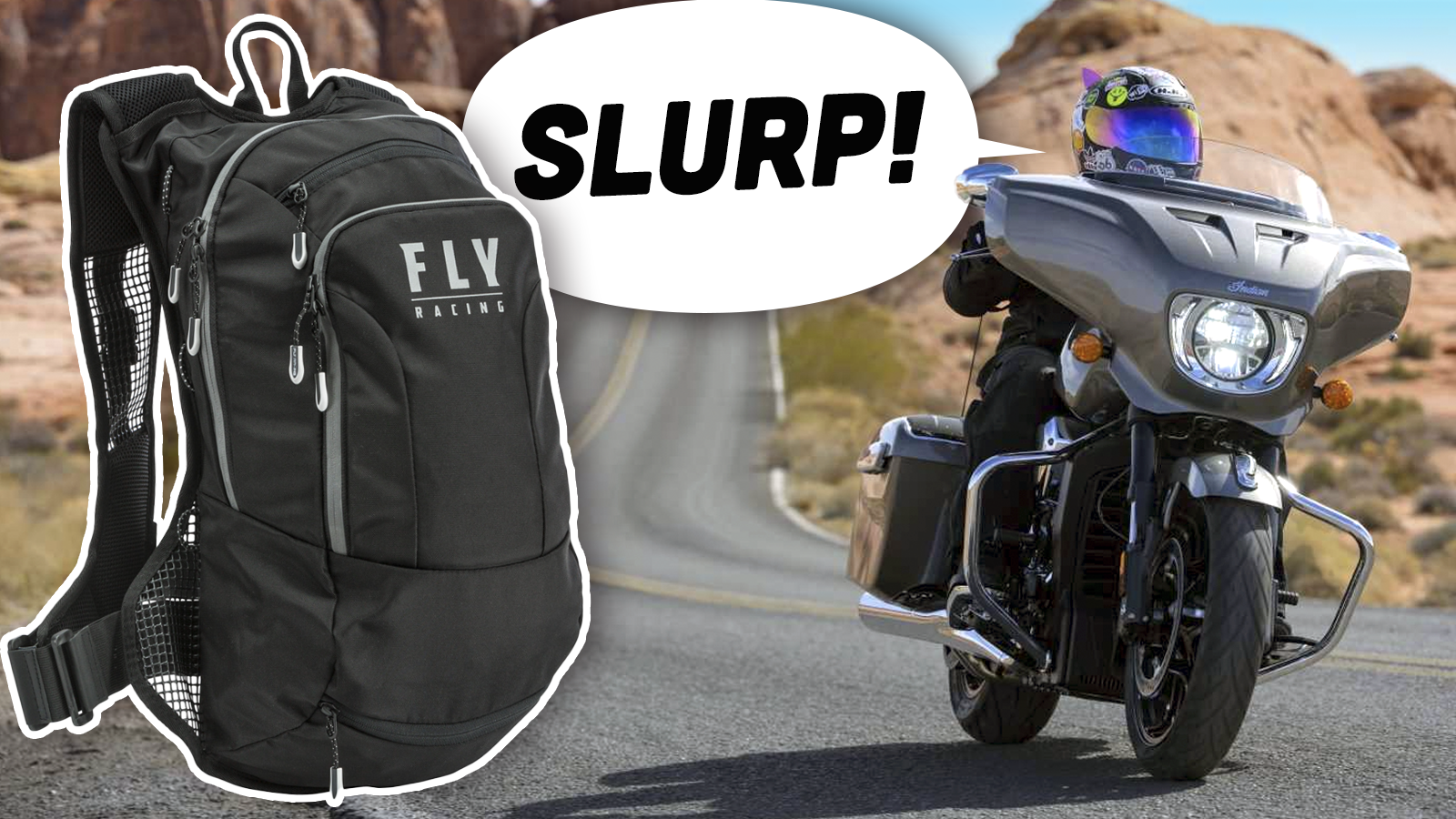
While Amber and some other riders recommended a fairly minimalist hydration pack from USWE, I chose a backpack-style two-liter Fly Racing XC 70 Hydro Pack instead. My logic was that I ride on the road pretty much 97 percent of the time, so I’d rather have a backpack that holds some riding essentials and my swim gear and water rather than a pack that was mostly just water.

Honestly, the hydration pack blew my mind. The pack consists of a backpack made from what seems to be durable textiles. Inside this bag is a bladder that holds two liters of water.
The watertight bladder has a pretty neat design. It’s sort of like a freezer bag on steroids. All I have to do is slide open the lock and add water. I was shocked at how well the lock keeps the water in!

Anyway, the bladder, which is held in place using a hook-and-loop fastener, feeds to a line that runs along the shoulder straps of the bag. If I want to take a sip, I just unlock the nipple, bite slightly, and drink like I’m pulling from a straw.
It’s so simple, yet it was a total game changer. When I was on the trails, I didn’t have to think about getting a cold drink once I got back to camp. I didn’t have to worry about getting a bottle in through my helmet, either. Instead, I just shoved the nipple into my mouth and took a sip. The hydration pack made the process of drinking so easy that I didn’t even have to think about it.

Even when I wasn’t wearing the pack, I kept it nearby for a quick drink.

Since getting the bag home, I’ve used it on the road and have fallen totally in love. I usually fill the pack up with water and then place my swimming clothes, some basic tools, and my identification inside. Then, I just hit the road. Now, I no longer need to stop to chug a Gatorade, and heat isn’t as big of a deal as it used to be. I’ve found that the pack is also fairly decent at keeping cold water cold. The bag is big enough that I bet I could fit some ice in there, too. But I haven’t needed to, yet.
I’ve even been impressed by the bag’s durability. I’ve crashed a Stark Varg onto my back at least twice while wearing it – including the crash that busted my knee – and the bag doesn’t even have a tear to show for it.

Something else that I love is that this bag isn’t just for motorcycling. Once my knee is back to 100 percent, I can see bringing it along for a hike. I also plan on bringing it with me to EAA AirVenture Oshkosh 2026. Every year, I tend to get pretty beaten by the mid-summer Wisconsin heat, which forces me to buy expensive drinks at concession stands. With this backpack, I won’t need to do that anymore. I’m also looking forward to ditching my purse during AirVenture, which also gets a little bothersome after I’ve walked numerous miles in a single day.
I can also see it being somewhat beneficial on the road. Do you drive a car without air-conditioning? Having liters of water on hand is great. Getting hot at an Autopian autocross day? Keep both hands on the wheel while you take a drink!
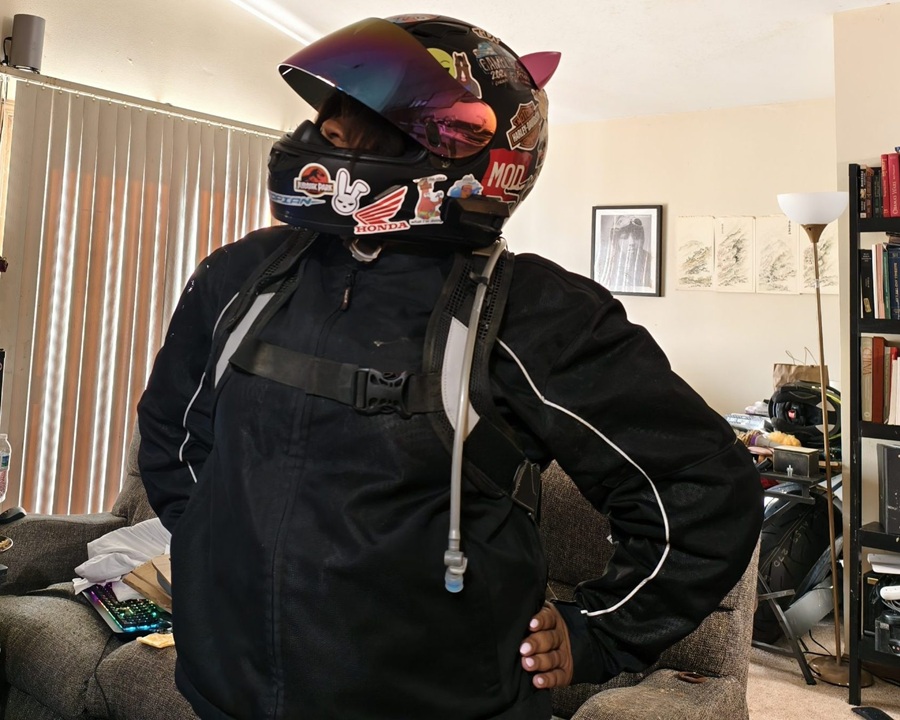
If I have any regret, it’s the fact that I didn’t get a hydration pack sooner. I just never saw the point in getting one when bottles of water existed. Well, I tell you what, it’s worth every penny. Aside from my helmet comm, the pack has been the biggest upgrade to my riding experience since I got into motorcycles.
Honestly, it doesn’t seem to matter what hydration pack you go for, so long as it has positive reviews and the features you want; you can’t seem to go wrong. A Fly Racing XC 70 pack like mine retails for $99.95, but if you don’t really care about having a hydration pack marketed towards motorcycling, you can get something like a Camelbak two-liter hydration backpack for $48.98. They get even cheaper on Amazon if you don’t mind taking a chance on quality. Besides, you could buy four of the cheap ones on Amazon before you match the cost of one Fly Racing pack. Again, you can’t really go wrong here.
But I definitely recommend getting a hydration pack of some kind. You might think that one of these backpacks is unnecessary or a bit superfluous. Look, I used to think the same. But having one has made my motorcycle rides surprisingly more enjoyable! I normally don’t even write articles about the little gadgets that I get, but this was so cool that I had to spread the word. No matter what you choose, stay cool out there!
Top graphic images: Fly Racing; Imc Raven


Don’t feel too bad…what’s crazy is I used to mountain bike a ton all over the place and knew about these…then did lawn mowing for a lot of years in extreme heat (along w/ landscaping/other outdoor work) and have still never bought one. I may actually finally do it for mowing our yard. Thank you for the suggestion and glad it works so well for you for motorcycling!
“I can get 70 miles to the gallon on this hog!”
Little and often, that’s the way.
Your body doesn’t sweat by waiting a couple of hours and then dumping out a pint of liquid, so why would hydration work the same way?
When I’m running longer distances – half marathon or above, especially on the trail – hydration bladder is an absolute must.
Welcome to hydration packs, I have been some variation of a Camelbak since they came out in the late 80’s for cycling. They are a game changer for being able to stay hydrated and and keeping hands close to the bars. I run mine with a neoprene cover on the tube to help keep the liquid cooler. Just change out the bite valves often as they can get a bit gross inside over time.
You get used to hydration packs but can start using them to cool down and over hydrate always looking for a place to relieve yourself. You can stack up different ends to better your needs as well. It used to be a lot of people would take the platapus bite value and put it on top of the CamelBak valve for better control.
The one downside of a full-size backpack one like that is it traps heat against your back, despite the best efforts of the mesh and foam. Ironically, I once overheated on a mountain bike ride in part because I had my hydration pack on. It wasn’t that hot, but after one particularly long climb I felt terrible. I bailed on the rest of the ride, and when I got back to the car I realized my back was soaked in sweat and on fire. Taking off the pack felt great.
Since then I’ve started to use a hydration waist pack. Traps much less heat, albeit at the cost of some storage volume.
Ride/drive until you feel thirsty is the European version of hydration. Hence the reluctant inclusion of terrible cup holders in European cars.
I’ve definitely hung a hydration pack on the back of my seat for long car drives before. Only issue is increased bathroom stops.
My issue with having a backpack on a motorcycle is after any length of time, those straps feel like they are digging into your shoulders. Now a tail bag or tank bag hydration pack would make much more sense.
I have a tank bag with a spot for a hydration pack and a strap so I can easily grab it if I want to pull it off the bike and sling it over a shoulder. It is really the best tool for the job since I don’t like wearing a backpack while I am riding.
I mountainbike, and I never leave home without my hydration pack. It’s great for water of course, but it’s also nice to have place to store things. I keep a small first aid kit with for cuts/scrapes in my kit, as well as a spare tube, small tire pump, multitool, some food, quicklinks for chain repair, and a small folding hand saw for trail work. I also throw my phone, keys, and wallet in it when I set out on a ride. And in the winter, I can store extra clothes/gloves/hat in there as I need to add or remove clothing.
This is a thing I struggle with, and giving myself permission to get tools that make things easier is only a recent development for me. For instance, an impact gun would make this suspension job easier, but I already have tools that can accomplish that job.
Just buy the damn tool, I have to tell myself, Struggling is not a virtue, and the quality of work, and experience overall will be better for everyone involved. It took me a long time to learn this lesson, but things are getting easier because of it.