


There are a lot of plans to lower fuel costs, though it’s not clear if most of them will either lower fuel costs immediately or at all. There is one surefire way to make diesel costs cheaper, and the savings are basically instantaneous, though the move is not without its costs.
Energy prices still dominate all talk of cars at the moment, and The Morning Dump unfortunately runs on a server powered by a Jetta Sportwagen TDI. Perhaps red-dyed diesel will save us all from insolvency. One might assume owning any Stellantis dealer would result in business troubles given the shakiness of the operation over the last few years, but in Q2 they were the most purchased dealerships.


Japanese automakers are shifting more production to the United States to deal with tariffs. Will Europe be next? And while we’re in Europe, let’s check out the preview of the new Alpine A110.
Get Ready To Put Some Red #26 In Your Car
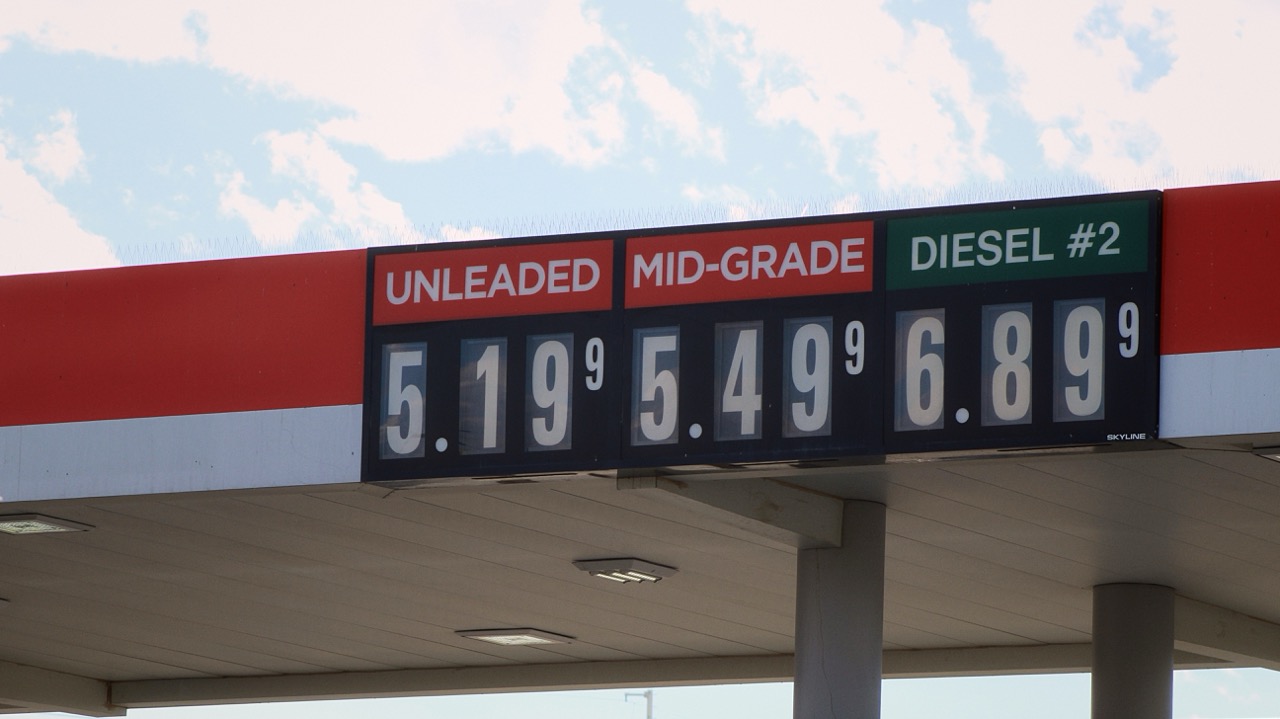
Record high diesel and elevated gasoline prices in an even-numbered year have encouraged government leaders to consider a number of options. Right at the top, there’s been talk of a diesel export ban, though so far the negative consequences seem to have outnumbered the short-term fuel savings.
What’s a government to do? In Texas, where Republican Governor Greg Abbott is facing a surprisingly strong challenge from Democratic state rep Gina Hinojosa, the state has enacted a 30-day disaster declaration, as the Texas Tribune reports:
The declaration expands the use of dyed diesel on Texas roads, suspends Texas Low Emission Diesel rules to the limit the federal government authorizes and raises the allowable weight for fuel, agricultural and timber loads. The governor also requested the U.S. Environmental Protection Agency to waive federal ultra-low sulfur diesel requirements to boost supply.
“Texas agriculture and freight run on diesel,” Abbott wrote in a statement. “Record prices put both industries at risk and raise costs for every Texas family. Farmers and truckers can now use dyed diesel on Texas roads, and fuel, crop, and timber loads can move at a higher weight. These steps cut costs on the farm, on the road and at the store.”
So what is red-dyed diesel? Is it going to cause an allergic reaction in your tractor? Not quite. Dyed diesel is just the regular, clear-ish diesel you normally use but it’s been dyed red with Solvent Red #26. Why? Governments at the state and federal level tax fuels in order to pay for things like highways, but not all fuel is used for on-road uses. Depending on where you live, red-dyed diesel can be used for agriculture or other off-road use. The red dye is just there to make sure you’re not caught putting off-road diesel into an on-road vehicle.
There’s been talk of doing this at a federal level, though Bloomberg correctly points out this is only a partial fix for high prices:
The federal tax on diesel is about 24 cents a gallon with state taxes adding, on average, another 36 cents, according to the US Energy Information Administration. Removing restrictions on sales of off-road diesel could lower prices for farmers to back under $6 a gallon, a meaningful reduction, but still well short of sub-$4 a gallon diesel seen before the US and Israel launched the war in Iran.
This is a short-term fix with its own long-term problems as people will still be using roads and it could create a shortfall in funding for transportation projects. The most obvious fix to this whole mess is to end the war in Iran, though that keeps not happening.
Chrysler Dodge Jeep Ram Dealers Are Suddenly Popular, As Are Hyundai Dealers
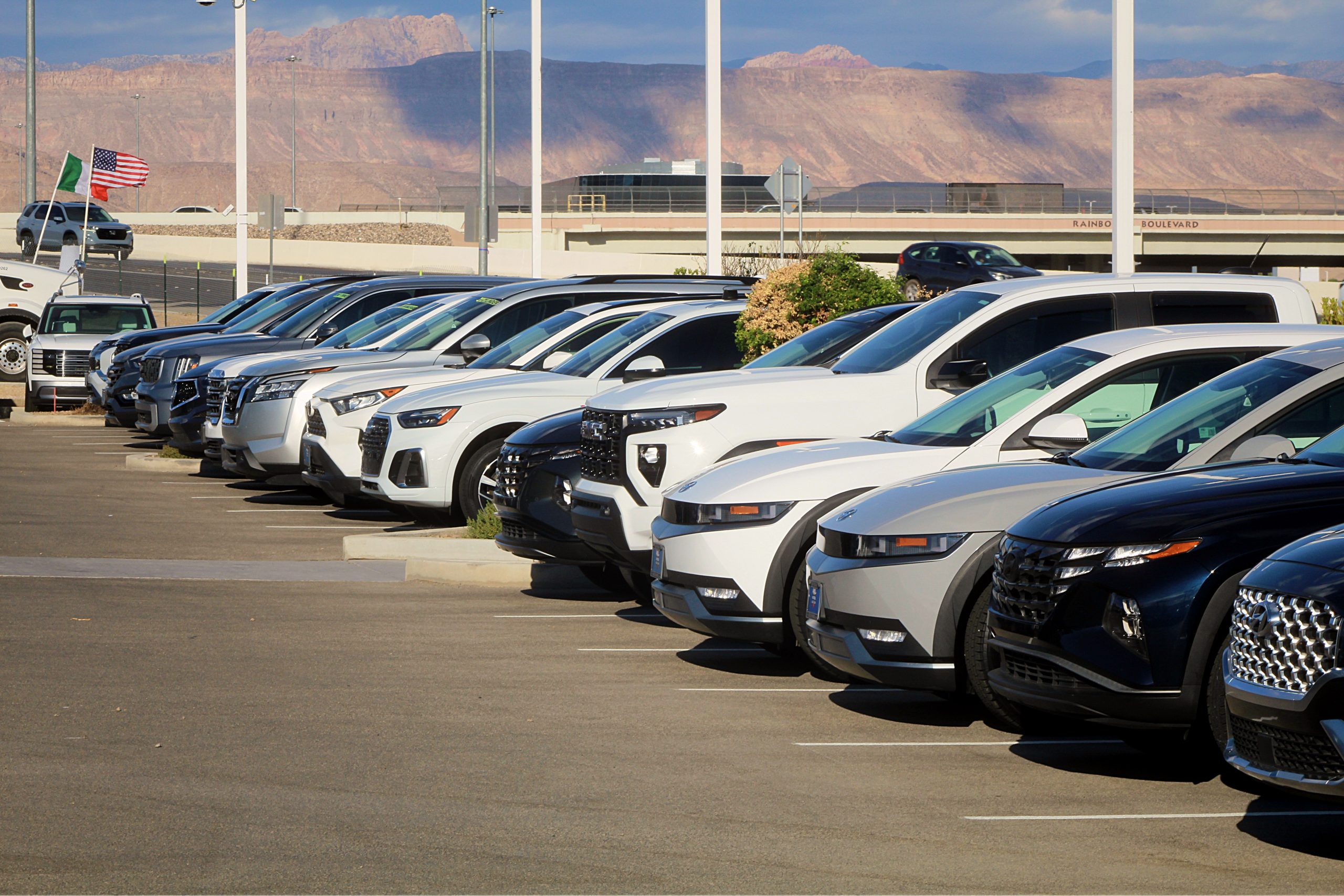
Sales volume can be a measure of popularity, though it can also be a measure of availability. In the case of dealership sales, I think both factors are in play. In the second quarter of this year, the most popular dealerships to sell were Chrysler, Dodge, and Jeep at 29 each. Curiously, only 28 Ram dealers were sold, which makes me think someone held onto their Ram rooftop.
By comparison, there were 23 Ford dealerships sold, 12 Chevy dealerships, and 12 Hyundai dealerships (although that number is a 100% increase over 2025).
According to Automotive News, the popularity of CDJR stores is partially a belief that the brand is near the bottom, which means there’s a lot of upside:
Dahl Automotive, of La Crosse, Wis., bought a Minnesota Chrysler-Dodge-Jeep-Ram store in June as a long-term bet on future profitability, dealer Andrew Dahl said.
“There’s cycles with the brands,” Dahl said. “They get hot, they have a few off years, but they come back.”
Dahl Automotive acquired two Chrysler-Dodge-Jeep-Ram stores in 2023. Since then, Stellantis has revamped its field team and bolstered support for dealers, Dahl said.
And it is refreshing its lineup.
Not a lot of Toyota dealers were sold, because who would ever sell a Toyota dealer?
Toyota Might Get Hit By Rules Targeting China

There’s been a lot of consternation in Europe about the rise of Chinese automakers, which threaten the continent’s important auto industry employment. There’s been a big push for ‘Made in EU’ rules that restrict government incentives or tax breaks to vehicles that have 70% of their content made in EU.
This is a big deal for automakers as Nikkei Asia points out:
A delegation from the Japanese government and the Japan Automobile Manufacturers Association met Sept. 16 with senior officials from the European People’s Party, the largest party in the European Parliament. About 40 people gathered in the parliament’s main building in Strasbourg.
“Our European operations are at risk of collapse,” a Japanese auto executive said.
In Europe, it is common for companies to provide employees with vehicles that can be used privately as part of their compensation packages. Corporations enjoy tax breaks on these “company cars.”
Company cars account for roughly 60% of new registrations in the European auto market. But the IAA states that EVs manufactured in non-EU countries would be ineligible for the company car tax breaks. Individuals who buy electrics made outside the EU would be ineligible for government purchase subsidies as well.
That’s not great. There is some Japanese production in Europe, though the biggest is probably Nissan’s Leaf plant in northern England, which is technically not Europe these days. Toyota is already a big automaker and manufacturer in Europe, but it hasn’t focused on EV production there, which could be an issue.
Here’s A Preview Of The New Alpine A110
As Adrian pointed out, the Alpine A110 is a lightweight miracle and a stunning piece of car design.” I couldn’t have said it better myself. Of all the cars I’ve driven in the last decade, the A110 remains one of my favorites.
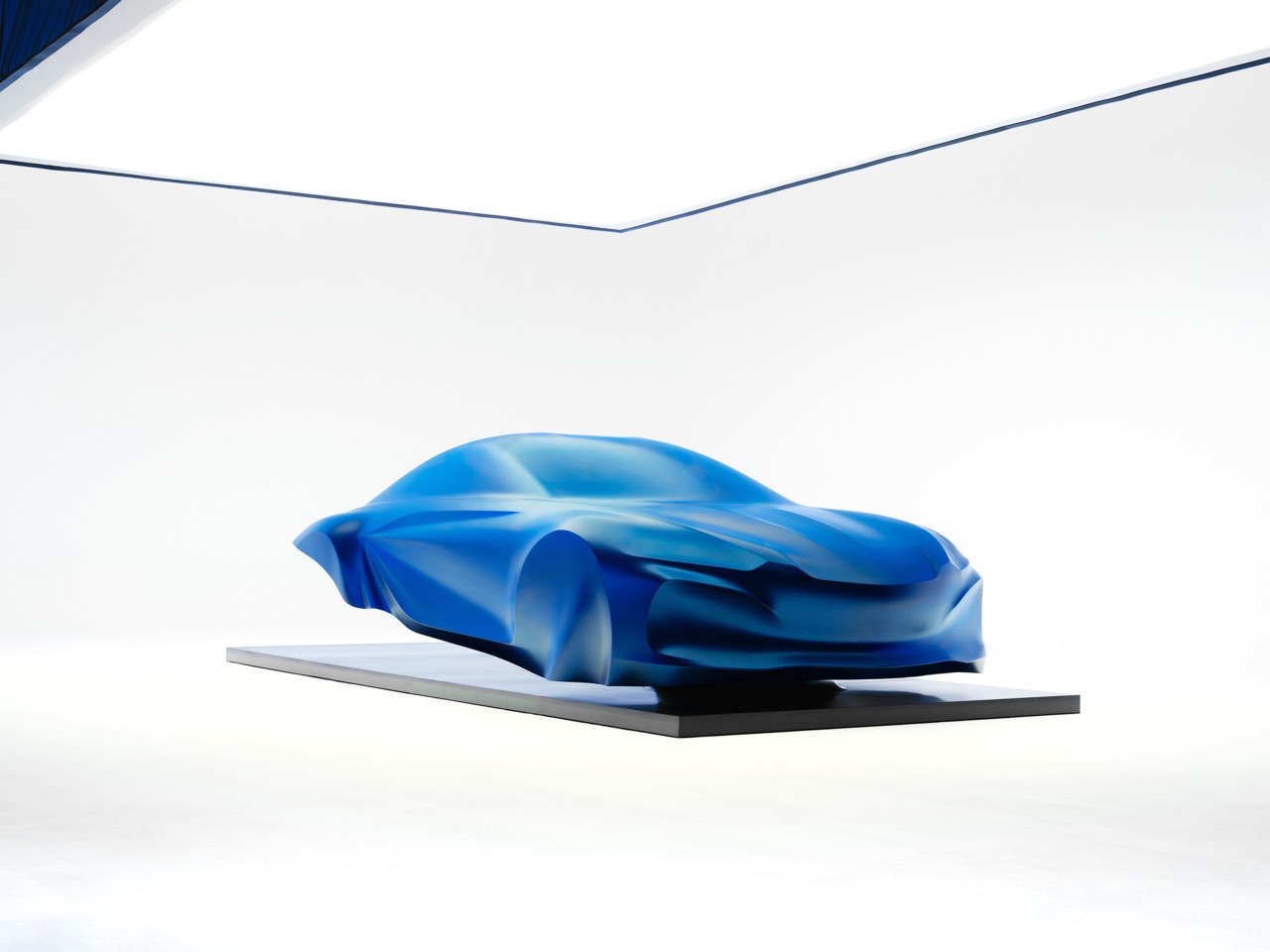
It’s also been for sale for what feels like 30 years. A new A110 is coming, and Alpine has this sculpture to represent what the future looks like. Here’s the way the company describes the A110 in its press release:
The blue veil used in this sculpture, like a point of tension at the very moment it is caught by the wind, also suggests lightness and aerodynamics — key elements of a sports car in which form follows function. One of the strong inspirations comes from the Concorde epic, a symbol of French technological excellence, with a unique style forged by the exceptional performance of a civil aircraft capable of breaking the sound barrier. This precise moment, marked by a powerful sonic resonance, is one of the major sources of inspiration for the sculpture: a suspended instant charged with a high concentration of energy.
These elements must be combined with the DNA that makes an Alpine A110: proportions and a stance in the lineage of the Berlinette and the current A110. The third generation will unmistakably be an Alpine A110, with its V-shaped front-end treatment, the dual light signature suggested here, the typical side modelling born from the evocation of movement — modernised and more sculptural — and the contrast between tension and curvaceous volumes, conveyors of emotion and symbols of Alpine’s technical mastery.
This is enough to make me think that maybe Alpine isn’t going to mess this up physically, though I’m still skeptical about how much they can make an EV feel like an A110.
What I’m Listening To While Writing TMD
I am on the couch eating breakfast and watching Gilmore Girls (shocker), and Rory brings Lane to a party with the Chilton girls. There’s a DJ and he plays “Where It’s At” by Beck and “Ms. Jackson” by Outkast. These are great songs and era appropriate, but it’s hard to believe that anyone at that party is cool enough to choose it. Then I remembered that they’re wealthy and probably hired New York’s best DJ. Either way, let’s enjoy some Outkast.
The Big Question
Which car dealership would you own if you could own any car dealership? I guess Beau doesn’t get to answer this one. Actually, I am curious what else Beau would like to have in the group.
Top photo: Barnes Petroleum


“The declaration expands the use of dyed diesel on Texas roads, suspends Texas Low Emission Diesel rules to the limit the federal government authorizes and raises the allowable weight for fuel, agricultural and timber loads. The governor also requested the U.S. Environmental Protection Agency to waive federal ultra-low sulfur diesel requirements to boost supply.”
Between this and the amount of expensive munitions we (the US) have expended on this “minor excursion” into Iran must have the Iranians laughing their asses off.
Raising the allowable weight is only going to further punish the roads in rural and not-so-rural Texas. I drove a bunch of them. They weren’t great four years ago. Now? I’m soooo tired of short-sighted, knee-jerk reactionary policies.
Ukraine/Russia seems to be a war of attrition of (regrettably) humans and damage to infrastructure (including refineries). I’m not going to go more political than this here.
War! Huh! What is it good for?
Edwin Starr – War (Original Video – 1969)
I find it interesting the attacks on Russian energy stemming from the UK-RUS war never get mentioned here. Gas Buddy says 60-65 percent of the spike is because of that, with the remaining 35-40 percent being everything else.
https://www.wbaltv.com/article/ukrainian-attacks-russia-oil-facilities-us-diesel-prices/73748942
More short term thinking, with long term consequences. Where are the funds coming from when the heavier loads wreck the roads and they need to be fixed or replaced?
Tax Money is fungible, budgets can be moved around if needed. Transportation budgets are not even close to the biggest line item.
Having worked in a refinery I can tell you that there is no flipping a switch to stop taking the sulfur out of diesel fuel. It would require a major reconfiguration which would take months if not a year. Also putting non-ulsd fuel in a vehicle designed to run. Ulsd is going to screw up said vehicle to no end
Not to mention that raising the price from $2.75 to $6.50 and then discounting it by maybe 50 cents doesn’t exactly balance the scales.
Re: the proposed Texan changes to diesel rules to make it cheaper for drivers… going back on the ultra-low-sulphur diesel fuel requirement now might have some significant unintended consequences.
I owned and dailyed a TDI Golf for over 20 years, and it was a big deal in the TDI community when ULSD finally became mandated in CA (in the mid-late-2000s maybe? I don’t remember when). This was due in part to the fact that some of us who basically imported TDIs from other states during that time that CARB outlawed their sale in CA (around 2001 or 2002 maybe?) some drivers had issues when they put NON-ULSD in their A4 TDIs. A pal of mine had the exact same car/engine/year as me except his had a manual, and when he put something OTHER than ULSD in his car, he wound up having to take the car an hour south to San Juan Capistrano VW and they basically had to take the whole top half of the engine apart to make it drivable (normally) again. He sold the car soon after this of course.
Anyway, my point is that I am under the impression (perhaps mistakenly… it wouldn’t be the first (or last) time) that higher-than-ULSD PPM of sulpur can really screw with diesel vehicles that were designed and intended to ONLY be fueled with the ULTRA LOW sulphur diesel. If Texas removes the USLD rule, and some gas stations get some regular (“dirty” which was almost all diesel in the US prior to USLD rules coming into effect) diesel from a supplier and sell it to drivers, who is going to be responsible if/when repairs to newer vehicles become necessary?
Sounds like a fiasco waiting to happen to me, but maybe I’m mistaken.
I bought a new 2001 5M Jetta TDI in Washington state (back when they were a bit less aligned with CARB) and I was a proud member of Fred’s TDI Club forums. I ran some B10 and B20 through that car when it was available and not ridiculously more expensive. I don’t think that contributed to its having two injection pumps crap out in 101K miles. The last digit is significant, because after 100K, VW of America told me to pound sand. Hence, my refusal to buy another one of their products. Ever.
2001 was before ULSD, so my particular engine probably didn’t care back then. The scare back then was about valves and valve seats “missing” the cushioning effects of the sulfur.
My valves etc were fine when I sold it at 165K. I did have to have the intake system decarbonized at around 120K, probably because I didn’t follow some of the forum leaders to reengineer the EGR crap on it.
Kind of a moot point right now, at least, when diesel is nearly $2/gallon more than regular here. Yeah. On long drives to see family in CA the TDI would get 50 MPG. My ’17 Accord V6 gets 38-40 MPG. Do the math. I do miss the stick though.
Actually, such a similar experience!
I bought my ’00 Golf TDI GLS automatic when it was one year old from a young lady in Galveston, TX. We had agreed on a price via email, I flew out there, she picked me up at the airport and drove us to her credit union, where we filled out the paperwork and I wrote a check. After that, I dropped her off at home and then drove back to LA with a smile on my face. I think it had 13K miles on it when I bought it, and IIRC, I paid $16,650. (MSRP in ’00-’01 was about $24K for a TDI GLS I think). In 2001, you couldn’t buy a TDI new in CA due to CARB rules about fleet emissions or something (I found a single available/unsold one which the VW dealer in Covina swore they’d sell to me for MSRP, but of course they wanted an extra $5K once I drove out there to buy it).
Anyway, I drove that TDI daily for 23 years, and was also an active member at Fred’s TDI club forum. The best single-tank MPG I ever got was an actual 45MPG on a long highway trip, which is about right for the automatic (the exact same car but with a manual could consistently get 55MPG highway). I sold it a couple years ago to a guy who didn’t speak much English (he was eastern European I think). It was in very nice shape, since I took good care of it. I think he paid about $4,500. for it, which means the car depreciated less than $500 per year during my two-decade+ ownership of it. USLD became available in CA shortly after I bought it, so that’s what I used all of the time. I never ran any biodiesel or mix. I did always use that uber-expensive Mobil oil specifically for modern diesels… Delvac 1 or something like that?
My own VW-tells-me-to-piss-off stoy involves the power window regulator brackets, which from the factory are made of white plastic (nylon maybe?) and ALWAYS fail just a few weeks out of warranty for the front windows. Way back then, it was a $400-500. dealer repair, not due to the replacement kit (which had a metal bracket) but due to the labor. It was over 120 separate steps to replace the regulator kit (I did it THREE times total on my Golf, using the VW part from Impex for about $35. and untold hours of my life).
Other than the window brackets, I had another common A4 VW TDI failure, the MAF sensor, but that was relatively cheap and easy to replace. Yes, the headliner drooped after 20+ years as it does on so many cars, and the A4 VWs all had those rubber-sprayed dashboards which looked and felt great when new (as used on the Apple Newton, some Volvos/Audis, some high-end SLR cameras, and many other products back then) but after several years, the coating degraded turning into a horrible, permanently sticky mess that attracted dust and fingerprints with super-aggressive gusto… I hated that.
I never figured out the lifetime MPG w/my automatic TDI, but it was probably in the low-to-mid-30s because the majority of my driving is around town, where 30MPG was normal w/traffic and hills. 30 city/40-45 highway for the automatic in the very early oughts (A4s I think went from the 99.5 to 2004 model years) was pretty good, considering it wasn’t a hybrid. Also, those A4s VWs were like heavy little tanks: the sound the door makes on closing is as good as the sound from my ’98 Mercedes or big ’04 Volvo XC90.
It’s a shame VW the company is the way it was (and still is, AFAICT) during my formative automotive years. I’ve had several VWs (all but one water-cooled) and after 23 years with the TDI, I will never buy another VW product. Of course, that’s easy for me to say now, since VW never lets Americans have any of their truly interesting cars, which are all reserved for lucky Europeans. 😉
TBQ: Bristol. I’m as lazy as I am antisocial.
Relatedly, can there be a better name for a seller of high-end, low-volume British cars than this?
https://www.topgear.com/car-news/insider/memory-tony-crook-1920-2014
I don’t know why Bristol are still so remembered as a car manufacturer, given they barely made any cars, sold even less, and most of them weren’t very good, and yet for some reason (probably Clarkson’s fault) they’re better remembered than other British manufacturers like Nobel, or Morgan, or Caterham, or Westfield, or Ginetta etc. etc.
Only Morgan and Caterham stick in my head. Probably because most of them (aside from a V8 Morgan) were more my speed and velocity.
TBQ Lexus
Plus maybe sell Mitsubishis at an old Gulf station down the street with the pumps removed, play both ends of the market
“Which car dealership would you own if you could own any car dealership?”
If I had to pick one brand, it would be Toyota. They make good product more consistently in a wide range of segments than any other automaker
I have been a middle manager (in decidedly non-automotive realms) three times in my life and hated each time. I’m not cut out to be a manager. So, owning a dealership would be absolute hell. The last three cars I’ve been part of the buying process of have all been Honda products. I also respect Toyota (had a couple of those too) and Mazda. Absolutely no way anything European. Since my two favorite European players (Peugeot and Saab) don’t exist or don’t sell in the US.