


Finns and sauna are inseparable. In a country with some 5.6 million people, there are at least three million saunas. Almost every private home has a sauna, larger apartment buildings often have a shared sauna in the basement, and then there are summer cottages and villas, where a sauna is definitely a must. Not everybody heats the sauna up every day, even if some do: most often, it’s heated a couple of times a week, especially on weekends, to get the week out of your system and let the sweet humid heat treat your bones.
In the last ten years, sauna boats have become increasingly popular. Quite often they are run by businesses offering lake cruises, but sometimes they are there to circumvent building limitations, as saunas are no longer allowed to be built directly on the water’s edge as they once were. A temporary setup such as a sauna boat, tethered to a pier, gets around that – as long as it’s not there long enough to be regarded as a permanent fixture. Since Finland has some 200,000 lakes, there are enough lakeside towns that sauna boats have popped up here and there to attract tourists, and it’s something that Japanese tourists in love with Finnish culture and traditions have taken to heart. This curious sauna boat, built with combined Finnish and Japanese know-how, also experiments with an alternative fuel: hydrogen.



Usually, Finnish saunas are heated either using firewood or electricity. The Finnish sauna stove maker Harvia offers both kinds, for different use cases. If you live in the countryside, a wood-fired sauna stove is the traditional way, but in an urban setting you just have electric coils heat up the sauna stones, for convenience.
Harvia, which also sells its stoves in North America, partnered with Toyota last year to create a hydrogen-powered sauna, which was displayed at the Secto Rally Finland in Jyväskylä last summer. Toyota’s rally team, Toyota Gazoo Racing, has a rally car factory in Jyväskylä and is building a technical center nearby, and the location in Central Finland is well known for the rally, which has formerly been known as Neste Rally Finland as well as the 1000 Lakes Rally. Toyota, which builds the fuel-cell-powered Mirai, is constantly researching use cases for hydrogen, and a few years ago it displayed a hydrogen-converted AE86 drift car at the Tokyo Auto Salon.
See The Løveli Lakes

When it comes to attracting visitors, Finland relies on the unbeatable combo of a serene, remote forest and a rally car blasting through it at 11/10s. Jokes aside, Finland is very well known in Japan and attracts a lot of tourists from there, partially because of the unbothered nature, vast forests, and numerous beautiful lakes you can find here, but also thanks to the Moomin animated series based on Finnish children’s books that was produced in Japan. Moomins, much like Alphaville, are big in Japan.
A couple of years earlier, the town of Jyväskylä set up a non-profit organization with Toyota Gazoo Racing World Rally Team and Toyota Mobility Foundation, called Central Finland Mobility Foundation, or Cefmof. It focuses on finding applications for hydrogen, with carbon neutrality and hydrogen research in mind.

Currently, there are a number of Toyota Mirais in use in the Jyväskylä region, the only place in Finland where you can fuel up a hydrogen car; previously, the closest place to do that was the Stockholm Arlanda airport, a ferry ride away. Benefits of a hydrogen fuel cell car include a quick “recharging” time, which is often brought up in comparison to rapid charging an EV. But as the hydrogen distribution network is still quite minuscule compared to widely available electricity, from roadside rapid chargers to household wall sockets, practical applications of hydrogen need to be showcased in various ways, beyond passenger cars or delivery trucks.
Finland is striving to become a significant producer of low-cost renewable hydrogen using wind power, and windmills have popped up in greater numbers all around Western Finland in recent years. The government plans to produce one million tons of green hydrogen by 2030, but it’s unclear how much of that can be used in the road network rather than industrial applications.
Hydrogen Heats The Sauna Stones And Powers The Boat
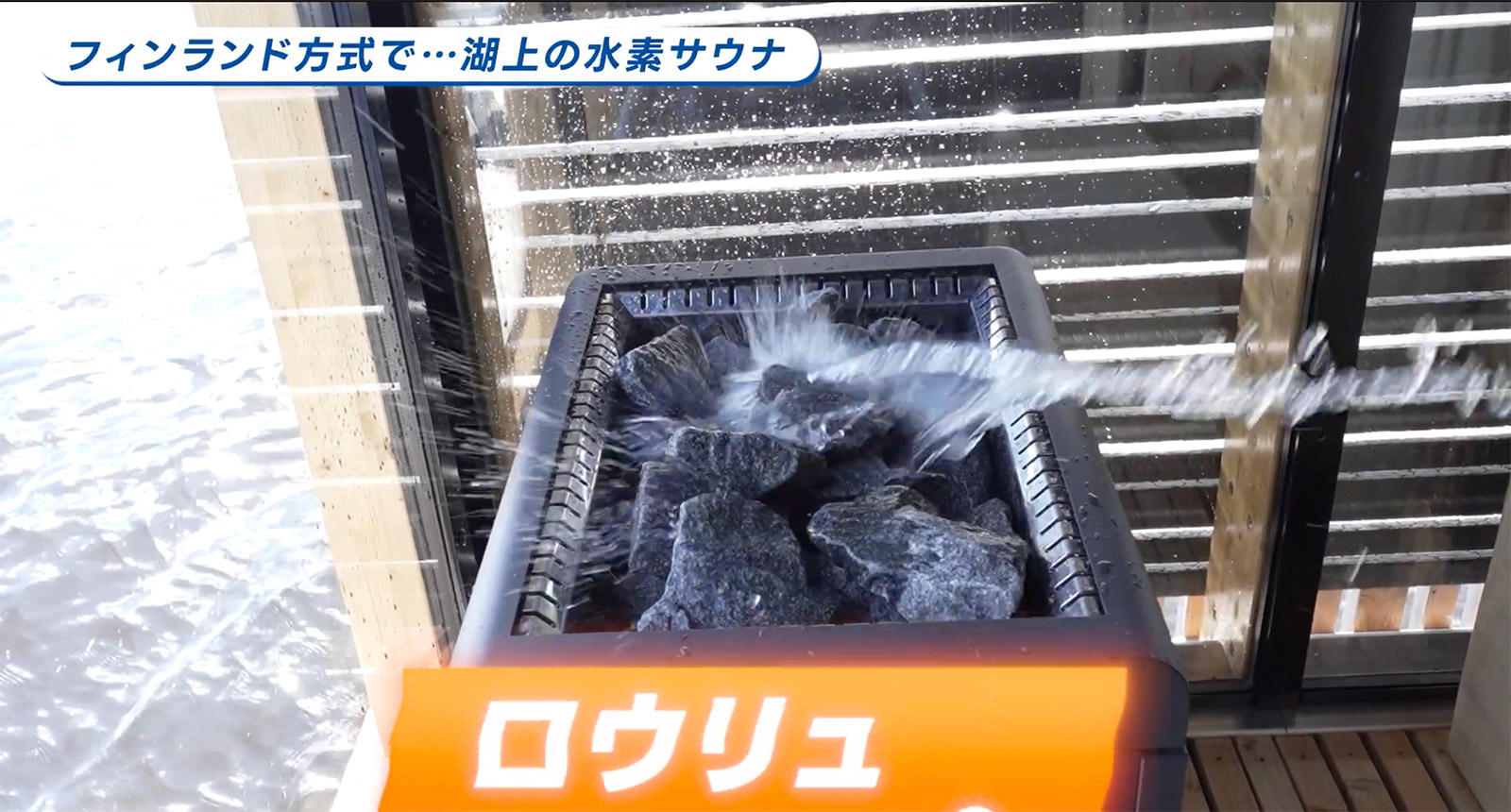
Harvia and Cefmof’s first project was to develop a hydrogen-powered sauna. Conceptually, it’s something of an intermediate between a traditional wood-powered sauna stove that directs heat from the fire below through channels among the stones, towards the stovepipe, and a regular electric stove that heats the stones using coils.
The hydrogen stove has a hydrogen combustion heater, which channels flames and warm air much like a wood-powered stove, but size-wise it’s much closer to an electric stove. This week, Toyota released a video on its Toyota Times YouTube channel, showing off the sauna boat. In the Toyota Times clip, it is said that a hydrogen stove produces a more humid heat than an electric stove, which can be irritatingly dry at times.
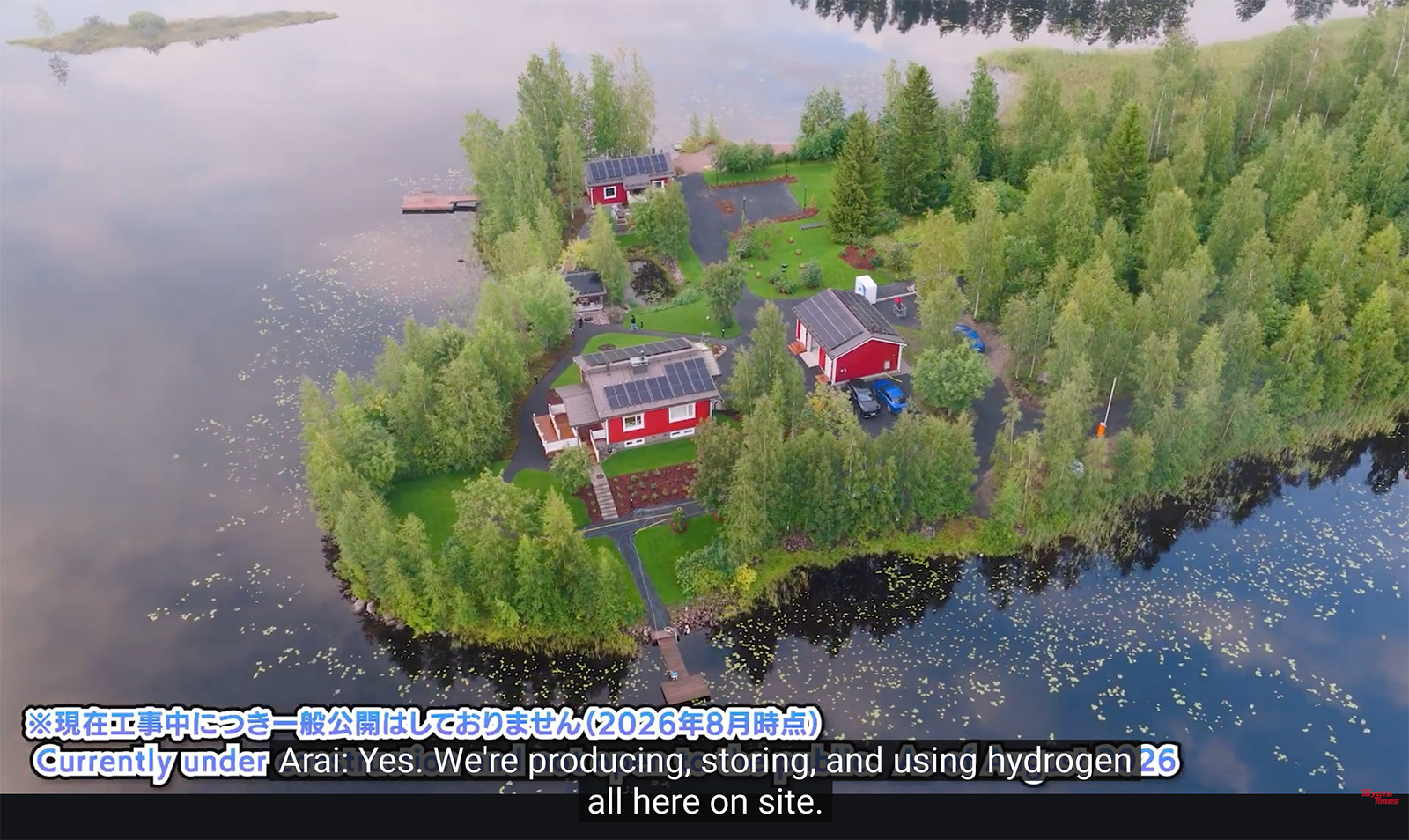
In addition to the earlier sauna project and the boat, Cefmof has also built a Hydrogen House in Jyväskylä to showcase its practical uses. The house, which is built to look like a completely normal family home, has roof-mounted solar panels and a Metener electrolyzer.
Using solar power, the electrolyzer produces hydrogen from water, with a maximum hydrogen storage capacity of around 200 lbs. When solar power isn’t available, a Panasonic fuel cell produces power from the stored hydrogen. Ideally, hydrogen would be produced in the summer when solar energy is easily harvested, and during the dark and cold months hydrogen would power the house – even off-grid.

For the past couple of rallies in Jyväskylä, Metener also built a Hydrogen Pitstop that it showcased during the rally event, with a mobile electrolyzer filling up hydrogen cartridges.
Since there isn’t permanent pier-side hydrogen refueling infrastructure in Jyväskylä, but rather just the one public hydrogen station for cars, the hydrogen sauna boat uses swappable cartridges about the size of a diver’s oxygen tank.
In Toyota’s video below, the cartridges are shown to be filled from a mobile platform in the harbor, a similar Metener electrolyser which is also in use at the Hydrogen House. The video has English captions available.
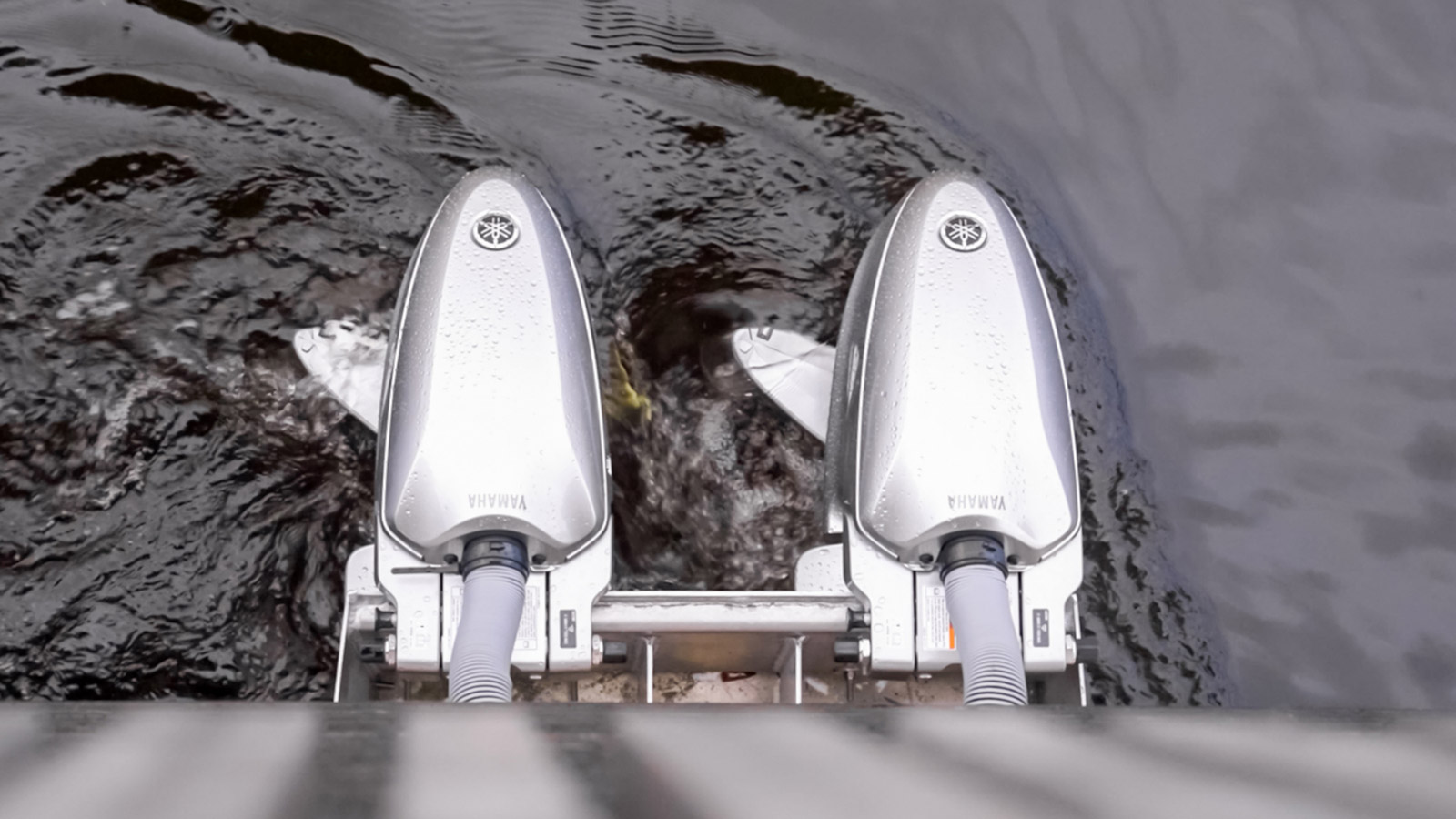
The boat’s Yamaha HARMO outboard engines don’t run on hydrogen directly, as they’re electric and powered by the boat’s fuel cell. Silent running is a definite bonus even on a sauna boat, even if you’re not supposed to sit in silence in the sauna: it’s one of the few places where Finns usually hold jovial conversation.
A kilogram’s worth of hydrogen is required for a two-hour cruise, and swapping the cartridges is quick. An electric boat would need to charge its batteries for far longer, even if solar panels were fitted to provide extra power.
In Toyota’s video, it’s shown that the idea for the hydrogen sauna boat would have been invented in the sauna: much like shower thoughts, some of the best ideas and solutions are developed in the sauna.

Steered from the top deck, the sauna boat can go on lake cruises while occupants enjoy the sauna or operate the BBQ, which is also located up top. Like the stove, the grill is hydrogen-powered.

The sauna boat combines something that’s traditionally Finnish with Japanese high-end technology, with a bit of weirdness and ingenuity from both. It isn’t yet open to the public, as it’s more of a prototype and a proof of concept, but as an oddball practical application for hydrogen, it’s one I could see being widely accepted.
(Photos: Cefmof unless otherwise noted)


A pontoon sauna might go over well in Minnesota before/after the ice goes out of the lakes.
A hydrogen powered boat that is shaped like a cube. Is there any way to make this less energy efficient?
Try floating one in January or February when the lakes have >1M of ice. That would be less efficient.
It looks like it’s got a normal boat-shaped hull under the cube.
Yeah, looks like a party barge…err, pontoon boat to me. Just really big.