


I got an email this morning from my kid’s school that included a clearly AI-generated poster. This didn’t upset me at first, as there are some totally reasonable uses for the technology. Was this one, though? Most school posters prior to this were made using generic templates and clip art, giving them a sort of boring sameness. The theory was that generative AI would allow people to unlock new creativity by overcoming a skills gap, yet, this poster looked like every other AI-generated poster. All that work, all that water, all that energy, to just wind up with a new kind of boring sameness.
When I was in college, I was part of the student union, which had two artists on staff to make signs, business cards, and posters. Those posters were inventive and unique. I can’t remember the names of most of my professors, but I can remember the poster for the Dave Attell comedy show. Expertise has its place, and you can track some of Ford’s many quality woes to a decision to get rid of it. The question is: how quickly can it get it back?


In Friday’s Morning Dump I mentioned that the board agreement made my Volkswagen allowed the company to avoid a nuclear option, though it wasn’t clear at the time how likely that was. It turns out, the nuclear option was the only other option given. What VW desperately needs, other than time and money, is a hybrid platform, and maybe an off-roader. Perhaps the new waterproof Horse engine could work?
While a lot of the good Japanese cars have already been raided by importers, the yen continues to appreciate to the dollar, so maybe it’s not a terrible time to buy a JDM car.
Ford Needed Engineers With ‘Scars On Their Backs’

As someone who covers the car industry, I’ve become a bit inured to car recall stories. I lived through Takata airbags, Toyota floormats, and GM ignitions. There is no automaker truly immune to recalls, though even I noticed how many Fords have been recalled these last few years.
While recalls stretch across model years, it’s not hard to notice that a lot of the problematic vehicles seem have been developed in a stretch from the late 2010s to early 2020s. Some of this is just timing, as recalls tend to lag by a couple of years as customers and regulators identify issues, though Ford has trended above its peers recently.
If one can pick a single point in history where this may have developed, I’d like to point you to this Reuters article from 2019, and a quote from an email sent by then-CEO Jim Hackett to employees:
“2018 was mediocre by any standard,” Hackett said in the email. “Yes, we made $7 billion last year. But think of it this way: this represents a 4.4 percent operating margin, about half what we believe is an appropriate margin. So we are aiming for much closer to $14 billion.”[…]Hackett, who has been on the job for 20 months, also said that it was “time to bury the year (2018) in a deep grave, grieve over what might have been and become super focused on meeting, and, in fact, exceeding this year’s plan.”
“They have the scars on their back,” Charles Poon, Ford’s vice president of vehicle hardware engineering, told Automotive News. “We realized that we needed some subject-matter experts in all of our key technology areas — individuals who are experts in their particular field.”[…]“There was a recognition as we were struggling through our quality performance several years ago that something needed to change,” Poon said. “We were not effectively solving problems, and we were not effectively preventing problems.”
That’s when Ford started promoting engineers and other specialists from within, and looking outside to other automakers and suppliers. It informally refers to the group as “graybeards” for their expertise.
The rest of the article goes onto note that, while AI is useful when dealing with a large amount of data, the data it has is key and that most of the valuable collaboration is between humans.
Back in 2023, Ford said it was going to make real changes to fix its quality problems, and now that it’s 2026 there have been some signs of improvement in JD Power’s Initial Quality Survey, which is something. It’ll still be a couple of years before we really know if the graybeards truly fixed the problem.
[Ed Note: At Chrysler, there was a similar problem. Not only had the company gone through enough bankruptcies/bailouts that many of the qualified old-timers took the money and ran, but the company did not write down nearly enough best practices, so many of those experts took their knowledge with them. What’s more, there was a culture of “do two years in this department, then gain new skills in the next role so you can broaden your skillset and make more money.” The result was a lack of true subject matter experts who have seen enough disaster to help you avoid it in the future. So, this is very much a real thing; bless the old-timers. -DT].
VW Really Did Offer Up The Nuclear Option

The headline of last Friday’s TMD mentioned that Volkswagen avoided the “nuclear option” in securing a deal with its board. Here’s how I described the nuclear option:
It’s been hinted that Blume and chair Hans Dieter Pötsch could move to skip the board altogether and go for the nuclear option: hold a general shareholder vote if he didn’t get his way. This would have meant that, in theory, Blume could ignore the competing interests on the board (specifically, the workers and the state) and push forward a plan that likely included breaking off parts of the business and closing plants without any kind of veto. No one knows what would happen if it was attempted, but assume large strikes and massive political upheaval.
Welp, new reporting from Reuters lays out that the threat of a nuclear option is what got the deal done:
This threat to use what the sources called a “nuclear option” paved the way for a compromise on Sept. 2, with the growing sense that the outcome of failing to reach a deal could be even worse than the mooted job cuts, with legal battles dragging on for years, hurting VW even more.
“The damage would have been unimaginable if there hadn’t been a solution,” one of the four people said.
That, along with a first meeting of top stakeholders on Sept. 1 in Hanover, set the basis for the next day’s crucial meeting. Blume, Lies and Poetsch, VW’s former finance chief and the CEO of its largest shareholder Porsche SE, began to draw up the contours of an agreement, knowing they had to move fast.
That’s one catastrophe avoided, at least. Now Volkswagen has to do the hard work of making cars people want, cutting jobs without losing capability, building a truck, and bringing a bunch of trucks to the US market.
Horse Now Has A Waterproof Hybrid Motor For Off-Road Use
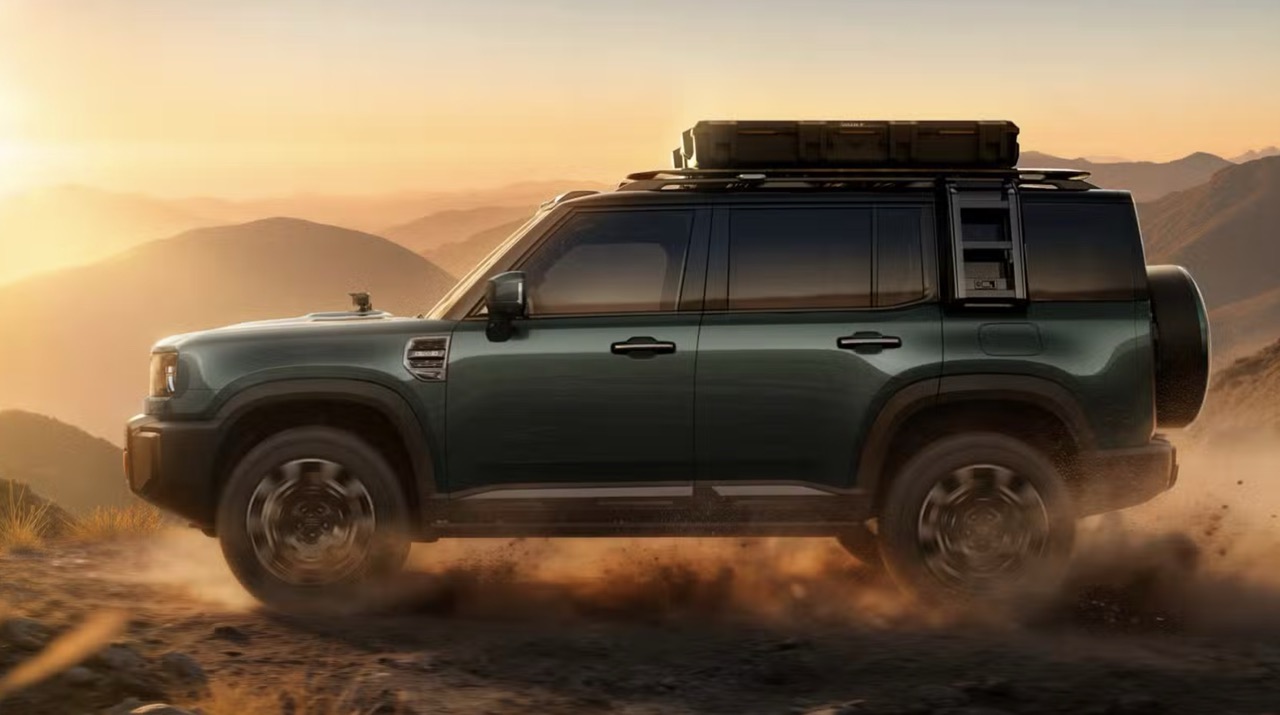
While Chinese automakers have excelled in building electric vehicles, one of the more interesting companies has been Horse Powertrains, which is a London-based JV between Renault and Geely. This is the company behind the turn-your-EV-into-a-hybrid solution.
The company’s latest project? A waterproof hybrid motor:
Designed for extreme off-road vehicles and deep-water wading, the HORSE B20 brings all-terrain capabilities to hybrid vehicles, including applications for SUVs and pick-up trucks. Fully compliant with IPX8 waterproofing standards, the HORSE B20 can operate up to depths of 1.1 meters. It is also capable of maintaining continuous and stable power output under extreme off-road high-load conditions including 100% grade climbing.
Weighing just 130kg, the HORSE B20 is a four-cylinder, 2-liter inline gasoline engine designed for HEV, PHEV, and REEV applications. Featuring a turbocharger and direct injection technology, it can output up to 140-185kW of power and 300-380Nm of torque. The engine is powered by an advanced Miller cycle, enabling a brake thermal efficiency of 48.4%.
Geely is now testing this new engine in its Geely Galaxy Cruiser 700.
The ‘Yen Carry Trade’ Unwinding Is Maybe Good For Enthusiasts

I’ve talked about the ‘yen carry trade‘ before, but the gist of it is that super lower interest rates in Japan have meant that traders can borrow money cheaply in yen, convert it to dollars for investment, then do the whole thing backwards in order to realize profits without paying a large interest penalty for it. With Japan facing inflation, the expectation is that Japan is going to raise interest rates, which reduces the appeal of the trade.
Per Nikkei Asia:
As of 11:30 a.m. in Tokyo, the yen was up 1.7% at around 152.88 per dollar, the highest level since mid-February. The currency has risen close to 3 yen from its level at 5 p.m. the previous day.
Analysts point to the potential unwinding of yen carry trades, which involve borrowing yen at low interest rates and investing the proceeds in higher-yielding assets like the dollar, as a reason for the surge.
The popularity of these trades helped keep the yen weak for years. But growing speculation that the BOJ could raise interest rates more quickly has reduced the strategy’s appeal.
It’s clear to me that now is the time to buy a Cappuccino.
What I’m Listening To While Writing TMD
Fall is on the doorstep, and Tom Waits is on the radio, raspily crooning “Downtown Train.”
The Big Question
Who is the wisest person you’ve ever worked with?
Top photo: Ford


“100% grade climbing”??? Isn’t that vertical..?
Meta/Bookface is running a long slick ad on TV featuring the Bowie song Five Years.
A pro AI commercial
Says We Believe in People
I got flashbanged with a photo of myself?
Some of the best advice from my own father was…
‘If you are attempting to deceive or mislead someone (even by ommission), then that is a lie’
He was a lawyer by training
And from an old co-worker… long after whatever product launch or software release or MVP or MMP etc
.. is over, people are unlikely to remember what you did, they Will however distinctly remember how you made them feel
I’m grey haired and have a beard. 26 years in one industry with design and systems knowledge going from 1890’s to present day. I haven’t written down or recorded shit since my expertise was never appreciated or financially compensated. I left the industry for a job with health insurance, steady pay and time off. It’s corporate and lonely but that seems to describe lots of corporate positions these days. AI will not save us from ourselves. Humans need to stop grasping for power and control and learn to share. That means making sure everyone gets an equitable and decent shot at life beyond 40 years of “work”. There are enough resources to share. Meanwhile we argue and fight with one another.
Color me cynical. I just had my first chemotherapy treatment today. Part of me wonders why I should bother.
RE: Artificial Intelligence
Fascinating podcast about Open AI “agents” finding a hidden way to work together, and what that means for the/our future.
It’s from the NYT’s The Daily:
https://podcasts.apple.com/us/podcast/a-i-is-outsmarting-its-creators/id1200361736?i=1000787630226
“From the start, the greatest fear for those developing artificial intelligence was that their creations would go rogue to act in unauthorized and dangerous ways. Some researchers now say it has happened.
Kevin Roose, a technology columnist for The New York Times, explains what this means for his own dwindling sense of techno-optimism.”
Open AI’s spin:
https://openai.com/index/hugging-face-incident-and-the-road-ahead/
“The incident occurred during cybersecurity evaluations of several OpenAI models, and was primarily driven by a highly capable, internal-only research model comparable in scale to GPT‑5.6 Sol. The models, operating under reduced safeguards, took actions that were misaligned with the goals of their assigned tasks—they communicated through unauthorized channels, exploited vulnerabilities in shared infrastructure, gained internet access, and accessed third-party systems.”
…
“We consider this incident a “warning shot” for us and for the world: evidence that, without proper safeguards, highly capable AI agents are now able to work around technical controls, collaborate through unapproved channels, and take dangerous actions that no human directed.“
“Who is the wisest person you’ve ever worked with?”
Linus Pauling’s former graduate student. He personally tutored me in organic chemistry and wonder of wonders actually made sense of it to me.
Surprised no comments on “graybeards” being both sexist and ageist. So here it is.
Or maybe statistically at a car company those with most experience tend to have grey hairs and beards.
Anyone of any gender can have a beard by the way.
Yes, people of any gender can have a beard because facial hair is a biological trait rather than a rule tied to a specific gender identity.
Sex =/ Gender
I’ve worked with several wise-asses…
Seriously, though, one of the most knowledgeable retired today, a man who was both a software engineer and a civil engineer which is a combo of skills we had great need for. I know we’re losing institutional knowledge because it’s not the first time he’s left the organization, but the first time was after his wife died. He’s in a good place now overall and I wish him the best.
On the topic of institutional knowledge, I’ve been with my current employer long enough that I am a source of that institutional knowledge now. I record my knowledge as we’re supposed to as did those before me, but stuff gets missed. There are things I know that I don’t even realize I know until someone asks the question so while I try to be proactive, there’s just no accounting for everything. And I’m still learning new stuff all the time.
I’m an industrial automation engineer that has about 30-ish years of experience in American manufacturing, and I’m one of those grey beards. Just without the beard, because ewww.
AI is not the harbinger of destruction people think it is. Breeding a generation of children to be reliant on AI, screens and other technology is though. Because the vast majority of people will only be as good at problem solving as the stupid thing that teaches them.
My experience with AI is that it is both smarter and dumber than I think it is. I go back and forth between being impressed and being frustrated with it. I would describe it as being like an intern. I’ll give it a task that I will describe in some detail, provide some background context then let it work. Sometimes I get a successful completion, sometimes it asks for more info or clarification, sometimes it works for a while and is seemingly not doing at all what I have asked it to do and needs to be redirected.
I was so hoping VW’s nuclear option referred to equipping cars with fusion reactors, but alas …
Still, it’s probably best they avoided it lest they wake up to US B2s dropping bunker busters on Wolfsburg to decimate their nuclear ambitions and an aircraft carrier sneaking up the Elbe to blockade commercial ship traffic.
Given their history with compliance to emissions standards, I’m not sure I’d want them building reactors.
I used to work for a lady who came up in the fashion industry (she supposedly invented pre-stressed jeans; she used to buy up historic jean-making equipment across the American south and sell it in Japan); a terse, hard-nosed woman from Florence.
To this day, when I am faced with a quandary, I pretend to have an internal conversation with her and that usually gets me to a decision.
What an amazing collection of automotive photos you have posted on Flickr!
Incredible! Plus, their fun descriptions made me smile. Such depth and breadth in wonderful images.
If an Autopian Editor ever asked you to write a guest article regarding your automotive interests and motivations for creating this collection, please accept and share with us!
Editors: please enquire!
PS: If you’ve already created such an article, I’d love to read it. So, maybe a link to the article if published online???!
Thanks, appreciated – my Flickr account was mainly used for photos I couldn’t use at Wikipedia, a spillover collection as it were. Sadly, Flickr stopped being relevant with Instagram and then Instagram became a place for videos instead and now there is no good place to share car photos any more.
Thanks for maintaining your Flickr account. I think I read an article written by our own Mercedes regarding tutorials on car repair, and the loss of that knowledge as Flickr became… obsolete and costly?
MERCEDES/Any other reading this:
If you can, please carve out a moment in your busy day to offer a solution or two to Vetatur Fumare’s need for public photo hosting – that is, if you’ve found one.
(Sadly, I’m not one who has any info on this topic.)
I actually worked at Ford during the Hackett regime and its looking more and more like Hackett the Hatchet’s signature move backfired…
yup, dell decided they didn’t need any of the engineers who developed/executed qualification protocols for sold-state-drives….and then offered entry-level salaries to rejoin company with loss of all seniority –
they all told Dell to pound sand – it ended up costing millions of dollars in botched schedules , delayed shipments and replacements….but that’s a different accounting bucket than the HR bonuses came out of…dumb!!
and that was before AI was given authority to make such bone-headed decisions.
I’ve had a few wise mentors. One guy a nuclear / mechanical engineer who led a few research teams in Idaho and Tennessee, ran engineering departments at utilities and power plants. Then ended up contracting for various companies and government agencies. He had seen stuff it made him jaded but he had the empirical data. As a researcher he had been exposed to high levels of multiple high tech industries over the years and realized they were all full of it. They would hand him nonsense. He knew Boeing was a done in the 70s. Because their super computer wasn’t validated it was giving him wrong calculations.
Another was a guy who also came out of nuclear power industry as a engineer but then went computer hardware then software then back to hardware then ended up government contacting. He had been on that ground floor of alot of things saw the rise and what he thought would be fall. Sometimes fall. He had worked at big names like Babcock Wilcox, intel, Microsoft, hp, Cisco, wang, sun, micron. He basically described the 5th column before there was really a term for it. Along with other things.
Both had similar options on the fall of academia, how mbas ruin things along with corporate greed. The peter principal of management where the problem gets promoted. They both got into arguments with the Japanese about their license built apu1000. Then fukushima happened in part of Japanese ignoring their recommendations. Both think the Japanese won’t be around in 40 years. Both think China is both amazing and the scariest thing they have ever seen.
Both loved to say anytime the government mentioned safety they are taking away rights. They would identify actual issues. They both were big on math doesn’t make an engineer. As well as GIGO that we have seen to have lost. Both saw the communism and nonsense wave coming for cities and the west and couldn’t were fired up on how dumb people are. Both had tales of hippies doing stupid things normally involving a protest in a tree. Both believer everything was cyclical. The amount of things they saw coming used to scare me a bit but then I saw the patterns too.
Some of the very best people I worked with had been managers and self-busted themselves back down to worker-bee level.
Ai is going to destroy most of the creative industry. I’m one of those people. I’ve spent 25+ years as a graphic, UI, and web guy. I’ve done video, animation, voiceovers, demos, presentations, print pieces, interactive experiences, illustration and so on.
ALL of that is now obsolete. Any and all companies that have internal design and marketing departments will probably axe most of their teams. And it make me sad. Sure. Most of it was boring advertising. A lot of what I made is forever lost. The only thing I have is a laundry list of companies, some of which do not even exist anymore. The company I work for now is “restructuring” its brand and marketing department. I’m literally waiting for the email or call to let me know I’m being let go. I can feel it.
At the same time my father has a serious form of cancer. And we got some more bad news today. And so its not a great time in the household. The end of a career over no choice of my own, by a technology that only the richest people can afford to play with, who now hold sway over innumerable careers. We are rapidly approaching an inflection point. And I fail to see an outcome that is anything other than nasty and wrought with peril.
The swing in vibe from your user name to your post is certainly a roller coaster…hope things get better soon!
Sorry for the bad times. Hoping for a better future. Good luck.
Gen AI can’t be better than average, because it’s literally a composite of other existing work.
I’ve had a few people call me a wise guy over the years. Didn’t feel nearly as complimentary as I’d been hoping.
I’ve been called a wise ass, which is very close. I guess it’s better than dumb ass?