


I don’t think you need any more signs that the new car market doesn’t have a lot of room to grow in either price or volume, but values in the used car market might be another indicator that things are all stretched.
The Morning Dump is a fan of fun numbers, and the fun number from GM is 40%, which is the percentage of shoppers who go to buy a used car and end up buying a new one. How does that make sense? Here’s another number: 12. That’s how many years Mary Barra has helmed GM.


What about 20%? That’s the amount of Chinese ownership in Mercedes-Benz. Lawmakers have concerns over that number. And, finally, 0, which is the number of freeways that Waymos are allowed to drive on in California.
CarBravo Is Both A New And Used Car Success

Every automaker and dealer is a little worried about Carvana, which is attempting to corner as much of the recently-used car value chain as possible. In response, GM has created its own alternative, called CarBravo.
The automaker has basically forced most of its Chevy and GMC-Buick dealers (not Cadillac) to use CarBravo if it wants access to manufacturer-backed Certified Pre-Owned cars. This is a big space, and a big deal, as new cars are too expensive for a lot of consumers. However, having a national, well-marketed selling arm like CarBravo is probably better than what a lot of dealers can achieve on their own.
What’s interesting is that, with used car prices elevated after a long-term supply shortage, GM’s used car business is creating a lot of leads for its new car business. Why? Here’s Automotive News with an explanation:
Nearly 40 percent of shoppers who began looking for a used vehicle through CarBravo end up buying a new vehicle through a GM dealership, CarBravo head John Fitzpatrick said.
“They might realize that they’re going to pay $400 per month for a used Equinox, but there’s a new Equinox here that’s maybe $420 per month,” Fitzpatrick said. “All of a sudden, the person goes, ‘Oh, I can pay $20 more per month and get a new vehicle.’ That’s really what the whole game is about.”
CarBravo has become a reliable way for GM to bring in more customers to dealerships. That could prove to be crucial for GM as its lead over Toyota in U.S. new-vehicle sales continues to shrink this year.
That makes sense. If you’re looking at a three-year-old Nissan Rogue or a brand new Chevy Trax and the Trax isn’t that much more expensive and comes with better financing and a longer warranty… well?
GM isn’t alone here, as Ford’s CPO program is performing extremely well and creating value for its new car business:
Ford Blue Advantage – the automaker’s official certified pre-owned (CPO) vehicle program – continues to represent a big success for the automaker and dealers alike, even though used vehicle inventory returned to normal some time ago, following major shortages during the pandemic. The program provides shoppers with many of the same benefits they would receive when purchasing a new vehicle, and according to Ford CEO Jim Farley, it’s also something of a pathway to precisely that.
“We’re also expanding access to customers through Ford Blue Advantage, our certified pre-owned program, making Ford now the number one certified pre-owned brand in the U.S.,” Farley said during the automaker’s Q3 2026 earnings call with investors. “This program builds customer loyalty and positions Ford for our affordable new vehicles that will be coming in the next couple of years to our showrooms, and it really helps our resale values. In fact, we found that these used customers are 50% more likely than typical used car buyers to purchase a new Ford.”
Again, this is what happens when used car values are high and inventory is still recovering.
Who Will Be The New GM CEO?
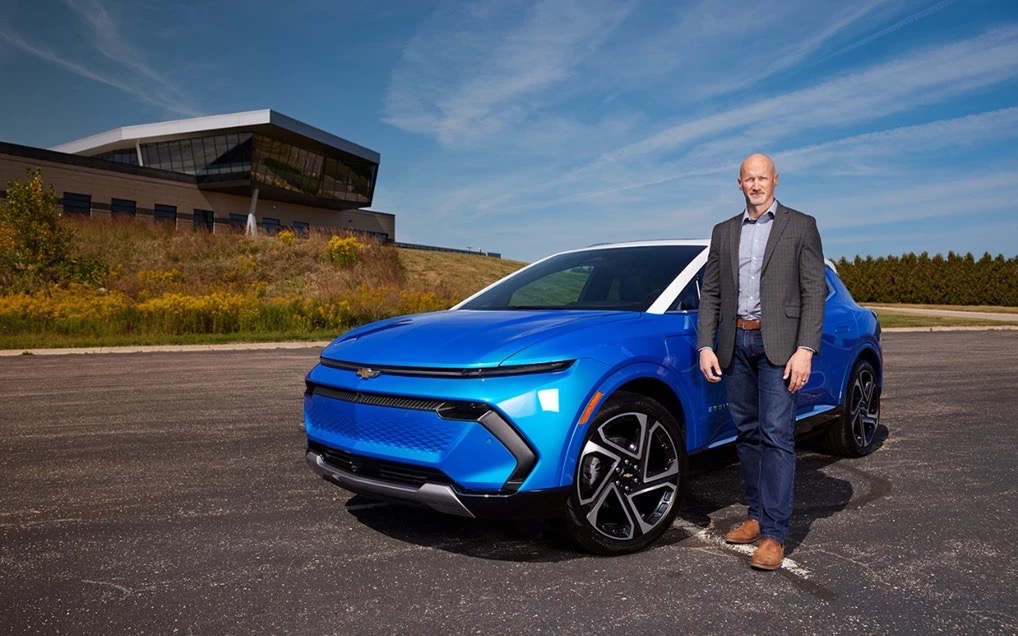
Mary Barra has had an impressive tenure as GM CEO, starting with a company in the middle of a safety crisis (Cobalt ignitions), and carrying through the pandemic and the EV head fake.
She won’t be CEO forever, however, and The Wall Street Journal is reporting that the company has just started a search for a replacement, even if that’s many years in the future.
“Barra has been laying the groundwork for months to hand over the company she’s led since 2014. She is GM’s second-longest tenured CEO and the first woman to run a global automaker. Her tenure is about twice that of the average modern CEO heading an S&P 500 company.
GM declined to comment. The company hasn’t publicly indicated when Barra could step away from her position.
GM has historically groomed chief executives from its own ranks, and internal candidates remain in the mix. Contenders have included the company’s finance chief Paul Jacobson; Sterling Anderson, a high-profile Silicon Valley hire who serves as Chief Product Officer; and Mark Reuss, a 40-year GM veteran and Barra’s No. 2, according to separate people familiar with the matter.”
Obviously, The Morning Dump supports Autopian commenter and member Mark Reuss for the position.
Concerns Over Mercedes-Benz Ownership Is A Bipartisan Issue

Old policies and, soon, new laws have made the ability of Mercedes-Benz to even sell cars in the United States no longer a given. With a large manufacturing footprint in Alabama, I don’t think the company is likely to get banned, but it may have to find ways to shake some of its Chinese ownership.
Representative John Moolenaar, the Republican chair and Representative Ro Khanna, the top Democrat on the panel, said in a previously unreported letter seen by Reuters the roughly 20% ownership stake in Mercedes-Benz by Chinese investors presents significant risks.
The letter added “this ownership concern is compounded both by the specific nature of the shareholders, as well as the operational influence they appear to exert over your company.”Mercedes-Benz said in a statement it had received the letter and will cooperate. The company added it operates independently under the direction of its board of management.“Our shareholders have no management board seats and no management authority,” the automaker said, adding the company “has long supported measures designed to protect U.S. national security, and any suggestion that the company opposes those objectives is incorrect.”
California DMV Bars Waymo From Operating On Highways
Waymo has had some interesting issues lately, including its difficulties in stopping for school busses and cops. Recently, a Waymo was seen trying to blow by a rolling CHP roadblock. The result?
According to Bloomberg, the California DMV is telling Waymo it can’t operate on freeways:
Alphabet Inc.’s Waymo robotaxi unit temporarily suspended freeway driving after California regulators imposed fresh restrictions on the company, the latest setback for the leading self-driving vehicle operator in the US.
California’s Department of Motor Vehicles barred Waymo from testing or operating on all freeways in the state after finding the company’s driverless operation on those roads posed “an imminent hazard to public safety,” the department said in a statement. The DMV cited multiple instances incidents involving Waymo’s vehicles, including one in which three robotaxis entered an active construction zone on a closed stretch of US Route 101 south of San Francisco.
Waymo in turn restricted freeway operations across its other markets to evaluate its performance, the company said in a statement. No collisions or injuries were involved in the California incidents, Waymo said, and its robotaxis continue to operate on surface streets.
Driverless cars can’t get distracted, don’t look at their phones, and can’t get drunk. However, they’re also not humans with brains, and they therefore act in ways that make the vehicles seem drunk.
What I’m Listening To While Writing TMD
Gracie’s Corner is music for toddlers that also slaps. This Tiny Desk concert includes a version of “Wheels on the Bus” featuring the great Paul Wall. If you have little ones, this one is for you.
The Big Question
Does it feel like everything is broken lately? What’s the most broken your car has ever been?
Top photo: GM


