


Automakers rarely ever sell prototypes. In fact, most of the fantastical concepts and prototypes that you see on stage and in press imagery eventually meet the crusher or get stored away in a warehouse forever. Mercedes-Benz has decided to do something a bit different by selling one of its most iconic prototype cars. This is the C 111, a sleek quad-rotor supercar built alongside 17 siblings in the 1960s and the 1970s. Mercedes-Benz is letting one of these go for the first time in history, so let’s take a look at what masterpiece is coming up for sale.
Mercedes-Benz says that, on February 3, 2027, this work of art will roll across the RM Sotheby’s auction block at the Palais du Louvre during Retromobile Paris. When that happens, the automaker will be fulfilling a dream that countless enthusiasts have had since the car’s debut in 1970. Allegedly, when this car was first revealed to the world, wealthy Mercedes-Benz clients sent the automaker blank checks, telling anyone who would listen to name a price. Yet, Mercedes-Benz never let one go even once.


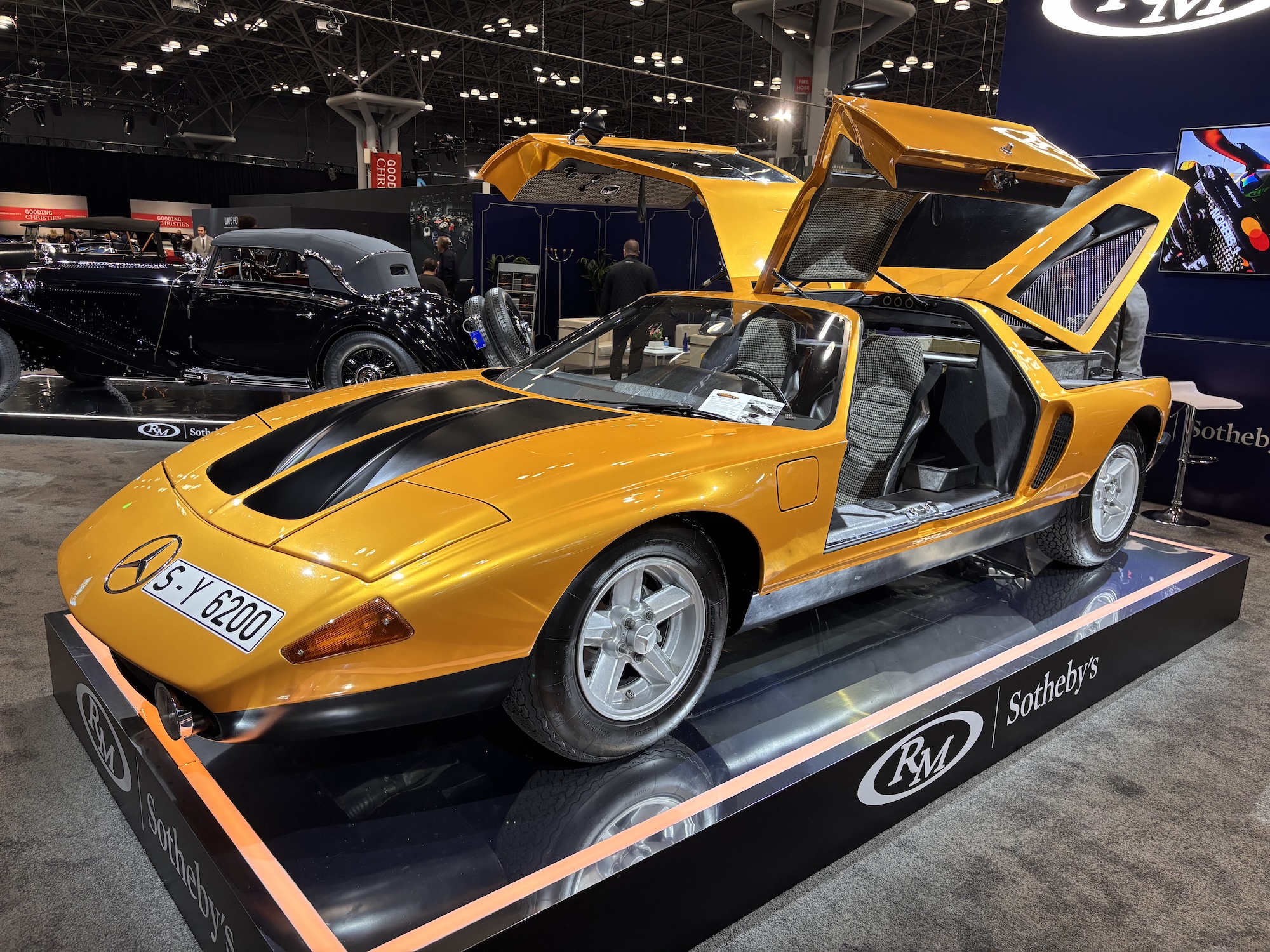
What kind of car would send enthusiasts into such a frenzy? The C 111 is arguably one of the coolest Benzes ever built. Sitting right in the middle of the vehicle is a 2.4-liter M 950 W 48 four-rotor Wankel, good for 345 HP and a top speed of 186 mph. This car was even featured in the German version of Playboy, which I imagine trades nude women for bare car chassis and precision tools, all exposed to the world. This car even wears its original patina, and both runs and drives.
The World Was Obsessed With Wankel
The C 111 came from that weird time when the world was obsessed with Wankel power. The story starts with its namesake, Felix Wankel. If you want to learn more about the invention of the Wankel, click here.
The siren song of the Wankel was just too great to ignore, and pretty much all of the world’s largest manufacturers got a license from NSU to build their own rotary. A non-exhaustive list of companies that found themselves too obsessed with rotary power includes Alfa Romeo, IZh, AMC, General Motors, Norton, Datsun, Citroën, Rolls-Royce, John Deere, Daimler-Benz, KHD, Krupp, MAN, Mercedes-Benz, NSU, Honda, Kawasaki, AvtoVAZ, Ford, Ingersoll-Rand, Savkel, VEB, Midwest Engines, Outboard Marine Corporation, Mazda, Curtiss-Wright, and Yamaha.

All of these brands had their own flavors of rotary. Mazda, for example, worked tirelessly to fix the Wankel’s problem with its apex seals carving chatter marks in the rotor housing. General Motors wanted to put rotaries in everything from economy cars to something that looked like the Corvette. There was even a plethora of rotary motorcycles.
Yet, despite these efforts, each and every one of these automakers would learn that the proposed reliability, fuel economy, and efficiency of rotary engines didn’t match reality. Most automakers would give up entirely, but not before creating some epic vehicles. One of them was the Mercedes-Benz C 111.
The Rotary Supercar

When Mercedes-Benz pulled the cover off the C 111 at the 1969 International Motor Show (IAA) in Frankfurt, it was making a statement. This car was its modern interpretation of the legendary W198 300 SL Coupé of the 1950s, and Mercedes-Benz went big on innovation.
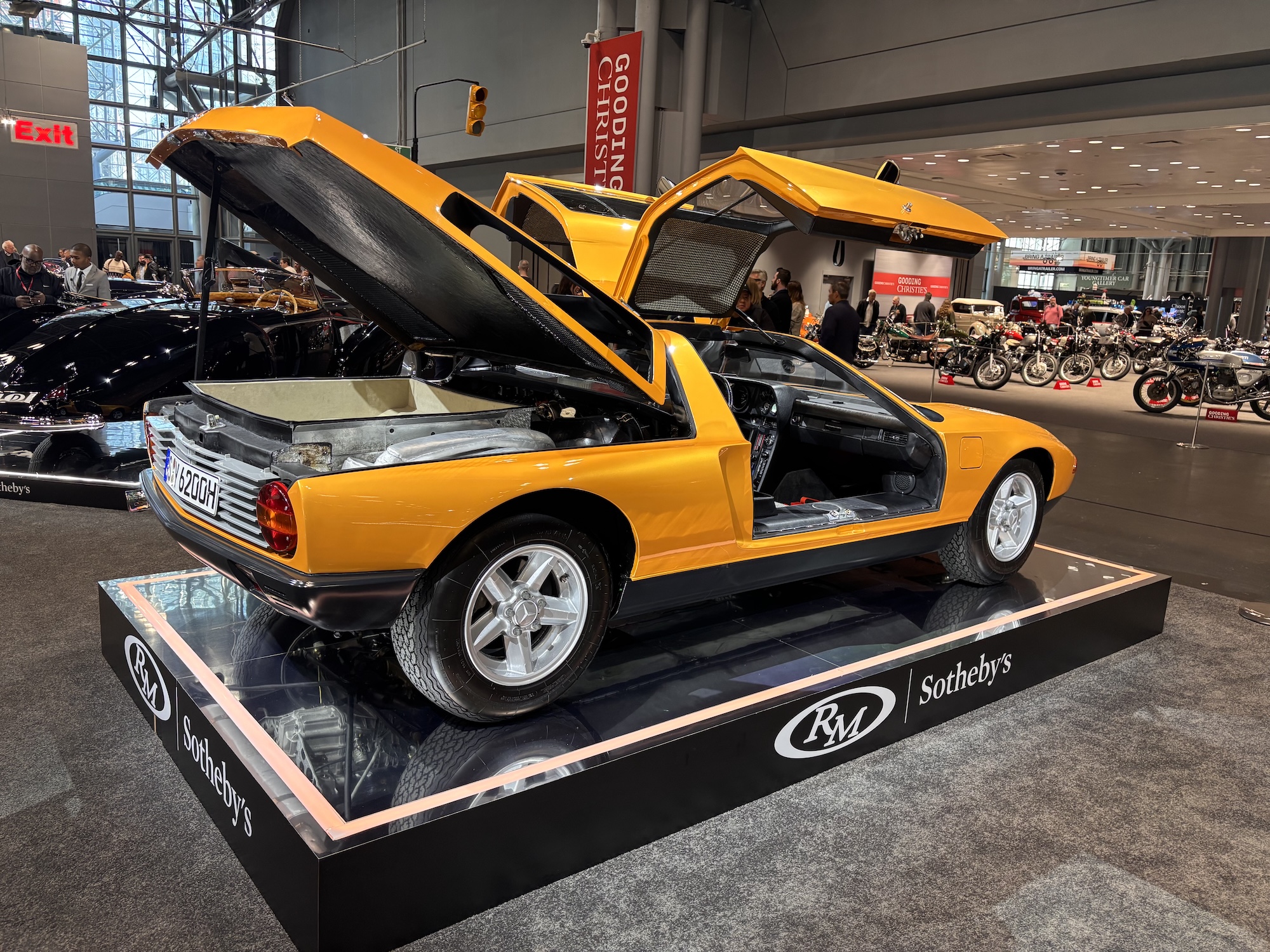
The Bruno Sacco-penned body of the C 111 was made out of glass-fiber-reinforced plastic, which was riveted onto a sheet metal frame. This body, which had the requisite gullwing doors, also featured pop-up headlights that folded away neatly into the bodywork. A multi-link rear suspension helped the supercar grip the road. Since I don’t have bananas for scale, I’ll have to give you real measurements. The two-seater stood only three feet, inches tall, and was just a touch under 14.5 feet long.

Originally, this car came fitted with a 1.8-liter triple-rotor M 950 F Wankel engine, which pumped out 280 HP. This alone would be a pretty wild mill, but in 1970, Mercedes-Benz made the car even better. From MB:
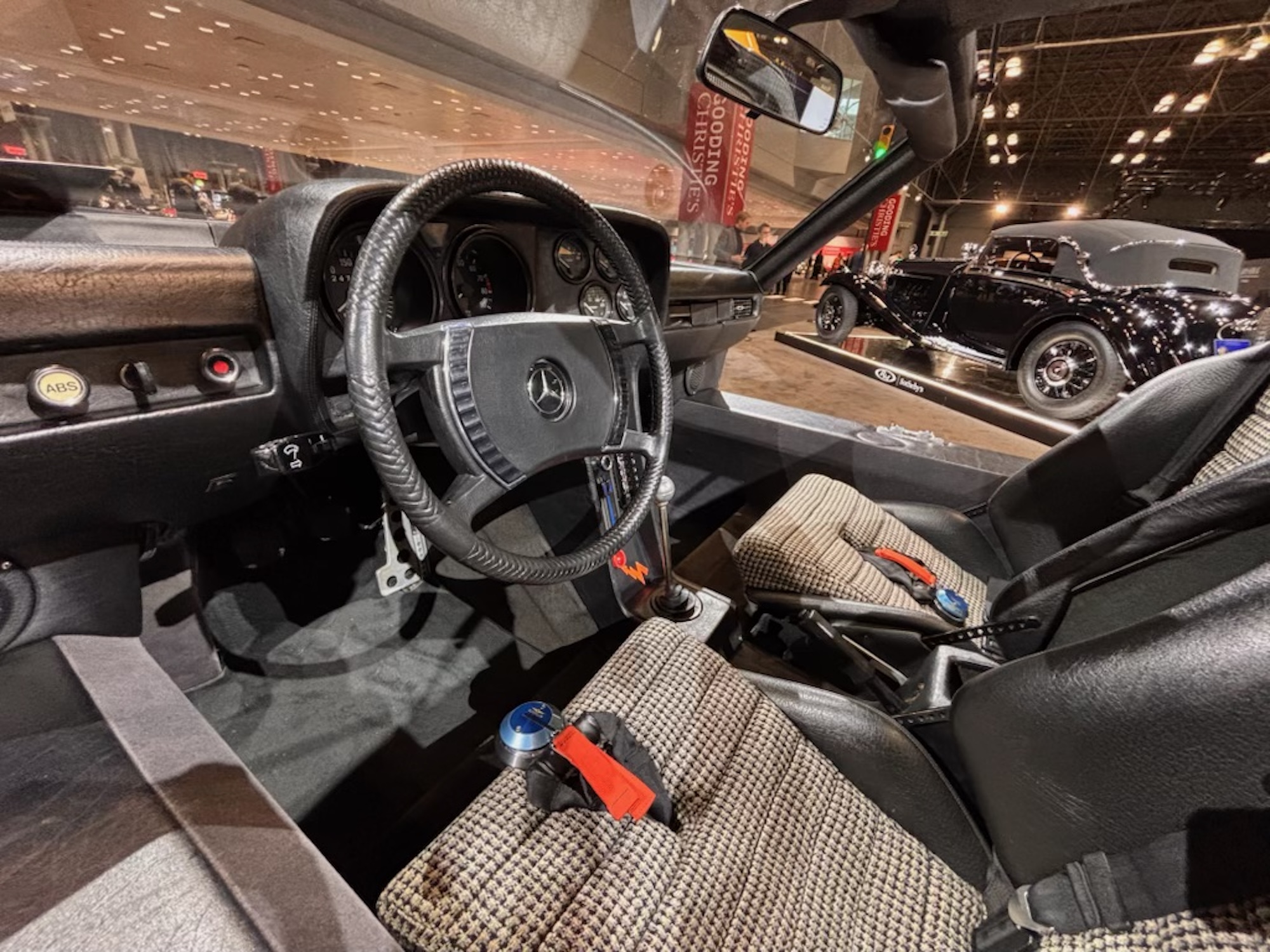
It was built from March 1970 onwards, painted in the color “Weißherbst” and fitted inside with sports seats featuring a grey-and-white houndstooth pattern, a four-spoke safety steering wheel and a vertically mounted “Becker Europa” radio. Contact with the road is ensured by contemporary 8×15-inch light-alloy wheels; on the racetrack in the 1970s, wide 10×15-inch and 13×15-inch magnesium wheels were used. Both sets of wheels are included in the auction. However, given their age and condition, the magnesium wheels are now only suitable for display purposes.

In August 1970, a 345 hp (257 kW) 2.4-liter four-rotor Wankel engine of the M 950 W 48 type was installed in the center of the vehicle. It propels the supercar, which weighs just 2,734 lbs (1,240 kg), to speeds of up to 186 mph (300 km/h). With the number plate S-Y 6200, this C 111-II became part of the test fleet. Among other things, it was used to test a fluidic component designed to ensure even emptying of the two side fuel tanks, which have a combined capacity of 30.6 gallons (116 liters), to carry out temperature measurements in the rear trunk, and to conduct test drives at the Hockenheimring. The rear trunk tub is removable and fitted. The anti-lock braking system (ABS) was also tested back then. However, this function is no longer active today.
From an early stage, the vehicle became a prominent ambassador of the C 111 project: Car 33 took center stage in the first issue of the German edition of Playboy, published in 1972. A year earlier, on the test track in Stuttgart, the renowned conductor Herbert von Karajan had been shown the C 111 project, based on this vehicle. In 1975, it was transferred to the company’s own vehicle collection. Since the Mercedes-Benz Museum opened in 2006, Car 33 has been on display in the “Fascination Design” section.

A total of 17 C 111s were built by the 1970s, and while the world had gone wild over the supercars, Mercedes-Benz, like other automakers, learned the ugly truth about the Wankel. As the Mercedes Blog notes, the rotary engines had fifty percent higher emissions and fifty percent worse fuel economy than equivalent V8s. Then, the Oil Crisis of 1973 struck, and continuing development of a thirsty rotary-powered supercar just didn’t make sense anymore.
But Mercedes-Benz wasn’t willing to give up on the idea of a supercar just yet. In 1976, one of the C 111-IIs was converted from rotary power to turbodiesel power using an OM 617 A five-cylinder engine, creating the C 111-II D. Mercedes-Benz says that car set 16 records, including three world records. One of them was an average speed of 156.46 mph over 10,000 miles. Another turbodiesel-powered C 111-III appeared in 1978, and also started life as a rotary-powered car.

The swan song of the C 111 was the 1979 C 111-IV, which had a 494 HP M 116 3.5-liter V8 and set a track speed record of 251.02 mph.
Of the 17 C 111s built, one was destroyed in crash testing, and three others were scrapped during the 1970s. That leaves 13 survivors, and until now, Mercedes-Benz has kept all of them in its possession. Apparently, Mercedes-Benz didn’t keep all of them in running order for all of that time. The V8 C 111-IV, for example, was restored to running condition in 2014.
This C 111-II
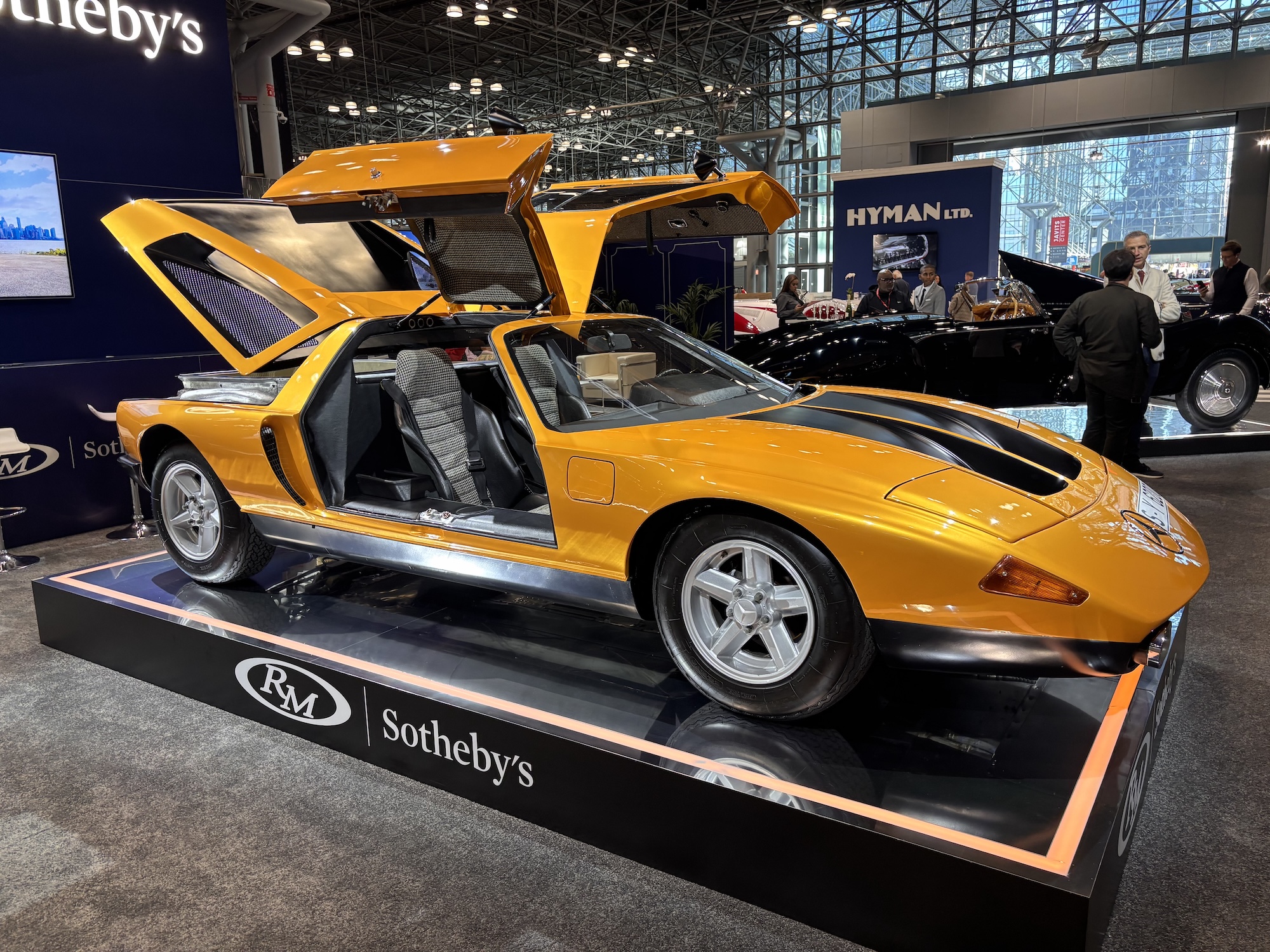
This car, the 1970 C 111-II, was restored in 2024. The Mercedes-Benz Classic Center in Fellbach is said to have left the car’s original patina alone and focused on a full mechanical restoration. One modern addition is a fire-extinguishing system in the engine bay. As of October 2026, the car’s odometer reads 24,766 kilometers, or about 15,388 miles.
So then, if this car is so famous and so precious, why is Mercedes-Benz letting it go? The sale of this car will fund what Mercedes-Benz calls the Mercedes-Benz Museum 2.0.
The automaker says:
The aim of “Mercedes-Benz Museum 2.0” is to bring the brand’s unique heritage to life for future generations and make it accessible worldwide. To this end, Mercedes-Benz is continuously developing both the Museum in Stuttgart and its virtual offerings. A key component is the Museum’s digital twin. This makes the Museum experience accessible regardless of physical location, thereby extending its reach far beyond Stuttgart. It will give people all over the world greater access to the Mercedes-Benz brand heritage. The virtual twin is being developed in collaboration with The Classic Car Trust (TCCT) and its digital platform, Roarington.
A special condition of the sale is that, per a contractual agreement, Mercedes-Benz cannot sell another C 111 to the public for at least another 25 years. So, whoever gets this car will have the only C 111 in private ownership for at least a quarter of a century. It’s also notable that nobody knows if Mercedes-Benz will even want to sell another at that time.
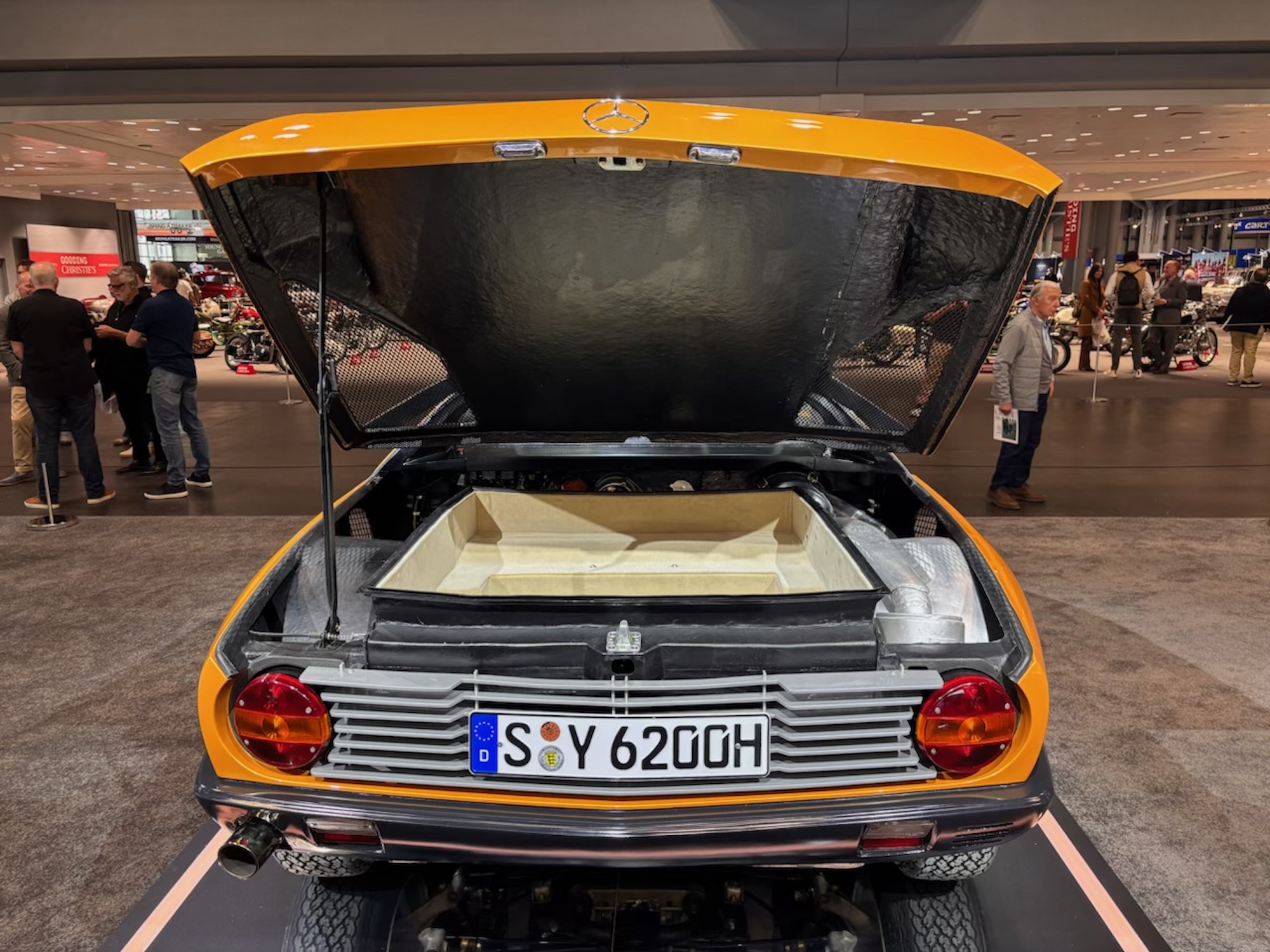
As you might expect, you’d better bring big money to this auction. RM Sotheby’s says the C 111’s value is “In Excess Of €25,000,000.”
Normally, I wouldn’t give a car like this the time of day. There’s probably a single-digit number of Autopian readers who can even dream of affording this car. I’m pretty sure if I sold my whole fleet ten times over, I couldn’t afford this car. Yet, I’m drawn to it, anyway.
Perhaps it’s the fact that it’s a prototype that an automaker is willing to sell to the public. Maybe it’s the fact that, for the first time in 57 years, the enthusiasts who tried giving Mercedes-Benz a blank check will finally get their chance to own this thing. Or, maybe it’s the snarling rotary engine. If you’re the kind of person who can afford this car, you have until February to get pumped. For the rest of us, I hope the eventual buyer doesn’t hide it away.
Top graphic image: Matt Hardigree


