

We’re going to play a little guessing game. Next time you’re out on the road and you see a newish Mercedes Benz from the last decade or so, try to guess what model it is before you’re close enough to read the badge. I can almost guarantee you’ll get it wrong. Want to know why? Because they all look the fucking same. Sure, the volumes might be different depending on whether it’s a sedan, an SUV or a coupe, but beyond that try and tell them apart. It’s impossible. E-Class? EQE? EQS? Who the fuck knows. I imagine the poor souls who have the job of selling the wretched things have difficulty explaining to baffled punters why forty grand’s worth of boggo C-Class looks similar to a hundred grands worth of EQS. Has any premium OEM flushed its storied heritage down the khazi quite so successfully? The current range are perfectly shaped for slipping round the U-bend after all.
It’s not only the exteriors that have been on the photocopier. For years Mercedes interiors have been defined by retina burning Cinemascope touchscreens, turbine air vents and ambient lighting from a Middle Eastern nightclub. Mercedes interior designers would probably put a screen in the fucking headliner if they thought they could get it through crash testing. Dullsville, Iowa on the outside, ghastly and tasteless on the inside, it’s safe to assume if the Mercedes Benz motto “The Best or Nothing” is hanging on the wall in the Sindelfingen design studio it’s in ten-foot-high neon letters.


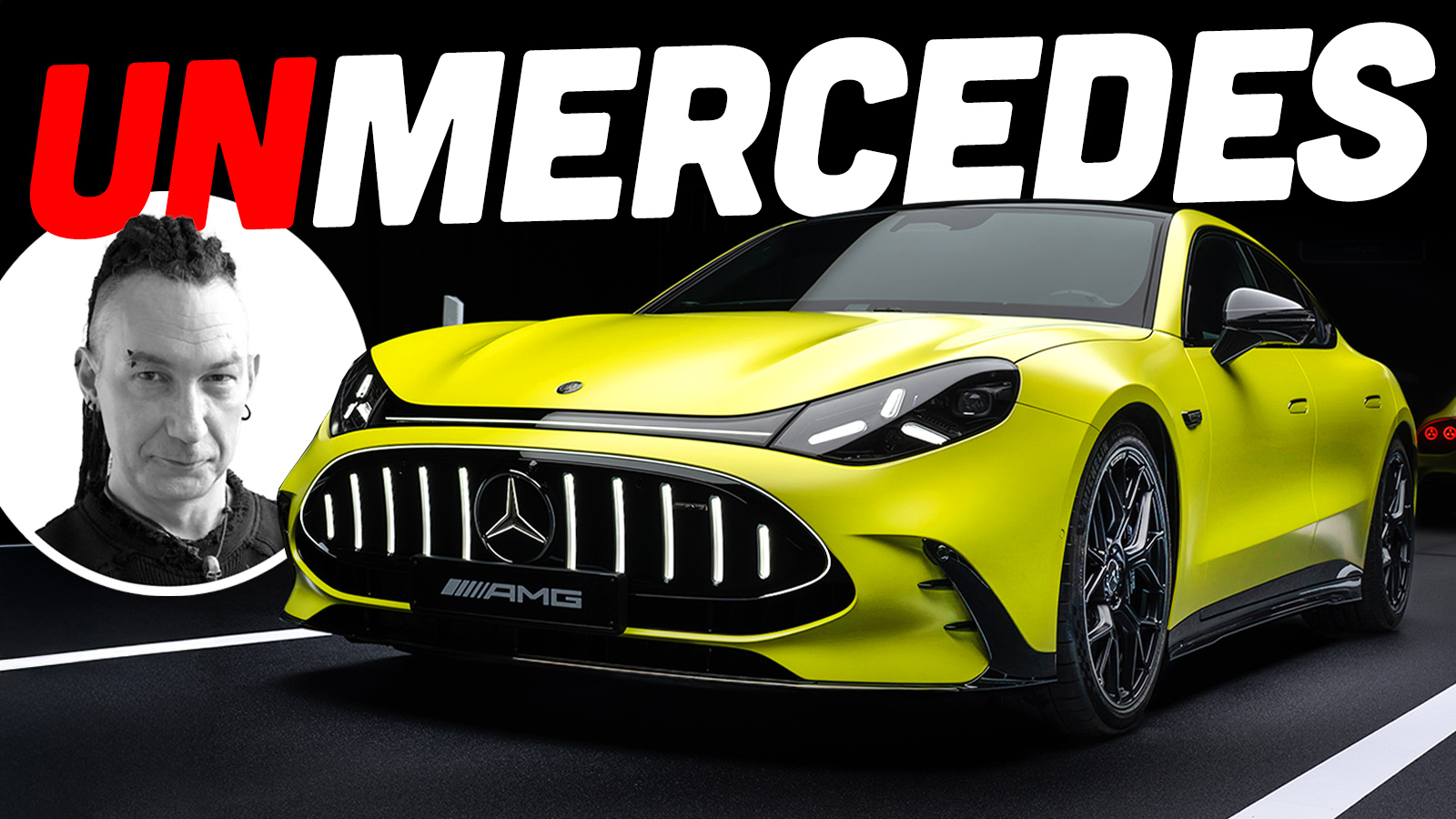
I’m not a religious person, but I try to be sensitive to those who are so please excuse me when I say what in the Jesus H Three-Pointed Christ is going on in Stuttgart? The brand-new Mercedes-AMG GT four door coupe plopped onto the litter tray like a piping hot cat turd on Wednesday morning and crikey it’s another horrifying fish, like something from a David Attenborough documentary about mutated sea creatures dwelling at the bottom of the Mariana Trench. Automotive social media, not always an arena for nuanced debate I grant you, has been universally caustic and unstinting in expressing disappointment. My reaction is much the same as it has been for every other recent Benz release over the last decade or so: my whelm is well and truly under. Oh look. Mercedes Benz have launched their car again.
How Peak Mercedes Started
It would be easy to place the blame for all this on departed design chief Gorden Wagener, which is exactly what I’m going to do. But before that we need to understand what a Mercedes was and how their existing design direction is an anathema to everything the brand traditionally stood for.
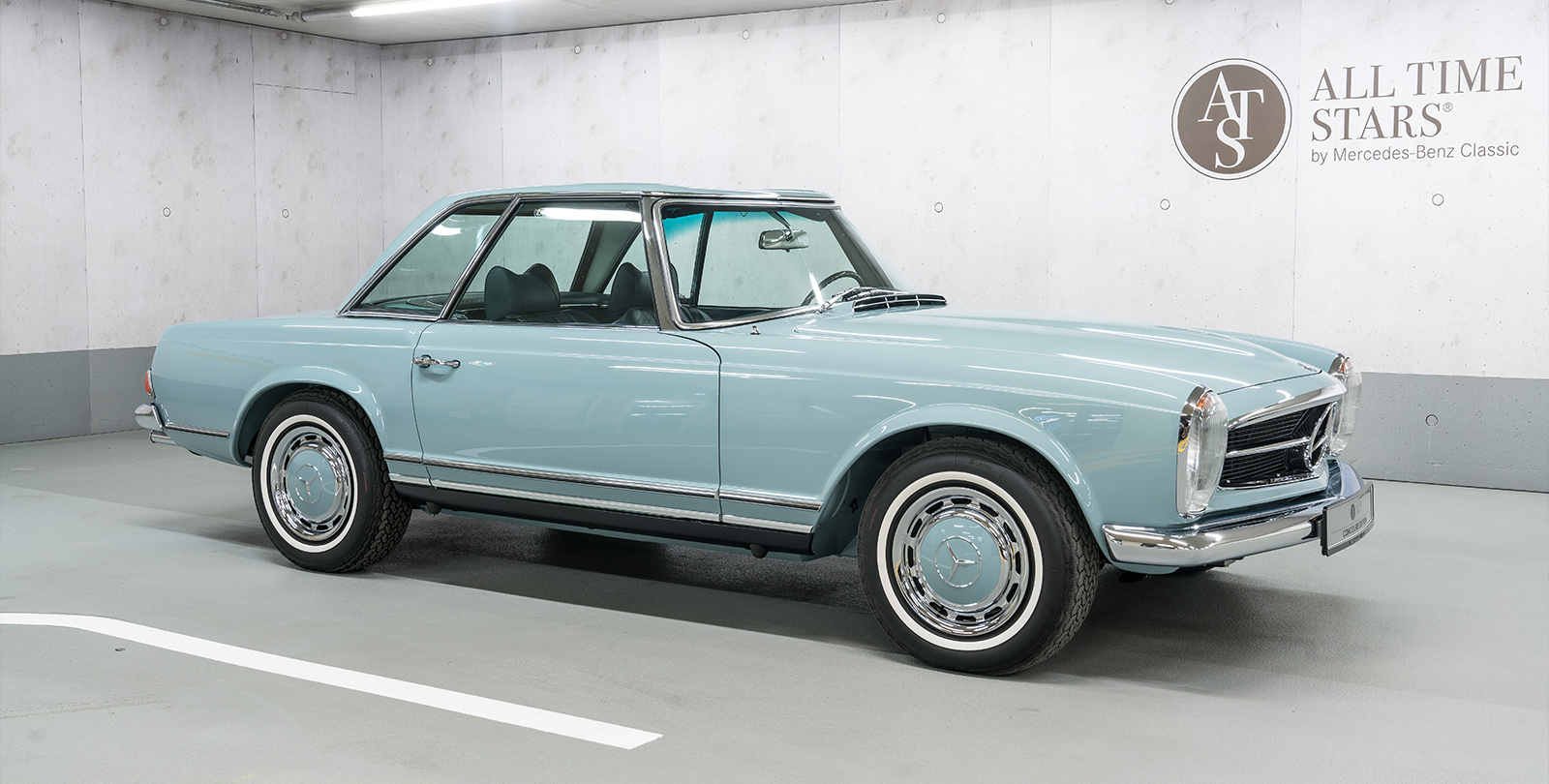
Although he gets almost all the credit for defining “peak Mercedes” from the mid-seventies to the late nineties, Bruno Sacco didn’t lay down the formal, structured forms we associate with classic Mercedes designs. The foundations were first sketched by Paul Bracq with the W113 Pagoda SL of 1963 and the W108 sedan of 1965. This pair of cars moved Mercedes away from the pontoon and streamliner influences of their post-war cars, exemplified by the seminal 300SL Gullwing.
At the time Mercedes was known for the thoroughness of their engineering, their exemplary build quality and perhaps most importantly their safety. Thanks to the genius of Mercedes engineer Béla Barényi, Mercedes pioneered the crumple zone which appeared on the W111 “Fintail,” which also provided the basis for the Pagoda. It was his thinking that gave that car its distinctive hard top, his reasoning being that the highest point of the roof should be above the passengers heads, not in the middle of the car. This commitment to safety would remain a hallmark of the brand for decades to come. Mercedes’ weren’t sporty or flashy; they were very expensive cars for old money types who didn’t buy a house full of beautiful furniture — they inherited one.
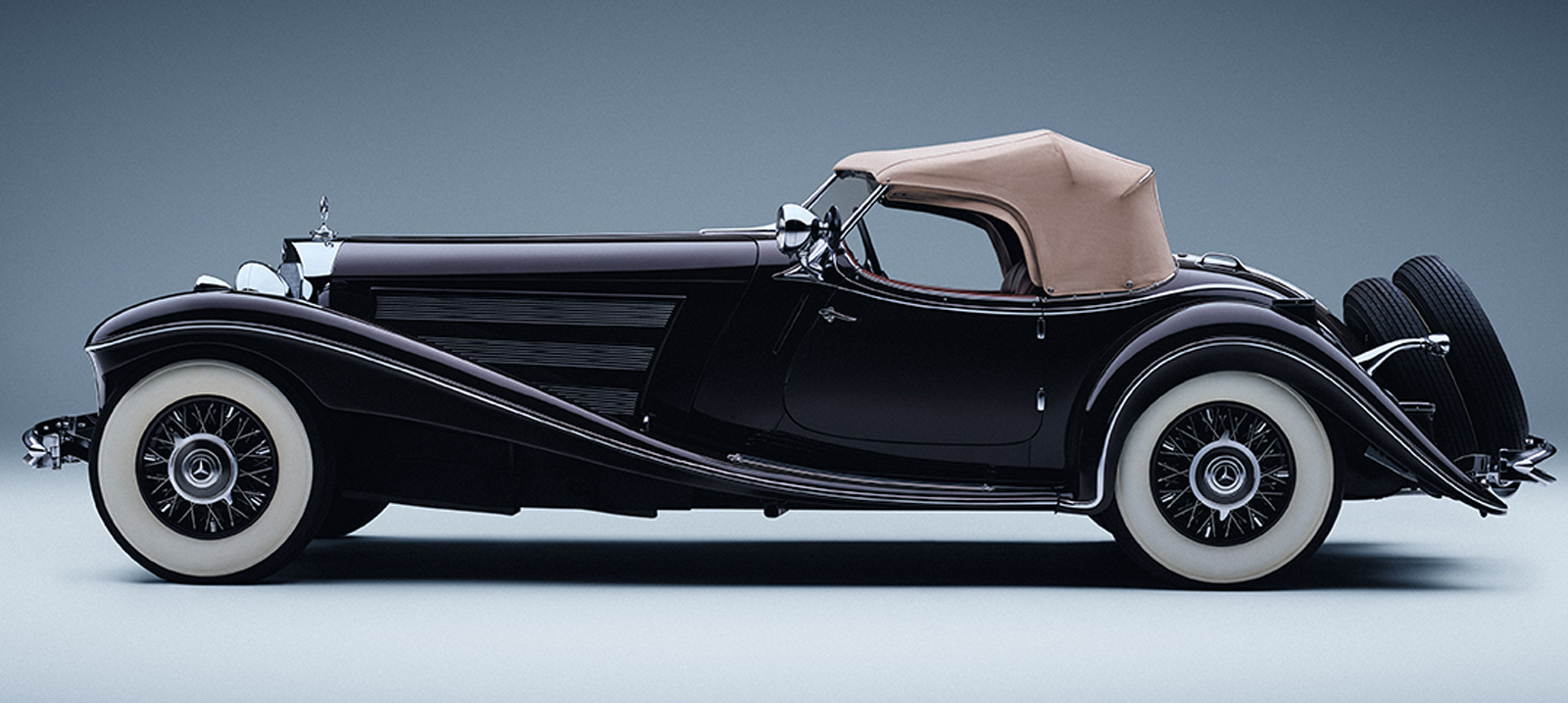
Bracq had worked under Friedrich Geiger, who was head of Mercedes design both before and after the war. The car that made him was the 1934 500K W29, a long, high-performance roadster meant to be driven by its owner when such a thing was still something of a novelty. The Pagoda and Fintail were designed on his watch, as well as the W100 600 Großer Mercedes of 1964. At the time it was the most expensive car in the world and with its hydraulic powered everything, the most complicated. It also had the dubious distinction of being the chariot of choice for despots everywhere. Geiger retired in 1975 and Bruno Sacco, a trained engineer cum-designer who had been at the company since 1958 took charge.
A Mercedes’ exemplary build quality and cost-no-object engineering meant they lasted a long time. Sacco was careful to ensure that no new model made the previous one look obsolete. What this translated to in his work was a careful cultivation of the themes laid down by Bracq, sensitively updated over successive models while incorporating the latest advancements in technology, aerodynamics and most importantly, safety.
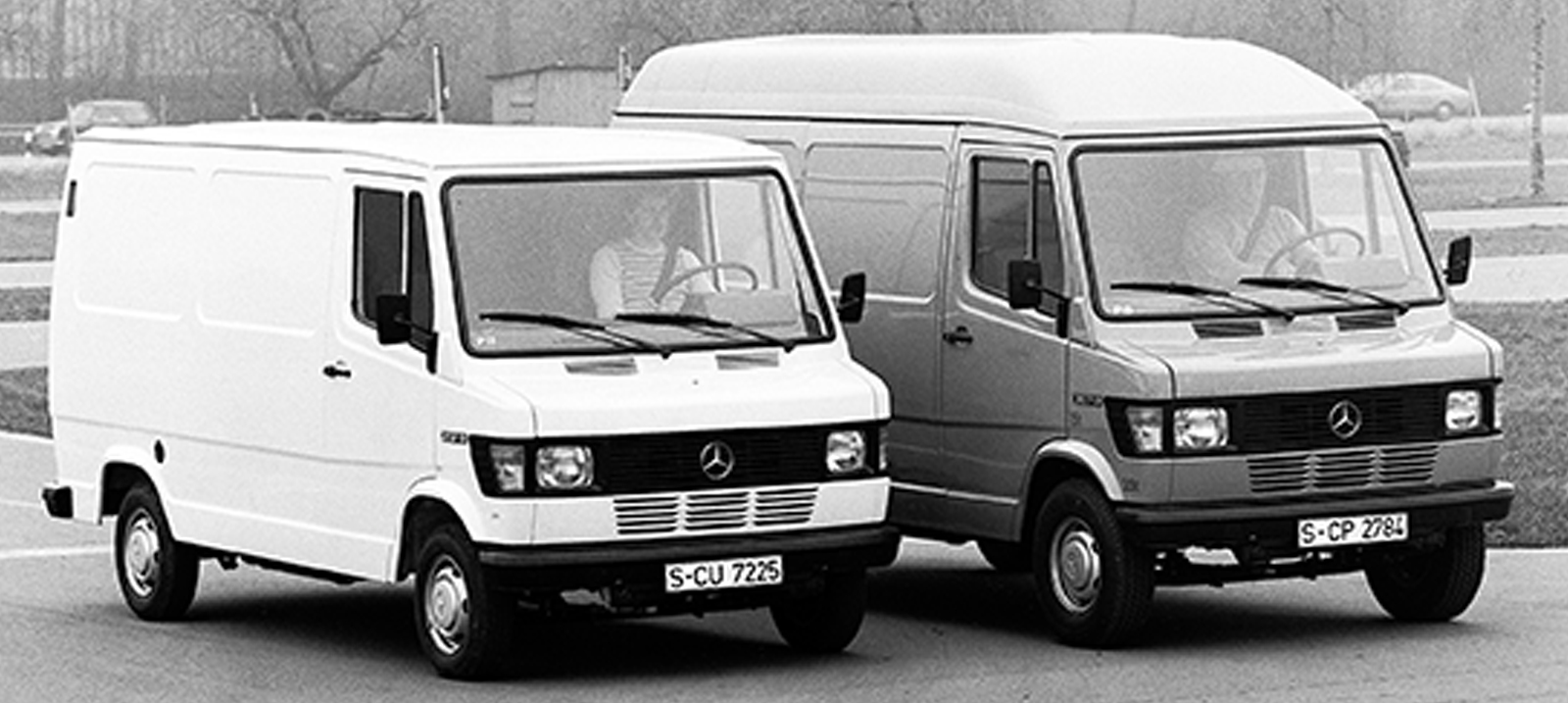
If you want proof of how well the Mercedes family identity worked across the range, look at the 1977 T1 van, in production essentially unchanged until it was replaced by the Sprinter (a further successful update of the same ideas) in 1995. That two-decade run of Mercedes Benz vehicles is a phenomenal body of work, but more importantly it demonstrates how you can exemplify your brand values through successful, thoughtful and consistent design.
When he retired in 1999 Sacco was replaced by Peter Pfieffer, who joined Mercedes in 1968 from Ford’s Cologne studio. Fittingly for the world’s oldest car maker, like Sacco he was not a figurehead when such a thing was becoming the norm. Rock star names like J Mays and Chris Bangle were visible, media savvy designers with a lot to say. Such a thing was inappropriate for Mercedes, which very much did things in its own time-honored way, which was all well and good until the disastrous “merger of equals” with Chrysler in 1998, which took everything good about both companies and fucked it all into a cocked hat.
Dr. Z and Flash Gorden
Emerging from the rubble post-merger in 2007, Mercedes was in trouble. Its deadly rivals in Ingolstadt and Munich were stealing their lunch and attracting younger, affluent buyers – always the dream for OEMs because if you get them young you’ve hopefully got them for life. DaimlerChrysler (and then Daimler AG) Chairman Dieter Zetsche was determined to reestablish Mercedes’ reputation and meet BMW and Audi head on. This is the context for Mercedes wanting a younger, more expressive designer to shake things up. Enter “Flash” Gorden Wagener.
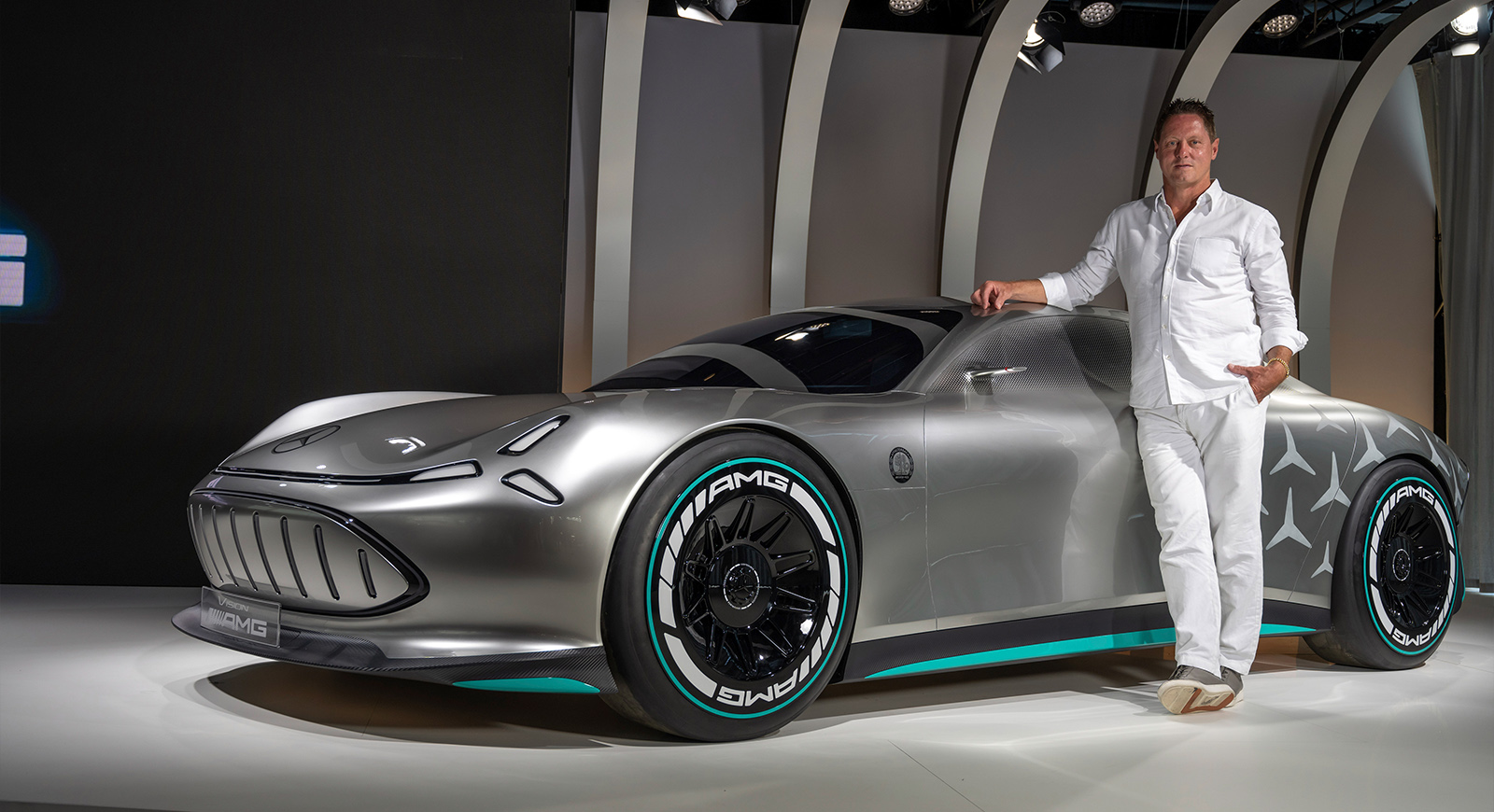
Wagener is working class guy who studied industrial design in his native Essen, a blue-collar town in the Ruhr Valley. He then when on to study automotive design at the Royal College of Art in London (does any of this sound like a slightly less successful car designer you know?) and joined Mercedes in 1997 at the tender age of 29. He’d done a bit of time in the trenches at GM, Mazda and VW but it was at Mercedes where Wagener would come into his own. After a couple of years Pfeiffer sent him to the Mercedes advanced studio in California, where he mastered the art of giving press interviews and getting high on his own farts.
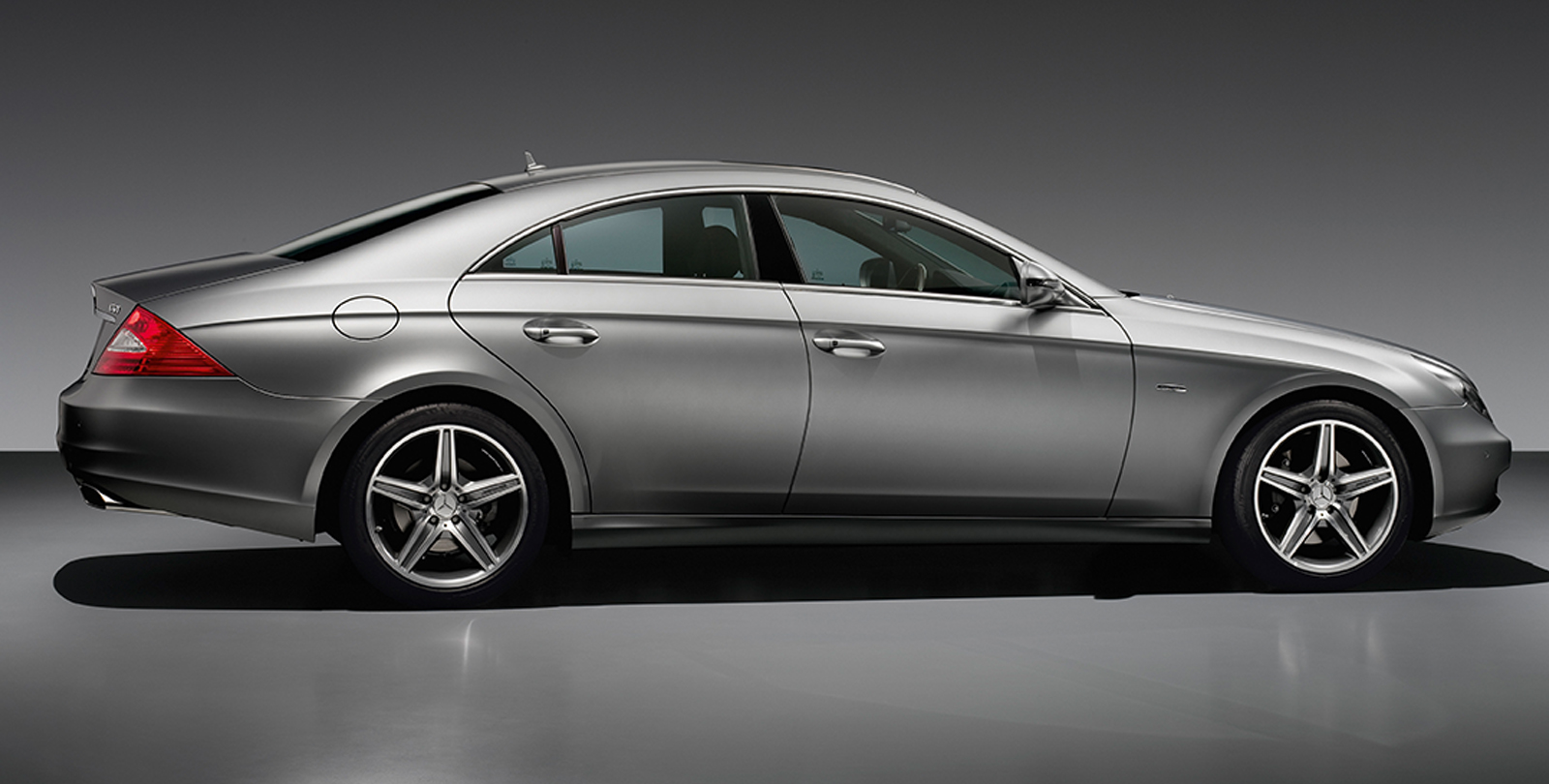
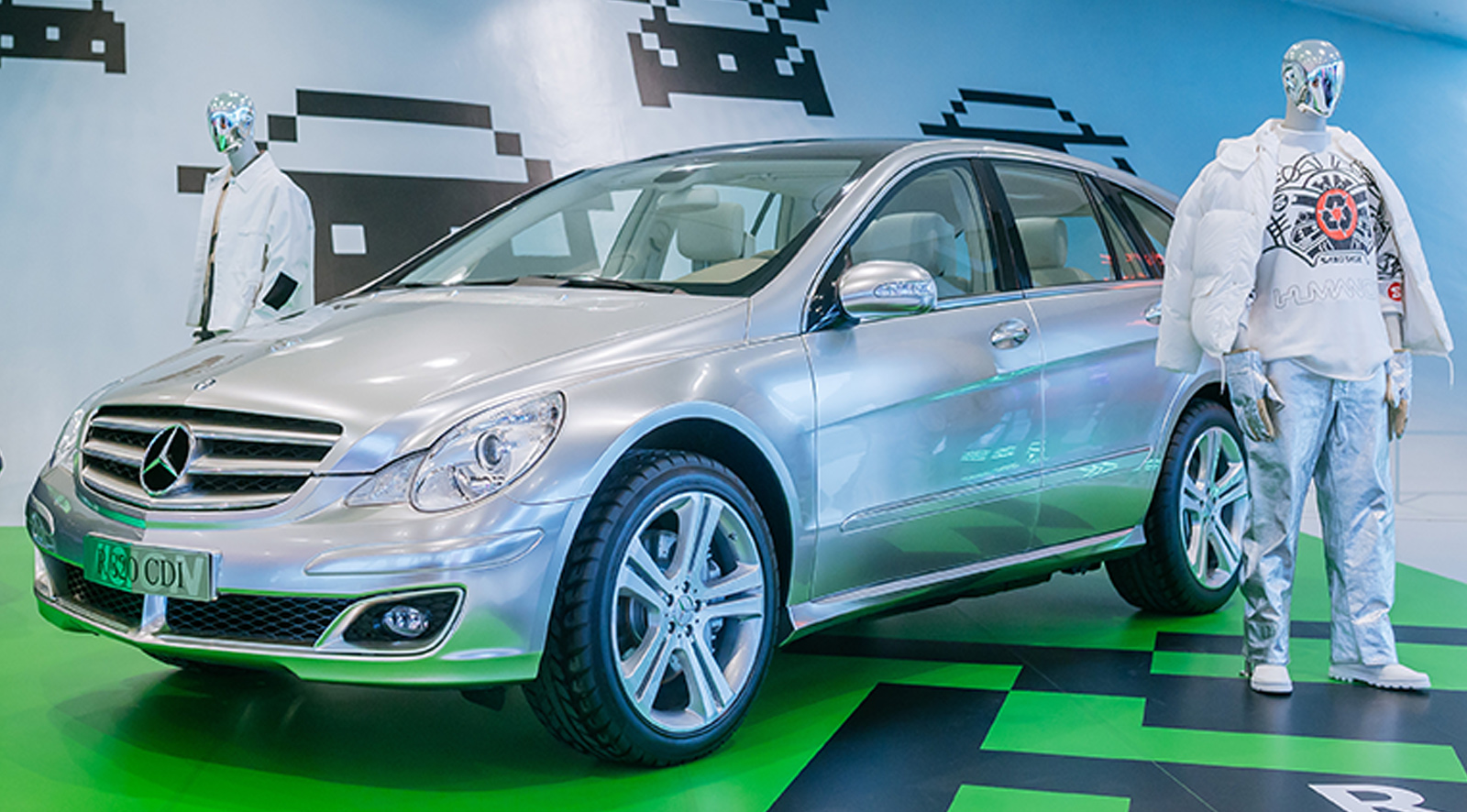
Wagener’s influence would be felt initially in cars like the first CLS, a car I initially hated. It was a massive departure for Mercedes because it was a car that sold explicitly on expressive style. Although the CLS was a success, other deviations from the sober Mercedes norm were not. What, exactly was the point of the not-a-car-not-an-MPV R-Class? When Pfeiffer retired in 1999, he anointed Wagener to take over in the Head of Design position, aged just 39.
What is important to understand is that Mercedes, like BMW, first and foremost saw themselves as an engineering company. And like Chris Bangle at BMW, Wagener was determined to make a break with this approach which he considered lacking in emotional appeal. He developed a new from language he dubbed “sensual purity,” which first appeared on the AMG Vision Gran Turismo concept of 2013.
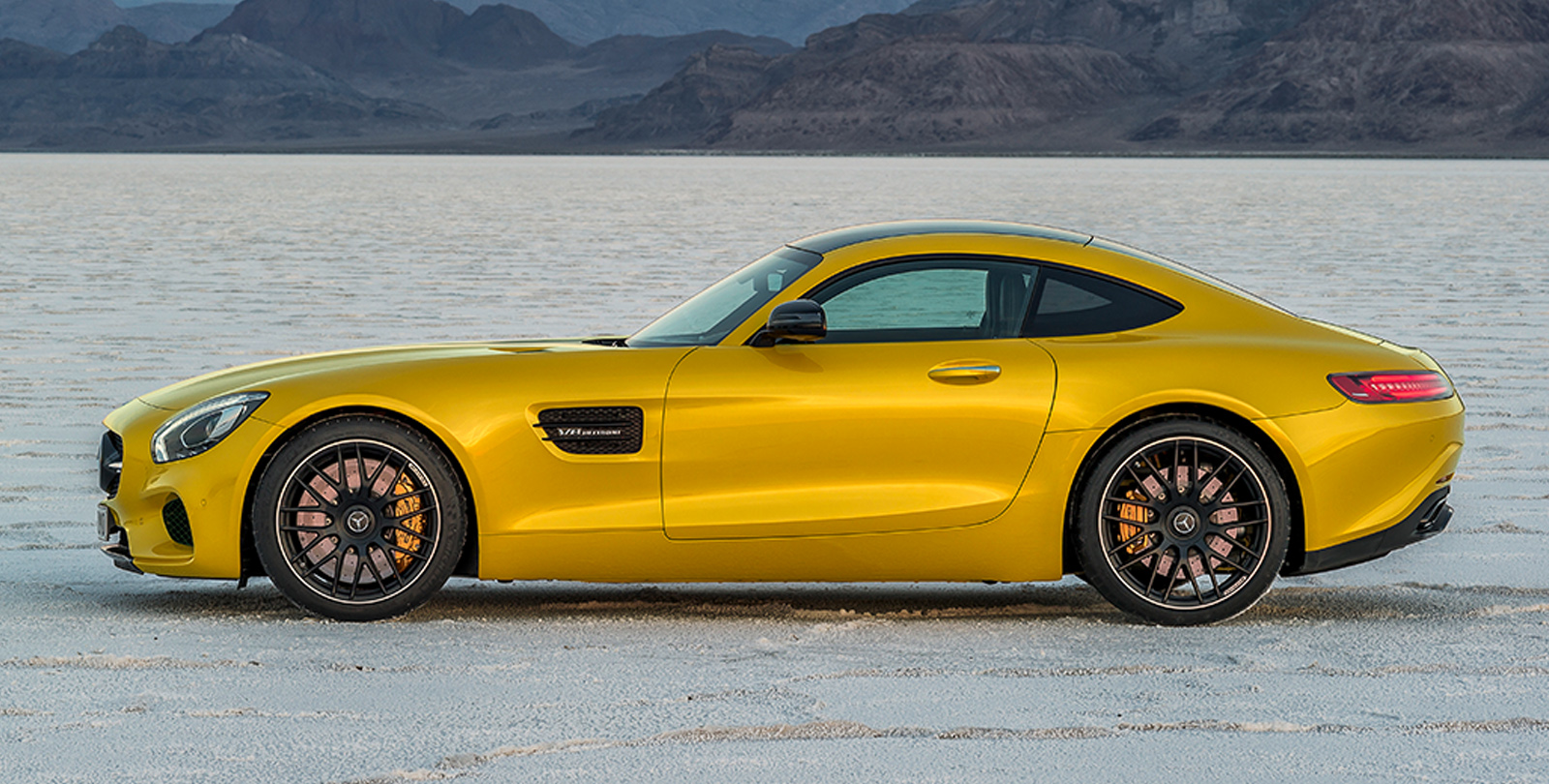
Looking like a cheap diecast of a much better-looking car that had been trodden on, the Vision GT had a deep bodyside, a squashed passenger cabin and enough dash-to-axle ratio to make grown men feel like THEY were driving their own dick, something that can also be said about Wagener’s self-confessed favorite of his own work, the AMG GT. The Vision GT also introduced the squinty headlights, wide gaping grille and smooth surfacing that Wagener presumably came up with after trying and failing to pick up a bar of worn soap in the shower.
Since then, it’s been a case of one size fits all – rather hilariously given this is the exact situation BMW found itself in pre-Bangle, and I don’t think any of it is entirely a coincidence. The big three premium German brands have been chasing each other’s tails for decades at this point – essentially since they all decided to extend down market into cheaper cars in the mid-nineties. If one does something the others follow, which is how we’ve ended up splitting niches with the worst-of-both-category cars like the GLC and GLE coupe SUVs. More than that chasing younger, fashion conscious and social media savvy buyers led to things like the ridiculous Virgil Abloh Maybach collaboration, a bespoke 6 meter long, two-seater SUV thing, another example of heinous post-modernism eating its own tail.
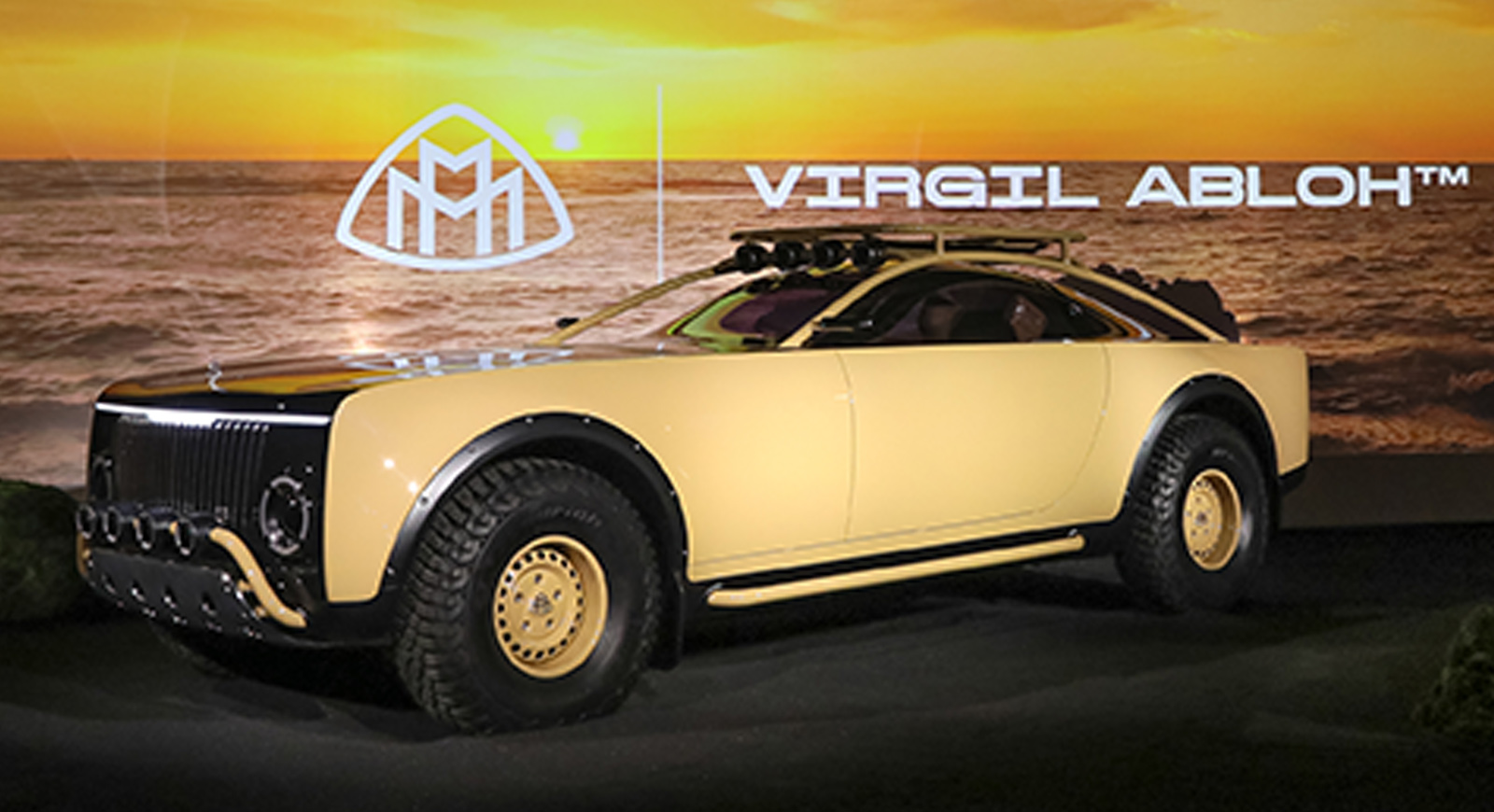
Why The AMG GT 4 Door Is Bad
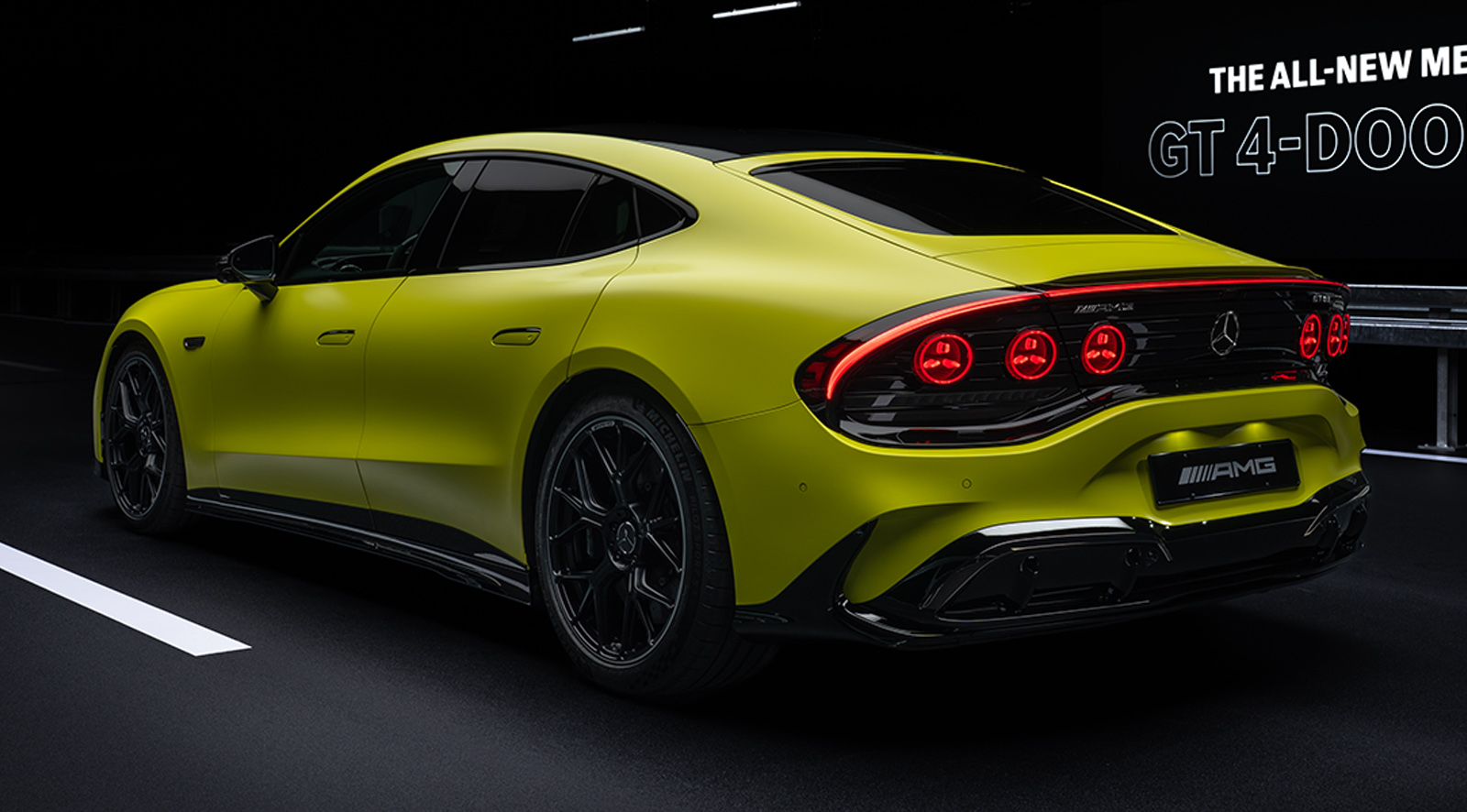
Judging the AMG GT 4 Door Coupe on its own merits it’s clear Wagener’s “sensual purity” design language has run out of catwalk. The main visual pain points are the truncated tail with its full width and depth blackout panel containing triple rear lights looking totally lost in the void surrounding them, and the gaping oversized grill with its lit vertical elements. The headlights have an odd, ill-defined shape that’s neither fish nor fowl, and why isn’t there a black infill panel between the top of the rear wind shield and the black panoramic roof?
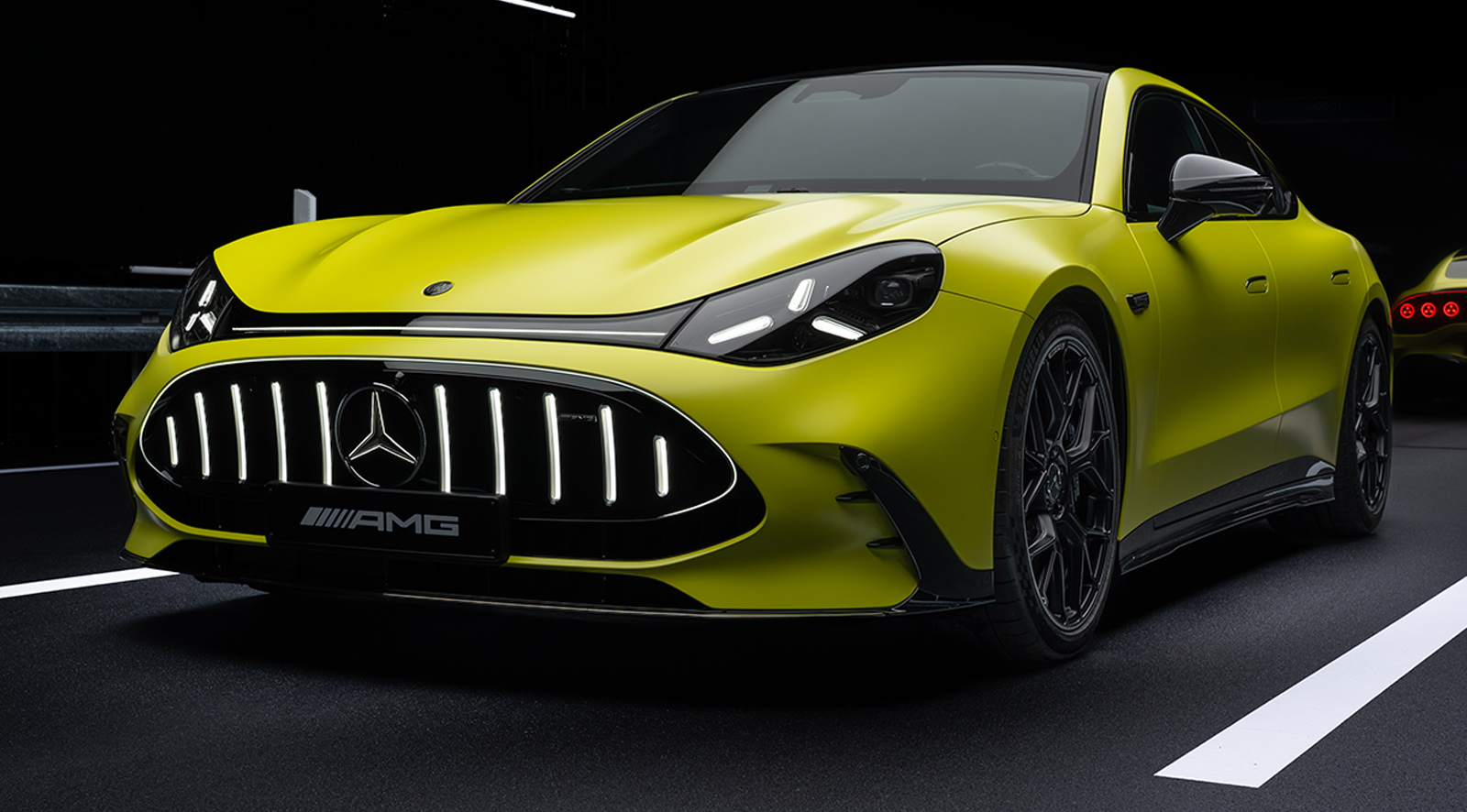
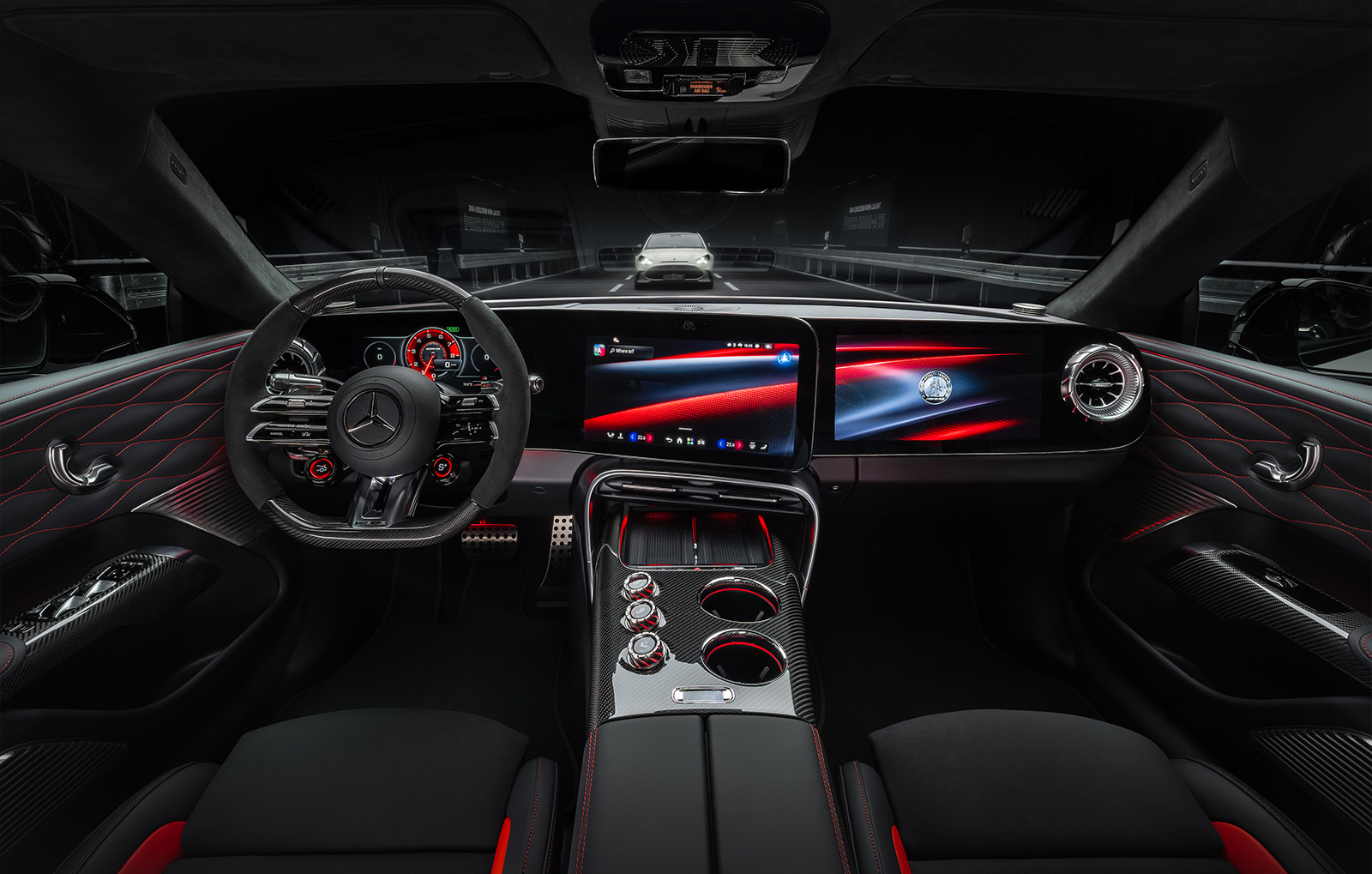
Opening the door to the interior you half expect to bit hit in the face with a cloud of shisha smoke. It’s hard to tell from the released media images exactly what’s going on with the highlight colors – one set of shots resembles Darth Vader’s childhood bedroom with red stitching, seat belts, seat inserts and red graphics on the headliner and then there’s a few images with yellow contrast stitching without showing how that color is applied anywhere else. I think it’s safe to assume any color theory around complimentary tones was flushed down the bog along with any sense of taste. As for the screens, Wagener is on record as saying:
“When you have a small screen, you automatically send the message ‘congratulations, you are sitting in a small car’.”
Truly spoken like a man who probably thinks a 100” flat screen television mounted directly to the wall in your living is the height of home interior sophistication.

It’s easy to fall into to the trap of criticizing the current Mercedes range of aero blobs for not adhering to what we consider to be the classic Mercedes brand identity – but that is exactly the problem. What Mercedes says they stand for – The Best or Nothing – is not reflected in Wagener’s direction for the brand over the last fifteen years or so. A sprawling range of identikit cars all with the same soft surfacing and oversized grilles festooned with Temu LED lighting do not speak softly to quality of engineering and longevity of service.
Instead, they glitter like tasteless baubles and snare superficial customers with the siren call of cheap leases. Wagener’s stated intention was to make Mercedes more emotionally desirable, but what this overlooks is that emotional attachment to a brand is not only about appearance – it’s about how your stated brand values translate into the overall ownership experience. BMW and to a lesser degree Audi, have one or two missteps aside, managed to maintain and evolve a consistent identity for decades. You can draw a straight line from Michelotti’s Neue Klass sports sedans to the current 3 series. Massimo Fraschella’s Audi Concept C references J Mays and Freeman Thomas’ original TT whilst refining and advancing the ideas behind that groundbreaking car. Both these brands have had no problem attracting a younger demographic and they haven’t needed tawdry brand tie-ups to do so.
Mercedes sales volumes and profits have been trending steadily downward since peaking at around 2.9 million units in 2019. Perhaps not coincidentally “Flash Gorden” was bundled out of the side door by mutual consent on the 31st of January this year. Taking over his position is former AMG head of design Bastian Baudy, another Mercedes long termer. With that in mind another Wagener style step change in direction feels unlikely.
A strong brand is a deal – customer expectations being met by a company delivering on it’s promises. That is what customers pay a premium for. When you deviate so significantly from the values that made your company in the first place, those promises begin to sound a little hollow. If you put all your efforts into making shiny things for shiny people, you shouldn’t be surprised when they ditch you for the newest shiny thing that comes along.

All Images: Mercedes Benz Media


The problem at Mercedes wasn’t Gorden Wagener. He did a great job designing the W221 S-Class, and the “sensual purity” era from the 2010’s produced some great looking cars like the C217 S-Class coupe.
The problem at Mercedes is that the people at the top are at odds with what their customers want, and what people expect. Remember, this is the company that replaced the V8 C63 AMG with a 4-cylinder hybrid. And when it flopped, they essentially blamed their customers for being too stupid to recognize the “superiority” of the newer car, despite it weighing more than a Sprinter van.
This is a bad era for Mercedes, and I don’t think that will change unless changes are made at the top.
He wasn’t the only problem but is a very visible manifestation of the issues. What we don’t know is how much sway he held over the board but I suspect a lot. At his level he is informing product decisions even if he doesn’t have the final say.
4 cylinder AMG was a huge blunder which a one-eyed person could see.
I agree that a 4 cylinder longitudinal engined AMG Benz is not something anyone wanted.
But credit where credit is due, that engine is impressive.
While I actually like the hind end of this thing, the front end reinforces my long held belief that everyone should be poor or poor adjacent at some point in their life, to gain the experience and flavor that helps them make better decisions throughout life.
I’m aware that sounds insane, but I really think If thier design team spent even a little bit of time around a dollar general parking lot, they would see a 2013 dart and a catfish Camaro, and allow both of those cars to exist as they are, and not try to combine the two into one front end and sell it under one of the most prestigious and historic automotive brands in all of history.
Given his background I am certain Wagener, if not poor would have seen poverty growing up. There is absolutely nothing wrong with pitching a car or brand at working people – the absolute masterclass for this is Ford UK throughout the seventies and eighties. Those cars, especially the hot ones, were desirable across all classes – Princess Diana had an XR3i convertible and an Escort RS Turbo.
The problem is Wagener let the worst characteristics of blue collar taste overwhelm his designs, which isn’t appropriate for Mercedes.
Shocked, I am, that a certain editor didn’t ban this article.
Nice to see you back, Adrian, in all your glory.
We’ve come to an arrangement.
Praise Zeus!
Designing cars is more like buying a lottery ticket than running a Bakery.
If you run a bakery you only have to figure out how much of a particular pastry to bake for the market. But designs for a car you can’t decide the lottery numbers that will come up you need to predict the numbers and you have no control on what those numbers will be
My father used to sing a Spanish Gypsy song that included the stanza:
Jesuscristo! Es un Chico mas feo!
Really describes the Benz.
And if you know where I can find the song please post it here.
WIth some vehicles it’s a good idea to enroll in defensive and evasive driving classes. This Merc, however, needs to attend anger management classes… that is one angry mofo of a car. I guess I would be too if I were that fugly.
There is nothing wrong with “one sausage, several lengths” as long as your design language doesn’t look like the sausage has been laying on a hot Stuttgart sidewalk for a couple of weeks. The W201 and w124 were very similar, but both were great looking cars, inside and out. Proper, restrained, serious.
Current Mercedes output is tacky and hideous across the board with few exceptions, with these stupid higher performance models being by far the worst of it. And the less said about the screeeeeeeeeeeeeeeeeeeeeeeeeeeeeeeeeeeeeeeeeeeeeens interiors the better. Nope, I will not be buying any of their cars newer than my ’14 wagon, and I wouldn’t buy another one of these again either due to the interior quality not being up to standard. If I buy another Mercedes, it will be back to the ’80s and possibly ’90s. I think design-wise they peaked in 2000-2010ish, but those Daimler-Chrysler (the Chrysler is silent) era cars have SOOO many quality issues.
Sorry but you need a bun of the right length to fit the sausage. Also if you have Ekrich sausage it doesn’t matter it sucks buy a lot of condiments and hope no one realizes you bought the worst sausage available. Usually over bun length sausage just gets dumped in a big old pot and becomes a small piece of the melting pot.
This styling direction paired with abysmal reliability and lazily engineered parts that are essentially unrepairable unless you are a factory clanker, MB deserves its mighty fall.
What’s the thinking on the star motif headlight bulbs as their own thing? I kinda like it, if only everything else design-wise on the car were toned down/redone. Could have been the signature cool bit if they weren’t so overshadowed.
I used to dislike Porsche’s quad bars headlight thing, but I’ve come around on it, and esp like how it makes them more distinctive when in a pack during a race.
I think it would be better if subtler, like if the whole backdrop was chrome so if you were looking at a parked car with the lights off it wouldn’t be immediately in your face.
I think that’s exactly it. If the front end had one plain, modestly sized Mercedes star (like the badge already on the hood) and the headlights as you describe, it would be a lot more pleasing. Sigh.
Sorry marketing data shows that the big pocket buyers have no taste no style and will spend big money on cubic zirconia bedazzled vehicles
That actually seems like something a Chinese carmaker might unironically offer, a zirconia badge on the hood.
Imagine if KVI were to emulate that design on their taillights.
The Mercedes taillights illuminate to say “I have no taste!”.
The KVI taillights would illuminate to say “I have very little income, and I can’t write an N to save my life!”
I’m not a fan, but I’m not the target demographic, either. An expensive car is a flex, but I wonder if the buyer of these actually like them? There’ve been plenty of ugly cars that had performance merit, and an AMG should see some track time.
Without in any way defending Mercedes’ current styles, I can’t easily tell the difference between the big and little late 80s ones either. And I can fairly easily tell an EQB or GLB apart from any of their other SUVs.
To my mind, the problem isn’t that there’s a relatively consistent design language across various models, but that it’s unbelievably tacky and hideous. In my objective opinion, people who like that are wrong, same as people who put pineapple on pizza, goths who take themselves too seriously, and Adolf himself. Yes, all of those are exactly equivalent. (NB: this is hyperbole, and they are not _exactly_ equivalent. It is left as an exercise for the reader to determine which of those I was talking hyperbollocks about.)
If it wasn’t for the wealth of 3 pointed stars it could pass for a Chinese child’s Buick fantasy car.
On the positive side: nobody in Stuttgart (in the whole of Germany, I’d say) can mock you guys for the distasteful tackyness of the Malaise Era.
I knew they lost the plot when I first saw the garish lighted grill-emblem. As a former MB sport saloon owner, I found it to be rather disappointing to realize what was coming. The 3-point star lights and everything after just prove that they want to be more Mansory than Roller. As the make that provided the car for the original true sleeper, the AMG Hammer, they have forgotten that they came to greatness from the beginning by making lovely elegant cars with exceptional performance- rather than gaudy insecure-looking caracutures that need to scream, “look at me”. At this rate, their next models will blast a self-referencing rap song out of external speakers proclaiming their arrival and greatness. They used to be the confident and patient Big Bull on the hill from the well-known story but now act like the Young Bull that wants to run down the hill(IYKYK).
Adrian, I would be remiss if I didn’t mention that their classic seats are one of their greatest design/engineering feats as well and are still the most comfortable I ever owned, and I practically had a La-Z-Boy in my Tahoe.
To paraphrase Danny Sapko, whomever designed this atrocity is a dipstick.
To paraphrase any Gen Z or after, what’s a dipstick?
German automotive has become Afraid. I’ve spent 2 years with VW group some time back in the higher of the Cariad era. It was ran by fear of regulations, project managing, ego pissing contests and territorial political battles.
Now they want to fix it “China speed” and “China tech”.
When you stop doing your own thing and leading and start fighting for survival while looking over your shoulder instead of forward, how far can you make it?
Tesla scared legacy OEMs witless and they learned the wrong lessons. Now China is scaring them all over again and my concern is the same thing will happen.
China is a very unique market quite unlike any other and its domestic output reflects that. Taking them on head on is a fools errand.
Well it is not an empty threat. Didn’t Honda’s CEO declare that they have no chance against Chinese manufacturing? Shortly before dropping their EV program? Of course, it might have been taken out of context.
But I hear from more and more people who are telling the same story:
“When we talk to European suppliers, they take weeks and months to respond, they are often unpleasant, expansive, they don’t share anything, require huge batches to break even and even then it takes a long time to get the product. With China, they treat you well no matter how small you are, send you samples and prototypes within days/weeks WITH proprietary data included, offer flexible rates and end up costing half as much as the EU suppliers.”
It kinda sounds as if Europe was just… giving up, and then turning in violent fear against its own people instead of fixing the root causes of the declining manufacturing and innovation spheres.
There appear to be things to learn from China in terms of vertical integration and supply chain management (although Toyota are very good at this) but we would do well to remember the playing field is not level in terms of government support, policy and subsidy.
As with everything if you’re getting something quicker and cheaper it’s important to ask how and why. For every seemingly successful product from China there’s as many horror stories. I know for a fact that digital modelling that has been contracted out there came back useless and had to be rebuilt locally, significantly outweighing any original cost-saving. And that’s setting aside any IP risk, which is very real.
For all their boasts about being able to go from sketch to production in two years, they must be cutting corners in development. In the UK at least we are starting to see stories about the poor manufacturing standards of Chinese vehicles.
So it’s important to keep perspective – CEOs are not talking to the public. They are talking to fellow executives, politicians and policy makers so any public statements need to viewed through that lens.
Agreed that’s a huge part of the equation. Cutting corners and not caring for the environment, longetivity, lifecycle of the vehicle. And I do have a relative working within the battery department of Porsche and their opinion of Chinese battery tech (as well as many EU/US brands) regarding battery safety and standards is basically, “i would not want my kids sitting in those cars”.
Still, advancements are happening and I predict soon Chinese batteries will be some of the safest, most durable out there.
Even just over the past several years, the rise in resilience of battery tech to external factors like high/low temps or damage has leapfrogged all expectations (I remember at one point Tesla’s batteries storage and discharge capacity suddenly became 40% less affected by cold weather). And I assume that will only get more interesting with true solid states, as soon as someone figures out how to not make their solid state electrolytes not crack during mass production…
But I know there is much I do not understand, it feels impossible to get an accurate picture not distorted by politics or fear.
But the diktats of the proletariat passing regulations that every car will be a EV in years was a no big deal this too shall pass moment? C’mon the Greeniacs caused far more harm than Tesla or China.
It’s hardly the proletariat in power making the policy decisions is it?
If its true, that some scientist say, that brains are hardwired to be judgemental of ugliness because we fear they may carry disease, Mercedes should’ve named this the AMG Ebola.
Preach brother! When I first saw,this,I Bruno Sacco was spinning in his grave. Mercedes appears to have lost the plot. Over 20 years ago I said Mercedes had devolved from spartan but unkillable to gadget laden things,with reliability of a 90s Kia. They have gotten less unreliable but have styling that makes a donk with spinners look refined. I first saw this abomination with an all black grille and already hated it but with the lit up grille I hate it with the fury of a Johnathan Edwardes Sermon
I think if we could wire up Bruno Sacco, Paul Bracq, and Colin Chapman’s graves we could have free energy for the whole planet at this point.
Very much agree with you on the quality. My ’14 s212 wagon has been FAR more reliable than the s123 or s124 wagons I owned at broadly similar age and mileages, with no real “nickel and diming” – it just works with very little care and feeding other than putting gas in it. But the thing is crumbling around me. Just shitty materials quality that are not aging gracefully. Amusingly, the mechanical bits that have failed have been nearly entirely Japanese Denso parts shared with a billion Toyota products – go figure. It has been mostly off a cliff since the w212. I wouldn’t take any of what they are spewing out now for free.
You gave me a heart attack. I had to check if Paul Bracq was still alive – luckily, he’s still going strong
Really? Figured he was long dead. Googled – he’s 92! Which is younger than I would have thought, given when his heyday was.
Agreed on all points, except for two related things–not enough credit to Geiger and too much to Sacco, who IMO tarnished his own legacy towards the end of his tenure.
Geiger:
500K and 540K sports cars.
300SL gullwing
W111/W112
W110
W113 “Pagoda”
R107 SL
W108/109
W116
W123
600 limousine
A perfect track record. Not a dud in the lot. No notes, 10/10 from all judges.
Sacco did a lot of good work, but also penned the hideous bug-eyed R230, W203, and W210.
Not denying Geiger did good work but Bracq and Sacco were far more influential in establishing the iconic Mercedes house style.
I still say you give far too much credit to the designers to be able to steer the direction of car design as opposed to the market. Frankly no design is successful unless the market is ready for it. But I suppose it might feel good to feel you have relevance. But no you need to predict the market you never control it.
I love the R230 and (later) W203 – I had a 2005 model. I also bought a 2002 VW Polo as I love the four round headlights thing. My other favourite Mercedes are the W126, W124 and R129. I’d say Sacco still finished well.
Where I work, our Mercedes master tech started out at the dealer in the mid-70s. He has had his paws on everything from the heckflosse of yore to the R-Class you questioned the existence of. (It exists to make me go “holy shit, an R-Class!) He and I share a great love of opening the ancient books and being complete nerds. We’ve had many a discussion about how far Mercedes has fallen in the last 8 or so years, both of us visibly pained by the poor choices of modern Mercedes. I thank my lucky stars that he retired a month ago and I didn’t have to show him this abomination unto the brand he spent 50 years working on.
From that angle, the seats look like an angry Mike Wazowski from Monsters Inc.
Welcome back, Professor Clarke.
We’ve missed you.
As the former owner of a Sacco Benz, I’m not mad at current Mercedes. Just very disappointed.
I dunno. I don’t like the whole EQ series, but that yellow thing is just an evolution of the GT series styling. Is it different? Yes. It is grotesque like BMWs beaver nose kidney grilles? No.
So, Mercedes decided that their public consists on football players, russian oligarchs and their whores, and Somewhereistan oil heirs.
Hey leave the whores out of this. A girl’s gotta make a living.
Gahhhhh…
Welcome back, Adrian!
While i dont know the context, I feel that there was just a massive brain drain at mercedes in the 00s and early 10s. So many credited designers just fled the company around that time and then you saw all the designs homogenize.
Stopka designed the W212 and then bailed for porsche. Yoon designed the r172 and w221 before fleeing for bentley and then genesis. Mattin designed the second gen ML/GL siblings and left for volvo. Burki designed the latter w166 and left for porsche.
Now the names are so much fewer with Wagener and Lesnik taking the lions share.
Working designers constantly move around (it is just a job after all) but the chief sets the direction.