


It’s been a turbulent year-and-a-half or so for America’s car market. From disappearing rebates to canceled model lines to tariffs impacting pricing, the landscape looks very different from how it did in say, 2023. One of the big developments is onshoring of new car production, and Toyota is the latest manufacturer to make another big play. Its San Antonio, Texas plant is about to get a whole lot bigger in preparation for welcoming a popular model back to the site.
Meanwhile, the world of auto parts might be getting smaller as O’Reilly reportedly wants to buy NAPA Auto Parts. In addition, Polestar seems to be fixing the Polestar 4’s biggest gripe right as the brand’s been banned in America by the U.S. federal government, and one particular variant of the new BMW X5 seems like a complete head-scratcher.


Welcome back to The Morning Dump, where we take the latest car news and bundle it up in a neat, tidy breakfast wrap. Some protein, some carbs, and just the right amount of cheese. Let’s get cracking.
Texan Tacos

Five years ago, Toyota moved all North American production of its Tacoma midsize pickup truck to Mexico. Four years from now, it plans on moving a whole lot of that production back to the Lower 48. The automaker is planning a massive $3.6 billion expansion for its San Antonio, Texas plant, and the scale is something to behold. As Automotive News reports:
The size of the project, approved July 1 by the company’s board of directors in Japan and announced July 6, is 80 percent larger than the $2 billion identified in Toyota’s original request for incentives from Texas authorities — known as Project Orca — which Automotive News revealed May 14.
The expansion will add approximately 2.5 million square feet to the 2.2-million-square-foot Toyota Motor Manufacturing Texas plant. The new facility will have planned capacity of 150,000 vehicles per year, Toyota said. The Texas truck plant built 197,506 Toyota Tundra full-size pickups and Sequoia full-size SUVs in 2025.
For context, 2.5 million square feet converts out to roughly 57.39 acres, and that’s just the expansion. The whole facility combined would add up to nearly 108 acres of Toyota truck-building might, assuming it comes online for 2030 as expected. That’s more than double the footprint of the plant today. So why spend so much money on a facility expansion four years out? The answer, unsurprisingly, is tariff relief.
The Tacoma is Toyota’s third-best selling nameplate in the U.S., with sales last year of 274,638, trailing only the RAV4 crossover at 479,288 and the Camry sedan at 316,185. Unlike the Camry, which is U.S. built, the Tacoma has been built exclusively in two plants in Mexico since 2021.
When the Trump administration imposed a broad series of U.S. tariffs in 2025, it meant that the Mexican-built Tacoma was subject to a 25 percent duty.
In addition to the U.S. administration’s 25 percent auto duty, the deadline for opting to continue the USMCA free trade agreement between Canada, the U.S., and Mexico has come and gone without a unanimous agreement of extension. While America hasn’t announced plans to withdraw from the agreement, it has triggered an annual review of the trade pact, and where things can go from here is anyone’s guess. With such uncertainty combined with high volumes of U.S. Tacoma sales, spreading production out across two countries makes a lot of sense. The U.S. can get its own Tacomas from Texas, Canada and Mexico can source them from Guanajuato, Mexico.
In theory, this move would also free up Toyota’s Tijuana, Mexico plant for another model that can be exported to non-U.S. countries that have free trade agreements with Mexico. Maybe something like the Corolla, a historically strong seller that’s currently built in Mississippi. The bottom line? Major automakers are expecting this tariff weirdness to stick around for the long-haul, and Toyota is just the latest to adjust plans.
O’Reilly Might Be Trying To Buy NAPA
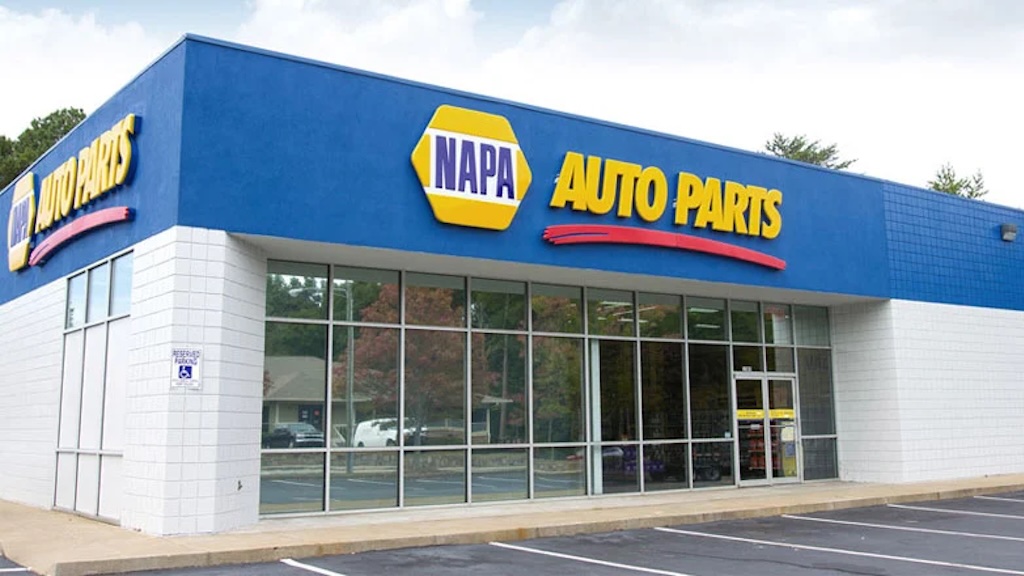
Like many who wrench on their own cars, I usually buy most of my car parts from the internet. Brake discs, suspension arms, filters, the selection and pricing available online is a huge bonus if you own anything specialized. However, if you need a part ASAP, there’s nothing quite as quick as going down to your local auto parts store and pulling what you need off the shelf. It stands to reason that each national chain of car parts stores excels at different things, but the shadetree mechanic’s choice in the matter might be getting smaller. As Bloomberg reports, O’Reilly Auto Parts has submitted a cash bid to buy NAPA, and where this goes next is anyone’s guess.
The unit could be valued at $10 billion or more in any deal, the people added, asking not be named because the matter is private.
A potential sale of the unit could be announced by the end of the summer, they added. Genuine Parts could still decide to keep the unit or pursue a spinoff without O’Reilly, they cautioned. Another party could also emerge as a bidder.
Beyond NAPA brand owner Genuine Parts deciding to sell and O’Reilly being the high bidder, there’s one major thing that still needs to happen in order for this reported sale proposal to go through: Regulatory approval. There is only a handful of national auto parts chains in America, and the thought of that number shrinking could be enough for anti-trust regulators to wave the red flag.
Let’s assume it goes through, though. O’Reilly and NAPA have very different models, While O’Reilly is a chain of corporate-owned stores largely catering to vehicle owners, NAPA has a mix of corporate and franchise locations. Said franchise locations typically lean into commercial accounts for steady recurring revenue, and the result is often a more individualized experience. If this unique twist disappears, it would be a notable loss for existing customers. Given the tight timeline for the proposed deal, we should hear more about it over the coming months, and I’ll be keeping an eye out for new developments.
[Ed Note: With the recent shrinkage of Advance Auto (there are none left in SoCal), things are getting tight in this car parts space. -DT].
There’s A Hindsight Joke In Here Somewhere
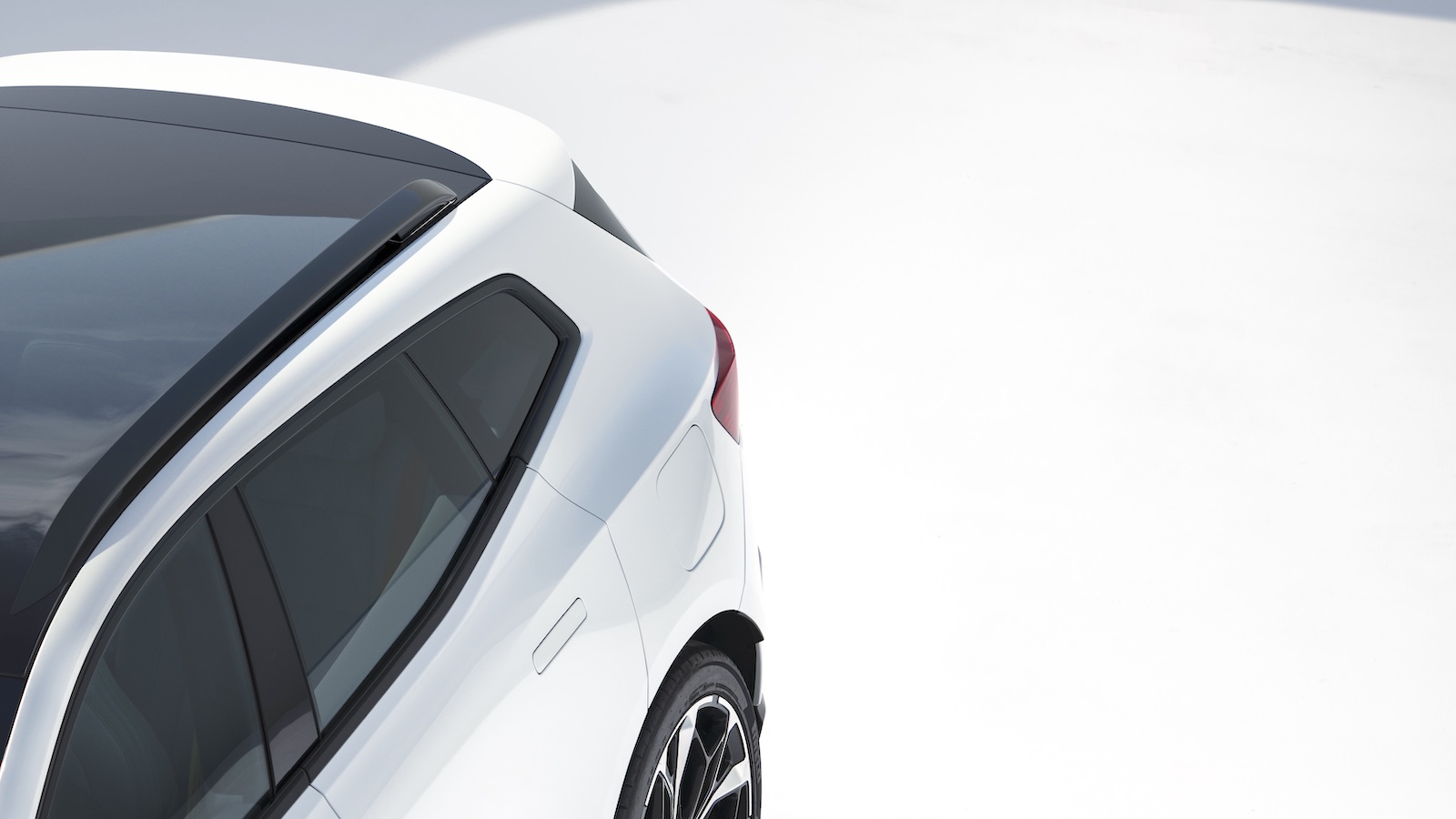
Over the past year or so, Polestar has become known for two things: Selling a crossover-coupe without a rear window, and being arbitrarily banned in America starting model year 2027. Both of these aren’t right, but only one’s actually Polestar’s fault. Better yet, it seems to be fixing it. Not only is a more traditional two-box crossover version of the Polestar 4 on the way for every market except the U.S., it looks to be gaining the thing people wanted the most.
Indeed, Polestar has released a teaser of the Polestar 4 SUV, and it seems to feature the exact same greenhouse treatment and roof rail setup as spy shots of a future model circulating around the internet show. The other thing those spy shots show is a rear window. Hey, better late than never. Expect a full reveal sometime between now and the second of September, because that latter date is when the Polestar 4 SUV goes on sale in most markets.
A Fuelish Bet?

A week ago, BMW unveiled the new X5, a midsize SUV bearing the marque’s new styling language and offering plenty of powertrain options. Perhaps the most unusual powertrain option has just come into clearer focus, and I’m struggling to figure out who it’s actually for. It’s the iX5 Hydrogen, and as you can probably guess, it’s powered by the most abundant element in the universe. With carbon fiber storage tanks for more than seven kilograms of hydrogen and a new fuel cell developed in collaboration with Toyota, this iX5 variant promises 466 miles of WLTP range along with “a host of additional practical features, such as towing capacity.” Very imaginative, BMW. Unfortunately, there’s still a fundamental issue here.
Hydrogen fueling kind of just sucks right now, and has a long history of not quite living up to the hype. Stations are few and far between, the fuel itself is incredibly expensive, and even if you find a hydrogen filling station and can afford the sheer price of refilling a hydrogen car, the actual nozzle on the pump might freeze itself to your car anyway. Still, even getting to tha tpoint requires some serious effort, as Toyota Mirai owners in Cslifornia have found out firsthand. The iX5 Hydrogen may have towing capacity, but how useful is that when you can’t find a station along your route?
What I’m Listening To While Writing TMD
Those of you who are in our Discord server probably already know a thing or two about my music taste, so it shouldn’t come as a surprise that I absolutely loved Julia Wolf’s sophomore album “Pressure”. Rich, moody textures, stellar vocal performances, tight production. Check out “FYP“.
The Big Question:
With automakers moving production out of Canada and Mexico and into the United States, what’s going to fill those plants across the northern and southern borders? Stellantis’ Brampton, Canada and GM’s Ingersoll, Canada assembly plants are sitting dormant, Nissan and Mercedes-Benz have shut down their joint COMPAS plant in Aguascalientes, Mexico, something has to fill the void, right?
Top graphic image: Toyota


Consolidation has ruined the automotive aftermarket, and it will ruin Napa as well.
It is the last good parts store on the West Coast, and I LOVE my local store. I will be absolutely devastated when fucking O’Reilly comes in and destroys it. Parts selection for older cars will disappear, the knowledgeable employees will be replaced with low-paid Gen-Z mouth breathers, and I will end up doing much more of my parts shopping online. It was good while it lasted. Oh, and fuck you, O’Reilly.
I was always dumbfounded by interest in Hydrogen as a fuel. With the current state of hybrids, batteries, and battery development speed, I am even more so. It’s not like you can mine Hydrogen, so despite the tailpipe emissions being great it’s only as ‘clean’ as the energy source you used to break up the H2O to get the hydrogen in the first place. And then it is a pain to store because it leaks through darn near everything and it has to be compressed to a bajillion psi to get decent storage density. None of these problems seem to be going anywhere and batteries are already at least as good and rapidly improving, not to mention hybrid vehicles.
Yeah…considering the dweebs in charge right now, I’m pretty sure there’s no concerns about anti-trust regulators bothering to even look up from their morning coffee over this.
Hahaha! Oh wait, you’re serious? Let me laugh even harder!
Lol, anti-trust regulators. I don’t think we’ve had those since the 80s.
Gross. The last thing we need in practically any space these days is MORE corporate consolidation
From First Brands to Eckler’s to Holley, consolidation has completely fucked up the automotive aftermarket. Parts selection, service, and quality have all gone down the shitter while prices have gone up. And it’s only going to get worse.
Auto and basically everything else too.
Firstly, independent NAPA stores are not franchises. NAPA is an association, like Ace Hardware. I don’t pay a franchise fee.
Secondly, you all think I might have some insider info on this, but sadly I don’t. No one seems to be talking, but where there’s smoke, there’s fire. GPC’s earnings call is July 21 so if you’re looking for something I’d start there.
What it would mean for us independently-owned stores, I have no idea. Many towns where O’Reilly operates have NAPA stores. All O’Reilly’s are corporate-owned, most NAPA stores are not. For guidance I look to the CarQuest retreat on the west coast, where the independents that were left, were all basically just left holding the bag.
Fun times for me.
That’s a bummer. The closest O’Reilly is a significant drive, where NAPA is 5 mins and Advanced is 5 mins. I like the NAPA, but it is increasingly just commercial and the store is getting bare. The Advanced only has a couple employees worth talking to.
I have Advanced and an AutoZone, plus a NAPA within 5 min. Agree I’m best preordering if I want something from NAPA. Closest O’Reilly are both about 15-20 minutes.
Oh, sweet summer child. I’ve got some bad news for you about regulators of any sort.
Yup. Now is the time to push mergers like this through. Companies know it may never be this easy again.
A golden trinket delivered to a certain individual will get around any regulator.
The quest to make hydrogen engines happen reminds me of Mazda’s quixotic quest to keep the rotary alive. Sometimes you have what seemed like a good concept and the real world execution just doesn’t live up to it-at some point you gotta move on. Unless I’m missing something what benefit does hydrogen fueled combustion engines offer over EVs? It’s not like the give me gasoline or give me death crowd is going to gladly go all in on them as an alternative.
I understand why hydrogen is an interesting fuel. It is abundantly available everywhere (no more geopolitical BS or dirty mining) and when it oxidizes (aka: combusts) the output is water (H20). So it’s very clean.
For any company that is concerned about future fuel availability and/or the environmental impact of our vehicles it has much promise. However, many hurdles remain to overcome before it can keep that promise.
Yeh showed my ignorance with this one lol, as someone else posted on the story it seems there are legit industrial/commercial uses, I suppose I’ve only been exposed to the still seemingly odd attempt to sell consumer vehicles with it-which this BMW does seem to fit into? I suppose a BMW fleet vehicle is less odd in Europe than it would be in the USA.
This link provides a good primer on hydrogen-based energy usage.
In short: much potential for industrial and large machinery use, but not necessarily as much for personal-use vehicles.
https://css.umich.edu/publications/factsheets/energy/hydrogen-factsheet
Interesting! Thanks for sharing, I had primarily seen these shown as consumer vehicles which has frankly never seemed to go anywhere or make a lot of sense.
I must admit: I am very gung-ho on the future of hydrogen as part of the larger decarbonization of the world economy. But it will take many decades, and will have to wait until non-carbon-based electric production becomes very widespread and very cheap (since the end game for H2 production will require lots of electricity).
And regardless, I don’t expect it to play a big role in personal vehicle use, since EVs will probably continue to hold a practicality edge over H2 powered small vehicles.
Perhaps cargo trains, hauling 5 tankcars-worth of H2? Hmmm…
And yes, your analogy to Mazda’s quest for rotary power is very applicable. (The only thing wrong with the RX8 was its powerplant.)
I love O’Reilly’s and NAPA.
However, don’t O’Reilly my NAPA! If I can’t find it at NAPA, O’Reilly has it and vice versa. I found that for automotive fluids, NAPA has the selection to be a one stop shop. We have the four major brands of parts stores in my town. Odds are, one of them has what I need, in stock. Don’t reduce my odds of success!
Re: Julia Wolf
I couldn’t tell over the autotune in the video above. I’ll have to listen to the whole album, but I’m not impressed by this one.
TBQ Just Ask:
Flint, MI
Pontiac, MI
Lordstown, OH
That’s a fraction of the plants closed relatively recently
Was that all off the top of your head? The three I cited are the key examples of local govt expecting manufacturing to miraculously return. Don’t know how these have fared.
My brain retains useless facts, but can’t recall birthdays, anniversaries and people’s names.
SAME
St. Thomas closed in 2011, not exactly recent 🙂
For some of us, that’s practically yesterday. 😉
274,000? Didn’t know Toyota was selling that many Tacomas. Toyota is reaping the benefit of leaning hard into the machismo. The cheap plastic interior dressed in fake industrial cosplay is such a turnoff for 45 grand to me, but I’m apparently in the minority.
Can confirm. I can’t walk to my vehicle in my work parking lot without tripping over a dozen Tacomas.
Even the ’90s versions are big enough that your chosen screen name now makes sense.
HEY! I’m only that drunk in the safety of my own
workplacehome.I did exactly the same thing
While I recognize they are mid-size, I feel like the interior space is small for it being a bulky truck. It just seems very inefficient.
Everything in this class is this way, I think. A lot of chunky sheet metal, high stance, and bulky ladder frame wrapped around a small passenger compartment.
Agreed. Some vehicles, such as many minivans, are larger-seeming on the inside than they are on the outside. Pickup designers accomplish the opposite.
The Tacoma is the worst offender though. Sit in the back of one (especially with whatever those dumb top of the line seats are) and compare it to a Ranger or Colorado.
None are spacious, but the Tacoma is freakin’ tight.
Yeah, Tacos have always been tight back there, and it was reason #1 why I went with a 4R. Those bulky Trailhunter seats in the current gen are absurd. The whole thing is.
They’re all pretty much 45 grand (or more now) but the Toyota is the only one that will still be worth close to 45 grand five years from now. And likely double any of the others’s worth ten years from now.
I certainly get that, I have a 10-year old 4Runner myself and the resale was part of the reason I was OK spending the coin to buy it new. I thought the interior materials in that vehicle were pushing it for the price, but the new Taco/4R is somehow far worse. The penny-pinching in there is insulting, particularly on high contact areas like the door panels.
Like any abandoned or semi abandoned large industrial building with access to lots of presumably cheap power. I would imagine data centers or data center products. It seems like people are getting desperate for ram probably lots of money floating around to add production to that. Maybe if we get lucky some other auto manufacturer or other non data center or data center product will use to to produce something interesting.
Hydrogen seems a bit like cng for Europe. For fleets maybe but consumers its problematic. You can add a refueling depot to a city and make the busses and muni trucks plus other fleets run off it but beyond that it’s not going anywhere.
Something has to fill the void… right?
*I silently stare back at Thomas, unflinching*
Right?
TBQ
You down with BYD? Yeah, you know me.
I’d also love to see a Euro brand or two set up shop in Canada, if we could stop dragging our feet and start accepting Euro Safety Standards alongside North American like Mexico does.
“The size of the project, approved July 1 by the company’s board of directors in Japan and announced July 6, is 80 percent larger than the $2 billion identified in Toyota’s original request for incentives from Texas authorities — known as Project Orca “
Hilarious. The automaker I work for just had a major program called “Project Orca”.
Toyota’s seems to be named well as it is designed to get massive incentives from Texas governments. Shake down that “Whale” for cash.
It probably makes sense for them to buy NAPA to get the commercial parts business (where the money is probably made). I don’t feel like any of this is going to lower the price of auto parts. I really want to support my local auto parts stores, but they don’t seem to even want to be competitive anymore unless you play games like putting something in your cart online and waiting 12 hours so they will give you a coupon off your purchase, or buy online and pick up in store. I’ll pay 15-20 percent more for the convenience of getting something from the store down the street and to support a local business that I consider important, but I am not willing to pay double for the same part vs. online. And the online parts often can come same day or next day.
O’reilly’s model is back door sales too, that is why there are 3-5 Mavericks/Rangers/Frontiers in front of pretty much every store.
That and over the years I feel their parts quality has declined (or maybe I’m just pickier now that I’m a little more financially solvent). It has to be a real emergency before I’m paying nearly OE parts prices for sub-par parts quality from their no-name house brands. Online I can often buy OE supplier made parts that are pretty close to OE quality for less money, and certainly they seem to be better bang for my buck than O’reillys.
I will often buy fluids and other small generic items from them, light bulbs, silicone, grease, that kind of thing. I will call out being especially annoyed by how overpriced their wiper blades are. I can get Bosch or Michelin wipers on Amazon for like half the price they charge. Having managed a small local retail shop in the past I do get the chicken and egg problem of competing with amazon and other online retailers but I’m not sure doubling down on every crappier parts while increasing prices is anything but a doom spiral.
Many times the “no-name house brands” are made by the same vendor that made the OEM part in the first place.
Which is good to know, though it’s hard to tell as a consumer which is which since many parts are sold under their house brands. Whereas online I can find a part made by Nippon Denso or ATE etc. The last car-specific part i remember buying from Oreillys was a thermostat and it was noticeably more cheaply made than the OE one, using plastic where the original one used metal, but that is admittedly cherry picking one example.
At the Advanced near me, I saw boxes with Rock Auto packing tape. derp.
Genuine question: Who is the iX-5 Hydrogen even for? Are there any markets where hydrogen is a viable alternative to gas or electric?
Probably to fluff the x5 line for average MPG under the new EU laws, maybe?
Wouldn’t the BEV and PHEV versions do that already?
Maybe Iceland? 240102_URN_RoadmapForIceland_V6.pdf
All hydrogen vehicles sold today are basically test vehicles. There are applications were BEV simply does not work and if nations around the world actually follow through with their planned decarbonization companies will still need powertrains that run on a fuel that can be bottled and shipped.
The fuel cell for a car is far cheaper to do this development than on for a Semi, mining truck, or airplane.
Thank you for a coherent explanation, I was wondering why anyone was still messing around with hydrogen vehicles.
If Toyota is managing to sell 274K Tacos a year even with a 25% tariff, seems pretty likely that the MSRP of US-built Tacos will go up by about that much.
I don’t know about going up but the prices certainly won’t be going down once that facility is up and running.
Think of the shareholders!
Probably not, they have definitely been eating some of that cost. If they did a base Taco would start at $40k and a TurdPro would start at 80.
The ban is not arbitrary, it’s an extremely smart decision upheld across administrations and party lines (despite the framing of the linked article, the ban was implemented under the prior admin). The supply chain risk of CCP-developed vehicles is immense. Frankly, Volvo should not have a waiver. This is a poor editorial choice on wording.
It’s arbitrary in the sense that Volvo got a waiver from the rules and Polestar didn’t, but the solution isn’t to allow Polestar, it’s to ban Volvo as well.
Oh, yes, agreed. Volvo has no business selling cars either with their current ownership/supply chain.
It wasn’t arbitrary:
A distinction without a difference given the corporate structure.
Divest from Chinese ownership, or sell elsewhere.
This was a political decision not one made based on corporate structure.
I understand that, which is why I proposed we should treat the two equally.
I was against the tariffs at the time, I still think they are on net bad for the country, but I’m not above acknowledging when they have done something good.
Expanding manufacturing in the US and hiring more workers at a solid rate of pay is good, and I applaud Toyota for doing so.
I think tarriffs have a stiff cost, and that cost is mostly born by people who can least afford it. However, in the long run the goal of on-shoring and re-industrializing is worth the costs and will provide greater benefits to all.
Free trade is fine when it’s actually free and fair. The prior and current trade situation with many of the US’ biggest trade partners (*cough*China*cough*) is anything but free and fair. Actually doing something about it is a good first step.
I begrudgingly concur. The juice still hasn’t been worth the squeeze, but at least something positive happened.
Nah, they are ONE GOOD thing that guy did. Other countries don’t have OSHA or environmental regulations, and they can employ basically slave labor. There is no way for American companies to compete if they want to build things here, because if a competitor farms out the production overseas, they will have a huge advantage.
I think a better idea would have been a gradual tarriff that gets worse and worse every year, so companies that invest NOW will get the biggest/quickest deal, and those that wait til the last minute will pay more.
Didn’t Texas and Florida recently ban water breaks? And last time I checked the EPA just chopped the nuts out of CAFE requirements, amongst other things.
There’s an awful lot of glass on that house of yours, Mr. Stone Thrower.
It’s still going to be way more protection for workers AND the environment than china, my dude.
https://www.youtube.com/watch?v=sF865wbEeyI
Also, I have no idea what you mean by glass houses and throwing stones. I hate that guy. I hate most politicians, I am merely sharing my experience after 2 decades as an industrial designer, working with manufacturing facilities around the world. 95% of the time, it winds up in China because their costs are less than HALF of domestic manufacturing…. because no environmental regs, worker safety, etc. I would have loved to source more parts domestically, but it generally just does not happen because corps can save so much money getting stuff made in third world countries where they can dump waste into a river and employ borderline slave labor.
For decades, publicly traded companies have been run by executives that were ALL TOO HAPPY to slash jobs here in America and shift manufacturing overseas, because of those next quarter profits, bro!
This is the reality of producing things in our current world; if you consider that statementsummary of my experience a ‘stone coming from a glass house’, again, I don’t understand what you mean by that.
Watching the US actively roll back regulations, and regularly seeing news stories like children working in meat processing plants, makes it hard to hear criticism.
Especially since one of the countries losing jobs due to the tariffs is my home country of Canada, which has stronger workforce and environmental regs than the US.
So yes, stones and glass houses.
“U.S. authorities have accused another sanitation company of illegally hiring at least two dozen children to clean dangerous meat processing facilities, the latest example of illegal child labor that officials say is increasingly common.”
That story does not provide evidence of “regulatory rollback.”
I didn’t claim it did. It’s an addendum that even though regulations “exist” on the books, they’re being poorly enforced.
Much like most of the illegal stuff the current admin is doing, the laws and regs aren’t worth the paper they’re written on if no one is going to enforce them.
But you did mean to imply via omission. Only someone going and reading the linked article would catch it. So not “roll back regulations” which is miss-information. If you meant to say poor enforcement. Say that. The linked article also happened in July of 2023, are you accusing the Joe Biden administration of rolling back federal enforcement regulations?
I used the qualifier “and”, not “like” or “such as”. I’m not trying to mislead anyone. I can only write it, I can’t understand it for people.
You’re making some rather large leaps.
But if we need a more recent example of worker rights being poorly supported, regardless of regs, we can talk about the Amazon warehouse worker who died and employees were instructed to keep working around them instead of helping to deliver aid. Or even just stopping.
If your point was that enforcement has become lax, then say that. But claiming regulations are being rolled back and then providing examples of poor enforcement is changing the argument after the fact.
No it isn’t, they’re two sides of the same coin. You can both roll back regs like nullifying legislation that mandates water breaks
And ignore regs like the previously mentioned child labour. They’re linked in that workers are not being protected, whether or not there’s laws on the books about it.
Still don’t get it. What is the stone? What is my glass house? I am just stating the way the world is.
Your stance is saying you won’t do business with your neighbours cause their backyard is full of trash, while you have a car up on blocks in your front yard.
It kinda pulls the weight out of your statement.
I am still totally lost dude. I don’t make business decisions. I am just an industrial designer. I don’t get to pick and choose suppliers; I can push to get quotes but the bean counters in corporate make all those decisions, and when it’s a publicly traded company that’s goal is infinite exponential growth for all eternity, well, yeah.
That’s why shit doesn’t get made here.
Shit gets made because it’s cheaper to do so in other countries. Worker protections are not the reason it’s more expensive in the states.
You just said what I’ve been saying the entire time.
We have worker protections here. We have environmental protection here.
China is like the wild west, factories with slums built into them so they can pay the employees crap and then charge them rent for a place to sleep, no OSHA, no 40 hour work weeks, dump stuff right into a river, etc.
I had to check after reading your comment but no, it appears Texas did not ban water breaks.
Technically no, they just nullified the legislation that mandated them.
And employers are historically great at doing things they’re not legally bound to do.
Environmental standards in the EU and Canada are generally equal to or stronger than those in the US, as are labor costs (although I remember reading something once a very long time ago that some manufacturers were going to propose that single-payer health care was an unfair trade practice because it costs companies in other countries so much less in taxes and any contributions to supplemental coverage like mutuelles.)
I meant China, mainly. Nobody is going to get competitive rates from Canada or the EU compared to China.
Almost sounds like those companies should be lobbying for single payer in the US!
There is no doubt that a gradual tariff increasing yearly would be a great path forward to onshoring, but the more I look at it it would unfortunately not have worked in this political situation.
Companies would have looked at a 5% tariff and done nothing because they know if the next president is Democrat they will cancel all of the current president’s executive orders, good or bad.
Trump only has 3 years. The offshoring of production took decades. The shock of sudden tariff costs and the potential for them in the future have moved companies to action much quicker with some negative consequences.
I mean, if you view them as competent enough to undo everything, sure, but they’ve proven to be completely useless.
The sad part is I can’t tell who you are calling incompetent. And that perfectly sums up politics for at least a few decades.
Yeah the implementation certainly left (leaves) something to be desired, but it appears the stick has worked far better than the carrot ever did
The problem with only looking at forecasted manufacturing returning to the US because of tariffs is that it ignores the death by a million cuts of small businesses that quietly went under due to them. Blanket tariffs are sloppy, terrible, break-shit-with-a-sledgehammer economic policy and Toyota bringing Tacos to Texas doesn’t change that.
I agree with you, but we’ve also got to acknowledge that it means the Tacoma is going to be more expensive than if this never happened. The consumer is paying the price for this.
Yes, correct. No free lunches.
I just wonder if the general sentiment would be the same if it were spelled out as clearly as:
“We are going to charge each and every American $1,300 more per year, so we can make more stuff in America.”
Or what if we changed it from manufacturing to something like on-shoring call centers, or increasing domestic rare-earth mining, or farming (imagine if we tried to list all the subsidies farmers get here)…
I say this as someone who has spent an entire career within US manufacturing. It feels weird that my neighbors dollars go towards protecting my industry. I’m not suggesting it’s all for nothing, but the costs are rarely presented so clearly.
And finally, this all seems hard to wrap your head around that so many fans of the President are totally in support of this, when just ~2 years ago they were so damn concerned with the price of eggs and everything being too expensive! More seriously, cost of living (or cost of goods) was one of the biggest reported deciders in the election.
No easy answers, that’s for sure.
My own opinion on the matter is that among your examples, vehicle manufacturing and rare earth mining are high-value enough and national security-adjacent enough that some government pressure to bring them back here is probably worth some higher costs. Call centers, certain types of farming, low value manufacturing, etc probably aren’t.
Deciding exactly what goes in which bucket is beyond my pay grade though. I don’t think becoming self-sufficient as a country is reasonable or desirable, and I don’t think offshoring everything to China at breakneck speed in the name of lowering consumer prices is a good tradeoff either. Broad based and capricious tariffs against allies are stupid, targeted ones against geopolitical rivals and unfair trade competitors might be wise. Unfortunately nuance is lost in contemporary politics.
I agree that becoming self-sufficient is not in a country’s best interest. Brazil and other countries tried this in the past. Ancient civilizations knew that trade with other countries was beneficial to both. The new thinking of binary win/lose is not. Public discourse and nuance has been lost for a bit more than a decade.
Why would they get more expensive? Isn’t the whole point to reduce costs overall by paying fewer tariffs but a higher labor rate?
The tariffs brought up the price. That is recent. the higher labor rate certainly will bring up the cost.
If I were building a new factory right now I would probably design it to use as many robots as possible, and design products to be manufactured by robots. The factories may be coming back but the jobs won’t.
Time will tell. So far manufacturing employment continues to fall in the USA despite some high profile announcements.
Between 50% metal tariffs and 25% tariffs on parts moving final assembly to the USA isn’t a clear cut decision.
There is also discussion of what moves to the Mexico plant. If Toyota moves production of vehicles for other markets out of the USA to Mexico it could be a wash for jobs and just cost Toyota a lot of money and those cost will be passed on to the customer.
Exactly this. They’ll loudly move production of things that are mostly sold here (trucks) back to the US, while quietly removing anything that used to be exported. And for this lateral (at best) move, we get higher prices on everything.
If the tariffs were really about bringing manufacturing back, they wouldn’t have taxed the shit out of the raw materials you need to make stuff. They’re a power play, nothing more.
The only way the US can onshore manufacturing efficiently and cost competitively is with robots and automation, not more human jobs.
That is true and the USA is behind on automation and dependent on foreign suppliers for that automation.
And with AI moving in, human jobs will be reduced. So what about the humans?
Right now seems like a good time to be a robotics tech. I predict it will be quite awhile before the robots can install and fix themselves.
As to the bigger question – we have seen this in the past. There was a time 100 years ago when increased productivity was split between investors and labor. We moved from for a 6 day week to a 5 day one and from a 12 hour day to a 8 hours. At the same time workers income went up. There is no practical reason that couldn’t happen again. It would require labor to stop voting against their own interests.
The whole humanoid robot thing is based on the idea of generalized adaptable robots. It’s very different from a welder stuck on the end of a robatic arm that needs a week of reprogramming to switch from welding a Corolla to a Camry.
I’m aware – we have trialed some in our factories. They a laughably bad at replacing a human worker – even at a repetitive mechanical task. If you want them to replace a tech they not only have to be able to do the physical work but also the “mental” process of troubleshooting the error and identifying a fix.
Current body in white robots can seamlessly shift between models once the programing has been done once. Same with paint and other robots.
There will be an inflection point where they will be able to learn and get better at edge cases, and we pretty much there.
If someone figures out how to automate adversarial training, red team robots if you will, it will happen real fast.
The key isn’t to not make errors, the key is to make errors not matter. Especially in an automated system where errors could otherwise compound through different processes.
How do you automate a machine failure? Say a shaft worn out of tolerance.
Everyone will be plumbers
The NAPA bit is interesting…and concerning. Work I can’t do in my garage is done at a service center run by…NAPA. I don’t know if O’Reilly wants to keep fixing cars as well as selling parts, but the idea they might not want to is…distressing.
Napa Autocare centers are not owned by Napa. They are just independent shops that get their parts from Napa. IOW, they’re Napa’s customer, not their employee or franchise.
Maybe they’d become an O’Reilly Autocare center 😛
I suppose that’s the case. Although there’s also an O’Reilly that literally opened two months ago in town. So who knows?
They’re a good, honest shop, though, and only two blocks from my home. I can stuff my folding bike in the trunk, drop my car off, and ride home in 5 minutes.
If only Toyota saved enough room there to build diesel Hilux trucks for the USDM….
Swing and a miss!
Toyota has deemed the Hilux is to Trucky for America.
America doesn’t want truck trucks. We want luxury sedans cosplaying as monster trucks.
So they’re going to build puffy tacos – a San Antonio specialty.
Just like Europeans buying Carhartt WIP.