

There’s a lot of news coming out of the C-suites this morning, though none as dramatic as the huge loss that Chrysler Dodge Ram Jeep Leapmotor BitChar-G Maserati parent company Stellantis has to take for, among other things, “previous poor operational execution.” That’s as strong a diss as you’ll get from a CEO these days about their predecessor.
Understandably, this has not positively impacted the share price. We here at The Morning Dump (meaning me) try not to get too distracted by stock prices, as they only capture a moment in time. Still, it’s fun to be able to write about all the automakers that would have been better investments than Bitcoin.


What was also a moment in time? Toyota CEO Koji Sato’s tenure, which is over almost as soon as it began. Now there’s a new CEO! Ford is probably keeping its boss for a while, and his new remit is to get more affordable cars to dealers.
How Much Of The Stellantis Loss Is About Carlos Tavares?

I have no specific animus toward any individual in this industry. Ok, to clarify, I have no specific animus toward any executive in this industry. There are maybe a couple of journalists and a comms person or two that irk me, but I don’t think I let it influence what I write. One of my least favorite PR people of all time worked for one of my all-time favorite brands, and it was fine.
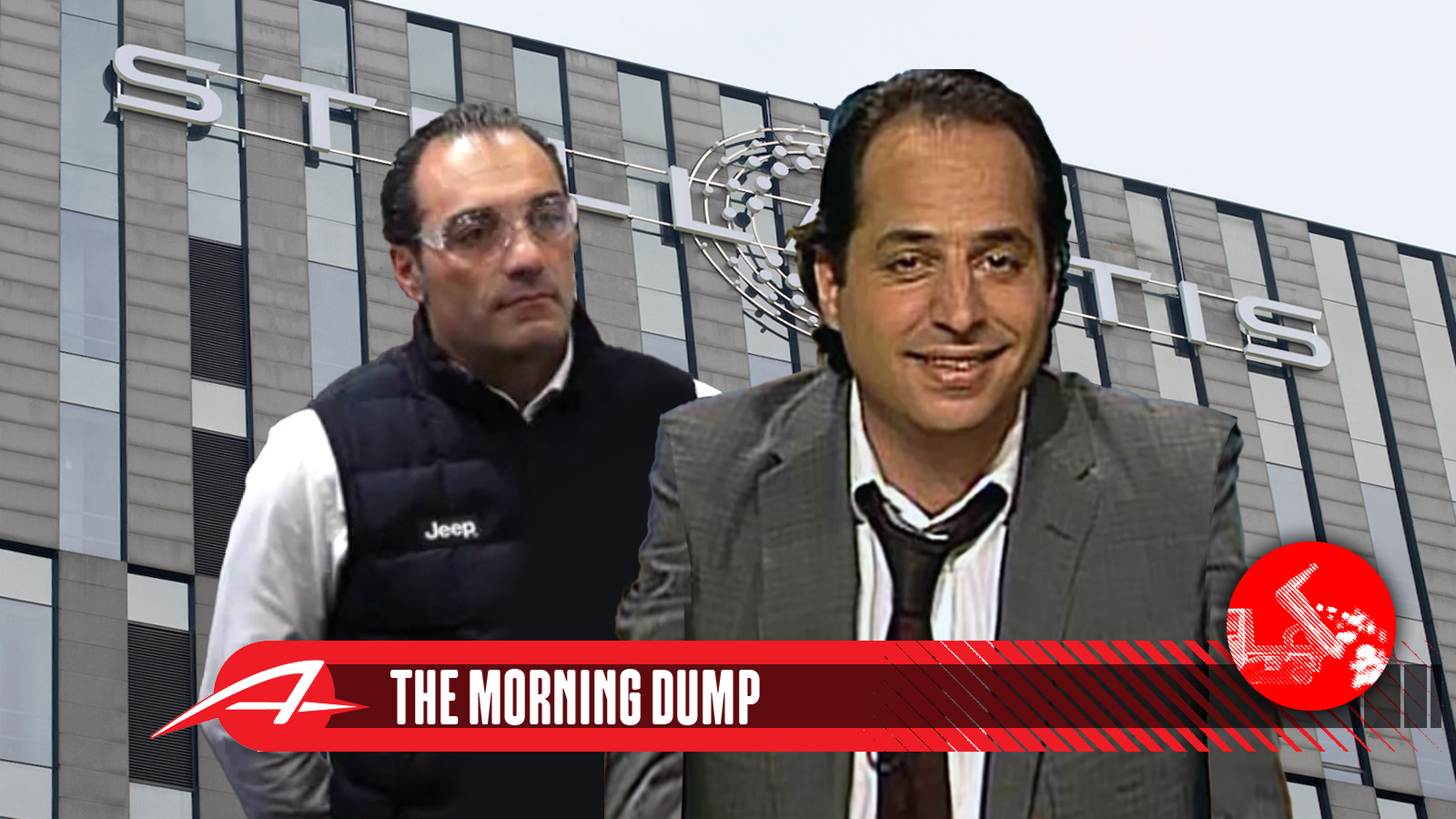
All this throat-clearing is to say that it may seem like I made it my mission to call out Carlos Tavares, pictured above, for what I saw as extremely poor choices made while he was in charge of Stellantis. This wasn’t personal, as I’ve never met Carlos Tavares. I would love to hang out with him, as we both seem to have similar car tastes. Drinking some of his private-label port and talking about Group B rally sounds like a dream, honestly.
His tenure was bad, though. It was. The company had a couple of years of extreme profitability, but it felt hollow to me. Any company can be temporarily profitable if it doesn’t develop good new products, tries to move its engineers abroad, cuts costs, and utilizes a pandemic to charge a high price for mediocre cars. It doesn’t work forever, though, and Stellantis has swung to a huge loss. Once it became clear that Tavares wasn’t working out, he was quickly ushered out of the company.
Of all the curious decisions that Tavares made, taking the North American market for granted was the most obviously shortsighted one. The new automaker consists of a palimpsest of brands created by extinct automakers, and most of the value was in North America. Antonio Filosa was promoted to take over for Tavares, and his main mission has been to undo the damage. For whatever reason, Filosa hasn’t seemed that explicit about blaming his former boss.
Ahead of its investor meeting, Stellantis came out to say it was taking a $26 billion charge to restructure the business. Some of this has to do with exuberance over EVs and a regulatory environment that’s been turned on its head. While many of us pointed out that skipping hybrids to go all in on EVs seemed like a faulty proposition, Stellantis wasn’t the only company to do this, and plenty of other automakers have taken write-downs related to these changes. This is to say nothing of tariffs.
The difference is that Stellantis and Filosa seem a bit more pointed about what has happened:
The reset we have announced today is part of the decisive process we started in 2025, to once again make our customers and their preferences our guiding star. The charges announced today largely reflect the cost of over-estimating the pace of the energy transition that distanced us from many car buyers’ real-world needs, means and desires. They also reflect the impact of previous poor operational execution, the effects of which are being progressively addressed by our new Team.”
He added: “We have gone deep into every corner of our business and are making the necessary changes, mobilizing all the passion and ingenuity we have within Stellantis. The positive customer reception to our product actions in 2025 resulted in increased orders and a return to top-line growth. In 2026, our unwavering focus is on closing past execution gaps to add further momentum to these early signs of renewed growth. We look forward to sharing the full details of our new strategy at our Investor Day on May 21.”
That’s rough, right? There are a few more details here, though not many. Here’s one thing that the release says:
A thorough reorganization of the Company’s global manufacturing and quality management processes. In this context, the Company hired over 2,000 engineers during 2025, mainly in North America.
And then this, about the specific charges it’s taking:
€4.1 billion due to a change in estimate for contractual warranty provision, resulting from the reassessment of the estimation process, taking into account recent increases in cost inflation and a deterioration in quality, as a result of operational choices, which did not deliver the expected quality performance, now being reversed by the new management team.
My sense is that this is related to Tavares offshoring of engineering, with a fairly arrogant assumption that it wouldn’t make a big difference. At the time, I pointed out that I didn’t think it was going to be worth it, and clearly, the company doesn’t either.
While Tavares isn’t named in this document, his corporate ghost lingers over most of it. To the credit of the former exec, a lot of blame has to be assigned to the board and board chair John Elkann. Tavares got paid roughly $26.1 million on the way out, and this has to do with a compensation package that encouraged the company to pursue goals that didn’t match up with long-term success.
Non-PHEV hybrid Jeeps are coming soon, so that’s something.
You’d Have Been Better Off Putting Money In GM Than Bitcoin Over The Last Year
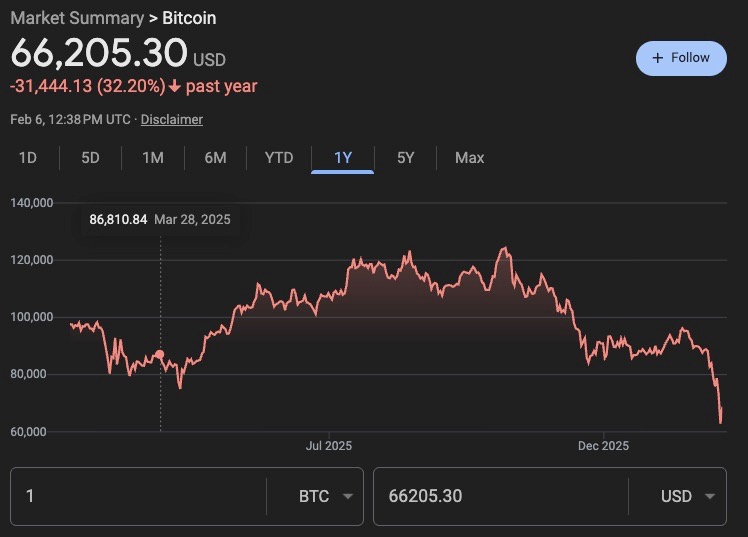
Before the Stellantis news, my headline for TMD was going to be the subhead you see above. Is this entirely fair? It isn’t. Is it amusing? Yes. Absolutely. Over the last year, as of right now, GM is up 74%, and Bitcoin is down about 32.2% ater a dramatic sell-off yesterday. Also, GM issues dividends.
Because Bitcoin is down, really, any automaker that’s positive over the last year is doing better, and a year is sort of an arbitrary number. If you look at the past five years, GM is up 53% and Bitcoin rose 69%. Again, though, GM has issued a cash dividend each year since 2022, so depending on how many shares you owned, you got paid out a little by holding the carmaker.
Why is this happening? Joe Weisenthal has some thoughts, and I agree that the reality of Bitcoin performing worse during a period when the dollar is in perceived trouble kind of undercuts the most basic premise of cryptocurrency. This, though, was what really got me:
-
Crypto is losing mindshare. If you’re a talented tech person, why are you doing crypto stuff instead of AI?
-
Meanwhile AI is crowding out Bitcoin specifically. For a long time, one of the big ideas behind Bitcoin was that miners could exploit access to cheap or stranded electricity. But if you have access to the power grid, why are you mining Bitcoin (which has never been that great of a business) instead of building an AI data center?
Everyone loves a new shiny object. My point in bringing this all up is that car companies are often treated as boring investments, but there’s value there (for some of them) as they produce actual shiny objects people still strongly desire. You know what’s sexier than your NFT Ape? A Corvette.
Toyota Gets A New CEO, Again

Didn’t we just do this? It seems like only yesterday that Akio Toyoda was stepping down as CEO of Toyota and putting Koji Sato in the position. In reality, it was almost exactly three years. Now, COO Kenta Kon is taking over, and Sato is getting a new job:
Koji Sato, President and Member of the Board of Directors, will assume the position of Vice Chairman and the newly established role of Chief Industry Officer (CIO), and Kenta Kon, Operating Officer, will assume the position of President and Chief Executive Officer.
Under this new leadership structure, Sato will focus on the broader industry, including Toyota, as Vice Chairman and CIO, while Kon will focus on internal company management as President and CEO.
This change in roles is intended to accelerate management decision-making in response to changes in the internal and external environment and to establish a structure that will enable Toyota to fully carry out its mission of contributing to society through industry.
Did the company reach for someone who would bring radical thinking from another automaker? Nope. As Bloomberg reports, Kon’s first job with the company was as Akio Toyoda’s personal secretary for a decade.
I don’t have a good read on why this is happening, as Sato’s tenure seemed mostly fine. Nikkei Asia provides some more analysis:
In contrast to Sato, a former engineer who liked to be known as the “car guy” and often tested vehicles, Kon said, “Since I handle accounting … I’m extremely particular about profits and numbers that enable solid investments to develop cars.”
Sato will have served as president and CEO for three years and is being replaced by a man seen as better able to drive efforts to lower break-even volumes and improve Toyota’s earnings power, amid intense competition.
At the press conference, Sato said of his tenure, “Honestly, I think it’s short.” His predecessor, Akio Toyoda, served as president for 14 years.
Ok, so Sato also thinks his tenure was kinda brief. Glad I’m not alone there.
Ford Wants To Make More Sub $40k Cars, Or, Make More Cars Cost Under $40k
The affordability crisis, if you think it’s a real crisis, won’t be resolved anytime soon. There doesn’t seem to be a magic bullet or, if there is, no one seems to be reaching for it. Instead, there are going to be a lot of smaller measures in the short term that might add up to… something.
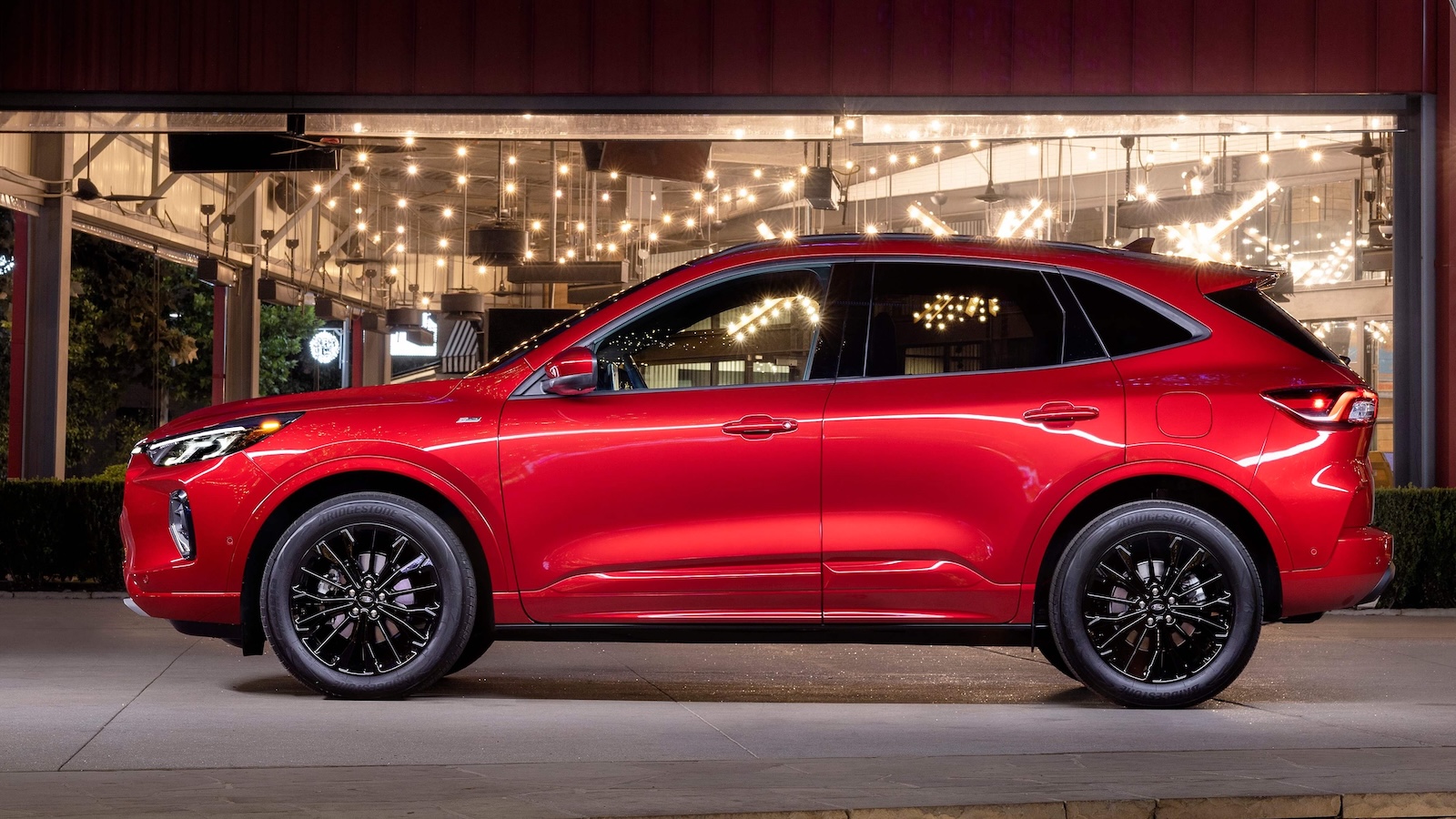
With NADA in full swing, carmakers are talking to dealers, and Ford used its time to talk about how it was going to deal with the issue. This is especially relevant to dealers, who are losing the Escape this year.
Speaking at the brand’s NADA Show meeting, officials said five models priced under $40,000 will be added to the portfolio by the end of the decade, starting with a midsize electric pickup next year. Andrew Frick, president of Ford Blue and Model e, said the vehicles would encompass a variety of powertrains.
“It will be across our lineup of cars, trucks, SUVs, vans, and it will be multi-energy,” Frick told Automotive News, adding that the products will all be new nameplates, not redesigns. “That’ll start to fill in the product side, but we have work to do to help affordability in the near term more tactically.”
What does something near-term and tactical look like?
Executives at the Feb. 4 meeting detailed plans to boost the mix of entry-level trims on vehicles including the Explorer and Bronco, as well as leaning further into certified pre-owned vehicles, extended-term financing and a first-time buyer program. Ford also plans targeted incentives for current Escape customers to keep them with the brand.
If you’re an Escape owner and looking to trade up, maybe later in the year, they’ll be able to get you into a Bronco Sport for a reasonable price.
What I’m Listening To While Writing TMD
We finally got the title track from Robyn’s new album “Sexisential,” and it’s hilarious. I’m not going to use the full version because it’s a little hard to watch at work, so here’s the very PC Music-inflected but SFW live cut from The Late Show with Stephen Colbert. It’s absolutely worth it for the surprise Adam Sandler joke.
The Big Question
Who was the best automotive exec of the 20th century?
Top photo: SNL/Stellantis


“Our unwavering focus is on closing past execution gaps to add further momentum to these early signs of renewed growth.”
That’s some exec-level corporate speak. Translation: “We’re trying not to suck as much. Please buy our cars!”
—
Best auto exec? Dark horse candidate – George Mason. He had the vision to help Nash compete in the brutal post-war market, emerging as the only viable independent automaker, AMC. Nash was an engineering and niche-expanding powerhouse under his leadership. He recruited and enabled top talent – George Romney – who continued to execute his vision after Nash’s untimely death.
Ford chiming in on car affordability while simultaneously axing an affordable option will never not be funny. GM has multiple sub $30k options, Hyundai and Kia do as well. Interested to see what vehicles come down the Ford pipeline but it seems a little tone deaf.
Yeah, new base-model Explorers and Broncos aren’t going to move the needle much, if at all.
They’ll be bought in as one-of-one dealership ad-bait.
John DeLorean.
Executives are overrated, the auto industry is no exception. The best case scenario is that they don’t sink the ship and their true loyalty is to share holders and making a small slice of people money. Besides showing how monstrously awful executives can be in the Epstein files, it shows how dumb, petty and clueless industry (and royalty, the OG C-suite) leaders are, in general.
I’m going to say Bob Lutz. I may not actually think he was the best but he was entertaining. Good enough.
I think Apple should hire Robyn to host its next product roll-out or Worldwide Developers Conference. She seems to grasp presentations consisting of Venn diagrams.
Lee Iacocca. I have no idea what type of person he was in private, but his accomplishments at Ford and especially Chrysler merit accolades.
Henry Ford would rate as well, as his vision and actions transformed the industry. His love of Nazis is of course well known, and should be included when discussing his history.
Has anyone tallied up the total losses for the auto industry caused by the recent change in regulations? Has to be in the hundreds of billions by now. Money that will need to be spent again in the next 5 to 10 years.
The tax accountants are already on that.
Because it’s all a tax write-off.
Losses are losses. Yes you get to write them off your taxes but that only makes them every so slightly less bad.
That may depend on how creative your accountants are. Name of the game is making the “losses” as big as possible on paper.
We haven’t written off our new but never used assembly plant yet or the barely utilized new battery factory. We have laid off thousands of blue collar workers and cut about 10% of the salary workforce (after cutting all the contractors that make up about 20% of white collars in good times).
There will also be no bonus for 2025 as there are no profits and bonuses are based on return on sales. So while I’m still employed my pay is cut by a about 10% and 2026 isn’t looking any better.
But hey – so much winning. Some people are happy when the federal government completely screws over the US manufacturing base. They have voted for the same failed tariff policies again, and again, and again.
Still sucks when you have to close plants and lay people off.
What bean counters nonchalantly call a ‘tax write off’ is a waste of material and labor resources to the rest of us. A total waste of human endeavor.
A tax write-off (talking US Federal tax only) is worth a maximum of 21% of the cost. If you write off a loss of 26 billion dollars, that write-off is worth just over $5 billion. You still have a real loss of more than $20B. Write-offs soften the blow, but paying taxes on profit is better.
You’re right – Which is why the accountants maximize the write-off numbers by dumping as much as possible into it.
Nobody is going to audit them anyway.
I hope you get that sit down with Carlos Tavares, Matt. You can ask him why everyone thought he was a business visionary, and he will reply “Acting!”.
I hope he brings along his wife, Morgan Fairchild.
Yeah, that’s the ticket.
Whoa. Is that a MCU Mandarin deep cut? Long live Sir Ben Kingsley!
It’s actually a reference to Jon Lovitz’s (Pictured above) SNL character the Master Thespian.
I’ve heard a story that been attributed to both Churchill and Khrushchev . . . but for the sake of this telling, I’ll use Churchill.
When Churchill left office, he left two letters for his successor. The first one said, “Open when facing first crisis.” Of course a crisis came and his successor opened the letter hoping for some words of wisdom and he was not let down, “Blame me for everything.” He did just that and the heat was dialed down.
The second letter had scribbled on it, “Open when facing second crisis.” Predictably another bumpy patch came and the envelope was ripped open. The advice this time? “Sit down and write two letters.”
You’ve used your one mulligan, Mr. Filosa. Good luck.
The modern version of this simply has people typing in ALL-CAPS on Twitter repeatedly blaming the same people over and over – even for things they clearly did, themselves or directly made worse.
Or truth social
The ol’ “we’re trying to find the person who did this”.
“We’re currently searching for the person at the correct position on the org chart to make it seem like we’re serious without actually being serious.”
Middle management = bag holder
Saw a chart that showed employees at different levels giving estimates of how much time AI was saving them each week. The amount was higher for executives and the like than it was for lower level employees. They explained that the lower level employees hadn’t fully embraced it. My takeaway was that executives would be most easily replaced by AI.
AI most recently recommended that my coworker make 50lbs of pasta for a high school basketball team dinner.
While I don’t have a ton of respect for the executive class, I have even less respect for the current state of AI.
A pound of pasta is an entire box. I realize teenagers are ravenous, but for about 15-20 players to consume FIFTY boxes of pasta at one meal is crazy.
Leftovers for everyone!
That is Strega Nona levels of pasta.
Had to google, “Strega Nona.” Glad I did.
Ha! Me too! I just ordered it for my grandson
I tried to complete a task with AI yesterday. By the time the AI figured out the answer to the question I had asked (which, in fairness, it did manage to do accurately for a change), I had already answered it myself and moved on to the next step.
That was one of the more egregious examples I’ve personally encountered, but it’s not out of the norm in my experience.
If AI can do my job then it can definitely do my boss’s job (which is basically to tell me how to do my job).
AI absolutely excels at false confidence, possibly the most common trait of executives. Sounds like the perfect use case.
If anyone from Stelantis is reading this: I’ll lose $26 billion for half of what the last guy charged you. Hit me up.
I’ll beat that – I’ll lose $46 billion!
Nice job working in the word “palimpsest”, Matt! And what is it about boards buying into execs who devalue the talent that is essential to a company, somehow believing that this will not catch up with them at some point? You see this over and over again. Are these people incapable of learning from others’ mistakes?
I think they’re incapable of believing anyone else deserves to be paid.
My other explanation is that they believe that anyone with any smarts goes into management and all the rest are easily interchangeable dullards.
I keep hearing that CEO work so much harder that they are worth 900x what the average worker is worth and they have to be paid that much to get the best people.
Clearly hiring someone for millions less who would have put the long term stability ahead of quarterly profits would have worked out worse???
I keep hearing that CEO pay is so high because it is set by the board which is made up of other CEOs or former CEOs. There is a gentlemen’s agreement that they will alway vote for high pay package and golden parachutes for each other because – why would you?
^^^ Bingo ^^^
Here’s your Golden Parachute
Absolutely, there are so many poor American that defend the practice every time anyone questions executive compenstations.
That’s in large part because Americans have been sold the idea that “someday that overpaid CEO could be you!”
Except it can’t, because you’re not part of the club, nor do you know anyone who is. Which is probably just as well, given the number of people in the CEO club who are also in the Epstein files.
Yes that, so many boot lickers.
But that new CEO of Toyota guy worked himself up from humble secretary! Maybe it could be me!
First question: are you natively Japanese? Otherwise sorry, no CEO role for you.
I’m glad that still, every once in a while, you get to paste in an image of Taveras (pictured above).
Iacocca is my favorite automotive executive by far. Assuming that you really meant 20th century and not 21st.
Lee Iacocca
If you can find a better CEO, hire him.
Plus he was on Miami Vice.
Iacocca was the GOAT. I usually love mocking C suite bozos but he’s a rare example of one who earned it by being the best at what they did and working harder than everyone else. He was a visionary who deserves to be remembered more outside of the enthusiast community.
Plus both his first name AND last name have more vowels than consonants. Incredibly rare.
As someone with a Polish surname, I cannot understate how wild that is
Cześć!
Hawaii has entered the chat.
I had a Hawaiian student in my chemistry class at the USAF Academy once and when calling roll on the first day, I thought it was a misprint, but I gave it a shot: “Cadet Aaa?” He corrected me. “Sir, it’s pronounced ‘Ah-Ah-Ah’ “.
This was my first thought. I also consider Enzo Ferrari to be among the best. Look what he created out of very little.
Something one has to remember about these massive write-downs:
They’re used as carry-over losses against income, thereby zeroing out future tax bills.
So everything and the kitchen sink are thrown into those “losses” in order to maximize those write-down numbers – including costs for assets which may actually make the company money in the future.
And the way markets work today – it’s a way for new management to save face, and this will all be forgotten by stock analysts next quarter.
I get all that. I will also throw in the way the board and executive compensation works, it is all based on performance. There’s also a lot of regular employee bonuses thrown in that calculation.
In a lot of the companies I’ve worked, if you run into a really bad year for any reason and realize you are not going to hit the sales targets (where your bonus payouts are set), a lot of the time that’s when you take losses and stop actually trying to push sales. You’ll work on running lean so you can (hopefully) push as many of those sales into January so you can get a head start on the next year. Why bust your butt on trying to squeeze every last sale in December if you’re not going to hit it anyway?
Same holds true for when you might take the hit on those losses. Maybe you had a plan to amortize those losses across a few years or a decade but if it’s a shit year, just say, “fuck it” and take it all at once and get it over with. Now the new CEO and teams can work next year and point to how much they grew total profits etc. Huge bonuses all around.
This is why layoffs around Thanksgiving are so popular.
Because you can manipulate the books to draw down salaries before the holidays when productivity goes down anyway (look at our cost-cutting! look how lean we are!) and any severance packages can be used as end-of-year expenses.
Then you interview and rehire in Jan and Feb for March starts – after bonuses are paid.
Robyn has always hit hard… good to see her new track is a killer one… unlike Carlos Tavares’ term at the Stellantis helm.
If I fail a piss test for marijuana I’m instantly terminated and barred from working for my agency for 5 years. If a CEO runs his company so poorly it loses them 26 billion dollars they get to leave on their terms with an 8 figure compensation package. Rules for thee, not for me. It’s a big club and we ain’t in it…
That golden parachute is a mighty big tax deduction – part of that “write-down”…
Privatize profits and socialize losses-the American dream!
You should be a corporation!
They ARE people after all, so how hard of a transition could it be?
Speaking of transitions, what are the appropriate pronouns for a corporation? I think I’m going to start identifying as one.
A new trend of #Pronominal Suffix object of LLC
I feel like it’s hard to understand what’s wrong with executive leadership on a global scale, so I try and put it in terms of something more local–school districts. Every school district needs a superintendent, so the number of positions that need to be filled are inelastic. The number of people who are well prepared and will be good superintendents inevitably won’t match the demand just about at any time. So, strike one–someone must be hired.
Now, it’s the top position. No one person can be the superintendent’s boss, so we elect a school board who’s primary job is to appoint, negotiate a contract with, and supervise the superintendent. And because of strike one they must hire someone and now they’re in a shitty spot for contract negotiations. Strike two–you have people who are working part time who must get a contract done assigning the contract for a lifetime professional.
Finally, there are, in fact, amazing superintendents out there. Everything in the district and the schools feel different. Things actually get done and done well. It’s hard to put a finger on what exactly they are doing right because good executive leadership is abstract, but they do it. But everyone *thinks* that’s the person they are getting when they get excited by their expensive executive search, dog and pony show interviews, and the hyper-polished product produced by the search firm. Strike three-everyone thinks they are getting the superstar, when really only 5% actually do.
You will almost certainly have an opportunity to observe this first hand and even be able to make public comment about it, unlike global corps.It’s not likely to make a difference. I don’t know the right way out of this–because the contracts are done up front, including severance packages, and the case can be made that the very best do actually deliver on value but almost nobody is the very best… It’s absolutely broken, but every decision is more or less rational. Might be why I’m a marxist…
Here’s the galling thing about marijuana tests: The don’t detect the amount of THC currently in your system. In other words, they are not measures of intoxication at the time of sample collection. Pot tests look for metabolites of THC, which are stored in fat cells. Metabolites are released days, weeks and even MONTHS after THC consumption. Pot tests are not intoxication tests, but lifestyle tests, and should be banned.
I’m all for intoxication tests for vehicle, equipment and other safety-related jobs.
I’m all for alcohol tests. Blood alcohol tests are fair. Blood alcohol tests measure the current amount of alcohol in the bloodstream, which is a fair indication of intoxication at the time of sample collection.
If blood alcohol tests worked like pot tests very, very few people would pass them.
You’re preaching the choir. I think all drugs should be decriminalized and I think employee drug screening without suspicion is incredibly invasive and unethical. If you show up and there’s a valid to believe you’re intoxicated on something then I think it’s perfectly fair to test someone. You’ve brought that upon yourself.
But what people do off the clock outside of antisocial behavior/violent crime shouldn’t be a concern at all if they’re so much as functional at work. In fact I’d much rather supervise someone who has a weed habit over a drunk…and I know this because I was a drunk for the first 5 years of my career. I wouldn’t trust my alcoholic self with anything but the basics because my brain was mush.
But you’re right, THC is fat soluble and as a result it lingers in your system for longer than anything else. You could pretty easily conceal having a cocaine or opiate habit, but pot? Nope. Recreational use is completely legal where I live and work but we get federal funding (for now! That could change at any moment based on the pedo in chief’s dementia) and federal policy is an instant term and 5 year ban for the devil’s lettuce.
But booze? The worst drug there is? Go nuts, just don’t show up drunk….and even if you do that you’re probably getting a referral to support and a stern talking to before your job is in serious risk.
Shout out the tobacco and Booze lobbies for paying politicians to keep it that way. Marijuana is a ballot box issue and we can’t let those go. how else would we get people to come out and vote for us? /s
Hmm. School bus drivers have random drug and alcohol tests. Seems like an okay thing to do given the job.
So after being a reader of this site since basically the beginning I finally registered (and subscribed!). Nsane you are always on point and should probably be getting paid for your contributions. That aside, as a small business owner I cannot agree more that what one does on their own time is their business, to a point. For many years we were required by our insurance company to drug test before hiring. I fought them on this and eventually they dropped the requirement but if you get injured on the job you will still be tested and if positive for anything, no coverage. This is workers comp, not personal insurance. Living in Michigan where weed is 100% legal for recreational use this drives me absolutely crazy. Sure if your drunk/high on the job it makes sense but there is still no test for marijuana that can tell you a person is high right now. To your point about alcohol, I recently checked myself into rehab for alcoholism and the amount of people that had been sent there by their employer (mostly Big 3 line workers, some white collar) was surprising, sort of. Many had been to rehab multiple times to keep their job and were back again for a minimum of 40 days. I assume the employer provided insurance is covering this but the cost to the company has to be astronomical. I am not anti union but if you can’t stay off the sauce for your 8-10 hour shift and have been caught multiple times, it’s time to go.
Welcome to the commentariat and best of luck on your journey! The booze nearly killed me multiple times and I’m about to hit 6 years off it. Your life is going to be so much better without it. I’m not going to tell you it’s going be easy, but it’ll be worth it and then some.
I had an answer all typed out here for 21st century (Akio Toyoda) but reread just in time.
My 20th century answer is Henry Ford. Not surprising, nothing earth shattering in the reasons, and not an endorsement of the man’s personal beliefs or conduct, but in terms of influence and making the modern auto industry what it is, there’s no question it’s Ford.
Agree with you. But feel dirty. Ford was a POS.
Best auto exec of the 20th century was Soichiro Honda
What do you mean by “trade up”?
I don’t see how a Bronco Sport is that, being that it’s based on the same.
Or do you just mean “trade in” on a new car?
Or do you mean buying a larger vehicle for the sake of buying a larger vehicle (Explorer/Bronco)?
small car means you’re poor. big car means you’re rich.
it’s simple moron econ 101. as soon as you can make higher payments, you trade up. never be happy keeping up with the jonses, you want to be the jonses.
I wish I could be paid 26 million for being a complete failure and driving my company into a ditch to the tune of 26 billion dollars. I blame my guidance counselor for not directing me to investment banking or corporate CEO. I guess most of my morals are still intact, at least.
If you know the right people you can get paid that much to do that badly.
Edit – read the question wrong.
Tavares got paid roughly $26.1 million on the way out, and this has to do with a compensation package that encouraged the company to pursue goals that didn’t match up with long-term success.
Some blame surely rests with the board on this one. I think the MBA students of the future will be reading case studies on how maximizing shareholder value should not be the only goal of the business. To maximize shareholder value for the longest possible time – which means caring about the business and product and not just the revenue.
Yes AND…it seems every publicly traded company operates to maximize next quarter’s earnings report. Even if a CEO wanted to do the right thing, they’d likely face a shareholder revolt before the fruits of their labor paid off. It would require all of us resetting expectations of short term performance. And, even if that happens, there’d always be some shitty company or CEO that would choose short term performance over sustainability and investors would be drawn like moths to a bug zapper.
Someone wiser than me might know the answer but as I see it, we can’t go back to a sensible market.
Look at Pat with Intel… people expected results the next day
I wonder how much E*Trade, and later robinhood and the like are responsible. In the old days when you bought stock, you intended to keep it for a long while if for no other reason than dumping it required calling your broker and paying huge fees. Now you can do it for free (ish) in seconds.
Maybe real estate is a good example: no one seriously cares about the value of their house on a daily basis. You buy it assuming that, decades from now, it will pay off. If some horrific startup found a way to let ppl buy/sell houses and get financing in minutes from their phone, I’m sure at least some ppl would start moving a lot more.
I feel like that’s already possible. I know you can get financing through an app now. I think about the only thing preventing this today is the fact that closing costs on a house are super expensive, which is basically like an enormous broker fee.
Yeah. I remember reading that when E*Trade offered $10 trades people couldn’t wrap their heads around how it was possible. Some company will figure out how to do both the sale and financing in the same app at the same time for $99 closing costs (don’t worry, you’re still paying them, just not in an obvious way).
Ironically my E Trade shares were bought at about 4 bucks per share, maybe a bit less, quite a few years ago.
Then they were merged with Morgan Stanley, and split.
Hovering at about $180 per share now, down from a high of close to $200 a short time back.
But too lazy to call the broker, so will hang on to them a while longer.
How about this for a start? Decouple compensation from the share price.
“. Even if a CEO wanted to do the right thing, they’d likely face a shareholder revolt before the fruits of their labor paid off”
The only exceptions to this are CEOs who own large stakes in the companies they run. So Elon Musk was able to follow through executing on something long term because he along with other friends and family control the majority of the shares.
Of course that’s a two-sided sword… and things can go badly if that CEO loses his mind and wrecks what he built up.
Agreed. It’s hard for a visionary to do things in public companies
Not the best would be Roger Smith. Most in tune would go to Maximum Bob.