

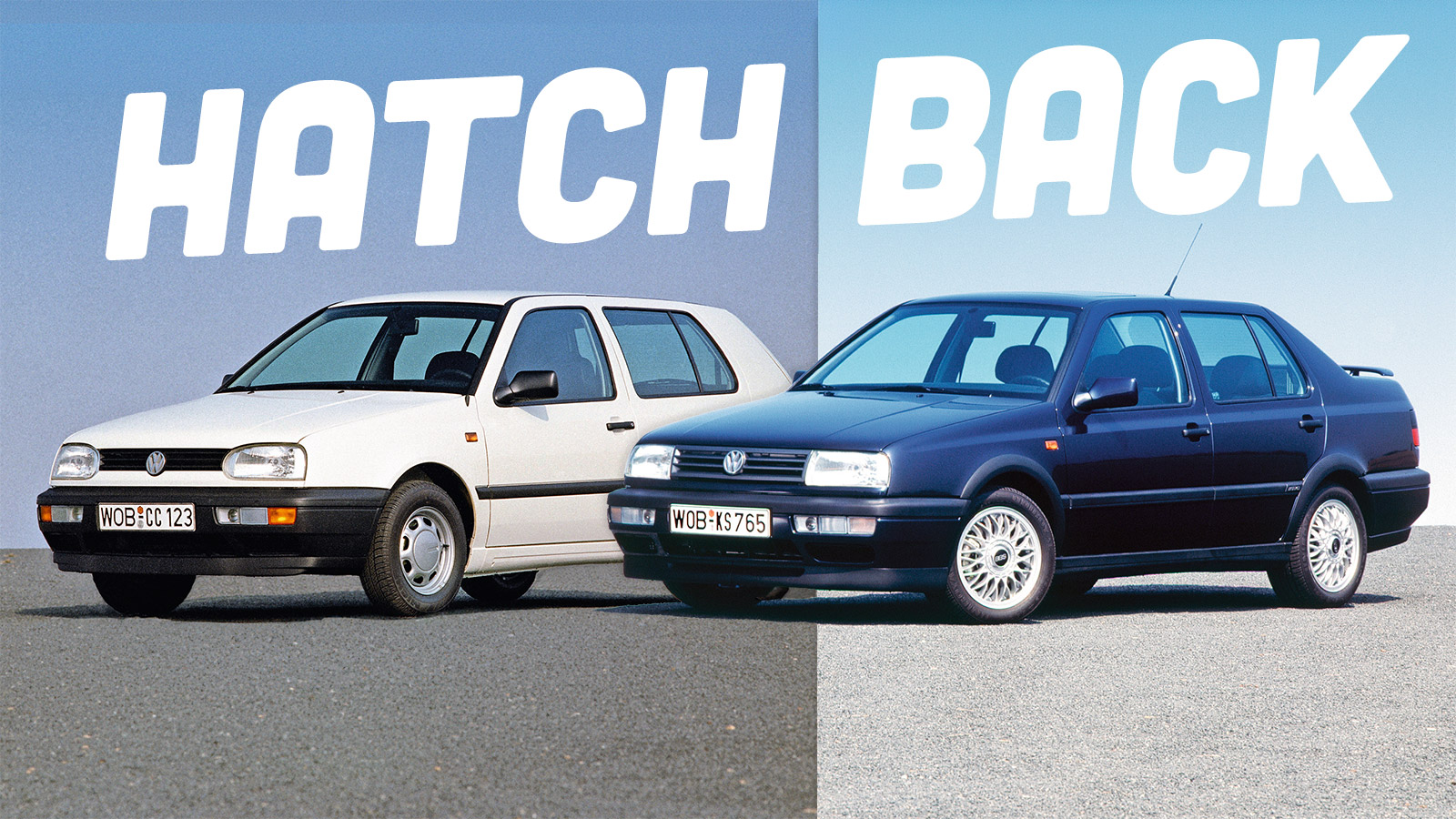
There’s a fascinating type of car, that at first seems like one of the most regular cars you can think of. It’s a four-door sedan, right? But looking at the dimensions, it’s obvious it’s a hatchback first and foremost, with a trunk grafted on. Over the years this has been done well, or cooked up hastily, resulting in some terrible looking three-box cars.
This differs from the introduction of a model range (for example, the Ford Mondeo) where you have a four-door sedan, a five-door liftback and a wagon all available from the get-go: instead, the sedan is often brought to the market later to bring in buyers that wouldn’t for some reason choose the regular hatchback, often sold under its own model name.


It’s a sort of a hatchback backlash: perhaps luggage should travel in its own distinct compartment and not share cabin space with the passengers.

The Volkswagen Jetta is one of the earliest examples of this. The Mk1 Jetta was introduced in 1979, five years after the Mk1 Golf and Rabbit hit the market. With North American sedan buyers in mind, Volkswagen created a seemingly larger car just by engineering a trunk onto the 1974 Golf’s rear end.
The result was a large and tall enclosed cargo area and a more formal three-box design that didn’t completely look like an afterthought, even if it was developed from a smaller econobox. Especially in four door form, the longer Jetta reached a bit above its Golf origins. Volkswagen replicated this with the second generation Jetta, introduced a year later than the Mk2 Golf, seen in this 1988 VW lineup photo from 1988.

Earlier, Volkswagen had had a go at this with the smaller Polo from 1975, which spawned the two-door Derby sedan variant in 1977.
Interestingly, the second generation 1981 Polo was initially available as an upright “Steilheck” wagonback only, with a more regular shaped hatchback (Polo Coupe) introduced a couple years later, to join the wagon and Derby sedan. The near vertical rear wasn’t as palatable as VW had imagined. The first generation Polo was also sold as an Audi 50, but the second gen wasn’t, and the 50 never got a sedan.
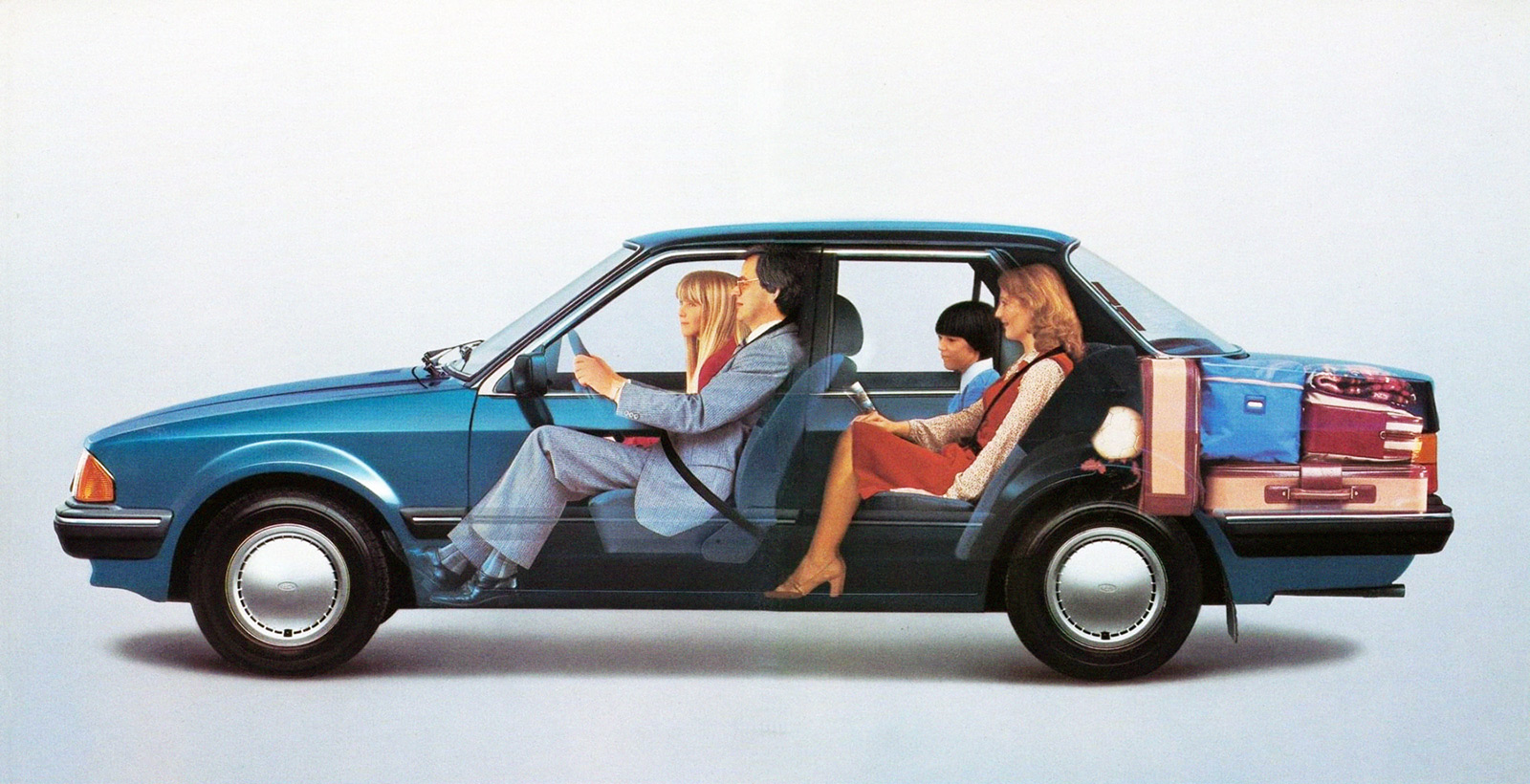
Ford’s front-wheel-drive Escort also got a sedan variant in Europe, but not in America. While Ford Europe started selling the sedan, called Orion, in 1983, the American Escort was sold as hatchback and wagon only, with the Escort-derived Tempo bridging the gap between the Escort and the Taurus. The Orion was likely deemed too small, and it’s not difficult to see the Tempo as the FWD version of the Ford Sierra (Merkur XR4ti in the States).

With the Orion, Ford was also able to appeal to buyers that had preferred the ruler-straight lines of the earlier Taunus/Cortina to the round 1982 Sierra, which only got a sedan version at the 1987 facelift.
This also brought the Sierra further away from its Probe concept car roots, seen above in this design studio shot. You can read more about this period from Adrian’s earlier piece.

The sedan Sierra, also marketed as the Sierra Sapphire, was an interesting notchback development of a far more round car, yet the redesign looked satisfying. It also coincided with the modernizing facelift that brought the Sierra larger headlights and integrated indicators instead of the television shaped headlights of the earlier car.
Ford also created an RS Cosworth version of the Sapphire, which certainly helped improve its image. Later ones were available with four-wheel-drive.

Saab’s 900 and 9000 also gained sedan versions years after the originals were introduced. With the 900, the story is somewhat convoluted: the 900 was based on the 99, which was first and foremost a sedan when it came on sale in 1968, with the three-door “Combi Coupé” introduced in 1974. The longer 900 was sold from 1978, and for the first years, only the Combi Coupé version was sold (with three or five doors), with the sedan only joining in 1981. Saab’s designers managed to combine the curving side window line with a low sedan rear, in a way that looks quite harmonious. It was sold in two- and four door-form, and the two-door 900 also formed the rear half of the 99/900 mashup called Saab 90.
For the 9000, the range started in 1985 as the 9000 CC with five doors, with the 9000 CD sedan sold from 1988. Saab didn’t drop the ball here, as the 9000 CD was smooth work.

For a really good looking hatchback derived sedan, you have to go to the 1999 Jetta, which was sold as the Volkswagen Bora in Europe. It’s one of the rare occasions where you can hardly tell where the design originally started, as the Bora/Jetta only shares its front doors with the Mk4 Golf: earlier Jettas had used Golf rear doors as well.

The roofline and rear quarters of the Jetta Mk4 have a pleasing swoop, instead of the pronounced back of the ‘90s Mk3 version that’s genuinely “Oops! All Trunk!”. As a result, the Mk4’s cargo area isn’t cavernous, but maybe it’s not a bad sacrifice when the design is so easy on the eye.
The sixth generation Jetta was far more its own car than earlier Jettas, as it didn’t share any body panels with the corresponding Mk6 Golf.

The 1990s Seat Toledo is the opposite of a hatchback derived sedan: it’s technically based on the Mk2 Jetta, but it’s a hatchback that looks like a sedan. Instead of a small trunk opening, it has a large fifth door hinged above the rear window, not terribly dissimilar to a Dodge Shadow/Plymouth Sundance.
Another reversal of the process is the AMC Gremlin, which was just an AMC sedan with the rear sliced off – and that showed, too.

Japanese manufacturers have also had a go at creating sedans out of hatchbacks. Take the second generation Suzuki Swift, which was sold as the Suzuki Cultus in its home market and the Geo Metro in the United States. In 1989, Suzuki supplemented the range with a sedan, which it called the Cultus Esteem. The Esteem name would return with the Baleno’s sedan version, which was also sold in North America. That’s the Better Call Saul car.
The Swift’s sedan derivative was also built in India for over a decade, as the Maruti 1000, and despite having just a 970cc engine it was considered nearly luxurious compared to the small hatchbacks that had been dominating the Indian market up to that point. It’s amazing what the addition of a trunk can do.

While the Mk2 Jetta was produced in China for ever and ever, French manufacturers competing with Volkswagen have also created their own “Jettas” there, out of cars that didn’t get sedan versions in their original markets. A good example of this is the Citroen ZX, which was quite successfully refreshed into a sedan for the Chinese market in the late 1990s.

A less good looking car is the 2006 Peugeot 206 sedan, which was initially introduced for the Iranian market, but which has also been sold in Eastern Europe, Turkey, Russia and some of the Balkan countries. The sedan bodywork just somehow hangs on top of the rest of the car, like it was draped on it.
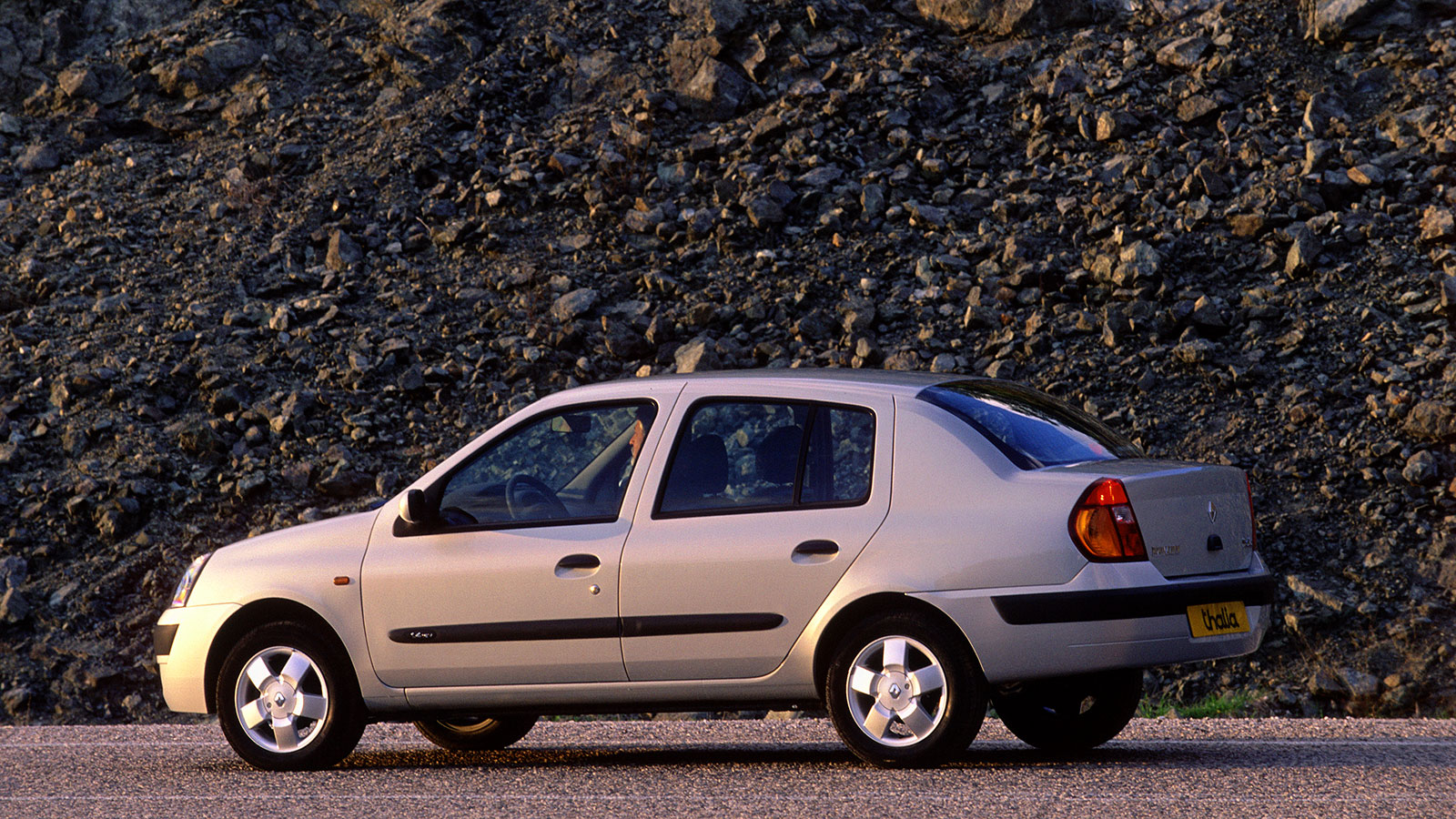
One of the likely worst looking examples is the Renault Symbol, based on the second generation Renault Clio. The C-pillars of the Clio hatchback are so pronounced, with a waterfall roundness to them, that it’s really difficult to integrate a trunk smoothly into that rear end, and it shows. The trunk just looks huge and nothing less than an afterthought, even if there only was a year’s gap between the hatch and the sedan’s introduction.
The Symbol/Thalia also suffers from the same visual problem as the 206 Sedan and the Mk3 Jetta: there’s a lot of stuff above and behind the rear wheel, which is also quite a bit forwards. You’re just driving a huge trunk around. The other thing is that when you’re building a bigger car out of a small hatchback, the rear seat space often remains unchanged.
The Symbol wasn’t even sold in mainland France, but in Eastern Europe, Middle East, and in South America, sometimes as the Renault Thalia. In Mexico, it was badged as the Nissan Platina.

A far better looking Renault was the late ’70s Renault 7, or Siete, which was a sedan version of the R5 or “Le Car.” Should it have been sold in the States?
The UK-based motoring website Petrolblog has taken to calling these sedan hatchbacks “Shatchbacks”. While that’s certainly a mouthful, it’s a term that’s stuck at least in parts of Weird Car Twitter and “Weirdcarbs” aka Weird Car Bluesky.
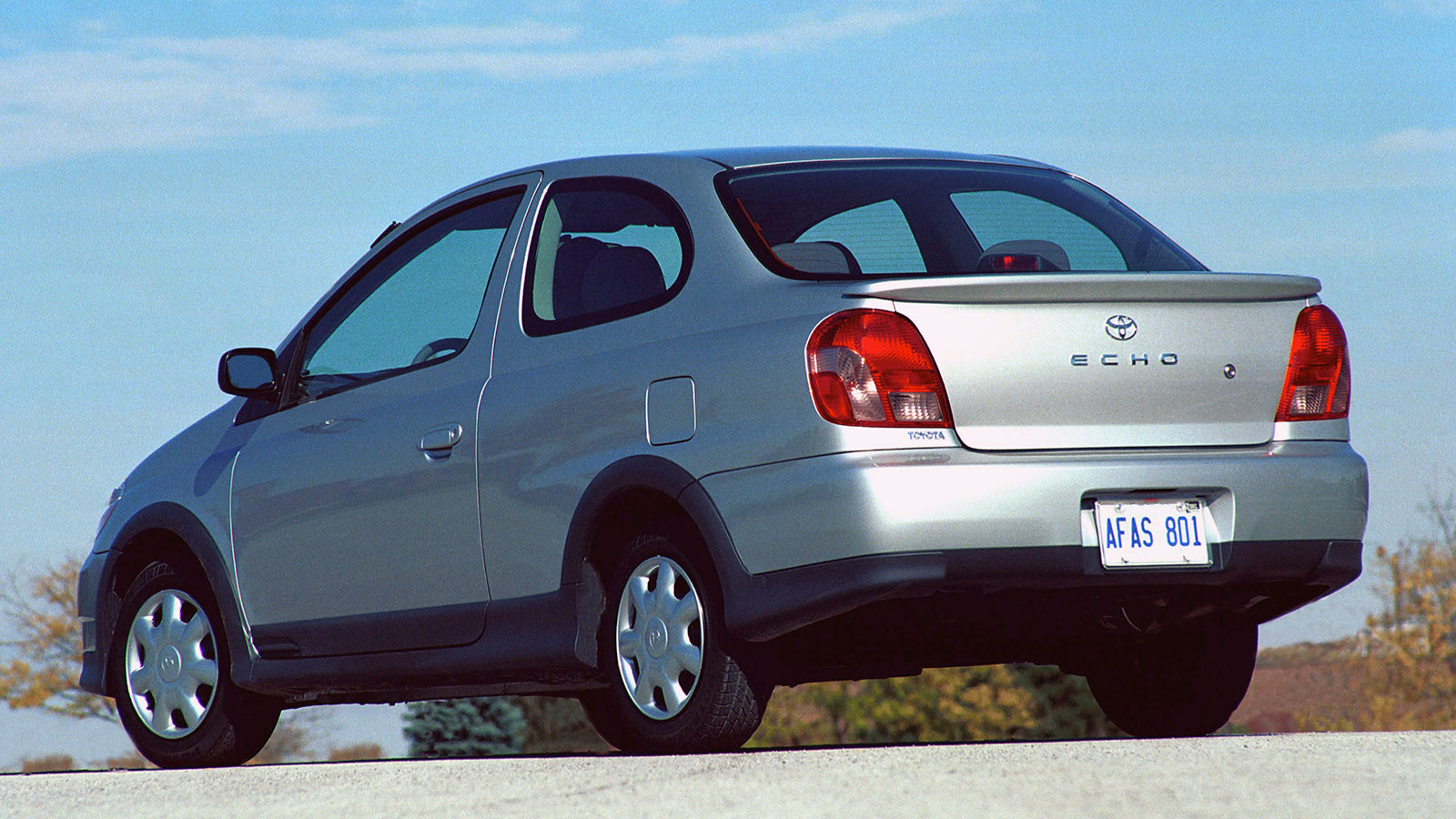
My personal favorites in a Sickos-Yes sort of way are the Skoda Fabia sedan and the Nissan Versa, especially in the light fudge sort of metallic brown that they always seemed to be. I also like the Toyota Echo, probably because we never got it here in Europe. It’s just a Yaris with a trunk, and it was even sold as the Echo Coupe in two door form. Make mine beige.
(Top image: Volkswagen)


My favorite examples of this kind of car are the rare models that manage to be *both* simultaneously. Cars that look exactly like a sedan but behave like a hatchback.
Now this is where people point to the Kia Stinger or the Opel Insignia/Buck Regal/Holden Commodore, or the liftback versions of the Mk IV and Mk V Mondeo and say that’s not that uncommon, but no: those are *very obviously* hatchbacks based on their roofline.
Look instead at the Škodas Octavia and Superb, or the Daihatsu Applause, which in the final facelift and with the right wheels and black paint looks kind of like a Toyota Century that shunk in the wash nearly down to kei proportions. These all look exactly like fairly traditional three box sedans with quite formal rooflines, but as you open the boot the whole rear window assembly unexpectedly moves with it, hinged up at the top of the C pillar. I think Seat once offered the Toledo in that body style, too.
In the case of the Škodas I delight in the novelty, but don’t really understand who is buying their sedans. Despite it all, their estates are so much prettier and more versatile that it seems like it should be czechmate. But there’s something about that tiny tiny Diahatsu sedan that always makes me smile.
There’s one which parks near my office sometimes, in a tasteful two-tone that screams 90s luxury – black over a metallic grey – and it looks like nothing quite so much as a Yakuza clown car. Also, I was today years old when I learned the Applause had been available with a 5 speed manual and an AWD system that could send 46% or so of its power to the rear wheels, even if that only translated to about 35 of a raging 77kw on tap.
I never realized this before – a sedan and a hatchback simply have different needs for the rear passenger doors.
I had an ’88 Saab 9000 hatchback and couldn’t believe how ugly the 4-door sedan looked in comparison when it came out.
I also had a 2001 Jetta, which I thought was a genuinely good-looking car. I like it’s looks better than the A4 Golf.
I really like how Audi’s A7s looked and was surprised when I learned, and later the A5, had hatches.
The Renault Siete is so good. I never really understood why Renault didn’t try bringing it out of the Spanish market, I’m confident it would have sold well in many places. It would have also been a great base for an estate version. FASA likely couldn’t fund one on its own, but that project would probably not represent a crazy investment for the parent company – the platform was already there.
I just remembered the other version of this kind of situation. Brazilian trucks turned into sedans. Basically the opposite of a ute.
For example, the Tropical Cabines Tropiclassic is based on a Ford F-250 Super Duty
As written about by Mercedes back the other site
https://www.jalopnik.com/the-tropical-cabines-tropiclassic-is-a-strange-vehicle-1846241844/
my favorites would have to be of more recent. the bmw 4series gran coupes are nice, along with the discontinued domestic competitor the regal sportback. 3rd on the podium would have to be the kia stinger.
There was mention of the FWD Escort getting a sedan version in other markets outside of the US. The second generation US Escort did have a sedan born from the hatch. When the Mazda based second generation US Escort hit the market in 1991, it was available in a 3-door, 5-door hatch and a wagon version. The Mercury counterpart, the Tracer, only came in a sedan version. In 1992, the Escort finally gained the sedan version as well.
VW Type 3 Fastback…looks like a hatchback, but with a dinky trunk instead. Oh, and that trunk is the engine access. Coulda been so much better.
Over the years, VW have probably used the Golf as the basis for almost as many cars as the (OG) Beetle (the New Beetle of course being based on a Golf chassis).
Another reversal is the BMW 318ti, had one for awhile, fun car.
I’ve always loved the Fiat Duna, the sedan derived by the Uno. Also, probably because there was one in town, I liked the 206 sedan despite the proportions. The Thalia is terrible in everyway and I’m glad you mentioned it
The one I remember for its sheer laziness is the Proton Persona from 2007, which is the sedan version of the Proton Gen.2 hatch (itself not a great car). It just felt like they put zero thought into the design.
You could say the same thing about the current Honda Civic. Great looking cars, but it’s difficult to tell the sedan and hatchback apart.
This was a thing in India, where an arbitrary 4-metre length was imposed as the cutoff between a lower and a higher road tax. My eyes still hurt.
The first one was the Tata Indigo CS. The regular Indigo sedan’s boot was chopped off, and a newer, much smaller boot was slapped on to duck under 4-metres. The car, not a stellar performer to begin with, was rendered even worse with this version. The CS officially stood for Club Sport, but people know it as the Tata Indigo Cut Short.
Maruti (Suzuki’s Indian collaborator) didn’t stop with the Maruti 1000 (mentioned in the article), and its more modern version, the Esteem, which sported a 1.3 Litre engine. They launched the Swift DZire, which took the Swift and grew it a butt. Ugly with a capital F.
Honda didn’t let the cute Brio lead a dignified existence. They launched the Amaze, which in its first generation, looked like a Smurf with a large fanny-pack that had moved a bit. The Brio was gorgeous; the Amaze was a travesty Thankfully, Honda India came to its senses, and the following models of the Amaze were standalone. Ugly, but not cruel to the Brio. It also helped that Honda discontinued the Brio round about the same time.
VW took the Polo, and made a regular sedan called the Vento, a blameless cruiser whose only mistake was being longer than 4 metres. VW then cut the boot, and launched the Ameo, which went like stink in diesel form, no pun intended. But the Ameo was eye-pokingly a-kilter. One would see the lovely Polo coming at you, and as it went past, slapped you in the face with its hideous derrière.
Hyundai did it with the Aura, bastardising the already disaster-for-the-optics Grand i10, And Tata came back, meaner, with the Zest and the Tigor.
Shatbacks, all.
Sedatchback.
I was always curious about the Chevy Malibu Maxx, which had the lines of a sedan, and just a short hatchback. They were never that common, and they have all disappeared now.
malibu-maxx-ss-road-test
“…the Maxx is already a Gauloises-smoking bohemian at the Chevrolet of baseball, hot dogs, and apple-pie fame. It rolls on GM’s front-drive Epsilon platform, which it shares with European cosmopolitans from Saab and Opel.”
“The Chevrolet Malibu Maxx SS Was Your American German Four-Door Coupe”
https://www.motortrend.com/features/chevrolet-malibu-maxx-ss-german-four-door-coupe
i saw a malibu maxx ss the other day and was completely bewildered. i had forgotten the maxx existed and then was struck by the double whammy of SS lol. about as rare as the SS cobalt sedan i saw a few months ago.
There’s a secret sauce, but it’s expensive stuff. Distinct rear doors not shared with the base 5-door hatchback.
My pick from earlier, the Chevy Vega, looked good with a trunk and the VW Derby MkII looked better than the Jetta MkII; both lines were exclusively 2-doors in all their variants. The Opel Kadett E 5-door was given rear doors that simply would not work for a sedan or a wagon so distinct doors were priced in, which the (Daewoo)Pontiac LeMans and Vauxhall Belmont inherited. (The fact that Daewoo adapted the hatchback to use the sedan rear doors is another matter).
With the MkI Jetta which came several years into the Rabbit/Golf product cycle VW had simply lucked into rear doors whose shape and angle worked just as well for a sedan than the originally intended hatchback. It was boosted in the American market by the decision to “Oldsmobilize” the Westmoreland-built Rabbit having been a misread leading buyers to the genuine German Jetta and setting a preference for sedans over hatchbacks that only crossover carcinization has fully wiped.
Sometimes product decisions can be understood only in historical context – the Suzuki Swift sedan pictured above (as it was known on the US market) has its’ own distinct rear doors, a lavish spend that neither its’ North American sales numbers nor the state of the India market in 1990 justified (its’ direct competitors there were barely-warmed-over ’50s models), but Suzuki Auto was trying to play in the big leagues in the JDM and its’ American branch was still building a dealer network and needed products that couldn’t be had from the Chevy/Geo place down the street. Likewise, the existence of the Chevy Citation Club Coupe can only be explained by the predecessor Nova’s top seller for the entire past decade being the trunked 2-door.
That 206 is hilariously bad. The 306 sedan was very handsome for a hack job.
Mk2 Civic sedan, also a Triumph something.
Acclaim!
The opposite of this was of course the BMW 3-series Compact – a hatchback based on a sedan which looked just as awkward as that sounds. Sold well enough to be reasonably common around here back in the day though.
I always liked the Bora and even considered getting one as my first car. VW’s poor reputation for reliability, even back then, turned me off though.
This article also reminds me I recently saw a late-model Corolla sedan, which are rare enough that I didn’t realise they existed (they’re nearly all hatchbacks around here). It… didn’t look great.
I have a soft spot for the front end of the E46 Compact. A very strange and unique BMW design that wasn’t shared anywhere else in the range.
Also weird that BMW went to the trouble of designing a unique front end when traditionally this type of car tried to share as much as possible with the “donor” design.
That’s my car! Well, was…used to have an 84 Jetta in maroon. It was a sedan and not a GLI so not exact. That thing was a blast to drive w/ stick!
Had a Mk3 Vento when living in the UK – that thing had the biggest trunk EVER! 2 large suitcases, and 2 carry-ons laid flat with room to spare! Would sit on 95 on the Motorway too…
Definitely the MK1 and MK2 Jettas, given I owned both back in the day. But I would have infinitely preferred a Golf if all things were equal. But MKI Rabbits in the US kinda sucked, and beggars don’t get to be choosers – I found good Jettas before I found good Golfs to buy every time until I bought new Golfs in 2001 and 2017.
Fiat Brava and Siena. Bo further words needed.
*no
Brava was the 5dr hatchback version of the Bravo 3dr, so not a shatchback. The 4dr version was the Marea.
The Siena and the slightly longer Albea were sedans based on the Paleo.
I hate them all. I can accept the rare ones which I have never or rarely seen IRL, like the Daihatsu Charade Social, Subaru Tutto (look it up!), and Renault Siete, but that’s only because they are rare. Give me a hatchback, siete days of the week.
Toyota Yaris did this but in other markets than NA – I understand there are other countries besides the USA, Texas, Mexico, California and Canada, though I haven’t seen them for myself so to me it might just be a hoax – the sedan models were broken out as separate badges. And the Mazda2, which after 2019 was also the genetic source material for the concurrent generation of Yaris.
At one time Hyundai’s wildly misnamed Excel was available as a 3-door hatchback, a 5-door hatchback and a 4-door sedan. It was wretched in any form, though the 3-door hatchback did a decent job of limiting how many people were forced to endure the pain with you. it also made escaping more difficult for anyone shoveled into the back, so it’s a mixed bag of scrambled dregs.
The Excel’s replacement, the Accent, also came in a sedan style with a trunk vs a five-door liftback, but it cleverly disguised the lowly hatch with a teensy bit of trunky bustle – more bustle than an 80s Escort, but not so much as to complicate giving it a big, useful hatch.
I have an irrational love for the Chevy Citation – I’ve aired this particular bit of dirty laundry before. It was available as a three-door hatch, a five-door hatch, and a really weirdly shaped two-door notchback. That one was also available with the genuinely impressive (for the day) X-11 performance package, making it almost quick enough to outrun the ugly. Not quite, but almost.
The GM X-body line included the Pontiax Phoenix, Olds Omega and Buick Skylark. The Phoenix was almost an orphan at birth, you didn’t see many of those. But the other two were offered only as notchback models, eschewing the hatch entirely. Those two-door models were quite handsome for what they were, by the way.
I just want to say that four-door hatchbacks are just plain good. They’re useful. That colossal cargo opening is the best thing when you’re trying to get something big into the car, bigger than might otherwise fit but such an uncommon load that owning a truck to try to anticipate carrying it around is just dumb. More hatchbacks.