


Most of the delivery trucks throughout history have followed a similar formula. Take a light-duty or medium-duty frame, bolt a box to the top, and then send it out into service. These trucks carry everything from appliances and furniture to beverages and newspapers. But what if there was a delivery truck that didn’t drive like it was a truck? In the 1960s, one man’s company explored just that. The Highway Products Compac-Van tried to improve the lives of delivery truck drivers by being built with a unitized body like a car.
The concept of a delivery truck that doesn’t use a traditional body-on-frame design may seem unremarkable to you. After all, today’s Rivian and GM electric delivery vans ride on a skateboard chassis. Meanwhile, the Oshkosh Next Generation Delivery Vehicle is built on an aluminum unibody rather than body-on-frame like previous mail trucks.


Flip your calendars back even just a few decades, though, and pretty much every delivery vehicle had a steel frame underneath it, with a few exceptions. In the 1930s, for example, you might find oddities like the Twin Coach Twin Truck, the weird delivery truck that was designed to drive like a horse walks. Twin Coach was famous for its buses, which featured fully unitized bodies since 1927. The Twin Truck was built the same way, featuring a welded unitized body.

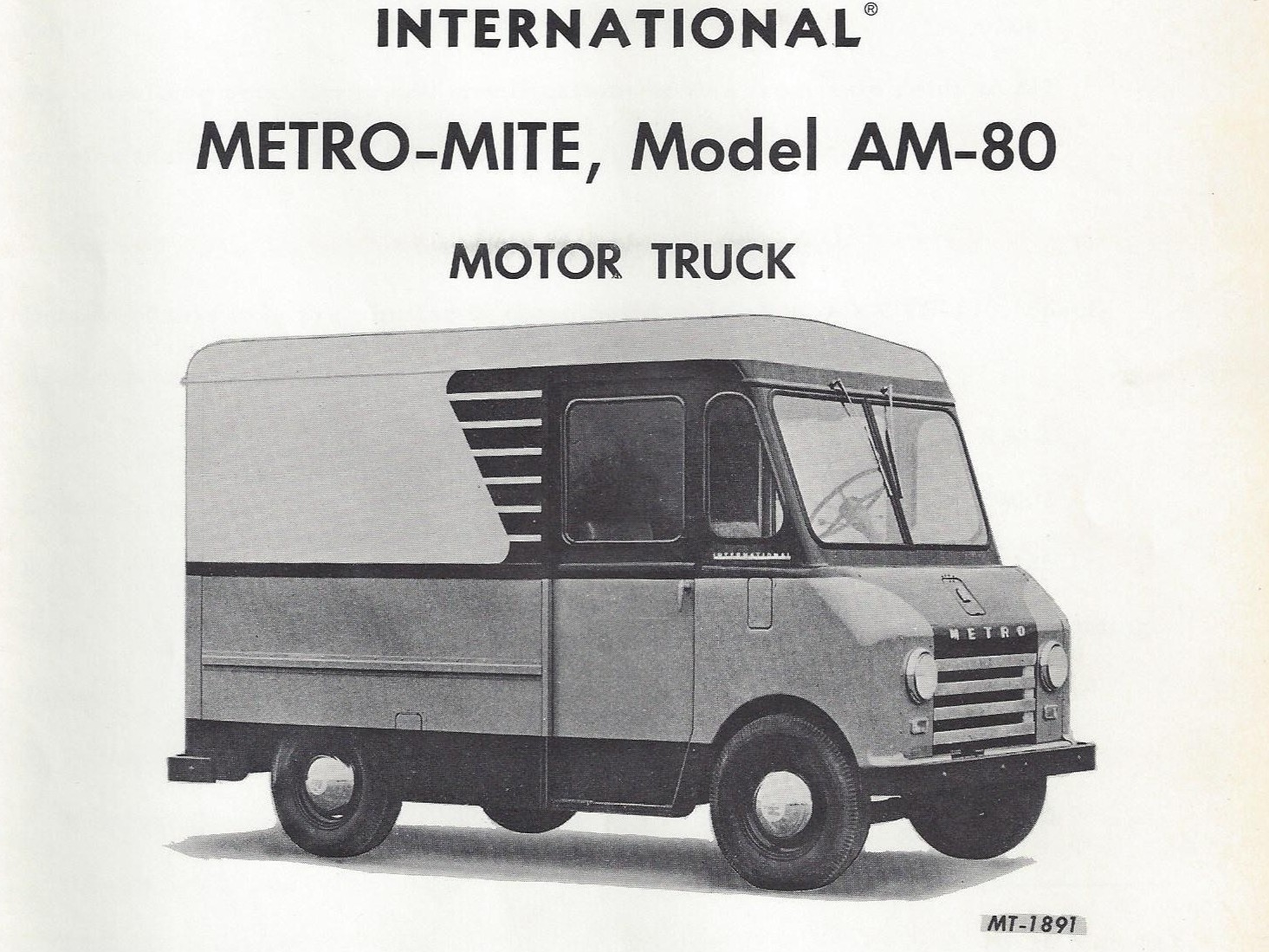
Skip ahead to the 1950s, and you’ll find the International AM-80 Metro-Mite. This baby truck weighed 2,800 pounds and was rated for up to a 200 cubic foot, 1,000-pound payload. Power in the little guy came from a 1.5-liter Austin B-Series engine.
In the 1960s, there was the Studebaker Zip-Van, which featured a unitized body with a front subframe fashioned from the Studebaker Champion’s platform. These trucks are the exceptions to the rule. Most of the time, if you’re building a high-capacity delivery truck, it’s going to have a body that rides on a truck chassis. That has been the case since pretty much the dawn of the truck, which itself was rooted in the beginnings of the automobile.
Putting a box on a truck chassis opens body manufacturers up to a wide variety of potential platforms. At the same time, these trucks get the benefits of a heavy-duty frame that offers great payload numbers and can withstand decades of abuse.
Despite the durability advantages, it probably doesn’t surprise you to hear that a delivery van built on a truck frame performs like a truck. That often means a high deck height, the rough ride and handling of a commercial truck, a wide turning circle, and the heavy weight of a commercial truck. Highway Products, Inc. of Kent, Ohio, saw all of these as obstacles to eliminate. Its solution? Build a truck that had more in common with the revolutionary 1984 Jeep Cherokee XJ than a bulldog Mack.
From The Remnants of Twin Coach
This story begins with the end of Twin Coach, and here’s a primer from a previous story:
The Twin Coach concern begins with brothers William B. and Frank R. Fageol, which you would pronounce as “fadjl.” Per coachbuilt.com, they were born in the Midwest in the late 19th century and apparently took a liking to buses early on. William was only 19 when in 1899 he joined forces with one of his other brothers, Rollie, in owning and operating a steam-powered bus at a fairground. Later that same year, the two brothers would build their first gas-powered car.
All of the Fageol brothers would try their hands at a handful of automotive projects before moving to California. In 1916, brothers Claude, Frank, Rollie, and William joined forces to form Fageol Motors in Oakland, California. The company’s products included a luxury car, trucks, tractors, and vehicles sent into World War I.
Fageol Motors claim to fame was the 1922 Safety Coach, a vehicle sometimes credited as being the first purpose-built bus. Most buses in the early days of motoring were coach bodies on top of a truck chassis. The Fageol brothers saw this as a bad thing as trucks rode high and had particularly jarring suspensions. The Fageol had a custom frame and an aluminum body with a low floor, which was optimized for use as a bus. The Safety Coach had wide all-weather tires, air brakes, and interior heating via water heated by the engine.

Fageol Motor was sold to the American Car and Foundry Company of Ohio in 1925, and the Fageol brothers would go on to found Twin Coach. This company was an innovator in unitized buses and was famous for increasing bus capacity without sacrificing performance by mounting two engines in each bus. Twin Coach’s name reflected this then-unique concept, and the company also engaged in other industries, including delivery trucks and a marine division.
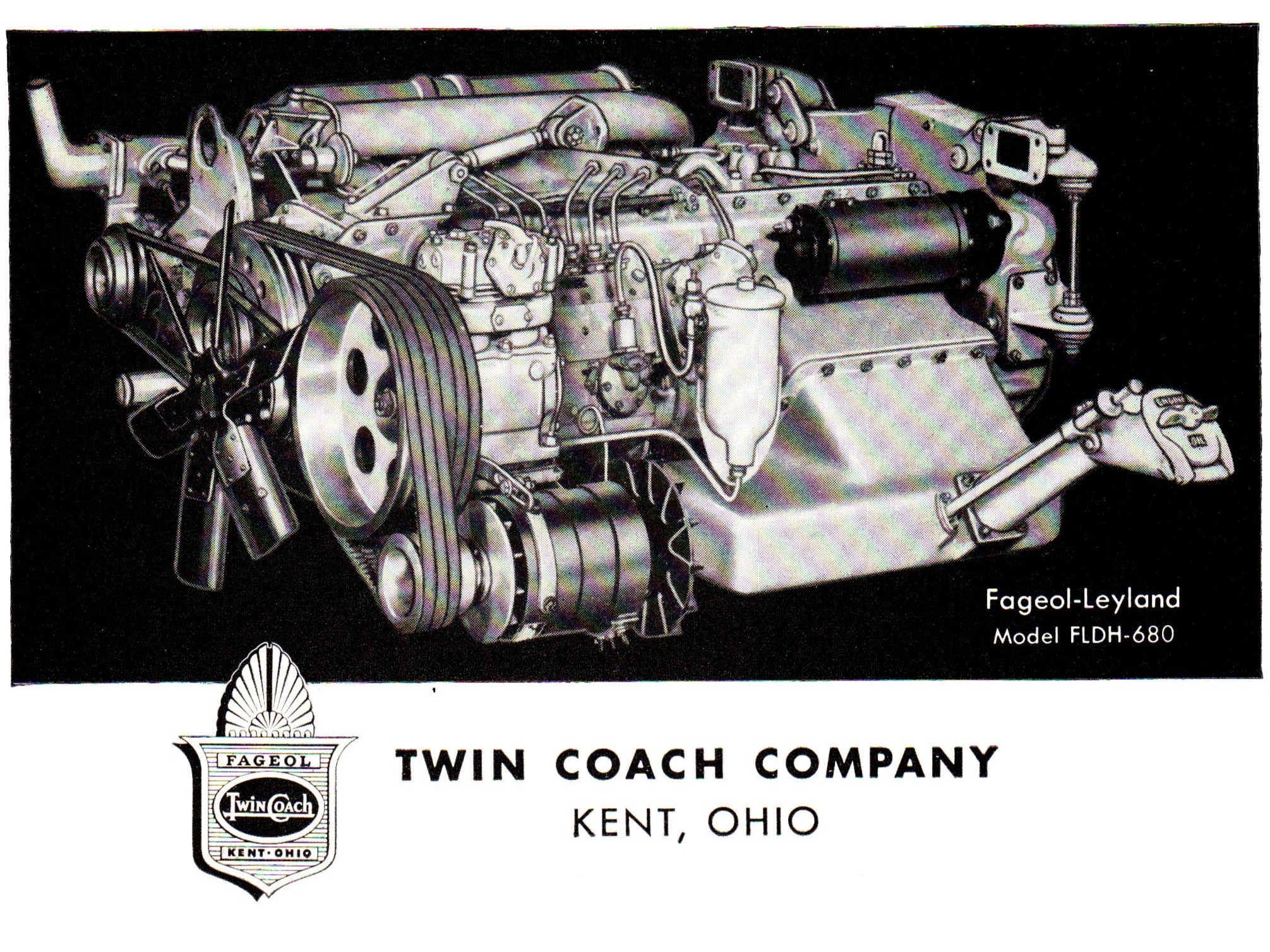
Sadly, Twin Coach couldn’t keep up with General Motors’ total domination of the bus market. In 1953, the company essentially gave away its bus division to Flxible, which had a much larger footing in the market. The Fageol Products Co. division remained in operation, producing engines for truck and bus manufacturers. One of these engines was the Fageol-Leyland diesel, which was built under license from Leyland Motors of Canada.
In 1958, Louis J. Fageol retired from Fageol Products. As a response, Twin Coach Company sold off its marine division to Crofton Manufacturing Company of Los Angeles. The company would then move its base to Cheektowaga, New York, where it had a factory that built wing and fuselage assemblies for Boeing, Grumann, North American, and Republic.
The truck and bus engine division remained in operation in Ohio, constructing small numbers of units for other companies.
Highway Products

According to the vehicle history site Coachbuilt, in 1960, Joseph Thomas Myers leased out a section of Twin Coach’s factory in Kent, Ohio, for his own company, Highway Products, Incorporated. Most sources suggest that Highway Products spun out of the remnants of the Fageol Truck Corporation, which did not go to Flxible. Reportedly, Myers was a director at Twin Coach, as well.
Myers formed Highway Products to construct mail trucks, mobile post offices, and delivery vans of varying sizes. It also branched out into the building of watercraft and MIM-23 HAWK missile launchers. Basically, if Myers figured he could score a government contract making just about anything, his company took a swing. By 1962, Highway Products had fully acquired a part of Twin Coach’s former bus plant.
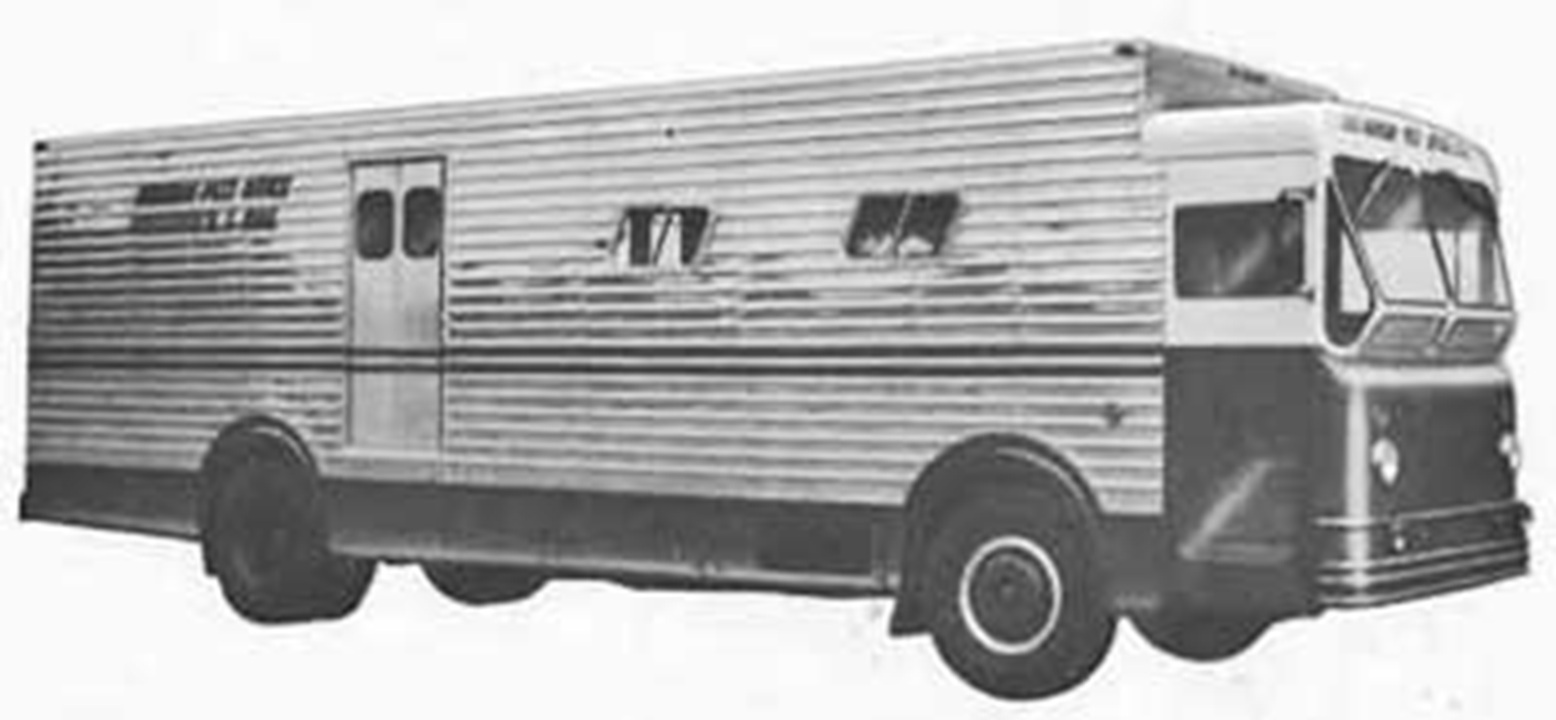
It would also build 40-foot Highway Post Office trucks featuring Cummins and Fageol-Leyland diesels.
In 1968, Highway Products also built the Twin Coach Cruiser TC-25 and TC-29, a pair of small buses with 25- to 29-passenger capacities. As Curbside Classic notes, these buses were designed to capitalize on federal grants to small cities to expand public transportation.

These buses were just 24 feet long, 96 inches wide, and featured rear-mounted commercial Chrysler 440 cubic inch gas V8s. Sadly, these buses were never given the option of diesel power, and most transit districts purchased more competitive buses. Some 900 units were built before the Twin Coach name was finally discontinued in 1975.
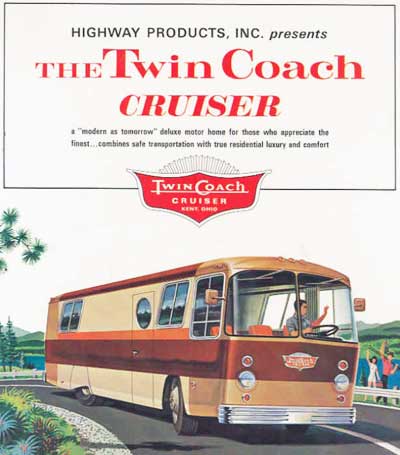
An archived advertisement also suggests that Highway Products tried to sell a motorhome version of the Twin Coach Cruiser. However, I could not find a single example in existence.
But perhaps the most interesting products of the Highway Products concern were the trucks.
The Compac-Van
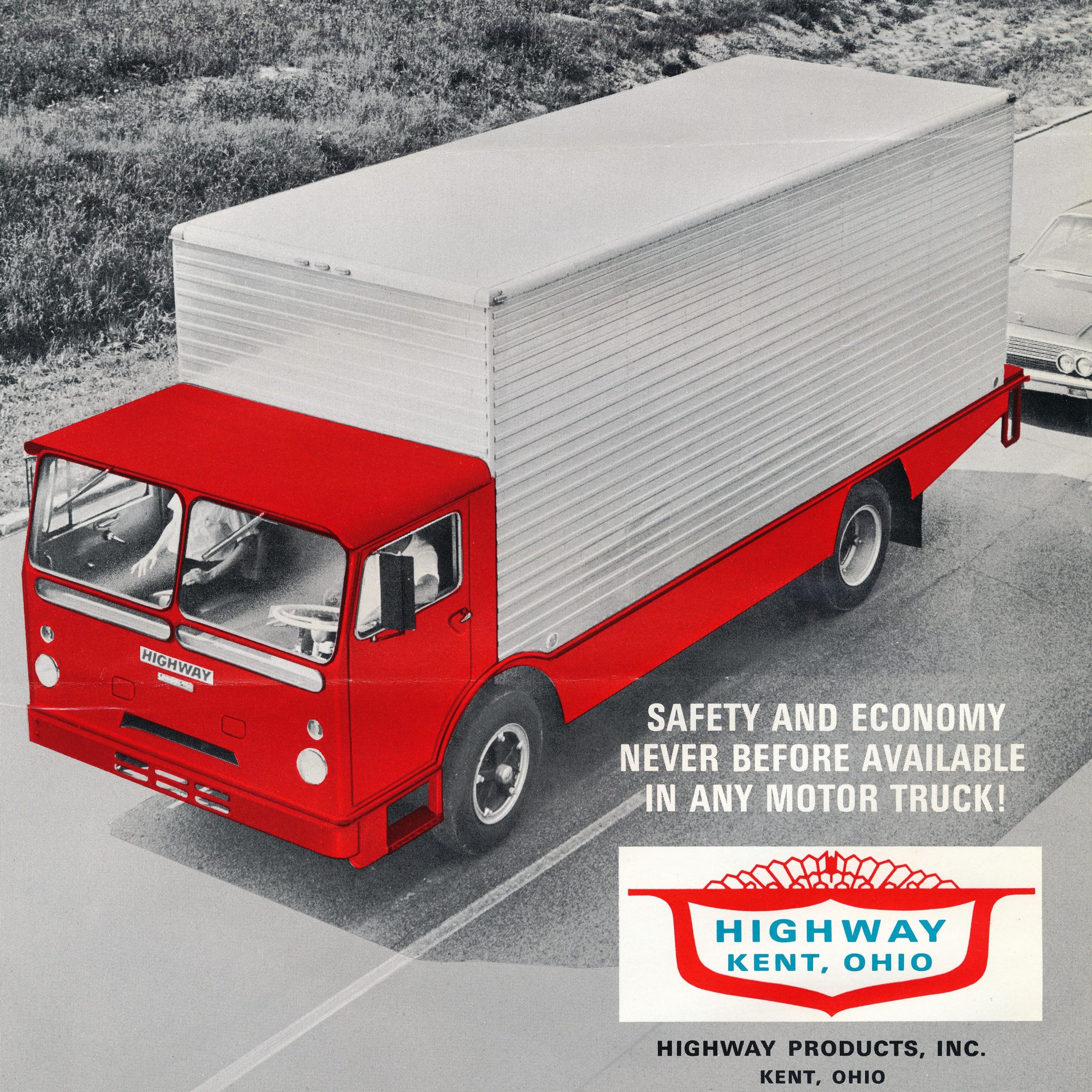
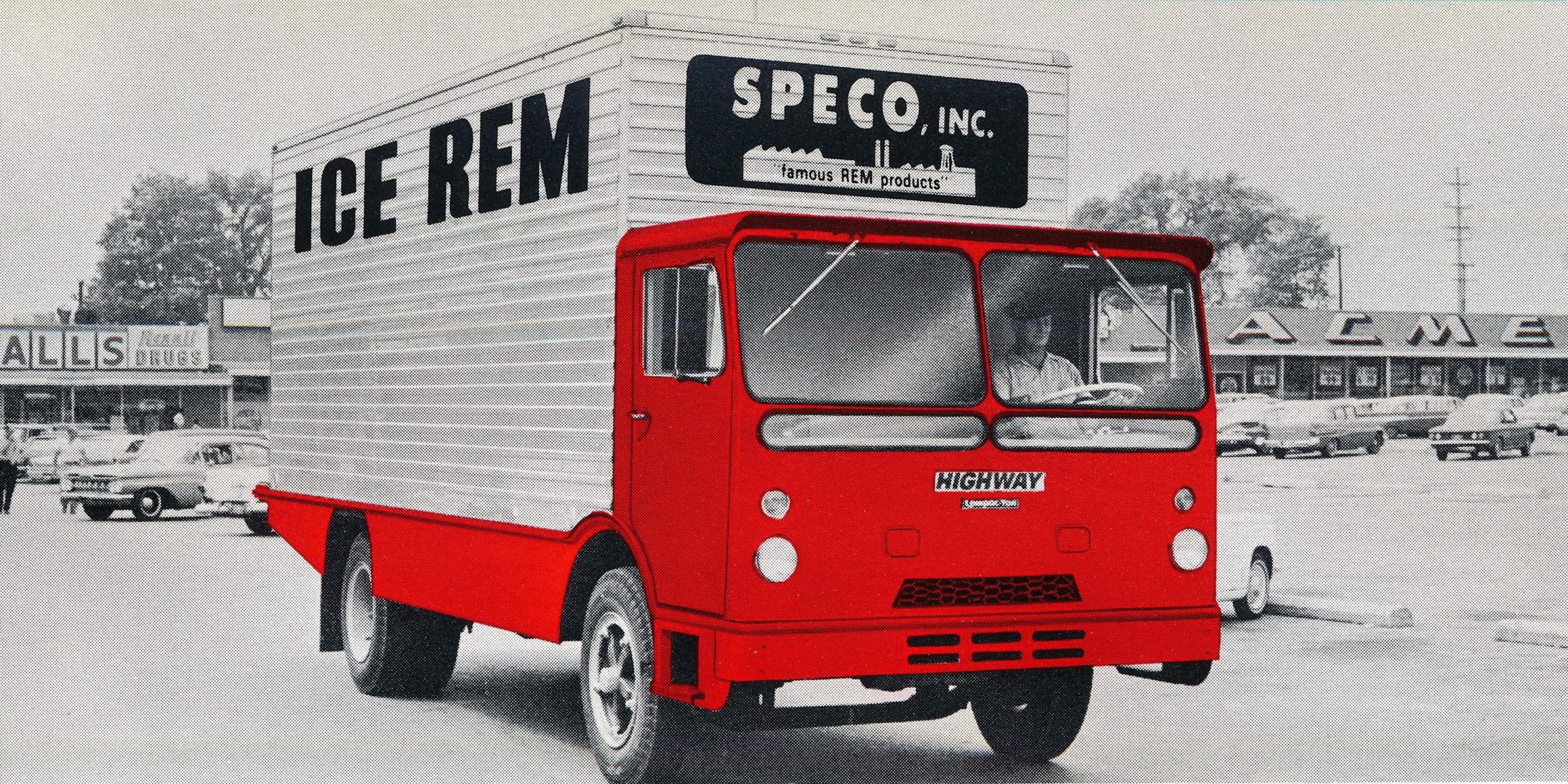
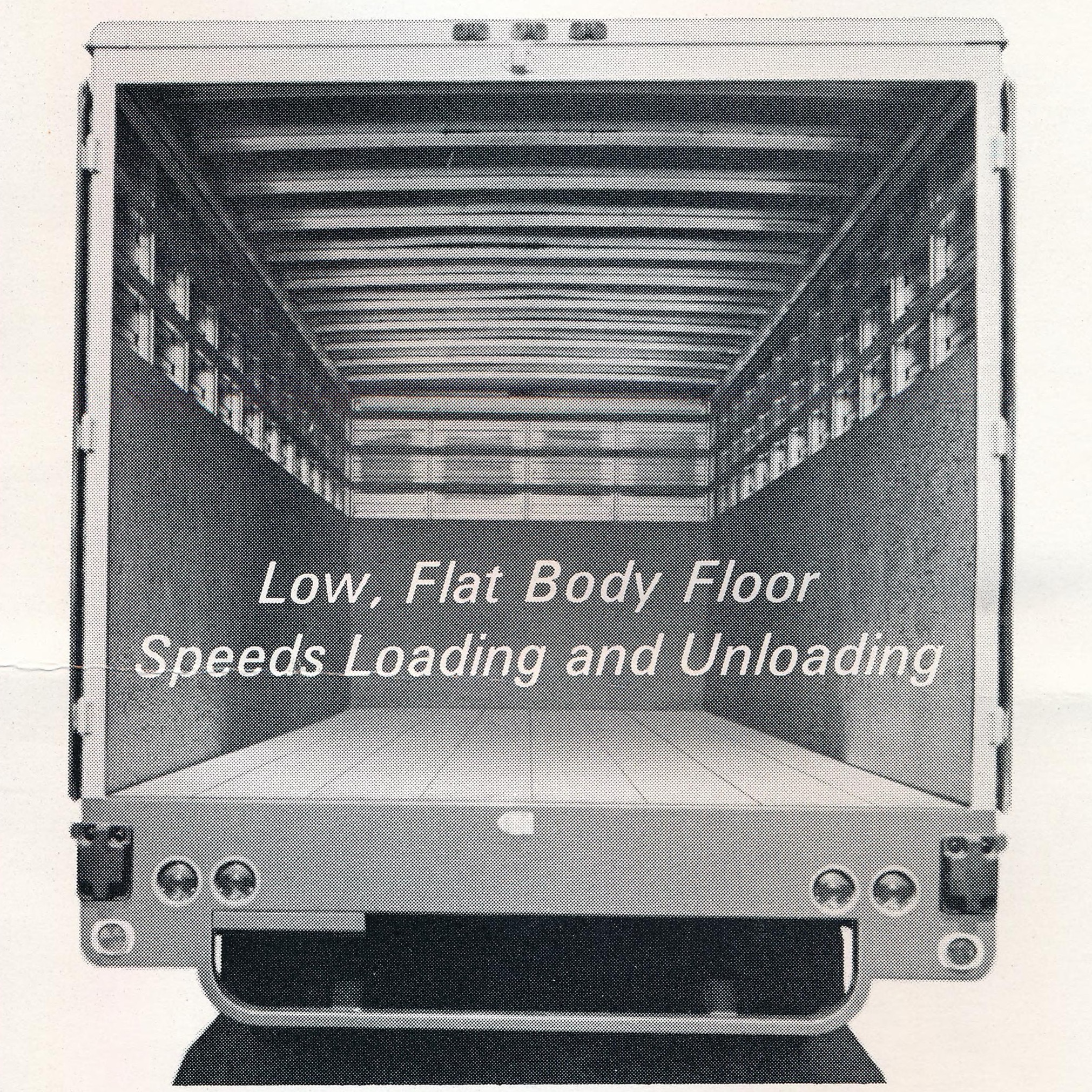
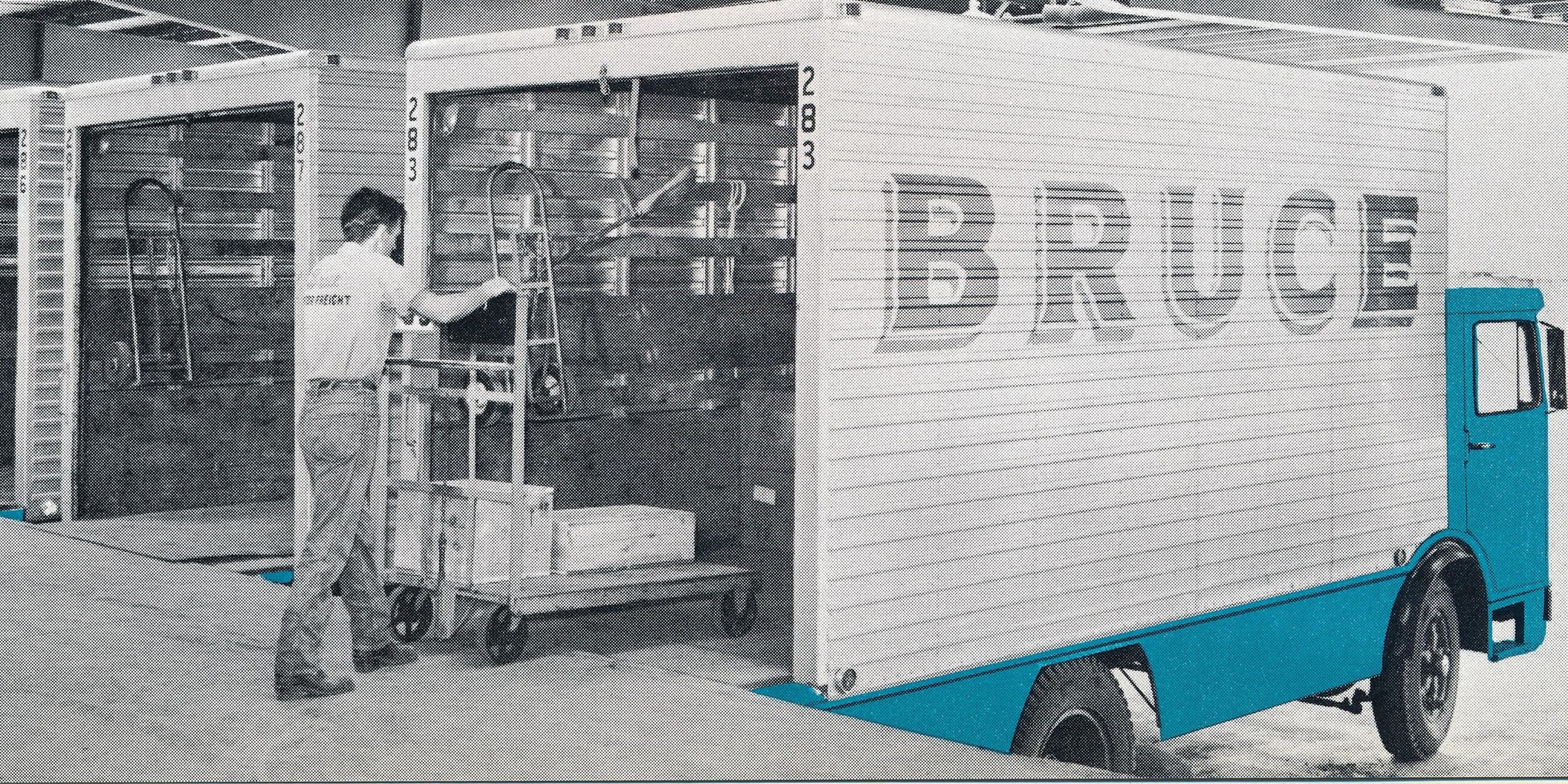
In 1963, the White Motor Company, a purveyor of commercial trucks, announced a new kind of delivery truck. The White Compac-Van, as it was called, departed from the norm for straight trucks. Instead of being a box mounted to a truck chassis, the Compac-Van was built with a unitized aluminum body like a car or a bus. Sold in 18-, 20-, 22-, and 24-foot box lengths, and with interior heights of 80 inches or 98 inches, the idea was that delivery drivers would love the truck’s low load floor, high visibility, and car-like maneuverability. From an old ad:
UNITIZED CONSTRUCTION: No longitudinal frame rails are used. This type of construction is frequently referred to as “stress panel” or “monocoque” design. The sides, roof and floor all carry weight. This results in a solid, firm type of construction. The aluminum body and cab are integral. Benfits include less weight, shorter overall length, better load distribution, shorter wheelbses and lower florot o ground dimensions.
The ad goes onto to detail the materials in use:
Alclad aluminum body; one-piece water-tight aluminum roof; hat shape extruded aluminum posts on 2-foot centers with gussets at bottom and at top stress points; horizontally ribbed outer panels on 4-inch centers; steel rub rails; two-inch rivet spacing. Flat floor (no wheel housings) of 1 1/16″ laminated oak laid on heavy steel cross sills; rear door post header and crossmember welded into one single teel structure.
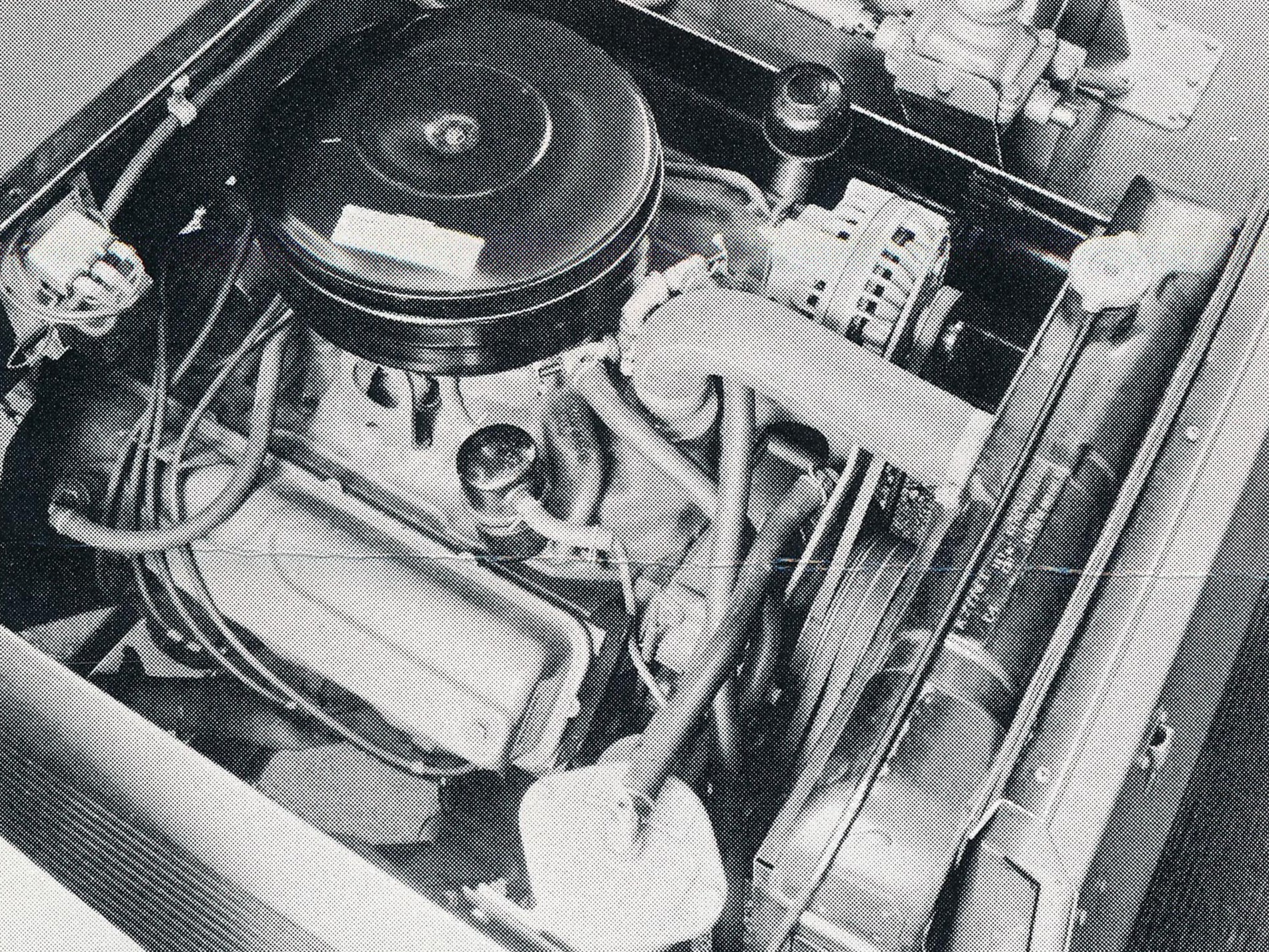
Under the center seat in the cab sat a 180 HP Chrysler 318 cubic inch V8, which also powered White’s PDQ “Pickup Deliver Quick” delivery trucks of the era. This gasser hooked up to a Timken F-145 rear axle through a four-speed manual transmission. That rear axle had a ratio of 6.2 when used with 17-inch tires or 6.8 with 20-inch tires. White marketed a top speed of 60 MPH.
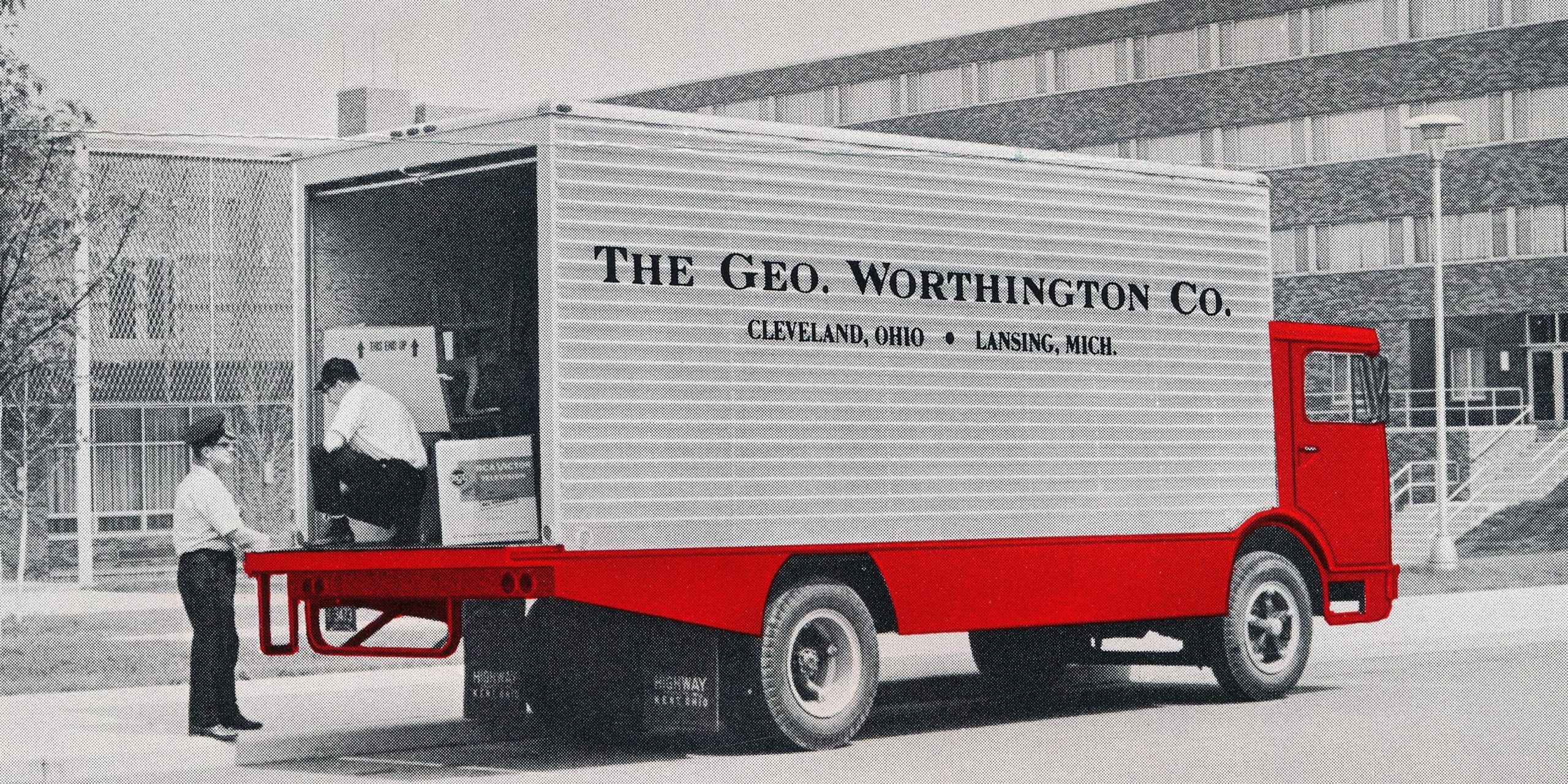
The smallest Compac-Van weighed 8,230 pounds empty and had a wheelbase of 126 inches, while the largest weighed 8,660 pounds and had a wheelbase of 180 inches. The beefiest of Compac-Vans could carry a 10,000-pound load.
In addition to being easy to drive with enough seating for four people, the White Compac-Van was designed for easier maintenance. The engine and transmission were removed from underneath the truck using a jack. In its launch release, White noted that it was looking into adding the option of a Perkins diesel, as well as adding insulation to allow the truck to be used for refrigerated service.
What White didn’t say was that its unique truck was built by Highway Products in Ohio, and Highway Products had bigger plans than just partnering with White. In late 1965, Highway Products announced that it was entering the straight truck market under its own name. Leading the charge was the Compac-Van and the P&D Nose-Loader.
The Compac-Van’s design remained largely the same, but Highway Products cranked the marketing up to 11. In its brochure, Highway Products boasted “more payload in shorter, lighter trucks.” The company also said, “safety and economy never before available in any motor truck!”
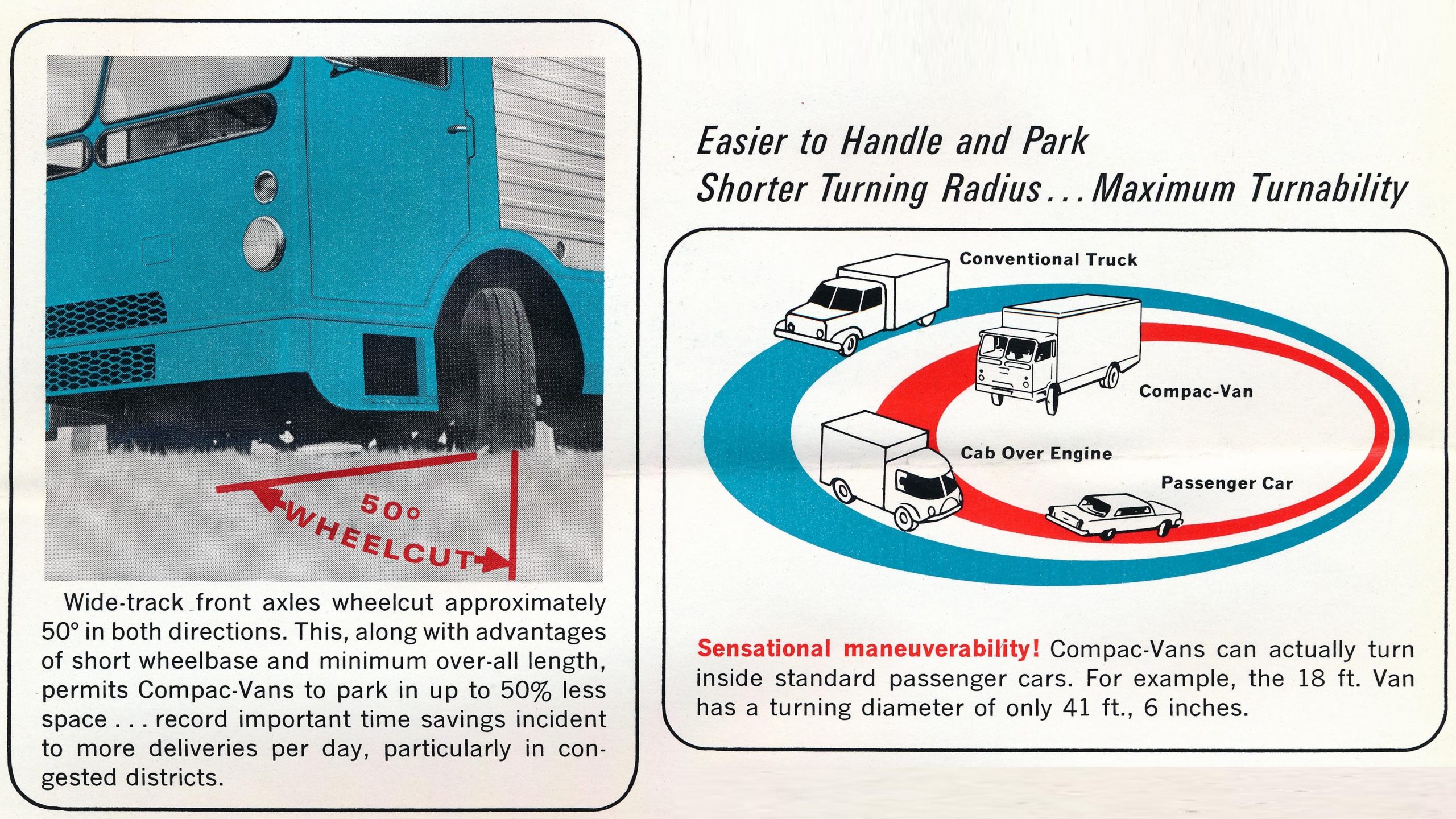
What was great was that, if you looked beyond the puffery, you probably saw a truck that had some solid specs. The Compac-Van had front tires that could turn as sharply as 50 degrees in both directions, and the smallest truck had a turning circle of 41 feet, 6 inches, or tighter than the average car of 1964 and tighter than any other commercial truck.
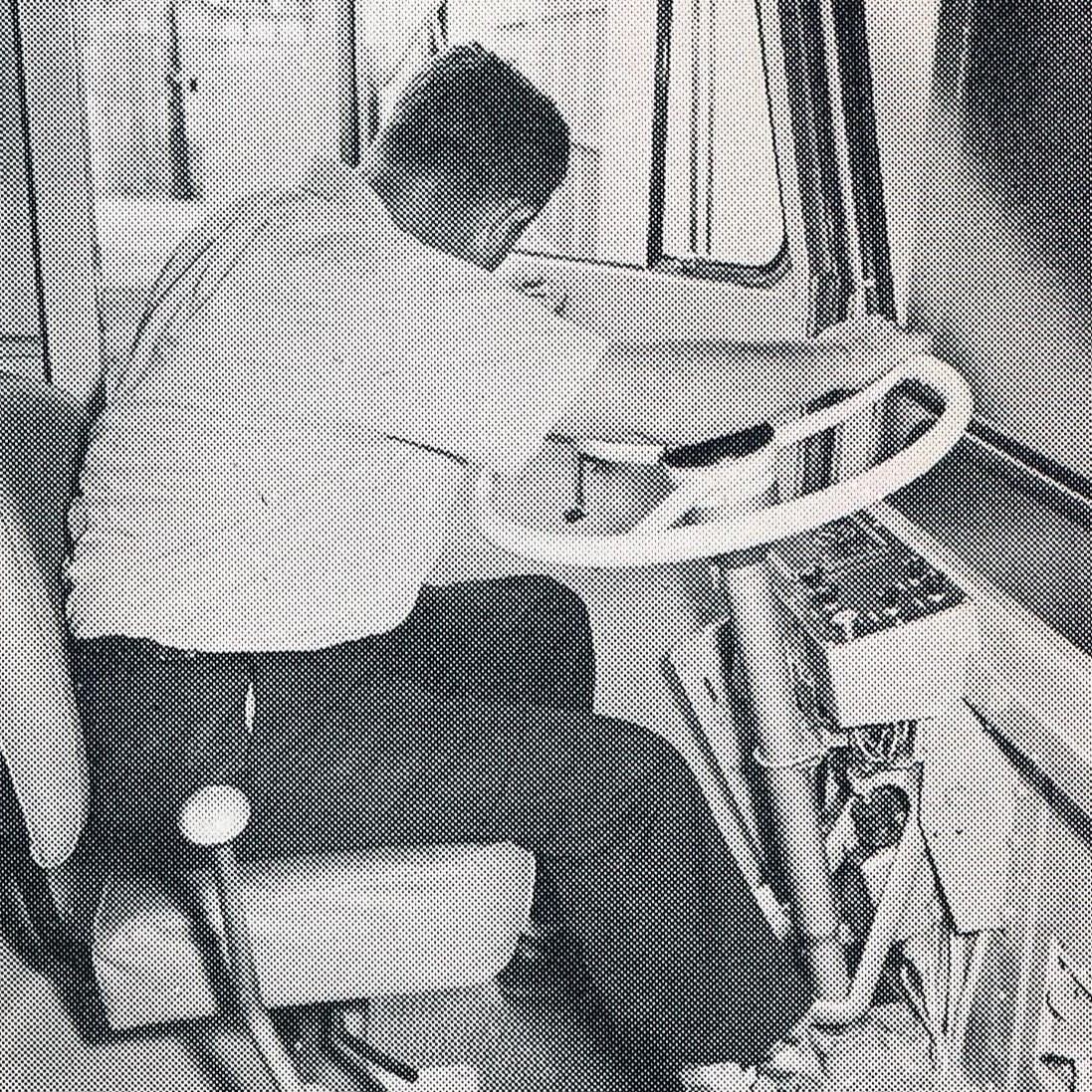
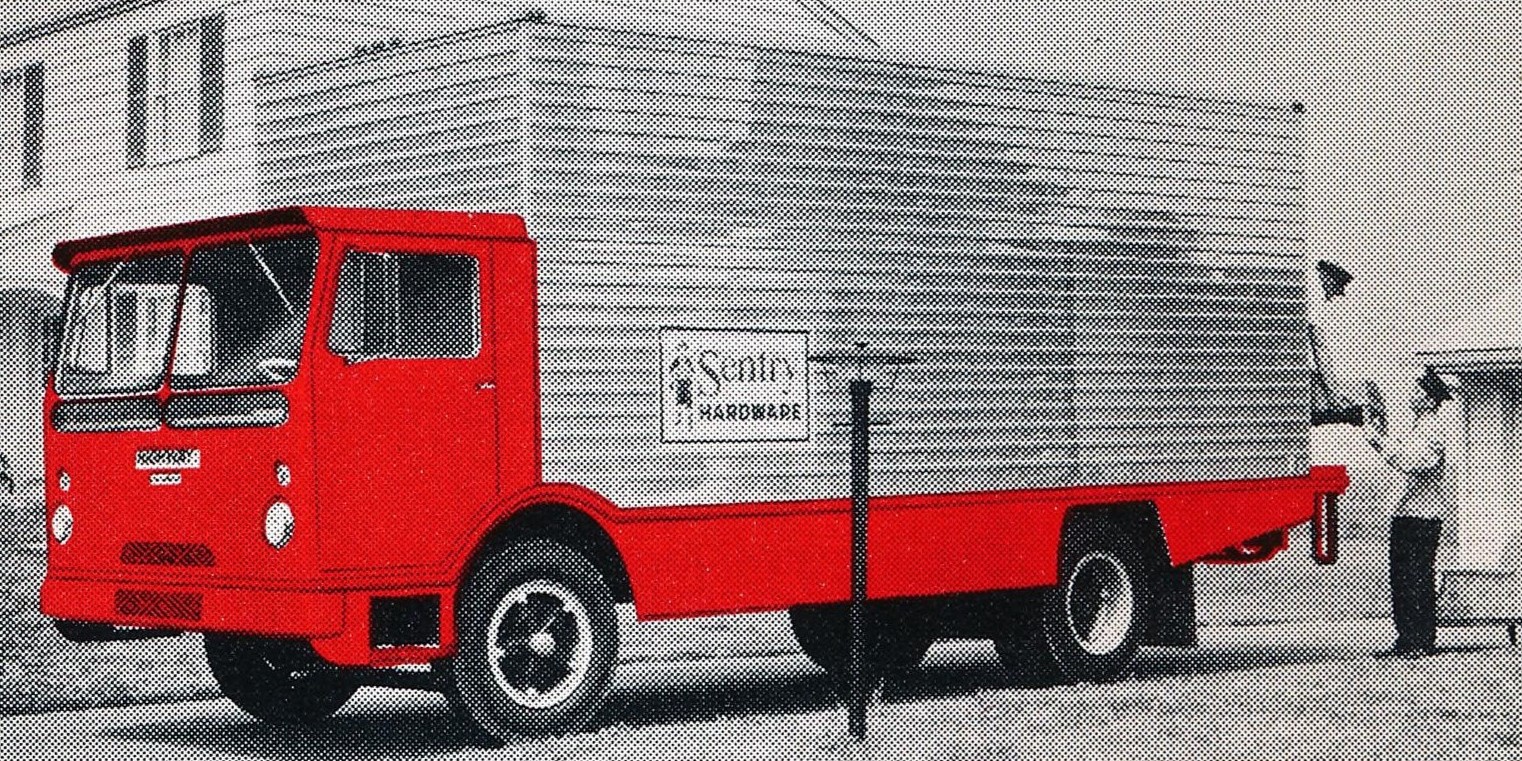
The deck, which was laminated oak, was available in 42- or 48-inch heights, and Highway Products said it could make even lower trucks by special order. The cab was 34 inches off the ground, which Highway Products said was five inches lower than a typical truck. The low cab combined with a four-piece windshield was advertised as greater outward visibility than most trucks.
Pitched As A Better Truck
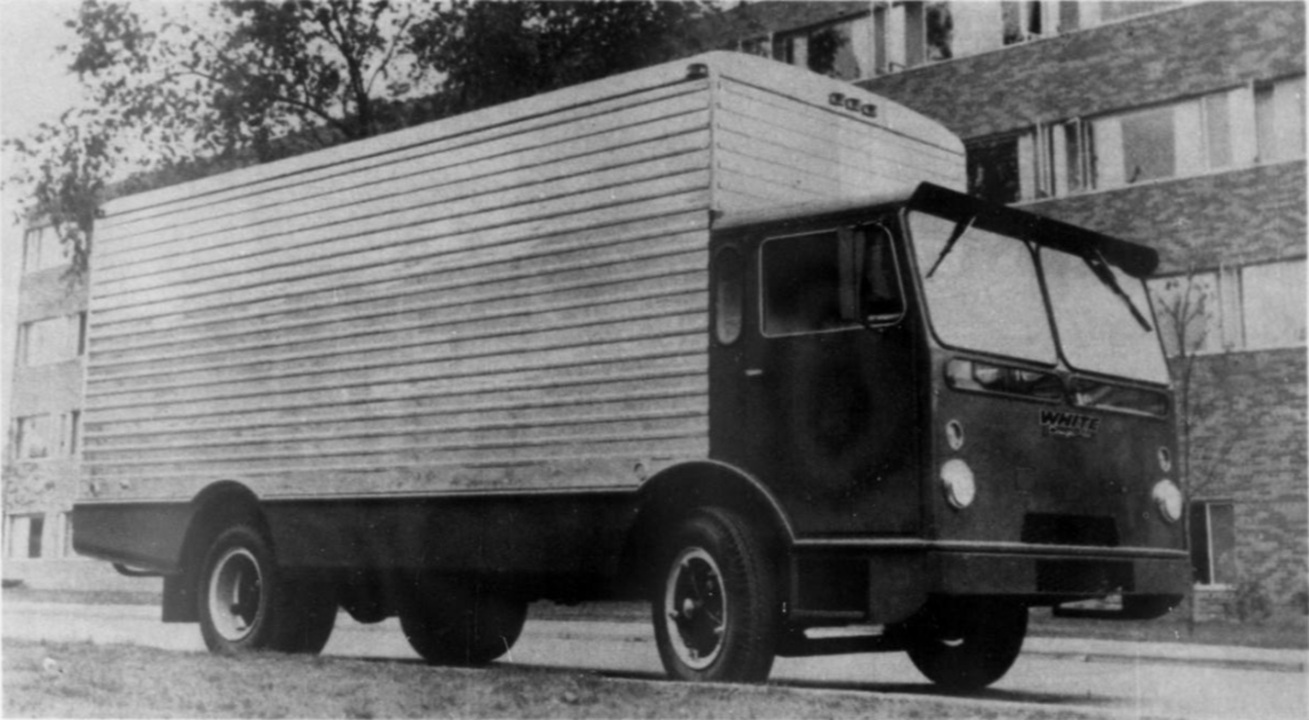
Add in the short wheelbases, short overall length, and sharp steering angle, Highway Products said, and drivers had a truck that was the easiest to navigate and park in a tight city. Highway Products continues:
Highway Compac-Vans, in 18-20-22-24 ft. body lengths, are ideal for every trucking operation where enclosed type bodies are required. Because of their easy maneuverability and shorter over-all length, they deliver maximum performance at lowest cost under today’s complex operating conditions. They are at their best in heavy street and highway traffic, narrow access ways, crowded, space-limiting loading and unloading areas … conditions that minimize profitmaking potential of other trucks. And … on modern thru-ways, the Vans’ powerful V-8 engines enable them to keep up with the fastest traffic . . . move rapidly from job to job.
Vans are especially well adapted for department store delivery service . . . use by public utilities, truck leasing companies, express services, grocers, provisioned … all freight haulers. Their large load space, in relation to wheelbase and over-all truck length, also makes them perfect for product display vans, beverage trucks, traveling stores, newspaper delivery units, furniture vans… In addition to their exceptional operating efficiency and economy, the attractive, modern Vans, with bright fluted aluminum siding, are fine advertisements (traveling billboards) for their owners… add to the prestige of profitable, established firms.
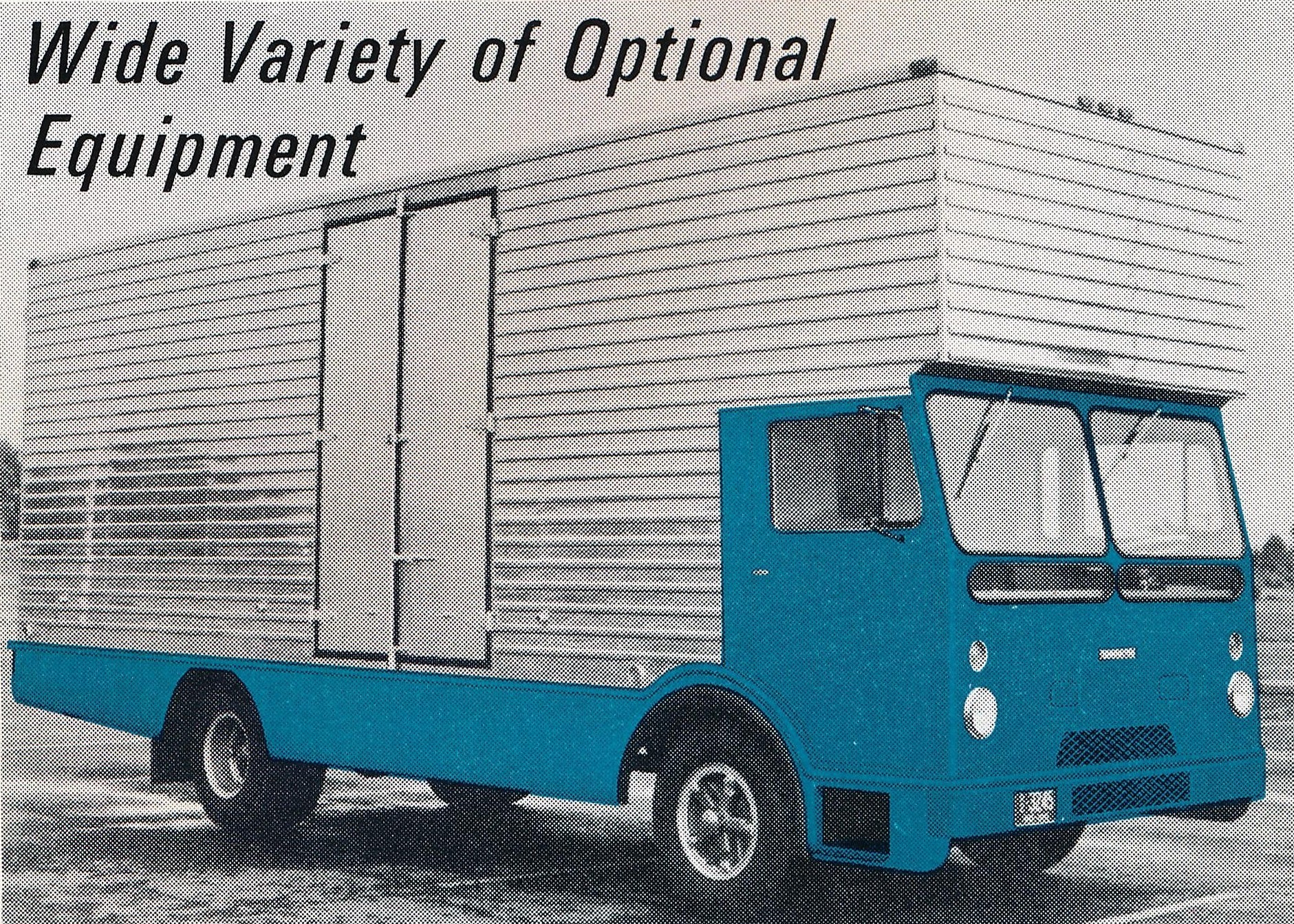
There was also a “Bonus Cab” version, which had the cargo area extend over the cab. The Compac-Van Bonus Cab was pitched at residential moving operations. If none of that sold you, Highway Products threw a long pitch:
New Highway Compac-Vans obsolete all previous efficiency standards for trucks in the 18,000 to 23,000 GVW class. Every Compac-Van model will carry more gross or bulk cubic payload than any other truck of the same over-all length of any make, model or type. This greater payload capacity is accomplished by the Compac-Van’s exclusive integral design and unitized construction, in which only 49% inches of the over-all length is utilized for the engine and driver’s compartment. The rest is available for the transportation of more payload.
“Unitized” Construction for Maximum Safety… Greater Strength . . . and Lighter Weight. Compac-Vans Carry Payload Instead of Deadweight. In Compac-Vans, the entire truck, including the floor and sides, is constructed as a single unitized unit. Consequently, the body, instead of resting on and being carried by the chassis (as in ordinary trucks), is a part of the Van’s integral structure. In this, every upright and cross member carries its full share of the load. Likewise, the modular, fluted aluminum sides actually serve as I-beams, carrying weight and adding body rigidity. This results in a truck of maximum strength and safety.

Also, as the result of unitized construction, plus employment of aluminum in body parts, bows, roof and roof rails, Compac-Vans weigh up to 2,500 lbs. less than ordinary trucks. Therefore, they possess a more favorable power to weight ratio. This results in substantial fuel savings, lower registration cost and other reduced operating expenses. Because Compac-Vans are shorter over-all than other trucks of the same payload capacity, they give their operators 3 important “profit” advantages. (1) Fleets can handle more payload with fewer vans. (2) More Vans can be parked in smaller areas. (3) Fleet expansion can be effected without increasing size of storage facilities.
Highway Products continued by saying that its trucks drive like cars and that its unique design means that they have up to 25 percent better weight distribution than other straight trucks. The Compac-Van was finally also available with a slew of engines, including a Chrysler 318 V8, a Chrysler 361 V8, a Ford HD-361 V8, a JNF-130 diesel, a Detroit Diesel 4-53, and a Perkins diesel 6.354. Highway Products also further upped gross weight to 26,000 pounds.
The Nose-Loader
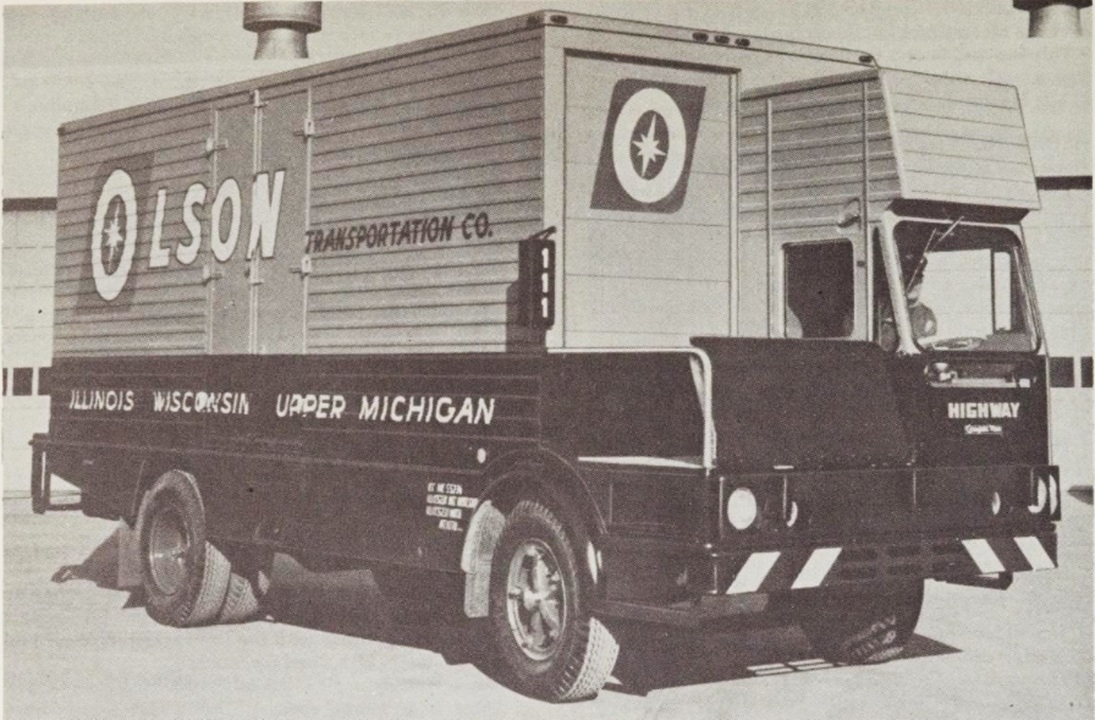
The Compac-Van was joined by a sibling that was perhaps even more ambitious, the P&D “Nose-Loader.” According to a 1964 issue of Fleet Owner, the American Trucking Associations (ATA) demanded a straight truck that was better for city environments than even the Compac-Van. From Fleet Owner:
It features dock high front loading in addition to conventional rear and side loading. The numerous other features include advantages from the company’s line of Compac-Vans such as light weight, short wheel base and tight maneuverability. In fact, the designers feel that the P and D model meets all of the characteristics laid down in the ATA proposal 105-18-168 These are: “increased performance, simplicity of design, elimination of ornamentation, greater protective and durability features, improved vision and simplicity of control and easy ingress and egress to cab (up to 14,000 Ib. net payload).”
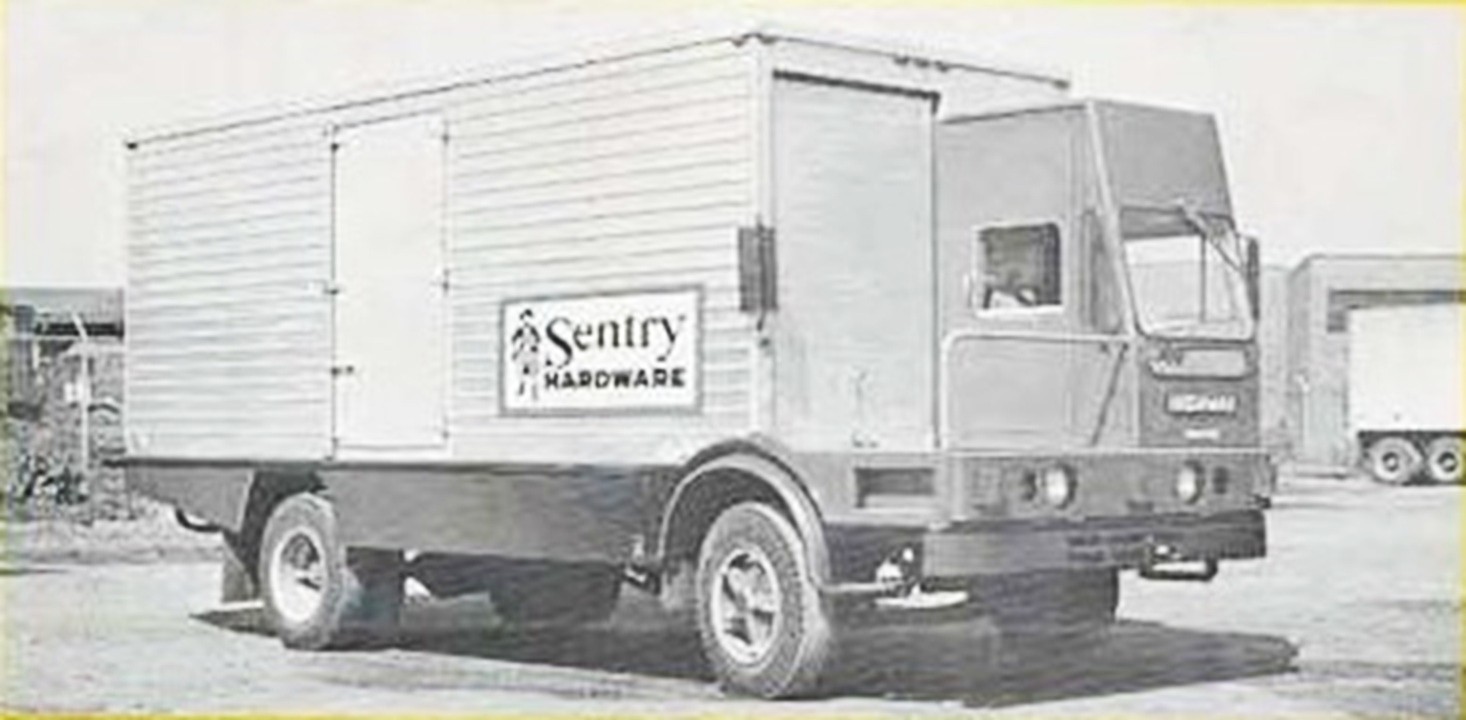
The Nose-Loader was given a unitized aluminum body, just like the Compac-Van and a transit bus would have. Fleet Owner noted that the Nose-Loader’s structure featured an integrated frame with steel crossmembers and a perimeter rail. The aluminum body featured fluting for style and strength, and was riveted together for easy service.
One notable departure from the Compac-Van was the Nose-Loader’s engine, which was now located in the middle. Power came from a 404 cubic inch Twin Coach horizontal gas engine, which was good for 160 HP and 360 lb-ft of torque. This engine was picked because it was already proven to work well stuffed under the floors of transit buses. Highway Products also planned to modify a Perkins 6.354 to fit under the bus in a horizontal orientation in order to add diesel power.
That power reached the rear wheels through a Fuller 5W43 five-speed manual. The truck rode on a Timken FSW80 front axle that came from the Compac-Van, which allowed a 50-degree steering angle. The rear axle was a Timken H-140 with a 17,000-pound capacity and a 5.8:1 ratio. Unlike the Compac-Van, the Nose-Loader didn’t have a 17-inch wheel option, and buyers had a choice of two 20-inch wheels.
The biggest feature of the Nose-Loader was the fact that it had loading doors on all four corners, allowing the truck to be loaded and unloaded simultaneously from any direction. The “Nose-Loader” part was that the truck could drive straight up to a dock without backing up and be loaded right there. The truck was designed with input from the Olson Transportation Co. of Green Bay, Wisconsin, and was also displayed to engineers at UPS and to the United States Postal Service.
Highway Products was transparent that, unlike a typical truck, the body cannot be removed and attached to another truck if the truck wears out or gets into a crash. Thus, Highway Products said it had designed a rig that would hopefully last the test of time. The Nose-Loader was to be available in 20-, 22-, 24-, and 26-foot lengths, as refrigerated units, and with up to a 14,000-pound payload. Fleets would get all of this for a starting price of $10,000. ($107,411 in 2026)
It’s unclear what happened to these trucks or how many of them were sold. I cannot even find images of them outside of period reports and brochures. Obviously, at least a handful of these were built, as trucking publication editors got to look them over in person. But, from there, the trail goes cold.
It is known that, in 1970, Myers sold Highway Products to the Alco Standard Co. It was around this time that Alco Standard also purchased the rights to the Clark Cortez motorhome, and Alco Standard built its version of the Cortez in the Highway Products factory. Ultimately, Highway Products would go out of business in 1975, taking the remnants of the Twin Coach bus division down with it.
Large Unitized Straight Trucks Are Still Rare
Sadly, the story of the Highway Products trucks seems to come to a truly unsatisfactory conclusion. I found no road tests of the trucks, even though some delivery companies did test them. It’s pretty clear that, if Highway Products did manage to sell any, they must have been absurdly rare. Again, I could find no survivors in the modern day. Thus, it’s hard to even speculate about what could have happened.

That said, I can say that the concept largely failed to take off.
The vast majority of straight trucks are still built the old-school way by placing a cube on the back of an existing and standardized truck chassis. There are conventional straight trucks and cabover straight trucks, too. High deck heights have been countered by suspension kneeling systems, ramps, and hydraulic lifts. The cubes also aren’t married to a specific truck. Your Freightliner straight truck blows up? You can just move that cube to a new truck. That’s not possible here.
Most of the unitized straight trucks in history seem to have been built for specific applications, like the new Oshkosh mail truck. Still, the total lack of information post-1965 makes it hard to say exactly what happened to the Compac-Van and the Nose-Loader.
Regardless, both of these trucks are still a fascinating part of history. A company saw how buses were built and decided to see what would happen if trucks were built the same way. The result was some truly weird rigs that seemed like they could have worked in some applications. I continue to adore the impressive engineering that goes into all parts of the trucking industry. It’s a shame there isn’t more about them out there.
If you know more about the Compac-Van and the Nose-Loader, please email me at mercedes@theautopian.com!


I like the truckettes.
I just found out that every description of Rommel’s defeat skipped all the fun parts!
Montgomery and the stagecraft section of military intelligence dressed artillery and tanks as broken trucks, dressed tanks as trucks too far away to matter.
Then they switched them at the front lines.
How do they tell that story and edit out all the good stuff?
https://warhistory.org/article/operation-bertram-the-cover-plan-for-el-alamein-i
“Nose-Loader”
I didn’t know John Delorean got into trucks…
I love the Studabaker Zip-Van’s windshield where you can just about see the bumper. And that Nose-Loader looks amazing, what a great idea.
Zip-Van and Nose-Loader sound like the setup for a 1980s stoner sketch.
Speaking of names, I always get Twin-Coach and Dual-Motors confused.
Oh, the Zip-Van can be driven standing up. Instead of a hand throttle, it has an extra gas pedal that works sideways.
We had a self propelled pruning tower sort of like that.
Can you imagine selling a truck you drive on public roads standing up today?
https://youtu.be/YRlV5ccBaX8
Tesla has an app for that
Is the shifter designed for somebody behind the driver ?
I’ll take Vehicles That Should Never be Allowed On Bridges With Winds Over 5 MPH for $100, Alex!
50 degrees of steering angle! It’s a damn drift truck!
That looks like GRANNY’S ATTIC EXTREME edition.
Oh wow! I did not expect my hometown to be the main setting of a Mercedes historical article! Awesome!
Growing up in Kent, OH, I never knew about these but it was the 90’s and it looks like these were long gone from the roads by that point
EDIT: You can still sit and eat inside a Twin Coach built in beautiful Kent, OH at Mike’s Place Restaurant in Kent
I was trying to see pictures via the restaurant website, but mostly it was just pictures of food! The nerve!
If you look closely by the front door, the engine is on display next to the door
I thought that Helms truck was a Divco at first
Imo, the reason commercial trucks are hesitant to move away from traditional design is repairability and durability.
The sheer number of straight trucks and dry van trailers that get Tuna Canned on a daily basis would make this unviable.
Current stuff can be moved. If the walls are integral to the chassis, you’re done and the repair is that much more expensive for load bearing walls.
straight trucks and dry vans though? We used to replace wall panels between two mechanics in the small trucking company my family runs. No special bodywork or chassis recert.
I work for a truck body builder. We do about 75 a month, usually one of those is a re-body. Often its a pretty new chassis that hit something too low. But, occasionally we’ll get a beat up old chassis getting a shiny new body put on it! I guess if it’s paid for and you like it, why not keep it alive?
Exactly. Or in our case, we’re just trying to keep a flimsy dry van trailer water tight for the 10 year lifecycle.
One of the reasons I read the comments here is to see insights like this.
As lightly touched on, the Fageol Brothers made a foray into agriculture with some off-the-wall tractors. Neither of these models was successful, but you could select one of your steers and run it over to both kill and pre-tenderize it:
Fageol 9-12 ‘Walking Tractor’
Fageol ‘Small Walking Tractor’
The nose loader reminds of some aircraft servicing trucks, although have conventional chassis with a scissor lift under the box
I really dig that noseloader!
Chassis and whatever equipment is attached to that chassis are manufactured by different firms. Chassis rail dimensions are standardized. So if the truck gets outdated or the equipment does, you can swap either way without having to discard the whole truck and start again.