


With all the doom-and-gloom headlines around EVs in America, you can be forgiven for thinking that the sky is falling. Honda writing down its 0 Series models, GM pulling back investment on next-generation EV trucks, Hyundai scaling back Ioniq 6 plans. Legislative changes last year really did put a dent in electric car sales, but according to J.D. Power, the other side of the dip might be just around the corner.
At the same time, GM is absolutely raking it in, the Tesla Cybertruck really isn’t living up to sales expectations, and Range Rover is launching an electric coupe-SUV-type-thing. Welcome back to The Morning Dump, where we break down the morning’s car news headlines for your perusal. Let’s get cracking.


The EV Dip Might Just Be A Blip
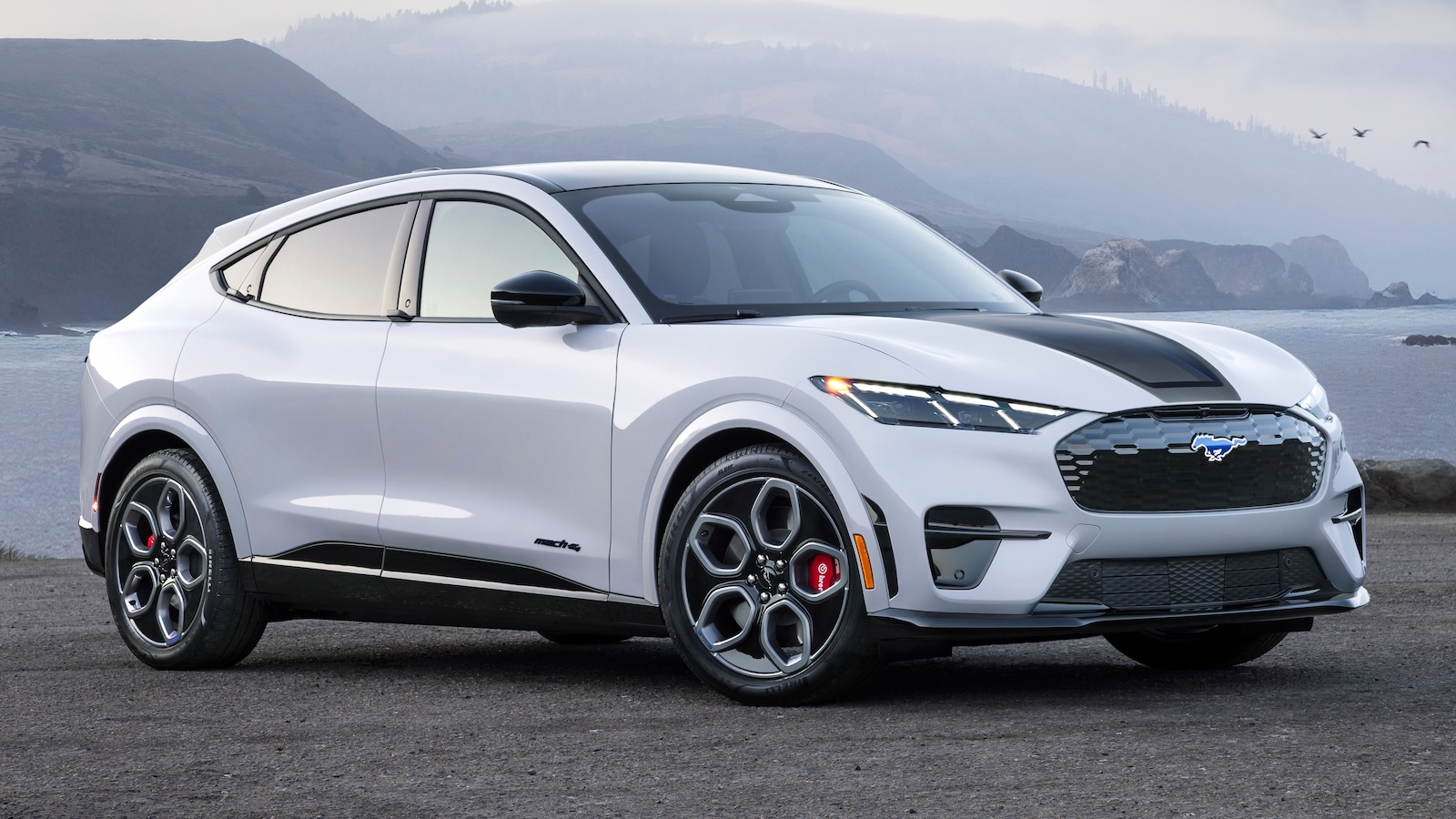
It’s been a rough past 12 months for electric cars in America. From disappearing incentives to cancelled models, the industry is undergoing a thorough recalibration. However, this adjustment doesn’t mean that EVs are dead in America. J.D. Power’s latest EV Volumes study is out, and it claims that a bounce-back in EV sales might happen quicker than many expected. While market share for 2026 is expected to dip from 9.4 percent to 8.2 percent, this may just be a blip.
In 2027, 15.6% year-over-year growth in new EV sales is expected across the US. In turn, the EV share is projected to rise to 9.3%. This is forecast to nearly double to 18.1% in 2030, reaching 36.8% in 2035 and 56.2% in 2040.
Alright, so a few interesting claims to unpack here. The study combines battery electric and plug-in hybrid sales, and saying they’ll nearly return to 2025 levels in 2027 seems like a bold prediction, but there’s some substance to back it up. The war in Iran has resulted in a prolonged period of instability in global oil markets, running up the cost of gasoline at the pumps. This in turn has led to a bump in second-hand EV resale values, with more consumers looking to save on running costs. With the national average price of a gallon of gasoline sitting above $4 again per AAA’s fuel price tracker, going electric might be more of a financial play than anything else. At the same time, 36.8 percent U.S. market share by 2035 is far below the global forecast of 61.3 percent of overall market share. Reading between the lines, expect hybrids to continue playing a significant role for at least another decade as American drivers look to reduce their vehicle running costs.
Interestingly enough, J.D. Power claims Canada’s EV trajectory more closely follows America’s rather than Europe’s, and that has some interesting implications on both impending tailpipe emissions legislation for 2035 and provincial EV mandates.
The wider light-vehicle market is forecast to grow by 3.0% in 2026, with EV sales climbing by 40.2%. This would hand the powertrain pair a 13.1% share. However, this remains below the 13.7% peak recorded in 2024. This is predicted to be surpassed by a 24.1% share in 2030, rising to 42.5% in 2035 and 61.8% in 2040.
Earlier this year, Prime Minister Mark Carney spoke about plans to tighten fleet average carbon dioxide emissions from 172 grams-per-mile to 74 grams-per-mile by 2035. In theory, that would work out to somewhere around a 68 percent EV mix in 2035 which is well above J.D. Power’s demand forecast of a 42.5 percent EV mix. Will the great EV legislative walk-back continue? Only time will tell.
GM Just Keeps Making Money

For now, having a lineup of both solid EVs and regular cars is likely the safest bet, which helps explain why GM can’t stop winning when it comes to balance sheets. The automaker just beat its earnings forecast for the 16th time in a row, buoyed by a highly profitable product mix, resilient consumer demand, and regulatory easing. As Reuters reports:
The company’s quarterly earnings before interest and tax (EBIT) rose to $3.9 billion from roughly $3 billion a year earlier. On an adjusted basis, it earned $3.57 per share, topping analyst expectations of $3.20, according to LSEG data.
GM raised its 2026 profit outlook by $500 million to a range of $14 billion to $16 billion, after boosting it by the same amount earlier this year.
Those are some significant gains, especially in the wake of new expenses. Onshoring production of models like the Chevrolet Equinox, a reduction in EV sales volumes, “higher software expenses” and tariffs are all expected to add billions in combined costs. However, not only has GM’s North American profit margin improved from 6.1 percent to 8.6 percent, it’s kept the average transaction price of a GM vehicle to around $52,000. This reflects fairly clearly in the Q2 sales report: Sales of the reasonably priced Chevrolet Trailblazer are up 28 percent, the Buick Envista and Chevrolet Trax are more-or-less holding ground, Chevrolet Bolt sales are up, while models like the Chevrolet Corvette and GMC Sierra are also seeing sales gains to level things out. Total U.S. sales are holding within 5 percent year-over-year, and a strong EV lineup’s there for when America’s electric sales dip recovers.
The Tesla Cybertruck Hasn’t Been Having A Great 2026
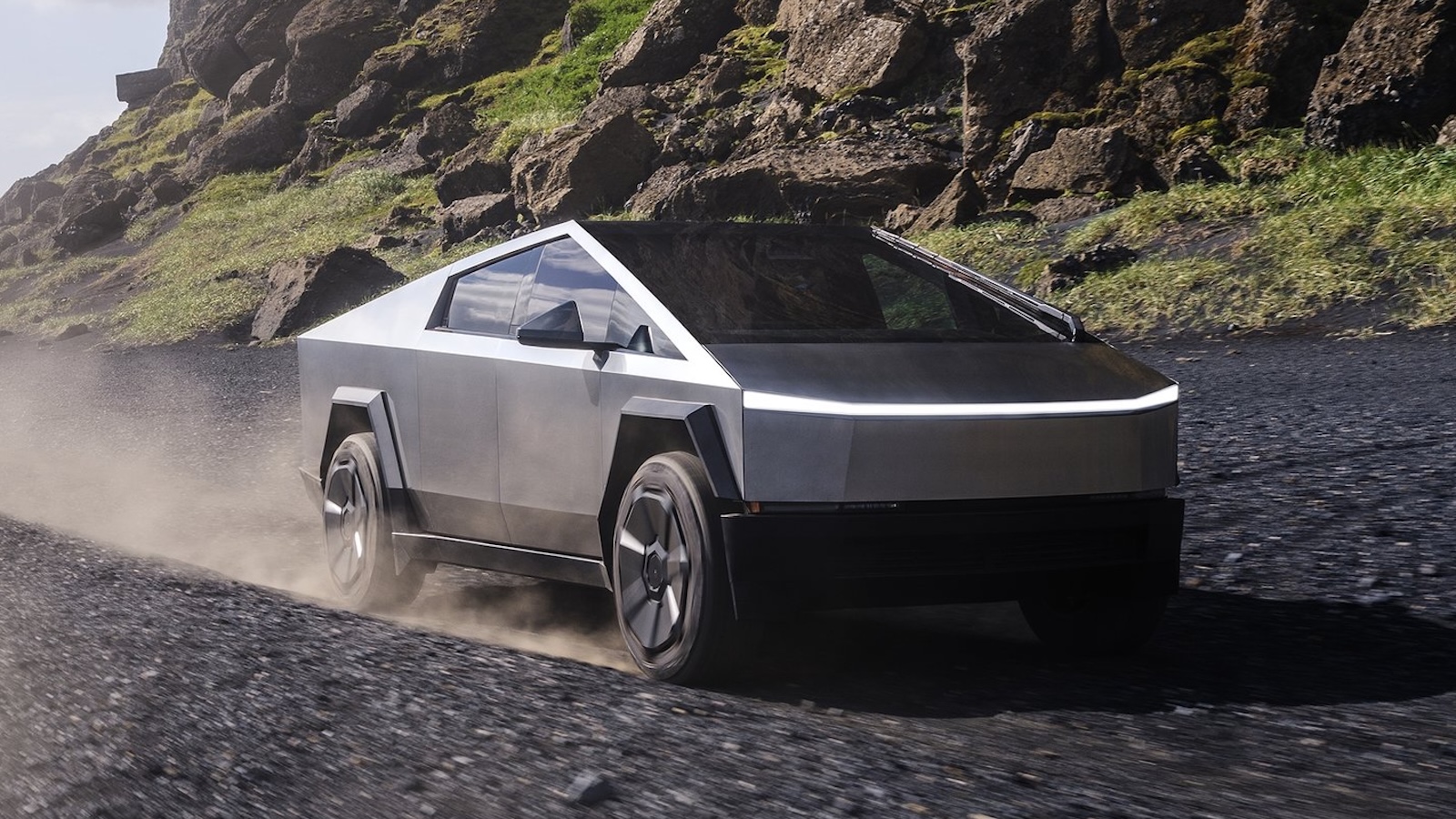
There’s one long-range EV that probably won’t be leading a market-share comeback, and that’s the Tesla Cybertruck. It’s reportedly not living up to its lofty sales forecasts to the point that Bloomberg is comparing it to the Edsel.
Edsel sales dropped each year the model was on the market, and Ford discontinued the car in 1959. Cybertruck sales are off to an even worse start. Only 7,133 have been registered in the US this year through May, according to S&P Global Mobility data provided to Bloomberg News. That count is buoyed by Musk’s other companies, with SpaceX building out a fleet of Cybertrucks.
Even with fleet sales, that works out to around 1,427 Cybertrucks sold per month this year. Not ultra-low volumes, but certainly not high volumes. That’s just S&P’s data; according to Cox Automotive’s U.S. EV registration tracker, only 7,236 Cybertrucks were registered through the first half of the year.
It’s worth noting that electric pickup sales are pretty much down across the board. The only model to post a sales gain through the first half of 2026 according to Cox Automotive was the GMC Sierra EV with a volume bump of 9.8 percent. Still, it sold fewer than half as many units as the Cybertruck. This year has been tough for Tesla’s truck, as on a year-over-year basis, the only dedicated electric pickup truck to post a larger percentage decline than the Cybertruck was the Ford F-150 Lightning, and it’s been discontinued. Considering Tesla’s initial ambition of 250,000 Cybertruck sales per year, the model doesn’t appear to have met expectations.
Et Tu, Range Rover?
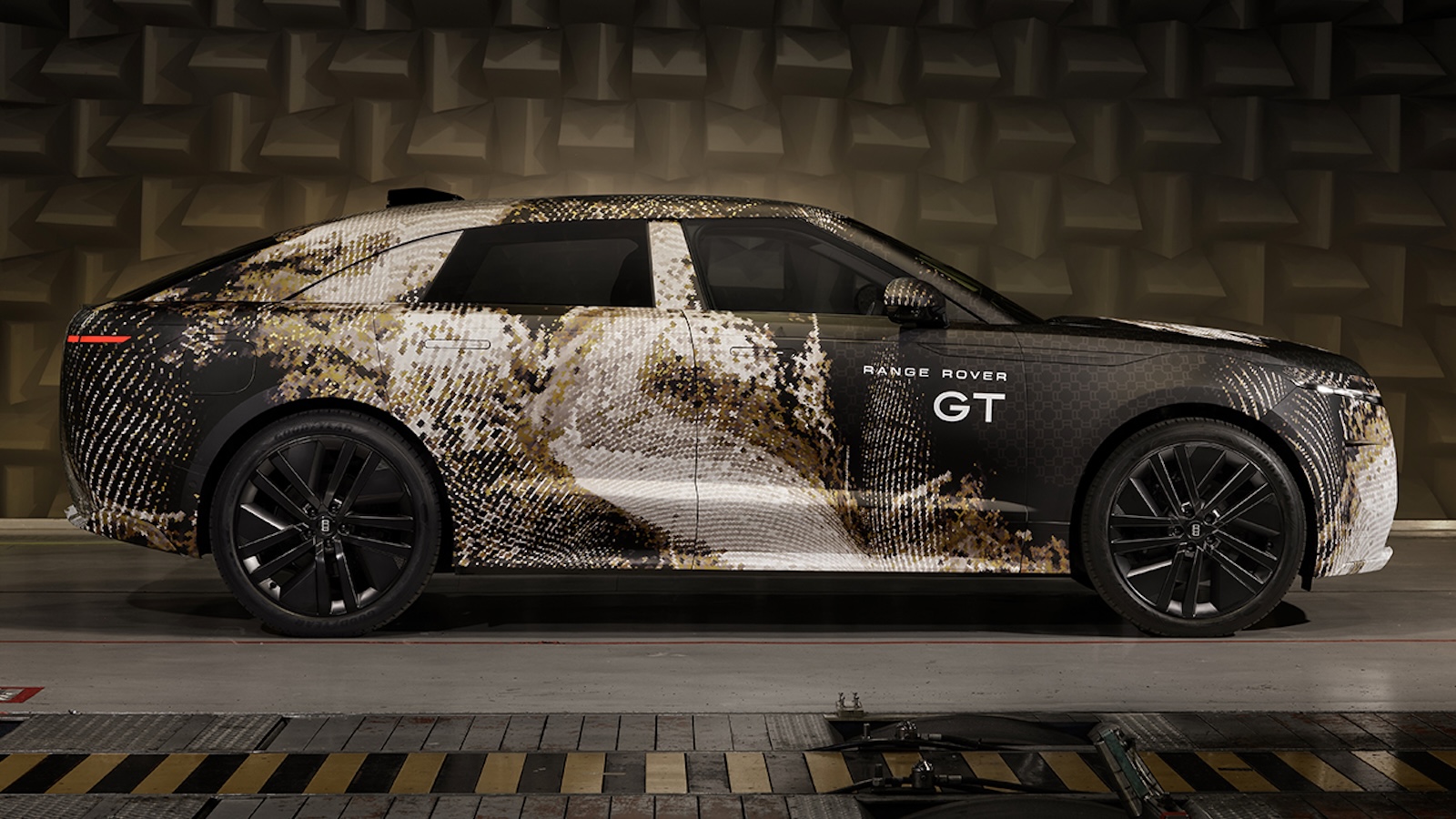
Even though it’s been 18 years since the BMW X6 entered production, it’s still somewhat amazing how less practical, swoopy-roofed crossover SUVs have become a market all their own. In addition to BMW, Audi, Mercedes-Benz, Porsche, Infiniti, Buick and Polestar have all entered the arena, and it’s not done growing yet. This is the Range Rover GT, an incoming heavily-fastbacked model from Land Rover that’s quite unlike anything else we’ve seen from the marque. Partly because of its styling and partly because it rides on a new electric-first architecture.
Obviously, Land Rover hasn’t revealed the entire car, but it has given everyone a camouflaged sneak peek so here’s what we know. The Range Rover GT will launch as a battery electric vehicle first, with flexibility for hybrid powertrains down the road. The wheels are enormous, the interior looks well-appointed if rather minimalist, and it can be had in a four-seat configuration with a console instead of a middle rear seat. Beyond that, range and power and battery pack size remain under wraps. It’s certainly an unusual development, but one that could be a natural successor to the Velar. Regardless, expect more details to surface later this year. Realtors, start your checkbooks.
What I’m Listening To While Writing TMD:
For some reason, the mood of the morning is “Up In Hudson” by Dirty Projectors. Not sure why, but I can’t complain. This track’s still absolutely fantastic.
The Big Question:
Since price is probably the biggest factor when it comes to most purchases, how have gas prices affected your current car-shopping endeavors? Are you suddenly finding that the math on an EV makes sense?
Top graphic image: Chevrolet



Any other news besides mostly about EV’s?
TBQ. The EV math has shifted quite a bit in PG&E country. The utility has dropped its rates while gas has climbed so EVs now have significantly cheaper energy costs.
The question is will it last? Will gas prices stay high while electricity stays relatively low? In the past the answer has been no, gas price spikes end and skyrocketing clean electricity demand drives higher prices.
The second question is how long to recoup the extra cost? The MSRP on a FWD Chevy Equinox EV is about $14k more than its gasser equivalent but that’s only a guesstimate on the actual OTD price. Add higher sales tax, etc and the EV surcharge is going to take a while to catch up to. If the vehicle in question is a super commuter charged for free at work and overnight at home that might be fairly quick but an EV that stays parked may always be more expensive than its gasser counterpart.
I can’t believe there are still Cybertruck buyers out there. Well, I guess I can. I just question their intelligence.
You just have to remember that the bulk of Cybertruck buyers are actually Elon and the numbers make a lot more sense.
I like swoopy SUVs. Not because they look cool but because they don’t. They have fat dumpy proportions. I have fat dumpy proportions so maybe that is why they are so endearing. Look at a 2020 Mercedes-Benz GLC63 it looks like a ridiculous fast potato. They are cars with muffintops and that is kinda fun to me.
> the Tesla Cybertruck really isn’t living up to sales expectations
~20k units per year vs 250k is a 92% miss. If Musk were a regular auto exec, he’d be out on the street due to incompetence.
Will Tesla ever get their Cybertruck R&D money back?