

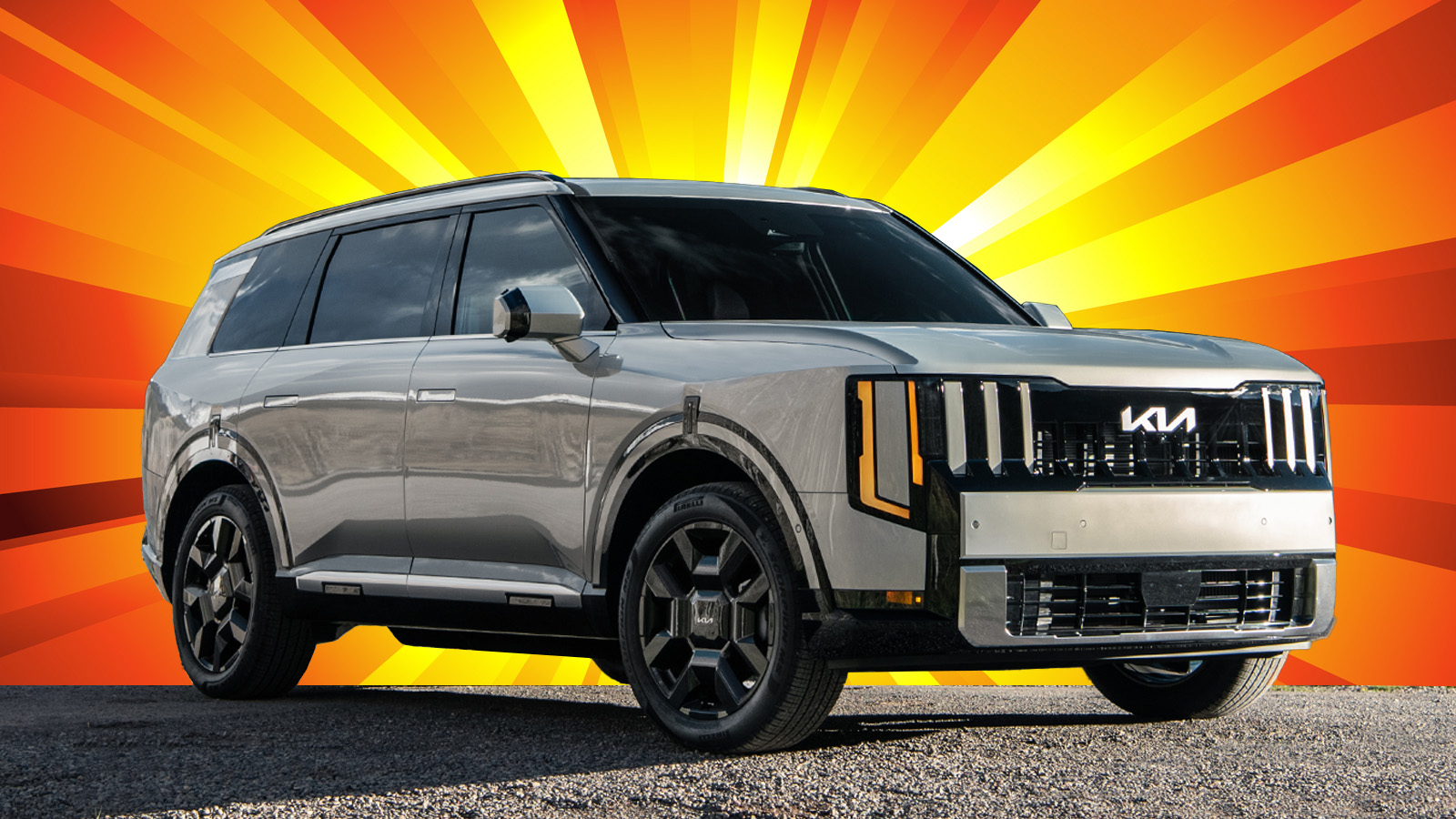
Automakers are just starting to report sales for the second quarter, giving us a glimpse into the first half of the year. It’s a story of haves and have-nots: if you have hybrids to sell, you have a lot of customers; if you don’t have any, you’re probably suffering. I’ll write a more detailed report tomorrow for The Morning Dump and once again tap the “Decade of the Hybrid” sign.
The big number that grabbed me like The Count from Sesame Street comes courtesy of Kia, which is out gloating about selling 70,507 vehicles in June, which is up 10% year-over-year. That’s not the big number (although it is a big number) I’m interested in, though. Kia said that just hybrid sales were up 187% year-over-year in June and up 85% for the year.


That’s a lotta damn hybrids. And literally all of the many hybrids that the company sells did well.
“Kia’s record-breaking first half sales performance was seen across our entire lineup of sedans and SUVs. The results illustrate our ability to react to shifting market demands by resetting our showrooms with the right mix of ICE, hybrid and electrified models,” said Eric Watson, vice president, sales operations, Kia America. “As we enter the second half of the year, we expect our momentum to continue, driven by strong anticipation for the all-new Seltos, which will begin full-scale sales nationwide in July, alongside the continued success of the 2027 Telluride, the expansion of our hybrid lineup, and the launch of the all-new EV3.”
The “electrified” bit is something of a canard as Kia lumps hybrids and EVs in, which ends up lowering the increase as the company’s EV6 is down, although the EV9 is up (Kia didn’t release Niro EV numbers). Hyundai is in a similar boat, albeit not quite as hybrid-heavy since they lack a Carnival HEV equivalent. For Hyundai, total hybrid sales grew by 74% in June, 71% in Q2, and 67% on the year
Honda And Toyota Benefited From Strong Hybrid Sales, Too
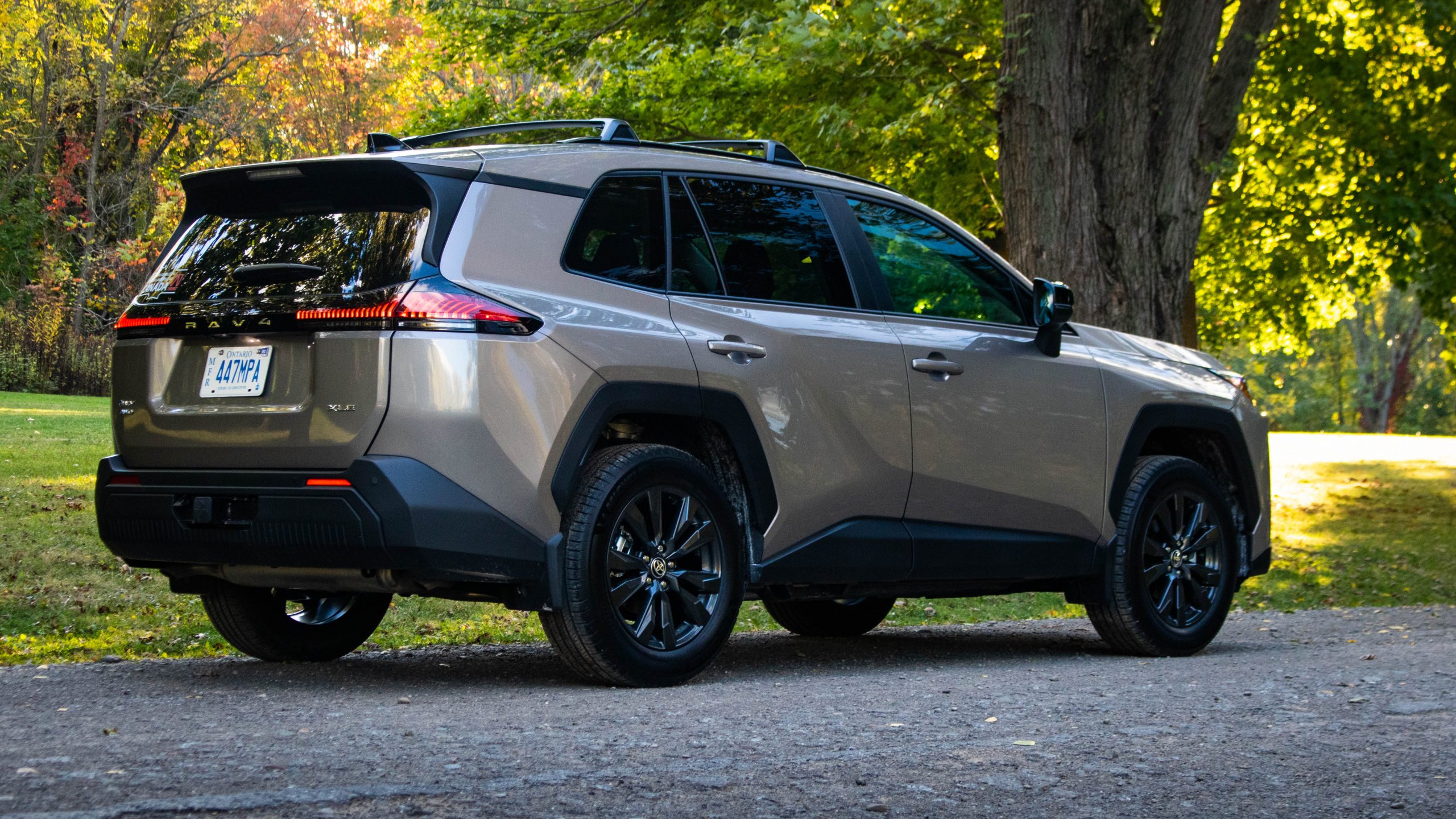
Toyota is an interesting automaker to view through the hybrid lens as it’s shifted numerous vehicles (RAV4, Sienna, Camry) to hybrid-only platforms and, overall, offers a hybrid option for nearly every vehicle they make across both the Lexus and Toyota brands.
The company lumps all its EVs and hybrids together in one big category called “Electrified,” and there, at least, the two Toyota brands were up about 35% overall. Sales of the BZ and RZ EVs rose, but not as fast as hybrids, with the RAV4 Hybrid climbing by 90.7%, the PHEV up 619%, and the RX Hybrid up 65.3%. While most hybrids were up by larger amounts, the Land Cruiser, Tacoma, and Corolla HEVs did drop a little. Overall, though, hybrids smoked.
The same is true over at Honda, which saw a big lift from the CR-V Hybrid:
CR-V is the #1 SUV in America in 2026, posting sales of over 226,114 units for all-time best first half (+6%) and best first quarter sales (+16%), and a record June (+30%) with CR-V hybrid models representing 55% of sales for an all-time best half (124,017), quarter and June.
Honda’s biggest problem is that it can’t build new hybrids fast enough, having spent a lot of money on doomed electrification projects. I’m sure Honda would give its left axle nut to have an Odyssey or Pilot hybrid. They’re coming, but not until the end of the decade, so Honda is having to get by on Civic, Accord, and CR-V.
The (Mostly) Have Nots

There is exactly one GM hybrid for sale in North America, and it’s the Corvette ZR1X, which is very funny. What are things like over at GM? The brand was down 4.2% in Q2 of this year (the company doesn’t typically report monthly sales unless it wants to brag about something specific).
“Our business is performing well, and customer demand is resilient, especially for our trucks and SUVs. The depth, breadth and appeal of our vehicle portfolio allows us to lead the market in sales, while maintaining discipline on inventory, pricing and incentives to deliver strong margins,” said Duncan Aldred, President of GM North America.
EV sales at Cadillac were up, with the brand claiming the best Q2 they’ve ever had, with Optiq up 31% and Vistiq up 15%, though Lyriq was down 16.1% year-over-year. Given the loss of the IRA, this isn’t bad, but the Equinox EV cratered by 61.8%, even though it’s affordable. Some of that may be down to the return of the Bolt, which sold 3,433 units in Q2.
There’s a similar story at Stellantis, where the only regular hybrid the company sells–the Cherokee Hybrid–has just gone on the market as the old PHEVs come off the market. The Jeep brand overall was down, and Stellantis only managed to eke out a 6% quarterly increase on the back of Ram trucks and an absolute wild number of Pacificas getting pushed out the door.
More sales numbers will come out in the next few days, but for now it’s all about the hybrids.
Top graphic images: Kia; DepositPhotos.com




For an automotive site to get this so wrong is inexcusable. The hybrid Corvette eRay has been around for a few years already, and soldiers on in 2027 with a new name – the Grand Sport X. Granted it’s not necessarily designed for better mileage, but it is a hybrid. It’s as much of a hybrid as the ZR1X.
Golly gee whiz I wonder what happened in Q1 to juice hybrid sales?
The world may never know.
It’s not so affordable anymore though. Pre-Iran, they were selling for 5 figures off MSRP. GM killed all of the incentives over the past couple of months though, so now they’re basically going for MSRP, which makes it not nearly as enticing as before. Sounds like they may have overshot the mark on trying to profit off the war (what a shame…).
If only GM had a hybrid…
/Shakes head and gets into 2017 PHEV Chevy Volt (which is a fantastic car).
from 10 – TEN years ago. gm is shameful
I love my Volt and I can’t believe GM is still lagging behind what they did 9 years after I bought this car.
What do you think would be the result from starting yet another oil war in the Middle East and driving up gas prices? People want efficiency…cheap operating costs. The only issue is American politics have put us on a diverging path compared to the rest of the world. When oil prices shot, up China and the EU, 1/4 of the world’s population, took the pure EV route.
At this point, on most vehicles where the hybrid powertrain isn’t standard, it’s the premium option. It’s smoother, quieter, more potent, and more efficient. Certainly that’s the case for the new Telluride and Palisade siblings.
Hybrids just make sense. At this point, if I were to buys some boring autotragic thing, absolutely no reason for it to not be. Preferably plug-in, if the upcharge is reasonable. 25 miles of EV range would do 90%+ of my driving and 100% of the super-inefficient in-town driving. I either don’t drive enough, or drive too far at once to be bothered with a pure EV. But since there’s not a new car on the market I can stand to be in enough to spend my own money on, I’ll keep what I got, thanks. For the amount I drive, I could drive a ’60s Chrysler Hemi with a leaking gas tank and it wouldn’t affect my budget in the slightest. I’d just be incentivized to drive even less than I already to. For example, I drive to the airport because it’s more convenient than Ubering, but if gas cost real money I would just Uber. I can expense an Uber, or I can expense parking, company doesn’t care either way.
Sure, let’s gloss over that the BZ saw an increase, and the Pacifica doing heavy lifting for Stellantis in the US market.
I think both those are incredibly article worthy unto themselves – noteworthy since the loss of the phev / hybrid Pacifica.
With the hundreds of thousands of defective engines and an inept if not corrupt warranty system not backing them up only a LEMMING would buy a Hyundai or Kia in 2026.
Makes sense when pretty much ever company has made even the base models of cars hybrids now. As people have said on here before Toyota waited it out and didn’t jump all in on EV’s (like GM and VW tried) and it paid off for them same with Hyundai and Kia.
GM and VW are really going to have their work cut out for them if they want to stick around. As others have said it is so surprising the only hybrid GM has is the Corvette.
What’s wild is that Hyundai/Kia went all-in on everything. You can say GM and VW went all-in on EVs, but you could get a wider selection of EVs on a Hyundai lot plus all sorts of hybrids and PHEVS.
If Hyundai/Kia can field competitive cars across every powertrain type, including EVs, it makes you wonder just how grossly inefficient companies like VW were being with their development budgets.
I’m not so sure about this. GM’s got EV’s from $30k to $500k in most shapes and sizes.
Which makes me wonder why Buick has no EV’s in NA. They have loads of platforms.
If we’re allowed to lump brands together for H/K as well you’ve got the Kona EV, Niro EV, I5, I6, EV6, GV60, I9, EV9, and the Genesis electrified models. I get that more of the H/K models are being axed than on GM’s side, but I think it’s actually close, especially if you stay in the sub-100k range. Although GM will sell you a sick EV truck and H/K will not.
And I still think it’s eye-opening that H/K developed a competitive EV platform while also developing competitive hybrid and PHEV tech for the US market, while some of their bigger rivals just, I dunno, didn’t.
Toyota didn’t wisely wait anything out they just jumped all in on Hydrogen.
For a company the size of GM it is honestly impressive that the Corvette is the only hybrid they offer.
Not impressively good, but impressive nonetheless.
I thought GM had already cancelled the Corvette hybrid?
An article yesterday asked what is the only hybrid GM sells in America, I could only think of the Corvette, then I figured it was a trick question, because I’d heard it was discontinued.
It was just renamed, not discontinued.
But isn’t the hybrid Corvette a “hybrid” the same way an F1 car is a “hybrid” and the various billionaire codpieces are “hybrids”? Really just to make it go faster, not to make it use less gas? Plus an end-run around some European regs on carbon. I suppose there are some minor efficiency gains from it too – but come on, a Prius that ain’t.
At this point they all just need to pay Toyota and/or Ford whatever they want to license their hybrid tech and just get to it for all the normie-mobiles. Has to be cheaper than half-assedly re-inventing the wheel, and I can’t imagine what something like the turbo/Hybrid Sportage I had as a rental is going to be like to own when it is 10.1 years old and completely out of warranty. Though I guess at least they use a conventional autotragic and not a belt/chain CVT. Again, a Prius that ain’t.
I’m mesmerised knowing that the Trax, Trailblazer, Equinox, Blazer and Traverse all have precisely zero hybrid options. I thought the transverse hybrid was pretty much known technology now without a single reason to not equip something as mind numbingly *insert generic car here* as those five with it.
What’s amazing is that GM never expanded their Volt-Tec beyond the Volt and Malibu. The Malibu hybrid came out 10 years ago! They probably didn’t do the same to the Trax because that was just a cheap POS. They probably didn’t put it in the Trailblazer because that’s right when they were full-in on EVs. But the Equinox, Blazer, and Traverse were right in there!
In my opinion it would’ve been a better use of time, money and resources to put the Volt drivetrain in the Equinox than the diesel from the Cruze that GM put in instead. I get that they were probably trying to chase the dieselgate sized hole in the market but still.
I never understood why GM didn’t put the Voltec drivetrain into the Equinox. 10 years ago, it was clear that the midsize crossover was the prime market, sedan sales were dropping, and yet they never made the offering.
Mary Barra has done a lot of good work at GM, but her biggest miss is deciding to ditch all hybrid development and go all-in on EVs.
She believed the BS that an ICE ban was going to happen. I can believe that in “do what we tell you because it’s good for you” Europe, or “do what we tell you or else” China, but in the US? Even in CA – fuggedaboutit. Political posturing at it’s worst.
what is gm doing well? virtually every car they make is 5th or worse in competitive comparisons. they went all in on ev while toyota did not. was there no game theory assessment done ? she s supposed to be great. she s had 12 years. i am not impressed.
Mind-boggling from the company that built the reasonably successful Volt.
inEVitable, amiright…
People have said for years that high gas prices would drive people to electric and now we have proof. As someone else said hybrid IS the upgrade now for many models and people are now ready for it.
Still not going to help the true EV market for a decade or so. Our state is seeing 95° for the next 3 days and the power company is begging people to conserve as much as they can as the output is not enough. So buy EVs and crash the power grid.
Don’t states with real daytime energy grid problems have different day/night pricing?
Which of course incentivizes people to charge at night.
Not in Pennsylvania same price all the time and the people in charge warning not going to last
GM is gonna GM. BTW, where is my EREV Colorado/Silverado/Tahoe?
They’re stuck with every other EREV in the US market: not developed or released since automakers haven’t figured out how to make one at a compelling price point.
Still can’t wait to see the price point on the Ram and Scout EREVs… my bet is starting at $75k.
EREVs are stupid. Other than packaging advantages, it’s never going to be all that efficient having to do two energy transformations every time the thing needs to use the ICE. Just couple the ICE directly to the wheels when it’s efficient to do so, and have less of that heavy and expensive battery. Which is pretty much all the time at steady-state highways speeds.
Honda wasted so much money on useless fuel cells
No, they wasted a lot of the Japanese government’s money on fuel cells.
The fact the Corvette is the only GM Hybrid says all you need to know about the future of that brand.
If GM spent 10% of the energy they put in to the amazing new corvette they probably could have fixed their V8 issues
what v 8 issues?
I mean their V8s have been unreliable for years. But the newer 6.2l are failing a lot.
People been writing them off for decades
At the dawn of the hybrid era, a lot of folks had an irrational fear of them (“Yeah but how much is it gonna cost to replace the battery?”). That’s largely gone by now, and anyone who visits a dealer can look at a 25mpg CR-V next to a 45mpg CR-V and decide the extra amount of monthly payment will be more than covered by the gas savings.
Also hybrids are the upgrade option now. Where you used to be able to choose a V6 for twice the power and half the economy, now you can choose a hybrid for double the torque and double the economy—not to mention better NVH than a buzzy four-banger on its own.
I caught a bit of terrestrial radio while waiting for UConnect to recognize my phone, and it was some local morning show where the hosts were discussing hybrids gaining popularity and asking each other questions about how they work ed and if they all had to be plugged in, and then pondering whether some coworker had recently bought a Toyota hybrid and maybe they could get her in the studio to ask about it
This is 2026, hybrids have been mainstream, mass production cars for a quarter century, and it really seems like a whole segment of the car buying public is somehow still barely aware that they even exist
I had the same conversation about my Ioniq hybrid several times with several different people. “Is that electric?” No, its a hybrid “do you have to plug it in?” No, you just put gas in it “but is also electric?”
The market transition that’s happening now is probably 20 years late and I bet bad PR on the part of automakers is a big contributor. If they can educate people about different diesel engine brand names, surely they could have told people what hybrids are
The mixed marketing between PHEVs, series, parallel, blah blah blah doesn’t help. I do think the European notion of calling anything that doesn’t have a socket a ‘self-charging hybrid’ might be beneficial, although it does feel a little clunky since to us that’s just a ‘normal’ hybrid.
As a European, I think the “self-charging hybrid” malarkey is stupid… it’s just a regular hybrid, that’s it.
And how is that diesel personal car market going?
RAM seems to sell loads of full size diesel sedans. They pretend they’re work vehicles, but 4 doors and a tiny bed with a hard cover means 3 box sedan
I hate to tell you, but “normies” don’t give a whit about cars as long as they reliably get them from point A to point B.
What’s mainstream from the dealer/sales perspective is not at all mainstream to the consumer side.
As an example, I ruined my brother and SIL’s day while visiting them a couple of weeks ago by nonchalantly commenting about their Chinese built car. They had no idea the Buick Envision was an import, much less one from China.
In fact I don’t think my brother believed me until he looked at the VIN and saw that it started with a L. (He’s somebody you’d typically regard as being “in the know” about cars – he’s owned a ton of them over the years, and his current fleet includes a ’69 Cyclone with a 429 CobraJet and a ’70s Land Cruiser.)
It was the first time he’d ever seen that VIN code, though. I’m sure he looked it up after the fact to confirm, but he knew it wasn’t one he recognized.
(Side note: his wife is probably figuring out what to replace it with – she was a bit disheartened to find out she had a Chinese car.)
Maybe they’ll replace it with a 2027 Lincoln Corsair
I’ll bite my tongue if that’s what she ends up with.
The Corsair was discontinued, but the Nautilus continues to be imported from Hangzhou.
I thought there was a new one coming out this fall?
Oh, fascinating! It looks decent, too.
https://blueovalforums.com/forums/uploads/monthly_2026_04/image.thumb.png.aaf707a95d28aac9cde13dbad261b61e.png
https://blueovalforums.com/forums/uploads/monthly_2026_04/image.thumb.png.cf45bfb40b6d05e013f6187ad5687b67.png
That means Lincoln will soon have something to offer in the space, unlike Acura. Both the Corsair and RDX are taking notable hiatuses in a crowded field though, something which doesn’t bode well for either brand.
You’re right that they don’t care. But they DO care about getting 40+mpg.
Yes, but they don’t care how it gets 40 mpg. Put an ICE and a hybrid of the same make & model on the lot next to each other and the consideration becomes price difference vs gas savings – the logic has nothing to do with what’s under the hood.
Sorry they care a lot less but if they don’t care at all there would not be anything but Camrys, Corollas, Civics, and Accords. Cost per mile for these 4 are lower than any other vehicle. In fact you wouldn’t even have the CUV AND SUV craze
Respectfully disagree with you there – I should have been more clear. They don’t care about the drivetrain.
Clearly, they do want lots of room to carry the kids/dogs/camping gear/whatever, and/or a high seating position. That’s why sedans are a bit of a dying breed.
Here in mid-Michigan you see lots of “I love my USA built vehicle” license plate brackets or “Proudly UAW Built” bumper stickers and a lot of them are on non-US built cars, which always gives me a chuckle.
Ma’am your Blazer was built in Mexico…
Toyota mostly doesn’t give you a choice at all, other than would you like to also be able to plug it into a wall outlet? Smart, that, IMHO. The best use of 300 miles of battery is 30 regular hybrids or 10 plugin hybrids.