


I had 10 days to get my brand new WWII Jeep ready for a 900 mile trip from LA to Moab, Utah. There was only one problem: It had never driven a single mile under its power. Not one mile.
The stakes for this eBay WWII Jeep build were enormous. I had to figure out how to assemble a brand new, entire WWII Jeep in my backyard using parts ordered on eBay, or else The Autopian would fall flat on its biggest brand partnership ever. Falling flat was simply not an option.


And yet, just 10 days prior to the start of the trip, it seemed like more than an option: It seemed like an inevitability.
Breaking-In The Brand New WWII Jeep Engine
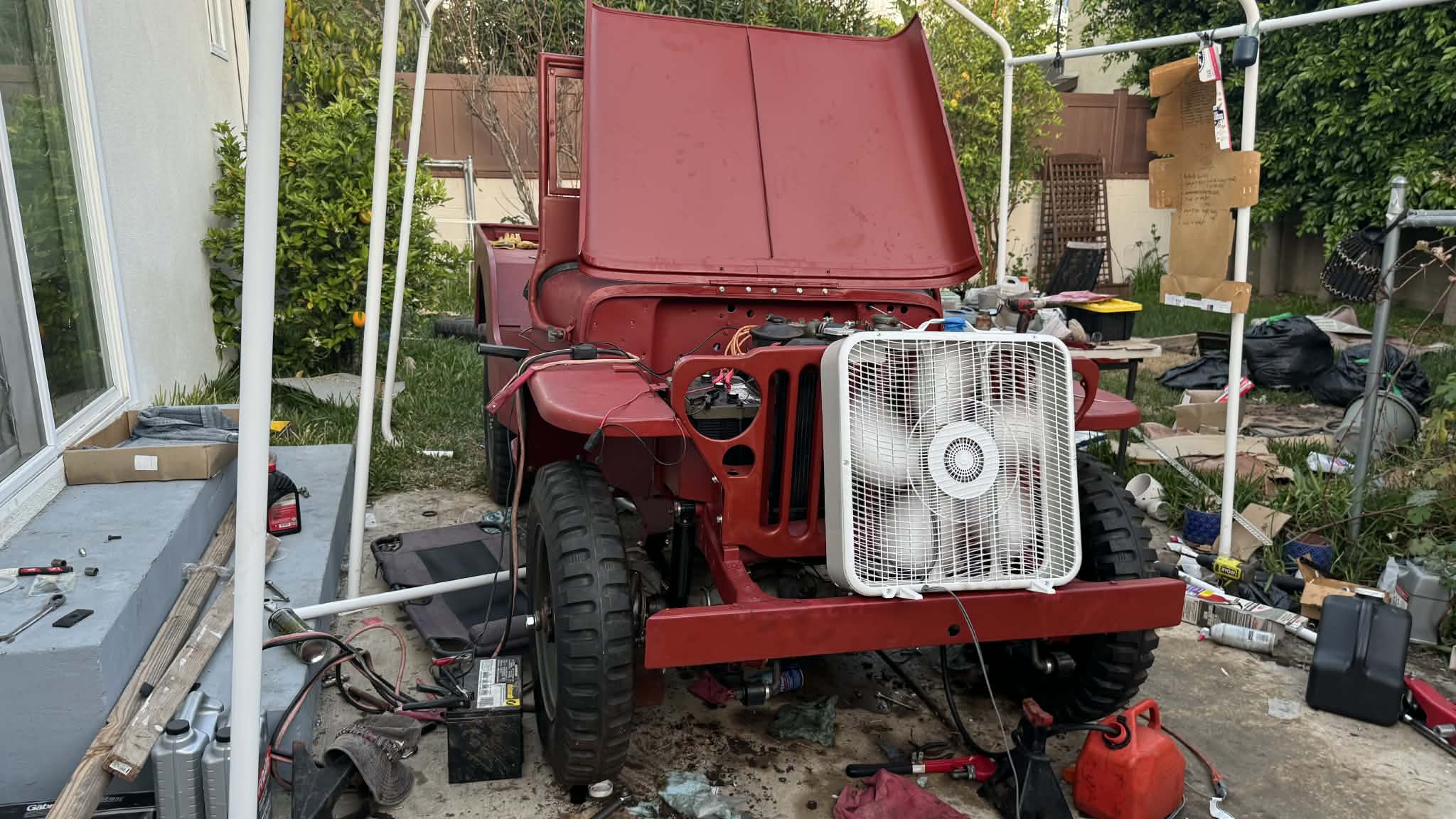
In the last update on this build, you read about how I had installed the brand new, Philippines-built body onto the also-brand-new, also-Philippines-built frame. Though you’d think the two would fit together like a puzzle, that proved to be far from the case. I had to do all sorts of drilling and bending and jerry-rigging, but the end result — while imperfect — looked decent.
The brand new WWII Jeep engine that I had assembled with my friends Brandon and Laurence had sputtered to life a few weeks prior, but it had never really run-run. I knew that, before I even thought about getting the Jeep onto the open road, I had to break this engine in.
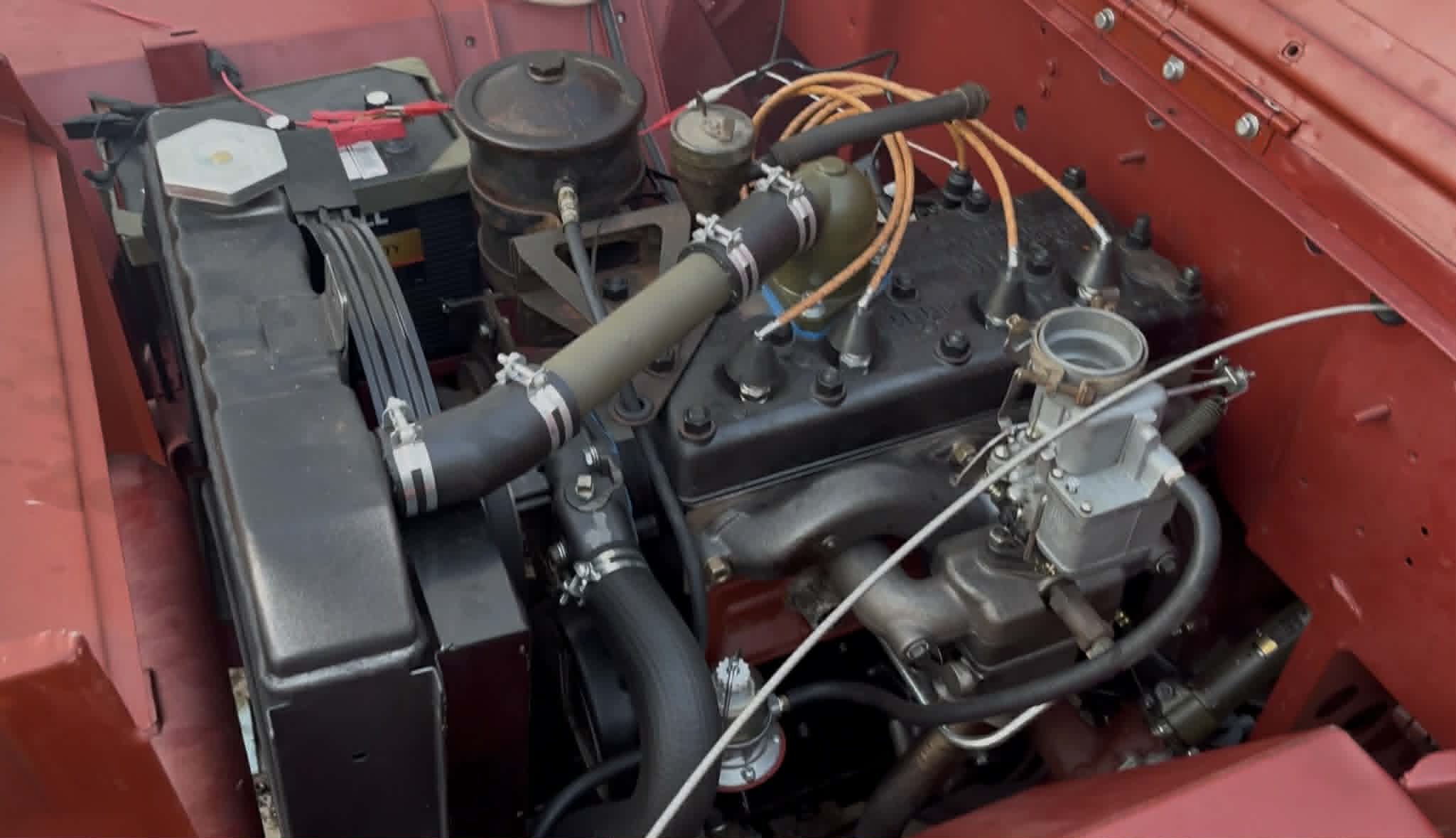
The only issue was that the engine wasn’t really running properly. With some small jumper cables between the battery and ignition coil, and actual jumper cables between a 12-volt battery I’d borrowed from my Jeep Comanche and the WWII Jeep’s starter, I was able to get the Jeep to fire off, but any amount of throttle application yielded an instant engine cutoff.
I decided to bolt up a different carburetor — one that had been built by some folks in Ohio called Specialty Jeeps. I’ll write all about them in a future story, since eBay flew me to Ohio to visit them, but suffice it to say that they’ve rebuilt a Carter WO or two their day, so I popped that on my motor, and tried the jumper cable from that 12-volt battery one more time.
The Jeep fired to life, and then, with any application of the throttle, died.
I wish I could tell you exactly what I did to get the engine to rev a bit, but I honestly don’t remember. I got it to idle, and I did something with the choke and the throttle to raise the revs a bit. Why? Because in order to break in an older motor, it’s recommended that you rev the engine above 2,000 RPM for about 20 minutes.
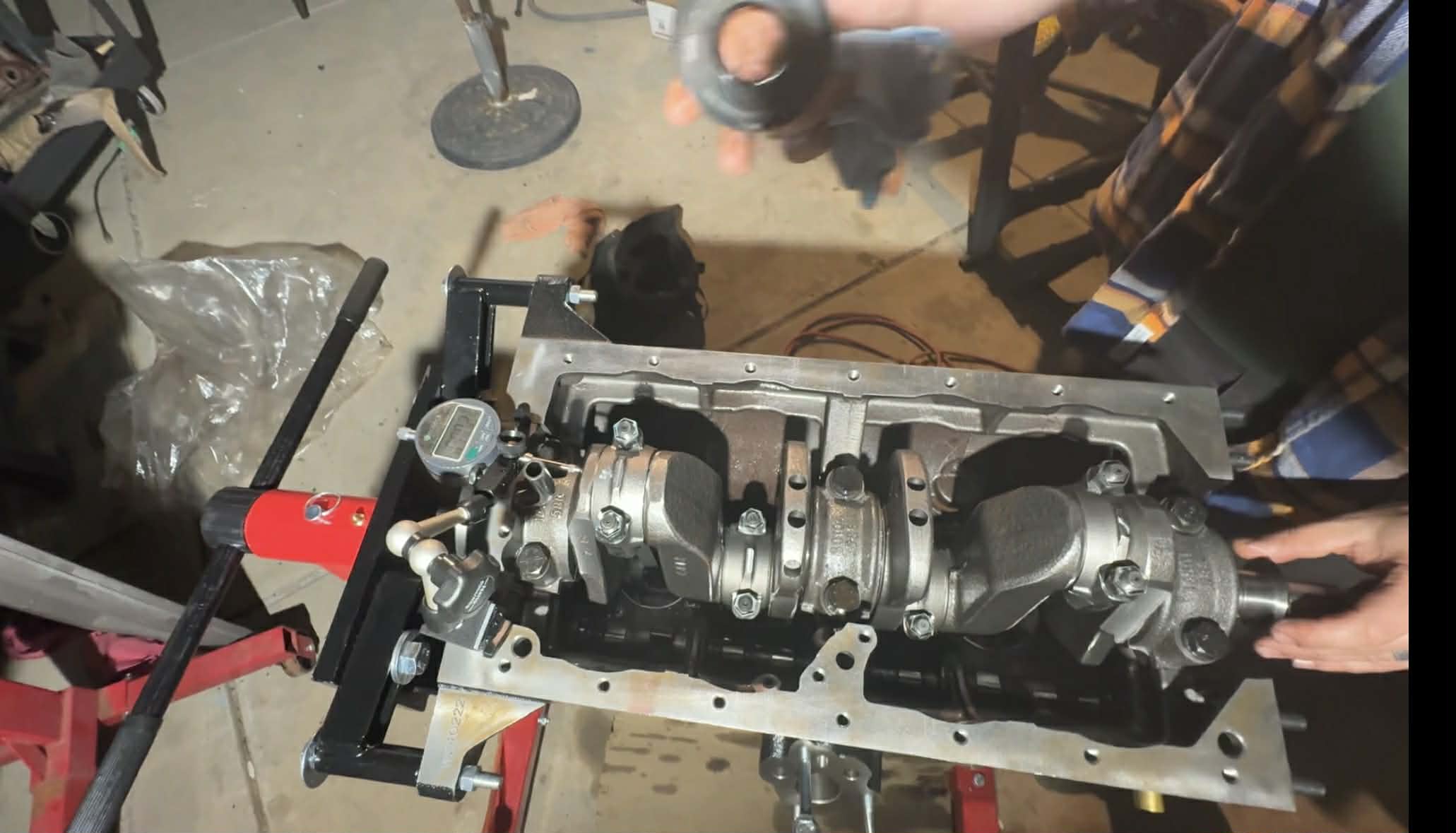
The reason for the high revs (which I’m sure bothered my neighbors a bit) is that the camshaft on this old Jeep is splash lubricated, which is to say that the lobes are not fed pressurized oil through the oil galleys. The engine’s rotating assembly is actually slinging oil up onto the cam. And though I had squirted lots of assembly lube onto the lubes, eventually those lobes were about to be dry, and dry metal rubbing up against dry metal is a recipe for wear. Driven Racing Oils breaks mentions this in the company’s break-in guide:
You need to see oil pressure rise almost immediately…Once you have established oil pressure, bring the engine up to a fast idle, typically around 2,000 to 2,500 RPM. This is particularly important for engines with flat-tappet camshafts, as the higher RPM ensures adequate splash lubrication to the cam lobes and lifters. Listen intently for any unusual noises like knocking, ticking, or grinding. While the engine is running, have a helper look under the vehicle and around the engine bay for any leaks.
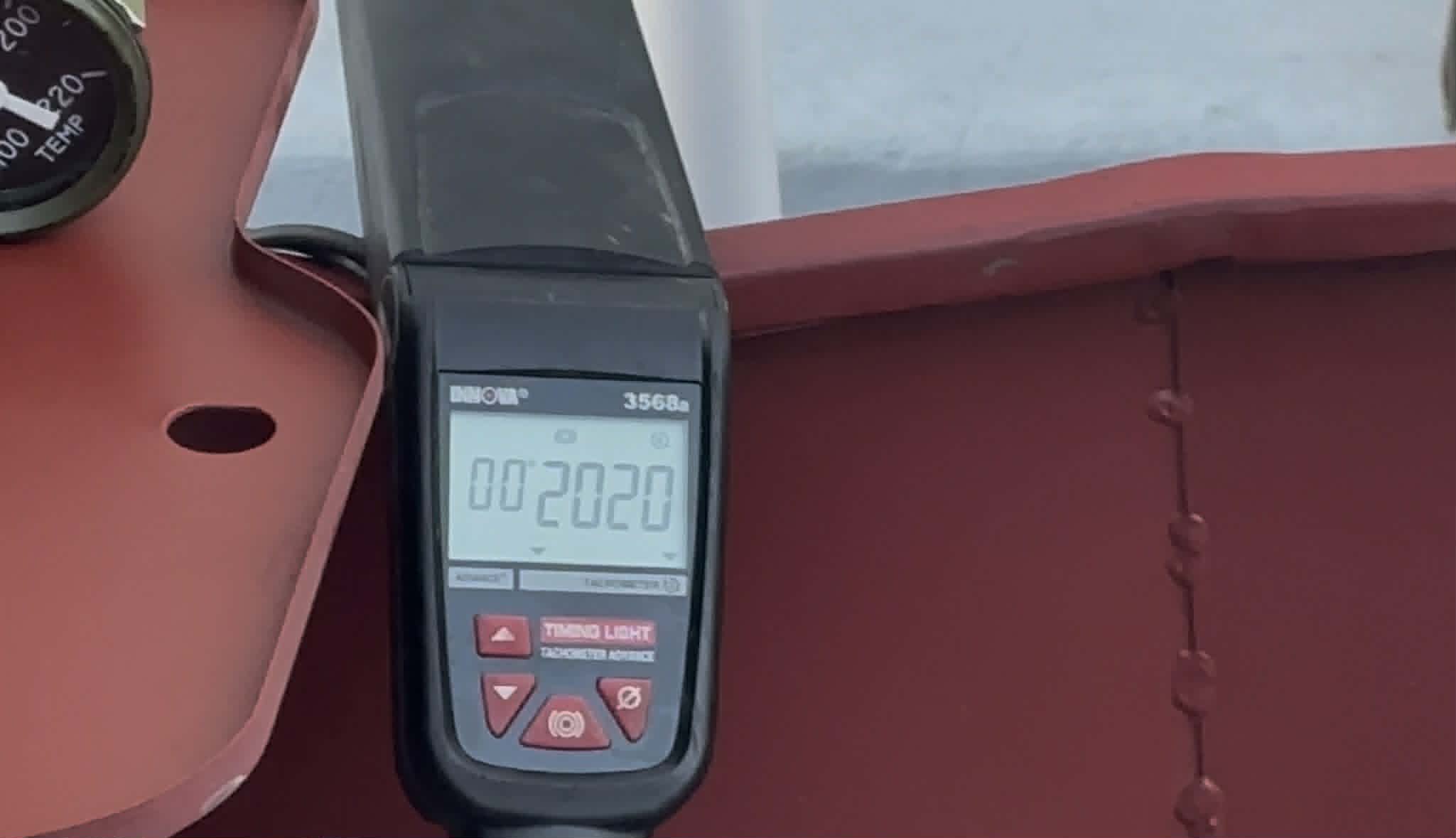
So that’s what I did. I hooked my timing light onto my number-one spark plug wire and onto the battery, and the screen began reading the engine speed. Somehow, I got the badly-running engine to about 2,000 RPM, and I held it there, gradually bouncing it between about 1,800 and 2,500.
This was extremely loud, but not because the Go-Devil motor is inherently noisy, or because the exhaust makes a racket (though it’s far from quiet); no, the reason the engine was so loud is that, when I did the break-in, I had yet to actually tighten the body to the frame, and I had yet to remove tools and other parts from the body tub.
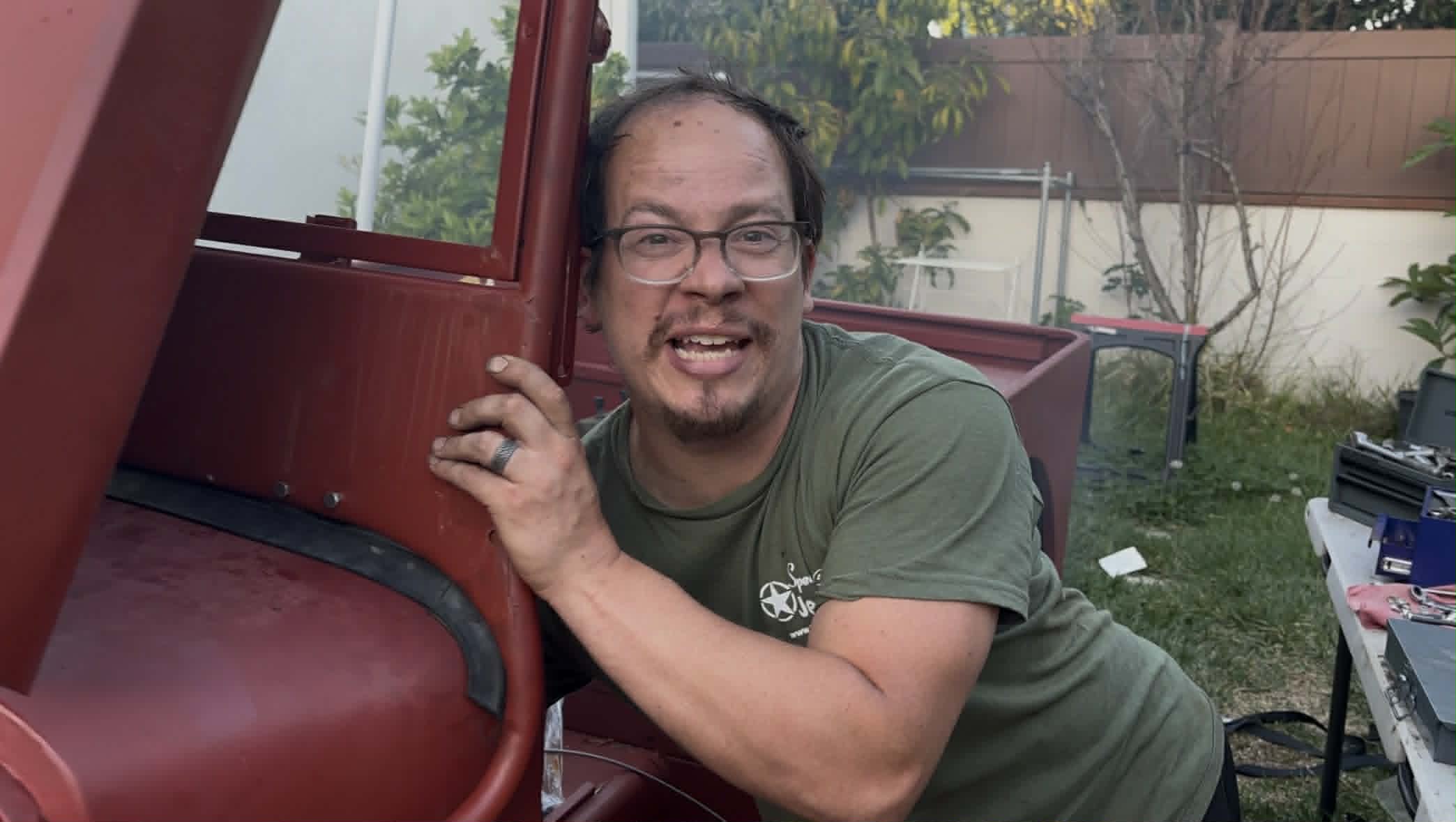
Between that and the fact that I’m fairly sure the transmission was actually touching the tub, the loud buzzing and rattling was absolutely unbearable. I don’t know if that comes across in the video above, but from my spot behind the steering wheel, things were deafening.

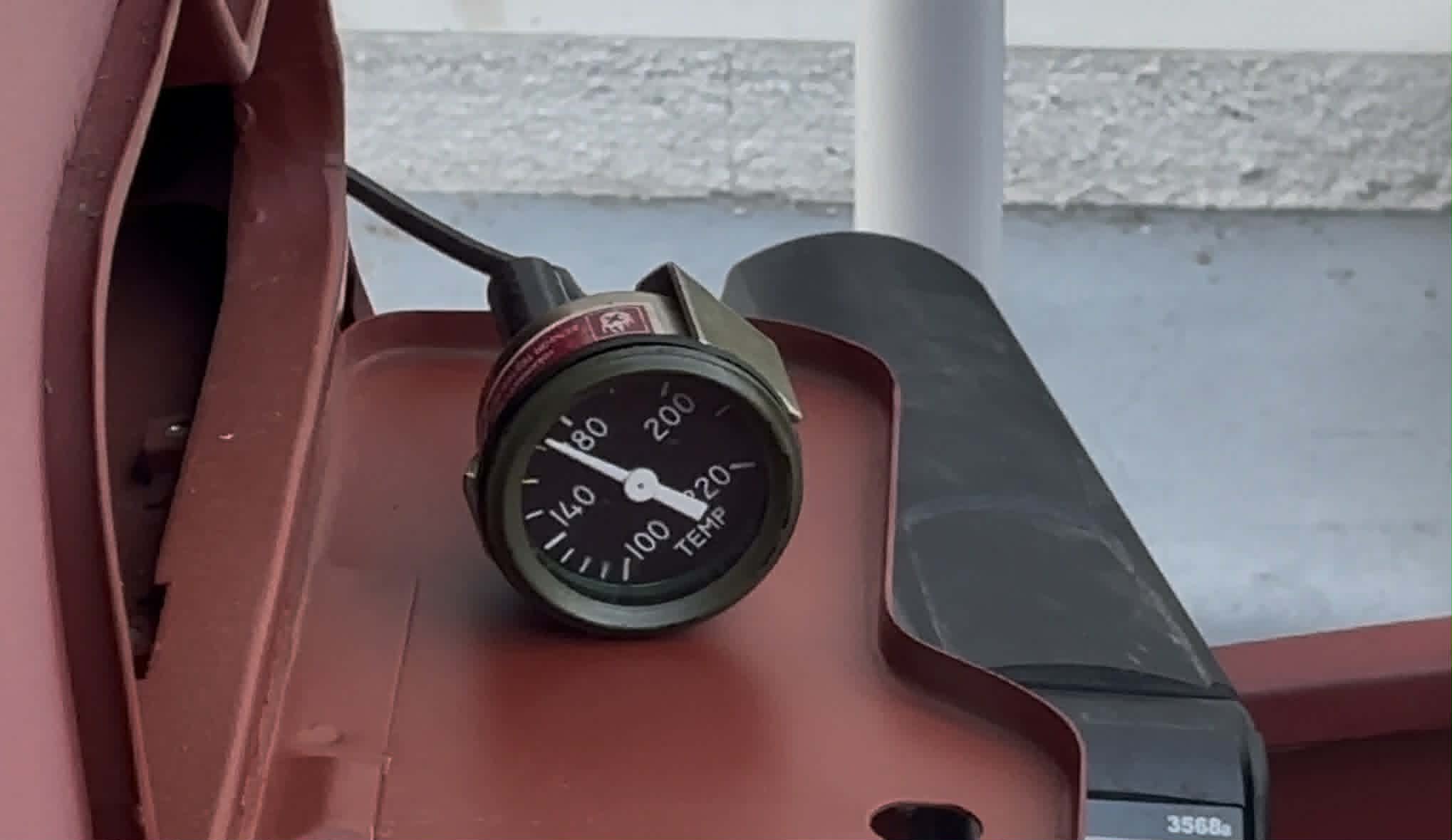
I kept a close eye on the temperature gauge, which I had plugged into the cylinder head. I also had an oil pressure gauge tool plumbed directly into the engine block; it was reading an excellent 50 psi from the Rotella high(er) zinc break-in oil:
Nothing strange was happening during this 20 minute break-in other than: I was losing my hearing, there was tons of smoke coming from the exhaust pipe as the engine burned off all the oil I’d slathered onto the cylinder walls, and the engine did not run well at all.
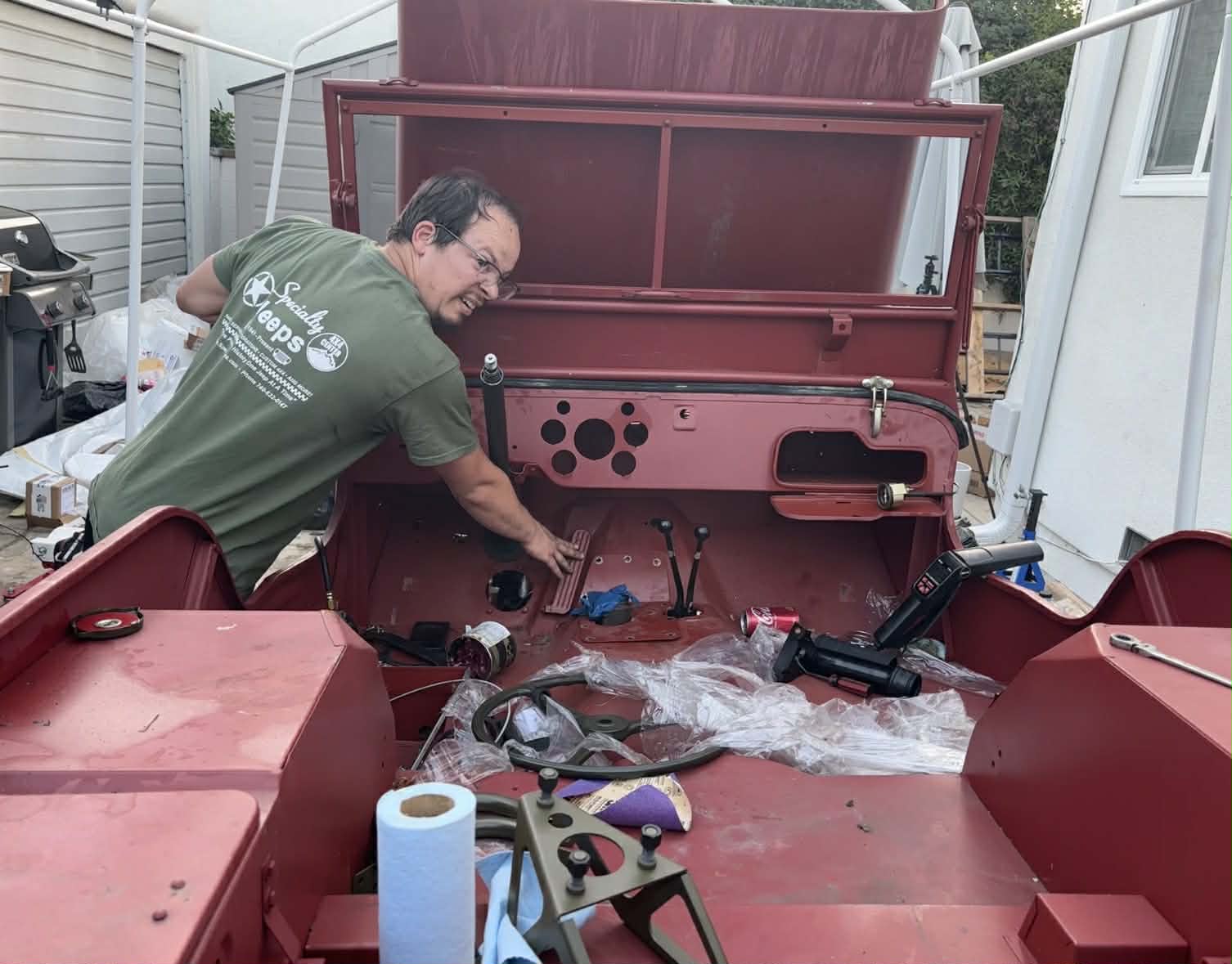
With my hand on the accelerator pedal, I kept an eye on the tachometer, oil pressure gauge, and temperature gauge, and listened to a rather stumbly, unconfident Go-Devil bounce its revs around between 1800 and 2500 RPM. My pedal input was not yielding the reactions I was expecting, and sometimes the engine stumbled hard.
Still, I kept the revs roughly in the 2000 RPM range for 20 minutes straight, and then I shut the motor down and began preparing for a test drive.
The First Drive
I tightened the body to the frame, installed the brake and clutch pedals, and then got ready to hit the road. No, the Jeep wasn’t even almost complete, without headlights, taillights windshield glass, seats, dash gauges, a fuel tank, and on and on. But I didn’t care; I had to get this Jeep on the road in order to be able to assess its critical systems. I had only 10 days before I had to leave for the Moab Easter Jeep Safari, so I needed to know if the Jeep had any major issues with the motor, transmission, transfer case, axles, or suspension, and I needed to know that right now.
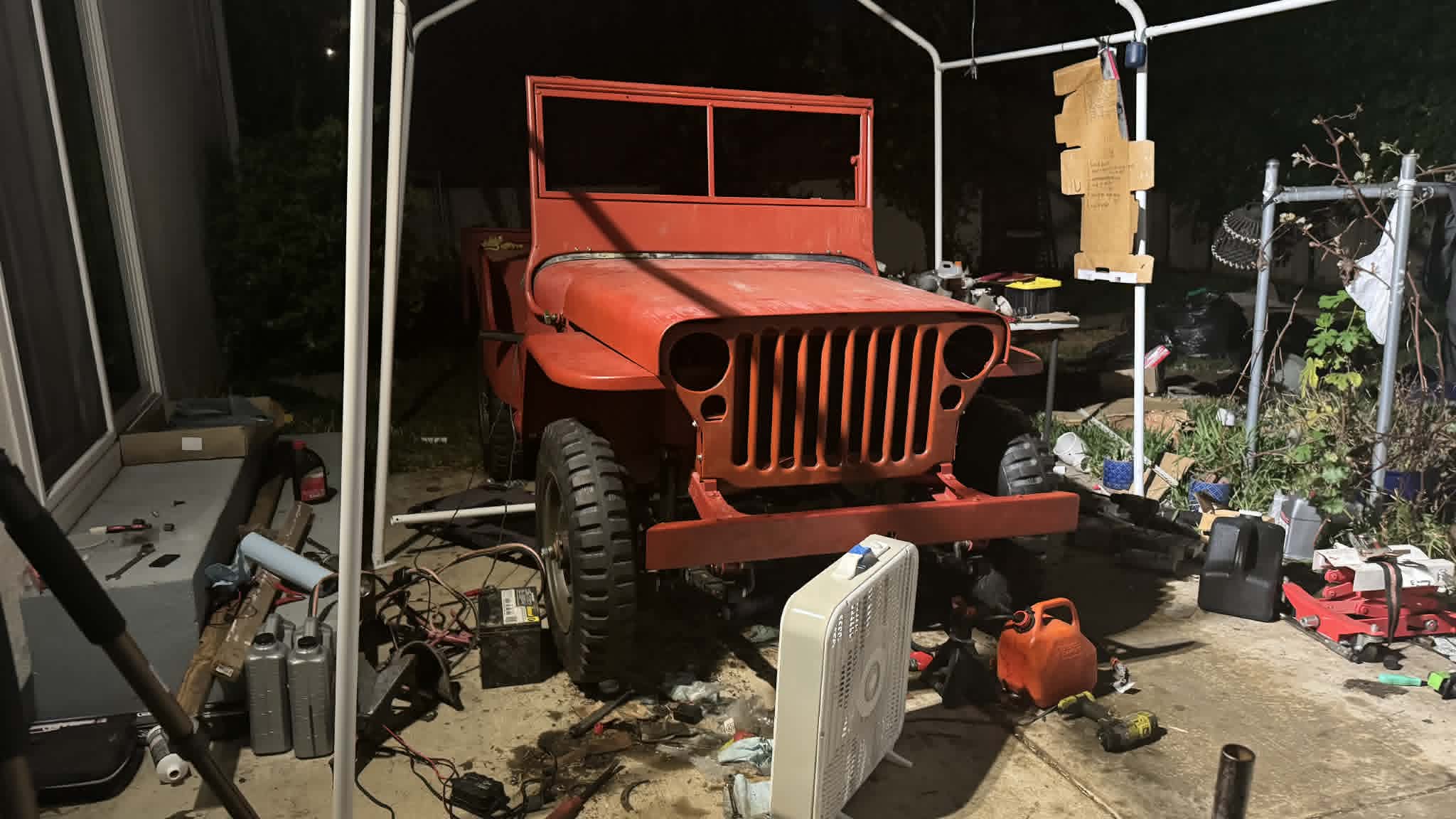
The truth is, even if I discovered a major problem on this test drive, I likely wasn’t going to have enough time to fix such a problem anyway, but if the problem were moderate, maybe I could? The bigger problem was the anxiety/impatience. I couldn’t stand not knowing if this Jeep stood a chance or not. I had to hit the road to see if I could find out.
I slipped the steering wheel onto the steering shaft splines and tightened the nut. Then, to give myself a place to sit, I placed a cat litter bucket inside the fuel tank sump:
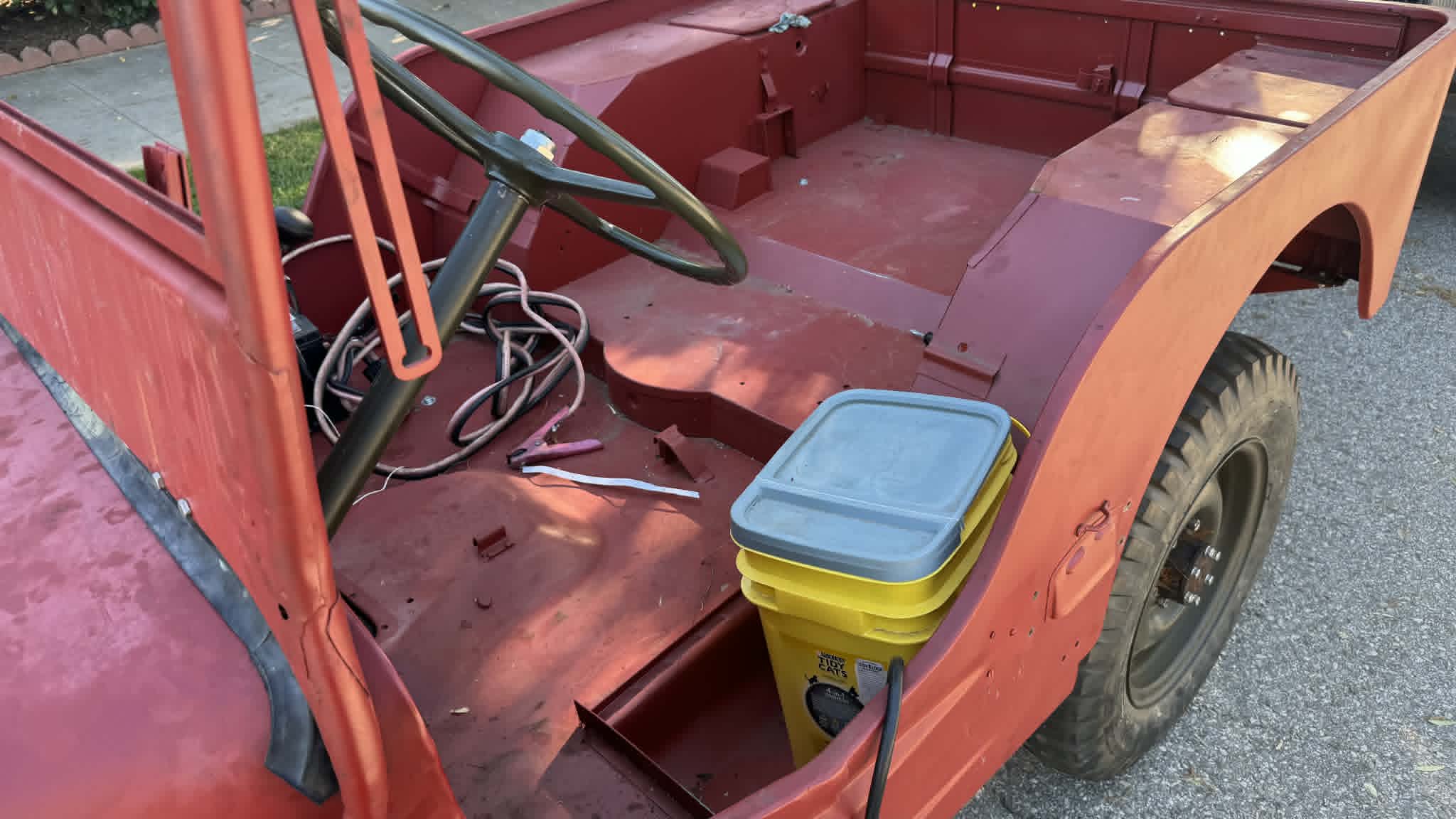
I could place this bucket into the sump because I hadn’t yet installed the Willys’ fuel tank. This meant I had to use a jerry can to feed the carburetor that sweet, sweet gasoline-nectar. I sat the can onto the front driver’s side frame rail and bungie-corded it to the Jeep’s grille for simplicity:

I hotwired the Jeep with a jumper cable from the battery to the coil (and I attached a string that I ran to my transfer case level to act as a kill switch; I’d just pull the string, it would detach the battery from the coil, and the engine would shut off), and I cranked the starter with the 12-volt battery and jumper cables you see on the left side of the photo above. The engine sputtered to life! I sat on the rather uncomfortable litter bucket, depressed the clutch, shifted left and down into first, and let off the clutch.

SPUTTER SPUTTER SPUTTER
I quickly got back on the clutch, realizing that, for some reason, this engine just didn’t like load. So I feathered the clutch and managed to get this far out of my driveway:

In short order, I was sitting in a dead Jeep, and found myself rolling back into the driveway:

Great.

I grabbed the battery and jumpstarted the Jeep again. I closed the hood, jumped back onto the Tidy Cats bin, shifted into first, and allowed my left foot to do the most precise clutch-feathering humankind has ever witnessed.
The engine slowed down and wanted to die, but my foot wouldn’t let it. This motor was going to run, and, more importantly, it was going to propel my Jeep down the street. I wasn’t giving it a choice.

I drove one block, California-stopped at a stop sign, and then hit the accelerator pedal. SPUTTER SPUTTER SPUTTER, VROOM. The Jeep accelerated! It was slower than it had any right to be, but the Jeep was now doing about 10 mph. I clutched in, went to push the shifter up, right, and up again into second, and found: Something was up. For some reason, the T84 transmission I had rebuilt with the help of my friend Brandon wasn’t wanting to move from the first-reverse side over to the second-third side. The shifter was sticking when moved laterally — something likely having to do with the shifter-containing transmission cover I myself had installed.
Here you can see me struggling to get from first over to second:

But before I could get annoyed by the shifter, I found my feet on the pavement, pushing the world’s most iconic 4×4. I had stalled:

A kind pedestrian joined in to help:

I had to walk about a quarter mile back to my driveway to grab that battery that I had foolishly forgotten to throw into the back of the Jeep. Carrying that heavy thing a quarter mile was a good workout:

I hotwired/jumped the Jeep again.

I gently closed the hood, and tiptoed over to the driver’s bucket-seat, hoping not to upset the poorly running motor.

I then gently used my left foot to feather the Jeep back to my house, where a sense of doom began setting in. I had 10 days, and the Jeep neither ran properly nor shifted properly.
The optimist reminded me that the brakes worked, the steering felt tight, and the suspension was better than I expected. I just had to figure out that transmission and the engine, and then I had to install all the other parts that weren’t yet on the Jeep.
Then all I had to do was drive 900 miles.
And then spend a few days off-roading.
This should be easy, right?


I’m sure we’ve all seen the videos of it making it to Moab, so we know how the story ends. But holy cow, the effort expended to get it there is amazing.
Somehow actually knowing the outcome does make this series a bit more bearable. For the last three articles my assumption would have been that he blows the deadline, completely misses going to Moab, and only eventually gets it running poorly for a little trail ride near his neighborhood.
Reading this and knowing that he pulls it off is pretty incredible.
DAT – David Always Triumphs
I’m glad you say that. I think you’ll be amazed at how it all went down. Coming July 4!
Please tell me you changed the oil after breaking it in.
I want to get to a different level on the Jeep build though.
I think the first time David mentioned a final article on the Jeep making it to Moab was going to be May 15th — about 5 weeks after he went and conquered the trails. It’s June 8th and David has given us some extremely in-depth articles and more standard ones like this one. So they are a little uneven in approach, but I can appreciate the variance. Regardless, the man has some time commitment issues.
So, at this point I think I would be even more interested in the backroom discussions between Brian, Matt, Jason, David, and possibly others about this project’s online lifespan rather than David making it to Moab. Or at the very least an oral history of the making of the eBay Jeep Story.
Then again, I loved Apocalypse Now, but I found Heart’s of Darkness: A Filmmaker’s Apocalypse even more interesting.
I’m glad to know he pulled it off in the end, but I wouldn’t say this collab was a success. The total lack of, or at best, inconsistent updates in frequency and content make this a bit of a let-down overall.
Try this instead: Jury-rigged refers to something assembled quickly or temporarily using whatever materials are on hand. It describes a makeshift but resourceful solution, often devised in an emergency or when standard parts are unavailable. It’s the story of your automotive life.
jerry-rigged is unintentionally on point for DT’s brand of madness. it is a mix of :
Jury-rigged: Improvised or MacGyvered out of necessity. It highlights resourcefulness and is usually meant to be temporary.
Jerry-built: Refers to things that were cheaply, poorly, or carelessly built from the start. It carries a consistently negative connotation.
According to Merriam Webster, jerry-rigged has been a phrase used since the late 19th century.
Who is Jerry and why are his innovations always viewed negatively?
That picture of a man ravaged by insomnia and overwork, his already-thin tether to sanity frayed thinner still, like the gossamer septum of a coked-up Charlie Sheen after a 4-day bender, reminds me of Jack Nicholson in The Shining.
This is the new cat Jeep! This is one “Tidy”(cat) Jeep, ha ha. This thing is awesome! I’ve watched the video of DT off roading it in Moab and it’s great
Spoilers! LOL
Tenacious determination and Germanic stubbornness.
Wow!
Kudos for surviving the build experience, David.