

Like any lifelong railfan, I’ve been addicted to trains since I was a kid. I can prattle on all day about my favorite Chicago Metra locomotive, or about how Chicago became the rail capital of America. Usually, I just use The Autopian as my outlet for the thoughts rattling around in my brain. Recently, I finally took my enthusiasm down to the small scale. In doing so, I’ve discovered that tiny trains are gloriously fun, but also ludicrously expensive. I think I’ve spent more on scale trains than I have on my last car repair.
I don’t know when the exact moment was that I fell in love with trains, but I do know it happened in my childhood. One of my favorite things to do as a kid was to watch Wisconsin Central freight trains passing through Lake County, Illinois. The images of those red and yellow locomotives remain burned into my memory more than two decades later. Nowadays, I find myself going to that same depot in Antioch, only now the trains are emblazoned with Canadian National logos.


As a kid, I had this dream of having a giant table with a scale replica of parts of Chicago and its surrounding areas on it. In my head, I’d have the Sears Tower as the centerpiece, O’Hare nearby, and lots of HO Scale trains buzzing around. I pictured this layout having functional street lights and red lights, moving cars, and those Wisconsin Central trains, but tiny.

My dream never happened. The closest I came to it was an HO Scale Santa Fe locomotive pulling some cars around an oval track sitting on the carpet of my bedroom. I had some great fun with that train. I remember putting Matchbox cars in the boxcar and in the gondola car, then seeing how the train performed with the extra weight. I also remember tying things to the caboose to see if the train could pull it. I think I also messed around with the switch to the point where I made the poor locomotive drift, causing sparks as it slid sideways.
Then, I grew up.
At some point, likely before I even became a teenager, the trainset was either discarded or given away. I then started paying attention to other things, like powersports, ships, aviation, and video games. I never forgot about my love of trains; only now, I was making skins for locomotives in Microsoft Train Simulator (below), on top of being obsessed with the Boeing 747, the CRJ-700, the RMS Titanic, and countless hours in driving games. I also never stopped wanting that train table, but it stopped being a goal or even something I had planned.

Now, so much time has passed. It’s been at least 24 years since I had that train set, and about equally as long since I even attempted to work toward that dream of a train set. But my recent years getting involved in real trains have reignited that old desire.
Taking My Train Obsession Down Some Sizes
If you’ve read my work for long enough, you know that I have been writing about the Illinois Railway Museum (IRM) pretty extensively since 2022. I seemingly write more about IRM than train magazines do. It’s gotten to the point where the museum’s volunteers know me by name and ask me what I’m going to write about after that visit. I guess I’m that predictable.
One of the parts of IRM that I haven’t given much attention to is the museum’s model train display.

Nestled near the entrance of the museum is a large room full of train sets of all scales. There’s a beautiful HO Scale layout in the middle of the room, and it’s flanked by N Scale, O Scale, and even ridiculously tiny T Scale train sets. Over the past four years, IRM’s model trains, as well as some model train events I’ve gone to locally in Illinois, have been filling my head with ideas.

Coincidentally, my wife also has a thing for model trains. She actually built a fully-functional model train layout as a kid, then her parents destroyed it when she moved out. Yet, for us, model trains have always been something to enjoy from a distance. Our apartment was just too small to accommodate a train. We always thought that it would happen “someday,” likely when we moved into a house.

However, since I just spent $23,000 on fixing my teeth, with another $15,000 bill due a year from now, our house plans got delayed just a little longer. At the same time, we also did a major summer cleaning, which saw us donate tons of stuff that we haven’t used in years. We cleaned out so much stuff that I was finally able to move my car part projects from the dining room table back to my actual workbench. However, ironically, my wife and I have gotten so used to eating at our little tables in the living room that we never started using the kitchen table again.
That’s when my wife had a brilliant idea. If we’re not going to use the kitchen table to eat, and we aren’t going to sell it, why not use it for trains? I knew I loved this woman. Using the table to support a train layout actually makes some sense. It’s not exactly a high-quality table, nor is it valuable or a family heirloom. I got it from Big Lots when I moved into my first apartment. It also has easily removable legs, making it portable for when we do move.
Model Trains Are Tiny, But Awesome
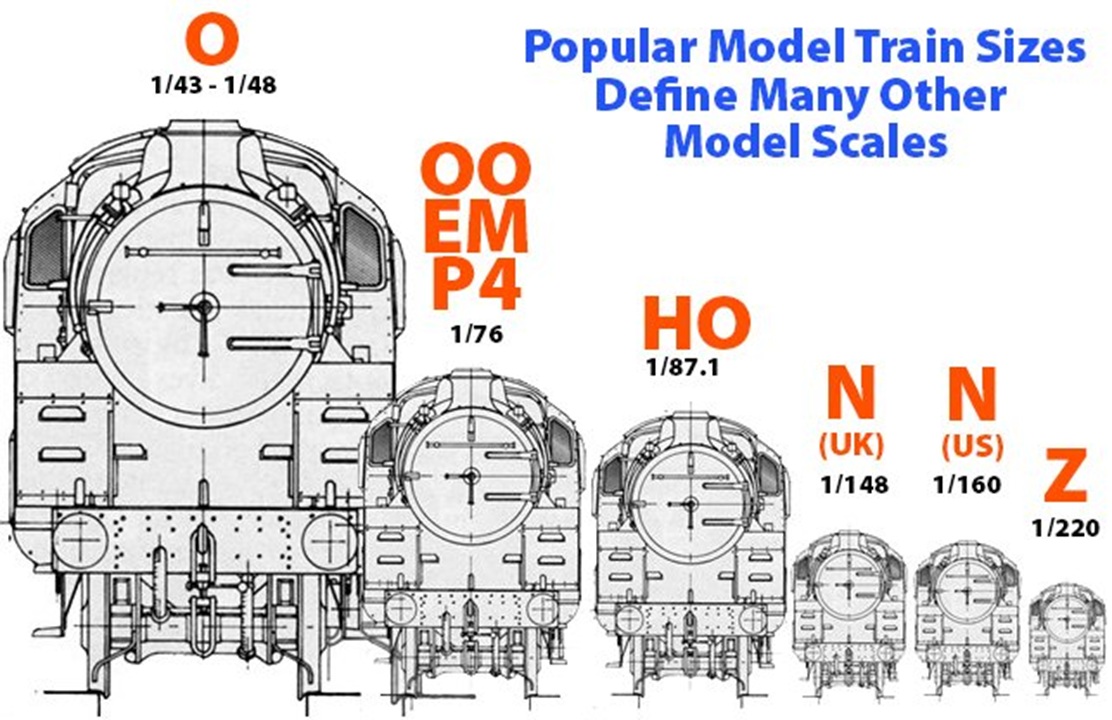
First was choosing a scale. The most popular scale is HO (1:87), but it’s a touch big if you’re limited on space. The second-most popular pick is N Scale (1:160), which is roughly half the size of HO. You can go smaller, but you’ll find the biggest selection of rolling stock, scenery, and other bits in HO or N. A kitchen table for four is still a small space, so in order to have something a bit more exciting than a tight loop, we chose N Scale.
Sheryl then went nuts. IRM’s volunteers and visitors often donate old model train pieces to the museum, and they’re resold to the public to support the museum’s mission. We love giving back to IRM, so Sheryl brought home a ton of track and other odds and ends from IRM’s model train store. I’m pretty sure all of the track you see here isn’t worth more than $25.

At first, I thought this model railroading thing was going to be cheap, but that faded away very quickly. When it came time to buy rolling stock, IRM’s train store wasn’t much help, as most of its equipment was either broken or not N Scale. So, we took to eBay and local hobby stores.
Sheryl’s favorite locomotive as a kid, and as an adult, is the Norfolk and Western Class J. As a kid, she had one of these in HO Scale from Bachmann Trains, so she wanted her favorite train back. We were stunned at the price. That locomotive will set you back $519 today. A working one on eBay is about half that.

Sheryl rolled the dice and spent $49 on this example. It’s in excellent physical condition, but did not pass my bench testing. Older Bachmann locomotives used nylon gears. This was an affordable solution to keep costs down, but terrible for longevity. Over time, the gears shrink, then eventually crack or shatter. When this happens, the locomotive jams up. Sure enough, that’s what happened here.

This is a well-known issue, and while people have brought some of these locomotives back, I’ve been told that it’s generally considered to be “fatal.”
Another issue that this locomotive has is a broken wire on the rear truck. Since the locomotive gets power from the truck, the wire will need to be soldered back on before the locomotive can even travel further than an inch. I can handle that without a problem. I will see if a hobby shop can help me fix the gears, however. Otherwise, it’ll be parked as eye candy on our layout.
Sheryl has since purchased three more used locomotives. None of them were over $75, but all of them are broken in some way.
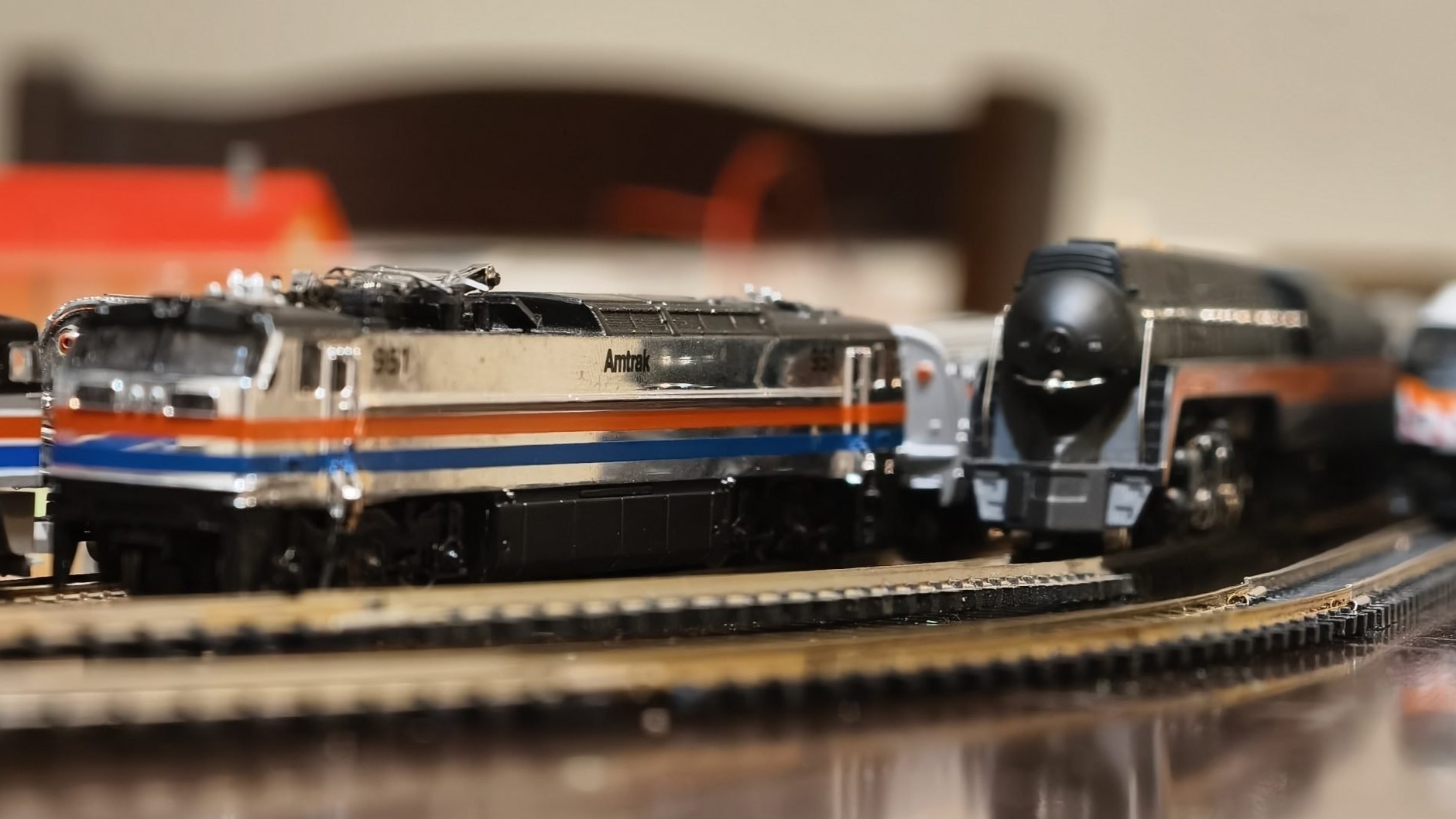
One of her favorites is this Kato Seibu Class E851 (below), which is painted in a fantasy Amtrak livery. She then paired it with some used passenger cars from eBay. Even this semi-broken locomotive, with its missing coupler and loose center truck, was still $75.

To Sheryl’s credit, all three of the extra locomotives run quite well, and their damage will not be difficult to fix. Only the Class J is incapable of pulling a train right now.
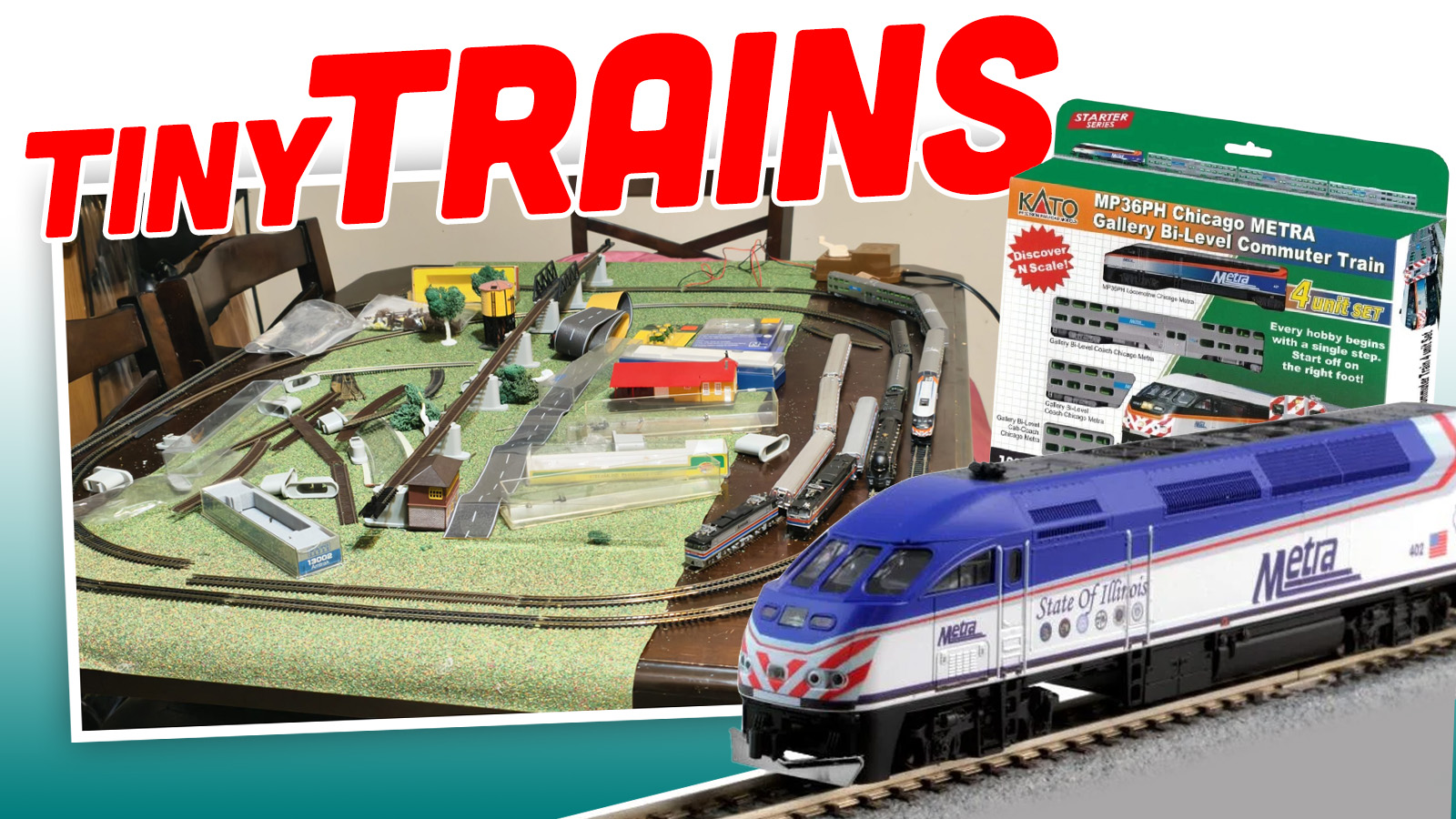
Still, after seeing Sheryl’s fleet of well-used trains, I decided to get just one starter train, but in new condition. I am obsessed with Chicagoland’s commuter rail line, Metra (Metropolitan Rail), so I decided to get Kato’s Metra starter set. It has an MPI MP36PH locomotive, a common sight in Metra’s fleet, two bi-level gallery cars, and a cab car. These four tiny pieces? $170 after tax and shipping from eBay. Apparently, that’s cheaper than getting it directly from Kato, which wants $235.

That was the “cheap” one. Had we gone HO scale, replicating this train would have cost me more than $600. Yet, even for the affordable interpretation of Metra’s common rolling stock, the details blew me away.

Look at all of the extremely tiny parts of the locomotive.

Each car has an interior and can be wired to light up inside. The cab car is lighted, so that it can be used in reverse, just like the real deal.

As crazy as the price seems to be, the money does seem to pay for something tangible. I’ve been told that Kato is not a flagship brand when it comes to visuals, just one known for great reliability and precision on the mechanical side of things. Well, color me a fan.

The Cash Adds Up Fast
Adding everything up you see on the table here, you’re looking at about $600 or so, which is more than I spent to do the front wheel bearings on my wife’s Volkswagen Jetta. Mind you, everything on this table, but the track bed (off-screen) and my Metra consist, is used. Had we purchased all of this new, we would be in at least double. I mean, a new J Class alone is $519.

Ultimately, we will be going new for some parts, anyway. The track we have does work, but isn’t super reliable, even after cleaning. Before we secure the track down and start building up, I want to make sure the trains can complete laps without stuttering. I also want to upgrade our crappy power supply to something better.

Out of curiosity, I asked the proprietor of a local model train store how much he spent on his layout, which wasn’t much bigger than our kitchen table. He chuckled and said, “tens of thousands.” His business partner pointed to a layout with easily twice as much, if not more, detail, and said his was going into the six figures.

Everything in this hobby is expensive, from rolling stock and buildings to just basic materials to make the layout look like more than just a train circling a bare table. There are a lot of bits with price tags that start in the three-digit range, and it’s just going to be one of the very many expensive bits you’re going to have on your layout.

The minuscule tractors above? $10! I mean, yes, that’s not a lot of money in the grand scheme of things, but I’ve come from a world of buying standard Hot Wheels cars for around a buck, or maybe a nice Hot Wheels car for about the same price as these tractors. These things are so small, they can park on a fingernail!
But, thankfully, as the kind gents running the store told me, beginners rarely spend that much money on their first layout. His advice was just to get a basic trainset going. It doesn’t matter if it’s rough. Just get it running. Then, enjoy it for a while, and then upgrade it over time. There’s no need to blow crazy money right away. He pointed me to an example layout in his store that was done on a tight budget – under $1,000, as I recall:

Low-Stakes Fun
So, that’s the advice we’ve taken. We’re just getting the layout running, then we’ll build from there. Our general plan is to have some sort of elevated line and a pair of tracks for my Metra and Sheryl’s Amtrak. We’re sort of going by trial and error as we go, which is fine. It’s fun figuring out what happens next!
I also love it because, at least thus far, it’s a low-stakes hobby that’s great for a couple. It’s not like cars or motorcycles where you’re changing oil, paying for insurance, paying for repairs, and paying for storage. And if something breaks, it’s not the end of the world. It’s especially fun because I love hearing what ideas Sheryl has for the layout. I don’t really modify my cars or anything, so that back and forth doesn’t really happen there.
But truth be told, we have no idea what we’re doing. It’s been over 20 years since we last touched model trains, and it feels like we’ve gotten into a new frontier. We’ve watched a million YouTube videos and talked to real experts, so we’re not totally blind. But I can confidently say I know my way around a carburetor more than I know how to build a model train. So, if you have some advice, please send it our way!
Top graphic images: Author; KatoUSA.com; TonysTrains.com


We started on an N scale with the idea of a short piece of Conrail in Upstate NY. We have a couple of locomotives in a box with cars and some Kato track.
My father in law went into it big time. He designed signal equipment so his G scale logging railroad in the back yard had working signals and control panel, Shay, Heisler and Climax locomotives and a 5′ bridge. I always thought he should do the Matryoschka thing and make an Nn3 replica for the house. (Nn3 is N, 1/160 scale modeling 3′ gauge using Z track and locomotive mechanisms, and HOn3 is HO scale 3′ gauge witn N sized track). It’s a total rabbit hole
Great choice of train, I spent many of my formative years riding to and from Chicago on the METRA Milwaukee North line.
My tendency to collect (but not hoard – I sell stuff constantly), would make model trains a very bad hobby to take up. Cycling and Photography keep my wallet empty enough.
I’d love to try though.
Y’all have all the miniatures you want (and can reasonably afford) and enjoy smiling with each other! Very happy for you both.
The one in the living room is a vague rendering of Carlisle (Northumbria) about 1962, and the other side of the staircase is a branch line into an imaginary rural station somewhere in Cumbria.
The big kitchen one is an idea of a Pennine lead mine with railways(009 and 00) with Z gauge track for the mine entry bit, the 00 trains take the refined ore to the canal. If lead mining was a thing in about 1970
I am working on another, my first fully DCC thing, it is above the big car space, the plan is it will be a history of relatively local railways. A fun bit is ( only one so far) is flipping stations. I pinched the idea from Bentley dashboards, three things in the same space.
Fun thing, the printed railway ticket was invented by a station master in Brampton Thomas Edmondson (not the Canadian Brampton, the one with the Edward Burne-Jones designed stained-glass windows in the church).
This stuff is very addictive and very very expensive, but when the tiny lights come on and the trains and cars move it is so so so pleasing. A big part of the joy is that it is a thing that you did. The models have got so good, the systems are amazing, but you built that tiny house, you made the trees, when the resin for the river leaked on the floor you dealt with the mess (the river looks good now), that wall that she painted, that penguin in a stupidly tiny phone box? the person that made the dandelions (they are teeny). Buildings need insides, in N scale only you will know but you know.
Also, sensible Nic (a very rare Nic), insure your trains separately, it does not cost a huge amount but a £50,000 layout is not covered by home contents.
70+ years ago, I got a 027 gauge (Lionel?) train set for Christmas. I remember that it was a different gauge than any of my friends had. It was a three-rail setup with electricity running through the center rail.
On that Christmas day, our dog started chasing it and ended up being shocked when his nose hit the center rail. A little while later, he did it again, then he lost interest.
A few years later, my father got transferred to Germany, I hooked up the train to a transformer, but it didn’t seem to run right. I was told that the problem was that the Germans used 50 cycle electricity and the train was built to use the 60 cycle electricity that is used in the US.
In the late 70’s/early 80’s I had an HO set that evolved into a multi table basement layout connected by scenery bridges that you could duck under to get at the other tables. It got as far as screen, plaster, bridges, and buildings, but BMX took hold before I could finish the scenery.
I got much of my rolling stock from someone getting rid of theirs. I built a few cars and buildings to a high level of detail, and then lost interest. Dad reclaimed the room and boxed up the trains. Decades later it all went to a friend’s 3 boys to play with.
N scale is a good answer to smaller spaces. That stuff was always lots more expensive than HO back in the day. Sounds like it hasn’t changed.
Whatever you do, don’t go to the Walthers catalog: https://walthers.com/ Back in the paper catalog days, this one was good for a week of reading and dreaming.
For when you need a taste of “more”
https://www.griffinmsi.org/exhibits/great-train-story
When I was a kid, I did this stuff with LEGO. I had trains, roads, buildings, the works.
There are people on YouTube doing jaw-dropping stuff with Lego layouts.
Yeah I don’t know how they afford mid 5 figures of LEGO bricks. You can spend Porsche money on LEGO!
As a kid? I don’t do the city stuff with Legos anymore (like you did as a kid) but as an adult I am into medieval and LOTR sets and also the Nintendo sets but damn stuff is expensive hah.
The best way to think of this is to truly enjoy it as a hobby your wife and you share and can do together. It’s like a date night, but instead of spending $60-100 on food/drinks, you can spend it on trains!
My dad was really into model railroading (as well as railroads IRL) and had some nice setups over the years. I think he mostly did HO scale.
San Diego has a very nice model railroad museum: https://www.sdmrm.org
in Balboa Park that we visited on a family Xmas gathering a while back.
3D printing could be a big boon here for repairs and models.
Yeah, the museum in balboa park is crazy. I had such a good time there. Absolutely worth the trip, even if model trains aren’t totally your thing.
I heard prices had gone nuts. When I was a kid, I had a figure 8 bolted to a piece of plywood, but it was kept in the basement, where some horrible entity lived and it was too awkward to bring up and down the tight, winding, steep old staircase, so I didn’t use it much. Later, I had intended to build something at our next house, but all I ended up doing was buying a ton of HO automobiles and trucks and some buildings. Weren’t cheap even 30+ years ago, but the detail and true scale blew away Hot Wheels. They’ve all been sitting in a box for almost that long now. I also got a decent book back then on making realistic scenery, topography, buildings, weathering, etc. that helped me learn how to make all kinds of things unrelated to models. Were I getting back into it, I’d be looking to make a lot of that stuff myself. No idea what happened to that book, but I’m sure there’s all kinds of more advanced techniques on the internet, anyway.
For the broken gear, if you can’t find replacements and it’s too damaged or shrunk to make a mold from, you might be able to 3D print a new one. You could even use the 3D print to make a mold and cast low temp metal. I made a 2-part mold from supplies made by Smooth-On to do that for a modernized version of an extinct bicycle brand’s head badge.
H0 cars are a massive rabbit hole. DO NOT look up Wiking or Herpa collector sites. Luckily the prices for new cars have become really massive, so I stopped collecting them. I remember normal cars costing about DM 2 in the 80s, classics from that time are still available on eBay and far cooler than the new ones.
The choice of N gauge models from both Wiking (check out the D38!) and Herpa are pretty idiosyncratic. No idea about their availability in the US, though.
That’s what much of mine were. I even found an old MB C111 NOS at a hobby shop that was one of those kinds of small businesses where you can’t imagine how they even pay for lighting for apparent lack of business. Revell or Monogram made some much cheaper ones that were pretty good. Not a huge selection of models and largely boomer bait, but a steal in comparison.
Best to keep Jason off that Wiking site before he finds out they sell VW T1s (both Bus and Kastenwagen of course), alongside a police Beetle set. Herpa will sell you a lovely pair of reasonably priced NSU Sport Prinzes, too.
Just wait until Mercedes discovers DCC (Digital Command Control). With just that one addition, multiple trains on the same track, locomotives can run together in multiple unit lashups, all lights are fully controllable. All from a single command station or app equipped phone. Then for just a few dollars more, your locomotives can make realistic sounds (usually recorded from a real one) from onboard speakers as they startup and chug around the tracks. Of course that means a loco costs $350 instead of $200.
Or, the far more pervasive model train culture in Japan. Picture model railroad shops that occupy 5 floors. I collect Kansai region commuter and limited express trains that I’ve ridden on at one time or another. There are at least 100 different current/recent models available in various in regular/short-run special liveries for N Scale (Japanese 1:150).
Shameful lack of L gauge mentions, which is the best gauge.
Time for a 3d printer. A filament printer can do larger items, but a resin printer can do very fine detailed solid pieces. They’re messily with nasty liquid that solidifies under UV light but mat be a good choice for pieces parts and landscape model pieces.
I have a filament printer, it would make fine O-scale or larger models, but it’s acceptable for concrete work and other larger items in N-scale. If one has a detached garage or toolshed, doesn’t mind a tedious setup/cleanup process, and is comfortable wearing PPE (that nasty liquid is poisonous on-skin and emits toxic fumes), then a resin printer makes perfect sense.
Yep I prefer the filament printer (I’ve had great luck with my ELEGOO Centauri Carbon), but also have done some interested prints with a little resin printer. I only use water-soluble resin, but even that is nasty and you want to wear gloves when you’re anywhere near it. I’ve learned to ONLY print solid and not hollow pieces with the resin. If you print hollow there’s always a little liquid left in the middle that eventually oozes. Nasty nasty nasty.
Both printers were around $300 so they’re pretty cheap. I do all my designs with Tinkercad including some nice pieces for my Miata.
https://www.tinkercad.com/things/l8UO19Ymb7w-theautopian-nanbzz25gwz
I have a small collection of O-scale model trains. I tried to model local. Amazingly, a real life caboose from the same railroad is parked in a little park on my way to work. I did a tour a few years ago and it is the real deal, not repainted.
Well, that’s where it all starts. Before you know it, you’ll have a a Union Pacific with big boy parked out in your driveway.
I think this is going to be an opportunity for you and Sheryl to level-up your model-making skills rather than spending a ton of money on manufactured products for the set.
Crafting scale buildings, landscape details, even rolling stock sounds like a lot of fun!
Rod Stewart built elements of his set while he toured and it is incredible!
Oh boy, this is a deeeeeeep pit. There is no realistic cap on the resources this hobby can demand.
My adult son is obsessed, and he’s into a very specific area – modern high speed passenger trains. He has HO models of everything from Japanese Shinkansen to high speed trains from almost every European country as well as several Acelas and other Amtrak.
He’s lucky in that he can run them at a local train club and not have a huge layout at home.
The prices are astounding, though he’s built up a network of friends that all ship each other trains from wherever it’s cheapest.
He has also learned to “wrench” so he can bring some older, cheap trains back to life and keep his running.
I learned long ago not to even try to add up the costs of my model car hobby/addiction. By the time aftermarket bits and supplies are added in, a $200 1/12 scale kit can wind up north of $400 or so. A $30 1/24 scale kit winds up in the $100-200 neighborhood. And that isn’t even counting rare or out-of-production kits that can go for silly money. The important thing is that you have fun, it makes you happy, and you learn even more about a subject that interests you by recreating it in miniature. Can’t wait for more Traintopian content!
Especially in Eastern Europe, TT scale at 1:120 was and is also popular and considered by some to occupy the sweet spot between details and space. And then there is 1 gauge at 1:32 for those who consider the 0 stock to small.
You should definitely add a trip to Hamburg to your intercontinental flying experience. The Miniatur-Wunderland (H0 scale) is a model railway enthusiast’s heaven. You could take a 747 to FRA and take the ICE high speed train from there to Hamburg. A trip like that might inspire some more stories. 😉
This is a great tip, we have been there as well. It is the biggest, most advanced model train set up in the world. I think you and you wife could easily spend multiple days in Wunderland. The behind the scenes tour is a must-do, it is incredible how much technology is hidden behind the scenery.
Miniature Wonderland is amazing. So much detail. Look up videos on the working airport.
If they still offer it, sign up for a tour. Totally worth it, and they have one in English.
Came here to say this. Miniatur Wunderland for a model train fan is literally worth a special trip to Germany just to see it. (Hamburg is a fun city to visit too). You can spend ALL DAY there and not see every little Easter egg. The scale airport with planes arriving and departing is jaw dropping.
Love the commuter rail set! I grew up two blocks from a Burlington Northern line. Many summers were spent walking the rails and watching those green beasts roll by. One Christmas my pops got me an A-Team train set and I freakn’ loved it.
Over two decades later I still had that train and set it back up after getting laid off. Wow, it still worked! I also started venturing into Caboose Hobbies down the street and would get lost in there for hours as it felt like it was more than just a model train shop but a museum to reflect on my childhood. I spent a lot of my leftover cash on Burlington Northern cars and locomotives to the point my apartment living room had no furniture, just trains rolling around.
I had fun for a while but ended up back at work with the rail collection packed away in boxes. One day it will come back out. Unfortunately, that hobby store is long gone. One thing I’d like to do is find an artist to do graffiti on some of the cars. I often geek out on that stuff when trains roll by. Some of it’s corney but some really involved some skill and creativity.
Model trains are really cool! I haven’t wanted to spend the money getting into it, so my strategy has been to enjoy the set my more well-off friend, Dave, has been building for years! When I get the train itch I just go to his house and play with the choo-choos. He won’t let me wear his conductor’s hat though.
Thanks for another cool train article.
And Dammit, I’m definitely going to the IRM next year. My wife wanted to take me there for my B-day, but it’s at the end of November so we have to wait for warmer weather.
I collect miniature El Caminos but like you, I’m used to paying a buck or two for them. My most expensive one was a Holden from England with two motorcycles in the bed like this one for which I extravagantly paid $20.