

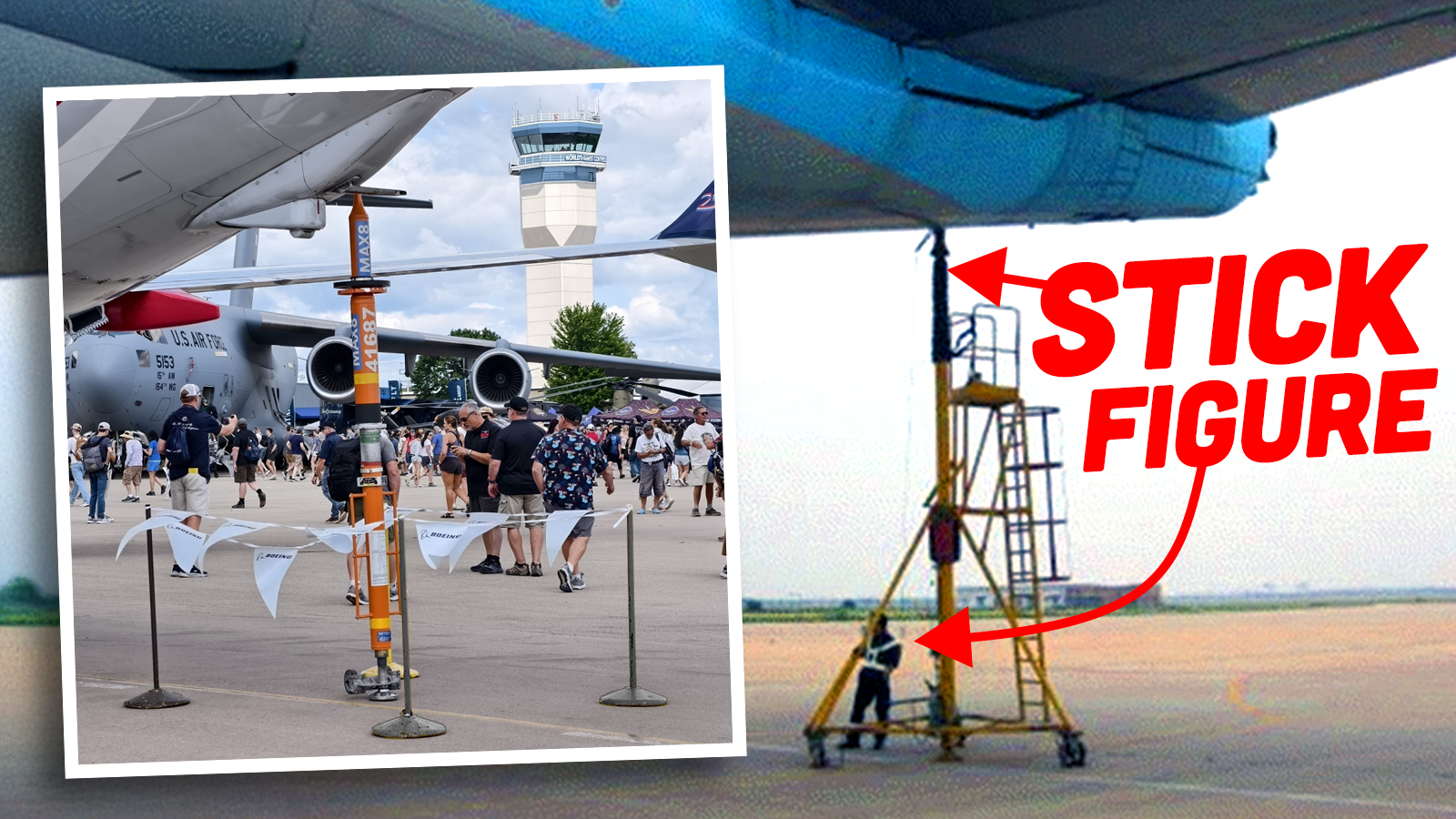
There are some 28,000 commercial flights every day in America, which get nearly three million passengers safely to their destinations. Flying is the safest way to transport your tuchus from one locale to another, and over a century of innovations, safety regulations, and practices have gotten us here. One of the safety devices that allows planes to operate quickly and efficiently is one that you might not have noticed, despite it being right there in plain sight. It’s the tail support stand, and these orange and yellow sticks placed between a plane’s tail and the ground might seem self-explanatory, but there’s way more to them than you’d think.
I have so many stories to write from my time at EAA AirVenture Oshkosh 2026. It was my favorite year yet; not only did I get to ride in a Goodyear Blimp again, but I also got to take part in a formation flight of three Douglas DC-3s! You can check out my existing coverage by clicking here, but I want to talk about something that has racked my brain for years.


Something I did not expect was to get up close to a device I had only seen from afar for years. Often, the commercial airliner I’m on is rolling out to a runway at Chicago O’Hare International Airport or toward a gate at a destination airport when I look out my window and see an aircraft with an orange stick more or less stuck into its tail. It doesn’t take a rocket surgeon to at least guess what these sticks do, but that has never been good enough for me. Southwest Airlines brought its Boeing 737-800 “Freedom One” to AirVenture and slotted into its tail was a support stand. I was shockingly excited to look at the little orange thing.

I’ve always wondered why the tail support stand is needed. Why is it that only some aircraft need it? Then, since I love history, who on Earth even came up with this invention? As it turns out, there was a lot to learn about these seemingly self-explanatory poles.
Planes Rely On A Safe Balance Of Weight
First, let’s have a flying lesson.

Every airplane has a center of gravity. This is the point where the aircraft’s weight is balanced. In theory, if you held the aircraft at this point, it would sit perfectly level. If you want to learn how aircraft engineers might determine the center of gravity of their design, click here to read a very nerdy explanation by NASA. Thankfully, there will be no math for this story.
An empty aircraft has a determined center of gravity, but you can easily shift the center of gravity simply by sitting in it. Cargo, fuel, and passengers will also alter an aircraft’s center of gravity. In practice, pilots encounter two kinds of center of gravity. Trust me, I’m going somewhere with this.

When the aircraft’s center of gravity is forward, be it due to the aircraft’s design or how it was loaded, the aircraft will want to pitch down while in flight. This is due to the fact that the weight is balanced forward of the center of lift of the wings. As the wings generate lift, the nose wants to sink. The nose that constantly wants to go down can help in stall recovery. An aircraft with a forward center of gravity also has better longitudinal stability. Conversely, a forward center of gravity requires nose-up intervention from the trim system or the elevator, which increases drag and fuel burn. The pilot also increases the aircraft’s angle of attack (the angle at which the relative incoming air meets the chord line of the wing), which increases the stall speed.

The other way around is an aft center of gravity. In this situation, the center of the aircraft’s weight is closer to the center of lift, or perhaps even behind the center of lift. By placing the weight closer to the center of lift, less intervention is needed from the horizontal stabilizer, which means less drag, less fuel burn, and a decreased angle of attack. Conversely, the aircraft can have less longitudinal stability, which may make it more responsive to control inputs, but also harder to recover from a stall.

Center of gravity matters a lot on the ground as well. As I said before, every aircraft has a center of gravity, and that center of gravity changes between loaded and empty states. Depending on an aircraft’s design, the empty center of gravity might be more forward or more aft than it is when it is loaded for flight.
It’s not as simple as just designing an aircraft to have a center of gravity in the middle when it’s empty. Engineers have to consider where the engines are placed, where the wings are placed, and how the passengers or cargo will be loaded. If, for example, you have a rear-engine aircraft like a Bombardier CRJ, it’s naturally tail-heavy before you add any fuel, cargo, or people. You may notice that some rear-engine designs place their main landing gear further back than you might find on an airliner of similar size, but with underwing engines.

Aircraft also have a range of center of gravity baked into their design that permits a safe operating envelope. That way, there can be variations in passenger, cargo, or luggage loading and the aircraft remains safe. However, it’s possible to get into situations where the flight crew needs to intervene. If a flight has nothing but people ticketed in the rear seats, for example, that will throw the balance off. The crew has levers they can pull, such as moving luggage or cargo forward. But if that is not enough, or isn’t possible, flight attendants may ask you to move to a forward seat before departure.
This is also part of the reason why the aircraft doesn’t immediately leave after the cabin door is closed. The crew runs their final weight and balance checks, making changes where necessary. Commercial airliners have enough space in their cargo holds to manipulate balance just by moving heavy luggage or cargo around.
Tail Sitting
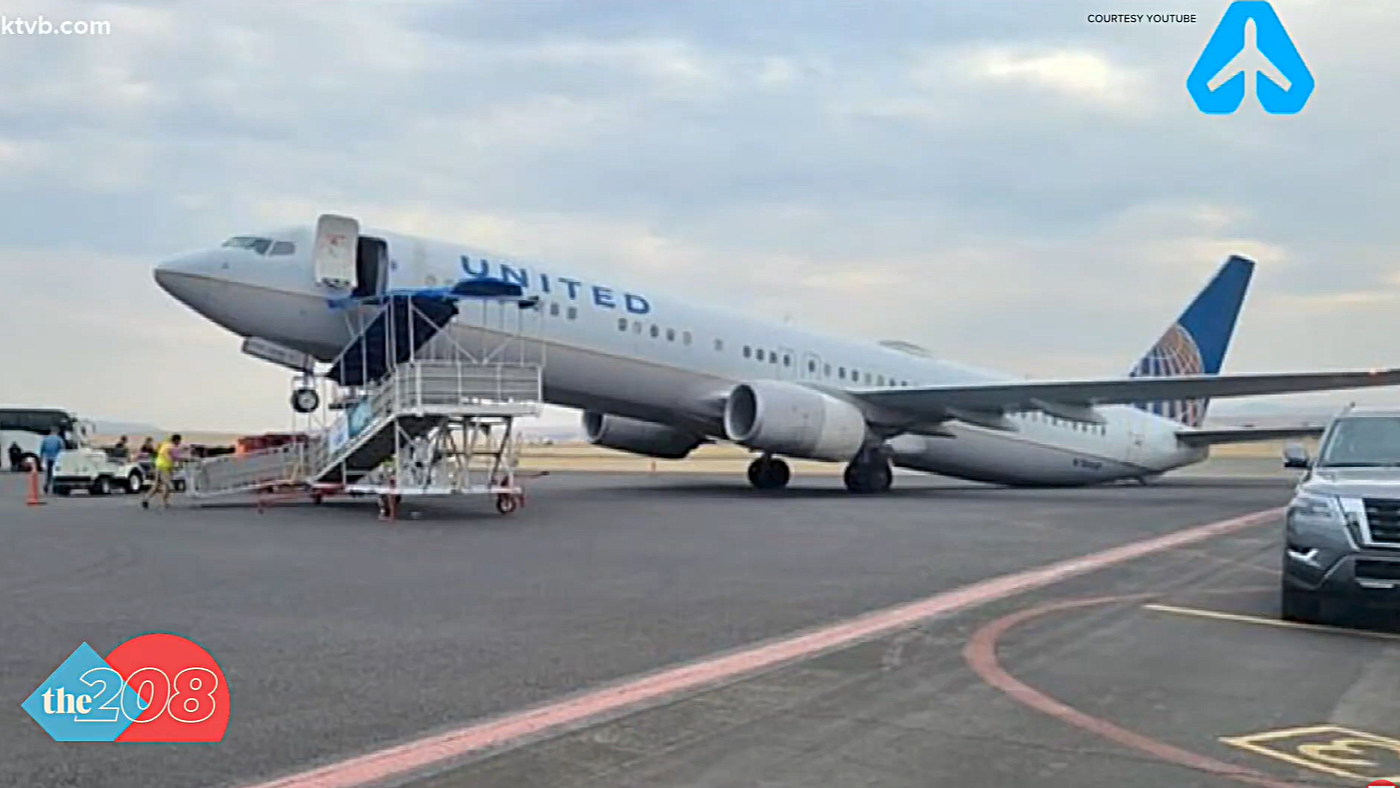
Basically, any changes to the aircraft, such as the removal of its engines or cargo and passenger loading, can cause an immediate shift in the center of gravity, and potentially to the rear. Picture an aircraft’s center of gravity as a see-saw in a playground.
If that shift is great enough, there may no longer be enough weight to keep the nose planted on the ground. That can result in what some call “tail tipping” or “tail sitting,” where the balance is so far off that the tail hits the ground, leaving the nose eerily in the air. Just like a heavier kid sending a lighter kid into the sky on a see-saw.
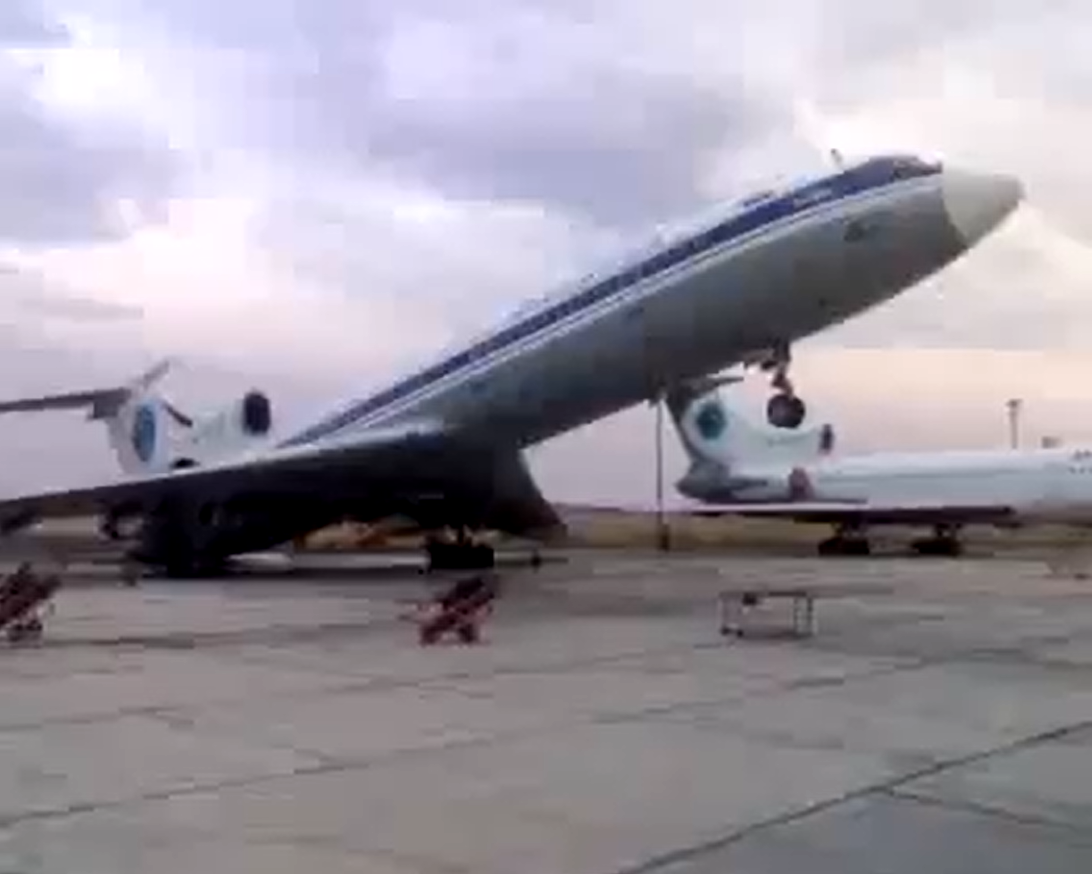
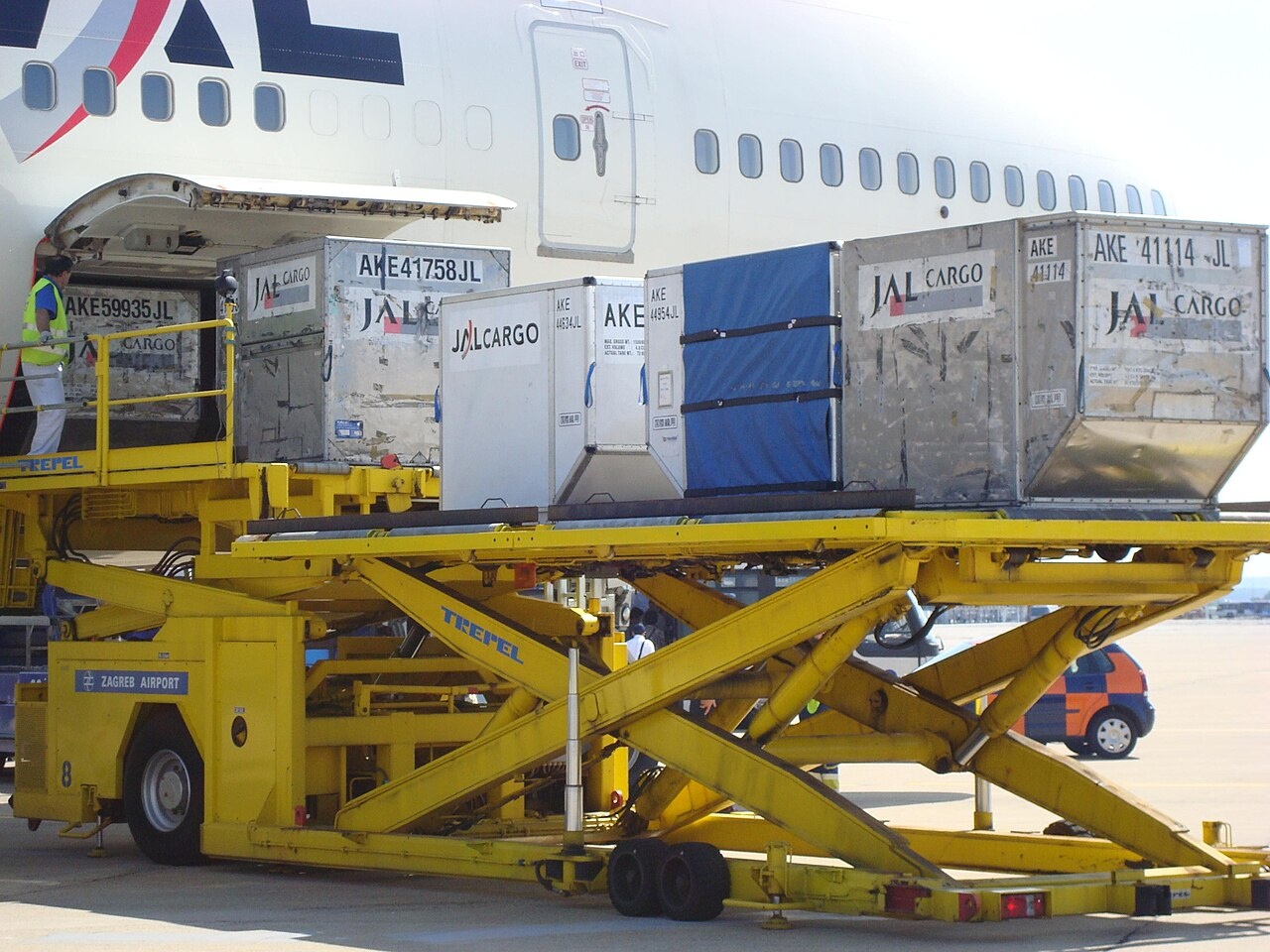
Tail sitting is a risk that’s mitigated across commercial aviation. When freighters like cargo variants of the Boeing 747 are loaded, the cargo isn’t just shoved into the aircraft and sent into the sky. Cargo is usually placed into standardized containers or on pallets, both known as Unit Load Devices, which get weighed.
This cargo is then strategically placed in the aircraft to ensure that the aircraft will be within weight and balance regimes when loaded. Still, during loading and unloading, there’s a lot of weight rolling around the aircraft, which can throw it off balance, potentially to the rear.
In a commercial aircraft, the deboarding process offers its own challenges. Since aircraft are deplaned from front to back, the center of gravity shifts rearward as more passengers leave. Baggage crews combat this by removing bags from the rear of the aircraft first while deboarding is in progress, but there are situations in which the plane would still be too rear-heavy.
The Boeing 737 is susceptible to potentially tail-sitting as stretched variants like the Boeing 737-800, 737-900, 737-900ER, the MAX 9, and the MAX 10 are on the tail-heavy side of the equation. But the long Boeings aren’t alone here.

You’ll find Cessna 208 Grand Caravans, Douglas DC-8s, Boeing KC-135 Stratotankers, McDonnell Douglas MD-11s, ATR turboprops, Bombardier turboprops, De Havilland Canada Twin Otters, Airbus A300s, and even Airbus A320 series aircraft can get tail-heavy in some situations. There are others I’m not listing.
So far as I can tell, this has been a known phenomenon throughout pretty much all of aviation history. The Douglas C-124 Globemaster II of the 1950s was known for getting tail-heavy at times, so was the early 1950s Martin 4-0-4.
The Stick That Keeps The Wheels On The Ground

Thankfully, engineers have had a solution for this for most of aviation history, and it’s called the tail support stand. Its function is simple. If there’s a possibility of the plane doing an uncommanded wheelie while sitting still, support the tail with a metal pole or stanchion. An aircraft might need a tail support stand during loading and unloading, or during maintenance, such as engine removal procedures.

As I noted above, some aircraft are a bit more tail-happy than others. So you might see more stretched 737s and freighters rocking tail support stands than Airbus A321s. It all depends on each individual situation. Of course, there’s a high chance that you won’t even notice a tail support stand being used, as you’ll be on the plane when the stand is in place, and it might be gone by the time that you check.

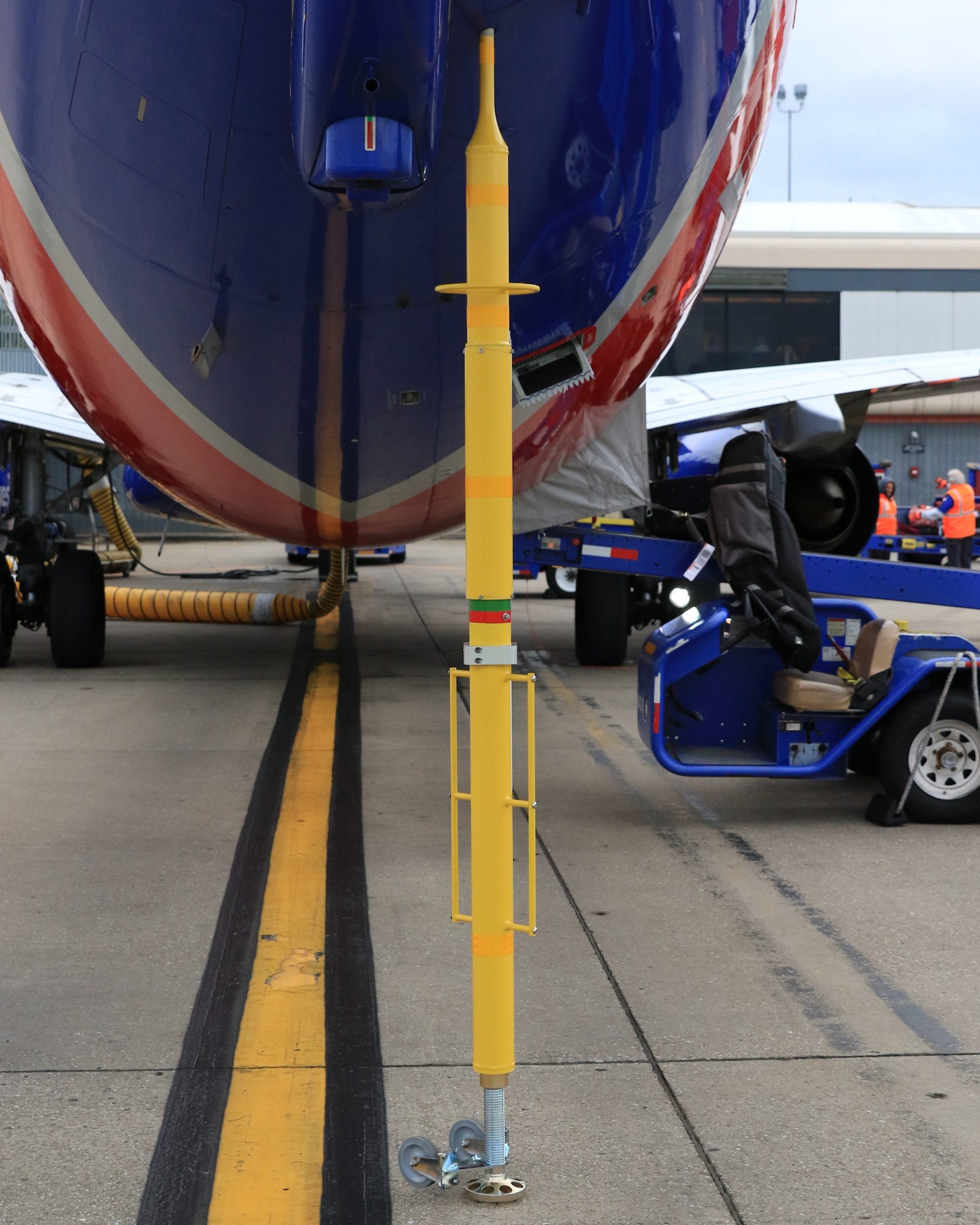
The tail support stands themselves are fascinating. These aren’t just poles that you shove into the back of a plane. The stand that was inserted into the back of Freedom One was a device from Hall Industries. It’s designed to support the tails of extended Boeing 737s, or, more specifically, up to 9,000 pounds of weight from the tail of a stretched 737. It weighs only 50 pounds, despite how much weight it can take.

The device is telescopic with one tube over another, almost like a pogo stick or like a car’s shock absorber. In the case of the Boeing 737, the tail support stand is inserted into a port at the back of the aircraft before it is loaded or unloaded. The stand then supports the aircraft’s tail, compressing under weight. Some designs might have locking pins or collars to tighten the tubes.
Here’s a video showing a ramp agent installing a stand. Click here if you do not see the video below:
In the case of the Hall Industries tail stand that was used during AirVenture, when the stand is extended out, it’s in its installation or uninstallation zone. When the tail is putting weight on the stand, it’s compressed and in its loaded red zone. Hall Industries notes that attempting to remove the tail stand with the aircraft loading it down could result in injury or death.
This isn’t the only kind of stand that’s out there. Some stands don’t go into special ports, and instead just cup a lower portion of the tail. Some stands resemble the jack stands that you use for your car, only scaled up. Some extra-large stands may also sit on tripods.
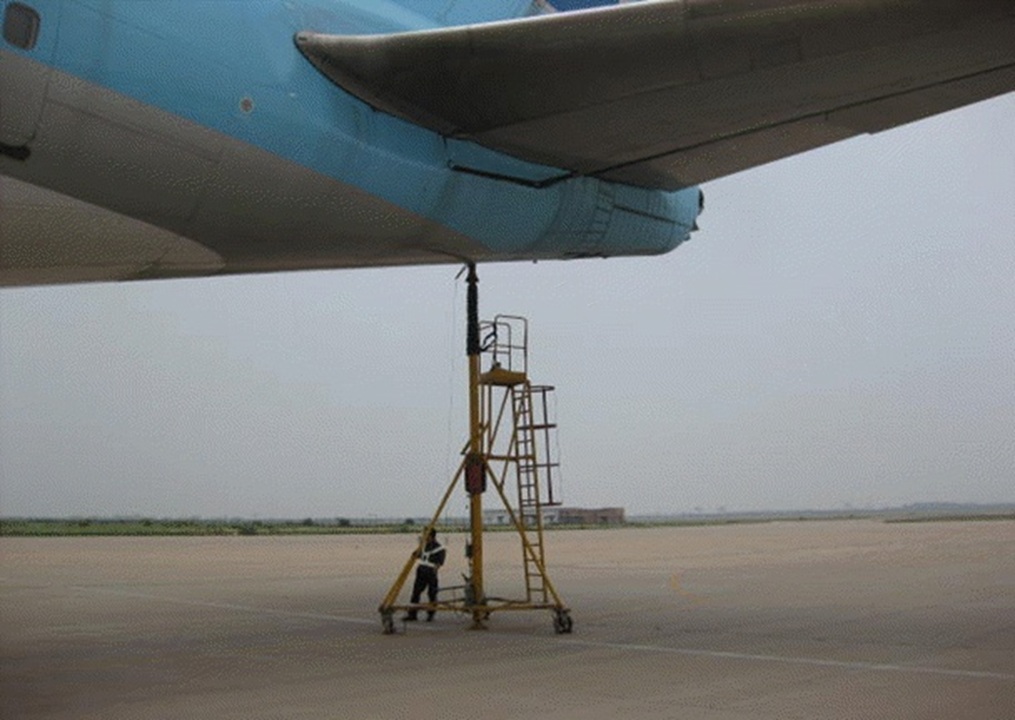
Others may look like scaffolding. But the one you’ll likely see at your airport will likely be of the “pogo stick” variety that I just discussed. As for where the stands go when you aren’t looking, that depends. Some stands stay at the airport and wait for the next plane. Some are carried onboard so the aircraft can have a stand wherever it lands.
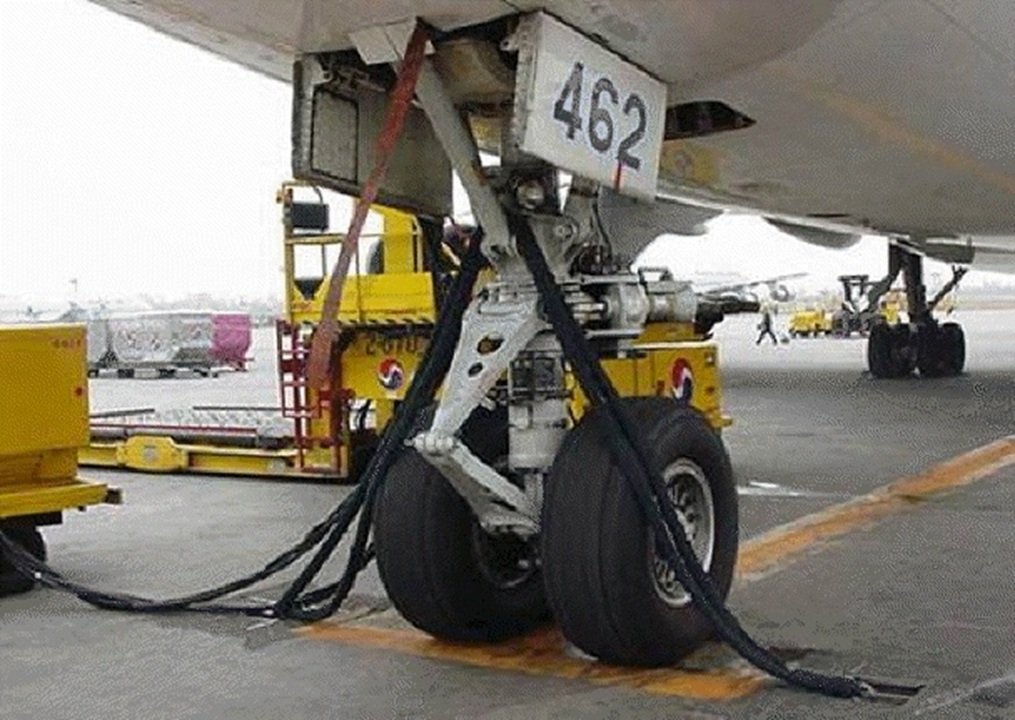
Additionally, there are other ways to keep the rubber on the tarmac. In some cases, an aircraft’s nose gear might get physically tethered to the ground to limit tipping.
Some aircraft with rear ramps or stairs that can be locked into place can sometimes just use that as a support stand.
If you’re on board an aircraft that could tip over during unloading and a tail support stand will not be used, there is an alternative method to preventing a tip. The flight crew may delay deboarding until enough bags can be removed from the rear of the aircraft. Of course, all of this is done in the name of safety and efficiency. Passengers can be injured when the aircraft tips over, and potential damage to the tail can cause an expensive headache for the airline and an annoying delay for you.
Great Engineering In Plane Sight
Sadly, I wasn’t able to answer all of my questions. I wasn’t able to figure out who the first person was to come up with this idea. Nor was I able to figure out the earliest implementation of it. However, I did find examples of aircraft and even drones going back 80 years with some sort of tail support for loading or maintenance operations.
But what I did find has been exciting. The tail support stand is another part of what makes aviation so exciting to me. Every bit and piece, no matter how small, works to keep us all safe while we leave the ground in a metal tube to fly at over 30,000 feet at over 500 mph. Even a simple orange or yellow metal stick can be a big deal in making this all happen like clockwork.
So, the next time you fly and happen to get a window seat, be on the lookout for a tail support stand. You’ll probably see one lodged into the back of a Boeing 737, but there’s a whole world of aircraft out there that could use a tail stand in certain situations. Now you know why. Some planes are a bit heavier in the rear than others, and sometimes, loading and unloading procedures might make things tippy if it weren’t for those simple sticks.
Top graphic images: Korean Air Cargo; Mercedes Streeter


Anyone else getting kicked out of the site and needing to reload because all the ads and videos and pop-ups?
Nope. It that because I’m a member?
I had some of the issues as a member, but not as bad.
I couldn’t get any response trying to get discord working, including from discord, so I dropped the extra expense.
Interesting since I moderate a forum linked to discord.
David is the only person to respond directly to anything, including story ideas and offers. That was jeeper related.
Impressive I heard from him during his eBay madness period at all!
I believe his marketing project will be studied by marketing, and possibly psychology specialists in the future.
I’ve seen responses from nearly all of the full-time writers and also Adrian Clarke and SWG.
Swg? Responses to you?
Yep.
While I was responding, the whole page wiped into the Failed to load content Page of Death again.
Also taking me off the site completely, but reversing never works.
At best leaves me pages back from login
If whatever platform this site runs on was a car, I’d be invoking the Lemon Law. Compelling content brings me back.
Happened to me three times yesterday.
Had a weird text response trying to post twice then the failed to load Screen of Death that killed two comments.
Never seen that before.
The active moving, changing ads are intolerable on a mobile anyway.
Seems to be the direct cause of the Screen of Death.
Gets worse the longer you’re online with the site.
It’s interesting that SWA was using a tailstand with thier MAX 8. In my many years of travel, I have seen them used regularly on -900s, but not -800s, which is the same airframe as a MAX 8 (very minimal differences other than the engines and a certain infamous bit of software).
A quick Google says it’s something SWA has started doing with theirs recently, but just them for the most part. With thier new assigned seating, are they strictly loading back to front perhaps? AA has a bazillion -800s and I have never once seen them use one anywhere. I see United -900s with them all the time at RSW.
Amusingly, I have a “thing” going with the MAX 8. I have never flown on one. I have been scheduled to fly on one more than a half dozen times, but every single time something has happened. Cancelled, I missed the connection, rescheduled to a different time, etc. It’s gotten to be a running joke, and next week I had the choice of two flights home, one on a MAX 8 and and one on an A321, and I chose to take da ‘bus. Absolutely nothing against the Boeings, but I want to get home, LOL. It was also the better connection too, so not JUST because it was a MAX 8 on the other one.
I have a 2×4 propping up the corner of my dilapidated porch, just like this! I should have been an aviation engineer.
There’s a “That’s what she said!” joke in here somewhere, I just know it.
Some planes have them built in, like the Grumman Mallard
I recall seeing these under the wings of a cargo jet. I don’t know what model. Is it possible to have a side to side balance issue too? I would have thought the under wing landing gear would have stabilized it. At the time, someone I was with speculated it might be to stabilize it in case of sudden severe crosswinds. Curious.
I’m speculating here, so take this with a grain of salt, but I think it’s far more likely that plane was undergoing some kind of maintenance. Something in the landing gears that required the plane to be jacked up, or maybe, for some reason, the engine wasn’t attached to the aircraft for a brief time, thus requiring some support on the opposite side.
Is this balance thing a reason why they load the passengers from front to rear making it so difficult to get past people overloading the overhead bins?
No, they are just trying to piss us off. Check the airline employee manuals. They have lots of procedures for this. /s
I primarily fly on United and you just made me realize that the last time I didn’t board in group 2 must have been well before covid.
BTW I also don’t think I’ve used the overhead bin since before covid either
I’m an infrequent flyer but we just took a 4-5 hour trip to LA and then back again last month and I was stunned at how inefficient loading passengers was. On the other hand, I was happy to have an actual seat, not to be on a cargo aircraft for a change, and to land with the plane.
Not unlike the joist supports you sometimes see in basements where structural issues have began to form.
Yes, my immediate thought was “house jack”
Incidentally, house jacks are great for low budget frame straightening in the field
As are forklifts
Another important “center” of a plane is the center of drag–the balance point of drag forces on the plane when it’s moving through the air. You need the center of mass to be in front of the center of drag, because that will cause the plane to self-stabilize in a forward-pointing direction while flying. But if the CG is too far ahead, it makes it hard to maneuver the plane at all, it’ll want to just fly dead straight like a dart.
Somewhat related to why it’s hard to accurately throw a dart if you are too close to the dart board. This is a common trick used at carnivals. Try any of the target throwing games but take a step or two back from the counter and you’ll see how much easier it gets.
I have PTSD from playing one of those stupid dart games a number of years ago. I realize all of those games are rigged to one degree or another, but as someone who has played darts a fair amount over the years it was just embarrassing. Now I know why.
I worked for Fedex loading and unloading planes during the morning shift for several years during college in the 90s. Back then they flew a bunch DC-10s and 727s, both with three engines in the back.
The 727s, they lowered the rear stairs and that gave the plane lots of stability. The stairs went nowhere otherwise, just up to a bulkhead.
The DC-10s were held by a heavy tug attached to the nose gear, but there was an incredible amount of flex in the system. If they slid a 10,000 lb container towards the back of the plane, the whole thing could suddenly shift by a foot or more. Meanwhile if you’re running a loader in the rear lower compartment with your own heavy containers with maybe 3″ of clearance on all sides, and any part of that loader or any part of the container (other than the bottom, obvs) touch any part of the plane, it’s an aircraft strike that could ground the plane and get you fired.
That was the worst job. Out there with heavy hearing protection just a few feet from a running APU, dealing with your own heavy containers and machinery, but you also have to also be listening for that container rolling inside the plane so you know to react to that shift in balance.
FedEx now uses nose tethers on all of their aircraft.
I saw another use of a similar device once, on a Twin Otter (DHC-6) in the wild (off airport/airstrip) in Greenland (not far from the now famous Jameson Land.)
The device was placed and hung from near the tail and the pilots told us that it was to measure the weight of the plane as we loaded it… If the rod hit the ground the plane was too heavy and we had to get rid of some cargo. (or do a second rotation)
Lucily for us the plane didn’t end up too heavy… now lifting in 100 steps on uneven ground after landing in a swamp with a 30m visibility (remember off airport.airstrip, nothing but Mk1 eyeball to locate the ground) is something to live.
R/C plane enthusiasts have a saying: Nose heavy flies, tail heavy flies once. That said, sometimes having a neutral or slightly tail heavy CoG is good. Say for an aerobatic plane like an Extra or Edge. A slightly tail heavy configuration will help with hovering, tumbling and spinning at the expense of needing more caution in regular flight. But a gyro can help there. Just be ready when the gyro is turned off! It may be a twitchy, snappy handful, like a Belgian Malinois puppy.
This is the exact kind of terminology I love to see from a motorcycle pilot.
I recall watching a video on airplane crashes and discussions of how the standard adult weight unit is derived from the ’60’s or ’70’s and hasn’t been updated (or at the time of the video, hadn’t been updated) since that time. This didn’t reflect the increase of the average weight of contemporary passengers…this may not seem like a big deal, but multiple a 5% – 10% weight difference between unit on paper and 300 people in a plane, and it becomes a non-insignificant amount.
Who you calling fat??
The FAA updates the standard passenger weight periodically, and there is a actually a different weight for summer vs winter to account for extra clothes.
For a long time 170 lbs was the standard, but now it is 190 lbs summer and 195 lbs winter. There are also adjustments for non-standard people, like military or sports charters.
I’m going from memory from a story about it, I could see the FAA not updating that for a long time because government inertia…but I’m no expert.
Leverage turns a small amount of weight into a large force.
Its when Uncle Harry had to have an extra helping of meatloaf-surprise and waddled to the back of the plane and caused it to lean backwards.
Engineer 1: Plane too heavy in back, fall on butt…
Engineer 2: Bigg Sticc…
The Big Sticc has been mankind’s greatest tool since time immemorial. Where would we be without you.
I’m pretty sure some famous person said that given a bigg enough sticc he could move the world. 😉
So in aviation, at least from the operator’s standpoint, they use “center of gravity” rather than “center of mass”? That just kind of…makes me itch. I suppose it comes from long tradition.
Just like how all the fasteners are imperial instead of metric, but if you wanna measure the gap between two things you’re gonna do it in millimeters.
The fasteners are not metric? The fasteners are not metric???! AAAAaaaaaAAAAAAA!! Please tell me at least the jet engines are not held together with 5/16-24s.
You’re getting 1/4-20s all around and you’ll like it
Life In Hell
AN4-20 would probably be the standard aviation part number (4 standing for 4/16, or 1/4)
This thread reminded me of Alex Pong, in my circles most famously known for the Cannondale V4000 and Magic Motorcycle bicycle cranks in the 90’s, but also developed a V-twin for motorcycles and ultralights that could be completely rebuilt using one allen wrench. Sadly that project never got off the ground.
Depends on the aircraft. I work at a helicopter maintenance shop, and we use both. The Bell and Robinson (American) machines are all imperial, but the Airbus (French) ones are all metric (though sometimes engines differ from the airframe). It made building out my toolbox a lot more expensive than if it had all been the same!
What a pain.
I was at Marine Corps Air Station (or was it a Naval Air Station) once and was shown the helicopter shop. Very cool. They had one stripped down basically to the airframe and were rebuilding it from scratch.
Most aircraft are still mostly built with nuts/bolts/etc built to the AN (Army/Navy) standards from ~WWII.
Nuts and bolts are all measured in units that you don’t have in your socket set.
Or your hex keys on hand.
Those 747s. Always sitting on the tarmac with sticks up their butts.
Another reason tail draggers are the superior design, AmIRite?
As I read it: any plane can be a tail dragger.
This is true.
How does the plane need to be loaded if you’re sneaking a zaftig old man off it in a catering truck?
From the rear.
Was it Food Truck One while he was onboard?
TACO Truck One!?
I have never wanted to open a food truck as badly as I do right now…
Henceforth, the White House press pool shall be known as “SAM bait”.
Use journalists and support staff as ballast.
The best way to keep a secret is to let people think they know what happened, whether it’s true or not.
This was a much more in-depth article than this one from last year.
Also, a great example can be seen here.
Once you see a 747 on its tail, it’s hard to un-see.
Another great article!
I like that photo of the 747 because it looks like a baby bird screaming for it’s parents to feed it
Something else that can’t be un-seen. Thanks!
To keep the planes from tipping back and forth while parked and the various crews are doing their work?
*goes to read article*
Yup, pretty close 🙂 Neat!
That regional jet that hit a firetruck in NY tipped back as the passengers were going down the slide. That must have made a terrifying situation even more terrifying.
I often skip the aircraft stuff because it isn’t my thing, but this was a fascinating read for me. Thanks!
It really lets them stick the landing
I will not turn my nose up at this comment.