


I just drove a traded-in Cadillac Vistiq, and I found myself a bit conflicted. This is a brand new EV that doesn’t really feel as modern as it should, and yet, it’s so cushy to drive that I still like it. Here’s what I mean.
Last week’s Trade-in-Tuesday brought us something rather interesting. Apparently someone traded in a brand new Cadillac Vistiq for a Polestar 4, giving me a great opportunity to test drive the all-new three-row Caddy.


Here’s what I thought:
I will admit that, when researching this car, a few of my wires must have gotten crossed, as I thought the whole time that this vehicle had come out in 2023. This was the car’s sibling, the Lyriq, and though I regrettably got that wrong in the video above, in my defense, the Lyriq doesn’t exactly feel like a particularly advanced, modern EV.
I recently drove the Rivian R2 and Lucid Gravity, plus I’ve driven the R1S. These are vehicles that feel fresh; their overall vehicle packaging is impressive, with lots of interior volume, big frunks, and clever features, plus their infotainment systems look big and modern. The Lyric feels a bit last-gen in those regards.
I mean, just look at the underhood area: 
It’s a bunch of power electronics all stacked up in such a way that it reminds me of EVs of yore — ones that adapted old ways of doing things, specifically stacking a bunch of stuff on a subframe and then decking that subframe onto the body. It’s not clean or elegant, and it doesn’t leave any room for a frunk.
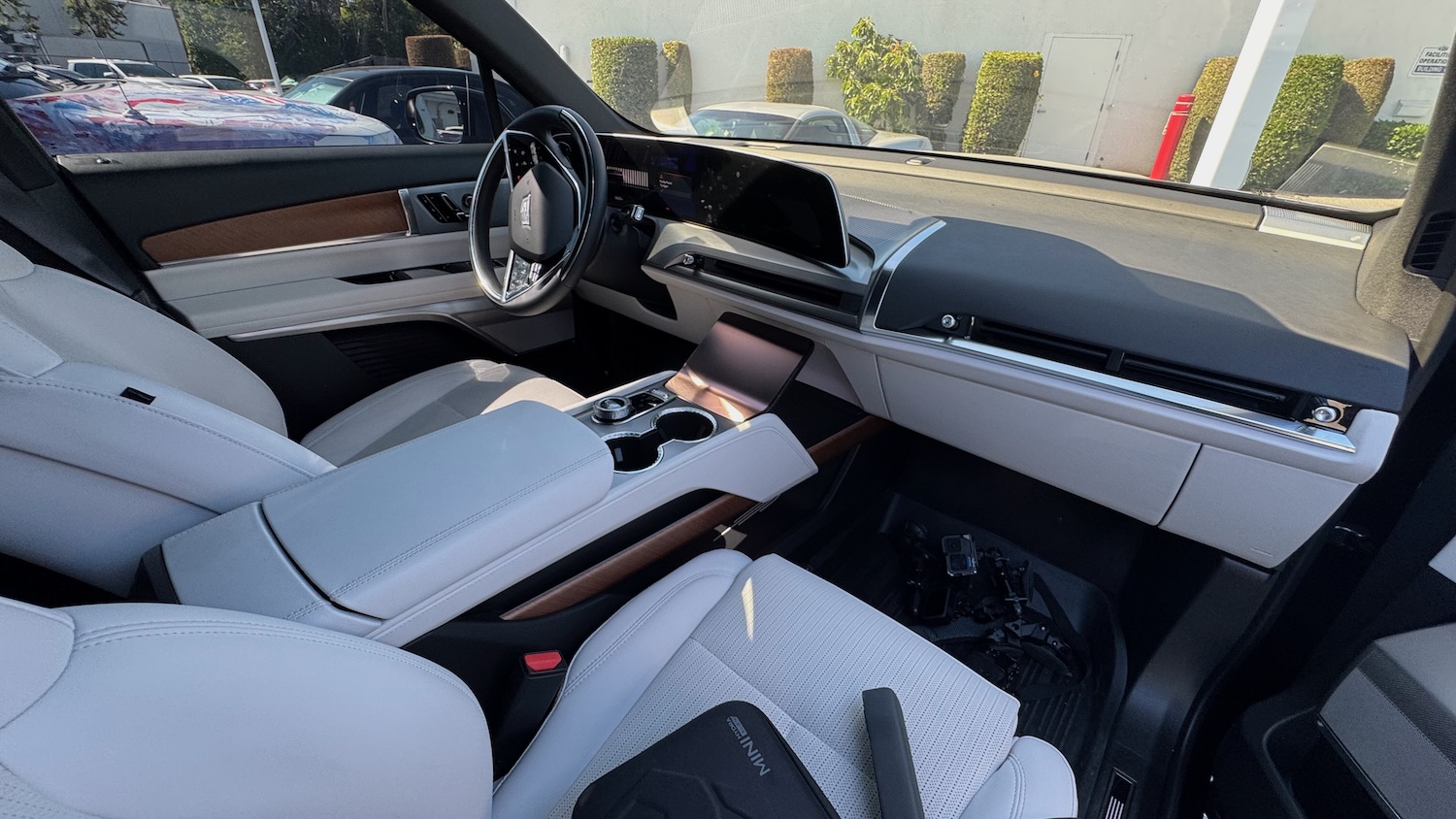
The interior is nice, but if you covered the badges and told me this was a Hyundai Ioniq 9, I wouldn’t be surprised. The Ioniq 9 at least has Apple Carplay and some physical switches to control things like volume and HVAC, whereas the Cadillac has a Google built-in infotainment system and relies on an upper screen and a lower, angled one that tends to smudge and glare in the sun.

With all that said, I have to give Cadillac credit for resisting the urge to have touchscreen-adjustable vent aim, and instead going with these amazing joysticks:

Interior space in the first two rows is amazing — the car is wide, tall, and downright roomy.
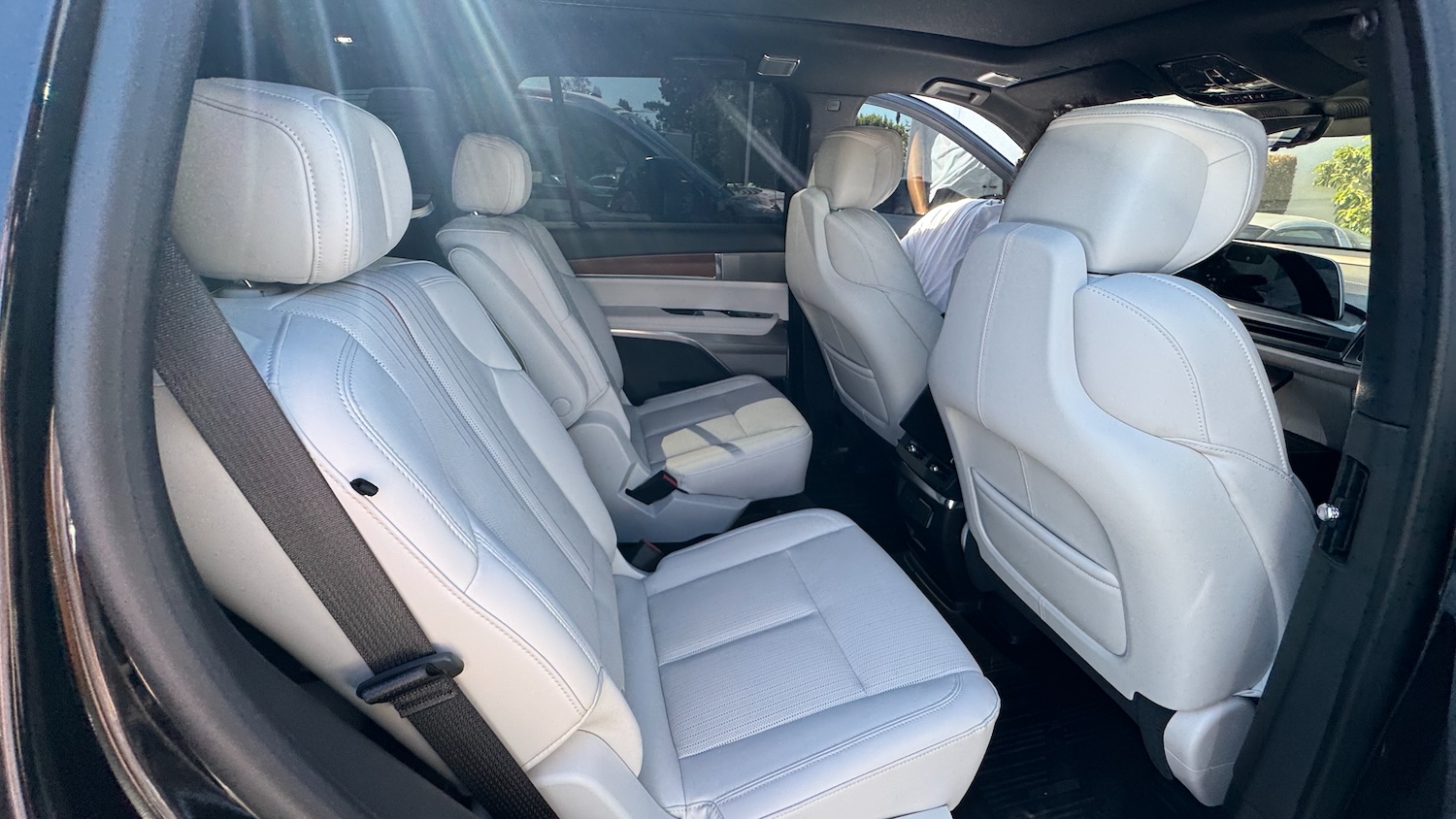
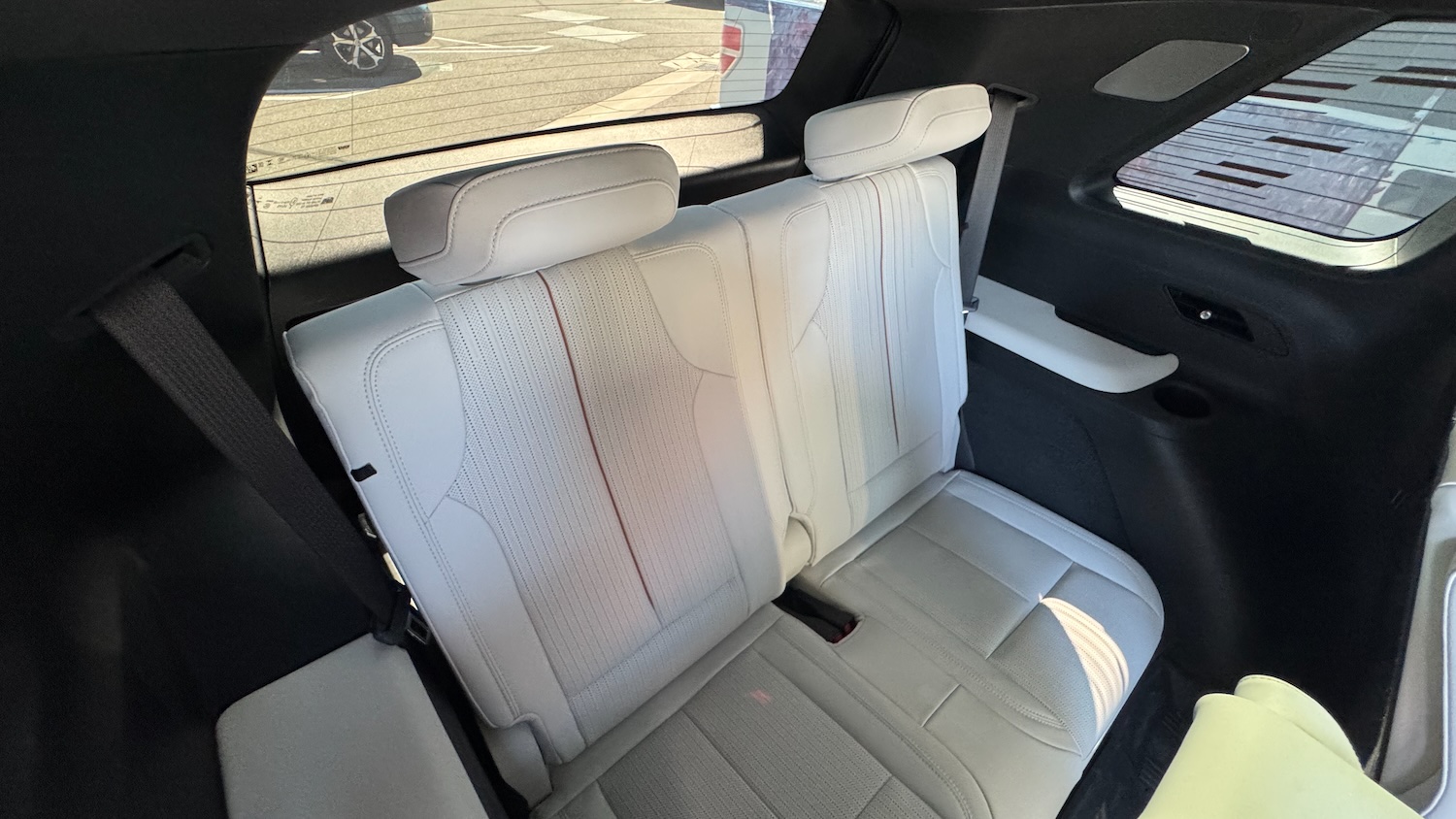
For adults, the third row may be a bit tight and best suited for short trips, though I’m 5’8″, and if I’m in the two rows ahead, it’s not bad. The floor is a bit tall, meaning my knees sat higher than I’d like, but otherwise it’s OK; there are cupholders, speakers, USB ports, and vents back there.
Speaking of the tall floor in the rear, this leads to a squished cargo area.
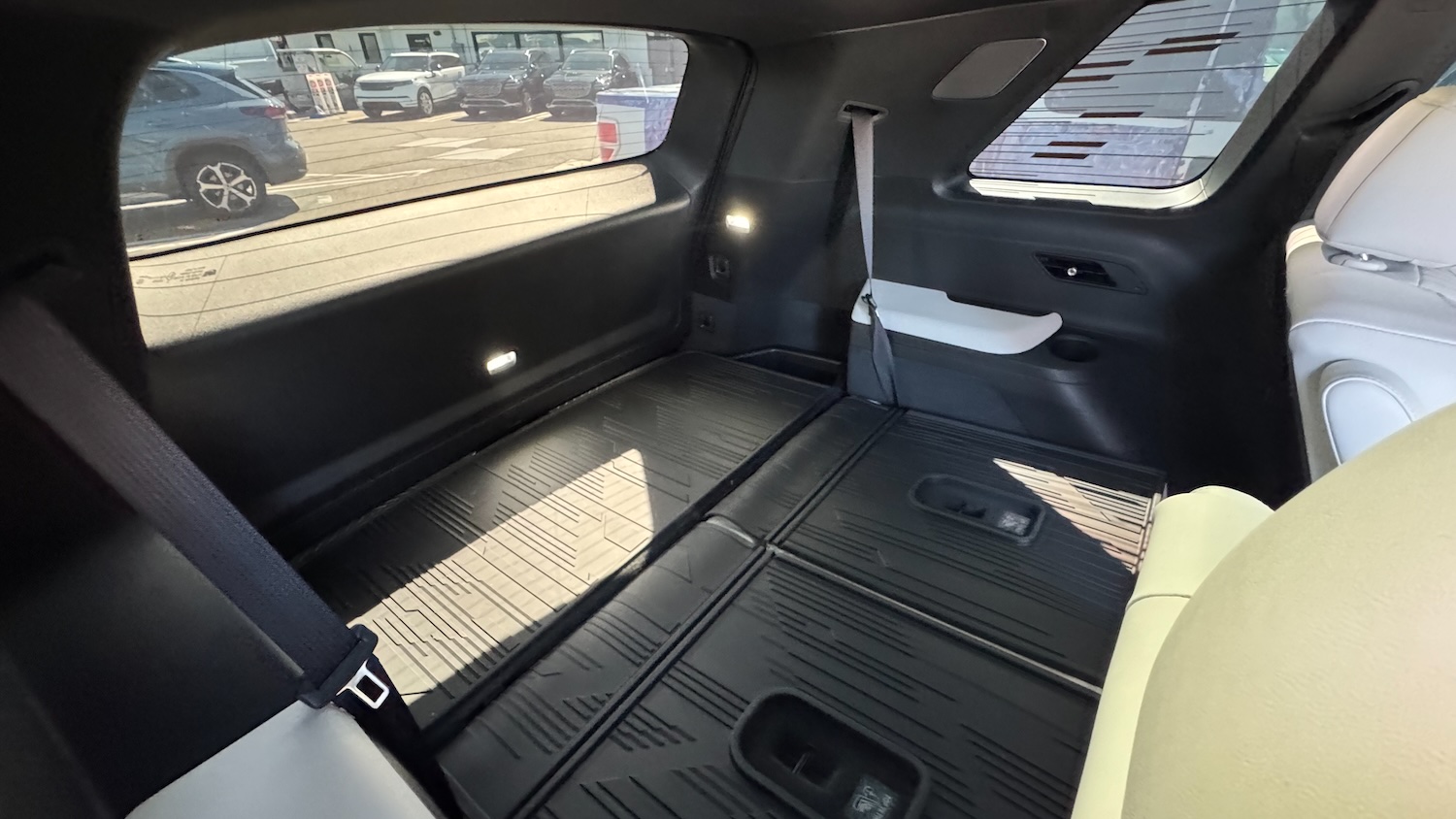
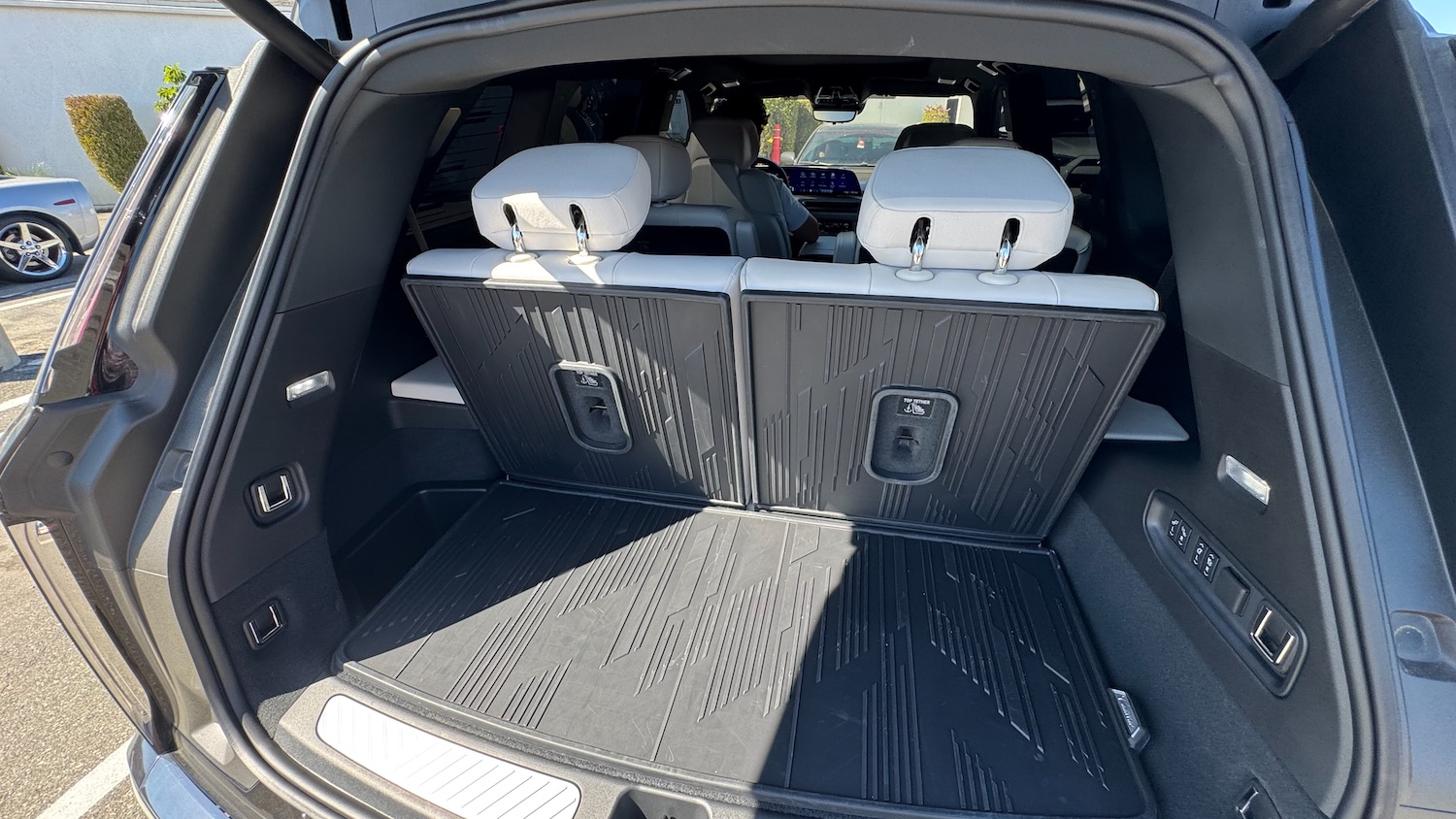
The roof dips a bit in the back, presumably for aero reasons. It, along with the tall floor, combine to create a rather short rear aperture, so you can forget about loading big couches into this thing.

As for how the Vistiq drives, the answer is: Great. 615 horsepower means the 6,300-pound beast gets to 60 mph in under 4 seconds; the ride quality — while not exactly a magic carpet — is good, the seats are cushy, and just in general, the cabin is a great place to relax.

“It’s extremely comfortable and powerful, and it’s got a lot of presence to it. I could drive this thing all day, cross-country,” I say in the Trade-In-Tuesday YouTube video above. “It’s hard for me to hate a car that’s this comfortable and this baller.”

Is the visibility amazing out the back? No.

Is the Vistiq particularly efficient? No; it’s about as efficient as the boxy Rivian R1S.

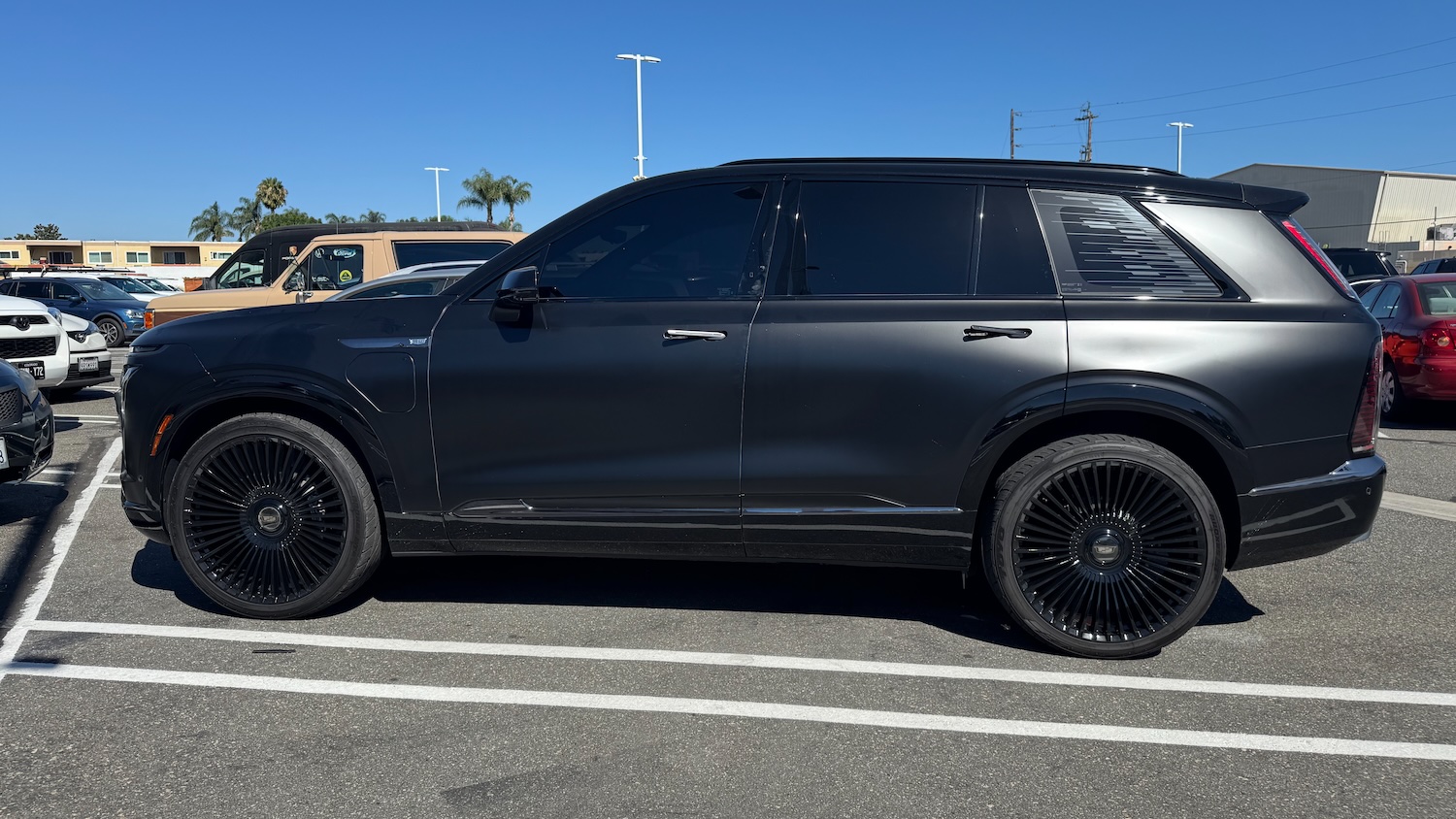
Still. I know it’s not particularly space-efficient, which is unfortunate since packaging is a key way electric cars — which all have similar torque curves, similarly low centers of gravity, similarly quiet powertrains, and generally similar powertrain performance — can distinguish themselves. I know the Vistiq is not particularly energy efficient. I know its interior doesn’t look amazing. I know rear visibility isn’t amazing. I know there’s no CarPlay.
And yet, I walk away liking the 305-mile-range, $~80,000 Vistiq. And it all comes down to one fact: The thing is baller. The looks, the interior comfort, the way the SUV makes you feel when you’re behind the wheel. It’s just cool.




So it’s fugly, bloated, dated, overpriced, confusingly-named, impractical, and someone already got rid of it less than a year into ownership?
Yeah, that tracks for cadilliq.
Box, agree. Completely. Horrid car with a buick IP
The exterior is amazing. And that’s kind of it…
I mean I kind of like the under cargo storage bin in my wagon for things like keeping a tarp, a couple tie downs and jumper cables so they’re not always bouncing around the main cargo area…also gives a load floor that’s level with the bumper instead of having a dip down.
I can just imagine a meeting where some product manager begrudgingly let the interior designers have that one little analog touch and so they put so much into those vent joysticks lol
Eh, nice try GM but no ceegar. The ride was probably not helped by those big ass aftermarket rims and really low profile tires either. Here in MI those would last about 1 winter before getting bent…
I’d just like to say that as a teenager in the 2000s, the Suburban I drove frequently definitely had an MPG-meter and I would (occasionally) try to see how much econ I could get out of it. It was definitely a thing, David.
Wow you were much more thrifty with the family Suburban than I was. We had a ’95 circa 2000 and even with $0.95/gallon my dad had a stern talking to me one day about how I was using too much gas. Of course with a 40 gallon tank that must have felt like a big fill-up even compared against his work truck which had the newer 5.3 and iirc a 25-30 gallon tank…
the “occasionally” in my post is doing a lot of work. That thing could get up and MOVE like none of the rest of the vehicles in the family fleet.
Lol yeah my dad’s truck with the 5.3 (270 hp iirc) was the hot ride in our family on the rare occasion he let me drive it
That interior is incredibly disappointing. Especially since Chevy did surprisingly normal EV interiors in their other cars. The fact that this falls short of the very low bar set by H/K in their EVs is telling.
And white seats? GTFO.
When I worked at Buick/GMC just last year I was continually shocked by how many people asked for white leather interiors in this era of the 2020s. It was a good 10-15%.
Like customers or product managers?? I’ll admit they can look cool new but they age so quickly and poorly.
Customers! They’d come in and see our Denalis or loaded Buicks and immediately ask if it had a light interior option. Light gray or parchment beige made them crinkle their nose in disappointment and they’d ask if white leather was available. I told them we could add it aftermarket.
Just one of the reasons that I’m glad that I don’t work there. I could probably write a full weekly segment for most of the year with everything wrong with that dealership
I mean imo the Denali especially appeals to a certain kind of uh upwardly mobile person that is also probably only going to do a 3 year lease anyways? (and I’ve known two people with them) The Buicks are harder for me to figure.