


Dial the clock back to the 1970s. There aren’t a lot of diesels around, but Mercedes-Benz is making them. In other words, it’s a lot like today! The first worldwide oil crisis of 1973 set manufacturers to experiment with fuels other than gasoline. Mercedes-Benz had been producing diesel-powered passenger cars for ages, and other manufacturers diverted their R&D funds into diesel technology. General Motors launched its first diesel sedan by the end of the decade, and in Europe, especially in taxi ranks, Volvo was eager to take a part of Daimler’s cake.
Since Volvo was a relatively small manufacturer, it couldn’t just whip up a whole diesel engine of its own: sure, Volvo had been using diesels in trucks, but it’s not like it could simply take a truck engine and bolt it under the hood of its passenger cars. That’s ridiculous! Of course it had to be a van engine. And if it was slow, Volvo had tricks up its sleeve to fix that.


Vorsprung durch Diesel

While a number of diesel engines both in passenger cars and vans had come from Perkins, a British manufacturer that had also supplied truck engines for Volvo, the van engine wasn’t going to be a Perkins unit.
Instead, Volvo went to Volkswagen and came home with a six-cylinder engine from the Volkswagen LT, which had been introduced in 1975 and which got the new D24 engine in 1978. Incidentally, before Volkswagen launched the D24, the LT vans and trucks had been using a Perkins diesel for the first couple of years.
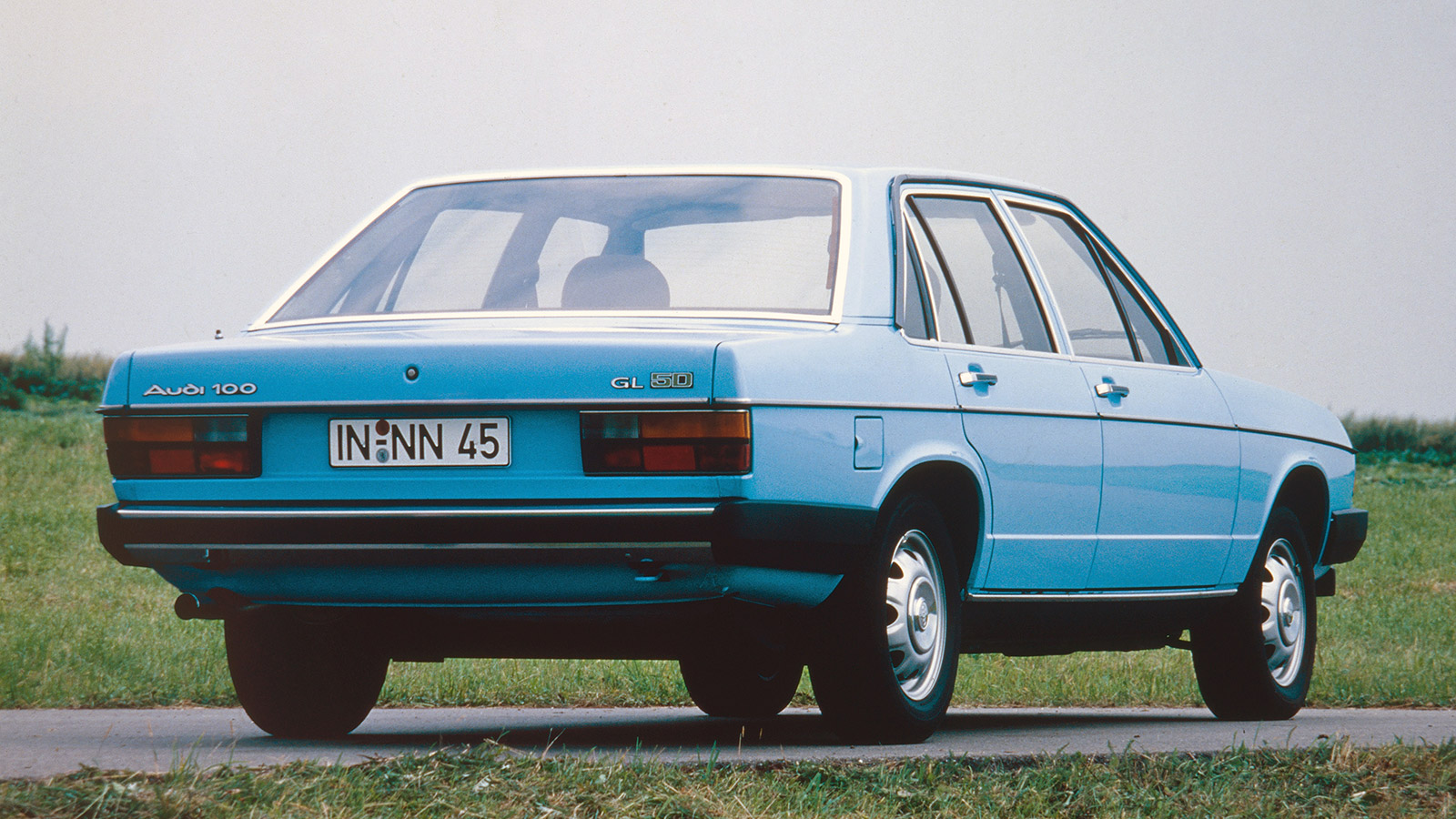
Volkswagen didn’t use this specific six-cylinder van engine in any of its passenger cars, but a five-cylinder variant, the D20, was offered for the Passat and its Audi 100 C2 sibling, badged as the “5D”. Motoring press of the time also calculated that the 1588cc diesel four in the Mk1 Volkswagen Golf was part of the trifecta, as the volume of a single cylinder (397.1 cc) was identical between all these engines, the four, the five and the six, as well as power per litre (25.2 kW or 33.8 hp).
Volkswagen and Audi, of course, only offered diesels in front-wheel-drive cars, so if a customer needed a diesel and rear-wheel drive, but couldn’t quite stretch to Mercedes, it was worth it to browse some Volvo brochures. Naturally, caravan owners were seen as a target group, as well as taxi drivers.
The World’s First Six-Cylinder Diesel Car
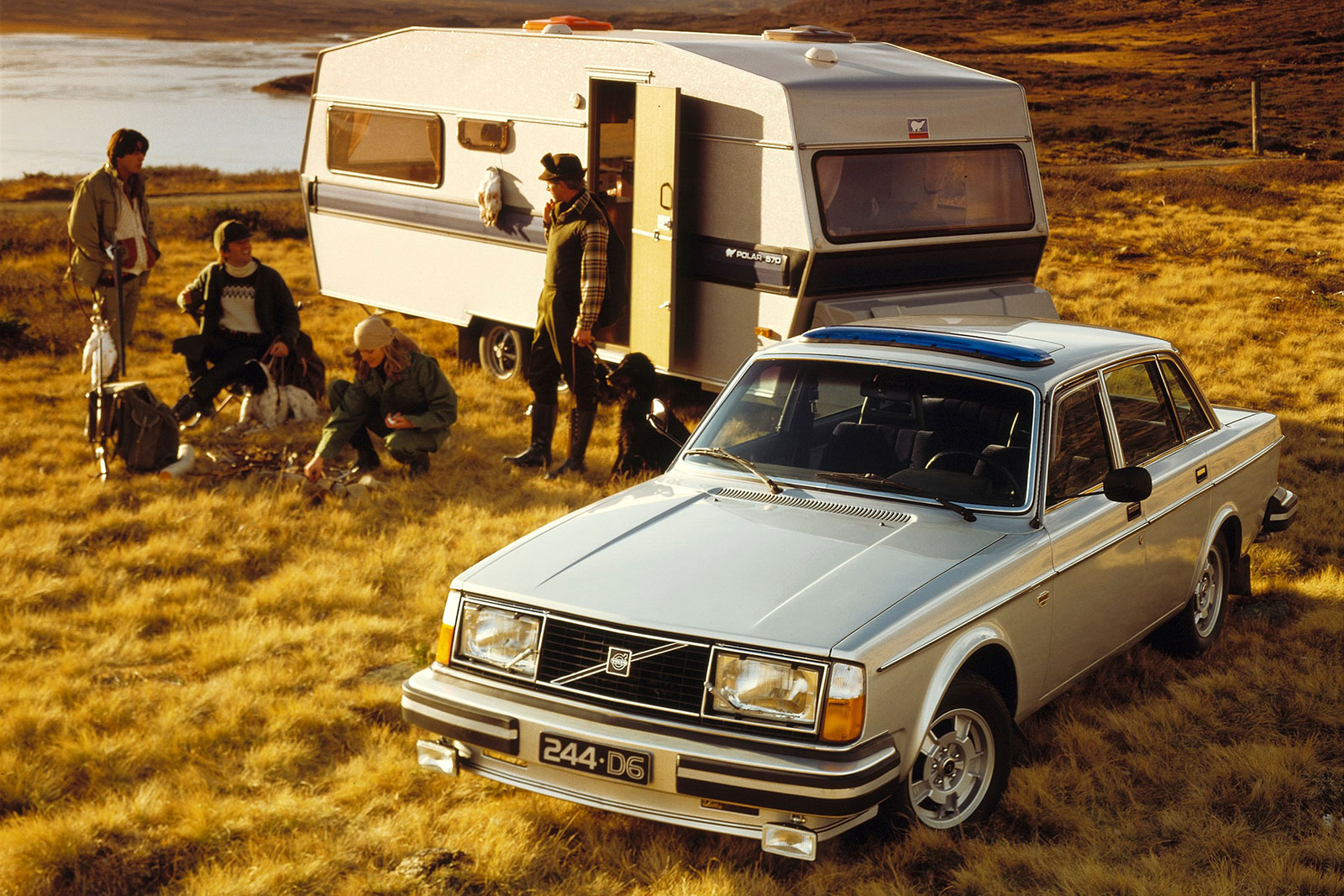
Volvo launched its first diesel-engined passenger car and the world’s first six-cylinder diesel car, the 244 D6, at the 1978 Paris Motor Show, and sales began in the spring of 1979.
The D6 wasn’t a huge powerhouse, as it produced 82 horsepower, but Volvo didn’t have a reputation for blistering performance to begin with. Many of the available gasoline engines produced less than 100hp, and it took until 1980 for Volvo’s first turbocharged passenger car, the 244 Turbo, to be introduced. Those produced anything between 125 and 155 hp depending on the year and spec.

However, the 82-horsepower D6 wasn’t even the slowest offering, as that honor was bestowed upon the five-cylinder version with the D20 engine. We’re talking molasses-slow progress here: the D20 diesel produced 68 horsepower and took over 24 seconds to reach 100 km/h (62 mph).
The same engine in the Audi 100 Diesel provided a 0-100 km/h time of “just” 17.5 seconds, matching the D6, and the extra coffee break there can only partially be explained by a 100-kg extra weight in the Volvo, or different gear ratios. Both the five and six had a four-speed manual gearbox, and the three-speed BW55 autobox was an option for the D6.

A Finnish 1979 road test (TM 17/79) notes that the Volvo does hold highway speeds perfectly fine, once you get it there. However, the magazine wonders what benefit the five-cylinder engine actually provides over the six, since it wasn’t meaningfully cheaper to buy, didn’t use that much less fuel, and was significantly slower. In the end, the five-cylinder remained a rarity and it was only offered on select markets.
The Saab-Beating Diesel Turbo Special

In this context, imagine the punch that turbocharging could deliver. In 1980, Volvo showed its one-off 244 Diesel Turbo Special to journalists. Likely to have worked as a test bed for the upcoming 700-series and its turbodiesel version, the 244 Diesel Turbo Special didn’t hold back.
Volvo had taken an otherwise stock, metallic silver 244 D6 and fitted an overhauled, turbocharged version of the engine: as well as a large Garrett turbocharger, the engine received custom Mahle pistons to lower compression ratio to 17.8 from the stock 23, and a magazine test (Tekniikan Maailma, 11/1980) claimed the prototype didn’t even have a cooling fan in the engine bay, simply relying on a large intercooler together with the radiator. It’s funny, because old Volvos sound like they are fan-powered. The article also says the car simply looked like any other taxi cab Volvo, just that it was a lot faster and burned rubber.
The engine came onto boost from 2500rpm, with pressure capped at 1.8 bar, for a 177 horsepower output and 300Nm (221 lb-ft) of torque. In other words, Volvo pretty much gave a late 1970s sedan the same power as a 2000s turbodiesel, from the same displacement. Since the hot rod turbo diesel special wasn’t built out of a 244 Turbo, but a regular diesel, its suspension might have given it interesting handling characteristics. It was also noted to be a second faster to 100 km/h than a Saab Turbo, and that while a naturally aspirated GLT was still tagging along at those speeds, it started to fall behind after that. Top speed was said to be 195 km/h or 120 mph.
Volvo mentions the specific one-off car in a 2004 press release, but includes no photo of the car, which is referred to as “Volvo 244 Diesel Turbo Special: Alternative fuel and performance 1980.” (I used a 1979 244 as a stand-in for the top photo)
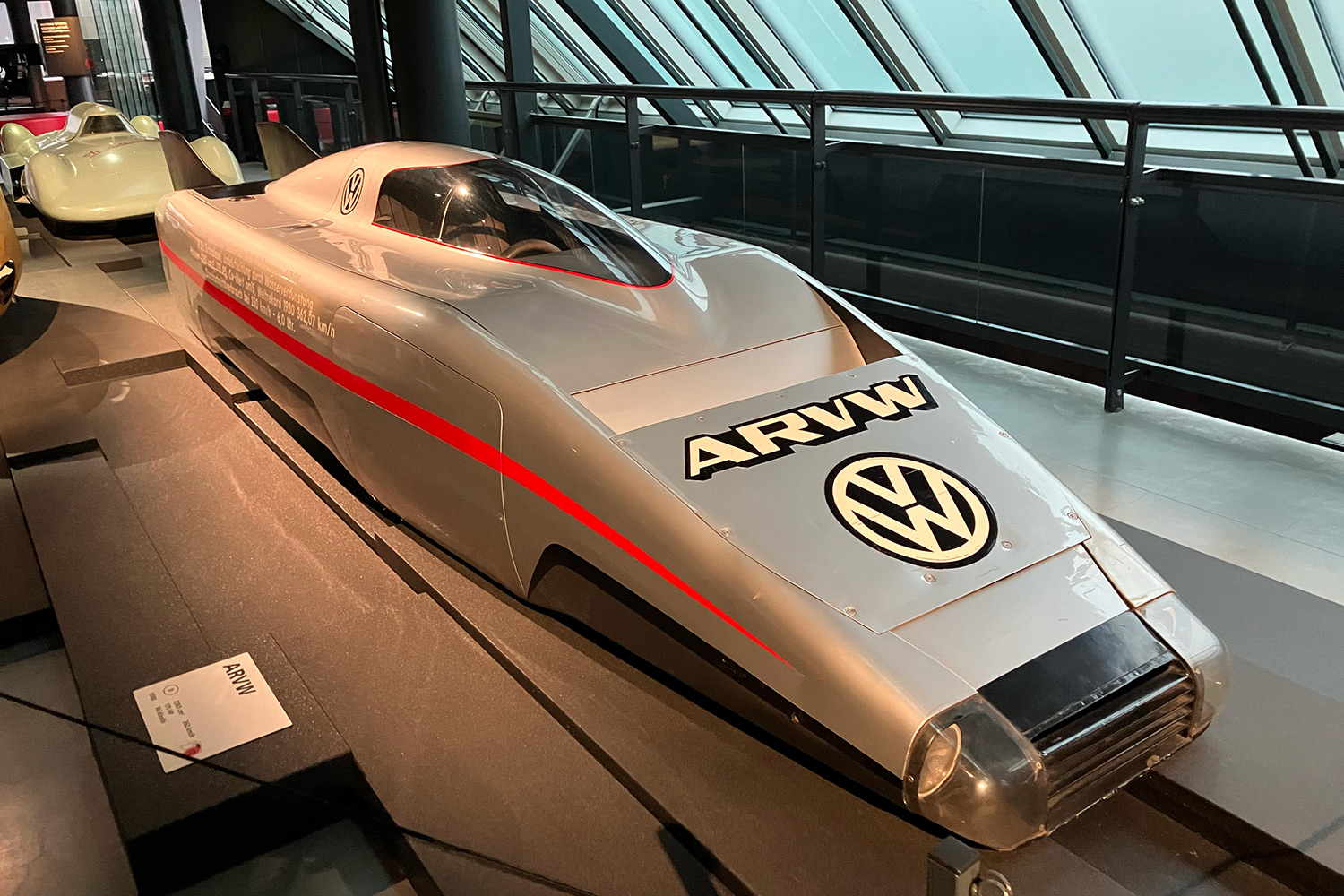
Naturally, since it was a VW-Audi engine, the engine’s original engineers weren’t left idling when it came to the engine’s potential. Volkswagen put it in the ARVW research vehicle and created the world’s fastest diesel car.
In October 1980, driven by Finnish F1 driver Keke Rosberg at the Nardò Ring in Italy, the ARVW hit 362 km/h, just a touch under 225 mph, with a turbocharged version of the D24 producing 175 horsepower. It still used just six liters per 100km/h when it did 250km/h, meaning nearly 40 mpg at 155 mph. The ARVW is currently at the Riga Motor Museum in Latvia.
Diesel Hits The Skids
Volvo got the 244 D6 readied up for North American sales just in time for diesel to peak. In 1981, diesel-engined passenger cars represented six percent of all new car sales. In 1981, four out of five new Mercedes-Benz cars were diesel, and the only way from there was … down.

Also in 1981, General Motors sold 310,000 cars with its Oldsmobile diesel engine in 261 V6 and 350 V8 configurations, which stood for 60% of the diesel market. Sadly, the reputation these engines earned was bad enough to ruin diesel for everyone for a long time. GM had based the diesel unit on its 350 V8, and while there were a number of modifications, there simply weren’t enough of them.

The head bolts couldn’t take the engine’s high compression, resulting in numerous warranty replacements and a dreadful reputation, abetted by a stretching timing chain and a lack of a water separator. The 350 diesel was a complete stinker, and by the time GM introduced improved engines, such as the new 263 V6, they came too late. In 1983, only two percent of total new car sales were diesels, and cheapening gasoline didn’t help things.

Despite this, Volvo included the Turbo Diesel in the engine palette of its new 760 series, designed to replace the 240, yet outlived by it. The 760 came on sale in mid-1982, and the diesel version followed before the end of the year.
No naturally aspirated diesel was offered in the posher 760, but the slightly cheaper 740, introduced in 1984, was available with the non-turbo version. The most powerful version was the D24TIC, short for “diesel, 2.4 liter, turbo intercooler,” which provided 120 hp.
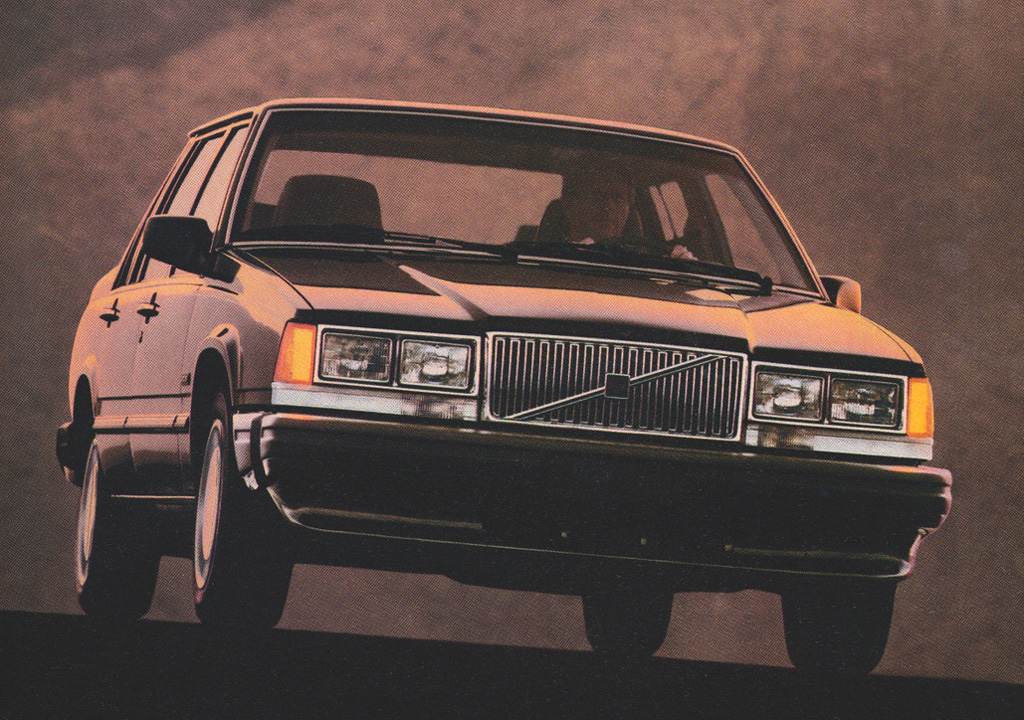
The 700-series’ successor, the 900-series, wasn’t sold as a diesel in North America; the last year for diesel Volvos in the States was 1985.
The 200-series was also sold as a diesel in the United States until the 1986 model year. They had become available in the U.S. in 1980 (except California), were temporarily withdrawn for 1981 due to issues with emissions certification, but were re-introduced the following year.

Especially compared to the aforementioned GM diesel, the D24 and the turbocharged versions are very dependable. IPD USA, a Volvo specialist even goes as far as to call them “very reliable … to the point that they generally got ignored and didn’t get maintained properly. Lack of maintenance resulted in many of these engines eventually having the piston rings seize up.” But if you never change the oil, that’s what you get.
I drove a diesel Volvo for a couple years. Mine didn’t have a Volkswagen engine anymore, as Volvo finally phased out VW engines by 2001, and the XC70’s diesel engine was part of the Volvo Modular Engine family (four-five-six, wonder where I’ve heard that before?). The P2 generation did still use VW diesels for the first couple years, as the V70 and S80 were available with VW’s again very reliable, yet not immensely powerful 2.5 TDI, before Volvo’s D5 engines came along. There wasn’t a diesel six-cylinder anymore, though. My 163-horsepower, six-speed manual XC70 D5 was great, regularly managed 40MPG, and pulled extremely well in third gear. These D5s have also been swapped into classic 240s, and I can imagine it’s a lot of frugal fun. Still, I’d like to see the old 244 Diesel Turbo Special in action, if it still exists in a Volvo collection.
Images: Volvo Cars unless otherwise noted




Many moons ago a colleague had one of the 244 diesel with the straight six. It was slow, but faster than my Merc 240D or the Peugeot 504D wagon I had at the same time. But the Volvo would also lay a smoke screen under acceleration that would do an anti Uboat escort fighting destroyer proud.
The Volvo 700 series looked so elegant. I think the pre-facelift ones with four sealed beams actually looked better than the post-facelift ones. I really don’t like the styling of anything in their current lineup.
Yes – The 960 sedan roofline was as unfortunate an incongruent with the rest of the car as the latter GM A-body sedans.
I’m with you. I also really like the old 80s Camaros and the Buick Regal for that reason, quad sealed beams look excellent.
I’d gladly trade my 5-cylinder XC90 for a XC70 D5, were such a thing possible in the states, which it’s not. 🙁 Mine gets 16 MPG around town in gentle driving, and almost 30 on the highway, which I never am. The idea of getting 40 MPG in a slightly smaller P2 fills me with wonder and envy.
I grew up riding around in a 1985 Audi 5000 turbodiesel (Canadian-market – it was only sold as an ’83 in the US), which used a turbocharged version of the same 2.0 liter I5 labeled as a D20 in the Volvo. While it was a bit doggy from a standing start, it surprised you with more passing power than you might expect. ‘Slow’ is a question of perspective. If you focus solely on accelerating from 0, then these 80s turbodiesels are dogs – but that’s not the whole story. You’d have to plan your entry into traffic carefully, but once you were moving and the turbo was spooled up, there was no real issue. The fuel mileage was incredible by the standards of the time.
My mom went from a 244DL to an ’84 diesel GL 240. Manual and supposedly much “nicer” than the 244DL. She kept it a little over a year, getting rid of it with a big depreciation hit because she hated it so much compared to the DL. I was so young I don’t really remember whether it was speed or something else, but I do remember her complaining about having to wait to start it up constantly.
My Dad and I shared a long-term ownership of a *brown* 1980 240D stick. Yeah, the Ultimate Car. I got it up to about 180k before the head gasket started to pressurize the cooling system, but up until then, it was dead-nuts reliable. 35mpg, 0-60 in uhh 17sec, and it’d cruise happily in OD at 80 all day long. And, if someone got a wee bit too close to the back bumper, popping it out of OD and slapping your foot to the floor produced an epic Bond-worthy black soot cloud. Still miss that car.
“ We’re talking molasses-slow progress here: the D20 diesel produced 68 horsepower and took over 24 seconds to reach 100 km/h (62 mph).”
I used to have a 2CV. That took 29 seconds to get to 60mph and I would still be regularly stuck behind people who choose to accelerate even slower than that. My cousin still drives it, and UK traffic is still slow enough to regularly hold up a 2CV.
Sure, but a 2CV weighs nothing and is a completely different driving experience than a dried blood colored Volvo that slouches towards 60mph to be born.
A teacher in my h.s. had a diesel 240, early/mid 80’s model year. Guidance counselor had a light blue DL gas, same era. Small town area, largely agricultural, 111 people in my senior class. Not many Volvos around, those are the only two I remember locally. I acquired my early fetish for Volvos because they were driven by smart, educated people, not necessarily rich, but certainly not the rednecks that made up the local majority (my family included). I remember seeing a 760 GLE on I-95 on our first family roadtrip to Disney World. In it’s first year, so 82?. I thought it was the most awesome thing ever. Somebody in the next town north of us had a Peugeot 505 STI, similarly awesome.
Some European markets (Belgium, Italy, Denmark, Finland?) have/had a huge tax step for cars over 2.0 liters of displacement. For those markets it made total sense to offer the 2l 5cyl engine.
If I remember correctly, the 5/6cyl shares the bell housing pattern with the Audi V6 and V8. So it should be possible to easily replace the Diesel with a 4.2l V8 from the first gen Audi A8.
Ferrari jumped in with 208 GT4, 208 GTS, and 208 GTB with 2-litre V8 as well. They were grossly underpowered and extremely slow by Ferrari standard…
“My steak is too juicy, my lobster too buttery and my V8 Ferrari is too slow…”
Lotus did a special 2.0 for the Esprit for those markets. Not a huge step down from the standard 2.2.
They got rid of all the left-over 2.0 engines in the “GT3” special edition.
One of the first cars I drove was a brown, manual, 1983 Volvo 245D wagon. Acceleration was … aspirational, power was just adequate enough, and in the midwest winters we constantly had to keep the block heater plugged in to prevent the fuel from turning into Vaseline. But the bright side was I rarely had tailgaters on the on-ramp – the black smokescreen this thing produced would have made James Bond clutch his pearls.
My brother had a six cylinder, four speed 264 Diesel it was slow, but you could put your foot in it and it would trail thick black smoke all the way to 160 km/h (100 mph) indicated on the 401 highway. The transport trucks were amused.
For the U.S. market, 240 diesels ended in the 1984 model year, but diesel 740/760s could be had until the end of the 1986 model year.
I’ve always wanted to find a 740/760 diesel for a gambler car.
My first car was an 83 760 GLE turbodiesel – in brown, from my grandfather. That thing was a literal tank – it looked, accelerated, and sounded like one with cushy leather seats, and a saggy headliner. Besides an intermittent fuel system issue (likely caused by the fact a tank would last me about 6 months) it was a great first car since i could rarely speed even if i wanted to. It led to my affinity to Volvos and was eventually replaced with a proper turbo Volvo in the form of a 96 850R, then an 04 S60R spaceball.
“…old Volvos sound like they are fan-powered.”
That’s because Volvo used a cooling fan blade configuration which was incredibly loud.
IPD sold a replacement fan which was far-far quieter.
It’s a shame the 240 Diesel Turbo Special never became a US thing – I think it would have done quite well as a 264/265GLD, in competition with the slower Mercedes-Benz 300D range, Peugeot 505 Turbodiesels, and Audi 5000 Turbo Diesel.
In case your local school board got skittish, this is your reminder that Volvo is what you can see of the outside, the VAG is on the inside.
That one’s almost too clever for a COTD. Take your smiley face anyway.
Bloody Brilliant. Well played
In the nineties in Stuttgart I once witnessed a boxy Polizei VW LT do an emergency start with all lights and sirens on, directly into a 180 degree power-drifted U-turn, then several yards of tail-happy power drift till it stabilized and went away.
I realize they came with plenty of diesel torque, a very light rear with stiff suspension and likely had rear LSDs, but it still flattered me to think for a very long time that this was a secret MadMax Pursuit thing with a 911 engine.
Of course, it probably wasn’t.
Not 911, but the petrol engines were closely related to those in the Porsche 924. That may have inspired the cops.
That said, the first series LT was a POS. They had just been retired in favor of MB T2s when I did my Zivildienst (compulsory service for conscientious objectors) in the early nineties. Yet the older paramedics were still complaining how much the LTs sucked.
In USA, especially with county cars, modifying pursuit cars has been a thing at times.
I owned a 1985 245 Diesel. Brown, Manual, Stick Shift, RWD.
https://www.curbsideclassic.com/cars-of-a-lifetime/coal-1984-volvo-245-diesel-the-rwd-diesel-stick-shift-brown-station-wagon-mythical-beast-of-the-internet/
Fantastic story! That’s some troubleshooting.
Holy. Grail.
The follow-up article is about just that.
https://www.curbsideclassic.com/automotive-histories/the-brown-rwd-manual-transmission-diesel-station-wagon-a-comprehensive-guide-to-that-mythical-beast-of-the-internet/
So it’s YOUR FAULT!