

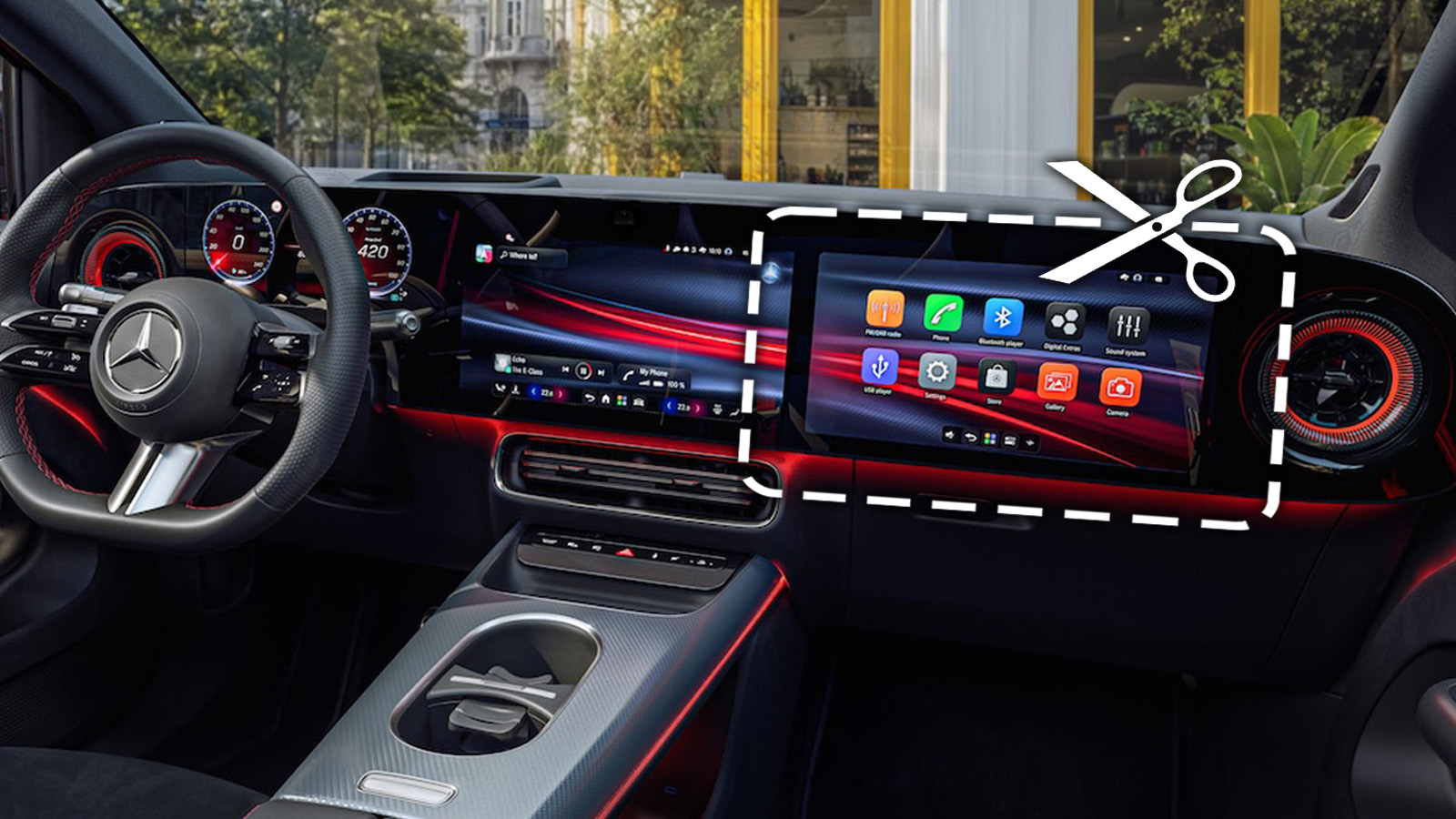
As cars get more expensive, what are the people who buy Gucci flip-flops going to drive? For the past decade, luxury automakers indulged in a move downmarket, spawning new entry level models that leased inexpensively enough for the aspirational first-real-job set. While some companies are walking this move back, others are re-upping in a world where the first hit is leased for 36 months. This is the new Mercedes-Benz GLA, and if the billboard-sized faux grille was any indication, it’s running electric-first towards the first-designer-item set with flashy ambient lighting and screens. However, the inevitable advertised lease specials won’t include the full complement of screens, instead filling a gap with something particularly sad.
Before we get into that, let’s talk about what makes this thing go. At launch, the range will start with the GLA 250+ Electric, with an 85 kWh nickel-manganese-cobalt battery pack, a single electric motor and 268 horsepower. While an EPA range figure isn’t available yet, Mercedes-Benz claims up to 408 miles on the WLTP cycle. That’s 10 miles more than the base Porsche Macan Electric, which is rated for up to 332 miles of EPA range. If 268 horsepower isn’t enough poke for you, there’s also the GLA 350 4MATIC which gains a second electric motor for all-wheel-drive, a combined output of 349 horsepower, and a claimed zero-to-60 mph time of 5.3 seconds. Both electric models can DC fast charge at up to 320 kW thanks to an 800-volt architecture, provided the right 350 kW DC fast charger is used.


However, if you can’t charge up at home, don’t tune out just yet. Like with the CLA, the new GLA will also be available with a rather unique four-cylinder hybrid powertrain. While a turbocharged 1.5-liter four-cylinder engine with a 1.3 kWh 48-volt system doesn’t sound like anything special, Mercedes-Benz claims that the relatively low-voltage hybrid system can drive the wheels alone at lower speeds through a 30-horsepower motor in the eight-speed dual-clutch transaxle.
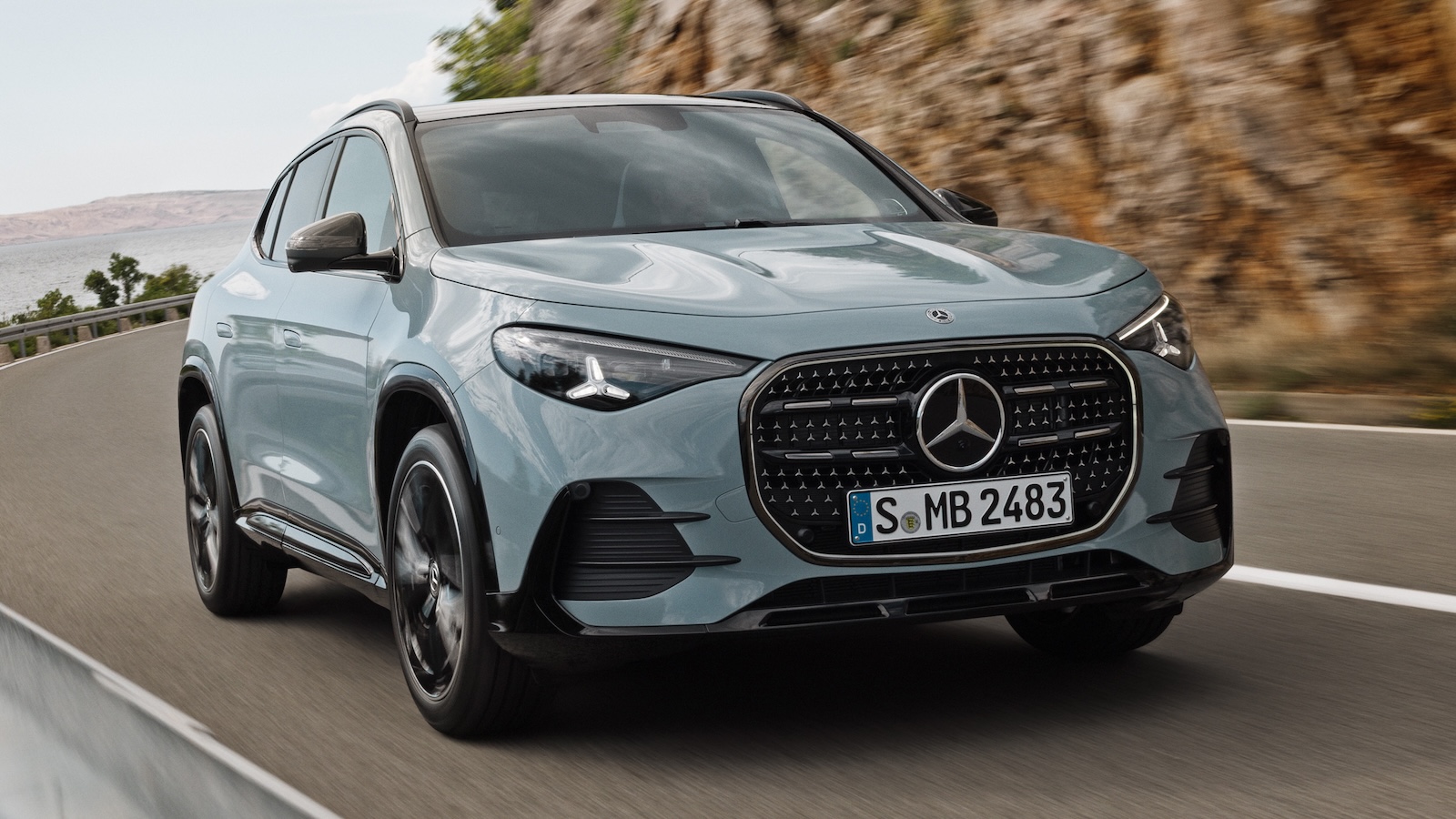
So far, the new GLA sounds like a taller hatchback version of the CLA, and that’s the point. The old GLA used the same MFA2 platform, powertrains, and major interior components as the old CLA, so why mess with the recipe? This is Mercedes-Benz’s entry-level crossover after all, so taking advantage of economies of scale should keep it reasonably cheap.
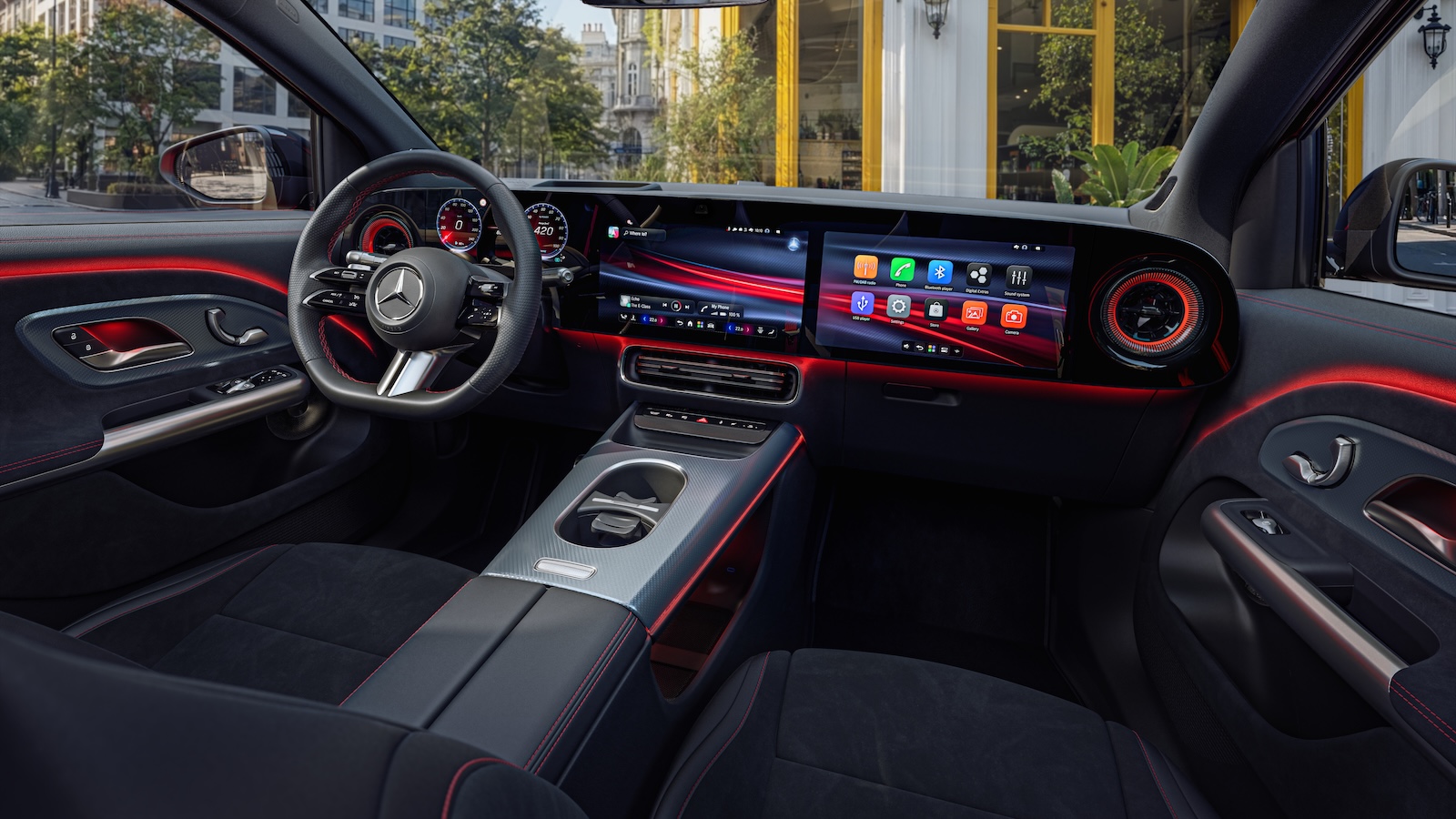
Mind you, the carryover means that you also get the new CLA’s interior, and that’s not so good. Mercedes-Benz hopes you like screens, because there are up to three of them across the face of the dashboard. One for the gauges, one for the infotainment with climate and heated seat controls annoyingly placed on the touchscreen, and an optional one for the passenger in case they get bored of scrolling TikTok. You can spec more ambient lighting than a Twitch streamer’s bedroom, but that only distracts so much from the slightly confusing control layout. Mercedes-Benz has gone with Volkswagen ID.4-style window switches on the new GLA, with two switches and a touch pad operating four windows. The power seat controls are touch-sensitive too, as are most of the steering wheel controls, as is a small haptic bank in the console for volume control, bringing up the parking cameras, changing drive modes and whatnot. I’ve poked around the same setup in the new CLA and it’s all rather annoying. Would you want to pay Mercedes-Benz money to be mildly annoyed?

Without the passenger screen, the new GLA comes with a giant slab of monogrammed plastic that looks unbelievably tacky. It combines the shininess of a $70 off-brand phone with a litany of tiny three-pointed stars advertising the marque on a car you already paid for. It effectively amounts to an enormous bezel that spill all the way across to the far side of the dashboard, utterly devoid of usefulness and likely costing virtually nothing to make. This is one of the few cases where a passenger screen is actually useful because the absence of one is somehow less appealing. How bravely insidious.
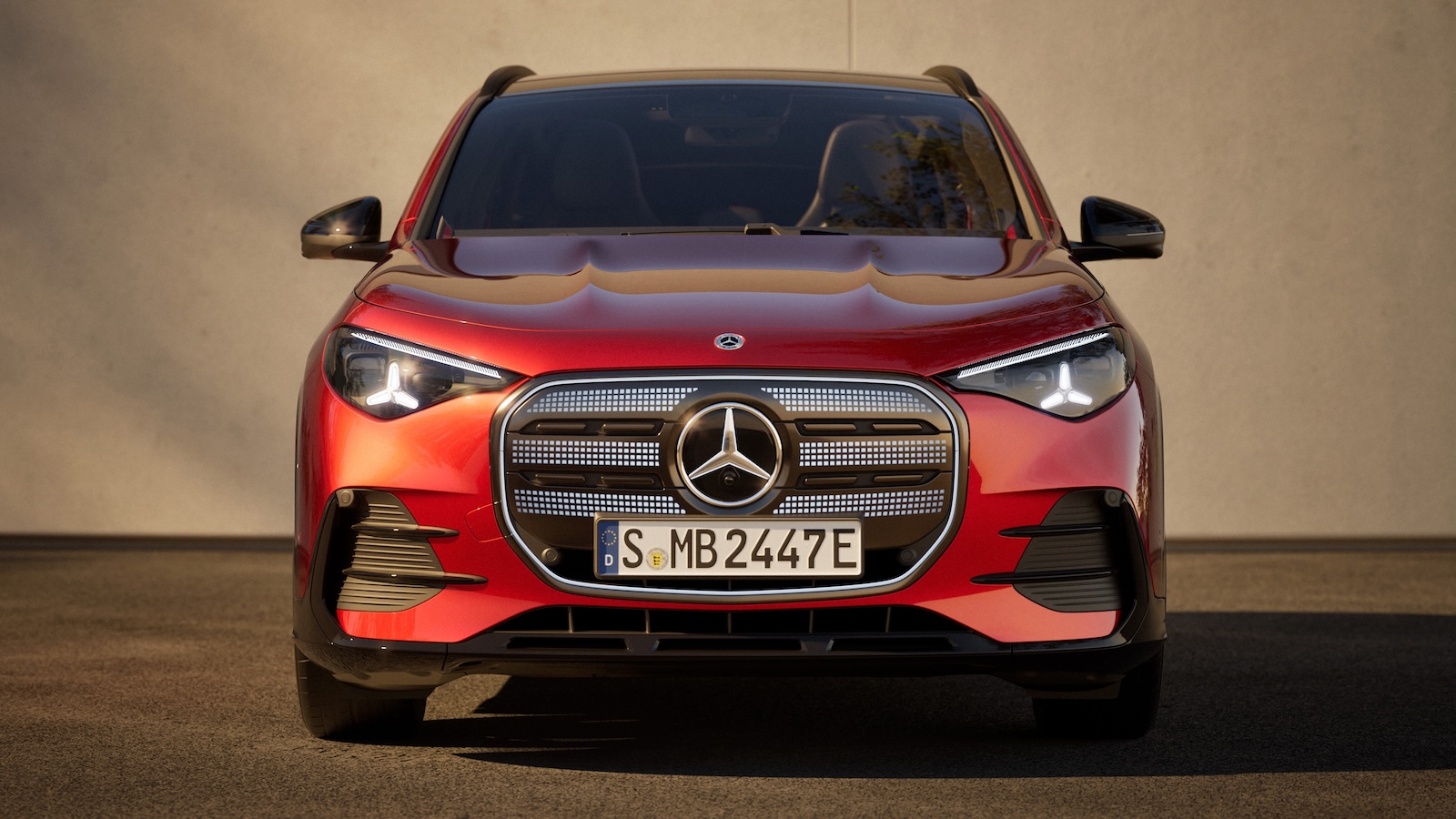
On the plus side, the new GLA’s styling should be a little less controversial than that of the CLA. Instead of a trout mouth, it adopts the shield-style illuminated faux-grille seen on the new electric C-Class and GLC. Combined with the three-pointed star elements in the headlights that are completely unnecessary because there’s a giant Mercedes-Benz emblem in between them, the nose of this small crossover is very Louis Vuitton-ified. Not great, but if you cover up the front fascia and view the GLA from the front-three-quarters, it’s actually quite handsome. Strong longitudinal lines make the GLA look less stubby, and the chunky arches give a visual nod to the larger GLE and GLS.
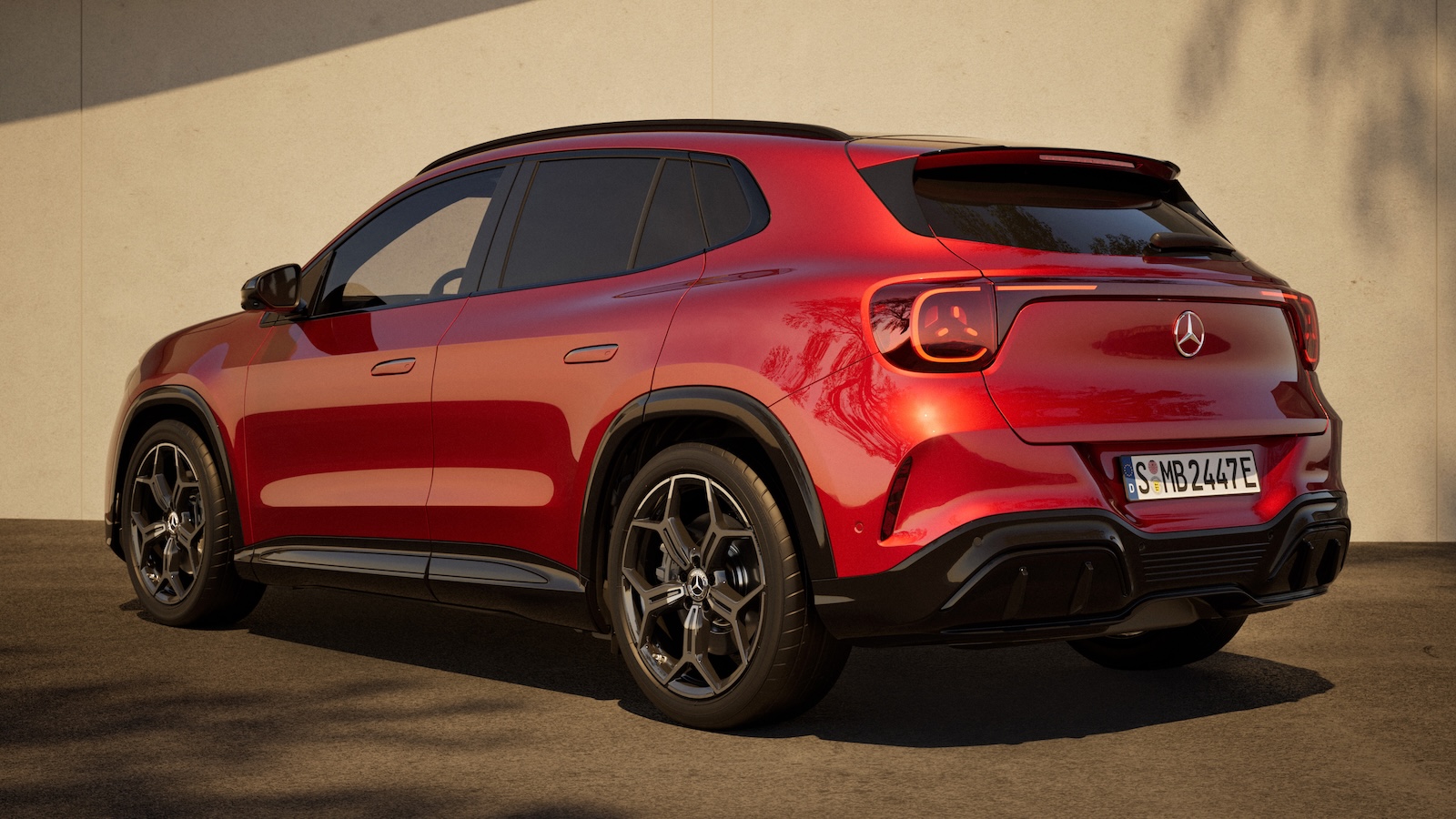
Keep walking around the GLA, and things get weird again out back, specifically with the taillights. The three-pointed star motif returns, the LED lighting doesn’t run all the way across the heckblende, and the result just looks amateurish. It’s a shame because the rear valence is textbook modern Mercedes, and the smooth liftgate with the number plate recess set in the bumper looks expensive. Perhaps Mercedes-Benz’s baby crossover is just one facelift away from becoming a swan.
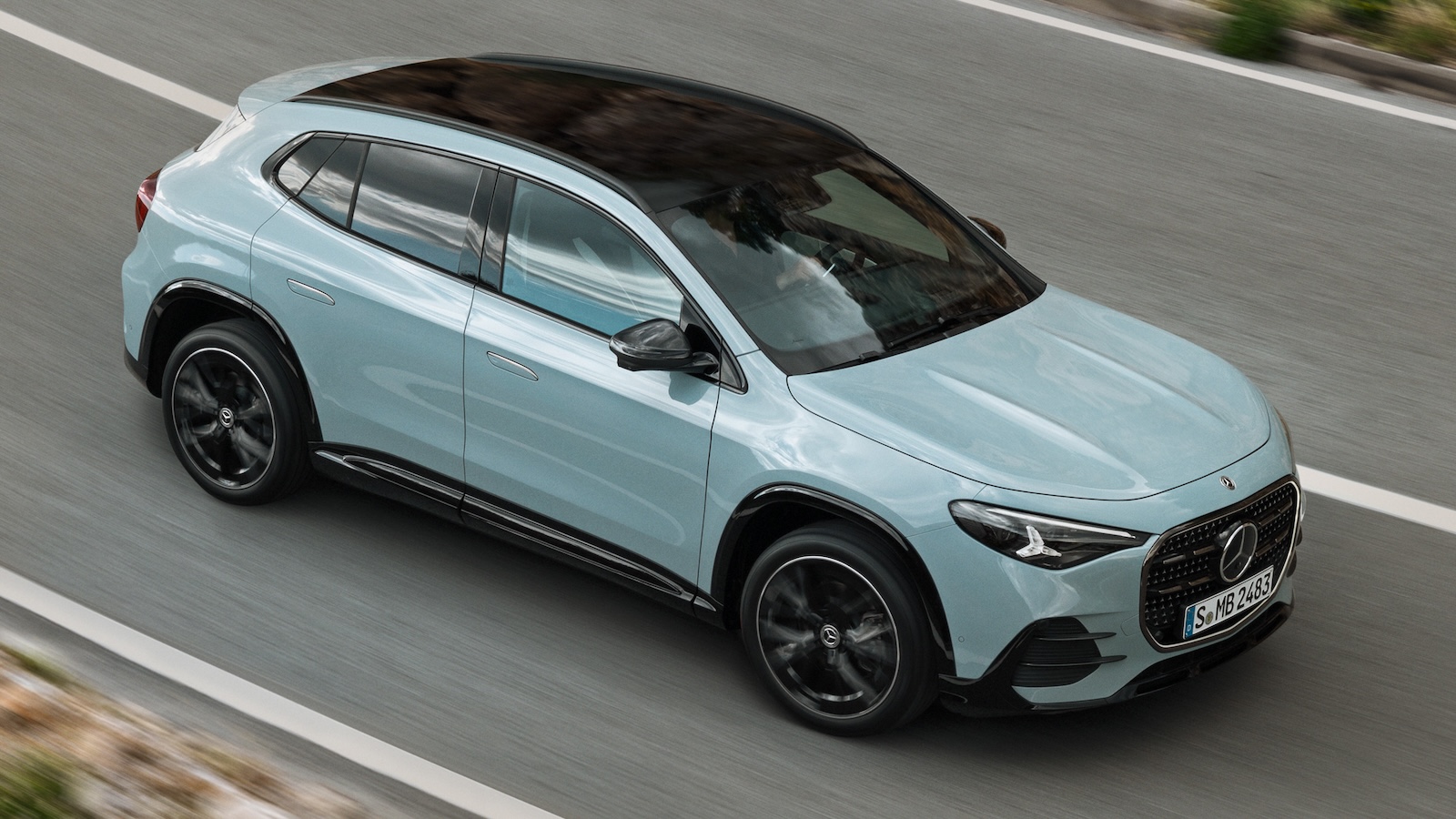
Still, you can expect the new GLA to be reasonably priced. Mercedes-Benz hasn’t released official figures, but all the information needed for reasonable speculation is already out. The outgoing GLA is priced within $1,250 of the combustion-powered CLA, and the new electric CLA starts at $49,400 in America. If Mercedes-Benz follows tradition, don’t be surprised if the new GLA starts around $50,000 in electric trim. That would be cheap enough for these to pop up at every dental office in America following its introduction in the second half of next year.
Top graphic image: Mercedes-Benz




I can’t believe I technically named myself after this company…
(Yes, I know I named myself after a person, but I wasn’t thinking of that when I chose the name.)
Still better than Dongfeng or Peugeot.
Thats only because of how Americans say Peugeot
”Poo-Joe”
No. No. NO.
It’s also bloody difficult to spell. In fact the only reason my dyslexic brain can spell it is because I owned one, so I got plenty of practise typing it into google to search for parts and info.
(I had to replace five wing mirrors on that car, it was street parked and fuckers kept breaking them off)
The actual pronunciation isn’t that far off what you have there. It’s not like it suddenly becomes some beautiful word that rolls off the tongue.
CuJo Peugeot?
In your defense, they were probably still a decent company when you changed your name. I was a big fan leading up to and through the W123/124 years. But that three-pointed star has lost its luster ever since.
Over the years, I’ve nicknamed a few of my favorite cars after characters, real or imagined that worked with the cars’ names. Winnie the Peugeot. Genevieve Peugeot, Greta the Jetta, Henry and Jane (F)Honda. I couldn’t come up with one that felt clever for my Saab. Sister? That might have worked. But that car is long gone.
Beats Panhard Alleyway.
Time for fake wood vinyl appliqué, would actually be the first time that’s looked better, haha!
If they think they will survive outcheaping the Chinese brands, they are wrong. And, to clarify, the Chinese can now do cheap and quality (how they do that is another matter). Western brands still have to chose, and the only edge they had left was brand recognition, which they are gladly killing themselves.
This. VW have now realised it – the new ID.Polo is leaning heavily back into it feeling like the Polos half of Europe learned to drive in (they’ve also ditched the shared window switches of the earlier ID cars). Renault have really hit it out the park with the 4 and 5 – I’ve never owned a Renault and don’t have any major affection for the brand but I absolutely love the 4 and 5.
Other European brands? Work is generally needed. Ford seem to be deliberately disappearing off into obscurity, although talk of upcoming EV rally Fiestas etc is reassuring. Opel/Vauxhall are now just another generic Stellantis product, only more forgettable than the rest.
Mercedes have been chintzy for a while now, and the flashy interior lighting and the prospect of a knock-off Range Rover for £25k is appealing to these buyers. The number of Jaecoo 7s on the road in the UK speaks for itself!
(also – was behind a previous gen CLA the other day, on ’19 plates. It didn’t even have parking sensors!)
This is really the crux of it. Mercedes, BMW and Audi have been in a race to the bottom for quite a while now (IMO it started in the mid-to-late 00’s) while the Chinese are running in the complete opposite direction. There is an intersection point which I think we already reached where a lot of people are still buying “luxury” German cars only because of brand name recognition but that’ll soon change too. In fact, it’s already happening in many countries, like the UK ditching Range Rover for a Chinese replacement.