


I’m so obsessed with Jeeps that I studied engineering to become a Jeep engineer, then I became a car journalist who has basically been writing about his Jeep projects for over a decade; recently, I assembled a WWII Jeep from scratch. It’s a deep, deep obsession, but it’s not a blind one; I know Jeeps aren’t perfect, and today I’d like to point out my least favorite attribute of pretty much every Jeep since the very beginning — WWII.
Back in 2001, my family went on vacation in Malta. While there, we rented a Land Rover Defender 110, and I recall my parents sitting up front and all six of us boys in the back. It was epic.


Fast forward a few decades later and I’m a car journalist at a media event in which Toyota allowed journalists to drive all generations of Land Cruiser; I remember sitting with a bunch of people in the back of an FJ-40. That, too, was epic.


What made these trips so great wasn’t simply that these Jeep-inspired SUVs were so good off-road, it was that the vehicles allowed me to share that off-road fun with lots of people. How could they do that? Well, their seating arrangement makes sense; the same cannot be said about pretty much any Jeep, ever.


This is just something I have to get off my chest, because it’s bothered me for years. Take a look at my WWII Jeep’s rear cargo area (below); you can see two squared-off wheel humps. Between those wheel humps is a narrow cargo floor. For some reason, Jeep decided that, instead of using those wheel humps as the perfect seating locations that they are, they’d squeeze a tiny bench between the humps. So now, instead of fitting four people in the back, you can fit 1.5. Why?
Why is the Jeep designed to seat only four while the Toyota FJ and Land Cruiser can seat seven? That’s 75% more people!

This was a significant enough problem that, if you look at wartime photos, you’ll often see soldiers putting, not their butts, but their feet on that rear bench. This photo really demonstrates my point that, as brilliant as the WWII Jeep (and its successors) were as off-road machines, they really weren’t very good personnel carriers:

On the WWII Jeep, there may have been a good reason having to do with payload or maintaining the right height for the windshield or top or whatever; the specifics of that vehicle were clearly laid out by the U.S. Quartermaster Corps in 1940. But when the CJ-2A came out in 1943, there was no excuse.

Not only did the very first Civilian Jeep no longer have storage bins in the wheel wells (making those wheel wells completely wasted space not suited for cargo-holding), but it also added a tailgate. So now, unlike a forward-facing bench between the wheel wells, two inward-facing jumpseats atop the wheel wells would not yield any significant loss of storage (in fact, it would increase usable storage by freeing up the floor), and it would make accessing the rear seats a lot easier. You could open the tailgate and easily sit down; meanwhile, the CJ-2A’s forward-facing rear bench requires leaning the passenger front seat forward or climbing on the seats or stepping on the rear wheel and jumping over the side of the tub. In any case, it’s a pain in the butt if you’re not young and limber.
When the Willys CJ-3B came out with its high hood in 1953, and the CJ-5 followed shortly thereafter, there was even less of a reason to continue with the forward-facing seat because, with the higher hood, you could now raise the windshield and top a bit to accommodate rear passengers seated on the relatively-high wheel wells, and theoretically it wouldn’t ruin the design. (Maybe there was a concern with top-heaviness given the narrow track width? I’m not buying, and I’ll explain why in a moment).
Yet, year after year, Jeep continued with this silly configuration. From MB to CJ-2A to CJ-3A to CJ-3B to CJ-5 to YJ to TJ to JK to JL, it was the same nonsense. Even the longer CJ-7 and LJ all featured a tiny rear bench suited for just two passengers. Look at the LJ:


This, to me, is a real shame. Being able to off-road with a group of friends/family is one of the great joys in this life, and yet, for the vast majority of Jeep CJs and Wranglers, this just never been an option. There is one famous exception.
President Ronald Reagan clearly agreed with me on this issue, which is why his Jeep CJ-6, an extended CJ-5 (if you look at it from the side, you can see this oddly-shaped panel that Willys-Overland welded in to extend the tub by 20-inches), features jump seats:
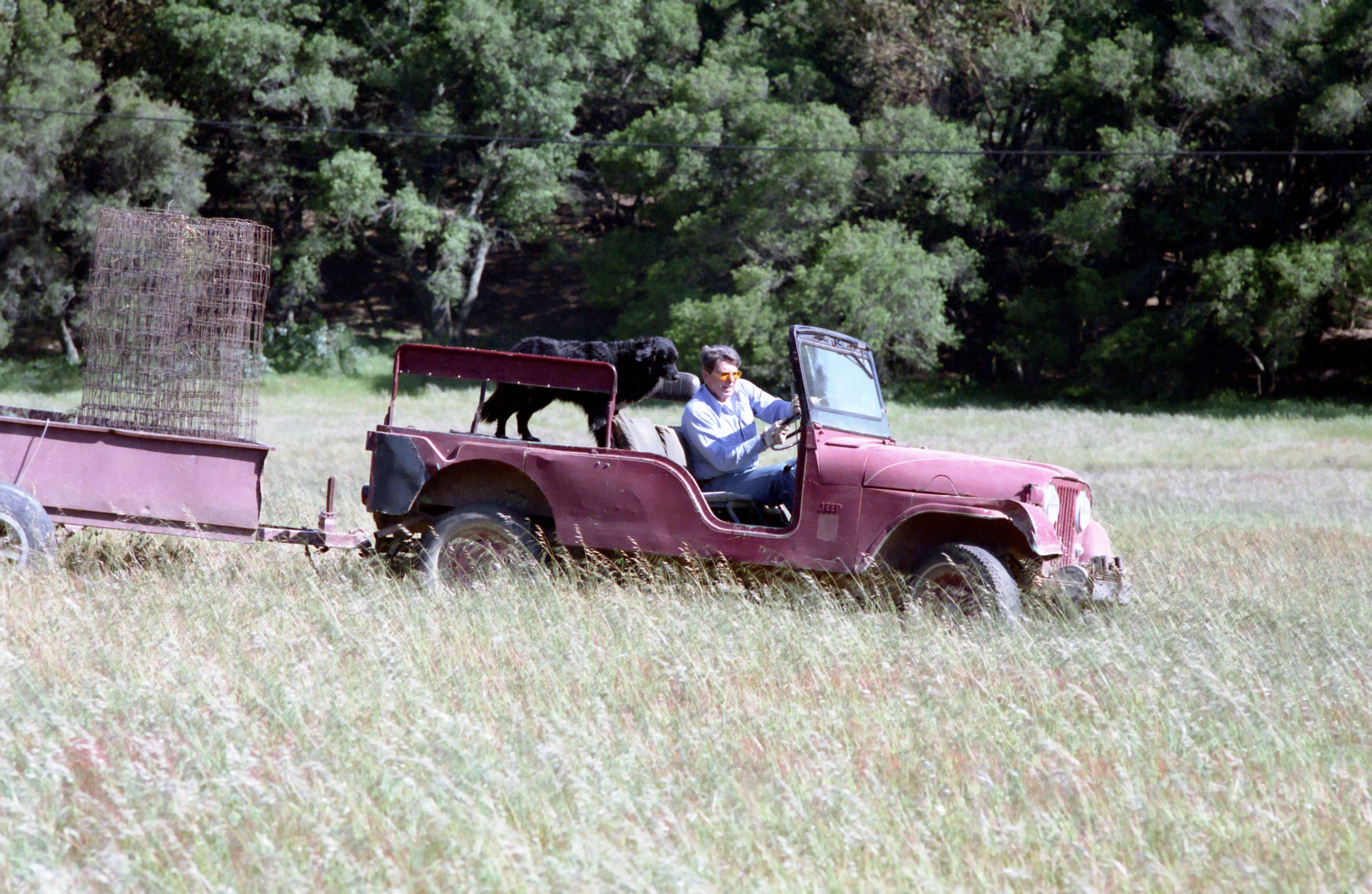


There were some other Jeeps available with jumpseats, like the rare luxury Jeep CJ-5 model called the Tuxedo Park:

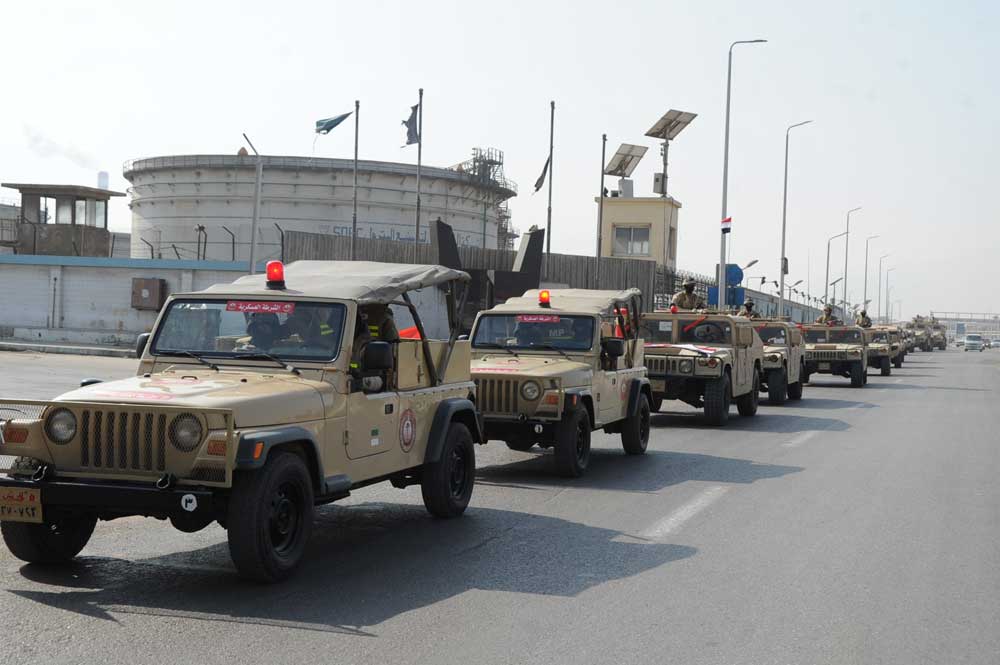
And when the Egyptian military bought Jeeps, it knew better than to try to cram two soldiers between those wheel wells:


To be fair to the Jeep LJ and the post-1970 Jeeps I mentioned: Roll bars became standard around that time, and as you can see in the images above: The Jeeps with the jumpseats have no roll bars. That’s because the roll bars would have to mount to the tops of those wheel wells, leaving little room for seating.
So the roll bar (and certainly, for more modern vehicles, there are even more safety considerations beyond simply a roll bar) is clearly a reason why you’d want a forward-facing bench, and it does necessitate a taller roof, as shown here by these roll bar-less Egyptian Jeep TJs:
But especially for every Jeep build before roll bars, there is no excuse. To only be able to seat 1.5 people while your Japanese and British rivals have seating for four back there — come on!
Anyway, I’m glad to get that off my chest. Old Jeeps are great, but their seating arrangement has always been absolute garbage.


You need to do a story about the pink jeep tours in Sedona Arizona. They have all sorts of customized jeeps to hold more people.
By some measures, Humvees are even worse.
Incredibly wide, but no where to put stuff or people…
And god forbid you are wearing a full combat load-out.
It’s a transmission tunnel with guys strapped to the side of it, a bit like a Lotus Elan in practicality, but without any of the benefits.
Only real benefit is if you have a gunner in the turret. There is a lot of room to stand there.
On the older stuff, sure, I agree. However, on anything newer, reaching modern highway speed while side facing is likely to vomit inducing for a lot of passengers, I expect. And that doesn’t sound like fun for the driver, owner, or anyone else.
The front fenders are just crying out for a cushion. That’s two more screaming people.
I hate everything about all Jeeps, except that thay helped free Europe, but that was over 80 years ago.
I think the official line at Jeep is that they have never had roll bars.
For one thing, that would be admitting that jeeps might roll over more than other cars. Also if a Jeep did roll hard enough for the rollbar to fail they would be liable for making promises of safety..
I think thats why you never hear about safety belts, but only seatbelts
There are no roll bars on Lotus products.
There are seatbelt anchorage frames, which is what the seatbelts mount to. The SBAFs have bars that go over the top of the cabin, which definitely aren’t roll bars.
Not being an automotive safety engineer (or anything remotely close) I can’t speak with any authority on the subject, but it seems to me that side-facing seating in anything capable of interstate highway speeds has a rather high probability of ending poorly for said side-facers in the event of a crash – but what do I know…
I’m pretty sure that no matter what, a jeep at interstate highway speeds will end badly in a crash, but seatbelts would probably just make things worse if you were sitting sideways.
In military vehicles, siting sideways on the way to whatever soldiers are on their way to probably isn’t that high on the list of things that produce bad outcomes.
I’ve never thought about this, but it is true! They totally could have put in jump seats for 4 people on the older Jeeps!