


I’m so obsessed with Jeeps that I studied engineering to become a Jeep engineer, then I became a car journalist who has basically been writing about his Jeep projects for over a decade; recently, I assembled a WWII Jeep from scratch. It’s a deep, deep obsession, but it’s not a blind one; I know Jeeps aren’t perfect, and today I’d like to point out my least favorite attribute of pretty much every Jeep since the very beginning — WWII.
Back in 2001, my family went on vacation in Malta. While there, we rented a Land Rover Defender 110, and I recall my parents sitting up front and all six of us boys in the back. It was epic.


Fast forward a few decades later and I’m a car journalist at a media event in which Toyota allowed journalists to drive all generations of Land Cruiser; I remember sitting with a bunch of people in the back of an FJ-40. That, too, was epic.


What made these trips so great wasn’t simply that these Jeep-inspired SUVs were so good off-road, it was that the vehicles allowed me to share that off-road fun with lots of people. How could they do that? Well, their seating arrangement makes sense; the same cannot be said about pretty much any Jeep, ever.


This is just something I have to get off my chest, because it’s bothered me for years. Take a look at my WWII Jeep’s rear cargo area (below); you can see two squared-off wheel humps. Between those wheel humps is a narrow cargo floor. For some reason, Jeep decided that, instead of using those wheel humps as the perfect seating locations that they are, they’d squeeze a tiny bench between the humps. So now, instead of fitting four people in the back, you can fit 1.5. Why?
Why is the Jeep designed to seat only four while the Toyota FJ and Land Cruiser can seat seven? That’s 75% more people!

This was a significant enough problem that, if you look at wartime photos, you’ll often see soldiers putting, not their butts, but their feet on that rear bench. This photo really demonstrates my point that, as brilliant as the WWII Jeep (and its successors) were as off-road machines, they really weren’t very good personnel carriers:

On the WWII Jeep, there may have been a good reason having to do with payload or maintaining the right height for the windshield or top or whatever; the specifics of that vehicle were clearly laid out by the U.S. Quartermaster Corps in 1940. But when the CJ-2A came out in 1943, there was no excuse.

Not only did the very first Civilian Jeep no longer have storage bins in the wheel wells (making those wheel wells completely wasted space not suited for cargo-holding), but it also added a tailgate. So now, unlike a forward-facing bench between the wheel wells, two inward-facing jumpseats atop the wheel wells would not yield any significant loss of storage (in fact, it would increase usable storage by freeing up the floor), and it would make accessing the rear seats a lot easier. You could open the tailgate and easily sit down; meanwhile, the CJ-2A’s forward-facing rear bench requires leaning the passenger front seat forward or climbing on the seats or stepping on the rear wheel and jumping over the side of the tub. In any case, it’s a pain in the butt if you’re not young and limber.
When the Willys CJ-3B came out with its high hood in 1953, and the CJ-5 followed shortly thereafter, there was even less of a reason to continue with the forward-facing seat because, with the higher hood, you could now raise the windshield and top a bit to accommodate rear passengers seated on the relatively-high wheel wells, and theoretically it wouldn’t ruin the design. (Maybe there was a concern with top-heaviness given the narrow track width? I’m not buying, and I’ll explain why in a moment).
Yet, year after year, Jeep continued with this silly configuration. From MB to CJ-2A to CJ-3A to CJ-3B to CJ-5 to YJ to TJ to JK to JL, it was the same nonsense. Even the longer CJ-7 and LJ all featured a tiny rear bench suited for just two passengers. Look at the LJ:


This, to me, is a real shame. Being able to off-road with a group of friends/family is one of the great joys in this life, and yet, for the vast majority of Jeep CJs and Wranglers, this just never been an option. There is one famous exception.
President Ronald Reagan clearly agreed with me on this issue, which is why his Jeep CJ-6, an extended CJ-5 (if you look at it from the side, you can see this oddly-shaped panel that Willys-Overland welded in to extend the tub by 20-inches), features jump seats:
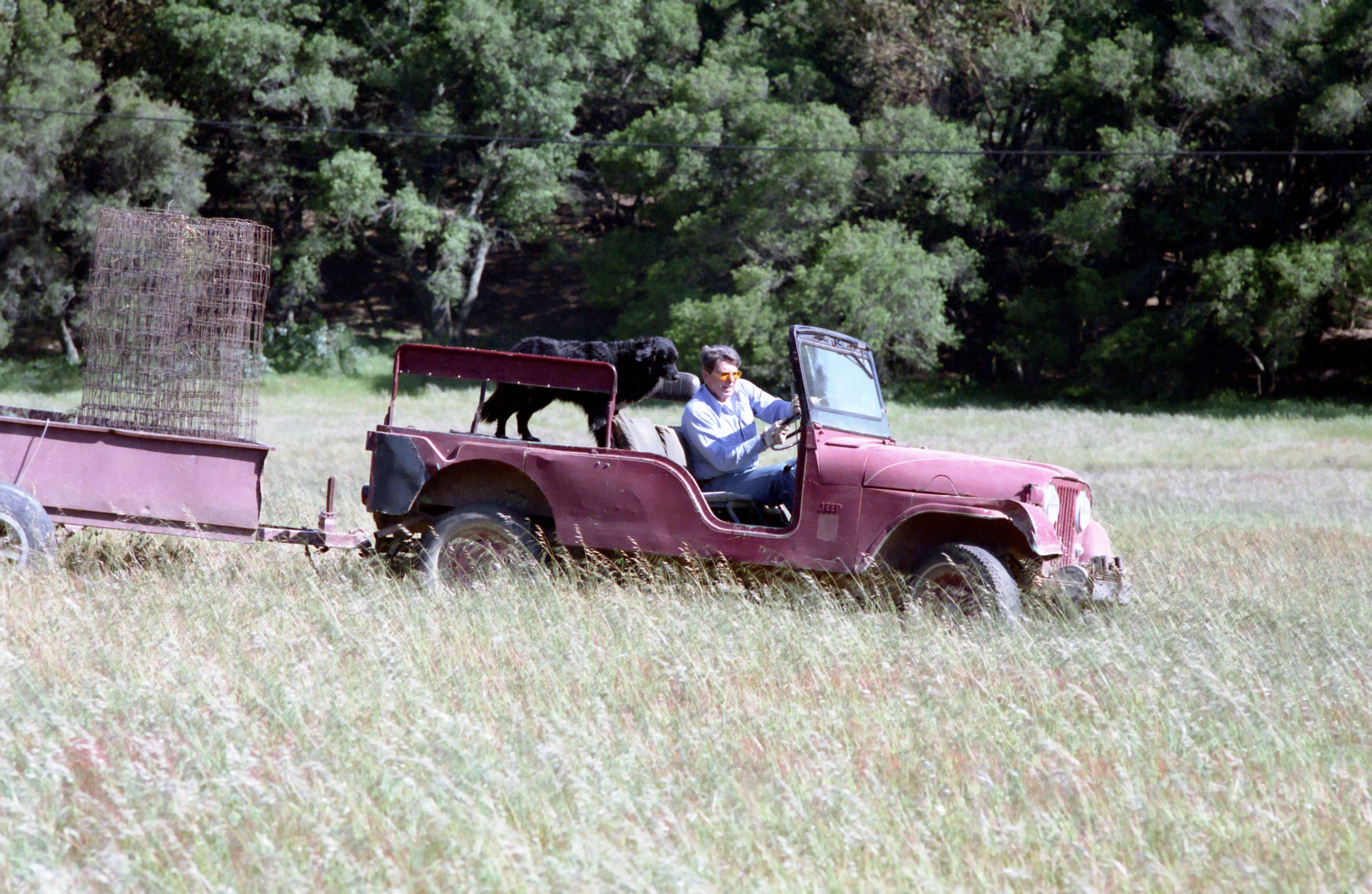


There were some other Jeeps available with jumpseats, like the rare luxury Jeep CJ-5 model called the Tuxedo Park:

And when the Egyptian military bought Jeeps, it knew better than to try to cram two soldiers between those wheel wells:


To be fair to the Jeep LJ and the post-1970 Jeeps I mentioned: Roll bars became standard around that time, and as you can see in the images above: The Jeeps with the jumpseats have no roll bars. That’s because the roll bars would have to mount to the tops of those wheel wells, leaving little room for seating.
So the roll bar (and certainly, for more modern vehicles, there are even more safety considerations beyond simply a roll bar) is clearly a reason why you’d want a forward-facing bench, and it does necessitate a taller roof, as shown here by these roll bar-less Egyptian Jeep TJs:
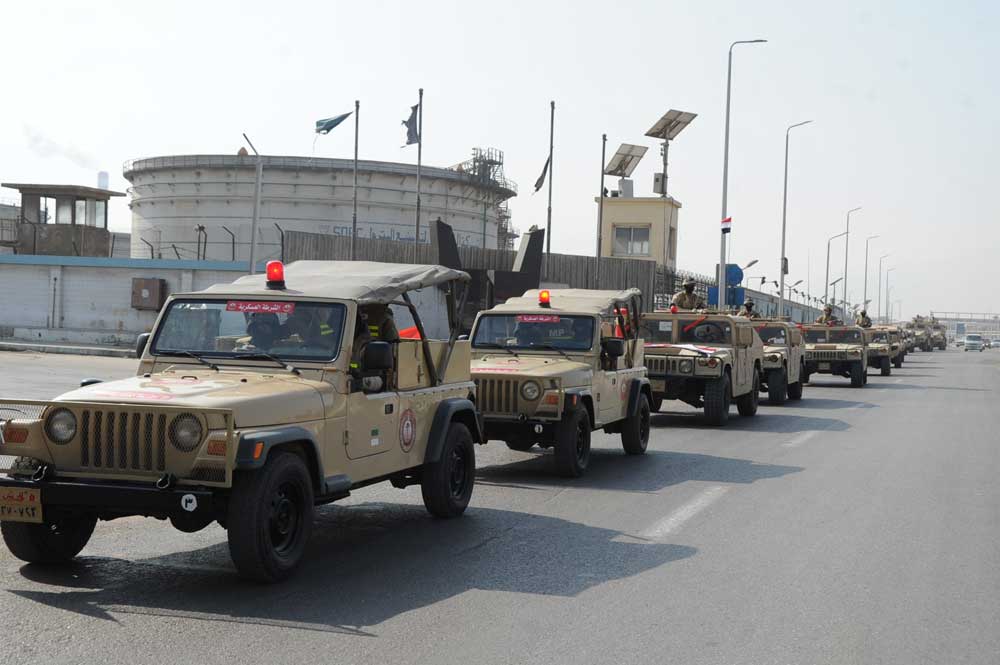
But especially for every Jeep build before roll bars, there is no excuse. To only be able to seat 1.5 people while your Japanese and British rivals have seating for four back there — come on!
Anyway, I’m glad to get that off my chest. Old Jeeps are great, but their seating arrangement has always been absolute garbage.


Not being an automotive safety engineer (or anything remotely close) I can’t speak with any authority on the subject, but it seems to me that side-facing seating in anything capable of interstate highway speeds has a rather high probability of ending poorly for said side-facers in the event of a crash – but what do I know…
I’ve never thought about this, but it is true! They totally could have put in jump seats for 4 people on the older Jeeps!
I agree, it’s odd.
The rest of the world realized the advantage of these jumpseats early on and then the design stuck with their later Jeep-inspired vehicles and their successors. Probably because there was a greater scarcity of vehicles, and each unit needed to carry more people.
But the US was first with the original MB and CJ-2, those didn’t have the inward-facing seats, so the original design remained unchanged from that point on.
It was good enough, there was no “evolutionary pressure” to change it to something different.
I concur; I think we just had more cars and more space, so shoving tons of folks into vehicles wasn’t as big of a deal as it might be elsewhere. And yeah, momentum.
I wonder if the lack of seating was to keep the cargo weight down and once the design was fixed nobody bothered to think to change it.
“I have just four months to restore this rusty, rickety old farm tailor into a hay ride for Thanksgiving.”
I’m ready for the articles about DT’s next build: the custom seven-passenger, long-wheelbase, roll-barred, high-roofed Family Off-road Truckster Jeep!
I went looking for what I knew existed, the CJ8 world cab, and found David had already written about it before. I wonder why it wasn’t mentioned here?
The Eight-Passenger Australian Market Jeep CJ-8 Wagon Is The Perfect Family 4×4 You’ve Never Heard Of – The Autopian
Maybe this is just an excuse to show middle east Jeeps this time.
I was a teen in Outer Suburbia surrounded by real estate speculation.
A friend’s brother gave him a surprisingly non-rusty (so probably near new) pale green and white FJ40 hard top with the sideways facing back seats. It was wonderful off-road in the abandoned rolling farm land, it would hold 6 people total and screaming teen girls added to the excitement.
What a fun thing, I was used to dirt bikes, but it was a whole new dimension with lap belts sitting across from one another, like a strange fairground ride. (-:
I get the sense that David’s next obsession will be the Pinzgauer- https://silodrome.com/wp-content/uploads/2019/07/Steyr-Daimler-Puch-Pinzgauer-4×4-Rear-Cargo-Bay.jpg, lots and lots of bench space + portal axles.
I LOVE a Pinzgauer!
They are air cooled so you and Jason could get one working together.
I don’t think side-facing seats have been legal in light-duty vehicles for the US in quite some time. Even if they somehow, by omission, are, I can’t imagine how you’re going out meeting occupant safety requirements (or goals) with them. You don’t have any real restraining in front and rear collisions.
But if it gets T-boned, it comes equipped with side-impact
airmeatbagsLand Rover Discoveries had them into the 2000s. Not sure if the LR3 and LR4 continued that though.
Only the Discovery 1 had inward facing seats, and not very comfortable either. The Disco 2 (and onward) had forward facing ones, hence the longer rear overhang.
This only applies to the old ones where safety wasn’t a concern, but even then there would be issues of passengers banging heads on any roof or being ejected more readily, a worse ride (if that’s possible), and greater potential for motion sickness that would dissuade civilian buyers. It worked in a military context because of the need for quick deployment/getting the hell away from the vehicle, it was a more expedient way for moving more tired infantry, and the side-facing passengers had better sight coverage than if they faced forward.
And yet, the Land Rover and Land Cruiser went that route.
That’s not to say that Jeep didn’t have data showing that Americans preferred a front-facing; they may have! The thing about being a car journalist is that thinking you know more than automakers do is a good way to look like a fool; there was probably a good reason for this choice.
Still, as my title says, I’m not a fan of it; I love the space-efficiency of the British and Japanese 4x4s, even if I much prefer the Jeep overall.
I think the use cases and major markets were a bit different for the other offroad competitors where the side seating made more sense. When I think of old LR, I think of farm, military, and large game reserve use across the old empire that wouldn’t likely involve a lot of severe offroading while transporting so many people and they did come with a variety of layouts for various applications where more serious conditions would likely be encountered. It seems like roofs were more common on LRs, too, and maybe they had more headroom in the event of a launch from the seat. I can’t speak much on the LCs as I don’t know much about them, but I would think they’d be more geared toward the Asian markets, which would also have different demands and standards. People in the US likely had Jeeps as secondary vehicles, so transporting a bunch of people wasn’t a concern when they had spacious, comfortable cars. In other markets, this wouldn’t necessarily have been the case.
While I don’t share your dissatisfaction with traditional Jeep seating arrangements, thought I’d mention that when I bought my ‘45 MB in the Philippines, there were padded benches installed atop the rear wheel wells that easily seated four (probably six Filipinos) abreast. Nothing but gravity held them in place and other than the sides of the tub, nothing to hold on to, but they were seats. On bar crawls, it wasn’t unusual to have as many as 10 passengers: five in seats and and five in laps. Probably could’ve squeezed in a couple more, but safety, you know?
Amazing! You bought an MB from the Philippines!
The amazing part is that it hadn’t been converted into a jeepney in the 40 plus years before it fell to me. It had been owned by a wealthy family that used it for upcountry travel and kept it nearly pristine. Why I didn’t hold on to it and ship it back to the states, I’ll never know. Hope it’s still out there somewhere.
We’re all just temporary custodians. Whether for a couple years or a couple decades.
So, David, when are you traveling to the Philippines to rescue an old jeepney?
I remember something about officers always riding in the front passenger seat because the rear seat ride was so awful.
All great vehicles have fatal flaws.
I got to ride in the back of a Toyota Land Cruiser 70 in the “Troop Carrier” body style (with two sideways 4-person benches and one front bench, for a total of 11 seats) while visiting Papua New Guinea, and it was a highlight of the trip! There’s probably reasons it wouldn’t play well in many countries, but it really is the correct layout to fit the most people in that footprint
No question!
I understand that Reagan also enjoyed another vehicle with unconventional seating when driving around the ranch: his Subaru BRAT.
That’s true! He was a seating connoisseur!
Easy solution: Scrambler. Screw the back seat.
Back in college I managed to fit 8 adults + backcountry ski gear in my 2-door XJ Cherokee, does that count?
The backseat of that thing was basically famous for being absolutely miserable for the 4+ hour drive to the mountains, I’m guessing jump seats would have been even worse.
Sigh. I guess it my fault for clicking and reading.
As if an automotive expert wouldn’t even give a vague mention to FMVSS, mandated anchor point geometry, litigation risk for seats oriented sideways, niche customer preference, etc.
I do mention it! Roll bars became standard around 1970. Those took up the space for seating.
We can go into all the FMVSS stuff you want; I’m very familiar with it (ex: the family-style roll bar was mandated on the 1992 YJ in order to offer a provision for a three-point belt). But this piece is really about what I see is a lackluster design choice when compared with the Jeep’s contemporaries. (Particularly, I focus on older Jeeps).
This. I have loved all of my Jeeps, but the seating options in the back have always seemed lackluster.
You’re normally better about not using click-bait titles. Stop it.
Clickbait
What is it with all the grumpy people bellyaching about titles around here?
This one is especially peculiar, since the title is just my opinion.
With that said, I think there’s elevated sensitivity towards the media these days — some of it warranted — so I’ll let this slide.
It’s not clickbait as there’s nothing untrue, it’s a lure. Not all headlines have to Cliff Notes the article.
Yeah, it’s literally a few words to make you think and wonder…what’s the big deal?
I went a different route in my CJ-5. I removed the rear seat and put in a large wooden deck with a hinged lid for access. Full roll cage and mounts on the fenders meant it was a two-seater and nothing more. That rear deck was also really good for sleeping on, with a pad on it.
My YJ has this type of thing from the previous owner. I kind of want to tear it out and put a seat back so i can fit the kiddo back there.
When I had the seat in, it was barely adequate. Any bump or jostle was amplified over that rear axle so anyone back there was getting tossed at the roof. Even had a stepbrother hit his head before from one big bounce on a street with road construction. For kids, or anyone in back, I’d suggest a slightly longer wheelbase vehicle like an XJ.
You’d hate my TJ. The rear seat was uncomfortable even for kids or dogs and is long gone.
I wouldn’t be surprised if it wasn’t some strange market preference / stereotype conscious or not from the previous decades. That favored front facing seating.
Work detail trucks and lower end train and street cars had side facing seating where higher end faced forward.
Sort of like most of not all American officer preference to sit at the front vs other countries in the back being driving.
I had a series of FJ40’s and with six adult men on board stability was certainly compromised, after some hairy moments on the expressway (at 60 mph) I vowed that 4 was the limit.
A series of FJ40s? You sound like a legend.
At first this seemed like nonsense to me because I remember sitting 3-across in the back of a CJ-7 in the 80s with plenty of room, but then I remember I must have been around 8-9yo then.
Check out Pink Jeep seating. They are customized for tours and the higher roof shade too. They have several layouts to accommodate more than average groups. They have answered the seating problem since 1960!
The Pink Jeep Tour jeeps are a little sketchy, IMHO. To their credit, they don’t appear to be lifted and follow known trails within the vehicles’ capabilities so they are likely no more dangerous than rock crawlers.