

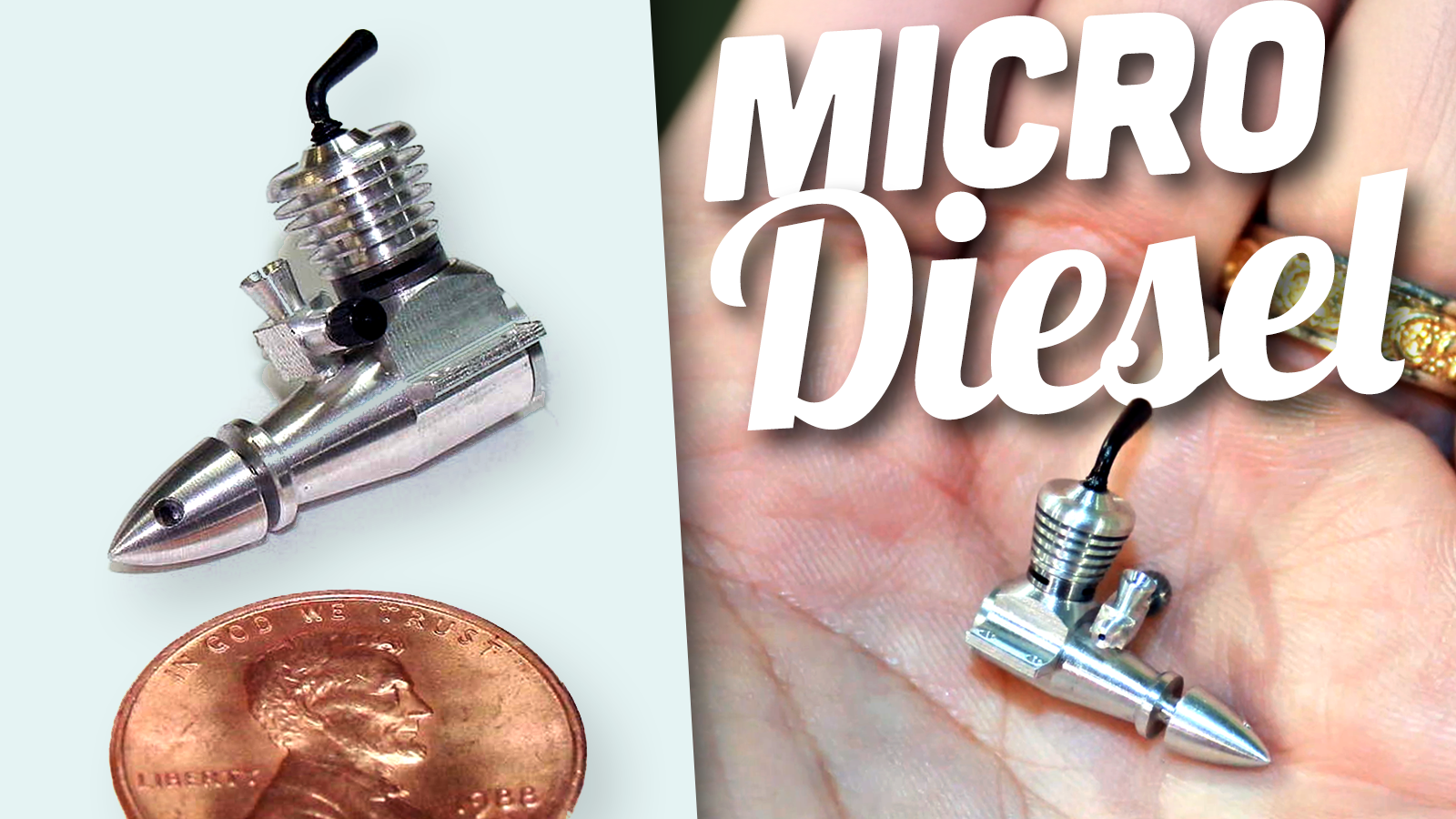
Much of the world moves on diesel engines of all sizes. Some of the biggest machinery on the planet runs diesel, as do some very small cars. Have you ever wondered just how small diesel power actually gets? This is the Ronald Valentine Engines Nano Bee. Built for one specific purpose, this impossibly small engine is barely larger than a penny, spins to 12,800 RPM, and has a displacement of only 0.006 cc. That’s not a typo, this engine, which has a connecting rod that’s as thin as a fingernail, is remarkably tiny. Yet, its creator says it does run.
The Nano Bee was the work of Ronald Valentine, who quietly runs Ronald Valentine Engines. Valentine’s intricate engines are built by hand and are more than just something to display in the smallest corner of your desk at work. You could fit a Valentine engine into a model plane and take it to the sky.


The Nano Bee, which remains rarer than many hypercars, was the result of decades of engineering that led to increasingly tiny model engines. This is an engine with a bore and stroke measured in millimeters and is so delicate that you can break it by trying to start it the wrong way. Yet, somehow, this is an engine that runs, burning only the smallest morsels of diesel. While Valentine doesn’t have an official record to back it up, I feel safe in saying that it’s the smallest functional “diesel” engine in the world. However, that comes with a caveat, which we’ll get to in a moment.

But, why? Tiny model engines have been around forever and have been made by countless builders and firms. Why bother making the smallest possible engine?
The Man With A Dream To Go Small
Ronald Valentine, who lives in La Crosse, Florida, used to have a larger online presence. His hobby shop even had a website that ran from 2009 to 2018. That site is offline now, but can be accessed through the Internet Archive. There, he indicates that he builds tiny engines to make a point.
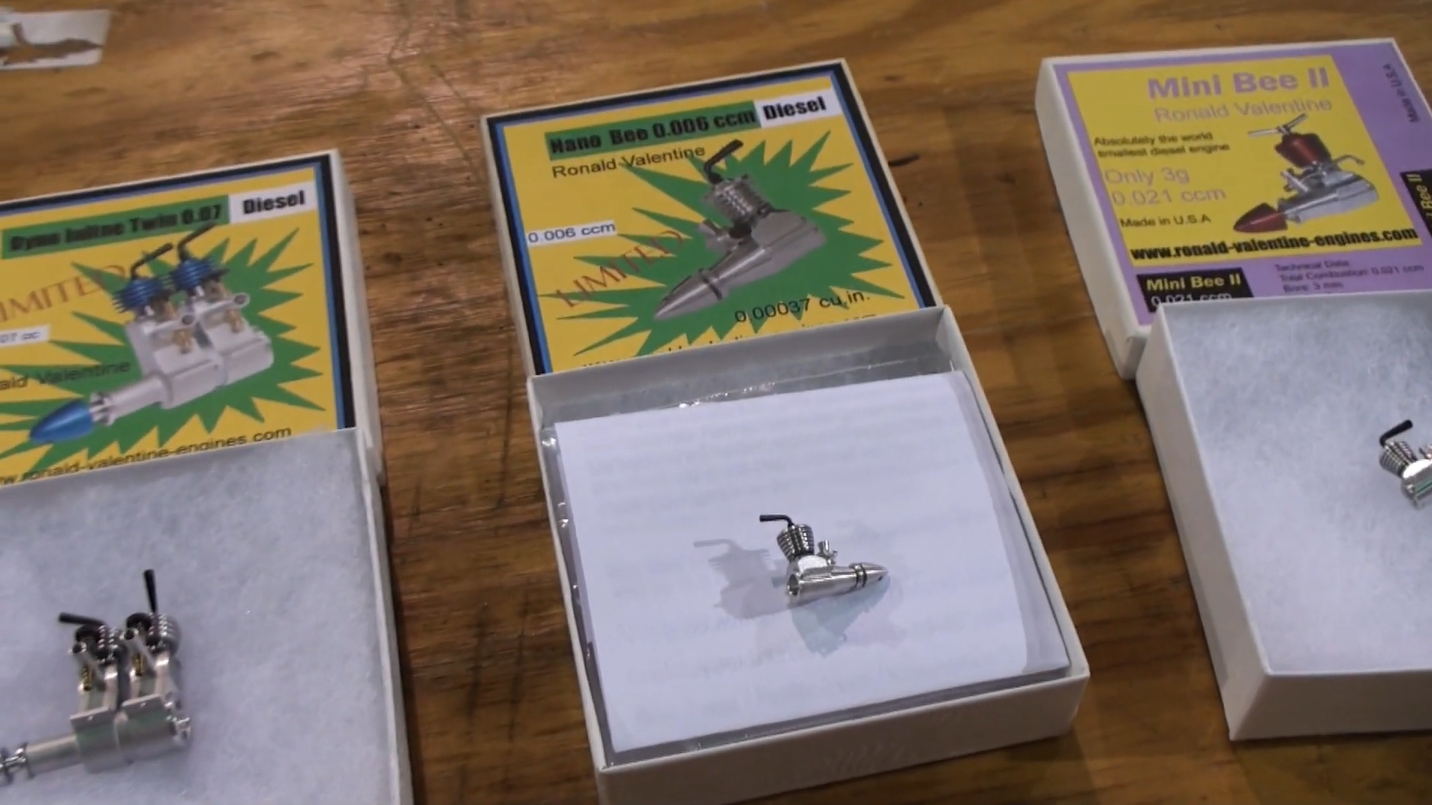
From Ronald Valentine Engines:
All Valentine engines are produced in small quantities, and are of high precision, excellent design and high performance.
Valentine engines have been manufactured for over 30 years. The first workshop was in Empfingen-Wiesenstetten / Germany. After this Ronald Valentine started the production in his native country, the USA. Ronald learned to fly airplanes as a young boy, and always was fascinated by the mechanics and operation of engines. After studying in the USA and Germany, he became an apprentice at the University in Stuttgart/Germany, where he studied the practical and theoretical side of engineering. At a young age, he excelled as Master in mechanical engineering at the Daimler Benz School in Sindelfingen/Germany, where only the best students graduated with a degree.
The idea of these small engines is to see how small and compact diesel engines can be built and still be functional. Since the radio control equipment has became so small it became possible to fly most of our miniature engines in planes.
Ronald Valentine Engines has been around since 1980, and in the early days, his brother, Chris, helped Valentine craft engines out of steel, aluminum, and brass. The pair didn’t use any fancy computerized machinery and instead machined their parts manually by hand. Later, Valentine’s son, Jon, would join the family business in building these engines. Since then, Ronald says, Jon has become a machinist. This video below shows some of Valentine’s engines:
As Valentine noted above, the engines are made in small quantities, often in runs totaling maybe a dozen or two units. That said, there are a lot of Valentine engines out there. In 2018, his website said that Valentine had designed some 150 glow engines, diesel engines, two-stroke engines, and four-stroke engines. Some 7,000 examples of those engines have been built over the past four decades. So, there’s a chance you’ll find one of these engines out there.
Today, Valentine still builds engines, but is rather quiet about it. You sort of have to catch him on Facebook to have a chance at placing an order. Outside of building remaining engines and selling vintage model engines from other companies on eBay, Valentine spends a lot of his time online cranking out AI videos on religion and politics.
A Primer On Model Engines
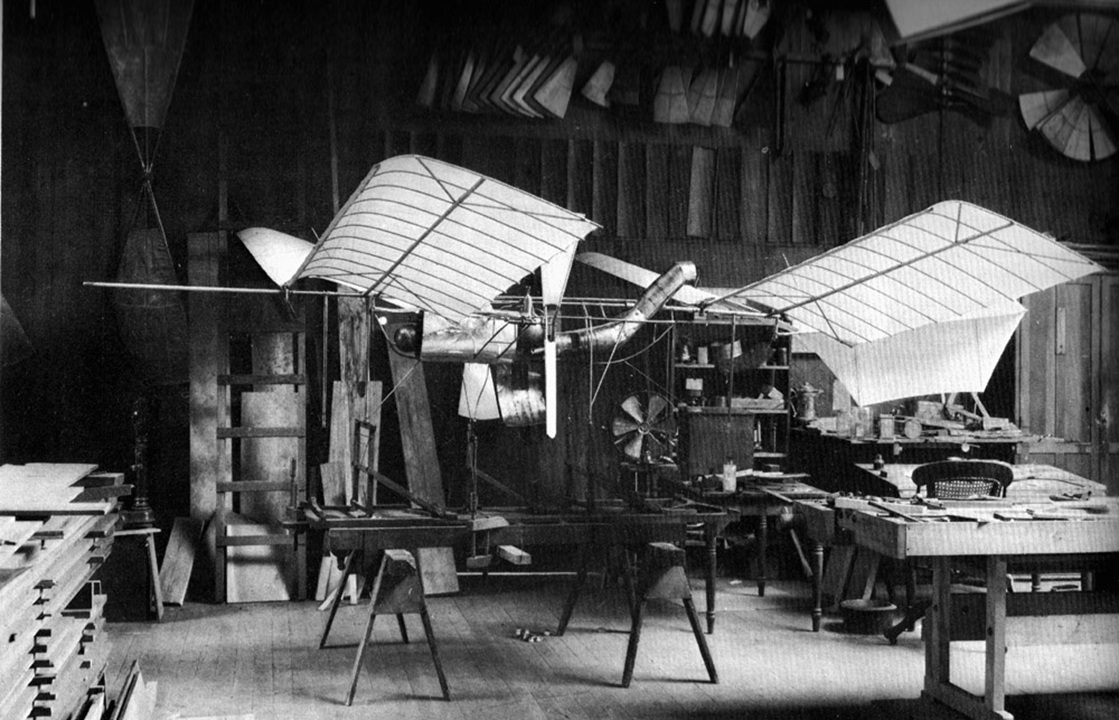
As Model Aviation magazine writes, model engines have been around for longer than a century. There have been hundreds, if not thousands, of model engine builders all over the world on every single continent. Model Aviation‘s article focuses on tiny engines in America:
In the beginning, there were huge, heavy engines, better suited to powering model boats than model airplanes. In 1896, Samuel Langley flew a large model airplane for 90 seconds, powered by a steam engine of his own design. Full-size, internal-combustion engines were in their infancy and miniature engines were hand-built curiosities. A.D. Stanger flew a model airplane in England using a V4 of his own design; the engine weighed 5 pounds, 6 ounces! In 1911, the Baby engine appeared in the US. A large engine with a 2.67 cu. in. displacement (cid), it weighed 3¾ pounds with its 18-inch-diameter, 13-inch-pitch aluminum propeller and gas tank. It was advertised at ½ hp, swinging that huge propeller at 2,300 rpm. The Baby was available in inline two-, three-, and four-cylinder configurations. The Baby used a bronze, bushed, split-aluminum crankcase, a cast-iron cylinder bolted to the lower case, a three-ringed aluminum piston, a carburetor with a float, and side-port, piston-timed induction. This was typical of smaller internal-combustion engines of the day. There were no glow plugs in 1911. The Baby used a spark ignition system with a 5/8-inch Rajah spark plug, a set of engine-mounted breaker points that were adjustable for advancing/retarding the timing, and a coil, condenser, and battery mounted in the airplane. The fuel was a mixture of gasoline and heavy motor oil.
1922 Gil Aero Midget 1.18 cid with its factory-installed 12-inch aluminum propeller.Weiss Mfg. Co. produced the Baby through 1929. Other large engines such as the Knight and Gil Aero Midget were designed. The Gil was smaller, 1.18 cid, 0.4 hp at 2,500 rpm (information from an advertisement), and weighed 16 ounces. It had a two-piece aluminum crankcase with a removable front end, similar to some of today’s engines. In 1931, Weiss designed a much smaller .331 cid engine. Weiss sold only engine plans to the .331; Louis Loutrel sold the assembled engines as well as kits containing the plans and castings. Loutrel eventually took over the Weiss engine, redesigned it to eliminate the rear timer, upped the displacement from .331 to .517 cid, and sold them under his name.

Some historians point to the engine built in 1931 by high schooler William Likens Brown as one of the first model engines in America specifically suited to model airplane use. The Model Engine Collectors Association writes just how important this engine was to model aviation:
In the 1930s, William Likens (Bill) Brown, IV of Philadelphia, Pennsylvania, developed the first small engine suited for powering model airplanes. Several models of this .60 cubic inch displacement Brown Jr. engine were produced over the next ten years or so, with over 50,000 made. These engines used an ignition system similar to that found on automobiles of the era, which meant that a model must carry a spark coil, condenser, and batteries, along with a fuel supply for its engine. Many of the original Brown engines are still in use and are sought after by engine collectors and modelers who still use them to power their models. Since then, there have been model engine companies with production figures running into the millions of units.
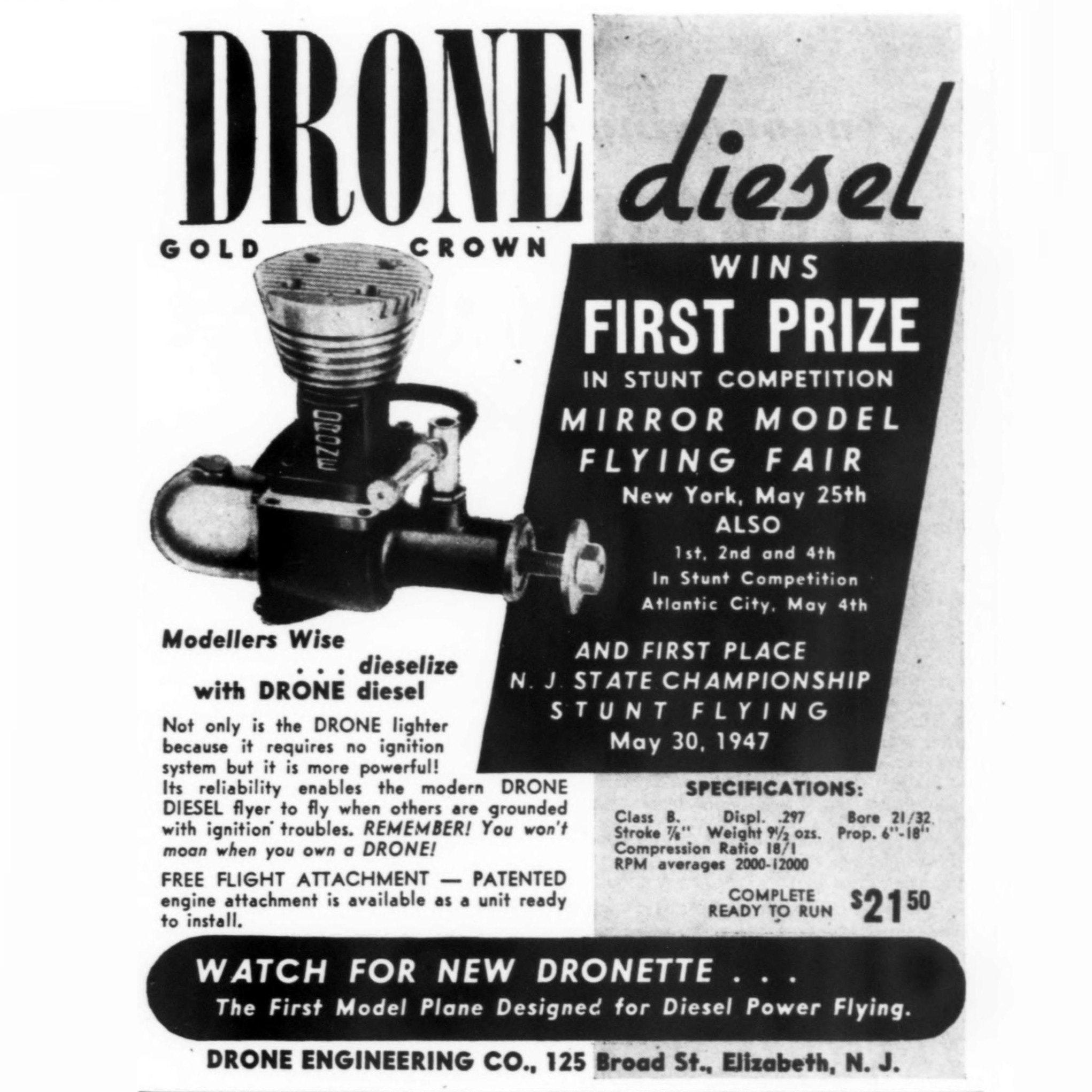
According to Adrian’s Model Aero Engines, model compression ignition engines were developed in the 1930s in Switzerland before spreading across Europe during World War II. After the war, American model builders discovered the technology and began experimenting with it.
Diesel has attractive benefits over gasoline. A model airplane that burns diesel doesn’t have to be concerned about spark plugs or glow plugs and their associated ignition systems and batteries. This saves on weight and space. At the same time, diesels also make lots of torque down low.
The video above shows a vintage diesel model engine mounted in a model airplane.
However, in the late 1940s, glow engines became the dominant engine in model aviation until the advent of affordable electric motors and batteries challenged the glow engine’s status.
Making The Smallest Functional Engines
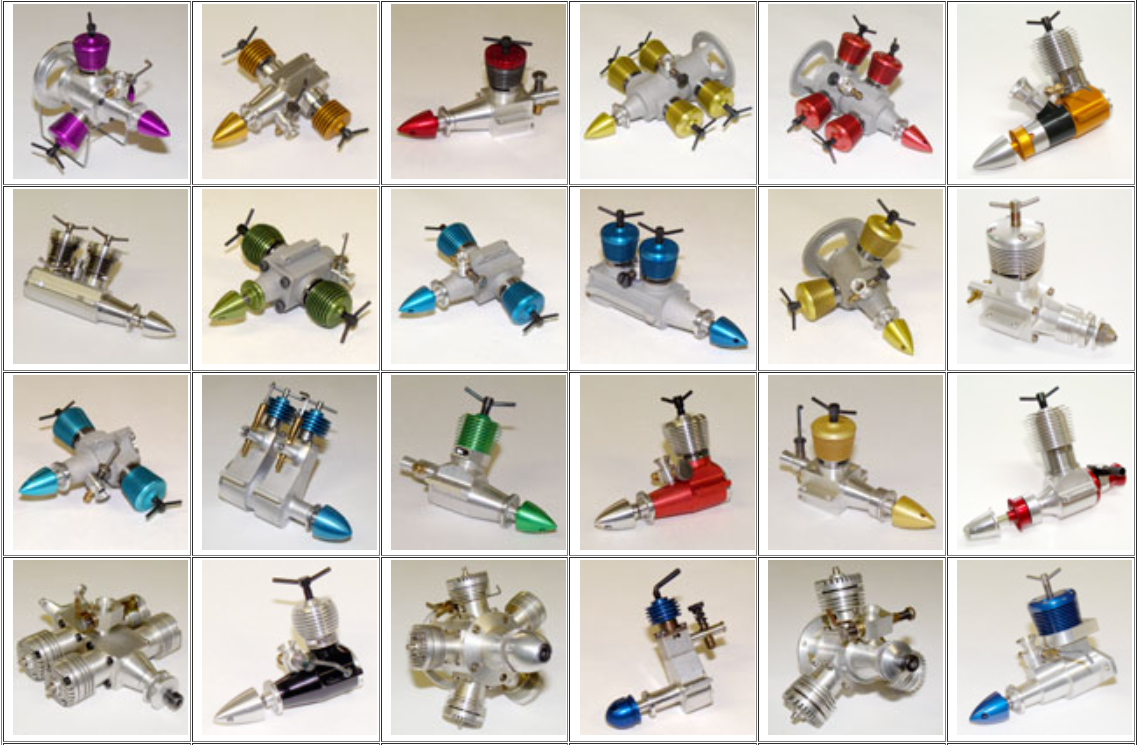
Ronald Valentine has experimented with all sorts of model engines. One of Valentine’s early engines was a 2.7cc three-cylinder radial engine that was built in 1986. Valentine says he built the engine’s block out of bar stock and that it ran on methanol with glow ignition. The crankshaft was a single piece and connected to miniature connecting rods and pistons using tiny, custom-made screws. That engine fed from a two-needle carburetor and spun to 14,500 RPM.
That year, Valentine also built a 2.5cc five-cylinder radial model and a 3.2cc four-cylinder boxer engine, both capable of spinning over 10,000 RPM. These engines were so small that Valentine had to make his own glow plugs to get them to run.

One of Valentine’s smallest radials was built in 2007. This radial was a diesel engine with two intake ports and two exhaust ports per cylinder, a three-piece block made from bar stock, and 0.098cc per cylinder for a total displacement of 0.49cc. Its weight? 2.29 ounces.
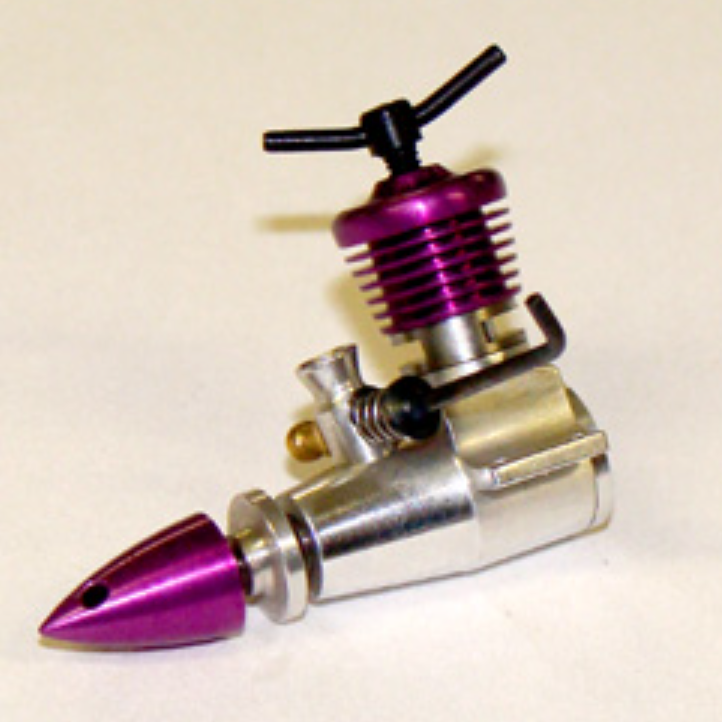
The predecessor of the Nano Bee is the Mini Bee (above), which made its debut in 2006. The Mini Bee sported a single cylinder with a 3mm bore, a 3mm stroke, and an incredibly tiny displacement of 0.021cc. Like other Valentine engines, it was built by hand from bar stock. It also had two intake ports and two exhaust ports. This little buzzy engine weighed 3 grams and spun up to 16,200 RPM.
This engine would be marketed as the world’s smallest diesel and sold for a price of $345. The Mini Bee was known as the “world’s smallest running diesel” for five years before an even smaller engine took the crown.
The Nano Bee
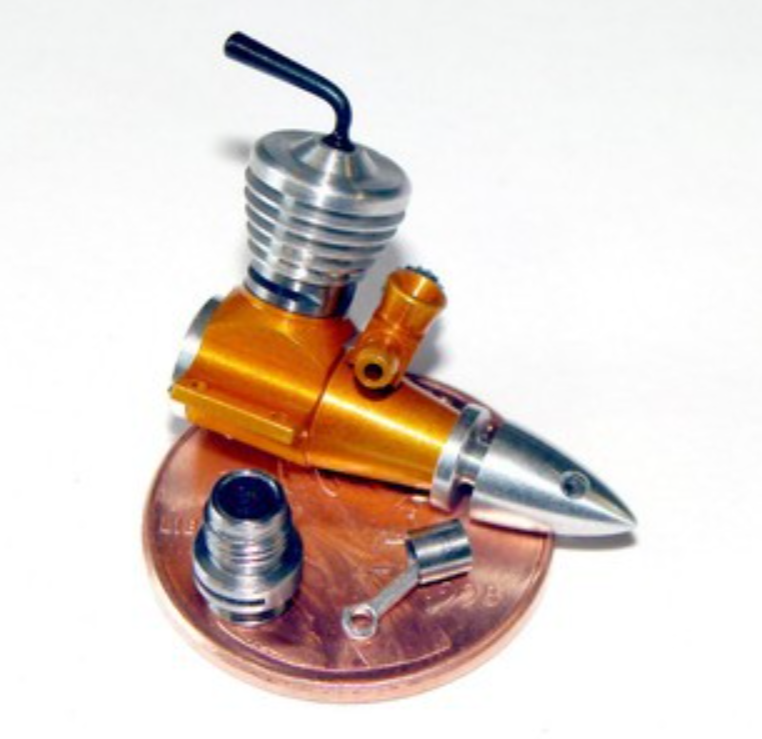
Amusingly enough, that engine was another creation from Ronald Valentine. The Nano Bee was meant to be Valentine’s final statement, a magnum opus to show just how tiny compression ignition engines can get while still being able to run. Built from 2011 to 2025, the Nano Bee was a single-cylinder compression ignition engine with a displacement of just 0.006cc.
The engine has a bore and stroke of just 2mm and can drive a 1.25 by 1-inch aluminum propeller up to 12,800 RPM. The first engines were designed by Valentine and machined from aluminum and steel bar stock by Valentine’s brother, Chris.
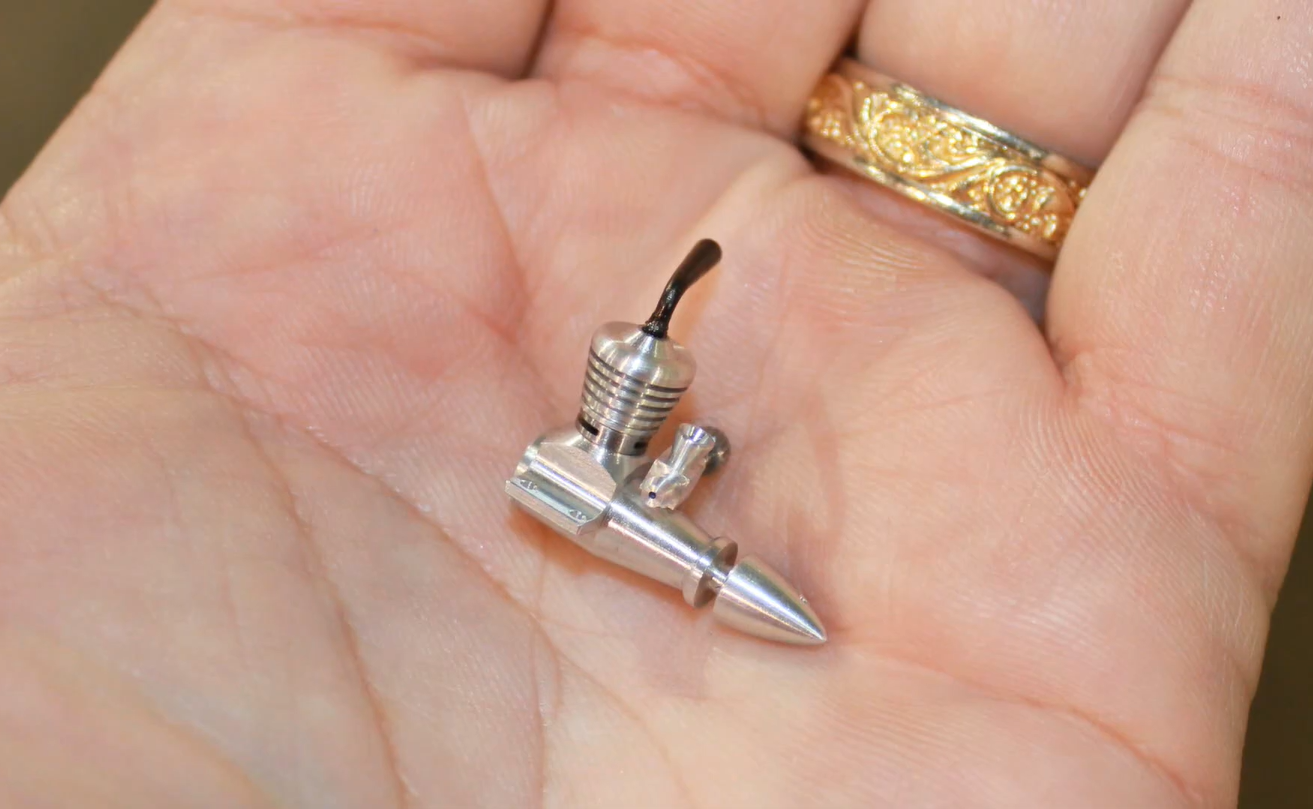
The engine is said to be built to tolerances of one ten-thousandth of an inch. Apparently, the tolerances are so tight in Valentine’s modern engines that, as the Miniature Engineering Craftsmanship Museum says, “The piston and cylinder are lapped, a machining process that matches the piston to the cylinder so closely in size (within millionths of an inch) that piston rings are not needed.”
You got all of this for a price of around $500, which isn’t bad, considering what went into designing and building the Nano Bee. A year after the Nano Bee, Valentine launched a special edition version of the Mini Bee, which came in fun anodized colors and was limited to a production of 20 units.

Valentine didn’t just make a Nano Bee single. He also made a Nano Bee opposed-piston twin with a 0.006cc displacement, a Nano Bee 0.006cc inline twin, and even a version of the Nano Bee for RC boats (above).
A Caveat
I should note that while these engines are sold and marketed as diesel engines, they’re a bit different than what you’d find in a truck or a car. Model diesel engines draw in a fuel-air mixture from a carburetor and breathe in the fresh charge from the crankcase. These engines work on a two-stroke principle. Meanwhile, the diesel you have in your truck or car atomizes its fuel mixture inside of the combustion chamber. Older diesels used swirl chambers and pre-chambers.

Then there’s the fuel. These engines don’t run on pump diesel. Instead, they run on a mixture of kerosene, ethanol, ether, castor oil, or vegetable oil, with Diethyl ether tossed in for its low flashpoint.
The closest similarities that model diesels have with typical diesels is that they run on compression ignition and use fuels that are technically cousins of each other. Otherwise, they’re not really the same. So, the Nano Bee’s claim of being the world’s smallest diesel does come with a nice asterisk.

In theory, you can install one of Valentine’s engines into an RC plane, car, or something else. However, it seems that most of Valentine’s customers put their engines on display. As Adrian’s Model Aero Engines writes, the Nano Bee is so delicate and has such remarkably tiny components that just starting it the wrong way, like using an electric starter, can cause a catastrophic internal failure. Ronald Valentine swears that all of his engines do run, but some collectors don’t chance risking damage to an engine that might have no more than 10 copies or so in existence.
Here’s a video of a Valentine engine running, and it’s not even mounted into a plane:
Sadly, Valentine doesn’t market his engines; thus, there are no videos from him showing the engines running. The obscurity of these engines also means that there are few videos of them. The best video about his engines, the one posted above, is 14 years old, and there are very few videos of the engines running.
Is the Valentine Nano Bee the smallest diesel in the world? I suppose that depends on how you define a diesel. But it’s certainly the smallest compression ignition engine and one of the smallest engines, period. Sure, it’s probably not very practical for RC use and is so tiny that a small animal can accidentally swallow it, but it’s impressive.
To me, it’s amazing that you can build something that can fit on your thumb that actually runs and produces power. But I suppose that was Valentine’s whole point.
Top graphic images: Ronald Valentine Engines; Joehandsome99/YouTube


Another fascinating article, Mercedes. Your mind is a wonderful place.
This engine is absolutely dwarfed by the Cox .049 engines my friends and I used to power dogfighting planes out of cardboard back in the mid-to-late 60s. I still remember the smell of the fuel and exhaust from those things.
Cox model engine – Wikipedia
The RC model world is full of people seriously committed to their hobby. I mean, miniature turbine engines that cost well into four figures.
Estes rockets and their motors were fun too.
Once woke the kitten in the next room up and made it cry by starting my Baby Bee motor indoors.
I must have been 11, and was meant to be resting.
Mother not amused.
It would be very cool to have one of these in a working 1:72 Hawker Hurricane or something.
It’s such a fascinating little thing that I’d happily wear one as a piece of jewellery.
I’ve seen earrings that probably weigh more than that engine.
Hol’ up. “Model” airplanes in 1896? Seven years before the actual airplane was flown? That math ain’t mathing.
There are models of Star Trek Next Generation USS Enterprise
Also there were attempts at flight even if none classify as powered control flight until 1903
The concept of heavier-than-air powered flight predates the Wright brothers by quite a bit. It seems plausible that a small airplane that couldn’t carry a human would be able to achieve flight more easily than a full-sized one able to carry a person
‘Model diesel engines draw in a fuel-air mixture from a carburetor and breathe in the fresh charge from the crankcase.‘
I didn’t know diesel engine had carburetor
On model airplane engines, yes, they do. Extremely rudimentary, but still carburetors.
That video of the vintage R/C plane brings back some high school memories! My second R/C plane was very similar, though with a Cox .049 glow engine. Balsa and tissue paper, two channel radio, elevator and rudder, no throttle, you weren’t really coming down until it ran out of fuel. I think I managed a summer out of it until I got too brave on a windy day and re-kitted it. First one was an unpowered sailplane, a 2-Meter Carl Goldberg Gentle Lady, which you can STILL buy the kit for today. Launched via a “high start” which was basically a 20ft rubber band and some string.
https://www.greathobbies.com/productinfo/?prod_id=GPMA0960
I think it was $25 back then – but that 2-channel radio setup took a LOT of lawn mowing to pay for, IIRC like $150! Real money in 1985 or so.
I have always wanted the Gentle Lady’s prettier sister, the Sophisticated Lady:
https://www.greathobbies.com/productinfo/?prod_id=GPMA1959
Looks like that one’s discontinued. I have a powered sailplane today, but I haven’t flown in long enough that I am sure I need new batteries. Also a Piper Cub on tundra tires. That thing is a ball! Both airplanes are EPS foam birds that were “almost ready to fly”. The Cub, a couple batteries, and a 5-channel radio were ~$325, which puts what it cost back in the day in perspective, and it only took me 20 minutes to put it together, not months.
Dang, Kevin. You never fail to dust off some old brain cells.
My brother and I made our money on paper routes. Dad told us we should mow lawns. He (and you) were right.
Now, I get my kicks flying DJI drones which can do stuff that I used to do as a photographer in a Bell 206 that cost eh, $2M+ when decked out with the camera gear, microwave gear and pop-out floats if we had to autorotate over water.
I got promoted to being a TV news operations manager and it was painful to write those checks.
And after that, before I retired in the second half of my career as a software engineer, one customer, KCBS/KCAL in LA, had two AS-350s, sometimes both flying at the same time at about $1500/hour each. Maybe more.
And drones can fly into tight places that a real helicopter can’t. The gyro-zoom cameras are amazing. But they’ve become specialized cases with customers with big wallets.
It’s all fun. We humans are not birds. But many of us wish we could fly. And we find ways to do so.
I tried the paper route thing for a summer. Waaaaay too much work for not enough money. Lawn mowing and babysitting was a whole lot easier and a lot more lucrative.
Modern drones are amazing things! My R/C Piper Cub actually has a lot of drone tech and GPS in it. It basically has autopilot and auto-land. You can just let go of the controls and it will fly itself and stay within a radius that you set, and push a button and it lands itself exactly where it took off from.
Shame this amazing tech is being used to kill people so often at the moment. Humans suck.
I’m surprised no one has said yet that they look sorta like weed pipes.
Also, would these make a good “Valentine’s” Day present?
I’ll see myself out…
Those are adorable!
Two-stroke diesels were not rare historically. Until the rise of emissions controls, all Detroit Diesels were two-strokes, as were several from across the pond, and of course their big brothers the EMD diesels as used in locomotives, ships, and stationary applications.
Glow plug engines don’t really have an ignition “system” per se, it’s just just one bit. You heat the glow plug initially with a battery, then the heat of combustion keeps it hot enough to light the fuel mixture. Wildly inefficient and messy, I am very happy that R/C mostly runs on battery these days. But I got my start with glow engines 40 years ago.
I remember a friend’s dad who wore a Cox .049 engine on a tieclip.
A couple of time at parties he would just happen to have a tiny flask of nitromethane and caster oil in his pocket and would start it up if someone insisted it couldn’t be a real engine.
Another family in that group had a cat that enjoyed being a passenger in a large model airplane.
I had a plane with that Cox engine. Thought that was small, but I guess not
that’s some small diesel energy
That’s a very polite way of saying ‘degenerated into a professional slopmonger.’
‘Real’ diesel engines have been made to run on multiple fuels beyond pure diesel so this engine being a compression engine using kerosene as a base fuel is a real enough diesel engine to me.
I agree. The fuel is irrelevant to the definition; it’s all about the operating principles.
Rudolph Diesel first designed his engines to run on coal dust, then decided that coal dust was too dangerous, and quality of the dust was hard to control.
Rudolf’s was intended to be run on peanut oil… or so the story goes
> Florida
> AI videos
> Religion & politics
Uh oh.
I fear it is a rabbit hole I have no desire to go down. Just admire the engineering.
Yeah, the last two digits of the year on the penny used for scale in the pic of the Nano Bee may very possibly not bode well for the content of such videos
I was expecting it to be 1988; I think 2006 is somewhat better.
I stumbled across a freebie in the neighborhood that was a 30 gallon tote with a very tired nitro truck in it from the mid 1990s. This AE RC10 GT truck had a O.S. 2-cycle engine still bolted to it. The appeal of a tiny gas engine was too much to pass up!
After much tinkering, I was astonished that a 0.12cc motor could be so powerful and loud. It was also pretty reliable, when you could get it to actually fire off and maintain idle. That entire motor could fit in the palm of your hand and was made from maybe 14 or 15 total parts (including the screws and gaskets!).
Just like I did to my own RC10GT, the hobby has moved away from these tiny engines and to electrification. I could no longer find reasonably priced parts to refresh my tired nitro motor.
Even though I can marvel at the engineering of this tiny engine, I fail to see the relevance of it beyond a novelty to lose in a junk drawer. Nobody could possibly fly a ~1:100 scale plane without losing visual of it above 50′ altitude or getting tossed out of the sky by a slight breeze.
Yeah my boys were gifted tiny R/C Helicopters one year, they are too powerful to fly indoors, and too light to mange outside, they just blow away in a slight fart of a breeze. They are little marvels of engineering, but utterly useless if you don’t own an empty gymnasium size room.
Model airplane engines is an engineering world unto itself.
Matchbox Cummins swap nears reality….
these little engines are wildly impressive.
but “Valentine spends a lot of his time online cranking out AI videos on religion and politics”
big yikes
Yeah, I don’t recommend finding his actual Facebook profile…
I had the same sad thought…
“Diethyl ether tossed in for its low flashpoint.”
And it’s propensity to spontaneously crystalize into shock sensitive explosive peroxides when the opened bottle is left to sit too long.
That’s just part of the fun! Dealt with them professionally, no fun to be had.
One of my professors of organic chemistry told me a story. Many, many years ago, probably in the ’70s he got a call from his buddy at SPAWAR. They were clearing out a disused chem lab and they had a few old, opened bottles of DE up for grabs, did he want them? Being a cheap bastard himself of course he wanted them! So be drove the 15 miles or so, carefully placed them in the foot well of the passenger side and slowly drove them back 15 miles to their new home in his lab, somehow not blowing himself and the freeway up in the process.
They say doctors make the worst patients. One could say the same about chemistry professors and chemical safety protocols.
Astounding the man sold this for $500. He must put no value on his time and did this as a labor of love.
When I briefly was into flying model aircraft none of the instructors charged for it. They just wanted to help more people get into the hobby. Kind of like the old guy in the neighborhood who sees you struggling to fix something and grabs his tools to come over and help.
That’s part of their hobby.
I had an uncle who worked aircraft maintenance out of PIT, Korean war vet. He was into the hobby. I remember his basement full of balsa wood, glow plug motors, etc…
I have some understanding of the machining time that must go into something like this. Add in the scale and delicacy…