

The diesel-electric locomotive is a common sight across America. These colossuses of horsepower and steel are a vital part of the transportation network that makes modern life possible, but they weren’t always so mighty. A century ago, steam power still reigned on the rails. But steam was also dirty and labor-intensive. In the 1920s, this goofy little locomotive, the ALCO “boxcab,” was only the first successful example in a movement that would change the world of railroading. Amazingly, a few of these locomotives are still around today.
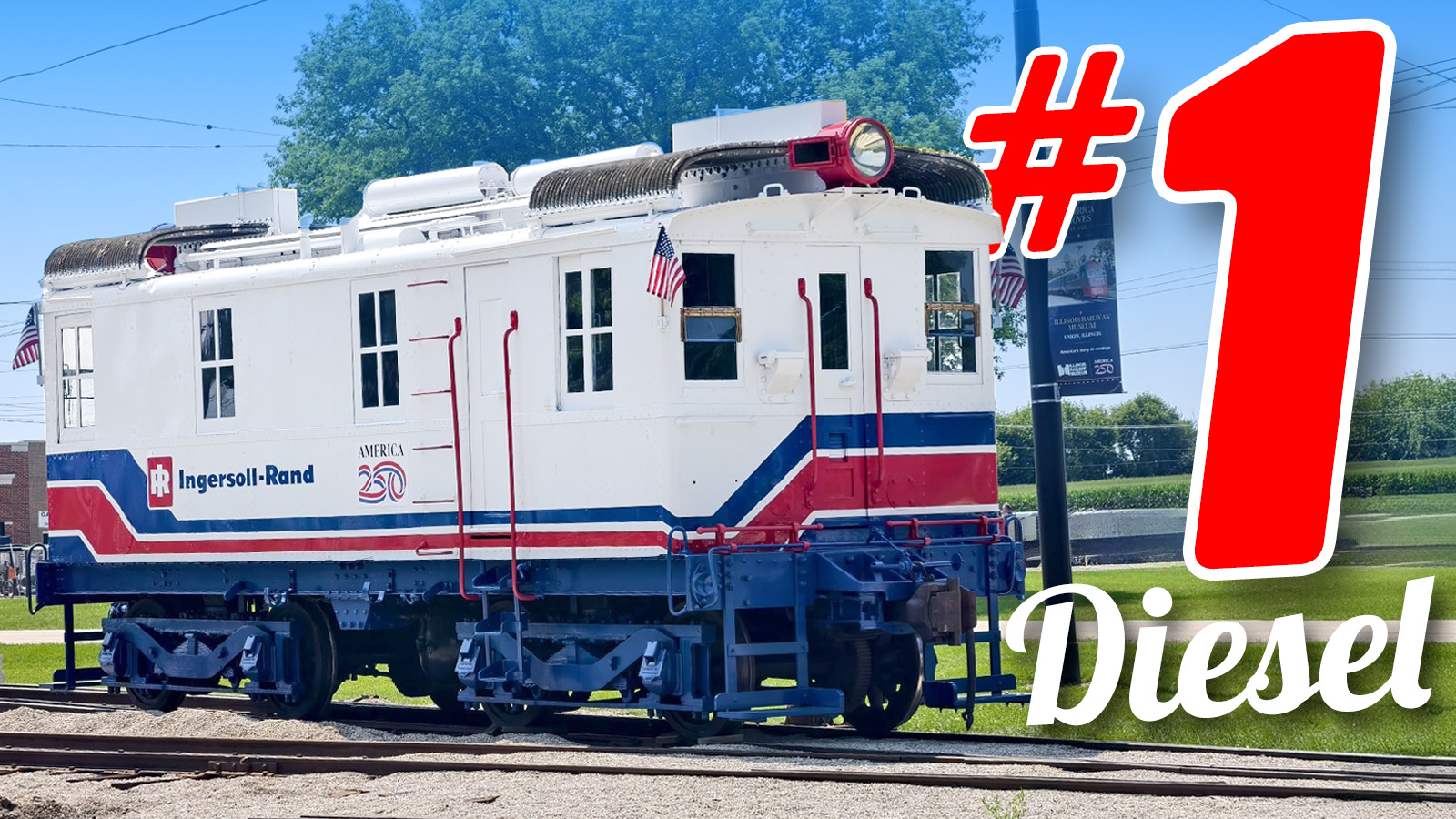
I recently got to see one of these pieces of history in person at America’s largest train museum, the Illinois Railway Museum (IRM). Ingersoll-Rand No. 91 was recently given a cosmetic restoration by the museum, and a full mechanical restoration is ongoing. When this locomotive is running again, it will likely be the oldest operational diesel locomotive in America. What’s fascinating about this locomotive is that, if you never gave this locomotive more than a passing glance, you might not ever find out its importance in railroading.


The transition away from steam power was not one that happened in an instant. Instead, it was a process that took decades of technological advancement. Countless American railroads were built on the might of steam locomotives in the 1800s. Much of the modern industrial world alone has its roots in steam engines. But by the early 1900s, steam was becoming old news.

For all of what makes a steam locomotive great, it has some quirks that make it impractical for a modern railroad. As the engineers at the Illinois Railway Museum’s steam department recently told me, there’s an entire process involved in a steam locomotive cold start. You don’t just toss some coal in the firebox, light it up, and go. Instead, the heat and the steam have to build up over several hours before you can even move the locomotive. Then, while the locomotive is moving, the engineers are playing a delicate balancing act of making sure pressures don’t get too high or too low while also maintaining positive momentum. This doesn’t even mention how a steam locomotive is not exactly a welcoming work environment, given the heat, oil, and coal all around you.
The shutdown process of a steam locomotive is equally involved. You don’t just park the locomotive, turn it off, and walk away. Instead, it has to be put into a state where the fire is put into a smolder to make the next day’s start faster, or the fire is allowed to burn out. Meanwhile, the engineers also refuel the tender, inspect the locomotive, shut down various valves and cocks, and essentially put the unit to sleep.

By the 1920s, steam locomotives also had a bit of a public relations problem. Steam was beginning to be seen as old, outdated, and dirty. Some people didn’t enjoy seeing thick clouds of black smoke and soot filtering through the skies of their cities. There were plenty of good reasons to move away from steam power, but at first, viable replacements proved elusive. Diesel engines weren’t powerful or reliable at the time, and electric trains couldn’t go where steamers did.
That’s where the diesel-electric boxcabs of the American Locomotive Company, Ingersoll Rand, and General Electric made an incredible difference. This little, unassuming locomotive proved that diesel power had a future in railroading.

The Rise Of Diesel Locomotives
The first internal combustion locomotives were experimental pieces that showed promise, but were far from where they needed to be to usurp steam.
The earliest known internal combustion locomotive was built in the late 1880s. William Dent Priestman, the inventor of the world’s first known reliable and successful oil engine, placed his two-cylinder engine into a single shunting locomotive on the Hull and Barnsley Railway. This engine was not a diesel, but a hot-bulb engine that ran on pressurized lamp oil or paraffin oil. The locomotive, while limited in capability, demonstrated that internal combustion would work on rails. Most of Priestman’s engines were used in watercraft applications.

The earliest known diesel locomotive used a direct-drive transmission for motion. Tehachapi News describes that locomotive:
In 1906, Rudolf Diesel, Adolf Klose and the steam and Diesel engine manufacturer Gebrüder Sulzer founded Diesel-Sulzer-Klose GmbH for the manufacture of Diesel-powered locomotives. In 1909, Prussian State Railways ordered a Diesel locomotive from the company, and after test runs between Winterthur and Romanshorn the Diesel-mechanical locomotive was delivered in Berlin in September 1912. After the first world war broke out in 1914, all further trials were stopped. Adolphus Busch purchased the American manufacturing rights for the Diesel engine in 1898 but never applied this new form of power to transportation. Guess he was to busy making beer.
The Diesel-Sulzer-Klose locomotive (below), which weighed 95 metric tons, utilized a Sulzer 4LV38 V-4 two-cycle diesel that put out over 1,000 horsepower. Reportedly, one of the quirks of the locomotive was that it needed compressed air to start moving, and the engine wasn’t up to the stresses of directly driving a locomotive.

Tehachapi News continues with an innovation that helped lead to American diesel-electric locomotives:
General Electric (GE) entered the market in the early twentieth century, as Thomas Edison possessed an outstanding patent on the electric locomotive, his design actually being a type of electrically driven railcar. GE built its first electric locomotive prototype in 1895. Because of the cost of high electrification, GE turned its attention to Diesel power to provide electricity for electric railcars. Problems related to combining the Diesel engine with electric motor were immediately encountered.
The first significant breakthrough occurred in 1914, when Hermann Lemp, a GE electrical engineer, developed and patented a reliable direct current electrical control system. Lemp’s design used a single lever to control both engine and generator in a coordinated fashion. This became the prototype for all Diesel-electric locomotive control systems.
The world’s first known functional diesel-electric railcar came in 1914 with the unit run by the Königlich-Sächsische Staatseisenbahnen. Diesel locomotive experiments happened all over the world, with some diesels using mechanical transmissions and others using electric transmissions. Fiat built Italy’s first diesel-electric in 1914 and the Soviets had diesel-electrics hauling trains in 1924.
Here in America, diesel’s claim to fame would come through a specific set of circumstances.
Some Americans Used To Hate Steam

As the National Museum of Railroad History & Innovation writes, the 1920s brought challenges to the railroads. There had been a growing anti-smoke movement in America since the 1900s as the public grew tired of pollution in their cities. The smoke and ash plumes that resulted from burning coal draped buildings, obscured visibility, and negatively affected public health.
Chicago was once the hub of railroading in America, and anti-smoke advocates argued that a quarter of the city’s smoke and ash problem was from the railroads alone. In 1880, Chicago was the first American city to pass a smoke abatement ordinance. This did little to bring the pollution down, and so Chicagoans still fought for cleaner air. Chicago would electrify its suburban rail lines in 1912. By 1919, there were even patrols to find businesses that violated the ordinance.

Other cities passed their own ordinances, with the heaviest restrictions coming from New York City. Following a deadly 1903 rail crash that was attributed to smoke obscuring a signal light, passenger rail in Manhattan would switch to electric power from steam. However, freight and switching duties were still handled by steam locomotives. Outer-borough railroads continued to use steam as well. The Kaufman Electrification Act of 1923 sought to fix this problem by requiring the electrification of all railroads in New York City by 1926, which was later extended by five years.
This move would force the railroads’ hands to finally retire steam power. However, there was one problem, as electrifying train yards was a costly endeavor. Technically, there was a loophole. While not truly electric, diesel locomotives achieved the same desired result of eliminating the huge plumes of smoke from burning coal.
The ALCO ‘Boxcab’

In 1925, the American Locomotive Company (ALCO), General Electric, and Ingersoll-Rand came up with a brilliant idea. The three companies would pool their resources to build a switcher that beat steam at what it did best. But instead of having the diesel engine directly drive the wheels, the engine would work as a generator, and traction motors did the work of moving the train.
Alco knew how to build locomotives, General Electric knew electrical components, and Ingersoll-Rand knew how to make internal combustion diesel engines. Trains Magazine explains the project further:
Alco’s only part in the design was the carbody, a workaday adaptation of trolley motor designs. The main reason the railroads were interested in such a unit was that internal combustion offered a cheaper means than electrification to pacify smoke ordinance agitators in the New York and Chicago areas. Many hoped that the experiment would not be too successful, since the roads would then be under political pressure to buy smokeless locomotives for every hamlet from Millinocket to Kokomo.

The whole diesel switcher project was primarily GE’s baby. GE and Ingersoll-Rand, at GE’s instance, had cooperated in sending a demonstrator box cab on a tour of the country in 1924. This nameless, numberless unit had essentially the same machinery as CNJ 1000 —a 300 h.p. six-cylinder inline 10×12 Ingersoll-Rand diesel engine driving through a GE transmission. Trucks and traction motors — of trolley motor standards — were nearly identical to those used on the CNJ unit (both units were B-B’s). The box cab on the 1924 demonstrator was prominently rounded at one end, like the pilothouse of a ship. That was the biggest difference between this unit and its successors. Alco had no part in its design or construction.
The demonstrator put in switching stints on New York Central, New Haven and subsidiary Union Freight, CNJ, Reading, Lackawanna, Long Island, Boston & Maine, Hoboken Shore, and industrials Bethlehem Steel, New Jersey Zinc, and Alan Wood Iron & Steel. The CNJ-RDG tour included a run from Jersey City to Harrisburg with a special two-car passenger train —the first known instance of over-the-road diesel operation in the U.S. Before the end of 1924, the demonstrator vanished into the Phillipsburg (N.J.) plant of Ingersoll-Rand and switched in obscurity until it was extinguished at some distant and unknown date in the past. In most respects, then, this unit should probably claim CNJ 1000’s title, except for the fact that the unit was not commercially sold at the end of its demonstration tour. Instead, GE availed itself of the customary co-operation of Alco in building carbodies for GE’s electric locomotives, and toward the end of 1924 five box cabs were built for stock with Alco-GE-IR nameplates on their sides. CNJ 1000 was the first of these five to be sold. It did not go into service in CNJ’s Bronx terminal until October 1925—nearly a year after it was built.
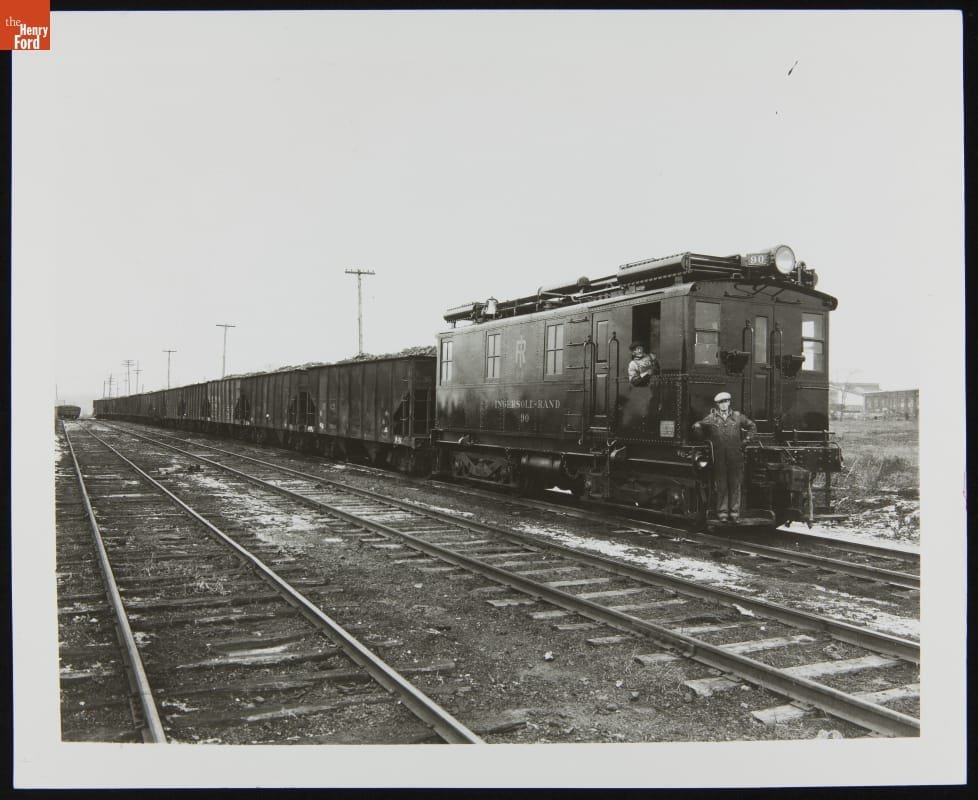
These locomotives, called ALCO “boxcabs” or AGEIR locomotives today, utilized General Electric generators, motors, and controls, Ingersoll-Rand diesel engines, plus a chassis and running gear from ALCO. Twenty examples were 60-ton models with 300 horsepower Ingersoll-Rand 92.7-liter straight-six four-stroke diesel prime movers. There were also six examples of a 66-ton model built, plus seven twin-prime mover 100-ton examples.
In all cases, the prime mover powered a 600-volt DC generator, which fed four GE HM840G traction motors, of which each axle had one motor. The 60-ton examples measured 34’10” in length, 14’4in” in height, and weighed 120,000 pounds.

What made these switchers shine was not just their lack of coal smoke, but their ease of use. When using a steam locomotive as a switcher, it had to stay hot, even when it wasn’t actively moving equipment around a yard. A diesel could be powered down between uses. Likewise, startup, shutdown, operation, and maintenance procedures were easier with the diesels.
Planting The Seeds For Diesel Domination

Their usefulness in switching duty would help elevate diesel to being a serious power in American railroading. The National Museum of Railroad History & Innovation describes the impact that the first ALCO boxcab, CNJ No. 1000, had on diesels:
This first diesel-electric off the assembly line was purchased by the Central Railroad of New Jersey (CNJ). Almost immediately, other railroads followed suit as they discovered that diesel-electrics were more efficient yard switchers because of their maneuverability and cost-effective operation, leading to the dieselization of the American railroading fleet and the eventual demise of the steam era. The CNJ No. 1000 served for more than 30 years in the Bronx, New York rail yards, where B&O freight trains bound for New York terminated and were served by this unit.

As The Henry Ford notes, diesels had proven themselves to be reliable enough and cheaper to run than steam as well. Ingersoll-Rand would withdraw from the locomotive business in 1937, but the impact that it, as well as General Electric and ALCO, had was already set. Other companies and engineers began making larger, more powerful, and more reliable diesel engines. The locomotives they were strapped to also got bigger, more capable, and more elegant. It would take decades before diesels took the crown from steam, but with every passing year, locomotives got a little better and more attractive.
The Henry Ford illustrates this beautifully. In 1925, there was just one “successful” diesel-electric locomotive in America, CNJ No. 1000, and 63,612 steam locomotives in mainline service. By 1945, there were 3,816 diesels in America, compared to 38,853 steamers. By 1960, the steam era was fully over as America had a whopping 28,278 diesels and just 261 surviving steam locomotives.

Today, five ALCO boxcab locomotives are known to survive. The B&O Railroad Museum in Baltimore, Maryland, has CNJ No. 1000. The North Alabama Railroad Museum in Huntsville, Alabama, has Union Carbide No. 3/11. The National Museum of Transportation of St. Louis, Missouri, has B&O No. 1/195/8000. The Henry Ford in Dearborn, Michigan, has Ingersoll-Rand No. 90. Finally, the Illinois Railway Museum in Union, Illinois, has Ingersoll-Rand No. 91.
Notably, while examples like CNJ No. 1000 and Ingersoll-Rand No. 90 have gotten cosmetic restorations, none of the locomotives run. The Illinois Railway Museum wants to change that. From the Illinois Railway Museum:
Ingersoll-Rand 91 is the oldest internal-combustion locomotive at IRM. It is also one of the oldest diesels preserved in the country. It is a box-cab switcher originally numbered Delaware Lackawanna & Western 3001, built as for moving freight cars at low speed around the South Brooklyn Terminal yard in New York City. This type of box-cab was the first commercially successful diesel locomotive design in America. The Lackawanna later sold 3001 to Ingersoll-Rand, which had manufactured the locomotive’s diesel engine, for use as a plant switcher in Phillipsburg, New Jersey. Ingersoll-Rand retired it in the early 1980s.
FUN FACT: Lackawanna 3001 worked at a railroad yard in Brooklyn, where it moved freight cars on and off of marine barges for transportation across New York Harbor. At least once and possibly twice, this engine went off the pier and sank into the harbor! Nobody was killed and the locomotive was raised and repaired for further service.

The museum has had the unit since 1984 and, this year, IRM’s diesel shop repainted the locomotive to the paint scheme it wore for America’s bicentennial in 1976. The only added modern twist is an America 250 logo to celebrate America’s semiquincentennial.
The museum is otherwise moving ahead with a mechanical restoration. In recent years, IRM volunteers rebuilt the locomotive’s trucks, replaced the locomotive’s air tanks, and plumbed new air lines. Diesel shop volunteers told me that next on their list is the unit’s massive traction motors. Since IRM is a volunteer-run organization that depends on donations, getting Ingersoll-Rand No. 91 running again hasn’t been a quick or cheap process. But the diesel shop is confident they will do it, and as someone who has seen their work, I have no doubt about it.

If you want to donate to the museum, click here. In your donation, you can choose what part of the museum gets your funds, if that’s something you want to do. You can also support IRM by paying the museum a visit. IRM is at the tail end of its operating season, but there’s still fun to be had every weekend!
History In Motion

When IRM gets this locomotive running, it’ll be the oldest known operational locomotive in the country, and I cannot wait for that day. Something I wasn’t prepared for was how I was going to feel standing next to this machine. This locomotive was a stepping stone to the trains that help make today’s conveniences possible. Yet, it looks like a boxcar that someone slathered some windows onto. It’s so far away from a modern locomotive, and yet so similar.
A part of me wonders about how the builders of these locomotives felt. Did they know they were making history? Or did they think no further than these locomotives serving as solutions to the regulations of the day?
Whatever they felt, they proved that, at least here in America, diesel power had real value on the rails. Now, diesel is still the default answer to hauling freight and passengers across the country, and those locomotives put out thousands of horsepower while pulling trains over a mile long. It’s amazing to think how far railroading has come in a hundred years, and it’s awesome to think about where we could be 100 years from now.
Top graphic image: author


I love these historical train articles. Keep em coming Mercedes!
It’s a bit of lipstick to call them “Steam” engines; they truly are coal-fired as you note.
This comes with the wonderful benefits of coal smoke blowing through cities, and back over the passenger compartments.
Diesel would have been orders of magnitude cleaner.
That is so awesome that they are going to get one running! These are my absolute favorite locomotives of all time, and I have been working on a model of CNJ 1000 for a while (I have a about a million pictures of it from the B&O Museum). I have the shell pretty well done based on the old MDC Boxcab, but the mechanism is horrendous, and I want it to run well. Hopefully someone will make high quality sound recordings of it running for DCC sound decoders.
The B&O Museum recently did a beautiful cosmetic restoration of CNJ 1000, but I don’t believe they have any plans for a mechanical restoration.