

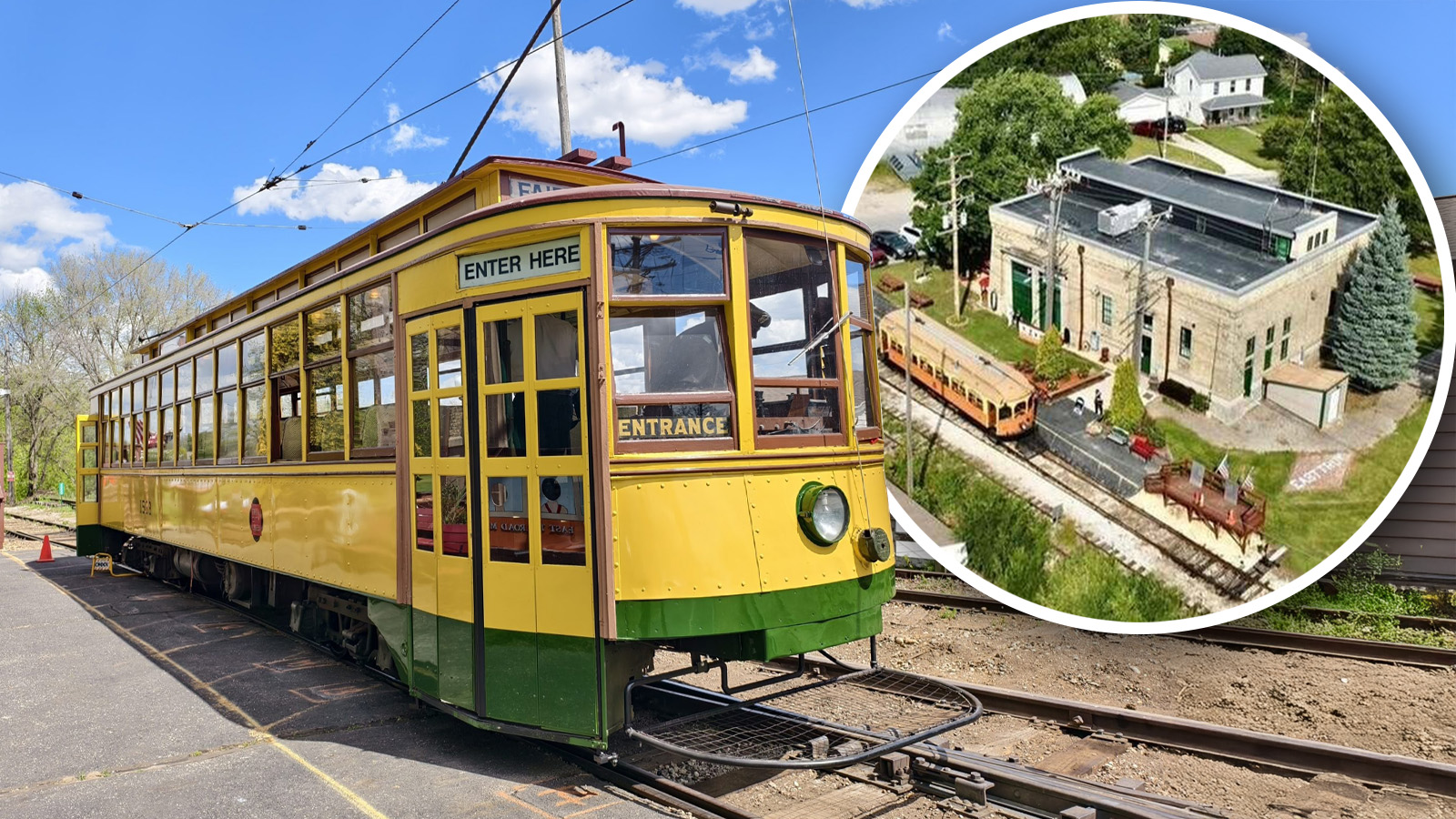
Passenger rail used to be a much larger deal in America than it is today. In the many decades before the rise of the automobile, the best way to get around the city might have been a streetcar, and an interurban might have been the quickest way to commute between towns and cities. Countless historic American streetcar and interurban lines have disappeared since their heyday, but I found a place where you can still experience a commute like it’s 1920. This is the East Troy Electric Railroad, Wisconsin’s last running interurban railroad, and it’s one of the most tranquil rides you’ll ever take that doesn’t even surpass 15 mph.
The East Troy Electric Railroad is one of my favorite kinds of museums. Nestled in the town of East Troy in southeastern Wisconsin, this museum doesn’t really have the marketing of the Illinois Railway Museum or the federally recognized status of the National Railroad Museum. Instead, it’s a museum that you hear about through word of mouth or stumble upon on social media, and it has the same kind of lovely charm as a mom-and-pop shop. The museum is small enough that, if you’re not paying attention, you could drive right by it and not notice it was there.


But if you pull up to the door and walk inside, you will experience an explosion of interurban train history. You, like me, will learn where streetcars and interurbans came from, where they went, and why the East Troy Electric Railroad is the only interurban railroad in Wisconsin that has survived to the present day. Then, you can take a 14-mile round-trip on the remaining seven miles of trackage that dates back to 1907. This museum, which you probably haven’t even heard about, is doing important work in keeping a fading part of American history alive.

How City Dwellers Used To Get Around
The interurban and the streetcar used to be dominant forms of urban transportation. As the Smithsonian National Museum of American History writes, the American cities of the 19th century were smaller, walkable cities. In those days, it was entirely possible to live out your whole life within walking distance. You’d walk to the store, to the doctor, and to work. As American cities grew beyond their original borders, the need for public transportation grew with them.
An early form of urban public transportation was the omnibus. These were horse-drawn carriages capable of hauling a handful of people to destinations. Early buses had major downsides, namely a rough ride and poor sanitation on account of horse droppings. These carriages traveled at the pace of a brisk walk.

In 1882, coachbuilder John Stephenson designed the New York and Harlem Railroad. Stephenson’s advancement in public transportation was making the horse-drawn carriage ride on rails. While this did not solve the issues of pollution or slow operating speeds, having the carriage ride on tracks embedded in a city street made for a far smoother ride. The march of technology eventually made the horse obsolete. Steam engines began powering New York’s streetcars in the 1830s. Cable cars followed in the years after the Civil War. By the 1880s, advancements in electric motors and electric generators made the modern electric streetcar possible.
The electric streetcar was a revolutionary step forward. These cars were relatively fast, comfortable, safer, and finally helped rid American cities of piles of animal fecal matter. The streetcar made it far easier to travel longer distances to go shopping, go to work, and generally experience life farther away from home. As the Smithsonian National Museum of American History notes, trolley suburbs grew out of the concept of riding a streetcar into downtown. Sadly, these suburbs weren’t exactly for everyone.

The interurban, another creation of the 1880s, took the streetcar concept further. Instead of a train that just rolled around a town or city, the interurban was a little bigger, a little faster, and carried more people. In 1966, American Heritage magazine wrote about the beginnings and the end of the interurban:
“Profits almost beyond calculation” prospective stockholders were promised in a series of fullpage ads in Chicago newspapers one Sunday in July of 1906. Thus was launched the Chicago-New York Air Line Railroad, an interurban electric railway that would follow a straight line as nearly as was possible, said its promoters, and would whisk passengers between the two cities aboard 100-mile-per-hour trains in just ten hours, cutting eight hours off the fastest steam-train time. The Air Line was the most ambitious interurban project of them all in what, in retrospect, has been described as an era of “reckless promotion.”
In all of America’s transportation history there has been nothing quite like the electric interurban. An outgrowth of the urban trolley car, it first appeared only a few years before the end of the nineteenth century, and in barely two booming decades grew to a vast network reaching almost every part of the United States—and then vanished, for all practical purposes, less than half a century after it appeared. Inventors were trying to develop electric transportation as early as 1834, when a Vermont blacksmith named Thomas Davenport operated a toy electric motor on a miniature railway. But not until 1888, when a youthful inventor named Frank J. Sprague built a twelve-mile streetcar system in Richmond, Virginia, did the electric railway really work on a large trolley system. It was quickly followed by wholesale electrification of America’s horse- and cable-car lines.
A United States congressman, Charles L. Henry of Indiana, coined the word “interurban” to describe the two-mile electric line he opened in the spring of 1892 between Anderson and North Anderson, Indiana, but the fifteen-mile East Side Railway, which began operation between Portland and Oregon City, Oregon, in February of 1893, is usually regarded as the first true interurban. Others soon appeared in almost every part of the United States, and by the turn of the century the boom was on. It seemed to be just what America was waiting for. Local intercity service on the steam railroads was usually slow and infrequent, and the Model T and paved highways were still a few decades away. Frequent service was easy to provide on the interurban, for one car made a train. Fares were almost always lower than steam-road rates. Convenience was still another important factor, for the interurbans stopped almost anywhere, and usually operated into the heart of town over city streets, something that was to doom them in later years.
The streetcar and interurban took over urban America. Tens of thousands of miles of streetcar and interurban tracks stretched across American cities like the layers of a spider’s web. These railroads collectively carried millions of riders mostly safely to their destinations.

As car transportation became widely accessible and the motor bus rose in popularity, America’s urban trains were threatened. Here’s what I wrote about the death of the streetcar a few years ago:
The stride of the streetcar didn’t last. As the Smithsonian writes, streetcars had to battle the government, the corporations, the car, and the bus for survival. From the Smithsonian:
Buses started to replace trolleys in the 1910s. Many commuters considered buses a modern, comfortable, even luxurious replacement for rickety, uncomfortable trolleys. Buses made business sense for transit companies; they were more flexible and cheaper to run than streetcars. In a few cities, auto and auto-supply companies, including General Motors, Firestone Tire and Rubber Company, and Standard Oil of California, bought an interest in transit companies and encouraged the conversion from streetcar to bus.
As Vox writes, that paragraph doesn’t really tell the whole story. While General Motors-controlled National City Lines was buying up streetcar lines and converting them into bus lines, the company was buying up streetcar companies that had already lost the battle to the bus and car. As more people bought cars, city traffic began piling up on streets, blocking streetcars, thus making them late to their destinations. Some cities, like Chicago, gave streetcars their own right of way, which made them last a little bit longer. However, as Vox notes, another critical problem was that streetcar fares became artificially low. You could ride a streetcar for just a nickel. After World War I, five cents didn’t go as far as it used to, but streetcar line owners found it difficult to raise prices as municipal commissions didn’t approve fare hikes. Eventually, and for a number of reasons perhaps worthy of their own piece, America’s streetcar operations went bankrupt and dried up.

The same issues that plagued the streetcar also hampered interurban lines. As the East Troy Electric Railroad writes, by 1930, some 60 percent of American families owned a car, and soon enough, cities began changing their infrastructure to cater to the car. The fuel rationing of World War II brought many passengers back to the rails, but they went right back to their cars after the war’s conclusion.
By the 1960s, only five major interurban lines were left, and they served Chicago, Philadelphia, New York, and Los Angeles. Today, only a few major interurban lines, like the Chicago South Shore Line, three Pennsylvania SEPTA routes, and perhaps a handful of much smaller roads, remain in operation.
The East Troy Electric Railroad is one of these survivors, and even it is a fraction of what it used to be.
The East Troy Electric Railroad

In 1907, the Milwaukee Electric Railway and Light Company (TMER&L) was an electric railway powerhouse in southeast Wisconsin. The company had been around since 1896, yet it ran most of the electric trains in the region spanning Milwaukee and distant suburbs. TMER&L planned to get only bigger, too.
On December 13, 1907, TMER&L finished construction on a 36-mile branch line from Milwaukee to East Troy. Trains running between East Troy and Milwaukee ran every few hours, and the 36-mile trip took roughly an hour. Not bad for travel in the 1900s! Part of what made TMER&L powerful was the fact that Wisconsin’s road network was terrible back then. So, even if you had a car, the train was probably faster and far more comfortable.
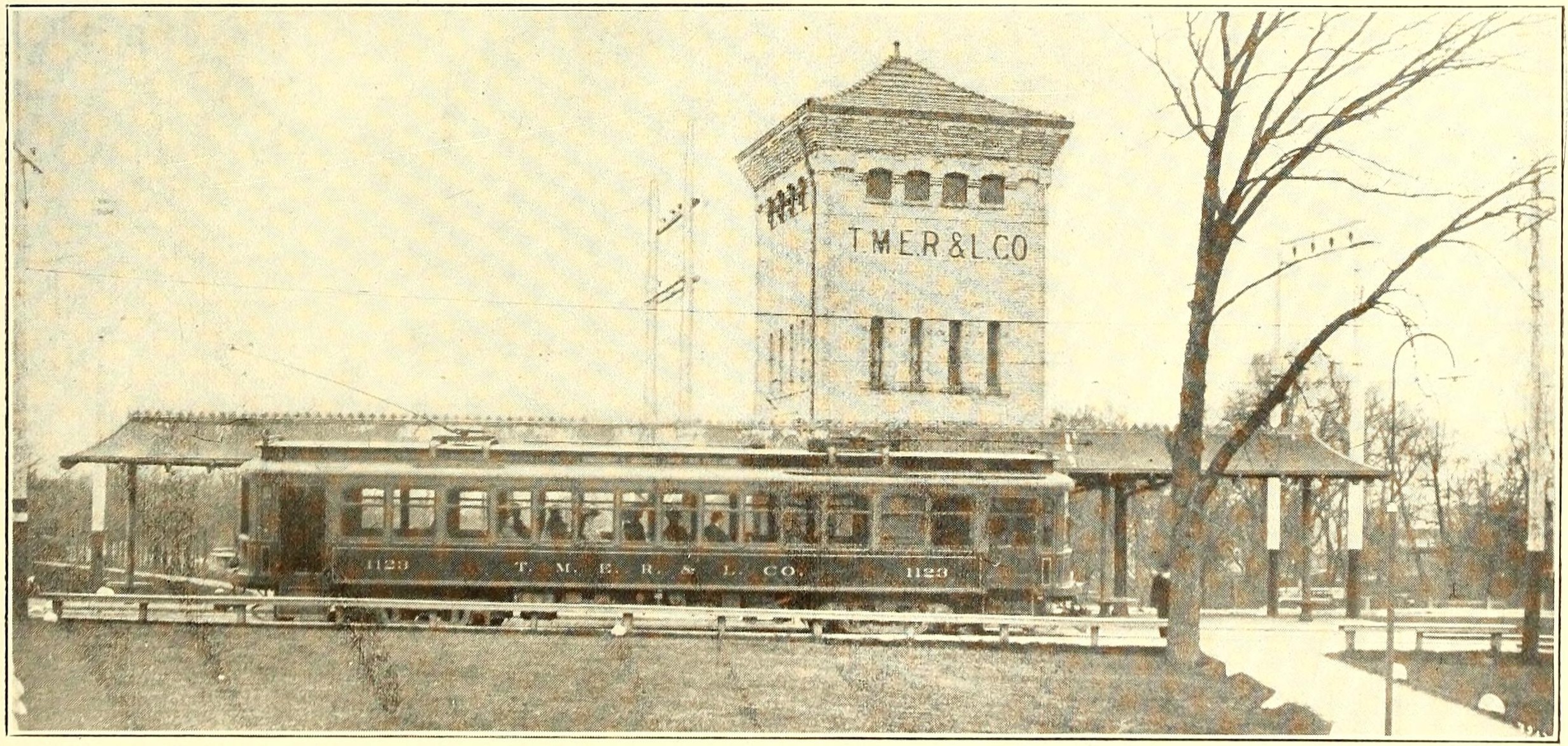
As the East Troy Electric Railroad writes, TMER&L carried more than just passengers. It used the advantage of fast rail traffic to carry mail and carload freight on the line. Reportedly, TMER&L’s trains supported the creation and operations of local industry, including the Standard Oil Distribution Center, East Troy Lumber, United Milk Products, and Equity Co-op. The railroad also became a utility, as the stations it used to power its railroad would also be used to bring electricity to rural towns.
At the same time, roads were becoming more refined, and cars became more affordable. Soon, just like every other interurban line, the East Troy Electric Railroad had to compete with an entirely different form of transportation. Then, the Great Depression hit.
From the East Troy Electric Railroad:
By the late 1930s, the lines to Watertown, East Troy, and Burlington were all experiencing financial difficulties. In October of 1938, TMER&L was broken up into two separate companies. The Wisconsin Electric Power Company operated the power plants and handled electrical distribution; The Milwaukee Electric Railway and Transport Company (TMER&T) operated transportation properties. In 1939, TMER&T filed to abandon the East Troy Line.
The Village of East Troy and a group of concerned citizens opposed the abandonment of their line because the freight service was so important to area businesses. After several hearings, TMER&T agreed to sell the line from Mukwonago to East Troy to the Village of East Troy for $10,000. The agreement included an interchange with the Soo Line Railroad at Mukwonago, which would allow freight traffic to continue. The Village of East Troy passed a referendum approving the purchase by a vote of 321 to 11. The line was operated by TMER&T through 1949 and the tracks between Mukwonago and Hales Corners were torn up.
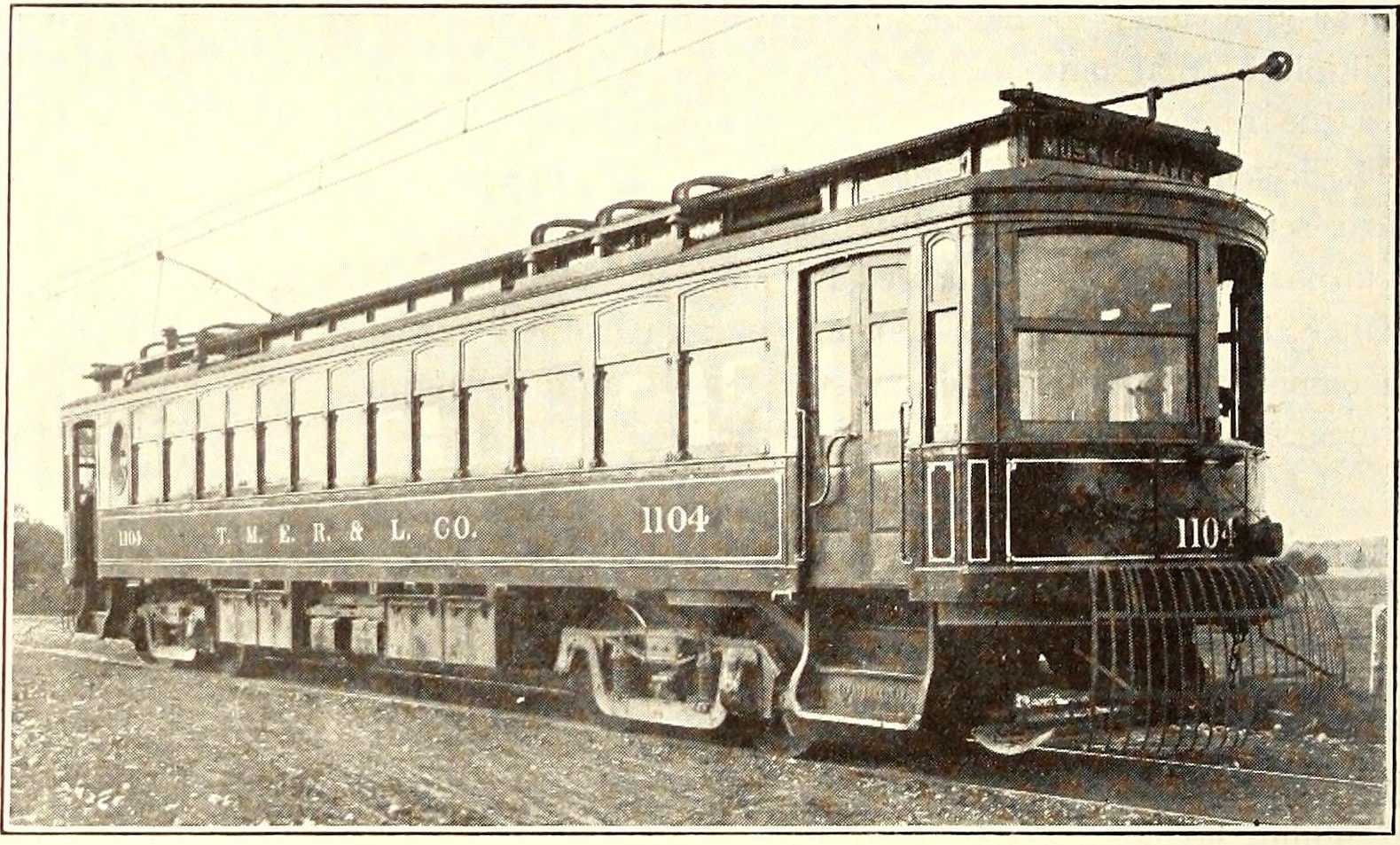
In 1950, the village hired several people to maintain and operate the 6-mile line when TMER&T, now completely out of the interurban business, declined to renew the operating agreement. At this point, the line became the Municipality of East Troy Wisconsin Railroad (METW), at the time the only municipality-operated electric railroad in the country. The TMER&T also gifted the village two rebuilt locomotives: box motor M15 (later rebuilt into a line car with a rolling office inside) and dump car D13. The railroad hauled 800-1000 freight cars per year and even had a small profit due to WWII. However, by the 1970s, the line was underused and falling apart.
Wisconsin railfans were unwilling to let the railway die. The Wisconsin Electric Railway Historical Society was initially allowed to run its restored trolleys on the line. Then, in 1984, the Village of East Troy terminated the Historical Society’s lease and began looking for a different non-profit to take over the line. What they found was the Wisconsin Trolley Museum.
This museum was based in an old Milwaukee Road depot in North Prairie, and its restored trolleys came from the collection of Paul Averdung. In 1985, the Wisconsin Trolley Museum moved to East Troy and began operating as the East Troy Electric Railroad on a 25-year lease. In 1993, the Friends of the East Troy Railroad, Inc. began the process to purchase the line outright from the village, which was completed in 1995.

Today, the East Troy Railroad Museum remains a non-profit, 110-volunteer-run organization that collectively runs, restores, and maintains 30 pieces of electric railway equipment. The museum has 500 members worldwide and sees more than 25,000 visitors each year.
My wife and I heard about East Troy from some Chicago railfans a few years ago, yet, for some reason, we just hadn’t made the trek to the museum. On Saturday, Sheryl and I finally changed that. We hopped into the Autopian’s Nissan Murano CrossCabriolet and drove an hour north into America’s Dairyland.
Our Trip On The East Troy Electric Railroad

The museum building is something special. It’s free to look inside, where you can take in some incredible interurban and streetcar history. The building is full of old train artifacts and scale models of some of the most famous interurbans.
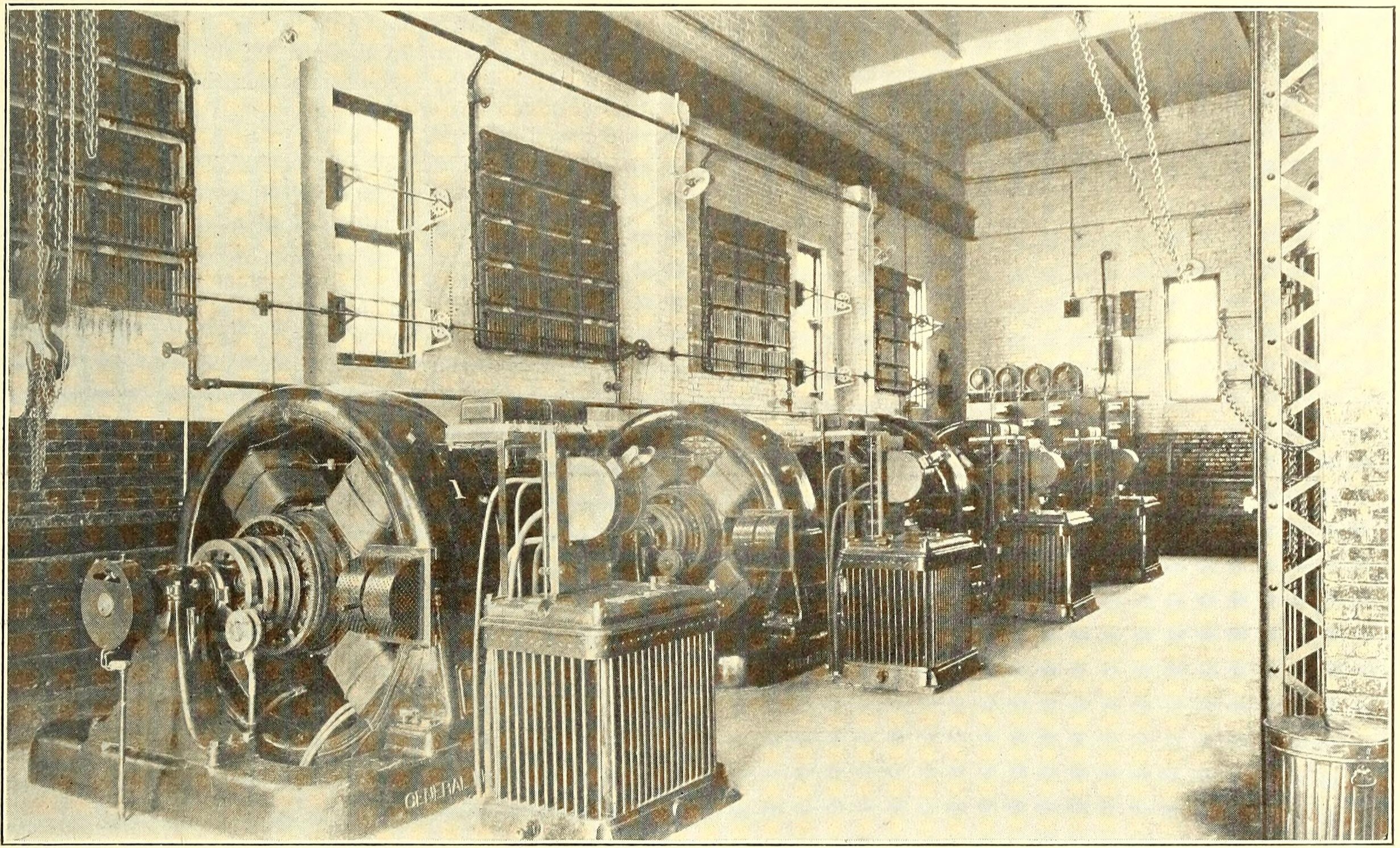
What I really loved about the building was the preserved power equipment. A lot of juice is required to run a trolley system, and some museums don’t really show you the meaty equipment. East Troy does. The museum says that this building, which was constructed in 1910, was used as an actual substation of TMER&T through much of the 20th century. The substation provided power to TMER&T’s overhead lines and also provided electricity to East Troy.

When it was in operation as a substation, the building contained five rotary converters, which transformed alternating current to direct current for the trains. These converters took up the whole building. Four of these converters were removed to make room for the museum, with one retained for all to see what the building was like a century ago.
Once you get enough of touring the museum, you can board one of the trolleys that the museum runs every hour. The East Troy Electric Railroad says that each of its operational passenger cars was built between 1908 and 1930, and they run on 600-volt DC fed from an overhead line that dates back to 1907.

The car we boarded on Saturday was Twin City Rapid Transit #1583, and the museum gives this description:
In the early 1900s, most cities with over 10,000 residents had an electric streetcar system. The Twin Cities of Minnesota were no different. With over 500,000 residents in 1910, Minneapolis and St. Paul had an expansive streetcar system, which was in need of more modern cars. The construction of 1583 was completed on April 19, 1913 at the Snelling Shops in St. Paul. TCRT built approximately 1,000 similar streetcars. 1583 was reconstructed in 1928 as a “front-exit” car and then was assigned to the North Side Station; it was usually assigned to the Chicago-Penn-Fremont Line. In 1933, the 1583 was rebuilt for one/two man operation. Fifteen years later it received its final rehabilitation along with new steel plating and Twin City Lines emblems. In January of 1954, the 1583 developed electrical and mechanical problems and was removed from service.

In the 1950s, due to a rising use of automobiles and a conspiracy involving automakers, most streetcar systems in America were quickly abandoned. In 1958, the last streetcar ran in the Twin Cities. Scrapping and abandonment was extremely rapid with the TCRT, as the owners of the company wanted to rapidly abandon and destroy the cars and infrastructure so they could not be forced back into business. On April 29, 1954, the 1583 body was sold to Transportation Sales Co., a dealer in used streetcar bodies. The car was moved to central Wisconsin, where it became a shed. 1583’s body was eventually rediscovered along Adams County Highway C between Monroe Center and Big Flatts. The car was apparently being used as a storage shed for a repair business. It had a false metal roof over it, which protected the body from some twenty-seven years of deterioration from weather and sun.
In 1981, after buying the car for $1,000, Rick Volkmann (of a local rail track replacement company) and his crew moved 1583 to North Prairie, where the car was restored. When volunteer Paul Averdung made arrangements with the Village of East Troy to operate the railroad, 1583 arrived on the property and the car was restored as Duluth 253. Several years later, Minnesota Transportation Museum wrote a letter to the East Troy Museum stating that the car was really Twin City Rapid Transit #1583. Windows and underbody parts were discovered stamped “1583,” and it became evident that the car was not Duluth car no. 253. The car was also double ended; few cars on the TCRT system were ever double-ended, but there were no turning methods on the East Troy Railroad. The west-facing end is the original.

No. 1583 is a fascinating car. All of the load-bearing structure above the frame is wood. Yes, it has steel panels that were added in its 1948 refit, but these were purely decorative to make the car look more modern.
The result is a unique ride. The motorman pulled out of the East Troy depot and never really achieved speeds faster than 15 mph. The tracks also weren’t the smoothest, which was understandable, given their age. As No. 1583 rocked back and forth on the imperfect tracks, I was able to watch the wooden body twist and flex with the frame.

The movement was the most obvious at the window pillars, where the pillar posts sometimes shifted as much as a millimeter due to flex. But this, the conductor told me, was totally normal. It’s just how wooden cars were in the 1910s.
It was totally different from what has been considered as the norm for longer than a century. I’m sure an all-steel railcar also flexes, but not nearly as visibly as an all-wood one does.

No. 1583 was practically a time capsule, with everything kept as period-correct as possible, from the painted seats to the single-pane windows that move with real heft. I smelled the motors and the brakes as I watched the Wisconsin countryside roll by slowly. None of what I saw out of the windows was anything I hadn’t seen before, but seeing it from the gently rocking streetcar was a different experience.
I love that the East Troy Electric Railroad is a functional railroad. The trains go through grade crossings, trigger a crossing gate, and even have to blow their horns. Signs at crossings give the phone number of the museum in case of an issue. There’s even a stop. In the summer, trains will stop at the Elegant Farmer, an old country store. You’ll have some time to shop if you want to. I got some fantastic hot sauce and the freshest pickles I’ve ever tasted from this shop.

The train then continues northeast to Mukwonago to reverse direction at the beautiful Lower Phantom Lake. Some trains go just a little further to Indianhead Park. Then the train goes back to the Elegant Farmer before returning to East Troy. The whole trip is 14 miles long and takes roughly 90 minutes. It’s a relatively long journey for a museum train – the trains at the Illinois Railway Museum are largely contained to a five-mile stretch – and I enjoyed every second.
Sadly, Sheryl and I got there too late in the day and were only able to ride a single train. The museum runs different streetcars and interurbans for each trip, and your ticket lets you ride them all day. While I didn’t get to ride another train that day, the museum’s volunteers graciously allowed me to check out the barn where the cars get to sleep and get worked on.

The barn was another adventure on its own. The air was thick with the aroma of oil, old electric motors, and wood. If only I could figure out how to capture that smell and bottle it into a perfume. I’d wear it every day.

The diversity of East Troy’s collection also allows it to have some great special events. Two of its interurban cars have dining rooms and air-conditioners. For Mother’s Day, the two interurbans were running a special dinner train, which I imagine was quite romantic for the lucky moms who got to ride it. The museum runs dinner trains, lunch trains, beer trains, wine and cheese trains, and more, so there’s always something fun to do and something to look forward to. Certainly, Sheryl and I will definitely be back.
The incredible part about all of this is that, again, the East Troy Electric Railroad is basically in the middle of nowhere, and you might not hear about it unless you’ve been talking to a Wisconsin or Illinois train fan. I’m so glad I’ve found this place, because the railroad is such a relaxing way to spend a breezy afternoon.

So, if you’re looking to experience what a commute was like a century ago, make your way over to the East Troy Electric Railroad. Click here to see the museum’s schedule. Tickets are $17 per person for adults, $14.50 for seniors and military, $11.00 for kids 3 to 14, and anyone younger than that rides for free. You can also ride for free if you become a member.
It’s also an important part of history. The museum says that some of its equipment is so rare that you won’t even find operational examples anywhere else. As I said earlier, most streetcar and interurban lines are long gone, scrapped, and removed from daily life. Even the remaining interurban lines are running modern equipment, and I bet that many riders have no idea what came before. Places like East Troy keep that part of American history alive.
Top graphic images: Mercedes Streeter; The East Troy Electric Railroad


Yet again I read an article on a subject I’m only mildly interested in because Mercedes does some great writing! It would be fun to stop at this location but I’m nowhere near it sadly.
I look forward to more random topics and the RV articles I continue to read even though I really don’t care about them at all.
This site continues to be excellent, as contrasted with some very un-excellent “alternatives”, which is really a misnomer.
Going to see if we can swing up that way when we’re back in the Midwest. I’m a big fan of electric railways (bring them back!), and am so excited to learn this place exists!