

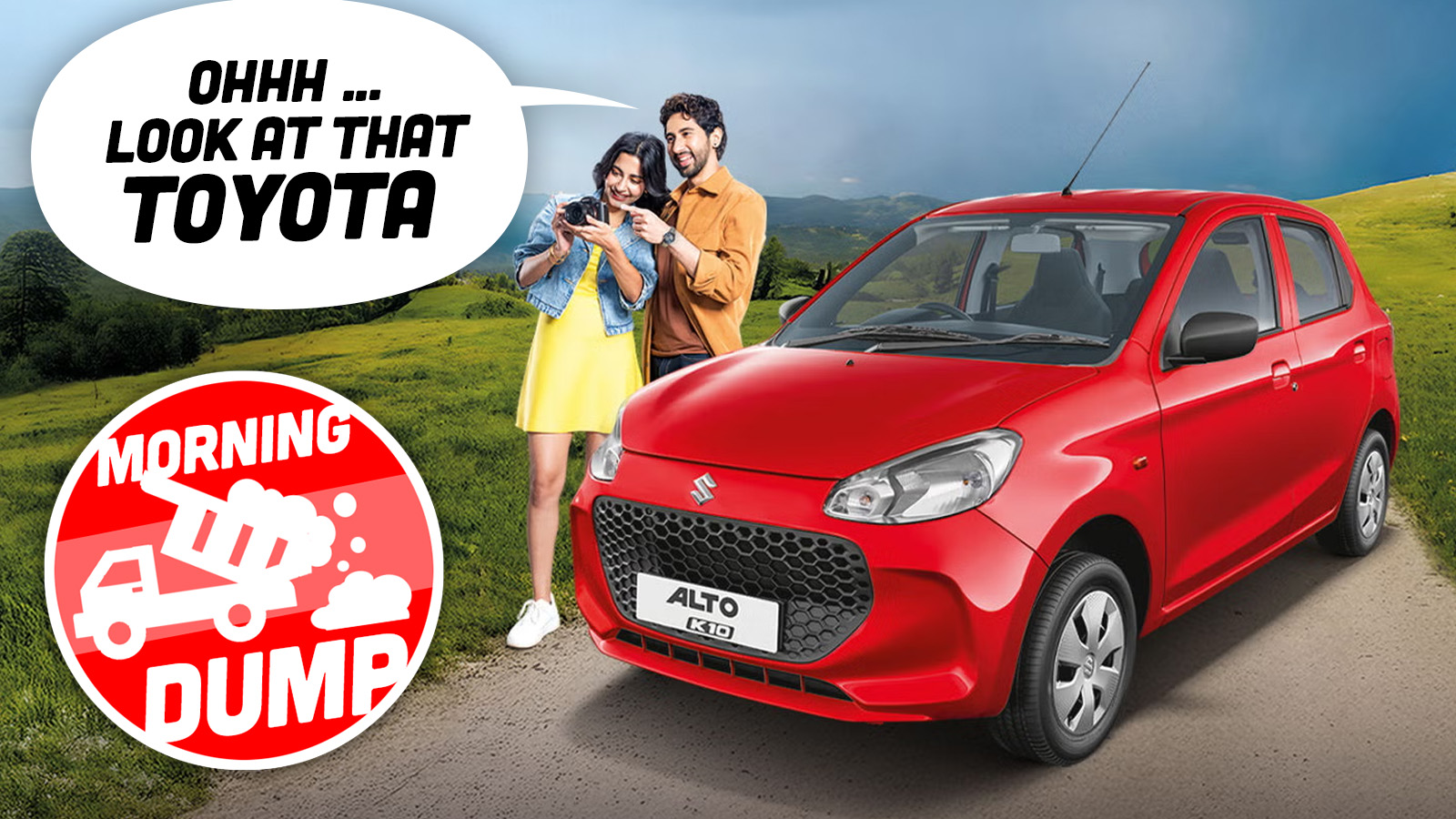
You know what the single biggest gripe I have about automakers is? Well, if you regularly read The Morning Dump you can probably list out about 20 things I view as my single biggest gripe, but the one I want to complain about today is the lack of local knowledge and expertise that foreign automakers apply to markets where they’re historically successful. Yes, I’m talking about foreign automakers who are initially crushing it abroad, but who then have their lunch eaten because they don’t seem to know what’s going on locally.
And by foreign, I mean any automaker in a market not its home market, which includes American automakers in some markets, German ones in others, and one particular Japanese automaker in a market it historically has dominated. That automaker has learned the hard way that no one in the foreign market really wants a cheap car that feels cheap. Hopefully, Smart learns this same lesson with the return of the two-seat Smart, though that car may end up being not quite as cheap as I’d like.


The new Smart brand is half Geely and half Mercedes, and Mercedes would really, really like the United States to not nuke it from space because of those ties. At the same time, it sounds like new tariffs are coming to Canada, due in no small part to what the current administration sees as discriminatory automotive tariffs.
Why Do Carmakers Keep Forgetting This?
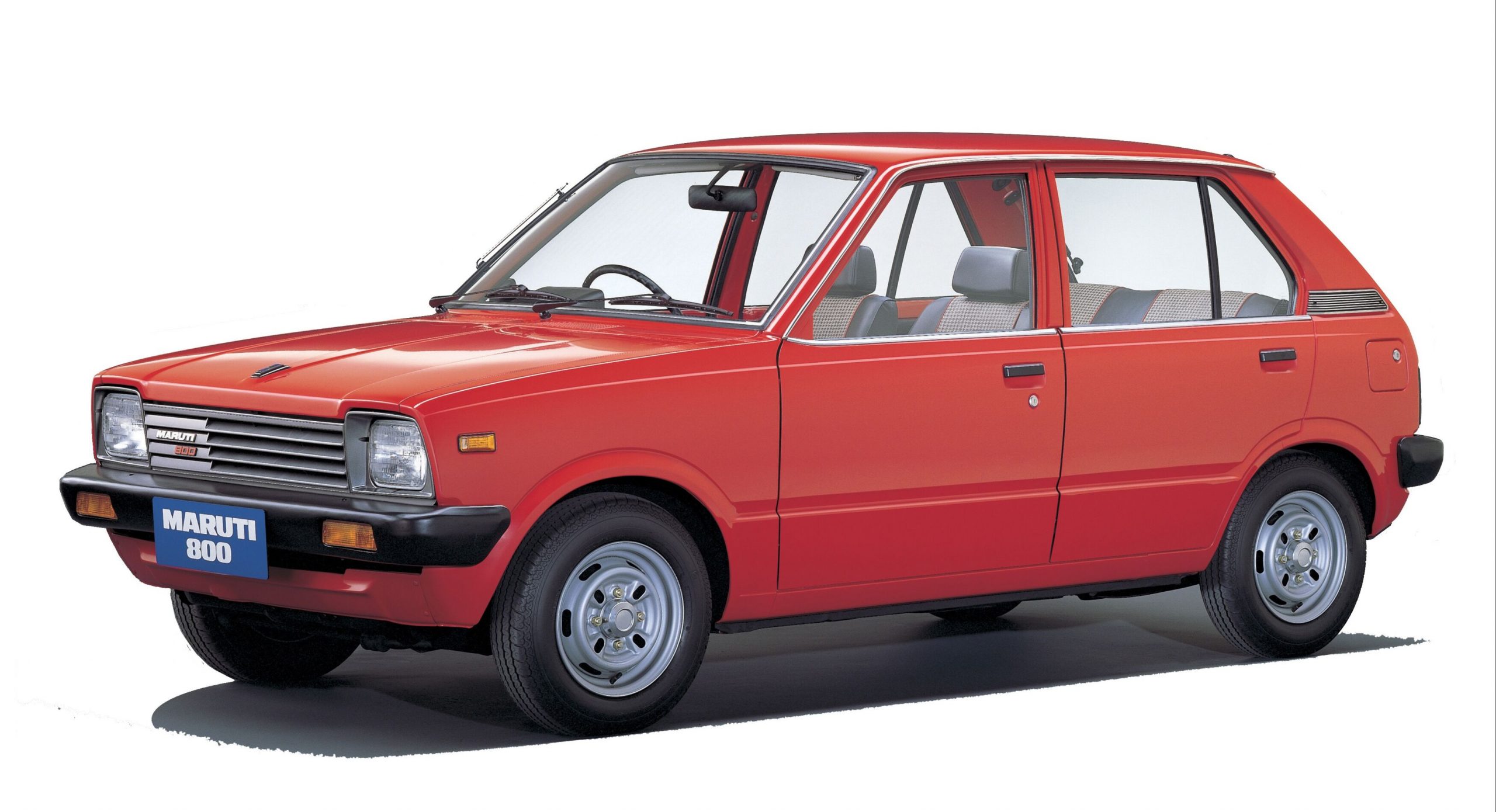
India’s Maruti Suzuki–owned by Japanese automaker Suzuki–has long been a dominant force in India and remains the largest automaker. For now. The company is losing market share quickly (it once commanded up to 80% of the market) as it makes the same mistake automakers keep making, at least according to a big feature from Reuters on the company’s fate.
Specifically, it saw the market as only wanting cheap cars that lacked nice features, while, per the article, the people on the ground who actually knew the market explained that the growing incomes of many Indian consumers mean they now want something nicer. Here’s a good example:
Maruti Suzuki managers first floated the idea of adding sunroofs about a decade ago, the people said. But Japanese bosses considered the feature – which has become a symbol of upward mobility in India – impractical given India’s extreme heat and dusty roads. They worried that adding a more powerful air conditioning unit and strengthening the cabin to accommodate the panel would increase costs and distract from Suzuki’s mission of providing affordable transport.
The carmaker didn’t introduce sunroofs until 2022. By then, fast-growing domestic rivals Tata Motors and Mahindra & Mahindra — which both currently have a market share of around 14% — had sunroofs as standard features on between a quarter and a third of their cars sold in India, according to data from auto research firm JATO Dynamics.
What’s extra crazy about this is that the failure of the Tata Nano should have been a sign that, in India, there’s less interest in bargain-basement cars than previously thought. Sure, a sunroof might not be practical, but people do not buy cars for purely practical reasons.
Japan needs India because India is probably as resistant to the influx of Chinese cars as the United States is, and the market is also gaining more buying power. Obviously, this isn’t just an issue for Japanese automakers in India. This happened with both German and American brands in China, which somehow didn’t see a change in Chinese consumer behavior and got their lunches eaten by upstart, state-backed brands more attuned to the local market.
So what about in the United States? I think most brands here have done a good job of building cars for the market, but not all of them. Taking the South Korean example, both Hyundai and Kia eventually thrived here, whereas Daewoo only lasted a few years and died after guessing poorly what American consumers might want. Suzuki might have done well in India, but it, like Mitsubishi, faltered here. [Ed Note: Am I crazy to consider Volkswagen in the U.S.? In the 1960s and 70s it was crushing it as an affordable brand, and even 12 or so years ago, it felt like VW was on top of the world, with the VW Vortex Forum humming along, and lots of Americans loving their slammed Jettas and GTIs. But in this crossover era, it seems to me that the Tiguan has been the sole winner. I think the Scout brand represents VW figuring it out. -DT]
To clarify, I don’t think you have to have leadership that is solely from that particular country. You just have to have leadership that’s willing to pay attention.
Check Out This Cute Smart #2
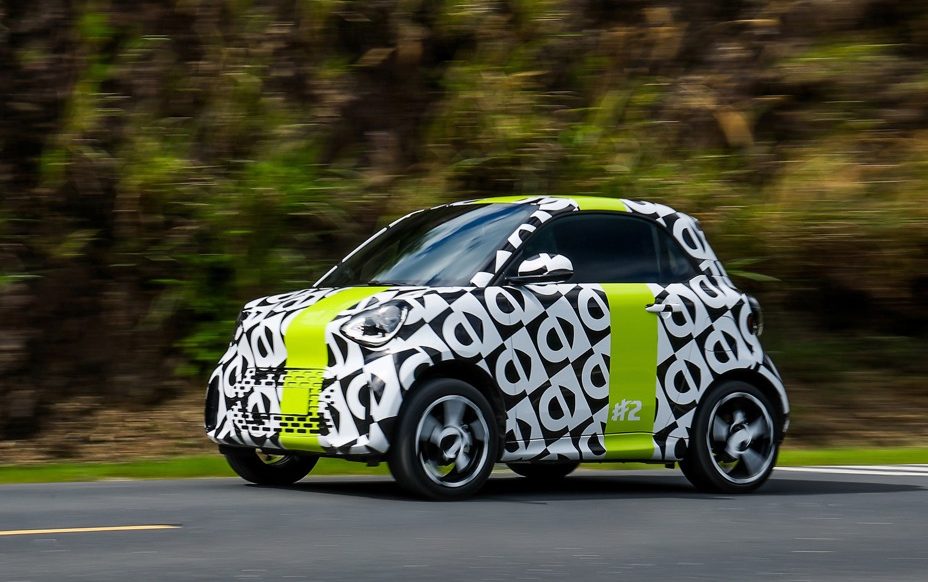
Smart has only released concept images of the Smart #2, and Mercedes is already excited about it.
Naming aside, this sounds like a better-featured car than you might get from Maruti, and a lot of testing is being put into making it feels good:
To ensure that cabin comfort aligns with the vehicle’s refined aesthetic, extensive NVH (Noise, Vibration, Harshness) validation across multiple demanding environments was conducted – including wind tunnel, acoustic chamber, temperature-controlled four-post rig, proving grounds and public roads. The testing activities encompassed wind noise, road noise, powertrain NVH, thermal NVH, squeak and rattle, as well as sound quality optimisation.
I like the car in the camo. Maybe they should sell the camo as an option?
Mercedes Would Very Much Like To Not Be Banned In The United States
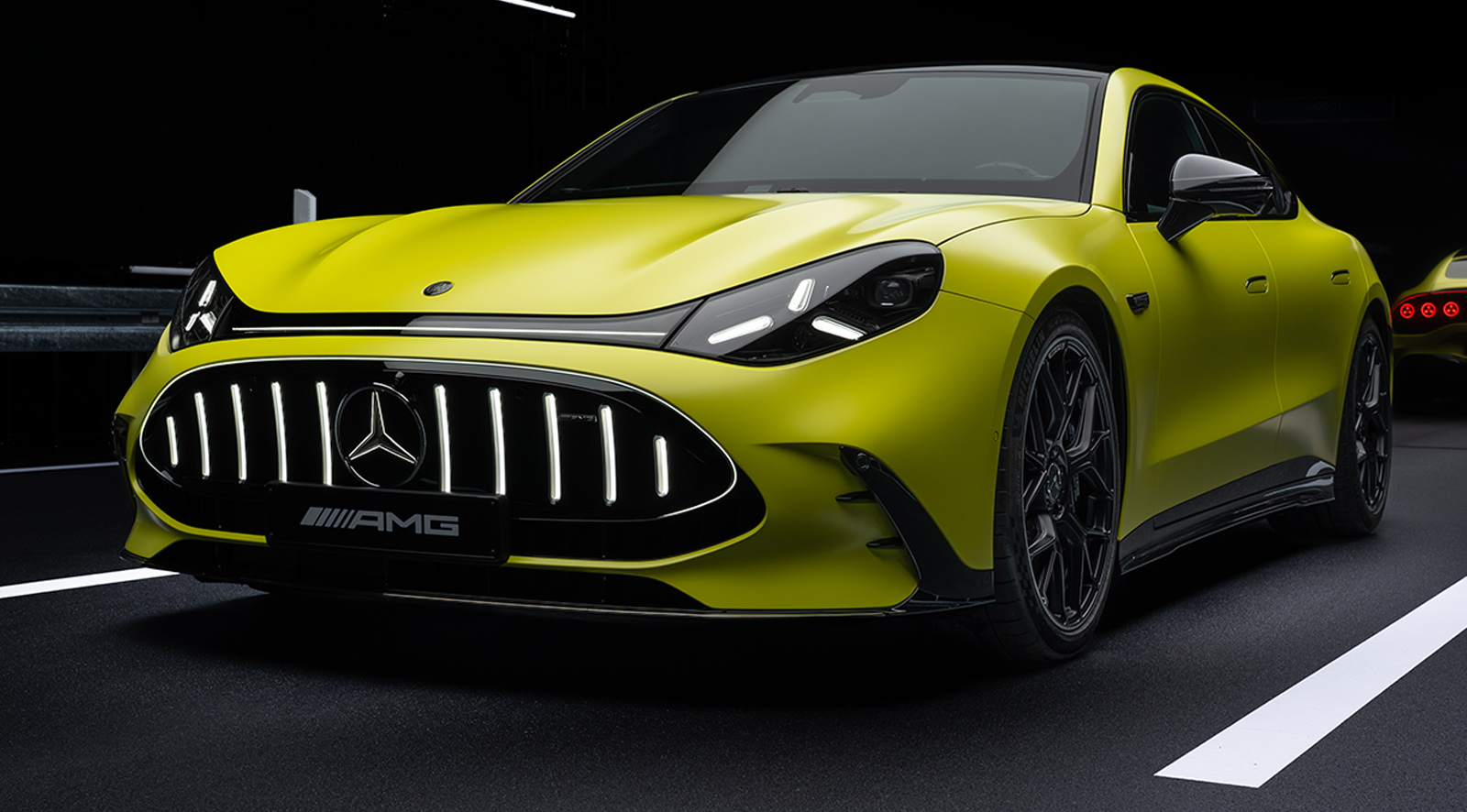
Volvo managed to avoid being banned from selling cars in the United States over its relationship to China, even as Polestar got the boot. Mercedes (owned in part by the same Geely that owns Polestar and Volvo) would very much like to not be next, and is lobbying to avoid Polestar’s fate.
Mercedes is seeking to raise the threshold for permitted Chinese ownership to 25%, among other potential changes, said the people, who asked to not be identified because the discussions are private. That would equal the ownership cutoff that the bill would impose on other companies such as suppliers of connected parts or software.
Lawmakers are also discussing exchanging a numerical threshold for a more qualitative test that weighs potential national security risks, some of the people said. If adopted, that would likely be more favorable to the German automaker than the current proposal, those people said.
Mercedes declined to specifically address the legislation. The company said in a statement that no single shareholder owns more than 10% of its stock, and that no stockholder has direct representation on its board or authority over its operational decisions.
It’s expected that this bipartisan bill will eventually make it to the President’s desk where anything can happen.
Hockey Sticks Get A 50% Tariff Due To… Cars?

All I know about hockey I know from movies and television, though I’m going to assume that Canada makes good hockey sticks. Those sticks, among other Canadian goods, are subject to new tariffs as The Hill reports:
President Trump slapped an additional 50 percent tariff on certain Canadian goods in response to what the administration said were “discriminatory” trade measures from Canada on Monday.
A senior administration official told reporters on a Monday press call that the impacted products range from “wine to hockey sticks to cement.”
The tariffs fall under Section 338 of the Tariff Act of 1930 and will go into effect 30 days after signing, an administration official told reporters.
And what are some of the issues the President has? According to the President’s proclamation, cars a part of it:
Since April 9, 2025, Canada has maintained a 25 percent tariff rate on imports of U.S. motor vehicles that do not qualify for preferential, duty-free treatment under the United States-Mexico-Canada Agreement (USMCA). For U.S. motor vehicles that do qualify for preferential, duty-free treatment under the USMCA, Canada applies a 25 percent tariff rate on the value of all goods that do not originate in Canada or Mexico used in the production of the vehicle, up to 85 percent of the total value of the vehicle. In addition, Canada maintains a tariff-rate quota (TRQ) on U.S. motor vehicles that qualify for preferential, duty-free treatment under the USMCA. The TRQ for each automaker limits duty-free access for the covered motor vehicles from that automaker up to certain annual quantities (in-quota quantities) and applies the tariffs described above on products that exceed the in-quota quantities. The TRQs are granted to induce companies to invest in production in Canada, and Canada has announced that it reduced the TRQs for U.S. companies that moved manufacturing from Canada to the United States.
Pot. Color. Color of the pots. Et cetera.
What I’m Listening To While Writing TMD
Would you believe that 23 years ago today the world was first treated to Dizzee Rascal’s debut album Boy in Da Corner? I was in college, and thanks to the preponderance of file-sharing services, blasting “Fix Up Look Sharp” meant you know what was up.
The Big Question
What’s the best example of an automaker completely whiffing in a market that’s not its home market?
Top photo: Suzuki


TBQ: Honda in Europe. Never a big player but last year Porsche outsold them.
Mercedes (Benz/Streeter): hello yes we can import *mumblemumble*Geely*mumble* Smart car?
Government wildly out of touch with how capitalism and global economics work: Who! Does! #2! Work for!?
Smart cars have always been half smart.
TBQ: Fiat & Alfa Romeo. They could’ve been so much better.
Beat me to it.
All Canada has to do is stop shipping potash, oil, and those critical minerals. Trump will cave faster than a wet paper bag.
Elbows up!
There’s a balance to the strategy here, and those would be pretty close to the nuclear option.
We’re not there yet, this is just another game.
Coming back to hockey analogies: A pest player wants you to draw a penalty. Don’t take the bait.
Good analogy.
Considering the turgid warboner this T-doping gang of flaccid chads seems to have, we might need a different phrase for “nuclear option” for nuclear options, because they might exercise a literal nuclear option if it means wrecking someone else’s toys and breaking systems they don’t understand.
I will have to borrow “turgid warboner this T-doping gang of flaccid chads” from you good sir if you don’t mind. COTD in my opinion.
And please take Kevin O’Leary and his data centers back.
I’m ok with that.
I recently saw something about Canada moving towards building an oil pipeline through BC to export oil to Asia instead of the US, so they might be going that direction, but it’ll take some time.
Cool.
Yea that’s the plan, and another east to Ontario. It could be done relatively quickly for a pipeline if they can brush off all the evaluation, oversight and legal challenges, but where is the fun in that?
TBQ: Brand-wide I think it’s VW. It was the largest automaker in the world and for decades it has been failing in the biggest individual auto market in the world. One misstep here after another.
If we’re talking individual models, then there are bound to be many examples of equivalent failure.
“A tariff on hockey sticks? That’s exactly what a hockey puck would do.”
— Don Rickles
“So what about in the United States? I think most brands here have done a good job of building cars for the market, but not all of them.”
Seriously?!?
Chevrolet SSR
Pontiac Aztec/Buick Rendezvous
Buick Terrazza/Chevy Uplander/Pontiac Montana/Saturn Relay
Pontiac GTO (the Holden)
Cadillac XLR
Chrysler Aspen
Chrysler Crossfire
Chrysler TC by Maserati
Ford Th!nk
Ford Contour/Mercury Mystique
Mercury Cougar (the last one, based on the Contour)
Ford Freestyle (The Wagon version of the last Taurus)
GMC Envoy XUV/Saab 9-7
Lincoln Blackwood
Lincoln Continental (The last one)
Now US brands don’t even build cars anymore – Just trucks and SUVs, leaving the actual car market to Japan, Korea and Germany.
So no – They’re not getting it right.
In a sense, the US (or US-adjacent) automakers do a great job of building what the US market wants: Trucks and SUVs.
Cars are in decline and most automakers are pivoting away from them, even the vaunted Japanese brands.
The real test will be if GM/Ford/Stellantis can hold onto the AWD unibody SUV market share over the long-term, because if they’re losing that battle, the last line of defence will be trucks.
I really don’t see any “Import” getting ground in the full-sized pickup market. Just look at how long Toyota has been in that segment and what their annual sales numbers are. Look what happened to Nissan with the Titan.
Mid-sized. Yes. There is a chance, but no way for full sized.
Every car company has flops. This list is a drop in the bucket of the new models released by the FKA Big 3 over the last 20-30 years or so. The vast majority have sold well, or at least well enough to keep the nameplate around.
And I’ll die on the hill that the Lincoln Blackwood was 10-15 years ahead of it’s time. The current market would justify enough sales for a luxury truck to be profitable.
I recall Buick Rendezvous were pretty common back in the day. The compromise car when you should have just bought the minivan but wanted something [that looks like] an SUV (but without the gas prices that were ticking up) when the concept of the unibody crossover market was just starting to metastasize. When really like much of those Chevies it was just a Venture with bulkier fenders; the inner fender structure even had the original minivan lip.
And here I thought the new tariffs were due to the wildfire smoke wafting this way from the Great White North. Oh wait, no, 47 wanted to add damages on top of the new tariffs.
Speaking of hockey sticks, I also have this site to thank for introducing me to Shoresy.
I thought that at first too considering the timing and because in the past Trump has put tariffs on Canada for commercials that made him look bad.
But no, this tariff is due to Canada putting the exact same tariffs on US built cars that the USA puts on Canadian cars. Somehow that is “discriminatory”. Oh, and Canadians have also stopped drinking US booze.
I thought it was due to a former Canadian PM being young and pretty enough to catch the ladies attention.
Someone recently described him as the Roomba President – when he hits an obstacle (Iran, SAVE Act), he just pivots toward another obsession (Greenland, 2020 election, tariffs.)
Epstein (bump and pivot)
Ha! I’m really looking forward to the 2028 model coming out in January 2029.
And just like a Roomba, once in a while it gets confused and just keeps bumping into the same thing: the 2020 election. Presumably because it’s the first time in his life he’s been told “no” and couldn’t just @#$%
herthe country anyway.A new distraction from the endless failure in Iraq.
913 days.
This is how long we have to play the game. In hockey terms, we’ve about 10 minutes left in the third period (or six of eight years). After the buzzer sounds, most of the other team’s players will leave the ice. They have to; their time will be up. Them’s the rules.
The good news for Canada is that the other team has other and bigger self-inflicted problems that it has to cope with right now. Picking fights with other teams that it can’t seem to win despite being much larger, or even can’t really disengage from. All the better to keep the other team distracted.
The thing about picking fights with other pesty players is that they’re going to keep goading you to lose your cool, especially if the bigger player thought that sheer intimidation would just cause said pests to cower. But pests know how to make a hockey stick to the ribs sting, and the refs aren’t exactly calling penalties in this game.
The Game Canada’s playing? It’s the same game we’ve been playing for a year-and-a-half now, and it’s not a new shtick now. Don’t lose your cool, play it smart, keep playing strategy, keep skating hard. Buzzer’s only a line changes away. We’ll see what the next game is after this one.
TBQ: Smart (sorry Mercedes) in the United States.
Are you counting by how many Moosehead beers you have left?
I only drink Elsinore Beer.
Watch out, I have a friend who found a mouse in a bottle of Elsinore once.
That’s a strange brew.
TBQ:
In America: Kia Borrego. What an unfortunate call to bring a gas guzzling, BOF SUV in the middle of a recession. And nobody in Kia was willing to hold on for at least a couple years until the market recovered so they pulled the plug way too early.
Europe: Ford. The Fiesta and Focus were big hits, constantly ranking within the top 10 best selling vehicles. They got an even better lead in the UK. But Ford fumbled it and replaced them with the overpriced Puma nobody wants. They also tried to sell the Edge over there and failed in a spectacular fasion as it was too big, a bit unrefined and just too expensive. Their marketshare halved within a decade.
As soon as the Puma hit the market it started outselling the Fiesta. Odd result for a car that nobody wants. (The Kuga took a bit longer to catch on but it was handily outselling the Focus in the end)
That’s not true. The Puma didn’t outsell the Fiesta until at least its third year in the market. And two years later Ford killed the Fiesta.
The Kuga only outsold significantly the Focus in 2024. The Focus was killed the following year.
In the first five months of 2026 Ford has had 17% drop in YTD sales.
So it doesn’t seem they are doing well.
The Puma launched for 2020
Puma / Fiesta
2020 – 118K / 156K
2021 – 134K / 82K
2022 – 137K / 72K
2023 – 160K / 38K
2024 – 149K / NA
2025 – 141K
The Puma launched in 2019.
The first production Puma rolled off the assembly line on October 8, 2019. 337 were sold in 2019
the best sales year for both the Puma and Kuga pales in comparison with the best sales year of the Focus and Fiesta. Ford failed to maintain the lead it had over the last 2 decades.
True, at one time the Fiesta sold in large numbers. It sold more than 300K a year in 2015 but by the time the Puma came around in 2020 sales had dropped in half.
What’s the best example of an automaker completely whiffing in a market that’s not its home market?
I’m going to go with Ford and continental Europe. Ford seems to have done all right in the UK, but I think they’ve managed to biff it in the rest of Europe.
What about GM? They were so bad in Europe they don’t even try to sell there anymore.
They actually sold their only brand that was doing good sales number in Europe to Chrysler.
Yeah I really never understood that move. I guess it’s more… honest than trying to compete when you have no clue. Just get out and focus on what you’re better at. Maybe that is a way for all of us. Perhaps not the best way. But a way.
Seems like a premature call.
TBQ: Any of the big 3, honestly. Ford outside the USA killed off so many beloved models. GM is not doing as hot in China as they would like. Stellantis? Everything they do is a misstep as near as I can tell.
Yeah, that was weird, so far Scout represents business as usual for VW in the U.S. VW figuring it out would involve VW itself getting VW badged (and slightly cheaper) versions of both Scout vehicles to A) Appease their own dealers B) Give dealers something to sell in two of the hottest segments and C) Use up some of the likely very excess capacity of a new plant. I haven’t seen any signs of any of that. The vast majority of the public barely remembers Scout if they do at all. And when they do, they are thinking of rusty and not very popular when new Jeep/Bronco third fiddles. Only us random weirdos think a bench seat on yet another large SUV with a cool name is desirable. None of us bought a Suburban LS with the bench seat option, or not new at least.
While also possibly a postmature call. When will the Scout come out? With Bronco plus Wrangler doubling the previous Wrangler market sales for serious offroad boxes and pseudoffroader Wilderness Outback Trailmaster XRT -trimmed boxier SUVs currently in vogue and possibly peaking, will they be late to the party?
Of course they will, it’s the VW way. It took them nearly 20 years to release the new Bus long after all the air was let out of the minivan balloon. Then it was to expensive with pitiful range. Derp.
Had to make sure that all the Boomers with fond firsthand VW Bus memories were well and truly aged out of their kid hauling years.
Boomer here. We, wife and self, liked the new VW bus. Price, range, and fear of VW quality nixed that idea. We once owned a Plymouth Voyager. That was not a great vehicle but for the price we accepted it. The rest of our fleet has been Toyota and Honda.
Not to mention the only reason Ford of Europe does so well is because it’s effectively a separate company with a shared badge. I’d wager an extremely irresponsible amount of money that Ford US would kill Ford of Europe in under a decade if they completely took over.
Ford of Europe is not doing well. They are down 17% on YTD and in May alone they dropped +25%.
Is the picture of the lime yellow AMG Mercedes a joke? I mean it looks like an angry near sighted adolescent with cheap orthodontic work.
Reminds me of the Catbus in My Neighbor Totoro
Catbus after someone mockingly called it Dogbus or Mousebus.
I believe the car was not meant by AMG Mercedes to be a joke.
What’s the best example of an automaker completely whiffing in a market that’s not its home market?
Every time an American car company makes another half-ass attempt at cracking into the Japanese market.
I vaguely remember reading that Japanese reviewers quite liked the Dodge Neon, but it fell into an engine or size black hole in their tax system that the engineers (who were apparently always hoping for Japan as a market) missed that massively dampened its potential sales. They did apparently sell them there across both original generations though. It brought me unexpected pleasure to see one appear as the villain of the week’s car in an episode of You’re Under Arrest when I was re-watching it recently.
Mercedes looked at the 1958 Packard Hawk and said to themselves, “this needs another shake.”
Nissan NV series vans. They surveyed the market for tradespeople while apparently not realizing that many many vans are fleet purchases and the same requirements didn’t apply. Failed so badly they got out of the commercial van business completely.
TBQ – The Nissan Titan XD. I see more T100s around than I see XDs. I can’t remember the last time I saw a Cummins V8 XD.
To be fair, it’s not entirely because the XD Cummins didn’t sell any units, its because all the crankshafts on them have sheared in half and the trucks got junked.
What’s the best example of an automaker completely whiffing in a market that’s not its home market?
The KIA K900 in America and Cadillac with the BLS in Europe
Cadillac with “any Cadillac” in Europe?
Most of the time I can parse the Mercedes (person) vs Mercedes (automaker) references, but if the lead-up has to do with wanting Smarts in the U.S. I’m assuming it’s Mercedes Streeter every time.
COTD!
Mercedes Streeter is literally the only person who would want a new Smart.
TBQ: now and always, the Toyota T100.
THIS.
I would like cheap electric microcars to be available in the USA, but they are not. Want to make them have wider appeal? Make them perform like $100,000+ cars, but retaining the inexpensive microcar price tags. The fact that corners were cut on features that don’t even help the driver get from point A to point B won’t matter so much anymore when one can toy with hypercars at a red light and/or the race track on a sub-$10,000 budget.
Except as we’re seeing with Slate, a bare bones EV will cost about $26k before TTL.
Not if it’s a one-seater the size of a Messerschmit and with the aerodynamics of a velomobile. It could be built as a 3-wheeler to get around FMVSS, as a “motorcycle”, but still end up much safer than a motorcycle, maybe similar in safety to a compact car from the 1980s or 1990s.
You wouldn’t need more than a 5 kWh battery for 150+ miles range on the highway at 70 mph if you get the aerodynamics as slippery as those of a velomobile. Using cheap Chinese PMDC hub motors and FOC controllers, you could have an enclosed sub-300 lb glass-fiber monocoque AWD vehicle with a chrome-molybdenum-steel roll cage, 40+ horsepower, 500+ lb-ft of torque, and even give it a rudimentary air conditioning system and air bags. It shouldn’t need more than 6 horsepower to hold 100 mph on flat ground if designed right, except it has 40+ horsepower in it.
In a high enough production volume, it’s feasible that a vehicle like this could cost under $5k. At retail prices as a one-off prototype, the components to make the electric drive system and battery needed would be under $3k, because you could use ebike parts for something so small, and make it go frighteningly fast. Like 10s in the 1/4 mile fast.
Would it sell? That’s actually an unknown. The value proposition would be unique and compelling, and it would have zero competition other than $100,000+ performance cars that cost a lot more to operate if one is buying it for performance, or $5k-ish mopeds/scooters/ebikes if one needs a bare-bones commuter, except this would be enclosed with trunk space and the most basic/important creature comforts of a car with more safety than any two-wheeler, while out-performing many $100,000+ performance cars. It would be almost as cheap to run as an ebike.
Screw the modern SUV/CUV/truck zeitgeist. The planet is burning, the resources are getting more expensive and difficult to access, and most people are broke. It’s time for something different to be available, even if a change in the automotive zeitgeist to something of this sort will absolutely demolish shareholder value and tax revenues alike.
That sounds like a great vehicle!
I’ve built a proof of concept that is nowhere near as safe, or as aerodynamically streamlined, or as quick, or as enclosed as what I described above, but it definitely has proven to me that something close to what I describe is possible at the price point I mentioned.
It was originally a tadpole trike, converted to electric with a single PMDC motor in the rear wheel, plus a body shell built for it. I had to keep it light enough to be pedalable as a “bicycle” for legal reasons and to avoid paying insurance/taxes, but it worked well. The per mile cost of using it was cheaper than taking the bus. It weighed well under 100 lbs and only needed 0.008 kWh/mile to hold 30-35 mph, yes, 8 Wh/mile, or the equivalent of 4,200 miles per gallon of gasoline.
Old picture when it was a trike with a body:
https://i.imgur.com/1KvhZN8.jpg
An actual one-seater microcar without a bicycle drivetrain and with a roll cage, airbags, and crumple zones beefy enough to allow the rider to survive a crash with a much larger vehicle at highway speeds, could be done for under 300 lbs, maybe as little as 150 lbs. And with a wind tunnel and/or CFD software to improve the aerodynamics, it could easily be far more efficient than the “bicycle” I designed and built.
That trike eventually got into an accident when a truck rear-ended me. I had to remove the body. Once I upgraded the motor to 10 kW, I could do 0-60 mph in about 7 seconds and reach 71 mph, without a body on it, but the motor would overheat quickly because it can only do about 2.5 kW continuously in my application, and realistic cruising speed was closer to 45 mph.
Old picture after doing donuts with just a rear motor, no body shell:
https://i.imgur.com/d2yizhE.jpg
I’ve since converted it into a quadracycle, with a differential in the rear, and two front hub motors. It now does 82 mph top speed and 0-60 mph in under 9 seconds, weighing 90 lbs. The acceleration is not as fast as with the single rear hubmotor because I’m using controllers that don’t make as much peak current. It has zero safety in a crash, and without a body to reduce wind resistance, currently guzzles down the kilowatt-hours at roughly 0.025-0.030 kWh/mile cruising at 30-35 mph. With the same 2.1 kWh battery pack, my range has been cut by 2/3 vs having the shell. It is stable and well-planted cruising 55 mph on state highways, and could cruise faster if the controllers didn’t overheat from excessive power demand due to terrible aerodynamics. The motors got warm when I topped it out at 82 mph, but they never overheated.
Recent picture of the same “bicycle” as an unshelled quad, soon to be upgraded to AWD:
https://i.imgur.com/wteajxk.jpg
Once I add a middrive motor to power the rear wheels and upgrade the controllers, I will have 50% more power, and will triple the peak torque. Hoping for 0-60 mph in under 4 seconds. I plan to make a body for it as a quad, and hopefully will get the aero drag low enough to top out at over 100 mph and maybe cruise 90+ mph without anything overheating.
On jackstands, the front wheels spin to 119 mph when I run field weakening.
I can still turn everything off and pedal it just like a normal “bicycle”.
Smart #2, *snicker snicker*
They need to dump that name.
“Which car are you picking up Johnny with, dear?”
“I’m taking the number 2.”
Park it next to the smartED
Toss it down the hole. Deep-six it.
Smart #2 — is that a scion of the iQ?
It’s named after MAHA and DOGE’s greatest achievement so far.
That’s going to be a long #$%^&* list.
Do you want the short list, the long list, or the really long list?
There’s a parenting lesson here, be sure to teach your kids “no”
To Mercedes (not the person) how about don’t put software that puts people at risk into your car? Chinese ownership or not.
You got me rolling on the floor.
Like “Don’t Be Evil.”.
What’s funny is Google abandoned that 10 years ago, so Google has officially been evil for 10 years now.
Exactly.
I guess the post needed an emoticon of some kind. (-;