

My neck is sore, though not for the usual reasons. While aging has meant even subtle movements like reaching for a jar of tarragon on a high shelf can result in crippling muscular pain, it’s the whiplash of the car market that has me clutching a bottle of Advil like Smeagol clutching that ring. Volkswagen was going to build a truck and then, wasn’t going to build a truck, and then was going to build EV sedans instead, and now a lot of those EVs are gone and in its place full-sized trucks and SUVs are maybe coming?
The Morning Dump has had a bit of an unintentional theme this week: hitting the reset button. Volkswagen is redoing its operations in North America and is hoping to push a product that Americans want, which is fine and also a little confusing. The reasoning behind the move isn’t perplexing, as new data shows how much money automakers like Ford and GM are getting thanks to truck sales.


Tesla is trying to rebuild demand in Europe after a couple of bad years, and technology is a key piece. It just doesn’t want anyone to know its secrets. Japanese automakers keep trying to hit reset after a massive earthquake, but now a typhoon has upended those plans.
A New VW Boss And A New Truck Are Reportedly Coming To America
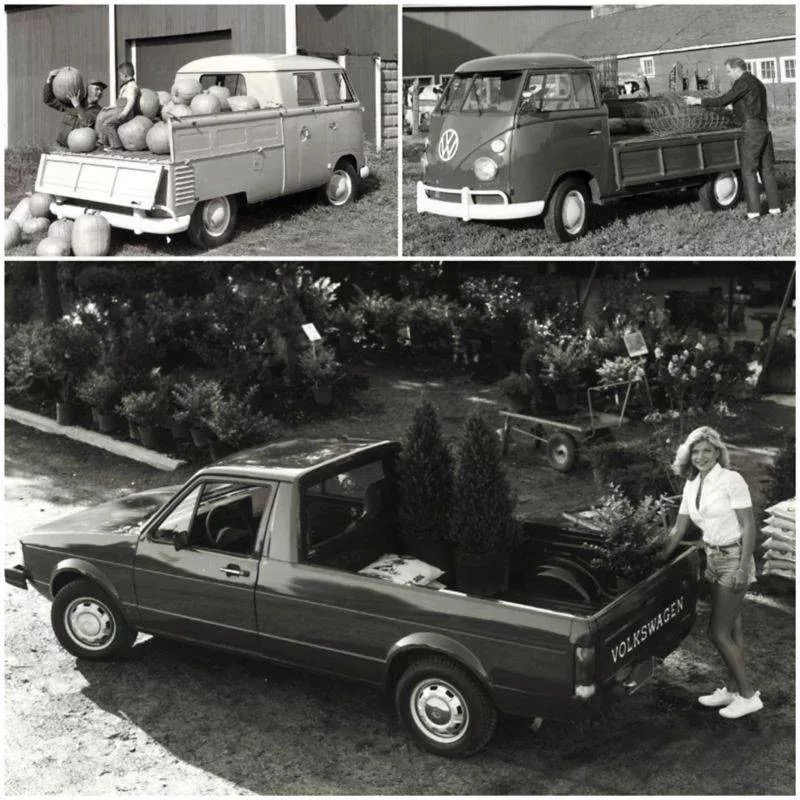
Volkswagen has twice sold trucks in the United States, I think. Jason is an expert in these things and will wake up soon enough to tell me if I’m wrong. First, we got the Type 2 with the dropsides, which weren’t hugely popular then but look very cool now. In the ’80s we got the Pennsylvania-built Volkswagen Pickup (thanks Chicken Tax), which everyone just calls the Rabbit Pickup for its compact-underpinnings. That wasn’t exactly a hit either.
[Ed Note: I’m up! And Matt is basically correct, though the original Type 2 pickups actually were quite popular in America – or they would have been, had their popularity not been stopped by our old pal, the Chicken Tax. Remember, it was these VW trucks that were the main target of our retaliatory tax on Europeans taxing our chicken, and remains to this day the reason why we don’t get many imported pickup trucks. Also, remember that the original Econoline and Chevy Corvair-based trucks were directly in response to the VW Type 2.
And, as Matt noted, the reason VW tried again with the Rabbit-based pickup was because they could build them in Westmoreland, PA. Of course, in the rest of the world, VW has had plenty of trucks, from the Caddy to the larger LT series and even up to big rigs thanks to VW’s partnership with MAN. – JT]
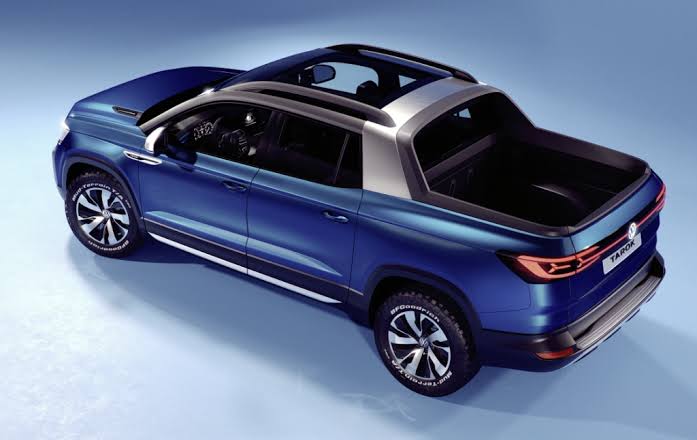
Right before the pandemic, on the front edge of the massive shift to EVs, Volkswagen brought the compact MQB-based Tarok truck as a concept to New York and it was, according to VW, a hit (it had a midgate, which is what all these trucks need):
Whether there’s demand for a more versatile compact-plus-sized pickup remains to be seen. But based on the reaction to the Tarok Concept in New York, Volkswagen has the potential to make one a reality – and bring another distinctive vehicle back to American roads.
Those plans never came to fruition, and our old friend Pablo Di Si (then head of VW of South America) explained why to Motor 1 Brazil:
It’s a project we conceived, but with the pandemic and our cash flow, we’ll have to reassess all investments, 100% of them. This car, yes. I’m not talking about canceling, but some will be delayed, possibly some will be canceled, I don’t know if this one will be. But we’ll have to be very careful with our cash position this year and for the next two to three years.”
The Tarok didn’t happen, and neither did Volkswagen being careful with its cash position, instead pouring billions into questionable software development and electrification. That Volkswagen press release wasn’t wrong, as there was huge demand for a compact-plus-sized pickup, it’s just that Ford was the one to do it.
Yesterday’s TMD was all about how Volkswagen might put the head of Audi sales in charge of North America and, hopefully, give him the ability to bring his own products to the market. According to German newspaper Handelsblatt, that’s exactly what’s happening:
VW brand chief Thomas Schäfer sees growth opportunities in pickups and large SUVs, both profitable vehicles in high demand in the USA, which the Wolfsburg-based group has not yet offered.
The insider said the goal is to launch the first pickup truck before the end of this decade. The vehicle is to be built in the USA. VW operates a plant in Chattanooga, Tennessee, where production of the electric ID.4 was recently halted prematurely.
It remains unclear whether VW will develop the vehicle itself with the help of suppliers or collaborate with another automaker, the insider added. A decision is expected in the coming weeks and months. A VW spokesperson declined to comment.
I believe the “has not yet offered” means body-on-frame trucks. The company is said to be considering partners, which reflects the reality that VW continues to be short on cash at the moment. An obvious partner would be Ford, which already works with Volkswagen in Europe (building the VW-based Capri and Explorer). Ford currently builds Volkswagen’s only traditional pickup, which is the Ranger-based Amorak.
It’s entirely possible Volkswagen could borrow some insight from Ford and perhaps some production help, given that Volkswagen needs to build the truck in the United States. It could also birth an SUV (the Everest is the Ranger-based SUV we don’t get, perhaps that could be a Volkswagen).
Also, there’s Scout. Volkswagen dealers are mad at VW for setting up a whole new company to sell a vehicle they really wish they had and maybe need. Why couldn’t Scout make cars for Volkswagen (and Audi, for that matter) as well?
I do think that Volkswagen needs a reset in the United States, I just wonder if this is the way. VW once stood for attractive, affordable cars with decent performance. Couldn’t it go that direction? Is the best path just more expensive trucks and SUVs?
Expensive Trucks And SUVs Lead Ford, GM, Stellantis To Above Average Prices

There’s a long article in the Detroit Free Press about how the Detroit Three automakers give off a working class impression while also reaping the biggest chunk of their profits from big trucks and SUVs. It’s a good read, though it’s these two data points that interest me:
The industry-wide average MSRP for a new car in the second quarter was $51,306. Here are some average MSRPs for new vehicles for the second quarter, according to Cox Automotive data:
Ford (includes Lincoln): $61,280
Stellantis (Dodge, Chrysler, Jeep, Ram, Fiat): $59,947
GM (Buick, GMC, Chevrolet and Cadillac): $57,289
Toyota (includes Lexus): $47,923
Hyundai/Kia/Genesis: $39,998
Honda/Acura: $38,601
Nissan/Infiniti (and Cox’s data wraps in Mitsubishi): $39,017
And then there are the actual transaction prices:
In the second quarter, the industry average transaction price was $48,949, according to Edmunds. Here are how the automaker’s average transaction prices compared with the industry average:
Ford: $55,623
Stellantis: $57,795
GM: $54,172
Toyota: $45,187
Hyundai/Kia: $39,256
Honda: $38,570
Nissan: $37,760
Toyota and Hyundai/Kia are probably the most successful automakers in the United States, and while they don’t have MSRPs that are above the average, I think the gap between MSRP and transaction prices is quite telling. Toyota can barely keep cars on the lot. Hyundai and Kia are both picking up market share.
This strategy works for the Detroit Three as they have a longstanding truck audience. While the Tundra does ok and the Tacoma is a hit, do we really think that Volkswagen entering a crowded market makes sense? Given that Hyundai already has a lead, I’m not sure that VW is going to be able to compete.
I honestly think American-built hatches, wagons, and fun/nice affordable cars and hatchbacks (hybrids) are a better move for the brand given that it’ll have to compete with Scout, though I could be wrong.
Dutch Regulators Are Cool With Tesla’s FSD, But They Can’t Tell You Why

Here’s a strange one. Tesla got approval from the Dutch transportation agency RDW for it’s FSD system. With growing competition from both European and Chinese automakers, Tesla’s misnamed FSD technology gives it a bit of an edge. The automaker wants the full EU to approve FSD, and the RDW is actually in charge of this process.
What’s curious is that RDW won’t give details on how it concluded that FSD was safe.
[T[he RDW will not tell the public why it concluded the driver-assistance system is safe or how it evaluated the technology, which for years has faced regulatory investigations and lawsuits over FSD-involved crashes in the U.S.
RDW said releasing such details would violate Tesla’s commercial secrets, echoing the automaker’s own demands for confidentiality. Since late 2024, Tesla has pressed RDW to keep documentation about the FSD safety review secret, according to previously unreported email correspondence between the Dutch regulator and Tesla, obtained by Reuters through a public-records request.
Generally, regulators have agreed to help keep Tesla’s secrets, though Finland and France are currently the holdouts.
Japanese Auto Production Goes From Earthquake To Typhoon

Having just recovered from a massive earthquake, Japanese auto production is shutting down in parts of the country as Typhoon Dolphin (what a great name) is disrupting shipping and plant operations. The good news, per Automotive News, is that this dovetails nicely with a break that was already planned:
Manufacturing sites include the flagship Motomachi, Tsutsumi and Takaoka assembly plants in Toyota City, as well as three Toyota Auto Body plants, a Toyota Industries factory making the RAV4 and a Gifu Auto Body plant that manufacturers the HiAce van and Coaster bus.
A Daihatsu plant in Kyoto was also offline for the day.
Other automakers did not report any disruption from the typhoon.
The one-day suspension will likely have negligible long-term impact on inventories. Toyota’s factories were already scheduled for a week of summer holiday down time from Aug. 13.
Here’s hoping that the rest of the summer is a little less natural-disaster-y.
What I’m Listening To While Writing TMD
I was sad to learn this morning of the passing of songwriter and producer William Orbit, who gained notoriety for his remixes before going on a long run of hits with Madonna. There are too many great songs to choose from (he produced the Blur album “13”!), though a discussion in Slack today reminded me that Madonna is one of the rare artists who has done original work for both a James Bond movie and an Austin Powers movie. No offense to the Mirwais-produced “Die Another Day,” but it’s the Orbit-produced “Beautiful Stranger” for Austin Powers: The Spy Who Shagged Me I go back to more often. Also, it’s a fun video. I don’t think Madonna gets enough credit for being funny.
The Big Question
What’s your favorite pickup truck sold anywhere in the world that wasn’t made by Ford, GM, or Dodge/Ram?
Top photo: VW


I’ve always been a fan of Land Cruiser pickups.
Good enough for Cookie Monster jihad!
Hilux
Nissan/Datsun 720s from the 80s. I freaking love those trucks. I’ve owned like 7 of them. Still have a couple sitting around.
VW is having money issues and it wants to compete in the pickup market? That is a great way to blow a ton of money with not much return. What segment does VW think they will be competitive in? Hybrid small truck-Maverick. Mid size truck-Ranger/Colorado/Canyon/Tacoma. Full size truck-F150/Sierra/Tundra/Ram. EV pickup-Silverado/Sierra/R1T/Cyberdumpster.
Unless they make an EREV, which Scout will someday hopefully make, they won’t find many takers. I will put this in with the Jeep Recon as DOA.
I really liked those early 90s Nissan trucks, especially with a mild lift kit on them. I have no idea how they drive or how reliable they were, I just thought they looked cooler than the Ranger, S-10s, and Dakotas I saw everywhere.
I had a friend in highschool with the old rabbit truck. VW should make that again. Golf platform, front wheel drive, cheap little truck that would be the match for the maverick. I think companies are over thinking the “needs” of the consumer to add nonsense tech and bloat when people mostly just need transportation. In this case transporting stuff too.
…if the VW pickup is anything like the ’26 Atlas I rented last weekend, it will be an abject failure.
The 2.0T in that vehicle made the boost lag in the Porsche 930 look insignificant. That paired with a transmission that was constantly in the wrong gear and a completely un-navigable UI made it one of the worst rental vehicles I have ever driven.
What a piece of junk that car was, with only 11k miles on it, too. It still smelled and looked new – but drove like a 20-year-old, un-serviced POS.
TBQ: I drove a bare-bones ’80’s Mazda pickup that refused to die until the frame rusted in two. It still drove like new after that happened – a testament to the mechanical fortitude of Japanese micro trucks (if not the metallurgy of their steel).
TBQ: It’s right there in the topshot, the VW Rabbit pickup. All 6′ box with lower than 16″ load height of it.
I would buy an old Rabbit Pickup over the version of the Amarok they can get sold in the US.
Either Rod Millen or Ironman Stewart’s 90s Toyota pickups
You mean the Scout? Why force a Fiat in America: Electric Boogaloo? Just sell Scout and stop delaying the release of them
The Peugeot 504 Group B Rally Truck
TBQ: Probably the Jeep FC series. I would never want to own one or even drive one much, but they look so cool to me for reasons I can’t explain.
Why *wouldn’t* VW just build and sell a slightly cheaper version of both Scouts? There’s no way that factory is going to be anywhere near capacity, a Scout intender and a VW potential buyer don’t really overlap as far as I can tell and it kills off much of the issue VW dealers have with not selling Scouts. (it works jsut fine for GMC and Chevy whos Silverado/Sierra trim levels sort of stair step each other…) And adds two products to VWs portfolio with realtively small risk or cost. If it works out then consider adding a smaller truck but good luck competing against the Tacoma or even the (recently) resurgent Frontier, which may well spawn a Honda or Mitsu variant in the next few years as well, any of which will eat VW’s lunch as far as reliability is concerned.
The Scout is an EV platform so selling a cheaper ICE version is likely a large engineering challenge.
On the other hand they could simply take advantage of their partnership with Ford and sell a rebadged Ranger in the USA is an Amarok like they do in EU. That is the quickest way to a BOF ICE pickup in for the USA.
The old International trucks always appealed to me as underdogs.
For the most part, good lookers too. A ’61 or ’62 C series was a real contender before I bought my ’65 Suburban.
I always liked the Nissan Hardbody trucks, and like the old 710s quite a bit. Neither fit into my current lifestyles, but the 710 being mostly a long wheel base 510 is pretty neat from a racetruck perspective.
TBQ: the obvious answer is Hilux, but I kinda have to go with it. Not because of any unkillable reputation, mind, but because of Robby Gordon, Rod Millen, and some guy whose nickname was “Ironman” bouncing fiberglass replicas on miniature trophy truck chassis through stadium off-road courses.
Second is probably the Mitsubishi L-series and the VW Amarok, mainly because unobtanium. I’d add the Mercedes…X-Class, was it?… but a) it’s a Nissan Frontier and b) I’m kinda mad at M-B right now.
Favorite pickup? The Hilux, of course.
What’s your favorite pickup truck sold anywhere in the world that wasn’t made by Ford, GM, or Dodge/Ram?
Morris J2 “Hover” pickup truck.