

When I first started in this industry, China was looked at as a golden goose. A huge source of profits that would seemingly never go away and partially paper over whatever shortcoming Japanese, American, or German automakers faced at home. Now that the last finger of the monkey’s paw has curled, everyone views the rise of the Chinese auto industry as an enormous threat.
The Morning Dump will be another global tour in the style of Phileas Fogg and, like that country-hopping figure, we won’t be staying in any one place too long. Our final destination is China, as China is the source of all this consternation, and in true Verne-style, we’ll be heading from east to west (though we won’t gain a day, sorry). The first stop is Japan, and the Japanese car industry’s main industrial group sees standardization as the key, but whose standard should be used?


Canadian auto dealers were intrigued by the idea of having affordable Chinese cars to sell, as the market has previously hosted cheap Russian and French cars, though some are beginning to have cold feet. Volkswagen’s leadership, facing the risk of Chinese cars, isn’t backing down, and we may see a shareholder vote soon.
You know who also hates competing with Chinese automakers? Chinese automakers. For all the disruptions these companies cause, a brutal price war has obliterated profitability for most of them.
‘Unless Things Change, We Will Not Survive’

When Koji Sato was sidelined as CEO of Toyota and put in a new role within the company, he got the additional responsibility of becoming the national car czar for Japan and head of the Japanese Automobile Manufacturers Association. Out of the konro into the fire, right?
As the Toyota Times reported back in April, JAMA sees the threat of China as an existential one and has a seven-point plan for reorganizing the country’s future that looks at balancing cooperation with competition:
Reflecting on the traditional role of industry associations, Chairman Sato noted that past efforts had been largely reactive, built around the initiatives of individual companies. He emphasized the need to identify and advance areas for collaboration, while maintaining competition among companies.
While the Honda-Nissan-Mitsubishi panic of 2024 was technically precipitated by a Taiwanese company (ROC v PRC), it was indicative of the musical chairs problem at the heart of the global automotive industry. While China was content to only occupy a couple of seats via joint ventures, it provided dozens of open chairs in the form of customers. Now that China wants to fill more seats it’s forced everyone else to fight for what’s left.
Cooperation makes sense, and one of the most interesting parts of the JAMA proposal is the idea of a standard for major parts. While there are still only a handful of companies making, say, an ECU (Bosch, Denso, ZF, MMC, et cetera), these suppliers cover a huge range of specs created for different companies. This is different from how the Chinese car industry operates, where a more centralized set of suppliers make parts to narrower specs. For this reason, a lot of Chinese cars feel similar because a lot of them essentially share similar (or identical) brakes, control arms, struts, et cetera.
Hans Greimel got to ask Sato about this in a recent interview, and learned a little about this “Japanese standard” that would include steel, plastics, wiring harnesses, and a lot of the stuff that goes into a car:
“Right now, the most important theme facing the Japanese auto industry is improving ‘international competitiveness,’” Sato said in a July 7 interview, his first with international media since kicking off the initiative in January. “We aim to strategically create ‘areas of cooperation’ to improve efficiency, thereby accelerating coexistence in the essential ‘areas of competition.’”
[…]
At Toyota’s annual supplier meeting in March, Sato told parts makers to double down on cost control, cooperate on innovative technologies and look outside the traditional auto industry for new partners.
“Unless things change, we will not survive,” Sato said.
Nissan’s new CEO Ivan Espinosa agrees that there should be a lot more cooperation and generally supports this move, but there’s a fun quote later on in the article I think is important to address:
“Given Toyota’s size, I have a feeling that what ends up being the JAMA specification will really be the Toyota spec,” said Christopher Richter, head Asia auto analyst at CLSA in Tokyo. “I wonder how successful they will be in getting everyone to fall in line.”
In addition to Lexus, Toyota wholly owns Daihatsu and is a partial owner of Subaru and Mazda via an equity sharing agreement that has paved the way for those automakers to use Toyota’s hybrid systems (and Toyota to use Mazda’s red paint). With Toyota the most successful automaker in the world, and with much of the Japanese auto industry using Toyota components, it seems obvious that many of these standards will follow what Toyota wants and everyone will have to adapt.
That’s not a bad thing, necessarily, as the cost savings for companies like Nissan and Honda could be enormous, but the centralization of technology and production can lead to some less fun outcomes (remember what happened when just about everyone used Takata airbags?) and might reduce the number of suppliers, which leads to less competition.
A potential end of this is just that every automaker in Japan either becomes Toyota directly (via shared ownership) or at least Toyota-like indirectly via shared standards.
The Reward Of Chinese Cars Runs Into The Risk For Canadian Dealers

If you’re a Canadian Lotus dealer, for instance, bringing in a Chinese-built Lotus Eletre isn’t that big of a deal. Plenty of carmakers have brought in Chinese-built cars in the past, under the banner of existing OEMs. What about Chinese brands? With the opening up of the Canadian market to a medium number of Chinese cars, dealers were first excited about these cars, but are now starting to express doubts.
Six months after Ottawa lifted its 100-per-cent tariff on 49,000 EV imports from China in 2026, dealers in Canada have discovered steep challenges to offset their initial exuberance, said Samir Akhavan, managing director of buys-sell brokerage Templeton Marsh.
“The bloom is off the rose.”
While China EVs are “exceptional,” the product is only one piece of the puzzle, Akhavan said.
“What about OEM relations? What about getting your warranty paid? What about service? What about a business plan? There are so many things that are even today undefined that I just can’t see this being a worthwhile proposition — not now.”
This issue isn’t new, and it comes up basically every time a new country enters the market. The difference is that most countries are not China, which can choose to flout international norms whenever it wants to, and the Canadian market is more a test case for entering the US Market than the goal in-and-of-itself. Someone is going to take the risk, though, and to them might come a big reward.
If It Goes To A Shareholder Meeting, You Know Ish Just Got Real

The last few TMDs have included the frantic goings on in Wolfsburg, as CEO Oliver Blume makes big proposals and faces big opposition. Why is Blume doing this? As Manager Magazin explains, China is coming and VW isn’t competitive enough:
Blume and CFO Arno Antlitz (56), the driving forces behind the transformation project, fear that the impending export surge from China will jeopardize their future business in Europe as well. Over the next ten years, Volkswagen could, at best, maintain its current production level of nine million vehicles per year. A decline to seven or eight million is considered more likely by the company’s strategists, according to sources close to its top management, and preparations are underway.
Both VW’s union and the government of Lower Saxony essentially have a veto over any major change Volkswagen wants to make, and neither want massive job cuts. There is a way to get around that, though:
When a company’s survival is threatened, the board of directors is permitted to convene an unscheduled shareholders meeting and hold a vote on proposals such as the transformation package. This option has been under discussion in Wolfsburg for some time. Now, sources within the company are expressing at least partial support, stating that the board must always be prepared for various scenarios. It is practically an obligation to examine this possibility.
If that happens it means that the scheiße has truly hit der ventilator.
Chinese Car Companies Profits Go Missing
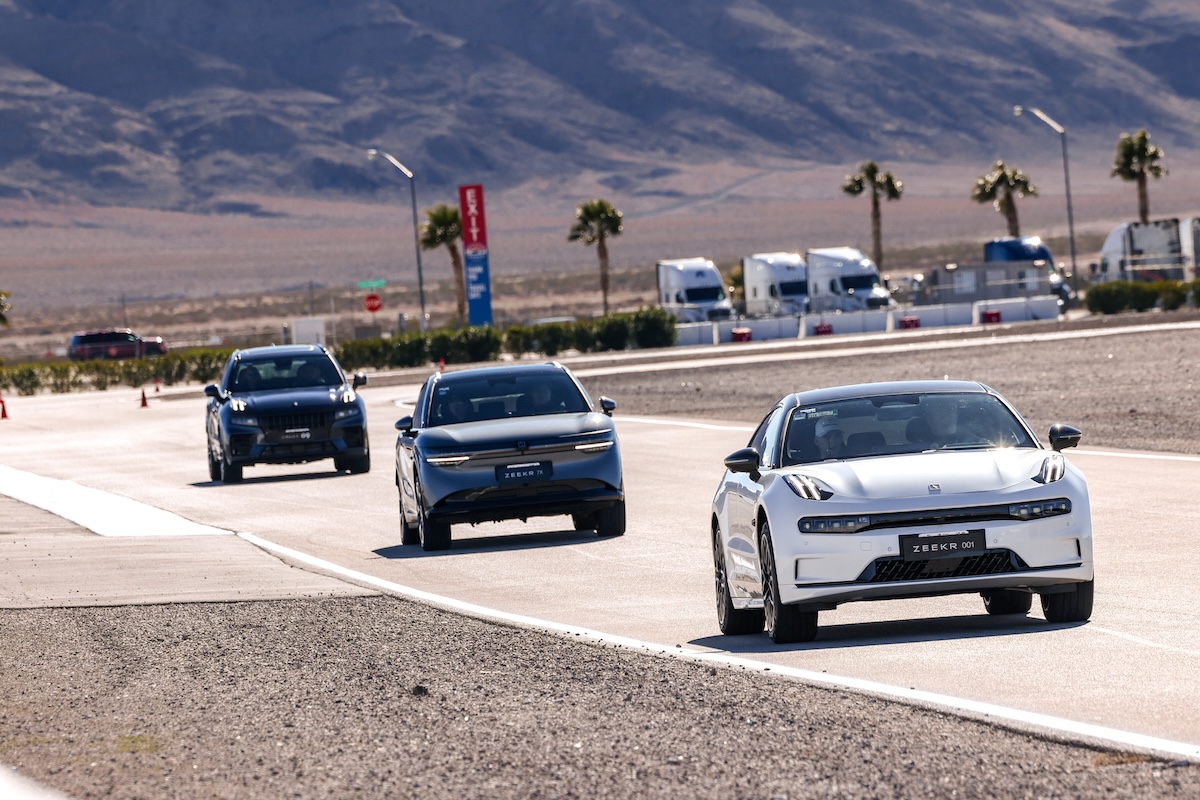
Chinese car companies are indirectly subsidized by the government, and while those subsidies are starting to go away, a big chunk of why Chinese cars are cheaper is because they have to be. There’s been a brutal price war in China, which has caused a lot of problems.
As Nikkei Asia reports, a big one is that the automakers largely aren’t making money:
Rising materials costs are denting the bottom lines of price war-plagued Chinese electric vehicle makers while their suppliers are reaping big gains, the latest earnings guidance filings show.
BAIC BluePark New Energy Technology, a unit of state-owned Beijing Auto focused on what China calls new energy vehicles, said Monday night that its net loss for the first six months will be in the range of 1.77 billion yuan to 1.97 billion yuan ($261 million to $291 million). This is only marginally better than the 2.33 billion yuan net loss for the same period a year ago, even though production rose nearly 38%, to 93,670 vehicles, and sales rose 7.3%, to 98,895 cars.
The Shanghai-listed automaker attributed the continued losses to “the influence of price movements in upstream raw materials and the cost pressures that the sector universally faces.”
This follows similar announcements by peers such as Seres Group, the EV partner of telecommunications company Huawei. The Hong Kong- and Shanghai-listed automaker said Sunday that it expects to record a net loss of 1.5 billion yuan to 1.8 billion yuan for the first half, reversing from a net profit of 2.94 billion yuan a year earlier.
What the Chinese auto industry has accomplished is incredible and I don’t wish to shortchange the work the country has done advancing EV technology, but Chinese automakers aren’t magic. They’ve had a huge advantage in the form of government support and now they need Western markets for exports to help rationalize all of this. The negotiation of this inherent tension between what China needs and wants versus the rest of the world is the central concept that will define the future of the industry for the next 20 years.
What I’m Listening To While Writing TMD
Wet Leg’s ‘Moisturizer’ was one of my most listened to albums last year, and the recently released deluxe edition includes a horsegiirL remix of “CPR,” one of my favorite tracks off that album. Please enjoy.
The Big Question
Which Japanese automaker do you most want to survive?
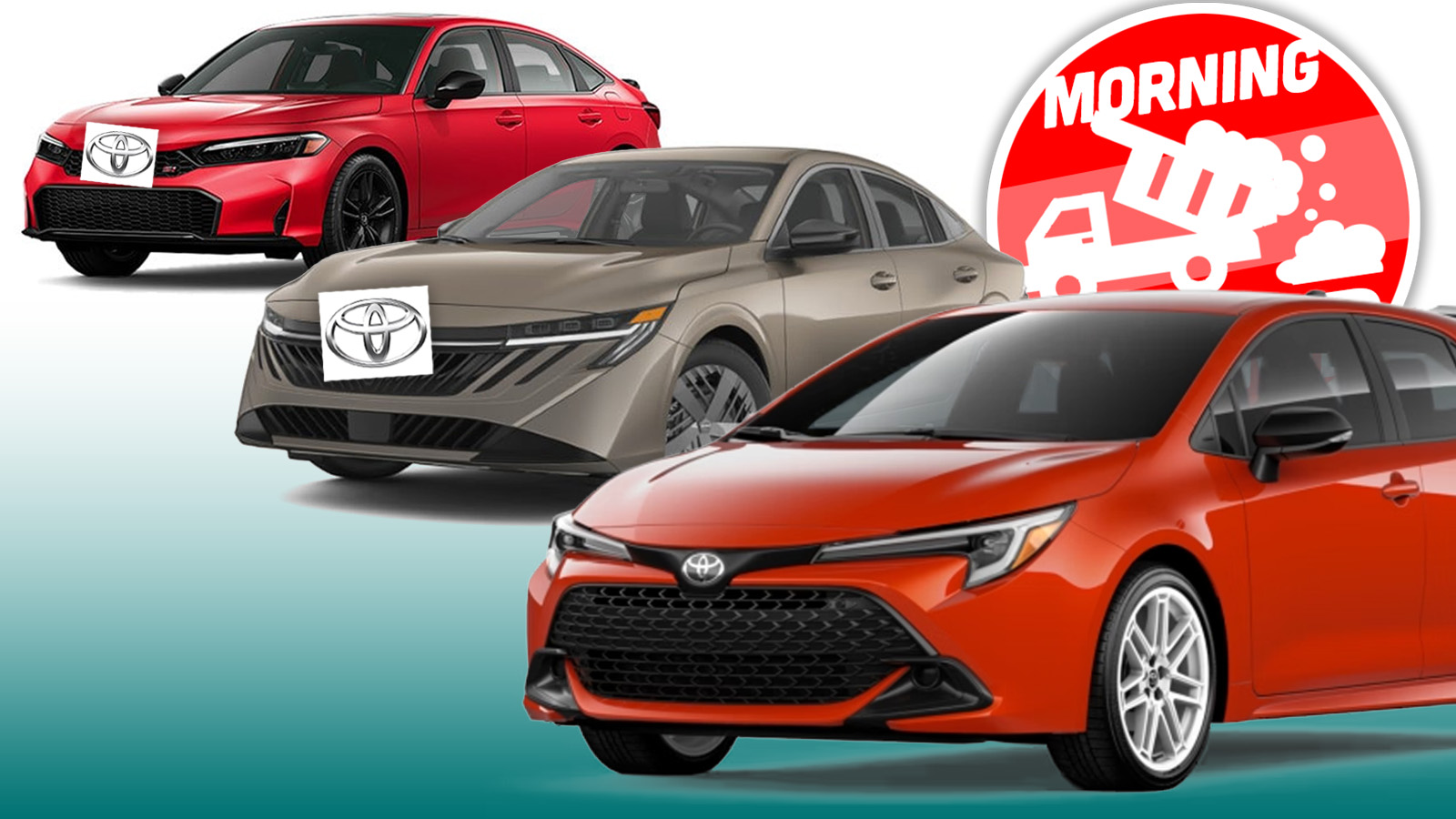
Top photo: Toyota, Honda, Nissan


Honda! They are hands down the most reliable car brand to me and have had a lot of amazing cars in the past. Their new ones are less interesting but still great
My thought (and I could easily be wrong) – Chinese companies aren’t making money, and everything I read is that the Chinese gov is subsidizing them less and less. This means their prices have to start going up. I don’t personally believe their presence is the industry-ending situation some people predict. Sure.. the industry will have to adapt. That’s what competition does to an industry. I really don’t want the general auto industry to follow HD trucks where you’ve got 3 engine companies and 2 transmission companies that serve 90% of the market (or whatever numbers are), but that might be the road we are traveling down.
Nissan gets pick ups. Daihatsu gets Kei trucks and vans and hatches. Suzuki gets the supermini and Jimmy. Mazda gets sports cars. Honda gets civic, toyota gets camry and landcruiser. Yamaha get super sports Century gets ultra luxury. Subaru gets the bullet. Mitsubishi I forgot about basically.
Jimmy> Jimny. 2- Subaru is the strongest ‘brand’ in the US.Subaru makes boring cars with unreliable engines and transmissions that now are also ugly hence why they get to go imo
I really could not care less about Japanese cars as a rule. But it will be a shame when the Miata dies or turns into some EV bullshit.
Or maybe we get lucky with a Toyota and Honda Miata.
Definitely not looking good. The BRZ has WAAAAY too much Subaru in it, Toyota couldn’t even manage to make a Supra on thier own and bought it in, and Honda hasn’t made a decent sports car in a long time. And I am not a huge fan of thier modern efforts. But I have never been a Honda fan to start with.
Shockingly, the article is NOT about why every Japanese automaker needs to go all-in on hybrids. Pun not intended, but welcome.
Honda and then Mazda. Toyota has been making an argument for themselves with all the GR stuff though.
Tough one. Going on what the brands are now, not their history, I’ll say Honda. History would make it tougher because all of them have something awesome to point at.
TBQ: Mazda, of course, but somehow on a Toyota scale without losing their core and what makes them special.
Mitsuoka
“While China EVs are “exceptional,” the product is only one piece of the puzzle, Akhavan said.
“What about OEM relations? What about getting your warranty paid? What about service? What about a business plan? There are so many things that are even today undefined that I just can’t see this being a worthwhile proposition — not now.”
Well no shit sherlock. How can car dealers NOT know about this already? I’ll tell you how… a lot of dealers are lazy.
To get a new Chinese car/brand, you not only need a willing company that listens, you also need a Max Hoffman type of person to work with the Chinese automaker. Someone who knows the local market and will work with the manufacturer and help them get the right product for the right market.
“Chinese car companies are indirectly subsidized by the government, and while those subsidies are starting to go away, a big chunk of why Chinese cars are cheaper is because they have to be. “
Well there is more to it than that. Years ago, due to really bad air pollution, the Chinese government decided that among other things, the auto industry would have a massive migration to BEVs. So BEV development and production was strongly encouraged. And tied in with that, affordable BEVs were strongly encouraged.
That’s why China is on top when it comes to BEVs. It’s not just subsidies, it’s also encouraging the build up of local production and home-grown tech after learning from others.
And part of their approach, to some extent, involved throwing everything at the wall and see what would stick.
“Which Japanese automaker do you most want to survive?”
Honestly if it’s just one company, then it’s Toyota. I want the supply of some of the most reliable cars and best hybrids to continue. And I expect their BEVs will also become some of the most reliable and durable as well. They are a solid and conservative company that is great for building the daily drivers people need.
A very close 2nd would be Honda.
The Chinese government does not “suggest”. It commands.
How any automaker thought that the joint-venture requirement to get into the Chinese market was anything but teaching the Chinese how to make decent cars (and allowing rampant theft of IP) baffles me.
They knew, and did it anyway. The only thing that matters is the current stock price. Stock price in 3mo matters a little bit, but that’s something to worry about in 3 months.
Any line about an Exec ‘not knowing’ Chinese brands would steal IP is just trying cover their ass.
Indeed – same short term thinking that infects corporations in general.
Money. The answer is always money.
Of Course western auto leaders knew or were intentionally obtuse. Western capitalism is 100% about grow, grow, grow and usually very much focused on short term (next quarter) profits
Given their compensation packages are +95% based on stock price it makes logical sense even if/when short term thinking decisions end up hurting the org. long term, crawl to govt. reps for billions in handouts via ‘research’ investments
Isuzu
Suzuki we need that damn Jimny here.
But seriously the more that survive the better the less competition in the market the worse things get.
TBQ: Well, the correct answer would be Nissan IF they still made the GT-R
Mazda.
TBQ: Toyota, my home will not survive without them. The largest Toyota factory in the world is in my backyard. Family and friends all work there. My wife’s students all have family that work there. All of our local businesses need it to survive. It is a cornerstone of the local economy. So, I am inherently biased for them to make it.
My heart says Mazda though because I love almost every product they make.
I remember the news that Mazda was using Toyota’s hybrid system in the CX-50, but I somehow missed the fact that Toyota would get to use Mazda’s red.
Seems like a fair trade to me.
Mazda red is absolutely the best red.
Mazda also gets to use Toyota’s Cypress Green, which looks outstanding.